Showing posts with label ketamine. Show all posts

Saturday, April 19, 2014

Brain, Behavior, and Neuroscience Research in the News


All of these studies were published between April 16-18. Among the research presented below includes the following:
  • An article on how a hormone originally associated with appetite stimulation is now shown to accelerate synpase formation (along with being neuroprotective).
  • Two articles on how pervasive childhood issues (like shyness or being bullied) can be in a person's life.
  • Intravenous ketamine shows power in a trial involving people with PTSD.
  • New thinking is that Parkinson's Disease could be an autoimmune disorder.
  • In chronically depressed patients, increasing the depression-causing mechanisms actually instills resilience.
  • New research suggests connections between many neurodegenerative disorders.
  • Myelin has long thought to be centrally important in higher order brain cells, but new research suggests otherwise.
Enjoy!

Ghrelin accelerates synapse formation and activity development in cultured cortical networks

Irina I Stoyanova and Joost le Feber
Author Affiliations

BMC Neuroscience 2014, 15:49 doi:10.1186/1471-2202-15-49
Published: 17 April 2014


Abstract (provisional)


Background
While ghrelin was initially related to appetite stimulation and growth hormone secretion, it also has a neuroprotective effect in neurodegenerative diseases and regulates cognitive function. The cellular basis of those processes is related to synaptic efficacy and plasticity. Previous studies have shown that ghrelin not only stimulates synapse formation in cultured cortical neurons and hippocampal slices, but also alters some of the electrophysiological properties of neurons in the hypothalamus, amygdala and other subcortical areas. However, direct evidence for ghrelin's ability to modulate the activity in cortical neurons is not available yet. In this study, we investigated the effect of acylated ghrelin on the development of the activity level and activity patterns in cortical neurons, in relation to its effect on synaptogenesis. Additionally, we quantitatively evaluated the expression of the receptor for acylated ghrelin - growth hormone secretagogue receptor-1a (GHSR-1a) during development.

Results
We performed electrophysiology and immunohistochemistry on dissociated cortical cultures from neonates, treated chronically with acylated ghrelin. On average 76 +/- 4.6% of the cortical neurons expressed GHSR-1a. Synapse density was found to be much higher in ghrelin treated cultures than in controls across all age groups (1, 2 or 3 weeks). In all cultures (control and ghrelin treated), network activity gradually increased until it reached a maximum after approximately 3 weeks, followed by a slight decrease towards a plateau. During early developmental stages (1-2 weeks), the activity was much higher in ghrelin treated cultures and consequently, they reached the plateau value almost a week earlier than controls.

Conclusions
Acylated ghrelin leads to earlier network formation and activation in cultured cortical neuronal networks, the latter being a possibly consequence of accelerated synaptogenesis.

~ The complete article is available as a provisional PDF. The fully formatted PDF and HTML versions are in production.

* * * * *

Inhibited children become anxious adults: Examining the causes and effects of early shyness

Date: April 17, 2014
Source: Penn State

Summary:
Three little girls sit together in a room, playing with the toys surrounding them. One of the girls -- "Emma" -- has clearly taken charge of the group, and the others happily go along with her. A fourth girl -- "Jane" -- enters the room, hiding her face while clinging to her mother. The first three continue to play, while mom sits Jane down with some toys a few feet away from the group. After mom leaves, however, Jane sits alone against the wall. Emma makes her way over to Jane, inviting her to play with the rest of the group. Jane -- looking trapped -- starts to cry, then stands up and tries desperately to open the door.

* * * * *

Impact of childhood bullying still evident after 40 years

Date: April 17, 2014
Source: King's College London

Summary:
The negative social, physical and mental health effects of childhood bullying are still evident nearly 40 years later, according to new research. The study is the first to look at the effects of bullying beyond early adulthood. Just over a quarter of children in the study (28%) had been bullied occasionally, and 15% bullied frequently -- similar to rates in the UK today. Individuals who were bullied in childhood were more likely to have poorer physical and psychological health and cognitive functioning at age 50. Individuals who were frequently bullied in childhood were at an increased risk of depression, anxiety disorders, and suicidal thoughts.

* * * * *

Intravenously administered ketamine shown to reduce symptoms of chronic post-traumatic stress disorder

Date: April 16, 2014
Source: Mount Sinai Medical Center

Summary:
For the first time, evidence that a single dose of IV-administered ketamine was associated with the rapid reduction of symptoms of post-traumatic stress disorder in patients with chronic PTSD was demonstrated in a proof-of-concept, randomized, double blind crossover study. These findings could be the first step toward developing new interventions for PTSD.

* * * * *

Is Parkinson's an autoimmune disease?

Date: April 17, 2014
Source: Columbia University Medical Center

Summary:
The cause of neuronal death in Parkinson's disease is still unknown, but a new study proposes that neurons may be mistaken for foreign invaders and killed by the person's own immune system, similar to the way autoimmune diseases like type 1 diabetes, celiac disease, and multiple sclerosis attack the body's cells.

* * * * *

Boosting depression-causing mechanisms in brain increases resilience, surprisingly

Date: April 17, 2014
Source: Mount Sinai Medical Center

Summary:
New research uncovers a conceptually novel approach to treating depression. Instead of dampening neuron firing found with stress-induced depression, researchers demonstrated for the first time that further activating these neurons opens a new avenue to mimic and promote natural resilience.

* * * * *

Common links between neurodegenerative diseases identified

Date: April 17, 2014
Source: youris.com

Summary:
The pattern of brain alterations may be similar in several different neurodegenerative diseases, which opens the door to alternative therapeutic strategies to tackle these diseases, experts say.

* * * * *

Finding turns neuroanatomy on its head

Posted On April 18, 2014


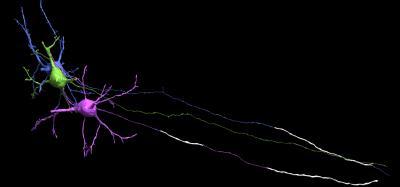
This is a computer image of three neurons showing differences in myelin.

Harvard neuroscientists have made a discovery that turns 160 years of neuroanatomy on its head.

Myelin, the electrical insulating material long known to be essential for the fast transmission of impulses along the axons of nerve cells, is not as ubiquitous as thought, according to a new work lead by Professor Paola Arlotta of the Harvard Stem Cell Institute (HSCI) and the University's Department of Stem Cell and Regenerative Biology, in collaboration with Professor Jeff Lichtman, of Harvard's Department of Molecular and Cellular Biology.

"Myelin is a relatively recent invention during evolution," says Arlotta. "It's thought that myelin allowed the brain to communicate really fast to the far reaches of the body, and that it has endowed the brain with the capacity to compute higher level functions." In fact, loss of myelin is a feature of a number of devastating diseases, including multiple sclerosis and schizophrenia.

Sunday, April 13, 2014

Intranasal Ketamine for Depression - First Controlled Evidence for the Rapid Antidepressant Effects


This is a huge step in terms of how to make ketamine an effective treatment for depression with the risks associated with the oral method of ingestion (urinary tract issues and liver toxicity). There is already of history of intranasal ketamine for anesthesia.

Intranasal ketamine confers rapid antidepressant effect in depression

Posted By News On April 8, 2014

A research team from the Icahn School of Medicine at Mount Sinai published the first controlled evidence showing that an intranasal ketamine spray conferred an unusually rapid antidepressant effect –within 24 hours—and was well tolerated in patients with treatment-resistant major depressive disorder. This is the first study to show benefits with an intranasal formulation of ketamine. Results from the study were published online in the peer-reviewed journal Biological Psychiatry on April 2, 2014.

Of 18 patients completing two treatment days with ketamine or saline, eight met response criteria to ketamine within 24 hours versus one on saline. Ketamine proved safe with minimal dissociative effects or changes in hemodynamic dimensions.

The study randomized 20 patients with major depressive disorder to ketamine (a single 50 mg dose) or saline in a double-blind, crossover study. Change in depression severity was measured using the Montgomery-Asberg Depression Rating Scale. Secondary outcomes included the durability of response, changes in self-reports of depression, anxiety, and the proportion of responders.

"One of the primary effects of ketamine in the brain is to block the NMDA [N-methyl-d-aspartate] glutamate receptor," said James W. Murrough, MD, principal investigator of the study, and Assistant Professor of Psychiatry and Neuroscience, and Associate Director of the Mood and Anxiety Disorders Program at the Icahn School of Medicine at Mount Sinai. "There is an urgent clinical need for new treatments for depression with novel mechanisms of action. With further research and development, this could lay the groundwork for using NMDA targeted treatments for major depressive disorder."

"We found intranasal ketamine to be well tolerated with few side effects," said Kyle Lapidus, MD, PhD, Assistant Professor of Psychiatry, at the Icahn School of Medicine at Mount Sinai.

One of the most common NMDA receptor antagonists, ketamine is an FDA-approved anesthetic. It has been used in animals and humans for years. Ketamine has also been a drug of abuse and can lead to untoward psychiatric or cognitive problems when misused. In low doses, ketamine shows promise in providing rapid relief of depression, with tolerable side effects.

Study co-author Dennis S. Charney, MD, Anne and Joel Ehrenkranz Dean of the Icahn School of Medicine at Mount Sinai and President for Academic Affairs for the Mount Sinai Health System, and a world expert on the neurobiology and treatment of mood disorders, said: "What we have here is a proof of concept study and we consider the results very promising. We hope to see this line of research further developed so that we have more treatments to offer patients with severe, difficult-to-treat major depressive disorder."

Going forward, the Mount Sinai research team hopes to examine the mechanism of action, dose ranging, and use functional brain imaging to further elucidate how ketamine works.
* * * * *

The article is still in-press - this is a pre-publication version.

A Randomized Controlled Trial of Intranasal Ketamine in Major Depressive Disorder

Kyle A.B. Lapidus, Cara F. Levitch, Andrew M. Perez, Jess W. Brallier, Michael K. Parides, Laili Soleimani, Adriana Feder, Dan V. Iosifescu, Dennis S. Charney, James W. Murrough

Published Online: April 02, 2014
DOI: http://dx.doi.org/10.1016/j.biopsych.2014.03.026

Abstract

Background

The N-methyl-d-aspartate glutamate receptor antagonist ketamine, delivered via an intravenous route, has shown rapid antidepressant effects in patients with treatment-resistant depression. The current study was designed to test the safety, tolerability and efficacy of intranasal ketamine in patients with depression who had failed at least one prior antidepressant trial.

Methods

Twenty patients with major depression were randomized and 18 completed two treatment days with intranasal ketamine hydrochloride (50 mg) or saline solution in a randomized, double-blind, crossover study. The primary efficacy outcome measure was change in depression severity 24 hours following ketamine or placebo, measured using the Montgomery-Asberg Depression Rating Scale. Secondary outcomes included persistence of benefit, changes in self-reports of depression, changes in anxiety, and proportion of responders. Potential psychotomimetic, dissociative, hemodynamic, and general adverse effects associated with ketamine were also measured.

Results

Patients showed significant improvement in depressive symptoms at 24 hours following ketamine compared to placebo [t=4.39, p<0.001; estimated mean MADRS score difference of 7.6 ± 3.7 (95% CI: 3.9 – 11.3)]. Eight of 18 patients (44%) met response criteria 24 hours following ketamine administration, compared to 1 of 18 (6%) following placebo (p=0.033). Intranasal ketamine was well tolerated with minimal psychotomimetic or dissociative effects and was not associated with clinically significant changes in hemodynamic parameters.

Conclusions

This study provides the first controlled evidence for the rapid antidepressant effects of intranasal ketamine. Treatment was associated with minimal adverse effects. If replicated, these findings may lead to novel approaches to the pharmacologic treatment of patients with major depression.

Friday, November 22, 2013

Would an 'Anti-Ketamine' Also Treat Depression?


Ketamine works, at the explanatory level (the actual mechanism is still debatable), by blocking one of the targets for the neurotransmitter glutamate in the brain, the N-methyl-D-aspartate (NMDA) glutamate receptor. A new study in Biological Psychiatry reports that enhancing, instead of blocking, that same target - the NMDA glutamate receptor - also causes antidepressant-like effects.

Would an 'Anti-Ketamine' Also Treat Depression?


Nov. 18, 2013 — Thirteen years ago, an article in this journal first reported that the anesthetic medication, ketamine, showed evidence of producing rapid antidepressant effects in depressed patients who had not responded to prior treatments. Ketamine works by blocking one of the targets for the neurotransmitter glutamate in the brain, the N-methyl-D-aspartate (NMDA) glutamate receptor.

Now, a new study in Biological Psychiatry reports that enhancing, instead of blocking, that same target -- the NMDA glutamate receptor -- also causes antidepressant-like effects.

Scientists theorize that NMDA receptor activity plays an important role in the pathophysiology of depression, and that normalizing its functioning can, potentially, restore mood to normal levels.

Prior studies have already shown that the underlying biology is quite complex, indicating that both hyperfunction and hypofunction of the NMDA receptor is somehow involved. But, most studies have focused on antagonizing, or blocking, the receptor, and until now, studies investigating NMDA enhancement have been in the early phases.

Sarcosine is one such compound that acts by enhancing NMDA function. Collaborators from China Medical University Hospital in Taiwan and the University of California in Los Angeles studied sarcosine in an animal model of depression and, separately, in a clinical trial of depressed patients.

"We found that enhancing NMDA function can improve depression-like behaviors in rodent models and in human depression," said Dr. Hsien-Yuan Lane, the corresponding author on the article.

In the clinical portion of the study, they conducted a 6-week trial where 40 depressed patients were randomly assigned to receive sarcosine or citalopram (Celexa), an antidepressant already on the market that was used as a comparison drug. Neither the patients nor their doctors knew which one they were receiving.

Compared to citalopram, patients receiving sarcosine reported significantly improved mood scores, were more likely to experience relief of their depression symptoms, and were more likely to continue in the study. There were no major side effects in either group, but patients receiving citalopram reported more relatively minor side effects than the patients being treated with sarcosine.

"It will be important to understand how sarcosine, which enhances NMDA receptor function, produces the interesting effects reported in this study. There are ways that its effects, paradoxically, might converge with those of ketamine, a drug that blocks NMDA receptors," commented Dr. John Krystal, Editor of Biological Psychiatry. "For example, both compounds may enhance neuroplasticity, the capacity to remodel brain networks through experience. Also, both potentially attenuate signaling through NMDA receptors, ketamine with single doses and sarcosine, with long-term administration, by evoking an adaptive down regulation of NMDA receptors."

Better understanding the reported findings may help to advance the development of medication treatments for patients who do not respond to available treatments. This is an important goal, with estimates indicating that as many as half of all patients do not experience complete relief of their depression.

Full Citation:
Chih-Chia Huang, I-Hua Wei, Chieh-Liang Huang, Kuang-Ti Chen, Mang-Hung Tsai, Priscilla Tsai, Rene Tun, Kuo-Hao Huang, Yue-Cune Chang, Hsien-Yuan Lane, Guochuan Emil Tsai. (2013, Nov 15). Inhibition of Glycine Transporter-I as a Novel Mechanism for the Treatment of Depression. Biological Psychiatry, 74(10): 734-741. DOI: 10.1016/j.biopsych.2013.02.020


Abstract

Background

Antidepressants, aiming at monoaminergic neurotransmission, exhibit delayed onset of action, limited efficacy, and poor compliance. Glutamatergic neurotransmission is involved in depression. However, it is unclear whether enhancement of the N-methyl-D-aspartate (NMDA) subtype glutamate receptor can be a treatment for depression.
 

Methods

We studied sarcosine, a glycine transporter-I inhibitor that potentiates NMDA function, in animal models and in depressed patients. We investigated its effects in forced swim test, tail suspension test, elevated plus maze test, novelty-suppressed feeding test, and chronic unpredictable stress test in rats and conducted a 6-week randomized, double-blinded, citalopram-controlled trial in 40 patients with major depressive disorder. Clinical efficacy and side effects were assessed biweekly, with the main outcomes of Hamilton Depression Rating Scale, Global Assessment of Function, and remission rate. The time course of response and dropout rates was also compared.
 

Results

Sarcosine decreased immobility in the forced swim test and tail suspension test, reduced the latency to feed in the novelty-suppressed feeding test, and reversed behavioral deficits caused by chronic unpredictable stress test, which are characteristics for an antidepressant. In the clinical study, sarcosine substantially improved scores of Hamilton Depression Rating Scale, Clinical Global Impression, and Global Assessment of Function more than citalopram treatment. Sarcosine-treated patients were much more likely and quicker to remit and less likely to drop out. Sarcosine was well tolerated without significant side effects.
 

Conclusions

Our preliminary findings suggest that enhancing NMDA function can improve depression-like behaviors in rodent models and in human depression. Establishment of glycine transporter-I inhibition as a novel treatment for depression waits for confirmation by further proof-of-principle studies.

Sunday, September 15, 2013

Scientific American: A 3-Part Series on Ketamine and Next-Gen Depression Medications

Over at Scientific American, Gary Stix, Sci Am editor, writer, and blogger at Talking Back, has posted a 3-part series on research into ketamine as an antidepressant. Right now, any doctor or psychiatrist prescribing ketamine for depression is doing so off-label (i.e., the FDA has not approved that drug as a treatment for that condition). There are an increasing number of clinics who doing just that.

In essence, these doctors are using ketamine (okay, yes, some doctors are probably less than ethical in this realm) as the research suggests has been most useful - slow infusion therapy. But for Big Pharma, there is no money in a chemical that cannot be patented (it's fully available as a generic), so they are tinkering with the chemical structure to make it more effective, more long-lasting, anything, so long as it can be patented as a new chemical.

This is a good series - and it feels like balanced reporting.

From Club to Clinic: Physicians Push Off-Label Ketamine as Rapid Depression Treatment, Part 1


By Gary Stix | September 11, 2013


New types of drugs for schizophrenia, depression and other psychiatric disorders are few and far between—and a number of companies have scaled back or dropped development of this class of pharmaceuticals. One exception stands out. Ketamine, the anesthetic and illegal club drug, is now being repurposed as the first rapid-acting antidepressant drug and has been lauded as possibly the biggest advance in the treatment of depression in 50 years.

A few trials by large pharma outfits are now underway on a new, purportedly improved and, of course, more profitable variant of ketamine, which in its current generic drug form does not make pharmaceutical marketing departments salivate.

Some physicians have decided they simply can’t wait for the lengthy protocols of the drug approval process to be sorted out. They have read about experimental trials in which a low-dose, slow-infusion of ketamine seems to produce what no Prozac-like pill can achieve, lifting the black cloud in hours, not weeks.

With nothing to offer desperate, sometimes suicidal patients, physicians have decided against waiting for an expensive, ketamine lookalike to arrive and have started writing scripts for the plain, vanilla generic version that has been used for decades as an anesthetic. Ketamine, it seems, has captivated a bunch of white coats with the same grassroots energy that has propelled the medical marijuana movement.

No formal tally of off-label ketamine prescriptions has been made. But Carlos Zarate of the National Institute of Mental Health, a leader in researching ketamine for depression, receives numerous e-mails from physicians and patients. “It’s being used in many states,” Zarate says. “I know of [people in] California, New Jersey, Pennsylvania, New York, Texas Florida and around the world, Australia, Germany, the U.K.”

Physicians are allowed to prescribe drugs off-label—in other words, uses for which they have not received approval from a regulatory agency. The practice is widespread: in fact, ketamine itself is often administered for chronic pain, a use never approved by the U.S. Food and Drug Administration.

Legalities aside, not every physician thinks ketamine has met the required thresholds of safety and efficacy to become a mainstay of a walk-in clinic. “Clearly, the use of ketamine for treatment-resistant depression is not ready for prime time,” says Caleb Alexander, a physician who is a professor of epidemiology at Johns Hopkins University and co-director of the Johns Hopkins Center for Drug Safety and Effectiveness. “We have remarkably little solid scientific evidence to support its use in nonexperimental settings, that is to say, to support its use beyond research settings.”

Ketamine has a well-known side effect of inducing a trancelike state that club aesthetes dub the “K hole”—the reason it is known in clinical terminology as a “dissociative” anesthetic. Some users get sucked into the vortex spun by Special K, Vitamin K, “jet,” “special L.A. coke,” “K,” or one of the drug’s other monikers. The physician and neuroscientist John Lilly, known for his work on dolphin communication, almost drowned under the influence while immersed in his own invention, the sensory deprivation tank and had to resuscitated by his wife. Undeterred, Lilly continued binging, at one point injecting himself almost hourly for three weeks. Others haven’t been as lucky and have succumbed fatally to what Lilly’s wife called “the seduction of K.”

In the low doses administered in off-label clinics, side effects are rare or mild. “If I closed my eyes, images would present themselves like the opening credits of Dr. Who, with a tunnel of light,” says one patient.” Even so, a prospective patient must be carefully screened and turned away if there is any history of psychotic episodes.

In prescribing ketamine for depression, clinicians take it upon themselves to determine proper treatment protocols through trial and error, either by consulting colleagues or reading the methods sections of scientific papers that report the results of preliminary experimental trials not intended to evaluate the drug for clinical use. The risks are worth taking, say some psychiatrists, particularly if a patient has tried psychotherapy and one antidepressant after another with poor results—and any mention of electroconvulsive therapy produces a look of abject terror.

“I have patients who will try anything that is reasonably safe, says David Feifel, the physician who heads Adult Psychiatric Services at the University of California, San Diego, Medical Center. Feifel read the major study by Zarate in 2006 and decided to put in place one of the first clinical programs anywhere for ketamine therapy. After receiving approval from the hospital’s pharmacy and therapeutic committee, Feifel and his team began providing ketamine therapy on a routine basis in 2011. So far, 50 people with depression that did not respond to other treatments have been willing to pay out of pocket for the infusions. As many as three times that number, some from outside the U.S., have made inquiries.

Feifel shared some e-mails: “So many days I wake up and want to die, but not today,” wrote one patient after the therapy. “Thank you so much for this day of hope and contentment. It was the most beautiful day I can remember. I was a new person today and I’m looking forward to tomorrow, which is something I never say.” Another wrote: “I wanted to go out to eat last night and go for a walk today—both things I haven’t wanted to do for years.”

Feifel estimates that seven out of 10 patients have improved, a substantially higher number than respond to Prozac and other conventional antidepressants and a rate comparable to reports in experimental studies. Side effects have been minimal—and the high from the drug, no problem. “If anything, the patients enjoy that,” Feifel says.

Feifel does not see himself in the role of proselytizer. Whether ketamine becomes a depression breakthrough depends on overcoming treatment effects that often last just a few weeks, even with multiple infusions. “This is in my opinion the biggest challenge, whether this is really going be a game changer for depression or a limited tool is if we can figure out how to make this a durable benefit,” he says.

Feifel always lays out multiple treatment options tailored to a particular patient, not just ketamine alone. He might, for instance, try to disabuse patients of misconceptions about the dangers of electroconvulsive therapy. The hospital is also exploring other new approaches: transcranial magnetic stimulation, a magnetic field trained on a brain area affected by depression; and treatment with scopolamine, another anesthetic that may possibly offer patients quick mood relief.

Off-label prescribing of ketamine does not usually take place at major university hospitals like U.C. San Diego Medical Center but, rather, in small clinics, some of which appear to be largely devoted to dispensing the drug. “There’s nothing else they have to offer really,” Feifel says. That one-track approach has the drawback of possibly leaving a patient who doesn’t respond to ketamine feeling even more desperate.


* * * * *


Is Ketamine Right for You? Off-Label Prescriptions for Depression Pick Up in Small Clinics, Part 2


By Gary Stix | September 12, 2013


Dennis Hartman, a 47-year-old former business executive for an Illinois gaming company, described the diagnosis he had been given as “major depression disorder with severity of the extreme, social phobia and generalized anxiety disorder,” something he had lived with for more than 30 years. He had tried Prozac-like drugs, an earlier generation of antidepressants, tranquilizers, mood stabilizers, supplements, meditation and psychotherapy. Nothing helped.

Last year he set a date and made a plan for how he would take his own life. He had given himself some time to get his affairs in order to cause as little distress as possible to his family. One night last fall before the date he had mentally set for himself, Hartman was up at 3 A.M., distraught and unable to sleep. Milling about the Web, he came upon an article about ketamine, an anesthetic and hallucinogenic club drug that is being intensively researched because of growing evidence that it can rapidly relieve major depression. He read about a study underway at the National Institutes of Health that was enrolling patients. He called the next day and was quickly accepted.

“I received a single infusion as part of that study,” Hartman says, “and I achieved 100 percent remission—a complete relief of all symptoms, which for me was dysphoria, anhedonia, extreme anxiety, cognitive impairment, very severe physical fatigue—I felt normal and healthy and happy within three or four hours after the infusion.”

The study protocol only allowed for one infusion—and the dramatic transformation began to gradually wear off beginning three weeks later. During that time Hartman, still at NIH as researchers conducted brain imaging and other studies, began a determined search of the Internet for a physician who might be willing to provide more ketamine, despite cautions conveyed by researchers that the drug was still experimental and had never been approved by the U.S. Food and Drug Administration for depression.

Hartman didn’t have far to look. Grassroots ketamine prescribing is on the upswing (read part 1), as physicians channel some of the same DIY-sentiment behind the medical marijuana movement, even while drug companies try to figure out ways to create a new class of antidepressant derived from ketamine’s chemical makeup. Ketamine itself holds little interest to pharma outfits because of its generic status. A raft of studies has shown that the compound can provide rapid reversal of symptoms for patients who have not responded to psychotherapy or the standard line of antidepressants.

Drugmakers have begun trials of ketaminelike pharmaceuticals. Some physicians, though, have decided that desperate patients simply can’t wait years for completion of clinical trials and regulatory approval. Prescribing a drug for a use other than the one for which it was approved—in other words, off the label—does not break any laws. That has given psychiatrists and anesthesiologists in the U.S. the latitude to begin prescribing ketamine from their offices or to set up small specialty clinics for dispensing the drug.

After he left the study Hartman went first to a physician in San Diego and later ended up at New York Ketamine Infusions in New York City where he received six treatments, at $525 apiece, which again achieved relief of the depression symptoms. Clinics like the one Hartman went to take their message to customers with direct, very direct, advertising. A drug company can get saddled with fines reaching into the megamillions if its sales reps promote a drug off-label. Nothing, however, stops a physician who prescribes off-label from buying an ad. Plugging ketamine resembles a cross between highway billboards trumpeting physicians offering Botox and drug company direct-to-consumer ads. The New York Ketamine Infusions Web site has a link titled: “Is Ketamine Right for me?” On the home page, the phrase “Dramatic Improvements in Mood within Hours flashes on the screen. A Massachusetts clinic offers a “revolutionary and promising new treatment” from a Dr. Ablow [first name omitted], identified on the site as “America’s most well-known psychiatrist.”

Acknowledging the amateurish marketing tone, Hartman says he will be “first in line” when the FDA approves a ketaminelike drug for depression, but for the moment the clinics are essential for him to deal with the profound anguish that has beset him his entire adult life. “When I’m talking to friends and family and people who have not heard my story, I try to make it an easy, brief metaphor,” he says. “I’m the guy in a burning car who is unconscious and there is somebody who could rescue me, and they have to smash out the window with a hammer or ax, and the people who are discouraging ketamine use are the ones who are saying: ‘Don’t hit that window because you might hit Dennis and you might hurt him.’ But if you don’t break the window with the ketamine ax, I’m going to die a horrible death. That’s how I view things.”

Physicians are treating more and more patients like Hartman. A Santa Barbara physician, Robert Early, had been interested for years in finding alternatives to electroconvulsive therapy for patients who didn’t respond or were petrified of the side effects. When a pivotal study on ketamine and depression was published in 2006, Early, then at Baylor College of Medicine in Houston, saw an opportunity and started doing the procedure within six months. There and in Santa Barbara, Early has administered the therapy to some 125 patients—having prescribed it more than 700 times to that group.

An Arizona entrepreneur may have the most ambitious vision for supplying ketamine: Gerald Gaines started a company last year called Depression Recovery Centers with a single clinic in Scottsdale. As the name suggests, Gaines wants to make a brand out of walk-in clinics for depression, perhaps expanding nationwide, making them as common as suburban kidney dialysis centers.

A Harvard MBA who was instrumental in the launch of Sprint PCS, Gaines has suffered from lifelong manic-depressive episodes—and has numerous family members who have also wrestled with depression. Gaines became involved with the medical marijuana business, with the hope that some of the multitude of compounds that can be isolated from the plant’s leaves might be extracted to help with mania. He still donates money for this line of research but has given up for the moment on the idea that a pot-derived depression drug will arrive anytime soon.

Instead, he became intrigued with research on ketamine, which led to his opening the Scottsdale clinic. So far, the clinic has treated 30 patients under the care of an anesthesiologist and a psychologist. Most patients require more than one infusion, and the clinic has delivered in excess of 200 infusions since it opened. (The clinic posted “Tiffany’s Transformation Day” on Vimeo about one patient’s before-and-after experience.) Gaines himself is a customer. “I’ve been symptomatic for 45 years and have had two or three depressions every year, except for the last year, when I’ve had none,” he says. “I’ve had five treatments in last 12 months, and that’s the typical pattern of what we’re seeing for bipolar disorder.”

The cost of each infusion, at $750, is not covered by insurance. “Our target market very unfortunately—anybody who knows me knows I don’t feel good about this—is the top 10 percent of family income individuals,” Gaines says. A course of treatment typically costs $4,000 and can range up to $15,000—and may need to be repeated as the effects wear off.

Absent large-scale clinical trials, ketamine for depression will remain a form of drug development based on testimonial and anecdote. Drugs in the pipeline at major pharmaceutical companies may help fill in some of the blanks, but the first one may not arrive before 2017 and questions linger about whether these rejigged versions of ketamine will be any better than what is currently available from off-label clinics.


* * * * *


Ketamine, a Darling of the Club Scene, Inspires Development of Next-Generation Antidepressants, Part 3


By Gary Stix | September 13, 2013


Ketamine induces growth of tiny protuberances on a rat neuron (bottom)  
to allow it to better connect with neighbors.

Recent experimental research showing that the anesthetic and club drug ketamine can relieve depression quickly has intrigued a number of major pharmaceutical companies. Depression, it goes without saying, affects huge numbers and a fundamentally new and effective pharmaceutical approach to treating the disorder hasn’t emerged in decades.

The enthusiasm for ketamine is such that physicians, often working out of small clinics, have already started prescribing low doses of the generic anesthetic off-label for fast relief of le cafard—and drug companies are contemplating whether to get into the act by creating new drugs based on ketamine’s biochemistry (Read part 1 and part 2).

A Johnson & Johnson subsidiary in Europe has gone as far as midstage clinical trials for a ketamine nasal spray. The trial there uses a slightly altered version of ketamine (esketamine, the “s” isomer for techies), which omits part of the molecule and leaves the most pharmacologically active portion in place, enabling less of the compound to be administered. “You can get away with a 30 to 40 percent lower dose,” says Husseini Manji who leads neuroscience research at Johnson & Johnson.

The U.S. Food and Drug Administration has put Johnson & Johnson’s version of esketamine on a fast track for approval, although, even if all goes well, patients may still have to wait a years to get a script. Esketamine, already used as an anesthetic in Europe, is not the only idea on the table. Ketamine appears to work (details still coming in from labs) by blocking a docking site, or receptor, on a neuron—in this case a spot where the essential signaling molecule glutamate attaches. The blockade triggers a complex chemical cascade that ends up restoring an impaired neuron’s ability to communicate with other brain cells.

If that process is multiplied over millions of neurons in two critical brain regions—the hippocampus and the prefrontal cortex—drugmakers hope the blues will lift like a cloud. Johnson & Johnson is working on other projects that tap into ketamine research—one of which is looking at a wholly new drug that targets selected portions of this glutamate receptor in the hope of fine-tuning the antidepressant effects further. Other large pharmas, including AstraZeneca and Roche, are pursuing similar strategies.

If a formal FDA imprimatur is forthcoming, the issue of off-label prescribing may persist. One issue, which must be resolved through clinical trials rather than trial and error at ketamine clinics, is whether a spray works as well as intravenous infusions. The generic non-isomer form of ketamine is already used off-label as a nasal spray and not all reviews are positive. “It helped but not as much as the infusion,” says Dennis Hartman, a patient with depression who sought help from ketamine-prescribing physicians, one of whom provided a spray.

A ketamine-like drug, if approved, will inevitably be more expensive than the generic anesthetic deployed in upstart depression clinics. Esketamine or one of its FDA-sanctioned cousins will probably be covered via a health insurance plan, but insurers’ love of low-cost generics may mean that consideration could still be given to covering plain-vanilla ketamine, even if it hasn’t run the clinical-trial gantlet. In fact, Carlos Zarate, a leading ketamine researcher who works at the National Institute of Mental Health, has even fielded calls from insurers wanting to know more about the generic drug to determine whether to put it on their formularies.

It is also still unclear whether the medical establishment, with a helping hand from law enforcement, may have to come to terms with what might be described as off–off-label prescribing—the depressed patient without insurance who learns about the possibility of a mood-altering quick fix and engages in the unsupervised self administration of Special K purchased in a club or on the street.

Hartman knows someone who went this route. “This personal friend received a ketamine infusion [from a physician],” Hartman says. “He achieved very strong relief, very similar to mine. After he relapsed, he went and sought this illegal form and he did not get the same effect.” If Johnson & Johnson’s esketamine trials result in a salable drug, the company has plans to safeguard it from those who want to divert it for recreational use.

What to do about ketamine is a question being posed everywhere, not just stateside. A New Zealand government official issued a report in July that instructed health boards throughout the country to scrutinize off-label prescribing more closely after a complaint lodged against a ketamine-supplying physician.

Inevitably, the grassroots appeal of an old drug with a new use that might provide hope for the deeply depressed is starting to generate its own social networks. As many as 20 physicians involved in prescribing ketamine interact on the Linked-In group called Ketamine for Psychiatry. Hartman is involved with setting up a new Web site, The Ketamine Advocacy Network, to foster activism among patients—another echo of medical marijuana’s legacy.

The desperation to find new antidepressants means that ketamine will remain an object of fascination for mental health professionals and their patients. In the next five years, regulators and physicians are going to have to figure out how, if at all, the drug fits into the psychiatrist’s pharmacopoeia. In the meantime, doctors and patients are increasingly adopting their own home-grown solutions.


About the Author: Gary Stix, a senior editor, commissions, writes, and edits features, news articles and Web blogs for SCIENTIFIC AMERICAN. His area of coverage is neuroscience. He also has frequently been the issue or section editor for special issues or reports on topics ranging from nanotechnology to obesity. He has worked for more than 20 years at SCIENTIFIC AMERICAN, following three years as a science journalist at IEEE Spectrum, the flagship publication for the Institute of Electrical and Electronics Engineers. He has an undergraduate degree in journalism from New York University. With his wife, Miriam Lacob, he wrote a general primer on technology called Who Gives a Gigabyte? Follow on Twitter @@gstix1.


The views expressed are those of the author and are not necessarily those of Scientific American.


Monday, September 02, 2013

Like Ketamine, Isoflurane Anesthesia Is as Effective as ECT, Without the Cognitive Side Effects

At the end of a recent BBC article (Why are we still using electroconvulsive therapy? Jul 24, 2013) on the contemporary use of electroconvulsive therapy (ECT) for treatment-resistant depression, Professor Ian Reid (University of Aberdeen) is quoted as saying, "No one would be happier than me if we could reproduce the changes that ECT has on the brain in a less invasive and safer way for patients."

ECT shock being applied to patient

Earlier in the article, the reporter offers a brief summary of the current theory of how ECT can be effective in reducing depressive symptoms in those who have not responded to other approaches (mostly pharmaceutical).
The latest theories build on the idea of hyperconnectivity. This new concept in psychiatry suggests parts of the brain can start to transmit signals in a dysfunctional way, overloading the system and leading to conditions from depression to autism.
Prof Reid and his colleagues used MRI scanners to map the brains of nine patients before and after treatment.

In an academic paper in 2012 they claimed ECT can "turn down" overactive connections as they start to build, effectively resetting the brain's wiring. "For the first time we can point to something that ECT does in the brain that makes sense in the context of what we think is wrong in people who are depressed," Prof Reid says.
There is new research (just published this week) that supports the idea that ECT works by disrupting brain activity and neural patterns, essentially acting as a reset for brain function.
Citation:
C. Challis, J. Boulden, A. Veerakumar, J. Espallergues, F. M. Vassoler, R. C. Pierce, S. G. Beck, O. Berton. (2013, Aug). Raphe GABAergic Neurons Mediate the Acquisition of Avoidance after Social Defeat. Journal of Neuroscience; 33 (35): 13978-13988. DOI: 10.1523/JNEUROSCI.2383-13.2013
In a recent study, from the lab of Olivier Berton, PhD (assistant professor, department of Psychiatry), in collaboration with Sheryl Beck, PhD (professor, department of Anesthesiology) at Children's Hospital of Philadelphia, the researchers discovered that bullying and similar social stresses (chronic unavoidable stress, or CUS) appear to create symptoms of depression in mice. This stress response activated GABAergic neurons in the dorsal raphe nucleus (DRN), they found, which directly inhibited serotonin levels. With low serotonin levels (although no one has ever determined exactly what those levels might be [1]), a depressed mouse (and presumably a person) is more likely to be depressed and socially withdrawal.

When the researchers were able to mute the GABA neurons, the mice became more resilient to bullying and didn't avoid once-perceived threats.
"This is the first time that GABA neuron activity -- found deep in the brainstem -- has been shown to play a key role in the cognitive processes associated with social approach or avoidance behavior in mammals," said Dr. Berton. "The results help us to understand why current antidepressants may not work for everyone and how to make them work better -- by targeting GABA neurons that put the brake on serotonin cells."
This where the research into ketamine as a powerful tool in alleviating treatment-resistant depression.

Ketamine is known primarily as a NMDA receptor noncompetitive antagonist (inhibits action of the NMDA receptor), used most often as an anesthetic, but known to have a wide range of effects in humans, including analgesia, anesthesia, hallucinations, elevated blood pressure, and bronchodilation. Like other drugs of its class, such as tiletamine and phencyclidine (PCP), ketamine induces a state referred to as "dissociative anesthesia" and, known on the street as Vitamin K, is used as a recreational drug.

The development of depressive behaviors, notably anhedonia (inability to experience pleasure), with CUS exposure (as in the mice studied above) make CUS one of the most valid research models for depression. There is already considerable and still building evidence that glutamate NMDA receptor antagonists can rapidly reverse behavioral and synaptic deficits caused by chronic stress exposure (Li et al., Biological Psychiatry, 2011).

From Li, et al:
Chronic stress paradigms have been demonstrated to profoundly alter brain structure and function in rodents, causing atrophy of pyramidal neurons in the PFC and the hippocampus (12,13,15-18,20,32). Studies were conducted to determine if our CUS paradigm results in alterations of synapse-associated proteins, as well as the number and function of spine synapses, and if ketamine can reverse these effects. CUS exposure (21 d) decreased levels of several well-characterized synaptic proteins in synaptoneurosome preparations of PFC (Figure 3).
Administration of single dose of ketamine rapidly reversed the CUS-induced behavioral deficits in various feeding behaviors, as well as restoring CUS-decreased levels of the presynaptic protein synapsin I and the postsynaptic proteins GluR1 subunit and PSD95.


The following is from a paper by Rujescu, et al (2006: A Pharmacological Model for Psychosis Based on N-methyl-D-aspartate Receptor Hypofunction: Molecular, Cellular, Functional and Behavioral Abnormalities; Biological Psychiatry; 59:721–729):
Blocking NDMA receptors leads to an excessive release of glutamate (Glu) in the cerebral cortex (Moghaddam et al 1997). This in turn can have deleterious effects on the blocked neuron as well as on downstream corticolimbic brain regions. The paradox of eliciting increased excitation by blocking an excitatory receptor becomes intelligible in view of the functional interaction of gamma-aminobutyric acid (GABA)ergic (inhibitory) interneurons and glutamatergic (excitatory) neurons in local circuits. Activation of GABAergic interneurons via NMDA receptors exerts an inhibitory tone on the major excitatory neurons (Olney et al 1991). As we have demonstrated, GABAergic interneurons are tenfold more sensitive to NMDA receptor inhibitors than pyramidal neurons (Grunze et al 1996). Application of these agents would therefore result in a disinhibition of pyramidal cell activity with widespread downstream glutamate mediated excitotoxicity through alpha-amino-3-hydroxy-5-methyl-4-isoxazole propionic acid (AMPA) and kainate receptors, which remain largely unaffected by NMDA inhibitors like MK-801 (Ikonomidou et al 1989,1999).
And even if this dysregulation created by blocking (or inhibiting, in the case of ketamine) NMDA receptors was not severe enough to cause structural damage, there are likely to be considerable functional consequences "because of the crucial role of inhibitory GABAergic output for information processing":
According to in vitro data, GABAergic neurons yield an oscillatory synchronization of anatomically distributed cell groups, which is considered essential for proper integration of temporospatial information in memory operations (Buzsaki and Chrobak 1995; Buzsaki and Draguhn 2004; Ritz and Sejnowski 1997; von der Malsburg 1995).
As discussed in the Challis, et al article above, CUS causes GABAergic neurons to become much more excitable, which leads to symptoms of depression and anxiety. Increased GABA levels cause a commensurate drop in serotonin levels, which researchers associate with expressions of social defeat, withdrawal, and anhedonia.

Based on the available research, it seems the ketamine "cures" depression so quickly by shutting down the excitability of GABAergic neurons (which become excitable as a result of the organism being exposed to chronic unavoidable stress). Reduced GABA allows for increased serotonin levels, which are associated with "a positive shift in the perception of socio-affective stimuli, promoting affiliation and dominance."

This is a much more targeted approach than ECT, which likely also shuts down GABAergic neuron excitability, but has a much wider range of effects as well. The brain reset associated with ECT is done much more efficiently with ketamine. Like ECT, ketamine (an anesthetic) also probably generates a "electrocortical quiescence" in the brain that functions as a reset mechanism.

Like ketamine, a newer anesthetic substance, Isoflurane, also seems to demonstrate rapid decreases in depressive symptoms for those who have been unresponsive to other pharmaceutical treatments. From Wikipedia:
Isoflurane reduces pain sensitivity (analgesia) and relaxes muscles. Isoflurane likely binds to GABA, glutamates and glycine receptors, but has different effects on each receptor. It potentiates glycine receptor activity, which decreases motor function. It inhibits receptor activity in the NMDA glutamate receptor subtype. Isoflurane inhibits conduction in activated potassium channels. Isoflurane also affects intracellular molecules. It activates calcium ATPase by increasing membrane fluidity. It binds to the D subunit of ATP synthase and NADH dehydrogenase.
There is increasing evidence of isoflurane effectiveness in treating major depression.


Citation:
Weeks HR III, Tadler SC, Smith KW, Iacob E, Saccoman M, et al. (2013, Jul 26). Antidepressant and Neurocognitive Effects of Isoflurane Anesthesia versus Electroconvulsive Therapy in Refractory Depression. PLoS ONE 8(7): e69809. doi: 10.1371/journal.pone.0069809
When isoflurane is compared head-to-head with ECT, the outcomes are similar, except that the ECT subjects suffered greater cognitive deficits. Over the course of 3 weeks, patients with "medication-refractory depression" received an average of 10 treatments of bifrontal ECT (N=20) or an equivalent number of deep-inhalation isoflurane treatments (N=8).

Here is a nice summary of the results from Medscape Medical News:
Both therapies produced significant (P < .0001) reductions in depression scores on the Hamilton Rating Scale for Depression–24 immediately following the end of treatment, and the benefits persisted at 4 weeks' follow-up. ECT patients had "modestly better" antidepressant effect at follow-up in severity-matched patients, the researchers note.

As expected, ECT caused thinking problems. Immediately after the treatments, ECT patients showed decline in memory, verbal fluency, and processing speed. Most of these ECT-related deficits resolved by 4 weeks. However, autobiographic memory, or recall of personal life events, remained below pretreatment levels for ECT patients 4 weeks after treatment.

In contrast, patients treated with isoflurane showed no performance decrement on any of the traditional cognitive impairment measures at any point. In fact, the isoflurane patients showed significant improvements in some tests, which could be a result of the combined effects of decreased depressive state and practice.
The next step in the research should be a head-to-head, placebo controlled double-blind study comparing isoflurane with ketamine. At the moment, it seems that isoflurane requires more treatments (they used 10 deep-inhalation isoflurane treatments over three weeks in the PLoS ONE study) than ketamine (a 2012 study used 6 intravenous infusions treatments over two weeks [2]).

In fact, this second study (Murrough, 2012) postulated a mechanism of action similar to what I have proposed above:


A series of studies found that ketamine and other NMDAR antagonists enhance glutamateric signaling in the cortex of rodents, potentially through inhibition of GABAergic interneurons and subsequent disinhibition of cortical pyramidal neurons (26,27). Enhancement of activity at pyramidal glutamatergic synapses by ketamine would be consistent with the observations of enhanced cortical synaptic plasticity and function described above. Neuroimaging studies in humans likewise suggest that subanesthetic doses of ketamine result in elevated cortical activity, including in regions of PFC and ACC (2831). A functional MRI (fMRI) study found that ketamine resulted in decreased activity in ventromedial PFC (VMPFC), OFC and SGACC accompanied by increased activity in posterior cingulate and other cortical regions (32).

So while ECT seems to affect much of the brain, which no doubt accounts for the cognitive deficits and the loss of autobiographical memory, ketamine (and presumably isoflurane) dampens activity in the ventromedial prefrontal cortex (vmPFC), the orbital frontal cortex (OFC), and the subgenual anterior cingulate cortex (sgACC), while it also increases activity in the posterior cingulate and other cortical regions.


The vmPFC is associated with emotional processing, decision making and, according to Antonio Damasio (1996) [3], via Wikipedia:
the vmPFC has a central role in adapting somatic markers—emotional associations, or associations between mental objects and visceral (bodily) feedback—for use in natural decision making. This account also gives the vmPFC a role in moderating emotions and emotional reactions because whether the vmPFC decides the markers are positive or negative affects the appropriate response in a particular situation.
The sgACC is also associated with emotion regulation (Drevets, Savitz, and Trimble, 2009), and it shows a size decrease in those with depression:
In a combined positron emission tomography/magnetic resonance imaging study of mood disorders, we demonstrated that the mean gray matter volume of this “subgenual” ACC (sgACC) cortex is abnormally reduced in subjects with major depressive disorder (MDD) and bipolar disorder, irrespective of mood state. Neuropathological assessments of sgACC tissue acquired postmortem from subjects with MDD or bipolar disorder confirmed the decrement in gray matter volume, and revealed that this abnormality was associated with a reduction in glia, with no equivalent loss of neurons. In positron emission tomography studies, the metabolic activity was elevated in this region in the depressed relative to the remitted phases of the same MDD subjects, and effective antidepressant treatment was associated with a reduction in sgACC activity.
The OFC is more of a switching station, processing sensory data from a variety of somatic inputs and sharing extensive connections with other association cortices, primary sensory and association cortices, limbic systems, and other subcortical areas. Corticocortical connections include extensive local projections to and from other prefrontal regions, as well as with motor, limbic, and sensory cortices. Areas projecting to motor areas are densely interconnected with other prefrontal cortical regions, reflecting integration for executive motor control (Cavada, Company, Tejedor, Cruz-Rizzolo, and Reinoso-Suarez, 2000).

From this it seems that part of the effect of ketamine infusion is a dampening of the parts of the brain associated with emotional regulation, affective processing, and the interplay between somatic states and emotional states. Since isoflurane also seems to work on the glutamate system, it will be interesting to see if it produces the same outcomes and affects the same brain structures and functions.

Bottom line: both ketamine and isoflurane are effective and safer therapeutics for treatment-resistant depression.


NOTES:

1. "There is now substantial evidence that unmedicated depressed patients have abnormalities in brain 5-HT function; however, the relation of these abnormalities to the clinical syndrome is unclear." [Cowen, PJ. (2008, Sep 1). Serotonin and depression: Pathophysiological mechanism or marketing myth? Trends in Pharmacological Sciences, Volume 29, Issue 9, 433-436. doi: 10.1016/j.tips.2008.05.004]

2. Citation for this study:
Murrough, JW. (2012, Feb). Ketamine as a Novel Antidepressant: From Synapse to Behavior. Clinical Pharmacology & Therapeutics; 91(2): 303–309. Published online 2011 December 28. doi:  10.1038/clpt.2011.244


3. Citation for the Damasio study:
Damasio, AR, Everitt, BJ, Bishop, D. (1996, Oct 29). The Somatic Marker Hypothesis and the Possible Functions of the Prefrontal Cortex. Philosophical Transactions: Biological Sciences, Vol. 351, No. 1346, Executive and Cognitive Functions of the Prefrontal Cortex, pp. 1413-1420.

Tuesday, May 21, 2013

Ketamine Shows Significant Therapeutic Benefit in People With Treatment-Resistant Depression


Another new study is out demonstrating the quick and effective benefits of ketamine therapy for treatment-resistant depression (i.e., the usual serotonin-based medications do not produce enough of a high to offset the depression).

Here are some of the previous studies: How Ketamine Defeats Chronic DepressionKetamine Improved Bipolar Depression Within Minutes, Secrets of 'Magic' Antidepressant Revealed, Ketamine Reduces Suicidality In Depressed Patients, Study Suggests.

Full Citation:
Mount Sinai Medical Center. (2013, May 18). Ketamine shows significant therapeutic benefit in people with treatment-resistant depression. ScienceDaily. Retrieved May 18, 2013.

Ketamine Shows Significant Therapeutic Benefit in People With Treatment-Resistant Depression


May 18, 2013 — Patients with treatment-resistant major depression saw dramatic improvement in their illness after treatment with ketamine, an anesthetic, according to the largest ketamine clinical trial to-date led by researchers from the Icahn School of Medicine at Mount Sinai. The antidepressant benefits of ketamine were seen within 24 hours, whereas traditional antidepressants can take days or weeks to demonstrate a reduction in depression.

The research will be discussed at the American Psychiatric Association meeting on May 20, 2013 at the Moscone Center in San Francisco.

Led by Dan Iosifescu, MD, Associate Professor of Psychiatry at Mount Sinai; Sanjay Mathew, MD, Associate Professor of Psychiatry at Baylor College of Medicine; and James Murrough, MD Assistant Professor of Psychiatry at Mount Sinai, the research team evaluated 72 people with treatment-resistant depression -- meaning their depression has failed to respond to two or more medications -- who were administered a single intravenous infusion of ketamine for 40 minutes or an active placebo of midazolam, another type of anesthetic without antidepressant properties. Patients were interviewed after 24 hours and again after seven days. After 24 hours, the response rate was 63.8 percent in the ketamine group compared to 28 percent in the placebo group. The response to ketamine was durable after seven days, with a 45.7 percent response in the ketamine group versus 18.2 percent in the placebo group. Both drugs were well tolerated.

"Using midazolam as an active placebo allowed us to independently assess the antidepressant benefit of ketamine, excluding any anesthetic effects," said Dr. Murrough, who is first author on the new report. "Ketamine continues to show significant promise as a new treatment option for patients with severe and refractory forms of depression."

Major depression is caused by a breakdown in communication between nerve cells in the brain, a process that is controlled by chemicals called neurotransmitters. Traditional antidepressants such as selective serotonin reuptake inhibitors (SSRIs) influence the activity of the neurotransmitters serotonin and noreprenephrine to reduce depression. In these medicines, response is often significantly delayed and up to 60 percent of people do not respond to treatment, according to the U.S Department of Health and Human Services. Ketamine works differently than traditional antidepressants in that it influences the activity of the glutamine neurotransmitter to help restore the dysfunctional communication between nerve cells in the depressed brain, and much more quickly than traditional antidepressants.

Future studies are needed to investigate the longer term safety and efficacy of a course of ketamine in refractory depression. Dr. Murrough recently published a preliminary report in the journal Biological Psychiatry on the safety and efficacy of ketamine given three times weekly for two weeks in patients with treatment-resistant depression.

"We found that ketamine was safe and well tolerated and that patients who demonstrated a rapid antidepressant effect after starting ketamine were able to maintain the response throughout the course of the study," Dr. Murrough said. "Larger placebo-controlled studies will be required to more fully determine the safety and efficacy profile of ketamine in depression."

The potential of ketamine was discovered by Dennis S. Charney, MD, Anne and Joel Ehrenkranz Dean of the Icahn School of Medicine at Mount Sinai, and Executive Vice President for Academic Affairs of The Mount Sinai Medical Center, in collaboration with John H. Krystal, MD, Chair of the Department of Psychiatry at Yale University.

"Major depression is one of the most prevalent and costly illnesses in the world, and yet currently available treatments fall far short of alleviating this burden," said Dr. Charney. "There is an urgent need for new, fast-acting therapies, and ketamine shows important potential in filling that void."

Friday, December 21, 2012

Ketamine-Like Anti-Depressant Works Within Hours


Ketamine has been shown in at least a dozen studies by now to alleviate the symptoms of treatment-resistant depression within hours, and with a couple of follow-up treatments, the person can remain free of disabling depression for weeks or months.

The only downside to this is that Ketamine is a powerful drug that can cause hallucinations, hypertension, memory deficits, and other cognitive impairment in some users (as well as analgesia, anesthesia). So researchers have been trying to come up with a chemically similar analogue that removes the side effects - seems they may have done it.

It appears that this chemical also has powerful impact on pro-social behavior in some autistic individuals [see Moskal JR, Burgdorf J, Kroes RA, Brudzynski SM, Panksepp J. (2012, Oct). A novel NMDA receptor glycine-site partial agonist, GLYX-13, has therapeutic potential for the treatment of autism. Neurosci Biobehav Rev. 2011 Oct;35(9):1982-8. doi: 10.1016/j.neubiorev.2011.06.006].


The original abstract for the paper is below - the article is behind a paywall.

Depression_2
New Anti-Depressant Works Within Hours 
Orion Jones on December 16, 2012, 1:30 PM

What's the Latest Development?

Researchers at Northwestern University are testing a new drug that can relieve the symptoms of depression within hours. Called GLYX-13, the new formula is similar to Ketamine, a strong sedative used in veterinary medicine and after-parties of a certain flavor. While both drugs target NMDA receptors, quickly removing symptoms of depression, GLYX-13 is hallucination-free. "Those who received the drug reported that their symptoms got better within two hours, with no significant side effects. The drug also performed significantly better than the placebo."

What's the Big Idea?

In the study, GLYX-13 or a placebo was given to 116 patients with depression that did not respond to other kinds of treatment. Scientists reckon that the new drug works by boosting either the strength or number of connections between neurons, although it is not yet clear why this improves symptoms. "Gerard Sanacora at Yale School of Medicine thinks that people with depression may experience a slump in activity in the frontal cortex of the brain, and that the drug might reverse this." Northwestern scientists want to help the drug to market by 2016.
Here is the abstract, hosted by Nature.

GLYX-13, an NMDA Receptor Glycine-Site Functional Partial Agonist, Induces Antidepressant-Like Effects Without Ketamine-Like Side Effects

Jeffrey Burgdorf, Xiao-lei Zhang, Katherine L Nicholson, Robert L Balster, J David Leander, Patric K Stanton, Amanda L Gross, Roger A Kroes and Joseph R Moskal

Abstract

Recent human clinical studies with the NMDA receptor (NMDAR) antagonist ketamine have revealed profound and long-lasting antidepressant effects with rapid onset in several clinical trials, but antidepressant effects were preceded by dissociative side effects. Here we show that GLYX-13, a novel NMDA receptor glycine-site functional partial agonist, produces an antidepressant-like effect in the Porsolt, novelty induced hypophagia, and learned helplessness tests in rats without exhibiting substance abuse-related, gating, and sedative side effects of ketamine in the drug discrimination, conditioned place preference, pre-pulse inhibition and open field tests. Like ketamine, the GLYX-13-induced antidepressant-like effects required AMPA/ kainate receptor activation as evidenced by the ability of NBQX to abolish the antidepressant-like effect. Both GLYX-13 and ketamine persistently (24 hr) enhanced the induction of long-term potentiation of synaptic transmission and the magnitude of NMDAR-NR2B conductance at rat Schaffer collateral-CA1 synapses in vitro. Cell surface biotinylation studies showed that both GLYX-13 and ketamine led to increases in both NR2B and GluR1 protein levels as measured by Western analysis, whereas no changes were seen in mRNA expression (microarray and qRT-PCR). GLYX-13, unlike ketamine, produced its antidepressant-like effect when injected directly into the medial prefrontal cortex (MPFC). These results suggest that GLYX-13 produces an antidepressant-like effect without the side effects seen with ketamine at least in part by directly modulating NR2B-containing NMDARs in the MPFC. Furthermore, the enhancement of ‘metaplasticity’ by both GLYX-13 and ketamine may help explain the long-lasting antidepressant effects of these NMDAR modulators. GLYX-13 is currently in a Phase II clinical development program for treatment-resistant depression.

Full Citation:
Burgdorf, J, Zhang, X, Nicholson, KL, Balster, RL, Leander, JD, Stanton, PK, Gross, AL, Kroes, RA, and Moskal, JR. (2012, Dec 3). GLYX-13, an NMDA Receptor Glycine-Site Functional Partial Agonist, Induces Antidepressant-Like Effects Without Ketamine-Like Side Effects. Neuropsychopharmacology, doi:10.1038/npp.2012.246

Friday, October 19, 2012

Scientists Reveal Brain Circuitry Involved in Post-Traumatic Stress and Related Disorders


The recent Society for Neuroscience Conference recently concluded and the research presented has been trickling out into the wider media. This study is particularly relevant to my work with sexual trauma survivors, so I wanted to share it for others who might find it interesting or useful.

Scientists reveal brain circuitry involved in Post-Traumatic Stress and related disorders


“Light switch” in rodent brain turns off depressive behaviors; altered brain circuitry that presents potential risk factor for PTSD identified; rodent study on extinguishing bad memories

NEW ORLEANS — Researchers report new insights into how the brain responds to extreme stress, whether from combat, natural disasters, or repeated violent competition. The insights offer hope for detecting and treating several widespread and debilitating neuropsychiatric disorders, and were presented at Neuroscience 2012, the annual meeting of the Society for Neuroscience and the world’s largest source of emerging news about brain science and health.

Post-traumatic stress disorder (PTSD) is a severe anxiety disorder that can develop after experience of a traumatic or terrifying event, such as those experienced in combat or from sexual aggression. Such events can overwhelm the individual’s ability to cope and lead to a long-lasting disorder. Symptoms include re-experiencing the original trauma through flashbacks or nightmares, often triggered by seemingly innocuous events. PTSD can harm an individual’s relationships, ability to work, to sleep, and other aspects of life.

The lifetime prevalence of PTSD among adult Americans is 8 percent. Neither drug nor behavioral treatments currently available are consistently effective in treating PTSD. Therefore, scientists are studying brain changes associated with PTSD and related cognitive disorders, looking for clues to help in the development of new treatments.

Today’s findings show that:
  • A fast-acting antidepressant, ketamine, appears to aid the formation of new nerve connections in the brain, helping to extinguish fearful memories. The mouse study could possibly lead to new PTSD treatments (Neil Fournier, PhD, abstract 399.09, see attached summary).
  • In a mouse model, when dopamine neurons in the brain’s reward system are turned on and off with a genetically engineered “light switch,” depressive symptoms also come and go. The research highlights the importance of this neural circuit as a potential target for new depression treatments (Dipesh Chaudhury, PhD, abstract 522.01, see attached summary).
  • Brain images of adolescents taken before and after the 2011 Japanese earthquake reveal that pre-existing weakness in certain brain connections could be a risk factor for intensified anxiety and PTSD after a traumatic life experience (Atsushi Sekiguchi, MD, PhD, abstract 168.12, see attached summary).
  • Rodent studies show that repeated violent, competitive encounters drive changes in brain activity that shapes the ongoing behavior of losers and winners in distinct ways, and can contribute to depression and/or anxiety (Tamara Franklin, PhD, abstract 399.10, see attached summary).
Other recent findings discussed show:
  • How exposure to stress causes molecular changes that weaken the ability of the prefrontal cortex to regulate behavior, thought, and emotion, while strengthening more primitive brain circuits (Amy Arnsten, PhD, abstract 310, see attached speaker summary).    
“New methods for looking deep into the brain are revealing a dynamic landscape that changes as it must to cope with trauma,” said press conference moderator Sheena Josselyn, PhD, from the Hospital for Sick Children in Toronto, Ontario, an expert on the neural basis of brain function. “The more we learn about those changes, and how experiences remodel the brain, the more tools we will acquire for treating disorders that affect millions of people.”

This research was supported by national funding agencies such as the National Institutes of Health, as well as private and philanthropic organizations.

Thursday, August 16, 2012

Ben Sessa - Shaping the renaissance of psychedelic research

MDMA Molecule (ecstasy)

This commentary by Ben Sessa was published in The Lancet, one of the most widely read medical journals in the world. It's a hopeful message for those of us who believe in the medical and psychotherapeutic benefits of psychedelics and entheogens.

This link was published in the MAPS Newsletter.

Shaping the renaissance of psychedelic research 

Psychedelic drugs have a rich and vibrant history as clinical aids for psychiatry. For two decades after the discovery of lysergide (LSD) in the 1940s, psychedelics were extensively studied and clinical progress was good.(1) But research collapsed rapidly in 1966 when LSD was made illegal, and there was a subsequent hiatus of psychedelic research. After 40 years, this pause is now coming to an end, with many new studies and a refreshing approach to the research of psychedelic drugs.(2)

Since the late 1980s, several new organisations have emerged: the Multidisciplinary Association for Psychedelic Studies (MAPS), the Heffter Research Institute, and the Beckley Foundation are all revisiting psychedelic research, undertaking preclinical studies with LSD, psilocybin, ayahuasca, ibogaine, and methylenedioxymetamfetamine (MDMA). Several phase 2 clinical studies have been published and more are underway, with an emphasis on anxiety disorders and addictions. By undertaking methodologically sound studies, contemporary researchers are describing how psychedelics—when carefully managed in a super vised clinical environment—can safely harness the transformative power of the peak experience to improve the engagement and depth of psychotherapy. With information from functional neuroimaging and reassessment of the harm and safety profiles of psychedelic drugs,(3) there is a strong commitment to get research into psychedelics right this time around, by undertaking meticulously planned randomised, controlled, double-blind studies, in contrast to the anecdotal studies of the 1960s. A noticeable shift in attitudes from the mainstream medical community has seen increasing publications in high impact journals in recent years and a major UK conference in 2011, Breaking Convention.

The active component in so-called magic mushrooms, psilocybin, has been investigated for the treatment of the anxiety, pain, and existential crises associated with end-stage cancer(4) and also as a potential new treatment for obsessive-compulsive disorder.(5) Ketamine has been studied as a treatment for alcohol and opiate addictions(6) and for management of depression.(7) Psychedelic research can also teach us about the nature of consciousness. In a study at Johns Hopkins University (Baltimore, MD, USA), psilocybin was used to explore how an induced peak experience can improve negative personality traits,(8) and at Imperial College London (London, UK), functional MRI was used to show how psilocybin can improve psychotherapy by allowing for an increased recall of repressed emotional memories.(9)

Further work investigating psilocybin as a potential new treatment for nicotine addiction and depression is underway, and the psychedelic drug ibogaine is increasingly being applied in the treatment of opiate, alcohol, and methamphetamine addictions. Additionally, LSD and psilocybin are being explored as treatments for unremitting cluster headaches(10) and for anxiety (Gasser P, Private Practice, Solothurn, Switzerland, personal communication).

However, perhaps the area where psychedelics show the greatest promise is in enhancement of trauma-focused psychotherapy; in particular MDMA, which can reduce the overwhelming fear response to memories of trauma and improves engagement with therapy.(11) In 2010 came the first published randomised controlled trial of MDMA-assisted psychotherapy for treatment-resistant post-traumatic stress disorder (PTSD),(12) which has now been replicated. Given the growing clinical burden of post-combat PTSD, a viable and innovative approach is sought. Together with Jon Bisson (Cardiff University, Cardiff , UK) and David Nutt (Imperial College London, UK), I am currently seeking funding for a controlled study to investigate MDMA-assisted psychotherapy for treatment-resistant PTSD, for which we will then seek ethical approval. We propose a design with 20 randomised patients who will receive a standard 16-week course of cognitive-behavioural therapy versus 20 patients who will receive a 16-week course of therapy in which three sessions are MDMA assisted, with the other nondrug sessions used to integrate their drug experiences. Patients will be monitored by functional MRI scans before and after treatment to assess neurophysiological changes associated with MDMA therapy. Our study puts an emphasis on delivering this treatment at a standard National Health Service (NHS) clinic so that the immediate clinical relevance can be realised.

Doctors in the specialty of psychiatry recognise that research with psychedelic compounds is controversial. These drugs are powerful substances and have a negative image in society. Certain patient groups are appropriately contraindicated from using them clinically, such as people with a personal or family history of psychosis. These drugs do have capacity to cause harm, and many such examples of misuse have occurred when they are used recreationally.(13) However, if careful attention is paid to the mindset of the users and the clinical setting in which psychedelics are prescribed, such harms can be minimised to adequately satisfy a risk:benefit analysis.
We must learn from both the successes and mistakes of the 1960s. We have gained some useful information from those early studies, and disregarding entirely the unique transpersonal approach of psychedelic therapy is not the answer. But new treatments must be framed in a modern context, be relevant to today’s therapeutic culture, and must avoid the pitfalls of the past by separating the therapeutic uses of these drugs from their historical recreational misuse. We need focused, practical, and deliverable clinical advances. If we can achieve this, we may find these fascinating substances have a fresh role in modern psychiatry.
Ben Sessa
CAMHS Team, Foundation House, Wellsprings Road,
Taunton TA2 7PQ, UK
bensessa@gmail.com

I declare that I have no conflicts of interest.

1 Malleson N. Acute adverse reactions to LSD in clinical and experimental use in the United Kingdom. Br J Psychiatry 1971; 118: 229–30.
2 Sessa B. Can psychedelics have a role in psychiatry again? Br J Psychiatry 2005; 186: 457–58. 
3 Nutt DJ, King LA, Saulsbury W, Blakemore C. Development of a rational scale to assess the harm of drugs of potential misuse. Lancet 2007; 369: 1047–53.
4 Grob CS, Danforth AL, Chopra GS, et al. Pilot study of psilocybin treatment for anxiety in patients with advanced-stage cancer. Arch Gen Psychiatry 2011; 68: 71–78.
5 Moreno FA, Wiegand CB, Taitano EK, Delgado PL. Safety, tolerability, and efficacy of psilocybin in 9 patients with obsessive-compulsive disorder. J Clin Psychiatry 2006; 67: 1735–40.
6 Krupitsky EM, Burakov AM, Dunaevsky IV, Romanova TN, Slavina TY, Grinenko AY. Single versus repeated sessions of ketamine-assisted psychotherapy for people with heroin dependence. J Psychoactive Drugs 2007; 39: 13–19.
7 Zarate CA, Singh JB, Carlson PJ, et al. A randomized trial of an N-methyl-D-aspartate antagonist in treatment-resistant major depression. Arch Gen Psychiatry 2006; 63: 856–64.
8 Griffi ths RR, Richards WA, McCann U, Jesse R. Psilocybin can occasion mystical experiences having substantial and sustained personal meaning and spiritual significance. Psychopharmacology (Berl) 2006; 187: 268–83.
9 Carhart-Harris R, Leech R, Williams TM, et al. Implications for psychedelic-assisted psychotherapy: functional magnetic resonance imaging study with psilocybin. Br J Psychiatry 2012; 200: 238–44.
10 Sewell RA, Halpern JH, Pope HG Jr. Response of cluster headache to psilocybin and LSD. Neurology 2006; 66: 1920–22.
11 Sessa B. Could MDMA be useful in the treatment of post-traumatic stress disorder? Prog Neurol Psychiatry 2011; 6: 4–7.
12 Mithoefer MC, Wagner MT, Mithoefer AT, Jerome L, Doblin R. The safety and efficacy of 3,4-methylenedioxymethamphetamine-assisted psychotherapy in subjects with chronic, treatment-resistant posttraumatic stress disorder: the first randomized controlled pilot study. J Psychopharmacol 2010; 25: 439–52.
13 Wade D, Harrigan S, Edwards J, Burgess PM, Whelan G, McGorry PD. Substance misuse in first-episode psychosis: 15-month prospective follow-up study. Br J Psychiatry 2006; 189: 229–34.
Additional Information: