Showing posts with label integrative psychotherapy. Show all posts

Wednesday, December 25, 2013

Preliminary Thoughts on a New Nomenclature of Psychotherapeutic Diagnosis and Practice

 
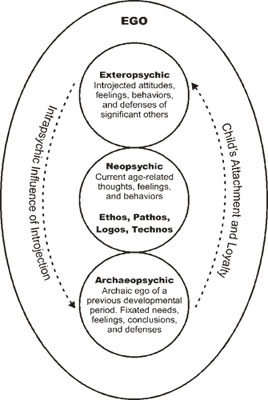
Above is one model of integrative psychotherapy (Erskine and Trautmann, 1996). What follows below are some preliminary thoughts on how I practice as a therapist and how I might change the existing nomenclature to reflect a more client-centered, relational model that rejects pathologizing language and structures (i.e., the DSM).

Premise: 


What counselors and psychotherapists have been taught to identify as symptoms of a corresponding condition pejoratively defined as "mental illness" should rather be understood as adaptations to experience.

All adaptations are at their genesis the best available mechanism for survival. As a person ages, these adaptations become either skillful (healthy) or unskillful (not supporting physical, emotional, mental, and spiritual health).

Disclaimer:


Short-term responses to challenging situations are not, in general, to be seen as adaptations to that experience (i.e., normal human emotional responses to life events such as death of a loved one, losing a job or promotion, surviving an accident, and so on). If, however, there are several similar experiences over a person's lifetime, with a corresponding response pattern that has solidified into what Carl Jung defined as a "complex," then this then can be seen as an adaption and not a response. 

Diagnosis:


When we join a new client on their healing journey, our task is to identify with them the somatic symptoms, affect dysregulation, cognitive distortions, lost spirituality, the core beliefs, and each domain's corresponding defense mechanisms that block an integrative experience of full health.

An integrative approach assesses from (at least) five domains, four of which are addressed by specific models of psychotherapy that contend their model is the only necessary model:
  • Body - somatic symptoms and unconscious behaviors
  • Affect - ability to regulate affect and for affect to match verbal and behavioral expression
  • Cognitive - possessing rational and non-distorted self-concepts, lack or pervasive thinking errors, or other forms of unskillful cognitive and behavioral scripts
  • Spiritual - a sense of purpose and meaning in one's life whether it's religious, spiritual, or atheist/humanist
The fifth domain is the Core Beliefs a person holds about who s/he is and what other people believe about him or her. These beliefs are deeply held and generally unconscious. They tend to originate in infancy and early childhood, making them difficult to uproot in order to plant new seeds for healthier core beliefs. Further, core beliefs tend to manifest in each of the four other domains listed above.

Multiplicity


We are all born (barring organic defects) with a whole and healthy Self-seed (our genetic and characterological template) that will become a mature sense of Self. However, no one escapes childhood without that Self being compromised in some way. Some children are so abused and/or neglected that they never develop a solid sense of self.

Consequently, parts of the self that are either overwhelming (emotional responses to trauma), unsafe (natural behaviors that are punished by caregivers), or not nurtured (for example, capacity for compassion or generosity) are split off from the Self and become self-fragments, ego states, parts, or subpersonalities that often remain unconscious and tend to show up in various forms of projection.

For each split off part, there is a part or parts that manages the outside world in some way to keep those "exiled" parts out of consciousness. Some of the common "managers" are the Pusher (focused on achievement and constant movement toward the next goal), Perfectionist (all or nothing thinking, a need for personal perfection, the failure of which brings intense shame), Pleaser (often middle children or first children who try to make everyone else happy, often at the expense of their own happiness), and the Inner Critic (a part who seeks to ensure the client is never criticized by others by being so hyper-critical of the client that any other criticism will be avoided). 

In order for splitting to become "hard-wired," there must be repeated episodes of the experiences that lead to the splitting. Normal misattunement between child and caregiver will not lead to splitting and, in fact, such misattunements are necessary for the development of resilience when they are quickly repaired by the caregiver.

Worldviews or Reality Frames


It is incumbant upon the therapist to be "experience near" (Kohut) with the client and be able to identify their basic worldview or reality model. This does not mean that the therapist necessarily supports the client's worldview, however, but it does require that the therapist be able to work within that reality frame.

It's also important that a client's worldview be held lightly - different parts of the client will possess alternate worldviews with anywhere from slight to profound variations.

Likewise, when a therapist encounters a new client whose worldview is unfamiliar (for example, someone from another country, or members of Tribal Nations, and so on), it is essential that therapists educate themselves as best they can and that they inquire with the client when they start to make assumptions about the client's experience that may not fit their reality frame.

Models of Psychotherapy


Successful therapeutic interventions require the all five domains are addressed. Here are a few examples of the therapeutic models that address the various domains:

Body - nutrition, exercise, somatic therapies (Somatic Experiencing, Bioenergetics, Yoga Therapy), behavioral psychotherapies, mindfulness-based therapies, Internal Family Systems Therapy (IFS - "parts work"), Hakomi, Eye Movement Desensitization, and Reprocessing (EMDR)
Affect - affective neuroscience, interpersonal neurobiology, intersubjective and relational psychotherapies, mindfulness-based therapies, IFS
Cognitive - cognitive behavioral therapies (CBT), dialectical behavioral therapy (DBT), neurolinguistic programming (NLP), rational emotive behavioral therapy (REBT), script analysis (Transactional Analysis), existential psychotherapy, narrative therapy, IFS
Spiritual - transpersonal psychotherapy, Jungian Analytical Psychotherapy, contemplative practices, meta-narrative therapies, existential psychotherapy, IFS (developing "Self-Leadership"), expressive therapies
Core Beliefs - cognitive therapies, relational psychotherapies, IFS, narrative therapies, creative visualization, soul retrieval, expressive therapies

Undoubtedly, there are other models I am not familiar with or that have slipped my mind at the moment, so this list should not be taken as my final position on this topic.

Goals of Psychotherapy


First rule: Do No Harm. Second rule: It's not the therapy, it's the relationship.

If therapists can successfully follow these two rules, and hold a belief in the inherent ability of the client to heal, as well as a belief in the client's ability to know what therapeutic pace and which interventions are best for them, then the client becomes his or her own healer and the therapist simply "midwife" that process with them.

The goal is never to impose a therapist's sense of "mental health" but, rather, to explore with the client what their own sense of mental health looks like and feels like in their lives. Having done so, then it becomes easier for the therapist to identify with the client which areas or domains of their life are not functioning optimally.

Areas of less-than-optimal function are the adaptations defined as unskillful that therapy seeks to minimize while also helping the client learn skillful adaptations to replace those being minimized.

***

Okay then, that is my first-pass at a new model. Please share your thoughts, comments, and criticisms in the comments section here or at Facebook.

Sunday, September 02, 2012

Gregor Žvelc - Facilitating Natural Healing Process within Attuned Therapeutic Relationship


This is an excellent article from the recent issue of The International Journal of Integrative Psychotherapy, by Gregor Zvelc, Director of Institute for Integrative Psychotherapy and Counseling, and founding member of International Integrative Psychotherapy Association (IIPA).

Zvelc outlines his mindful processing method in psychotherapy, an approach that allows clients to experience their inner states in a moment to moment subjective attunement with the therapist. He contextualizes his model within the other mindfulness-based therapeutic models.

Citation:
Zvelc, G. (2012). Mindful Processing in Psychotherapy – Facilitating Natural Healing Process within Attuned Therapeutic Relationship. The International Journal of Integrative Psychotherapy, Vol. 3, No. 1, p. 42-58. 


Gregor Žvelc


Abstract:
Mindfulness is non-judgmental, accepting awareness of what is going on in the present moment. The author proposes that mindfulness promotes natural healing of the organism, where the change comes spontaneously by acceptance and awareness of internal experience. Such process the author describes as ‘mindful processing’, because with mindful awareness disturbing experiences can be processed and integrated. The author’s interest in how mindfulness can be systematically applied in psychotherapy led to the development of the ‘mindful processing’ method, which invites the client to become aware of the moment-to-moment subjective experience. The method is used within attuned therapeutic relationship and the theoretical framework of Integrative Psychotherapy. Mindful Processing is not goal-oriented and doesn’t strive to achieve a positive outcome. Such an outcome is a natural by-product of accepting awareness of both pleasant and unpleasant inner experience (body sensations, affects and/or thoughts). The method is illustrated with a transcript of a session with commentary.

________________
It is remarkable how little we know about experience that is happening right now… This relative ignorance is especially strange in light of the following: First we are subjectively alive and conscious only now. Now is when we directly live our lives. Everything else is once or twice removed. The only time of raw subjective reality, of phenomenal experience, is the present moment.
(Daniel Stern, 2004, p. 3)

Mindfulness has become a very important concept in psychology and psychotherapy in recent years (Siegel, 2007). Mindfulness is non-judgmental, accepting awareness of what is going on in the present moment. Kabat-Zinn (1994) defines it as “paying attention in a particular way: on purpose, in the present moment and non-judgmentally” (p.4). Mindfulness-based interventions are becoming increasingly used in mental health settings. There has been an increasing amount of research about mindfulness over the last 10 years in clinical and health psychology. Siegel (2007) reports that mindfulness training helps to reduce subjective states of suffering, improve immune functioning, accelerate rates of healing, nurture interpersonal relationships and an overall sense of well being. Mindfulness has been shown to change brain function in positive ways, increasing activity in areas of the brain associated with positive affect (Davidson et al., 2003). Mindfulness training is also associated with changes in gray matter concentration in brain regions involved in learning and memory processes, emotion regulation, self-referential processing, and perspective taking (Hölzel et al., 2011). Mindfulness approaches have been shown to decrease stress and improve quality of life (e.g. Nyklíček & Kuijpers, 2008; Shapiro, Astin, Bishop, & Cordova, 2005). Mindfulness interventions are used with success with different mental health issues including depression (e.g. Ma & Teasdale, 2004; Kenny & Williams, 2007), anxiety disorders (e.g. Miller, Fletcher, & Kabat-Zinn, 1995), borderline personality disorder (e.g. Bohus et al., 2000), binge eating disorder (Telch, Agras, & Linehan, 2001), and even psychosis (Bach & Hayes, 2002; Gaudiano & Herbert, 2006). Mindfulness based cognitive therapy prevents relapse in cases of chronic depression (Teasdale et al., 2000; Ma & Teasdale, 2004; Williams, Duggan, Crane, & Fennell, 2006).

Martin (1997) proposed that mindfulness is a common factor which underlies different psychotherapy approaches. There are several specific approaches that explicitly emphasize the cultivation of mindfulness.

The most known of these approaches are:

• Mindfulness Based Stress Reduction (MBSR; Kabat-Zinn, 1990)
• Mindfulness-based cognitive therapy (MBCT; Segal, Williams, & Teasdale, 2002; Crane, 2009)
• Acceptance and commitment therapy (ACT; Hayes, Strosahl, & Wilson, 1999),
• Dialectical behavioral therapy (DBT; Linehan, 1993),
• Sensorimotor psychotherapy (Ogden & Minton, 2000; Ogden, Minton, & Pain, 2006).
Germer (2005) proposed three different ways of integrating mindfulness into psychotherapy. The therapist may:

1) personally practice mindfulness, thus bringing the quality of mindful presence into the therapy room with the client;
2) use a theoretical frame of reference informed by research and mindfulness practice;
3) explicitly teach the client how to practice mindfulness.
Germer (2005) collectively refers to this range of approaches as mindfulness-oriented psychotherapy.

Mindfulness and Integrative psychotherapy

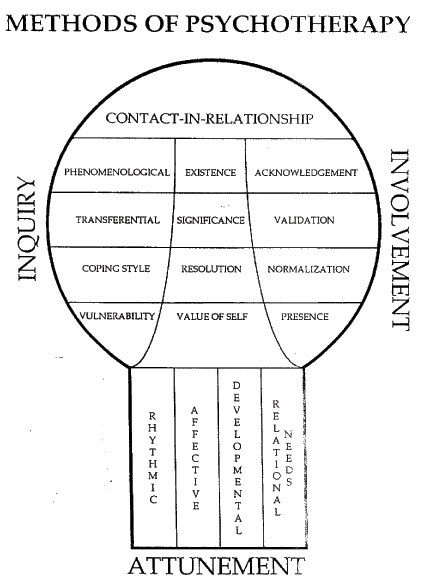
Integrative Psychotherapy developed by Erskine and colleagues (Erskine, Moursund, & Trautmann, 1999) integrates theories and methods from psychoanalytic, humanistic and behavioral traditions of psychotherapy into a new theoretical framework. While the word ‘mindfulness’ is not explicitly mentioned in their writings, I think that mindfulness practice and research are very compatible with the framework of Integrative Psychotherapy (Žvelc, 2009). Theories and methods of Integrative Psychotherapy are based upon the philosophy of accepting awareness within attuned therapeutic relationship. Main methods of Integrative Psychotherapy are Inquiry, Attunement and Involvement, which invite the client in contact with self and others and promote integration of dissociated states of self. These methods invite the client into state of awareness and acceptance of his/her internal experience, which is the main mechanism of mindfulness.

Inquiry involves respectful exploration of the client's phenomenological experience. The therapist asks the client to reveal to him his subjective perspective; in doing so, the client becomes increasingly aware of his relational needs, feelings, behaviour and thoughts (Erskine et al., 1999). The therapist invites the client to search for answers, to think in new ways and to explore new avenues of awareness. For an effective inquiry, there is no expectation that the client will come to some predetermined goal or insight (Erskine et al., 1999). Inquiry promotes awareness and increases internal and external contact. With respectful Inquiry we are actually inviting the client to be aware of his/her experience.

Mindfulness can be defined as nonjudgmental, accepting awareness of one’s own experience in the current moment (Černetič, 2011). Such awareness can include internal experience (thoughts, feelings, and physical sensations) and/or external stimuli (e.g. sounds, colors, odors) that an individual becomes aware of in an allowing manner, without trying to avoid or suppress them (Žvelc, Černetič, & Košak, 2011). With respectful inquiry the client may become increasingly aware of aspects of his experience which he/she often tries to avoid. Therapeutic Inquiry alone is often not enough, it should be coupled with involved therapist’s response which invites the client to accept his/her experience. For healthy contact that promotes integration, full awareness is not enough; it should be coupled with acceptance of our experience (Žvelc, et al., 2011).

Involvement means that the therapist is willing to be affected by what happens in the relationship with the client (Erskine et al., 1999). Therapeutic involvement includes acknowledgment, validation, normalization, and presence. With acknowledgment, the therapist demonstrates that he is aware of what the client is feeling and experiencing. Validation is the acknowledgment of the significance of the client’s experience. Normalization depathologises the clients’ definition of their internal experiences or their coping mechanisms. In this manner, the therapist communicates to the client that his experience is a normal, and not pathological or defensive reaction. The next aspect of the Involvement is presence, which is described by Erskine & Trautmann (1996) in the following way:
‘Presence is enhanced when the therapist decenters from his or her own needs, feelings, fantasies, or hopes and centers instead on the client’s process. Presence also includes the converse of decentering, that is, being fully contactful with his or her own internal process and reactions. The therapist’s history, relational needs, sensitivities, theories, professional experience, own psychotherapy, and reading interests all shape unique reactions to the client. Presence involves both bringing the richness of the therapist’s experiences to the therapeutic relationship as well as decentering from the self of the therapist and centering on the client’s process.’ (p. 325).
I think that with these words authors express the essence of mindfulness of the therapist within therapeutic relationship.

The third method of Integrative Psychotherapy is attunement. Erskine and Trautmann (1993/1997) describe attunement as a two-part process: 'the sense of being fully aware of the other person's sensations, needs, or feelings and the communication of that awareness to the other person.' (p. 90). Attunement goes beyond empathy – it provides a reciprocal affect and/or resonating response. Therapist can be attuned to a wide variety of client behaviours and experiences, but especially to his rhythm, nature of affect, cognition, developmental level of psychological functioning and relational needs.

Inquiry, attunement and involvement provide the therapeutic framework within which the client is invited to become mindful of his/her experience. These methods provide the basic framework for processing of dissociated and unresolved experiences.

Read the whole article.

Wednesday, July 18, 2012

Organizing Self-Experiences by Marye O'Reilly Knapp


This is an interesting paper that was recently published in the open source International Journal of Integrative PsychotherapyVol 3, No 1 (2012). O'Reilly-Knapp offers a different conception of parts, or subpersonalities, one based in the work of Guntrip and Fairbairn, leading figures in the Object-Relations school of psychoanalysis. But her model is also integrative, based in part on Richard Erskine's Theories and methods of an integrative transactional analysis: A volume of selected articles (1997). You can find many of the articles by Erskine at the Integrative Psychotherapy site.

She references one of her own papers that might also be of interest, although it did not seem necessary for appreciating this one - Between Two Worlds: The Encapsulated Self.

Organizing Self-Experiences
Marye O’Reilly-Knapp

Abstract:
Psychotherapy can provide an organization of experiences so that a person attains a sense of self in relation to self and others. The first part of the paper addresses the developing self, the withdrawn  self, and an introduction to the yearning self. The second part of the paper considers the domain of relatedness with a focus on the development of self via the concepts of coherence, agency, affectivity, and continuity in time.

Here is the introduction to the paper:

“There is this secret part of me”, says Linda, as she begins her session. “I do not let anyone know about this piece of me; when I am afraid I hide here.” As she spoke I thought about a little girl who has no one to help her when she is afraid. She figured out a way to protect herself from the shouts and raging behavior of her stepfather and a mother who withdrew. Linda describes to me this hidden place where big rocks surround her in darkness. She cannot be seen nor can she be found. Her rocks remind me of Tustin’s (1986) description of “an imaginary hard shell” which protects a little child from the hostile world (p. 57). In Linda’s situation her mother was unresponsive to her child and failed to provide the protection needed for Linda to feel safe. In an earlier paper on the nature of the schizoid process, the existence of an individual in such a world was described along with the therapeutic interventions needed to establish and maintain a therapeutic relationship (O’Reilly-Knapp, 2001). Using the theory and methods of Integrative Psychotherapy as developed by Erskine (1997) and Guntrip’s (1995) work on the schizoid phenomenon, a framework was identified to work with the state of self that is split off and encapsulated. Using inquiry, attunement, and involvement in working with the splits described by Guntrip, interventions were documented which invited the self into relationship. Within the theory of Integrative Psychotherapy an emphasis is placed on the therapeutic relationship as healing. The process encourages a person in the therapeutic relationship to bring to awareness what has been denied or disavowed and to be immersed in a relationship where the client can express and learn to connect with the therapist, one’s self and, ultimately with others. An empathic, client-centered inquiry, attunement to the client’s rhythms, developmental levels, relational needs, cognition and affect, and involvement in acknowledging, validating and normalizing experiences provides the course of action for working with a person’s splits.

Fairbairn (1952) and Guntrip (1968/1995) proposed that the ego splits into four parts. The first split is between the central ego which is in contact with the outer world and the withdrawn ego which pulls into the inner world. The withdrawal into an inner state is an attempt to move away from perceived danger. As the central ego attempts to deal with the outer world, the wants and needs of the child are obstructed by the persecutory ego. Thus the second split occurs. Guntrip (1995) describes the struggle with the second split of the ego as a part dealing with unsatisfied desires and needs while another part persecutes desires and needs. This active persecution “keeps the basic self weak” and makes ‘cure’ a slow and difficult process” (p. 142). He went on to describe the ultimate split of the ego into the oral ego and regressed ego. Fueled by fear and flight from the outer world and an internal conflict dealing with helplessness and aggression, this last split holds the “dread of collapse in a depersonalized state”. (Hazell,1994, p. 199).

This paper expands on the previous paper on the encapsulated self by focusing on specific interventions for working with the hidden and lost self. The self-invariants of coherence, agency, affectivity, and continuity in time as identified by Stern (1985) are incorporated in this paper as:

1.) a way to further understand the formation of a core self and
2.) a therapeutic direction to facilitate the organization and emergence of self.

Consideration is given to the person’s use of withdrawal and at the same time, the longing to be a part of life. I propose that in the therapeutic relationship, the therapist must address the discord of persecution that is occurring and the struggle between the withdrawn self and the ‘yearning self’, aching to push out toward life and the world. Since the emerging self has withdrawn into an inner world, the core of self appears to be missing. There is no sense of continuity, inner feelings are denied or disavowed, needs are out of conscious awareness, and a sense of power over one’s actions is absent. Treatment of this self-state involves a connection with the therapist and use of rhythmic attunement to mutually create the holding space for emergence. The therapist provides the relationship where a safe environment allows for the self to be in contact and grow. The involvement of the therapist in the use of one’s own self is fundamental in the therapeutic process and will be demonstrated in a case study. The methods of Integrative Psychotherapy are the foundation of the therapeutic interventions; Stern’s (1985) four crucial invariants used in the early development and emergence of the self are employed in this paper as a way to assist in the organization of a person’s self.

Read the whole paper.