
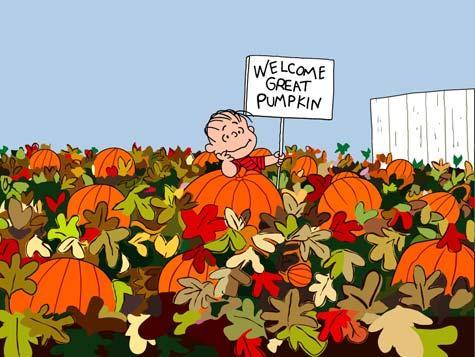
. . . and it was only a dream. Happy Holidays!

Beyond Counting Blessings
Being Truly Thankful
by Madisyn Taylor
Our gratitude deepens when we begin to be thankful for being alive during this time and living the life we are living.
Often when we practice being thankful, we go through the process of counting our blessings, acknowledging the wonderful people, things and places that make up our reality. While it is fine to be grateful for the good fortune we have accumulated, true thankfulness stems from a powerful comprehension of the gift of simply being alive, and when we feel it, we feel it regardless of our circumstances. In this deep state of gratitude, we recognize the purity of the experience of being, in and of itself, and our thankfulness is part and parcel of our awareness that we are one with this great mystery that is life.
It is difficult for most of us to access this level of consciousness as we are very caught up in the ups and downs of our individual experiences in the world. The thing to remember about the world, though, is that it ebbs and flows, expands and contracts, gives and takes, and is by its very nature somewhat unreliable. If we only feel gratitude when it serves our desires, this is not true thankfulness. No one is exempt from the twists and turns of fate, which may, at any time, take the possessions, situations, and people we love away from us. Ironically, it is sometimes this kind of loss that awakens us to a thankfulness that goes deeper than just being grateful when things go our way. Illness and near-miss accidents can also serve as wake-up calls to the deeper realization that we are truly lucky to be alive.
We do not have to wait to be shaken to experience this state of being truly thankful for our lives. Tuning in to our breath and making an effort to be fully present for a set period of time each day can do wonders for our ability to connect with true gratitude. We can also awaken ourselves with the intention to be more aware of the unconditional generosity of the life force that flows through us regardless of our circumstances.
10/29/2012

Editor’s Note: A reader's recent tip reminded us about a collection of articles from the October/November 1986 issue of Utne Reader about Halloween, contemporary witchcraft, and feminist spirituality. In celebration of the holiday, we’ll be posting a few of our favorites online until the 31st.
Witches celebrate eight festivals each year, known as sabbats, which coincide with the changes in the seasons. The solstices (December 21 and June 21) mark the days when winter and summer, respectively, begin. The spring and fall equinoxes (March 21 and September 23) mark the two days of the year when the hours of the day are equally divided between day and night. These four days were very important to ancient agricultural societies and were occasions for great celebrations.
The four other sabbats are known as cross-quarter days and represent festivals that were important to herding societies: Candlemas on February 2; Beltane on May 1; Lughnasad on August 1; and Samhain, or Halloween, on October 31. Of the four cross-quarter days, Halloween is probably best known by nonpagans. In herding societies, Halloween marks the new year. It signifies the time of year when herdsmen thinned out their livestock for the winter, killing for their meat those animals that looked as if they wouldn’t survive the colder weather. Thus, Halloween is the Witch’s new year.
Halloween also marks the late harvest—the time of year when vegetation dies off and days grow shorter and darker.
“Halloween is the time when we are going into the dark,” says Antiga, a Minneapolis Witch, “and one thing about Witchcraft is that darkness is not necessarily associated with evil. The seed lies in darkness under the earth and is quiet all winter before it comes to life in the spring. In societies not as industrial as ours, people rested during the dark. It’s a whole different energy in the winter than in the summer.
“According to pagan legend, Halloween is also the time when the veil between the two worlds, the world of the dead and the living, is thought to be the thinnest. The reason people dressed up on Halloween was that they thought the spirits were all around them, and they were afraid the spirits might take them along with them. The people dressed up as spirits so the [visiting] spirits would think they too were spirits and wouldn’t take them to the world of the dead.”
Excerpted from the Twin Cities Reader (Oct. 30, 1985) and reprinted in Utne Reader (Oct./Nov. 1986).
Image: A Halloween trick-or-treater in Redford, Michigan, 1979. Photo by Don Scarbrough, licensed under Creative Commons.
State of the Unions: Organized Labor Has Seen Much Better Days
- September 2, 2012
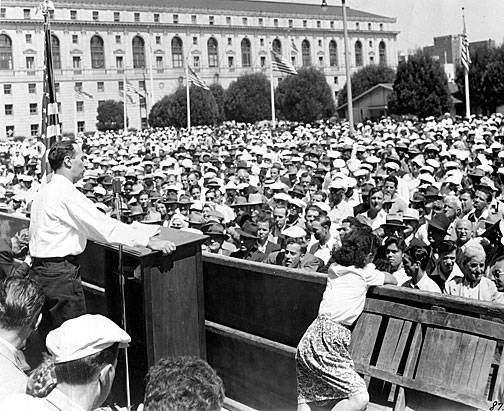
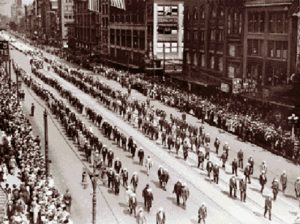
Lest we forget why we've got a three-day weekend, Labor Day is a recognition of American workers and what they've done for the country. Minyanville writes that the labor movement has seen significant decline in recent years, and checks in on a few specific labor unions. Here's an excerpt from the section on public sector workers:Last year the state of Wisconsin was ground zero for what many believe was the decline of American labor unions. The battle over collective bargaining between Wisconsin public sector workers and Governor Scott Walker that resulted in the passage of his anti-union “Wisconsin budget repair bill” last March didn’t just hit national headlines, it took the conversation of collective bargaining to the national stage and climaxed in the June 5 failed recall election of the governor.
The failed recall was seen by many as the beginning of the end for labor unions. On the same day, pension reforms for public sector workers were overwhelmingly favored in elections in San Jose and San Diego, supporting evidence from polls showing that public approval of unions was dropping. A 2009 Gallup poll found that only 48% of the public supported unions compared to 72% of Americans approving of unions in a 1936 Gallup poll.Earlier this week, Business Insider's Henry Blodget posted this timely column titled "Dear American Companies: Here's How To Fix The Economy:"In short, instead of viewing "shareholders" and "customers" as the only two corporate constituencies that matter, Ford introduced the idea that great companies should also serve a third constituency:
Employees.And because one company's employees are another company's customers, Ford's decision (to dramatically increase wages) helped spread the country's wealth to more citizens and expand the purchasing power of the country as a whole. And, in so doing, it helped the overall economy.So hey, while you're enjoying the weekend, remember that what you're celebrating is a major economic engine in the country, both past and present, and one that is facing quite a bit of tumult. Here's a brief primer on the history of Labor Day itself. Got any favorite labor-related reading? Share some recommendations in the comments—a few of us might celebrate by reading under a tree on Monday.Photo, "Glass Works. Midnight," via Library of Congress.

The Best Christmas Present? Try Gratitude
Robert Leahy, Ph.D. - Director of the American Institute for Cognitive TherapyPosted: December 24, 2010It's the holidays and you are wondering what to give those people in your life who are special. What's the latest gadget, the latest trend, the onething you just can't live without? Or, you wonder what you might get. Is it the jewelry that you wanted? The iPad that seems a bit too expensive? Is it a gift certificate? Giving and getting. What wonderful Christmas joy this seems to be. "So, what did you get?"
I have a suggestion for a gift -- a gift that you can receive and give at the same time. It's called "gratitude." What you can do is think about the people that you love, the special people, and contemplate why they matter to you. What would life be like without your best friend, your partner, your mother or father, your kids? Imagine that they no longer existed and now you had a chance to get them back -- but only if you could prove that you really were grateful. What would you miss about your best friend? Think about the conversations, the memories, the laughter, and the tears -- you both shared. Now think about how grateful you are for having him or her in your life. Now, tell them.
I think back about my mother who died 24 years ago. I am forever grateful to her. She cared for me when I was a child, made me laugh, gave me confidence, kissed me and gave me the ability to love. I am grateful today. And always will be. I am grateful for people and things that are gone -- but stay with me forever because I keep them in my gratitude. No one can ever take away my appreciation.
I am grateful to friends, family members, to my colleagues, my patients who continue to teach me. I am grateful that I can open my eyes and see the snow from a window where I am sitting. I am grateful to all the authors whose work has inspired me, made me think and feel in new and deeper ways, authors like Shakespeare and John Donne and James Joyce and all the others -- all gone, perhaps, but all here forever in my heart.
A patient of mine told me about how he had been cheated out of money. He was bitter, dwelling on it and complaining. He had every right to feel this way. But I suggested that he set this aside for a few minutes and to imagine the following: "Everything has been taken away. All your senses, your family, money, job, memories -- you are nothing. And now you can get one thing back at a time -- but only if you can convince me that you truly appreciate it, truly have gratitude. What do you want back first -- and why do you appreciate it?" He was suddenly quiet, tears began forming in his eyes. He said, "I want my daughter back". And I asked him what he appreciated about her and he began describing the good and the bad -- the love, affection, fun and the obstacles they shared together. And he continued with wanting his wife and what she meant and why life would seem to be empty -- impossible -- without her.
And then I said, "Imagine you are blind. But you can open your eyes for ten minutes and see what is really important. What would that be?" And, of course, it was his family. "I noticed that in your list of things you didn't put the money or your job or your possessions. And it seems to me that you already have everything that is the most important. Except you haven't been noticing it, haven't paid attention. So over the next two weeks you can either focus on the money that you lost or you can make your family feel loved and appreciated. You choose."
He chose gratitude.
When I was a kid I read the short story by O'Henry -- "The Gift of the Magi." It's about a young couple, Della and Jim, who are poor but who love each other. Tomorrow is Christmas and neither one has enough money to buy the other the present they really want to buy. Jim wants to get her a beautiful comb for her flowing hair, she wants to get him a chain for his heirloom watch. She sells her hair to buy the chain, he sells the watch to buy the comb. A comb -- but there will be no hair -- a watch-chain, but there is no longer a watch.
O'Henry ends the story with the following:
And here I have lamely related to you the uneventful chronicle of two foolish children in a flat who most unwisely sacrificed for each other the greatest treasures of their house. But in a last word to the wise of these days let it be said that of all who give gifts these two were the wisest. O all who give and receive gifts, such as they are wisest. Everywhere they are wisest. They are the magi.
10 Things That Christmas Would Be Better Off Without
Despite indications to the contrary, I love me some Christmas. But like anything, it's not without its faults. So let's get rid of those faults now, shall we?
1. Jesus
I'm telling you, Christmas would be improved markedly without all the fucking bullshit Jesus stuff involved. "But Drew!" you say, "The whole point of Christmas is to celebrate Christ's birth!" Not anymore, it isn't. The whole point of Christmas is for me to get loaded and eat a Thanksgiving's worth of food every night for an entire month. This holiday has completely outgrown its roots. We don't need the Jesus part in 2010. Dec. 25 isn't even his REAL birthday, you know. He was born on March 12. Also, his real name was Eugene Dunwoody. That's a FACT.If we get rid of the religious part of Christmas, then we don't have to bother with the whole fucking PC semantics of it. You don't have to worry about saying "Merry Christmas" to some tightass liberal dipshit who was tricked into believing Kwanzaa is a real holiday. They can't get mad at you if they know there's no explicit Jesus undertone to the whole thing. TAKE THAT, YOU FUCKING PINKOS. On the flipside, I don't have to worry about every religious nutball ruining my good time opening gifts by constantly reminding me that the holiday is meant to commemorate the birth of the Son of God, who was then lashed to within an inch of his life and nailed to a cross, all because I jack off. You active Christians make me uncomfortable.
Without Jesus, everyone from every religion can finally jump in and celebrate the holiday without compunction. Face it, Jews: You may say you like going out to the movies and eating Chinese food on Dec. 25. But secretly, deep in your heart, you know you wanna buy a tree and string up lights and sing "The Christmas Song," which is a BEAUTIFUL song and well worth trading in any religion for. You should be able to do that without a shred of guilt. We can make Christmas the proper American holiday it ought to be, and not the tacky religious one that Gregg Easterbrook keeps demanding we recognize.
It's not unrealistic to get rid of Jesus from Christmas, you know. Pink Floyd did just fine without Syd Barrett. THINGS EVOLVE, PEOPLE.
2. Any Gift From The Body Shop
What is this? Avocado body butter? This is fucking USELESS. Did you really pay $15 for this? There are certain shops in the mall that exist solely to sell you pointless gifts that you need to buy because your goddamn Mom was too lazy to think of a wish list. This is why kids are fantastic. Sure, they scream and yell and break things and shit their pants. But when Christmas comes around, they are fucking ORGANIZED. They know exactly what they want and where it can be procured. No last-second purchase of a Zagat restaurant guide for them. If you don't know what you want for Christmas, you don't deserve to get anything. That's the rule. These are lean economic times. I'm not getting you something from Brookstone unless you've made it clear that you fucking need it. And you don't.3. Christmas Cards That Do Not Include An Awkward Family Photo
The only reason to send me a Christmas card is so I can look at your family and pick apart each member's looks one by one. Did you get fat? Why is your child wearing that john-john? Are you really that much of a snobby prick? Is that your living room? Looks like it was designed by a blind heterosexual. This is Christmas. It's my season to JUDGE YOU. Don't send me some Christmas card that has no picture in it. You may as well be sending me a FiOs direct mail piece. Into the fireplace with it. AND NO PICTURES OF JUST YOUR DOG. If there's anything people care about less than your kids, it's your stupid fucking dog.4. Actual Clothing In The Holiday Victoria's Secret Catalog
I'm aware that good porn is available for free on the internet, but I'm old, which means I look fondly upon analog jacking. Every year, they send a holiday Victoria's Secret catalog to my home, and every year they waste an untold number of pages trying to sell women actual pants, shirts, and loungewear. This sickens and repulses me. There's no need for a third of this catalog to turn into a J. Crew brochure. Just edit it down and give me full jacking material on every page. The catalog will stay on top of my shitter for at least three weeks longer.(Apropos of nothing, I greatly enjoy Christmas catalogs that include wildly expensive holiday food you can have shipped right to your door. Oh, man. That $500 Williams Sonoma ham looks fucking GOOD. The Dean & DeLuca catalog is hot as shit. Only an asshole would pay $15 for a bag of glazed pecans, but they sure are pretty to look at.)
5. Lexus's December To Remember
Every year, people complain about those fucking red bows in the Lexus ads, and every year, Lexus keeps rolling them out. And they do this just to piss you off. They're basically like, "Oh, we know you hate us and our rich customers. But you know what? FUCK YOU. We're adding even MORE bows to this ES, and there's nothing you can do about it because you are fucking POOR and can't afford to go to a doctor. DEAL WITH IT."

Winter Solstice celebrations: a.k.a. Christmas,
Saturnalia, Yule, the Long Night, etc.Overview:
Religious folk worldwide observe many seasonal days of celebration during the month of December. Most are religious holy days, and are linked in some way to the winter solstice in the Northern Hemisphere. On that day, due to the earth's tilt on its axis, the daytime hours are at a minimum in the Northern hemisphere, and night time is at a maximum. (In the southern hemisphere, the summer solstice is celebrated in December, when the night time is at a minimum and the daytime is at a maximum. We will assume that the reader lives in the Northern hemisphere for the rest of this essay.)
People view other religions in various ways, and thus treat the celebrations of other faiths differently:
Some people value the range of December celebrations, because it is evidence of diversity of belief within our common humanity. They respect both their own religious traditions and those of other faiths for their ability to inspire people to lead more ethical lives. Religious diversity is to them a positive influence. Others reject the importance of all celebrations other than the holy day recognized by their own religion. Some even reject their religion's holy days which are seen to have Pagan origins (e.g. Easter and Christmas). Some view other religions as being inspired by Satan. Thus the solstice celebrations of other religions are rejected because they are seen to be Satanic in origin.
Origins of solstice celebration
The seasons of the year are caused by the 23.5© tilt of the earth's axis. Because the earth is rotating like a top or gyroscope, it points in a fixed direction continuously -- towards a point in space near the North Star. But the earth is also revolving around the sun. During half of the year, the southern hemisphere is more exposed to the sun than is the northern hemisphere. During the rest of the year, the reverse is true. At noontime in the Northern Hemisphere the sun appears high in the sky during summertime and low in the sky during winter. The time of the year when the sun reaches its maximum elevation occurs on the day with the greatest number of daylight hours. This is called the summer solstice, and is typically on JUN-21 in the Northern Hemisphere -- the first day of summer. "Solstice" is derived from two Latin words: "sol" meaning sun, and "sistere," to cause to stand still. The lowest elevation occurs about DEC-21 and is the winter solstice -- the first day of winter, when the night time hours are maximum.
In pre-historic times, winter was a very difficult time for Aboriginal people in the northern latitudes. The growing season had ended and the tribe had to live off of stored food and whatever animals they could catch. The people would be troubled as the life-giving sun sank lower in the sky each noon. They feared that it would eventually disappear and leave them in permanent darkness and extreme cold. After the winter solstice, they would have reason to celebrate as they saw the sun rising and strengthening once more. Although many months of cold weather remained before spring, they took heart that the return of the warm season was inevitable. The concept of birth and or death/rebirth became associated with the winter solstice. The Aboriginal people had no elaborate instruments to detect the solstice. But they were able to notice a slight elevation of the sun's path within a few days after the solstice -- perhaps by DEC-25. Celebrations were often timed for about the 25th.
December celebrations in many faiths and locations - ancient and modern
ANCIENT BRAZIL: Brazilian archeologists have found an assembly of 127 granite blocks arranged equidistant from each other. They apparently form an ancient astronomical observatory. One of the stones marked the position of the sun at the time of the winter solstice and were probably used in religious rituals. 20 ANCIENT EGYPT: The god-man/savior Osiris died and was entombed on DEC-21. "At midnight, the priests emerged from an inner shrine crying 'The Virgin has brought forth! The light is waxing" and showing the image of a baby to the worshipers." 1 ANCIENT GREECE: The winter solstice ritual was called Lenaea, the Festival of the Wild Women. In very ancient times, a man representing the harvest god Dionysos was torn to pieces and eaten by a gang of women on this day. Later in the ritual, Dionysos would be reborn as a baby. By classical times, the human sacrifice had been replaced by the killing of a goat. The women's role had changed to that of funeral mourners and observers of the birth. ANCIENT ROME: Saturnalia began as a feast day for Saturn on DEC-17 and of Ops (DEC-19). About 50 BCE, both were later converted into two day celebrations. During the Empire, the festivals were combined to cover a full week: DEC-17 to 23.
By the third century CE, there were many religions and spiritual mysteries being followed within the Roman Empire. Many, if not most, celebrated the birth of their god-man near the time of the solstice. Emperor Aurelian (270 to 275 CE) blended a number of Pagan solstice celebrations of the nativity of such god-men/saviors as Appolo, Attis, Baal, Dionysus, Helios, Hercules, Horus, Mithra, Osiris, Perseus, and Theseus into a single festival called the "Birthday of the Unconquered Sun" on DEC-25. At the time, Mithraism and Christianity were fierce competitors. Aurelian had even declared Mithraism the official religion of the Roman Empire in 274 CE. Christianity won out by becoming the new official religion in the 4th century CE.ATHEISTS: There has been a recent increase in solstice observances by Atheists in the U.S. For example, The American Atheists and local Atheist groups have organized celebrations for 2000-DEC, including the Great North Texas Infidel Bash in Weatherford TX; Winter Solstice bash in Roselle NJ; Winter Solstice Parties in York PA, Boise ID, North Bethesda MD, and Des Moines IA; Winter Solstice Gatherings in Phoenix AZ and Denver CO: a Year End Awards and Review Dinner (YEAR) in San Francisco, CA. BUDDHISM: On DEC-8, or on the Sunday immediately preceding, Buddhists celebrate Bodhi Day (a.k.a. Rohatsu). It recalls the day in 596 BCE, when the Buddha achieved enlightenment. He had left his family and possessions behind at the age of 29, and sought the meaning of life -- particularly the reasons for its hardships. He studied under many spiritual teachers without success. Finally, he sat under a pipal tree and vowed that he would stay there until he found what he was seeking. On the morning of the eighth day, he realized that everyone suffers due to ignorance. But ignorance can be overcome through the Eightfold Path that he advocated. This day is generally regarded as the birth day of Buddhism. Being an Eastern tradition, Bodhi Day has none of the associations with the solstice and seasonal changes found in other religious observances at this time of year. However, it does signify the point in time when the Buddha achieved enlightenment and escaped the endless cycle of birth, death and rebirth through reincarnation -- themes that are observed in other religions in December. CHRISTIANITY: Any record of the date of birth of Yeshua of Nazareth (later known as Jesus Christ) has been lost. There is sufficient evidence in the Gospels to indicate that Yeshua was born in the fall, but this seems to have been unknown to early Christians. By the beginning of the 4th century CE, there was intense interest in choosing a day to celebrate Yeshua's birthday. The western church leaders selected DEC-25 because this was already the date recognized throughout the Roman Empire as the birthday of various Pagan gods. 1,2 Since there was no central Christian authority at the time, it took centuries before the tradition was universally accepted:
Eastern churches began to celebrate Christmas after 375 CE. The church in Jerusalem started in the 7th century. Ireland started in the 5th century Austria, England and Switzerland in the 8th Slavic lands in the 9th and 10th centuries. 3 Many symbols and practices associated with Christmas are of Pagan origin: holly, ivy, mistletoe, yule log, the giving of gifts, decorated evergreen tree, magical reindeer, etc. Polydor Virgil, an early British Christian, said "Dancing, masques, mummeries, stageplays, and other such Christmas disorders now in use with Christians, were derived from these Roman Saturnalian and Bacchanalian festivals; which should cause all pious Christians eternally to abominate them." In Massachusetts, Puritans unsuccessfully tried to ban Christmas entirely during the 17th century, because of its heathenism. The English Parliament abolished Christmas in 1647. Some contemporary Christian faith groups do not celebrate Christmas. Included among these was the Worldwide Church of God (before its recent conversion to Evangelical Christianity) and the Jehovah's Witnesses.
DRUIDISM: Druids and Druidesses formed the professional class in ancient Celtic society. They performed the functions of modern day priests, teachers, ambassadors, astronomers, genealogists, philosophers, musicians, theologians, scientists, poets and judges. Druids led all public rituals, which were normally held within fenced groves of sacred trees. The solstice is the time of the death of the old sun and the birth of the dark-half of the year. It was called "Alban Arthuan by the ancient Druids. It is the end of month of the Elder Tree and the start of the month of the Birch. The three days before Yule is a magical time. This is the time of the Serpent Days or transformation...The Elder and Birch stand at the entrance to Annwn or Celtic underworld where all life was formed. Like several other myths they guard the entrance to the underworld. This is the time the Sun God journey's thru the underworld to learn the secrets of death and life. And bring out those souls to be reincarnated." 14 A modern-day Druid, Amergin Aryson, has composed a Druidic ritual for the Winter Solstice. 15 INCA RELIGION: The ancient Incas celebrated a festival if Inti Raymi at the time of the Winter Solstice. Since the Inca Empire was mainly south of the equator, the festival was held in June. It celebrates "the Festival of the Sun where the god of the Sun, Wiracocha, is honored." 16 Ceremonies were banned by the Roman Catholic conquistadores in 1572 century as part of their forced conversions of the Inca people to Christianity. A local group of Quecia Indians in Cusco, Peru revived the festival in 1944. It is now a major festival which begins in Cusco and proceeds to an ancient amphitheater a few miles away. IRAN: Shabe-Yalda (a.k.a. Shab-e Yaldaa) is celebrated in Iran by followers of many religions. It originated in Zoroastrianism, the state religion which preceded Islam. The name refers to the birthday or rebirth of the sun. People gather at home around a korsee -- a low square table -- all night. They tell stories and read poetry. They eat watermelons, pomegranates and a special dried fruit/nut mix. Bonfires are lit outside. 17 ISLAM: During the period 1997 to 1999, the first day of the Islamic lunar month of Ramadan occurred in December. The nominal dates were 1997-DEC-31, 1998-DEC-20 and 1999-DEC-9. The actual date for the start of Ramadan depends upon the sighting of the crescent moon, and thus can be delayed by a few days from the nominal date. This is the holiest period in the Islamic year. It honors the lunar month in which the Qura'n was revealed by God to humanity. "It is during this month that Muslims observe the Fast of Ramadan. Lasting for the entire month, Muslims fast during the daylight hours and in the evening eat small meals and visit with friends and family. It is a time of worship and contemplation. A time to strengthen family and community ties." 4 Because Ramadan is part of a lunar-based calendar, it starts about 11 days earlier each year. In the year 2000, the nominal date will be NOV-27. Ramadan is thus not associated with the winter solstice as are other religious celebrations. It is just by coincidence that it has occurred during December in recent years.
JUDAISM: Jews celebrate an 8 day festival of Hanukkah, (a.k.a. Feast of Lights, Festival of lights, Feast of Dedication, Chanukah, Chanukkah, Hanukah). It recalls the war fought by the Maccabees in the cause of religious freedom. Antiochus, the king of Syria, conquered Judea in the 2nd century BCE. He terminated worship in the Temple and stole the sacred lamp, the menorah, from before the altar. At the time of the solstice, they rededicated the Temple to a Pagan deity. Judah the Maccabee lead a band of rebels, and succeeding in retaking Jerusalem. They restored the temple and lit the menorah. It was exactly three years after the flame had been extinguished -- at the time of the Pagan rite.
Although they had found only sufficient consecrated oil to last for 24 hours, the flames burned steadily for eight days. "Today's menorahs have nine branches; the ninth branch is for the shamash, or servant light, which is used to light the other eight candles. People eat potato latkes, exchange gifts, and play dreidel games. And as they gaze at the light of the menorah, they give thanks for the miracle in the Temple long ago." 5
Modern-day Jews celebrate Hanukkah by lighting one candle for each of the eight days of the festival. Once a minor festival, it has been growing in importance in recent years, perhaps because of the pressure of Christmas.
NATIVE AMERICAN SPIRITUALITY:
The Pueblo tribe observe both the summer and winter solstices. Although the specific details of the rituals differ from pueblo to pueblo, "the rites are built around the sun, the coming new year and the rebirth of vegetation in the spring....Winter solstice rites include...prayerstick making, retreats, altars, emesis and prayers for increase." 6 The Hopi tribe "is dedicated to giving aid and direction to the sun which is ready to 'return' and give strength to budding life." Their ceremony is called "Soyal." It lasts for 20 days and includes "prayerstick making, purification, rituals and a concluding rabbit hunt, feast and blessing..." 6 There are countless stone structures created by Natives in the past to detect the solstices and equinoxes. One was called Calendar One by its modern-day finder. It is in a natural amphitheatre of about 20 acres in size in Vermont. From a stone enclosure in the center of the bowl, one can see a number of vertical rocks and natural features in the horizon which formed the edge of the bowl. At the solstices and equinoxes, the sun rises and sets at notches or peaks in the ridge which surrounded the calendar. 7 NEOPAGANISM: This is a group of religions which are attempted re-creations of ancient Pagan religions. Of these, Wicca is the most common; it is loosely based on ancient Celtic beliefs and practices. Wiccans recognize eight seasonal days of celebration. Four are minor sabbats and occur at the two solstices and the two equinoxes. The other are major sabbats which happen approximately halfway between an equinox and solstice. The winter solstice sabbat is often called Yule. It is a time for introspection, and planning for the future. Wiccans may celebrate the Sabbat on the evening before the time of the actual solstice, at sunrise on the morning of the solstice, or at the exact time of the astronomical event.
Monotheistic religions, like Judaism, Christianity and Islam, tend to view time as linear. It started with creation; the world as we know it will end at some time in the future. Aboriginal and Neopagan religions see time as circular and repetitive, with lunar (monthly) and solar (yearly) cycles. Their "...rituals guarantee the continuity of nature's cycles, which traditional human societies depend on for their sustenance." 8NEOLITHIC EUROPE: Many remains of ancient stone structures can be found in Europe dating back many millennia. Some appear to have religious/astronomical purposes; others are burial tombs. These structures were built before writing was developed. One can only speculate on the significance of the winter solstice to the builders. Two examples of passage tombs are:
At Newgrange, in Brugh-na-Boyne, County Meath, in eastern Ireland. It is perhaps the most famous of the 250 passage tombs in Ireland. It covers an area of one acre, and has an internal passage that is almost 60 feet (19 m) long. The tomb has been dated at about 3,200 BCE; it is one of the oldest structures in the world -- and the roof still doesn't leak after 5,200 years! Above the entrance way is a stone "roof box" that allows the light from the sun to penetrate to the back of the cairn at sunrise on and near the winter solstice. The horizontal dimension of the box matches the width of the sun as viewed from the back of the passage. In the years since the tomb was constructed by Neolithic farmers, the Earth's tilt on its axis has changed from about 24 to about 23© degrees now. As a result, the sun rises about two solar diameters farther south today. The monument is surrounded by a circle of standing stones that were added later during the Bronze Age. 9 Archived video of the 2007 solstice at this site are available at: http://www.heritageireland.ie/.
At Maeshowe, (Orkneys, Scotland). It is a chambered cairn built on a leveled area with a surrounding bank and ditch. It has been carbon dated at 2750 BCE. Inside the cairn is a stone structure with a long entry tunnel. The structure is aligned so that sunlight can shine along the entry passage into the interior of the megalith, and illuminate the back of the structure. This happens at sunrise at and near the winter solstice. Starting in the late 1990's, live video and still images have been broadcast to the world via the Internet. 10 VAMPYRES: We use the term "vampyres" to refer to real individuals who have a need to ingest small quantities of blood in order to maintain their strength. They are often confused with those to which we refer as vampires -- imaginary beings who exist only in religious legends, creative fiction and horror movies. Vampyres celebrate "the Long Night," a festival at the Winter Solstice. Many groups of vampyres gather together at this time to celebrate. "It is a festival of community where everyone relaxes and socializes. It is also the traditional night to recognize new members of the community or a coven, or to perform rites of passage." 18 References used in the preparation of this essay:
The following information sources were used to prepare and update the above essay. The hyperlinks are not necessarily still active today.
- Charles Panati, "Sacred origins of profound things: The stories behind the rites and rituals of the world's religions," Penguin Arkana, (1996), Page 215 to 217.
- B.G. Walker, "The Woman's Encyclopedia of Myths and Secrets," Harper & Row, (1983), Page 166 to 167.
- Mike Nichols, "Yule: Circa December 21," at: http://paganwiccan.about.com/
- Ramadan on the Net, at: http://www.holidays.net/
- "Hanukkah: The festival of lights," at: http://www.education-world.com/
- A. Hirschfelder & P. Molin, "The encyclopedia of Native American religions," Facts on File, (1992).
- J.W. Mavor & B.E. Dix, "Manitou: The sacred landscape of New England's Native Civilization." Inner Traditions (1989).
- Stephen M. Wylen, "Holidays mark victory of light over darkness," The Bergen Record, 1999-DEC-2. The essay is online at: http://www.bergen.com:80/
- Newgrange images are at: www.knowth.com/newgrange.htm
- Maeshowe images are available at:
http://www.velvia.demon.co.uk/
http://www.geniet.demon.nl/
http://www.velvia.demon.co.uk/- "Find the equinoxes and solstices for a particular year," at http://einstein.stcloudstate.edu/
- Robert Burns, "Paying Homage to the Return of the Sun," LA Times, 2001-DEC-6, at: http://www.latimes.com/
- Eric Weisstein, "Treasure Trove of Astronomy," at: http://www.treasure-troves.com/
- Celli Laughing Coyote, "Yule - Winter Solstice: The longest night of the year," at: http://www.whitemtns.com/
- Amergub Aryson, "Winter Solstice," at: http://www.adf.org/
- "Inti Raymi '98," at: http://www.infoperu.com/
- "Shab-e Yalda," at: http://www.payk.net/
- Sanguinarius, "Terminology & Lingo," at: http://www.sanguinarius.org/ This is a very extensive glossary of terms related to vampyrism.
- "Dates and Times of Equinoxes and Solstices," Hermetic Systems, at: http://www.hermetic.ch/
- "Amazon 'Stonehenge' found in Brazil," Itar-Tass News Agency, 2006-MAY-15, at: http://www.itar-tass.com/
Additional web sites with more information on the solstice:
References 3, 9 and 10 - above. "Mythical Ireland: New light on the ancient past," at: http://www.geocities.com/mythical_ireland/index.html Selena Fox, "Winter solstice celebrations for families and households," http://www.circlesanctuary.org/pholidays/ Robert Burns, "Paying Homage to the Return of the Sun," LA Times, 2001-DEC-6, at: http://www.latimes.com/technology/custom/techtimes/ As of 2001-DEC-8, this article contains a number of hyperlink errors. Aerial Images of Newgrange and Knowth megalithic passage tombs can be seen at: http://www.knowth.com/ Ellen Jackson has a Winter Solstice web site Winter Solstice web site with essays, quotes, a guest book, and excerpts from her book "The Winter Solstice." According to a School Library Journal review: "This picture book does a solid job of explaining various early peoples' attitudes about the winter solstice and related rituals and traditions. Included are the Celtics, Romans, and Native Americans (among others)." Read reviews or order this book safely from Amazon.com online book store


