Offering multiple perspectives from many fields of human inquiry that may move all of us toward a more integrated understanding of who we are as conscious beings.
This week on NPR's To the Best of Our Knowledge, the topic is psychoanalysis - whatever happened to it? Sadly, the question they ask refers more to Freudian psychoanalysis, and not any of the relational, object-relations, or intersubjective systems models that have emerged from the charred remains of Freudian analysis over the last several decades (beginning especially with the object-relations school in England and Kohut's Self Psychology in the U.S.).
Whatever happened to psychoanalysis? It used to be the most influential science of the mind, but today its founder, Sigmund Freud, just looks like a sex-obsessed old man. Analyst Adam Phillips says we got Freud all wrong; he remains a radical thinker if we know how to read him. This hour explores the connections between therapy and art. Guest(s):
Listen Download Extended Interview Psychoanalyst Adam Phillips says we've gotten Freud all wrong. He wasn't a scientist; he was a great writer and countercultural figure. And his insights still have the power to dazzle us. * * *
Listen Download Extended Interview Acclaimed cartoonist Alison Bechdel has written two brutally honest memoirs about her parents. She tells Steve Paulson about her complicated relationship with her mother and how it inspired her as an artist. * * *
Listen Download Maybe you're familiar with art therapy - making art to cope with pain. Philosopher Alain de Botton has a different idea. He thinks just looking at great art can be therapeutic. * * *
Listen Download James McBride won the National Book Award for "The Good Lord Bird," his novel about the abolitionist John Brown. He explains why he doesn't like most fictional portraits of slavery and how he tried to tell a different story.
You know the story, it's classic: Peppermint Patty invites herself and her friends over to Charlie Brown's for Thanksgiving, and with Linus, Snoopy, and Woodstock, he attempts to throw together a Thanksgiving dinner.
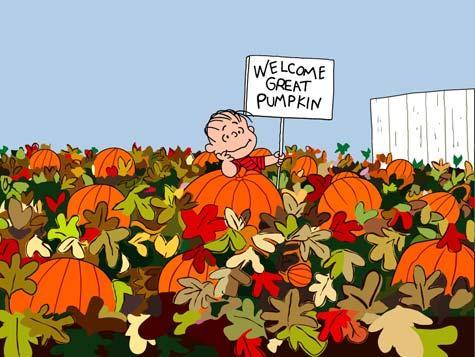
What would Halloween be without the Linus and the Great Pumpkin, Snoopy's happy dance with a falling leaf, Lucy pulling away the football from Charlie Brown, and on and on.
Somehow, even at 45 years of age, the holidays are empty without the classic Charlie Brown cartoons. I guess I'm nostalgic for the world the Charles Schulz imagined.
I like Julian Baggini - he's one of my favorite young philosophers. In this article from The Sun (UK), he argues (persuasively) that our greatest philosopher is not Galen Strawson, not Daniel Dennett, not Julia Kristeva, not Slavoj Zizek, not Patricia Churchland, not John Searle, not Martha Nussbaum, not Jurgen Habermas, not David Chalmers . . . nope, it's Homer Simpson. I'm cool with that.
THE Simpsons reaches a milestone 500th episode next Sunday.
Homer and his family made their debut in the US in 1987, and the cartoon has since become America's longest-running sitcom.
It also holds the world record for guest appearances, with cameos from hundreds of stars including Elizabeth Taylor, Tom Jones, Ricky Gervais and Sting.
Wikileaks founder Julian Assange will appear when the 500th episode premieres in the States.
Here the editor of The Philosophers' Magazine, tells why he thinks the series is more than just a giggle.
THE Simpsons' landmark 500th episode is not bad for a cartoon.
But for me, The Simpsons is much more than a funny animated series — it's a work of philosophy.
And it does philosophy better than most philosophers.
Some people think comedy can never be as deep as serious philosophy. I disagree.
Comedy is the most truthful art form we have.
Cameo ... Ricky Gervais, Elizabeth Taylor and Tom Jones
It's great at puncturing any illusions we might have that we're wise or important.
In one episode, Homer is ill and wonders: "What if I wind up as some vegetable, watching TV on the couch? My important work will never be completed."
Very cool and deeply weird, and it does exactly what it is meant to do, offer a visual explication of Dali's version of surrealism. The story is that this was made almost 70 years, but some of the animation looks state of the art - I'm a little skeptical that is this a Dali work. [OK, a little digging and I think it is valid.]
Either way, however, it's amazing to watch. Thanks to whoever it was at Facebook from whom I stole this video.
68 years ago Walt Disney has asked Salvador Dali to draw a cartoon film which would be an embodiment of his idea of surrealism. But it turned out that it was so unusual to the ordinary spectator that Disney did not display it, and it was not available to the public until 2003.
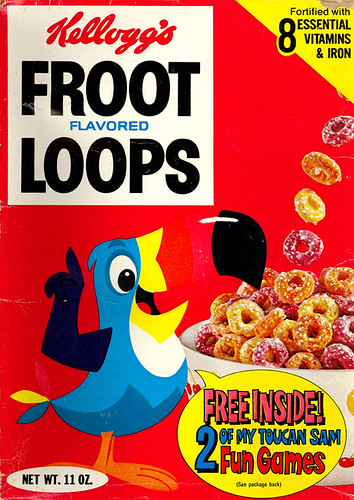
This study confirms what researchers have known for ages now it seems - the attractive characters associated with a product cause children to rate its taste higher.
Here is the press release from JAMA's Archives of Pediatrics & Adolescent Medicine.
CHICAGO—The use of media characters on cereal packaging may influence children's opinions about taste, according to a report in the March issue ofArchives of Pediatrics & Adolescent Medicine, one of theJAMA/Archivesjournals.
"The use of trade (e.g. Ronald McDonald) and licensed (e.g. Shrek) spokescharacters is a popular marketing practice in child-directed products because the presence of these figures helps children identify and remember the associated product," the authors write as background information in the article. Because children remember nonverbal representations more easily than verbal descriptions, a visual cue such as a character or logo, may help them remember information presented in an advertisement.
Matthew A. Lapierre, M.A., and colleagues at the University of Pennsylvania, Philadelphia, evaluated 80 children between the ages of 4 and 6 years (average age 5.6 years), to determine if using a licensed spokescharacter on food packaging affected children's taste assessment of the cereal. Children were shown boxes of cereal labeled either Healthy Bits or Sugar Bits, with some boxes featuring media characters and some without. Having seen only the box, participants were asked to rate the taste of the cereal on a scale of one to five.
Almost all the children reported liking the cereal, however those who saw a popular media character on the box reported liking the cereal more than those who viewed a box without a character on it. Additionally, those who sampled the cereal named Healthy Bits reported enjoying the cereal more than children who were given the same cereal under the name Sugar Bits. Children receiving the cereal with the name Sugar Bits in a box with no characters on it reported being significantly less satisfied with the taste than those in the other three groups. No significant differences were found among children in the Healthy Bits group based on the presence or absence of characters on the box.
"The results of this experiment provide evidence that the use of popular characters on food products affects children's assessment of taste," the authors conclude. "Messages encouraging healthy eating may resonate with young children, but the presence of licensed characters on packaging potentially overrides children's assessments of nutritional merit."
And here is the abstract for those who are interested.
Objective To investigate whether licensed media spokescharacterson food packaging and nutrition cues affect young children'staste assessment of products.
Design In this experimental study, children viewed 1 of4 professionally created cereal boxes and tasted a "new" cereal.Manipulations included presence or absence of licensed cartoonspokescharacters on the box and healthy or sugary cereal name.
Setting Shopping center in a large northeastern city inDecember 2007.
Participants Eighty children (mean [SD] age, 5.6 [0.96]years; 53% girls) and their parents or guardians.
Main Exposure Licensed cartoon characters and nutritioncues in the cereal name.
Outcome Measures Children rated the cereal's taste ona 5-point smiley face scale (1, really do not like; 5, reallylike).
Results Children who saw a popular media character onthe box reported liking the cereal more (mean [SD], 4.70 [0.86])than those who viewed a box with no character on it (4.16 [1.24]).Those who were told the cereal was named Healthy Bits likedthe taste more (mean [SD], 4.65 [0.84]) than children who weretold it was named Sugar Bits (4.22 [1.27]). Character presencewas particularly influential on taste assessments for participantswho were told the cereal was named Sugar Bits.
Conclusions The use of media characters on food packagingaffects children's subjective taste assessment. Messages encouraginghealthy eating may resonate with young children, but the presenceof licensed characters on packaging potentially overrides children'sassessments of nutritional merit.
Author Affiliations: Annenberg School for Communication, University of Pennsylvania, Philadelphia.
Full citation: Lapierre, MA, Vaala, SE, Linebarger, DL. (2011, March 7). Influence of Licensed Spokescharacters and Health Cues on Children's Ratings of Cereal Taste. Arch Pediatr Adolesc Med, 165(3):229-234. doi:10.1001/archpediatrics.2010.300
I LOVE Looney Tune cartoons, so I had to share this talk about the selection process for the 100 best Tunes of all time.
In a world of rascally rabbits, megalomaniacal ducks, and stuttering pigs, what defines greatness? This question was posed to thousands of cartoon fans, historians, and animators to create The 100 Greatest Looney Tunes Cartoons, the definitive Looney Tunes collection. Evaluated on their comedic brilliance, innovative animation, historical significance, and creative merit, cartoon historian Jerry Beck and the Cartoon Brew team of animation experts (http://www.cartoonbrew.com) reveal the amusing anecdotes and secret origins behind such classics as "What's Opera, Doc?," "One Froggy Evening," and "Duck Dodgers in the 24½th Century." Featuring more than 300 pieces of original art from private collectors and the Warner Bros. archives, The 100 Greatest Looney Tunes Cartoons settles the debate on the best of the best, and poses a new question: Is your favorite one of the greatest?
Jerry Beck is an animation historian and cartoon producer. His over fifteen books on the subject include The Animated Movie Guide, Looney Tunes: The Ultimate Visual Guide and The 50 Greatest Cartoons. He is also co-founder/co-writer of the popular animation blog, Cartoon Brew.
Beck is a former studio exec with Nickelodeon and Disney, and is currently a consulting producer to Warner Bros., Universal and Disney for their classic animation dvd compilations. Beck has programmed retrospectives for the Annecy and Ottawa Animation Festivals, The Museum of Modern Art and the Academy of Motion Picture Arts & Sciences. He has taught animation history at NYU, SVA, the AFI and UCLA. He is the host/producer of the annual "Worst Cartoons Ever" screening at the Comic-Con International: San Diego.
Beck started his career in film distribution, working at MGM/UA, Orion Classics, Cannon Films and Expanded Entertainment (Tournee of Animation), before starting his own company, Streamline Pictures in 1989, the first U.S. distributor to import anime features such as Otomo's Akira and Miyazaki's Laputa: Castle In The Sky. Beck was instrumental in launching Animation Magazine, and has written for The Hollywood Reporter and Variety. Beck was also the West Coast Bureau Chief for Kidscreen magazine in 2000. He has also created, written and produced animated films for various clients. His latest animation project, Hornswiggle, recently aired on the Nicktoons Network.
Ever since we published the first genetic scan for male sexual orientation, one of the most frequent questions I get asked is "why are people gay." While I have done my best to share information about the science of sexual orientation (this blog being one example), I am not an animator so I haven't explored cartoons as an option. Fortunately, I don't have to now because a cartoon recently posted on YouTube does a fairly good job. The video tries to take on two of what I like to call "the big three arguments against gay people." If you listen to enough anti-gay rhetoric you will find it usually comes down to at least one of the following statements, "I don't believe in it, its unnatural, it's a choice." After discovering these beliefs to be the root of most anti-gay propaganda Watch the video and then let me fill in some of the details from research on sexual orientation.
Parents.
The video starts out with theories about parental influences on sexual orientation, like having a distant father or overbearing mother making a man gay. In fact, this was a theory put forward by some Psychologists and Psychiatrists. It was also used to explain why some people were schizophrenic. Eventually it was disproved in both cases. For example, in the 1970 researchers at the Kinsey Institute conducted a large survey and found no support for the idea that these kinds of parental influences made children gay (Bell, Weinberg, & Hammersmith, 1981). In the 28 years since that book was published there hasn't been any credible evidence showing that any kind of parental behavior changes the sexual orientation of their children.
Being gay is natural.
Next the video tackles the question of if homosexuality is "natural." This is one of the big three. I don't believe something being "natural" is a good argument for or against it. After all, lead is natural, but that doesn't mean I want it in my drinking water. Nevertheless, the point made in the cartoon about animals is true. Many species of animals engage in same-sex behavior and some have members that exhibit primary sexual attractions to their own sex. A few very good books have addressed this topic (Bagemihl, 1999; Sommer & Vasey, 2006).
You don't decide who to love.
When Martha says "You don't just decide who to love," I think she is right. Research shows that sexual attractions emerge around the time of puberty. If you think back to puberty, do you remember making a choice of who you would be attracted to? In fact, research shows that it doesn't matter what your sexual orientation is, it tends to emerge around the time of puberty. All indications are that people don't choose their sexual orientation.
It's in our genes.
Twin research has indeed found that if one identical twin is gay the other twin is also more likely to be gay. More importantly from a scientific perspective, is the fact that identical twins are significantly more likely to have the same sexual orientation than fraternal twins (Mustanski, Chivers, & Bailey, 2002). One of the best of these studies found the heritability of sexual orientation to be 62% (Kendler, Thornton, Gilman, & Kessler, 2000). This means that 62% of why some people are gay and others are straight is due to genetic effects. The cartoon is right in saying this is higher than handedness, which has a heritability of around 25% (Medland, Duffy, Wright, Geffen, & Martin, 2006).
Older brothers.
One of the most established findings in all of developmental psychology is that each older brother increases the chance that a man will be gay. Younger brothers don't seem to have an effect and neither do sisters. In fact, siblings don't seem to be related to a women's sexual orientation at all. But among men, each older brother increases the chance of homosexuality by about 33% (Blanchard & Bogaert, 1996). It has been hypothesized that this effect is due to mothers producing antigens to male fetuses and that these antigens have effects on the developing brain (Blanchard, 2008). However, the cartoon seems to make it seem like this is a fact, when at this stage it is only a theory.
My therapist made me straight.
The video ends with a discussion of whether it is possible to change a person's sexual orientation through therapy or prayer. Conclusive research has yet to show this is possible and some very well respected doctors have said it is not possible (for a good summary of research in this area see Professor Gregory Herek's website). The video is correct in saying that all major mental health organizations have some out with statements saying that homosexuality is not a mental illness and attempts to change it are not advisable (for example, see the statement by the American Psychological Association).
I hope you enjoyed the cartoon. Share it by clicking the "Share/Email" button below and maybe if enough people watch it the statement "I don't believe in it, its unnatural, it's a choice," will become a think of the past.
References
Bagemihl, B. (1999). Biological exuberance : animal homosexuality and natural diversity (1st ed.). New York: St. Martin's Press.
Bell, A. P., Weinberg, M. S., & Hammersmith, S. K. (1981). Sexual Preference: Its development in men and women. Bloomington: Indiana University Press.
Blanchard, R. (2008). Review and theory of handedness, birth order, and homosexuality in men. Laterality, 13(1), 51-70.
Blanchard, R., & Bogaert, A. F. (1996). Homosexuality in men and number of older brothers. American Journal of Psychiatry, 153, 27-31.
Kendler, K. S., Thornton, L. M., Gilman, S. E., & Kessler, R. C. (2000). Sexual Orientation in a U.S. National Sample of Twin and Nontwin Sibling Pairs. The American Journal of Psychiatry, 157, 1843-1846.
Medland, S. E., Duffy, D. L., Wright, M. J., Geffen, G. M., & Martin, N. G. (2006). Handedness in twins: joint analysis of data from 35 samples. Twin Res Hum Genet, 9(1), 46-53.
Mustanski, B. S., Chivers, M. L., & Bailey, J. M. (2002). A critical review of recent biological research on human sexual orientation. Annual Review of Sex Research, 12, 89-140.
Sommer, V., & Vasey, P. L. (2006). Homosexual behaviour in animals : an evolutionary perspective. Cambridge ; New York: Cambridge University Press.
A short in the classic Warner Bros. style, Presto is about an elegant magician and his bunny, whose task, naturally, is to come out of a top hat at the appropriate time. "Presto" clearly references Bugs Bunny's man-outwitting wabbit, but with a Pixar twist.
POLYSEMY has launched a new staff-selected feature called The Cathode Ray. So far, there are three channels: Americana Music, Fine Artistry, and Classic Cartoons (I am the curator for this one). Check it out -- there are some excellent videos in the collection, and more to come, including more channels.
If you have suggestions for classic cartoons that I missed in this initial offering (and they must be available on You Tube -- there are some great cartoons not on You Tube), please drop me a note and let me know (with a link).
Created by Vancouver Film School student Josephine Gutianjo through the VFS Digital Character Animation program, this is an animation short titled, "Fish Wish."
I'm meaning to mention this newish blog for a while, but kept forgetting. Mr. Huggins & Snugglypoo is created by David Hutchison and Aaron Crowe.
If you decide to check out this beautifully illustrated and conceptualized strip, start at the beginning to get the story arc. I recently went back and read the strip from the beginning (first one above) and enjoyed the narrative a lot. You will too.
In the bulletin section, they mention they are working on a new story arc -- should be good.