Showing posts with label energy. Show all posts

Monday, April 28, 2014

Time’s Arrow Traced to Quantum Source - Entanglement (via Quanta Magazine)


This is an interesting article on the role of quantum entanglement in creating equilibrium in systems. This is very physics-y. Like this:
Using an obscure approach to quantum mechanics that treated units of information as its basic building blocks, Lloyd spent several years studying the evolution of particles in terms of shuffling 1s and 0s. He found that as the particles became increasingly entangled with one another, the information that originally described them (a “1” for clockwise spin and a “0” for counterclockwise, for example) would shift to describe the system of entangled particles as a whole. It was as though the particles gradually lost their individual autonomy and became pawns of the collective state. Eventually, the correlations contained all the information, and the individual particles contained none. At that point, Lloyd discovered, particles arrived at a state of equilibrium, and their states stopped changing, like coffee that has cooled to room temperature.
If you can get through that paragraph, you'll have no problem with the whole article - and it's worth the read!

Time’s Arrow Traced to Quantum Source

Cups of coffee cool, buildings crumble and stars fizzle out, physicists say, because of a strange quantum effect called “entanglement.”

By: Natalie Wolchover
April 16, 2014


SteGrifo27

Coffee cools, buildings crumble, eggs break and stars fizzle out in a universe that seems destined to degrade into a state of uniform drabness known as thermal equilibrium. The astronomer-philosopher Sir Arthur Eddington in 1927 cited the gradual dispersal of energy as evidence of an irreversible “arrow of time.”

But to the bafflement of generations of physicists, the arrow of time does not seem to follow from the underlying laws of physics, which work the same going forward in time as in reverse. By those laws, it seemed that if someone knew the paths of all the particles in the universe and flipped them around, energy would accumulate rather than disperse: Tepid coffee would spontaneously heat up, buildings would rise from their rubble and sunlight would slink back into the sun.

“In classical physics, we were struggling,” said Sandu Popescu, a professor of physics at the University of Bristol in the United Kingdom. “If I knew more, could I reverse the event, put together all the molecules of the egg that broke? Why am I relevant?”

Surely, he said, time’s arrow is not steered by human ignorance. And yet, since the birth of thermodynamics in the 1850s, the only known approach for calculating the spread of energy was to formulate statistical distributions of the unknown trajectories of particles, and show that, over time, the ignorance smeared things out.

Now, physicists are unmasking a more fundamental source for the arrow of time: Energy disperses and objects equilibrate, they say, because of the way elementary particles become intertwined when they interact — a strange effect called “quantum entanglement.”

“Finally, we can understand why a cup of coffee equilibrates in a room,” said Tony Short, a quantum physicist at Bristol. “Entanglement builds up between the state of the coffee cup and the state of the room.”


Courtesy of Tony Short

A watershed paper by Noah Linden, left, Sandu Popescu, Tony Short and Andreas Winter (not pictured) in 2009 showed that entanglement causes objects to evolve toward equilibrium. The generality of the proof is “extraordinarily surprising,” Popescu says. “The fact that a system reaches equilibrium is universal.” The paper triggered further research on the role of entanglement in directing the arrow of time.

Popescu, Short and their colleagues Noah Linden and Andreas Winter reported the discovery in the journal Physical Review E in 2009, arguing that objects reach equilibrium, or a state of uniform energy distribution, within an infinite amount of time by becoming quantum mechanically entangled with their surroundings. Similar results by Peter Reimann of the University of Bielefeld in Germany appeared several months earlier in Physical Review Letters. Short and a collaborator strengthened the argument in 2012 by showing that entanglement causes equilibration within a finite time. And, in work that was posted on the scientific preprint site arXiv.org in February, two separate groups have taken the next step, calculating that most physical systems equilibrate rapidly, on time scales proportional to their size. “To show that it’s relevant to our actual physical world, the processes have to be happening on reasonable time scales,” Short said.

The tendency of coffee — and everything else — to reach equilibrium is “very intuitive,” said Nicolas Brunner, a quantum physicist at the University of Geneva. “But when it comes to explaining why it happens, this is the first time it has been derived on firm grounds by considering a microscopic theory.”

If the new line of research is correct, then the story of time’s arrow begins with the quantum mechanical idea that, deep down, nature is inherently uncertain. An elementary particle lacks definite physical properties and is defined only by probabilities of being in various states. For example, at a particular moment, a particle might have a 50 percent chance of spinning clockwise and a 50 percent chance of spinning counterclockwise. An experimentally tested theorem by the Northern Irish physicist John Bell says there is no “true” state of the particle; the probabilities are the only reality that can be ascribed to it.

Quantum uncertainty then gives rise to entanglement, the putative source of the arrow of time.

When two particles interact, they can no longer even be described by their own, independently evolving probabilities, called “pure states.” Instead, they become entangled components of a more complicated probability distribution that describes both particles together. It might dictate, for example, that the particles spin in opposite directions. The system as a whole is in a pure state, but the state of each individual particle is “mixed” with that of its acquaintance. The two could travel light-years apart, and the spin of each would remain correlated with that of the other, a feature Albert Einstein famously described as “spooky action at a distance.”

“Entanglement is in some sense the essence of quantum mechanics,” or the laws governing interactions on the subatomic scale, Brunner said. The phenomenon underlies quantum computing, quantum cryptography and quantum teleportation.


Courtesy of Seth Lloyd

Seth Lloyd, now an MIT professor, came up with the idea that entanglement might explain the arrow of time while he was in graduate school at Cambridge University in the 1980s.

The idea that entanglement might explain the arrow of time first occurred to Seth Lloyd about 30 years ago, when he was a 23-year-old philosophy graduate student at Cambridge University with a Harvard physics degree. Lloyd realized that quantum uncertainty, and the way it spreads as particles become increasingly entangled, could replace human uncertainty in the old classical proofs as the true source of the arrow of time.

Using an obscure approach to quantum mechanics that treated units of information as its basic building blocks, Lloyd spent several years studying the evolution of particles in terms of shuffling 1s and 0s. He found that as the particles became increasingly entangled with one another, the information that originally described them (a “1” for clockwise spin and a “0” for counterclockwise, for example) would shift to describe the system of entangled particles as a whole. It was as though the particles gradually lost their individual autonomy and became pawns of the collective state. Eventually, the correlations contained all the information, and the individual particles contained none. At that point, Lloyd discovered, particles arrived at a state of equilibrium, and their states stopped changing, like coffee that has cooled to room temperature.

“What’s really going on is things are becoming more correlated with each other,” Lloyd recalls realizing. “The arrow of time is an arrow of increasing correlations.”

The idea, presented in his 1988 doctoral thesis, fell on deaf ears. When he submitted it to a journal, he was told that there was “no physics in this paper.” Quantum information theory “was profoundly unpopular” at the time, Lloyd said, and questions about time’s arrow “were for crackpots and Nobel laureates who have gone soft in the head.” he remembers one physicist telling him.

“I was darn close to driving a taxicab,” Lloyd said.

Advances in quantum computing have since turned quantum information theory into one of the most active branches of physics. Lloyd is now a professor at the Massachusetts Institute of Technology, recognized as one of the founders of the discipline, and his overlooked idea has resurfaced in a stronger form in the hands of the Bristol physicists. The newer proofs are more general, researchers say, and hold for virtually any quantum system.

“When Lloyd proposed the idea in his thesis, the world was not ready,” said Renato Renner, head of the Institute for Theoretical Physics at ETH Zurich. “No one understood it. Sometimes you have to have the idea at the right time.”

Lidia del Rio

As a hot cup of coffee equilibrates with the surrounding air, coffee particles (white) and air particles (brown) interact and become entangled mixtures of brown and white states. After some time, most of the particles in the coffee are correlated with air particles; the coffee has reached thermal equilibrium.

In 2009, the Bristol group’s proof resonated with quantum information theorists, opening up new uses for their techniques. It showed that as objects interact with their surroundings — as the particles in a cup of coffee collide with the air, for example — information about their properties “leaks out and becomes smeared over the entire environment,” Popescu explained. This local information loss causes the state of the coffee to stagnate even as the pure state of the entire room continues to evolve. Except for rare, random fluctuations, he said, “its state stops changing in time.”

Consequently, a tepid cup of coffee does not spontaneously warm up. In principle, as the pure state of the room evolves, the coffee could suddenly become unmixed from the air and enter a pure state of its own. But there are so many more mixed states than pure states available to the coffee that this practically never happens — one would have to outlive the universe to witness it. This statistical unlikelihood gives time’s arrow the appearance of irreversibility. “Essentially entanglement opens a very large space for you,” Popescu said. “It’s like you are at the park and you start next to the gate, far from equilibrium. Then you enter and you have this enormous place and you get lost in it. And you never come back to the gate.”

In the new story of the arrow of time, it is the loss of information through quantum entanglement, rather than a subjective lack of human knowledge, that drives a cup of coffee into equilibrium with the surrounding room. The room eventually equilibrates with the outside environment, and the environment drifts even more slowly toward equilibrium with the rest of the universe. The giants of 19th century thermodynamics viewed this process as a gradual dispersal of energy that increases the overall entropy, or disorder, of the universe. Today, Lloyd, Popescu and others in their field see the arrow of time differently. In their view, information becomes increasingly diffuse, but it never disappears completely. So, they assert, although entropy increases locally, the overall entropy of the universe stays constant at zero.

“The universe as a whole is in a pure state,” Lloyd said. “But individual pieces of it, because they are entangled with the rest of the universe, are in mixtures.”

One aspect of time’s arrow remains unsolved. “There is nothing in these works to say why you started at the gate,” Popescu said, referring to the park analogy. “In other words, they don’t explain why the initial state of the universe was far from equilibrium.” He said this is a question about the nature of the Big Bang.

Despite the recent progress in calculating equilibration time scales, the new approach has yet to make headway as a tool for parsing the thermodynamic properties of specific things, like coffee, glass or exotic states of matter. (Several traditional thermodynamicists reported being only vaguely aware of the new approach.) “The thing is to find the criteria for which things behave like window glass and which things behave like a cup of tea,” Renner said. “I would see the new papers as a step in this direction, but much more needs to be done.”

Some researchers expressed doubt that this abstract approach to thermodynamics will ever be up to the task of addressing the “hard nitty-gritty of how specific observables behave,” as Lloyd put it. But the conceptual advance and new mathematical formalism is already helping researchers address theoretical questions about thermodynamics, such as the fundamental limits of quantum computers and even the ultimate fate of the universe.

“We’ve been thinking more and more about what we can do with quantum machines,” said Paul Skrzypczyk of the Institute of Photonic Sciences in Barcelona. “Given that a system is not yet at equilibrium, we want to get work out of it. How much useful work can we extract? How can I intervene to do something interesting?”

Sean Carroll, a theoretical cosmologist at the California Institute of Technology, is employing the new formalism in his latest work on time’s arrow in cosmology. “I’m interested in the ultra-long-term fate of cosmological space-times,” said Carroll, author of “From Eternity to Here: The Quest for the Ultimate Theory of Time.” “That’s a situation where we don’t really know all of the relevant laws of physics, so it makes sense to think on a very abstract level, which is why I found this basic quantum-mechanical treatment useful.”

Twenty-six years after Lloyd’s big idea about time’s arrow fell flat, he is pleased to be witnessing its rise and has been applying the ideas in recent work on the black hole information paradox. “I think now the consensus would be that there is physics in this,” he said.

Not to mention a bit of philosophy.

According to the scientists, our ability to remember the past but not the future, another historically confounding manifestation of time’s arrow, can also be understood as a buildup of correlations between interacting particles. When you read a message on a piece of paper, your brain becomes correlated with it through the photons that reach your eyes. Only from that moment on will you be capable of remembering what the message says. As Lloyd put it: “The present can be defined by the process of becoming correlated with our surroundings.”

The backdrop for the steady growth of entanglement throughout the universe is, of course, time itself. The physicists stress that despite great advances in understanding how changes in time occur, they have made no progress in uncovering the nature of time itself or why it seems different (both perceptually and in the equations of quantum mechanics) than the three dimensions of space. Popescu calls this “one of the greatest unknowns in physics.”

“We can discuss the fact that an hour ago, our brains were in a state that was correlated with fewer things,” he said. “But our perception that time is flowing — that is a different matter altogether. Most probably, we will need a further revolution in physics that will tell us about that.”

This article was reprinted on Wired.com.

Monday, September 16, 2013

Mike Geary - Lemon Tea First Thing in the Morning for Better Health

Craig Ballantyne (Turbulence Training) linked to this post from Mike Geary (Truth About Abs) this morning, saying he was going to add it to his daily routine. It's cheap, it's easy, and I am also going to give it a go and see if it produces any noticeable pain/inflammation.

Drink THIS First Thing in the Morning

This daily trick can help you detoxify, improve your digestion and boost your metabolism & energy levels


by Mike Geary - Certified Nutrition Specialist
Author of the best seller: The Top 101 Foods that FIGHT Aging


You're bombarded with toxins in today's modern world... everywhere from the polluted air you breathe, the water you drink, the shampoos and other cosmetics that lather your body with chemicals, and of course, all of the chemical additives, pesticides, hormones, antibiotics and other harmful compounds in the food that you eat.

All of these TOXINS can have harmful effects on your body, harming your metabolism and hormones, impairing your digestive system, and zapping your energy levels.

If I could tell you ONE thing that you could do each morning right as you wake up to help your body eliminate some of these toxins, improve your digestion, stimulate your metabolism, and BOOST your energy, would you do it?

Of course you would... and it takes less than 1 minute!

Here's the trick...

Immediately upon waking each day, squeeze about 1/2 to 1 full lemon (depending on size of the lemon) into an 8 oz glass of warm or room temperature purified water. This is gentler on your body first thing in the morning compared to ice cold water. I've found that slicing the lemon into quarters before squeezing by hand is easier than squeezing halves.

Drink this at least 10 minutes before eating any food for the day.

Make sure to use fresh organic lemons to make this drink, and not bottled lemon juice. You want to use organic lemons to avoid the pesticides that can accumulate.

3 Major benefits of this morning drink to your body, health, and energy


According to a leading health publication, TheAlternativeDaily.com:

"The health promoting benefits of lemons are powerful. For centuries, it has been known that lemons contain powerful antibacterial, antiviral and immune boosting components. We know that lemons are a great digestive aid and liver cleanser. Lemons contain citric acid, magnesium, bioflavonoids, vitamin C, pectin, calcium and limonene, which supercharge our immunity so that the body can fight infection.

Lemons are considered one of the most alkalizing foods you can eat. This may seem untrue as they are acidic on their own. However, in the body, lemons are alkaline; the citric acid does not create acidity once it has been metabolized. The minerals in lemons are actually what helps to alkalize the blood. Most people are too acidic (from eating too much sugar and grains), and drinking warm lemon water helps reduce overall acidity, drawing uric acid from the joints. This reduces the pain and inflammation which many people feel. And the American Cancer Society recommends warm lemon water to encourage regular bowel movements."
Benefits that you can enjoy:

1. Improves your digestion:

Lemon juice helps your body improve digestion and stimulates bile production. Lemon juice can even be an aid for heartburn and indigestion.

2. Boosts your energy for the day:

Even just the scent of lemon juice has been shown to improve your mood and energy levels, and reduce anxiety. Plus the detoxifying effect and alkalizing effect of fresh organic lemon juice can improve your energy through the removal of toxins from your body.

3. Helps you to lose fat:

Since lemon juice helps to improve your digestive system, aids in removal of toxins, and increases your energy levels, this all combines together to help you to lose body fat as well through improving your hormonal balance... Yet another reason to add warm lemon water to your daily morning routine!

Tuesday, March 05, 2013

William Grassie - The Great Matrix of Being: Understanding Natural Hierarchies

In recent post featuring Trevor Malkinson's - Rhizomatic for the People: Notes on Networks and Decentralization, I suggested that the rhizomatic philosophy of Deleuze and Guattari, in many ways, overturns some of the basic tenets of integral theory - a model that is completely hierarchical, chronological, and highly organized. Rhizomes reject hierarchies and they resist chronology and organization. Rhizomes are decentralized, organized by connections and associations and not by systems, and they seek a unification that is inherently multiple.

This is not to say, however, that hierarchies must be tossed to the dustbin of history. In fact, nature is filled with hierarchies, as are human bodies and human relationships. Most obviously, we have bodies composed of organs that are composed of cells that are compose of molecules that are composed of protons and neutrons, that are composed of quarks, and which may be composed of one-dimensional strings (if string theory turns out to be true).

Talk about a hierarchy! Ken Wilber's AQAL version of integral theory assigns these hierarchies to a quadrant model of interior vs exterior and individual vs. collective. But his model seriously neglects that rhizomatic reality of many systems, both human and otherwise.

Anyway, I often place a lot of emphasis on relational, intersubjective and rhizomatic models here, but this is largely to fill the gap in integral theory that has neglected these models. But as I said, hierarchies are also very natural and important, as William Grassie shows in this article from MetaNexus.

The Great Matrix of Being


February 26, 2013
By William Grassie

Understanding Natural Hierarchies


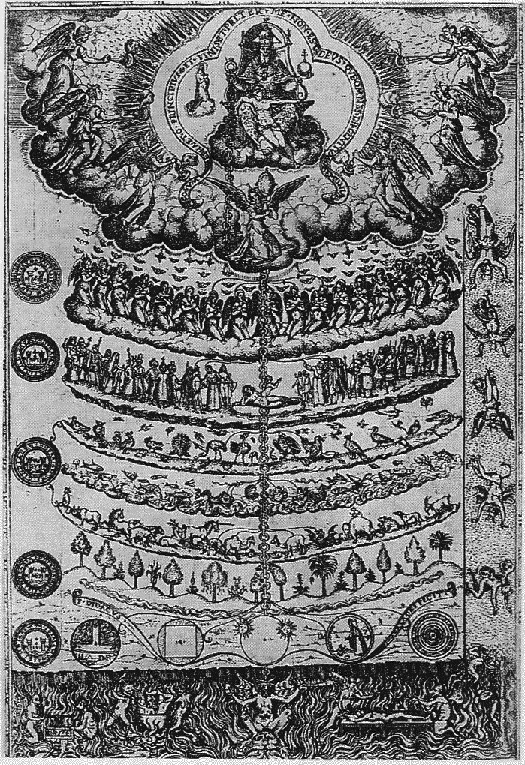
Our European ancestors once understood the universe to be a Great Chain of Being. All the entities of the world -- animal, vegetable, mineral -- were hierarchically organized. At the bottom were metals, precious metals, and precious stones. Then came plants and trees, followed by wild animals and domesticated animals. Humans were also hierarchically ordered from children to women to men and further into the different ranks of commoners, nobility, princes, and kings. The Great Chain of Being continued up into the celestial realm -- moon, stars, angels, and archangels -- to the very top where God presides over the entire creation. This scala naturae provided humans with a natural order, which they also understood to be a natural human order that structured their societies.

Retorica Christiana, written by Didacus Valdes in 1579, Source: Wiki Media

Science, or so the story goes, disrupted this view of the universe and ourselves. Copernicus, Galileo, and Kepler broke the crystalline spheres of Ptolemy and demoted Earth from the center of the universe to an insignificant periphery. Darwin understood plants and animals, including the human animal, to be evolving from common ancestors all the way back into the proverbial primordial slime. Freud showed that rational man was really an unconscious mess and hardly aware of, let alone in control of, his own thoughts and passions.

The Great Chain of Being was rendered a tangled web of happenstance in an enormous universe devoid of transcendence and meaning. God was rendered an unnecessary or incompetent creator. The new existentialists and Stoics argued that the universe was indifferent, that humans were insignificant, that our consciousness was epiphenomenal, and that our evolution merely accidental.

This turns out to be quite a distortion of the actual science and history. For while there is no Great Chain of Being, as the medievals understood it, there is most definitely a Great Matrix to which all beings belong.

Everything that exists in the universe, every process that science has discovered, every power of nature that humanity has harnessed, all that constitutes our human bodies and brains, our histories and cultures--all this and more--can be located within a number of natural hierarchies. These hierarchies define the Great Matrix of Being, and are measured in:
1) chronology
2) size
3) energy flows
4) electromagnetic radiation
5) thresholds of emergent complexity
Let's take a look at each in turn:

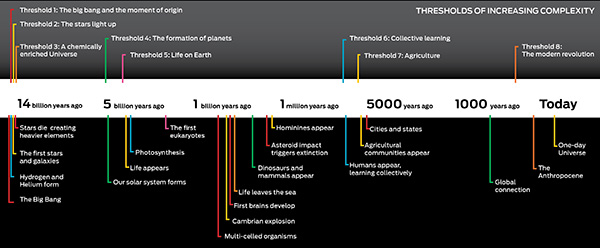
1. Chronology: The universe has a scale of time measured in billions of years down to the nanosecond vibrations of cesium in atomic clocks. Our best calculations suggest that the universe is 13.7 billion years old, that the Earth is 4.6 billion years old, that humans are 200,000 years old, and that the drama of human civilization began some 12,000 years ago. Today, we call this chronological understanding of the universe and ourselves "Big History." There are currently a number of initiatives seeking to promote this curriculum in education. Chronology, however, is only one dimension of the Matrix.

Image: Big History Project Timeline uses a logarithmic scale

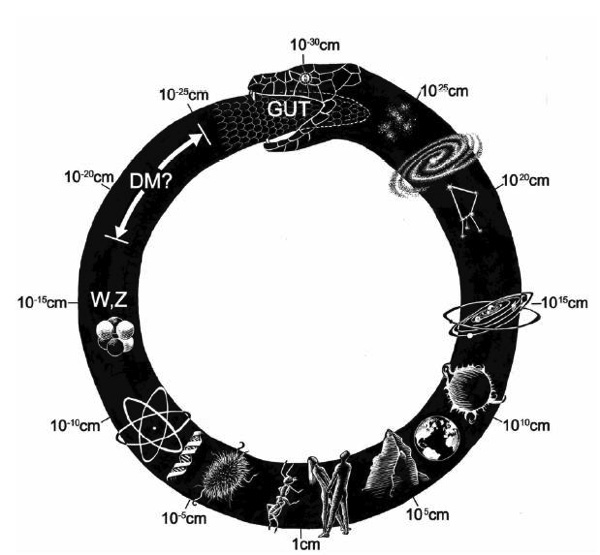
2. Size: The universe also has a size scale. The smallest unit is the Planck scale -- 1.616252 x 10⁻³⁵ m. The concepts of size and distance break down at this scale as quantum indeterminacy becomes absolute. The most distant thing that we observationally know of in the universe is the background radiation from the big bang, which is 13.7 billion light-years away from Earth (13.7 x 109) x (3 x 109 meters/second). When we talk about the very fast, the very dense, and the very hot, these concepts of space and time become elastic, but in between these extremes, size matters. And curiously, the human scale--measured in centimeters and meters--exists about halfway between the very small and the very large and is the only scale where certain types of complexity could exist.

We tend to focus on how puny we are in the scale of hundreds of billions of galaxies, but we should also remember how enormous we are when compared with the atomic and subatomic levels. Space-time is a continuum in relativity theory, but for human purposes we normally treat them separately. Chronology and size are the x and y axes that establish the Matrix in two dimensions.

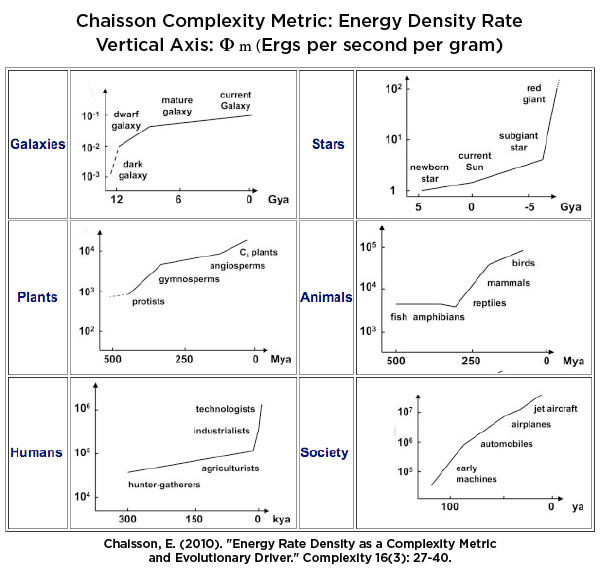
3. Energy: The intensity of energy flows is another axis in the Matrix. There is no uniform measurement of energy because energy comes in so many different flavors, including heat, electrical, chemical, nuclear, and kinetic. Physicists calculate the energy of the universe at the moment of the big bang as 1019 GeV (billion electron volts). At the opposite end is absolute zero or minus 273.15 degrees Celsius (minus 459.67 degrees Fahrenheit). At both extremes, matter exhibits strange behaviors.

All complex phenomena in the universe can be characterized by energy gradients, which we can measure in ergs per second per gram. It is counter-intuitive, but when normalized for mass, a photosynthesizing plant has about 2,000 times the energy density flow of the sun. A mammalian body has about 20,000 times the energy density flow of the sun. The human brain, consisting of about 2 percent of our body weight but consuming about 20 percent of our food energy, has an energy density flow about 150,000 times greater than the sun. And if we include all of the energy consumed outside of our bodies in our global civilization, then many humans today achieve energy density flows millions of times greater than the sun.


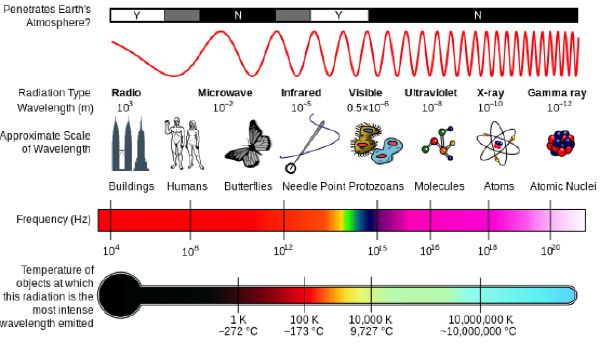
4. Electromagnetic Radiation: Electromagnetism governs almost all of the phenomena that we encounter in daily life. Negatively charged electrons are bound by electromagnetic waves into orbitals around positively charged atomic nuclei. Atoms combine into complex molecules through electromagnetic geometries and preferences. All chemistry, and therefore all biology, is governed by electromagnetic forces. The ATP molecules in your cells, the neurons in your brain, the gasoline burning in your car, the food you eat, and all the electronic devices in your life--from the light bulb to the Internet--are electromagnetic.

The entire spectrum of electromagnetic radiation goes from radio waves at one end, through microwave, infrared, visible, ultraviolet, and x-ray to gamma radiation at the other end, but our human eyes have evolved to see only a small range of visible light.

Electromagnetic radiation is central to all of the prosthetic "seeing" devices of science and technology -- from radio telescopes to electron microscopes. The tools by which we see, hear, touch, taste, smell, and understand the universe of the very small and the very big, the very hot and the very cold, the very fast and the very slow, all utilize the electromagnetic effect in their technologies of perception. The spectrum of electromagnetic radiation is the fourth axis in the Great Matrix of Being.

Image: Electromagnetic Spectrum Wiki Media

5. Emergent Complexity: Here we need to appeal to informed intuition and induction, rather than some discreet, measurable qualia in nature.

The epic narrative of Big History typically orients around eight thresholds of emergent complexity. For instance, the creation of the heavy elements in the stellar foundries from which we derive the elements of the periodic table was a threshold of emergent complexity necessary for complex chemistry to later evolve. When complex chemistry catalyzed life, we saw again something new and different. And when the evolution of plants and animals gave rise to species with a central nervous system, complex brains, oppositional thumbs, vocal chords, language, tool-making, and collective learning, something new emerged again in the universe, at least on one small planet.

It is important to emphasize that emergent complexity requires lower levels of complexity to exist and function. Higher orders of complexity are built bottom-up, though emergent properties cannot be fully explained from below. With thresholds of emergent complexity, the Matrix is not simply a coordinate system of reality, but now also an epic narrative of becoming.

Image: Big History Project Timeline with Thresholds of Emergent Complexity on Top.

The four dimensions in the Great Matrix of Being give us four ways of measuring reality -- by time, by scale, by energy density flow, and by thresholds of emergent complexity. All phenomena can be located within this Matrix.

But we might postulate another axis in the Matrix: a hierarchy of consciousness. The brain-mind is an emergent phenomena and potentially scalable. A roundworm in a neuroscience lab might have only a few hundred nerve cells, while a human brain has hundreds of billions of nerve cells. Surely, there are objective differences in brain-mind complexity throughout the animal kingdom. Counting nerve cells alone, however, does not really give us an adequate measure of brain-minds because brain-minds require bodies and metabolism, vocal chords and oppositional thumbs, and an enriching social and natural environment, in order to realize their potentials. Perhaps someday we may have a robust measure of consciousness that will allow us to compare dogs with cuttlefish, elephants with birds, and smart phones with smart people.

What is important to note about the Matrix is that humans are not at the top of the hierarchies, but somewhere in the middle. Complexity thrives when it is not too hot and not too cold, not too big and not too small. Different entities have different Goldilocks niches within the Matrix. The human niche is particularly favored in the Matrix for the time being--each of us a nexus of causal relationships (physical, biological, social, economic, psychological, mental), realizing extraordinary energy density flows, intensities of experience, and accelerating transformations in the modern period.

In our drive toward specialization and division of labors, we rarely reflect on these natural hierarchies and what they might mean for our understanding of science, self, and the sacred. Any concept of God adequate for modern science, for instance, must also be reconstructed in light of the Great Matrix of Being. An anthropomorphic monarch sitting on heavenly thrones no longer make sense.

"We exist in a bizarre combination of Stone Age emotions, medieval beliefs, and god-like technology," observed E.O. Wilson. To understand this schizophrenic state of affairs and transform it into something more wholesome, we need to understand how the Matrix actually works on different scales and perspectives. We need to see the emergent complexity of chemistry and cell biology. We need to understand the ubiquity of electromagnetism. We need to take account of the energy that flows through our daily lives. It is by consciously doing so that we extend our own being to the furthest edges of the universe and realize our fullest potential.

The bio-social-physical You and Me are never outside the Matrix, but in this scientific and philosophical exercise we seem to stand away, looking down on the Matrix from above. So far as we know, no other entity in the universe has achieved this capacity, and it is in this domain that humans are no longer middling creatures of the Matrix. Our self-transcendence, realized especially through the progress in science, is a super and completely natural emergent phenomena. We come to understand the Matrix from the inside out, though the Matrix knows nothing of us.


~ This article was originally published on Huffington Post Religion on 2/26/2013

Sunday, February 19, 2012

Animated Short - There’s No Tomorrow (on Resource Depletion)


A very cool introduction to resource depletion and the reality of finite energy resources. This is really well done, so give it 30 minutes of your time and you'll walk away (possibly) with a different perspective.

There’s No Tomorrow

Tuesday, February 07, 2012

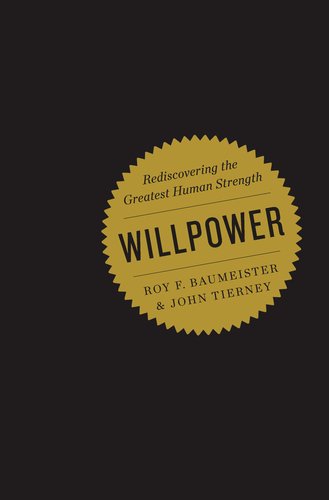
Roy F Baumeister - Willpower: Self-control, decision fatigue, and energy


This conversation with Roy F Baumeister comes from the RSA - Baumeister's most recent book, and the topic of this conversation, is Willpower: Rediscovering the Greatest Human Strength.

It's worth noting the Baumeister tends toward a very conservative perspective on many topics - and this is one where he does so rather obviously. Willpower has become a conservative political tool as well - a way to blame people for their failures without taking into account the full spectrum of issues that may lead to poverty or a life of crime.

Willpower is a very individualist ideal - but we are communal people embedded in a unique environment.

Willpower: Self-control, decision fatigue, and energy

23rd Jan 2012

Listen to the audio
(full recording including audience Q&A)

RSA Keynote

Is improving your willpower the surest way to a better life?

A new understanding of how people control themselves has emerged from the past decade of research studies. Self-control depends on a limited energy supply, and each person's willpower fluctuates during the day as various events deplete and then replenish it.

The latest laboratory work reveals that decision making and creative initiative also deplete the same willpower supply, while eating and sleeping can restore it – to the extent that a life-changing decision may go in different directions depending on whether it’s made before or after lunch.

One of the world’s most esteemed psychologists, Roy F Baumeister visits the RSA to explain why willpower and self-control is one of the most important aspects of individual and societal well-being.

Chair: Matthew Taylor, chief executive, RSA

Wednesday, September 28, 2011

Jeremy Rifkin: "The Third Industrial Revolution"

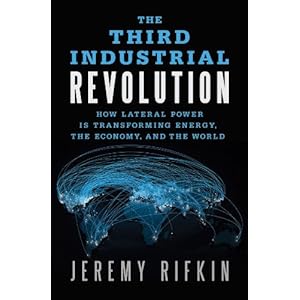
The Third Industrial Revolution: How Lateral Power Is Transforming Energy, the Economy, and the World

This was a cool segment from the Diane Rehm Show - featuring new research from a new book by Jeremy Rifkin - The The Third Industrial Revolution: How Lateral Power Is Transforming Energy, the Economy, and the World.

Jeremy Rifkin: "The Third Industrial Revolution"


U.S. economist Jeremy Rifkin the founder and president of the Foundation on Economic Trends (FOET) speaks during the 23rd congress of the Socialist International at the Lagonissi Grand Resort, about 40 kilometers (25miles) south of Athens on Monday, June 30, 2008. Close to 700 participants from 150 political parties and organisations from 120 countries will attend the Congress of the Socialist International from June 30 to July 2.  - (AP Photo/Thanassis Stavrakis)
U.S. economist Jeremy Rifkin the founder and president of the Foundation on Economic Trends (FOET) speaks during the 23rd congress of the Socialist International at the Lagonissi Grand Resort, about 40 kilometers (25miles) south of Athens on Monday, June 30, 2008. Close to 700 participants from 150 political parties and organisations from 120 countries will attend the Congress of the Socialist International from June 30 to July 2.


Guests: Jeremy Rifkin - President of the Foundation on Economic Trends, adviser to the European Union and author of "The Hydrogen Economy," "The Biotech Century," and "The End of Work."

An economist explains how internet technology and renewable energy are merging to change the way we live and work.

Author Extra: Jeremy Rifkin Answers Audience Questions

Q: The book title refers to "lateral power." What does this mean?
A: Lateral power means side-to-side power. On the Internet, millions of people share information in vast social networks, and the power of coming together side by side dwarfs the kind of centralized, top-down power that’s traditional. Converging the internet with renewable energies will allow millions of people to generate their own green electricity in their homes offices and factories and then share it across a vast energy internet, just like they now create their own information and share it online with millions of others.
Q: How could this third industrial revolution transform labor and politics?
A: Because the third industrial revolution is about lateral power, it favors small and medium-sized businesses coming together in networks to create new economic opportunities. The third industrial revolution will create thousands of new businesses and millions of new jobs. Manufacturing renewable energies, converting buildings to micro power plants, storing renewable energies in the form of hydrogen across the infrastructure, transforming the electricity grid and power and transmission lines into an energy internet, and revolutionizing the transport and logistics sector.
Q: While I'm a long-time fan of Mr. Rifkin's, he's mistaken about the feed-in tariff. The power generated by these qualified PV systems does not belong to the building/roof owner. One hundred percent of the power goes directly onto the grid. That power becomes a commodity to sell on the open market. The system may be owned by third parties that lease the factory roof; the electric power has long-term value because the cost to generate that power does not increase. Utility power does. This allows long-term investments in distributed generated power to increase in value, exactly what investors are seeking. - From Jim
A: PV systems can be owned by the local owner, which is often the case. Local owners of buildings can also lease out their infrastructure to third parties, as well. Increasingly, small and medium businesses and home owners in Europe are choosing the former course, and pooling their interests by creating producer and consumer green electricity cooperatives, in order to advance early adoption with significant scale up. In countries where there are feed-in tariffs, banks are not advancing green loans so that home owners and businesses can convert their buildings to micro power-plants. The savings in electricity is used to pay back the loans. After the loan is paid back, the electricity is virtually free for the owner.
Q: In Europe there is a larger tradition of government leadership in public investment. Here in the USA, in tradition and more particularly with the current political/budget climate, government-led solutions are problematic. We favor private-sector solutions. How are we going to lead from the private sector? Where are the niches where these technologies will develop on their own, without government subsidies or other intervention? Where are the opportunities for entrepreneurs and investors in the USA who believe in your thesis? - From Charles
A: Both the first and second industrial revolution in the U.S. required an ongoing relationship between local state and federal government, industry, and communities. It’s impossible to lay down a five- pillar infrastructure for a new industrial revolution without this kind of partnership because the five-pillar infrastructure requires comprehensive planning, which brings into the picture local governments as well as local businesses and communities.

Thursday, March 24, 2011

Waking Up the Workplace - Tony Schwartz, Live Today

Tony Schwartz is live today on Waking Up the Workplace - It starts at 7pm CET on Thursday 24th March, which is 6pm GMT, 2pm Eastern time and 11pm Pacific time. (Note, this is an hour earlier than first advertised).

A couple of Schwartz's recent books are The Way We're Working Isn't Working: The Four Forgotten Needs That Energize Great Performance (2010) and The Power of Full Engagement: Managing Energy, Not Time, Is the Key to High Performance and Personal Renewal (2003).
Tony Schwartz is founder and CEO of The Energy Project, a company that helps individuals and organizations fuel energy, engagement, focus and productivity by harnessing the science of high performance. Tony’s new book, The Way We’re Working Isn’t Working: The Four Forgotten Needs that Energize Great Performance, will be published in May by the Free Press. His last book, The Power of Full Engagement: Managing Energy Not Time, co-authored with Jim Loehr, was a New York Times and Wall Street Journal bestseller and has been translated into 28 languages.

Tony began his career as a journalist, and worked as a reporter at the New York Times and a staff writer at Newsweek and New York. He has also written for Esquire, Fast Company, Vanity Fair and the Harvard Business Review. Tony coauthored the #1 bestselling The Art of the Deal with Donald Trump and also wrote What Really Matters: Searching for Wisdom in America. A frequent keynote speaker, Tony has also coached more than two dozen CEOs and senior leaders.

The Energy Project’s clients include Sony, Google, Ernst & Young, the Los Angeles Police Department, the Cleveland Clinic, Shell, IBM, Fidelity, Ford, Gap and Blue Shield of California.

Jeroen Maes posted a few quotes to highlight why they chose Schwartz for this series:
  • "Rather than trying to get more out of their people, organizations seeking competitive advantage are best served by systematically seeking to meet the four core energy needs of their employees in order to free, fuel, and inspire them to bring the best of themselves to work every day."
  • "How do I create the circumstances where I am released to work in service of my larger dream and serve the world with my gifts?"
  • "It’s not the number of hours employees work that determines the value they produce, but rather the quantity, quality and focus of energy they bring to the hours they work."
Here is the blog post to announce today's session, along with a question to get things started. I'm really not familiar with his work, so I have very little idea what he is about. I'll be curious toi listen to the show (unfortunately, after the fact).

After such an inspiring start to the series last week, I’m excited to tell you about our second speaker – Tony Schwartz.

For those of you who don’t know Tony, he is the founder and CEO of The Energy Project, a company that helps individuals and organizations fuel energy, engagement, focus and productivity by harnessing the science of high performance!

He’s written and co-authored a whole bunch of books, including the seminal ‘The Power of Full Engagement’ and the #1 bestseller ‘The Art of the Deal’ with Donald Trump.

To give you an idea of why we chose Tony to be one of the speakers on the series, I want to share with you a quote from ‘The Power of Full Engagement’:

“The ultimate measure of our lives is not how much time we spend on the planet, but rather how much energy we invest in the time that we have.”

And by energy, Tony means physical, mental, emotional, and spiritual energy.

Basically, Tony is an energy expert! He knows what it takes to be able to consistently perform exceptionally. Which I’m sure you’ll agree, is totally necessary if you want to truly work in service of the world, and really give your greatest gifts!

So come and join the conversation with Tony!

It starts at 7pm CET on Thursday 24th March, which is 6pm GMT, 2pm Eastern time and 11pm Pacific time. (Note, this is an hour earlier than first advertised)

To get the conversation rolling already, why would you like to have more energy available to you? What would it enable you to do?


Monday, March 21, 2011

Tzeporah Berman on the "Energy [R]evolution"

This is a cool (and slightly disheartening, while also hopeful) presentation by Tzeporah Berman on the "Energy [R]evolution" - Greenpeace's solution for a carbon-free future that will ween the world off fossil fuels and get a grip on climate change.


Tags: , , , , , , , , ,

Sunday, July 04, 2010

Leading@Google: Tony Schwartz - The Way We're Working Isn't Working

Tony Schwartz is co-author of The Power of Full Engagement: Managing Energy, Not Time, Is the Key to High Performance and Personal Renewal and The Way We're Working Isn't Working: The Four Forgotten Needs That Energize Great Performance. He argues that we have four core needs to optimize performance: sustainability (physical); security (emotional); self-expression (mental); and significance (spiritual).
Demand is exceeding our capacity. The ethic of "more, bigger, faster" exacts a series of silent but pernicious costs at work, undermining our energy, focus, creativity, and passion. Nearly 75 percent of employees around the world feel disengaged at work every day. "The Way We're Working Isn't Working" offers a groundbreaking approach to reenergizing our lives so we're both more satisfied and more productive—on the job and off.

By integrating multidisciplinary findings from the science of high performance, Tony Schwartz, coauthor of the #1 bestselling The Power of Full Engagement, makes a persuasive case that we're neglecting the four core needs that energize great performance: sustainability (physical); security (emotional); self-expression (mental); and significance (spiritual). Rather than running like computers at high speeds for long periods, we're at our best when we pulse rhythmically between expending and regularly renewing energy across each of our four needs.

Drawing on extensive work with an extra-ordinary range of organizations, Schwartz creates a road map for a new way of working. At the individual level, he explains how we can build specific rituals into our daily schedules to balance intense effort with regular renewal; offset emotionally draining experiences with practices that fuel resilience; move between a narrow focus on urgent demands and more strategic, creative thinking; and balance a short-term focus on immediate results with a values-driven commitment to serving the greater good. At the organizational level, he outlines new policies, practices, and cultural messages that Schwartz's client companies have adopted.


Monday, June 21, 2010

Orion Jones - Oil Soaked Animals, Government and Media

This brief article from Orion Jones at Big Think is a pretty clear and honest assessment of the situation in the Gulf - and an indictment of the system in which those who are tasked with investigating the offender (BP) are financed by the target of their investigation. How honest are they likely to be?

I have too horrified by the images to say much here, but now the horror is becoming rage at a system that so willingly allows the destruction of an entire ecocsystem and the idiots who want to protect the irresponsible politicians and corporations who created the circumstances in which this disaster could happen. Below the main article is a piece from AlterNet on how the GOP is siding with the oil companies and apologizing for Obama demanding they take care of the people whose lives have been taken away by the loss of fishing in the Gulf.

Adding insult to injury, BP is funding a front group (Gulf of Mexico Foundation) claiming that oil spill jobs are better than ‘normal’ ones, and that storms will clean up the spilled oil - millions of gallons of the stuff.

Oil Soaked Animals, Government and Media

Oil_spill

The blithe feathers of our nation’s patrimony are now literally weighed down by oil, but our government and press already exude the sticky toxins of petroleum. In a sense, petroleum companies are big shareholders in the American political and media machines, and the extent to which change is possible will depend on a willingness to bite the hand that feeds. Perhaps BP CEO Tony Hayward’s reticence during his recent congressional testimony was born of a smug knowledge that his company owns a good deal of stock in both the U.S. Congress and the nation’s press.

Open Secrets, whose mission is to track money in U.S. politics and its effect on elections and public policy, details the amount of money received by the House Energy and Commerce Committee, who is currently investigating BP, from oil and gas companies. In 2010, members of the committee received a combined $1,227,455. The ranking Elephant on the committee, Joe Barton, who stuck his oily foot in his foul mouth by apologizing to BP, received over $100,000 last year, the second only to an Elephant from Missouri, Roy Blunt.

BP, of course, is only one company representing the sizable oil and gas lobby. The industry reaches into its deep pockets to fund a variety of interests, including PBS, a standard of American mainstream journalism. Recently, though, companies like ExxonMobile and Chevron have gone stealth, knowing that any press is bad press at a moment when public anger has been stoked to flame—a particularly dangerous element to oil and gas companies.

Michael Getler, an internal critic at PBS, has written about the issue on his blog at the PBS website. BP, it seems, was funding PBS in 2006, but is no longer a sponsor. As for ExxonMobile and Chevron, they “have minimized their profiles as underwriters of some popular PBS programs as the crisis continues.” Getler goes on to say that “corporate identification continues, as does the financial support of the sponsor, but its prominence on the screen is reduced. This means the normally longer and more descriptive visual and spoken messages are replaced simply by a logo, for example, keeping the company's head down but allowing PBS to make sure it continues to identify its underwriters.”

The large corporations that sponsor PBS are no angels and have included Toyota, Monsanto and Bank of America. But PBS insists that none of their sponsors have a sliver of editorial control and that were they to petition for some, PBS would walk away. It is the difficulty of finding underwriters, however, who are willing to accept the low-profile advertising PBS requires that makes is difficult for the broadcasting company to be more selective about accepting companies as sponsors.

The question about passive influence remains—the possibility of corporate sponsors like ExxonMobile and Monsanto having a subconscious influence on PBS programming. Active vigilance is needed to guard against this influence and should be expected to the same degree across news organizations and government bodies, not only of companies like PBS who already do a better than average job.

This piece from AlterNet outlines the GOP corruption in standing behind BP and claiming that Obama is wrong to demand that BP set aside some of their incredible profits to help those whose lives have been taken away.

The GOP finally takes a stand. And it’s standing behind “Big Oil” and not the “small people.”

Texas Republican Joe Barton on Thursday apologized to British Petroleum and it’s Chief Executive Tony Hayward. He said he was ashamed that the U.S. government demanded a “$20 billion shakedown” from the private company. He said the $20 billion fund that President Obama directed BP to establish to provide relief to the victims of the oil disaster was a “tragedy in the first proportion.”

“It creates a terrible precedence,” Barton said.

Days prior, Republican Michelle Bachman called it a “redistribution of wealth,” repeating a common phrase she has used to characterize health care reform, mortgage remodifications, and just about any policy the Obama administration puts forth. Around that same time, Rush Limbaugh, the mouthpiece for the GOP, called it “a slushfund.”

He is the highest-ranking Republican on the Energy Committee and has recevied more than $1.4 million in political contributions from the oil industry, according to nonpartisan government watchdog croup, Opensecrets.org.

So, clearly Barton has much to apologize for.

But the good thing is, he’s provided some audibles for what is has been blatantly apparent to me, but largely ignored in the mainstream media. And that’s the fact that the deepwater oil spill is symptomatic of theRepublicans philosophy as it relates to energy. He apologized, because in his world view, BP has done nothing wrong. A piece of equipment failed, the environmental damage they caused is simply collateral damage. All that matters ultimately is the profitability of the company.

Barton is not alone in his apologetic cow-towing to big oil. Mississippi Gov. Haley Barbour, another Republican servant to big oil, has repeatedly attempted to minimize the effects of the oil spill and make excuses for BP. This is the Governor of Mississippi, many of whose Gulf Coast constituents lives have been ruined by this company’s recklessness.

According to Barbour, forcing BP to make full restitution to the Gulf’s workers will do only one thing, and that’s reduce its profitability, which will in turn give them less money pay out damages. Make sense?

“All of these ultra-free-market, regulation-and-bureaucracy-hating conservatives agree, by the way, that President Obama and the federal government are just as blameworthy as BP, Halliburton and the other corporations in charge of Deepwater Horizon — because federal agencies didn’t regulate them stringently enough. Regulation is very, very bad, except when Obama doesn’t do enough of it,” wrote salon.com.

Well said.

Who out there honestly believes if there were a Republican in the White House right now, that they would have forced BP to pony up with $20 billion to pay out to “the small people” who have been devastated by this corporate mess?

  • Barbour, who has aspirations on the White House, would have likely bailed out BP as opposed to get them to take responsibility for their actions.
  • GOP is responsible for 97 percent of all flagrant violations found in the refining industry over the past three years, according to the Center for Public Integrity.
  • Most of these citations were classified as “egregious willful” by the Occupational Safety and Health Administration.
  • That April 20 platfor m blast which led to the spill killed 11 workers.

Let’s take a look back at BP’s horrid track record, courtesy of ABC News:

  • Back in 2007, a BP pipeline spilled 200,000 gallons of crude into the Alaskan wilderness. They got hit with $16 million in fines.
  • “The Justice Department required the company to pay approximately $353 million as part of an agreement to defer prosecution on charges that the company conspired to manipulate the propane gas market.”
  • In two separate disasters prior to Deepwater Horizon, 30 BP workers were killed and more than 200 have been seriously injured.
  • “According to the Center for Public Integrity, in the last three years, BP refineries in Ohio and Texas have accounted for 97 percent of the “egregious, willful” violations handed out by OSHA”
  • OSHA statistics show BP ran up 760 “egregious, willful” safety violations, while Sunoco and Conoco-Phillips each had eight, Citgo had two and Exxon had one comparable citation.

This is who the GOP chooses to stand up for? Republicans are outraged because someone has the gall to make demands of private industry? And even still, the libertarian, let the “free market reign free” folks out there are complaining about the overreach of the U.S. government?

This proves our government’s reach is not nearly long enough. This proves how much there is left to do, when it comes to dismantling pro-industry, pro-corporate stranglehold that private industry has on our government. I’m no communist or socialist, but you cannot expect corporations to behave altruistically, and one primary purpose of the U.S. government — in addition to protecting us from foreign enemies — is protecting us from multi-national corporations.

See the story.

Meanwhile, from ASPO/USA:
In a sickening Interview with Forbes Magazine BP Chief Tony Hayward says the Gulf spill might help the BP and the oil industry to make increased profits of up to 20% by 2015, which would mean record profits for the British oil maker.

Tony Hayward tells Forbes that he is “he’s sleeping well these days” and Forbes reports that he is nice and fresh, almost relaxed in his makeshift corner office at BP’s emergency response center in Houston.”

Click here to continue reading the story from Alexander Higgins blog.


Tags: , , , , , , , , , , , , , , , , , , ,

Wednesday, April 14, 2010

Toward a Science of Consciousness, Day 2: Baseline Brain Energy Supports the State of Consciousness

Fig.  2.
View larger version: In this window In a new window

One of the other presentations this morning focused on the brain's use of energy as a substrate for consciousness. Robert G. Shulman teaches at Yale, so I should probably take this more seriously than I do - but it seems like common sense when you boil it down to its basic facts.
Baseline Brain Energy Supports the State of Consciousness. Robert G. Shulman (Molecular Biophysics & Biochem, Yale University, New Haven, CT)

^ 13 C MRS measurements of the Cerebral Metabolic Rate of Glucose Oxidation and of the coupled Glutamate Neurotransmitter flux (1) showed that >80% of brain energy in the rat or human is devoted to supporting the work of neuronal firing in contrast to earlier proposals of an inefficient use of energy. Calibrations of the fMRI BOLD signals showed that their energy consumption was of the order of a few percent of the total energy.(2) These values refuted the model of a computer-like brain which only did work when stimulated and showed that positive and negative BOLD signals were both small differences of large firing activities.(3) Subsequently multi-unit electrical recordings of the rat brain(4) showed that during sensory stimulation a large fraction of the neurons in the somato-sensory cortex changed their firing rates with a majority firing faster and a minority slower. The high level of global energy (and firing) has been studied by ^ 13 C MRS during anesthesia in the rat with results that resemble the several PET studies of humans(5). The person,or the rat, in a State of Consciousness, as determined by its observable response to stimuli, looses awareness with deepening anesthesia until the global energy is decreased by ~50% beyond which it is no longer aware of stimuli. FMRI BOLD patterns change significantly with deepening anesthesia and histograms of neuronal firing show the loss of high frequencies in the ~40Hz. range.High global energy serves the supporting role that Christof Koch had postulated as the enabling Neuronal Correlates of Consciousness,(NCCe), needed to bring focal responses to sensory stimulation to a higher awareness. Physical understanding of neuronal energy and work have allowed us to reliably determine brain properties of the person in the State of Consciousness, identified from observable behavior, and have eliminated the need to postulate imprecise psychological processes.
(1) Sibson,N et al Proc Natl Acad Sci U S A. 1998 Jan 6;95(1):316-21
(2) Hyder F,et al.(2001) NMR Biomed 14:413-431.
(3) Shulman,R.G. & Rothman,D.L.Proc Natl Acad Sci U S A. 2002 Aug 6;99(16):10765-70.
(4) Smith. A. et al (2002) Proc Natl Acad Sci U S A. 2002 Aug 6;99(16):10765-70.
(5)Alkire MT, Hudetz AG &Tononi G (2008) Consciousness and anesthesia. Science 322:876-880.
(6) Shulman, R.G. et al Proc Natl Acad Sci U S A. 2009 Jul 7;106(27):11096-101.
This was an interesting talk, but once he got past explaining the glutamate/glutamine energy system in the brain, the main point was that a fully conscious brain (100%) uses more energy that a deep-sleeping brain or comatose brain or a vegetative brain (40-60%), and a dead brain (0%).


Midline structures in the brainstem and thalamus necessary
to regulate the level of brain arousal.

Christof Koch has suggested that in order for there to be Neural Correlates of Consciousness (NCC), there has to be an eNCC, an enabling NCC. Shulman suggests that the eNCC is "global high baseline energy."

You can read his whole article here, courtesy of PNAS. What follows is the introduction, which offers a bit more info than the abstract:

The excitement in modern neuroscience anticipates relating brain activity to mental processes of behavioral states, such as consciousness. In recent years, fMRI, 13C magnetic resonance spectroscopy (MRS), PET, and electrophysiology experiments have been directed toward these goals. These studies have measured brain energy production in the form of glucose oxidation in the resting awake state and the anesthetized state, and have followed regional changes during stimulation from these states. The most striking result is that the total energy consumption supporting neuronal firing in the conscious awake, baseline state is orders of magnitude larger than the energy changes during stimulation (13). Nonetheless, most research relating brain activity to mental processes has been based on the smaller fMRI or PET increments, which generally are interpreted as localizing psychological concepts. Early functional imaging studies by Posner and Raichle (4), using PET scans, posited that a connection between mental concepts and brain activities can be made by the difference in the images obtained when the assumed mental concept, or module, was or was not involved in a task (e.g., by comparing brain images of a subject reading proper and nonsense words). Differences between 2 functional images were interpreted as providing a quantitative map that localized the neuronal underpinnings of the mental modules; in the case at hand, that mental activity would be semantics. This experimental paradigm was soon adopted for fMRI studies, a technology which made functional brain imaging widely accessible.

However, it soon became clear that the brain response to cognitive subtraction did not follow the simplistic assumptions of “pure insertion,” but rather depended on the context of the task. The dependence of brain responses on their context created problems for cognitive psychology. Jerry Fodor, a founder of the field, concluded in 2000 that the mind does not work that way (5), because the dependence on context undercut the causality claimed for the concepts of cognitive neuroscience. Results, including the influence of context in psychologically-based fMRI or PET studies, led us, in 1996, to question the value of such concepts for functional brain imaging. We suggested that the field would be better served by using the functional imaging data to question cognitive concepts, rather than by considering those assumptions proven when a difference image is acquired (6).

However, prominent neuroimagers retained the potential value of the cognitive concepts, and considered that the loss of pure insertion might arise from the nonlinear nature of brain responses (7). Parametric methods were designed to overcome brain nonlinearity and to more closely relate brain responses to the input activities (8). However, in these studies, the search for brain responses to psychological concepts remained the goal. A strong version of that goal, that represents the popular position of pure insertion despite empirical set-backs, was described by Gazzaniga (9), who says that “we now understand that changes in our brain are both necessary and sufficient for changes in our mind,” and continues by praising cognitive neuroscience for studying the mechanisms of cognitive phenomena.

This report studies the support of behavior by brain activity without making mentalistic/psychological assumptions about the unobserved processes presumably involved in observed behaviors or behavioral states and finds a necessary role for the unassigned high baseline energy. In both of these respects, it offers a previously untried methodology for relating brain activities to mental processes. We believe that brain activities provide necessary support for behavioral processes that are performed and experienced by the human (or rodent) in the state of consciousness. In our study, brain experiments are used to determine neuronal and energetic properties of a behavioral state, as distinguished from the claims that imaging results localize in the brain the mental processes that cause a cognitive conceptualization of behavior. Brain activities support and are properties of a person in a behavioral state, such as consciousness, and they, thus, enable mental processes such as remembering or intending, all of which contribute to being conscious. Instead of aiming to localize assumptions about the nature of a mental process, we start with a behavioral index that the individual is in the conscious state and then measure neuronal properties of that state. Rather than localizing psychological assumptions which, in Zeman's description (10), would form the contents of consciousness, the subjects (rat or human) are defined as being in a conscious state by observations of reproducible behavior.

The state of consciousness is defined by the subject's ability to respond to stimuli using the criteria established in anesthesia (11). The object of study should be the person, an entity which includes brain, body, and mental processes, that cooperate to interact with the environment. This position has been championed by Antonio Damasio who, as a neurologist and neuroscientist, has written compelling books in support of the idea that the study of “mental activity, from its simplest aspects to its most sublime, requires both brain and body” (12). The neurophysiological basis of his belief is documented in an account of how body and brain are in continual back and forth interactions via chemical and neuronal impulses. Our position also resonates with a comprehensive analysis of cognitive neuroscience developed by Bennett and Hacker (13). Their criticism is that mental functions are performed by the person; therefore, they are not located, represented, or encrypted in a brain. A person adds, subtracts, feels pain or decides to marry, not the brain. In this interpretation, brain activities can be necessary for a person's behavior, but they are not sufficient to explain it.

We propose that high baseline energy (therefore, the neuronal activity) in the awake state is a necessary property of the conscious state; when the energy is reduced sufficiently, there is loss of consciousness. Two additional brain properties measured are the significant changes in fMRI activation patterns and the neuronal population activity at different baseline energy states. Implications for philosophies and theories of the conscious state are discussed to demonstrate how measurable brain properties can allow a physical understanding of the state without psychological assumptions. The role of consciousness in the different stages/types of sleep or seizure (14) are beyond the scope of the current report.

Hmmmm . . . .

My response was, "So what?"

Yes, consciousness in the brain requires energy metabolism. Therefore, high baseline global energy is necessary, but not sufficient for consciousness. It doesn't take 40 minutes to say that, only to demonstrate one particular mechanism of how that happens, the glutamatergic neurotransmission model.

The basic underlying assumption, which was not stated, is the consciousness requires a brain - and I do not really argue with this assumption.