Showing posts with label ADD. Show all posts

Tuesday, October 30, 2012

The Sun - Gabor Maté Challenges The Way We Think About Chronic Illness, Drug Addiction, And Attention-Deficit Disorder


This article from the always wonderful The Sun Magazine features an interview of physician Gabor Maté by Tracy Frisch. This is only a part of the interview, the rest is available in the print edition only, but even this is more than you might find in any other magazine. The Sun is the only ad-free magazine that I am aware of, so let's support them by subscribing if you are able and interested.

Among Maté's books are In the Realm of Hungry Ghosts: Close Encounters with Addiction (2010), Scattered: How Attention Deficit Disorder Originates And What You Can Do About It (2000, his first book), and When the Body Says No: Exploring the Stress-Disease Connection (2011, now in paperback).

One of the many things I like about his approach to illness is that he understands biology is not the only possible cause of disease, and in fact it may not even be relevant in some cases (especially, as shown in his own work, attention deficit disorder [ADD] and addiction). 

Here is the beginning of the article:

What Ails Us

Gabor Maté Challenges The Way We Think About Chronic Illness, Drug Addiction, And Attention-Deficit Disorder

by Tracy Frisch

~ TRACY FRISCH lives in Argyle, New York. For almost a decade she ran a sustainable-agriculture organization called the Regional Farm & Food Project. Currently she is a homesteader, community educator, and journalist.

Physician Gabor Maté was born in Nazi-occupied Hungary in 1944 to Jewish parents who were primarily concerned with simple survival. His father was interned in a forced-labor battalion, his aunt disappeared, and his maternal grandparents died in Auschwitz. 

In 1957 Maté and his mother and father immigrated to Canada, and he went on to get a medical degree from the University of British Columbia in Vancouver. He started a private family practice in East Vancouver that lasted for twenty-seven years. While treating patients, he observed that those who had experienced trauma, stress, and anxiety at a young age tended to repress their emotions and also to have more health problems. He also served as medical coordinator of the palliative-care unit at Vancouver General Hospital for seven years. In the late 1990s he took a job working with hiv-positive drug addicts at several innovative urban rehab programs, including one where addicts are given needles and allowed to inject heroin on-site — the only such supervised-injection program in North America. 

With both the chronically ill and addicts, Maté again saw the roots of their problems in “adverse childhood experiences,” such as abuse, neglect, poverty, or parental stress. At a time when medical science was increasingly looking to our dna for the source of many illnesses, Maté was becoming convinced that experiences in our early years play an even greater role in brain development and behavior. The emotional patterns we learn as small children, he says, live on in the cells of our minds and come back to us as adults. 

In his fifties Maté diagnosed himself with attention-deficit disorder [add] — a result, he says, of his early childhood in wartime Hungary. Those difficult formative experiences also led him to become a workaholic and a shopaholic, he believes. He credits mindfulness meditation and therapy with helping him cope.

In his first book, Scattered, Maté makes the case that add is not a genetically inherited disorder but rather is caused by the environment in which one is raised. He proposes the same for addiction in his book In the Realm of Hungry Ghosts. His other titles are When the Body Says No: Exploring the Stress-Disease Connection and, with Dr. Gordon Neufeld, Hold On to Your Kids: Why Parents Need to Matter More Than Peers. Protecting and strengthening the parent-child bond is crucial, Maté says, and he identifies the lack of support for struggling families in the U.S. and Canada as the root cause of many social and healthcare crises. 

For many years Maté wrote a weekly medical column for The Globe and Mail, Canada’s most widely read newspaper. Recently he gave up practicing medicine to focus on his appearances at seminars and conferences, where he discusses disease, addiction, and human development within a social context. Attributing our maladies to heredity is simplistic and disempowering, he says, a distraction from the problems of economic inequality, bad schools, and a declining sense of community.
I met with Maté over dinner in Albany, New York, following one of his intense all-day presentations, at which he’d developed a powerful rapport with an audience of two hundred. It was his fourth program of the week.


Frisch: Medical science has tried to offer genetic explanations for everything from alcoholism to obesity to breast cancer to depression. Why do you think genes can’t account for all our differences?

Maté: The genetic explanation is comfortable because it means that we don’t have to look at people’s lives or the society in which those lives are led for the source of our problems. If addiction is genetic, we don’t have to worry that it’s connected to child abuse, for example.

But studies actually show that, though certain genes might predispose you to addiction, if you grow up in a nurturing environment, those genes are inactive. Most genetic studies completely ignore the science of epigenetics, which is how the environment actually turns certain genes on or off.

Frisch: What led you to become interested in the connection between illness and environmental pressures?

Maté: As a family physician I began to notice that who got sick and who didn’t wasn’t completely random, that people who got sick more often tended to have more stressful lives. And I began to think that the stress had a lot to do with their illnesses.

I am not the first to arrive at that thought, which has been amply validated by research over the decades. Stress is a significant factor in the onset of diabetes, high blood pressure, heart disease, and cancer. But that research is generally not part of medical education. Doctors are trained to understand disease as a random event usually caused by external agents — bacteria, viruses — or genetics. We’re not taught to look at patients’ formative experiences or multigenerational stress patterns. Yet both my own observations and the research literature clearly indicate that you can’t separate people’s bodies from their environments.

Consider all the stresses of life in a society where people feel little sense of control and lots of uncertainty all the time; where people are expected to behave contrary to their true nature; where relationships are often troubled; where parents are not available for their kids because they’re too busy. Under such conditions, you’re more likely to get sick. Nearly 50 percent of American adults have a chronic illness.

On top of that, the U.S. has an inequitable healthcare system that provides good care to some but minimal care to others, and the debilitating expense of healthcare stresses patients further.

Frisch: We all experience stress, but we don’t all get sick. What makes some people more prone to illness than others?

Maté: People who have a chronic illness of any kind — cancer, multiple sclerosis, rheumatoid arthritis, fibromyalgia, inflammatory bowel disease, chronic neurological and skin disorders — often fit certain personality profiles. For example, they tend to pay a lot more attention to the needs of others than to their own. They get caught up in their job or their role as a caregiver rather than looking after themselves. They also tend to suppress the so-called negative emotions, such as sadness and anger. They try not to acknowledge these emotions even to themselves. And, finally, they tend to think they are responsible for how other people feel and to be terrified of disappointing others who are important to them.

So an overwhelming sense of responsibility and self-suppression is what tends to characterize the chronically ill.

Frisch: Have there been studies that support this?

Maté: Yes. In some studies of women who are having breast biopsies, psychologists could predict with relative certainty who would be diagnosed with cancer based purely on personality profiles. They were right as much as 90 percent of the time. The so-called cancer personality has been studied particularly in relationship to multiple melanoma, a type of skin cancer. Of course the personality doesn’t cause the disease, but it does increase your risk of getting it.

Frisch: Are there different personalities for people who have cancer and people who have, say, heart disease?

Maté: Well, there are two kinds of people who are prone to heart disease. One type is the rageful Type A workaholic. After a fit of rage, your chance of having a heart attack or stroke doubles for the next two hours, because your blood pressure is up, your adrenaline is up, clotting factors are increased, and your blood vessels have narrowed. In the long term you’ll suffer high blood pressure, constriction of the arteries, and so on.

The other type of person who gets heart disease is the emotional suppressor. They express no anger at all, not even healthy anger. They tend to get diseases of the heart muscle. Instead of the coronary arteries being damaged by high blood pressure, the cardiac muscle is weakened.

Frisch: Why shouldn’t we make an effort to stay calm? Doesn’t anger hurt relationships?

Maté: To say that we shouldn’t have anger is like saying that we shouldn’t have rain: we may not like getting wet, but without it there’s no irrigation. Healthy anger is a necessary response to a boundary invasion. It’s our way of saying: You’re in my space. Get out. You see this behavior in animals, too. It’s not a question of should or shouldn’t; it’s a part of our makeup. The role of emotion is to keep out that which is dangerous or unhealthy and allow in that which is helpful and healing. So we have anger and revulsion, and we have love and attraction.

Now, rage is always unhealthy. Rage is anger that is disproportionate to the situation. It usually arises from past experiences, not present boundary issues, and it keeps going on and on. It’s not discharged once you’ve protected your boundaries. It’s the result of frustration that’s built up for many years, like a pressure cooker that explodes.

Anger that is repressed can also turn inward. People who repress their anger can actually suppress their immune system, making it turn against itself. When that happens, you’re going to get autoimmune disease. Anger and the immune system have the same purpose: to protect boundaries. The immune system does its job of attacking foreign particles, and anger does its job of keeping out human invasions.

When you suppress your response to a boundary invasion, you’re going to become stressed. If I started rifling through your purse, for instance, and you didn’t object but instead repressed your anger, you’d feel very stressed, because you’d be worried I’d take your money. It takes tremendous energy to suppress emotions. The act itself is stress producing. Self-suppression is not innate. It’s a learned coping style. When you’re a child and your parents can’t handle your feelings, you learn to suppress them to maintain your relationship with your parents. But what was a coping response in the child becomes a source of illness in the adult.

Frisch: Does positive thinking protect people from illness?

Maté: A genuinely positive attitude that’s based on real experience and authentic power does protect people. If you realistically see the world as a place where you can get your needs met most of the time, you’ll be healthier.

The compulsive positive thinker is in trouble, however, because he or she is in denial of reality. Some people are not comfortable with their own pain, so they cover it up with positive thoughts in a desperate attempt to avoid what’s there.

Wednesday, October 10, 2012

Katie J.M. Baker - Poor Kids Getting Prescribed ADHD Meds They Don't Need, Against Their Will

This article by Katie J.M. Baker originally appeared in Jezebel and was re-posted at AlterNet. I am not at all surprised by any of this, but it is still horrible what we are doing these children.

A doctor who prescribes the meds said, "We've decided as a society that it's too expensive to modify the kid's environment. So we have to modify the kid."
 

Doctors are prescribing prescription pills like Adderall to low-income kids even if they don't "need" drugs to function because it's often the only realistic way to help them do well in school.

"I don't have a whole lot of choice," one doctor who treats poor families outside of Atlanta, Georgia, told the  New York Times . "We've decided as a society that it's too expensive to modify the kid's environment. So we have to modify the kid."

It's easy for those of us without kids struggling to succeed in inadequate schools to act horrified about the way A.D.H.D diagnosis rates are rising as school funding drops — because it  is horrifying to imagine a bunch of elementary schoolers hopped up on speed that's doing god knows what to their little brains (well, we know that some reported side effects include growth suppression, increased blood pressure and psychotic episodes; we'll get to that in a second) — but it all depends on how you measure success. Is the end goal a perfectly clear blood stream or good grades against the odds? Some parents (and doctors) would choose the latter.

"We as a society have been unwilling to invest in very effective nonpharmaceutical interventions for these children and their families," Dr. Ramesh Raghavan, a child mental-health services researcher at Washington University in St. Louis and an expert in prescription drug use among low-income children, told the  Times. "We are effectively forcing local community psychiatrists to use the only tool at their disposal, which is psychotropic medications."

The negative effects on the kids in this story, both emotionally and physically, are heartbreaking. "My kids don't want to take it, but I told them, ‘These are your grades when you're taking it, this is when you don't,' and they understood," said one parent who added that Medicaid covers almost all of her prescription costs. (Too bad they don't cover tutors or therapy instead...) And then there's this terrible anecdote about 11-year-old Quintin, one of five children who take more types of pills (Adderall, Risperdal, Clonidine) than the women in Valley of the Dolls :
When puberty's chemical maelstrom began at about 10, though, Quintn got into fights at school because, he said, other children were insulting his mother. The problem was, they were not; Quintn was seeing people and hearing voices that were not there, a rare but recognized side effect of Adderall. After Quintn admitted to being suicidal, Dr. Anderson prescribed a week in a local psychiatric hospital, and a switch to Risperdal.
After that, Quintn's parents flushed all of their pharmaceuticals down the toilet and vowed never to give their kids prescription speed ever again. Just kidding! They actually kept giving their 12-year-old daughter and 9-year-old son Adderall, to help their grades and because their daughter was "a little blah." Her dad acknowledged that this was a "cosmetic" fix (I'll say; I've heard better justifications from cokeheads), but said, "If they're feeling positive, happy, socializing more, and it's helping them, why wouldn't you? Why not?"

That's exactly how I felt about taking Adderall in college. I'd pop one every few months or so, usually during finals if I had a long paper to write because Adderall made the process so much easier and so much more enjoyable. Every time I took it, I'd eventually get swept up in an inner debate about performance-enhancing drugs (made much more intense from said drugs, of course): if Adderall was so helpful, why didn't I get my own prescription and take it on a more regular basis? Why was to say I didn't need it? What did "need" really mean, anyway?

I never got one, because I hated the way I always eventually crashed after an Adderall-fueled writing session — as productive as those were — and I didn't want to become dependent on something I knew was bad for me and that I could do without. But at least I was a 20-year-old adult at the time able to make my own decisions, not a little kid with a developing brain. That's exactly what Dr. William Graf, a pediatrician and child neurologist who works with poor families, said he was concerned about: the "authenticity of development."

"These children are still in the developmental phase, and we still don't know how these drugs biologically affect the developing brain," he told the Times. "There's an obligation for parents, doctors and teachers to respect the authenticity issue, and I'm not sure that's always happening."

But, again, how can we expect parents whose children are flailing in deficient schools to prioritize the intangible concept of "authentic development" over the quick fix offered by drugs like Adderall? Realistically, we can't.

Thursday, December 08, 2011

George Lakoff - Words That Don’t Work

One of the biggest issues facing progressives, in my opinion, is their failure to understand how important words are to realizing their agenda. George Lakoff keeps trying to convince them - to little success thus far.

Think of some recent political buzz words: Obamacare, death tax, big government (refers exclusively to social programs), government handouts (social safety nets), tax relief (cutting taxes on the wealthy, so that most people who pay taxes pay at the same rate, regardless of income), job creators (supposedly the wealthy), defense of marriage (anti-gay marriage), and the list can go on and on, for example, most Americans equate socialism with communism because of the GOP/Fox News management of memes. This is how the GOP controls the national conversation and programs the voters.

Progressives have yet to understand that this is how they lose - over and over again. When is the last time the progressives controlled the conversation in the same way? The Great Society?

Common Dreams posted this recent article from Lakoff - I am including below it an interview from UC Berkeley done in 2003.
 
Progressives had some fun last week with Frank Luntz, who told the Republican Governors’ Association that he was scared to death of the Occupy movement and recommended language to combat what the movement had achieved. But the progressive critics mostly just laughed, said his language wouldn’t work, and assumed that if Luntz was scared, everything was hunky-dory.  Just keep on saying the words Luntz doesn’t like: capitalism, tax the rich, etc.

It’s a trap.

When Luntz says he is “scared to death,” he means that the Republicans who hire him are scared to death and he can profit from that fear by offering them new language. Luntz is  clever. Yes, Republicans are scared. But there needs to be a serious discussion of both Luntz’s remarks and the progressive non-response.

What has been learned from the brain and cognitive sciences is that words are defined by fixed frames we use in thinking, frames come in hierarchical systems, and political frames are defined in moral terms, where “morality” is very different for conservatives and progressives. What lies behind the Occupy movement is moral view of democracy: Democracy is about citizens caring about each other and acting responsibly both socially and personally. This requires a robust Public empowering and protecting everyone equally. Both private success and personal freedom depend on such a Public. Every critique and proposal of the Occupy movement fits this moral view, which happens to be the progressive moral view.

What the Occupy movement can’t stand is the opposite “moral” view, that Democracy provides the freedom to seek one’s self-interest and ignore what is good for other Americans and others in the world. That view lies behind the Wall Street ethic of the Greedy Market, as opposed to a Market for All, a market that should maximize the well-being of most Americans. This view leads to a hierarchical view of society, where success is always deserved and lack of success is moral failure. The rich are the moral, and they not only deserve their wealth, they also deserve the power it brings. This is the view that Luntz is defending.

Referring to the rich as “hardworking taxpayers” ignores the fact that a great percentage of the rich do not get their wealth from making things, but rather from investments in other people’s labor, and that most of the 1% are managers, not people who make things or directly provide services.  The hardworking taxpayers are the 99%. That is not the frame that Luntz wants activated.

But Luntz is not just addressing his remarks to Republicans. He is also looking to take Democrats for suckers.  How? By choosing his frames carefully, and getting Democrats to do the opposite of what he tells Republicans. There is a basic truth about framing. If you accept the other guy’s frame, you lose.

Take “capitalism.” It arises these days in socialist discourse, and is seen as the opposite of socialism. To attack “capitalism” in this frame is to accept “socialism.” Conservatives are trying to cast Progressives, who mostly have businesses or work for businesses or are looking for good business jobs, as socialists. If you take the Luntz bait, you will be sucked into sounding like a socialist. Whatever one thinks of socialism, most Americans falsely identify it with communism, and will reject it out of hand.

Luntz would love to get Democrats using the word “tax” in the conservative sense of taking money from the pockets of hardworking folks and wasting it on people who don’t deserve it.  Luntz doesn’t want Democrats pointing out how private success depends on public investment – in infrastructure, education, health, transportation, research, economic stability, protections of all sorts, and so on.  He doesn’t want progressives talking about “revenue” which is defined in a business frame to mean money needed for any institution to function and flourish. He doesn’t want Democrats talking about the rich paying their fair share for the massive amount they have gotten from prior investments in a robust Public. Luntz would love to lure progressives into talking about government “spending” rather than investments in education, health, and infrastructure that will benefit most Americans.

He doesn’t want progressives pointing out that corporations govern our lives far more than any government does — and for their profit, not ours. He doesn’t want any discussion of corporate waste, or military waste, which is huge.

Luntz would love to have Democrats talking about “entrepreneurs,” which evokes a Republican view of the market as a tool for self-interest. His proposal to discuss “job creators” instead hides the fact that the business community has not been hiring despite record profits. He certainly does not want discussion of outsourcing and minimizing pay for work, which leads corporations to eliminate or downgrade jobs and hence keep wages low when profits are high.

Hidden behind his proposal to substitute “careers” for “jobs” is his attempt to appeal to young people just out of college and grad school who expect more — a profession — not just a mere “job.”  But of course, corporations are downgrading positions away from professional careers and more toward interchangeable McJobs requiring minimal ability and with minimal pay and benefits.

Luntz is right about not saying “sacrifice.” He is right that most Americans are already hurting more than enough. They want a viable present and a future for themselves and their children and grandchildren. He is right to suggest “talking about how 'we're all in this together.' We either succeed together or we fail together." But that is the opposite of conservative morality. It is the progressive view of a moral democracy that all of Luntz’s conservative framings contradict. It is an attempt at co-opting the progressive moral system, because the Occupy movement is showing that it is an idea of Democracy that makes sense to most Americans. And it is an attempt to take Obama’s strongest moral appeal away from him.

Unfortunately, Luntz is still ahead of most progressives responding to him. Progressives need to learn how framing works. Bashing Luntz, bashing Fox News, bashing the right-wing pundits and leaders using their frames and arguing against their positions just keeps their frames in play.

Progressives have a basic morality, which is largely unspoken. It has to be spoken, over and over, in every corner of our country. Progressives need to be both thinking and talking about their view of a moral Democracy, about how a robust Public is necessary for private success, about all that the Public gives us, about the benefits of health, about a Market for All not a Greed Market, about regulation as protection, about revenue and investment, about corporations that keep wages low when profits are high, about how most of the rich earn a lot of their money without making anything or serving anyone, about how corporations govern your life for their profit not yours, about real food, about corporate and military waste, about the moral and social role of unions, about how global warming causes the increasingly monstrous effects of weather disasters, about how to save and preserve nature.

Progressives have magnificent stories of their own to tell. They need to be telling them nonstop.

Let’s lure the right into using OUR frames in public discourse.

George Lakoff
George Lakoff is the author of Moral Politics, Don't Think of an Elephant!, Whose Freedom?, and Thinking Points (with the Rockridge Institute staff). He is Richard and Rhoda Goldman Distinguished Professor of Cognitive Science and Linguistics at the University of California at Berkeley, and a founding senior fellow at the Rockridge Institute.
* * * * * * * 


From UC Berkeley News, a 2003 interview with Lakoff.

Framing the issues: UC Berkeley professor George Lakoff tells how conservatives use language to dominate politics

George Lakoff


– With Republicans controlling the Senate, the House, and the White House and enjoying a large margin of victory for California Governor-elect Arnold Schwarzenegger, it's clear that the Democratic Party is in crisis. George Lakoff, a UC Berkeley professor of linguistics and cognitive science, thinks he knows why. Conservatives have spent decades defining their ideas, carefully choosing the language with which to present them, and building an infrastructure to communicate them, says Lakoff.

The work has paid off: by dictating the terms of national debate, conservatives have put progressives firmly on the defensive.

George LakoffGeorge Lakoff dissects "war on terror" and other conservative catchphrases
Read the August 26, 2004, follow-up interview
In 2000 Lakoff and seven other faculty members from Berkeley and UC Davis joined together to found the Rockridge Institute, one of the few progressive think tanks in existence in the U.S. The institute offers its expertise and research on a nonpartisan basis to help progressives understand how best to get their messages across. The Richard & Rhoda Goldman Distinguished Professor in the College of Letters & Science, Lakoff is the author of "Moral Politics: How Liberals and Conservatives Think," first published in 1997 and reissued in 2002, as well as several other books on how language affects our lives. He is taking a sabbatical this year to write three books - none about politics - and to work on several Rockridge Institute research projects.

In a long conversation over coffee at the Free Speech Movement Café, he told the NewsCenter's Bonnie Azab Powell why the Democrats "just don't get it," why Schwarzenegger won the recall election, and why conservatives will continue to define the issues up for debate for the foreseeable future.

Why was the Rockridge Institute created, and how do you define its purpose?

I got tired of cursing the newspaper every morning. I got tired of seeing what was going wrong and not being able to do anything about it.

The background for Rockridge is that conservatives, especially conservative think tanks, have framed virtually every issue from their perspective. They have put a huge amount of money into creating the language for their worldview and getting it out there. Progressives have done virtually nothing. Even the new Center for American Progress, the think tank that John Podesta [former chief of staff for the Clinton administration] is setting up, is not dedicated to this at all. I asked Podesta who was going to do the Center's framing. He got a blank look, thought for a second and then said, "You!" Which meant they haven't thought about it at all. And that's the problem. Liberals don't get it. They don't understand what it is they have to be doing.

Rockridge's job is to reframe public debate, to create balance from a progressive perspective. It's one thing to analyze language and thought, it's another thing to create it. That's what we're about. It's a matter of asking 'What are the central ideas of progressive thought from a moral perspective?'

How does language influence the terms of political debate?

Language always comes with what is called "framing." Every word is defined relative to a conceptual framework. If you have something like "revolt," that implies a population that is being ruled unfairly, or assumes it is being ruled unfairly, and that they are throwing off their rulers, which would be considered a good thing. That's a frame.


'Conservatives understand what unites them, and they understand how to talk about it, and they are constantly updating their research on how best to express their ideas.'
-George Lakoff
If you then add the word "voter" in front of "revolt," you get a metaphorical meaning saying that the voters are the oppressed people, the governor is the oppressive ruler, that they have ousted him and this is a good thing and all things are good now. All of that comes up when you see a headline like "voter revolt" - something that most people read and never notice. But these things can be affected by reporters and very often, by the campaign people themselves.

Here's another example of how powerful framing is. In Arnold Schwarzenegger's acceptance speech, he said, "When the people win, politics as usual loses." What's that about? Well, he knows that he's going to face a Democratic legislature, so what he has done is frame himself and also Republican politicians as the people, while framing Democratic politicians as politics as usual - in advance. The Democratic legislators won't know what hit them. They're automatically framed as enemies of the people.

Why do conservatives appear to be so much better at framing?

Because they've put billions of dollars into it. Over the last 30 years their think tanks have made a heavy investment in ideas and in language. In 1970, [Supreme Court Justice] Lewis Powell wrote a fateful memo to the National Chamber of Commerce saying that all of our best students are becoming anti-business because of the Vietnam War, and that we needed to do something about it. Powell's agenda included getting wealthy conservatives to set up professorships, setting up institutes on and off campus where intellectuals would write books from a conservative business perspective, and setting up think tanks. He outlined the whole thing in 1970. They set up the Heritage Foundation in 1973, and the Manhattan Institute after that. [There are many others, including the American Enterprise Institute and the Hoover Institute at Stanford, which date from the 1940s.]

And now, as the New York Times Magazine quoted Paul Weyrich, who started the Heritage Foundation, they have 1,500 conservative radio talk show hosts. They have a huge, very good operation, and they understand their own moral system. They understand what unites conservatives, and they understand how to talk about it, and they are constantly updating their research on how best to express their ideas.

Why haven't progressives done the same thing?

There's a systematic reason for that. You can see it in the way that conservative foundations and progressive foundations work. Conservative foundations give large block grants year after year to their think tanks. They say, 'Here's several million dollars, do what you need to do.' And basically, they build infrastructure, they build TV studios, hire intellectuals, set aside money to buy a lot of books to get them on the best-seller lists, hire research assistants for their intellectuals so they do well on TV, and hire agents to put them on TV. They do all of that. Why? Because the conservative moral system, which I analyzed in "Moral Politics," has as its highest value preserving and defending the "strict father" system itself. And that means building infrastructure. As businessmen, they know how to do this very well.

Meanwhile, liberals' conceptual system of the "nurturant parent" has as its highest value helping individuals who need help. The progressive foundations and donors give their money to a variety of grassroots organizations. They say, 'We're giving you $25,000, but don't waste a penny of it. Make sure it all goes to the cause, don't use it for administration, communication, infrastructure, or career development.' So there's actually a structural reason built into the worldviews that explains why conservatives have done better.

Back up for a second and explain what you mean by the strict father and nurturant parent frameworks.

Well, the progressive worldview is modeled on a nurturant parent family. Briefly, it assumes that the world is basically good and can be made better and that one must work toward that. Children are born good; parents can make them better. Nurturing involves empathy, and the responsibility to take care of oneself and others for whom we are responsible. On a larger scale, specific policies follow, such as governmental protection in form of a social safety net and government regulation, universal education (to ensure competence, fairness), civil liberties and equal treatment (fairness and freedom), accountability (derived from trust), public service (from responsibility), open government (from open communication), and the promotion of an economy that benefits all and functions to promote these values, which are traditional progressive values in American politics.

The conservative worldview, the strict father model, assumes that the world is dangerous and difficult and that children are born bad and must be made good. The strict father is the moral authority who supports and defends the family, tells his wife what to do, and teaches his kids right from wrong. The only way to do that is through painful discipline - physical punishment that by adulthood will become internal discipline. The good people are the disciplined people. Once grown, the self-reliant, disciplined children are on their own. Those children who remain dependent (who were spoiled, overly willful, or recalcitrant) should be forced to undergo further discipline or be cut free with no support to face the discipline of the outside world.

So, project this onto the nation and you see that to the right wing, the good citizens are the disciplined ones - those who have already become wealthy or at least self-reliant - and those who are on the way. Social programs, meanwhile, "spoil" people by giving them things they haven't earned and keeping them dependent. The government is there only to protect the nation, maintain order, administer justice (punishment), and to provide for the promotion and orderly conduct of business. In this way, disciplined people become self-reliant. Wealth is a measure of discipline. Taxes beyond the minimum needed for such government take away from the good, disciplined people rewards that they have earned and spend it on those who have not earned it.
Read the rest of the interview.

Friday, May 13, 2011

New Scientist - Easily distracted people may have too much brain

http://www.neuroskills.com/images/parietal.jpg

Well, damn, now I know - my brain is too big. Okay, seriously, there is a lot of evidence that autism is a failure in the normal neuronal pruning that occurs in the first 6-18 months following birth, and now this would suggest that ADD (being easily distracted is a big part of ADD) is also related to a failure in neuronal pruning, particularly in the superior parietal lobe (SPL).

Easily distracted people may have too much brain

Those who are easily distracted from the task in hand may have "too much brain".

So says Ryota Kanai and his colleagues at University College London, who found larger than average volumes of grey matter in certain brain regions in those whose attention is readily diverted.

To investigate distractibility, the team compared the brains of easy and difficult-to-distract individuals.

They assessed each person's distractibility by quizzing them about how often they fail to notice road signs, or go into a supermarket and become sidetracked to the point that they forget what they came in to buy. The most distractible individuals received the highest score.

The team then imaged the volunteers' brains using a structural MRI scanner. The most obvious difference between those who had the highest questionnaire scores – the most easily distracted – and those with low scores was the volume of grey matter in a region of the brain known as the left superior parietal lobe (SPL). Specifically, the easily distracted tended to have more grey matter here.

Read the whole article.

Journal reference: Journal of Neuroscience, DOI: 10.1523/jneurosci.5864-10.2011

Abstract:

Distractibility in Daily Life Is Reflected in the Structure and Function of Human Parietal Cortex

  1. Ryota Kanai1,
  2. Mia Yuan Dong2,
  3. Bahador Bahrami1,3,4,5, and
  4. Geraint Rees1,3

+ Author Affiliations

  1. 1Institute of Cognitive Neuroscience and
  2. 2Department of Psychology, University College London, London WC1N 3AR, United Kingdom,
  3. 3Wellcome Trust Centre for Neuroimaging, Institute of Neurology, University College London, London WC1N 3BG, United Kingdom,
  4. 4Interacting Minds Project, Institute of Anthropology, Archaeology, and Linguistics, Aarhus University, and
  5. 5Centre of Functionally Integrative Neuroscience, Aarhus University Hospital, 8000 Aarhus C, Denmark
  1. Author contributions: R.K., M.Y.D., B.B., and G.R. designed research; R.K., M.Y.D., and B.B. performed research; R.K., M.Y.D., and B.B. analyzed data; R.K., M.Y.D., B.B., and G.R. wrote the paper.

Abstract

We all appreciate that some of our friends and colleagues are more distractible than others. This variability can be captured by pencil and paper questionnaires in which individuals report such cognitive failures in their everyday life. Surprisingly, these self-report measures have high heritability, leading to the hypothesis that distractibility might have a basis in brain structure. In a large sample of healthy adults, we demonstrated that a simple self-report measure of everyday distractibility accurately predicted gray matter volume in a remarkably focal region of left superior parietal cortex. This region must play a causal role in reducing distractibility, because we found that disrupting its function with transcranial magnetic stimulation increased susceptibility to distraction. Finally, we showed that the self-report measure of distractibility reliably predicted our laboratory-based measure of attentional capture. Our findings distinguish a critical mechanism in the human brain causally involved in avoiding distractibility, which, importantly, bridges self-report judgments of cognitive failures in everyday life and a commonly used laboratory measure of distractibility to the structure of the human brain.


Thursday, July 29, 2010

It's a Beautiful day in the East Bay, #itc2010

http://image.pegs.com/content/H/H1F/H1FR/H1FR3/HH1070759_Ext1_j.jpg

Wow, I had nearly forgotten what an 80 degree day without humidity and gray skies feels like - and TREES! Real, honest to god trees, with leaves and everything.

Anyway, I feel I should post a warning to all of those I will meet in the coming days - I am an introvert, with social anxiety - doesn't get much worse than that. I look forward to meeting all of you, or at least those who know me, vaguely, from the blogs and from Facebook.

The other thing is that I am ADD, which makes me bad with names, bad with numbers, and I have a tendency to think faster than my mouth can talk . . . either that, or, well . . . I'm sticking with that.

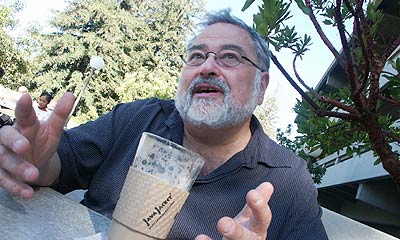
I have changed my image here and at Facebook to a photo of me from a couple of years ago - I still kinda look like that, with a bit more hair. Please say "Hi!" if you see me - I'm not likely to recognize many of you in person until I see you a couple of times.