Showing posts with label UCTV. Show all posts

Friday, May 02, 2014

Repairing the World: A Conversation with Paul Farmer


Paul Farmer is the author of To Repair the World: Paul Farmer Speaks to the Next Generation (2013) and Pathologies of Power: Health, Human Rights, and the New War on the Poor (2003), as well as being the subject of Tracy Kidder's Mountains Beyond Mountains: The Quest of Dr. Paul Farmer, a Man Who Would Cure the World (2003). He recently spoke with Dean Nelson, founder of the Writer's Symposium by the Sea at Point Loma Nazarene University at UC San Diego (UCTV).

Here is a little bit from Wikipedia:
Paul Edward Farmer (born October 26, 1959) is an American anthropologist and physician who is best known for his humanitarian work providing "first world" health care for "third world" people, beginning in Haiti. Co-founder of international social justice and health organization Partners In Health (PIH), he is "the man who would cure the world" as made famous in the award-winning Mountains Beyond Mountains by Pulitzer-prize-winning author Tracy Kidder.
The world needs more people like Farmer.

Repairing the World: A Conversation with Paul Farmer 

Published on Apr 28, 2014


Known as "the man who would cure the world," Paul Farmer works to provide first world health care for third world peoples and co-founded the worldwide organization Partners in Health. Author of To Repair the World: Paul Farmer Speaks to the Next Generation (2013) and Pathologies of Power: Health, Human Rights, and the New War on the Poor (2003), Farmer was also the subject of Tracy Kidder's Mountains Beyond Mountains: The Quest of Dr. Paul Farmer, a Man Who Would Cure the World (2003). Dr. Farmer talks here with Dean Nelson, founder of the Writer's Symposium by the Sea at Point Loma Nazarene University.

Recorded on 04/09/2014. [5/2014] - (Visit: http://www.uctv.tv)

Thursday, May 01, 2014

The Better Angels of Our Nature: Why Violence Has Declined


Steven Pinker's The Better Angels of Our Nature: Why Violence Has Declined (2011) received a lot of praise, and it was also dismissed as "hallucinatory" by Robert Epstein in Scientific American.
People pay more attention to facts that match their beliefs than those that undermine them. Pinker wants peace, and he also believes in his hypothesis; it is no surprise that he focuses more on facts that support his views than on those that do not.
So watch the talk below, given at UC Berkeley in February, but just posted on the UCTV Channel, and see if you agree with Epstein or with Pinker.

The Better Angels of Our Nature: Why Violence Has Declined

Published on Apr 29, 2014


Believe it or not, violence has been in decline for long stretches of time, and we may be living in the most peaceful era in our species existence. Harvard psychology professor Steven Pinker presents the data supporting this surprising conclusion, and explains the trends by showing how changing historical circumstances have engaged different components of human nature. Recorded on 02/04/2014. Series: "UC Berkeley Graduate Council Lectures" [5/2014] - (Visit: http://www.uctv.tv/)

Tuesday, April 29, 2014

A Conversation with Noam Chomsky (UCSB)


From UCTV (UC Santa Barbara), Jan Nederveen Pieterse, professor of Global Studies and Sociology at UCSB, interviews linguist and social/political activist. As always, Chomsky is interesting and erudite.

A Conversation with Noam Chomsky

Published on Apr 28, 2014


Jan Nederveen Pieterse in conversation with Noam Chomsky, linguist, philosopher and political commentator. Chomsky is Emeritus professor of linguistics at MIT. Jan Nederveen Pieterse is professor of Global Studies and Sociology at University of California, Santa Barbara. Series: "Carsey-Wolf Center" [5/2014] - (Visit: http://www.uctv.tv/)

Wednesday, April 02, 2014

Understanding Human Nature with Steven Pinker - Conversations with History


Harvard professor of psychology Steven Pinker visited UC Berkeley back in February as a part of the Conversations with History lecture series. In this talk he focused on the development of his understanding of human nature, including some discussion of his most recent book, The Better Angels of Our Nature: Why Violence Has Declined.

Understanding Human Nature with Steven Pinker - Conversations with History

Published on Apr 1, 2014 
(Visit: http://www.uctv.tv/)


Conversations host Harry Kreisler welcomes Harvard's Steven Pinker, Johnstone Family Professor of Psychology, for a discussion of his intellectual journey. Pinker discusses the origins and evolution of his thinking on human nature. Topics include: growing up in Montreal in a Jewish family, the impact of the 1960's, his education, and the trajectory of his research interests. He explains his early work in linguistics and how he came to write his recent work, The Better Angels of Our Nature: Why Violence Has Declined. In the conversation, Pinker describes the importance of interdisciplinary research and analyzes creativity. He concludes with a discussion of how science can contribute to the humanities and offers advice to students on how to prepare for the future.

Recorded on 02/04/2014. Series: "Conversations with History" [4/2014]

Saturday, March 22, 2014

Tanya Luhrmann - The Quest for Heaven is Local: How Spiritual Experience is Shaped by Social Life


Interesting talk. Tanya Marie Luhrmann is currently the Watkins University Professor in the Anthropology Department at Stanford University. She has been elected to the American Academy of Arts and Sciences, and has been the recipient of a John Simon Guggenheim Fellowship. She is the author of When God Talks Back: Understanding the American Evangelical Relationship with God
(2012).

The Quest for Heaven is Local: How Spiritual Experience is Shaped by Social Life

Published on Feb 21, 2014


(Visit: http://www.uctv.tv) Drawing on fieldwork in new charismatic evangelicals churches in the Bay Area and in Accra, Ghana, Tanya Luhrmann, Stanford University, explores the way that cultural ideas about mind and person alter prayer practice and the experience of God. Luhrmann's work focuses on the way that objects without material presence come to seem real to people, and the way that ideas about the mind affect mental experience. Recorded on 11/12/2013.

Friday, March 21, 2014

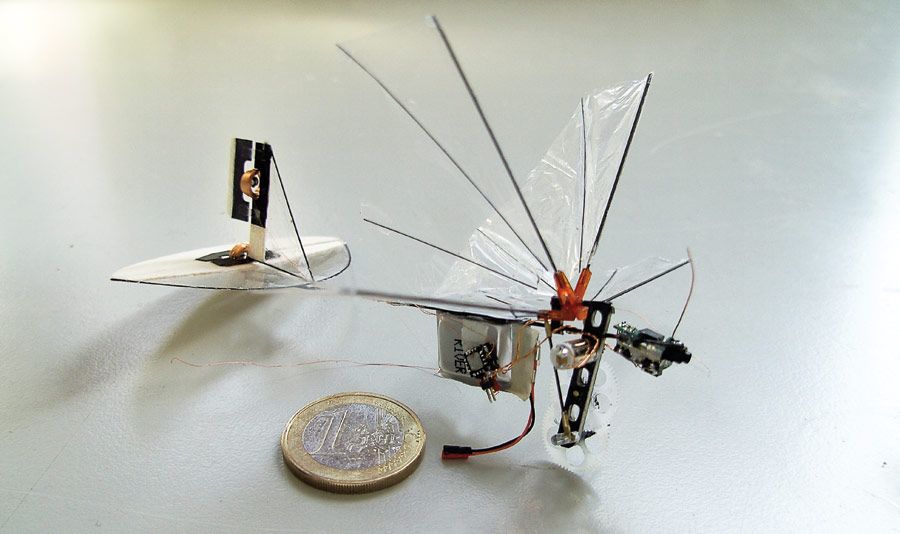
Michel Maharbiz - Cyborg Insects and Other Things: Building Interfaces Between the Synthetic and Multicellular


Via UCTV and the University of California at Berkeley, this video talk by Michel Maharbiz (faculty webpage) takes a look at the future of cyborg technology, especially in insects. His work is in developing electronic interfaces to cells, to organisms, and to brains.

Professor Maharbiz (personal webpage) is:
Associate professor of Electrical Engineering and Computer Sciences at UC Berkeley. His current research centers on building micro/nano interfaces to cells and organisms and exploring bio-derived fabrication methods. His research group is also known for developing the world’s first remotely radio-controlled cyborg beetles; this was named one of the top 10 emerging technologies of 2009 by MIT’s Technology Review (TR10) and was among Time magazine’s Top 50 Inventions of 2009. His long-term goal is understanding developmental mechanisms as a way to engineer and fabricate machines. He received his Ph.D. in 2003 from UC Berkeley for his work on microbioreactor systems, which led to the foundation of Microreactor Technologies Inc., which was recently acquired by Pall Corporation.
This technology is both very cool and kind of creepy. I really hate flying beetle-type insects - and now we can turn them into drones I'm guessing.

Cyborg Insects and Other Things: Building Interfaces Between the Synthetic and Multicellular

Published on Mar 10, 2014


Prof. Michel Maharbiz presents an overview of ongoing exploration of the remote control of insects in free flight via implantable radio-equipped miniature neural stimulating systems; recent results with pupally-implanted neural interfaces and extreme miniaturization directions.

Sunday, February 16, 2014

Michael Okun, MD - Lessons Learned in the Electric Brain


From The Brain Channel on UCTV, a production of the UC San Diego Department of Neurosciences. This episode looks at the use of deep bran stimulation (DBS) in the treatment of various brain disorders, including Parkinson's Disease.

There is considerable research suggesting that DBS is a much more targeted and effective way of treating depression and bipolar disorder. Below the video there is some overview of the use of DBS from the American Association of Neurological Surgeons.

Michael Okun, MD - Lessons Learned in the Electric Brain


Published on Feb 13, 2014 
(Visit: http://www.uctv.tv/) Michael Okun, MD discusses the processes and prospects for deep bran stimulation (DBS). Learn about why we apply electricity to the brain, how DBS works, and how we can use DBS to treat conditions such as Parkinson's Disease. Series: "The Brain Channel"
 * * * * *

Deep Brain Stimulation

April, 2007 

Deep Brain Stimulation (DBS) has been used to treat intractable pain for several decades. More recently, use of this technology has proven to be a safe and effective treatment for essential tremor, as well as tremor and involuntary movements associated with Parkinson’s disease, dystonia and multiple sclerosis, with more than 35,000 DBS implants worldwide. The applications for DBS therapy are expanding rapidly.

The procedure is comparable to that of a cardiac pacemaker in which the pacemaker helps maintain an appropriate cardiac rhythm. DBS is presumed to help modulate dysfunctional circuits in the brain so that the brain can function more effectively. This is accomplished by sending continuous electrical signals to specific target areas of the brain, which block the impulses that cause neurological dysfunctions. These targets are the ventralis intermediate nucleus of the thalamus (Vim), the globus pallidus pars interna (GPi), and the subthalamic nucleus (STN).

The DBS system consists of three components:
  • The lead (also called an electrode) is a thin, insulated wire inserted through a small opening in the skull and implanted in the brain.
  • The extension is an insulated wire that is passed under the skin of the head, neck, and shoulder, connecting the lead to the internal pulse generator (IPG).
  • The IPG or neurostimulator is the third component and is usually implanted under the skin near the collarbone. In some cases it may be implanted in the chest or under the skin over the abdomen.
A small opening is made in the skull under a local anesthetic. The patient is awake during the DBS surgery to allow the surgical team to assess his or her brain functions. While the lead (electrode) is being advanced through the brain, the patient does not feel pain because of the human brain’s unique inability to generate pain signals. Computerized brain-mapping technology is utilized to pinpoint the precise location in the brain where nerve signals generate the tremors and other symptoms. Highly sophisticated imaging and recording equipment are used to map both the physical structure and the functioning of the brain. The electrodes are connected via wires to an internal pulse generator (IPG) that is placed in the chest wall. 

A magnet is used with the IPG to adjust the stimulation parameters so that the appropriate level of stimulation is applied at the electrode tip. The patient is provided with an access control device or handheld magnet to turn the IPG on and off at home. Depending on the application, the battery can last three to five years. When the battery needs to be replaced, the IPG is also replaced, usually under local anesthesia as an outpatient procedure.

DBS Surgery Advantages
  • Surgery can be performed on both sides of the brain for control of symptoms affecting both sides of the body.
  • The effects are reversible and can be tailored to a patient’s clinical status.
  • Stimulation parameters can be adjusted to minimize potential side effects and improve efficacy over time.
  • The device can provide continuous symptom control 24 hours a day.
  • Patients who have undergone DBS are still candidates for other treatment options such as stem cell or gene therapy when they become available.
DBS Surgery Risks

In properly selected patients, DBS is quite safe and effective, but there are some risks. There are also potential side effects, although they are generally mild and reversible. There is an estimated 2-3 percent risk of brain hemorrhage that may either be of no significance, or may cause paralysis, stroke, speech impairment or other major problems. There is a small risk of leakage of cerebrospinal fluid, which can lead to headaches or meningitis. There is a 15 percent risk of a minor or temporary problem associated with implantation, including infection. While treatment of infection may require removal of the electrodes, the infection itself does not cause lasting damage.

Side effects may include the following:
  • Temporary tingling in the face or limbs
  • Temporary pain/swelling at implantation site
  • Allergic reaction to the implant
  • Slight paralysis
  • Speech or vision problems
  • Jolting or shocking sensation
  • Loss of balance
  • Dizziness
  • Reduced coordination
  • Concentration difficulties
The electrodes and electrical systems that provide stimulation are generally very well tolerated with no significant changes in surrounding brain tissue. Migration of the electrode from the original implantation site may occur. There also may be temporary rebound worsening of the tremor when stimulation is stopped. Surgery risks increase in people age 70 and older, and in those with other health conditions such as cerebrovascular disease and high blood pressure. The benefits of surgery should always be weighed carefully against its risks. Although a large percentage of patients report significant improvement after DBS surgery, there is no guarantee that surgery will help every individual.

Parkinson’s Disease

Early in Parkinson’s disease (PD), there is a loss of brain cells that produce the chemical dopamine. Normally, dopamine operates in a delicate balance with other neurotransmitters to help coordinate the millions of nerve and muscle cells involved in movement. Without enough dopamine, this balance is disrupted, resulting in tremor (trembling in the hands, arms, legs and jaw); rigidity (stiffness of the limbs); slowness of movement; and impaired balance and coordination – the hallmark symptoms of PD.

DBS of the STN has increasingly been recognized as an effective treatment for patients with medically intractable PD because of its demonstrated safety and efficacy. It provides consistent clinical benefit and can reduce dopamine replacement therapy requirements by 50 to 70 percent. While DBS provides symptomatic relief, it does not slow or reverse the underlying neurodegenerative process of PD.

Appropriate candidates for DBS should have moderate to severe medically intractable Idiopathic PD, as diagnosed by a neurologist experienced in movement disorders. The disease should be present for at least three years with two or more of the four hallmark symptoms mentioned above before DBS is considered. Other indicators for DBS are when there are motor response complications or medication side effects from multiple medical therapy options including levodopa, and medication adjustments have not alleviated the complications/side effects.

Other Conditions
 
Dystonia

Current research demonstrates that DBS at the GPi significantly improves symptoms of torsion dystonia in the majority of patients treated. DBS appears to be more effective in patients with primary dystonia than secondary dystonia, most likely due to the absence of structural brain abnormalities. Unlike PD, which responds soon after the onset of stimulation, dystonia may require weeks of stimulation before an improvement is evident. Moreover, the full benefit of stimulation may not be realized for 12-18 months after the onset of therapy. Complications thus far have been minor and few.
 
Multiple Sclerosis

The main goal of performing DBS in multiple sclerosis (MS) patients is to control arm tremor. While tremor of the head and body may be helped, the decision to perform DBS should be aimed at decreasing arm tremor. Other MS symptoms such as loss of vision, sensation or strength are not helped by DBS, nor will this cure, reverse or slow the progression of the disease.

Severe Psychiatric Disorders

Preliminary research has demonstrated that DBS results in significant improvement in mood, memory recall, as well as reductions in anxiety, obsessions and compulsions in select patients with both OCD and treatment resistant depression (TRD).To date, this treatment has been undertaken on a small number of patients in clinical trials and is not widely available. However, findings are promising enough to indicate the need for more extensive studies to further understand how DBS enables these improvements.

Wednesday, February 12, 2014

Change Your Relationship with Food: Novel Weight Management Practices - Health Matters


From UCTV (University of California at San Diego) this is a short talk on to train ourselves to eat what is healthy instead of what is tempting and pay attention to what our bodies need.

Change Your Relationship with Food: Novel Weight Management Practices - Health Matters


Published on Feb 9, 2014 (Visit: http://www.uctv.tv/) How do we effectively manage our weight when the world around us is full of enticing, unhealthy options? Kerri Boutelle, PhD, joins David Granet, M.D., F.A.C.S., F.A.A.P. to discuss how we can train our minds to avoid temptations and pay more attention to what our bodies really need. Series: "Health Matters" [2/2014]


Friday, January 24, 2014

The Informatics of Brain Mapping - On Our Mind


From UCTV, Arthur W. Toga, PhD, joins William Mobley, MD, PhD to discuss scientific approaches to mapping the brain and its functions.

The Informatics of Brain Mapping - On Our Mind

Published on Jan 20, 2014
University of California Television


Can the secrets of the brain be decoded? Learn how finding meaningful patterns using big data is leading the way to big discoveries. Arthur W. Toga, PhD, joins William Mobley, MD, PhD to discuss scientific approaches to mapping the brain and its functions. Series: "The Brain Channel"

Thursday, January 16, 2014

Dr. Maulik Shah - Neurologic Mysteries


This is an interesting talk from Dr. Maulik Shah (UC San Francisco) on the diagnostic mysteries of neurology - presented by UCTV.

Dr. Maulik Shah - Neurologic Mysteries


Published on Jan 13, 2014
(Visit: http://www.uctv.tv/) Dr. Maulik Shah, UCSF Department of Neurology, explores how neurologists solve diagnostic dilemmas, including the evaluation of patients who are referred to them from the community for their expert opinion. Hear about the pitfalls as well as the eureka moments. Learn the importance of thinking broadly about cases and deciphering which pieces of data are the most likely to lead to a diagnosis -- versus those that might be a red herring or irrelevant to the current problem.
Series: "UCSF Osher Center for Integrative Medicine presents Mini Medical School for the Public" [1/2014]

Friday, January 10, 2014

The Intersection of Neuroscience and Philosophy - On Our Mind (w/ Patricia Churchland)


This is from the new On Our Mind series from the UC San Diego neuroscience program, part of the UCTV Brain Channel. Patricia Churchland is an emerita professor from UCSD and the author of many books, including Touching a Nerve: The Self as Brain (2013), Braintrust: What Neuroscience Tells Us about Morality (2012), and Brain-Wise: Studies in Neurophilosophy (2002), as well as other books.

The Intersection of Neuroscience and Philosophy - On Our Mind

Published on Jan 9, 2014


(Visit: http://www.uctv.tv/)
Is there a science of the soul? Does how we think about the brain define how we think about ourselves? Patricia Churchland, B. Phil., LLD (hon), Professor Emeritus, Department of Philosophy at UC San Diego, joins William Mobley, MD, PhD for a deeper look at the connections between neuroscience and philosophy.

Saturday, October 19, 2013

Margaret A. Chesney - Outsmarting Stress and Enhancing Resilience


Dr. Margaret Chesney is author of Women, Stress, and Heart Disease, as well as other books. She is the Director of the UC San Francisco Osher Center for Integrative Medicine and she served for five years as the first deputy director of the National Institutes of Health’s National Center for Complementary and Alternative Medicine (NCCAM).

Among her many papers, I find these most interesting:
  • Garrett K, Okuyama S, Jones W, Barnes D, Tran Z, Spencer L, Lewis K, Maroni P, Chesney M, Marcus A. Bridging the transition from cancer patient to survivor: Pilot study results of the Cancer Survivor Telephone Education and Personal Support (C-STEPS) program. Patient Educ Couns. 2013 Aug; 92(2):266-72.  View in: PubMed
  • Witt CM, Chesney M, Gliklich R, Green L, Lewith G, Luce B, McCaffrey A, Rafferty Withers S, Sox HC, Tunis S, Berman BM. Building a strategic framework for comparative effectiveness research in complementary and integrative medicine. Evid Based Complement Alternat Med. 2012; 2012:531096.  View in: PubMed
  • Kimbrough E, Magyari T, Langenberg P, Chesney M, Berman B. Mindfulness intervention for child abuse survivors. J Clin Psychol. 2010 Jan; 66(1):17-33.  View in: PubMed
  • Lane RD, Waldstein SR, Chesney MA, Jennings JR, Lovallo WR, Kozel PJ, Rose RM, Drossman DA, Schneiderman N, Thayer JF, Cameron OG. The rebirth of neuroscience in psychosomatic medicine, Part I: historical context, methods, and relevant basic science. Psychosom Med. 2009 Feb; 71(2):117-34.  View in: PubMed
  • Lane RD, Waldstein SR, Critchley HD, Derbyshire SW, Drossman DA, Wager TD, Schneiderman N, Chesney MA, Jennings JR, Lovallo WR, Rose RM, Thayer JF, Cameron OG. The rebirth of neuroscience in psychosomatic medicine, Part II: clinical applications and implications for research. Psychosom Med. 2009 Feb; 71(2):135-51.  View in: PubMed


These final two will be the topic of another post - Dr. Lane, the lead author, is faculty at the University of Arizona and I will be seeing him speak next week.

Also online is her talk from 2010, Mind-Body Interventions: Is there Power in Positive Thinking?
 

Outsmarting Stress and Enhancing Resilience


Published on Oct 17, 2013

(Visit: UCTV)

Margaret A. Chesney, UCSF Professor of Medicine and Director of the Osher Center for Integrative Medicine, discusses techniques for managing stress. Series: "UCSF Osher Center for Integrative Medicine presents Mini Medical School for the Public" [11/2013]