Showing posts with label soul. Show all posts

Friday, January 10, 2014

The Intersection of Neuroscience and Philosophy - On Our Mind (w/ Patricia Churchland)


This is from the new On Our Mind series from the UC San Diego neuroscience program, part of the UCTV Brain Channel. Patricia Churchland is an emerita professor from UCSD and the author of many books, including Touching a Nerve: The Self as Brain (2013), Braintrust: What Neuroscience Tells Us about Morality (2012), and Brain-Wise: Studies in Neurophilosophy (2002), as well as other books.

The Intersection of Neuroscience and Philosophy - On Our Mind

Published on Jan 9, 2014


(Visit: http://www.uctv.tv/)
Is there a science of the soul? Does how we think about the brain define how we think about ourselves? Patricia Churchland, B. Phil., LLD (hon), Professor Emeritus, Department of Philosophy at UC San Diego, joins William Mobley, MD, PhD for a deeper look at the connections between neuroscience and philosophy.

Saturday, December 07, 2013

A Neuroscientist's Radical Theory of How Networks Become Conscious (WIRED U.K.)

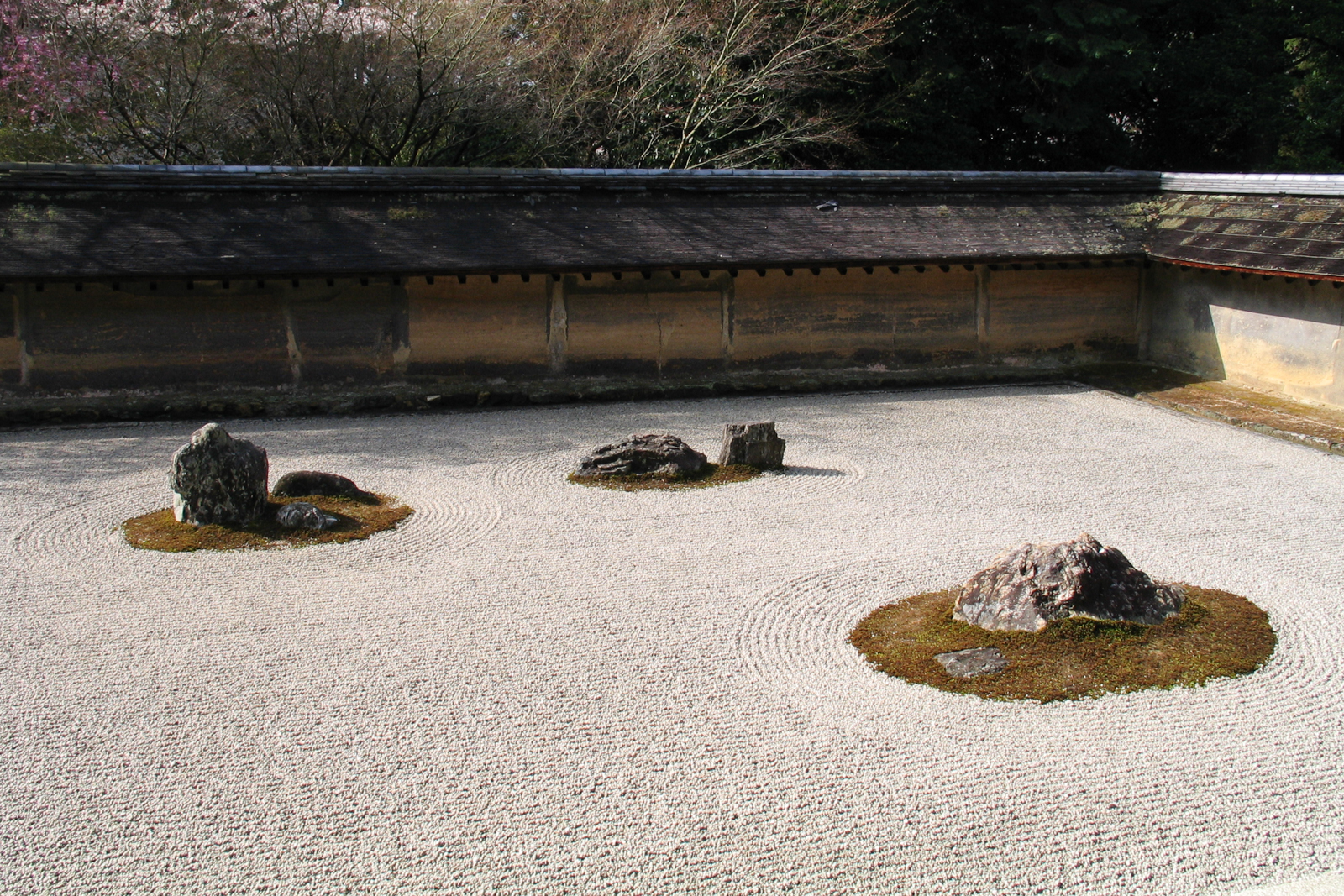
File:RyoanJi-Dry garden.jpg
In the Japanese art of the rock garden, the artist must be aware 
of the rocks' "ishigokoro" (‘heart,’ or ‘mind’)


Neuroscientist Christof Koch, chief scientific officer at the Allen Institute for Brain Science, has progressively become less hyper-rational in his understanding of consciousness and more Buddhist - and it's not clear yet if this is a good thing.

His newest pronouncement is his belief in panpsychism, defined below by Wikipedia:
In philosophy, panpsychism is the view that mind or soul (Greek: ψυχή) is a universal feature of all things, and the primordial feature from which all others are derived. The panpsychist sees him or herself as a mind in a world of minds.

Panpsychism is one of the oldest philosophical theories, and can be ascribed to philosophers like Thales, Plato, Spinoza, Leibniz and William James. Panpsychism can also be seen in eastern philosophies such as Vedanta and Mahayana Buddhism. During the 19th century, Panpsychism was the default theory in philosophy of mind, but it saw a decline during the latter half of the 20th century with the rise of logical positivism.[1] The recent interest in the hard problem of consciousness has once again made panpsychism a mainstream theory.
 Says Koch, "I argue that we live in a universe of space, time, mass, energy, and consciousness arising out of complex systems." This sounds like emergence to me, and less like panpsychism, which is the belief that mind/consciousness is inherent in the universe. I'm more likely to accept emergence as an explanation of consciousness that avoids issues of duality.

See the Stanford Encyclopedia of Philosophy entry on panpsychism for a better understanding of the arguments for and against, as well as its history in philosophy.

A neuroscientist's radical theory of how networks become conscious


15 November 13
by Brandon Keim


A map of neural circuits in the human brain - Human Connectome Project

It's a question that's perplexed philosophers for centuries and scientists for decades: where does consciousness come from? We know it exists, at least in ourselves. But how it arises from chemistry and electricity in our brains is an unsolved mystery.

Neuroscientist Christof Koch, chief scientific officer at the Allen Institute for Brain Science, thinks he might know the answer. According to Koch, consciousness arises within any sufficiently complex, information-processing system. All animals, from humans on down to earthworms, are conscious; even the internet could be. That's just the way the universe works.

"The electric charge of an electron doesn't arise out of more elemental properties. It simply has a charge," says Koch. "Likewise, I argue that we live in a universe of space, time, mass, energy, and consciousness arising out of complex systems."

What Koch proposes is a scientifically refined version of an ancient philosophical doctrine called panpsychism -- and, coming from someone else, it might sound more like spirituality than science. But Koch has devoted the last three decades to studying the neurological basis of consciousness. His work at the Allen Institute now puts him at the forefront of the BRAIN Initiative, the massive new effort to understand how brains work, which will begin next year.

Koch's insights have been detailed in dozens of scientific articles and a series of books, including last year's Consciousness: Confessions of a Romantic Reductionist. Wired talked to Koch about his understanding of this age-old question.

Wired: How did you come to believe in panpsychism?

Christof Koch: I grew up Roman Catholic, and also grew up with a dog. And what bothered me was the idea that, while humans had souls and could go to heaven, dogs were not supposed to have souls. Intuitively I felt that either humans and animals alike had souls, or none did. Then I encountered Buddhism, with its emphasis on the universal nature of the conscious mind. You find this idea in philosophy, too, espoused by Plato and Spinoza and Schopenhauer, that psyche -- consciousness -- is everywhere. I find that to be the most satisfying explanation for the universe, for three reasons: biological, metaphysical and computational.

Wired: What do you mean?

Koch: My consciousness is an undeniable fact. One can only infer facts about the universe, such as physics, indirectly, but the one thing I'm utterly certain of is that I'm conscious. I might be confused about the state of my consciousness, but I'm not confused about having it. Then, looking at the biology, all animals have complex physiology, not just humans. And at the level of a grain of brain matter, there's nothing exceptional about human brains.

Only experts can tell, under a microscope, whether a chunk of brain matter is mouse or monkey or human -- and animals have very complicated behaviours. Even honeybees recognise individual faces, communicate the quality and location of food sources via waggle dances, and navigate complex mazes with the aid of cues stored in their short-term memory. If you blow a scent into their hive, they return to where they've previously encountered the odor. That's associative memory. What is the simplest explanation for it? That consciousness extends to all these creatures, that it's an imminent property of highly organised pieces of matter, such as brains.

Wired: That's pretty fuzzy. How does consciousness arise? How can you quantify it?

Koch: There's a theory, called Integrated Information Theory, developed by Giulio Tononi at the University of Wisconsin, that assigns to any one brain, or any complex system, a number -- denoted by the Greek symbol of Φ -- that tells you how integrated a system is, how much more the system is than the union of its parts. Φ gives you an information-theoretical measure of consciousness. Any system with integrated information different from zero has consciousness. Any integration feels like something

It's not that any physical system has consciousness. A black hole, a heap of sand, a bunch of isolated neurons in a dish, they're not integrated. They have no consciousness. But complex systems do. And how much consciousness they have depends on how many connections they have and how they're wired up.

Wired: Ecosystems are interconnected. Can a forest be conscious?

Koch: In the case of the brain, it's the whole system that's conscious, not the individual nerve cells. For any one ecosystem, it's a question of how richly the individual components, such as the trees in a forest, are integrated within themselves as compared to causal interactions between trees.

The philosopher John Searle, in his review of Consciousness, asked, "Why isn't America conscious?" After all, there are 300 million Americans, interacting in very complicated ways. Why doesn't consciousness extend to all of America? It's because integrated information theory postulates that consciousness is a local maximum. You and me, for example: we're interacting right now, but vastly less than the cells in my brain interact with each other. While you and I are conscious as individuals, there's no conscious Übermind that unites us in a single entity. You and I are not collectively conscious. It's the same thing with ecosystems. In each case, it's a question of the degree and extent of causal interactions among all components making up the system.

Wired: The internet is integrated. Could it be conscious?

Koch: It's difficult to say right now. But consider this. The internet contains about 10 billion computers, with each computer itself having a couple of billion transistors in its CPU. So the internet has at least 10^19 transistors, compared to the roughly 1000 trillion (or quadrillion) synapses in the human brain. That's about 10,000 times more transistors than synapses. But is the internet more complex than the human brain? It depends on the degree of integration of the internet.
 
For instance, our brains are connected all the time. On the internet, computers are packet-switching. They're not connected permanently, but rapidly switch from one to another. But according to my version of panpsychism, it feels like something to be the internet -- and if the internet were down, it wouldn't feel like anything anymore. And that is, in principle, not different from the way I feel when I'm in a deep, dreamless sleep.

Wired: Internet aside, what does a human consciousness share with animal consciousness? Are certain features going to be the same?

Koch: It depends on the sensorium [the scope of our sensory perception -ed.] and the interconnections. For a mouse, this is easy to say. They have a cortex similar to ours, but not a well-developed prefrontal cortex. So it probably doesn't have self-consciousness, or understand symbols like we do, but it sees and hears things similarly.

In every case, you have to look at the underlying neural mechanisms that give rise to the sensory apparatus, and to how they're implemented. There's no universal answer.

Wired: Does a lack of self-consciousness mean an animal has no sense of itself?

Koch: Many mammals don't pass the mirror self-recognition test, including dogs. But I suspect dogs have an olfactory form of self-recognition. You notice that dogs smell other dog's poop a lot, but they don't smell their own so much. So they probably have some sense of their own smell, a primitive form of self-consciousness. Now, I have no evidence to suggest that a dog sits there and reflects upon itself; I don't think dogs have that level of complexity. But I think dogs can see, and smell, and hear sounds, and be happy and excited, just like children and some adults.

Self-consciousness is something that humans have excessively, and that other animals have much less of, though apes have it to some extent. We have a hugely developed prefrontal cortex. We can ponder.

Wired: How can a creature be happy without self-consciousness?

Koch: When I'm climbing a mountain or a wall, my inner voice is totally silent. Instead, I'm hyperaware of the world around me. I don't worry too much about a fight with my wife, or about a tax return. I can't afford to get lost in my inner self. I'll fall. Same thing if I'm traveling at high speed on a bike. It's not like I have no sense of self in that situation, but it's certainly reduced. And I can be very happy.

Wired: I've read that you don't kill insects if you can avoid it.

Koch: That's true. They're fellow travelers on the road, bookended by eternity on both sides.

Wired: How do you square what you believe about animal consciousness with how they're used in experiments?

Koch: There are two things to put in perspective. First, there are vastly more animals being eaten at McDonald's every day. The number of animals used in research pales in comparison to the number used for flesh. And we need basic brain research to understand the brain's mechanisms. My father died from Parkinson's. One of my daughters died from Sudden Infant Death Syndrome. To prevent these brain diseases, we need to understand the brain -- and that, I think, can be the only true justification for animal research. That in the long run, it leads to a reduction in suffering for all of us. But in the short term, you have to do it in a way that minimises their pain and discomfort, with an awareness that these animals are conscious creatures.

Wired: Getting back to the theory, is your version of panpsychism truly scientific rather than metaphysical? How can it be tested?

Koch: In principle, in all sorts of ways. One implication is that you can build two systems, each with the same input and output -- but one, because of its internal structure, has integrated information. One system would be conscious, and the other not. It's not the input-output behavior that makes a system conscious, but rather the internal wiring.

The theory also says you can have simple systems that are conscious, and complex systems that are not. The cerebellum should not give rise to consciousness because of the simplicity of its connections. Theoretically you could compute that, and see if that's the case, though we can't do that right now. There are millions of details we still don't know. Human brain imaging is too crude. It doesn't get you to the cellular level.

The more relevant question, to me as a scientist, is how can I disprove the theory today. That's more difficult. Tononi's group has built a device to perturb the brain and assess the extent to which severely brain-injured patients -- think of Terri Schiavo -- are truly unconscious, or whether they do feel pain and distress but are unable to communicate to their loved ones. And it may be possible that some other theories of consciousness would fit these facts.

Wired: I still can't shake the feeling that consciousness arising through integrated information is -- arbitrary, somehow. Like an assertion of faith.

Koch: If you think about any explanation of anything, how far back does it go? We're confronted with this in physics. Take quantum mechanics, which is the theory that provides the best description we have of the universe at microscopic scales. Quantum mechanics allows us to design MRI and other useful machines and instruments. But why should quantum mechanics hold in our universe? It seems arbitrary! Can we imagine a universe without it, a universe where Planck's constant has a different value? Ultimately, there's a point beyond which there's no further regress. We live in a universe where, for reasons we don't understand, quantum physics simply is the reigning explanation.

With consciousness, it's ultimately going to be like that. We live in a universe where organised bits of matter give rise to consciousness. And with that, we can ultimately derive all sorts of interesting things: the answer to when a fetus or a baby first becomes conscious, whether a brain-injured patient is conscious, pathologies of consciousness such as schizophrenia, or consciousness in animals. And most people will say, that's a good explanation.

If I can predict the universe, and predict things I see around me, and manipulate them with my explanation, that's what it means to explain. Same thing with consciousness. Why we should live in such a universe is a good question, but I don't see how that can be answered now.

Saturday, June 29, 2013

Caitrin Nicol - Do Elephants Have Souls?

Here is an excellent article from The New Atlantis on the lives and too frequent deaths of elephants, one of the more remarkable creatures on the planet in terms of intelligence, emotional range, and social dynamics. This article asks if elephants have souls?

I guess that depends on how you define "soul" . . . .

Big ears” by Emmanuel Keller; altered with permission (CC BY-ND 2.0).

Do Elephants Have Souls?

Caitrin Nicol
There is mystery behind that masked gray visage, an ancient life force, delicate and mighty, awesome and enchanted, commanding the silence ordinarily reserved for mountain peaks, great fires, and the sea. 
—Peter Matthiessen, The Tree Where Man Was Born
The birth of an elephant is a spectacular occasion. Grandmothers, aunts, sisters, and cousins crowd around the new arrival and its dazed mother, trumpeting and stamping and waving their trunks to welcome the floppy baby who has so recently arrived from out of the void, bursting through the border of existence to take its place in an unbroken line stretching back to the dawn of life.

After almost two years in the womb and a few minutes to stretch its legs, the calf can begin to stumble around. But its trunk, an evolutionarily unique inheritance of up to 150,000 muscles with the dexterity to pick up a pin and the strength to uproot a tree, will be a mystery to it at first, with little apparent use except to sometimes suck upon like human babies do their thumbs. Over time, with practice and guidance, it will find the potential in this appendage flailing off its face to breathe, drink, caress, thwack, probe, lift, haul, wrap, spray, sense, blast, stroke, smell, nudge, collect, bathe, toot, wave, and perform countless other functions that a person would rely on a combination of eyes, nose, hands, and strong machinery to do.

Welcome to the world: This newborn hasn’t yet stood up and stretched its legs, let alone figured out how to use its trunk.“Elephant Nature Park” by Christian Haugen (CC BY 2.0). 

Once the calf is weaned from its mother’s milk at five or whenever its next sibling is born, it will spend up to 16 hours a day eating 5 percent of its entire weight in leaves, grass, brush, bark, and basically any other kind of vegetation. It will only process about 40 percent of the nutrients in this food, however; the waste it leaves behind helps fertilize plant growth and provide accessible nutrition on the ground to smaller animals, thus making the elephant a keystone species in its habitat. From 250 pounds at birth, it will continue to grow throughout its life, to up to 7 tons for a male of the largest species or 4 tons for a female.

Of the many types of elephants and mammoths that used to roam the earth, one born today will belong to one of three surviving species: Elephas maximus in Asia, Loxodonta africana (savanna elephant) or Loxodonta cyclotis (forest elephant) in Africa. There are about 500,000 African elephants alive now (about a third of them the more reticent, less studied L. cyclotis), and only 40,000 – 50,000 Asian elephants remaining. The Swedish Elephant Encyclopedia database currently lists just under 5,000 (most of them E. maximus) living in captivity worldwide, in half as many locations — meaning that the average number of elephants per holding is less than two; many of them live without a single companion of their kind.

For the freeborn, if it is a cow, the “allomothers” who welcomed her into the world will be with her for life — a matriarchal clan led by the oldest and biggest. She in turn will be an enthusiastic caretaker and playmate to her younger cousins and siblings. When she is twelve or fourteen, she will go into heat (“estrus”) for the first time, a bewildering occurrence during which her mother will stand by and show her what to do and which male to accept. If she conceives, she will have a calf twenty-two months later, crucially aided in birthing and raising it by the more experienced older ladies. She may have another every four to five years into her fifties or sixties, but not all will survive.

If it is a bull, he will stay with his family until the age of ten or twelve, when his increasingly rough and suggestive play will cause him to be sent off. He may loosely join forces with a few other young males, or trail around after older ones he looks up to, but for the most part he will be independent from then on. Within the next few years he will start going into “musth,” a periodic state of excitation characterized by surging levels of testosterone, dribbling urine and copious secretions from his temporal glands, and extreme aggression responsive only to the presence of a bigger bull, who has an immediate dominance that the young male risks injury or death by failing to defer to. Although he reaches sexual maturity at a fairly young age, thanks to the competition he may not sire any children until he is close to thirty. (Ancient Indian poetry lauds bulls in musth for their amorous powers, even as keepers of Asian elephants have respected the phase as one highly dangerous to humans since time immemorial. Until 1976, it was widely believed in the scientific community that African elephants do not enter musth. This changed when researchers at Amboseli National Park in Kenya were dismayed to note an epidemic of “Green Penis Syndrome,” which they feared signaled some horrible venereal disease — until they realized it was nothing more nor less alarming than the very definition of a force of nature.)

Other than this primal temporary madness, elephants (when they do not feel threatened) are quite peaceable, with a gentle, loyal, highly social nature. Here is how John Donne, having seen one at a London exposition in 1612, put it:
Natures great master-peece, an Elephant,
The onely harmlesse great thing; the giant
Of beasts; who thought, no more had gone, to make one wise
But to be just, and thankfull, loth to offend,
(Yet nature hath given him no knees to bend)
Himselfe he up-props, on himselfe relies,
And foe to none, suspects no enemies.
Donne is not the first or the last to view the elephant in its stature and dignity as a synecdoche for the total grandeur of the universe, come to earth in lumpen grey form. Here he suggests that it represents a moral ideal as well. Animals are often celebrated for virtues that they seem to embody: dogs for loyalty, bears for courage, dolphins for altruism, and so on. But what does it really mean for them to model these things? When people act virtuously, we give them credit for well-chosen behavior. Animals, it is presumed, do so without choosing.

From a religious, anthropocentric perspective, it might be said that while animal virtues do not entail morality for the animals themselves, they reveal to us the goodness in creation; as the medieval theologian Johannes Scotus Eriugena wrote, “In a wonderful and inexpressible way God is created in His creatures.” From a more biological view, it might be noted that people mostly do not choose their dispositions either, that behavioral tendencies are more determined than we like to tell ourselves, and that blame and credit for such things are often misapplied in human contexts too.

But the latter idea — that humans, although capable of conscious self-direction, are as mutely carried along by the force of selection as your friendly neighborhood amoeba — simply elides the question, while the former raises many more; the tiger is as much God’s creature as the lamb. In any case, the capacity for “choosing” is a binary conceit that gestures at something much fuller, an inner realm of awareness, selfhood, and possibility. In other words, a soul.

To the ancients, soul was anima, that which animates, the living-, moving-, breathing-ness of a biological being. In this sense, not only animals but plants have souls (of different capacities appropriate to what they are). For many religions, by contrast, the soul is specifically incorporeal, perhaps immortal, and believed to be unique to human beings, who are responsible (to a point) for its condition. To modern science it is, if anything, the hard problem of consciousness, also commonly thought to be the province of just one species.

Without either choosing sides or somehow reconciling these three dueling realities with each other, it would be impossible to say what a soul is, let alone who has one. But there is a fourth sense in which when we talk about it, we all mean more or less the same thing: what it means for someone to bare it, for music to have it, for eyes to be the window to it, for it to be uplifted or depraved. Even if, religiously, we know by revelation that other people possess them for eternity, we only engage with or know anything about them at a quotidian level by way of the same cues and interactions that a more this-worldly view would take as their sum total: bright eyes, a dejected slump, a sudden manic inspiration or a confession of regret.

Also a matter of conventional wisdom is the idea that human beings are on one side of a great divide while all animals are on the other, subjects of their instincts and our necessities and pleasures. What exactly the divide is, though, is difficult to define. Various contestants have included reason, language, art, technology, religion, walking upright and the use of hands, knowledge of mortality, sin, suicide, and more. In The Explicit Animal (1991), Raymond Tallis rounds up a master list of them:
Man has called himself (among other things): the rational animal; the moral animal; the consciously choosing animal; the deliberately evil animal; the political animal; the toolmaking animal; the historical animal; the commodity-making animal; the economical animal; the foreseeing animal; the promising animal; the death-knowing animal; the art-making or aesthetic animal; the explaining animal; the cause-bearing animal; the classifying animal; the measuring animal; the counting animal; the metaphor-making animal; the talking animal; the laughing animal; the religious animal; the spiritual animal; the metaphysical animal; the wondering animal... Man, it seems, is the self-predicating animal.
As Tallis goes on to explain, any given one of those distinctions is both too narrow, in being an insufficient explanation of what makes human beings human, and too open, in being demonstrably shared to some extent by another species.

Chimpanzees and other large primates, for instance, are so intelligent and personable that they blur many of these boundaries. But since we are so closely connected evolutionarily, it is easy to tacitly view them as way stations toward the human apex, impoverished versions of ourselves rather than somebody in their own right. There is, however, nothing else remotely like an elephant. (Its closest living relatives are sea cows — dugongs and manatees — and the hyrax, an African shrewmouse about the size of a rabbit.) As such, it presents the perfect opportunity for thoughtful reconsideration of the human difference, and how much that difference really matters.
Read the whole, long article, which is very worth your time.

Friday, February 22, 2013

"The Mind's Eye" with Galen Strawson, Nicholas Humphrey, and David Malone


Nice panel and an interesting discussion:
For scientists and philosophers the idea of the soul has been out of fashion for two hundred years. But is it on its way back? Can we explain consciousness without it? Who watches the magic show that is experience? Philosopher Galen Strawson, evolutionary psychologist Nicholas Humphrey, and award-winning documentary-maker David Malone investigate the all-seeing I.

The Mind's Eye

Wednesday, January 25, 2012

NPR - First Listen: Leonard Cohen, 'Old Ideas'

 
NPR has made Leonard Cohen's new album, "Old Ideas," available in its entirety for streaming, but only for a limited time - so go listen now.

Leonard Cohen's new album, Old Ideas, comes out Jan. 31.

January 22, 2012

In a recent public conversation with fellow rock bard Jarvis Cocker about the new recording Old Ideas, Leonard Cohen answered the younger man's suggestion that his songs are "penitential hymns" (a phrase Cohen himself employs in his new song "Come Healing") with jocular humility. "I'm not sure what that means, to be honest," Cohen reportedly replied. He continued, "Who's to blame in this catastrophe? I never figured that out."

The catastrophe he mentions is life itself — a description Cohen probably picked up from a fictional character he admires, Zorba the Greek, who embraced the "full catastrophe" of a well-connected, joyfully physical existence. The Buddhist teacher Jon Kabat-Zinn has also borrowed it for a book title, which is relevant, since Cohen's writing is famously philosophical, connecting his Jewish heritage to years of Zen meditation and an enduring existentialist bent.

But this spiritual master is a sensualist, too: His artistry is grounded in the careful examination of how the body and the soul interact. Old Ideas, his 12th studio album, was recorded after a triumphant world tour that had Cohen performing three-hour shows night after night — no mean feat for a man in his late 70s. It throbs with that life, its verses rife with zingers and painful confessions, and its music sounds more richly varied than anything Cohen has done in years.

Its depth comes in the tenderness and refined passion Cohen brings to his thorough descriptions of being human — a state in which pain and failure dance with transcendence and bliss, as he growls in harmony with his angelic backup singers in the beautiful "Come Healing," "The heart beneath is teaching to the broken heart above."


Old Ideas provides plenty of new lines like that, worthy of a Quotable Cohen anthology. (My favorite right now is from the folksy waltz "Crazy to Love You": "Crazy has places to hide in that are deeper than any goodbye.") But what makes this album special is its sound, which steps back from the synthesizer-heavy arrangements dominant on Cohen's other late-period work and explores a range of styles, from countrypolitan twang to gypsy jazz to Dylanesque blues.

Bobby Zimmerman, in fact, is a clear reference point throughout Old Ideas. At times, it seems like a response to Time Out of Mind, the 1997 release that marked the beginning of Dylan's epic lion-in-winter phase. (That he was only 57 when he made it shows how long a pop star's old age can last.) Like that album, Old Ideas contemplates mortality in the bitter light of failed romance; it fearlessly broaches emotional extremes while still dropping the wisdom of an elder who should know better. "The Darkness," with its funky undertow, and "Banjo," an easy talking blues, are especially Dylanesque, with Cohen adding tartness to his own gravelly growl and his band getting into a loose Americana groove.

In the end, of course, Leonard Cohen remains his own man, with a unique sound that brings the temple to the cabaret and a sensibility balancing humor and profundity on the crystal stem of a glass filled with red wine of an ideal vintage. In "Going Home," whose words were recently featured in The New Yorker by poetry editor Paul Muldoon, Cohen's inner spirit pokes fun at his pop-star self: "He's a lazy bastard living in a suit," the enlightened voice says. But you know what? That suit still fits, and the cut is perfection.

First Listen: Leonard Cohen, 'Old Ideas'

Monday, September 19, 2011

Shrink Rap Radio #279 – Grief, Ritual, and The Soul of the World with Francis Weller


Francis Weller practices something he calls Soul Psychology - sounds like spiritually based therapy, sort of, but he seems to also be skirting the realm of "parts work" and subpersonalities (which some local native healers see as another form of Soul Retrieval). He is the author of Entering The Healing Ground: Grief, Ritual and The Soul of the World.

Shrink Rap Radio #279 – Grief, Ritual, and The Soul of The World with Francis Weller, M.A.


Francis Weller, M.A., MFT is a psychotherapist and author of the 2011 book, Entering The Healing Ground: Grief, Ritual and The Soul of the World. He has been in private practice since 1983. During that time, he developed a style of working with people called Soul-Centered Psychotherapy. Weller says his approach to working with the wounds and challenges we face restores soul as the primary focus. He says he has come to have a deep faith in the way soul/psyche works, its moods and movements, how it speaks through symptoms and images, how it longs for intimacy with the world and its need for beauty. I see this every day in my work with people.


Weller says, we often struggle with the muscular demands of our culture to measure up, perform and be perfect. This leaves little room for those parts of us that do not match these expectations; the vulnerable, weak, inadequate and grieving parts of soul. And yet, it is precisely these parts of who we are that bring us closer to others, to the vitality of life and the world. Bringing these rejected and denied elements of soul-life, “those places where I said no to my life,” back into our daily rhythms is what adds meaning and depth to our days.


Francis weller reports he has worked with many concerns in his practice. He specializes in grief work, shame, addiction, depression, and men’s issues. He works with individuals and couples and he offers groups periodically.
A psychology podcast by David Van Nuys, Ph.D.


Friday, May 27, 2011

Buddhist Geeks #218: Liberating the Soul of Organization (Brian Robertson)

On this week's Buddhist Geeks, Vince speaks with Brian Robertson on the "soul" of an organization - Robertson is the founder of HolarcracyOne, a consulting firm.

Buddhist Geeks 218: Liberating the Soul of Organization

BG 218: Liberating the Soul of Organization

24. May, 2011
by Brian Robertson


Download

Episode Description:

We’re joined this week by Brian Robertson, founder of HolacracyOne, a company whose aim is to liberate the soul of organization. We discuss with Brian the main principles and practices behind Holacracy—a system that Brian helped develop as a new operating system on which businesses can run. He distinguishes between what he calls “predict-and-control” management practices and “sense-and-respond” processes, which are much more like the dynamic steering of a bicycle.

We also look at the parallels between the practice of Holacracy and the practice of meditation. Brian’s description of Holacracy as a practice which encourages people to be ruthlessly present with current tensions and to not identify with the roles that they fill are two striking examples of meditative principles applied to business. We conclude our discussion by exploring what he calls “the tyranny of consensus”, seeing that even with a group of highly conscious individuals we may not have the collective skills to really give life to the organizations we’re a part of.

This is part 1 of a two-part series. Listen to part 2 (airing next week).

Episode Links:

Transcript


Wednesday, February 02, 2011

Mark Vernon - Mind may be more real than matter

Galen Strawson recently trashed Christopher Humphrey's new book, Soul Dust: The Magic of Consciousness, which resulted in a rather interesting (if immature) discussion of the book and the reviewer. Mark Vernon is much friendlier to the book in his Comment Is Free column this week - which looks at the possibility of spirituality without religion. Maybe this s is how the Guardian makes Humphrey feel better.

Mind may be more real than matter

Energy, information or something like consciousness may in fact be the real basic stuff of the cosmos

Mark Vernon
Mark Vernon
guardian.co.uk,

The question: Can spirituality exist without religion?

Nicholas Humphrey's new book, Soul Dust: The Magic of Consciousness, has to be about as good as it gets when it comes to a certain kind of account of what's up inside your head. If you hold to his reductionist assumptions, it may well prove a satisfying read. If you don't, it'll engage but that's probably all.

What might interest readers of Cif belief is how Humphrey discusses life in a "soul niche". Fish live in a water niche, bedbugs in a blanket niche, humans live in a soul niche; the "territory of the spirit". This is the magic of human consciousness. To have soul is to enjoy the beauties of the cosmos, the responsibilities of free will, the comforts of prayer, the illusion of life after death. Evolution must have concocted such a grandiose dream-world for us for a purpose – probably, according to the author, to make us feel special. That encourages us to give of our best and so is good for our survival and the survival of others.

If you're like me, you'll wonder whether this damning with faint praise is a reductionist psychologist's way of having his cake and eating it. Hence, in one paragraph, the soul is celebrated as the word that informs us we can transcend our material existence: it's too rich a literary theme for an effective writer such as Humphrey to pass by. And yet, in the next, it is mocked as an opinion almost all people have of themselves – though not the author or you, wise reader.

I'm not taking offence, as if this were an attack on my deepest hopes and consolations. Rather, it seems to me to be an intellectual shame, as there's a lot more to the notion of the soul than Humphrey gives credit.

Aristotle provides a starting point. For him, the soul is not associated with magical thinking, but with the puzzle of being alive. Whatever it may be, the soul is the placeholder for that which gives living form to animate matter. Plants have souls, as well as animals – though of different kinds. Humans have a special kind of soul, on account of the capacity for abstract thought.

Aristotle, the sage of Stagira, might appeal as a resource in modern debates about consciousness because he was markedly non-dualist. He thought souls need bodies as much as bodies need souls. To separate the one from the other makes no more sense than arguing about whether a candle persists if the wax is melted. But if Aristotle is not a dualist, he is not a reductionist either, because, at the same time, a candle clearly has more to it than just its wax, just as living things have more to them than their matter.

There are further elements to Aristotle's approach that might commend it. One is that his middle path makes it pretty hard to say what it is to be a person. You can't just turn inwards and describe what you experience, as many working on consciousness since Descartes tend to do. This is because to be a person is also to be a body, and so we must incorporate into our view of ourselves our relationship with others, with culture, with the world.

All in all, a more sophisticated exploration of the notion of the soul opens up all kinds of possibilities that Humphrey's warm but dismissive approach thwarts. For example, the theologian Thomas Aquinas was thoroughly Aristotelian when it came to what it is to be human. But that does not prevent a case for postmortem existence. Roughly, both note that the human soul is characterised by abstract thought, like mathematics. But abstract thought is, presumably, immaterial. So perhaps that element persists after the body perishes. This does not straightforwardly mean that I survive: "my soul is not I", as Aquinas put it. But it might complicate brusque denials of immortality. An analogy might be drawn with the various conservation laws of modern physics: energy, momentum and information change but aren't destroyed. Maybe death is a little like that. At one point, Humphrey asserts that nothing in the natural world is eternal. That's not so easy to say if you're a physicist.

To put it another way, perhaps it's time to consider the possibility that the hard problem of consciousness is not primarily to do with consciousness, but is to do with materialism. Perhaps consciousness is thought hard from this point of view because, in fact, energy, information or something quite like consciousness is the basic stuff of the cosmos? Matter might be the epiphenomenon, not mind. As Keith Ward entertainingly puts it in his new book, More Than Matter?: Is There More to Life than Molecules?: "Minds are not illusory ghosts in real machines. On the contrary, machines are spectral, transitory phenomena appearing to an intelligible world of minds."

You don't have to be spiritual or religious to entertain such thoughts. Physicists do so quite routinely these days. It's hardly avoidable when you deal with subatomic particles – the stuff of "matter" – as waves of probability rippling across fields of energy.


Friday, January 21, 2011

TEDxBrussels - Stuart Hameroff - Do we have a quantum Soul?

http://consciousness-and-spirituality.com/image-files/stuart-hameroff.jpg

I used to respect Stuart Hameroff, mostly based on his work with Roger Penrose on a quantum theory of consciousness (the Orch OR model). But also for his annual work (bi-annual here in Tucson) on the Toward a Science of Consciousness conference.

Then he showed up prominently in What the Bleep Do We Know?!

Seriously? A respected consciousness theorist in a film inspired by a greedy woman who channels a "god" from outer space? WTF?!

Anyway, this is interesting, sort of, if you buy into this kind of thing.

TEDxBrussels - Stuart Hameroff - Do we have a quantum Soul?
Dr. Hameroff's research for 35 years has involved consciousness - how the pinkish gray meat between our ears produces the richness of experiential awareness. A clinical anesthesiologist, Hameroff has studied how anesthetic gas molecules selectively erase consciousness via delicate quantum effects on protein dynamics. Following a longstanding interest in the computational capacity of microtubules inside neurons, Hameroff teamed with the eminent British physicist Sir Roger Penrose to develop a controversial quantum theory of consciousness called orchestrated objective reduction (Orch OR) which connects brain processes to fundamental spacetime geometry. Recently Hameroff has explored the theoretical implications of Orch OR for consciousness to exist independent of the body, distributed in deeper, lower, faster scales in non-local, holographic spacetime, raising possible scientific approaches to the soul and spirituality.


Saturday, October 02, 2010

David Weisman, M.D. - You Are Not a Unified Mind

http://img1.eyefetch.com/p/ae/1030886-1565c128-593d-4f39-b670-2ec721d9d346l.jpg

In this post from his blog at Psychology Today, Neuro-Atheism: Grounding the soul, Dr. Weisman sets about dismantling the idea of the soul through examples from brain science.

He gives an example of brain damage, but much of what we know about mind and consciousness also reveal the multiplicity of mind - that we are multiple selves, often battling for control of consciousness (not in a dissociate identity disorder kind of way). Our brain smooths out the transitions as best as it can to create a sense of unity and cohesion.

None of this is new
- it's just that now we can use brain science and brain scans to show the same reality from different angles.
Brain tethers mind so close there is no string.

There is a common idea: our mind seems unified, so it really is. Many humans go a bit further and call that unified mind a soul. This step, from a unified self to soul, is an ancient assumption that now forms a bedrock for further religious claims, like life after death and religious morality. It is also a little god within us, mirroring and supporting the idea of a bigger God outside us. For the modern believers in the soul, let's call them soulists to avoid the opaque waters of dualism, the soul assumption appears to be the smallest of steps, so small it seems no one should question it.

Yet the soul is a claim for which there isn't any evidence, and we are right to question it. There is little evidence even for the place from which the soulists step off, the unified mind. In fact, neurology and neuroscience, working unseen over the past century, have eroded both the soul and the unified mind down to nothing. Experiences certainly do feel unified, but it is a mistake to take these feelings as reality. The way things seem isn't the way they are.

There are historical parallels. Scientists used to believe a substance called caloric made hot materials hot and flowed into colder materials to make them warmer. It seemed to be true until it turned out to be false, replaced by a better theory. Science is littered with such discredited theories with funny names like phlogiston, aether, and miasma. The soul is one of them.

Looking at the wide range of works along the axis of soulism ('Life After Death: The Evidence' by Dinesh D'Souza to ‘Absence of Mind' by Marilynne Robinson), we find little to no understanding of the brain. For example, Robinson writes, "Our religious traditions give us as the name of God two deeply mysterious words, one deeply mysterious utterance: I AM." The translation might be: Indoctrination tells us we have a soul, it feels like we are a unified little god in control of our bodies, so we are. To advance these ideas, the authors and their readers have to be almost completely unaware of twentieth century neurology and neuroscience.

If they were interested, they might learn of evidence supporting another view. Our brain creates an illusion of unity and control where there really isn't any. There are thousands of cases and experiments that demonstrate why science supports a view of the unified mind as illusion rather than reality. We'll take a single case I saw in the emergency room.

Mrs. Blanford got up from dinner with her husband, and dropped down. She could not move the left side of her body. I met Mrs. Blanford soon afterwards: her speech was normal, but she could not see objects to her left and could not move or feel her left face, arm, and leg. Mrs. Blanford was having a stroke.

An interesting thing happened when I brought her left arm up across her face so she could see it.

I ask, as I always ask such patients, "Who's arm is this?"

"That is your arm."

"Then why am I wearing your ring?" I point to her wedding band.

"That wedding band belongs on the arm of Mrs. Blanford."

"So who's arm is this?"

"That is your arm."

Some patients accuse me of stealing their rings or watches. Even if we demonstrate their arm is attached to their body, they are never convinced the arm belongs to them. At most, one is able to render them briefly confused, and then the condition reestablishes itself. The condition is called neglect and it is not at all extraordinary. Mrs. Blanford's case is not rare. When facing right brain strokes and masses the question is only what degree will the patient deny their left side.

What to make of it? How can we best explain it? Given that Mrs. Blanford had a stroke, we are best served by adopting a neurologic point of view. To do this, we need to understand a bit about how the brain works. In general, and in the broadest strokes possible, the brain is divided into two hemispheres. The left hemisphere processes speech and the motor and sensory information for the right side of the world. The right hemisphere processes nonverbal information and representations from the left side. This stroke rendered Mrs. Blanford's right hemisphere dysfunctional, no longer able to process anything from the left side of her world. It is not the left hemisphere's job to recognize the left arm, so it can't do that task. To the left brain, the left side of the body simply does not exist. The right brain has failed, not only to process arm information, but failed to let the left hemisphere know it failed (one thinks of the Bush White House).

It isn't only that her left brain can't do the right brain's task. The left hemisphere also can't recognize that there is missing data, or that there is something wrong with the data. It has to use the data it has, so the left hemisphere comes up with something called a confabulation, creating a verbal fabrication to explain missing information. In this case the confabulation becomes, "That is your arm." Although nonsense and easy to falsify, the idea is internally consistent, makes some sense of the (messed up) internal data, and feels right. The injured brain creates a confabulation to maintain unity of self and a feeling of control. We find a brain believing something that seems right, but isn't (again).

A neglect case only makes sense if you consider each hemisphere as its own separate entity. We see that when a stroke damages the brain, the mind follows--as a result. It is expected, like unplugging a mouse from the computer results in no curser movement.

Now consider yourself. Consider your own left arm. It feels perfect, under your control, a part of you, exactly where it should be. But this unified perception relies on neuronal machinery humming along under the surface. Your sense of unity, only perceptible to you, is a sheen on the surface, not a layer of reality.

Where does this leave the soul? Does the soul make any sense in the face of a brain and mind so easily fractured by ischemia? A soul is immaterial, eternal, a little god, impervious to injury, able to survive our deaths. Yet here we see one injured, tethered so close to the injured brain that there is no string. We see a hole in the brain, a hole in the soul, and through it we get a glimpse into the brain's inner workings. One part is damaged; another part falsely thinks it is whole and unified. How does the idea of a unified soul make one bit of sense in the face of this data?

The soul is an ancient hypothesis, older than caloric and just as false, falsified not only by a single case of neglect, but by the collected works of neurology and neuroscience. This leaves a distinct absence of soul, by whatever name. It does not leave the absence because of cultural biases and inertias, or because of overarching dogmas and hidden agendas and wishful thinking. It leaves an absence because neuroscientific data support it and tend to falsify everything else.

We gave Mrs. Blanford the treatment for stroke, tPA, almost one hour after symptom onset and less than 50 minutes from the time she came to the ER. It was close to my personal best treatment time. We also enrolled her into a stroke trial, and ensured that medical science took another tiny step forward. Perhaps it was because of our treatments, or perhaps because of her personal biologic fate, Mrs. Blanford did incredibly well. She walked out of our hospital about a week later, appearing nearly whole. She felt unified with her body and her mind, even though some of us know better: that reconnection isn't unification and that the way things seem isn't the way they are.


Wednesday, July 28, 2010

Parabola - JUNG’S RED BOOK: Life After Depth

Cool - I still want to get a copy of the book, but it'll have to wait for now. This excellent article comes from Parabola.

JUNG’S RED BOOK: Life After Depth

dunne
Abraxas, © Jorge M Machado

JUNG’S RED BOOK: Life After Depth

By Claire Dunne

The knowledge of death came to me that night….I went into the inner death and saw that outer dying is better than inner death. And I decided to die outside and live within….I turned away and sought the place of the inner life! —C.G. Jung, The Red Book

The Red Book, an epic chapter in the life of C.G. Jung, is now available to us fifty-eight years after his death. This fabled volume bound in red leather, which Jung initially called Liber Novus (New Book), echoes a medieval manuscript in its calligraphic text and richly toned symbolic paintings. It reveals a process that was primal in its energies and labyrinthine in its journey, one that became the genesis of his psychology. "The numinous beginning that contained everything", he wrote of it in 1957, four years before he died.

Cary Baynes, a former patient who was asked by Jung to transcribe the text, called it a "record of the passage of the universe through the soul of a man." It records the search, experiences, and initial findings of a man who at age forty had, by his own account "achieved honor, power, wealth, knowledge and every human happiness," yet had somehow lost his soul.

"Meine seele, meine seele, wo bist du?" "My soul, my soul, where are you?" Jung writes in the Black Book series that preceded and was elaborated upon in The Red Book. In his introduction to The Red Book, editor and translator Sonu Shamdasani, a London-based historian of psychology and psychiatry, sets this potent work within the context of Jung’s time and life.

It began in 1913, the year Jung broke with Freud. Inner experiences were drawing Jung into a way of being not primarily dependent on intellect. There were dreams he didn’t understand and then a repeated and dramatic sign–a daylight vision of horrific floods, Europe devastated, rivers of blood, and an inner voice that said: "It will come to pass."

"I thought my mind had gone crazy," wrote Jung. He undertook a psychological self-examination but became stuck. To tap into underlying material, he devised a "boring method" that evolved into "active imagination," which was to become a keystone of his psychology as a means of accessing and penetrating fantasy. From late 1913 to mid-1914, he recorded a relentless avalanche of inner openings, images, and dialogue, material to be worked on as Jung’s "most difficult experiment."

Often these experiences occurred at night in his library, following a day’s work with patients and dinner with family. He sometimes did yoga-type exercises to quell emotional turmoil and empty his consciousness. He then went into the spontaneous fantasies that appeared, as if entering a drama, engaging in conversations with its characters. But he remained uncertain of the meaning and significance of their content. Mental illness was a recurring fear.

"Finally I understood," he wrote in 1914, after the outbreak of World War I. His early symbolic pre-cognitions had been given terrible form. Understanding gave Jung the courage to begin a handwritten draft of his Liber Novus. He transcribed the Black Book material, adding further interpretations of each episode, and often combining these with a lyrical elaboration.

Here are some snapshot impressions of the book that may yield the skeleton of its content. Inner battles take place. In the prophetic opening the Spirit of the Depths spars with the Spirit of the Times in him. The contemporary and changing thinking of Time constantly has to give way to the immemorial and shaping future contained in, and arising from, the Depths.

A spiritual message emerges, a new way for the time we live in today, with Jung becoming the task, interpreter, and bearer of it. The teaching is of a new God image–an immanent God who is in everything big and small, dark and light. The paradox in this holds that "the highest truth and the absurd is one and the same thing." Moreover, "the melting together of sense and nonsense produces the supreme meaning"; and "if you marry the ordered to the chaos you produce the divine child." The task is to hold the opposites together, "the goal is not the heights but the center"–the center or Self which can be said as "God in us."

Jung came to believe that "You should be…not Christians but Christ, otherwise you will be of no use to the coming God." He realised he needed to live all of life in him, God spirit and human animal, together in unity.

In Jung’s personal journey his feminine Soul voice battles with him to recognize and balance his own opposites. There is a peeling back of distrust, scorn, judgment, pride, defiance, doubt, confusion, rage, and fear. The need to develop patience—a waiting, enduring, receiving mode as the feminine (or anima) within—is put to him. He discovers that thinking and feeling need each other.

Jung has to face what least he wants to—symbolised as desert, hell, murder, and more, till "nothing human is alien to me." Opposites, he realises, are brothers: "the other is also in you." Soul counsels acceptance of solitude, the inner loneliness of knowing, uncertainty of path or goal, and fear and possibility of madness as part of his journey. "I believed…soul knows her own way….perhaps no one will gain insight from my work. But my soul demands this achievement….I should be able to do this just for myself, without hope–for the sake of God."

Jung carves his own path, insisting "my path is not your path" and, "to live oneself is to be one’s own task." The fantasies deepen in a spiraling journey of recurring, evolving patterns. The horror and the positive aspects of collective human history unfold before him. Soul insists he accept it all. "I feel the things that were and that will be". He initially recoils at the enormous task ahead. "Futurity grows out of me; I do not create it, and yet I do."

A transformative image of black snake appears, winding up, becoming white, and emerging through the mouth of the crucified Christ.

"To give birth to the ancient in a new time is creation," he writes.

"We need it [magic]… to find the way that we are unable to conceive." Looking for inner help, Jung is "apprenticed" to Philemon, a "guru" figure that first appears in dream as a winged man bearing four keys, and then as the archetypal Magician. From him, Jung learns about objective reality beyond the personal. He risks the letting-go that is needed to bring together powers that conflict in the soul of man into a true marriage. Reason and understanding must unite with unreason and magic. Unity brings an apparent standstill that is "the forbearing life of eternity, the life of divinity." Yet his inner guidance reveals that the personal "life has yet to begin." This section ends with: "the touchstone is being alone with yourself. This is the way."

Another section opens with a devastating self-criticism of the "shadow" side of his state. "If I tame you, beast, I give others the opportunity to tame their beasts." Jung is encouraged by Soul to "be unwavering and create" while a haggard male inner image tells him, "you must bleed for the goal of humanity." As World War I savages on, Jung asks his Soul: "Which depths do you require me to advance to?" The answer "Forever above yourself and the present."

For nearly a year, the voices of the depths fall silent. Jung writes a draft of his Liber Novus. Then the voice of Philemon returns. "Self-willing is not for you. You are the will of the whole….Draw nearer, enter into the grave of God. The place of your work should be in the vault."

The dead appear to his inner vision and Soul declares "The dead demand your expiatory prayers." Jung reluctantly accepts. Soul announces that the "the ruler of this world" demands the sacrifice of Jung’s fear because he has "been summoned to serve him." "Why must it be me?" protests Jung. "I cannot. I don’t want to."

"You possess the word that should not be allowed to remain concealed," declares his Soul.

Philemon, who Jung had felt as "the presence of the good and the beautiful," now appears in priestly robes and gives "Seven Sermons to the Dead," a kind of Gnostic creation myth, including humanity’s role in it.

From Pleroma, unmanifest, infinite, eternal, in which "there is nothing and everything,, arises differentiated levels of Creation that are permeated with Pleroma. Pairs of opposites, which are balanced and void in Pleroma, appear as separate in created beings, eg., good and evil, sameness and difference. The striving at bottom is for "your own essence" as being.

Everything "created and uncreated" is Pleroma itself, the totality of being. The first manifestation devolving from Pleroma is Abraxas, a god forgotten by mankind, whose state of being is "effect," a paradoxical "improbable probability and unreal reality." It is "force, duration, change" at once. The next level of manifestation is more definite. God is creation. God is in essence "effective fullness" while Satan, his opposite, is in essence "effective emptiness."

Then there is a multiplicity of gods that act as either heavenly gods that "magnify," or earthly gods that "diminish," the four principal ones being Sun God, Eros, Tree of Life, and Devil. Spirituality and sexuality, "daimon manifestations of the gods," are opposites of the same spectrum, celestial in spirituality, earthly in sexuality. Man and woman "stand under the law" of both in differing ways.

In the last of the "Seven Sermons," Philemon reveals that man "is a gateway through which you pass from the outer world of Gods, daimons, and souls into the inner world; out of the greater into the smaller world." In this world "man is Abraxas, the creator and destroyer of his own world," who has a star as his own "guiding God."

Much later, Jung told a colleague that the "Seven Sermons to the Dead" were a prelude of what he had to communicate to the world. They are the skeletal nucleus of Jung’s psychology including individuation, the conflict of opposites, and the co-creation of man with the godhead.

Yet, the journey of The Red Book continued on. Philemon had a further teaching about man: "You, being, are the eternal moment." Death as shade, and celestial mother in mantle of stars, also appear, requiring further sacrifice from Jung before he can give birth to his stellar child. Jung realizes that "only fidelity to love and voluntary devotion" lead to "my stellar nature, my truest and most innermost self, that simply and singly is."

Finally, a shade (Christ) enters. Philemon kneels to "my master and my brother," telling Christ "your work is incomplete" while man merely imitates his life. "The time has come when each must do his own work of redemption."

By the end, clear lines are drawn between personal Jung and the inner beings that have appeared throughout, including Elijah, Salome, and earth spirit Ka, in addition to Philemon. There is a final tussle with Soul as Jung refuses unconditional obedience to the gods. He insists that man is no longer "slave" to them, though "They may devise a service in return." After initial outrage the gods agree. Soul tells Jung: "You have broken the compulsion of the law." Christ (as shade) offers a final word as gift. In accepting light and dark together: "I bring you the beauty of suffering."

In 1916, while on military duty, a series of twenty-seven mandala images came to Jung. The first depicts a multilevel relationship of microcosm with macrocosm. Abraxas, "lord of the physical world," is at the bottom; Phanes, golden winged "divine child," is at top. Over time Jung transcribed his work into calligraphic form on parchment, illustrated the text, painted dramatic symbolic images of his journey and inserted it all into a six-hundred-page folio bound in red leather.

Patients recall seeing it, open, on an easel in his library. Jung counseled them to create their own kind of Red Book as a method of dealing with their particular inner processes. Christiana Morgan recalls Jung saying "You can go to the book, turn over the pages and for you it will be your church–your cathedral–the silent places of your spirit where you will find renewal….for in that book is your soul."

He stopped work on The Red Book in 1930 when the impact of a Chinese alchemical text, The Secret of the Golden Flower, brought him "undreamed of confirmation" of his ideas, and the link between East and West. In 1959, a single handwritten page was added to the book by Jung, reaffirming its contents: "I always knew those experiences contained something precious." It ends in mid-sentence.

The Red Book continues to offer us profound insight into the processes of life, into Jung and his work, and into the need to honor our own inner lives in our own way.

The Red Book is published by W.W. Norton at a list price of $195.00.