Showing posts with label food. Show all posts

Monday, June 02, 2014

When It Comes to Fat in the Diet, Nutritional Science Is Way Ahead of Public-Health "Experts"

For decades, the message the public received about dietary fat was this, or some version of it:
Eating fat makes you fat. Eating the fat that causes heart disease fills your body with that fat. Fat is bad. Some kinds of fat are especially bad. Avoid all of it.
The theory, in part and simply put, was that you are what you eat. If you eat fat will be fat.

Although this is clearly wrong on the surface, there is a deeper truth to it - we ARE what we eat. EVERY cell in the human body is lipid-based, i.e., made of fat, and this is especially true in the brain.

Sports nutritionist Dr. John Berardi (Precision Nutrition) has long been an advocate of splitting fat intake equally between saturated fats (coconut oil, butter), monounsaturated fats (nuts, avocados, and olive oil), and polyunsaturated fats (fish, seeds, and nuts).

Below this post from Nautilus, I am also including an excellent "explainer" by Ryan Andrews of Precision Nutrition on healthy and unhealthy fats.

How The Big Wrong Fat Message Got So Widely Accepted

Posted By Amos Zeeberg on May 30, 2014


Nutritional advice about eggs, naturally high in cholesterol, has been scrambled 
over the past 50 years. Jag_cz via Shutterstock

The practice of nutritional science faces some significant problems, and they are mainly of its own making. For decades, starting in the 1950s, a consensus of experts recommended that Americans cut down on fat, cholesterol, and saturated fat so as to minimize their risk of heart disease.

In more recent decades, the consensus has, like an ocean liner, slowly changed direction and even reversed course. First, the warnings about fat diminished and then disappeared—the problem wasn’t fat but certain problematic fats, the exact identity of which were also in flux. Then the firm limits on cholesterol were lifted—dietary cholesterol didn’t significantly change blood cholesterol in most people, and the total blood cholesterol wasn’t a very important factor in heart disease, anyway.

Over the past few years, studies of people’s actual health outcomes, not just biomarkers with indirect connections to health, suggest that saturated fat isn’t so bad either. As the expert bodies slowly internalize these results, the public sees a confusing contrast: Researchers seem to be coalescing around the idea that saturated fat isn’t the enemy, while public-health agencies continue to demonize it. This no doubt breeds some degree of deserved skepticism about the science behind our nutritional guidelines.

How did it get to be this way? How is the nutritional science advanced by public-health experts in such stark contrast with new science research?

Gary Taubes, one of the most influential critics of the “diet-heart hypothesis,” lays most of the blame on Ancel Keys, a physiologist at the University of Minnesota. Taubes says Keys based the theory on a tiny bit of research and forcefully, effectively promoted it to scientists. Other skeptics of the hypothesis have also pinned the error on Keys.

But I wonder if there’s another factor that helped propel the diet-heart hypothesis to become conventional wisdom despite a dearth of solid evidence, namely the old idea that “you are what you eat.” It makes a certain kind of obvious sense that eating fat will make you fat. What’s more, eating fat will provide more fuel for the plaques, made of fat, that were known to cause heart attacks on strokes. And of course it makes sense that eating cholesterol, a kind of fatty molecule, will increase cholesterol, a fat associated with heart disease, in your blood.

This idea was supported by Keys’ research and, more importantly, it made a clear, easily graspable lesson to push to the public. Eating fat makes you fat. Eating the fat that causes heart disease fills your body with that fat. Fat is bad. Some kinds of fat are especially bad. Avoid all of it.

But it turned out that you are not, in fact, exactly what you eat. Biology is more complicated than that.

~ Amos Zeeberg is Nautilus’ digital editor.

* * * * * * * * * *

Ryan Andrews is a former competitive bodybuilding, holds a MA in exercise physiology and an MS in nutrition, and is a Precision Nutrition coach and writes a great many of the informative articles post at the site. He also has adopted a plant-based diet while adhering to the macro-nutrient of the PN approach to nutrition.

All About Healthy Fats

By Ryan Andrews

Fats are organic molecules made up of carbon and hydrogen elements joined together in long chains called hydrocarbons. These molecules can be constructed in different ways, which creates different types of fat and their unique properties. The molecular configuration also determines whether fats will be healthy or unhealthy.


Fat types


There are 3 main types of dietary fat: saturated, monounsaturated, and polyunsaturated.
Saturated Monounsaturated Polyunsaturated


Omega-3 Omega-6
Animal fats
Tropical oils (e.g. coconut, palm, cacao)
Olive oil
Avocados
Peanuts & groundnuts
Tree nuts
Flax
Fish oil
Most seed oils (e.g. canola, safflower, sunflower)
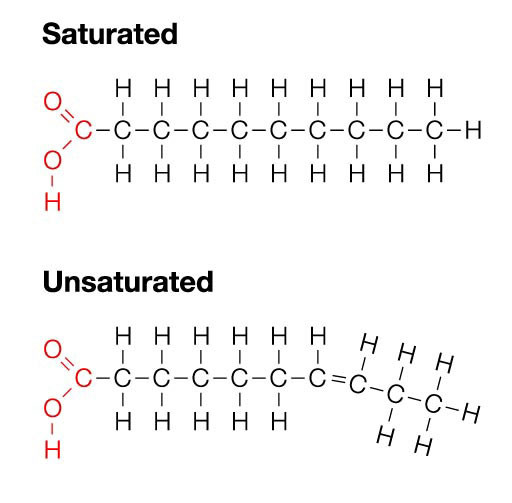
The difference between saturated and unsaturated fats lies in the bond structure. (See the diagram below.)

Saturated fats contain no double bonds. Each carbon (C) has two hydrogens (H). The chain is “saturated” with hydrogens. Because of this chemical configuration, saturated fats are generally solid at room temperature.

Unsaturated fats, on the other hand, have one or more double bonds between the carbons. Thus not all of the carbons have hydrogens stuck to them. This puts a “kink” in the chain.

Monounsaturated fats have one double bond and polyunsaturated fats have more than one.

These molecular shapes of various fats are important, because the shapes determine how the various fats act in the body.

What is a “healthy fat”?


In popular terminology, the monounsaturated and polyunsaturated fats are what most people refer to as “healthy fats.”

Yet humans have likely consumed unprocessed forms of saturated fats (such as organ meats from wild game, blubber from seals and whales, milk, or coconuts) for their entire existence.

Humans evolved on diets consisting of marine life, wild game and/or inland plants, which provided abundant omega-3 and other unprocessed fats.

Early humans (and many hunter-gatherer groups today) consumed all parts of animals — including fatty tissues such as blubber, organs, and brains along with eggs from fish, fowl, and reptiles.

So, a better definition of “healthy fat” might be “relatively unprocessed fats from whole foods”.

Unhealthy fats are typically those that are industrially produced and designed to be nonperishable, such as:
  • trans- fatty acids that appear in processed foods
  • hydrogenated fats such as margarine (hydrogen is added to the fat chain to make a normally liquid and perishable fat into a solid and shelf-stable fat)
  • most shelf-stable cooking oils (e.g. safflower, canola, corn oil, etc.)


Fats in balance


Since humans evolved by consuming a diet of whole foods, fat intake from mono-, poly-, and saturated sources was distributed evenly.

Scientists estimate that the omega-6/omega-3 ratio in a hunter-gatherer diet is around 1:1. Humans currently consume a ratio of about 16:1 to even 20:1 – an intake that’s way out of balance.

Much of our omega-6 and saturated fat intake is from refined fat sources, not from whole foods.

Items like corn oil, safflower oil, and factory-farmed meat/eggs/dairy contain unhealthy balances of fat. Soybean oil alone accounts for over 75% of oils consumed by Americans.


Why are healthy fats so important?


People are often concerned about excess dietary fat, but not getting enough “good” fats may also cause health problems.


A wide range of health effects


Fats exert powerful effects within the body.

We need adequate fat to support metabolism, cell signaling, the health of various body tissues, immunity, hormone production, and the absorption of many nutrients (such as vitamins A and D).

Having enough fat will also help keep you feeling full between meals.

Healthy fats have been shown to offer the following benefits.

Strong evidence
  • Cardiovascular protection (though there is less evidence for protecting against heart failure)
  • Improve body composition
  • Alleviate depression
Average evidence
  • Prevent cancers
  • Preserve memory
  • Preserve eye health
  • Reduce incidence of aggressive behaviour
  • Reduce ADHD and ADD symptoms


You’re a fathead… literally


Fat we consume is digested and either used for energy, stored in adipose (fat) tissue, or incorporated into other body tissues and organs.

Many of our body tissues are lipid (aka fat) based, including our brains and the fatty sheath that insulates our nervous systems. Our cell membranes are made of phospholipids, which means they’re fat-based too.

Thus, the fat we consume literally becomes part of our cells. It can powerfully influence how our cells communicate and interact.

For example, fat can affect signaling molecules that influence blood vessel constriction, inflammation, blood clotting, pain, airway constriction, etc. Since our brains are fat-based, changes in fat composition can affect transmission of nervous system impulses.

For this reason, balancing our fat intake can promote optimal functioning of our entire body. Therefore it’s important that we emphasize whole food fat sources in our diets, and supplement as necessary.


More on fat types

Omega-3s


The most important omega-3 fats are the following:
  • ALA (alpha-linolenic acid)
  • DHA (docosahexaenoic acid)
  • EPA (eicosapentaenoic acid)
Our bodies mostly use DHA/EPA, and don’t convert ALA very well. Most plant-based sources (e.g. flax, hemp, and chia) are rich in ALA while marine animal sources (i.e. fish) and algae are rich in EPA and DHA.

Thus, blood levels of omega-3 fats are typically lower in plant-based eaters than in those who eat meat, so plant-based eaters should be particularly vigilant about proper fat intake.
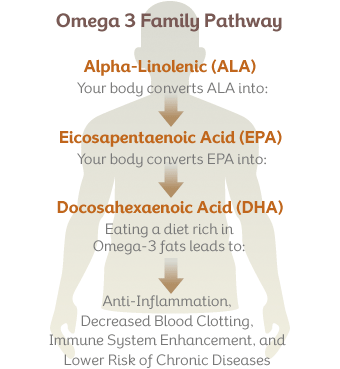


ALA conversion is particularly poor in people who consume a typical Western diet. Thus, people who eat diets high in processed foods and refined carbohydrates, etc. will not reap many benefits from ALA.

Get your EPA/DHA from marine sources. (See AA Algae for more on plant-based sources.)


Monounsaturated fats


Monounsaturated fats (e.g. from nuts, seeds, olives, and avocados) appear to lower LDL cholesterol (aka the “bad” cholesterol). They may also increase HDL cholesterol (aka the “good” cholesterol), but evidence for this is not as clear.


CLA


Once everything is in order with your nutrition and lifestyle, consuming CLA (conjugated linoleic acid) might be another option.

CLA resembles LA (linoleic acid) but the structure is slightly different, giving it a different effect in the body. It may help to control levels of body fat.

Food sources of CLA include pasture-raised/grass-fed animals/eggs. Plant-based CLA supplements are usually derived from sunflower oil.


Saturated fat


Saturated fat seems to support the enhancement of good cholesterol.

Fats from palm oil and coconut oil are highly saturated. Palm and coconut also contain medium chain fats, which can support health and optimal body composition.

Due to the high prevalence of animal foods and tropical oils (from processed foods) and the low prevalence of whole plant foods in the modern diet, people tend to get too much saturated fat relative to unsaturated fat, and combine these saturated fats with refined carbohydrates. Health suffers as a result.

In addition, tropical oils (e.g. palm and coconut oils) usually appear as industrially refined, hydrogenated fats in processed foods, rather than in their native form.

If you choose to consume these tropical oils, make sure they are unrefined (e.g. whole coconut or extra-virgin, cold-pressed coconut oil). For healthy saturated fats, look for pasture-raised meat and dairy.


Summary and recommendations


Get a mix of fat types from whole, unprocessed, high-quality foods. These include nuts, seeds (hemp, flax, and chia are especially nutritious), fish, seaweed, pasture-raised/grass-fed animals/eggs, olives, avocado, coconut, and cacao nibs.

Avoid industrially processed, artificially created, and factory farmed foods, which contain unhealthy fats.

Keep it simple. Don’t worry too much about exact percentages and grams.

Supplement with algae oil or fish oil daily. We recommend 1-2 g of algae oil or about 3-6 g of fish oil each day.


A few safety notes


If you:
  • are taking blood thinners;
  • have heart rhythm disturbances;
  • are scheduled for surgery in the immediate future; and/or
  • have any bleeding disorders
then check with your doctor and/or pharmacist before supplementing with additional omega-3s. However, it’s still generally safe for you to eat fish and seafood.


Further Resources

Eat, move, and live… better.


Yep, we know…the health and fitness world can sometimes be a confusing place. But it doesn’t have to be. Let us help you make sense of it all with this free special report. In it you’ll learn the best eating, exercise, and lifestyle strategies – unique and personal – for you.

Click here to download the special report, for free.

References


He K, et al. Accumulated evidence on fish consumption and coronary heart disease mortality: a meta-analysis of cohort studies. Circulation 2004:109;2705-2711.

Lankinen M, et al. Fatty fish intake decreases lipids related to inflammation and insulin signaling – a lipidomics approach. PLoS One 2009;4:e5258. Epub Apr 23 2009.

Marchioli R, et al. Early protection against sudden death by n-3 polyunsaturated fatty acids after myocardial infarction: Time-course analysis of the results of the Gruppo Italiano per lo Studio della Sopravvivenza nell’Infarto Miocardico (GISSI)-Prevenzione. Circulation 2002:105;1897-1903.

Simopoulos AP. The importance of the ratio of omega-6/omega-3 essential fatty acids. Biomed Pharacother 2002;56:365-379.

Whigham LD, et al. Efficacy of conjugated linoleic acid for reducing fat mass: a meta-analysis in humans. Am J Clin Nutr 2007;85:1203-1211.

Blankson H, et al. Conjugated linoleic acid reduces body fat mass in overweight and obese humans. J Nutr 2000;130:2943-2948.

Freund-Levi Y, et al. n-3 fatty acid treatment in 174 patients with mild to moderate Alzheimer disease: OmegAD study: a randomized double-blind trial. Arch Neurol 2006;63:1402-1408.

Morris MC. Docosahexaenoic acid and Alzheimer disease. Arch Neurol 2006;63:1527-1528.

Schaefer EJ, et al. Plasma phosphatidylcholine docosahexaenoic acid content and risk of dementia and Alzheimer disease: the Framingham heart study. Arch Neurol 2006;63:1545-1550.

Norat T, et al. Meat, fish, and colorectal cancer risk: the European prospective investigation into cancer and nutrition. J Natl Cancer Inst 2005;97:906-916.

Augustsson K, et al. A prospective study of intake of fish and marine fatty acids and prostate cancer. Cancer Epidemiol Biomarkers Prev 2003;12:64-67.

Nemets B, et al. Addition of omega-3 fatty acid to maintenance medication treatment for recurrent unipolar depressive disorder. Am J Psychiatry 2002;159:477-479.

Su KP, et al. Omega-3 fatty acids in major depressive disorder. A preliminary double-blind, placebo-controlled trial. Eur Neuropsychopharmacol 2003;13:267-271.

Peet M & Horrobin DF. Dose-ranging study of the effects of ethyl-eicosapentaenoate in patients with ongoing depression despite apparently adequate treatment with standard drugs. Arch Gen Psychiatry 2002;59:913-919.

Davis BC & Kris-Etherton PM. Achieving optimal essential fatty acid status in vegetarians: current knowledge and practical implications. Am J Clin Nutr 2003;78 (suppl):640S-646S.

Rosell MS, et al. Long-chain n-3 polyunsaturated fatty acids in plasma in British meat-eating, vegetarian, and vegan men. Am J Clin Nutr 2005;82:327-334.

Kris-Etherton PM, et al. AHA Scientific Statement. Fish consumption, fish oil, omega-3 fatty acids, and cardiovascular disease. Circulation 2002;106:2747-2757.

Rotstein NP, et al. Protective effect of docosahexaenoic acid on oxidative stress-induced apoptosis of retina photoreceptors. Invest Opthalmol Vis Sci 2003;44:2252-2259.

Xi ZP & Wang JY. Effect of dietary n-3 fatty acids on the composition of long-and very-long-chain polyenoic fatty acid in rat retina. J Nutr Sci Vitaminol (Tokyo) 2003;49:210-213.

Wheaton DH, et al. Biological safety assessment of docosahexaenoic acid supplementation in a randomized clinical trial for X-linked retinitis pigmentosa. Arch Opthalmol 2003;121:1269-1278.

MacDonald IM, et al. Effect of docosahexaenoic acid supplementation on retinal function in a patient with autosomal dominant Stargardt-like retinal dystrophy. Br J Ophthalmol 2004;88:305-306.

Lombardo YB & Chicco AG. Effects of dietary polyunsaturated n-3 fatty acids on dyslipidemia, and insulin resistance in rodents and humans. A review. J Nutr Biochem 2006;17:1-13.

Geelen A, et al. Fish consumption, n-3 fatty acids, and colorectal cancer: a meta-analysis of prospective cohort studies. Am J Epidemiol 2007;166:1116=1125.

Raff M, et al. Conjugated linoleic acids reduce body fat in healthy postmenopausal women. J Nutr 2009;139:1347-52. Epub 2009 Jun 3.

Taubes G. Good Calories, Bad Calories. 2007. Knopf.

German JB & Dillard CJ. Saturated fats: what dietary intake? Am J Clin Nutr 2004;80:550-559.

Volek JS & Forsythe CE. The case for not restricting saturated fat on a low carbohydrate diet. Nutrition & Metabolism 2005;2:21-23.

Dijkstra SC, et al. Intake of very long chain n-3 fatty acids from fish and the incidence of heart failure: the Rotterdam Study. Eur J Heart Fail. 2009;11:922-928.

Danaei G, et al. The preventable causes of death in the United States: Comparative risk assessment of dietary, lifestyle and metabolic risk factors. PLoS Medicine 2009;6.

Phillips SA, et al. Benefit of low-fat over low-carbohydrate diet on endothelial health in obesity. Hypertension 2008;51:376.

Mozaffarian D, et al. Health effects of trans-fatty acids: experimental and observational evidence. Eur J Clin Nutr 2009;63 Suppl 2:S5-S21.

Das UN. Essential fatty acids and their metabolites could function as endogenous HMG-CoA reductase and ACE enzyme inhibitors, anti-arrhythmic, anti-hypertensive, anti-atherosclerotic, anti-inflammatory, cytoprotective, and cardioprotective molecules. Lipids Health Dis 2008;7:37.

Wallinga, David and Mark Muller. Considering the Contribution of US Agricultural Policy to the Obesity Epidemic: Overview and Opportunities. Journal of Hunger & Environmental Nutrition January 2009;4(1):3 – 19.

Surette, Marc E. The science behind dietary omega-3 fatty acids CMAJ. 2008 January 15; 178(2): 177–180. doi: 10.1503/cmaj.071356.

Thursday, May 15, 2014

Kiera Butler - I Went to the Nutritionists' Annual Confab - It Was Catered by McDonald's (via Mother Jones)

Driving home from work last night, I heard Kiera Butler, Senior Editor at Mother Jones, on NPR's All Things Considered, discussing her recent article about her visit to the annual conference of the California Dietetic Association (CDA). What she found is that the dieticians and nutritionists are in bed with the purveyors of the crap that is and has made Americans obese, diabetic, and burdened with cardiovascular disease.

Junk food companies are willing to fork over serious money to have booths at the conference, and their spokespeople appear on many of the "expert" panels. According to Butler, "By 2011, there were 38, including Coca-Cola, PepsiCo, Nestlé, National Cattlemen's Beef Association, Mars, and many others." These companies generate 40% of the conferences total revenue.

Here is some more of the rather disturbing information in her article:
The Wheat Council hosted a presentation about how gluten intolerance was just a fad, not a real medical problem. The International Food Information Council—whose supporters include Coca-Cola, Hershey, Yum Brands, Kraft, and McDonald's—presented a discussion in which the panelists assured audience members that genetically modified foods were safe and environmentally sustainable. In "Bringing Affordable Healthier Food to Communities," Walmart spokespeople sang the praises of (what else?) Walmart.
And this:
After lunch, I attended "Sweeteners in Schools: Keeping Science First in a Controversial Discussion." Sponsored by the Corn Refiners Association, whose members produce and sell high-fructose corn syrup, it included a panel composed of three of the trade group's representatives. The panelists bemoaned some schools' decision to remove chocolate milk from their cafeteria menus. Later, one panelist said that she'd been dismayed to learn that some schools had banned sugary treats from classroom Valentine's Day parties, which "could be a teachable moment for kids about moderation." The moderator nodded in agreement, and added, "The bottom line is that all sugars contain the same calories, so you can't say that there is one ingredient causing the obesity crisis." The claim was presented as fact, despite mounting scientific evidence that high-fructose corn syrup prompts more weight gain than other sugars.
Read the whole article and you will see why I have generally thought dieticians and nutritionists are relatively ignorant on matters of food chemistry and human metabolism.

I Went to the Nutritionists' Annual Confab. It Was Catered by McDonald's

Our national nutrition experts are in bed with Big Food. And we wonder why we're fat.

—By Kiera Butler | Mon May 12, 2014


McDonald's sponsored the annual conference of the California branch of the nutritionists' professional organization.

One recent Friday afternoon, in a Mariott Hotel ballroom in Pomona, California, I watched two women skeptically evaluate their McDonald's lunches. One peered into a plastic bowl containing a salad of lettuce, bacon, chicken, cheese, and ranch dressing. The other arranged two chocolate chip cookies and a yogurt parfait on a napkin. "Eww," she said, gingerly stirring the layers of yogurt and pink strawberry goop. The woman with the salad nodded in agreement, poking at a wan chicken strip with her plastic fork.

When I asked how they were liking their lunches, both women grimaced and assured me that they "never" go to McDonald's. So why were they eating it today? Well, they didn't really have a choice. The women were registered dietitians halfway through day two of the annual conference of the California Dietetic Association (CDA). They were hoping to rack up some of the continuing education credits they needed to maintain their certification. McDonald's, the conference's featured sponsor, was the sole provider of lunch. "I guess it's good to know that they have healthier options now," said the woman with the salad.

As I wandered the exhibition hall, I saw that McDonald's wasn't the only food company giving away freebies. Cheerful reps at the Hershey's booth passed out miniature cartons of chocolate and strawberry milk. Butter Buds offered packets of fake butter crystals. The California Beef Council guy gave me a pamphlet on how to lose weight by eating steak. Amy's Naturals had microwave brownies. The night before, Sizzler, California Pizza Kitchen, Boston Market, and other chain restaurants had hosted a free evening buffet for conference-goers: "Local Restaurant Samplings for Your Pleasure."

And that wasn't all. The sessions—the real meat and potatoes of the conference—had food industry sponsors as well. The Wheat Council hosted a presentation about how gluten intolerance was just a fad, not a real medical problem. The International Food Information Council—whose supporters include Coca-Cola, Hershey, Yum Brands, Kraft, and McDonald's—presented a discussion in which the panelists assured audience members that genetically modified foods were safe and environmentally sustainable. In "Bringing Affordable Healthier Food to Communities," Walmart spokespeople sang the praises of (what else?) Walmart.


McDonald's catered lunch at the conference.

After lunch, I attended "Sweeteners in Schools: Keeping Science First in a Controversial Discussion." Sponsored by the Corn Refiners Association, whose members produce and sell high-fructose corn syrup, it included a panel composed of three of the trade group's representatives. The panelists bemoaned some schools' decision to remove chocolate milk from their cafeteria menus. Later, one panelist said that she'd been dismayed to learn that some schools had banned sugary treats from classroom Valentine's Day parties, which "could be a teachable moment for kids about moderation." The moderator nodded in agreement, and added, "The bottom line is that all sugars contain the same calories, so you can't say that there is one ingredient causing the obesity crisis." The claim was presented as fact, despite mounting scientific evidence that high-fructose corn syrup prompts more weight gain than other sugars.

Later, I asked conference spokeswoman Pat Smith whether she thought it was fair to present such a one-sided discussion. She claimed that the sponsors did not influence any of the content in the program. "We like to think that our dietitians have a thought process and that we are presenting them with what is out there," she said. "They need to make their own decisions on what they have listened to and apply that to their client base."

"But it's hard to make a decision if you're only hearing one side of the story," I countered.

She told me that she hadn't known beforehand that the Corn Refiners panel would be composed entirely of its own representatives. And yet, when I asked her how the panel was chosen, she explained that it was approved by a committee. She also confirmed that the Corn Refiners had paid for the panel, but she declined to say how much. (She had previously declined me press credentials for the conference, explaining that the CDA would have its own journalists covering the event.)

With 75,000 members, the CDA's parent organization, the national Academy of Nutrition and Dietetics (AND), is the world's largest professional association for nutritionists and dietitians. It accredits undergraduate and graduate programs in nutrition science and awards credentials to dietitian degree candidates who pass its exam. In Washington, its lobbying arm is active on issues including childhood obesity, Medicare, and the farm bill.

It also has strong ties to the food industry. In 2013, Michele Simon, a public health lawyer and food politics blogger, launched an investigation (PDF) into the academy's sponsorship policies. Simon found that its corporate support has increased dramatically over the past decade: In 2001, the academy listed just 10 sponsors. By 2011, there were 38, including Coca-Cola, PepsiCo, Nestlé, National Cattlemen's Beef Association, Mars, and many others. Corporate contributions are its largest source of income, generating nearly 40 percent of its total revenue.

Simon also learned that in 2012, Nestlé paid $47,200 for its 2,500-square-foot display in the exhibition hall at the annual AND conference, and PepsiCo paid $38,000 for 1,600 square feet. The academy's position papers, she noted, state that its sponsors do not influence its positions on controversial issues. And yet it often takes a pro-industry stance. When New York City was considering a ban on sales of oversized sodas, for example, the academy opposed it.

AND is not the only powerful nutritionists' group with strong corporate ties. The sponsors of the School Nutrition Association's 2013 annual conference included PepsiCo, Domino's Pizza, and Sara Lee. SNA made headlines recently when it asked Congress to lift the rule that students must take fruits and vegetables on the lunch line, and to ease the rules around sodium and whole grains.

Marion Nestle, a New York University nutritionist, wrote about nutritionists and corporate sponsorships in her 2007 book, Food Politics: How the Food Industry Influences Nutrition and Health. "I worry a lot about food industry co-optation of my profession," she wrote to me in an email. "Food companies are smart. They know that if they can make friends and help inform dietitians and nutritionists that the people they are supporting or helping will be reluctant to suggest eating less of their products."

Andy Bellatti, a dietitian and member of AND, recalls his shock the first time he attended the organization's national conference, in 2008. "I could get continuing education credits for literally sitting in a room and listening to Frito-Lay tell me that Sun Chips are a good way to meet my fiber needs," he says. "I thought, 'No wonder Americans are overweight and diabetic. The gatekeepers for our information about food are getting their information from junk-food companies.'"

Bellatti took photos of the displays in the exhibition hall and posted them on his blog. The post started a conversation among academy members, many of whom were outraged when they learned about the sponsorships. They worried that if word got out that dietitians' professional organization had been bought out by food corporations, the profession would lose credibility. So Bellatti and several other members founded Dietitians for Professional Integrity, consisting of academy members who want to change the sponsorship policies. They lobbied the leadership, but nothing changed—except for the rules about photography at the annual conference. The following year, when Bellatti took out his camera in the exhibition hall, he was told that photographs were prohibited.

Simon, the author of the 2013 report, found in a survey of AND members that four-fifths believed "sponsorship implies Academy endorsement of that company." Just as many said that they thought members should have a say in selecting the sponsors, and most said that they would be willing to pay higher dues in order to avoid having so many corporations represented at the annual conference.

I asked AND spokesman Tom Ryan whether the academy has any plans to review its rules for food industry sponsors. He referred me to the academy's corporate sponsorship website, which contains no suggestion of forthcoming changes. When I pressed him on it, Ryan replied, "I am not going to respond to that question."

At the CDA conference I attended, most of the dietitians I talked to said that they did not realize the sessions were sponsored by companies. "I hope they're telling us the real science," said one graduate student attendee.


At the McDonald's booth, company spokespeople told conference attendees about McDonald's healthy menu options.

Toward the end of the day, I spoke to a 65-year-old retired dietitian from Orange County. She told me she'd been attending CDA's annual conferences for 30 years. Shaking her head, she said that she didn't approve of the trend of junk-food sponsors. "I guess they need the money, but this is pathetic," she said, rolling her eyes. She found the McDonald's lunch particularly deplorable. "A dietitian you'd expect to be principled," she said. "But here I feel like we're sleeping with the enemy."


Kiera Butler
is a senior editor at Mother Jones. For more of her stories, click here.

Tuesday, April 01, 2014

Turns Out the Best Diet Is Real Food, Because Science!

Well, imagine that, the best diet for health is one that is based on eating real food, not crap that comes in a box, a bag, or a can. From The Atlantic.

Science Compared Every Diet, and the Winner Is Real Food

Researchers asked if one diet could be crowned best in terms of health outcomes. If diet is a set of rigid principles, the answer is a decisive no. In terms of broader guidelines, it's a decisive yes.

James Hamblin | Mar 24 2014

Ornamental cabbage and kale in Langley, Washington (Dean Fosdick/AP)

Flailing in the swell of bestselling diet books, infomercials for cleanses, and secret tips in glossy magazines, is the credibility of nutrition science. Watching thoroughly-credentialed medical experts tout the addition or subtraction of one nutrient as deliverance—only to change the channel and hear someone equally-thoroughly-credentialed touting the opposite—it can be tempting to write off nutrition advice altogether. This month we hear something is good, and next we almost expect to hear it’s bad. Why not assume the latest research will all eventually be nullified, and just close our eyes and eat whatever tastes best?

That notion is at once relatable and tragic, in that diet is inextricable from the amount of healthy time we spend on Earth. Improvements in diet are clearly associated with significant lengthening of lifespan and dramatic decreases in risk of most chronic diseases. Combining disease and longevity into the concept of healthspan, the number of healthy years of life—fundamentally more important but less readily quantifiable than lifespan—the data in favor of optimizing our diets are even more compelling. No one is arguing that diet is less than extremely important to health and well-being, but seemingly everyone is arguing as to what constitutes the best diet.

The voices that carry the farthest over the sea of diet recommendations are those of iconoclasts—those who promise the most for the least, and do so with certainty. Amid the clamor, Dr. David Katz is emerging as an iconoclast on the side of reason. At least, that’s how he describes himself. From his throne at Yale University's Prevention Research Center, where he is a practicing physician and researcher, said sea of popular diet media is the institution against which he rebels. It’s not that nutrition science is corrupt, just that the empty promises of memetic, of-the-moment diet crazes are themselves junk food. To Katz they are more than annoying and confusing; they are dangerous injustice.

Scientific publisher Annual Reviews asked Katz to compare the medical evidence for and against every mainstream diet. He says they came to him because of his penchant for dispassionate appraisals. "I don't have a dog in the fight," he told me. “I don’t care which diet is best. I care about the truth."

Katz and Yale colleague Stephanie Meller published their findings in the current issue of the journal in a paper titled, "Can We Say What Diet Is Best for Health?" In it, they compare the major diets of the day: Low carb, low fat, low glycemic, Mediterranean, mixed/balanced (DASH), Paleolithic, vegan, and elements of other diets. Despite the pervasiveness of these diets in culture and media, Katz and Meller write, "There have been no rigorous, long-term studies comparing contenders for best diet laurels using methodology that precludes bias and confounding. For many reasons, such studies are unlikely." They conclude that no diet is clearly best, but there are common elements across eating patterns that are proven to be beneficial to health. "A diet of minimally processed foods close to nature, predominantly plants, is decisively associated with health promotion and disease prevention."
 
 
Katz, Meller/Annual Reviews

Among the salient points of proven health benefits the researchers note, nutritionally-replete plant-based diets are supported by a wide array of favorable health outcomes, including fewer cancers and less heart disease. These diets ideally included not just fruits and vegetables, but whole grains, nuts, and seeds. Katz and Meller found "no decisive evidence" that low-fat diets are better than diets high in healthful fats, like the Mediterranean. Those fats include a lower ratio of omega-6 to omega-3 fatty acids than the typical American diet.

The Mediterranean diet, which is additionally defined by high intake of fiber, moderate alcohol and meat intake, antioxidants, and polyphenols, does have favorable effects on heart disease, cancer risk, obesity, metabolic syndrome, and "is potentially associated with defense against neurodegenerative disease and preservation of cognitive function, reduced inflammation, and defense against asthma."

They also found carbohydrate-selective diets to be better than categorically low-carbohydrate diets, in that incorporating whole grains is associated with lower risks for cancers and better control of body weight. Attention to glycemic load and index is "sensible at the least." Eating foods that have high glycemic loads (which Katz says is much more relevant to health outcomes than glycemic index—in that some quality foods like carrots have very high indices, which could be misleading) is associated with greater risk of heart disease.

Finally, in a notable blow to some interpretations of the Paleo diet, Katz and Meller wrote, "if Paleolithic eating is loosely interpreted to mean a diet based mostly on meat, no meaningful interpretation of health effects is possible." They note that the composition of most meat in today's food supply is not similar to that of mammoth meat, and that most plants available during the Stone Age are today extinct. (Though it wouldn't surprise me to learn that Paleo extremists are crowd-funding a Jurassic Park style experiment to bring them back.)

Just because Katz is not one to abandon his scientific compass under duress of passion does not mean he is without passion, or unmoved by it in his own ways. The subjects of media headlines and popular diet books are dark places for Katz. "It’s not just linguistic, I really at times feel like crying, when I think about that we’re paying for ignorance with human lives," he told me. "At times, I hate the people with alphabet soup after their names who are promising the moon and the stars with certainty. I hate knowing that the next person is already rubbing his or her hands together with the next fad to make it on the bestseller list."

"The evidence that with knowledge already at our disposal, we could eliminate 80 percent of chronic disease is the basis for everything I do," Katz said. Just as he was finishing his residency in internal medicine in 1993, influential research in the Journal of the American Medical Association ("Actual Causes of Death in the United States") put diet on a short list of the lifestyle factors blamed for half of deaths in 1990. "Here we are more than 20 years later and we’ve made just about no progress."

A nod to the fact that popular media is not totally lost, Katz borrows from the writer Michael Pollan, citing a seminal 2007 New York Times Magazine article on "nutritionism" in concluding that the mantra, "Eat food, not too much, mostly plants" is sound. "That’s an excellent idea, and yet somehow it turns out to be extremely radical."

Though Katz also says it isn’t nearly enough. "That doesn't help you pick the most nutritious bread, or the best pasta sauce. A member of the foodie elite might say you shouldn't eat anything from a bag, box, bottle, jar, or can." That's admittedly impractical. "We do need to look at all the details that populate the space between where we are and where we want to be."

The current review is in pursuit of that, as is a system for determining the nutritional value of foods that Katz recently spent two years developing. It's called NuVal, and it offers consumers a single numeric value to determine foods' worth, as opposed to a complex nutritional panel. The number does things like differentiate intrinsic from added nutrients. "If you don’t do that, the best thing in the whole damn food supply is Total cereal. Total is basically a completely vapid flake delivery system for multivitamins. You could skip the cereal and take the multivitamin."

"If you eat food direct from nature," Katz added, "you don’t even need to think about this. You don't have to worry about trans fat or saturated fat or salt—most of our salt comes from processed food, not the salt shaker. If you focus on real food, nutrients tend to take care of themselves."

The ultimate point of this diet review, which is framed like a tournament, is that there is no winner. More than that, antagonistic talk in pursuit of marketing a certain diet, emphasizing mutual exclusivity—similar to arguments against bipartisan political rhetoric—is damaging to the entire system and conversation. Exaggerated emphasis on a single nutrient or food is inadvisable. The result, Katz and Meller write, is a mire of perpetual confusion and doubt. Public health could benefit on a grand scale from a unified front in health media: Endorsement of the basic theme of what we do know to be healthful eating and candid acknowledgement of the many details we do not know.

"I think Bertrand Russell nailed it," Katz told me, "when he said that the whole problem with the world is that fools and fanatics are so sure, and wise people always have doubts. Something like that."

Monday, March 03, 2014

Gary Taubes and Cristin Kearns Couzens - Big Sugar's Sweet Little Lies (Mother Jones)

Another article from Gary Taubes on the poison that is sugar - this time from Mother Jones and co-written with Cristin Kearns Couzens.

Big Sugar's Sweet Little Lies

How the industry kept scientists from asking: Does sugar kill?

—By Gary Taubes and Cristin Kearns Couzens 
November/December 2012 Issue


Illustration: Chris Buzelli

ON A BRISK SPRING Tuesday in 1976, a pair of executives from the Sugar Association stepped up to the podium of a Chicago ballroom to accept the Oscar of the public relations world, the Silver Anvil award for excellence in "the forging of public opinion." The trade group had recently pulled off one of the greatest turnarounds in PR history. For nearly a decade, the sugar industry had been buffeted by crisis after crisis as the media and the public soured on sugar and scientists began to view it as a likely cause of obesity, diabetes, and heart disease. Industry ads claiming that eating sugar helped you lose weight had been called out by the Federal Trade Commission, and the Food and Drug Administration had launched a review of whether sugar was even safe to eat. Consumption had declined 12 percent in just two years, and producers could see where that trend might lead. As John "JW" Tatem Jr. and Jack O'Connell Jr., the Sugar Association's president and director of public relations, posed that day with their trophies, their smiles only hinted at the coup they'd just pulled off.

Their winning campaign, crafted with the help of the prestigious public relations firm Carl Byoir & Associates, had been prompted by a poll showing that consumers had come to see sugar as fattening, and that most doctors suspected it might exacerbate, if not cause, heart disease and diabetes. With an initial annual budget of nearly $800,000 ($3.4 million today) collected from the makers of Dixie Crystals, Domino, C&H, Great Western, and other sugar brands, the association recruited a stable of medical and nutritional professionals to allay the public's fears, brought snack and beverage companies into the fold, and bankrolled scientific papers that contributed to a "highly supportive" FDA ruling, which, the Silver Anvil application boasted, made it "unlikely that sugar will be subject to legislative restriction in coming years."

The story of sugar, as Tatem told it, was one of a harmless product under attack by "opportunists dedicated to exploiting the consuming public." Over the subsequent decades, it would be transformed from what the New York Times in 1977 had deemed "a villain in disguise" into a nutrient so seemingly innocuous that even the American Heart Association and the American Diabetes Association approved it as part of a healthy diet. Research on the suspected links between sugar and chronic disease largely ground to a halt by the late 1980s, and scientists came to view such pursuits as a career dead end. So effective were the Sugar Association's efforts that, to this day, no consensus exists about sugar's potential dangers. The industry's PR campaign corresponded roughly with a significant rise in Americans' consumption of "caloric sweeteners," including table sugar (sucrose) and high-fructose corn syrup (HFCS). This increase was accompanied, in turn, by a surge in the chronic diseases increasingly linked to sugar. Since 1970, obesity rates in the United States have more than doubled, while the incidence of diabetes has more than tripled. (The chart below uses sugar "availability" numbers rather than the USDA's speculative new consumption figures.)


Precisely how did the sugar industry engineer its turnaround? The answer is found in more than 1,500 pages of internal memos, letters, and company board reports we discovered buried in the archives of now-defunct sugar companies as well as in the recently released papers of deceased researchers and consultants who played key roles in the industry's strategy. They show how Big Sugar used Big Tobacco-style tactics to ensure that government agencies would dismiss troubling health claims against their products. Compared to the tobacco companies, which knew for a fact that their wares were deadly and spent billions of dollars trying to cover up that reality, the sugar industry had a relatively easy task. With the jury still out on sugar's health effects, producers simply needed to make sure that the uncertainty lingered. But the goal was the same: to safeguard sales by creating a body of evidence companies could deploy to counter any unfavorable research.

This decades-long effort to stack the scientific deck is why, today, the USDA's dietary guidelines only speak of sugar in vague generalities. ("Reduce the intake of calories from solid fats and added sugars.") It's why the FDA insists that sugar is "generally recognized as safe" despite considerable evidence suggesting otherwise. It's why some scientists' urgent calls for regulation of sugary products have been dead on arrival, and it's why—absent any federal leadership—New York City Mayor Michael Bloomberg felt compelled to propose a ban on oversized sugary drinks that passed in September.

In fact, a growing body of research suggests that sugar and its nearly chemically identical cousin, HFCS, may very well cause diseases that kill hundreds of thousands of Americans every year, and that these chronic conditions would be far less prevalent if we significantly dialed back our consumption of added sugars. Robert Lustig, a leading authority on pediatric obesity at the University of California-San Francisco (whose arguments Gary explored in a 2011 New York Times Magazine cover story), made this case last February in the prestigious journal Nature. In an article titled "The Toxic Truth About Sugar," Lustig and two colleagues observed that sucrose and HFCS are addictive in much the same way as cigarettes and alcohol, and that overconsumption of them is driving worldwide epidemics of obesity and type 2 diabetes (the type associated with obesity). Sugar-related diseases are costing America around $150 billion a year, the authors estimated, so federal health officials need to step up and consider regulating the stuff.

The Sugar Association dusted off what has become its stock response: The Lustig paper, it said, "lacks the scientific evidence or consensus" to support its claims, and its authors were irresponsible not to point out that the full body of science "is inconclusive at best." This inconclusiveness, of course, is precisely what the Sugar Association has worked so assiduously to maintain. "In confronting our critics," Tatem explained to his board of directors back in 1976, "we try never to lose sight of the fact that no confirmed scientific evidence links sugar to the death-dealing diseases. This crucial point is the lifeblood of the association."

THE SUGAR ASSOCIATIONS's earliest incarnation dates back to 1943, when growers and refiners created the Sugar Research Foundation to counter World War II sugar-rationing propaganda—"How Much Sugar Do You Need? None!" declared one government pamphlet. In 1947, producers rechristened their group the Sugar Association and launched a new PR division, Sugar Information Inc., which before long was touting sugar as a "sensible new approach to weight control." In 1968, in the hope of enlisting foreign sugar companies to help defray costs, the Sugar Association spun off its research division as the International Sugar Research Foundation. "Misconceptions concerning the causes of tooth decay, diabetes, and heart problems exist on a worldwide basis," explained a 1969 ISRF recruiting brochure.

As early as 1962, internal Sugar Association memos had acknowledged the potential links between sugar and chronic diseases, but at the time sugar executives had a more pressing problem: Weight-conscious Americans were switching in droves to diet sodas—particularly Diet Rite and Tab—sweetened with cyclamate and saccharin. From 1963 through 1968, diet soda's share of the soft-drink market shot from 4 percent to 15 percent. "A dollar's worth of sugar," ISRF vice president and research director John Hickson warned in an internal review, "could be replaced with a dime's worth" of sugar alternatives. "If anyone can undersell you nine cents out of 10," Hickson told the New York Times in 1969, "you'd better find some brickbat you can throw at him."

By then, the sugar industry had doled out more than $600,000 (about $4 million today) to study every conceivable harmful effect of cyclamate sweeteners, which are still sold around the world under names like Sugar Twin and Sucaryl. In 1969, the FDA banned cyclamates in the United States based on a study suggesting they could cause bladder cancer in rats. Not long after, Hickson left the ISRF to work for the Cigar Research Council. He was described in a confidential tobacco industry memo as a "supreme scientific politician who had been successful in condemning cyclamates, on behalf of the [sugar industry], on somewhat shaky evidence." It later emerged that the evidence suggesting that cyclamates caused cancer in rodents was not relevant to humans, but by then the case was officially closed. In 1977, saccharin, too, was nearly banned on the basis of animal results that would turn out to be meaningless in people.

Meanwhile, researchers had been reporting that blood lipids—cholesterol and triglycerides in particular—were a risk factor in heart disease. Some people had high cholesterol but normal triglycerides, prompting health experts to recommend that they avoid animal fats. Other people were deemed "carbohydrate sensitive," with normal cholesterol but markedly increased triglyceride levels. In these individuals, even moderate sugar consumption could cause a spike in triglycerides. John Yudkin, the United Kingdom's leading nutritionist, was making headlines with claims that sugar, not fat, was the primary cause of heart disease.

In 1967, the Sugar Association's research division began considering "the rising tide of implications of sucrose in atherosclerosis." Before long, according to a confidential 1970 review of industry-funded studies, the newly formed ISRF was spending 10 percent of its research budget on the link between diet and heart disease. Hickson, the ISRF's vice president, urged his member corporations to keep the results of the review under wraps. Of particular concern was the work of a University of Pennsylvania researcher on "sucrose sensitivity," which sugar executives feared was "likely to reveal evidence of harmful effects." One ISRF consultant recommended that sugar companies get to the truth of the matter by sponsoring a full-on study. In what would become a pattern, the ISRF opted not to follow his advice. Another ISRF-sponsored study, by biochemist Walter Pover of the University of Birmingham, in England, had uncovered a possible mechanism to explain how sugar raises triglyceride levels. Pover believed he was on the verge of demonstrating this mechanism "conclusively" and that 18 more weeks of work would nail it down. But instead of providing the funds, the ISRF nixed the project, assessing its value as "nil."

The industry followed a similar strategy when it came to diabetes. By 1973, links between sugar, diabetes, and heart disease were sufficiently troubling that Sen. George McGovern of South Dakota convened a hearing of his Select Committee on Nutrition and Human Needs to address the issue. An international panel of experts—including Yudkin and Walter Mertz, head of the Human Nutrition Institute at the Department of Agriculture—testified that variations in sugar consumption were the best explanation for the differences in diabetes rates between populations, and that research by the USDA and others supported the notion that eating too much sugar promotes dramatic population-wide increases in the disease. One panelist, South African diabetes specialist George Campbell, suggested that anything more than 70 pounds per person per year—about half of what is sold in America today—would spark epidemics.

In the face of such hostile news from independent scientists, the ISRF hosted its own conference the following March, focusing exclusively on the work of researchers who were skeptical of a sugar/diabetes connection. "All those present agreed that a large amount of research is still necessary before a firm conclusion can be arrived at," according to a conference review published in a prominent diabetes journal. In 1975, the foundation reconvened in Montreal to discuss research priorities with its consulting scientists. Sales were sinking, Tatem reminded the gathered sugar execs, and a major factor was "the impact of consumer advocates who link sugar consumption with certain diseases."

Following the Montreal conference, the ISRF disseminated a memo quoting Errol Marliss, a University of Toronto diabetes specialist, recommending that the industry pursue "well-designed research programs" to establish sugar's role in the course of diabetes and other diseases. "Such research programs might produce an answer that sucrose is bad in certain individuals," he warned. But the studies "should be undertaken in a sufficiently comprehensive way as to produce results. A gesture rather than full support is unlikely to produce the sought-after answers."

A gesture, however, is what the industry would offer. Rather than approve a serious investigation of the purported links between sucrose and disease, American sugar companies quit supporting the ISRF's research projects. Instead, via the Sugar Association proper, they would spend roughly $655,000 between 1975 and 1980 on 17 studies designed, as internal documents put it, "to maintain research as a main prop of the industry's defense." Each proposal was vetted by a panel of industry-friendly scientists and a second committee staffed by representatives from sugar companies and "contributing research members" such as Coca-Cola, Hershey's, General Mills, and Nabisco. Most of the cash was awarded to researchers whose studies seemed explicitly designed to exonerate sugar. One even proposed to explore whether sugar could be shown to boost serotonin levels in rats' brains, and thus "prove of therapeutic value, as in the relief of depression," an internal document noted.

At best, the studies seemed a token effort. Harvard Medical School professor Ron Arky, for example, received money from the Sugar Association to determine whether sucrose has a different effect on blood sugar and other diabetes indicators if eaten alongside complex carbohydrates like pectin and psyllium. The project went nowhere, Arky told us recently. But the Sugar Association "didn't care."


In short, rather than do definitive research to learn the truth about its product, good or bad, the association stuck to a PR scheme designed to "establish with the broadest possible audience—virtually everyone is a consumer—the safety of sugar as a food." One of its first acts was to establish a Food & Nutrition Advisory Council consisting of a half-dozen physicians and two dentists willing to defend sugar's place in a healthy diet, and set aside roughly $60,000 per year (more than $220,000 today) to cover its cost.


Working to the industry's recruiting advantage was the rising notion that cholesterol and dietary fat—especially saturated fat—were the likely causes of heart disease. (Tatem even suggested, in a letter to the Times Magazine, that some "sugar critics" were motivated merely by wanting "to keep the heat off saturated fats.") This was the brainchild of nutritionist Ancel Keys, whose University of Minnesota laboratory had received financial support from the sugar industry as early as 1944. From the 1950s through the 1980s, Keys remained the most outspoken proponent of the fat hypothesis, often clashing publicly with Yudkin, the most vocal supporter of the sugar hypothesis—the two men "shared a good deal of loathing," recalled one of Yudkin's colleagues.

So when the Sugar Association needed a heart disease expert for its Food & Nutrition Advisory Council, it approached Francisco Grande, one of Keys' closest colleagues. Another panelist was University of Oregon nutritionist William Connor, the leading purveyor of the notion that it is dietary cholesterol that causes heart disease. As its top diabetes expert, the industry recruited Edwin Bierman of the University of Washington, who believed that diabetics need not pay strict attention to their sugar intake so long as they maintained a healthy weight by burning off the calories they consumed. Bierman also professed an apparently unconditional faith that it was dietary fat (and being fat) that caused heart disease, with sugar having no meaningful effect.

It is hard to overestimate Bierman's role in shifting the diabetes conversation away from sugar. It was primarily Bierman who convinced the American Diabetes Association to liberalize the amount of carbohydrates (including sugar) it recommended in the diets of diabetics, and focus more on urging diabetics to lower their fat intake, since diabetics are particularly likely to die from heart disease. Bierman also presented industry-funded studies when he coauthored a section on potential causes for a National Commission on Diabetes report in 1976; the document influences the federal diabetes research agenda to this day. Some researchers, he acknowledged, had "argued eloquently" that consumption of refined carbohydrates (such as sugar) is a precipitating factor in diabetes. But then Bierman cited five studies—two of them bankrolled by the ISRF—that were "inconsistent" with that hypothesis. "A review of all available laboratory and epidemiologic evidence," he concluded, "suggests that the most important dietary factor in increasing the risk of diabetes is total calorie intake, irrespective of source."

The point man on the industry's food and nutrition panel was Frederick Stare, founder and chairman of the department of nutrition at the Harvard School of Public Health. Stare and his department had a long history of ties to Big Sugar. An ISRF internal research review credited the sugar industry with funding some 30 papers in his department from 1952 through 1956 alone. In 1960, the department broke ground on a new $5 million building funded largely by private donations, including a $1 million gift from General Foods, the maker of Kool-Aid and Tang.

By the early 1970s, Stare ranked among the industry's most reliable advocates, testifying in Congress about the wholesomeness of sugar even as his department kept raking in funding from sugar producers and food and beverage giants such as Carnation, Coca-Cola, Gerber, Kellogg, and Oscar Mayer. His name also appears in tobacco documents, which show that he procured industry funding for a study aimed at exonerating cigarettes as a cause of heart disease.

The first act of the Food & Nutrition Advisory Council was to compile "Sugar in the Diet of Man," an 88-page white paper edited by Stare and published in 1975 to "organize existing scientific facts concerning sugar." It was a compilation of historical evidence and arguments that sugar companies could use to counter the claims of Yudkin, Stare's Harvard colleague Jean Mayer, and other researchers whom Tatem called "enemies of sugar." The document was sent to reporters—the Sugar Association circulated 25,000 copies—along with a press release headlined "Scientists dispel sugar fears." The report neglected to mention that it was funded by the sugar industry, but internal documents confirm that it was.

The Sugar Association also relied on Stare to take its message to the people: "Place Dr. Stare on the AM America Show" and "Do a 3 ½ minute interview with Dr. Stare for 200 radio stations," note the association's meeting minutes. Using Stare as a proxy, internal documents explained, would help the association "make friends with the networks" and "keep the sugar industry in the background." By the time Stare's copious conflicts of interest were finally revealed—in "Professors on the Take," a 1976 exposĂ© by the Center for Science in the Public Interest—Big Sugar no longer needed his assistance. The industry could turn to an FDA document to continue where he'd left off.

While Stare and his colleagues had been drafting "Sugar in the Diet of Man," the FDA was launching its first review of whether sugar was, in the official jargon, generally recognized as safe (GRAS), part of a series of food-additive reviews the Nixon administration had requested of the agency. The FDA subcontracted the task to the Federation of American Societies of Experimental Biology, which created an 11-member committee to vet hundreds of food additives from acacia to zinc sulfate. While the mission of the GRAS committee was to conduct unbiased reviews of the existing science for each additive, it was led by biochemist George W. Irving Jr., who had previously served two years as chairman of the scientific advisory board of the International Sugar Research Foundation. Industry documents show that another committee member, Samuel Fomon, had received sugar-industry funding for three of the five years prior to the sugar review.

The FDA's instructions were clear: To label a substance as a potential health hazard, there had to be "credible evidence of, or reasonable grounds to suspect, adverse biological effects"—which certainly existed for sugar at the time. But the GRAS committee's review would depend heavily on "Sugar in the Diet of Man" and other work by its authors. In the section on heart disease, committee members cited 14 studies whose results were "conflicting," but 6 of those bore industry fingerprints, including Francisco Grande's chapter from "Sugar in the Diet of Man" and 5 others that came from Grande's lab or were otherwise funded by the sugar industry.

The diabetes chapter of the review acknowledged studies suggesting that "long term consumption of sucrose can result in a functional change in the capacity to metabolize carbohydrates and thus lead to diabetes mellitus," but it went on to cite five reports contradicting that notion. All had industry ties, and three were authored by Ed Bierman, including his chapter in "Sugar in the Diet of Man."

In January 1976, the GRAS committee published its preliminary conclusions, noting that while sugar probably contributed to tooth decay, it was not a "hazard to the public." The draft review dismissed the diabetes link as "circumstantial" and called the connection to cardiovascular disease "less than clear," with fat playing a greater role. The only cautionary note, besides cavities, was that all bets were off if sugar consumption were to increase significantly. The committee then thanked the Sugar Association for contributing "information and data." (Tatem would later remark that while he was "proud of the credit line...we would probably be better off without it.")

The committee's perspective was shared by many researchers, but certainly not all. For a public hearing on the draft review, scientists from the USDA's Carbohydrate Nutrition Laboratory submitted what they considered "abundant evidence that sucrose is one of the dietary factors responsible for obesity, diabetes, and heart disease." As they later explained in the American Journal of Clinical Nutrition, some portion of the public—perhaps 15 million Americans at that time—clearly could not tolerate a diet rich in sugar and other carbohydrates. Sugar consumption, they said, should come down by "a minimum of 60 percent," and the government should launch a national campaign "to inform the populace of the hazards of excessive sugar consumption." But the committee stood by its conclusions in the final version of its report presented to the FDA in October 1976.

For the sugar industry, the report was gospel. The findings "should be memorized" by the staff of every company associated with the sugar industry, Tatem told his membership. "In the long run," he said, the document "cannot be sidetracked, and you may be sure we will push its exposure to all corners of the country."

The association promptly produced an ad for newspapers and magazines exclaiming "Sugar is Safe!" It "does not cause death-dealing diseases," the ad declared, and "there is no substantiated scientific evidence indicating that sugar causes diabetes, heart disease or any other malady...The next time you hear a promoter attacking sugar, beware the ripoff. Remember he can't substantiate his charges. Ask yourself what he's promoting or what he is seeking to cover up. If you get a chance, ask him about the GRAS Review Report. Odds are you won't get an answer. Nothing stings a nutritional liar like scientific facts."

THE SUGAR ASSOCIATION would soon get its chance to put the committee's sugar review to the test. In 1977, McGovern's select committee—the one that had held the 1973 hearings on sugar and diabetes—blindsided the industry with a report titled "Dietary Goals for the United States," recommending that Americans lower their sugar intake by 40 percent (PDF). The association "hammered away" at the McGovern report using the GRAS review "as our scientific Bible," Tatem told sugar executives.

McGovern held fast, but Big Sugar would prevail in the end. In 1980, when the USDA first published its own set of dietary guidelines, it relied heavily on a review written for the American Society of Clinical Nutrition by none other than Bierman, who used the GRAS committee's findings to bolster his own. "Contrary to widespread opinion, too much sugar does not seem to cause diabetes," the USDA guidelines concluded. They went on to counsel that people should "avoid too much sugar," without bothering to explain what that meant.

In 1982, the FDA once again took up the GRAS committee's conclusion that sugar was safe, proposing to make it official. The announcement resulted in a swarm of public criticism, prompting the agency to reopen its case. Four years later, an agency task force concluded, again leaning on industry-sponsored studies, that "there is no conclusive evidence...that demonstrates a hazard to the general public when sugars are consumed at the levels that are now current." (Walter Glinsmann, the task force's lead administrator, would later become a consultant to the Corn Refiners Association, which represents producers of high-fructose corn syrup.)

The USDA, meanwhile, had updated its own dietary guidelines. With Fred Stare now on the advisory committee, the 1985 guidelines retained the previous edition's vague recommendation to "avoid too much" sugar but stated unambiguously that "too much sugar in your diet does not cause diabetes." At the time, the USDA's own Carbohydrate Nutrition Laboratory was still generating evidence to the contrary and supporting the notion that "even low sucrose intake" might be contributing to heart disease in 10 percent of Americans.

By the early 1990s, the USDA's research into sugar's health effects had ceased, and the FDA's take on sugar had become conventional wisdom, influencing a generation's worth of key publications on diet and health. Reports from the surgeon general and the National Academy of Sciences repeated the mantra that the evidence linking sugar to chronic disease was inconclusive, and then went on to equate "inconclusive" with "nonexistent." They also ignored a crucial caveat: The FDA reviewers had deemed added sugars—those in excess of what occurs naturally in our diets—safe at "current" 1986 consumption levels. But the FDA's consumption estimate was 43 percent lower than that of its sister agency, the USDA. By 1999, the average American would be eating more than double the amount the FDA had deemed safe­—although we have cut back by 13 percent since then.

ASKED TO COMMENT on some of the documents described in this article, a Sugar Association spokeswoman responded that they are "at this point historical in nature and do not necessarily reflect the current mission or function" of the association. But it is clear enough that the industry still operates behind the scenes to make sure regulators never officially set a limit on the amount of sugar Americans can safely consume. The authors of the 2010 USDA dietary guidelines, for instance, cited two scientific reviews as evidence that sugary drinks don't make adults fat. The first was written by Sigrid Gibson, a nutrition consultant whose clients included the Sugar Bureau (England's version of the Sugar Association) and the World Sugar Research Organization (formerly the ISRF). The second review was authored by Carrie Ruxton, who served as research manager of the Sugar Bureau from 1995 to 2000.

The Sugar Association has also worked its connections to assure that the government panels making dietary recommendations—the USDA's Dietary Guidelines Advisory Committee, for instance—include researchers sympathetic to its position. One internal newsletter boasted in 2003 that for the USDA panel, the association had "worked diligently to achieve the nomination of another expert wholly through third-party endorsements."

In the few instances when governmental authorities have sought to reduce people's sugar consumption, the industry has attacked openly. In 2003, after an expert panel convened by the World Health Organization recommended that no more than 10 percent of all calories in people's diets should come from added sugars—nearly 40 percent less than the USDA's estimate for the average American—current Sugar Association president Andrew Briscoe wrote the WHO's director general warning that the association would "exercise every avenue available to expose the dubious nature" of the report and urge "congressional appropriators to challenge future funding" for the WHO. Larry Craig (R-Idaho, sugar beets) and John Breaux (D-La., sugarcane), then co-chairs of the Senate Sweetener Caucus, wrote a letter to Secretary of Health and Human Services Tommy Thompson, urging his "prompt and favorable attention" to prevent the report from becoming official WHO policy. (Craig had received more than $36,000 in sugar industry contributions in the previous election cycle.) Thompson's people responded with a 28-page letter detailing "where the US Government's policy recommendations and interpretation of the science differ" with the WHO report. Not surprisingly, the organization left its experts' recommendation on sugar intake out of its official dietary strategy.

In recent years the scientific tide has begun to turn against sugar. Despite the industry's best efforts, researchers and public health authorities have come to accept that the primary risk factor for both heart disease and type 2 diabetes is a condition called metabolic syndrome, which now affects more than 75 million Americans, according to the Centers for Disease Control and Prevention. Metabolic syndrome is characterized by a cluster of abnormalities—some of which Yudkin and others associated with sugar almost 50 years ago—including weight gain, increased insulin levels, and elevated triglycerides. It also has been linked to cancer and Alzheimer's disease. "Scientists have now established causation," Lustig said recently. "Sugar causes metabolic syndrome."

Newer studies from the University of California-Davis have even reported that LDL cholesterol, the classic risk factor for heart disease, can be raised significantly in just two weeks by drinking sugary beverages at a rate well within the upper range of what Americans consume—four 12-ounce glasses a day of beverages like soda, Snapple, or Red Bull. The result is a new wave of researchers coming out publicly against Big Sugar.

During the battle over the 2005 USDA guidelines, an internal Sugar Association newsletter described its strategy toward anyone who had the temerity to link sugar consumption with chronic disease and premature death: "Any disparagement of sugar," it read, "will be met with forceful, strategic public comments and the supporting science." But since the latest science is anything but supportive of the industry, what happens next?

"At present," Lustig ventures, "they have absolutely no reason to alter any of their practices. The science is in—the medical and economic problems with excessive sugar consumption are clear. But the industry is going to fight tooth and nail to prevent that science from translating into public policy."

Like the tobacco industry before it, the sugar industry may be facing the inexorable exposure of its product as a killer—science will ultimately settle the matter one way or the other—but as Big Tobacco learned a long time ago, even the inexorable can be held up for a very long time.

About the Authors

Gary Taubes, author of the 2011 best-seller Why We Get Fat: And What to Do About It, has written for Discover, Science, and the New York Times Magazine. He is currently writing a book about sugar.


Cristin Kearns Couzens
took a two-year break from her career in dental health administration to pursue independent research on the sugar industry.