Wednesday, July 04, 2012

Research - Conscious Perception is a Matter of Global Neural Networks


Representation of consciousness from the seventeenth century


For centuries, there was an assumption that consciousness resides in a single location, once thought to the the heart or lungs (Greek Classical period), then the brain (by the Renaissance), then a specific structure of the brain, such as the frontal cortex, the supposed seat of "executive function."

On the other hand, there has been a parallel belief that consciousness is not of the body, but is something more ephemeral, often seen as a universal presence (Roman period, some Buddhist schools, and modern writers like Deepak Chopra and B Alan Wallace).

More recently, there has been a move toward viewing consciousness as an emergent process of whole brain function - this new research, posted by Neuroscience News, supports that view.

Conscious Perception is a Matter of Global Neural Networks

New findings support the view that the content of consciousness is not localised in a unique cortical area.

Consciousness is a selective process that allows only a part of the sensory input to reach awareness. But up to today it has yet to be clarified which areas of the brain are responsible for the content of conscious perception. Theofanis Panagiotaropoulos and his colleagues – researchers at the Max Planck Institute for Biological Cybernetics in Tübingen and University Pompeu Fabra in Barcelona – have now discovered that the content of consciousness is not localised in a unique cortical area, but is most likely an emergent property of global networks of neuronal populations.

The question which parts of the brain are responsible for the things that reach our awareness is one of the main puzzles in neurobiology today. Previous research on the brains of primates has shown that neurons in primary and secondary cortices provide poor representation of visual consciousness. In contrast, the neurons in the temporal lobe seem to reliably reflect the actual conscious perception of a visual stimulus. These findings indicated that not all parts of the brain are responsible for the content of conscious awareness. Nevertheless, the question whether only one of the brain’s areas is responsible for the content of perception or whether more regions are involved in the process has so far remained unanswered.

The Max Planck scientists in Tübingen led by Nikos Logothetis have now addressed this issue using electrophysiological methods to monitor the neural activity in the lateral prefrontal cortex of macaque monkeys during ambiguous visual stimulation. The visual stimuli used allow for multiple perceptual interpretations, even though the actual input remained the same. In doing so, Panagiotaropoulos and his team were able to show that the electrical activity monitored in the lateral prefrontal cortex correlates with what the macaque monkeys actually perceive.
A brain is shown with two electrical traces next to it.
Neurons in the lateral prefrontal cortex represent the content of consciousness. The red trace depicts neural activity (neuronal discharges) in the lateral prefrontal cortex when a stimulus is consciously perceived for 1 second while the green trace depicts neural activity when the same stimulus is suppressed from awareness. Image by MPI for Biological Cybernetics.
They thus concluded that visual awareness is not only reliably reflected in the temporal lobe, but also in the lateral prefrontal cortex of primates. The results depict that the neuronal correlates of consciousness are embedded in this area, which has a direct connection to premotor and motor areas of the brain, and is therefore able to directly affect motor output. These findings support the “frontal lobe hypothesis” of conscious visual perception established in 1995 by the researchers Crick (the co-discoverer of the structure of the DNA molecule) and Koch that awareness is related to neural activity with direct access to the planning stages of the brain.

The results support this theory in so far as they show that the lateral prefrontal cortex is involved in the process of visual awareness. However, the fact that neural activity in two different cortical areas reflects conscious perception shows that the decision which sensory input reaches our awareness is most likely not made in a unique cortical area but, rather, that a global network of neurons from different areas of the brain is responsible for it. “Our results therefore broaden the hypothesis and create new questions regarding the cortical mechanisms of visual awareness”, Panagiotaropoulos explains. In the near future the group is going to record the electrical activity in both regions simultaneously.

By this they will try to find out which of the two areas is activated first and draw conclusions on how the two areas interact with each other during conscious perception. This may lead to a better understanding of why only certain things reach our awareness and others remain suppressed.

Notes about this consciousness research and article
Contacts:  Dr. Theofanis Panagiotaropoulos, Prof. Dr. Nikos K. Logothetis & Stephanie Bertenbreiter - (Press and Public Relations) – Max Planck Institute for Biological Cybernetics
Source: Max Planck Institute press release
Image Source: Image from Max Planck Institute press release image credited to MPI for Biological Cybernetics.

Original Research: 
Panagiotaropoulos, TI, Deco, G, Kapoor, V, & Logothetis, NK. (2012, Jun 7). Neuronal Discharges and Gamma Oscillations Explicitly Reflect Visual Consciousness in the Lateral Prefrontal Cortex. Neuron, Volume 74, Issue 5. doi: 10.1016/j.neuron.2012.04.013 

Neuronal Discharges and Gamma Oscillations Explicitly Reflect Visual Consciousness in the Lateral Prefrontal Cortex

Neuron, Volume 74, Issue 5, 924-935, 7 June 2012
Copyright © 2012 Elsevier Inc. All rights reserved.
10.1016/j.neuron.2012.04.013

Authors: Theofanis I. Panagiotaropoulos, Gustavo Deco, Vishal Kapoor, Nikos K. Logothetis

Highlights:
  • Single- and multiunit discharges reflect visual consciousness in the macaque LPFC
  • Gamma (>50 Hz) power reflects visual consciousness in the macaque LPFC
  • Subliminal spiking activity reflects weak traces of nonconscious processing

Summary

Neuronal discharges in the primate temporal lobe, but not in the striate and extrastriate cortex, reliably reflect stimulus awareness. However, it is not clear whether visual consciousness should be uniquely localized in the temporal association cortex. Here we used binocular flash suppression to investigate whether visual awareness is also explicitly reflected in feature-selective neural activity of the macaque lateral prefrontal cortex (LPFC), a cortical area reciprocally connected to the temporal lobe. We show that neuronal discharges in the majority of single units and recording sites in the LPFC follow the phenomenal perception of a preferred stimulus. Furthermore, visual awareness is reliably reflected in the power modulation of high-frequency (>50 Hz) local field potentials in sites where spiking activity is found to be perceptually modulated. Our results suggest that the activity of neuronal populations in at least two association cortical areas represents the content of conscious visual perception.

Bookforum Omnivore - The True Home of Philosophy

Bookforum's Omnivore offered up another cool collection of philosophy-related links the other day - here they are. Enjoy!

The true home of philosophy


Tuesday, July 03, 2012

Robert D. Stolorow, Ph.D. - Scientism in Psychotherapy


Dr. Stolorow is one of the founders of the intersubjective school of psychoanalysis - which makes him very cool in my world - but he is also a leader in the philosophy of psychotherapy. He has some , serious doubts about the usefulness of evidence-based practice in psychotherapy, and rightfully so.

The evidence-based models all ignore or deny the importance and the uniqueness of each therapeutic dyad - it's the relational aspects of therapy where healing occurs, the rest is just building skills and changing behaviors.

Show Me the Evidence! 

These days, in this Insurance-Company-Driven Age of the Quick Fix, there is much talk in psychotherapy circles of “Evidence-Based Practice.” The application of this slogan has been remarkably devoid of philosophical questioning of the nature of psychotherapeutic practice or of the proper evidence for guiding the therapeutic approach to a suffering human soul.

My collaborators and I (Working Intersubjectively: Contextualism in Psychoanalytic Practice (Psychoanalytic Inquiry Book Series) - with Donna Orange and George Atwood) have applied the Aristotelian distinction between techne and phronesis to the practice of psychoanalytic therapy. Techne or technical rationality is the kind of method and knowledge required for the uniform production of things. It is exemplified in the traditional, standardized rules of psychoanalytic technique, especially as these are claimed to apply for all patients, all analysts, all analytic couples, and all relational situations. We argue “that the whole conception of psychoanalysis as technique is wrongheaded … and needs to be rethought” (p. 21). We further suggest that what is needed to ground psychoanalytic practice is not techne but phronesis or practical wisdom. Unlike techne, phronesis is a form of practical understanding that is always oriented to the particular, to the uniqueness of the individual and his or her relational situation.

Traditional psychotherapy research tends to reduce human beings and human relationships to “variables” that can be measured, calculated, and correlated.  Such procedures partake of what Heidegger calls the technological way of being or technological form of intelligibility. According to Heidegger, entities as a whole, including human beings, are intelligible in our technological era as meaningless resources to be calculated, stored, and optimized in the quest to conquer the earth. In my view, the technological way of being is also associated with the philosophical stance of scientism—the presupposition, exemplified in the scientific positivism characteristic of much research on change in psychotherapy, that the chief form of valid knowledge is that attained through experimental and quantitative methodology.

Such considerations point to the potential importance of qualitative, rather than quantitative, research. They also bring me back to a tradition in academic personality psychology—the tradition in which I was trained as a clinical psychology doctoral student at Harvard during the mid- and late 1960s—known as personology. This tradition, founded by Henry Murray at the Harvard Psychological Clinic in the 1930s, held as its basic premise the claim that knowledge of human personality can be advanced only by the systematic, in-depth study of the individual person. This emphasis on “idiographic,” rather than “nomothetic,” research was a radical departure from the philosophy of science that then dominated, and has continued to dominate, academic psychology in the United States.

I suggest that grasping the practice of psychotherapy as a form of phronesis rather than techne justifies a return to idiographic methods in studies of the psychotherapeutic relationship—methods that can investigate the unique emotional worlds of patient and psychotherapist and the specific intersubjective systems constituted by the interplay between them. It is only such idiographic research, I contend, that can illuminate the rich, complex, living relational nexus in which the psychotherapeutic process takes form.

Greater Good - Three Insights about Compassion, Meditation, and the Brain


Held back in April in Denver, the inaugural 2012 International Symposia for Contemplative Studies, facilitated by the Dalai Lama's Mind & Life Institute, was a collaborative effort among Centers and Laboratories around the world to explore the correlates and consequences of contemplative practice. The Symposia brought together world-renowned researchers, scholars, teachers, and students in keynote addresses, concurrent master lectures, panels, workshops, and poster presentations.

Among the speakers were Richard J. Davidson, Ph.D. (Director of the Center for Investigating Healthy Minds and Director of the Laboratory for Affective Neuroscience and the W.M. Keck Laboratory for Functional Brain Imaging and Behavior at the University of Wisconsin at Madison), John Dunne, Ph.D. (associate professor in the Department of Religion at Emory University, where he is Co-founder of the Emory Collaborative for Contemplative Studies), Roshi Joan Halifax, Ph.D. (Buddhist teacher, Zen priest, anthropologist, pioneer in end-of-life care, and Founder, Abbot, and Head Teacher of Upaya Institute and Zen Center in Santa Fe, New Mexico), Carolyn Jacobs, Ph.D. (Dean and Elizabeth Marting Treuhaft Professor and Director of the Comtemplative Clinical Practice Advanced Certificate Program at Smith College School for Social Work; Chair, Board of Directors of The Center for Contemplative Mind in Society; member, Board of Trustees of Naropa University and Our Lady of the Elms College; member, Fetzer Institute Health Advisory Council), Jon Kabat-Zinn, Ph.D. (founder of the Center for Mindfulness in Medicine, Health Care, and Society, Professor of Medicine Emeritus at the University of Massachusetts Medical School, founder of the Stress Reduction Clinic, where mindfulness-based stress reduction (MBSR) originated), and Brother David Steindl-Rast, O.S.B. (a monk of Mount Saviour Benedictine monastery in New York and one of the first Roman Catholics to participate in Buddhist-Christian dialogue), among many other well-known speakers (Marsha Linehan, Evan Thompson, Sharon Salzberg, and so on).

The Greater Good Science Center blog posted a brief summary of the event, focusing on three of the major insights presented at the conference. Here is that post by Emiliana R. Simon-Thomas.

Three Insights about Compassion, Meditation, and the Brain

By Emiliana R. Simon-Thomas | May 15, 2012
  What I learned at the recent International Symposium for Contemplative Studies.
 
The recent International Symposium for Contemplative Studies (ISCS), held in Denver, opened with a guided meditation-turned-keynote address by mindfulness pioneer Jon Kabat-Zinn, sitting cross-legged on his Zafu cushion.

But as eminent and enlightened as Kabat-Zinn appeared on stage, his message was that the audience should not be intimidated by the Tibetan monastics, scientific icons, or other spiritually accomplished thinkers in the room. Instead, we were encouraged to embrace our common humanity—our shared aspiration to relieve suffering and cultivate happiness in life. “We are all contemplatives,” he reassured.

University of Wisconsin neuroscientist Richie Davidson delivering his ISCS “master lecture” on the neuroscience of compassion. University of Wisconsin neuroscientist Richie Davidson delivering his ISCS "master lecture" on the neuroscience of compassion. Dave Womack, Mind & Life Institute

That was arguably the main message of the three-day symposium as a whole. It was possibly the biggest and most far-ranging event organized to date by the Mind and Life Institute, which has been championing dialogue between Buddhist scholars and forward-thinking scientists for 20 years, and it offered a powerful reminder of how vast and mainstream contemplative science has gotten in that time.

The ISCS zeroed in on some of the most impressive scientific insights that have been made in recent years. While Buddhism claims that contemplative practices are key to happiness, modern Western thinking requires quantitative, scientific evidence to embrace and endorse that view. Over the three days of lectures, workshops, and poster sessions, this is where that evidence—along with some of the conceptual chasms that data has yet to resolve—could be found.

Here are three important insights that made an impression on me at the ISCS—areas where researchers are clearly making some ground-breaking findings. 

1. We can train our brains to be more compassionate. Two pioneers in this field are Tania Singer, the director of the department of social neuroscience at the Max Planck Institute in Leipzig, Germany, and Richie Davidson, founder of the Center for Investigating Healthy Minds at the University of Wisconsin, Madison. Both have been studying people with more than 10,000 hours of meditation practice under their belts, as well as inexperienced meditators, who they observe before and after meditation training.

Both Singer and Davidson delivered “Master Lectures,” and graduate students and post-docs from their labs spoke on various research panels. Taken together, their data reveals that meditation can change the brain in measurable ways—and in ways that seem linked to care and compassion for others.

For example, when meditation “experts” watched videos of other people suffering, functional magnetic resonance image (fMRI) scans of their brains showed heightened activity primarily in structures that are important to care, nurturance, and positive social affiliation—that is, brain regions that orient them toward the well-being of other people.

In non-meditators, the videos of suffering were more likely to engage brain structures that support unpleasant feelings, such as sadness, aversion, or pain—which, in turn, makes people distressed and want to remove themselves from the situation.

Yet when non-meditators receive training in contemplative practices—specifically those that center on compassion or the Buddhist notion of loving-kindness—Singer and Davidson have observed shifts in brain activity, with relatively less activation in neural structures that support unpleasant feelings and thinking about one’s own self. When these new meditators tried to extend compassion toward sufferers in the videos after as little as a week of training, the researchers saw changes in their brain response that suggest an intentional shift toward greater concern for the victim. With continued training, new meditators’ brains start to resemble the experts’: They more readily and robustly engage the care, nurturance, and social affiliation networks of the brain.

The upshot: Like muscles in the body, the brain is pliable. Singer and Davidson’s labs are uncovering evidence that if we train in a particular way of relating to other people, we may be able to shift our neural response in a direction that is healthier, less stressful, and more “pro-social,” meaning that it’s more strongly oriented to caring for the well-being of others.

2. Scientists are starting to measure consciousness—sort of. One of the biggest, timeless questions that has vexed scientists is whether it’s possible to measure consciousness, aka “the mind,” using neuroscience methods.

Buddhists, however, think of consciousness on very different terms: They see it as something that can’t necessarily be measured physically but that’s most accessible through well-honed introspection.

Panelists Tania Singer, Wolf Singer, Matthieu Ricard, and Evan Thompson discuss the brain and consciousness at ISCS. Panelists Tania Singer, Wolf Singer, Matthieu Ricard, and Evan Thompson discuss the brain and consciousness at ISCS. Dave Womack, Mind & Life Institute

Traditionally, contemplative experts have maintained that the best way to gain insight into the workings of ‘the mind’ is through diligent contemplative practice. But according to Wolf Singer, the director at the Max Planck Institute for Brain Research in Frankfurt, “The brain’s intuitions about its own conditions don’t seem to be very realistic.” But is a more scientific approach to defining consciousness really feasible, or useful in the pursuit human happiness?

In his lecture, Singer presented a concise overview of what recent science has to say about the neural underpinnings of consciousness. In the studies he discussed, research subjects were shown a sequence of very brief images, only some of which they reported seeing consciously (others flew by too quickly to be detected by the conscious brain), while electrophysiological (EEG) data were collected from sensors attached to their scalps.

Results show conscious detection of the images was accompanied by a distinct response in the brain: Large swaths of neurons all around the surface of the brain fired simultaneously approximately 40 to 60 times per second just for a brief moment after the images were presented. When subjects reported not seeing the images, other areas of their brains still registered the images. In the difference between the two responses, suggests Singer, we can start to detect the neural outlines of consciousness.

Singer’s talk was followed by commentary from Matthieu Ricard, a cellular geneticist turned Buddhist monk who is sometimes dubbed “the happiest man in the world,” thanks to his participation in some seminal studies (led by Davidson) on the neuroscience of positive emotion. Ricard questioned the scientist’s attempt to break consciousness down into properties of matter organized in specific ways (e.g, neurons firing in the brain). According to the Buddhist analysis, consciousness is best thought of as a phenomenon that is “a different qualia” than the material world, independent of physical neuronal activity. Ricard maintained that consciousness is best understood through first person experience of “non-dual, luminous consciousness,” or “pure awareness” achieved through deep contemplative practice.

This rich and dynamic exchange revealed an area where substantial opportunities remain for cross-cultural dialogue and discovery.

3. Meditation can make you feel more connected to others. In a cheerful closing panel, Barbara Fredrickson, the director of the Positive Emotions and Psychophysiology Laboratory (a.k.a. PEP Lab) at the University of North Carolina, Chapel Hill, discussed work highlighting the myriad benefits of positive emotion and authentic social connections—benefits potentially augmented by meditation.
She described her recent interest in three related phenomena: 1) the importance of “positivity resonance,” where we momentarily get on someone else’s wavelength, boosting our shared positive experience; 2) “biobehavioral synchrony,” where our bodily processes like heart rhythms and gestures begin to function in synchrony; and 3) mutual care between people. Fredrickson hypothesized that contemplative practices like meditation promote these kinds of experiences—and she has some evidence to back this up.

Congressman Tim Ryan (D-Ohio), author of <i>A Mindful Nation</i>, offered closing remarks at ISCS.Congressman Tim Ryan (D-Ohio), author of A Mindful Nation, offered closing remarks at ISCS.Dave Womack, Mind & Life Institute

Here’s how: When measuring people’s heart rate, she has looked at something called respiratory sinus arrhythmia (RSA), which is a variation in heart rate affected by a cranial nerve called the Vagus nerve. In other research, GGSC Faculty Director Dacher Keltner has linked the Vagus nerve to the experience of compassion; sure enough, Fredrickson has found that people with higher RSA report more moments of close, warm, positive connection with other people—and the more they report these moments, the more their RSA increases throughout the day.

What’s more, her studies show that learning loving-kindness meditation leads to increased RSA, in conjunction with positive emotion and social connection. So it seems that meditation may encourage an upward spiral of positivity and compassionate connection to others.

Given these benefits, Fredrickson made the case for teaching meditation to kids. It seems tough to argue with her.

This is just a taste of the many provocative and inspiring presentations and workshops at the ICSC. In closing remarks, Richie Davidson pointed out the incredible pace of contemplative science, which has grown from a fringe field 20 years ago to a legitimate area of focus for researchers from top-tier universities nationwide. Davidson was followed by Congressman Tim Ryan, author of the movement-building new book A Mindful Nation, who implored folks in the room to stay the course, elect mindful officials, and get contemplative lobbyists to Washington, DC.

Ryan was barely in elementary school when Kabat-Zinn launched his pioneering work in this field more than 30 years ago. In the arc of the conference from Kabat-Zinn’s opening address to the congressman’s closing remarks, we can see the growth of the field over a generation. Though some open questions clearly remain to be addressed by the dialogue between Buddhist philosophy and Western science, the consensus seems to be rapidly growing that contemplative practice can measurably benefit the health and well-being of individuals, communities, and society at large.

Research - “Mind the Trap”: Mindfulness Practice Reduces Cognitive Rigidity


This study of the benefits of mindfulness practice in reducing cognitive rigidity came out a while ago, back in May, but I am not sure how much coverage it received. This study attempts to examine our tendency toward cognitive‘‘blinding’’ to novel solutions, which they define as a form of cognitive rigidity. They define cognitive rigidity as "a resistance to change in beliefs, attitudes or personal habits, or the tendency to develop and perseverate in the use of mental or behavioral sets."

The study proposes that mindfulness practice reduces this rigidity. This topic is highly relevant to the series of posts I have been working on of late - Global Workspace Theory and the Future Evolution of Consciousness. Increasing cognitive flexibility allows for greater access to normally unconscious brain networks, which then makes possible new expansions in consciousness.

“Mind the Trap”: Mindfulness Practice Reduces Cognitive Rigidity

Jonathan Greenberg*, Keren Reiner, Nachshon Meiran
Department of Psychology, Ben-Gurion University of the Negev, Beer-Sheva, Israel

Abstract

Two experiments examined the relation between mindfulness practice and cognitive rigidity by using a variation of the Einstellung water jar task. Participants were required to use three hypothetical jars to obtain a specific amount of water. Initial problems were solvable by the same complex formula, but in later problems (“critical” or “trap” problems) solving was possible by an additional much simpler formula. A rigidity score was compiled through perseverance of the complex formula. In Experiment 1, experienced mindfulness meditators received significantly lower rigidity scores than non-meditators who had registered for their first meditation retreat. Similar results were obtained in randomized controlled Experiment 2 comparing non-meditators who underwent an eight meeting mindfulness program with a waiting list group. The authors conclude that mindfulness meditation reduces cognitive rigidity via the tendency to be “blinded” by experience. Results are discussed in light of the benefits of mindfulness practice regarding a reduced tendency to overlook novel and adaptive ways of responding due to past experience, both in and out of the clinical setting.

Citation: Greenberg J, Reiner K, Meiran N (2012) “Mind the Trap”: Mindfulness Practice Reduces Cognitive Rigidity. PLoS ONE 7(5): e36206. doi:10.1371/journal.pone.0036206

Here is the introduction to the paper, which sets up the issue they are examining and the history of the science related to it - including their working definition of mindfulness.

Introduction

Experience may blind us from recognizing obvious solutions to problems. Research shows that physicians and health care professionals are likely to overlook the correct diagnosis in cases which do not match their experience [1]. Similar findings have been reported concerning difficulties in reframing clinical situations as experienced by healthcare professionals [2,3], and difficulties of managers and decision makers in replacing existing procedures with new, improved and simpler ones [4]. This ‘‘blinding’’ to novel solutions may be considered a form of cognitive rigidity, which has commonly been defined as a resistance to change in beliefs, attitudes or personal habits [5], or the tendency to develop and perseverate in the use of mental or behavioral sets [6].

Such cognitive rigidity may play a key role in psychopathlogy (for reviews see [6,7], see also [8]). It has been closely linked to the inability of suicidal individuals to consider alternatives that may be accessible to another person [9,10], as well as to rumination, a major risk factor of depression [11]. Similar forms of cognitive rigidity were also indicated in obsessions [12,13], alcohol dependence
[14], eating disorders [15], and Attention Deficit Disorder [16–20]. In this paper, we propose that mindfulness meditation may provide a means of decreasing the aforementioned type of cognitive rigidity.

Mindfulness is a term which has developed from early eastern traditions and has been commonly defined as "paying attention in a particular way: on purpose, in the present moment and nonjudgmentally’’ [21]. Although some have directly linked mindfulness to a practice of meditation (e.g. [22–24]), others (e.g. [25–27]) have referred to it as rather independent from meditation practice. Mindfulness has additionally been described as a theoretical construct, a psychological process [28], and a trait (see [29,30] for a recent discussion of discrepancies between various definitions of mindfulness). Nevertheless, mindfulness has been commonly claimed to involve regulation of the focus of attention towards the current experience, a willingness to come in contact with and be receptive to experience rather than avoid it or cope by means of repression, and to involve adopting a ‘‘beginners mind’’ and seeing things in a ‘‘fresh’’ way [31]. These last attributes of mindfulness in particular seem to potentially immune one from being blinded by experience.

Mindfulness has received a great deal of empirical attention over the last three decades, and various psychotherapeutic techniques based on mindfulness have been developed (e.g. [22,32,33]). Mindfulness based interventions have been shown to alleviate symptoms of a variety of clinical conditions such as suicidal ideation and manic symptoms [34], relapse reduction in recurrent major depression (see [35–37] for recent reviews), rumination ([38,39] see [40] for differential effects of mindfulness on adaptive and maladaptive rumination), addictions and substance use disorders [41,42], eating disorders (see [43] for a review), generalized anxiety [44], obsessive compulsive disorder (OCD) [32], and attention deficit/hyperactivity disorder (ADHD) [45]. Interestingly, many of the disorders which benefit from mindfulness mediation are also characterized by some form of rigidity, suggesting that the efficacy of mindfulness may perhaps be mediated by reduced rigidity.

In addition to studying mindfulness as a form of therapeutic intervention, there has been a growing body of research over the last years examining various cognitive abilities related to mindfulness, most of which focusing on various measures of attention and memory (see [46] for a review). Only few studies have directly addressed the relation between mindfulness and cognitive flexibility or rigidity. Although some studies did not find differences between meditators and non-meditators in rigidity related tasks (e.g [47,48]), others have found that meditators exhibit decreased Stroop interference [49,50](in a Zen meditation sample). The Stroop task requires participants to name the ink color in which color words are written. The interference reflects automaticity with regards to the fact that participants cannot avoid reading the words. This inability to flexibly adapt to novel and non-habitual task requirements may be taken as evidence for inflexibility. Along the same line, other studies found that meditators exhibit superior visual perspective switching on a multiple perspective images task [51], exhibit superior verbal fluency [52,53], and perform better than controls on a category production task [54] and the Hayling task, requiring participants to complete sentences with unrelated and nonsensical words [53]. Mindfulness meditators have also been shown to exhibit reduced rumination compared to controls [38–40], which may also be related to reduced rigidity as reflected in the adoption of repetitive thought patterns concerning distressing symptoms, their causes and implications [55].

Importantly, none of the aforementioned tasks tap the tendency to be ‘‘blinded’’ by experience, and overlook simple, obvious novel solutions to a given problem, which is what we studied in this work. To this end, we adopted the water jar paradigm developed by Luchins [56]. We had chosen this task over other measures of rigidity since it directly captures the notion of missing obvious adaptive solutions that lie right ‘‘under the nose’’ due to being caught up in learned and repetitive thought patterns. Furthermore, this particular form of rigidity seems most relevant to mindfulness meditation, which is said to involve relating to the present situation with decreased reliance on former knowledge and experience [57]. The water jar paradigm was designed to measure the Einstulling effect, a term used to describe rigid thought patterns formed through experience which prevents identifying more adaptive approaches and solutions. In this task, participants are required to use three hypothetical jars to obtain a specific amount of water. Initial problems are solvable by the same complex formula, but in later ‘‘critical’’ problems a much simpler formula is also appropriate. In these trials, experience is said to comprise a ‘‘trap’’ which may result in overlooking the simple formula. A rigidity score is compiled, reflecting the degree of perseverative use of the complex formula. Since mindfulness is said to be characterized by focusing on the present moment with a ‘‘beginners’ mind’’, we hypothesize that mindfulness experience would result in lower rigidity scores. This hypothesis was examined in two studies. Experiment 1 compared a sample of experienced mindfulness meditators with a comparison group of people who had taken an active interest in mindfulness and had registered to a mindfulness retreat, yet at the time of assessment did not have any formal meditation experience. We chose this group in an attempt to match meditators inclinations and personality characteristics. In Experiment 2, we compared two, randomly assigned groups of non-meditators: a group who underwent eight sessions of structured mindfulness training and a waiting list group, before and after mindfulness training of the mindfulness group.

Monday, July 02, 2012

Is Schizophrenia Really a Brain Disease? - New Research

, over at Brain Blogger, posted a good article on schizophrenia as a brain disease. He argues that, despite what you read, we really have very little evidence that schizophrenia is the result of a diseased. It's a timely argument - last week an innovative study was released suggesting that schizophrenia may be an immune disorder.

First, the beginning of Williams's paper:

Is Schizophrenia Really a Brain Disease?

Ring of fire
In spite of over a hundred years of research and many billions of dollars spent, we still have no clear evidence that schizophrenia and other related psychotic disorders are the result of a diseased brain. Considering the famous PET scan and MRI scan images of “schizophrenic” brains and the regular press releases of the latest discoveries of one particular abnormal brain feature or another, this statement is likely to come as a surprise to some, and disregarded as absurdity by others. And yet, anyone who takes a close look at the actual research will simply not be able to honestly say otherwise. And not only does the brain disease hypothesis remain unsubstantiated, it has been directly countered by very well established findings within the recovery research, it has demonstrated itself to be particularly harmful to those so diagnosed (often leading to a self-fulfilling prophecy), and is highly profitable to the pharmaceutical and psychiatric industries (which likely plays a major role in why it has remained so deeply entrenched in society for so many years, in spite of our inability to validate it).

Deconstructing the Myths of Madness
The claim I am making here clearly runs counter to the mainstream understanding of schizophrenia, but we find that it’s a relatively straightforward task to back up this claim. We simply need to take the time to extract the actual research findings from the unsubstantiated assumptions and propaganda that are so often used to back up the brain disease hypothesis. I’ll go through the largest of these here:

Hypothesis #1: Schizophrenia is caused by a biochemical imbalance within the brain
Hypothesis #2: Schizophrenia is caused by anomalous brain structures
Hypothesis #3: Schizophrenia is a Genetic Disorder 

Read the whole article. 

We can add to that list a new hypothesis - Schizophrenia may be an immune disorder, not a brain disorder.

As reported at Psych Central:

Schizophrenia May be Immune, not Brain, Disorder

By Traci Pedersen Associate News Editor
Reviewed by John M. Grohol, Psy.D. on June 30, 2012 
 
Schizophrenia May be Immune, not Brain, Disorder 

Chinese scientists have shed more light on the theory that schizophrenia may be associated with a malfunctioning immune system.

Traditionally, schizophrenia’s cause has been considered to be a dysfunctioning brain. However, a growing body of evidence points to the immune system as a major culprit.

Schizophrenia is a mental disorder characterized by a broad range of unusual behaviors that cause profound disruption in the lives of people suffering from the condition, as well as in the lives of the people around them. Schizophrenia most often includes hallucinations and/or delusions, which reflect distortions in the perception and interpretation of reality.

Schizophrenia strikes without regard to gender, race, social class or culture. While thought to be one of the more purely biochemically-based disorders, research has yet to identify its biological or genetic origins.

Lin He and Chunling Wan from Shanghai Jiao Tong University, and their colleagues, identified over 1300 proteins in the blood and then compared the blood of patients with schizophrenia to the blood of healthy individuals.

Overall, 27 proteins were different in the schizophrenic patients. All of these proteins were involved in the complement system.

The complement system consists of blood proteins that are part of signaling pathways. Each molecule activates the next, ‘complementing’ — or enhancing — the body’s immune response.

There are three main signaling pathways, which are activated in various ways and include different molecules.

The team demonstrated that one of the three, the alternative pathway, is suppressed in patients with schizophrenia.

Yang Li, a member of the team, said that ‘further statistical and bioinformatics analysis indicated that a malfunction of the complement system may be involved in schizophrenia.”

Li is cautious about the work’s impact.

“We can’t determine whether the alteration of complement pathways is a cause or effect of schizophrenia. The role of complement proteins in the development of the central nervous system also needs further exploration. That’s our future research work,” he said.

Source:  Shanghai Jiao Tong University

What makes us conscious? Christof Koch vs. Susan Greenfield


How cool - a newspaper that actually enlists leading thinkers to debate big issues. And there is no bigger issue than consciousness, the last frontier of our efforts to understand ourselves. We know little bits and pieces that make us a little too confident in our knowledge, but we still have only theories of consciousness, not answers.

The Koch video is dated 2010, but Greenfield's response is from 2012 - uh, okay, sure. Damn, two years. Oh well, the zombie Smurf is priceless.

If the videos won't play, follow the included links to the original posts - Koch speaks for a bit over 11 minutes, and Greenfield for around 27 minutes.

What makes us conscious?

Neuroscientist Christof Koch of the California Institute of Technology discusses how the brain generates consciousness, the differences between cognitive states, and how information theory could affect the iPhone

View the second half of the debate, in which Susan Greenfield of Oxford University puts her case, here (see below)

Thursday 7 October 2010


* * * * * * *

Susan Greenfield tackles the hard problem: consciousness

In the second half of a debate on the nature of consciousness at the Royal Institution in London, Susan Greenfield from Oxford University disputes whether there are discrete centres of consciousness in the brain, and addresses how the brain generates this most subjective of biological phenomena

Watch neuroscientist Christof Koch of the California Institute of Technology talk about consciousness in the first part of the debate here (see above)

Friday 22 June 2012


AS Byatt - Edvard Munch: The Ghosts of Vampires and Victims

 Death of Marat, 1907

It's sad to me that most people have only seen Edvard Munch's "The Scream," the iconic image of existential angst sure to be found on several walls in every college dorm in the U.S. But, as I was reminded while visiting a museum in Vienna last month, there is so much more to Munch than that single image.

Weeping Nude, 1913

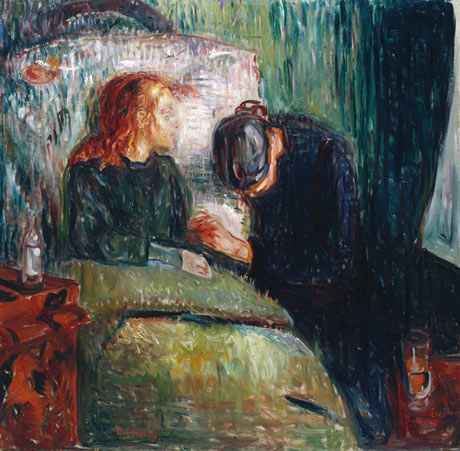
Early in his career, Munch struggled to find his own vision, but with The Sick Child (1886), based on his sister's death, he discovered his first "soul painting," and an important separation began from his failed efforts with Impressionism.

 Madonna, 1894-1895

As he matured, his paintings (beginning in the 1890s) embraced the "simplified forms, heavy outlines, sharp contrasts, and emotional content" (Wikipedia) that would become his mature style. His painting became more calculated to generate tension and convey emotion. He developed a more symbolist content, exploring his own emotional and psychological states and those of the world around him.

Edvard Munch: the ghosts of vampires and victims

On the eve of a major exhibition at London's Tate Modern, AS Byatt reflects on how she is haunted by the artist's work.


AS Byatt
guardian.co.uk, Friday 22 June 2012  
Detail from Edvard Munch's The Sick Child, 1907 version. 
'I don't paint what I see but what I saw': Photograph: Tate
 
Art, wrote Edvard Munch, "is the pictorial form created by the human nerves – the heart – the brain – the eye." As a young man in Norway in the late 1880s he set out a manifesto for an art of passion.
Edvard Munch: The Modern Eye. Tate Modern, London, SE1 9TG
Starts 28 June 2012 Until 14 October 2012 - Venue details

"We want more than a mere photograph of nature. We do not want to paint pretty pictures to be hung on drawing room walls. We want to create, or at least to lay the foundations of, an art that gives something to humanity. An art that arrests and engages. An art created of one's innermost heart."

Like Van Gogh, he wanted to make passionate images of human beings and nature for a secular world, to replace the old religious images. Over his life time he worked and reworked a series of paintings he called The Frieze of Life. Among these were Puberty, Jealousy, Vampire, The Kiss, Madonna, Sphinx, Anxiety, Melancholy, The Dance of Life, Ashes, The Scream. They were painted initially in the 1890s. They are compelling and frequently appalling. The curators of the new exhibition at Tate Modern, Angela Lampe and Clément Chéroux, point out in their catalogue that three-quarters of Munch's output dates from after 1900, most particularly from between 1913 and 1930. Edvard Munch: The Modern Eye is an exhibition of Munch's modern consciousness, and the catalogue analyses his artistic intelligence, his construction of optical space, his relationship with the spectator, his work, in the early days of photography and film, on the reproducibility of images. The authors are not claiming that the modern Munch was less passionate than the symbolist. They are showing how he found new ways of exploring the human nerves, the heart, the brain, the eye. The catalogue is fascinating and full of new ways of looking and thinking.

Munch's is a world full of the ultimate human things – sickness, death, sex, fear, desire, hatred and destruction. His rooms are furnished with dark, solid beds seen from all angles – deathbeds, sickbeds surrounded by those about to become mourners or by mourners, sex beds in which encounters have happened or will happen, beds in which the onlooker can see parts of the corpse of a murdered person while the murderer stares transfixed, the bed in Puberty on which a thin, anxious girl sits with her hands crossed over her genitals. Beside her is a dark shadow, not unlike a magnified image of her own dark hair, which rises like smoke from a point beside her knees. She is unforgettable, as is The Sick Child, an image Munch reworked repeatedly, in both paintings and lithographs. She represents his sister, Sophie, who died when she was 15 and Munch was 13. Looking at these works we are struck by the incongruous liveliness of the child's bright red hair, exactly as we see the tense stillness of the face, the drawn lips. Munch himself described his own struggle to retrieve the image he remembered.

When I saw the sick child for the first time – her pale face with vigorous red hair against a white pillow – it made an impression on me, only to disappear as I worked. I painted a good picture on the canvas, but it was a different one. I repainted that picture many times over the years – scraped it off – let it dissolve into layers of paint … I had captured a lot of that first impression, the tremulous mouth, the translucent skin – the tired eyes – but the colours in the painting were not finished – it was pale grey. The painting as a whole was heavy, like lead.

In 1890 Munch said "I don't paint what I see – but what I saw", and this reference to the part played by memory in the construction of his images makes us see them as different from, for instance, Monet's beautiful and terrifying image of his wife Camille, painted as she died. The first Sick Child was painted in 1885-86, and another in 1896, and there are versions in, for instance, 1907, 1925 – six versions in all.

Lampe and Chéroux point out that Munch came under attack for making numerous copies of The Sick Child. He defended himself by saying that all the repetitions were an act of memory – a continuous struggle with the motif – a continuing work of art. He pointed out that what he was doing was analogous to Monet's series of haystacks or cathedrals – something seen and recorded at successive times, in successive moods. In a splendid chapter called "Reworkings", the authors show how Munch both needed to revisit images and ideas, and was unusually interested in, and sophisticated about, the 20th-century ability to reproduce and record images. I have often, as a writer, wondered what painters feel when they sell a painting. Books proliferate in many forms once they are written. They don't leave the author's possession. Munch records repainting certain images in order still to have one of his own, to think about and remember. Repainting a subject must be a way of both recapturing an idea, and of thinking about it in new ways. Munch painted, for instance, 12 different versions of Vampire – an image of a naked woman with long, wild red hair bent over the dark head of a man whose face is buried in her breasts. Her sharp nose is above his neck and her teeth are presumably buried in it. The background and the subject vary – it is dark and threatening, it is a woodland glade, the woman is more and less animal, the hair is wilder or softer. The effect on the onlooker is to make the image more fixed as it is repeated – there is an archetypal vampire, this is how she is; you can represent her in this way or that but she is constant.

Munch's painting Red Virginia Creeper  
Red Virginia Creeper 1898-1900. 
Photograph: Sidsel De Jong/Munch Museet, Norway

One of the theoretical problems about repetition and reworking is that of authenticity – what is an original, what is a copy? This, the writers point out, later became involved in the idea of the market value of uniqueness. Munch was able to make a living partly by exhibiting versions of paintings already owned by others. Arnold Böcklin was commissioned to repaint his famous Isle of the Dead by Marie Berna, in memory of her dead husband. The case of Giorgio de Chirico is interesting – his early paintings excited, for instance, the surrealists, with their mysterious settings and symbols. But the surrealists were dismayed when after 1920 the painter began to make copies of his own earlier work, which André Breton and Max Ernst found repellent and lifeless. He also made copies and predated them, selling them fraudulently. Both Munch's copies and De Chirico's were in turn copied by Andy Warhol, that master of the repeated image – he did his own versions of Munch's self-portrait with the skeletal arm, of his ghoulish Madonna, and of The Scream itself. As Lampe and Chéroux say: "Warhol had understood that Munch's motifs were just as autonomous and free as a Campbell's soup can or a Marilyn image, and could easily be recombined. He recognised their iconic branding, with The Scream standing for fear, Madonna for ecstasy and Self-Portrait for death."

Munch used many techniques of what Walter Benjamin called "mechanical reproduction" in his essay on "The Work of Art in the Age of Mechanical Reproduction". Benjamin argued that the proliferation of images of images – prints, photographs – deprived a work of art of its "aura", the sense of power and mystery it had as a unique object of contemplation in societies with religious structures. Benjamin did believe that there still existed "original" works of art, which had "authenticity". But as the Munch catalogue points out, the dividing line between original and copy was blurring appreciably. The availability of original prints by the artists meant that copies were themselves seen to be original works of art.

Munch made etchings and lithographs of the motifs in his well-known paintings. He also took photographs – both conventional and experimental. He recorded himself – a severe profile, a naked man striding on a beach, wielding a paintbrush and palette, a kind of hazy ectoplasm in a deliberately doubled exposure. He took portraits in which he deliberately moved during the shooting, which he called Metabolism – an image, the catalogue remarks, of "the transformation of molecules and energy". He took formal pictures of himself as an inmate of a clinic, taking tea. He took photographs of paintings – of himself, solid and dark, among a group of shadowy painted self-portraits, of the painting of The Sick Child, of himself in bed, one in the series of fateful beds. He painted a sensuous nude with long auburn hair, and photographed the model, standing in the same pose among canvases in the studio. He photographed the truncated skirts and boots of two headless women – the authors suggest that the long shadow that falls across their feet is yet another portion of Munch's self-recording, another hinted self-portrait.

He learned also from the visual forms of early moving pictures. The cinema and the camera revealed new ways of recording movement – how a galloping horse, or an advancing pedestrian or an animated crowd appear to the camera. These contribute to Munch's compelling representations of space – often receding from a figure or creature which is advancing towards the onlooker and is cut off by the frame of the canvas. The painter somehow stretches the space that funnels into the space of the canvas, making everything rush. There is an extraordinary Galloping Horse, hurtling through snow with huge forequarters and wild mane. The animal's diminished hindquarters are barely visible, and the driver, on a kind of sledge, is dwarfed in a perspective which is vertiginous and abnormal. The effect is heightened by the snowy background, which blurs the structure of the landscape – the charging horse appears to be in its own avalanche of white speed. (It has all the same an anxious and homely face.) Two onlookers stand each side of the slope, parallel to the sides of the frame, intensifying the abnormal space of the gallop and the rushing snow.

Something similar is going on in one of my favourite pictures in The Frieze of Life, Red Virginia Creeper. A terrible face is just above the bottom of the frame, under a black cap, with greenish flesh and huge, round staring eyes; a neat inverted V of red moustache over a small frightened mouth makes that mouth simultaneously appalled. Behind this head a brownish path recedes and narrows rapidly – rising reddish out of the shoulder of the terrible figure as the swollen shadow rises out of the hip of the clenched girl in Puberty. Behind that is a very solid block of a bourgeois house, and some clean white railings. There are what may be gravestones leaning above the ground level of the house – which has no visible door. The house is blood red. It is the red of virginia creeper – one of the reds of virginia creeper – but it is flat, not leafy, solid like meat. The red has overwhelmed parts of the upper windows. The white shapes of the two lower windows look like coffins or shrouds. Munch's variations on the colour red are among the most staggering things he does. Here is his description of the moment when he decided to paint The Scream: "One evening I was walking along a road – with the fjord and the town below on the other side. I was sick and tired – I stood for some time looking across the fjord. The sun was setting – the clouds were turning red – like blood. I felt as if a scream was going through nature – I thought I heard a scream. I painted the picture – painted the clouds like real blood. – The colours were screaming. This was the picture The Scream in The Frieze of Life."

These reds are related to the fiery red hair of the sick child and the vampire. They are also related to the face of a repeated image he made late in his life. The subject of Young Woman Weeping by the Bed walks, or stands, naked, with her face bent down, and the face is usually the same blood-red as the creeper – a red maybe of skin bloated by weeping, or a blush of shame or terror?

The shape of Munch's relationship with the onlooker was also influenced by his venture into stage design. In 1906 he worked in Berlin with the great theatre director, Max Reinhardt, who had opened a new, intimate Kammerspiele (chamber theatre), which was like a room in which the audience was close to the action. Munch designed sets for Ibsen's Ghosts and Hedda Gabler, and had his own studio space where he worked on the Frieze of Life, one version of which was exhibited in the foyers. His set for Ghosts is particularly impressive. He placed a huge black armchair with its back to the audience – representing the space of the unspoken family secrets that drove the action behind it. Reinhardt was enthusiastic about this design. "The armchair says it all! … And the walls of the rooms in Munch's painting! They are the colour of gum disease. We have to try to find wallpaper in exactly this tone. It will put the actors in the right mood! To come fully into its own, facial expression needs space that is modulated through form, light, and above all, colour."

It was round about that time that Munch remarked of one of his works: "I have painted a still life as good as any by Cézanne, except that in the background I have painted a murderess and her victim." The title is Still Life, the Murderess. I don't know what this would be in the original language. Nature Morte is an even grimmer joke.

Throughout Munch's career he studied himself, implacably, in a series of self-portraits in various media that recorded his ageing and sickness – both mental and physical. In 1930 he had a rupture in the retina of his right eye that led to a haemorrhage. This was his good eye, as the other had been injured in a fight. Munch painted what his eye recorded – the "inside of sight" as Max Ernst put it. He painted the "spots in his vision", circular, concentrically coloured optical illusions, blood red and bright blue, and an image of the artist in his bed "seeing" a floating blue skull with reddened eyehole shadows. He painted also a great illusory bird form – Kneeling Nude with Eagle, in which the creature appears to be attacking the kneeling figure. This unflinching study of the damage is a distant continuation of the fact that when he was first painting The Sick Child he saw his own eyelashes as dark streaks in the upper corner of the image and painted them in too.

The late portraits, of a thinning, questioning, diminishing figure, still curious about himself and his world, are moving and remarkable. In Self-Portrait between the Clock and the Bed he stands with hanging arms and an almost mild, almost expressionless face between the tall, dark pillar of time and a hospital-like bed, with a white bedspread striped in black and red. He is in shadow. Behind him the space is full of golden light and the wall is studded with paintings and drawings. On the right in a strip of dark is a narrow, moony abstract female nude, suspended in space. Death, painting? It is unforgettable, in its use of space, in its perfectly executed feeling.

Sunday, July 01, 2012

New York Review of Books - Tim Parks: The Chattering Mind

This is an intriguing post for literature lovers by Tim Parks for the New York Review Blog. Parks looks back at some of the most popular characters in the last 100+ years of literature and examines the state of the inner consciousness.

Reflecting on the peace and freedom from suffering offered by Buddhism, Parks is finally forced to wonder if would really want our best novelists to find inner peace and freedom from suffering.
Imagine! All the great sufferers saved by Buddhism, declining the second arrow: quietness where there was Roth, serenity where there was McCarthy, well-being where there was David Foster Wallace? 

Do we want that?

I suspect not. I suspect our destiny is to pursue our literary sickness for years to come.
I disagree - I would gladly trade great novels for the author's happiness. 

The Chattering Mind

Tim Parks

Hamburg, Germany, 1987

“Who is the most memorable character in the novels of the twentieth century?”

It’s a typical radio ploy to fill some mental space on a Saturday morning. Dutifully, people phone in. Studio guests discuss their choices. The obvious: Leopold Bloom, Gatsby. The wry, Jeeves, Sir Peter Wimsey. To select Proust’s unnamed narrator in In Search of Lost Time indicates a certain sophistication. Somebody, not a child, proposes Harry Potter. Then Miss Marple, Svevo’s Zeno, James Bond, Gustav von Aschenbach, Richard Hannay. People are telling us about themselves of course. They want to talk about themselves. There’s no question of establishing if Frodo Baggins is really more influential than José Arcadio Buendía or Bellow’s Herzog. But Sherlock Holmes can be safely ruled out because first published in the nineteenth century and Lisbeth Salander because she doesn’t turn up until 2005.

I can’t be bothered to think of a name myself. I resist these games—the most this, the best that. Surely these characters are all actors in a grand cast; they all have their roles in the larger drama of the collective psyche. But now suddenly it occurs to me that by far the main protagonist of twentieth century literature must be the chattering mind, which usually means the mind that can’t make up its mind, the mind postponing action in indecision and, if we’re lucky, poetry.

There were plenty of forewarnings. Hamlet is the most notable. To take action would be to confirm his identity as his father’s son, his father’s avenger, but Hamlet thinks too precisely on the event, he’s too smart, and so fails to become anyone at all, either his father’s son or Ophelia’s husband. He suffers for that failure and spins out unhappy procrastination in fine poetry. In a comic vein, Tristram Shandy is another forerunner, too aware of his narrative performance to narrate anything coherent, let alone act. Both Hamlet and Tristram are characters who didn’t reach the height of their popularity until the twentieth century. We had become like them.

Prone to qualification, self-contradiction, interminable complication, this new kind of character finds his most sinister early manifestation in the narrator of Dostoevsky’s Notes from Underground. “I am a wicked man,” this nameless individual introduces himself, then reflects “but as a matter of fact, I was never able to become wicked. I never managed to become anything: neither wicked nor good, neither a scoundrel nor an honest man, neither a hero nor an insect.”

Again, the reason for this indeterminacy is an excess of intellectual activity; so the cause for failure is also a source of self-esteem: “An intelligent man of the nineteenth century,” Doestoevsky’s narrator tells us, with a mixture of complacency and despair, “must be and is morally obliged to be primarily a characterless being; and a man of character, an active figure—primarily a limited being.”

Seeing the pros and cons of every possible move, this modern man is paralysed, half-envying those less intelligent than himself who throw themselves instinctively into the fray: “[The man of action] is stupid, I won’t argue with you about that, but perhaps a normal man ought to be stupid.” And the voice is actually pleased with this formulation. It’s great to feel superior to those happier than oneself.
In the twentieth century this monstrously heightened consciousness meshes with the swelling background noise of modern life and we have the full-blown performing mind of modernist literature. It starts perhaps in that room where the women come and go, talking of Michelangelo. Soon Leopold Bloom is diffusing his anxiety about Molly’s betrayal in the shop signs and newspaper advertisements of Dublin. In Mrs Dalloway’s London people muddle thoughts of their private lives with airborne advertisements for toffee, striking clocks, sandwich men, omnibuses, chauffeur-driven celebrities.

Looking back, what surprises how enthusiastically the literary world welcomed this new hero. Prufrock’s mind might be trapped, inept and miserable, but it is wonderfully poetic. I’ll never forget how my high school teacher gushed. Bloom may be incapable of imposing any direction on his marriage, drifting between fantasy and frustration as his wife prepares to betray, and Stephen Dedalus may be marooned in an impossible relationship with his father and jobs that give him no satisfaction, yet Ulysses is a celebration of the inexhaustible fertility of their minds as they move through the commercial flotsam and jetsam of Dublin against the vast backdrop of world literature and myth. It’s all quite reassuring, even self-congratulatory. What wonderful minds we have, even though they don’t seem to get us anywhere, or make us happy.

Virginia Woolf sounds darker notes, warning us that the mind risks being submerged by the urgent blather of modern life, yet in the end even the crazy, shell-shocked Septimus Warren Smith gives us paragraph after paragraph of poetic prose before he throws himself to his death from a high window, something that Clarissa Dalloway will think of as an act of impulsive generosity. It’s as if the stream of consciousness had been invented to allow the pain of a mind whose chatter is out of control to be transformed into a strange new beauty, which then encompasses the one action available to the stalled self: suicide.

The way this aesthetic consolation is constructed shifts constantly through the century. Faulkner has no time for the easy lyricism of the mind adrift on the ebb and flow of urban trivia. Now the unending voice revolves obsessively around the traumas that block any positive forward movement: past wrongs, sexual violence and betrayal, incest, the disgrace of institutionalized discrimination. Still, there is grandeur in the sheer scale and awfulness of the mind’s shipwreck, individual and collective. Slowly you get the feeling that only mental suffering and impasse confer dignity and nobility. Our twentieth century author is simply not interested in a mind that does not suffer, usually in extended syntax, and not interested in dramatizing the traumatic event itself, only the blocked and suffering consciousness that broods on it afterwards.

Beckett resists and confirms the formula. He understands its perversity: pleasure taken in the performance of unhappiness: “Can there be misery loftier than mine?” he has the aptly named Hamm remark in the first moments of Endgame. Beckett exposes the spiral whereby the more the mind circles around its impasse, taking pride in its resources of observation, so the deeper the impasse becomes, the sharper the pain, the greater the need to find a shred of self-respect in the ability at least to describe one’s downfall. And so on. But understanding the trap, and the perversity of the consolation that confirms the trap, doesn’t mean you’ve found a way out of it; to have seen through literary consolation is just another source of consolation: at least I’ve understood and brilliantly dramatized the futility of my brilliant exploration of my utter impotence.

Butor, Sarraute, Robbe-Grillet, Thomas Bernhard, Phillip Roth, Updike, David Foster Wallace, James Kelman, Alison Kennedy, Will Self, Sandro Veronesi, and scores upon scores of others all find new ways of exasperating and savouring this mental chatter: minds crawling through mud in the dark, minds trapped in lattices of light and shade, minds dividing into many voices, minds talking to themselves in second person, minds enthralled in sexual obsession, minds inflaming themselves with every kind of intoxicant, minds searching for oblivion, but not finding it, fearing they may not find it even in death.

Not long after that Saturday morning radio show I sat in a meditation retreat and heard a speaker expound the Buddha’s well-known reflection on the so-called “second arrow.” A student had come to him with questions about pain, meditation, suffering. The Buddha replied with a question of his own: “When someone is struck by an arrow, is it painful?” “Yes,” said the student. Then another question: “When this someone is struck by a second arrow, is it painful?” “Of course it is,” said the student. Then the Buddha said, “There is nothing you can do about the first arrow. You are bound to encounter pain. However the second arrow is your choice. You can choose to decline the second arrow.”

Sitting for ten days on a cushion, eyes closed, cross-legged, seeking to empty your mind of words, it’s all too evident how obsessively the mind seeks to construct self-narrative, how ready it is to take interest in its own pain, to congratulate itself on the fertility of its reflection. That chattersome voice will even be pleased with its progressively more elaborate analyses of how difficult it is to quiet the mind and empty it of the very reflections it is making. But alas, you cannot sit cross-legged without pain unless you learn to relax your body very deeply. And, as neuroscience has recently confirmed, when the mind churns words, the body tenses. As if in a laboratory one is obliged to experiment the perils and pleasures of what the Buddha called the second arrow, the mind that brings energy to its own pain.

But you can also choose not to go that way. You can decide that your mental chatter is not after all so damn interesting; the second arrow declined. How else would these people around you have learned to sit so still, for so long and in such serenity? Imagine Dostoevsky’s man in Notes from Underground, or Beckett’s Unnameable, or Thomas Bernhard’s narrator in The Loser at a meditation retreat, learning to be silent, learning to sit still, learning to put to rest the treadmill of reflection.
Or again, imagine if the literary folk suddenly tired of it all, realized how unhelpful it all was; if the critics and academics wearied of untangling torment for a living (I see you haven’t got any better, Beckett’s old analyst responded after the author sent him a copy of Watt). Imagine if the publishers—let’s call them the Second Arrow Publishing Corporation—informed all their great authors, all the masters of the mercilessly talkative consciousness, that they are winding up their affairs; they have seen the light, they will no longer publish elaborations of tortured consciousness, lost love, frustrated ambition, however ingenious or witty. Imagine! All the great sufferers saved by Buddhism, declining the second arrow: quietness where there was Roth, serenity where there was McCarthy, well-being where there was David Foster Wallace?

Do we want that?

I suspect not. I suspect our destiny is to pursue our literary sickness for years to come. It is hard not to congratulate oneself on the quality of one’s unhappiness. “Every word,” Beckett told us “is an unnecessary stain on silence,” then began:
Where now? Who now? When now? Unquestioning. I, say I. Unbelieving. Questions, hypotheses, call them that. Keep going, going on, call that going, call that on.

This is part of a series of blog posts by Tim Parks on writing and literature.
June 29, 2012

All in the Mind - Subliminal - The New Unconscious with Leonard Mlodinow


Among all the other books and articles I have been reading of late, I have been enjoying Leonard Mlodinow's Subliminal: How Your Unconscious Mind Rules Your Behavior. This week's episode of All in the Mind, now hosted by Lynne Malcolm, features a discussion with Mlodinow about his new book.

All in the Mind: Subliminal - The New Unconscious

Broadcast: Sunday 1 July 2012 
Presenter: Lynne Malcolm 
Leonard Mlodinow is a theoretical physicist who’s turned his mind to the unconscious.  Not the unconscious mind of Freudian fame which was examined through psychoanalysis in the 19th century – but a new science of the unconscious made possible by technologies which reveal the physiology of our brains. We discuss the hidden forces that rule our behaviour. 

Guests

Leonard Mlodinow, Theoretical Physicist and author; California Institute of Technology in the United States.

Publications

Title: Subliminal: How Your Unconscious Mind Rules Your Behavior
Author: Leonard Mlodinow
Publisher: Pantheon (US)

Further Information

Leonard Mlodinow's website