Thursday, November 03, 2011

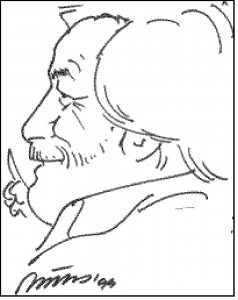
Stephen Batchelor & Martine Batchelor: A Secular Buddhist Retreat at Upaya Zen Center

Stephen & Martine Batchelor presented "A Secular Buddhist Retreat" at Upaya Zen Center last month. Below are the links to the 13 installments in their presentation (the first one includes the full entry).

Stephen Batchelor & Martine Batchelor: 10-22-11: A Secular Buddhist Retreat (Part 1)

Recorded: Saturday Oct 22, 2011

This retreat will explore what kind of Dharma practice might emerge in a Buddhism divested of the religious, dogmatic and patriarchal features that have often characterized its role in traditional Asian societies. Combining the study of classical Pali discourses with the practice of mindful awareness and concentration, we will seek to uncover what lies at the heart of the Buddha’s teaching and ask how such ideas might be interpreted and put into practice in today’s increasingly secular and interdependent world. Stephen and Martine Batchelor are writers and teachers based in France.

Stephen is the author of Buddhism without Beliefs, Living with the Devil, and, most recently, Confession of a Buddhist Atheist. Martine is the author of Meditation for Life and Let Go. Her latest book is The Spirit of the Buddha.

Play

* * * * * * *

Wednesday, November 02, 2011

Good Therapy - The Pursuit of Happiness: Internal or External?

Here is a brief research review from GoodTherapy.org on the source of our happiness, whether it is internal or external. Specifically, pursuing intrinsic goals (relatedness, competence, and autonomy) is more crucial to happiness and living with lower stress levels than pursuing extrinsic goals (money, fame, or possessions).

This research was done with teens, but I would suspect it applies equally to adults.

There is nothing wrong with seeking wealth or success, but for one to be psychologically happy and healthy, it seems that such goals might need to flow from the meeting of internal, intrinsic needs rather than being the sole source of one's self-worth.

The Pursuit of Happiness: Internal or External?

November 1st, 2011 


According to Randy P. Auerbach of Harvard Medical School, McLean Hospital, positive feelings and feelings of happiness are the result of intrinsic pursuits. “Intrinsically-motivated goals are thought to be inherently interesting, pleasurable, and/or meaningful,” said Auerbach. “In contrast, extrinsically-motivated goals are typically sought in order to attain a reward (i.e., material goods or money) or to avoid punishment.” Research has shown that pursuing both intrinsic and extrinsic goals can be beneficial, but not when one is at the expense of the other. Auerbach said, “Guided by self-determination theory, the research posits that the neglect of intrinsic goals ultimately thwarts the satisfaction of core, inherent psychological needs for relatedness, competence and autonomy, which in turn contributes to negative psychological outcomes including depressive symptoms.” Additionally, people who value extrinsic goals over intrinsic goals may neglect their interpersonal relationships and exert all of their time and energy in the pursuit of material objects and money. Another concern is that children whose parents value extrinsic goals above intrinsic ones may not foster sufficient interpersonal skills in their children, creating maladaptive relationship models for them as adults.

To test how the prioritization of values affected the psychological well-being of adolescents from various cultures, Auerbach and his colleagues studied over 600 teens from Canada and China. They found that the teens with the highest motivation toward extrinsic goals had elevated levels of interpersonal stress. “Further, consistent with past research examining the relationship between stress generation and prospective depressive symptoms, dependent interpersonal stress predicted higher levels of depressive symptoms over time.” The team added, “In conclusion, the present study highlights the relationship between aspirations, stress, and depressive symptoms in culturally distinct samples of adolescents. Traditional prevention and treatment programs primarily target cognitive and interpersonal vulnerability factors. However, the findings in the present study suggest that clinicians must also understand a patient’s core values as they may play an important role in shaping stress generation and subsequent symptoms.”

Reference:
Auerbach, Randy P., Christian A. Webb, Meghan Schreck, Chad M. McWhinnie, Moon-Ho Ringo Ho, Xiongzhao Zhu, and Shuqiao Yao. “Examining the PathWay through Which Intrinsic and Extrinsic Aspirations Generate Stress and Subsequent Depressive Symptoms.” Journal of Social and Clinical Psychology, 30:8 (2011): 856-86. Print.

Integral Leadership Review - October 2011

A new issue of the Integral Leadership Review is out - you can see the full Table of Contents for the October 2011 issue by following the link.

Here is section of Russ Volckman's Leading Comments: Interesting Times.


This issue of ILR – and perhaps this applies to most if not all of them – has occurred in interesting times. Personally, this has been one of the busiest and challenging work and personal periods of my life. I have been learning a lot, feeling a lot, caring a lot – and the process will probably be as intense in the next few months as it has been in the last. And we have received and are sharing with you a lot of valuable and interesting material.

Imagine! Interviews with both Don Beck and Ken Wilber in the same issue! Also, there is a subtheme of articles having to do with women and integral leadership, including an article by Marilyn Hamilton. There is an excellent article by Integral Leadership Council member Alain Gautier with another by Don Dunoon (In the Leadership Mode) and Ellen Langer, each dealing with development of individuals for leader roles. And I highly recommend “Spiral Dynamics Integral in Action in a Roma Community in Romania” by Alexandre (Rico) de Faria for a truly exceptional case study.

There are a number of reviews of varying depth. I call your attention to James L. Ritchie-Dunham”s review of Maureen Metcalf and Mark Palmer, Innovative Leadership Fieldbook. This very recent publication has already been drawing attention.

Finally, I am excited that we are able to provide you with Barrett C. Brown’s “Complexity Leadership: An Overview and Key Limitations.” This is one of a number of Barrett’s papers we hope to publish in the future, papers he wrote in his PhD program (hence, it’s inclusion as a “Learner Paper”). Barrett has since completed his PhD, but we believe his work has been so valuable that we want to share as much of it as we can with you

I hope you find many things to enjoy about this issue and our innovations.

TEDxOkanaganCollege - Ajahn Sona -Green Monasticism

Via TEDx . . .


TEDxOkanaganCollege - Ajahn Sona -Green Monasticism

Ajahn Sona discusses the interaction with global monastic practices with sustainability matters. The Birken Forest monastery is highlighted.

Born in Canada, Ven. Sona's background as a layperson is in classical guitar performance. His encounter with Buddhist wisdom as a young man initiated a spiritual journey that led him to become a lay hermit for several years. He subsequently ordained as a Theravada monk under Ven.

Gunaratana, at the Bhavana Society in West Virginia, where his first years of training took place. Ven. Sona further trained for over three years at monasteries following Ajahn Chah in northeast Thailand, especially Wat Pah Nanachat. Upon his return to Canada in 1994 he helped found Birken Forest Monastery near Pemberton, BC. As its spiritual guide, Ajahn ("teacher") Sona has led the monastery through each stage of its growth. He established Birken (or, Sitavana, 'cool forest') in its final location south of Kamloops BC in 2001.

For more than forty years inspired by the pioneering dialogues of the Trappist monk Thomas Merton, with His Holiness the Dalai Lama, and the Zen master Daisetz T. Suzuki Buddhist and Christian monastics have been engaged in interfaith colloquies about the similarities and differences between these two great spiritual traditions.

In 2008, practitioners from Catholicism and various Buddhist traditions met at Gethsemani Abbey in Kentucky, the home of Thomas Merton. The theme was the Buddhist and Catholic response to the environmental crisis. In addition to covering a wide range of Catholic thought, the essays come from both the Theravadan and Mahayana traditions and cover both North American and international monastic orders.

Ajahn Sona attended the Gethsemani 3 Monastic conference in May 2008. The topic of the conference was "Monasticism and the Environment." A book entitled "Green Monasticism" was recently published featuring environmentally-themed essays by the some of the attendees of the conference, including Ajahn Sona.

Tuesday, November 01, 2011

Of American Revolutionaries and American Occupiers - Or . . . We Are All Occupiers Now

Bookforum posted two big collections of links yesterday on the #occupy movements - from a wide spectrum of perspectives. Some of it is not new here (Zizek on Charlie Rose), but much of it is new. Enjoy picking through the links to find the good stuff.

Everything you need to know about Occupy Wall Street: David Weigel and Lauren Hepler on a timeline of the movement, from February to today. David Graeber, the anti-leader of Occupy Wall Street: How the anthropologist, activist, and anarchist helped transform a hapless rally into a global protest movement. Dahlia Lithwick on how OWS confuses and ignores Fox News and the pundit class. Occupy and Evolve: Kelly Heresy has been with OWS since Day 1 and was part of the first group to live and work in Liberty Plaza. Matt Taibbi on how Wall Street isn't winning — it's cheating. We are all Occupiers now: Katha Pollitt on the mainstreaming of OWS. Alex Aums and James Broulard on the strange case of #OccupyPhoenix and the search for civic life in the exurbs. The newspaper of Occupy London, The Occupied Times of London, has been launched. Meet the 0.01 Percent: War profiteers. It really, really is 99 vs. 1. Charlie Rose interviews Slavoj Zizek. Democracy is the enemy: Slavoj Zizek on how, so far, the protesters have done well to avoid exposing themselves to the criticism that Lacan levelled at the students of '68 (and more). The stunning victory that OWS has already achieved: In just one month, the protesters have shifted the national dialogue from a relentless focus on the deficit to a discussion of the real issues facing Main Street. How Paul Ryan tried to answer the supercommittee and OWS protesters at the same time. An interview with Doug Henwood on the socially useless Wall Street class. David Harvey on how the party of Wall Street meets its nemesis. "I Am Wall Street": Here is a samizdat anti-Occupy one-pager, first found at Occupy Chicago. Gotcha interviewer portrays OWS as drug-addled farce. Don't diss the drum circles: Danny Goldberg writes in defense of hippies. We’re hoping General Assembly votes MC Moneypenney’s hot new single to be the official anthem of Occupy Wall Street. Here is sex advice from Occupy Wall Street protesters.

* * * * * * *

The latest issue of The Occupied Wall Street Journal is out. Justin Elliot on the future of Occupy: Four key questions. Amy Dean on OWS and America’s democratic tradition. Objecting or objectified? At Occupy Wall Street women get attention, but not always for their message. Jonathan Topaz on why Occupy Wall Street isn’t particularly revolutionary. What would James Madison do: Would the framers support the OWS movement? How to deal with the police is a point of dispute between Social Democratic Anarchists and Communist Anarchists. Occupy Judaism: The Jews who held a Yom Kippur service at OWS were upholding an American tradition of invoking religion to spur progressive action. The Occupy movement is the latest example of the impact radical action and ideas can have when the system is weak. A look at what the #OccupyTogether encampments can teach society about sustainability. It’s not a hippie thing: Don’t be fooled by the drum circles — today’s protests have more in common with the anti-Hoover 1930s than the antiwar ’60s and ’70s (and more). Jennifer Mercieca writes of American revolutionaries and American occupiers. It has been quite some time after Georges Sorel has proposed the idea of General Strike: Irakli Zurab Kakabadze on OWS and a polyphonic general strike. The 99 Percenters have brought their protest to the Navy. The Vatican confounds conservatives: Will we soon see a distinguished-looking older man in long white robes walking among the OWS demonstrators in Zuccotti Park? From Tea Party Review, here is a conservative lesson from Occupy Wall Street. The American Society for the Defense of Tradition, Family and Property “occupies” 7,500 public squares — and goes unreported; and John Ritchie on what he saw at Occupy Wall Street. From the Mises Institute, George Reisman writes in praise of the capitalist 1 percent; and Llewellyn Rockwell on how the state is the 1 percent. Get a Job! Working is (usually) more admirable than protesting.

Society for Humanistic Psychology, et al - Open Letter to the DSM-5


I'm glad to see that some groups are taking a leadership role in voicing opposition to the apparent direction of the DSM-5 revision. If you are involved in mental health in any way, I would encourage you to sign the petition as well.

There is a lot in this new revision to be concerned about for those who do not believe drugs are the treatment of choice or that the medical model explains human psychological functioning.

This open letter is sponsored by: Society for Humanistic Psychology, Division 32 of the American Psychological Association, in alliance with Division of Developmental Psychology (Division 7 of APA), Society for Community Research and Action: Division of Community Psychology (Division 27 of APA), Society for the Psychology of Women (Division 35 of APA), Society for Group Psychology and Psychotherapy (Division 49 of APA), The Association for Women in Psychology, The Society for Descriptive Psychology, The UK Council for Psychotherapy (UKCP), and The Constructivist Psychology Network (CPN). We invite mental health professionals and mental health organizations to sign on in support of this petition to the DSM5 Task Force of the American Psychiatric Association.
To the DSM-5 Task Force and the American Psychiatric Association:

As you are aware, the DSM is a central component of the research, education, and practice of most licensed psychologists in the United States. Psychologists are not only consumers and utilizers of the manual, but we are also producers of seminal research on DSM-defined disorder categories and their empirical correlates. Practicing psychologists in both private and public service utilize the DSM to conceptualize, communicate, and support their clinical work.

For these reasons, we believe that the development and revision of DSM diagnoses should include the contribution of psychologists, not only as select individuals on a committee, but as a professional community. We have therefore decided to offer the below response to DSM-5 development. This document was composed in recognition of, and with sensitivity to, the longstanding and congenial relationship between American psychologists and our psychiatrist colleagues.

Overview

Though we admire various efforts of the DSM-5 Task Force, especially efforts to update the manual according to new empirical research, we have substantial reservations about a number of the proposed changes that are presented on www.dsm5.org. As we will detail below, we are concerned about the lowering of diagnostic thresholds for multiple disorder categories, about the introduction of disorders that may lead to inappropriate medical treatment of vulnerable populations, and about specific proposals that appear to lack empirical grounding. In addition, we question proposed changes to the definition(s) of mental disorder that deemphasize sociocultural variation while placing more emphasis on biological theory. In light of the growing empirical evidence that neurobiology does not fully account for the emergence of mental distress, as well as new longitudinal studies revealing long-term hazards of standard neurobiological (psychotropic) treatment, we believe that these changes pose substantial risks to patients/clients, practitioners, and the mental health professions in general.

Given the changes currently taking place in the profession and science of psychiatry, as well as the developing empirical landscape from which psychiatric knowledge is drawn, we believe that it is important to make our opinions known at this particular historical moment. As stated at the conclusion of this letter, we believe that it is time for psychiatry and psychology collaboratively to explore the possibility of developing an alternative approach to the conceptualization of emotional distress. We believe that the risks posed by DSM-5, as outlined below, only highlight the need for a descriptive and empirical approach that is unencumbered by previous deductive and theoretical models.

In more detail, our response to DSM-5 is as follows:

Advances Made by the DSM-5 Task Force

We applaud certain efforts of the DSM-5 Task Force, most notably efforts to resolve the widening gap between the current manual and the growing body of scientific knowledge on psychological distress. In particular, we appreciate the efforts of the Task Force to address limitations to the validity of the current categorical system, including the high rates of comorbidity and Not Otherwise Specified (NOS) diagnoses, as well as the taxonomic failure to establish ‘zones of rarity’ between purported disorder entities (Kendell & Jablensky, 2003). We agree with the APA/DSM-5 Task Force statement that, from a systemic perspective,
"The DSM-III categorical diagnoses with operational criteria were a major advance for our field, but they are now holding us back because the system has not kept up with current thinking. Clinicians complain that the current DSM-IV system poorly reflects the clinical realities of their patients. Researchers are skeptical that the existing DSM categories represent a valid basis for scientific investigations, and accumulating evidence supports this skepticism." (Schatzberg, Scully, Kupfer, & Regier, 2009)

As researchers and clinicians, we appreciate the attempt to address these problems. However, we have serious reservations about the proposed means for doing so. Again, we are concerned about the potential consequences of the new manual for patients and consumers; for psychiatrists, psychologists, and other practitioners; and for forensics, health insurance practice, and public policy. Our specific reservations are as follows:

Lowering of Diagnostic Thresholds

The proposal to lower diagnostic thresholds is scientifically premature and holds numerous risks. Diagnostic sensitivity is particularly important given the established limitations and side-effects of popular antipsychotic medications. Increasing the number of people who qualify for a diagnosis may lead to excessive medicalization and stigmatization of transitive, even normative distress. As suggested by the Chair of DSM-IV Task Force Allen Frances (2010), among others, the lowering of diagnostic thresholds poses the epidemiological risk of triggering false-positive epidemics.

We are particularly concerned about:

• “Attenuated Psychosis Syndrome,” which describes experiences common in the general population, and which was developed from a “risk” concept with strikingly low predictive validity for conversion to full psychosis.

• The proposed removal of Major Depressive Disorder’s bereavement exclusion, which currently prevents the pathologization of grief, a normal life process.

• The reduction in the number of criteria necessary for the diagnosis of Attention Deficit Disorder, a diagnosis that is already subject to epidemiological inflation.

• The reduction in symptomatic duration and the number of necessary criteria for the diagnosis of Generalized Anxiety Disorder.

Though we also have faith in the perspicacity of clinicians, we believe that expertise in clinical decision-making is not ubiquitous amongst practitioners and, more importantly, cannot prevent epidemiological trends that arise from societal and institutional processes. We believe that the protection of society, including the prevention of false epidemics, should be prioritized above nomenclatural exploration.

Vulnerable Populations

We are also gravely concerned about the introduction of disorder categories that risk misuse in particularly vulnerable populations. For example, Mild Neurocognitive Disorder might be diagnosed in elderly with expected cognitive decline, especially in memory functions. Additionally, children and adolescents will be particularly susceptible to receiving a diagnosis of Disruptive Mood Dysregulation Disorder or Attenuated Psychosis Syndrome. Neither of these newly proposed disorders have a solid basis in the clinical research literature, and both may result in treatment with neuroleptics, which, as growing evidence suggests, have particularly dangerous side-effects (see below)—as well as a history of inappropriate prescriptions to vulnerable populations, such as children and the elderly

Sociocultural Variation

The DSM-5 has proposed to change the Definition of a Mental Disorder such that DSM-IV’s Feature E: “Neither deviant behavior (e.g., political, religious, or sexual) nor conflicts that are primarily between the individual and society are mental disorders unless the deviance or conflict is a symptom of a dysfunction in the individual,” will instead read “[A mental disorder is a behavioral or psychological syndrome or pattern] [t]hat is not primarily a result of social deviance or conflicts with society.” The latter version fails to explicitly state that deviant behavior and primary conflicts between the individual and society are not mental disorders. Instead, the new proposal focuses on whether mental disorder is a “result” of deviance/social conflicts. Taken literally, DSM-5’s version suggests that mental disorder may be the result of these factors so long as they are not “primarily” the cause. In other words, this change will require the clinician to draw on subjective etiological theory to make a judgment about the cause of presenting problems. It will further require the clinician to make a hierarchical decision about the primacy of these causal factors, which will then (partially) determine whether mental disorder is said to be present. Given lack of consensus as to the “primary” causes of mental distress, this proposed change may result in the labeling of sociopolitical deviance as mental disorder.

Revisions to Existing Disorder Groupings

Several new proposals with little empirical basis also warrant hesitation:

• As mentioned above, Attenuated Psychosis Syndrome and Disruptive Mood Dysregulation Disorder (DMDD) have questionable diagnostic validity, and the research on these purported disorders is relatively recent and sparse.

• The proposed overhaul of the Personality Disorders is perplexing. It appears to be a complex and idiosyncratic combined categorical-dimensional system that is only loosely based on extant scientific research. It is particularly concerning that a member of the Personality Disorders Workgroup has publicly described the proposals as “a disappointing and confusing mixture of innovation and preservation of the status quo that is inconsistent, lacks coherence, is impractical, and, in places, is incompatible with empirical facts” (Livesley, 2010), and that, similarly, Chair of DSM-III Task Force Robert Spitzer has stated that, of all of the problematic proposals, “Probably the most problematic is the revision of personality disorders, where they’ve made major changes; and the changes are not all supported by any empirical basis.”

• The Conditions Proposed by Outside Sources that are under consideration for DSM-5 contain several unsubstantiated and questionable disorder categories. For example, “Apathy Syndrome,” “Internet Addiction Disorder,” and “Parental Alienation Syndrome” have virtually no basis in the empirical literature.

New Emphasis on Medico-Physiological Theory

Advances in neuroscience, genetics, and psychophysiology have greatly enhanced our understanding of psychological distress. The neurobiological revolution has been incredibly useful in conceptualizing the conditions with which we work. Yet, even after “the decade of the brain,” not one biological marker (“biomarker”) can reliably substantiate a DSM diagnostic category. In addition, empirical studies of etiology are often inconclusive, at best pointing to a diathesis-stress model with multiple (and multifactorial) determinants and correlates. Despite this fact, proposed changes to certain DSM-5 disorder categories and to the general definition of mental disorder subtly accentuate biological theory. In the absence of compelling evidence, we are concerned that these reconceptualizations of mental disorder as primarily medical phenomena may have scientific, socioeconomic, and forensic consequences. New emphasis on biological theory can be found in the following DSM-5 proposals:

• The first of DSM-5’s proposed revisions to the Definition of a Mental Disorder transforms DSM-IV’s versatile Criterion D: “A manifestation of a behavioral, psychological, or biological dysfunction in the individual” into a newly collapsed Criterion B: [A behavioral or psychological syndrome] “That reflects an underlying psychobiological dysfunction.” The new definition states that all mental disorders represent underlying biological dysfunction. We believe that there is insufficient empirical evidence for this claim.

• The change in Criterion H under “Other Considerations” for the Definition of a Mental Disorder adds a comparison between medical disorders and mental disorders with no discussion of the differences between the two. Specifically, the qualifying phrase “No definition adequately specifies precise boundaries for the concept of ‘mental disorder’” was changed to “No definition perfectly specifies precise boundaries for the concept of either ’medical disorder’ or ‘mental/psychiatric disorder’.” This effectively transforms a statement meant to clarify the conceptual limitations of mental disorder into a statement equating medical and mental phenomena.

• We are puzzled by the proposals to “De-emphasize medically unexplained symptoms” in Somatic Symptom Disorders (SSDs) and to reclassify Factitious Disorder as an SSD. The SSD Workgroup explains: “…because of the implicit mind-body dualism and the unreliability of assessments of ‘medically unexplained symptoms,’ these symptoms are no longer emphasized as core features of many of these disorders.” We do not agree that hypothesizing a medical explanation for these symptoms will resolve the philosophical problem of Cartesian dualism inherent in the concept of “mental illness.” Further, merging the medico-physical with the psychological eradicates the conceptual and historical basis for somatoform phenomena, which are by definition somatic symptoms that are not traceable to known medical conditions. Though such a redefinition may appear to lend these symptoms a solid medico-physiological foundation, we believe that the lack of empirical evidence for this foundation may lead to practitioner confusion, as might the stated comparison between these disorders and research on cancer, cardiovascular, and respiratory diseases.

• The proposed reclassification of Attention Deficit/Hyperactivity Disorder (ADHD) from Disorders Usually First Diagnosed in Infancy, Childhood, or Adolescence to the new grouping “Neurodevelopmental Disorders” seems to suggests that that ADHD has a definitive neurological basis. This change, in combination with the proposal to lower the diagnostic threshold for this category as described above, poses high risk of exacerbating the extant over-medicalization and over-diagnosis of this disorder category.

• A recent publication by the Task Force, The Conceptual Evolution of DSM-5 (Regier, Narrow, Kuhl, & Kupfer, 2011), states that the primary goal of DSM-5 is “to produce diagnostic criteria and disorder categories that keep pace with advances in neuroscience.” We believe that the primary goal of DSM-5 should be to keep pace with advances in all types of empirical knowledge (e.g., psychological, social, cultural, etc.).

Taken together, these proposed changes seem to depart from DSM’s 30-year “atheoretical” stance in favor of a pathophysiological model. This move appears to overlook growing disenchantment with strict neurobiological theories of mental disorder (e.g., “chemical imbalance” theories such as the dopamine theory of schizophrenia and the serotonin theory of depression), as well as the general failure of the neo-Kraepelinian model for validating psychiatric illness. Or in the words of the Task Force:

“…epidemiological, neurobiological, cross-cultural, and basic behavioral research conducted since DSM-IV has suggested that demonstrating construct validity for many of these strict diagnostic categories (as envisioned most notably by Robins and Guze) will remain an elusive goal” (Kendler, Kupfer, Narrow, Phillips, & Fawcett, 2009, p. 1).

We thus believe that a move towards biological theory directly contradicts evidence that psychopathology, unlike medical pathology, cannot be reduced to pathognomonic physiological signs or even multiple biomarkers. Further, growing evidence suggests that though psychotropic medications do not necessarily correct putative chemical imbalances, they do pose substantial iatrogenic hazards. For example, the increasingly popular neuroleptic (antipsychotic) medications, though helpful for many people in the short term, pose the long-term risks of obesity, diabetes, movement disorders, cognitive decline, worsening of psychotic symptoms, reduction in brain volume, and shortened lifespan (Ho, Andreasen, Ziebell, Pierson, & Magnotta, 2011; Whitaker, 2002, 2010). Indeed, though neurobiology may not fully explain the etiology of DSM-defined disorders, mounting longitudinal evidence suggests that the brain is dramatically altered over the course of psychiatric treatment.

Conclusions

In sum, we have serious reservations about the proposed content of the future DSM-5, as we believe that the new proposals pose the risk of exacerbating longstanding problems with the current system. Many of our reservations, including some of the problems described above, have already been articulated in the formal response to DSM-5 issued by the British Psychological Society (BPS, 2011) and in the email communication of the American Counseling Association (ACA) to Allen Frances (Frances, 2011b).

In light of the above-listed reservations concerning DSM-5’s proposed changes, we hereby voice agreement with BPS that:

• “…clients and the general public are negatively affected by the continued and continuous medicalization of their natural and normal responses to their experiences; responses which undoubtedly have distressing consequences which demand helping responses, but which do not reflect illnesses so much as normal individual variation.”

• “The putative diagnoses presented in DSM-V are clearly based largely on social norms, with 'symptoms' that all rely on subjective judgments, with little confirmatory physical 'signs' or evidence of biological causation. The criteria are not value-free, but rather reflect current normative social expectations.”

• “… [taxonomic] systems such as this are based on identifying problems as located within individuals. This misses the relational context of problems and the undeniable social causation of many such problems.”

• There is a need for “a revision of the way mental distress is thought about, starting with recognition of the overwhelming evidence that it is on a spectrum with 'normal' experience” and the fact that strongly evidenced causal factors include “psychosocial factors such as poverty, unemployment and trauma.”

• An ideal empirical system for classification would not be based on past theory but rather would “ begin from the bottom up – starting with specific experiences, problems or ‘symptoms’ or ‘complaints’.”

The present DSM-5 development period may provide a unique opportunity to address these dilemmas, especially given the Task Force’s willingness to reconceptualize the general architecture of psychiatric taxonomy. However, we believe that the proposals presented on www.dsm5.org are more likely to exacerbate rather than mitigate these longstanding problems. We share BPS’s hopes for a more inductive, descriptive approach in the future, and we join BPS in offering participation and guidance in the revision process.

References

American Psychiatric Association (2011). DSM-5 Development. Retrieved from
http://www.dsm5.org/Pages/Default.aspx

British Psychological Society. (2011) Response to the American Psychiatric Association: DSM-5
development. Retrieved from http://apps.bps.org.uk/_publicationfiles/consultation-responses/DSM-5%202011%20-%20BPS%20response.pdf

Compton, M. T. (2008). Advances in the early detection and prevention of schizophrenia.
Medscape Psychiatry & Mental Health. Retrieved from http://www.medscape.org/viewarticle/575910

Frances, A. (2010). The first draft of DSM-V. BMJ. Retrieved from http://www.bmj.com/
content/340/bmj.c1168.full

Frances, A. (2011a). DSM-5 approves new fad diagnosis for child psychiatry: Antipsychotic use
likely to rise. Psychiatric Times. Retrieved from http://www.psychiatrictimes.com/
display/article/10168/1912195

Frances, A. (2011b). Who needs DSM-5? A strong warning comes from professional counselors
[Web log message]. Psychology Today. Retrieved from http://www.psychologytoday.
com/blog/dsm5-in-distress/201106/who-needs-dsm-5

Hanssen, M., Bak, M., Bijl, R., Vollebergh, W., & van Os, J. (2005). The incidence and outcome of subclinical psychotic experiences in the general population. British Journal of Clinical Psychology, 44, 181-191.

Ho, B-C., Andreasen, N. C., Ziebell, S., Pierson, R., & Magnotta, V. (2011). Long-term
antipsychotic treatment and brain volumes. Archives of General Psychiatry, 68, 128-137.

Johns, L. C., & van Os, J. (2001). The continuity of psychotic experiences in the general
population. Clinical Psychology Review, 21, 1125-1141.

Kendell, R., & Jablensky, A. (2003). Distinguishing between the validity and utility of
psychiatric diagnoses. The American Journal of Psychiatry, 160, 4-11.

Kendler, K., Kupfer, D., Narrow, W., Phillips, K., & Fawcett, J. (2009, October 21). Guidelines
for making changes to DSM-V. Retrieved August 30, 2011, from
http://www.dsm5.org/ProgressReports/Documents/Guidelines-for-Making-Changes-to-DSM_1.pdf

Livesley, W. J. (2010). Confusion and incoherence in the classification of Personality Disorder:
Commentary on the preliminary proposals for DSM-5. Psychological Injury and Law, 3, 304-313.

Moran, M. (2009). DSM-V developers weigh adding psychosis risk. Psychiatric News Online.
Retrieved from http://pn.psychiatryonline.org/content/44/16/5.1.full

Regier, D. A., Narrow, W. E., Kuhl, E. A., & Kupfer, D. J. (2011). The conceptual evolution of
DSM-5. Arlington, VA: American Psychiatric Publishing.

Schatzberg, A. F., Scully, J. H., Kupfer, D. J., & Regier, D. A. (2009). Setting the record
straight: A response to Frances commentary on DSM-V. Psychiatric Times, 26. Retrieved from http://www.psychiatrictimes.com/dsm/content/article/10168/1425806

Whitaker, R. (2002). Mad in America. Cambridge, MA: Basic Books. Also see http://www.
madinamerica.com/madinamerica.com/Schizophrenia.html

Whitaker, R. (2010). Anatomy of an epidemic. New York, NY: Random House.