Showing posts with label taxes. Show all posts

Wednesday, April 10, 2013

How 86 Journalists in 46 Countries Worked Together to Expose Tax Shelters of Politicians, Fundraisers. and Celebrities from Over 170 Countries

This is amazingly cool - I look forward to reading what this data mining reveals about the insane amount of money hidden in off-shore, untaxed accounts.

This excellent summary of the work that went into exposing this information comes from the Neiman Journalism Lab at Harvard University.


Intercontinental collaboration: How 86 journalists in 46 countries can work on a single investigation


Over 2.5 million files analyzed by a global team of journalists reveal financial information about politicians, fundraisers. and celebrities from over 170 different countries.

By Caroline O’Donovan

On Thursday morning, the International Consortium of Investigative Journalists— a project of the Center for Public Integrity — will begin releasing detailed reports on the workings of offshore tax havens. A little over a year ago, 260 gigabytes of data were leaked to ICIJ executive dIrector Gerard Ryle; they contained information about the finances of individuals in over 170 countries.

Ryle was a media executive in Australia at the time he received the data, says deputy director Marina Walker Guevara. “He came with the story under his arm.” Walker Guevara says the ICIJ was surprised Ryle wanted a job in their small office in Washington, but soon realized that it was only through their international scope and experience with cross border reporting that the Offshore Project could be executed. The result is a major international collaboration that has to be one of the largest in journalism history.

“It was a huge step. As reporters and journalists, the first thing you think is not ‘Let me see how I can share this with the world.’ You think: ‘How can I scoop everyone else?’ The thinking here was different.” Walker Guevara says the ICIJ seriously considered keeping the team to a core five or six members, but ultimately decided to go with the “most risky” approach when they realized the enormous scope of the project: Journalists from around the world were given lists of names to identify and, if they found interesting connections, were given access to Interdata, the secure, searchable, online database built by the ICIJ.

Just as the rise of information technology has allowed new competition for the attention of audiences, it’s also enabled traditional news organizations to partner in what can sometimes seem like dizzyingly complex relationships. The ICIJ says this is the largest collaborative journalism project they have ever organized, with the most comparable involving a team of 25 cross border journalists.

In the end, the Offshore Project brings together 86 journalists from 46 countries into an ongoing reporting collaboration. German and Canadian news outlets (Süddeutsche Zeitung, Norddeutscher Rundfunk, and the CBC) will be among the first to report their findings this week, with The Washington Post beginning their report on April 7, just in time for Tax Day. Reporters from more than 30 other publications also contributed, including Le Monde, the BBC and The Guardian. (The ICIJ actually published some preliminary findings in conjunction with the U.K. publications as a teaser back in November.)

“The natural step wasn’t to sit in Washington and try to figure out who is this person and why this matters in Azerbaijan or Romania,” Walker Guevara said, “but to go to our members there — or a good reporter if we didn’t have a member — give them the names, invite them into the project, see if the name mattered, and involve them in the process.”

Defining names that matter was a learning experience for the leaders of the Offshore Project. Writes Duncan Campbell, an ICIJ founder and current data journalism manager:
ICIJ’s fundamental lesson from the Offshore Project data has been patience and perseverance. Many members started by feeding in lists of names of politicians, tycoons, suspected or convicted fraudsters and the like, hoping that bank accounts and scam plots would just pop out. It was a frustrating road to follow. The data was not like that.
The data was, in fact, very messy and unstructured. Between a bevy of spreadsheets, emails, PDFs without OCR, and pictures of passports, the ICIJ still hasn’t finished mining all the data from the raw files. Campbell details the complicated process of cleaning the data and sorting it into a searchable database. Using NUIX software licenses granted to the ICIJ for free, it took a British programmer two weeks to build a secure database that would allow all of the far-flung journalists not only to safely search and download the documents, but also to communicate with one another through an online forum.

“Once we went to these places and gathered these reporters, we needed to give them the tools to function as a team,” Walker Guevara said.

Even so, some were so overwhelmed by the amount of information available, and so unaccustomed to hunting for stories in a database, that the ICIJ ultimately hired a research manager to do searches for reporters and send them the documents via email. “We do have places like Pakistan where the reporters didn’t have much Internet access, so it was a hassle for him,” says Walker Guevara, adding that there were also security concerns. “We asked him to take precautions and all that, and he was nervous, so I understand.”

They also had to explain to each of the reporting teams that they weren’t simply on the lookout for politicians hiding money and people who had broken the law. “First, you try the name of your president. Then, your biggest politician, former presidents — everybody has to go through that,” Walker Guevara says. While a few headline names did eventually appear — Imelda Marcos, Robert Mugabe — she says some of the most surprising stories came from observing broader trends.

“Alongside many usual suspects, there were hundreds of thousands of regular people — doctors and dentists from the U.S.,” she says, “It made us understand a system that is a lot more used than what you think. It’s not just people breaking the law or politicians hiding money, but a lot of people who may feel insecure in their own countries. Or hiding money from their spouses. We’re actually writing some stories about divorce.”

In the 2 million records they accessed, ICIJ reporters began to get an understanding of the methods account holders use to avoid association with these accounts. Many use “nominee directors,” a process which Campbell says is similar to registering a car in the name of a stranger. But in their post about the Offshore Project, the ICIJ team acknowledges that, to a great extent, most of the money being channeled through offshore accounts and shell companies is actually not being used for illegal transactions. Defenders of the offshore banks say they “allow companies and individuals to diversify their investments, forge commercial alliances across national borders, and do business in entrepreneur-friendly zones that eschew the heavy rules and red tape of the onshore world.”

Walker Guevara says that, while that can be true, the “parallel set of rules” that governs the offshore world so disproportionately favor the elite, wealthy few as to be unethical. “Regulations, bureaucracy, and red tape are bothersome,” she says, “but that’s how democracy works.”

Perhaps the most interesting question surrounding the Offshore Project, however, is how do you get traditional shoe-leather journalists up to speed on an international story that involves intensive data crunching. Walker Guevara says it’s all about recognizing when the numbers cease to be interesting on their own and putting them in global context. Ultimately, while it’s rewarding to be able to trace dozens of shell companies to a man accused of stealing $5 billion from a Russian bank, someone has to be able to connect the dots.

“This is not a data story. It was based on a huge amount of data, but once you have the name and you look at your documents, you can’t just sit there and write a story,” says Walker Guevara. “That’s why we needed reporters on the ground. We needed people checking courthouse records. We needed people going and talking to experts in the field.”

All of the stories that result from the Offshore Project — some of which could take up to a year to be published — will live on a central project page at ICIJ.org. The team is also considering creating a web app that will allow users to explore some (though probably not all) of the data. In terms of the unique tools they built, Walker Guevara says most are easily replicable by anyone using NUIX or dtSearch software, but they won’t be open sourced. Other lessons from the project, like the inherent vulnerability of PGP encryption and “other complex cryptographic systems popular with computer hackers,” will endure.

“I think one of the most fascinating things about the project was that you couldn’t isolate yourself. It was a big temptation — the data was very addictive,” Walker Guevara says. “But the story worked because there was a whole other level of traditional reporting that was going and checking public records, going and seeing — going places.”

Photo by Aaron Shumaker used under a Creative Commons license.

Thursday, November 29, 2012

Warren E. Buffett's Blueprint for Tax Reform

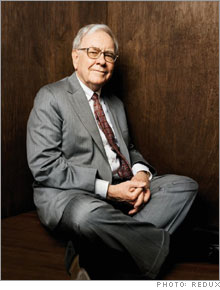
Monday's New York Times editorial by Warren Buffett on creating a minimum tax for the wealthy is much more than that. It is a blueprint for tax reform and for saving the middle class from annihilation by the 1% (or, really, the top 400 incomes in the country).

A Minimum Tax for the Wealthy

By WARREN E. BUFFETT
Published: November 25, 2012
Omaha

SUPPOSE that an investor you admire and trust comes to you with an investment idea. “This is a good one,” he says enthusiastically. “I’m in it, and I think you should be, too.” 

Would your reply possibly be this? “Well, it all depends on what my tax rate will be on the gain you’re saying we’re going to make. If the taxes are too high, I would rather leave the money in my savings account, earning a quarter of 1 percent.” Only in Grover Norquist’s imagination does such a response exist. 

Between 1951 and 1954, when the capital gains rate was 25 percent and marginal rates on dividends reached 91 percent in extreme cases, I sold securities and did pretty well. In the years from 1956 to 1969, the top marginal rate fell modestly, but was still a lofty 70 percent — and the tax rate on capital gains inched up to 27.5 percent. I was managing funds for investors then. Never did anyone mention taxes as a reason to forgo an investment opportunity that I offered. 

Under those burdensome rates, moreover, both employment and the gross domestic product (a measure of the nation’s economic output) increased at a rapid clip. The middle class and the rich alike gained ground. 

So let’s forget about the rich and ultrarich going on strike and stuffing their ample funds under their mattresses if — gasp — capital gains rates and ordinary income rates are increased. The ultrarich, including me, will forever pursue investment opportunities. 

And, wow, do we have plenty to invest. The Forbes 400, the wealthiest individuals in America, hit a new group record for wealth this year: $1.7 trillion. That’s more than five times the $300 billion total in 1992. In recent years, my gang has been leaving the middle class in the dust. 

A huge tail wind from tax cuts has pushed us along. In 1992, the tax paid by the 400 highest incomes in the United States (a different universe from the Forbes list) averaged 26.4 percent of adjusted gross income. In 2009, the most recent year reported, the rate was 19.9 percent. It’s nice to have friends in high places. 

The group’s average income in 2009 was $202 million — which works out to a “wage” of $97,000 per hour, based on a 40-hour workweek. (I’m assuming they’re paid during lunch hours.) Yet more than a quarter of these ultrawealthy paid less than 15 percent of their take in combined federal income and payroll taxes. Half of this crew paid less than 20 percent. And — brace yourself — a few actually paid nothing. 

This outrage points to the necessity for more than a simple revision in upper-end tax rates, though that’s the place to start. I support President Obama’s proposal to eliminate the Bush tax cuts for high-income taxpayers. However, I prefer a cutoff point somewhat above $250,000 — maybe $500,000 or so. 

Additionally, we need Congress, right now, to enact a minimum tax on high incomes. I would suggest 30 percent of taxable income between $1 million and $10 million, and 35 percent on amounts above that. A plain and simple rule like that will block the efforts of lobbyists, lawyers and contribution-hungry legislators to keep the ultrarich paying rates well below those incurred by people with income just a tiny fraction of ours. Only a minimum tax on very high incomes will prevent the stated tax rate from being eviscerated by these warriors for the wealthy. 

Above all, we should not postpone these changes in the name of “reforming” the tax code. True, changes are badly needed. We need to get rid of arrangements like “carried interest” that enable income from labor to be magically converted into capital gains. And it’s sickening that a Cayman Islands mail drop can be central to tax maneuvering by wealthy individuals and corporations. 

But the reform of such complexities should not promote delay in our correcting simple and expensive inequities. We can’t let those who want to protect the privileged get away with insisting that we do nothing until we can do everything. 

Our government’s goal should be to bring in revenues of 18.5 percent of G.D.P. and spend about 21 percent of G.D.P. — levels that have been attained over extended periods in the past and can clearly be reached again. As the math makes clear, this won’t stem our budget deficits; in fact, it will continue them. But assuming even conservative projections about inflation and economic growth, this ratio of revenue to spending will keep America’s debt stable in relation to the country’s economic output. 

In the last fiscal year, we were far away from this fiscal balance — bringing in 15.5 percent of G.D.P. in revenue and spending 22.4 percent. Correcting our course will require major concessions by both Republicans and Democrats. 

All of America is waiting for Congress to offer a realistic and concrete plan for getting back to this fiscally sound path. Nothing less is acceptable. 

In the meantime, maybe you’ll run into someone with a terrific investment idea, who won’t go forward with it because of the tax he would owe when it succeeds. Send him my way. Let me unburden him. 

Warren E. Buffett is the chairman and chief executive of Berkshire Hathaway.

Thursday, February 02, 2012

Bookforum - Social contract theory for Occupiers

Another collection of links related to the #Occupy movement from the folks at Bookforum.

Thursday, December 15, 2011

Gingrich Tax Plan - Gift to the 1%, Explodes the Deficit

Think Progress lays out the damage that Gingrich's tax plan would do the federal budget - and the huge gift that it is to the 600,000 households making more than $1 million a year in income.

In an era with the greatest wealth disparity between rich and poor America has ever seen, Gingrich wants to make the gap even wider. As much as I am annoyed, frustrated, and disappointed with Obama, our country cannot withstand the class warfare that someone like Gingrich would bring tro the office of the President.

CHARTS: The 10 Craziest Facts About Newt Gingrich’s Tax Plan


2012 GOP presidential contender Newt Gingrich — who has surged to the front of the polls — released a tax plan that calls for an optional 15 percent personal income tax and the complete elimination of investment taxes. As we’ve been reporting, the plan would blow a huge hole in the federal budget, causing perpetual trillion dollar deficits even assuming that Gingrich was able to get spending down to new, completely unreasonable lows for the modern era.

Most of the cost of the plan goes to lavishing tax breaks on the very wealthiest Americans. In fact, half of the benefit of Gingrich’s plan goes to the richest one percent of Americans, giving them more in tax cuts than the other 99 percent combined. Millionaires would receive a tax cut of more than $600,000 every year compared to current law.

And those are hardly the only facts about Gingrich’s plan that are worth mentioning. Center for American Progress Director of Tax and Budget Policy Michael Linden and Director of Fiscal Reform Seth Hanlon have put together ten charts highlighting the absurdity of Gingrich’s proposals.
Here are a couple:


See the rest of the charts here.

Wednesday, December 07, 2011

Chuck Collins - The Case for Taxing the Wealthy

Yes! Magazine posted this TED Talk by Chuck Collins - he argues that the rich did not get to be rich all on their own, so they owe it to the society to pay a little more taxes than the not wealthy. Works for me.

The Case for Taxing the Wealthy

 
The 1% didn’t get there by themselves. Chuck Collins offers a TED Talk on why the wealthy should pay it forward.


Chuck Collins TED still

Chuck Collins is a senior scholar at the Institute for Policy Studies (IPS) and author of several books including Economic Apartheid in America: A Primer on Economic Inequality and Insecurity as well as Wealth and Our Commonwealth: Why America Should Tax Accumulated Fortunes, which he co-wrote with Bill Gates Sr.

In October 2011 he participated in a TEDx event at Hampshire College in Amherst, Massachusetts, where he spoke about the importance of taxing the wealthy.

Interested?
YES! Magazine encourages you to make free use of this article by taking these easy steps. This work is licensed under a Creative Commons License Creative Commons License

Tuesday, November 01, 2011

Of American Revolutionaries and American Occupiers - Or . . . We Are All Occupiers Now

Bookforum posted two big collections of links yesterday on the #occupy movements - from a wide spectrum of perspectives. Some of it is not new here (Zizek on Charlie Rose), but much of it is new. Enjoy picking through the links to find the good stuff.

Everything you need to know about Occupy Wall Street: David Weigel and Lauren Hepler on a timeline of the movement, from February to today. David Graeber, the anti-leader of Occupy Wall Street: How the anthropologist, activist, and anarchist helped transform a hapless rally into a global protest movement. Dahlia Lithwick on how OWS confuses and ignores Fox News and the pundit class. Occupy and Evolve: Kelly Heresy has been with OWS since Day 1 and was part of the first group to live and work in Liberty Plaza. Matt Taibbi on how Wall Street isn't winning — it's cheating. We are all Occupiers now: Katha Pollitt on the mainstreaming of OWS. Alex Aums and James Broulard on the strange case of #OccupyPhoenix and the search for civic life in the exurbs. The newspaper of Occupy London, The Occupied Times of London, has been launched. Meet the 0.01 Percent: War profiteers. It really, really is 99 vs. 1. Charlie Rose interviews Slavoj Zizek. Democracy is the enemy: Slavoj Zizek on how, so far, the protesters have done well to avoid exposing themselves to the criticism that Lacan levelled at the students of '68 (and more). The stunning victory that OWS has already achieved: In just one month, the protesters have shifted the national dialogue from a relentless focus on the deficit to a discussion of the real issues facing Main Street. How Paul Ryan tried to answer the supercommittee and OWS protesters at the same time. An interview with Doug Henwood on the socially useless Wall Street class. David Harvey on how the party of Wall Street meets its nemesis. "I Am Wall Street": Here is a samizdat anti-Occupy one-pager, first found at Occupy Chicago. Gotcha interviewer portrays OWS as drug-addled farce. Don't diss the drum circles: Danny Goldberg writes in defense of hippies. We’re hoping General Assembly votes MC Moneypenney’s hot new single to be the official anthem of Occupy Wall Street. Here is sex advice from Occupy Wall Street protesters.

* * * * * * *

The latest issue of The Occupied Wall Street Journal is out. Justin Elliot on the future of Occupy: Four key questions. Amy Dean on OWS and America’s democratic tradition. Objecting or objectified? At Occupy Wall Street women get attention, but not always for their message. Jonathan Topaz on why Occupy Wall Street isn’t particularly revolutionary. What would James Madison do: Would the framers support the OWS movement? How to deal with the police is a point of dispute between Social Democratic Anarchists and Communist Anarchists. Occupy Judaism: The Jews who held a Yom Kippur service at OWS were upholding an American tradition of invoking religion to spur progressive action. The Occupy movement is the latest example of the impact radical action and ideas can have when the system is weak. A look at what the #OccupyTogether encampments can teach society about sustainability. It’s not a hippie thing: Don’t be fooled by the drum circles — today’s protests have more in common with the anti-Hoover 1930s than the antiwar ’60s and ’70s (and more). Jennifer Mercieca writes of American revolutionaries and American occupiers. It has been quite some time after Georges Sorel has proposed the idea of General Strike: Irakli Zurab Kakabadze on OWS and a polyphonic general strike. The 99 Percenters have brought their protest to the Navy. The Vatican confounds conservatives: Will we soon see a distinguished-looking older man in long white robes walking among the OWS demonstrators in Zuccotti Park? From Tea Party Review, here is a conservative lesson from Occupy Wall Street. The American Society for the Defense of Tradition, Family and Property “occupies” 7,500 public squares — and goes unreported; and John Ritchie on what he saw at Occupy Wall Street. From the Mises Institute, George Reisman writes in praise of the capitalist 1 percent; and Llewellyn Rockwell on how the state is the 1 percent. Get a Job! Working is (usually) more admirable than protesting.

Wednesday, October 12, 2011

Mother Jones - Herman Cain's 9/9/9 Plan Raises Taxes on the Poor


Herman Cain has been saying all the right things to become the anti-Romney candidate for the fundamentalist segment of the GOP. He has also said things about the #OccupyWallStreet people that fit in perfectly with the corporate agenda the demonstrations are against:
I don't have facts to back this up, but I happen to believe that these demonstrations are planned and orchestrated to distract from the failed policies of the Obama administration. Don't blame Wall Street, don't blame the big banks, if you don't have a job and you're not rich, blame yourself! It is not someone’s fault if they succeeded.
Why let a silly thing like facts get in the way of your agenda?

His tax plan will make a lot more American's poor and homeless - so Mother Jones breaks it down (with a quote from a former conservative economics adviser) and reveals the effect this will have on the poor.

Cain's plan is pretty simple (or simple-minded): 9 percent corporate tax, 9 percent sales tax, and 9 percent income tax. Easy to remember, easy to talk about, and unfair to the majority of Americans. The wealthy would get a cut in taxes from 37% percent or higher to 9% - the poor would get an increase from no income tax to 9%, plus a new 9% sales tax that DOES NOT exempt food, as most state and local sales taxes do.

Here is some of the Mother Jones article, which is mostly a quote from Bruce Bartlett, economic adviser to Reagan and Bush the first:
Cain was asked at the debate to explain away the charge that his 9/9/9 plan would effectively raise taxes on low-income workers. (Among other things, Cain's plan would implement a sales tax on groceries, which only two states currently do.)

Cain rejected the notion, but the facts are pretty clearly not on his side. Don't take it from me, though. None other than Bruce Bartlett, a former economic adviser to Ronald Reagan and George H.W. Bush, says so. Here's how he explained it at the New York Times' "Economix" blog earlier this week:
It's important to understand that the 9 percent rates on personal and business income would apply to very different tax bases than now exist. For individuals, the tax would apply to gross income less only the deduction for charitable contributions. No mention is made of a personal exemption.

This means that the 47 percent of tax filers who now pay no federal income taxes will pay 9 percent on their total income. And elimination of the payroll tax won’t even help half of them because the earned income tax credit, which Mr. Cain would abolish, offsets both their income tax liability and their payroll tax payment as well.

Additionally, everyone would now pay a 9 percent sales tax on all purchases. No mention is made of any exemptions from this tax, so we may assume that it will apply to food, medical care, rent, home and auto purchases and a wide variety of other expenditures now exempt from state sales taxes. This would increase their cost of living by 9 percent while, at the same time, the poor would pay income taxes.
Bartlett, no lefty, calls Cain's plan a "distributional monstrosity." The Center for American Progress, meanwhile, found that the lowest quintile of earners would pay nine times more under the 9/9/9 plan—18 percent of their total income, versus 2 percent today.
Cain makes Romney seem rather moderate and measured in his approach. That is scary.