Saturday, August 25, 2012

David Eagleman Day on NPR - The Secrets of the Unconscious Mind


Neuroscientist David Eagleman is the author of Incognito: The Secret Lives of the Brain (now out in paperback). Yesterday on NPR he was a guest on Talk of the Nation Science Friday, and then on Fresh Air they replayed an interview with him from May of this year. Both interviews are great - he is passionate about what he does and that feeling is contagious.

Enjoy!

August 24, 2012
 
In his book Incognito: The Secret Lives of the Brain neuroscientist David Eagleman says "most of what we do and think and feel is not under our conscious control." Eagleman discusses the book, and his latest research on the possible link between time perception and schizophrenia.

IRA FLATOW, HOST:
This is SCIENCE FRIDAY, I'm Ira Flatow. Up next, discovering the universe inside your skull, and it is a universe. According to my next guest, a single cubic centimeter of brain tissue contains as many nerve connections as there are stars in the Milky Way - billions and billions just in a tiny bit of your brain.

Never mind the other three pounds of brain matter, it's a vast world inside our skulls, and much of it operates without us really knowing or thinking much about it or even understanding it. The secret life of the brain is the subject of David Eagleman's latest book and a focus of his work as a neuroscientist. He is here. It's "Incognito: The Secret Lives of the Brain." Dr. Eagleman is a neuroscientist at Baylor's College of Medicine, also director of the Laboratory of Perception and Action and director of the Initiative on Neuroscience and Law there. He joins us from KUHF in Houston. Welcome to SCIENCE FRIDAY.

DAVID EAGLEMAN: Thanks, Ira, good to be here.

FLATOW: The secret lives of the brain, not the life of the brain but the lives of the brain.

EAGLEMAN: Well, it turns out there's so much happening under the hood there that we're not consciously aware of, and it turns out you're not one thing. In other words, brains aren't like a computer program that run and make decisions. Instead it's like there are competing programs in there.

And as a result, the analogy I use in the book is that the brain's more like a parliament, with different political parties that have different drives(ph), and you only have one output channel for your behavior. And so all these parts of your brain are always battling it out to steer the ship of state.

FLATOW: All the time. Give us an idea. What kind of argument - what kind of mud-throwing is going on in the parliament of our brain in there?

EAGLEMAN: Well, we're all familiar with let's say temptation. So if I offer you some warm chocolate chip cookies, part of your brain wants to eat that, part of your brain says don't eat it, you're going to get fat, and you argue with yourself, maybe you contract with yourself. You say OK, I'm going to eat it, but only if I promise that I'm going to work out tomorrow.

And so the question is: Who's talking with whom here? It's all you, but you have parts of your brain that are invested in impulses and gratifying those impulses. You have other parts of your brain that care about the long term. They understand you as a creature who lives through time. And everything in between. All these different time scales, different drives, and so they always have to fight it out under there.

FLATOW: Yeah, 1-800-989-8255, talking with David Eagleman, author of "Incognito: The Secret Lives of the Brain." And the brain has been kept secret for so many years, it's...

EAGLEMAN: That's right. The reason I use the word secret in there is because the most remarkable thing to me as a neuroscientist, as I spent my career studying this, is the vastness of the operation going on in there. The brain, it's commonly noted, is the most complicated thing we've ever found in the universe. Every single thing you do is underpinned by lightning storms of brain activity, even the simplest things.

Just lifting a cup of coffee to your mouth is an enormously complicated act, as we know from trying to make robots do even simple things. And yet all of this happens invisibly for you. When you lift the coffee, you don't know anything about the nerves and the tendons and the muscles and the exquisite symphony of signals that allows it to happen. It just seems to happen for free.

FLATOW: Yeah, you know, just even - to me what's very fascinating, I know all of the things that go on in your brain, but just knowing where you are in time and space, right? You know, you're sitting or standing, keeping your balance, knowing where you are, knowing the spatial relationships, how you can reach out and touch something and not miss it.

EAGLEMAN: That's right, although, you know, this leads to an interesting point, which is that you buy, you believe whatever your brain serves up to you. And so the example you just made about knowing where you are in time and space, we're not always so accurate.

So when you are asleep and dreaming, you believe you have all kinds of things going on in time and space that are not true. So it turns out whatever your neural circuits are feeding up to you, you buy that and take that to be reality, but it's not always necessarily the case.

And things like visual illusions are very interesting to neuroscientists. They're also interesting to third-graders, and then everyone else forgets about them. But the reason they're interesting to neuroscientists is because we think that we open our eyes and we're seeing the world.

But in fact what visual illusions demonstrate is there's a lot of computation going on under the hood to construct this illusion of vision, and it's only when we can find these little cracks in the system that we say, wow, it ain't what you think it is going on out there. Instead, what's happening is your brain is doing massive computations and deciding what the best story is for what's out there, and then you believe that, the conscious you.

FLATOW: Yeah, can you change people's perception of time, make them think something is happening in a certain sequence when it's not, or time is slowing down, things like that?

EAGLEMAN: So this is the work my lab has been doing for the last decade or so. It turns out that not only is vision a construction of the brain that's manipulable, but so is time. There are temporal illusions that we've discovered, just like visual illusions, and it turns out it's quite easy to manipulate these things.

And what that demonstrates is that time is not just flowing past like a river the way Newton thought about it or most people do think about it, but it turns out that it's a - it's something that the brain is actively constructing. And in answer to your question, yes, we can make - in the laboratory we can make you believe that something happened before something else, even though it was the other way around.

So let me give you a one-second example of this. If I have you press a button, and that causes a flash of light, then you, you know, immediately figure out that you're causing the flash of light by pressing the button. But now let's say I insert a very small delay in there, so when you hit the button, there's a tenth of a second before the flash of light.

Now, it turns out, it's such a small delay, you don't even notice it, but if you train up on that, let's say you press the button 10 times, and now I remove that delay, when you next hit the button, and the flash happens immediately, you will think that the flash happened before you pressed the button.

In other words, there's an illusory reversal of action and effect. You will think that you didn't cause that flash, and instead you'll say, oh, it happened just before I got there. And the reason this is important is because when my student and I discovered this a few years ago, I realized, my gosh, that's exactly what schizophrenic patients do. They have what's called credit misattribution, where they'll do something, and they'll say, whoa, it wasn't me, I didn't do it, I wasn't the one who caused that.

And what I realized is that at bottom, making causality judgments is a temporal issue. You have to - you have to learn the order that I put out the motor act, then I got the sensory feedback, therefore I'm the one who caused it. But if you get the timing wrong by even a few thousandths of a second, you're going to have a completely different interpretation of the world.

And what I hypothesized at that time is that schizophrenia might fundamentally be a disorder of time perception, and the more I started looking into this, the more I think this is probably right.

For example, you're always generating an internal voice and listening to it. You're always talking to yourself on the inside. But imagine now you got the timing wrong so that you think you heard the voice before you generated it. That would be an auditory hallucination. You would have to interpret that as somebody else's voice.

So if schizophrenia is fundamentally a disorder of time, and that's what we're studying right now, that suggests entirely new rehabilitative strategies. Instead of pumping people full of meds, what if we could just sit them down and have them play videogames that recalibrate their timing?

So this is why studying very basic science things like time can really end up having a lot of importance for bigger issues.

FLATOW: Wow.
(LAUGHTER)

FLATOW: If it's - could it be that simple?

EAGLEMAN: Oh, it - who knows. I mean, like any scientific theory, there are 100 ways this could go wrong. But it might be. It might be that at bottom there's a fundamental problem in schizophrenia that leads to fragmented cognition and then these strange interpretations and stories about what's happened in the world.

FLATOW: Well, we always talk about the nature-nurture problem on anything in the body or the mind. Could there also be the nature side, which is some sort of inherited chemistry imbalance that might cause it, and might that be causing the time delay that you're talking about?

EAGLEMAN: Yes, I mean the general story with the nature-nurture question is it's a totally dead question because the answer is always both. And when it comes to schizophrenia, you do find identical twins, one of whom ends up expressing schizophrenia, and one does not, and that's how we know that there's this interaction.

Even things like smoking marijuana when you're a teenager has a correlation with expressing schizophrenia later if you have the genetic predisposition for that. So - but all that tells us is that time perception is a biological issue. In other words, if you have this particular set of genes mixed with this set of experiences, that can make the system go awry in a very particular way.

And I think what that is is, in the way of time perception, that's what - that's the part that's breaking.

FLATOW: 1-800-989-8255 is our number. Let's see if we can get some phone calls. Lots of people want to call. Let's go to Gary in our nation's capital, in Washington. Hi, Gary.

GARY: Hi. I want to - I want to know whether Mr. Eagleman, whether he believes that brain creates mind or whether he believes they are two separate, interacting entities. And I want to know whether he believes his answer is a well-informed opinion or a scientific fact.

EAGLEMAN: Thank you so much for that very important question, Gary. First of all, we essentially never use the term scientific fact, because all science ever gives us is the best story at any given moment where the weight of evidence best supports it, but things always turn over.

As far as the question about whether brain creates the mind, whether the mind is an emergent property of the physical system, that's, I would say, the main hypothesis in modern neuroscience, is that somehow the mind emerges from the brain. And I'll tell you why.

It's because in Descartes' time, for example, Descartes suggested that the brain and the mind are two separate issues. You've got your physical stuff, but then you've got this other thing, your soul, and these are separable. But Descartes never saw patients with brain damage.

And it turns out when you see people with strokes and tumors and traumatic brain injury and so on, the lesson that emerges and becomes very clear is that you are irrevocably tied to this three pounds of tissue in your skull. And when it changes, you change.

When it gets damaged, things change with you. You lose the capacity to name animals or understand music or see colors. Or your decision-making changes. Your risk aversion changes. Your capacity to simulate possible futures and evaluate them - these all change when the brain changes. And that's how we know that these are tied together. They're inseparable.

Now whether the mind is nothing but the emergent property of the brain, that has yet to be proven. As I said, it's the driving hypothesis in the field. But we'll only really know that once we get to a point where we can simulate a brain in its entirety, and then we'll ask it. Hey, how do you feeling there? And, you know, we'll see if it passes the Turing test or, you know...

FLATOW: Right.

EAGLEMAN: ...seems to be a conscious being. So that's so - that's where it stands, is we think probably the mind is an emergent property of the brain, but we don't know it for sure.

FLATOW: Is consciousness a synonym for the mind?

EAGLEMAN: You know, it can be. I usually just refer to consciousness as the part of you that flickers to life when you wake up in the morning, because everybody knows what I mean by that.

FLATOW: Yeah, yeah.

EAGLEMAN: You know, when you're asleep, you've got the same brain, but there's some bit that's missing there, and that's the part we call consciousness, your awareness of what's going on around you - of the world that way.

FLATOW: Mm-hmm. 1-800-989-8255 is our number, talking with David Eagleman, author of "Incognito: The Secret Lives of the Brain" on SCIENCE FRIDAY from NPR.

And what is the difference between subconscious mind and your unconscious mind?

EAGLEMAN: Thank you for that. Those are synonymous. Those are equivalent terms.
(LAUGHTER)

EAGLEMAN: Freud used the term subconscious, and then modern neuroscience, in certain ways, wants to distinguish itself from some Freudian ideas. And so many people now use the term unconscious for that, which is a little unfortunate, first of all, because Freud actually had several very good ideas. Not all of them are right, but he had some good ideas.

The other thing is that unconscious is a bit of a confusing term, because it's also what happens when you go into a coma. But what - in this conversation, when we use the word unconscious, we mean all the stuff happening under the radar of conscious awareness.

FLATOW: Mm-hmm.

EAGLEMAN: So, you know, your heartbeat, your respiration, the peristalsis in your gut and essentially everything you think and believe and so on is happening in ways that you don't have acquaintance with or access to in your brain.

FLATOW: Let's go to Stu(ph) in Palo Alto. Hi, Stu.

STU: Hi, Ira. How are you?

FLATOW: Fine.

STU: I just was really wondering if science has learned anything recently about the concept of deja vu. In other words, you walk into a room and you see something, and you swear you've seen that before. Have your studies shown anything more about that?

EAGLEMAN: Yeah. Thanks for the question. It turns out deja vu probably doesn't have to do with time. Instead, it has to do with memory, and specifically with matching a template. So when you walk into a place where you actually have been before, you're doing some sort of matching where you say, ah, yes, this, there, and that room's there and this person's over here. And it all sort of clicks together, and that's familiarity.

And what happens sometimes is you walk into a place, and your brain is struggling to match a template that sort of works, that mostly works, but it's not quite clicking into place. And that seems to be what happens with deja vu.

And, of course, some people think that deja vu is really where you're maybe seeing a step ahead into the future. And if anyone ever tells that to you, the next time they have deja vu, just take out $20 and say, I will give you these $20 if you tell me what's going to happen next. And, of course, they can't actually tell you what happens next. It's just that everything that happens, they think, yeah, I kind of knew that.

FLATOW: Mm. Yeah. 1-800-989-8255. Before the break, I want to - do you think we can - we will actually be able to model the mind in its totality with computers or - artificial intelligence has not really worked out.

EAGLEMAN: Yeah. I mean - look, I mean, AI, you know, from the 1960s, we've been throwing the smartest people on the planet at that problem, and it's a total failure in terms of, you know, in terms of where we've actually gotten. I expected, by this point...

FLATOW: Yeah.

EAGLEMAN: ...we would have robots everywhere. We'd have C-3PO. And we don't. And what that illustrates is it's just a really, really hard problem. And so I think the game has changed a bit, so that what we're really wanting to do now is figure out, well, how did Mother Nature solve the problem? She had billions of years and trillions of experiments in parallel, and she's come up with tricks that we haven't even dreamt of yet. And so the new game is to go inside the head and figure out what's actually getting implemented there.

And as far as whether we'll ever be able to simulate the mind in its entirety, it's a totally open question. I mean, we will be able to - who knows, 30 years or something - run a full-scale simulation of a brain. And then the question is, is that sufficient? Can you reproduce the brain in zeroes and ones? Or is there something special about the wet biological stuff that's necessary?

FLATOW: Yeah, because it has all those connections, you know, that we need to have all of those connections for a reason, so...

EAGLEMAN: Right. I mean, you can simulate all of the connections, but is there something special, for example, some quantum-mechanical property that happens inside neurons? And people debate this vigorously on all sides. The fact is it's just not known, and we'll just have to get there and simulate it to know that answer.

FLATOW: Yeah, (unintelligible) experiment. Eric Kandel will come on and talk this over with you. OK. We're going to take a break. Our number: 1-800-989-8255. Talking with David Eagleman, author of "Incognito: The Secret Lives of the Brain." If you'd like to, as I say, give us a call: 1-800-989-8255. You can tweet us, @scifri. Let the tweets coming in, and also, we can talk about it on our Facebook page and our website. So stay around. More questions and some answers after this break. Don't go away. I'm Ira Flatow. This is SCIENCE FRIDAY from NPR.
(SOUNDBITE OF MUSIC)

FLATOW: This is SCIENCE FRIDAY from NPR. I'm Ira Flatow. Talking with David Eagleman, author of "Incognito: The Secret Lives of the Brain." A great read, it's very, very interesting if you want to think about the mind. David, you describe in your book the story of Charles Whitman. He's a man who, in Austin in 1966, shot more than 40 people, killed his wife and his mother. We all heard about that, those of us old enough, like me, to remember that. But it's an interesting case. Tell us about that case.

EAGLEMAN: Well, for those who don't remember or know about the story, he climbed up on the tower at the University of Texas in Austin, yeah. And he opened fire randomly on people. He killed pedestrians. He killed the people who came to help them. He killed the ambulance drivers who came to help them. And it was such an act of random violence. And when the Austin police finally got to the top and killed him, of course, what everyone wanted to know is who is this guy? And what they discovered was that it was a surprise.

There was nothing about this guy that would have presaged that kind of behavior. So he was an engineering student. He works as a bank teller. He had been an Eagle Scout. And what they pieced together, eventually, by looking at his diary and also at the suicide note he wrote the night before is that Whitman was very smart, first of all. He has a very high IQ. He was very insightful. And he said, over the course of the year before this happened, something inside of me is changing, and I don't understand it.

But I'm becoming somebody different. And I've got this irrational anger, and I can't control this anger. And he went to see a psychiatrist in 1966, but he didn't get any relief from that. And he said in his suicide note, when this is all over, I want an autopsy to be performed. And that's exactly what happened. And they discovered that he had a brain tumor that was growing, and it was impinging on a part of his brain called the amygdala, which is involved in fear and aggression.

And he was introspective enough and insightful enough to know that something was changing and to demand this autopsy. And that's, you know, just one of hundreds of cases that we can talk about where somebody's brain changes and their behavior changes. And this again illustrates the point that we are tied to this biology, we're the sum total of this biology. And this leads to - this lead us right in the heart of a very deep question about things like culpability and blameworthiness.

And one of the things I do is I direct the Initiative on Neuroscience and Law, and we seek to understand what's going on in different brains. It turns out brains are very different from one another. They're like fingerprints. Everyone's got them, but they're quite different. People see the world differently. They see reality differently. They have very different approaches and personalities. And our legal system essentially imagines that all brains are created equal.

If you're over 18 years old and you have an IQ of over 70, it's imagined that all brains have equal capacities for decision making, for simulating possible futures, for impulse control and so on. And it's a very nice idea, but it's demonstrably incorrect. And so a legal system that has some more science baked into it would be able to do more refined sentencing and more customized rehabilitation. As it stands now, we use incarceration as a one-size-fits-all solution.

We put everybody in jail. You probably know that America incarcerates a higher percentage of its citizens than any country in the world. And aside from any conversation we might have about the humanity of that, it's not cost effective and has extremely low utility. And as it stands out, our prison system, 35 percent of the people in the prison system have mental illness, which means that our prison system has become our mental health care system. And this is not the right thing for us to be doing.

We also stuff our prisons with drug addicts. And, you know, we know so much about the circuitry and pharmacology of the brain at this point, that there are so many fruitful things we can be doing to help people break their drug addiction rather than incarcerating them - which is expensive for us and it's damaging to the person who's incarcerated. So neuroscience and the law seeks to have a much more refined understanding about why individuals act differently. It doesn't let anybody off the hook. It doesn't exculpate anybody. But it does allow us to do customized sentencing and rehabilitation.

FLATOW: So instead of sending someone to prison where they're not going to really get rehabilitated, you recommend some other line to be taken.

EAGLEMAN: Well, right. You know, it turns out - I'm not opposed to incarceration because for - if you have a well-functioning - normally functioning brain, then that plugs right into these reward-and-punishment systems, and hopefully it might change your behavior into the future. But it doesn't do any good to incarcerate somebody whose deliberative systems in their brains are not working. You can't get a schizophrenic to break rocks in the hot summer sun and hope that that's going to change their behavior or somehow make them pro-social. So the punishment has to fit the brain. And you know, again, I have to emphasize that we'll continue to take bad actors off the street. This doesn't let anybody off the hook, but it does mean that we can do things to encourage pro-social behavior and get people back out into society when they're able to be.

FLATOW: Mm-hmm. It seems like you're talking about the brain variability and possibility that tumors or other brain disorders are causing this kind of behavior. How do we know what someone's quote, unquote, "real character" is, then, if there are all these other things that is influencing your - what - who you are?

EAGLEMAN: Yeah. You know, in "Incognito," I have a chapter called "Will the Real Mel Gibson Please Stand Up?? Because I was interested some years ago when he got arrested in Malibu and he said to the cop, are you a Jew? And it turns out the police officer was Jewish. And Gibson spouted off with all sorts of anti-Semitic comments, really horrible stuff. And so that got on - that, you know, that leaked out, and the whole media was talking about it the next day.

So Gibson writes a couple days later a - what seemed to be a genuinely apologetic letter for this. And he said, look, I was drunk, and it's no excuse for saying things like that. He said, but it's not how I feel. Some of my best friends are Jewish - which is true. He had been hanging out at his friend's house that afternoon who's Jewish. And he's - he was very apologetic. So the question is: Who's the real Mel Gibson? The one who spouts off the anti-Semitic comments? Or the one who is contrite about that later and apologizes?

And the answer - I only bring this up as a rhetorical thing, because the answer is both. You are the sum total of what's going on in your brain. People are interestingly nuanced and complicated and can have contradictory drives and ideas inside of them. And both of those people are Mel Gibson.

FLATOW: Do you ever think of yourself as taking on the new Oliver - as being the new Oliver Sacks of our time, who writes about cases and thoughtful like you are?

EAGLEMAN: Interesting. I mean, so there's only one Oliver Sacks, and I love him. You know, I think maybe I've got a slightly different niche in the ecosystem, because he's a neurologist who sees patients. I'm a neuroscientist who runs a research laboratory. And so I get the great opportunity to be living during this blossoming of modern neuroscience. You know, I'm using every available technology, from genetics to neuroimaging, to deep-brain stimulation in patients, to really get to explore things hopefully at even the next level.

FLATOW: You know, it seems like neuroscience is really, as you say, the hot new thing. We see the prefix neuro on everything: neuro-economics, neuro-education.

EAGLEMAN: Neuro-radio. That's what this is. Yeah.
(LAUGHTER)

EAGLEMAN: It turns out, you know, it turns out - yeah, I've noticed that, as well. And sometimes, that prefix has meaning. Often, it has very little meaning or none. It's probably a spectrum, so I have no - for example, I happen to really care a lot about K-12 education, and I've noticed that everybody calls everything neuro-education now. And sometimes it's predicated on some kind of good ideas, and sometimes it's totally meaningless. So one has to be careful, too, when interpreting that.

FLATOW: Mm-hmm. Because it's just there to get your attention if we call it neuro something.

EAGLEMAN: Yeah. Exactly. It's just - it's - yeah.

FLATOW: Let's go to Mary in Vacaville, California. Hi, Mary.

MARY: Yeah. Hi. Yeah, I was wondering if there's any scientific research (technical difficulties) in sleep. What could you tell us about that that you find most interesting? And I've been reading about sleep architecture, a term I hadn't heard before, and how it's constructed in levels down, up, down, up, and then it seems there's a lot still to be learned about that.

FLATOW: Mm-hmm. My apologies to those in Vacaville, California.

MARY: Yeah actually got it.

FLATOW: I'm sorry. I even know where that is. Go ahead. David, you want...
(LAUGHTER)

MARY: (Technical difficulties)

EAGLEMAN: Yeah. Well, thank you for that question, Mary. Sleep is one of my favorite topics. I wrote an article five years ago called "Ten Unsolved Question of Neuroscience," and to me, one of the biggest ones is: Why do brains sleep and dream? And there are several theories. There have been historically many ideas about this, but I'll tell you which one seems the most correct at this point, which is it has everything to do with learning and memory.

It has to do with consolidation of the information that you pull in during the day. So the brain is like a piece of hardware that runs two different software programs, very different programs. So when you're awake, you're pulling in lots of information. Then you go to sleep, you switch over the whole factory and you run, really, a different program going on there, which takes out the neural trash and puts things together, and it's absolutely necessary. As, you know, if you deprive somebody of sleep, they'll spin into delusion and madness, eventually.

FLATOW: Yeah. Thanks, Mary. I want to go Dan in Tucson, because he has a similar sort of question. Dan?

DAN: Yeah. I had a very similar question. Had to do - my father used to ponder the fact of whether we had previous-life experiences, and he was pretty skeptical. But the one question he couldn't answer is: How are we able to envision new people, places and things in our dreams? And I was wondering if maybe you could talk to how we could create these images if we had not experienced them before.

EAGLEMAN: Well, thanks for that question. And I love it, because that's one that I've been asking since I was a little kid. And, in fact, I thought so deeply about that question, that I started having really funny dreams about that question. And in my dream, I was in a restaurant and I stood up and I said, OK, everybody quiet. I said, I know that you're a construction of my head, and how did you get here?

And I went up to one of my dream characters and I said, show me what you have in your pockets. And so he pulled out his pockets. He had some coins and some Chapstick and whatever. And I thought: How does my brain construct this so quickly, where whatever question I pose, it will cook up some answer? So I also find that a terrific question, how the brain does it. We don't have any evidence, not a shred of evidence suggesting that this is explained by previous life experience, although, you know, every - science has broad table, and we can keep many hypothesis on that table, but there's no evidence supporting that at the moment.

DAN: But I will say, let's assume that it's just a construction, a generation of the brain - as Shakespeare said, coinage of your brain - that it just illustrates how much is going on under that hood that you don't have access to.

EAGLEMAN: The fact that your brain can make up plots that you think the conscious you wouldn't 
have thought of, or sometimes in dreams, there's a joke that you find quite funny and you think, well, I wouldn't have thought of that joke. But something in your head did, presumably, and so it's just a good consciousness razor about how much is happening in the factory down there.

FLATOW: Rod Serling made a whole career out of this sort of dreaming.

EAGLEMAN: Yeah.

FLATOW: I'm talking with David Eagleman, author of "Incognito: The Secret Lives of the Brain," on SCIENCE FRIDAY, from NPR. I'm Ira Flatow.

So much to talk about, so much to discuss. But before we go, I have a few minutes left. I want to talk to you about "Perception," the TV show. You are the science advisor for that, correct? Tell us a bit about that.

EAGLEMAN: That's right. Well, it's been a real pleasure for me. So it's - so "Perception" is a new show on TNT. It's about a neuroscientist who happens to be schizophrenic, and he happens to, every week, end up in some situation where he helps the FBI solve crimes. So you might think that the plot is, you know, it's a little unlikely, but no more so than any other television show. But what's lovely about it is that every week, the show gets to introduce some new issue in neuroscience, some disorder, some strange thing about memory, about face blindness, about whatever it is. And the talented scriptwriters for this show, you know, spin a wonderful narrative around this with plot twists and everything else.

But I think it gives viewers a real opportunity to dig in and learn something new about science. And I'm a real believer in the endeavor of dissemination of science, the popularization of science. And I think, you know, I mean, in the end, it's television, and one can criticize all day long. But, in fact, it gives people - it plants seeds for deeper exploration for all the millions of people who watch the show and think, well, that's interesting. I've never even heard of that. Maybe I should look into neuroscience a little bit more deeply. So I'm really happy about it.

FLATOW: Yeah. We've had the - I think the producer of the program has been on, talking about it. And we're great believers here that entertainment and the arts and - have a great connection to the sciences as a way of understanding both of them and...

EAGLEMAN: Yeah, yeah.

FLATOW: ...in stimulating conversation about both of them. Do you come up with any of the ideas, or do they run an idea past you? Or you say, hey, this is a great idea for us for a show.

EAGLEMAN: The way it works is I sat down with the writer. It was actually Skype meeting, but I 
met with the writer several times. And I said, look, here are ideas that you guys could use as, you know, as the scene, you grow something out of it. So, you know, there's this disorder. There's this symptom. There's this thing that happens. And then they go off. And months later, they, you know, pass a script over to me. And then I go through - my job then is to go through and make sure everything's factually correct.

FLATOW: That's great. That's great.

EAGLEMAN: Yeah.

FLATOW: And so now, you've done with "Incognito." What - where do you go from here? What interests you now?

EAGLEMAN: Well, I've got my next five books under contract. So...
 (LAUGHTER)

FLATOW: Really?

EAGLEMAN: ...it's moronic. Yeah, yeah.

FLATOW: Five of them.

EAGLEMAN: Yeah. It's a little painful, but...

FLATOW: Can you give us some idea what your - what kinds of things you're looking into?

EAGLEMAN: Sure. I mean, my next book is about time. It's about everything I've been doing this last decade in the world of time perception, because it's such an amazing world, I think, and it's a little-known world. So I'm doing it on time. I've got a book on neurolaw, because it's a, you know, it's a really important topic, I think. I have a book on brain plasticity - in other words, how the brain is always rewriting its own circuitry on the fly and what that means, and how we could build machines modeled off that. So, you know, the book is all about the brain, but it ends with this call for bio-inspired machinery of a totally different type than we build now. And then two textbooks for undergraduates.

FLATOW: Wow. Well, you want to keep busy, don't you?
(LAUGHTER)

EAGLEMAN: I'm finding ways to fill my time. Yeah.

FLATOW: David, thank you so much for taking time to be with us today.

EAGLEMAN: Thank you, Ira.

FLATOW: And if it's - you filled that very well. David Eagleman, author of "Incognito: The Secret Lives of the Brain." He is a neuroscientist at Baylor's College of Medicine, also director of the laboratory of Perception and Action, director of the Initiative on Neuroscience and the Law, and takes time to talk with us and write books and stuff like that. Thanks for being with us again today.

EAGLEMAN: A pleasure.

* * * * * * *

Dr. David Eagleman is a neuroscientist and writer. He directs the Laboratory of Perception and Action at Baylor College of Medicine.

Dr. David Eagleman is a neuroscientist and writer. He directs the Laboratory of Perception and Action at Baylor College of Medicine.

August 24, 2012
 
This interview was originally broadcast on May 31, 2011. David Eagleman's Incognito is now out in paperback.

Your brain doesn't like to keep secrets. Studies at the University of Texas, Austin, have shown that writing down secrets in a journal or telling a doctor your secrets actually decreases the level of stress hormones in your body. Keeping a secret, meanwhile, does the opposite.
Your brain also doesn't like stress hormones. So when you have a secret to tell, the part of your brain that wants to tell the secret is constantly fighting with the part of your brain that wants to keep the information hidden, says neuroscientist David Eagleman.

"You have competing populations in the brain — one part that wants to tell something and one part that doesn't," he tells Fresh Air's Terry Gross. "And the issue is that we're always cussing at ourselves or getting angry at ourselves or cajoling ourselves. ... What we're seeing here is that there are different parts of the brain that are battling it out. And the way that that battle tips, determines your behavior."

Eagleman's new book, Incognito, examines the unconscious part of our brains — the complex neural networks that are constantly fighting one another and influencing how we act, the things we're attracted to, and the thoughts that we have.

"All of our lives — our cognition, our thoughts, our beliefs — all of these are underpinned by these massive lightning storms of [electrical] activity [in our brains,] and yet we don't have any awareness of it," he says. "What we find is that our brains have colossal things happening in them all the time."
On today's Fresh Air, Eagleman explains how learning more about the unconscious portions of our brain can teach us more about time, reality, consciousness, religion and crime.

Eagleman is a neuroscientist at Baylor College of Medicine and directs the Laboratory for Perception and Action. He is also the author of Wednesday is Indigo Blue: Discovering the Brain of Synesthesia and Sum: Forty Takes from the Afterlives.
 

Friday, August 24, 2012

Authors@Google: Howard Friedman, "The Measure of a Nation"


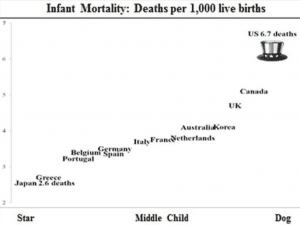
Interesting talk . . . . Friedman is author of The Measure of a Nation: How to Regain America's Competitive Edge and Boost Our Global Standing. Based on things like infant mortality rate, number of citizens per representative, percentage of women in national legislature, global peace index, voter turnout, and yearly days spent in school for children, we are not among the world leaders. In fact, we pretty much trail most of the other nations Friedman uses for comparison.

Here is a little of the publisher's commentary on the book:
This book focuses on how to improve America by first comparing its performance with thirteen competitive industrial nations, then identifying the best practices found throughout the world that can be adopted here in the United States. Friedman lays out some disturbing facts about America's lack of competitiveness in five key areas: health, education, safety, equality, and even democracy. Taking the approach that "data doesn't lie," Friedman notes alarming statistics, for example:
  • Americans have the lowest life expectancy among all competitor nations.
  • Americans are at least two times more likely to be murdered and four times more likely to be incarcerated than any other competitor country, including Japan, France, and the United Kingdom.
  • America shows the sharpest disparity between rich and poor among all nations on its competitor list.
Using charts that clearly illustrate the unbiased, party-neutral data, Friedman uncovers the major problem areas that the nation must address to become a leader again. Homing in on best practices from other countries than can be adapted to the United States, Friedman plots a course to transform America from a corporate behemoth burdened by internal issues and poor performance to a thriving business with an exciting portfolio of solutions.

Enjoy the talk.

Authors@Google: Howard Friedman, "The Measure of a Nation"


If America were a corporation, how would an independent analyst judge its ability to compete against other corporate giants? According to UN statistician Howard Steven Friedman, that hypothetical analyst would label America a corporate dinosaur and recommend that the nation either change or face extinction.


Recent Research on Schizophrenia Reveals How Little We Know

Over the past several weeks, several high profile studies on schizophrenia have been released, one of the most complex and confusing mental illnesses we can experience. Most simply, schizophrenia is characterized by disordered thinking and lack of affect regulation - this often manifests as auditory hallucinations, delusions (sometimes paranoid), or highly idiosyncratic speech (word salad) and cognition, along with considerable social or work dysfunction.

Age of onset is typically 15-35 (young adulthood), although I am reading about early-onset schizophrenia in children (a diagnosis I find troubling at best). Prevalence is about 1/2 to 1%. There is no "test" for the disease, so diagnosis is based on behavior and the patient's self-report.

So far, no single isolated organic, social, or environmental cause has been identified (duh!?). So these studies represent the latest efforts in trying to understand this disease (if it is an actual disease).

Schizophrenic Brains Try to Repair

Neuroscience Research Australia
Monday, 06 August 2012

Sashkinw_Neurons_iStock
Most neurons are found in tissue near the surface of the brain, but people with schizophrenia have a high density of neurons in deeper areas. The researchers suggest this is because the neurons are migrating towards the surface, where they are lacking, in response to the disease. Image: Sashkinw/iStockphoto

New NeuRA research shows that the brains of people with schizophrenia may attempt to repair damage caused by the disease, in another example of the adult brain’s capacity to change and grow.

Prof Cyndi Shannon Weickert, Dr Dipesh Joshi and colleagues from Neuroscience Research Australia studied the brains of people with schizophrenia and focussed on one of the hardest-hit regions, the orbitofrontal cortex, which is the part of the brain involved in regulating emotional and social behaviour.

Most neurons – brain cells that transmit information – are found in tissue near the surface of the brain. However, in the brains of people with schizophrenia, the team found a high density of neurons in deeper areas.
Read more.

* * * * * * *

This is from PLoS ONE - just the abstract, the whole article is available by clicking on the title link.

Abnormal Neural Responses to Social Exclusion in Schizophrenia

Victoria B. Gradin1*, Gordon Waiter2, Poornima Kumar3, Catriona Stickle4, Maarten Milders5, Keith Matthews1, Ian Reid4, Jeremy Hall6, J. Douglas Steele1

1 Medical Research Institute, University of Dundee, Dundee, United Kingdom, 2 Biomedical Imaging Center, University of Aberdeen, Aberdeen, United Kingdom, 3 Department of Psychiatry, University of Oxford, Oxford, United Kingdom, 4 Institute of Mental Health, University of Aberdeen, Aberdeen, United Kingdom, 5 Department of Psychology, University of Aberdeen, Aberdeen, United Kingdom, 6 Division of Psychiatry, University of Edinburgh, Edinburgh, United Kingdom

Abstract 

Social exclusion is an influential concept in politics, mental health and social psychology. Studies on healthy subjects have implicated the medial prefrontal cortex (mPFC), a region involved in emotional and social information processing, in neural responses to social exclusion. Impairments in social interactions are common in schizophrenia and are associated with reduced quality of life. Core symptoms such as delusions usually have a social content. However little is known about the neural underpinnings of social abnormalities. The aim of this study was to investigate the neural substrates of social exclusion in schizophrenia. Patients with schizophrenia and healthy controls underwent fMRI while participating in a popular social exclusion paradigm. This task involves passing a ‘ball’ between the participant and two cartoon representations of other subjects. The extent of social exclusion (ball not being passed to the participant) was parametrically varied throughout the task. Replicating previous findings, increasing social exclusion activated the mPFC in controls. In contrast, patients with schizophrenia failed to modulate mPFC responses with increasing exclusion. Furthermore, the blunted response to exclusion correlated with increased severity of positive symptoms. These data support the hypothesis that the neural response to social exclusion differs in schizophrenia, highlighting the mPFC as a potential substrate of impaired social interactions.

Full Citation:  
Gradin VB, Waiter G, Kumar P, Stickle C, Milders M, et al. (2012). Abnormal Neural Responses to Social Exclusion in Schizophrenia. PLoS ONE 7(8): e42608. doi:10.1371/journal.pone.0042608

* * * * * * *

Brain Abnormalities in Schizophrenia Due to Disease, Not Genetics

By Associate News Editor
Reviewed by John M. Grohol, Psy.D. on August 3, 2012 
 
Brain Abnormalities in Schizophrenia Due to Disease, Not Genetics 

The brain differences found in people with schizophrenia are mainly the result of the disease itself or its treatment, as opposed to being caused by genetic factors, according to a Dutch study.
___

“Our study did not find structural brain abnormalities in nonpsychotic siblings of patients with schizophrenia compared with healthy control subjects, using multiple imaging methods,” the team says.

“This suggests that the structural brain abnormalities found in patients are most likely related to the illness itself.”
 Read the whole article.

 * * * * * * *

Schizophrenia Linked to Inflammation in the Brain

By Associate News Editor
Reviewed by John M. Grohol, Psy.D. on August 8, 2012 
 
Schizophrenia Linked to Inflammation in the Brain 

The brains of people with schizophrenia may be under attack by their own immune system, say Australian researchers, who are offering the strongest proof so far of an association between schizophrenia and an immune dysfunction.
___

About 40 percent of people who suffer from schizophrenia have increased inflammation in an area of the brain called the dorsolateral prefrontal cortex — a key brain region affected by the disease.

“To find this immune pattern in nearly half of people with schizophrenia raises the possibility that this is in fact a new root cause of the disease,” said senior author of the study, Cyndi Shannon Weickert, Ph.D., from Neuroscience Research Australia and UNSW.

Read more.

* * * * * * *

Brain Hemispheres Out of Sync in Schizophrenia

By Associate News Editor
Reviewed by John M. Grohol, Psy.D. on August 22, 2012
 
Brain Hemisphere Coordination Reduced in Schizophrenia

People with schizophrenia have significantly decreased interhemispheric coordination compared to those without the disorder, according to a new study.

Researchers discovered that interhemispheric connectivity was especially reduced in the occipital lobe, the thalamus and the cerebellum areas of patients with schizophrenia.
Read the whole article.


* * * * * * *

Face in the Mirror More Distorted in Schizophrenia

By Associate News Editor
Reviewed by John M. Grohol, Psy.D. on August 11, 2012 
 
Face in the Mirror More Distorted in Schizophrenia 

Individuals with schizophrenia experience more intense perceptual illusions while gazing into a mirror than do healthy people, according to a new study.

The new research also showed that patients with schizophrenia were more likely to believe the illusions they see in the mirror were real.

The research highlights the underlying ego dysfunction and body dysmorphic disorder found in schizophrenia.

According to the researchers, gazing at one’s own reflected face under low light can lead to ghostly experiences called “strange-face in the mirror” illusions. No study has previously focused on mirror gazing in schizophrenic patients, who already experience delirium, hallucination and self mis-attribution.

Read more.

How the Brain Works - Ben Goertzel (H+ Magazine)

In this article, originally published in H+ Magazine, Ben Goertzel offers a Neuroscience 101 paper spiced up with his synthesis of other information that fleshes out one particular model of brain science - his. It's a geeky but interesting piece, certainly worth a few minutes to read it.

Other popular models involve duct tape and hamsters in wheels . . . and bacon.

How the Brain Works


Ben Goertzel
Hplusmagazine

Posted: Aug 6, 2012

 
The human brain is a big, complicated system, with different parts doing different things. No one fully understands how it works, yet. But like many other researchers, I think I have a fairly good idea, at a high level. 

What I’m going to give you here is a capsule summary of how one AI researcher, and sometime computational neuroscientist, thinks about the structure and dynamics of the human brain — the “brain according to Ben,” if you will.  I’ll also briefly discuss the relation between brain function and current approaches to artificial general intelligence.

If you want an in-depth yet concise tutorial on the current state of textbook neuroscience knowledge, try this one from Columbia University.  Rather than reviewing the basics in “Neuroscience 101″ style detail, what I’m going to do here is give an overview of what I think are the most critical points and how they all fit together.

Reader beware, though: Neuroscientists have discovered a lot, but there are many different, widely divergent expert opinions about how to integrate the diverse data available from neuroscience into a coherent whole. The ideas I give here are just one opinion, albeit one I think is well grounded from a variety of directions.

The Big Picture

I like this picture created by IBM researcher Dharmendra Modha and his team:


As I discussed in an earlier blog post, this picture shows 300+ regions of the macaque monkey brain and how they connect to each other.  Most of these correspond to similar regions in the human brain; and a similar diagram could be made for the human brain, but it would be less complete, as we’ve studied monkeys more thoroughly.

Each of these brain regions has a literature of scientific papers about it, telling you what sorts of functions they tend to carry out. In most cases, our knowledge of each brain region is badly incomplete. The nodes near the center of his diagram happen to correspond to what neuropsychologists call the “executive network” — the regions of the brain that tend to get active when the brain needs to control its overall activity.

But all these different parts of the brain do seem to work according to some common underlying principles. Each of them is wired together differently, but using the same sorts of parts; and there’s a lot of commonality to the dynamics occurring within each regions as well.

Between Neurons and Brains

All the parts of the brain are made of cells called neurons, that connect to each other and spread electricity amongst each other. The spread of electricity is mediated by chemicals called neurotransmitters — so, one neuron doesn’t simply spread electricity to another one, it activates  certain neurotransmitter molecules that then deliver the charge to the other neuron. Things like mood or emotion or food or drugs affect these neurotransmitters, modulating the nature of thought.

There are also other cells in the brain, like the glia that fill up much of the space between neurons, that seem to play important roles in some kind of memory. Some folks have speculated that intelligence relies on complex quantum-physical phenomena occurring in water mega-molecules floating in between the neurons — though I have no idea if this is true or not.

The part of the brain most central for thinking and complex perception — as opposed to body movement or controlling the heard, etc. — is the cortex. And neurons in the cortex are generally organized into structures called columns.  The column is the most critical structure occupying the intermediate level between neurons and the large-scale brain regions depicted in Modha’s diagram above.  Each column spans the six layers of the cortex, passing charge up and down the layers and also laterally to other columns. There are a lot of neurons called “interneurons” that carry out inhibition between columns — when one column gets active, it sends charge to interneurons, that then inhibit the activity of certain other columns.


And columns tend to be divided into substructures that are often called “mini-columns”, or sometimes just “modules.” In some cases, it seems that each mini-column represents a certain pattern observed in some input, and the column as a whole represents a “belief” about which patterns are more significant in the input.

In the visual cortex, you can have columns recognizing particular patterns in particular regions of space-time, for instance. So one column might contain neurons responding to patterns in a particular part of the visual field — where the neurons higher up in the column represent more abstract, high-level patterns. Lower-level neurons in the column might recognize the edges of a car, whereas higher-level neurons in the same column might help identify that these edges, taken together, do actually look like car. But the functions of columns and the neurons and minicolumns inside them seem to vary a fair bit from one brain region to another.

If you’d like to dig deeper into the column/minicolumn aspect, check out this recent review of mini columns; and this more speculative paper, that proposes a particular function and circuitry for mini columns.  A capsule summary of the literature these papers represent is:

* cortical columns are in many cases well-conceived as hierarchical pattern recognition units, using their minicolumns together to recognize patterns
* the minicolumns in various parts of cortex are implementing a variety of different sorts of microcircuitry, rather than possessing a uniform internal mini-columnar structure.

Read the whole essay.

Thursday, August 23, 2012

Preserved Self-Awareness following Extensive Bilateral Brain Damage to the Insula, Anterior Cingulate, and Medial Prefrontal Cortices


Whenever we think we have it figured out - in this case the "it" is self-awareness - we find something that totally disrupts what we think we know. This research article tells the story of Patient R, who had lost considerable brain tissue following a viral infection, including the chunks of the brain's three 'self-awareness' regions - the insular cortex, anterior cingulated cortex, and medial prefrontal cortex.

The patient, despite these brain tissue losses, still maintains a fairly solid self-awareness, although he experiences amnesia that impacts his narrative sense of self.

New Scientist offered a nice summary:

Location of the mind remains a mystery

Where does the mind reside? It's a question that's occupied the best brains for thousands of years. Now, a patient who is self-aware – despite lacking three regions of the brain thought to be essential for self-awareness – demonstrates that the mind remains as elusive as ever.

The finding suggests that mental functions might not be tied to fixed brain regions. Instead, the mind might be more like a virtual machine running on distributed computers, with brain resources allocated in a flexible manner, says David Rudrauf at the University of Iowa in Iowa City, who led the study of the patient.

Recent advances in functional neuroimaging – a technique that measures brain activity in the hope of finding correlations between mental functions and specific regions of the brain – have led to a wealth of studies that map particular functions onto regions.

Previous neuroimaging studies had suggested that three regions – the insular cortex, anterior cingulated cortex and medial prefrontal cortex – are critical for self-awareness. But for Rudrauf the question wasn't settled.

So when his team heard about patient R, who had lost brain tissue including the chunks of the three 'self-awareness' regions following a viral infection, they immediately thought he could help set the record straight.

Not a zombie

According to the models based on neuroimaging, says Rudrauf, "patients with no insula should be like zombies".

But patient R displays a strong concept of selfhood. Rudrauf's team confirmed this by checking whether he could recognise himself in photographs and by performing the tickle test – based on the observation that you can't tickle yourself. They concluded that many aspects of R's self-awareness remained unaffected. "Having interacted with him it was clear from the get go that there was no way that [the theories based on neuroimaging] could be true," says Rudrauf.

However, R does have severe amnesia, which prevents him from learning new information, and he struggles with social interaction.

Self-awareness and other high-level cognitive functions probably do not relate to the brain in a simple way, says Rudrauf. "They involve layers of abstraction and mechanisms that cannot be explained by standard functional-neuroanatomy." He suggests that there are fundamental mechanisms yet to be discovered. "We would all like simple answers to complicated questions, and we tend to oversimplify our conceptions about the brain and the mind," he says.

Linda Clare, a psychologist at Bangor University, UK, is also not surprised by the finding. "Awareness has many manifestations," she says. "It's not just a matter of a few brain cells."
Journal Reference: 
Philippi CL, Feinstein JS, Khalsa SS, Damasio A, Tranel D, et al. (2012). Preserved Self-Awareness following Extensive Bilateral Brain Damage to the Insula, Anterior Cingulate, and Medial Prefrontal Cortices. PLoS ONE, 7(8): e38413. doi:10.1371/journal.pone.0038413

PLOS ONE is open access, so the article is freely available online. Here is the abstract:

Preserved Self-Awareness following Extensive Bilateral Brain Damage to the Insula, Anterior Cingulate, and Medial Prefrontal Cortices

Carissa L. Philippi1#, Justin S. Feinstein1#*, Sahib S. Khalsa2, Antonio Damasio3, Daniel Tranel1, Gregory Landini4, Kenneth Williford5, David Rudrauf1#*

1 Division of Behavioral Neurology and Cognitive Neuroscience, Department of Neurology, University of Iowa, Iowa City, Iowa, United States of America, 2 Semel Institute for Neuroscience and Human Behavior, University of California Los Angeles, Los Angeles, California, United States of America, 3 Brain and Creativity Institute and Dornsife Cognitive Neuroscience Imaging Center, University of Southern California, Los Angeles, California, United States of America, 4 Department of Philosophy, University of Iowa, Iowa City, Iowa, United States of America, 5 Department of Philosophy, University of Texas Arlington, Arlington, Texas, United States of America

Abstract

It has been proposed that self-awareness (SA), a multifaceted phenomenon central to human consciousness, depends critically on specific brain regions, namely the insular cortex, the anterior cingulate cortex (ACC), and the medial prefrontal cortex (mPFC). Such a proposal predicts that damage to these regions should disrupt or even abolish SA. We tested this prediction in a rare neurological patient with extensive bilateral brain damage encompassing the insula, ACC, mPFC, and the medial temporal lobes. In spite of severe amnesia, which partially affected his “autobiographical self”, the patient's SA remained fundamentally intact. His Core SA, including basic self-recognition and sense of self-agency, was preserved. His Extended SA and Introspective SA were also largely intact, as he has a stable self-concept and intact higher-order metacognitive abilities. The results suggest that the insular cortex, ACC and mPFC are not required for most aspects of SA. Our findings are compatible with the hypothesis that SA is likely to emerge from more distributed interactions among brain networks including those in the brainstem, thalamus, and posteromedial cortices.


Dan Siegel - The Emerging Mind: How relationships and the embodied brain shape who we are


The audio for this talk by Dan Siegel at the RSA was posted back in July, but now there is also a video to go with it, although the video is only a short, edited highlights selection from the full talk.

Siegel defines the mind as an emergent, self-organizing process that arises from, and also regulates energy and information flow within the brain and within relationships with others. He describes the mind’s functions in body and relationships and then offers steps to strengthen this regulatory process of mind, revealing "a surprising principle of mental health."


The Emerging Mind: How relationships and the embodied brain shape who we are

11th Jul 2012

Listen to the audio
(full recording including audience Q&A)

Please right-click link and choose "Save Link As..." to download audio file onto your computer.

Watch the video (edited highlights)

RSA Keynote

What is the mind? From where and what does the mind emerge? Can our minds be made more resilient? What is ‘interpersonal neurobiology’?

Astonishingly, over ninety-five percent of mental health professionals from around the world have never received even a single lecture defining what the mind is. Bestselling author of both academic textbooks and works of popular science, and currently the clinical professor of psychiatry at UCLA, Daniel Siegel visits the RSA to explore a working definition of the mind.

Join Daniel Siegel as he outlines how the mind can be defined as an emergent, self-organizing process that arises from, and also regulates energy and information flow within the brain and within relationships with others. The mind’s functions in body and relationships will be described and then steps to strengthening this regulatory process of mind will be outlined as a surprising principle of mental health is revealed.

Underlying both the neural and the relational pillars of a healthy mind is the process of integration — the linkage of differentiated aspects of a system. Cultivating integration within relationships and the nervous system means we can create the flexible, adaptive, coherent, and stable states of a resilient emerging mind.

Chair: Dr Jonathan Rowson, the RSA Social Brain project.

Wednesday, August 22, 2012

Do You Want To Live Forever? - Dr. Aubrey de Grey


Interesting documentary . . . . Personally, living forever would be depressing beyond comprehension. If I could maintain the health I have right now for a few more decades, however, I might not mind living well into my 100s.

I do wonder about the psychology behind the desire to life forever, or at least indefinitely. Is it a fear of death? A fear of aging and degeneration? A fear of loss? Something else . . . .


Do You Want To Live Forever?
"Do You Want To Live Forever?" is a Channel 4 Documentary following the revolutionary life-extension and immortality ideas of this somewhat eccentric scientist, Dr. Aubrey de Grey.

This show is all about the radical ideas of a Cambridge biomedical gerontologist called Aubrey de Grey who believes that, within the next 20-30 years, we could extend life indefinitely by addressing seven major factors in the aging process. He describes his work as Strategies for Engineered Negligible Senescence (SENS).


Here is some information on de Grey's ideas from his Wikipedia entry (or actually, the entry on his SENS ideas).
Strategies for Engineered Negligible Senescence (SENS) is the term coined by British biogerontologist Aubrey de Grey for the diverse range of regenerative medical therapies, either planned or currently in development [1], for the periodical repair of all age-related damage to human tissue with the ultimate purpose of maintaining a state of negligible senescence in the patient, thereby postponing age-associated disease for as long as the therapies are reapplied. [2]

The term "negligible senescence" was first used in the early 1990s by professor Caleb Finch to describe organisms such as lobsters and hydras, which do not show symptoms of aging. The term "engineered negligible senescence" first appeared in print in Aubrey de Grey's 1999 book The Mitochondrial Free Radical Theory of Aging,[3] and was later prefaced with the term "strategies" in the article Time to Talk SENS: Critiquing the Immutability of Human Aging[4] De Grey called SENS a "goal-directed rather than curiosity-driven"[5] approach to the science of aging, and "an effort to expand regenerative medicine into the territory of aging".[6] To this end, SENS identifies seven categories of "damage" and a specific regenerative medical proposal for treating each.

While many biogerontologists find it "worthy of discussion"[7][8] and SENS conferences feature important research in the field,[9][10] some contend that the alleged benefits of de Grey's programme are too speculative given the current state of technology, referring to it as "fantasy rather than science".[11][12]
Here are the seven areas he feels need to be addressed to extend our lives considerably:
By enumerating the various differences between young and old tissue identified by the science of biogerontology, a 'damage' report was drawn, which in turn formed the basis of the SENS strategy. The results fell into seven main categories of 'damage', seven alterations whose reversal would constitute negligible senescence:
  1. cell loss or atrophy (without replacement),[4][13][14]
  2. oncogenic nuclear mutations and epimutations,[15][16][17]
  3. cell senescence (Death-resistant cells),[18][19]
  4. mitochondrial mutations,[20][21]
  5. Intracellular junk or junk inside cells (lysosomal aggregates),[22][23]
  6. extracellular junk or junk outside cells (extracellular aggregates),[18][19]
  7. random extracellular cross-linking.[18][19]
For each of these areas SENS offers at least one strategy, with a research and a clinical component. The clinical component is required because in some of the proposed therapies, feasibility has already been proven, but not completely applied and approved for human trials. These strategies do not presuppose that the underlying metabolic mechanisms of aging be fully understood, only that we take into account the form senescence takes as directly observable to science, and described in scientific literature.

Simon Baron-Cohen: Evolution of Empathy


This is Simon Baron-Cohen's talk at the Evolution and Function of Consciousness Summer School ("Turing Consciousness 2012") held at the University of Montreal as part of Alan Turing Year.In this talk, Baron-Cohen looks at the development of empathy from the womb to adulthood and examines what can go wrong - which can lead to autism/Asperger Syndrome and potentially even to sociopaths and psychopaths.


Simon Baron-Cohen: Evolution of Empathy

Abstract:
Empathy is the drive to identify another person's thoughts and feelings and to respond to these with an appropriate emotion. Empathy comes by degrees, with individual differences evident in the traditional bell curve. We now know quite a lot about which parts of the brain are used when we empathize and how empathy develops in children. We also know that early experience affects empathy, but so does biology: hormones in the womb, and specific genes. There are several ways in which one can lose one's empathy, clearly seen in psychiatric conditions such as the personality disorders, including the psychopath. We discuss how people with autism and psychopaths show opposite empathy profiles. Finally, the discovery that there may be 'genes for empathy' implies that empathy may be the result of our evolution.

Relevant Books/Papers/Websites:

Baron-Cohen, S, (2011). Zero Degrees of Empathy: A new theory of human cruelty. Penguin/Basic Books. http://www.amazon.co.uk/Zero-Degrees-Empathy-Simon-Baron-Cohen/dp/0141017961

http://www.youtube.com/watch?v=Aq_nCTGSfWE

http://www.autismresearchcentre.com

Baron-Cohen, S (2003). The Essential Difference: men, women, and the extreme male brain. Penguin/Basic Books

http://www.thetransporters.com

Baron-Cohen, S (2009). Autism and Asperger Syndrome: The Facts. Oxford University Press.

http://www.jkp.com/mindreading

Simon Baron-Cohen and Sally Wheelwright. (2004, Apr). The Empathy Quotient: An Investigation of Adults with Asperger Syndrome or High Functioning Autism, and Normal Sex Differences. Journal of Autism and Developmental Disorders, Vol. 34, No. 2. http://gamut.neiu.edu/~lruecker/baron-cohen.pdf

Gary Comstock - Feeling Matters (on Consciousness in Nonhumans)


This is Gary Comstock's talk at the Evolution and Function of Consciousness Summer School ("Turing Consciousness 2012") held at the University of Montreal as part of Alan Turing Year. In this talk, he raises some difficult questions about intelligence and consciousness in animals - and with those questions comes ethical issues about how we use these conscious beings in research.


Gary Comstock: Feeling Matters

Abstract:
What scientific experiments, if any, are we justified in performing on animals in order to answer philosophical questions such as the distribution of complex feelings across species? Would researchers, for example, be justified in inducing behavioral signs of depression in monkeys if they thought the results could help to resolve the metaphysical question, whether nonhumans have the capacity to feel, for example, the social anxiety that results from thinking that others think you are worthless? To make progress on this issue, I proceed in three steps. First, I review the case for thinking that cynomulgus monkeys experience social-stress induced depression, a higher order mental state some humans find worse than death. Second, I introduce and rebut three objections to the idea that we can legitimately attribute this feeling to monkeys. Third, I conclude by outlining an invasive experiment that might help to settle the Distribution Question and I ask whether it would be humane to carry it out.

Relevant Papers:

Call, J. & Tomasello, M., 2008. Does the chimpanzee have a theory of mind? 30 years later. Trends in Cognitive Sciences, 12(5), pp.187-192. http://www.eva.mpg.de/psycho/pdf/Publications_2008_PDF/Call_Tomasello_2008.pdf

Lerner, Y. et al., 2011. Topographic mapping of a hierarchy of temporal receptive windows using a narrated story. The Journal of neuroscience - the official journal of the Society for Neuroscience, 31(8), pp.2906-2915. http://neuro.cjb.net/content/31/8/2906.full

Penn, D.C., Holyoak, K.J. & Povinelli, D.J., 2008. Darwin's Mistake: Explaining the Discontinuity Between Human and Nonhuman Minds. Behavioral and Brain Sciences, 31(02), pp.109-130. http://staffwww.dcs.shef.ac.uk/people/A.Sharkey/2008-darwin.pdf

Shively, C.A. et al., 2005. Social stress-associated depression in adult female cynomolgus monkeys (Macaca fascicularis). Biological Psychology, 69(1), pp.67-84.

Stewart, M.E. et al., 2006. Presentation of Depression in Autism and Asperger Syndrome A Review. Autism, 10(1), pp.103'116. http://aut.sagepub.com/content/10/1/103.abstract
Willard, S.L. & Shively, C.A., 2011. Modeling depression in adult female cynomolgus monkeys (Macaca fascicularis). American Journal of Primatology, 73, pp.1-15. http://www.ncbi.nlm.nih.gov/pubmed/22076882

Tuesday, August 21, 2012

Integral Leadership Review August 2012 Now Online

The August 2012 issue of the Integral Leadership Review is now online, along with the ILR Particles (an informative quick read that includes articles from the current issue of Integral Leadership Review, as well as other features like the Leadership Cartoon and Announcements).


The PDM - An Alternative to the DSM


The PDM is the the Psychodynamic Diagnostic Manual (2006, $21.93 at Amazon), a collaborative effort of the American Psychoanalytic Association, International Psychoanalytical Association, Division of Psychoanalysis (39) of the American Psychological Association, American Academy of Psychoanalysis and Dynamic Psychiatry, and the National Membership Committee on Psychoanalysis in Clinical Social Work.

I am including the introduction (below), but also check out the Table of Contents. The Task Force that created the Manual is a who's who of mainstream psychoanalytic therapists, but there are no real representatives of the intersubjective systems, relational, or Self Psychology branches of psychoanalysis, which is where the real innovation is occurring.

While this volume is a step in the direction I recently advocated for, it still comes up quite short of being intersubjective, relational, and attachment-based in its conception of mental distress.

Introduction to the PDM

The Psychodynamic Diagnostic Manual (PDM) is a diagnostic framework that attempts to characterize the whole person--the depth as well as the surface of emotional, cognitive, and social functioning. It emphasizes individual variations as well as commonalities. We hope that this framework will bring about improvements in the diagnosis and treatment of mental disorders and will permit a fuller understanding of the functioning of the mind and brain and their development. The goal of the PDM is to complement the DSM and ICD efforts of the past 30 years in cataloguing symptoms by explicating the full range of mental functioning.

The PDM is based on current neuroscience, treatment outcome research, and other empirical investigations. Research on brain development and the maturation of mental processes suggests that patterns of emotional, social, and behavioral functioning involve many areas working together rather than in isolation.

Outcome studies point to the importance of dealing with the full complexity of emotional and social patterns. Numerous researchers (e.g., Blatt, this volume; Norcross 2002; Wampold 2001) have concluded that the nature of the psychotherapeutic relationship, reflecting interconnected aspects of mind and brain operating together in an interpersonal context, predicts outcome more robustly than any specific treatment approach per se . Westen, Novotny, and Thompson-Brenner (2004 and this volume) have presented evidence that treatments that focus on isolated symptoms or behaviors (rather than personality, emotional, and interpersonal patterns ) are not effective in sustaining even narrowly defined changes. Shedler and Westen, Dahlbender and colleagues, Blatt, and others (this volume) have developed reliable ways to measure complex patterns of personality, emotion, and interpersonal processes that constitute the active ingredients of the psychotherapeutic relationship. A number of recent reviews (e.g., Fonagy's and Leichsenring's in this volume) demonstrate that in addition to alleviating symptoms, psychodynamically based therapeutic approaches improve overall emotional and social functioning.

The PDM was created though a collaborative effort of the major organizations representing psychoanalytically oriented mental health professionals; namely, the American Psychoanalytic Association, the International Psychoanalytical Association, the Division of Psychoanalysis (39) of the American Psychological Association, the American Academy of Psychoanalysis, and the National Membership Committee on Psychoanalysis in Clinical Social Work. Their presidents formed a steering committee and recommended members to serve on work groups to construct this classification system.

The diagnostic framework formulated by the PDM work groups systematically describes:
  • Healthy and disordered personality functioning ;
  • Individual profiles of mental functioning, including patterns of relating, comprehending and expressing feelings, coping with stress and anxiety, observing one's own emotions and behaviors , and forming moral judgments ;
  • Symptom patterns, including differences in each individual's personal, subjective experience of symptoms.
The Psychodynamic Diagnostic Manual adds a needed perspective to existing diagnostic systems. In addition to considering symptom patterns described in existing taxonomies, it enables clinicians to describe and categorize personality patterns, related social and emotional capacities, unique mental profiles, and personal experiences of symptoms. It provides a framework for improving comprehensive treatment approaches and understanding both the biological and psychological origins of mental health and illness.

Rationale for the PDM

A clinically useful classification of mental health disorders must begin with an understanding of healthy mental processes. Mental health comprises more than simply the absence of symptoms. It involves a person's overall mental functioning, including relationships; emotional depth, range, and regulation; coping capacities; and self-observing abilities. Just as healthy cardiac functioning cannot be defined simply as an absence of chest pain, healthy mental functioning is more than the absence of observable symptoms of psycho pathology. It involves the full range of human cognitive, emotional, and behavioral capacities.

Any attempt to describe and classify deficiencies in mental health must therefore take into account limitations or deficits in many different mental capacities, including ones that are not necessarily overt sources of pain. For example, as frightening as anxiety attacks can be, an inability to perceive and respond accurately to the emotional cues of others-a far more subtle and diffuse problem-may constitute a more fundamental difficulty than periodic episodes of unexplained panic. A deficit in reading emotional cues may pervasively compromise relationships and thinking and may itself be a source of anxiety.

That a comprehensive conceptualization of health is the foundation for describing disorder may seem self-evident, and yet the mental health field has not developed its diagnostic procedures accordingly. In the last two decades, there has been an increasing tendency to define mental problems primarily on the basis of observable symptoms, behaviors, and traits, with overall personality functioning and levels of adaptation noted only secondarily. There is increasing evidence, however, that both mental health and psychopathology involve many subtle features of human functioning, including affect tolerance, regulation, and expression; coping strategies and defenses; capacities for understanding self and others; and quality of relationships. Mounting evidence from neuroscience and developmental studies supports the position that mental functioning, whether optimal or compromised, is highly complex. To ignore mental complexity is to ignore the very phenomena of concern. After all, our mental complexity defines our most human qualities.

Over the past 30 years or so, in the hope of developing an adequate empirical basis for diagnosis and treatment, the mental health field has progressively narrowed its perspective, focusing more and more on isolated symptoms. The whole person has been less visible than the various disorder constructs on which researchers can find agreement. Recent reviews of this effort have raised the possibility that such a strategy was misguided. Ironically, emerging evidence suggests that oversimplifying mental health phenomena in the service of attaining consistency of description (reliability) and capacity to evaluate treatment empirically (validity) may have compromised the laudable goal of a more scientifically sound understanding of mental health and psychopathology. Most problematically, reliability and validity data for many disorders are not as strong as the mental health community had hoped they would be. Allen Frances, Chair of the DSM-IV American Psychiatric Association Task Force , recently acknowledged (Spiegel 2005) that the desired reliability has not been obtained.

In a recent commentary in the Journal of the American Medical Association , Paul McHugh (2005) pointed out that medicine has moved beyond simply describing symptoms to categorizing disorders according to the nature of the functional impairment and etiological factors (if known). Contending that the classification of mental health disorders may have gone too far in a purely descriptive direction (overlapping categories, excessive co-morbidities, etc.), thereby compromising efforts to improve our understanding and treatment of psychopathology, he recommended that the classification of mental disorders also reflect the quality and degree of functional impairment and, where possible, etiology.

The mental health field has a long history of describing symptom patterns. As in the development of many fields, this effort began with pioneers who made meticulous observations and discovered common clusters of patient complaints, symptoms, and behaviors. In attempting to make progress in describing naturally occurring patterns, however, much recent research has been a mixed blessing. On the one hand, carefully constructed questionnaires and structured interviews have led to more reliable judgments about symptom patterns and have facilitated research into what belongs in a pattern, including its antecedents and course. On the other hand, fixed definitions (often made by clinical consensus) and incomplete data have impeded the improvement of descriptions of naturally occurring patterns.

A patient may experience a number of symptom patterns. Many such patterns have long been observed to overlap. In the DSM and ICD systems, the use of fixed definitions and strict criteria (e.g., four out of six, not three out of six, items on a diagnostic checklist) forces an artificial separation of conditions that are frequently related. Symptoms that may be etiologically, phenomenologically, or contextually interconnected are described as co-morbid conditions, as if these discrete problems coexist more or less accidentally in the same person, much as a sinus infection and a broken toe might coexist. Assumptions about discrete, unrelated, co-morbid conditions are rarely justified by compelling data such as clear genetic, biochemical, and neurophysiological distinctions between syndromes. The cut-off criteria for diagnosis are often arbitrary decisions of committees rather than conclusions drawn from the best scientific evidence.

The development of the PDM reflects our concern that mental health professionals may have uncritically and prematurely adopted methods from other sciences instead of developing empirical procedures appropriate to the complexity of the data in our field. The intent of those who moved the DSM and ICD classifications in the direction of specifying discrete, externally observable disorders was to build a stronger foundation for the diagnosis and treatment of psychopathology. This was a worthy project. Now, however, it is time to take a hard look at the phenomena with which mental health professionals regularly deal and adapt the methods to the phenomena rather than vice versa (see Part III, review essays by Blatt, Shedler, Westen).

The PDM attempts to do this. Because the current terminology for symptoms and their groupings comes from a long and intellectually serious tradition, we employ the descriptions of symptoms and patterns of symptoms used in the currently prevailing taxonomies, the DSM-IV-TR and ICD-10, systems that represent a valuable history of careful observation and description. In the most recent versions of the DSM and ICD systems, however, some of the more subtle features of many basic symptom patterns have been lost. Most notably, despite the fact that it is usually the patient's subjective suffering that brings him or her to treatment, a full description of the patient's internal experience of the symptoms is often absent.

All approaches to assessment and treatment rely at least in part on patients' reports of their thoughts, feelings, and behaviors. (Does the patient feel depressed? Anxious? Does the patient hear voices? Think about suicide?). Therefore, despite the fact that mental health professionals are always inevitably dealing with the elusive world of subjectivity, we require a fuller description of the patient's internal life to do justice to understanding his or her distinctive experience. We are hoping that with more elaborated depictions, we can make more progress on understanding naturally occurring patterns. The rapidly advancing neuroscience field, including genetic studies, can only be as useful as our understanding of the naturally occurring basic patterns of mental health and pathology. We cannot expect our colleagues in genetics to separate the apples and oranges for us. If we do not properly separate them, we will continue to frustrate the search for underlying biological pathways and common experiential etiologies.

Even in general medicine, instances in which etiological factors are fully understood are rare. Most commonly, we are at the level of functional rather than etiological explanation. Neoplastic disorders, for example, are often thought to be understood etiologically, but we are still searching for the causes of many malignancies, as we attempt to comprehend the relationship between genetic, environmental, and, in some instances, viral and other infectious processes. We are nonetheless able to describe various malignancies in detail in terms of their functional characteristics. Both in general medicine and in mental health, progress in understanding the functional nature of disorders should eventually facilitate a greater understanding of etiological factors. Functional and etiological understanding together provide the fullest basis for diagnosis and treatment.

In general, there is a healthy tension between the goals of capturing the complexity of clinical phenomena (functional understanding) and developing criteria that can be reliably judged and employed in research (descriptive understanding). It is vital to embrace this tension by pursuing a step-wise approach in which complexity and clinical usefulness influence operational definitions and inform research. A scientifically based system begins with accurate recognition and description of complex clinical phenomena and builds gradually toward empirical validation. Relying on oversimplification and favoring what is measurable over what is meaningful do not operate in the service of good science.

In addition , we are learning that when therapists apply manualized treatments to selected symptom clusters without addressing the complex person who experiences the symptoms and without attending to the therapeutic relationship that supports the treatment, therapeutic results are short-lived and rates of remission are high (Westen, Novotny, et al. 2004; Hilsenroth, Ackerman, et al. 2003; Baumann, Hilsenroth, et al. 2001; Stiles, Agnew-Davies, et al. 1998). A recent meta-analysis of outcomes of manualized treatments for targeted symptoms found that symptomatic improvement often did not persist and that fundamental psychological capacities involving the depth and range of relationships, feelings, and coping strategies did not show evidence of long-term change. In a number of studies these critical areas were not even measured (Westen, Novotny, et al. 2004).

At the same time, process-oriented research has demonstrated that essential characteristics of the psychotherapeutic relationship as conceptualized by psychodynamic models (the working alliance, transference phenomena , and stable characteristics of patient and therapist) are more predictive of outcome than any designated treatment approach per se . Most dynamically oriented clinicians pay careful attention to the therapeutic relationship, noting interpersonal patterns, feelings, coping strategies, and other indicators of mental processes. Although under-researched for decades, several recent meta-analyses and reviews reveal evidence of the efficacy of psychodynamically based treatments (see Part III review essays by Fonagy and Leichsenring, as well as Hilsenroth, Ackerman, et al. 2003; Leichsenring & Leibing 2003).

Although the psychoanalytic tradition, or depth psychology, has a long history of examining overall human functioning in a searching and comprehensive way, the diagnostic precision and usefulness of psychodynamic approaches have been compromised by at least two problems. First, until fairly recently, in attempts to capture the range and subtlety of human experience, psychoanalytic accounts of mental processes have been expressed in competing theories and metaphors that have, at times, inspired more disagreement and controversy than consensus. Second, there has been difficulty distinguishing between speculative constructs on the one hand, and phenomena that can be observed or reasonably inferred on the other. Where the tradition of descriptive psychiatry has had a tendency to reify "disorder" categories, the psychoanalytic tradition has tended to reify theoretical constructs.

In recent years, however, having developed empirical methods to quantify and analyze complex mental phenomena, depth psychology has been able to offer clear operational criteria for a more comprehensive range of human social and emotional conditions (see (Lingiardi, Shedler, et al. 2005, and Part III review essays by Blatt, Dahlbender, Westen, Shedler). The current challenge is to systematize these advances with a growing body of rich clinical experience in order to provide a widely usable framework for understanding and specifying complex and subtle mental phenomena.

A psychodynamically based system highlights the processes that contribute to emotional and social functioning. Early in its history, psychodynamic theories speculated about etiological factors. As in all fields of medicine, however, clinicians and researchers quickly learned that the etiologies of psychological disorders are more complex than initial observations and theory had suggested. Consequently, psychodynamic models have moved toward functional understanding of psychopathologies, with the expectation that such understanding will guide the identification of etiological patterns.

In light of all this, the PDM addresses the full range of mental functioning. Its approach to personality disorders identifies patterns that capture the quality and degree of impairment in such basic capacities as forming and sustaining relationships; regulating affects, moods, and impulses; and carrying out essential human functions in family, educational, and work settings. Its profile of mental functioning specifies components of these functional patterns. Its approach to symptom patterns is to add to the DSM descriptions an understanding of the patient's unique internal experience of his or her problems.

The PDM uses a multi dimensional approach to describe the intricacies of the patient's overall functioning and ways of engaging in the therapeutic process. It begins with a classification of the spectrum of personality patterns and disorders, then offer s a "profile of mental functioning" covering in more detail the patient's capacities, and finally considers symptom patterns, with emphasis on the patient's subjective experience.

Dimension I: Personality Patterns and Disorders

The PDM classification of personality patterns takes into account two areas: the person's general location on a continuum from healthier to more disordered functioning, and the nature of the characteristic ways the individual organize s mental functioning and engage s the world.

This dimension has been placed first in the PDM system because of the accumulating evidence that symptoms or problems cannot be understood, assessed, or treated in the absence of an understanding of the mental life of the person who has the symptoms. For example, a depressed mood may be manifested in markedly different ways in a person who fears relationships and avoids experiencing and expressing most feelings and in an individual who is fully engaged in all of life's relationships and emotions. There is not just one clinical presentation of the artificially isolated phenomenon known as depression.

Dimension II: Mental Functioning

The second PDM dimension offers a more detailed description of emotional functioning-the capacities that contribute to an individual's personality and overall level of psychological health or pathology. It takes a more microscopic look at mental life, systematizing such capacities as information processing and self-regulation; the forming and maintaining of relationships; experiencing, organizing, and expressing different levels of affects or emotions; representing, differentiating, and integrating experience; using coping strategies and defenses; observing self and others; and forming internal standards.

Dimension III: Manifest Symptoms and Concerns

Dimension III begins with the DSM-IV-TR categories and goes on to describe the affective states, cognitive processes, somatic experiences, and relational patterns most often associated clinically with each one. We approach symptom clusters as useful descriptors . Unless there is compelling evidence in a particular case for such an assumption, we do not regard them as highly demarcated biopsychosocial phenomena. In other words, we are taking care not to overstep our knowledge base. Thus, Dimension III presents symptom patterns in terms of the patient's personal experience of his or her prevailing difficulties. The patient may evidence a few or many patterns, which may or may not be related, and which should be seen in the context of the person's personality and mental functioning. The multi dimensional approach depicted in the following sections provides a systematic way to describe patients that is faithful to their complexity and helpful in planning appropriate treatments.

Reference List

Baumann, B. D., Hilsenroth, M. J., Ackerman, S. J., Baity, M. R., Smith, C. L., Smith, S. R. et al. (2001). The capacity for dynamic process scale: An examination of reliability, validity, and relation to therapeutic alliance. Psychotherapy Research, 11, 275-294.

Hilsenroth, M. J., Ackerman, S. J., Blagys, M. D., Baity, M. R., & Mooney, M. A. (2003). Short-term psychodynamic psychotherapy for depression: An examination of statistical, clinically significant, and technique-specific change. The Journal of Nervous and Mental Disease, 191, 349-357.

Leichsenring, F. & Leibing, E. (2003). The effectiveness of psychodynamic therapy and cognitive behavior therapy in the treatment of personality disorders: A meta-analysis. American Journal of Psychiatry, 1610, 1223-1232.

Lingiardi, V., Shedler, J., & Gazzillo, F. (2005). Assessing personality change in psychotherapy with the SWAP-200: A case study. under review.

McHugh, P. (2005). Commentary : Striving for Coherence: Psychiatry's Efforts Over Classification . Journal of the American Medical Association, 293, 2526-2528.

Norcross, J. C. (2002). Empirically supported therapy relationships. In J.C.Norcross (Ed.), Psychotherapy Relationships that Work: Therapist Contributions and Responsiveness to Patients (pp. 3-16). London : Oxford.

Spiegel, A. (2005). The dictionary of disorder: How one man revolutionized psychiatry. The New Yorker, 56-63.

Stiles, W., Agnew-Davies, R., Hardy, G. E., Barkham, M., & Shapiro, D. (1998). Relations of the alliance with psychotherapy outcome: Findings in the second Sheffield Psychotherapy Project. Journal of Consulting and Clinical Psychology, 66 , 791-802.

Wampold, B. E. (2001). The great psychotherapy debate - Models, methods and findings. Mahwah , NJ : Erlbaum.

Westen, D., Novotny, C. M., & Thompson-Brenner, H. (2004). The empirical status of empirically supported psychotherapies: Assumptions, findings, and reporting in controlled clinical trials. Psychological Bulletin, 130, 631-663.

Upaya Dharma Podcasts - The Bodhisattva's Embrace Series: All 5 Parts


This is another nice series of podcasts from Upaya Zen Center, in this case they were presented as part of the Buddhist Chaplaincy Training curriculum. Alan Senauke looks at how to be of service to people in crisis, especially those who are marginalized in some way. This is incredibly relevant to the work I do, and maybe it is for you as well.

The Bodhisattvas Embrace Series: All 5 Parts

Recorded: Friday Aug 17, 2012

The 5 part series   The Bodhisattva’s Embrace   is now published.

You can access the desired part of the series by clicking on its link below:

Here is part 1A of the series:

Alan Senauke: 08-12-2012: The Bodhisattva’s Embrace (Part 1A)

Speaker: Alan Senauke

Recorded: Sunday Aug 12, 2012

Series Description: This program is part of our Buddhist Chaplaincy Training curriculum but is also appropriate for anyone wishing to explore how to be of service from a place of practice.

In this series, Alan asks how we attend to the needs of people in crisis, particularly when these people are part of “marginalized” populations. Working in jails, prisons, hospitals, and other institutional settings, we are meeting at the intersection of personal difficulty and structural violence. The rough edges of systemic suffering are facts of life; it is easy to fall into anger, hopelessness, or despair.

Alan works with a simple set of dharma tools drawn from the Buddha’s early teachings and expanded in the Zen tradition as a framework for exploring how to bring our practice to our own lives and to the endless challenge of living in society. He explores the the interdependence of self and other; mindfulness of systemic oppression and privilege that might be hidden from us; the need to be an ally or kalyanamitta for others and to find allies for ourselves.

Teacher Biography: Hozan Alan Senauke is vice-abbot of Berkeley Zen Center in California. He lives at BZC with his wife, Laurie, and their two children. Since 1991 Alan has worked with the Buddhist Peace Fellowship, where he presently serves as Senior Advisor. He continues to work as a socially engaged Buddhist activist, most recently founding the Clear View Project, developing Buddhist-based resources for relief and social change. In another realm, Alan has been a student and performer of American traditional music for more than forty years.

Play
Special Announcement: Please watch for our upcoming podcast survey … will be launched in the next 7-10 days … exact date will be announced shortly. We would greatly appreciate your participation in this survey.