Showing posts with label neurology. Show all posts

Sunday, April 06, 2014

Neuroscientists Forge Path Toward Understanding Human Brain

DustMetastability

In this interesting study from last month, researchers set aside the usual goal of brain-mapping and/or making cool images of the brain while it does stuff to actually attempt to understand how brain activity emerges in space and time on a micro (millisecond) timescale during the completion of ordinary behaviors. "The researchers use a quantitative approach to brain coordination to learn about the whole 'parameter space,' or all the space on the line between segregation and integration."

Neuroscientists forge path toward understanding human brain

Date: March 13, 2014
Source: Florida Atlantic University
Summary: Metastable dynamics -- a subtle blend of integration and segregation in the brain that occurs on multiple levels (cells, brain regions, networks) -- underlies the real-time coordination necessary for the brain’s dynamic cognitive, behavioral and social functions, neuroscientists have found.

Florida Atlantic University neuroscientist Emmanuelle Tognoli, Ph.D., and J.A. Scott Kelso, Ph.D., neuroscientist and eminent scholar in science, at the Center for Complex Systems and Brain Sciences at FAU, recently published research in the journal Neuron titled "The Metastable Brain." The article indicates that metastable dynamics -- a subtle blend of integration and segregation in the brain that occurs on multiple levels (cells, brain regions, networks) -- underlies the real-time coordination necessary for the brain's dynamic cognitive, behavioral and social functions.

"Metastability can be visualized in terms of a line; with too much segregation on the left end of the line and too much integration on the right end of the line leading to disorders. The brain functions best somewhere in the middle where there is a dynamic balance of segregation and integration," said Tognoli. "If it is out of balance, it can lead to diseases such as autism, schizophrenia and epilepsy."

This research is timely as federal funding in support of the B.R.A.I.N. Initiative was approved early this year. The initiative is intended to accelerate the development and application of new technologies that will enable researchers to produce dynamic pictures of the brain that show how individual brain cells and complex neural circuits interact at the speed of thought.

"We know how neurons fire and we know they are connected," said Francis Collins, director of the U.S. National Institutes of Health in a 2013 interview with the Wall Street Journal. "We don't know how they act in concert to govern behavior, the essential question in treating neurological disease and mental health disorders."

While the majority of research conducted nationally is focused on "mapping" the brain, Tognoli and Kelso's work focuses on how brain activity evolves in space and time on a millisecond timescale during the course of ordinary behavior. The researchers use a quantitative approach to brain coordination to learn about the whole "parameter space," or all the space on the line between segregation and integration.

One of the next steps in this line of research will be to analyze which drugs are sound based on the theory of metastability. Furthermore, researchers can study which interventions will produce ineffective or counterintuitive consequences -- as would happen with drugs that enhance segregation.

Kelso, Tognoli and their colleagues' work on the human brain and behavior is carried out on FAU's Boca Raton campus under the auspices of the National Institute of Mental Health. FAU also has a research cluster of close to three dozen neuroscientists working at the John D. MacArthur Campus in Jupiter. These neuroscientists work on complementary ways to understand the brain using animal models and focusing on neural circuitry in collaboration with researchers from Scripps Florida and Max Planck Florida Institute.

Story Source:
The above story is based on materials provided by Florida Atlantic University. Note: Materials may be edited for content and length.

Journal Reference:
Emmanuelle Tognoli, J. A. Scott Kelso. (2014). The Metastable Brain. Neuron; 81(1): 35 DOI: 10.1016/j.neuron.2013.12.022


Abstract


Neural ensembles oscillate across a broad range of frequencies and are transiently coupled or “bound” together when people attend to a stimulus, perceive, think, and act. This is a dynamic, self-assembling process, with parts of the brain engaging and disengaging in time. But how is it done? The theory of Coordination Dynamics proposes a mechanism called metastability, a subtle blend of integration and segregation. Tendencies for brain regions to express their individual autonomy and specialized functions (segregation, modularity) coexist with tendencies to couple and coordinate globally for multiple functions (integration). Although metastability has garnered increasing attention, it has yet to be demonstrated and treated within a fully spatiotemporal perspective. Here, we illustrate metastability in continuous neural and behavioral recordings, and we discuss theory and experiments at multiple scales, suggesting that metastable dynamics underlie the real-time coordination necessary for the brain’s dynamic cognitive, behavioral, and social functions.

Tuesday, March 25, 2014

Nima Bassiri - Brain (via Somatosphere)

This is a fairly obtuse piece of writing, and for not any particularly good reason that I can discern. Still, it is an interesting examination of how the self has come, over the last 100+ years, to be roughly identical to the brain.

The article comes from Somatosphere and is open access.

Full Citation:
Bassiri, Nima. (2014). Brain. Retrieved March 23, 2014, from Somatosphere Web site: http://somatosphere.net/2014/03/brain.html

Brain

By Nima Bassiri


The brain speaks the truth of the self. I imagine it would not be controversial by now to suggest that this general formulation indexes a set of implicit constraints that have to some significant degree underwritten and informed the historical ontology of the modern self since the nineteenth century.

But let me be clear: to assert that the brain speaks the truth of the self is neither to endorse that we really are our brains (that we ever have been, or that we ever will be), nor is it to accept that the neurosciences either already or will at some point access a transcendental reality with regards to who or what we are. It is instead to suggest that the conditions of acceptability have long been met for neurological discourse to function as a system of knowledge capable of possessing a veridical hold on the question of selfhood, on what will comprise the intelligibility of the self, on what will count as true or false in relation to it.

Such an assessment has admittedly come into focus as a consequence of contemporary disputes about the role the brain and the neurosciences can or should play in the determination of personhood. But to say that the brain speaks the truth of the self is not some sort of conciliation for the present. Today’s disputes around the viability of describing personhood in thoroughly neural terms are grounded on a discursive possibility, the medical and epistemological acceptability of which was formalized over a century ago. It has, in other words, once again become necessary to resolve some problem of the self through neuroscientific discourse.

This is, admittedly, not a commonly held position (culturally or academically), and it is often overshadowed by a different sort of inquiry: How do we reckon with a growing tendency that suggests that scientific claims — especially those drawn out of the neurosciences — do a better job than other kinds of claims of telling us who and what we are? This question is indicative of the concern with (or, conversely the affirmation of) the scientistic attitude towards brain research, one that has emerged as neuroscientific claims have been increasingly translated into the terms of cultural value. It is to the rise of this neuro-scientism that much recent scholarship has responded, in the form of a twisting progression of critiques, appropriations, and, eventually, negotiations — a kind of “neurohelix,” as Joseph Dumit has called it.[1] It isn’t necessary to provide a systematic account of these various twists and turns.[2] What even a small sample of them shows is that the relationship between personhood and neuroscience remains an open question, and one that does not amount to a debate on the merits or drawback of neurological reductionism.[3]

What appears so striking is that much of this scholarship finds itself situated somewhere along a continuum of acceptable positions and reactions to the issue of personhood and the brain.[4] At one end of this discursive spectrum, there lies contestation, rejection, or critique, typically directed at the supposed belief (illegitimate for many) that, through the brain, the self is entirely accounted for and elucidated.[5] And at the other end, there lies affirmation or, merely, acquiescence: either a cautious concession that neuroscientific knowledge ultimately has real effects on processes of self-identification and recognition or, on the other hand, a full embrace of the so-called “neuro-turn.” In many instances authors variously deploy both ends of this spectrum at once. What emerges here is the trend towards a renovated materialism or more judicious neo-naturalism. Otherwise we encounter harsh appraisals of the epistemological groundlessness of a set of effects that scholars concede are nevertheless quite real, from an anthropological point of view.

More noteworthy, however, than any possible position one might take is the apparent acceptability of the debate itself. It has become appropriate, even necessary (once again, I will propose) to wonder whether and how neurological discourse can, as a system of knowledge, encapsulate the truth of self and others. The possibility of being a “neural person” is, first and foremost, a discursive possibility. Precisely in the extent to which we feel incited to respond, one way or another (either through rejection or affirmation) to this state of the present, the brain speaks a certain truth of the self.

But in order to understand why such a possibility has come to pass, it is not enough to trace its inevitability across the epistemological and institutional advances of brain research over the past thirty or so years. That is because, despite the fundamental metaphysical (to say nothing of medical) privilege attributed to the brain since the seventeenth-century anatomies of Descartes and Thomas Willis, it would be some time historically before it would become necessary to speak in a certain way, in a way where brain and self could resonate synonymously. It would be some time before neurological knowledge could discursively animate personhood through and through. The question to ask is: why might such a development have occurred, when it might not have otherwise? What, in other words, might have incited a neurologist, a physiologist, or a clinician, to speak in such a way when the need to do so was neither inevitable nor “inscribed in any a priori”?[6]

Let us, for instance, shift our gaze back to the late nineteenth century, the period when brain research came to be organized according to concepts, methodologies, and institutional formations that are still familiar to us today. Beginning in the late 1880s, John Hughlings Jackson, the so-called “father” of clinical neurology and neurophysiology, inaugurated a very peculiar and surprising resolution to the problem of personhood and neuropathology. Rather than correlating mental derangements caused by neurological disease to the various lacunae of personal identity — a decision that would have linked Jackson to a centuries-old view of personhood instituted by another English physician, John Locke — Jackson instead proposed that neuropathological disruptions were the introduction of another, “new” person, which he understood in a legitimately epistemological and forensic sense.[7] A disordered brain was the instantiation of another brain, which, while certainly debilitated, nevertheless retained some semblance of physiological normality; another brain, therefore, meant another self. What would have compelled Jackson to describe the relationship between the brain and self in this way? In other words, why would he have deployed such a level of formalized synonymy that speaking about a brain (normal or pathological) was, in effect, always to speak about some person (whether it be myself or another)?

To begin with, consider the context in which Jackson is writing, in terms of developments within psychiatric and neurological medicine from the 1860s to 1890s. Within the growing interest and discussion of behavioral abnormalities, there was a greater willingness to view the dangers and precariousness of pathology not in the extent to which it opposed normality, but in the extent to which disorders could so easily and in such unsettling ways intersect, overlap, and coincide with normal neural conditions and states of mind. There emerged a prevalent view of the ordinariness and regularity of being reduced to states of automatism, somnambulism, and other “masked” pathological states, where a person would be said to be simultaneously unconscious while acting in ways that appeared entirely rational and socially intelligible. It was not always easy to ascertain according to what mental process or neurological function a person was really herself, and therefore who she might be in a state of derangement. The emergence and apparent intelligibility, not to mention seriousness, of a disorder like double consciousness suggests that medical professionals felt a certain obligation not only to consider the medico-legal significance of these normal abnormalities, but to address, if only implicitly, the more underlying forensic conundrum related to the very status of “personal identity, and its morbid modifications” — to quote the title of a 1862 article by psychiatrist James Crichton-Browne (who was, along with Jackson, one of the founding editors of the journal Brain).

In the late nineteenth century, the very category of personal identity found itself in a state of medical reconsideration, something tantamount to a sort of crisis of the self, at least for anyone committed to a Lockean view of personhood. And this was a crisis indeed. Mary Douglas has argued that Western industrialized-capitalist societies, with their respective “enterprise cultures,” have come to rely on a conception of a singular self, whose claims to unity and self-accountability are, in Lockean fashion, usually tested against forensic standards and juridical constraints.[8] Furthermore, during the historical materializations of fin-de-siècle industrial and modernized life, certain neuropathologies (e.g., neurasthenia, railway spine) were profoundly coupled with the emerging civilizational imperatives of labor power, technological development, and the new political economies and legal demands that came with them.[9]

During the same period, when a unified sense of self was becoming an increasing economic, political, and legal obligation, behavioral medicine witnessed disorders related to personal identity itself – an unhealthy, yet dangerously normal disposition of becoming disunified. As Georg Simmel warned, “The metropolis extracts from man as a discriminating creature a different amount of consciousness than rural life….”[10] Perhaps the extractions of mind are as much a cost as they are, in concert with the knowledge systems that classify and diagnose them, a requisite for entry into the political economies of industrial modernity.

Yet in Jackson’s case, thanks to the language of neurophysiology, illness was not the strict absence of personhood, but its dramatic retention, albeit in the form of the transformation of self. Through Jackson, neurological discourse justified, explained, and provided an entirely new neural architecture to rationalize the dangerously normal disposition of the illness of personal identity. And yet, by rationalizing the disunity of personhood, neurological discourse successfully enshrined the very framework of the modern self, as a classificatory limit that could be expanded and multiplied but not ruptured or undone. In its rationalization, neurological discourse itself became the unity, the singular system of knowledge (or power-knowledge, if you like) that could newly encapsulate and circumscribe selfhood and its possible diffusions.

By the end of the nineteenth century, selfhood became a problem that neurological discourse could frame, stabilize, and resolve, by establishing itself as the knowledge system that could successfully imbue meaning and coherency into the frequent incoherencies of personal identity. The language of brain research established a new truth of the self wherein the presence of personhood would be guaranteed, even in its absence – or, rather, guaranteed because the self could never be neurologically absent as such. The modern self, with its numerous political, economic, and legal imperatives, was always able to fall ill; but now, thanks to neurological discourse, the illness of one self was tantamount to the recuperation of another. Where there is brain, there will always (some) person be.

The work of a robust genealogical reappraisal of “neural personhood” (which this short entry cannot possibly accomplish) would ideally propose that the historical neurologization of self was neither inevitable nor necessary, having had less to do with neurological scientism than with a need to attend to anxieties about personhood. With that in mind, perhaps our concern in the present should not be directed towards the specter of the “neuro.” It might instead be directed at how selfhood is being problematized today, implicitly or otherwise, such that it has become necessary and acceptable (once again) to deploy the discourse of the brain.


~ Nima Bassiri is an ACLS New Faculty Fellow at Duke University and a postdoctoral affiliate of the Duke Center for Interdisciplinary Studies in Science and Cultural Theory. He teaches in the Duke Institute for Brain Sciences, the Program in Literature, and the Department of Philosophy.

References

[1] Joseph Dumit, “Afterword: Twisting the Neurhelix,” in The Neuroscientific Turn: Transdisciplinarity in the Age of the Brain, eds. Melissa M. Littlefield and Jenell M. Johnson (Ann Arbor, Mich., 2012).

[2] For a discussion of some aspects of these debates, see, Etienne Pelaprat and Valerie Hartouni, “The Neural Subject in Popular Culture and the End of Life,” Configurations 19 (2011): 385–406; see also Neuroscientific Turn and also Victoria Pitts-Taylor, “The Plastic Brain: Neoliberalism and the Neuronal Self,” Health 14, no. 6 (2010): 635-52.

[3] Some examples include: Fernando Vidal, “Brainhood, Anthropological Figure of Modernity,” History of the Human Sciences 22, no. 1 (2009): 5-36. Nikolas Rose and Joelle M. Abi-Rached, Neuro: The New Brain Sciences and the Management of the Mind (Princeton: Princeton University Press, 2013); Nikolas Rose, “Neurochemical Selves” in The Politics of Life Itself (Princeton: Princeton University Press, 2007). Elizabeth Wilson, “Melancholic Biology: Prozac, Freud, and Neurological Determinism,” Configurations 7, no. 3 (1999): 403-19. William E. Connolly, Neuropolitics: Thinking, Culture, Speed (University of Minnesota Press, 2002). Emily Martin, “Self-making and the Brain,” Subjectivity 3, no. 4 (2010): 366-381; Rayna Rapp, “A Child Surrounds this Brain: The Future of Neurological Difference According to Scientists, Parents and Diagnosed Adults,” in Sociological Reflections on the Neurosciences, eds. Martyn Pickersgill and Ira Van Keulen (Emerald, 2012). Margaret Lock, The Alzheimer’s Conundrum: Entanglements of Dementia and Aging (Princeton University Press, 2013). Catherine Malabou, The New Wounded: From Neurosis to Brain Damage, trans. Steven Miller (New York: Fordham University Press, 2012); and Adrian Johnston and Catherine Malabou, Self and Emotional Life: Philosophy, Psychoanalysis, and Neuroscience (New York: Columbia University Press, 2013). Malabou presents a philosophical orientation towards neuroscience that can be contrasted with the sort presented, for example, by Patricia Churchland, most recently in Touching a Nerve: The Self as Brain (New York: Norton, 2013).

[4] It will become clear in the remainder of this essay why I am using “person” and “self” interchangeably, that is, according to a Lockean tradition. For more on Locke’s conception of self/person and the role Locke plays in the development of the notion of the “subject” as we come to understand it after Kant, see Etienne Balibar, Identity and Difference: John Locke and the Invention of Consciousness, trans. Warren Montag (New York: Verso, 2013).

[5] See for example, Critical Neuroscience: A Handbook of the Social and Cultural Contexts of Neuroscience, ed. Suparna Choudhury and Jan Slaby (Oxford, 2012).

[6] Michel Foucault, “What is Critique?” in The Politics of Truth, ed. Sylvère Lotringer (Los Angeles: Semiotext(e), 2007), 62.

[7] See, for example, John Hughlings Jackson, “On Post-Epileptic States” and “The Factors of Insanities,” in Selected Writings of John Hughlings Jackson, 2 vols., ed. James Taylor (London, 1958).

[8] Mary Douglas, “The person in an enterprise culture,” in Understanding the Enterprise Culture: Themes in the Work of Mary Douglas, eds. Shaun Hargreaves Heap and Angus Ross (Edinburgh University Press, 1992).

[9] Anson Rabinbach, Human Motor: Energy Fatigue, and the Origins of Modernity (University of California Press, 1992), chapter 6; Wolfgang Schivelbusch, The Railway Journey: The Industrialization of Time and Space in the 19th Century (University of California Press, 1987).

[10] Georg Simmel, “The Metropolis and Mental Life,” in The Sociology of Georg Simmel, ed. Kurt H. Wolff (London: Free Press, 1950). Quoted in Human Motor, 154.

Tuesday, January 28, 2014

Dr. Temple Grandin: Authors At Google


Dr. Temple Grandin comes to Google to talk about her book: The Autistic Brain: Thinking Across the Spectrum.

Dr. Temple Grandin: Authors At Google

Published on Jan 18, 2014


When Temple Grandin was born in 1947, autism had only just been named. Today it is more prevalent than ever, with one in 88 children diagnosed on the spectrum. And our thinking about it has undergone a transformation in her lifetime: Autism studies have moved from the realm of psychology to neurology and genetics, and there is far more hope today than ever before thanks to groundbreaking new research into causes and treatments. Now Temple Grandin reports from the forefront of autism science, bringing her singular perspective to a thrilling journey into the heart of the autism revolution.

Weaving her own experience with remarkable new discoveries, Grandin introduces the neuroimaging advances and genetic research that link brain science to behavior, even sharing her own brain scan to show us which anomalies might explain common symptoms. We meet the scientists and self-advocates who are exploring innovative theories of what causes autism and how we can diagnose and best treat it. Grandin also highlights long-ignored sensory problems and the transformative effects we can have by treating autism symptom by symptom, rather than with an umbrella diagnosis. Most exciting, she argues that raising and educating kids on the spectrum isn't just a matter of focusing on their weaknesses; in the science that reveals their long-overlooked strengths she shows us new ways to foster their unique contributions.

From the "aspies" in Silicon Valley to the five-year-old without language, Grandin understands the true meaning of the word spectrum. The Autistic Brain is essential reading from the most respected and beloved voices in the field.

Thursday, January 16, 2014

Dr. Maulik Shah - Neurologic Mysteries


This is an interesting talk from Dr. Maulik Shah (UC San Francisco) on the diagnostic mysteries of neurology - presented by UCTV.

Dr. Maulik Shah - Neurologic Mysteries


Published on Jan 13, 2014
(Visit: http://www.uctv.tv/) Dr. Maulik Shah, UCSF Department of Neurology, explores how neurologists solve diagnostic dilemmas, including the evaluation of patients who are referred to them from the community for their expert opinion. Hear about the pitfalls as well as the eureka moments. Learn the importance of thinking broadly about cases and deciphering which pieces of data are the most likely to lead to a diagnosis -- versus those that might be a red herring or irrelevant to the current problem.
Series: "UCSF Osher Center for Integrative Medicine presents Mini Medical School for the Public" [1/2014]

Friday, October 18, 2013

Brain Mapping: Pushing the Frontiers of Neurology -- Atlantic Meets the Pacific 2013

http://www.uctv.tv/images/series/widescreen/623.jpg

This is an interesting talk from the UC San Diego "Atlantic Meets the Pacific" series of conversations. This one focuses on the new efforts at brain mapping in neuroscience.

Brain Mapping: Pushing the Frontiers of Neurology -- Atlantic Meets the Pacific 2013

Published on Oct 17, 2013

(Visit: http://www.uctv.tv/)
UC San Diego neuroscientists Ralph Greenspan and Nicholas Spitzer join Kris Famm of GlaxoSmithKline and James Fallows of The Atlantic for a look into the future of brain research. This program is part of The Atlantic Meets the Pacific 2013 conference presented by The Atlantic and UC San Diego. Series: "The Atlantic Meets The Pacific" [11/2013]

Monday, September 09, 2013

Neurology: What We Can—and Cannot—Learn from Brain Science (Robert Burton)


Neurologist Robert Burton is the author of On Being Certain (2009) and A Skeptic’s Guide to the Mind (2013) and wrote the "Mind Reader" column at Salon (2008-2009). He has been critical of the tendency toward reductive explanations of human behavior in the fields of neurology and neuroscience - a stance that I can support.
ROBERT A. BURTON, M.D., graduated from Yale University and the University of California at San Francisco medical school, where he also completed his neurology residency. At age thirty-three, he was appointed chief of the Division of Neurology at Mt. Zion-UCSF Hospital, where he subsequently became Associate Chief of the Department of Neurosciences. His writings include On Being Certain: Believing You Are Right Even When You're Not, three critically acclaimed novels and a neuroscience and culture column at Salon.com-- Mind Reader (2008-2009). He lives in the San Francisco Bay Area. His new book-- A Skeptic's Guide to the Mind; What Neuroscience Can and Cannot Tell Us About Ourselves--is now available.
He is interviewed below for Nautilus Magazine.


Ingenious: Robert Burton

Neurology: What we can—and cannot—learn from brain science

By Kevin Berger Produced by John Steele

Ever since Robert Burton began studying neurology in the 1960s, he has been puzzled by a basic cognitive problem: What does it mean to be convinced? What’s happening in our brain to make another person or, well, car, just feel right to us? In his 2009 book, On Being Certain, Burton exposed the biology of the a-ha! moment. He explained how subconscious gears power our decisions. Purely rational thought, he argued, is impossible. In a new essay, “The Brain on Trial,” in this month’s Nautilus, Burton shows how subconscious machinations guide our most profound decisions; in particular, how, as jurors, we decide whether a convicted murderer deserves the death penalty.

In his recently released book, A Skeptic’s Guide to the Mind, Burton criticizes reductive explanations of human behavior, derived, he maintains, from lamentable trends in neurobiology. Nautilus journeyed to Sausalito, Calif., where Burton has lived since 1975, to discuss his views of neurology, based on his long career in the field (he was formerly the chief of the Division of Neurology at Mt. Zion-UCSF Hospital). Burton grew up in San Francisco, where his father, a pharmacist, owned a neighborhood drug store. Burton, who has written three novels steeped in medicine and science, is a natural, personable storyteller—a trait evident in our video interview above.
  • What led you to explore “certainty” in the brain? 0:05
  • What exactly are you a skeptic of? 2:40
  • What are the consequences of “overreaching?” 5:28
  • What can neuroscience not tell us about ourselves? 9:35
  • Are you saying the brain is inherently mysterious? 11:14
  • What can neuroscience teach us about ourselves? 12:38
  • What has neuroscience taught you about yourself? 13:54
  • You say scientists should reveal their motivations. Why? 17:29
  • What drove you into the field of neurology? 20:07
  • If you weren’t a neurologist, what would you do? 22:09

Thursday, July 18, 2013

Robert Burton: "A Skeptic's Guide to the Mind", Talks at Google


Robert Burton, author of On Being Certain: Believing You Are Right Even When You're Not (2009), has a new book, A Skeptic's Guide to the Mind: What Neuroscience Can and Cannot Tell Us About Ourselves, and he recently spoke about the book at Google.

As a bonus, you can also catch his discussion of his previous book, On Being Certain, at Authors at Google, June 9, 2008 [see below].


Robert Burton: "A Skeptic's Guide to the Mind", Talks at Google


Published on Jul 15, 2013

Despite 2500 years of contemplation by the world's greatest minds and the more recent phenomenal advances in basic neuroscience, neither neuroscientists nor philosophers have a decent understanding of what the mind is or how it works. Nevertheless, with powerful new tools such as the fMRI scan, neuroscience has become the de facto mode of explanation of behavior.

In A Skeptic's Guide to the Mind, Robert Burton brings together clinical observations, practical thought experiments, personal anecdotes, and cutting-edge neuroscience to decipher what neuroscience can tell us about ourselves-- and where it falls woefully short. At the same time, he offers a new vision of how to think about what the mind might be and how it works.

A Skeptic's Guide to the Mind is a critical, startling, and expansive journey into the mysteries of the brain and what makes us human.

About the Author: 

Robert Burton, M.D. graduated from Yale University and University of California at San Francisco medical school, where he also completed his neurology residency. At age 33, he was appointed chief of the Division of Neurology at Mt. Zion-UCSF Hospital, where he subsequently became Associate Chief of the Department of Neurosciences. His non-neurology writing career includes three critically acclaimed novels and On Being Certain: Believing You Are Right Even When You're Not. He lives in Sausalito, California.

* * * * * * *


Authors@Google: Robert Burton - On Being Certain

Uploaded on Jun 11, 2008

Dr. Robert Burton visits Google's Mountain View, CA headquarters to discuss his book "On Being Certain: Believing You Are Right Even When You're Not." This event took place on June 9, 2008, as part of the Authors@Google series.

In On Being Certain, neurologist Robert Burton challenges the notions of how we think about what we know. He shows that the feeling of certainty we have when we "know" something comes from sources beyond our control and knowledge. In fact, certainty is a mental sensation, rather than evidence of fact. Because this "feeling of knowing" seems like confirmation of knowledge, we tend to think of it as a product of reason. But an increasing body of evidence suggests that feelings such as certainty stem from primitive areas of the brain, and are independent of active, conscious reflection and reasoning. The feeling of knowing happens to us; we cannot make it happen.

Robert Burton, M.D. graduated from Yale University and University of California at San Francisco medical school, where he also completed his neurology residency. At age 33, he was appointed chief of the Division of Neurology at Mt. Zion-UCSF Hospital, where he subsequently became Associate Chief of the Department of Neurosciences. His non-neurology writing career includes three critically acclaimed novels. He lives in Sausalito, California. Visit his website at http://www.rburton.com.

Wednesday, June 26, 2013

Gary Marcus - Neurology: The Search for What Makes Us Unique

Gary Marcus is a professor of psychology at NYU and best known, in addition to his writing in The New Yorker, The New York Times, Discover, and other magazines, for his book, Kluge: The Haphazard Evolution of The Human Mind.

In this article from the first issue of Nautilus Magazine - Marcus looks at what makes us unique as human beings. In the end, he concludes, we are only a few evolutionary tweaks (language, biology, genetics) away from being chimpanzees, which is not a bad thing at all, in my opinion.


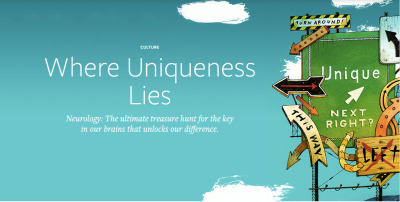
Where Uniqueness Lies

BY GARY MARCUS
ILLUSTRATION BY JOHN HENDRIX

If you dropped a dozen human toddlers on a beautiful Polynesian island with shelter and enough to eat, but no computers, no cell phones, and no metal tools, would they grow up to be like humans we recognize or like other primates? Would they invent language? Without the magic sauce of culture and technology, would humans be that different from chimpanzees?

Nobody knows. (Ethics bars the toddler test.) Since the early 1970s, scientists across the biological sciences keep stumbling on the same hint over and over again: we’re different but not nearly as different as we thought. Neuroscientists, geneticists, and anthropologists have all given the question of human uniqueness a go, seeking special brain regions, unique genes, and human-specific behaviors, and, instead, finding more evidence for common threads across species.

This year President Obama pledged $100 million to the Brain Research through Advancing Innovative Neurotechnologies (BRAIN) Initiative, and the European Commission committed one billion euros ($1.29 billion) to the Human Brain Project. The ambitious projects aim to map the circuitry and functions of the brain, and may help us better understand what makes us human. But so far science has found only the tiniest clues.

As someone who has studied language, cognitive neuroscience, and human evolution, I say that with a tinge of chagrin; my professional career has been about trying to understand the origins and development of the human mind. My colleagues and I are all still struggling to find the answers. Why has pinpointing the origins of human uniqueness proven so difficult?

In the old days, the main hypotheses were behavioral. “Humans are the only animals to use tools.” “Humans are the only animals to have culture.” “Humans are the only animals to teach their young.” But over time most of those guesses have turned out to be wrong. It’s become even more mysterious because almost everything we have found points in the opposite direction, toward what biologists call conservation—evolution’s tendency to use many of the same genes, neurotransmitters, and brain circuits, over and over again.

Consider, for example, the overall anatomy of the brain. As many people know, the human brain is divided into two hemispheres, left and right. Same for the chimpanzee. How about division into frontal, temporal, parietal, and occipital lobes? Yep, chimpanzees have that too. And so, for that matter, do horses, cats, and squirrels. The basic organization of the brain is something we share with all mammals. Could it be that which distinguishes us is the six-layer sheet that defines the wrinkly outer portion of the brain called the neocortex? Nope, chimps (and other mammals) have that too. How about Broca’s area, the part of the brain most associated with language? This, too, has a counterpart in the chimpanzee brain. Meanwhile, the organization of the human brain turns out to be far more complex than many anticipated; almost anything you might have read about brain organization a couple decades ago turns out to be radically oversimplified. Broca’s area, for instance, participates in language, just as everybody imagined, but it’s also used for muscle control, music, and perhaps even imitation. In fact, lots of other parts of the brain, like the prefrontal cortex and even the cerebellum play important roles in language. Language isn’t something that resides in a tiny, well-defined corner of the brain, but something distributed across a great deal of the brain.

To add to the challenge, brain regions don’t wear name tags (“Hello, I am Broca”), and instead their nature and boundaries must be deduced based on a host of factors such as physical landmarks (such as the hills and valleys of folded cortical tissue), the shapes of their neurons, and the ways in which they respond to different chemical stains. Even with the most advanced technologies, it’s a tough business, sort of like trying to tell whether you are in Baltimore or Philadelphia by looking out the window of a moving train. Because the two cities were built out of similar raw materials over a similar time period, many of their parts look superficially similar. All of the neocortex (the part of the brain that only mammals have) is a six-layered sheet, so different areas of the outer brain (which makes up most of the brain’s volume) wind up looking more similar than different. Even under a microscope human brain tissue looks an awful lot like primate brain tissue. We have gone from expecting (but not finding) human-specific brain regions to searching for second-order differences. We ask questions like, “Might there be a greater degree of asymmetry between the left hemisphere and right hemisphere in human beings than chimpanzees in a part of the brain known as the planum temporale?” That’s sort of like saying that New York is different from Paris because we have more water towers on the roof. It might be true, but it’s not really getting at why the two cities feel so different.

When we look at our genomes, the situation is no different. Back in the early 1970s, Mary-Claire King discovered that if you compared human and chimpanzee DNA, they were so similar that they must have been nearly identical to begin with. Now that our genomes have actually been sequenced, we know that King, who worked without the benefit of modern genomic equipment, was essentially right. Nearly every gene in the human genome has a counterpart in the chimpanzee genome, and vice versa. Even one look at the individual letters (nucleotides) reveals that our genomes are shockingly similar. Virtually every gene in our genomes—from genes for dopamine and serotonin to genes like BDNF and COMT that contribute to memory control—has a counterpart in the chimpanzee genome. And that’s true even for the gene FOXP2, that has been decisively linked to human language. Of the 715 amino acids that correspond to the part of the FOXP2 gene that codes for a protein, only two differ between human and chimpanzee versions. As of early 2013, we still don’t know which genes are vital to making us differ from chimpanzees. But we do know that genetically we are far more similar than different.

Why, if our lives are so different, is our biology so similar? The first part of the answer is obvious: human beings and chimpanzees diverged from a common ancestor only 4 to 7 million years ago. Every bit of long evolutionary history before then—150 million previous years or so as mammals, a few billion as single-celled organisms—is shared. Seven million years is fairly short by the yardstick of evolutionary change.

The second part of the answer develops from the first, and lies in the dynamics of how evolutionary change works. In principle, when an engineer builds something new, he or she has the luxury of starting from scratch, perhaps substituting a new material, like steel, for an older material, like wood, or replacing a gasoline-powered engine with an electric one—wholesale changes that can lead to radical improvements.

Evolution never has that luxury. It can’t simply take a species offline while it waits to release Humans 2.0. Instead, each new development builds on top of ancestral forms; in the immortal words of the great biologist François Jacob, evolution is like “a tinkerer who does not know exactly what he is going to produce but uses whatever he finds around him whether it be pieces of string, fragments of wood, or old cardboards; in short it works like a tinkerer who uses everything at his disposal to produce some kind of workable object.” A human brain is a primate brain, tweaked. Not something wholly new, developed from scratch to fit the needs of our particular lifestyle.

In short, humans may live very differently than chimpanzees, but the structural plans of our biology necessarily can represent only modest tinkerings to the genetic material that we inherited from our last common ancestors. Language, regardless of how it is instantiated in our brain, represents a comparatively tiny cognitive enhancement relative to the mental machinery we inherited from our last common ancestor. The same is true for the underlying biology of each of our cognitive innovations.

If it seems like scientists trying to find the basis of human uniqueness in the brain are looking for a neural needle in a haystack, it’s because they are. Whatever makes us different is built on the bedrock of a billion years of common ancestry. Humans will never abandon the quest to prove that they are special. But nor can we escape the fact that our minds are a modest tweak on an ancient plan that originated millions of years before we came onto the scene.

~ Gary Marcus is a professor of psychology at NYU. His books include Guitar Zero and Kluge: The Haphazard Evolution of The Human Mind. His essays have appeared in Wired, Discover, The Wall Street Journal, and The New York Times. He blogs on science for The New Yorker.

Wednesday, May 22, 2013

Cindy Wigglesworth - Good Human Beings and the Right Temporoparietal Junction

From Huffington Post's TED Weekends, this article by Cindy Wigglesworth (author of SQ 21: The Twenty-One Skills of Spiritual Intelligence) in response to Rebecca Saxe's TED Talk, How We Read Each Other's Minds.

Other authors also responded to this TED Talk:

Good Human Beings and the Right Temporoparietal Junction

Cindy Wigglesworth


Posted: 05/18/2013
Click here to read an original op-ed from the TED speaker who inspired this post and watch the TEDTalk below.
When we watch a short video like Rebecca Saxe's TEDTalk we may be left confused. What does this mean for us in terms of morality?

In the April 2010 Proceedings of the National Academy of Sciences, the article by Rebecca Saxe and her co-authors make the context of their research around the RTPJ more clear: "According to a basic tenet of criminal law, 'the act does not make the person guilty unless the mind is also guilty.'" We can see why it would be good for a juror to have a well-developed RTPJ. We need to see the intention of the accused.

But is a well-developed RTPJ sufficient to create a moral or exemplary human being?

Let's consider who might represent our ideal moral human being. Who are the noblest people you know of? When I ask people this question similar names occur again and again. People like Nelson Mandela, the Buddha, Jesus, the Dalai Lama, Abraham Lincoln, Aung San Suu Kyi, Gandhi, Martin Luther King, Mother Teresa and other spiritual leaders, visionary leaders and political peace activists. I then ask what do you admire about these people? Typical replies include that they are: wise, compassionate, courageous, authentic, visionary, forgiving and humble.

I suggest we hold those characteristics as the crucial context -- the "true north" -- as we examine the innovations and discoveries of neuroscience. As a society we hopefully care deeply about how we can get a little closer to that level of goodness. We can hope that science can help us chart a path in this direction, or at least point out the roadblocks.

Most of us would agree that one strong example of a "not-good" person is the psychopath. Psychopathy is "a psychological condition in which the individual shows a profound lack of empathy for the feelings of others, a willingness to engage in immoral and antisocial behavior for short-term gains, and extreme egocentricity." [1] This "profound lack of empathy" means he only cares about what he wants and feels no guilt about manipulating or using aggression to get it. These folks scare us. And they teach us something important about the path to goodness: it must include empathy.

Empathy is frequently discussed as involving at least two types:cognitive empathy and emotional (or affective) empathy. Cognitive empathy involves thinking things through to see from the other person's point of view. It is sometimes called Theory of Mind. If we predict well we can accurately guess what the other person will do, assume or feel. In the pirates with the cheese sandwiches the older children could think from the point of view of the first pirate and see why he would assume that the sandwich on top of the chest was his sandwich. This is a useful skill. It enhances moral judgment because we can see that the first pirate made a reasonable assumption and had no evil intent. But cognitive empathy is only part of being a good human being. In fact, some psychopaths have good cognitive empathy.[2] It may help them accurately predict how others will react to their manipulations.

Emotional empathy is a much more visceral experience. It includes limbic system resonance where the emotions you are feeling trigger parallel physiological and emotional reactions in me.[3] I am "feeling with" you. Emotional empathy may create the "brake" on our tendency to act from self-interest in aggressive ways. If my aggression is going to hurt you, and your pain is felt in my body, I am likely to pause and perhaps stop or lessen my aggression.[4]

I would suggest that we need both cognitive empathy (requiring a well-developed RTPJ) and emotional empathy as part of being "non-psychopaths." But does that make us good people? Not quite. Something more is needed.

What sets a truly noble person apart? What makes a Gandhi, Dalai Lama, or Mother Teresa different? There is a decision made by these people to hold themselves to a higher standard. They make a decision to live up to noble values -- to live from their highest nature. In what part of the brain does this ability reside? To my knowledge no one has fully answered this yet. I suspect we will find that the executive decision-making center of the brain, residing in the prefrontal cortex, is involved. I believe our path to nobility will call upon the emotional and logical components of the brain. There will be also a piece of right brain visioning required. I believe there will be some developmental neural "weight-lifting" and whole-brain integration skills. We will have to conceptualize what nobility looks like and then integrate our whole brain to align with that goal. We will then have to make daily choices and take actions so we can live toward that ideal. All this, if true, will mean that the RTPJ will be just one piece in our nobility-machinery.

[1] Almost a Psychopath by Ronald Schouten, MD, JD and James Silver, JD, p.18 2012 Harvard University

[2] In addition to the hyperlink you might want to look at this article by R. James R. Baird, National Institute of Mental Health

[3] For more on this I recommend A General Theory of Love by Thomas Lewis, MD, Fari Amini, MD and Richard Lannon, MD, Random House, 2000.

[4] For more on this I recommend The Science of Evil: On Empathy and the Origins of Cruelty by Simon Baron-Cohen, Basic Books, 2012


My TEDTalk, above, is about the process by which we learn to read each other. Here are five reasons that I study how human brains think about other minds.

(1) It is a hard, and awesome, problem. To me, the most breathtaking idea I've ever heard is that each thought a person ever has, every moment of experience, of insight, of reflection, of aspiration, is equivalent to a pattern of brain cells firing in space and time. How does a pattern of brain activity constitute a moral judgment? A moment of empathy for a fictional character? The idea for a sentence you're about to write? Someday, scientists will be able to imagine, simultaneously, these abstract thoughts and how each corresponds to a specific pattern of brain activity. I don't expect this understanding to arrive in my lifetime. But it's thrilling to imagine that future, and to feel that my research might be a small step on the route that gets us there.

(2) It matters to society. Some of the hardest problems we face as humans are social problems: how to get a group of people to agree on a set of goals, and a path to achieving those goals, and in some cases a set of small individual compromises or sacrifices in the interest of the long term and the greater good. Fortunately, cooperating in large groups is a signature accomplishment of the human brain: among similar species, we are remarkably good at working together and negotiating our differences. On the other hand, there is still a long way to go, and a lot we don't know. Our current techniques for persuasion and coordination depend on our intuitions about how to inspire people to act. As an analogy, our human intuitions about physics are good enough to let us catch a baseball at 350 feet, but if NASA had used intuitive physics to get to the moon, the Eagle would have missed. I hope my research will be a step along the way toward a true theory of how people respond to other people, the theory that helps us to coordinate even more powerfully to get where we're going next.

(3) It might help treat disease. Many forms of developmental disorders and brain diseases disproportionately affect people's relationships with others. For example, some children with autism spectrum disorders are extremely intelligent, and can solve logical and mathematical problems that would stump other kids, but don't want to be hugged, don't like sharing experiences, don't respond to a smile. This disconnect can be devastating, especially for the children's caregivers. Another example is fronto-temporal dementia, a progressive brain disease somewhat like Alzheimer's, except that the first symptom is emotional callousness. Patients with this disease usually aren't aware of anything wrong at first; they come to the doctor at the insistence of their (often angry and deeply hurt) spouses. I hope that my research on the biology of social interaction might some day lead to better diagnosis, and better treatments, for these diseases.

(4) It keeps me busy. The problems I work on connect to so many other disciplines. The tools I use for taking images of people's brains depend on physics. The signal I measure depends on the biology of brain cell metabolism. The inferences I make from my data depend on neuroscience. My colleagues working on similar problems are developmental psychologists studying human children, comparative psychologists studying non-human primates, and social psychologists studying how people interact. I speak to audiences of philosophers, of economists, of lawyers and judges. Connecting to all of these different disciplines keeps me on my toes. There has never, in the 14 years I have worked on this topic, been a moment when I felt that I knew enough.

(5) Luck. In my first year in graduate school, I tried five experiments. Four failed. This research came from the one that worked.

Ideas are not set in stone. When exposed to thoughtful people, they morph and adapt into their most potent form. TEDWeekends will highlight some of today's most intriguing ideas and allow them to develop in real time through your voice! Tweet #TEDWeekends to share your perspective or emailtedweekends@huffingtonpost.com to learn about future weekend's ideas to contribute as a writer.

Monday, May 13, 2013

Robert Sapolsky - Metaphors Are Us


Robert Sapolsky is a professor of biology and neurology at Stanford University. He is the author of a number of books, including Why Zebras Don’t Get Ulcers (2004), Monkeyluv: And Other Essays on Our Lives as Animals (2006), and A Primate's Memoir: A Neuroscientist's Unconventional Life Among the Baboons (2002). This article on metaphor as a foundation for much of human culture appears in Nautilus, a new arts and sciences magazine.

Metaphors Are Us

Neurology: War, murder, music, art. We would have none without metaphor


BY ROBERT SAPOLSKY
ILLUSTRATION BY JOHN HENDRIX

The other day I fixed something—a rarity for me. The flotation device in the toilet water tank was rubbing against the side, getting stuck halfway up so that the tank didn’t fill completely. I own a hammer and know how to operate it. But I couldn’t fit it into the tank to whack the device back into place. Ditto for owning and using a wrench. It wouldn’t fit either. But fortunately I also own a plunger and I used its handle to push the floating thing back the other way, using the side of the tank as a fulcrum. It worked, although the device got bent so that the top of the tank didn’t quite fit. That overwhelmed me, so I called it a good day’s work.

I was proud of myself. “There,” I thought smugly. “It’s not just chimps who can use tools.”

Humans used to be unique in lots of ways. We were the only species who made tools, murdered each other, passed on culture. And each of those supposed defining features has now been demonstrated in other species. We’re not so special after all. But there are still ways that humans appear to stand alone. One of those is hugely important: the human capacity to think symbolically. Metaphors, similes, parables, figures of speech—they exert enormous power over us. We kill for symbols, die for them. Yet symbols generate one of the most magnificent human inventions: art.

In recent years scientists from leading universities, including UCLA, University College London, and Yale, have made remarkable insights into the neurobiology of symbols. A major finding from their work is that the brain is not very good at distinguishing between the metaphorical and literal. In fact, as scientists have shown us, symbols and metaphors, and the morality they engender, are the product of clunky processes in our brains.

Symbols serve as a simplifying stand-in for something complex. (A rectangle of cloth with stars and stripes represents all of American history and values.) And this is very useful. To see why, start by considering basic language—communication without a lot of symbolic content. Suppose you are being menaced by something terrifying and so scream your head off. Someone listening can’t tell if the blood-curdling “Aiiiii!” means an approaching comet, right-wing death squad, or Komodo dragon. It just means that things are majorly not right, a generic scream where the message is the meaning. This present-tense emotionality is what communication by animals is mostly about.

Symbolic language brought huge evolutionary advantages. This can be seen even in the baby steps of symbolism of other species. When vervet monkeys, for instance, spot a predator, they don’t just generically scream. They use distinct vocalizations, different “proto-words,” where one means, “Aiiiiii!, predator on the ground, run up the tree,” and the other means, “Aiiiiii!, predator in the air, run down the tree.” It’s mighty useful to have evolved the cognitive capacity to make that distinction. Who would want to guess wrong and dash up to the top of a tree when the problem is a raptor swooping down?

Language pries apart a message from its meaning, and as our hominid ancestors kept getting better at this separation, great individual and social advantages accrued. We became capable of representing emotions in the past and possible emotions in the future, as well as things that have nothing to do with emotion. We evolved a uniquely dramatic means of separating message from meaning and intent: lying. And we invented aesthetic symbolism; after all, those 30,000-year-old paintings of horses in Chauvet cave are not really horses.

Our early use of symbols helped forge powerful bonds and rules of cooperation, as human societies grew increasingly complex and competitive. A recent study by Ara Norenzayan of the University of British Columbia and Azim Shariff of the University of Oregon revealed that, across 186 societies, the larger the typical social group, the more likely it was the culture created a god who monitored and judged human morality—perhaps the ultimate symbol of rule enforcement.

How did our brains evolve to mediate this complexity? In an awkward way. As has been said, evolution is not an inventor, it’s a tinkerer, making do with the pieces at hand. While a squid can’t swim as fast as many fish, it swims pretty fast for something that evolved from mollusks. Similarly, while the human brain turns out to handle symbols and metaphors in an inelegant way, it still does a pretty good job for something that evolved from brains that only processed the literal. The best way to shine a light on this unwieldy process is through metaphors for two feelings critical to survival: pain and disgust.

Consider the following: you stub your toe. Pain receptors there send messages to the spine and on up to the brain, where various regions kick into action. Some of these areas tell you about location, intensity, and quality. Is it your left toe or right ear that hurts? Was your toe stubbed or crushed by a tractor-trailer? This is the meat-and-potatoes of pain processing, found in every mammal.

But there are fancier, more recently evolved parts of the brain in the frontal cortex that assess the meaning of the pain. Maybe it’s bad news: your stubbed toe signals the start of some unlikely disease. Or maybe it’s good news: you’re going to get your firewalker diploma because the hot coals made your toes throb. Much of this assessing occurs in a frontal cortical region called the anterior cingulate. This structure is heavily involved in “error detection,” noting discrepancies between what is anticipated and what occurs. And pain from out of nowhere surely represents a discrepancy between the pain-free setting that you anticipate versus the painful reality.

Now let’s go a little deeper, based on work by Naomi Eisenberger at UCLA. While lying in a brain scanner, you play a game of virtual catch, where you and two people in another room toss a cyberball around on a computer screen. (In reality, there aren’t two other people, only a computer program.) In the control condition, you’re informed mid-play that there’s a computer glitch and you’re temporarily off-line. You watch the virtual ball get tossed between those two people. Now in the experimental setting, you’re playing with the other two and suddenly they start ignoring you and only toss the ball between them. Hey, how come they don’t want to play with me anymore? Junior high all over again. And the brain scanner shows that the neurons in your anterior cingulate activate.

In other words, rejection hurts. “Well, yeah,” you might say. “But that’s not like stubbing your toe.” It is to your anterior cingulate. Both abstract social and literal pain impact the same cingulate neurons.

We take things a step further with work by Tania Singer and Chris Frith at University College London. While in a brain scanner, you’re administered a mild shock, delivered through electrodes on your fingers. All the usual brain regions activate, including the anterior cingulate. Now you watch your beloved get shocked in the same way. The brain regions that ask, “Is it my finger or toe that hurts?” remain silent. It’s not their problem. But your anterior cingulate activates, and as far as it’s concerned, “feeling someone’s pain” isn’t just a figure of speech. You seem to feel the pain too. As evolution continued to tinker, it did something remarkable with humans. It duct-taped (metaphorically, of course) the anterior cingulate’s role in giving context to pain into a profound capacity for empathy.

We’re not the only empathic species. Chimps show empathy when, for example, they become more likely to groom someone who has been unfairly thrashed by an aggressive jerk of a chimp. And we’re not the only species with an anterior cingulate. But studies show the human anterior cingulate is more complex than in other species, with more connections to abstract, associational parts of the cortex, regions that can call your attention to the pains of the world, rather than the pain in your big toe.

And we feel someone else’s pain like no other species. We extend it over distance to help a refugee child on another continent. We extend it over time, feeling the terror of what are now mere human remains at Pompeii. We feel it embodied in words, as we contemplate George’s sadness that Lennie is never going to get his rabbits. (That part of Of Mice and Men never failed to leave me a sopping, tearful mess when I’d reread it obsessively as a kid.) We even feel empathic pain prompted by symbols encompassed in pixels. “Oh no, the poor Na’vi!” we cry, when Home Tree is destroyed in Avatar. Because the anterior cingulate has trouble remembering “it’s only a figure of speech,” it functions as if your heart is literally being torn out.


Let’s consider another domain where our brains’ shaky management of symbols adds tremendous power to a unique human quality: morality.

You’re in a brain scanner and because of the scientist’s weirdly persuasive request, you bite into some rotten food. Something rancid and fetid and skanky. This activates another part of the frontal cortex, the insula, which, among other functions, processes gustatory and olfactory disgust. It sends neuronal signals to face muscles that reflexively spit out that bite, and to your stomach muscles that make you puke. All mammals have an insula that processes gustatory disgust. After all, no animal wants to consume poison.

But we are the only animal where that process serves something more abstract. Think about eating something disgusting. Think about a mouthful of centipedes, chewing and swallowing them as they struggle, wiping off the little legs that you’ve drooled onto your lips. Whammo goes the insula, leaping into action, sending out its usual messages of disgust. Now think about something awful you once did, something deeply shameful. The insula activates. It has been co-opted into processing that human invention: moral disgust.

Is it a surprise that the human insula is involved in processing moral disgust along with gustatory disgust? Not when human behaviors can make us feel sick to our stomachs, can leave bad tastes in our mouths, can stink. When I heard about the massacre at Newtown, “feeling sick to my stomach” wasn’t just some symbolic figure-of-speech way of saying that I felt distressed. I felt nauseous. The insula not only prompts the stomach to purge itself of toxic food; it prompts our stomach to purge the reality of that nightmarish event. The distance between the symbolic message and the meaning shrinks.

As shown by Chen-Bo Zhong of the University of Toronto and Katie Liljenquist of Brigham Young University, if you’re forced to ruminate on a moral transgression of yours, you’re more likely to clean your hands afterward. And the scientists showed something even more provocative. They ask you to ruminate on your moral failings; afterward, you’re put in a position where you can respond to someone’s request for help. Wallow in your moral turpitude and you’re more likely to help. Unless you had a chance to wash post-wallowing. Then that urge to compensate for your transgression is gone; you’ve washed away your sins and gotten that damn spot out. Pontius Pilate and Lady Macbeth could lecture at scientific conferences about this one.

Remarkably, the way our brains use symbols to discern disgust and morality also contributes to political ideology. Work by scientists such as Kevin Smith of the University of Nebraska reveals that on the average conservatives have a lower threshold for visceral disgust than do liberals. Look at pictures of excrement or open sores undulating with maggots, and if your insula goes atypically berserk, chances are that you’re a conservative—but only about social issues, say, gay marriage, if you’re heterosexual. And if your insula just takes those maggots in stride, chances are you’re a liberal. In a study by Yoel Inbar of Tilburg University, David Pizarro of Cornell and Paul Bloom of Yale, participants, placed in a room with a wastebasket marinated in a stink spray (note to self: never do research in that lab) “showed less warmth toward gay men relative to heterosexual men.” In a control room, without the stink, participants evaluated gay and heterosexual men equally. In a nutty, smart, real world example, Tea Party candidate Carl Paladino mailed out campaign flyers impregnated with the smell of garbage during his GOP primary campaign for New York governor in 2010. His campaign trumpeted, “Something really stinks in Albany.” Paladino won his primary. (He stunk, however, in the general election, losing by a large margin to Andrew Cuomo.)

Our wobbly, symbol-dependent brains are molded by personal ideology and culture, shaping our perceptions, emotions, and convictions. We use symbols to demonize our enemies and wage war. The Hutu of Rwanda portrayed the enemy Tutsi as cockroaches. In Nazi propaganda posters, Jews were rats who carried dangerous microbes. Many cultures inculcate their members into acquiring symbols that repel, doing so by strengthening specific neural pathways from the cortex to the insula, pathways that you’d never find in another species. Depending on who you are, those pathways could be activated by the sight of a swastika or of two men kissing. Or perhaps by the thoughts of an abortion, or of a 10-year-old Yemeni girl forced to marry an old man. Our stomachs lurch, and we feel the visceral certainty of what is wrong. And we belong.

The same brain apparatus is behind symbols that move us to our most empathic, inclusive, and embracing. It is often art that does this most powerfully. We see the artistry of a skillful photojournalist—a photo of a child whose home was devastated by a natural disaster— and we reach for our wallets. If it is 1937, we don’t look at Picasso’s “Guernica” and see a menagerie of anatomically deformed mammals. Instead we see the devastation and feel the pain of a defenseless Basque village immolated during the Spanish Civil War. We feel moved to act against the Fascists and Nazis who conducted the aerial attack. Today we can feel moved to care about the fate of animals when we look at the simple artistic symbol, like a panda logo, of an environmental group.

Our metaphor-making brains are unique in the animal kingdom. But clearly we are dealing with a double-edged sword. We can dull the edge that demonizes, and sharpen the one that urges us to good acts.


~ Robert Sapolsky is a professor of biology and neurology at Stanford University. He is the author of a number of books, including Why Zebras Don’t Get Ulcers, Monkeyluv, and A Primate’s Memoir.

Friday, March 29, 2013

Rick Hanson - The Neurology of Awakening (with Rick Mendius)


Here is the 4-part series from neuropsychologist Rick Hanson and Rick Mendius - delivered at Spirit Rock Meditation Center. Hanson and Mendius work together at WiseBrain.org.
Richard Mendius, M.D., is a board certified neurologist in private practice in Marin County, California. He graduated from Stanford University, then attended medical school at the University of California, Los Angeles, where he received his M.D. in 1977. He trained in neurology at the Wadsworth VA Medical Center in Los Angeles under the direction of Dr. W. W. Tourtellotte, then did fellowship training in clinical electroencephalography and clinical epilepsy under Dr. Jerome Engel at UCLA Medical Center. He also did simultaneous training in neurobehavior under Drs. Frank Benson and Jeff Cummings. He has held faculty positions at UCLA School of Medicine, Oregon Health & Science University, and Stanford University School of Medicine. During his teaching career, he received the OHSU Silver Hammer award and the Stanford University Lysia Forno award for teaching excellence. 
Dr. Mendius has a subspecialty in the neurobiology and practice of meditation. His meditation practice began in Los Angeles, with training from Shinzen Young in the 1980s. Since moving to Marin County, he has made Spirit Rock his home base and has taught classes and participated in retreats with Jack Kornfield, among others.
* * *
Rick Hanson, PhD began meditating in 1974 and has practiced in several traditions. A neuropsychologist, writer, and teacher, he co-founded the Wellspring Institute for Neuroscience and Contemplative Wisdom (see www.WiseBrain.org) and edits the Wise Brain Bulletin. First author of Mother Nurture (Penguin, 2002), he has authored the books Buddha's Brain and Just One Thing. He started sitting at Spirit Rock in 1993 and served a nine-year term on its Board. A graduate of the Community Dharma Leader training program, he leads a weekly meditation group in San Rafael.
On with the podcast . . . .

Rick Hanson - The Neurology of Awakening (with Rick Mendius): Part 1, Overview & Practice 

50:40 | 2013-03-16

Download Listen Order

The latest brain research has begun to confirm the central insights of the Buddha and other great teachers. And it’s suggesting ways you can help your brain to enter deeper states of mindfulness, quiet, and concentration. Suffering, joy, and freedom all depend on what happens within your nervous system. Skillful practice thus means being skillful with your own brain. This experiential workshop will offer user-friendly information with lots of practical methods. No background in neuroscience or mindfulness is needed, though teaching are also appropriate for health care professionals.

We’ll cover: 
  • Implications from brain research for steadying the mind... quieting it... and bringing it to singleness 
  • The brain during the jhanas or other states of deep concentration 
  • How to help lay the neurological foundation for liberating insight


* * *

Saturday, March 23, 2013

Alva Noë - What's Behind The Invention Of 'Neuroscience Care'?

Over at NPR's 13.7 Cosmos and Culture blog, philosopher Alva Noë takes on some of the current trends in neuroscience and mental health care, known as "neuroscience care," concluding:
There's no such thing as "neuroscience care." Or rather, there wasn't until very recently. 
There is neurology, which is a branch of medicine, a healing art, grounded, like all medicine, on science.
And there's neuroscience, which has about as much to do with health care as physics does with roof repair. 
 * * *
It's all hype. You are not your brain. We don't understand memory or perception in the brain.
It's a good article - here it is in its entirety.

What's Behind The Invention Of 'Neuroscience Care'?


by ALVA NOË
March 22, 2013

A real human brain on display at an exhibition in Bristol, England.
Matt Cardy/Getty Images

Neurology is the branch of medicine concerned with the health of the brain and nervous system. If you've spent time in the office of a neurologist, you'll have noticed that there is something quaintly old-world about the practice.

Neurologists ask a lot of questions; they listen; then they hook you up to pre-computer age devices that measure the speed of nerve conductance; neurologists do things like attach electrodes and stick needles in your arm. It's all positively 19th-century.

It's no surprise at all, I think, that our most famous neurologist, Oliver Sacks, is best known as a story teller.

Which is not to say that he is not also a healer. Neurology, after all, is a branch of medicine.

If you listen to the radio, you're likely to have caught wind of something fresh and new in the health care market place: "neuroscience care." If you haven't noticed already, pay attention: you'll hear about new centers for "neuroscience care" that are setting up clinical shop around the country and reaching out to you for custom.

Why?

We're worried about our brains, of course. We are terrified of growing old and facing the degeneration of our faculties. Alzheimer's.

But buyer beware!

There's no such thing as "neuroscience care." Or rather, there wasn't until very recently.

There is neurology, which is a branch of medicine, a healing art, grounded, like all medicine, on science.

And there's neuroscience, which has about as much to do with health care as physics does with roof repair.

Neuroscience is a good thing. Don't get me wrong. But it is a theoretical discipline through and through. It comes in roughly two varieties. Some neuroscientists are biologists whose focus is on the nervous system, its physiology and development, in humans and other species. Others — the one's studying memory and perception, for example — are really cognitive psychologists; they combine traditional methods of psychology (forced choice tests, reaction times, etc.) with brain imaging studies (using fMRI or PET).

At best, what has been rebranded as "neuroscience care" is good-old-fashioned neurology. It's been repackaged for the 21st century. The tangled wires with clips and electrodes are hidden in the back room. Sleek images of multi-million dollar brain scanners decorate the brochure. The doctor's office is sunny.

At its worse, neuroscience care trades cruelly on the way neuroscience has been oversold in the contemporary culture. We want to believe that we are just brains in body transport systems and that the science of the brain will unlock our secrets. I am sure you've heard lots about how brain science holds the key to understanding perception, memory, love, preference, even consciousness itself.

It's all hype. You are not your brain. We don't understand memory or perception in the brain.

And we are still a long way of from finding a cure for Alzheimer's.

I'm all for sunny offices and for a neurology that is informed by neuroscience. But the rebranding is the stuff of snake-oil salesmen.


~ You can keep up with more of what Alva Noë is thinking on Facebook and on Twitter:@alvanoe