Showing posts with label transcendence. Show all posts

Tuesday, October 09, 2012

Donna Ladkin - Leadership as Embodied Practice, Incorporating Maurice Merleau-Ponty


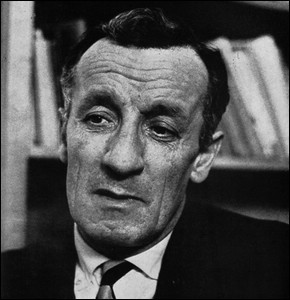
In the last issue of the Integral Leadership Review, Donna Ladkin published an article on leadership as embodied practice, and she incorporates Maurice Merleau-Ponty, one of the more significant and under-acknowledged philosophers of the 20th Century.

It's an excellent article - and I hope you will go read the whole thing. I am posting here only the sections in which she introduces Merleau-Ponty, as I think it is a good introduction to his ideas. If you want to know more, check out the entry at the Stanford Encyclopedia of Philosophy or at the Internet Encyclopedia of Philosophy.

Perception, Reversibility, “Flesh”: Merleau-Ponty’s Phenomenology and Leadership as Embodied Practice
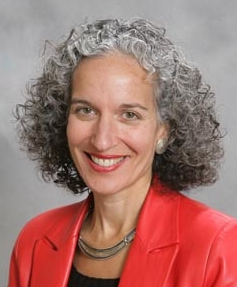
Donna Ladkin

Enter Maurice Merleau-Ponty

The French phenomenologist Maurice Merleau-Ponty (1908-1961) is probably best known for his major early work, The Phenomenology of Perception (1945). In this text, Merleau-Ponty asserts the “primacy of perception”, arguing that all of the “higher” functions of consciousness, such as reflection and volition, are grounded in “pre-reflective, bodily existence” (Audi 1999: 559). His ideas were developed further in The Visible and the Invisible, an unfinished manuscript at the time of his sudden death in 1961[i]. Together these texts build a philosophy of perception and embodiment that have been unsurpassed in Western philosophy (Leder 1990).

Merleau-Ponty and Embodiment

Merleau-Ponty’s conceptualisation of embodiment is particularly radical by arguing that human bodies are both “immanent” and “transcendent”. Both of these terms have been extensively theorised. Here they are described in the following ways. “Immanence” refers to the material, corporeal flesh and bone aspect of the human body. It is through the immanent body that we experience sensation and are physically present in the world. “Transcendence” refers to those aspects of us that are not material: our intellectual, imaginative and cognitive processes[ii].

Within Western philosophy, certainly since Descartes, the transcendent aspects of being human have been privileged over the immanent aspects. Descartes’ famous pronouncement “cogito ergo sum” (I know myself to be a thinking being) (1988: xxii) has been the touchstone for this emphasis on the thinking, transcendent aspects of being. Merleau-Ponty’s philosophy takes a radically different starting point for his understanding of being human – that without the immanent body, our transcendent consciousness would not exist. It is only because we are embodied that we are able to engage in constant interrogation of the world. Dillon (1997) explains this, writing:
I move in response to the demand of things to be seen as they are, as they need to be seen to respond to the reflexive questions that arise between us. The active, constituting, centrifugal role of the body, its transcendental operation is inconceivable apart from its receptive, responsive existence as flesh amidst the flesh of the world. The body does not synthesise the world ex nihilo; the body seeks understanding from the bodies with which it interacts. (146).
This quote highlights the pre-eminent role of the body within Merleau-Ponty’s philosophy. He suggests that we do not just interrogate the world around us through questioning it intellectually, but that our bodies prompt questions as well as responses to the world around us. We are “nested” in contexts that include relationships with people as well as with the world. Drawing links between this insight and the phenomenon of leadership, it becomes clear that as embodied beings, leaders and followers will first and foremost interact with one another as bodies, rather than as “creators of visions”, “authors of mission statements”, or even “hierarchically-determined sources of authority”.

It is important here to stress that the notion of embodiment being used here goes beyond that connoted by the term “body language”. Although body language is an important and often noticed aspect of embodiment, the way one embodies her or himself goes deeper than surface-level body gestures. This includes the way that one’s body holds patterns of tension, one’s energetic quality, the way that one uses his or her voice, patterns and styles of movement, and general quality of bodily presence. All of these aspects are apprehended at a visceral level by other sensing human bodies that respond with their own embodied reactions. Our hearts race with excitement in response to the energetic way in which a message is conveyed before we interpret that embodied response as ‘”feeling inspired”. When our bodies give off reactions congruent with enthusiasm and interest, those who lead us know at a bodily level that they are on the right track and have won our “buy-in”. Thus the space between leaders and followers becomes potent for its ability to inform us about the quality of our interpersonal connections. Merleau-Ponty also notes that within this space and through others’ embodied responses to us, we are also informed about who we, ourselves, are. This idea is elaborated below.

Reversibility and Human Bodies as “Percipient Perceptibles”

A second radical way that Merleau-Ponty conceptualises perception is as a two-way, dynamic and interactive process. In Merleau-Ponty’s rendering, it is impossible for humans to assume the “God perspective” in which they objectively observe the world in such a way that they are not affected by the world observing them back. Human beings cannot perceive without simultaneously being perceived[iii]. Just as I observe another human being, I am aware that he or she can perceive me. The awareness of another’s perception will subsequently alter my awareness of myself. This constant interplay of perception and its implicate sense of being perceived creates the qualitative experience of being in relation to another.

Merleau-Ponty coins the term “percipient perceptibles” to describe this essential way of being in the world and writes of it in this way:
As soon as we see other seers, we no longer have before us only the look without a pupil, the plate glass of things with that feeble reflection, that phantom of ourselves they evoke by designating a place among themselves whence we see them: henceforth, through others’ eyes we are for ourselves fully visible (1968: 143).
Merleau-Ponty seems to be suggesting here that it is only through another’s perception that we come to know ourselves. If I bang my hand on the table and raise my voice and others recoil and retreat from me, this tells me that I have been too forceful in this situation (whereas in other situations the same gestures might generate different responses). At close inspection this interactional dynamic is apparent in the relationship between leaders and followers. Leaders only come to know themselves as leaders by acting in relation to perceiving followers; followers too, rely on their leaders to create and contain a sense of identity. In this way, who leaders and followers are to one another is in a constant state of co-creation and flux, determined by perceptual interchanges in the space operating between them.

Merleau-Ponty reminds us that these interpersonal perceptions are based primarily in the experience of our sensate, physical bodies. I am only able to perceive a person as a leader because I have a physical body that stands in material relation to this leader, who in turn stands in physical material reality in relation to me. When I regard that leader from a different physical perspective, I can become aware of different aspects of him or her, and likewise through his or her altered gaze I can experience a change in my own sense of who I am. We are perhaps more accustomed to the way in which seeing another from a different imaginary perspective can change our view, but the important thing to note here is even such imaginal shifts occur because of our embodied ability to physically change where we are in relation to another.

There are a number of interesting implications of this notion of reversibility for leaders and followers. For instance, it is through the perceptions they have of one another, which are generated firstly from their own physical location in relation to each other, that leaders and followers make judgements about one another. For example, we know this from the media’s interest in the way that political and business leaders appear. The huge amount of media coverage and analysis of the photograph released of Barack Obama and his senior team during the operation through which Bin Laden was killed points to the need to arrive at the “truth” of what was going on through an assessment of those individuals’ body postures and tensions, rather than just relying on press reports.

Similarly, new leaders of organisations are often evaluated according to the physical way in which they represent themselves. A recently appointed CEO of a firm for which I consult is spoken about in terms of his lack of attention to his physical appearance. A surprising amount of talk among his senior team focuses on his ill-fitting suits and scuffed shoes. One of his direct reports confided in me, “He would do himself a world of good around the place if he bought himself an expensive suit and got a decent haircut”. Such a comment could be discounted as indicative of society’s over-concerns with appearances and fashion. Interpreted through the lens of Merleau-Ponty’s philosophy however, the senior team of this firm is reacting to what their new CEO’s appearance says about them, who they see themselves to be when they find themselves being led by someone who comports himself as the new CEO does. The notion of “reversibility” alerts us to the important role physical appearance plays in creating the perceptual dynamic between leaders and followers. Merleau-Ponty’s philosophy goes even further in conceptualising this dynamic through his notion of “flesh”, introduced next.

Merleau-Ponty’s Notion of “Flesh”

The notion of “flesh” takes reversibility one step further by suggesting there is visceral substance to intersubjective embodied perception. Not only does flesh encompass the space between leaders and followers, it also includes the “surrounding space” in which these relations are enacted. Perhaps a way of understanding the notion of “flesh” is that it is analogous to an “energetic field” that is both constituted by, and exists between relating entities.  Not actually “material” itself, it is experienced as a quality of relational engagement, a “feeling” which can transcend actual geographical distance[iv].

Merleau-Ponty’s notion of “flesh” alerts us to the visceral, invisible but substantive nature of the connection between leaders and followers and the context in which their relations are enacted. It is the energetic “stuff” that holds and carries the quality of leadership relations. For instance, from a Leader-Member Exchange (LMX) perspective, it could be that which distinguishes relationships that create in-group members from those that form out-group members. What the notion of “flesh” highlights that LMX theory does not, is that these relationships are first and foremost based on embodied perceptions.

Attention to the “quality of the flesh of leadership” might add a new way for leaders to think about those relationships. What might a leader do to “fatten” the flesh between him or herself and their followers? A good example of a means by which such relational “flesh” is created and maintained is exemplified by the way in which Obama ran his race for the US presidency in 2008, particularly in terms of the way that he used the Internet. Each morning when I turned my computer on to check my email, there would be a new message from the Senator, his wife, or his running mate, telling his supporters what he was doing and soliciting our ideas and input. Although conducted via email, the way in which he presented himself on the Internet, the visibility he gave himself by appearing on evening talk shows or even the Oprah Winfrey Show, made him available and thickened the “flesh” between himself and his supporters.

These three ideas: the centrality of embodied perception as the ground of interpersonal relations, the way these perceptions create identities through the notion of “reversibility”, and the idea of “flesh” as the “stuff” of materiality, as well as the conduit through which it is perceived, offer new ways of conceptualising the “in-between spaces” at the heart of leader-follower relations. In the section below, an example is introduced to explore their potential for illuminating dimensions of leader-follower relations that are overlooked by cognitive or linguistic approaches.

Friday, September 28, 2012

The Transcendence of Time in Shamanic Practice - Michael Harner


Michael Harner, the founder of the Foundation for Shamanic Studies, gave this lecture at the Science and Nonduality Conference, 2011.


Over tens of thousands of years, our ancient ancestors all over the world discovered how to maximize human abilities of mind and spirit for healing and problem-solving. The remarkable system of methods they developed is today known as shamanism. Shamans are especially distinguished by the use of journeys to hidden worlds otherwise mainly known through myth, dream, and near-death experiences. A core feature of shamanism is that the Universe is divisible into three worlds: the Upper, Middle, and Lower. The Middle World, in which we live, has both its ordinary and non-ordinary (or non-spiritual and spiritual) aspects, and belongs only to this immediate moment in time. The Upper and Lower Worlds, in contrast, are purely spiritual and are found only in nonordinary reality, where they exist outside of time. The trained shaman can make "out of body" journeys to these worlds, moving back and forth with discipline and purpose in order to help and heal others. In these journeys, the shaman transcends time, going back to look at the past or traveling into the future to seek assistance on behalf of others from compassionate beings found there. In these worlds, there is no separation between the shaman and everything else. He or she knows, as ancient Siberian shamans knew that, "Everything that is, is alive." The Universe is experienced as a unified whole, and the shaman partakes of the love and the ecstasy of this transcendent reality.


Sunday, August 12, 2012

Ellis Sandoz - What is a Mystic Philosopher and Why does it Matter? Preliminary Reflections


This paper was delivered by Ellis Sandoz at the Eric Voegelin Society, 27th Annual International Meeting in Seattle, Washington (September 2, 2011). Sandoz is the Hermann Moyse Jr. Distinguished Professor of Political Science and is Director of the Eric Voegelin Institute for American Renaissance Studies at Louisiana State University.

Sandoz offers this definition of the mystic philosopher of his title:
A mystic philosopher is one who takes the tension toward the transcendent divine ground of being as the cardinal attribute of human reality per se and explores the whole hierarchy of being from this decisive perspective. 


Here is a little about Eric Voegelin, since his theory and philosophy play a central role in this paper (from Wikipedia):
Voegelin worked throughout his life to account for the endemic political violence of the twentieth century in an effort variously referred to as a philosophy of politics, history, or consciousness.

Voegelin published scores of books, essays, and reviews in his lifetime. An early work was Die politischen Religionen (1938), (The Political Religions), on totalitarian ideologies and their structural similarities to religion. His magnum opus is the multi-volume (English-language) Order and History, which began publication in 1956 and remained incomplete at the time of his death 29 years later. His 1951 Charles Walgreen lectures, published as The New Science of Politics, is generally seen as a prolegomenon to this, and remains his best known work. He left many manuscripts unpublished, including a history of political ideas that has since been published in eight volumes.

Order and History was originally conceived as a six-volume examination of the history of order occasioned by Voegelin's personal experience of the disorder of his time. The first three volumes, Israel and Revelation, The World of the Polis, and Plato and Aristotle, appeared in rapid succession in 1956 and 1957 and focused on the evocations of order in the ancient Near East and Greece.

Voegelin then encountered difficulties that slowed the publication down. This, combined with his university administrative duties and work related to the new institute, meant that seventeen years separated the fourth from the third volume. His new concerns were indicated in the 1966 German collection Anamnesis: Zur Theorie der Geschichte und Politik, and the fourth volume, The Ecumenic Age, appeared in 1974. It broke with the chronological pattern of the previous volumes by investigating symbolizations of order ranging in time from the Sumerian King List to Hegel. Continuing work on the final volume, In Search of Order, occupied Voegelin's final days and it was published posthumously in 1987.

One of Voegelin's main points in his later work is that a sense of order is conveyed by the experience of transcendence. This transcendence can never be fully defined nor described, though it may be conveyed in symbols. A particular sense of transcendent order serves as a basis for a particular political order. It is in this way that a philosophy of politics becomes a philosophy of consciousness. Insights may become fossilised as dogma. The main aim of the political philosopher is to remain open to the truth of order, and convey this to others.

Voegelin is more interested in the ontological issues that arise from these experiences than the epistemological questions of how we know that a vision of order is true or not. For Voegelin, the essence of truth is trust. All philosophy begins with experience of the divine. Since God is experienced as good, one can be confident that reality is knowable. As Descartes would say, God is not a deceiver.

Voegelin's work does not fit in any standard classifications, although some of his readers have found similarities in it to contemporaneous works by, for example, Ernst Cassirer, Ludwig Wittgenstein, Martin Heidegger, and Hans-Georg Gadamer. He has a sometimes unapproachable style and a heavy reliance upon extensive background knowledge. Voegelin often invents terms or uses old ones in new ways. However, there are patterns in his work with which the reader can quickly become familiar.

Among indications of growing engagement with Voegelin's work are the 305 page international bibliography published in 2000 by Munich's Wilhelm Fink Verlag; the presence of dedicated research centers at universities in the United States, Germany, Italy, and the United Kingdom; the appearance of recent translations in languages ranging from Portuguese to Japanese; and the publishing of the nearly complete 34 volume collection of his primary works by the University of Missouri Press and various primary and secondary works offered by the Eric-Voegelin-Archiv of Ludwig-Maximilians-Universität.

Having read a couple of Voegelin's books (Order and History, Vol. 3: Plato and Aristotle and From Enlightenment to Revolution), I would suggest that he is one of the under-appreciated (if at all even acknowledged) philosophers in the canon of integral theory.

This is an interesting paper by the man who has edited the Collected Works of Voegelin.

Full Citation:
Sandoz, E. (2011). What is a Mystic Philosopher and Why does it Matter? Preliminary Reflections. APSA 2011 Annual Meeting Paper. Available at SSRN: http://ssrn.com/abstract=1903028


Abstract:
The question posed by my title (What is a Mystic Philosopher and Why Does it Matter?) can be answered briefly: A mystic philosopher is one who takes the tension toward the transcendent divine ground of being as the cardinal attribute of human reality per se and explores the whole hierarchy of being from this decisive perspective.

Introduction
The question posed by my title (What is a Mystic Philosopher and Why Does it Matter?) can be answered briefly: A mystic philosopher is one who takes the tension toward the transcendent divine ground of being as the cardinal attribute of human reality per se and explores the whole hierarchy of being from this decisive perspective. Thus, all philosophy worthy of the name is mystic philosophy. It has been so from the pre-Socratics to Plato to Voegelin himself, by his account, as the sine qua non of philosophizing, past, present, and future. It matters because more than a mere definition is at take. It matters because the experiential core of noetic and pneumatic reality insofar as glimpsed in consciousness and regarded as basic to human existence is available only through individual persons‟ divine-human mystical encounters– which happen as events in a variety of modalities evidenced from prehistory to the contemporary.

If it be suspected that this implies that the history of philosophy may be in largest part the history of its derailment the point is conceded, as Voegelin himself tells us (1). To inventory and critique the assorted ways in which the philosophic impulse has been diverted or has otherwise gone astray is a task for another day–a task, however, already substantially addressed in Voegelin's own life-long quest for truth in resistance to untruth under such familiar rubrics as sophistry, gnosticism, scholasticism, Enlightenment, phenomenalism, ideology, and positivism among myriad other deformations. Enough here if I can bring a bit more clearly to light the meaning and implications of mystic philosophy and its importance for a non-reductionist exploration of metaxic reality, one grounded in common sense and participatory (or apperceptive) empiricism– i.e., one which invokes in principle the Socratic “Look and see if this is not the case.”

This then gets us to more familiar ground: Mystic philosophy is what Plato‟s Socrates was about, as the messenger of the God. Sundry Spinozaists and latter day Averroists among us will be unpersuaded, since for them and their epigones theology (a neologism and term of art in Plato, Republic 379a) and philosophy are taken to be radically different enterprises. Dogmatic delusion everywhere dies a hard death, and you can‟t win them all. However, to argue that the history of philosophy is largely the history of its derailment admittedly puts Voegelin somewhat in the company of Johannes Brahms when he departed a social gathering, insouciantly turning at the door to say: “If there‟s anyone here I haven't offended I apologize.”

What is at stake here, however, is more than social amenities. When Voegelin told an old friend from Vienna days not to be too surprised to learn that he was a mystic as well as a philosopher (2), he did so after a high stakes battle to recover something of the truth of reality–one he had pursued for decades so as to find his way out of the lethal quandaries of radical modernity and convincingly critique National Socialism. The effort produced three books while he was a professor in Vienna, cost him his job, and very nearly his life. Still, as the battle in various less grim forums continued thereafter, humor intruded from time to time. So with a genial intramural debate while at LSU in the 1940s with the head of the philosophy department (a great admirer of Bertrand Russell) that at one point found Voegelin retorting: Mr. Carmichael you are a philosophy professor. I am a philosopher.

Perhaps the fullest direct clarification of the pertinent issues Voegelin gave in a 1965 talk to the German Political Science Association plenary session, subsequently published as “What is Political Reality?” (3) The drift of that presentation is to explain why political science cannot rightly be assimilated to the natural science model most famously exemplified by Newton's Principia Mathematica but has its own unique paradigm as a philosophical science which Voegelin sketches on the occasion. In effect a minority report to political scholars (rather like our own colleagues here in Seattle still today) eager to be as “scientific” as possible, the tenor is combative as well as diagnostic and therapeutic.

Read the whole article by downloading the PDF.


Notes from the text above:

1 Cf. Eric Voegelin, Order and History, 5 vols. (Baton Rouge: Louisiana State University Press, 1956-1987), 3:277.

2 Saint “Thomas [Aquinas] is a mystic, for he knows that behind the God of dogmatic theology there is the tetragrammatic abyss that lies even behind the analogia entis. But in that sense also Plato is mystic, for he knows that behind the gods of the Myth, and even behind the Demiurge of his philosophy, there is the real God about whom one can say nothing. It may horrify you: But when somebody says that I am a mystic, I am afraid I cannot deny it. My enterprise of what you call „de-reification‟ would not be possible, unless I were a mystic.” Letter 422. To Gregor Sebba (Feb. 3, 1973) in The Collected Works of Eric Voegelin, 34 vols. (hereinafter CW), vol. 30, Selected Correspondence 1950-1984, trans. Sandy Adler, Thomas A. Hollweck, & William Petropulos, ed. and intro. Thomas A. Hollweck (2007; Columbia: University of Missouri Press), 751.

3 Eric Voegelin, Anamnesis, trans. and ed. Gerhart Niemeyer (pb. edn, Columbia: University of Missouri Press, 1978), 143-214; originally Voegelin, Anamnesis: Zur Theorie der Geschichte und Politik (Munich: R. Piper & Co. Verlag, 1966); also revised and reprinted in Collected Works of Eric Voegelin, vol. 6, trans. M. J. Hanak, ed. with an intro. by David Walsh (2002; 34 vols., University of Missouri Press).

Thursday, May 24, 2012

New Blog - NeuroSpirit: The neuropsychology of spirituality


This is a new blog at the Psychology Today site - and it looks like it will be interesting. Here is some information about the man behind the blog:

Brick Johnstone, Ph.D., A.B.P.P., is a professor of Health Psychology at the University of Missouri. Johnstone received his B.S. in Psychology/Art History from Duke University and his Ph.D. in Clinical Psychology from the University of Georgia. He complete an internship and neuropsychology fellowship at the University of Washington. His research interests include the neuropsychology of spiritual experiences; spiritual psychoneuroimmunological models of health; and the vocational outcomes of individuals suffering from traumatic brain injury and disabilities.

His book is Rehabilitation of Neuropsychological Disorders: A Practical Guide for Rehabilitation Professionals (with Henry H. Stonnington), from Psychology Press.

A Human or Divine Experience? 

Welcome to the first blog for NeuroSpirit, a forum for discussion for those of us interested in determining how humans experience the divine. Specifically, our interest is in determining what happens in the brain during different spiritual experiences.

The last decade has seen a tremendous growth in the neuroscientific study of spirituality, but we still have no clear explanation for what is happening in the brain during such experiences. Determining the “processes” by which we can feel connected to the divine (however it is conceptualized) may help us better understand the nature of transcendence, and how we can more readily and easily connect with all things beyond the self.

First things first---there are several issues that this blog will NOT discuss nor intend to infer.
  • There is no intention to promote one religion over another.
  • There is no intention to discuss the negative aspects of religions (I’ll leave that to Daniel Dennett and Christopher Hitchens). There is too much time and energy wasted on comparing different religions. We will focus on the wonderful similarities in the spiritual connection experienced by individuals of all faith traditions (or lack thereof).
  • There is no intention to minimize the importance of religious practices.
  • There is no intention to suggest that there is one spot in the brain that makes us believe in a god.
  • There is no intention to suggest that one must experience a brain injury or a brain disorder in order to have spiritual experiences.
It is also important to make a distinction between spirituality and religion. For the purposes of this blog, religion is conceptualized as a set of formalized behaviors (e.g., prayers, meditations, rituals, etc.) and beliefs (e.g., adherence to a set of creeds necessary for salvation, etc.) associated with distinct faith traditions. In contrast, spirituality is defined as the emotional connection individuals experience with whatever they consider to be divine. This blog will focus on the similar neuropsychological processes that provide the foundation of spiritual experiences reported by all individuals when they connect with whatever they view as sacred or divine. This may be one divinity for the Abrahamic traditions (i.e., God, Allah, Jehovah), multiple divinities for polytheistic traditions (e.g., Vishnu, Brahman, etc.), the universe/Void for mystical traditions (e.g., Buddhism), or nature/the universe for atheists. I hope to stimulate your thoughts regarding what is it about humans that allows us to experience spiritual transcendence. We (i.e., interdisciplinary faculty at the University of Missouri) believe we have identified a neuropsychological process that helps explain how this sense of spiritual connection occurs.

Simply, we argue that spiritual experiences are based in the neuropsychological process of “selflessness.” Psychological research and neuropsychological case studies (i.e., related to persons with brain injuries) clearly indicate that certain parts of our brain are related to defining and focusing on the “self.” The less individuals focus on the self, the more capable they are of focusing on things beyond the self (which is the basic definition of transcendence).

In a nutshell, the right parietal lobe (RPL) of the brain is associated with “self-orientation.” If you look at a picture of yourself, the RPL becomes active. If you injure your right parietal lobe, you have “disorders of the self” such as ignoring the left side of space (in extreme cases individuals deny that their left arm/leg is theirs). The bottom line---if you injure your RPL you will focus less on yourself, or expressed another way, you become more “selfless.”

All of us have experienced a decreased focus on ourselves (or increased selflessness) at times in our lives. For example, have you ever become lost in reading a book, watching a movie, or listening to a piece of music and feel the need to orient yourself after it is finished (for me it’s Zeppelin’s Stairway to Heaven, Nugent’s Stranglehold, or Barber’s Adagio for Strings). Have you ever become lost (i.e., less focused on yourself) when watching your child in a play or getting his/her first at-bat in a t-ball league? Have you ever become lost when falling in love for the first time, totally absorbed in your lover? Or, have you ever become lost in prayer or meditation during which you feel a sense of connection with your god or universe, feeling at one with everything? If so, there’s a good chance you minimized your focus on your “self.” Buddhist monks and Franciscan nuns have been shown to minimize RPL functioning during meditation and prayer, respectively. Our research, and other research with tumor patients in Italy, suggests that injury to the RPL is also associated with increased reports of transcendence. Taken together, minimizing a focus on the self (through religious practices or injuries/disorders) can be associated with increased spiritual transcendence.

With this background, it is hoped that you will open your mind to new ways of understanding the manner in which we connect with things beyond the self. Spirituality is likely a complex, multi-dimensional experience related to many neuropsychological abilities and expressed according to different contexts and cultures, and hopefully together we can better understand the neuropsychological basis of these experiences.

Stayed tuned, upcoming blogs will discuss our MU spirituality research with persons with brain injury, neuroradiological studies of advanced religious practitioners, different religious texts and their writings regarding “selflessness,” and the manner by which culture influences the way in which these selfless experiences are interpreted (i.e., why do Buddhist monks have mystical experiences and Franciscan nuns have numinous experiences, although their brain activity is the same?).

Monday, April 23, 2012

TED Talks - Jonathan Haidt: Religion, Evolution, and the Ecstasy of Self-transcendence

Psychologist Jonathan Haidt asks a simple, but difficult question: why do we search for self-transcendence? Why do we attempt to lose ourselves? In a tour through the science of evolution by group selection, he proposes a provocative answer.

His new and equally provocative book is The Righteous Mind: Why Good People Are Divided by Politics and Religion.


Thursday, February 09, 2012

Michael Taft - Hardwired for the Mystical?


Michael Taft at Science 2.0 reports on research suggesting that the human brain may be hardwired for mystical experience. Andrew Newberg has been the leader - much to his own ridicule - in this research. But from an evolutionary perspective, one has to ask why we have these experiences.

As I posted yesterday, there is considerable research showing that much of our experience of altered states occurs in the prefrontal cortex, part of the frontal lobe. This is the part of the brain associated with executive function, working memory, self awareness, and much more of what we consider higher functions.

Why then, if we alter the function in these brain centers, do we experience altered states and mystical states rather than reverting to a more survival mode that would keep us alive until the executive functions come back online? There is little or no biological survival value in experiencing bliss states, nonduality, mystical visions, or any other altered state that might get us killed and eaten.

There has to be another purpose.

Fake Banner
 
By Michael W. Taft | February 8th 2012 

About Michael W. Michael W. Taft is a student of evolution, psychology, and the capacities of the human brain. A professional researcher and writer for more than... View Michael W.'s Profile
User pic.  
 
The gap between atheists and the religious seems at times to be an impossible divide, almost as if believers and non-believers come from different species. What separates the secular from the sacred? An "Ask the Brains" question on the Scientific American site recently inquired as to any differences between the brain of an atheist and the brain of a religious person. Andrew Newberg, the director of research at the Myrna Brind Center of Integrative Medicine at Thomas Jefferson University and Hospital in Philadelphia, responded that, yes, in fact, there are some small but perceptible differences between the brains of believers and non-believers. Newberg is a pioneer in the field of "neurotheology," the study of how the brain approaches faith.

For example, the frontal lobe of the brain governs reward, attention, and motivation. In past studies, those who meditate or pray regularly seem to have more active frontal lobes on average than those who do not. Meditation has even been shown to grow the frontal lobe. Newberg's own research has measured changes in cerebral blood flow among Franciscan nuns as they prayed in a meditative fashion, finding an significant increase in activity in the frontal lobe as well.

The hippocampus is the center of memory and navigation in the brain; recent research from Duke University shows that people who have had a "born-again" experience showed more atrophy of the hippocampus on average than the religious who didn't identify as born-again. Research also suggests that the religious brain has higher levels of dopamine (the hormone associated with motivation, reward, and dozens of other processes) than the non-religious brain. But does the belief cause the brain changes, or does the brain initiate the impulse to believe?

The human tendency to believe in the supernatural may have its roots in the development of language, or in our capacity to assign minds and actions to others, known as the theory of mind. How it evolved is up for debate, but the ritual burial practices of our Paleolithic ancestors imply that it has been around as long as humanity itself, becoming increasingly more complex with time. The stunning cave art found in Lascaux or Chauvet seems to have served some sort of ritual purpose as well. As humanity stabilized into sedentary populations after the neolithic revolution, organized religion began to take over in small pockets of civilization, spreading as the associated cultures began to increase in influence and power. The stunning megaliths at Göbekli Tepe, the 12,000 year-old structure on a hilltop in Turkey, may even suggest that the religious impulse was instrumental in the development of human society.

But the effects of religion may also pertain to the present day. A recent study finds that the religious tend to have higher self-esteem and are better adjusted psychologically than the non-religious. The catch? This finding only held true in countries that put a high value on religion. Perhaps for these people, the value in religion is not in having faith itself, but in the social capital that comes with it in a pious society. This finding is reinforced by research done with senior women with and without a faith-based support network. But is religion just an old-fashioned social network in a world full of new social opportunities? After all, about 15 percent of Americans identify as having no religious affiliation, and the number seems to be growing.

All of which leads us to an interesting point, in terms of the future of humanity. As Kiwi researcher James Flynn discovered, humanity’s IQ is increasing rather dramatically. This is probably due to increased nutrition, better early education, and a much more stimulating environment. Research also suggests that the progression will slow and finally stop as it reaches its higher end—Homo sapiens can only get so smart. But this intelligence maximum would still represent most of humanity possessing an IQ on something of the order of (measured in today’s numbers) 140. In other words, someday we may be living on a planet of geniuses, assuming that we are able to provide enough food, medicine, and education.

We also know that as IQs rise, there tends to be a corresponding rise in atheism. It seems that the smarter a person is, the less likely he or she is to believe in a god. Does this mean that humanity is destined to shed the belief in a higher power like some sort of vestigial tail? Will we become a planet of brilliant secular humanists? Nobody knows, of course, but it is interesting to note that there are some countervailing forces at work.

Spiritual beliefs may not only help individuals survive, but there is evidence that religion plays a strong role in group survival as well. In a study of several hundred historical American intentional communities, University of Connecticut anthropologist Richard Sosis found that secular groups were four times more likely to disappear per year than groups founded on religious principles. And in a further study that focused on just the religious groups, Sosis found a direct correlation between the number of religious rules placed on members and the longevity of the group as a whole. The stricter the rules, the longer the community lasted. Strictures that were placed on members of secular communities held no such power. “Dr Sosis therefore concludes that ritual constraints are not by themselves enough to sustain co-operation in a community—what is needed in addition is a belief that those constraints are sanctified.”

Might future atheist cultures be less fit than the religious societies next door? Or is there a form of belief or spiritual practice that is suitable for atheists? As Professor Newberg noted in his answer cited above, we can reap many of the benefits of the spiritual brain with mindfulness meditation, a practice suited for even the most ardent atheist. Or perhaps mythology will give way to elegant metaphysics, creating a sort of Religion 2.0, wherein authority comes from reason and philosophy instead of the supposed revelations of a divine being. Duke University philosopher Owen Flanagan recently published an article titled "Buddhism Without the Hocus-Pocus," proposing that religious Buddhism dispense with all supernaturalism (such as the concepts of karma and reincarnation), and inscribe the ethical and epistemological aspects of the faith onto a naturalistic, non-theistic background.

Throughout human history religion has helped us to understand our world and to form effective groups based on a shared ideology. Though Western society is becoming increasingly more secular, the power of a shared faith to mobilize groups is obvious from Palestine to Tibet. We may not necessarily be hardwired for mystical experiences, but we are hardwired to benefit from a robust belief system shared by our peers and a contemplative spiritual practice, even if not necessarily a theistic one. Where we're headed is unlikely to be completely sacred, but it's probably not going to be entirely profane, either.

One option to consider: David Eagleman’s Possibilianism.

Wednesday, January 18, 2012

TED Talks - Alain de Botton: Atheism 2.0

The other day I shared Terry Eagleton's less than positive review of Alain de Botton's new book, Religion for Atheists: A Non-Believer's Guide to the Uses of Religion (March, 2012). Here is de Botton's TED Talk about his new book and his position toward religion
What aspects of religion should atheists (respectfully) adopt? Alain de Botton suggests a "religion for atheists" -- call it Atheism 2.0 -- that incorporates religious forms and traditions to satisfy our human need for connection, ritual and transcendence.


There is more from the TED Blog.

FAQ with Alain de Botton on ‘religion for atheists’


As a companion to today’s TEDTalk from Alain de Botton, he sent us this FAQ, a brief introduction to the thinking behind Atheism 2.0:

What do you think of the aggressive atheism we have seen in the past few years?
I am an atheist, but a gentle one. I don’t feel the need to mock anyone who believes. I really disagree with the hard tone of some atheists who approach religion like a silly fairy tale. I am deeply respectful of religion, but I believe in none of its supernatural aspects. So my position is perhaps unusual: I am at once very respectful and completely impious.

What is it you’re most interested in in religion?
The secular world believes that if we have good ideas, we will be reminded of them just when it matters. Religions don’t agree. They are all about structure; they want to build calendars for us, that will make sure that we regularly encounter reminders of significant concepts. That is what rituals are: they are attempts to make vivid to us things we already know, but are likely to have forgotten. Religions are also keen to see us as more than just rational minds, we are emotional and physical creatures, and therefore, we need to be seduced via our bodies and our senses too.

You propose to reform schools and universities to teach humans how to deal with the most important existential problems; loneliness, pain and death for example. Why? Can existential lessons be taught at school?
The starting point of religion is that we are children, and we need guidance. The secular world often gets offended by this. It assumes that all adults are mature – and therefore, it hates didacticism, it hates the idea of moral instruction. But of course we are children, big children who need guidance and reminders of how to live. And yet the modern education system denies this. It treats us all as far too rational, reasonable, in control. We are far more desperate than secular modernity recognises. All of us are on the edge of panic and terror pretty much all the time – and religions recognise this. We need to build a similar awareness into secular structures.

Religions are fascinating because they are giant machines for making ideas vivid and real in people’s lives: ideas about goodness, about death, family, community etc. Nowadays, we tend to believe that the people who make ideas vivid are artists and cultural figures, but this is such a small, individual response to a massive set of problems. So I am deeply interested in the way that religions are in the end institutions, giant machines, organisations, directed to managing our inner life. There is nothing like this in the secular world, and this seems a huge pity.

Don’t you think that, in order to truly appreciate religious music and art, you have to be a believer – or, at least, don’t you think that non-believers miss something important in the experience?
I am interested in the modern claim that we have now found a way to replace religion: with art. You often hear people say, ‘Museums are our new churches’. It’s a nice idea, but it’s not true, and it’s principally not true because of the way that museums are laid out and present art. They prevent anyone from having an emotional relationship with the works on display. They encourage an academic interest, but prevent a more didactic and therapeutic kind of contact. I recommend that even if we don’t believe, we learn to use art (even secular art) as a resource for comfort, identification, guidance and edification, very much what religions do with art.

Sunday, December 11, 2011

Zoran Josipovic, Ph.D. - A Time for Caution? Immanence, Transcendence & Nonduality

Another session from the Science and Nonduality Conference hosted by FORA.tv. Joran Josipovic, Ph.D. (NYU) is Director/Principal Investigator: Contemplative Science Lab, Founding Director: Nonduality Institute, with research interests in meditation, consciousness, and nonduality.
I am interested in states of consciousness cultivated through contemplative practice, what these states can tell us about the nature of consciousness and its relation to authentic subjectivity, and what relevance this may have for understanding the global and local organization in the brain. I use fMRI and a variety of visual and other stimuli to explore functional connectivity changes in the brain’s networks. 
BBC Interview with Josipovic: Brains of Buddhist monks scanned in meditation study


A Time for Caution? Immanence, Transcendence & Nonduality


A Time for Caution? Immanence, Transcendence & Nonduality 
from Science and Nonduality on FORA.tv

This talk will explore different views on nonduality, paths to to it and their stages, and the ways we are becoming accustomed to talking about them. This will provide a background to look at the ways we draw inferences from them about the nature of reality and the space-time continuum.

Zoran Josipovic, Ph.D. is a research scientist and an adjunct professor at and Psychology Dept. and Center for Neural Science, New York University. His main interests are the nature of consciousness and its relation to the brain, global versus local theories of consciousness, and the functioning of anti-correlated neural networks. Zoran is a long-term practitioner of meditation in the nondual traditions of Dzogchen, Mahamudra and Advaita Vedanta. He has also worked as a psychotherapist and a bodyworker and has taught meditation at Esalen Institute for many years.