Fresh from the "Does a bear shit in the woods?" file, this new study confirms that early life stressors trigger neurological and psychological disorders.
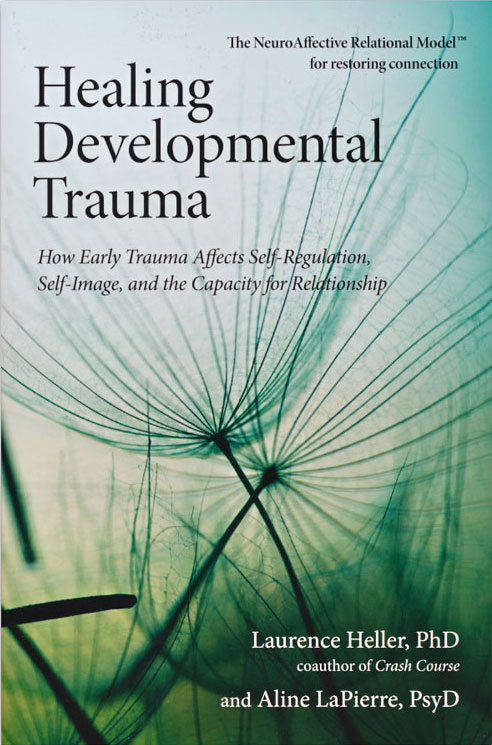
According to Heller and LaPierre (see "Working with the Capacity for Connection in Healing Developmental Trauma"*), there is an extensive list of pre- and post-natal events that can lead to mental illness in adulthood (largely due to the inadequate formation of right brain affect regulation skills and interpersonal skills:
Early Events That May Cause Long-Term Traumatic ReactionsClearly, this "new" research is simply confirmation of what we have known on the therapeutic side of things for a couple of decades now. The main difference, as I see it, is that the neuroscience side is identifying the genetic triggers that are pulled when we are exposed to life stressors. The same thing is very likely true in physical illness.
From Conception to 6 Months after Birth (partial list)
Attachment and Developmental Trauma • Being carried in the womb of a mother who does not want you
• Being carried in the womb of a traumatized, dissociated, depressed or anxious mother
• Serious consideration of abortion
• Mother abusing alcohol or drugs during pregnancy
• Feeling rejected, blamed, or even hated by one or both parents
• One or both parents struggling with Connection issues themselves
• Attachment attempts with a dissociated, chronically depressed, anxious, or angry mother
• A psychotic or borderline mother
• Being made to feel like a burden
• Physical or emotional abuse
• Neglect
• Adoption
Shock Trauma
• Attempted abortion
• Mother's death in childbirth
• Premature birth
• Long, painful delivery
• Extended incubation with insufficient physical contact
• Early surgeries
• Significant traumatic events for the mother or other members of the family
• Death in the family
• Traumatic loss and bereavement
• Being born into wartime, depression, significant poverty
• Intergenerational trauma such as being born to Holocaust survivors
• Natural disasters
As an example of the later, my mother had been in remission from ovarian cancer for 3 years when my sister died. Within 2-3 months, my mother's cancer had returned and metastasized throughout her body. I doubt this would have happened so quickly without the stress of my sister's death.
* This article is excerpted from Healing Developmental Trauma: How Early Trauma Affects Self-Regulation, Self-Image, and the Capacity for Relationship (2012)
Life stressors trigger neurological disorders, researchers find
Date: April 22, 2014
Source: Children's National Medical Center
Summary:
When mothers are exposed to trauma, illness, alcohol or other drug abuse, these stressors may activate a single molecular trigger in brain cells that can go awry and activate conditions such as schizophrenia, post-traumatic stress disorder and some forms of autism. Until now, it has been unclear how much these stressors have impacted the cells of a developing brain. Past studies have shown that when an expectant mother exposes herself to alcohol or drug abuse or she experiences some trauma or illness, her baby may later develop a psychiatric disorder later in life. But the new findings identify a molecular mechanism in the prenatal brain that may help explain how cells go awry when exposed to certain environmental conditions.

While it has been generally accepted that exposure to harmful environmental factors during pregnancy increase the susceptibility of the brain to neurological and psychiatric disorders, new types of environmental agents are continuingly added to the mix, requiring evolving studies, Hasimoto-Torii says. Credit: © pekkic / Fotolia
When mothers are exposed to trauma, illness, alcohol or other drug abuse, these stressors may activate a single molecular trigger in brain cells that can go awry and activate conditions such as schizophrenia, post-traumatic stress disorder and some forms of autism.
Until now, it has been unclear how much these stressors have impacted the cells of a developing brain. Past studies have shown that when an expectant mother exposes herself to alcohol or drug abuse or she experiences some trauma or illness, her baby may later develop a psychiatric disorder, including some forms of autism or post-traumatic stress disorder, later in life. But the new findings, published online in Neuron, identifies a molecular mechanism in the prenatal brain that may help explain how cells go awry when exposed to certain environmental conditions.
Kazue Hasimoto-Torii, PhD, Principal Investigator of the Center for Neuroscience, Children's National Health System, and a Scott-Gentle Foundation investigator, is lead author of the paper. Torii was previously at Yale, whose researchers were co-authors in the report. The research was funded primarily through National Institutes of Health grants.
Researchers found that mouse embryos exposed to alcohol, methyl-mercury, or maternal seizures activate a single gene, HSF1, also known as heat shock factor, in cerebral cortex. The HSF1 "plays a crucial role in the response of brain cells to prenatal environmental insults," the researchers reported. "The gene protects and enables brain cells to survive prenatal assaults. Mice lacking the HSF1 gene showed structural brain abnormalities and were prone to seizures after birth following exposures to very low levels of toxins."
Even in mice where the HSF1 gene was properly activated to combat environmental insults, the molecular mechanism alone may permanently change how brain cells respond, and may be a reason why someone may be more susceptible to neuropsychiatric disorders later in life.
Innovative work with stem cells also provided findings that supported the theory that stress induces vulnerable cells to malfunction, the researchers reported. For the study, researchers created stem cells from biopsies of people diagnosed with schizophrenia. Stem cells are capable of becoming many different tissue types, including neurons. In the study, genes from the stem cells of those with schizophrenia responded more dramatically when exposed to environmental insults than stem cells from non-schizophrenic individuals.
While it has been generally accepted that exposure to harmful environmental factors increase the susceptibility of the brain to neurological and psychiatric disorders, new types of environmental agents are continuingly added to the mix, requiring evolving studies, Hasimoto-Torii says.
Hashimoto-Torii notes that autism rates have increased substantially and "more people are having these exposures to environmental stressors," she says. While there have been many studies that have identified singular stressors, such as alcohol, there have not been enough studies to focus on many different environmental factors and their impacts, such as heavy metals as well as alcohol and other toxic exposure, she adds.
Identifying many risk factors helped Hashimoto-Torii and other researchers identify the gene that may be linked to neurological problems. "Different stressors may have different stress responses," she says. She examined risk factors specifically involving epilepsy, ADHD, autism and schizophrenia. Eventually, it may open the door "to provide therapy in the future to reduce the risk" and protect vulnerable cells.
Story Source:
The above story is based on materials provided by Children's National Medical Center. Note: Materials may be edited for content and length.
Journal Reference:
Kazue Hashimoto-Torii, Masaaki Torii, Mitsuaki Fujimoto, Akira Nakai, Rachid El Fatimy, Valerie Mezger, Min J. Ju, Seiji Ishii, Shih-hui Chao, Kristen J. Brennand, Fred H. Gage, Pasko Rakic. (2014). Roles of Heat Shock Factor 1 in Neuronal Response to Fetal Environmental Risks and Its Relevance to Brain Disorders. Neuron; DOI: 10.1016/j.neuron.2014.03.002


