Showing posts with label gurus. Show all posts

Thursday, May 01, 2014

Daniel Shaw - Traumatic Abuse in Cults: A Psychoanalytic Perspective


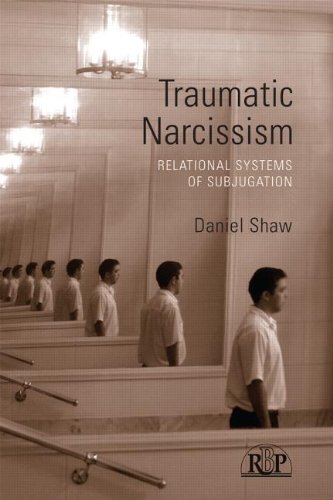
I came across this article as I began a new book, Traumatic Narcissism: Relational Systems of Subjugation (2014), by Daniel Shaw. Here is the blurb for the book, which reveals why I picked this for my next read:
In this volume, Traumatic Narcissism: Relational Systems of Subjugation, Daniel Shaw presents a way of understanding the traumatic impact of narcissism as it is engendered developmentally, and as it is enacted relationally. Focusing on the dynamics of narcissism in interpersonal relations, Shaw describes the relational system of what he terms the 'traumatizing narcissist' as a system of subjugation – the objectification of one person in a relationship as the means of enforcing the dominance of the subjectivity of the other.

Daniel Shaw illustrates the workings of this relational system of subjugation in a variety of contexts: theorizing traumatic narcissism as an intergenerationally transmitted relational/developmental trauma; and exploring the clinician's experience working with the adult children of traumatizing narcissists. He explores the relationship of cult leaders and their followers, and examines how traumatic narcissism has lingered vestigially in some aspects of the psychoanalytic profession.

Bringing together theories of trauma and attachment, intersubjectivity and complementarity, and the rich clinical sensibility of the Relational Psychoanalysis tradition, Shaw demonstrates how narcissism can best be understood not merely as character, but as the result of the specific trauma of subjugation, in which one person is required to become the object for a significant other who demands hegemonic subjectivity. Traumatic Narcissism presents therapeutic clinical opportunities not only for psychoanalysts of different schools, but for all mental health professionals working with a wide variety of modalities. Although primarily intended for the professional psychoanalyst and psychotherapist, this is also a book that therapy patients and lay readers will find highly readable and illuminating.
The developmental trauma angle is the piece that is most interesting to me as a therapist (so many of the clients I see suffered childhoods with narcissistic parents, and they carry wounds invisible to most people, including other therapists), but I am also interested in the cult leader/abusive teacher angle on this - for obvious reasons if you have been a long-time reader of this blog.

In the introduction to Traumatic Narcissism, Shaw mentions an article from 2003, Traumatic Abuse in Cults, and how popular and read that original article was on the web, where it is freely available.

Long-time readers are no doubt aware of my efforts to shine a critical light on a couple of abusive gurus in the integral spiritual community. This article explains their original wounding and how that gets played out in the abuse and subjugation of the follower/student.

So I found the 2003 article and want to share parts of it here, for you, so that you have a better sense of the risks inherent in being wooed by a narcissistic teacher, guru, or clergy member. And woo is the correct word - these people often are charming, charismatic, and use seduction as a means to bring you into their sphere of control.

Once once of these "teachers" gain a new follower, there is a progressive erosion of freedom, autonomy of both thought and feeling, and a coercive effort to isolate the follower from outside influence. For better understanding of how this control system works, see my post on Steve Hassan's BITE model of mind control.

So, then, here are parts of Shaw's 2003 article (the PDF is 31 pages). The original publication was in Cultic Studies Review, 2:2 (2003): 101-130.

It is worth mentioning that the "cult" Shaw was part of for 10 years (the Siddya Yoga group around its original guru, Swami Muktananda) is the same cult in which Marc Gafni's most loyal defender, Sally Kempton, was a leading member and public apologist, even after Muktananda's sexual abuse of students had been brought to light (see O Guru, Guru, Guru, an article the originally appeared in The New Yorker [pay-walled] and is fully reprinted at Leaving Siddha Yoga)..


Traumatic Abuse in Cults: A Psychoanalytic Perspective


Daniel Shaw, CSW


Abstract

Using his ten year experience in Siddha Yoga under the leadership of Gurumayi, the author presents psychoanalytic conceptualizations of narcissism in an effort to develop a way of understanding cult leaders and their followers, and especially of traumatic abuse in cults from the follower's perspective. A psychoanalytically informed treatment approach for working with recovering cult followers is proposed, consisting of providing: 1) an understanding of the leader's extreme dependence on the follower's submission and psychological enslavement; 2) a clear, firm, and detailed understanding of the leader's abusiveness; and 3) an exploration of normative and/or traumatic developmental issues for the follower, as part of a process of making sense of and giving meaning to the follower's experience.

When I began graduate school in social work in September of 1994, it had been just two years since I moved out of the spiritual community, the ashram, I had lived and worked in for more than 10 years, up until my 40th birthday. In those two post-ashram years, while still considering myself devoted to the guru and the spiritual path I had chosen, I did a good deal of soul searching, much of it through the process of psychotherapy. One of the uses I made of psychotherapy was to explore my career options, and I eventually chose toseek the necessary education and training to become a psychotherapist myself. In my first social work field placement, many of the clients I was assigned described terrible histories of physical, sexual, and emotional abuse in childhood, and in some cases were involved in ongoing abuse, either as perpetrators or victims. Many of these clients were struggling to recover from devastating addictions. Although my own life has been something of a bed of roses in comparison with the suffering these clients have known, I soon discovered I had a deeper connection to their experiences than I at first realized.


I had always portrayed my participation in Siddha Yoga (also known as SYDA), to myself and others, as an idealistic commitment to a noble spiritual path, dedicated to spiritual awakening and upliftment in the world. Just after school began, my perceptions were shattered when I learned of an incident concerning a friend of mine, a young woman just turned 21, who was sexually harassed in the ashram by one of its most powerful male leaders. When she sought help from Gurumayi, the now 48-year-old female Indian guru who is the head of the ashram, Gurumayi told the young woman, with contempt and disdain, that she had brought the harassment upon herself. Through her chief assistant, Gurumayi warned the young woman, "don't ever tell anyone about this, especially not your mother." The woman's mother, who had made substantial donations to the ashram over the years, was a long-time devotee of Gurumayi’s. After two years of intense inner conflict, the young woman finally did tell her story. As a result, many others began to speak out, eventually contributing to an extensive exposé of
SYDA in The New Yorker magazine (Harris, 1994). Published just two months after I started graduate school, the article revealed a Pandora's box of well-documented abuses by the leaders of SYDA that had been going on for more than 20 years.


In the two years prior to the publication of the article, I had slowly and painfully begun to acknowledge to myself and others that there were aspects of SYDA and its leaders that I found unethical and disturbing. In particular, I had witnessed and personally experienced Gurumayi verbally and emotionally abusing her followers, publicly shaming and humiliating those with whom she was displeased in cruel and harsh ways. I had heard her tell lies and witnessed her deliberately deceiving others. I witnessed her condoning and encouraging illegal and unethical business and labor practices, such as smuggling gold and U.S. dollars in and out of India, and exploiting workers without providing adequate housing, food, health care, or social security. I was aware that for many years, Gurumayi, and her predecessor, Swami Muktananda, had been using spies, hidden cameras, and microphones to gather information about followers in the ashram. I had heard whispers that Muktananda, contrary to his claims of celibacy and renunciation, had extensive sexual relations with female followers, which he then lied about and attempted to cover up with threats of violence to those who sought to expose him. Later, after I exited Siddha Yoga in 1994, I came to recognize in Muktananda’s and Gurumayi’s behavior toward their followers the hallmarks of abuse: the use of power to seduce, coerce, belittle, humiliate, and intimidate others for the ultimate purpose of psychological enslavement and parasitic exploitation.


I had deeply suppressed my doubts about SYDA for many years, but they suddenly and dramatically crystallized when I heard the story of the young woman I knew. In the phrase, "Don't ever tell anyone about this, especially not your mother," I heard a chilling echo of the voice of the incestuous father, the battering husband, the sexual harasser, the rapist. As Judith Herman says, in her seminal work entitled Trauma and Recovery (1992), "secrecy and silence are the perpetrator's first line of defense" (p. 8). It was hearing these words, "Don't ever tell," that broke for me what Ernst Becker (1973) has called "the spell cast by persons -- the nexus of unfreedom." I recognized that, like many of my social work clients who were abused as children by their parents, I too had been subjected to abuse—by the person I called my guru.'


In this paper I will: 1) present a psychoanalytic conceptualization of the psychopathology of the cult leader; 2) discuss ways that cult leaders manipulate, abuse, and exploit followers; and 3) present theories about individual relational and also broader cultural factors that influence the individual’s psychological organization in ways that may contribute to vulnerability to cult participation. I draw from various psychoanalytic schools, including object relations (both Kleinian and Middle School), interpersonal, self psychology, intersubjectivity and contemporary relational schools. As a former participant in a cult, and now an observer of cults working as a psychoanalytic therapist with former cult members, it is my hope that the psychoanalytic formulations I discuss here will be helpful to others concerned with understanding cult phenomena.


* * * * *

The Psychopathology of the Cult Leader


Thought reform, or mind control, is another important component of my conceptualization of the seductive power of cults, although it is not a psychoanalytic concept. The psychiatrist Robert Jay Lifton (1987) studied the methods used by the Chinese Communists during the Korean War to turn war prisoners into willing accomplices, and called these methods thought reform (see also Hinkle & Wolff, 1976; Schein, 1956; Singer, 1979). Thought reform techniques are readily found in use in any cult, yet it is my belief, based on my own exposure to and study of various cults, that many cult leaders are not necessarily students of thought reform techniques. One might argue that meditation and chanting, for example, are techniques specifically designed to control others, and they can be. But they are also ancient traditional spiritual practices. Cult leaders who require their followers to perform mind-numbing, trance-inducing practices may do so while fully believing that such practices are for the greatest possible good of the follower. In religious philosophies that emphasize detachment and transcendence, for instance, trance states are highly valued as avenues toward these spiritual goals. Such religious “surrender”—to a sense of one’s wholeness, one’s connectedness to life, to a loving and creative spirit both within and without—is not necessarily the same experience as submission to the domination, control, and exploitation of a particular group and/or leader. The urge to surrender, as understood by Ghent (1990), a leading theorist of contemporary relational psychoanalysis, can be a move toward inner freedom, and does not necessarily lead to submission, or enslavement.


Cult leaders, however, practice forms of control, such as intimidation and humiliation, which demand submission. In Ghent’s view, masochistic submission is a perversion of surrender. Cult leaders often use the idea of surrender as bait, and then switch to a demand for submission. Nevertheless, in so doing, they may not actually be practicing mind control in any conscious way. They may simply be behaving in ways typical of pathological narcissists, people whose personalities are characterized by paranoia and megalomania—characteristics, by the way, that are readily attributable to one of the modern masters of thought reform techniques, the totalitarian dictator known as Chairman Mao. Totalitarian dictators study and invent thought reform techniques, but many cult leaders may simply be exhibiting characteristic behaviors of the pathological narcissist, with the attendant paranoia and mania typical of this personality disorder. Thought reform is the systematic application of techniques of domination, enslavement, and control, which can be quite similar to the naturally occurring behaviors of other abusers, like batterers, rapists, incest perpetrators, in all of whom can be seen the behaviors of pathological narcissism.


I base my formulation of the psychology of the cult leader in part on the daily close contact I had with Swami Chidvilasananda (Gurumayi) of Siddha Yoga between 1985 and 1992. I also support my hypotheses with information gained from extensive work with psychotherapy clients who have described their cult leaders’ behavior in detail, as well as on my extensive reading of biographical accounts of other leaders of cults [1]. I propose, following the profile of the pathological narcissist delineated by Rosenfeld (1971), a leading figure of the contemporary Kleinian school in London, and similar formulations from the American self psychological perspective of Kohut (1976), that the cult leader profoundly depends on the fanatic devotion of the follower. This dependency is deeply shameful to the cult leader, because, based on traumatic aspects of her own developmental history, any dependency has come to mean despicable weakness and humiliation to her. Developmental trauma in those who in later life can be termed pathological narcissists typically consists of being raised, by parents or other caregivers, under extreme domination and control, accompanied by repeated experiences of being shamed and humiliated. The pathological narcissist identifies with this aggression and comes to despise his own normative dependency, to be contemptuous of dependence, which is equated to weakness. Manically defending against deprivation and humiliation, he comes to believe that he needs no one, that he can trust only himself, that those who depend on others are weak and contemptible. Thus the cult leader, largely unconsciously, compensates for his inability to trust and depend on others, and defends against the intense shame he feels connected to need and dependency, by attaining control over his followers, first through seductive promises of unconditional love and acceptance, and then through intimidation, shaming, and belittling. This serves to induce the loathsome dependency in the follower, and the cult leader thus contrives to disavow his own dependency, felt as loathsome and shameful. By psychologically seducing, and then battering the follower into being the shameful dependent one, the cult leader maintains his superior position and can boast delusionally of being totally liberated from all petty, mundane attachments. These processes of subjugating others, and inducing in others what one loathes and seeks to deny in oneself are extreme forms of manic defense against the shame of dependency. 


In fact, the cult leader does not escape dependency. Instead, he (and also, in many cases, she) comes to depend on his followers to worship and adore him, to reflect his narcissistic delusion of perfection to him as does the mirror to the Evil Queen in the tale of Snow White. One of the ways in which this perversion of dependency is often enacted can be observed when the cult leader claims that because he needs nothing, he is entitled to everything. Thus, cult leaders claiming to be pure and perfect, without any need or attachment, use manic defenses to rationalize and justify their dependence on extravagant and grandiose trappings such as thrones, fleets of Rolls Royces, and the trust funds of their wealthy followers.

For the cult leader, his ability to induce total dependence in followers serves to sustain and enhance a desperately needed delusion of perfect, omnipotent control. With many cult leaders, (e.g., Shoko Asahara [Lifton, 1999]), the dissolution of their delusion of omnipotence exposes an underlying core of psychosis. Sustaining a delusion of omnipotence and perfection is, for the cult leader, a manic effort to ward off psychic fragmentation. Again it is useful to consider that this kind of pathological narcissism and defensive mania is often seen in persons whose childhood development was controlled by extremely dominating, often sadistic caregivers, or whose developmental years were characterized by traumatic experiences of intense humiliation. Cult leaders then create elaborate rationalizations for their abusive systems, while unconsciously patterning those systems from the templates of their own experiences of being abused.


Cult leaders succeed in dominating their followers because they have mastered the cruel art of exploiting universal human dependency and attachment needs in others. The lengthy period of dependency in human development, the power that parents have, as God-like figures, to literally give life and sustain the lives of their children, leaves each human being with the memory, however distant or unconscious, of total dependency. Cult leaders tap into and re-activate this piece of the human psyche. Followers are encouraged to become regressed and infantilized, to believe that their life depends on pleasing the cult leader. Cult leaders depend on their ability to attract people, often at critically vulnerable points in their lives, who are confused, hungry, dissatisfied, searching. With such people, cult leaders typically find numerous ways to undermine their followers’ independence and their capacity to think critically.


In a religious cult, the leader is perceived as a deity who is always divinely right, and the devotee, always on the verge of being sinfully wrong, comes to live for the sole purpose of pleasing and avoiding displeasing the guru/god. The leader's displeasure comes to mean for the member that he is unworthy, monstrously defective, and, therefore, dispensable. The member has been conditioned to believe that loss of the leader's "grace" is equivalent to loss of any value, goodness, or rightness of the self. As the member becomes more deeply involved, his anxiety about remaining a member in good standing increases. This anxiety is akin to the intense fear, helplessness, loss of control and threat of annihilation that Herman, in her discussion of psychological domination, describes as induced in victims of both terrorists and battering husbands:

The ultimate effect of these techniques is to convince the victim that the perpetrator is omnipotent, that resistance is futile, and that her life depends upon winning his indulgence through absolute compliance. The goal of the perpetrator is to instill in his victim not only fear of death but also gratitude for being allowed to live. (Herman, 1992, p. 77)
Extending this formulation to cult leaders and followers, the cult leader can be understood as needing to disavow her dependency and expel her dread of psychic dissolution, which she succeeds in doing insofar as she is able to induce that dependency and fear in the follower. The bliss that cult members often display masks their terror of losing the leader’s interest in them, which is equivalent for the follower to “a fate worse than death.”

Herman's motivation for writing Trauma and Recovery was to show the commonalities

between rape survivors and combat veterans, between battered women and political prisoners, between the survivors of vast concentration camps created by tyrants who rule nations, and the survivors of small, hidden concentration camps created by tyrants who rule their homes. (Herman, 1992, p. 3).
Tyrants who rule religious cults subject members to similar violations.

To recapitulate, from a psychoanalytic perspective, the cult leader unconsciously experiences his dependency needs as so deeply shameful that a delusion of omnipotence is developed to ward off the toxic shame. It is urgent to the pathological narcissist, who knows unconsciously that he is susceptible to extreme mortification (the sense of “death” by shame), that this delusion of omnipotence be sustained. Manic defenses help sustain the delusion, but in addition, followers must be seduced and controlled so that the loathsome dependence can be externalized, located in others and thereby made controllable. The leader can then express his unconscious self-loathing through his “compassion” (often thinly disguised contempt) for his followers’ weakness. Manically proclaiming his own perfection, the leader creates a program of “purification” for the follower. By enlisting the follower to hold the shame that he projects and evacuates from his own psyche, the cult leader rids himself of all shame, becoming, in effect, “shameless.” He defines his shamelessness as enlightenment, liberation, or self actualization. It becomes important to the cult leader, for the maintenance of his state of shamelessness on which his psychic equilibrium depends, that there be no competition, that he alone, and no one else in the group, feels shameless. So while apparently inviting others to attain his state of perfection (shamelessness) by following him, the cult leader is actually constantly involved in inducing shame in his followers, thereby maintaining his dominance and control. I have called this sadomasochistic danse macabre the “dark side of enlightenment” (see Shaw, 2000).


Note:
[1] There are those who would consider Freud a cult leader, and psychoanalysis, his invention, a cult (e.g., Storr [1996]). While I think that equating Sigmund Freud to, say, Jim Jones, is absurd on its face (and Storr takes far too complex a view to make so reductionist an assertion), it is true that generations of psychoanalytic thinkers following Freud have struggled to evaluate and reform residues of positivism, determinism, and authoritarianism in psychoanalytic theory and practice (see especially Fromm [1959], and Mitchell & Aron [1999]). Today, many increasingly prominent psychoanalytic schools are actively seeking to expose and reject authoritarianism in theory and treatment. These include the following contemporary schools: object relations, interpersonal, relational, intersubjective, postmodern, feminist, and contemporary self psychology, to name a few. In fact, one of the most radical critiques of psychoanalytic authoritarianism comes from one of the leaders of its most orthodox institutions, Owen Renik, the editor of Psychoanalytic Quarterly (see Renik, 1993).

Friday, March 28, 2014

Pilar Jennings - A Relational Understanding of the Student-Teacher Dyad in Spirituality

This is an excellent article from Tricycle Magazine on the relational and intersubjective nature of the student-teacher relationship in Buddhism. She goes so far as to say, "The relationship between the Buddhist teacher and student is a dyad comparable to the psychoanalytic one." I would add that this is true for spiritual traditions, not only Buddhism.
We don’t often take into account that even revered teachers may have childhood memories in need of integration, unexpected personal loss, or addictions influenced by genetic predispositions requiring treatment outside the spiritual realm. I suspect that, still young in our acquaintanceship with the dharma, we struggle to accept our teachers as people, both gifted and flawed. We tend to idolize them, as we did our parents, in order to feel safely bonded to an idealizable, all-powerful other. And while these may be sweeping claims, and idealizations are a natural part of any teacher-student relationship, I nevertheless see a pervasive struggle in developing a more adult capacity to understand our teachers in context and to accept their participation in ordinary human experience.
This reality becomes especially when the teacher or guru is damaged enough emotionally to be a narcissist or sociopath, or simply terribly immature in the psycho-sexual developmental line. It is entirely possible for a person to achieve advanced spiritual states or understands (spiritual and cognitive lines of development) and yet be highly toxic human beings who use and control others.

Within the integral community, Andrew Cohen and Marc Gafni are the obvious teachers to whom we can point and identify their destructive impact on many of their "students."

Looking into the Eyes of a Master

A relational psychotherapist explores how we can see our teachers as people, both gifted and flawed.

Pilar Jennings, PhD
Tricycle | Spring 2014


Last winter, on a chilly night just after the New Year, I sat in a darkened theater at the Rubin Museum of Art in Manhattan watching Crazy Wisdom, a documentary about the life of Chögyam Trungpa Rinpoche. Like most American Buddhists, I had heard the colorful stories about his unconventional, theatrical pedagogy—known as “crazy wisdom”—and more than a few anecdotes about his relationships to alcohol and women. I was curious to learn more about this legendary teacher who had influenced so many Western Buddhists, some who have become important teachers in their own right.

As the film progressed, I felt an increasing sense of dis-ease, or duhkha, as it’s called in Buddhist teachings. Images of a young Tibetan trying to find his way in a foreign country filled the screen as Trungpa Rinpoche recounted his loneliness and isolation and his painful recovery from a near-fatal car accident (possibly caused by his increasingly problematic alcohol use). But this footage was quickly eclipsed by the testimony of students who spoke with awe of his compelling presence and unorthodox teaching methods, his depth of insight and what—for them—was his obvious enlightenment. Indeed, the film marshaled extraordinary images: Trungpa, clad in an olive green uniform, arraying his cavalry and marching his students as if preparing for a military deployment; a preternatural rainbow radiating above his gravesite in the days after his death.

The students in the film described their enchantment with his charisma and prodigious energy but seemed oblivious to, or untroubled by, his traumatic background and what I perceived as his personal pain. The only seasoned American Buddhist scholar in the film, Robert Thurman, noted that Trungpa’s death at age 46, likely due to alcoholism, was lamentable. He could have lived much longer, Thurman suggested, carrying his teachings further. But the filmmakers didn’t linger over this analysis, returning instead to the steady flow of reverent praise.

Like other talented Tibetan monks in the 1970s and ’80s, Trungpa moved to the United States to introduce the dharma to Western students. I know other senior Tibetan teachers with comparable histories and have heard their stories of disorienting transitions to new countries, as if they’d landed on the moon without a space suit. For most of these teachers, including Trungpa, these dramatic shifts followed on the heels of a harrowing escape from the brutal Chinese occupation of Tibet. I imagined that Trungpa might also have suffered the ripple effects of culture shock and the loss of loved ones, and might have strained under the weight of his new American students’ expectations of the awakened master they wanted him to be.

As the documentary unfolded, it occurred to me that American Buddhists (with exceptions, of course) have skipped a developmental stage that would allow us to more readily notice and respond to our teacher’s subjectivity. We don’t often take into account that even revered teachers may have childhood memories in need of integration, unexpected personal loss, or addictions influenced by genetic predispositions requiring treatment outside the spiritual realm. I suspect that, still young in our acquaintanceship with the dharma, we struggle to accept our teachers as people, both gifted and flawed. We tend to idolize them, as we did our parents, in order to feel safely bonded to an idealizable, all-powerful other. And while these may be sweeping claims, and idealizations are a natural part of any teacher-student relationship, I nevertheless see a pervasive struggle in developing a more adult capacity to understand our teachers in context and to accept their participation in ordinary human experience.

Some of these struggles are complicated by practices that encourage students to envision their teachers as fully realized. Tibetan Buddhist teachings especially suggest that only when we recognize the buddhahood in our teachers may we receive the blessings of an awakened being. While these teachings offer the potential to expand and refine our awareness, they can also serve to split buddhahood from personhood, teacher from self. The restorative experience of turning to our teachers for their good counsel—which we do because we may see them as awakened—can trump the valuable activity of relying on our own capacity for wisdom and insight.

As a relational psychoanalyst, I have spent much of my training and professional life exploring how relationships—to oneself, to culture, and to loved ones—develop. As a Buddhist, I’ve been similarly engaged in examining how we cultivate a deeper and more authentic sense of connection. And as a Buddhist psychoanalyst, I’ve attempted to understand how these two disciplines might enhance our efforts to forge meaningful and sustainable relationships. For the past 30 years, Buddhist psychoanalysts have been contributing to a growing body of research and literature on the topic of the student-teacher relationship. Writers including the psychoanalysts Mark Finn, co-author of Object Relations Theory and Religion, Jeffrey Rubin, who wrote Psychotherapy and Buddhism, and Harvey Aronson, author of Buddhist Practice on Western Ground, have been exploring the ways in which Buddhist teachers bring their psychological experience to their teaching endeavors. In their work, informed by personal and professional experience, they have also considered how Buddhist students in the West might be confronted with formidable cross-cultural challenges studying with Asian-born and/or monastic teachers.


With all this in mind, in the days after seeing Crazy Wisdom I found myself revisiting the psychoanalytic theory known as intersubjectivity and drawing on its insight into how we develop the ability to be seen and known and to see and know others. The intersubjective perspective explores how babies develop a sense of self and other through their relationship with a caretaker, especially through the nuances of physical contact during feeding, bathing, play, and preparation for sleep. Ideally, through this ongoing exchange, the baby and caretaker experience a growing sense of attunement, and as a result, a bolstered trust that their basic needs, feelings, and intentions can be known to each other. One of the primary fruits of this mutual recognition is that the baby begins to see that the caretaker has his or her own reality that can be discerned and related to, just as the baby has been known by his mother or caretaker.

As the theory of intersubjectivity evolved, its proponents began to describe the psychological terrain that develops between the infant and its caretaker or, for that matter, between any two people, as a “third space.” Particularly relevant to Buddhism is the notion that such a space requires a temporary surrender of self, and that through this surrender a young child is able to sustain connection to the caretaker’s mind while more readily accepting her separateness and personhood. If the parent is distracted, however—suffering from trauma or depression, for instance—he or she may be unable to offer the baby the nuanced attunement it needs. Thus, when a third space never develops, or develops and breaks down, the child may feel he lacks the ability to affect his caretaker. He may feel reactive and “done to,” as the New York University psychoanalyst Jessica Benjamin, a leading theorist in this field, writes: it is a sense of being helplessly lost in the shadow of the other. Many adults see themselves in this helpless way when the third space in a relationship collapses—who hasn’t, at some point, been involved with someone who seems impervious to our subjectivity? What is harder to see are the ways through which we protect ourselves from a collapsed third space. Rather than suffer the terrible sense of being done to, we may opt to be the one who controls the collapsed space by dominating interactions within that relationship, opting to make others feel helpless instead of being on the receiving end of their efforts at control.

As skillful therapists from all schools of thought know, our ability to find and sustain healthy interpersonal experience does not depend on a history of perfect attunement. There is no such thing as two people—whether baby and mother, two lovers, or teacher and student—being perfectly in sync with each other’s needs and wishes. Real intimacy arises from an ongoing process of connection that at some point is disrupted and then, ideally, repaired. I think of this as an interpersonal crochet stitch: connection, disruption, repair, over and over again, until a fabric is created with enough strength and flexibility to endure the wear of any two people attempting to know one another.

But a “perfect match” is a compelling fantasy. When seeking romantic partners, we often hold out for “the one” who magically knows just how to talk to us, touch us, comfort us, without stress or discord. In seeking therapists, patients often expect to find that perfectly sage being who has transcended samsara and can serve as a knower of all truths, the perfect healer. And when seeking spiritual mentors, students are on the lookout for the enlightened being in their midst who glides graciously through life without effort and knows just how to usher the student toward awakening, as quickly as possible.

Having spent my entire adulthood and much of my childhood surrounded by Western Buddhists, I wonder if many of them had early relational experiences that stymied their capacity to feel safely engaged with a world beyond their control. People come to the dharma for many reasons, including a burgeoning sense that life could be more consistently fulfilling and joyful than previously imagined. And yet it seems to be true that relatively few arrive at Buddhist centers on the wings of psychic victory. Many people have a psychologically complex history, one influenced by trauma or loss. In this way, we practice to resolve thorny and entrenched forms of psychological pain.

The relationship between the Buddhist teacher and student is a dyad comparable to the psychoanalytic one. But in this case, it is the teacher and student who are enacting their individual emotional histories. As a result, the potential for boundary violations is rampant, and the possible victims include students who have felt manipulated and even abused by their teachers, and teachers who have felt manipulated and abused by their students. From what I have observed, both participants are vulnerable to their unconscious longing for perfect attunement, for a merger experience in which idealizations obscure a realistic view of an actual human being.

In much the same way that psychoanalytic research has emphasized the infant’s experience, and paid relatively little attention to the mother’s subjectivity, Buddhist scholars have attended to the more blatantly vulnerable actor in student-teacher relationships—the student. It is tempting to ignore the reality that there are two sentient beings in this dyad, and that both have psyches that make them capable of unskillful actions. Teachers, in fact, are vulnerable to the ways in which students project onto them both salvific and destructive capacities. And when a student idealizes the teacher to the point where he or she can’t see the guru as human, it becomes nearly impossible for that student to take into account both the teacher’s gifts and vulnerability.

But it takes two to build a third space. A teacher who has the maturity to be seen as a whole being—in addition to having a kind heart and a liberated mind—may invite the student to curb the idealizations and work instead toward cultivating the wisdom and agency they have been ascribing exclusively to the teacher. Teachers and students alike pay a price when this mutuality does not develop. Trungpa Rinpoche is not alone among famous spiritual teachers in having suffered in ways that may have required attention and treatment he never received. There are scores of senior Buddhist teachers (and I suspect this is true for all faith traditions) who privately undergo inner torment that is never addressed. The world was shocked when Mother Teresa’s journals were published, attesting to her 40 years of doubt and depression. What distressed me most was not that she had suffered depression, which is widespread, but that she was unable to seek help. Why was she left to manage such a long, dark night of the soul alone?

I can’t know whether or not Trungpa had concerned students who made efforts to respectfully confront him; I suspect there must have been some who were troubled by and worried about his alcohol use. Perhaps Trungpa resisted such concern. Whatever the case, it seems important to explore how Western Buddhist students can approach their teachers’ humanity and subjective struggles.

Having befriended a senior teacher in the Tibetan tradition, I am attempting, in my own right, to create a roomier third space between us. My teacher has a fantastic sense of humor and playfulness. We laugh together at the absurdity of our woeful human struggles. But if we’re looking to hide from a deeper, potentially more painful and healing exploration of these struggles, humor is a powerful defense. My teacher has lost some of his beloved students in the past few years, and when I asked him how he was feeling in the wake of these deaths, he replied with a joke: “How much are you gonna charge me for this session?” I laughed. When I mustered the courage to ask again, he dug his finger deep into his ear like a nervous kid, looked at the floor and said, “Truthfully, I feel numb.” I nodded. He looked at me and we nodded together. Then the phone rang, and the conversation was over.

A year ago, a senior monk and longtime friend of my teacher’s had a brain aneurism and fell into a coma for several weeks. We had all been together on retreat only a few months prior. When my teacher returned from his friend’s sickbed, I asked about his state of mind. There was more ear poking, more jokes. He shook his head, stared at his computer, his iPhone, his landline. Then he stared at the floor.

“When this happens I think, who’s next?”

For a fleeting moment we looked at each other. I added, “It’s rough when the people you know and care about get sick. Makes you feel vulnerable.”

He nodded, looked me dead in the eye and said, “How much is that gonna cost me?” I told him he should expect a hefty bill. We laughed and the phone rang, he received a text, and the conversation was over.

As I reflect on my concern for my teacher’s well-being, I see the complexity of this and other relationships that involve contrasting backgrounds and cultural influences. My teacher, like Trungpa, comes from a world shaped by his spiritual and monastic education, a world that prizes the freedom that comes from loosening attachment to personal experience. But this approach has its drawbacks. We must recognize the validity of seeing our teachers as individuals, too. My hope is that we may begin to bring them into clearer view, not only to better see their gifts of insight and compassion, but to accept the fullness of their own human struggle.

Pilar Jennings, PhD, is a psychoanalyst practicing in New York City. She is a lecturer in the graduate department of Psychiatry and Religion at Union Theological Seminary and a researcher at the Columbia University Center for Study of Science and Religion. A version of this essay was first published in Spring: A Journal of Archetype and Culture, vol. 89 (Spring 2013).

Join us this May for Enlightening Conversations 2014: "Opportunities and Obstacles in Human Awakening," a new conference series exploring the intersection of Buddhism and psychoanalysis, where Pilar Jennings will appear as a panelist.

Artwork by Tenzing Rigdol 
Image 1: Phew!, 2011, Acrylic on Canvas, Courtesy Rossi & Rossi.
Image 2: Kriti - From the Ashes of Agony, 2011, Acrylic on Canvas, Courtesy Rossi & Rossi.

Saturday, June 22, 2013

Controversial Spiritual Teacher Andrew Cohen Stepping Down from Role as Guru and Leader of EnlightenNext


Where the title reads "controversial spiritual teacher," please read abusive guru, the designation he has had on this blog for as long as I have been following the integral community and its assortment of associated male perpetrators. Andrew Cohen has been one of the most overt abusers through his use of authoritarian control over followers, much of which is documented on the blog What Enlightenment??! and EnlightenNixt, the compendium/companion site where many of the older posts are archived.

See also William Yenner's American Guru: A Story of Love, Betrayal and Healing-former students of Andrew Cohen speak out and Luna Tarlo's The Mother of God (Tarlo is Cohen's mother, a former follower, and a cogent observer of Cohen's controlling and manipulative tactics).

There has been growing issues around Cohen and his EnlightenNext organization over the past several years.

A few years ago (2010), they put up for sale their Fox Hollow compound in the Berkshires (MA). Although they maintained that the sale was in response to a more international presence of the organization, there were rumors floating around the Web that they had fewer devoted students, which meant less money coming in.

In 2011, EnlightenNext (the magazine formerly known as What Is Enlightenment?) ended its publication run of over 19 years and 47 issues, due to the "widespread financial challenges of the print industry."

Both of these events seem more serious in retrospect than they did at the time. According to information posted yesterday at What Enlightenment??!,
Sources close to EnlightenNext have since told us that criticism of Cohen began in the upper echelons over four years ago. Sometime over a year ago, some of these senior students were ordered by Cohen to meet together in London, apparently to attempt to purge themselves of their rebelliousness. Instead, at their meetings their questioning of Cohen’s authoritarian style of leadership deepened. They eventually stopped sending Cohen notes of their meetings, as expected and required. Soon they were joined in their dissent by other EnlightenNext leadership. A united front formed. As if this were not shocking enough, we heard that things had recently come to a head in a meeting between senior students and Cohen in Europe. A line was drawn in the sand, it was said. Not being satisfied with Cohen's response, a number of leaders left the community. Many other members followed suit.
And of course, Cohen's PR team is trying to spin the defections - and the fact that Cohen is steping away from his role as Guru and as leader of EnlightenNext - as simply the next progression of the organization's evolution.
EnlightenNext appears to be attempting to explain the changes as part of a natural evolution away from the authoritarian-mythic “blue meme” guru model, using terminology originated by Don Beck and Chris Cowan in their Spiral Dynamics model of human development, a model which has been widely adopted by Integral Theory teachers and thinkers, such as Ken Wilber. The PR Plan also identifies the need to address “Founder’s Syndrome,” a situation where the founder of an organization impedes its development. These theoretical explanations, with no mention of the harm Cohen and his organization have done to students and with no inkling of empathy for the suffering those students endured, make one wonder whether EnlightenNext’s culture of authoritarianism and abuse will really change. 
And what to make of the silence of those in the leadership who reportedly parted from Cohen? Although supposedly disaffected with Cohen, Jeff Careirra taught an on-line EnlightenNext program as recently as last weekend. Carter Phipps, who has been living in the Bay Area of California for almost a year, promoting his book “Evolutionaries” and participating in Integral community-related activities, has not publicly disclosed his split from Cohen or his future plans. Other students and EnlightenNext leaders have publicly remained similarly silent.
If you doubt the people around Cohen are well-trained in manipulated their public message, the good folks at What Enlightenment??! posted the PR plan being implemented around the coup d'etat led by Cohen's senior students.

It makes for interesting reading: 
From: Rosalind Bennett <rosb@enlightennext.org>
Date: June 15, 2013, 7:09:43 PM EDT
To: Rosalind Bennett <rosb@enlightennext.org>
Subject: PR & Communications plan for Andrew

Hello there, 
I just sent out the email below to the current Core students (Defining, Resolute and Committed Core) and also wanted you all to hear about our PR communications plan for Andrew. I'm sending this to everyone who I know is involved in the current programs and who I've personally spoken to, please feel free to forward this email on to others involved who would like to hear the messaging going forward. 
Thanks so much, 
Love,
Ros
--------------------------------------------------------------------------------------------------------- 
Dear All, 
I wanted to let you know the PR communications plan for Andrew that will roll out in the next few weeks. 
As most of you know Joel Pitney and I are responsible for Andrew's PR and media platform and we have been working on a message to the broader public regarding the situation we are in the midst of with Andrew, and all the subsequent changes. 
Many of you have contacted us sharing your urgency around making a public statement, and we thank you all for your input! We have taken everything you have said into consideration and come up with a plan that we are very happy with. 
Before I go any further I want to point out that while we're working very closely with Mary, Aterah, Morgan and the Education Department in our communications, what Joel and I are specifically responsible for (and what we've outlined in this email) has to do with communications from the Andrew Stream (to the broader public, Andrew's personal relationships, etc), and not the communications for the education programs and long retreats. 
GENERAL STRATEGY: 
We felt it was imperative to get an "outside perspective" on our PR communications as, being close students of Andrew in this emotionally charged situation, it's very difficult to envision the right message for the public at large. Our primary consultant has been our PR advisor Nate Winstanley. Nate is not only an excellent PR consultant, but he also trained in crisis management. He has been working with us for the last several years, and is fully appraised of Andrew's history, the history of EnlightenNext, and the current situation. Given his experience and his friendship with Andrew, we feel that he is the perfect person to help us with this messaging now, and his input has been invaluable. 
Nate has helped us to see that the most important point to consider in relationship to our PR strategy is that there is a tremendous difference between communicating to our "internal" audience of past and present students, and our "external" audience of people who follow Andrew's work, but are not part of any formal structures or communities (see a breakdown/description of our audiences at the end of this email). Nate also stressed how important it is that our public messaging be appropriate to our external audience, and that this should not be expected to address the issues that pertain to our "internal" audience of past and present students. 
He made it very clear that from an outside perspective, what is currently happening represents an evolution of both our organization/movement and Andrew's work. The fact that Andrew is acknowledging his mistakes, has stepped down from his role as Guru, and will be stepping down as head of the organization, is a reflection of the fact that our movement is changing and growing, and that Andrew is taking the necessary time off to reflect, respond, and take the next step in his own development. 
For the internal group of past and present students, Andrew must find a different and appropriate way to make peace; and, as most of you know, this internal process has already begun. He has already stepped down from his Guru role, which is on hiatus until spring 2014, and he is in the midst of responding appropriately to many past and present students. 
STEPPING DOWN FROM LEADERSHIP: 
Another very important distinction in our messaging that Nate helped us to understand has to do with how to announce Andrew's "sabbatical." He clarified that to frame the time that Andrew will be taking to reflect and respond as a sabbatical is not accurate. Given that Andrew will be doing a minimum of teaching work during this period, (the retreats and French forum) and that our many programs and content streams will continue in some form, from an outside perspective calling this time period a "sabbatical" would be confusing. Instead he suggested we emphasize in our public messaging that Andrew is stepping down from leadership, both within the organization and the spiritual community, and will be taking time to reflect and respond. 
So in our public statements, which will launch on Andrew's blog on June 28th (see Blog Themes below for more detail), we will announce that Andrew is "stepping down from leadership" rather than "taking a sabbatical." We feel that this is also more authentic as to what is actually happening, so please consider this in your own communications. 
BLOG THEMES: 
Our public messaging will center around a series of blog posts which will be published on all of the sites where Andrew writes (BigThink, HuffPo, etc) in addition to AC.org. They will be on two themes outlined below. The first blog will also be accompanied by an email to our list announcing Andrew's decision to step down from leadership and offer some description of how the EnlightenNext programs will be continuing forward: 
Confronting Founder's Syndrome: In this initial post, Andrew lays out what is happening for him right now in the context of "Founder's Syndrome," which is a common phase that organizations go through when due to a lack of willingness to give up control its visionary Founder gets in the way of the further evolution of the organization. He'll announce in this post that to address this situation, he's stepping down from leadership of both the organization and the spiritual community, and will radically reduce his teaching engagements to take time to reflect and respond. 
The Death of A Mythic Guru: In this second post (which may end up in multiple parts), Andrew will speak about his own development as a Guru and how he created a "mythic" Guru model within the postmodern world, outlining the negative and positive consequences of that. He'll talk about how difficult it has been for him to recognize the mythic structures within himself, and how he's going to now take the time necessary to develop both himself and the teachings. 
COMMUNICATIONS CALENDAR: 
Below is a list of the various communications that will go out to our different audiences over the next month:
  • Today: Overview of communications strategy/plan to the Defining, Resolute, Committed, and Past students (this email!)
  • 
Next few weeks: Series of calls/emails to various donors.

  • 6/28: Blog #1 on Founder's Syndrome will go up on BigThink

  • 6/28: Accompanying the blog will be an email to our email list announcing that Andrew is stepping down from leadership and giving a brief overview of what kinds of offerings they will continue to get from both Andrew and EnlightenNext.

  • 7/6: Guru & Pandit Virtual Broadcast on the theme of The Death of A Mythic Guru

  • 7/12: Blog #2 on The Death of A Mythic Guru goes up on BigThink

Thank you all for taking the time to read this. I apologize for the length of this email, but we felt it was important that we keep everyone informed as much as we can during this challenging period of our lives.

Also, when we have an approved plan of how Andrew's business line will be going forward, I'll send out another email. 
Best wishes all,
Ros & Joel 

AUDIENCE BREAKDOWN: 
Below is a description of the various audiences that we're reaching out to and an overview of the basic messaging strategy for each: 
"INTERNAL AUDIENCES":

Past and Present Students:
 Includes all Defining, Resolute, and Committed Core students and people who have been close students in the past. We are the people who are the most affected by what is happening and have the most investment in the whole situation and subsequent changes. These communications have several dimensions: First and foremost, Andrew is following up personally with people, both current and past students. Second, we as his communications team want to keep everyone abreast of our overall communications, so that everyone knows why we're saying what we're saying.


Donors: 
This audience has a significant overlap with past and present students. Since they have all committed financial support to Andrew and EnlightenNext, it is important for us to communicate how the current situation will affect Andrew's and the organization's short and long-term future, and the financial implications of this. We will be reaching out to communicate directly with our current donors within the next few weeks.


"EXTERNAL AUDIENCES": 
Blog Readers:
 This is our broadest audience and consists of people who engage with Andrew's content on a wide variety of external platforms (BigThink, Speaking Tree, HuffPost, etc). This audience is least familiar with Andrew and sees him more as a spiritual thought leader and less as a Guru with a community of students. This audience is the least interested in hearing about the details of our current situation, and our plan to communicate with them is through a series of blogs in which Andrew will speak about the current situation in more of a philosophical/cultural context (outlined in the Blog Themes section).


Email List:
 This is a group of about 35K people (~12K of which are very active) who receive consistent communications from us about new content, events, and products. This audience is a mix of people, but generally has more familiarity with Andrew's role as a teacher and also leader of our organization. Our primary communications to them will draw upon themes in Andrew's blog, but speak specifically about how we as an organization plan to respond to this situation and how that will affect the content and programs that they are used to hearing about.


Integral/Evolutionary Community: 
This is the segment of our public audience that is most familiar with the deeper dimensions of Andrew's work as a Guru and spiritual innovator. This audience has been following Andrew's work through the magazine, through the Guru & Pandit dialogues, and through other platforms like Craig Hamilton's, and is more familiar with the spiritual and philosophical stands that Andrew has taken in the post-traditional spiritual world. Our plan for this audience is for Andrew to use some of the remaining Guru & Pandit Virtual dialogues with Ken this year to explore some of the "Mythic-to-Post-Mythic-Guru" themes that are at the heart of the current situation.

Rosalind Bennett

Wednesday, May 29, 2013

Joel Kramer and Diana Alstad - Gurus and the Masks of Authoritarian Power


Joel Kramer and Diana Alstad wrote The Guru Papers: Masks of Authoritarian Power back in 1993, but it's still an important book for anyone who is considering entering into a student-guru relationship (or who has survived one). While I think the book is good, I also think that those using the traditional techniques of hypnosis, NLP (neuro-linguistic programming), subconscious suggestion, and other techniques of mind control have become much more subtle and sophisticated in how they manipulate their victims.

The perfect example of this trend is Marc Gafni. By employing "integral" ideas and concepts, he creates an illusory "plausible deniability" when accusations begin to fly (and they always do). But most people are easily cowed by a charismatic spiritual "teacher" who is also quite educated, intelligent, and verbally proficient - and quite possibly a sociopath (based on objective behaviors - a definitive label would require a psychological examination).

His grooming of potential victims is also subtle, seducing the women into willingly entering into sexual relationships with him. But once they are snared, the control and manipulations and demands for silence ("protecting the sacred vessel of our love") increase, while he also becomes less kind and generous. Classic abuser patterns.

Anyway, expect more on this topic. I am currently working with two "cult" survivors of ritual abuse, and two other ritual abuse survivors where there was no religious content at all, but multiple forms of mind-control were applied.

For now, here are some quotes from The Guru Papers assembled by Steven Hassan at Freedom of Mind. I did not repost all of the quotes, so check out his site for additional material and a lot of other interesting articles and videos.

The Guru Papers: Masks of Authoritarian Power

by Joel Kramer and Diana Alstad

Frog, Ltd., Berkeley, California; 1993

The following quotes are taken from Part One of the Guru Papers and are deemed by ex-members to be strikingly accurate in describing the dynamics of a cult guru.

“In ‘spiritual’ realms fear and desire can become as extreme as they get. When a living person becomes the focus of such emotions, the possibility of manipulation is correspondingly extreme.” (p.41)

“In the East a guru is more than a teacher. He is a doorway that supposedly allows one to enter into a more profound relationship with the spiritual. A necessary step becomes acknowledging the guru’s specialness and mastery over that which one wishes to attain. The message is that to be a really serious student, spiritual realization must be the primary concern. Therefore, one’s relationship with the guru must, in time, become one’s prime emotional bond, with all others viewed as secondary. In fact, typically other relationships are pejoratively referred to as ‘attachments.’” (p.49)

“So although most gurus preach detachment, disciples become attached to having the guru as their center, whereas the guru becomes attached to having the power of being others’ center.” (p.50)

“When abuses are publicly exposed, the leader either denies or justifies the behaviors by saying that ‘enemies of the truth’ or ‘the forces of evil’ are trying to subvert his true message. Core members of the group have a huge vested interest in believing him, as their identity is wrapped up in believing in his righteousness. Those who begin to doubt him at first become confused and depressed, and later feel betrayed and angry. The ways people deny and justify are similar: Since supposedly no one who is not enlightened can truly understand the motives of one who is, any criticism can be discounted as a limited perspective. Also, any behavior on the part of the guru, no matter how base, can be imputed to be some secret teaching or message that needs deciphering.”

By holding gurus as perfect and thus beyond ordinary explanations, their presumed specialness can be used to justify anything. Some deeper, occult reason can always be ascribed to anything a guru does: The guru is said to take on the karma of others, and that is why his body has whatever problems it has. The guru is obese or unhealthy because he is too kind to turn down offerings: besides, he gives so much that a little excess is understandable. He punishes those who disobey him not out of anger but out of necessity, as a good father would. He uses sex to teach about energy and detachment. He lives an opulent life to break people’s simplistic preconceptions of what ego-loss should look like; it also shows how detached and unconcerned he is about what others think. For after all, ‘Once enlightened, one can do anything.’ Believing this dictum makes any action justifiable. 

People justify and rationalize in gurus what in others would be considered unacceptable because they have a huge emotional investment in believing their guru is both pure and right.” (p.52)

“That interest in one’s own salvation is totally self-centered is a conundrum rarely explored.” (p.54)

“So disciples believe they are loved unconditionally, even though this love is conditional on continued surrender. Disciples in the throes of surrender feel they have given up their past, and do not, consciously at least, fear the future. . . Feeling totally cared for and accepted, at the universe’s center, powerful, and seemingly unafraid of the future are all achieved at the price of giving one’s power to another, thus remaining essentially a child.” (p56)

“It is not at all unusual to be in an authoritarian relationship and not know it. In fact, knowing it can interfere with surrender. Any of the following are strong indications of belonging to an authoritarian group:
1. No deviation from the party line is allowed. Anyone who has thoughts or feelings contrary to the accepted perspective is made to feel wrong or bad for having them. 
2. Whatever the authority does is regarded as perfect or right. Thus behaviors that would be questioned in others are made to seem different and proper. 
3. One trusts that the leader or others in the group know what’s best. 
4. It is difficult to communicate with anyone not in the group. 
5. One finds oneself defending actions of the leader (or other members) without having firsthand knowledge of what occurred. 
6. At times one is confused and fearful without knowing why. This is a sign that doubts are being repressed.” (p.57)
“Traditional gurus teach what they were taught. Most gurus’ training in dealing with disciples is through example – watching their own guru. They learn to recognize, reinforce, and reward surrender, and to negate non-surrender. Aside from the more tangible rewards, they reinforce devotion with attention and approval, and punish its lack by withdrawing them. Though some gurus say that doubts are healthy, they subtly punish them. Doubt is not the way to get into the inner circle. Believing surrender is essential for transmitting their teachings, some gurus could be aware they are manipulating people to surrender, but think they are doing so ‘for their own good.’ (If this were in fact true, it would mean that deep truths are only accessible via an authoritarian mode.) This can not only justify manipulation, but also justify dissembling in order to eliminate people’s doubts – all this being done in the name of fostering spiritual growth.” (p.62)

“The power of conversion experiences lies in the psychological shift from confusion to certainty.” (p.65)

“People whose power is based on the surrender of others develop a repertoire of techniques for deflecting and undermining anything that questions or challenges their status, behavior, or beliefs. They ridicule or try to confuse people who ask challenging questions.” (p.66)

“To be thought enlightened, one must appear not only certain that one is, but certain about most everything else, too.” (p.70)

“Gurus undercut reason as a path to understanding. When they do allow discursive inquiry, they often place the highest value on paradox. Paradox easily lends itself to mental manipulation. No matter what position you take, you are always shown to be missing the point; the point being that the guru knows something you do not.” (p.74)

“Their stance toward outsiders is of benign superiority.” (p77)

“As long as the guru still sees the possibility of realizing his ambitions, the way he exercises power is through rewarding the enthusiasms of his followers with praise and positions in his hierarchy. He also whets and manipulates desire by offering ‘carrots,’ and promising that through him the disciples’ desires will be realized, possibly even in this lifetime. The group itself becomes an echo of the guru, with the members filling each other’s needs. Within the community there is a sense of both intimacy and potency, and a celebratory, party-like atmosphere often reigns. Everything seems perfect; everyone is moving along the appropriate spiritual path. The guru is relatively accessible, charming, even fun. All dreams are realizable-even wonderful possibilities beyond one’s ken.” (p.78)

“But a cult in decline has more trouble selling itself. . . Members and the guru become withdrawn and the focus gets more internal, insular, and isolating. . . The fun is over. The rewards are now put into the distant future (including future lives) and are achievable only through hard work. This not only keeps disciples busy and distracted, but it is necessary because the flow of resources that came with expansion has greatly diminished. This glorification of work always involves improving the leader’s property (the commune or ashram), increasing his wealth, or some other grandiose project.” (p82)

“People are especially vulnerable to charismatic leaders during times of crisis or major life change.” (p.87)

“People don’t want a second-rate guru; they want the one who seems the best. Since purity is the standard measurement – the gold or Greenwich meridian time of the guru world – each guru has to claim the most superlative traits. This is naturally a breeding ground for hypocrisy, lies, and the cultivation of false images of purity. Gurus are thus forced to assume the role of the highest, best, the most enlightened, the most loving, the most selfless, the purest representative of the most profound truths; for if they did not, people would go to one who does. Consequently, it is largely impossible for a guru to permit himself real intimacy, which in adults requires a context of equality. All his relationships must be hierarchical, since that is the foundation of his attraction and power.” (p.88)

“Since adulation from any one person eventually becomes boring, gurus do not need any specific disciple – they need lots of them. Gurus do give special attention to those with wealth and power.” (p.89) [ME: Or physical beauty in the case of many male gurus.]

“Gurus likewise do many things to ensure that their disciples’ prime emotional allegiance is toward them. In the realm of sexuality, the two prevalent ways control is exerted are through promulgating either celibacy or promiscuity. Although seemingly opposite, both serve the same function: they minimize the possibilities of people bonding deeply with each other, thus reducing factors that compete with the guru for attention.” (p.92)

“. . . sex scandals go with the occupation of the guru because of its [the position’s] emotional isolation and eventual boredom. Disciples are just there to serve and amuse the guru who, after all, gives them so much. The guru’s temptation is exacerbated by the deep conditioning in many women to be attracted to men in power.” (p.93)

“Gurus, like fathers, are in a context that gives them enormous power because of their disciples’ needs, trust, and dependency. One reason incest is a betrayal of trust is that what a daughter needs from her father is a sense of self-worth not specifically linked to her sexuality. Sex with the guru is similarly incestuous because a guru ostensibly functions as a spiritual father to whom one’s growth is entrusted. Having sex with a parental  figure reinforces using sex for power. This is not what young women (or men) need for their development. When the guru drops them, which eventually he does, feelings of shame and betrayal usually result that leave deep scars.” (p.94)

“A primary goal in therapy is to free clients from their need to transfer unresolved issues onto others. This need makes people particularly susceptible to authoritarian control. Good therapists aim at being very conscious of how they deal with transference.

Because of the nature of the relationship which demands total surrender, gurus do exactly the opposite. They cultivate and reward transference, for a parental type of authority is at the very core of the guru’s power over disciples. The power to name, arrange marriages, and dictate duties and behavior are ultimates in parental authority, especially in traditional societies like the East. To give someone the power to name or marry you is to profoundly accept their parental role in defining who you are. The ostensible motivation behind this has to do with an attempt to break the ties of the past so the person can become ‘new.’ A deeper reason is that this aids the guru in becoming the center of the person’s emotional life, which facilitates surrender.” (p.105)

“Successful gurus, rock stars, charismatic leaders of any sort, experience the intensity of adulation amplified beyond most people’s ken. This can make ordinary relationships pale by comparison. Being the recipient of such adulation and devotion is exceedingly addictive. Here addiction is used in its loose sense to mean mechanically needing an on-going ‘fix’ of adulation to where it becomes the central focus of one’s life. Adulation has powerful emotions for the sender as well, and can be easily mistaken for love. It is likewise addicting for the sender, as it is an easy route to feelings of passion. Since adulation is totally a function of image, should the images crack, adulation disappears, demonstrating that it is essentially empty of real care.” (p.112)

“As long as people have unlivable ideals, they are manipulable.” (p.156)

Tuesday, May 28, 2013

Steven Hassan: Mind Control - The BITE Model


Back in the 1960's, Jay Lifton developed an explanation for how mind control works, essentially outlining the  mechanisms of brainwashing. His work was based on his studies of the Chinese model, under Mao Tse-Tung, of "thought reform programs."

Years later, Steven Hassan refined and elaborated on Lifton's work and developed his own model, called BITE (more on this below).

Jay Lifton's Thought Reform Model


Adapted from Robert Jay Lifton's Thought Reform and the Psychology of Totalism (Norton, 1961: reprinted 1989 by the University of North Carolina Press)

Dr. Lifton's work was the outgrowth of his studies for military intelligence of Mao Tse-Tung's "thought-reform programs" commonly known as "brainwashing." In Chapter 22, Lifton outlines eight criteria for when any environment can be understood as exercising "thought-reform" or mind control. Lifton wrote that any group has some aspects of these points. However, if an environment has all eight of these points and implements them in the extreme, then there is unhealthy thought reform taking place.

1. Milieu Control

Environment control and the control of human communication. Not just communication between people but communication within people's minds to themselves.

2. Mystical Manipulation

Everyone is manipulating everyone, under the belief that it advances the "ultimate purpose." Experiences are engineered to appear to be spontaneous, when, in fact, they are contrived to have a deliberate effect. People misattribute their experiences to spiritual causes when, in fact, they are concocted by human beings.

3. Loading the Language

Controlling words help to control people's thoughts. A totalist group uses totalist language to make reality compressed into black or white-"thought-terminating clichés." Non-members cannot simply understand what believers are talking about. The words constrict rather than expand human understanding.

4. Doctrine Over Person

No matter what a person experiences, it is the belief of the dogma which is important. Group belief supersedes conscience and integrity.

5. The Sacred Science

The group's belief is that their dogma is absolutely scientific and morally true. No alternative viewpoint is allowed. No questions of the dogma are permitted.

6. The Cult of Confession

The environment demands that personal boundaries are destroyed and that every thought, feeling, or action that does not conform with the group's rules be confessed; little or no privacy.

7. The Demand for Purity

The creation of a guilt and shame milieu by holding up standards of perfection that no human being can accomplish. People are punished and learn to punish themselves for not living up to the group's ideals.

8. The Dispensing of Existence

The group decides who has a right to exist and does not. There is no other legitimate alternative to the group. In political regimes, this permits state executions.

Hopefully, this summary will motivate you to read the entire Chapter 22, if not the entire book. It is considered to be one of the most important descriptions of political mind-control programs. It is also important to note, that now there are 3rd, 4th, and 5th generation mind-control groups and the patterns have evolved and become more refined and sophisticated.
From this model, Steven Hassan developed his own model of the mechanisms of mind control, The BITE Model. He offers specific manipulations within each of four realms, the Behavioral, the Informational, the Thinking, and the Emotional.

The following material is excerpted from Freedom of Mind: Helping Loved Ones Leave Controlling People, Cults and Beliefs (FOM Press 2012).

Mind Control – The BITE Model


From chapter two of Freedom of Mind: Helping Loved Ones Leave Controlling People, Cults and Beliefs (FOM Press 2012) formerly Releasing the Bonds: Empowering People to Think for Themselves* © 2000 by Steven Hassan; published by Freedom of Mind Press, Newton MA

Destructive mind control can be understood in terms of four basic components, which form the acronym BITE:

I. Behavior Control
II. Information Control
III. Thought Control
IV. Emotional Control

It is important to understand that destructive mind control can be determined when the overall effect of these four components promotes dependency and obedience to some leader or cause. It is not necessary for every single item on the list to be present. Mind controlled cult members can live in their own apartments, have nine-to-five jobs, be married with children, and still be unable to think for themselves and act independently.

Behavior Control


1. Regulation of individual’s physical reality
a. Where, how and with whom the member lives and associates with
b. What clothes, colors, hairstyles the person wears
c. What food the person eats, drinks, adopts, and rejects
d. How much sleep the person is able to have
e. Financial dependence
f. Little or no time spent on leisure, entertainment, vacations
2. Major time commitment required for indoctrination sessions and group rituals

3. Need to ask permission for major decisions

4. Need to report thoughts, feelings and activities to superiors

5. Rewards and punishments (behavior modification techniques- positive and negative).

6. Individualism discouraged; group think prevails

7. Rigid rules and regulations

8. Need for obedience and dependency 


Information Control


1. Use of deception
a. Deliberately holding back information
b. Distorting information to make it acceptable
c. Outright lying
2. Access to non-cult sources of information minimized or discouraged
a. Books, articles, newspapers, magazines, TV, radio
b. Critical information
c. Former members
d. Keep members so busy they don’t have time to think
3. Compartmentalization of information; Outsider vs. Insider doctrines
a. Information is not freely accessible
b. Information varies at different levels and missions within pyramid
c. Leadership decides who “needs to know” what
4. Spying on other members is encouraged
a. Pairing up with “buddy” system to monitor and control
b. Reporting deviant thoughts, feelings, and actions to leadership
5. Extensive use of cult generated information and propaganda
a. Newsletters, magazines, journals, audio tapes, videotapes, etc.
b. Misquotations, statements taken out of context from non-cult sources
6. Unethical use of confession
a. Information about “sins” used to abolish identity boundaries
b. Past “sins” used to manipulate and control; no forgiveness or absolution


Thought Control


1. Need to internalize the group’s doctrine as “Truth”
a. Map = Reality
b. Black and White thinking
c. Good vs. evil
d. Us vs. them (inside vs. outside)
2. Adopt “loaded” language (characterized by “thought-terminating clichés”). Words are the tools we use to think with. These “special” words constrict rather than expand understanding. They function to reduce complexities of experience into trite, platitudinous “buzz words”.

3. Only “good” and “proper” thoughts are encouraged.

4. Thought-stopping techniques (to shut down “reality testing” by stopping “negative” thoughts and allowing only “good” thoughts); rejection of rational analysis, critical thinking, constructive criticism.
a. Denial, rationalization, justification, wishful thinking
b. Chanting
c. Meditating
d. Praying
e. Speaking in “tongues”
f. Singing or humming
5. No critical questions about leader, doctrine, or policy seen as legitimate

6. No alternative belief systems viewed as legitimate, good, or useful


Emotional Control


1. Manipulate and narrow the range of a person’s feelings.

2. Make the person feel like if there are ever any problems it is always their fault, never the leader’s or the group’s.

3. Feeling-stopping (with number 4, Excessive use of guilt). Like thought-stopping, this is the automatic suppression or blocking of feelings that are not acceptable by the cult identity- such as feeling \”homesick\” or feeling \”depressed\” or feeling \”resentful\”.

4. Excessive use of guilt
a. Identity guilt
1. Who you are (not living up to your potential)
2. Your family
3. Your past
4. Your affiliations
5. Your thoughts, feelings, actions
b. Social guilt
c. Historical guilt
5. Excessive use of fear
a. Fear of thinking independently
b. Fear of the “outside” world
c. Fear of enemies
d. Fear of losing one’s “salvation”
e. Fear of leaving the group or being shunned by group
f. Fear of disapproval
6. Extremes of emotional highs and lows.

7. Ritual and often public confession of “sins”.

8. Phobia indoctrination : programming of irrational fears of ever leaving the group or even questioning the leader’s authority. The person under mind control cannot visualize a positive, fulfilled future without being in the group.
a. No happiness or fulfillment “outside”of the group
b. Terrible consequences will take place if you leave: “hell”; “demon possession”; “incurable diseases”; “accidents”; “suicide”; “insanity”; “10,000 reincarnations”; etc.
c. Shunning of leave takers. Fear of being rejected by friends, peers, and family.
d. Never a legitimate reason to leave. From the group’s perspective, people who leave are: “weak;” “undisciplined;” “unspiritual;” “worldly;” “brainwashed by family, counselors;” seduced by money, sex, rock and roll.