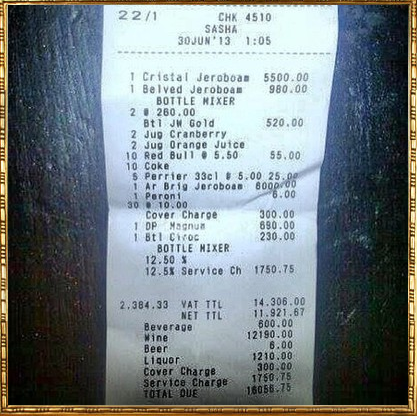
Showing posts with label greed. Show all posts

Saturday, January 04, 2014

George Monbiot - Materialism: A System that Eats Us from the Inside Out

From The Guardian, in part (headline and first image), the rest is from George Monbiot's blog. This is a little late, but still highly relevant relevant:

Materialism: A system that eats us from the inside out

Buying more stuff is associated with depression, anxiety and broken relationships. It is socially destructive and self-destructive


George Monbiot
The Guardian, Monday 9 December 2013


Owning more doesn't bring happiness: 'the material pursuit of self-esteem reduces self-esteem.' Photograph: Dominic Lipinski/PA

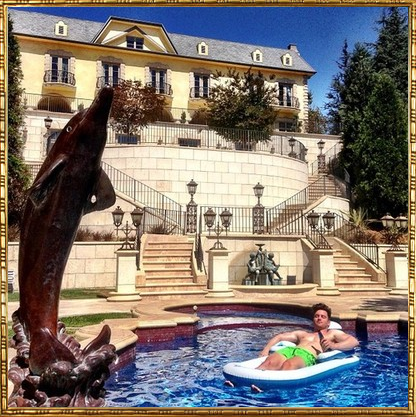
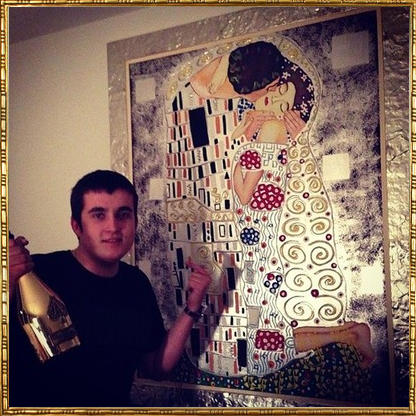
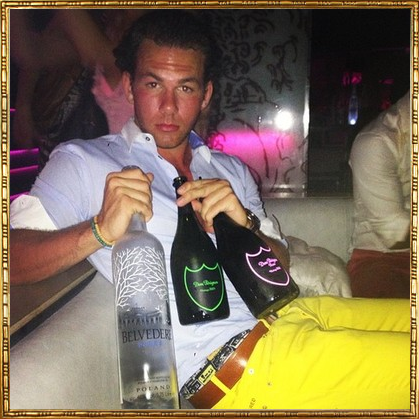
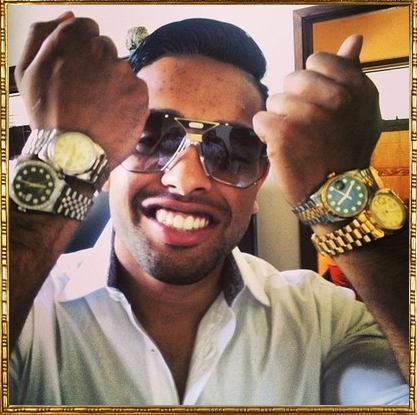
That they are crass, brash and trashy goes without saying. But there is something in the pictures posted on Rich Kids of Instagram (and highlighted by the Guardian last week(1)) that inspires more than the usual revulsion towards crude displays of opulence. There is a shadow in these photos – photos of a young man wearing all four of his Rolex watches(2), a youth posing in front of his helicopter(3), endless pictures of cars, yachts, shoes, mansions, swimming pools, spoilt white boys throwing gangster poses in private jets – of something worse; something that, after you have seen a few dozen, becomes disorienting, even distressing.


All photos taken from Rich Kids of Instagram
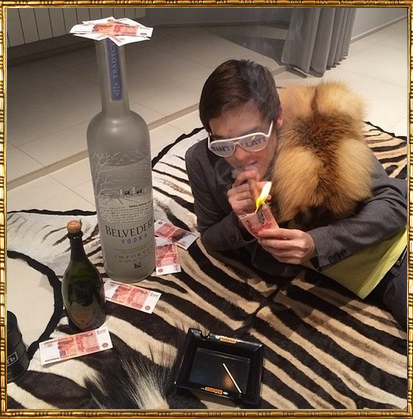


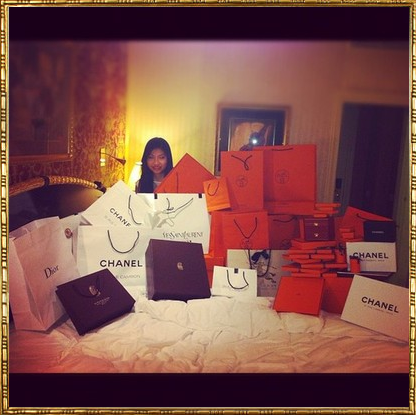
The pictures are, of course, intended to incite envy. They reek instead of desperation. The young men and women seem lost in their designer clothes, dwarfed and dehumanised by their possessions, as if ownership has gone into reverse. A girl’s head barely emerges from the haul of Chanel, Dior and Hermes shopping bags she has piled onto her vast bed(4). It’s captioned “shoppy shoppy” and “#goldrush”, but a photograph whose purpose is to illustrate plenty seems instead to depict a void. She’s alone with her bags and her image in the mirror, in a scene that seems saturated with despair.


Perhaps I am projecting my prejudices. But an impressive body of psychological research appears to support these feelings. It suggests that materialism, a trait that can afflict both rich and poor, which the researchers define as “a value system that is preoccupied with possessions and the social image they project”(5), is both socially destructive and self-destructive. It smashes the happiness and peace of mind of those who succumb to it. It’s associated with anxiety, depression and broken relationships.


There has long been a correlation observed between materialism, a lack of empathy and engagement with others, and unhappiness(6,7,8). But research conducted over the past few years appears to show causation.

For example, a series of studies published in June in the journal Motivation and Emotion showed that as people become more materialistic, their well-being (good relationships, autonomy, a sense of purpose and the rest) diminishes(9). As they become less materialistic, it rises.

In one study, the researchers tested a group of 18-year-olds, then re-tested them 12 years later. They were asked to rank the importance of different goals: jobs, money and status on one side, self-acceptance, fellow feeling and belonging on the other. They were then given a standard diagnostic test to identify mental health problems. At the ages of both 18 and 30, materialistic people were more susceptible to disorders. But if in that period they became less materialistic, their happiness improved.



In another study, the psychologists followed Icelanders weathering their country’s economic collapse. Some people became more focused on materialism, in the hope of regaining lost ground. Others responded by becoming less interested in money and turning their attention to family and community life. The first group reported lower levels of well-being, the second group higher levels(10).

These studies, while suggestive, demonstrate only correlation. But the researchers then put a group of adolescents through a church programme designed to steer children away from spending and towards sharing and saving. The self-esteem of materialistic children on the programme rose significantly, while that of materialistic children in the control group fell. Those who had little interest in materialism before the programme experienced no change in self-esteem(11).


Another paper, published in Psychological Science, found that people in a controlled experiment who were repeatedly exposed to images of luxury goods, to messages which cast them as consumers rather than citizens and to words associated with materialism (such as buy, status, asset and expensive), experienced immediate but temporary increases in material aspirations, anxiety and depression(12). They also became more competitive, more selfish, had a reduced sense of social responsibility and were less inclined to join demanding social activities. The researchers point out that as we are repeatedly bombarded with such images through advertisements, and constantly described by the media as consumers, these temporary effects could be triggered more or less continuously.

A third paper, published (ironically) in the Journal of Consumer Research, studied 2,500 people for six years(13). It found a two-way relationship between materialism and loneliness: materialism fosters social isolation; isolation fosters materialism. People who are cut off from others attach themselves to possessions. This attachment in turn crowds out social relationships.

The two varieties of materialism which have this effect – using possessions as a yardstick of success and seeking happiness through acquisition – are the varieties that seem to be on display at Rich Kids of Instagram. It was only after reading this paper that I understood why those photos distressed me: they look like a kind of social self-mutilation.


Perhaps this is one of the reasons why an economic model based on perpetual growth continues on its own terms to succeed, though it may leave a trail of unpayable debts, mental illness and smashed relationships. Social atomisation may be the best sales strategy ever devised, and continuous marketing looks like an unbeatable programme for atomisation.

Materialism forces us into comparison with the possessions of others, a race both cruelly illustrated and crudely propelled by that toxic website. There is no end to it. If you have four Rolexes while another has five, you are a Rolex short of contentment. The material pursuit of self-esteem reduces your self-esteem.


I should emphasise that this is not about differences between rich and poor: the poor can be as susceptible to materialism as the rich. It is a general social affliction, visited upon us by government policy, corporate strategy, the collapse of communities and civic life and our acquiescence in a system that is eating us from the inside out.

This is the dreadful mistake we are making: allowing ourselves to believe that more money and more stuff enhances our well-being, a belief possessed not only by those poor deluded people in the pictures, but by almost every member of almost every government. Worldly ambition, material aspiration, perpetual growth: these are a formula for mass unhappiness.


References:

1. http://www.theguardian.com/technology/2013/dec/06/selfies-status-updates-digital-bragging-web
2. http://richkidsofinstagram.tumblr.com/post/67779474838/dont-know-which-rolex-to-wear-so-hes-rocking
3. http://richkidsofinstagram.tumblr.com/post/63579216840/weekend-at-the-farm-robertsonpark-by
4. http://richkidsofinstagram.tumblr.com/post/61764470661/shoppy-shoppy-by-iamcece-goldrush-onlyseeorange
5. Monika A. Bauer et al, 2012. Cuing Consumerism: Situational Materialism Undermines Personal and Social Well-Being. Psychological Science 23: 517.
DOI: 10.1177/0956797611429579. http://pss.sagepub.com/content/23/5/517
6. eg http://www.rawstory.com/rs/2013/06/20/research-finds-wealth-warps-your-perspective-and-makes-you-less-ethical/
7. Tamas Martos and Maria S. Kopp, 2012. Life Goals and Well-Being: Does Financial Status Matter? Evidence from a Representative Hungarian Sample. Social Indicators Research, 105: 561–568. DOI 10.1007/s11205-011-9788-7
8. http://healthland.time.com/2011/10/13/wealth-matters-part-2-materialistic-people-are-less-happy-in-marriage/
9. Tim Kasser et al, 2013. Changes in materialism, changes in psychological well-being: Evidence from three longitudinal studies and an intervention experiment.
Motivation and Emotion. DOI 10.1007/s11031-013-9371-4
http://link.springer.com/article/10.1007%2Fs11031-013-9371-4
10. Tim Kasser et al, 2013, as above.
11. Tim Kasser et al, 2013, as above.
12. Monika A. Bauer et al, 2012. Cuing Consumerism: Situational Materialism Undermines Personal and Social Well-Being. Psychological Science 23: 517.
DOI: 10.1177/0956797611429579. http://pss.sagepub.com/content/23/5/517
13. Rik Pieters, 2013. Bidirectional Dynamics of Materialism and Loneliness: Not Just a Vicious Cycle. Journal of Consumer Research, DOI: 10.1086/671564. http://www.jstor.org/stable/10.1086/671564

Twitter: @georgemonbiot. A fully referenced version of this article can be found at Monbiot.com
Thursday, April 25, 2013

Zen Brain - Greed and Generosity: The Neuroscience and Path of Transforming Addiction


From Upaya Zen Center, here is another great series of Zen Brain lectures, featuring many of the usual participants, including Joan Halifax Roshi, Al Kaszniak, Lawrence Barsalou, David Loy, and Do-On Robert Thomas.

This series is focused on Greed and Generosity: The Neuroscience and Path of Transforming Addiction.

Zen Brain - Greed and Generosity: The Neuroscience and Path of Transforming Addiction

Series Description: Buddhism recognizes attachment/desire as one of the three “poisons” or afflictions at the root of suffering. In modern Western culture, a consumer economy and the lure of constant, technology-mediated connection fuel our sense of lack and addictions to such things as shopping and the internet. Zen provides a path of liberation from attachment, aversion, and delusion through practice realization of the interdependent, impermanent nature of life, with no fixed, unchanging self at its core.

Recently, neuroscience has provided insights into the plasticity of reward circuitry and chemistry in the brain, as related to attraction and addiction. In this retreat, a philosopher, a neuroscientist, and a Roshi, all of whom are Zen teachers, will explore the relationship of these new scientific discoveries to Buddhist psychology, Zen practice and the challenges of living in a consumerist and technology-driven culture.

Joan Halifax & Al Kaszniak: 04-12-2013: ZEN BRAIN: Greed and Generosity – The Neuroscience and Path of Transforming Addiction (Part 1)


Episode Description: In this, the opening session of Zen Brain on Greed and Generosity, Roshi Joan starts by offering an overview of the retreat and introduces the members of the panel. Dr. Kaszniak then offers his presentation titled “Addiction and craving: Neuroscientific and Contemplative Clinical Science Perspectives.”

BIO: Joan Halifax Roshi is a Buddhist teacher, Zen priest, anthropologist, and author. She is Founder, Abbot, and Head Teacher of Upaya Zen Center, a Buddhist monastery in Santa Fe, New Mexico. She received her Ph.D in medical anthropology in 1973. She has lectured on the subject of death and dying at many academic institutions, including Harvard Divinity School and Harvard Medical School, Georgetown Medical School, University of Virginia Medical School, Duke University Medical School, University of Connecticut Medical School, among many others. She received a National Science Foundation Fellowship in Visual Anthropology, and was an Honorary Research Fellow in Medical Ethnobotany at Harvard University. From 1972-1975, she worked with psychiatrist Stanislav Grof at the Maryland Psychiatric Research Center on pioneering work with dying cancer patients, using LSD as an adjunct to psychotherapy. After the LSD project, she has continued to work with dying people and their families and to teach health care professionals as well as lay individuals on compassionate care of the dying. She is Director of the Project on Being with Dying and Founder and Director of the Upaya Prison Project that develops programs on meditation for prisoners. For the past twenty-five years, she has been active in environmental work. She studied for a decade with Zen Teacher Seung Sahn and was a teacher in the Kwan Um Zen School. She received the Lamp Transmission from Thich Nhat Hanh, and was given Inka by Roshi Bernie Glassman. A Founding Teacher of the Zen Peacemaker Order, her work and practice for more than three decades has focused on applied Buddhism. Her books include: The Human Encounter with Death (with Stanislav Grof); Shamanic Voices; Shaman: The Wounded Healer; The Fruitful Darkness; Simplicity in the Complex: A Buddhist Life in America; Being with Dying; and Wisdom Beyond Wisdom (with Kazuaki Tanashashi).

Al Kaszniak received his Ph.D. in clinical and developmental psychology from the University of Illinois in 1976, and completed an internship in clinical neuropsychology at Rush Medical Center in Chicago. He is currently Director of the Arizona Alzheimer’s Consortium Education Core, and a professor in the departments of psychology, neurology, and psychiatry at The University of Arizona (UA. He formerly served as Head of the Psychology Department, and as Director of the UA Center for Consciousness Studies. Al also presently serves as Chief Academic Officer for the Mind and Life Institute, an organization that facilitates collaborative scientific research on contemplative practices and traditions. He is the co-author or editor of seven books, including the three-volume Toward a Science of Consciousness (MIT Press), and Emotions, Qualia, and Consciousness (World Scientific). His research, published in over 150 journal articles and scholarly book chapters, has been supported by grants from the U.S. National Institute on Aging, National Institute of Mental Health, and National Science Foundation, as well as several private foundations. His work has focused on the neuropsychology of Alzheimer’s disease and other age-related neurological disorders, consciousness, memory self-monitoring, emotion, and the psychophysiology of long-term and short-term meditation. Al has served on the editorial boards of several scientific journals, and has been an advisor to the National Institutes of Health and other governmental agencies. He is a Past-President of the Section on Clinical Geropsychology and fellow of the American Psychological Association and a fellow of the Association for Psychological Science. In addition to his academic and administrative roles, he is a lineage holder and teacher (Sensei) in the Soto tradition of Zen Buddhism.

Play

Tuesday, February 26, 2013

To End Extreme Poverty, End Extreme Wealth


This article comes from Too Much: An Online Weekly on Excess and Inequality - and it's followed by two other articles worth your time on the same topic.

To End Extreme Poverty, End Extreme Wealth


The world's wealthy once again gathered in the Alps last week to discuss how to 'solve' the world's problems. Their wealth, suggests a top global anti-poverty outfit, has become the problem.

Apologists for inequality have a standard retort to anyone who calls for a more equal distribution of the world’s treasure. If you took all the wealth of the wealthy and divvied it up equally among the poor, the retort goes, no one would gain nearly enough to accomplish much of anything.

Oxfam International, one of the world’s premiere anti-poverty charitable organizations, would beg to differ. The world’s top 100 billionaires now hold so much wealth, says a new Oxfam report, that just the increase in their net worth last year would be “enough to make extreme poverty history four times over.”

“Oxfam's mission is to work with others to end poverty,” Oxfam analyst Emma Seery noted last week. “But in a world with limited resources, this is no longer possible without an end to extreme wealth.”

Oxfam timed its new analysis, The cost of inequality: how wealth and income extremes hurt us all, to appear right on the eve of last week’s World Economic Forum in Davos, Switzerland. This earnest “issues” confab annually brings together a glittering array of global business and political leaders.

The world’s corporate and financial elites began this January trek into the Alps back in 1971. But the Davos sessions really didn’t start grabbing big-time global media attention until the go-go 1990s.

“Throughout the boom years,” as a UK Guardian profile last week noted, “chief executives would gather every winter high up in the Swiss Alps to discuss in a lordly fashion the world economy and how it could be revised to suit their objectives and views.”

But in these days of deep global economic uncertainty, the power suits that frequent Davos have lost their mojo — and even feel pressured to address the global economic inequality they've so long tried to sweep under the rug.

That pressure last week came from figures like Christine Lagarde, the former French finance minister who now directs the International Monetary Fund. Lagarde blasted outsized executive pay in high finance, attacked bankers for lobbying against new regulation, and called for more “robust social safety nets.”

Oxfam, for its part, is calling for much bolder steps to narrow the stunning gap between the global uber rich and everyone else. The group is urging world leaders to “commit to reducing inequality to at least 1990 levels.”

Meeting that goal, the new Oxfam report relates, would require a wide range of measures, everything from far more steeply graduated income tax rates to actual pay caps that limit how much corporate executives can take home to a multiple of what the lowest-paid workers in the firms they run are making.

But don’t hold your breath waiting for the Davos crowd to buy into any of this bolder agenda. Even the modest reforms that the IMF's Lagarde urged last week found no wide support among the corporate and banking movers and shakers who ambled up to the Alps for this year’s Davos gathering.Oxfam is also emphasizing the importance of cracking down on offshore tax havens. As much as a quarter of global wealth now sits shielded offshore.

One American on hand for the 2013 Davos festivities, JPMorgan Chase chief exec Jamie Dimon, made no move to hide his distaste for reformers. Bank regulators, he charged, were “trying to do too much, too fast” — and spreading “huge misinformation” about the noble work underway at banks like his.

“We’re doing the right thing,” Dimon assured his fellow Davos notables.

Other global corporate notables at Davos sang a similar tune. Azim Premji, the chairman of the Bangalore-based Indian high-tech giant Wipro, admitted that the new Oxfam data — on how the richest 100 people in the world are earning much more than enough to end the world’s worst poverty — do “sadden” him.

But Premji declined in an interview to term the incredible concentration of the world's wealth in any way “unethical.” We need not waste time, he suggested, worrying about “redistribution.” We need instead to help the rich grasp their “obligation,” their “trusteeship responsibility,” to wield their wealth for good.

Trust the rich, in other words, to solve our problems.

Not on your life, says Oxfam.

“In a world where even basic resources such as land and water are increasingly scarce,” Oxfam's Jeremy Hobbs sums up, “we cannot afford to concentrate assets in the hands of a few and leave the many to struggle over what's left.”
Like this article? Sign up to receive the Too Much weekly in your email inbox.


* * * * *

Does The Richness Of The Few Benefit Us All? By Zygmunt Bauman

28/01/2013 BY ZYGMUNT BAUMAN


A most recent study by the World Institute for Development Economics Research at the United Nations University reports that the richest 1% of adult humans alone owned 40% of global assets in the year 2000, and that the richest 10% of adults accounted for 85% of the total world wealth. The bottom half of the world adult population owned 1% of global wealth. [i] This is, though, but a snapshot of the on-going process… Yet more and more bad and ever worse news for equality of humans, and so also for the quality of life of all of us, are lining up daily.

“Social inequalities would have made the inventors of the modern project blush of shame” – so Michel Rocard, Dominique Bourg and Floran Augagner conclude in the article “Human species, endangered” they co-authored and published in Le Monde of 3rd April 2011. In the era of the Enlightenment, during the lifetimes of Francis Bacon, Descartes or even Hegel, in no place of Earth the standard of living was more than twice as high as in its poorest region. Today, the richest country, Qatar, boasts an income per head 428 times higher than the poorest, Zimbabwe. And these are, let’s never forget, comparisons between averages – and so akin to the facetious recipe for the hare-and-horsemeat paté: take one hare and one horse…

The stubborn persistence of poverty on a planet in the throes of economic-growth fundamentalism is enough to make thoughtful people to pause and reflect on the direct as much as the collateral casualties of that redistribution of wealth. The deepening abyss separating the poor and prospect-less from the well off, sanguine, self-confident and boisterous – an abyss of the depth already exceeding the ability of any but the most muscular and the least scrupulous hikers to climb – is an obvious reason to be gravely concerned.
Read the whole article.

* * * * *

Can we fight poverty by ending extreme wealth?


Posted by Olga Khazan on January 20, 2013

Nonprofits owe much of their budgets to wealthy donors, so it’s unusual for a major charity group to implicate extremely rich individuals as part of the problem.

A Yemeni shoe repairman, Zakaria Saleh, 25, left, works on a street in Sanaa, Yemen. 
(AP Photo/Hani Mohammed)

In a sign that the “Occupy” and “99 percent” movements that swept the United States in recent years have taken on increased global relevance, Oxfam International this week called for “a new global goal to end extreme wealth by 2025,” as a way to stem income inequality and continue the fight against poverty.

In a press release, the group wrote that the anti-poverty movement needs to include a new, anti-extreme-wealth component:

In the last decade, the focus has been exclusively on one half of the inequality equation – ending extreme poverty. Inequality and the extreme wealth that contributes to it were seen as either not relevant, or a prerequisite for the growth that would also help the poorest, as the wealth created trickled down to the benefit of everyone.

Oxfam does have a point. The movement against income inequality has been gaining momentum as the world’s rich have continued to amass larger shares of their countries’ fortunes. In the United States, according to the group, the share of national income going to the top 1 percent of the population has increased to 20 percent, from 10 percent in 1980.

Globally, 1 percent of the population have seen their incomes rise by 60 percent in recent years, according to Oxfam. In China, where the top 10 percent earn nearly 60 percent of the country’s income, Internet users regularly take to social networks to criticize public officials thought to be flaunting status items.

“The top 100 billionaires added $240 billion to their wealth in 2012- enough to end world poverty four times over,” Oxfam argues.

The World Economic Forum also recently rated “severe income disparity” as one of its top global risks for 2013.
Read the whole article.

Saturday, January 05, 2013

Documentary - Culture in Decline: Consumption-Vanity Disorder


Yes. Scary. True. Brought to you by Top Documentary Films. Word of Warning: This series on our "culture in decline" is produced and created by Peter Joseph, the person behind the highly popular, but very over-rated Zeitgeist film(s) - the first one was filled with fringe conspiracy theories (including the "government orchestrated" 9/11 meme), but the more recent two films have avoided that terrain in favor of proposing a change model for a society gone more than slightly mad.
Culture in Decline” is a 30 min., Bi-Monthly Web-Series created and hosted by Peter Joseph. As with all of Peter Joseph's video work, it is part of a Free Distribution Media Project that allows open, non-profit distribution of his film media across the world. The Series' central viewing medium is YouTube, via the “Culture in Decline” Official Channel. The first episode of the first season called “What Democracy?”premiered on July 29th 2012, going viral with over 70,000 views in the first 10 days.

“Culture in Decline” is a satirical yet serious expression that challenges various cultural phenomena existing today which most of society seem to take for granted. Nothing is considered sacred in this Series except for a detached benchmark of fundamental logic and reason - forcing the viewer to step out of the box of “Normality” and to consider our societal practices without traditional baggage and biases. Common themes include Politics, Economics, Education, Security, Religion, Vanity, Governance, Media, Labor, Technology and other issues centric to our daily lives.
Here is the 30-minute third episode.

Culture in Decline: Consumption-Vanity Disorder


Culture In Decline: Episode #3 covers a new epidemic disease rapidly spreading across the world: Consumption-Vanity Disorder. Other episodes: 1. What Democracy? and 2. Economics 101.

The last thing that fish would ever notice in its habitat is the water. Likewise the most obvious and powerful realities of our human culture seemed also be the most unrecognized.

And it is only when we take pause, often at the risk of social alienation, to question the foundational principles and ideas to which our lives are oriented, a dark truth about our supposed “normality” becomes more clear.

Today we live in an ocean with enormous waves of status obsession, materialism, vanity, ego and consumerism. Our very lives had become defined not by our productive thoughts, social contributions and good will, but by superficial, delusional set of associations with the very fabric of our society that now radiates cheap romanticism, connected to vain competition, conspicuous consumption and neurotic addictions often related to physical beauty, status and superficial wealth.

In effect it is social conformity masquerading as individualism, with the virtues of balance, intelligence, peace, public health and true creativity left to rot on the sidelines. The cultural water we inhabit today runs deep with heavy pollution. It starts in our formative years when to be smart and achieving is to be a nerd or a geek.
Watch the full documentary now

Thursday, November 29, 2012

Warren E. Buffett's Blueprint for Tax Reform

Monday's New York Times editorial by Warren Buffett on creating a minimum tax for the wealthy is much more than that. It is a blueprint for tax reform and for saving the middle class from annihilation by the 1% (or, really, the top 400 incomes in the country).

A Minimum Tax for the Wealthy

By WARREN E. BUFFETT
Published: November 25, 2012
Omaha

SUPPOSE that an investor you admire and trust comes to you with an investment idea. “This is a good one,” he says enthusiastically. “I’m in it, and I think you should be, too.” 

Would your reply possibly be this? “Well, it all depends on what my tax rate will be on the gain you’re saying we’re going to make. If the taxes are too high, I would rather leave the money in my savings account, earning a quarter of 1 percent.” Only in Grover Norquist’s imagination does such a response exist. 

Between 1951 and 1954, when the capital gains rate was 25 percent and marginal rates on dividends reached 91 percent in extreme cases, I sold securities and did pretty well. In the years from 1956 to 1969, the top marginal rate fell modestly, but was still a lofty 70 percent — and the tax rate on capital gains inched up to 27.5 percent. I was managing funds for investors then. Never did anyone mention taxes as a reason to forgo an investment opportunity that I offered. 

Under those burdensome rates, moreover, both employment and the gross domestic product (a measure of the nation’s economic output) increased at a rapid clip. The middle class and the rich alike gained ground. 

So let’s forget about the rich and ultrarich going on strike and stuffing their ample funds under their mattresses if — gasp — capital gains rates and ordinary income rates are increased. The ultrarich, including me, will forever pursue investment opportunities. 

And, wow, do we have plenty to invest. The Forbes 400, the wealthiest individuals in America, hit a new group record for wealth this year: $1.7 trillion. That’s more than five times the $300 billion total in 1992. In recent years, my gang has been leaving the middle class in the dust. 

A huge tail wind from tax cuts has pushed us along. In 1992, the tax paid by the 400 highest incomes in the United States (a different universe from the Forbes list) averaged 26.4 percent of adjusted gross income. In 2009, the most recent year reported, the rate was 19.9 percent. It’s nice to have friends in high places. 

The group’s average income in 2009 was $202 million — which works out to a “wage” of $97,000 per hour, based on a 40-hour workweek. (I’m assuming they’re paid during lunch hours.) Yet more than a quarter of these ultrawealthy paid less than 15 percent of their take in combined federal income and payroll taxes. Half of this crew paid less than 20 percent. And — brace yourself — a few actually paid nothing. 

This outrage points to the necessity for more than a simple revision in upper-end tax rates, though that’s the place to start. I support President Obama’s proposal to eliminate the Bush tax cuts for high-income taxpayers. However, I prefer a cutoff point somewhat above $250,000 — maybe $500,000 or so. 

Additionally, we need Congress, right now, to enact a minimum tax on high incomes. I would suggest 30 percent of taxable income between $1 million and $10 million, and 35 percent on amounts above that. A plain and simple rule like that will block the efforts of lobbyists, lawyers and contribution-hungry legislators to keep the ultrarich paying rates well below those incurred by people with income just a tiny fraction of ours. Only a minimum tax on very high incomes will prevent the stated tax rate from being eviscerated by these warriors for the wealthy. 

Above all, we should not postpone these changes in the name of “reforming” the tax code. True, changes are badly needed. We need to get rid of arrangements like “carried interest” that enable income from labor to be magically converted into capital gains. And it’s sickening that a Cayman Islands mail drop can be central to tax maneuvering by wealthy individuals and corporations. 

But the reform of such complexities should not promote delay in our correcting simple and expensive inequities. We can’t let those who want to protect the privileged get away with insisting that we do nothing until we can do everything. 

Our government’s goal should be to bring in revenues of 18.5 percent of G.D.P. and spend about 21 percent of G.D.P. — levels that have been attained over extended periods in the past and can clearly be reached again. As the math makes clear, this won’t stem our budget deficits; in fact, it will continue them. But assuming even conservative projections about inflation and economic growth, this ratio of revenue to spending will keep America’s debt stable in relation to the country’s economic output. 

In the last fiscal year, we were far away from this fiscal balance — bringing in 15.5 percent of G.D.P. in revenue and spending 22.4 percent. Correcting our course will require major concessions by both Republicans and Democrats. 

All of America is waiting for Congress to offer a realistic and concrete plan for getting back to this fiscally sound path. Nothing less is acceptable. 

In the meantime, maybe you’ll run into someone with a terrific investment idea, who won’t go forward with it because of the tax he would owe when it succeeds. Send him my way. Let me unburden him. 

Warren E. Buffett is the chairman and chief executive of Berkshire Hathaway.

Friday, November 23, 2012

Buy Nothing Day, 2012


From Adbuster's Culture Jammer headquarters, it's Buy Nothing Day, 2012.

“Today, humanity faces a stark choice: save the planet and ditch capitalism, or save capitalism and ditch the planet.”
– Fawzi Ibrahim


Until we challenge the entrenched values of capitalism – that the economy must always keep growing, that consumer wants must always be satisfied, that immediate gratification is imperative – we’re not going able to fix the gigantic psycho-financial-eco crisis of our times.

The journey towards a sane sustainable future begins with a single step. It could all start with a personal challenge, such as this: make a vow to yourself to participate in Buy Nothing Day this year. This November 23rd, go cold turkey on consumption for 24 hours … see what happens … you just might have an unexpected, emancipatory epiphany!


Buy Nothing Day is legendary for instigating this type of personal transformation … as you suddenly remember what real living is all about … you sense an upsurge of radical empowerment and feel a strange magic creeping back into your life.

Join millions of us in over 60 countries on November 23/24 and see what it feels like. Then, after Buy Nothing Day, take the next step … for generations, Christmas has been hijacked by commercial forces … this year, let's take it back.

And why not get playful while you're at it!? … Put up posters, organize a credit card cut up, pull off a Whirl–mart, or a Christmas Zombie walk through your local mall.

Put up a poster TV Spots Credit Card Cut Up Zombie Walk Whirl-mart
  • Credit Card Cut Up
    Stand in a shopping mall with a pair of scissors and a sign offering a simple service: to put an end to extortionate interest rates and mounting debt with one considerate cut.

  • Zombie Walk
    The cheerful dead wander around malls, marveling at the blank, comatose expressions on the faces of shoppers. The zombies are happy to be among their own kind, but slightly contemptuous of those who have not yet begun to rot.

  • Whirl-Mart
    You and nine of your closest friends silently drive your shopping carts around in a long, inexplicable conga line without ever actually buying anything.


Friday, October 28, 2011

Slavoj Žižek - Occupy first. Demands come later

In The Guardian UK, philosopher and social critic Slavoj Žižek offers some advice for the #occupywallstreet movement - he advises them (us) not to fall into some quick definition of purpose, citing Bill Clinton's suggestion that the #OWS movement get behind Obama's job plan so as to be for something rather than against the system as it currently operates.

He also addresses and refutes the conservative attacks on the protesters as un-American, as violent, as communists, as dreamers, as losers - all simple-minded ways to discredit the sense of fairness that gave rise to the cause.

And returning to the main point, they should also be wary of false friends who will try to dilute their motives and energy:
What one should resist at this stage is precisely such a quick translation of the energy of the protest into a set of concrete pragmatic demands. Yes, the protests did create a vacuum – a vacuum in the field of hegemonic ideology, and time is needed to fill this vacuum in a proper way, as it is a pregnant vacuum, an opening for the truly new.
Here is the whole article:

Occupy first. Demands come later

Critics say the Occupy cause is nebulous. Protesters will need to address what comes next – but beware a debate on enemy turf
Occupy protester
'The protesters should fall in love with hard and patient work – they are the beginning, not the end.' Photograph: Timothy A Clary/AFP/Getty Images
What to do after the occupations of Wall Street and beyond – the protests that started far away, reached the centre and are now, reinforced, rolling back around the world? One of the great dangers the protesters face is that they will fall in love with themselves. In a San Francisco echo of the Wall Street occupation this week, a man addressed the crowd with an invitation to participate as if it was a happening in the hippy style of the 60s: "They are asking us what is our programme. We have no programme. We are here to have a good time."
Carnivals come cheap – the true test of their worth is what remains the day after, how our normal daily life will be changed. The protesters should fall in love with hard and patient work – they are the beginning, not the end. Their basic message is: the taboo is broken; we do not live in the best possible world; we are allowed, obliged even, to think about alternatives.
In a kind of Hegelian triad, the western left has come full circle: after abandoning the so-called "class struggle essentialism" for the plurality of anti-racist, feminist, and other struggles, capitalism is now clearly re-emerging as the name of the problem. So the first lesson to be taken is: do not blame people and their attitudes. The problem is not corruption or greed, the problem is the system that pushes you to be corrupt. The solution is not "Main Street, not Wall Street", but to change the system where Main Street cannot function without Wall Street.
There is a long road ahead, and soon we will have to address the truly difficult questions – not questions of what we do not want, but about what we do want. What social organisation can replace the existing capitalism? What type of new leaders do we need? What organs, including those of control and repression? The 20th-century alternatives obviously did not work.
While it is thrilling to enjoy the pleasures of the "horizontal organisation" of protesting crowds with egalitarian solidarity and open-ended free debates, we should also bear in mind what GK Chesterton wrote: "Merely having an open mind is nothing; the object of opening the mind, as of opening the mouth, is to shut it again on something solid." This holds also for politics in times of uncertainty: the open-ended debates will have to coalesce not only in some new master-signifiers, but also in concrete answers to the old Leninist question, "What is to be done?"
The direct conservative attacks are easy to answer. Are the protests un-American? When conservative fundamentalists claim that America is a Christian nation, one should remember what Christianity is: the Holy Spirit, the free egalitarian community of believers united by love. It is the protesters who are the Holy Spirit, while on Wall Street pagans worship false idols.
Are the protesters violent? True, their very language may appear violent (occupation, and so on), but they are violent only in the sense in which Mahatma Gandhi was violent. They are violent because they want to put a stop to the way things are – but what is this violence compared with the violence needed to sustain the smooth functioning of the global capitalist system?
They are called losers – but are the true losers not there on Wall Street, who received massive bailouts? They are called socialists – but in the US, there already is socialism for the rich. They are accused of not respecting private property – but the Wall Street speculations that led to the crash of 2008 erased more hard-earned private property than if the protesters were to be destroying it night and day – just think of thousands of homes repossessed.
They are not communists, if communism means the system that deservedly collapsed in 1990 – and remember that communists who are still in power run today the most ruthless capitalism. The success of Chinese communist-run capitalism is an ominous sign that the marriage between capitalism and democracy is approaching a divorce. The only sense in which the protesters are communists is that they care for the commons – the commons of nature, of knowledge – which are threatened by the system.
They are dismissed as dreamers, but the true dreamers are those who think things can go on indefinitely the way they are, just with some cosmetic changes. They are not dreamers; they are the awakening from a dream that is turning into a nightmare. They are not destroying anything, but reacting to how the system is gradually destroying itself. We all know the classic scene from cartoons: the cat reaches a precipice but goes on walking; it starts to fall only when it looks down and notices the abyss. The protesters are just reminding those in power to look down.
This is the easy part. The protesters should beware not only of enemies, but also of false friends who pretend to support them but are already working hard to dilute the protest. In the same way we get coffee without caffeine, beer without alcohol, ice-cream without fat, those in power will try to make the protests into a harmless moralistic gesture.
In boxing, to clinch means to hold the opponent's body with one or both arms in order to prevent or hinder punches. Bill Clinton's reaction to the Wall Street protests is a perfect case of political clinching. Clinton thinks that the protests are "on balance … a positive thing", but he is worried about the nebulousness of the cause: "They need to be for something specific, and not just against something because if you're just against something, someone else will fill the vacuum you create," he said. Clinton suggested the protesters get behind President Obama's jobs plan, which he claimed would create "a couple million jobs in the next year and a half".
What one should resist at this stage is precisely such a quick translation of the energy of the protest into a set of concrete pragmatic demands. Yes, the protests did create a vacuum – a vacuum in the field of hegemonic ideology, and time is needed to fill this vacuum in a proper way, as it is a pregnant vacuum, an opening for the truly new.
The reason protesters went out is that they had enough of the world where recycling your Coke cans, giving a couple of dollars to charity, or buying a cappuccino where 1% goes towards developing world troubles, is enough to make them feel good. After outsourcing work and torture, after the marriage agencies started to outsource even our dating, they saw that for a long time they were also allowing their political engagements to be outsourced – and they want them back.
The art of politics is also to insist on a particular demand that, while thoroughly "realist", disturbs the very core of the hegemonic ideology: ie one that, while definitely feasible and legitimate, is de facto impossible (universal healthcare in the US was such a case). In the aftermath of the Wall Street protests, we should definitely mobilise people to make such demands – however, it is no less important to simultaneously remain subtracted from the pragmatic field of negotiations and "realist" proposals.
What one should always bear in mind is that any debate here and now necessarily remains a debate on enemy's turf; time is needed to deploy the new content. All we say now can be taken from us – everything except our silence. This silence, this rejection of dialogue, of all forms of clinching, is our "terror", ominous and threatening as it should be.

Sunday, July 31, 2011

Michael Collins - The War on You

Over at thepeoplesvoice.org, Michael Collins has posted an interesting - and angry - article about the ways The Money Party (the 1% who control 90% of the wealth, depending on which studies you believe) are manufacturing the "debt crisis" as a way to further dismantle any and all forms of compassionate governance.

The War on You

July 31st, 2011

By Michael Collins


Let the word go forth from Washington! The corporate rulers occupying our nation's capital have declared war on just about every citizen.

Have no doubt: those in the upper ranges of the top 1% of wealth in this country (aka The Money Party) want to kick you to the curb.

They want to reduce your social security and make you go broke paying for medical care.

They want to lower your wages and trash your retirement.

They ignore the clear facts that we've had negative job growth since 2000 and the situation is just getting worse.

They want to ship jobs, factories, and entire businesses overseas and give companies that do that a big fat tax credit for doing so.

They've been given so much for nothing for so long. Now, they're ready to take it all. It's their time!

The most recent assault is the ridiculous debate about raising the debt ceiling. There should be no debate. Failing to raise the ceiling right now means deliberate default on debts, refusing to pay bills the government can pay. It's called fraud.

The pressing need to fix the budget is a separate issue. Reduced spending and increased revenues should come through broad public involvement and open debate. It mandates that the rulers behave like adults.

But this crisis isn't about putting together a real budget. It's about creating a budget that punishes you, your family, and friends. It's about taking your attention away from your vital interests to maximize income and control by The Money Party.

Were the leaders on either side of the debate serious, the Bush era tax cuts would be restored. These cuts on the top 1% were temporary. Guess what? Congress lied. When the temporary tax breaks ran out a few months ago, they were revived and renewed just when we had the greatest need for revenues.

The Money Party won't give up its wars either. Iraq and Afghanistan have added $4 trillion to the national deficit of $14 trillion. Why not stop the wars? How hard is that to figure that out?

Getting rid of Bush tax cuts for the super-rich, ending the wars, and moving out of the recession/depression would be huge steps toward balancing the budget. But that won't happen with this Congress and this president. Why? That would cost the financial elite money for taxes and lost income for all those weapons they sell to support the wars.

The Attack on You Began in Earnest Just Years Ago

Congress repealed Depression era banking regulation that kept your banks from risky investments in 1999.

Congress enacted legislation in 2000 that allowed extremely risky investments in real estate and other derivatives, illegal for nearly a century.

In 2001, the big banks and Wall Street celebrated its newly purchased freedoms with a decade-long binge of fraud and risky investments. Like a greedy con artist, they took everything they could from people here and around the world until there was no more to take. We have now hit the wall thanks to them.

The outrageous expenses of wars based on lies caught up with us and shoved the deficit to new heights. The tax cuts for the top 1% took away revenues needed to balance the budget.

The money they steal from the Social Security surplus is no longer enough. They want to keep the tax in place for us and take an even bigger rake-off.

This crisis is manufactured by the ongoing greed of The Money Party. It is funded by the US Treasury. You pay for it, all of it.

End

This article may be reproduced with attribution of authorship and a link to the article.

Thursday, May 19, 2011

Naomi Klein’s The Shock Doctrine as Documentary.

Klein's book is a little over the top at points, but it also is incredibly important. Maybe more people will be exposed to these ideas and facts since it is now in video.

The Shock Doctrine

The Shock DoctrineA documentary adaptation Naomi Klein’s 2007 book, The Shock Doctrine: The Rise of Disaster Capitalism, based on Naomi Klein’s proposition that neo-liberal capitalism feeds on natural disasters, war and terror to establish its dominance.

Based on breakthrough historical research and four years of on-the-ground reporting in disaster zones, The Shock Doctrine vividly shows how disaster capitalism – the rapid-fire corporate re-engineering of societies still reeling from shock – did not begin with September 11, 2001.

The films traces its origins back fifty years, to the University of Chicago under Milton Friedman, which produced many of the leading neo-conservative and neo-liberal thinkers whose influence is still profound in Washington today.

New, surprising connections are drawn between economic policy, shock and awe warfare and covert CIA-funded experiments in electroshock and sensory deprivation in the 1950s, research that helped write the torture manuals used today in Guantanamo Bay.

The Shock Doctrine follows the application of these ideas through our contemporary history, showing in riveting detail how well-known events of the recent past have been deliberate, active theatres for the shock doctrine, among them: Pinochet’s coup in Chile in 1973, the Falklands War in 1982, the Tiananmen Square Massacre in 1989, the collapse of the Soviet Union in 1991, the Asian Financial crisis in 1997 and Hurricane Mitch in 1998.

Watch the full documentary now