For the Love of Money
By SAM POLKJAN. 18, 2014
Launch media viewer Owen Freeman
IN my last year on Wall Street my bonus was $3.6 million — and I was angry because it wasn’t big enough. I was 30 years old, had no children to raise, no debts to pay, no philanthropic goal in mind. I wanted more money for exactly the same reason an alcoholic needs another drink: I was addicted.
Eight years earlier, I’d walked onto the trading floor at Credit Suisse First Boston to begin my summer internship. I already knew I wanted to be rich, but when I started out I had a different idea about what wealth meant. I’d come to Wall Street after reading in the book “Liar’s Poker” how Michael Lewis earned a $225,000 bonus after just two years of work on a trading floor. That seemed like a fortune. Every January and February, I think about that time, because these are the months when bonuses are decided and distributed, when fortunes are made.
I’d learned about the importance of being rich from my dad. He was a modern-day Willy Loman, a salesman with huge dreams that never seemed to materialize. “Imagine what life will be like,” he’d say, “when I make a million dollars.” While he dreamed of selling a screenplay, in reality he sold kitchen cabinets. And not that well. We sometimes lived paycheck to paycheck off my mom’s nurse-practitioner salary.
Dad believed money would solve all his problems. At 22, so did I. When I walked onto that trading floor for the first time and saw the glowing flat-screen TVs, high-tech computer monitors and phone turrets with enough dials, knobs and buttons to make it seem like the cockpit of a fighter plane, I knew exactly what I wanted to do with the rest of my life. It looked as if the traders were playing a video game inside a spaceship; if you won this video game, you became what I most wanted to be — rich.
IT was a miracle I’d made it to Wall Street at all. While I was competitive and ambitious — a wrestler at Columbia University — I was also a daily drinker and pot smoker and a regular user of cocaine, Ritalin and ecstasy. I had a propensity for self-destruction that had resulted in my getting suspended from Columbia for burglary, arrested twice and fired from an Internet company for fistfighting. I learned about rage from my dad, too. I can still see his red, contorted face as he charged toward me. I’d lied my way into the C.S.F.B. internship by omitting my transgressions from my résumé and was determined not to blow what seemed a final chance. The only thing as important to me as that internship was my girlfriend, a starter on the Columbia volleyball team. But even though I was in love with her, when I got drunk I’d sometimes end up with other women.
Three weeks into my internship she wisely dumped me. I don’t like who you’ve become, she said. I couldn’t blame her, but I was so devastated that I couldn’t get out of bed. In desperation, I called a counselor whom I had reluctantly seen a few times before and asked for help.
She helped me see that I was using alcohol and drugs to blunt the powerlessness I felt as a kid and suggested I give them up. That began some of the hardest months of my life. Without the alcohol and drugs in my system, I felt like my chest had been cracked open, exposing my heart to air. The counselor said that my abuse of drugs and alcohol was a symptom of an underlying problem — a “spiritual malady,” she called it. C.S.F.B. didn’t offer me a full-time job, and I returned, distraught, to Columbia for senior year.
After graduation, I got a job at Bank of America, by the grace of a managing director willing to take a chance on a kid who had called him every day for three weeks. With a year of sobriety under my belt, I was sharp, cleareyed and hard-working. At the end of my first year I was thrilled to receive a $40,000 bonus. For the first time in my life, I didn’t have to check my balance before I withdrew money. But a week later, a trader who was only four years my senior got hired away by C.S.F.B. for $900,000. After my initial envious shock — his haul was 22 times the size of my bonus — I grew excited at how much money was available.
Over the next few years I worked like a maniac and began to move up the Wall Street ladder. I became a bond and credit default swap trader, one of the more lucrative roles in the business. Just four years after I started at Bank of America, Citibank offered me a “1.75 by 2” which means $1.75 million per year for two years, and I used it to get a promotion. I started dating a pretty blonde and rented a loft apartment on Bond Street for $6,000 a month.
I felt so important. At 25, I could go to any restaurant in Manhattan — Per Se, Le Bernardin — just by picking up the phone and calling one of my brokers, who ingratiate themselves to traders by entertaining with unlimited expense accounts. I could be second row at the Knicks-Lakers game just by hinting to a broker I might be interested in going. The satisfaction wasn’t just about the money. It was about the power. Because of how smart and successful I was, it was someone else’s job to make me happy.
Still, I was nagged by envy. On a trading desk everyone sits together, from interns to managing directors. When the guy next to you makes $10 million, $1 million or $2 million doesn’t look so sweet. Nonetheless, I was thrilled with my progress.
My counselor didn’t share my elation. She said I might be using money the same way I’d used drugs and alcohol — to make myself feel powerful — and that maybe it would benefit me to stop focusing on accumulating more and instead focus on healing my inner wound. “Inner wound”? I thought that was going a little far and went to work for a hedge fund.
Now, working elbow to elbow with billionaires, I was a giant fireball of greed. I’d think about how my colleagues could buy Micronesia if they wanted to, or become mayor of New York City. They didn’t just have money; they had power — power beyond getting a table at Le Bernardin. Senators came to their offices. They were royalty.
I wanted a billion dollars. It’s staggering to think that in the course of five years, I’d gone from being thrilled at my first bonus — $40,000 — to being disappointed when, my second year at the hedge fund, I was paid “only” $1.5 million.
Launch media viewer Owen Freeman
But in the end, it was actually my absurdly wealthy bosses who helped me see the limitations of unlimited wealth. I was in a meeting with one of them, and a few other traders, and they were talking about the new hedge-fund regulations. Most everyone on Wall Street thought they were a bad idea. “But isn’t it better for the system as a whole?” I asked. The room went quiet, and my boss shot me a withering look. I remember his saying, “I don’t have the brain capacity to think about the system as a whole. All I’m concerned with is how this affects our company.”
I felt as if I’d been punched in the gut. He was afraid of losing money, despite all that he had.
From that moment on, I started to see Wall Street with new eyes. I noticed the vitriol that traders directed at the government for limiting bonuses after the crash. I heard the fury in their voices at the mention of higher taxes. These traders despised anything or anyone that threatened their bonuses. Ever see what a drug addict is like when he’s used up his junk? He’ll do anything — walk 20 miles in the snow, rob a grandma — to get a fix. Wall Street was like that. In the months before bonuses were handed out, the trading floor started to feel like a neighborhood in “The Wire” when the heroin runs out.
I’d always looked enviously at the people who earned more than I did; now, for the first time, I was embarrassed for them, and for me. I made in a single year more than my mom made her whole life. I knew that wasn’t fair; that wasn’t right. Yes, I was sharp, good with numbers. I had marketable talents. But in the end I didn’t really do anything. I was a derivatives trader, and it occurred to me the world would hardly change at all if credit derivatives ceased to exist. Not so nurse practitioners. What had seemed normal now seemed deeply distorted.
I had recently finished Taylor Branch’s three-volume series on the Rev. Dr. Martin Luther King Jr. and the civil rights movement, and the image of the Freedom Riders stepping out of their bus into an infuriated mob had seared itself into my mind. I’d told myself that if I’d been alive in the ‘60s, I would have been on that bus.
But I was lying to myself. There were plenty of injustices out there — rampant poverty, swelling prison populations, a sexual-assault epidemic, an obesity crisis. Not only was I not helping to fix any problems in the world, but I was profiting from them. During the market crash in 2008, I’d made a ton of money by shorting the derivatives of risky companies. As the world crumbled, I profited. I’d seen the crash coming, but instead of trying to help the people it would hurt the most — people who didn’t have a million dollars in the bank — I’d made money off it. I don’t like who you’ve become, my girlfriend had said years earlier. She was right then, and she was still right. Only now, I didn’t like who I’d become either.
Wealth addiction was described by the late sociologist and playwright Philip Slater in a 1980 book, but addiction researchers have paid the concept little attention. Like alcoholics driving drunk, wealth addiction imperils everyone. Wealth addicts are, more than anybody, specifically responsible for the ever widening rift that is tearing apart our once great country. Wealth addicts are responsible for the vast and toxic disparity between the rich and the poor and the annihilation of the middle class. Only a wealth addict would feel justified in receiving $14 million in compensation — including an $8.5 million bonus — as the McDonald’s C.E.O., Don Thompson, did in 2012, while his company then published a brochure for its work force on how to survive on their low wages. Only a wealth addict would earn hundreds of millions as a hedge-fund manager, and then lobby to maintain a tax loophole that gave him a lower tax rate than his secretary.
DESPITE my realizations, it was incredibly difficult to leave. I was terrified of running out of money and of forgoing future bonuses. More than anything, I was afraid that five or 10 years down the road, I’d feel like an idiot for walking away from my one chance to be really important. What made it harder was that people thought I was crazy for thinking about leaving. In 2010, in a final paroxysm of my withering addiction, I demanded $8 million instead of $3.6 million. My bosses said they’d raise my bonus if I agreed to stay several more years. Instead, I walked away.
The first year was really hard. I went through what I can only describe as withdrawal — waking up at nights panicked about running out of money, scouring the headlines to see which of my old co-workers had gotten promoted. Over time it got easier — I started to realize that I had enough money, and if I needed to make more, I could. But my wealth addiction still hasn’t gone completely away. Sometimes I still buy lottery tickets.
In the three years since I left, I’ve married, spoken in jails and juvenile detention centers about getting sober, taught a writing class to girls in the foster system, and started a nonprofit called Groceryships to help poor families struggling with obesity and food addiction. I am much happier. I feel as if I’m making a real contribution. And as time passes, the distortion lessens. I see Wall Street’s mantra — “We’re smarter and work harder than everyone else, so we deserve all this money” — for what it is: the rationalization of addicts. From a distance I can see what I couldn’t see then — that Wall Street is a toxic culture that encourages the grandiosity of people who are desperately trying to feel powerful.
I was lucky. My experience with drugs and alcohol allowed me to recognize my pursuit of wealth as an addiction. The years of work I did with my counselor helped me heal the parts of myself that felt damaged and inadequate, so that I had enough of a core sense of self to walk away.
Dozens of different types of 12-step support groups — including Clutterers Anonymous and On-Line Gamers Anonymous — exist to help addicts of various types, yet there is no Wealth Addicts Anonymous. Why not? Because our culture supports and even lauds the addiction. Look at the magazine covers in any newsstand, plastered with the faces of celebrities and C.E.O.'s; the superrich are our cultural gods. I hope we all confront our part in enabling wealth addicts to exert so much influence over our country.
I generally think that if one is rich and believes they have “enough,” they are not a wealth addict. On Wall Street, in my experience, that sense of “enough” is rare. The money guy doing a job he complains about for yet another year so he can add $2 million to his $20 million bank account seems like an addict.
I recently got an email from a hedge-fund trader who said that though he was making millions every year, he felt trapped and empty, but couldn’t summon the courage to leave. I believe there are others out there. Maybe we can form a group and confront our addiction together. And if you identify with what I’ve written, but are reticent to leave, then take a small step in the right direction. Let’s create a fund, where everyone agrees to put, say, 25 percent of their annual bonuses into it, and we’ll use that to help some of the people who actually need the money that we’ve been so rabidly chasing. Together, maybe we can make a real contribution to the world.
~ Sam Polk is a former hedge-fund trader and the founder of the nonprofit Groceryships. A version of this op-ed appears in print on January 19, 2014, on page SR1 of the New York edition with the headline: For the Love of Money.
Showing posts with label Wall Street. Show all posts
Showing posts with label Wall Street. Show all posts
Tuesday, January 21, 2014
Sam Polk - For the Love of Money (Wealth Addiction)
This is an excellent first-person account of one man's struggle with addictions, first drugs and the wealth and power on Wall Street. This comes from the New York Times Sunday Review.


Thursday, November 29, 2012
Warren E. Buffett's Blueprint for Tax Reform
Monday's New York Times editorial by Warren Buffett on creating a minimum tax for the wealthy is much more than that. It is a blueprint for tax reform and for saving the middle class from annihilation by the 1% (or, really, the top 400 incomes in the country).
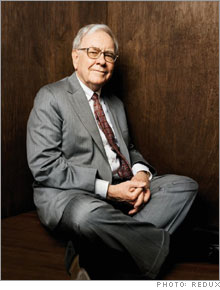
A Minimum Tax for the Wealthy
By WARREN E. BUFFETT
Published: November 25, 2012
Omaha
SUPPOSE that an investor you admire and trust comes to you with an investment idea. “This is a good one,” he says enthusiastically. “I’m in it, and I think you should be, too.”Would your reply possibly be this? “Well, it all depends on what my tax rate will be on the gain you’re saying we’re going to make. If the taxes are too high, I would rather leave the money in my savings account, earning a quarter of 1 percent.” Only in Grover Norquist’s imagination does such a response exist.Between 1951 and 1954, when the capital gains rate was 25 percent and marginal rates on dividends reached 91 percent in extreme cases, I sold securities and did pretty well. In the years from 1956 to 1969, the top marginal rate fell modestly, but was still a lofty 70 percent — and the tax rate on capital gains inched up to 27.5 percent. I was managing funds for investors then. Never did anyone mention taxes as a reason to forgo an investment opportunity that I offered.Under those burdensome rates, moreover, both employment and the gross domestic product (a measure of the nation’s economic output) increased at a rapid clip. The middle class and the rich alike gained ground.So let’s forget about the rich and ultrarich going on strike and stuffing their ample funds under their mattresses if — gasp — capital gains rates and ordinary income rates are increased. The ultrarich, including me, will forever pursue investment opportunities.And, wow, do we have plenty to invest. The Forbes 400, the wealthiest individuals in America, hit a new group record for wealth this year: $1.7 trillion. That’s more than five times the $300 billion total in 1992. In recent years, my gang has been leaving the middle class in the dust.A huge tail wind from tax cuts has pushed us along. In 1992, the tax paid by the 400 highest incomes in the United States (a different universe from the Forbes list) averaged 26.4 percent of adjusted gross income. In 2009, the most recent year reported, the rate was 19.9 percent. It’s nice to have friends in high places.The group’s average income in 2009 was $202 million — which works out to a “wage” of $97,000 per hour, based on a 40-hour workweek. (I’m assuming they’re paid during lunch hours.) Yet more than a quarter of these ultrawealthy paid less than 15 percent of their take in combined federal income and payroll taxes. Half of this crew paid less than 20 percent. And — brace yourself — a few actually paid nothing.This outrage points to the necessity for more than a simple revision in upper-end tax rates, though that’s the place to start. I support President Obama’s proposal to eliminate the Bush tax cuts for high-income taxpayers. However, I prefer a cutoff point somewhat above $250,000 — maybe $500,000 or so.Additionally, we need Congress, right now, to enact a minimum tax on high incomes. I would suggest 30 percent of taxable income between $1 million and $10 million, and 35 percent on amounts above that. A plain and simple rule like that will block the efforts of lobbyists, lawyers and contribution-hungry legislators to keep the ultrarich paying rates well below those incurred by people with income just a tiny fraction of ours. Only a minimum tax on very high incomes will prevent the stated tax rate from being eviscerated by these warriors for the wealthy.Above all, we should not postpone these changes in the name of “reforming” the tax code. True, changes are badly needed. We need to get rid of arrangements like “carried interest” that enable income from labor to be magically converted into capital gains. And it’s sickening that a Cayman Islands mail drop can be central to tax maneuvering by wealthy individuals and corporations.But the reform of such complexities should not promote delay in our correcting simple and expensive inequities. We can’t let those who want to protect the privileged get away with insisting that we do nothing until we can do everything.Our government’s goal should be to bring in revenues of 18.5 percent of G.D.P. and spend about 21 percent of G.D.P. — levels that have been attained over extended periods in the past and can clearly be reached again. As the math makes clear, this won’t stem our budget deficits; in fact, it will continue them. But assuming even conservative projections about inflation and economic growth, this ratio of revenue to spending will keep America’s debt stable in relation to the country’s economic output.In the last fiscal year, we were far away from this fiscal balance — bringing in 15.5 percent of G.D.P. in revenue and spending 22.4 percent. Correcting our course will require major concessions by both Republicans and Democrats.All of America is waiting for Congress to offer a realistic and concrete plan for getting back to this fiscally sound path. Nothing less is acceptable.In the meantime, maybe you’ll run into someone with a terrific investment idea, who won’t go forward with it because of the tax he would owe when it succeeds. Send him my way. Let me unburden him.
Sunday, November 18, 2012
Bookforum Omnivore - America, Land of Inequality

This collection of links is nearly three weeks old, so you may have read some of these articles. Even so, there is some good stuff here. As usual, they come from Bookforum's Omnivore.
I highly recommend the In These Times article, The Welfare State of America: A manifesto on building social democracy in the age of austerity:
A movement to expand the welfare state has the potential to foster a new majoritarian Left coalition. Republicans know this—that’s why they manipulate the way welfare is perceived at every turn.
The reality is that 96 percent of Americans have benefited from government programs, but the Right works hard to hide that fact. It’s part of a deliberate strategy to divide the country into two camps by convincing the majority of voters that their labor is benefiting parasites dependent on the social safety net.
Democrats have too often bolstered this effort by echoing calls for “welfare reform” and “fiscal responsibility,” and by supporting policies that channel benefits through the tax code (such as the home-mortgage deduction) and private organizations (such as employer-provided health insurance). The result is a system that provides few benefits, makes them largely invisible and disproportionately benefits the more affluent.
In the face of this neoliberal consensus, the Left’s counter-mission must be to show that social democracy benefits everyone. Though this has been the errand of generations of liberals, their efforts have rarely gone beyond rebranding and messaging. Few have pushed for the structural changes necessary to build a strong welfare state.
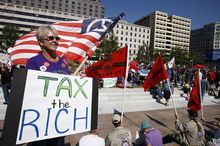
- From In These Times, Peter Frase and Bhaskar Sunkara on the Welfare State of America: A manifesto on building social democracy in the age of austerity (and a response by Frances Fox Piven).
- Beyond the welfare state: Martin O’Neill and Thad Williamson on Rawls’s radical vision for a better America.
- The rich and the rest: American inequality is a tale of two countries.
- J. Bradford DeLong on America, land of inequality.
- Chuck Marr of the Center on Budget and Policy Priorities has posted a breakdown of the "47 percent" of Americans (actually, 46 percent) who don't pay federal income taxes.
- From Vanity Fair, William D. Cohan and Bethany McLean go inside Jamie Dimon’s post-London Whale rallying.
- The Randian and the Bailout: Bob Benmosche was perfectly happy to while away his retirement on his Croatian vineyard — but the image of AIG employees being beaten up for their bonuses was just too much to bear.
- William D. Cohan how to crash an economy and escape the scene.
- William Pesek on putting America’s bankers out of business now.
- The critic Wall Street loves to lunch with: Noreen Malone on Felix Salmon’s foppish war on the banks.
Tuesday, November 15, 2011
Bookforum - Occupying the Nation
Just in case you have not been exposed to enough different perspectives on the #OWS movement, here are some more, via Bookforum. I'm curious to see if this will turn into an action other than protesting - but I don't see big business caving to few thousand protesters, especially with the police and the government mostly siding with Wall Street and the status quo. But, I am a pessimist when it comes to meaningful change.
Occupying the nation
From the latest issue of Logos, Christine Kelly on Generation Threat: Why the youth of America are occupying the nation; and a special section on the Occupy Wall Street movement, with essays by Stanley Aronowitz, Benjamin Barber,Stephen Eric Bronner, Jeff Madrick, Richard Wolin, and more. From Harper's, an interview with Slavoj Zizek. What would Emma do? An interview with Vivian Gornick, author of Emma Goldman: Revolution As a Way of Life, on the psychology of radicals and the OWS protests. From the John Birch Society's The New American, Jack Kerwick on two libertarianisms and OWS. Is the Vatican about to Occupy Wall Street? Peter Berger wonders. Jeff Sharlet on how the OWS movement discovered its bliss. The all-consuming presidential election season looms — how will Occupy respond? Tom Joad on why the 100% should support the Occupy movement. Sarah Leonard on OWS and the downfall of the smartest guys in the room. Whatever happened to discipline and hard work? America’s traditional, pro-wealth cultural vision is showing wear and tear, which may explain why criticisms made by OWS protesters have resonance. Kids Today: OWS is part of a major shift in ethical behavior among young people. Occupy Your Block: Protest without ever stepping foot in Zuccotti Park. A look at how the Occupy movement is inspiring unions to embrace bold tactics. Jeffrey Sachs on the new progressive movement: As before in history, the moment has arrived when people just can’t take it anymore. Will Occupy Wall Street lead to a new culture war? Arthur Brisbane on how OWS has proved to be a difficult, sprawling story to report. An article on Occupy Wall Street as a source of diverse editorial content. The branding of OWS: The director of the first Occupy TV ads talks to Salon about the battle over the protest movement's brand. Meet the ad men behind Occupy Wall Street.
Tuesday, November 01, 2011
Of American Revolutionaries and American Occupiers - Or . . . We Are All Occupiers Now
Bookforum posted two big collections of links yesterday on the #occupy movements - from a wide spectrum of perspectives. Some of it is not new here (Zizek on Charlie Rose), but much of it is new. Enjoy picking through the links to find the good stuff.
Everything you need to know about Occupy Wall Street: David Weigel and Lauren Hepler on a timeline of the movement, from February to today. David Graeber, the anti-leader of Occupy Wall Street: How the anthropologist, activist, and anarchist helped transform a hapless rally into a global protest movement. Dahlia Lithwick on how OWS confuses and ignores Fox News and the pundit class. Occupy and Evolve: Kelly Heresy has been with OWS since Day 1 and was part of the first group to live and work in Liberty Plaza. Matt Taibbi on how Wall Street isn't winning — it's cheating. We are all Occupiers now: Katha Pollitt on the mainstreaming of OWS. Alex Aums and James Broulard on the strange case of #OccupyPhoenix and the search for civic life in the exurbs. The newspaper of Occupy London, The Occupied Times of London, has been launched. Meet the 0.01 Percent: War profiteers. It really, really is 99 vs. 1. Charlie Rose interviews Slavoj Zizek. Democracy is the enemy: Slavoj Zizek on how, so far, the protesters have done well to avoid exposing themselves to the criticism that Lacan levelled at the students of '68 (and more). The stunning victory that OWS has already achieved: In just one month, the protesters have shifted the national dialogue from a relentless focus on the deficit to a discussion of the real issues facing Main Street. How Paul Ryan tried to answer the supercommittee and OWS protesters at the same time. An interview with Doug Henwood on the socially useless Wall Street class. David Harvey on how the party of Wall Street meets its nemesis. "I Am Wall Street": Here is a samizdat anti-Occupy one-pager, first found at Occupy Chicago. Gotcha interviewer portrays OWS as drug-addled farce. Don't diss the drum circles: Danny Goldberg writes in defense of hippies. We’re hoping General Assembly votes MC Moneypenney’s hot new single to be the official anthem of Occupy Wall Street. Here is sex advice from Occupy Wall Street protesters.

* * * * * * *
The latest issue of The Occupied Wall Street Journal is out. Justin Elliot on the future of Occupy: Four key questions. Amy Dean on OWS and America’s democratic tradition. Objecting or objectified? At Occupy Wall Street women get attention, but not always for their message. Jonathan Topaz on why Occupy Wall Street isn’t particularly revolutionary. What would James Madison do: Would the framers support the OWS movement? How to deal with the police is a point of dispute between Social Democratic Anarchists and Communist Anarchists. Occupy Judaism: The Jews who held a Yom Kippur service at OWS were upholding an American tradition of invoking religion to spur progressive action. The Occupy movement is the latest example of the impact radical action and ideas can have when the system is weak. A look at what the #OccupyTogether encampments can teach society about sustainability. It’s not a hippie thing: Don’t be fooled by the drum circles — today’s protests have more in common with the anti-Hoover 1930s than the antiwar ’60s and ’70s (and more). Jennifer Mercieca writes of American revolutionaries and American occupiers. It has been quite some time after Georges Sorel has proposed the idea of General Strike: Irakli Zurab Kakabadze on OWS and a polyphonic general strike. The 99 Percenters have brought their protest to the Navy. The Vatican confounds conservatives: Will we soon see a distinguished-looking older man in long white robes walking among the OWS demonstrators in Zuccotti Park? From Tea Party Review, here is a conservative lesson from Occupy Wall Street. The American Society for the Defense of Tradition, Family and Property “occupies” 7,500 public squares — and goes unreported; and John Ritchie on what he saw at Occupy Wall Street. From the Mises Institute, George Reisman writes in praise of the capitalist 1 percent; and Llewellyn Rockwell on how the state is the 1 percent. Get a Job! Working is (usually) more admirable than protesting.
Tuesday, October 18, 2011
Occupy Wall Street - Chris Hedges shuts down CBC Kevin O'Leary
Occupy Wall Street - Pulitzer Prize winning journalist Chris Hedges shuts down CBC commentator Kevin O'Leary as they discuss Wall Street protests.
Hedges makes these anchors look pretty silly.
The anchor actually says that Hedges sounds like, "A left-wing nutbar." Then Hedges dismantles him.
Hedges makes these anchors look pretty silly.
The anchor actually says that Hedges sounds like, "A left-wing nutbar." Then Hedges dismantles him.
Thursday, September 29, 2011
Robert Reich: Why Inequality Is the Real Cause of Our Ongoing Terrible Economy
I shared this Robert Reich article (found at Guernica: A Magazine of Art and Politics) on Facebook a day or two ago. Reich's most recent book is Supercapitalism: The Transformation of Business, Democracy, and Everyday Life.
This article seems very relevant to a couple of other things posted here today, so I wanted to offer a few quotes, in relation to these posts:
Open Culture - Meltdown: The Secret History of the Global Financial Collapse
and
Reich's article is one of the best things I have read on the current financial situation in this country. The political right may ridicule Obama and claim he is waging "class warfare" by asking the very wealthy to pay a slightly higher tax rate, but this really is an issue of inequality between the elite wealthy class and the rest of us. It's amazing how in-sync the GOP is on this phrase and this theme of class warfare - they are very well organized.
And they are wrong. This is from a recent post on Reich's blog:
And they are wrong. This is from a recent post on Reich's blog:
Republicans accuse the President of instigating “class warfare.” But it’s not warfare to demand the rich pay their fair share of taxes to bring down America’s long-term debt.In the Guernica article, Reich further argues:
After all, the richest 1 percent of Americans now takes home more than 20 percent of total income. That’s the highest share going to the top 1 percent in almost 90 years.
And they now pay at the lowest tax rates in half a century — half the rate they paid on ordinary income prior to 1981.
Reviving the middle class requires that we reverse the nation’s decades-long trend toward widening inequality. This is possible notwithstanding the political power of the executive class. So many people are now being hit by job losses, sagging incomes, and declining home values that Americans could be mobilized.
Moreover, an economy is not a zero-sum game. Even the executive class has an enlightened self-interest in reversing the trend; just as a rising tide lifts all boats, the ebbing tide is now threatening to beach many of the yachts. The question is whether, and when, we will summon the political will. We have summoned it before in even bleaker times.
Americans are being mobilized - this article was written before the #occupywallstreet campaign (created by Adbusters) got underway. But he makes some seriously important points about the financial inequality in this country that are exactly why this campaign is happening and exactly why people are turning out every day for nearly two weeks now.
He points out in the article that when the very wealthy took home a smaller percentage of the total income, the middle class thrived and the economy grew at a record pace. But in the years when they took home a higher percentage, the economy slowed and median wages stagnated.
He points out in the article that when the very wealthy took home a smaller percentage of the total income, the middle class thrived and the economy grew at a record pace. But in the years when they took home a higher percentage, the economy slowed and median wages stagnated.
It’s no mere coincidence that over the last century the top earners’ share of the nation’s total income peaked in 1928 and 2007—the two years just preceding the biggest downturns.Excellent point. Here is the beginning of the article.
Go read the whole post.Robert Reich: Why Inequality Is the Real Cause of Our Ongoing Terrible Economy
September 6, 2011
The 5 percent of Americans with the highest incomes now account for 37 percent of all consumer purchases, according to the latest research from Moody’s Analytics. That should come as no surprise. Our society has become more and more unequal.
When so much income goes to the top, the middle class doesn’t have enough purchasing power to keep the economy going without sinking ever more deeply into debt—which, as we’ve seen, ends badly. An economy so dependent on the spending of a few is also prone to great booms and busts. The rich splurge and speculate when their savings are doing well. But when the values of their assets tumble, they pull back. That can lead to wild gyrations. Sound familiar?The economy won’t really bounce back until America’s surge toward inequality is reversed. Even if by some miracle President Obama gets support for a second big stimulus while Ben S. Bernanke’s Fed keeps interest rates near zero, neither will do the trick without a middle class capable of spending. Pump-priming works only when a well contains enough water.
Finally, here is Senate candidate Elizabeth Warren explaining why the wealthy should pay a little more taxes (and this applies to corporations, as well, in my opinion). She really gets rolling at about :55 into the video.
Open Culture - Meltdown: The Secret History of the Global Financial Collapse
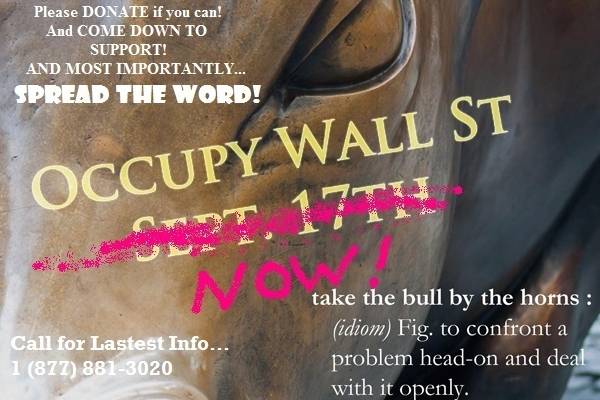
Cool documentary share from Open Culture. This series explains WHY people are protesting on Wall Street in the #occupywallstreet movement, our own little experiment in citizen rebellion.
Doc Zone, a documentary series produced by CBC Television, is now airing, Meltdown, a four part investigation into the great financial debacle of 2008. Along the way, the CBC’s Terence McKenna takes viewers “behind the headlines and into the backrooms at the highest levels of world governments and banking institutions, revealing the astonishing level of backstabbing and tension behind the scenes as the world came dangerously close to another Great Depression.”
Below, we have posted the first episode called “The Men Who Crashed the World.” The remaining programs can be watched by clicking here and scrolling down the page. Or by heading to Al Jazeera’s English site, which also hosts the four-part series. H/T to William for sending this along…
Follow us on Twitter and Facebook, and we’ll keep pointing you to free cultural goodies daily…
Subscribe to:
Comments (Atom)