Showing posts with label doubt. Show all posts

Monday, August 13, 2012

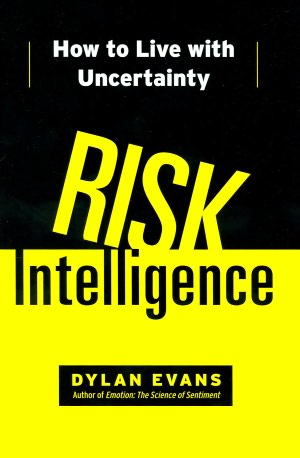
Dylan Evans - Risk Intelligence: How to live with uncertainty


Dylan Evens is an expert in "risk intelligence," a kind of intelligence that is not correlated with IQ and is often difficult to identify because those who possess it are working in fields as diverse as weather-forecasting, professional poker players, and hedge-fund managers. According to Evans, "Many people in positions which require high risk intelligence - doctors, financial regulators and bankers - seem unable to navigate doubt and uncertainty."

Evans (along with Benjamin Jakobus) is the founder of Projection Point, a team of consultants based in the US, Europe, and Australia "who help a wide variety of organizations to manage and sustain risk intelligence." He is the author of Risk Intelligence: How to Live with Uncertainty.

Risk Intelligence: How to live with uncertainty

5th Jul 2012

Listen to the audio

(full recording including audience Q&A) - Please right-click link and choose "Save Link As..." to download audio file onto your computer.

Watch the video (edited highlights)

RSA Thursday

In an age of global uncertainty it has become increasingly difficult to work out what exactly should be done next.

There is a special kind of intelligence for dealing with risk and uncertainty. It doesn't correlate with IQ and most psychologists fail to spot it because it is found in such a disparate, rag-tag group of people such as weather-forecasters, professional gamblers and hedge-fund managers. Many people in positions which require high risk intelligence - doctors, financial regulators and bankers - seem unable to navigate doubt and uncertainty.

Risk intelligence expert Dylan Evans visits the RSA to provide a traveller's guide to the twilight zone of probabilities and speculation, arguing that we can all learn a lot from expert gamblers, not just about money,  but in areas as diverse as dealing with climate change to combating terrorism.

Speaker: Dylan Evans, founder, Projection Point, a global leader in risk intelligence solutions.

Chair: Julian Thompson, director of enterprise, RSA.

See what people said on Twitter: #RSArisk

Get the latest RSA Audio

Subscribe to RSA Audio iTunes Podcast iTunes | RSA Audio RSS Feed RSS | RSA Mixcloud page Mixcloud

Thursday, October 13, 2011

Christopher Lane - The Benefit of Doubt


From The New Humanist, Christopher Lane argues that doubt is good for us. Lane is author of the new book, The Age of Doubt: Tracing the Roots of Our Religious Uncertainty. In this essay, adapted from the book, Lane argues for an agnostic perspective - he quotes American playwright John Patrick Shanley: “doubt requires more courage than conviction does, and more energy; because conviction is a resting place and doubt is infinite – it is a passionate exercise.”
 

The benefit of doubt

We shouldn’t be afraid of being uncertain, argues Christopher Lane

"New Humanist is unusual, interesting, lively and intelligent"– Philip Pullman. Get our print magazine delivered direct to your door 6 times a years for just £21 (£25 outside UK), and support the spread of reason. Subscribe today.   
flying thought 1 by Irene Fuga
Our culture has become impoverished by certainty. In our overheated climate of polarised public debate, we give less credence to uncertainty; yet the crises that preoccupy us – including religious extremism – demand that we tolerate increasing amounts of it.

Doubt and its religious cousin agnosticism, a word rarely heard nowadays, may have fallen out of fashion, but they have much to teach us, despite the disdain of Richard Dawkins, who famously wrote in The God Delusion: “I am agnostic only to the extent that I am agnostic about fairies at the bottom of the garden.” He also quotes approvingly Quentin de la Bédoyère, science editor of the Catholic Herald, who in 2006 wrote that the Catholic historian Hugh Ross Williamson respected firm religious belief and certain unbelief, but “reserved his contempt for the wishy-washy boneless mediocrities who flapped around in the middle.”

To see doubters and freethinkers such as Herbert Spencer, Leslie Stephen, George Eliot, Thomas Huxley (who coined the word “agnostic”) and Darwin himself mocked in this way, given their intense engagement with complex human issues, only highlights the boldness of their thinking and the intellectual hubris of today’s unbridled certainty. The stridency of both Dawkins and de la Bédoyère misses how these and other Victorian intellectuals saw doubt as a creative force – inseparable from belief, thought, and debate, and a much-needed antidote to fanaticism and zealotry.

Ironically, it was the Victorians, often dismissed as prudish and uptight, who led the way to an open-mindedness and engagement with ambiguity that stands in stark contrast to the impoverishment of contemporary thinking about religious doubt and belief. The debates about religion and science that flared in the 19th century predate by almost two centuries the “new” atheism that has evolved today, undermining many of its claims for originality. As one scholar describes the Victorian era, “Never has an age in history produced such a detailed literature of lost faith, or so many great men and women of religious temperament standing outside organised religion.”

In fact, that explosion of religious doubt developed into a powerful cultural force. For the first time in history, doubt became a serious, widespread concern. It galvanised cultural debate and scientific inquiry. It inspired sermons, plays, and articles. It even rose to the level of a popular philosophy.
Read the whole article.