Showing posts with label climate change. Show all posts

Tuesday, October 07, 2014

Matthew Nisbet - Naomi Klein or Al Gore? Making Sense of Contrasting Views on Climate Change

http://weathersavior.com/wp-content/uploads/2014/05/climateChange.jpg

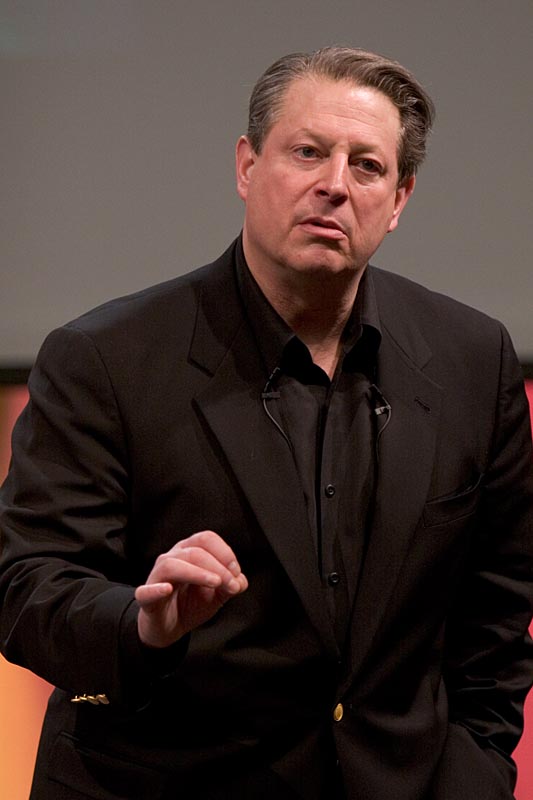
From The Conversation, Matthew Nisbet discusses the opposing visions of climate change embodied by Naomi Klein and Bill McGibbon on one side, and Al Gore and Nicholas Stern (UK economist) on the other side. The real distinction is a grassroots, bottom-up approach that rejects capitalism as a part of the solution (Klein and McKibbon) vs. an economic, top-down approach that believes that market-based policies like carbon pricing can solve the problem.

For what it's worth, I think capitalism is one of the worst things for the environment, and I doubt that there is any way we can abolish it. And I also believe that a market-based approach will never make the necessary changes to protect the environment without being forced to do so by market pressures or legislation.

That side, Klein and McKibbon offer a better path (with some concessions) than Gore and other members of ruling class.

Naomi Klein's new book is This Changes Everything: Capitalism vs. the Climate (2014).

Naomi Klein or Al Gore? Making sense of contrasting views on climate change

6 October 2014


Earth is “fucked” and our insatiable growth economy is to blame. So argues Naomi Klein in her intentionally provocative best-seller This Changes Everything: Capitalism vs. the Climate.


Matthew Nisbet
- Associate Professor of Communication at Northeastern University. Disclosure Statement. Matthew Nisbet has received research grants from the Robert Wood Johnson Foundation, the Nathan Cummings Foundation, and the MacArthur Foundation. His own outlook on the social implications of climate change is closest to that of the Ecomodernists (see table).
 
For Klein, it’s all about mobilising the grassroots. Stephen Melkisethian, CC BY-NC-ND

Earth is “fucked” and our insatiable growth economy is to blame. So argues Naomi Klein in her intentionally provocative best-seller This Changes Everything: Capitalism vs. the Climate.

Klein is the latest among an influential network of like-minded authors who have declared that modern society is at war with nature in a battle that threatens the survivial of the human species. Examples include US writer/activist Bill McKibben, Canadian broadcaster David Suzuki, and Australian philosopher Clive Hamilton.


Klein: To fight climate change, we have to end capitalism. Mariusz Kubik, CC BY

Deeply skeptical of technological and market-based approaches to climate change, they urge the need for a new consciousness spread through grassroots organizing and protest. “Only mass movements can save us now,” Klein writes. She argues that “profound and radical economic transformation” is needed to avoid certain catastrophe.

The more than 300,000 people who turned out for last month’s People’s Climate March in New York are just the start.

For Klein, human survival demands that we engage in a furious battle against the status quo, one equal in intensity to the efforts that ended slavery and European colonialism. “Both these transformative movements forced ruling elites to relinquish practices that were still extraordinarily profitable, much as fossil fuel extraction is today,” she writes.

An abolitionist-style climate movement would allow a global alliance of left-wing activists to achieve a diverse range of social justice goals, argues Klein. These include repealing free trade agreements, easing immigration rules, establishing indigenous rights, and guaranteeing a minimum income level.

Ultimately, for Klein, climate change is our best chance to right the “festering wrongs” of colonialism and slavery, “the unfinished business of liberation.”

As a public intellectual and aspiring movement leader, Klein sees her mission as winning a “battle of cultural worldviews,” opening up the space for a “full throated debate about values,” telling new stories to “replace the ones that have failed us.”


Bill McKibben’s views align with Klein’s. Hotshot977, CC BY-SA

In these new stories, Klein and her intellectual confederates value solutions that they see as coming from the natural world. They eschew technologies such as nuclear power or genetic engineering, arguing on behalf of a transition to smaller scale, locally controlled solar, wind, and geothermal energy technologies and organic farming.

In this egalitarian future where people grow their own food, produce their own energy, share jobs working 3-4 days/week, and deliberate in small groups, traditional definitions of economic growth would cease, with progress defined instead in terms of health, happiness, and community.

Ultimately, the hoped-for grand bargain on climate change will be that as rich nations “de-grow” their economies, they will share their surplus wealth and renewable technologies with China, India and other developing countries. In return these countries will choose a different, less consumer-driven path.


Public intellectuals, disruptive ideas


In a paper just published at Wiley Interdisciplinary Reviews Climate Change, I analyze how public intellectuals such as Klein and McKibben shape debate over climate change. I compare their arguments to other prominent public intellectuals such as UK economist Nicholas Stern, former US Vice President Al Gore, The New York Times’ writer Andrew Revkin, and Oxford University anthropologist Steve Rayner.

Gore and Stern differ from Klein in arguing that climate change can be tackled primarily through market-based policies like carbon pricing, rejecting the idea that we must choose between growing the economy and fighting climate change.

In contrast, Rayner was among the first public intellectuals to argue that climate change is more accurately framed as an energy innovation and societal resilience problem. He has also strongly questioned the pursuit of a binding international agreement to limit emissions.

Similarly, as Revkin recently noted, contrary to the arguments of Klein, renewable energy sources alone are not likely to meet the “intertwined challenges of expanding energy access [among the world’s poor] while limiting global warming.” Like Rayner, he argues that we need to rethink our assumptions, and broaden the menu of policy options and technologies considered.

On the need to diversify approaches, Stern along with Columbia University economist Jeffrey Sachs have offered similar arguments, but place much stronger faith than either Rayner or Revkin in the ability of a global international agreement to decarbonize the world economy, guided by timetables, temperature targets, carbon budgets, research and development investments and carbon pricing signals.

In defining what climate change means, these public intellectuals and others help create a common outlook, informally guiding the work of like-minded advocates, funders, journalists, and governmental officials.


Public intellectuals and their views on climate change. Zoom for more detail. Matthew Nisbet, Author provided [click to enlarge]

Given the complexity of climate change as a social problem it is possible for competing narratives and explanations about its social implications and solutions to exist.

So it is not surprising that among public intellectuals there is disagreement over what the issue means for society, leading to intense clashes among those who look to one discourse over another to guide their work.

Revkin, for example, has criticized the grassroots campaign against the Keystone XL oil pipeline as distracting from the “core issues involving our energy future and is largely insignificant if your concern is averting a buildup of carbon dioxide in the atmosphere.”

He has also argued the need to chart a path to a “Good Anthropocene”. In this new “Age of Us”, humans have generated considerable ecological and social risks, but at the same time, in the face of this uncertainty, possess the ability to create a better future through technological innovation and resilience strategies.

Not surprisingly, Bill McKibben dismisses Revkin’s outlook on climate change as “relentlessly middle seeking.” Incredible Hulk actor Mark Ruffalo, who opposes the pipeline, has called Revkin a “climate coward.”

For his part, Clive Hamilton argues that Revkin and other public intellectuals promoting the possibility of the “good Anthropocene” are “unscientific and live in a fantasy world of their own construction.”


Gore: We can fight climate change and grow the economy. Breuwi, CC BY

These disagreements over the social implications of climate change reflect differing values, intellectual traditions, and visions of the “good society.” They are embedded in contrasting beliefs about nature, risk, progress, authority, and technology.

In this battle among competing ideas, climate change becomes “a synecdoche – a figurative turn of phrase in which something stands in for something else — for something much more important than simply the way humans are changing the weather,” notes Kings College London’s Mike Hulme (a public intellectual himself).

Reading Klein, it is clear that she is not confident that the mass movement she calls for and the deep structural reforms that “change everything” are achievable. Instead, like radical intellectuals of movements past, her utopian vision serves an important political function, creating space for more pragmatic, less revolutionary social innovations.

Many who are inspired by Klein’s arguments will take to the streets, to social media, and to campuses to wage battle for their worldviews. For the rest of us, we should carefully engage with Klein’s ideas, seeking out with equal enthusiasm and critical reflection the arguments of other public intellectuals in the climate debate.

The goal is not to choose among competing perspectives, but to grapple with their tensions and uncertainties. Through this process, as we call on our political leaders to act and work with others on solutions, we can hold our own convictions and opinions more lightly; identifying what is of value among the ideas offered by those on the left, right, and in the center.

Thursday, May 15, 2014

Chris Hedges - The Power of Imagination

This is an interesting article from Chris Hedges - posted at TruthDig. Rather than the usual political analysis and criticism, here he waxes somewhat philosophical. However, he demonstrates a bit of the pre/trans fallacy that is an aspect of integral theory. Here is the key quote:
Only this premodern ethic can save us as we enter a future of economic uncertainty and endure the catastrophe of climate change. Social and economic life will again have to be communal. The lusts of capitalism will have to be tamed or destroyed. And there will have to be a recovery of reverence for the sacred, the bedrock of premodern society, so we can see each other and the earth not as objects to exploit but as living beings to be revered and protected. This means inculcating a very different vision of human society.
Yes, we need a deeper and more embodied sense of the sacred, but we do NOT need a return to the premodern ethic. The premodern worldview is characterized by magical thinking, superstition, and the lack of an essential, rational consciousness capable of post-formal thinking (symbolic thought as opposed to belief in power gods and correlations between human actions and forces of nature).

The best known example of this is the difference in how God is depicted in the Old Testament (wrathful, jealous, angry, punitive) and the God of the New Testament, as embodied in Jesus (loving, centered in justice, inclusive). The first is pre-rational, the later is rational.

What we need is a transpersonal, post-rational model of the sacred as a way to embody purpose in meaning in nature as something other than physical material to be exploited.

The Power of Imagination

Posted on May 11, 2014
By Chris Hedges
 

John William Waterhouse’s painting “Miranda—The Tempest.”

Those in the premodern world who hoarded possessions and refused to redistribute supplies and food, who turned their backs on the weak and the sick, who lived exclusively for hedonism and their own power, were despised. Those in modern society who are shunned as odd, neurotic or eccentric, who are disconnected from the prosaic world of objective phenomena and fact, would have been valued in premodern cultures for their ability to see what others could not see. Dreams and visions—considered ways to connect with the wisdom of ancestors—were integral to existence in distant times. Property was communal then. Status was conferred by personal heroism and providing for the weak and the indigent. And economic exchanges carried the potential for malice, hatred and evil: When wampum was exchanged by Native Americans the transaction had to include “medicine” that protected each party against “spiritual infection.”

Only this premodern ethic can save us as we enter a future of economic uncertainty and endure the catastrophe of climate change. Social and economic life will again have to be communal. The lusts of capitalism will have to be tamed or destroyed. And there will have to be a recovery of reverence for the sacred, the bedrock of premodern society, so we can see each other and the earth not as objects to exploit but as living beings to be revered and protected. This means inculcating a very different vision of human society.

Our greatest oracles have sought to impart this wisdom. William Shakespeare lamented the loss of the pagan rituals eradicated by the Reformation. When Shakespeare was a boy, the critic Harold Goddard pointed out, he experienced the religious pageants, morality plays, church festivals, cycle plays, feast and saint days, displays of relics, bawdy May Day celebrations and tales of miracles that made up the belief system during the reign of the medieval Catholic Church. The Puritans, the ideological vanguard of the technological order, would eventually ban or greatly weaken all of these, and they made war on the Elizabethan and Jacobean theaters for celebrating these premodern practices. The London authorities in 1596 prohibited the public presentation of plays within city limits. Theaters had to relocate to the south side of the River Thames. The Puritans, in power under Cromwell in 1642, closed the London theaters. In Puritan New England at about the same time the authorities banned games, revels and “harlotry plays.” In 1644 the Puritans tore down Shakespeare’s Globe Theatre. Within four years all other theaters in and around London had been destroyed. The Puritans understood, in a way that is perhaps lost to us today, that Shakespeare subverts modernity.

Shakespeare portrays the tension between the premodern and the modern. He sees the rise of the modern as dangerous. The premodern reserved a place in the cosmos for human imagination. The new, modern, Machiavellian ethic of self-promotion, manipulation, bureaucracy and deceit—personified by Iago, Richard III and Lady Macbeth—deformed human society. Shakespeare lived during a moment when the modern world—whose technology allowed it to acquire weapons of such unrivaled force that it could conquer whole empires, including the Americas and later China—instilled through violence this new secular religion. He feared its demonic power.

Oracles were revered in premodern societies. These oracles were in touch with realities and forces that lay beyond the empirical. All societies have oracles—such as Thomas Paine, Emma Goldman, W.E.B. Du Bois and James Baldwin in the United States—but in a modern society they are pushed to the margins, ridiculed and often persecuted. Those who spoke out of their vision quests in Native American society, or from Delphi in ancient Greece, did not employ the cold, clinical language of science and reason. They spoke, rather, in the nebulous language of love, tenderness, patience, justice, redemption and forgiveness. They paid homage, and called on us to pay homage, to the mysterious incongruities of human existence. A society that loses its respect for the sacred, that ignores its oracles and severs itself from the power of human imagination, ensures its obliteration.

Reason makes possible the calculations, science and technological advances of industrial civilization. But reason does not lift us upward to the heavens. It does not bring us into contact with the sacred. It does not permit us to curb our self-destructive urges. Herman Melville, Fyodor Dostoevsky, Emily Dickinson, Marcel Proust, William Faulkner, James Joyce, Samuel Beckett, Lorraine Hansberry and August Wilson mocked the myth of human progress and the folly of hubris. They, like Shakespeare, warned that conflating technological advancement with human progress deforms us.

Prospero in Shakespeare’s “The Tempest” is master of an enchanted island where he has absolute power. He keeps the primitive Caliban and the spirit Ariel as his slaves. The play is about liberty, love and the capacity for awe. It reminds us that the power unleashed in the wilderness can prompt us to good if we honor the sacred but to monstrous evil if we do not. There are few constraints in the wilderness, a theme that would later be explored by the novelist Joseph Conrad. Imagination triumphed in “The Tempest” because those who were bound to their senses and lusts were subjugated. However, overseas in the American colonies, as Shakespeare knew, the poison of dark passions embodied by the Calibans and evil dukes of the world had unleashed an orgy of greed, theft and genocide.

Those who worship themselves, the essence of the modern, commit spiritual suicide. In love with himself after seeing his reflection in a pond, Narcissus is doomed, as many in the modern world are, by vanity, celebrity and the need for admirers and sycophants. Narcissists master the arts of manipulation, seduction, power and control. They eschew empathy, honesty, trust and transparency. It is a form of mental illness.

It is through imagination that we can reach the dark regions of the human psyche and face our mortality and the brevity of existence. It is through imagination that we can recover reverence and kinship. It is through imagination that we can see ourselves in our neighbors and the other living organisms of the earth. It is through imagination that we can envision other ways to form a society. The triumph of modern utilitarianism, implanted by violence, crushed the primacy of the human imagination. It enslaved us to the cult of the self. And with this enslavement came an inability to see, the central theme of “King Lear.” Imagination, as Goddard wrote, “is neither the language of nature nor the language of man, but both at once, the medium of communion between the two—as if the birds, unable to understand the speech of man, and man, unable to understand the songs of birds, yet longing to communicate, were to agree on a tongue made up of sounds they both could comprehend—the voice of running water perhaps or the wind in the trees. Imagination is the elemental speech in all senses, the first and the last, of primitive man and of the poets.”

All of the great visionaries and leaders of the Indian tribes, from medicine men like Black Elk and Sitting Bull to warriors such as Crazy Horse, in the presence of the natural world heard it speak to them, in the same way it spoke to Shakespeare, Dickinson or Walt Whitman. All elements of life, especially those that lie beyond articulation, infuse the human imagination. The communion—accentuated by vision quests, the sanctity of dreams, odd occurrences, miracles and the wonder of nature, as well as rituals that take place within a communal society—blurs the lines between the self and the world. This ability to connect with the sacred is what Percy Shelley meant when he wrote that poetry “lifts the veil from the hidden beauty of the world and makes familiar things as if they were not familiar.” We are reminded at that moment of the wonder of life and our insignificance in the vastness of the cosmos, reminded that, as Prospero said, “we are such stuff as dreams are made on.” Too often this wisdom comes too late, as it does when Othello stands over the dead Desdemona or Lear over his executed daughter, Cordelia. This wisdom makes grace possible. Songs, poetry, music, theater, dance, sculpture, art, fiction and ritual move human beings toward the sacred. They clear the way for transformation. The prosaic world of facts, data, science, news, technology, business and the military is cut off from the mysteries of creation and existence. We will recover this imagination, this capacity for the sacred, or we will vanish as a species. 


The World As It Is: Dispatches on the Myth of Human Progress

A collection of Truthdig Columns by Chris Hedges

Keep up with Chris Hedges’ latest columns, interviews, tour dates and more at www.truthdig.com/chris_hedges.

Thursday, May 08, 2014

SOLE - Why the Alex Jones Industrial Complex Must Be Dismantled

http://cdn0.dailydot.com/cache/4d/d9/4dd95c5b907f3d04148c9c171c61a346.jpg

This is an excellent article - although Alex Jones is so bat shit crazy that he is an easy target for a take down. Still, rap artist SOLE does it well. [The rap video, however, is likely an acquired taste.]

Here are just a few paragraphs, from The Daily Dot.

Why the Alex Jones industrial complex must be dismantled

BY SOLE

About a week ago I released a new video called "Fuck Alex Jones." Since the track has been released I've been bombarded with hundreds if not thousands of angry comments from the Infowars crowd, calling me a "faget," a sheep, and a "New World Order shill."

* * * * *
I went after Jones specifically because almost all of his propaganda plays into the hands of the extreme right wing in the United States. He dismisses feminism and gay rights as part of a New Word Order plot to reduce the population. He dismisses climate change as a hoax, and backs it up by giving weather reports on Mars. He attacks non-existent, nameless, faceless organizations like the Illuminati but ignores the evils being done by right-wing billionaires like the Koch Brothers.

His supporters are certified experts on the Bilderberg Group, but they seem to know nothing about the American Legislative Exchange Council, a group that literally writes laws for corporations and passes them into law. Who needs the Illuminati when you have people like that? What if we just do away with the word "Illuminati" and start talking about capitalism and the state?

You will never hear conspiracy theorists talk about class war; they are far more concerned with preserving their own status in this economic system. Like missionaries and populist demagogues of the past, they prey on the young and downtrodden, give them an all-encompassing worldview, call it "truth, and and label everyone who doesn't believe it a "sheep" who needs to "wake up."

I attack Infowars because it is not a revolutionary movement. It is chasing a mirage. It imagines the good ol’ days of 'merica, when white slave-owners wrote a constitution for other property owners, before they pushed west, killed multitudes of Native Americans (historical estimates range between 30-100 million) and stole their land. Those are the glory days of 1776 that the right-wing conspiracy crowd holds up as an ideal that we need to return to.

Will someone please tell them that those days never left us? It’s not the Illuminati that are sending drones to kill children in Yemen or having the NSA spy on us; it’s the logical endgame to the "spirit of 1776."

What just played out in Bundy Ranch is instructive in this light. According to the cult of Jones, we shouldn't worry about homeless people in cities being pushed out of the common spaces; we should worry about a white rancher in Nevada having his "liberty" trampled by the federal government. Both lay concerns of how public space should be used, but the latter believes that rights of cows to encroach on protected habitats is more important than the right of a homeless people to cover their bodies when they sleep outside in the winter.

Many criticize Jones because he uses his Prison Planet ™ store to sell things like expensive water filters and male enhancement pills, but what he is really selling is fear. His show is a never-ending litany of new things to be afraid of: FEMA camps, cities stockpiling hundreds of thousands of body bags, a government that knows everything you’re gonna do before you do. Name your fear, and Alex is selling it!

Tuesday, April 22, 2014

McKenzie Wark - Birth of Thanaticism


Interesting article from Public Seminar. This is their mission statement, at least the beginning of it.
Confronting fundamental problems of the human condition and pressing problems of the day, using the broad resources of social research, we seek to provoke critical and informed discussion by any means necessary.
In this article, McKenzie Wark argues that capitalism is simply the wrong word, a failing of the poetic function of critical thought.
I awoke from a dream with the notion that it might make more sense to call it thanatism, after Thanatos, son of Nyx (night) and Erebos(darkness), twin of Hypnos (sleep), as Homer and Hesiod seem more or less to agree.

I tried thanatism out on twitter, where Jennifer Mills wrote: “yeah, I think we have something more enthusiastically suicidal. Thanaticism?”

That seems like a handy word. Thanaticism: like a fanaticism, a gleeful, overly enthusiastic will to death. The slight echo of Thatcherism is useful also.
Indeed.

Birth of Thanaticism

April 3rd, 2014 

I don’t know why we still call it capitalism. It seems to be some sort of failure or blockage of the poetic function of critical thought.

Even its adherents have no problem calling it capitalism any more. Its critics seem to be reduced to adding modifiers to it: postfordist, neoliberal, or the rather charmingly optimistic ‘late’ capitalism. A bittersweet term, that one, as capitalism seems destined to outlive us all.

I awoke from a dream with the notion that it might make more sense to call it thanatism, after Thanatos, son of Nyx (night) and Erebos(darkness), twin of Hypnos (sleep), as Homer and Hesiod seem more or less to agree.

I tried thanatism out on twitter, where Jennifer Mills wrote: “yeah, I think we have something more enthusiastically suicidal. Thanaticism?”

That seems like a handy word. Thanaticism: like a fanaticism, a gleeful, overly enthusiastic will to death. The slight echo of Thatcherism is useful also.

Thanaticism: a social order which subordinates the production of use values to the production of exchange value, to the point that the production of exchange value threatens to extinguish the conditions of existence of use value. That might do as a first approximation.

Bill McKibben has suggested that climate scientists should go on strike. The Intergovernmental Panel on Climate Change released its 2013 report recently. It basically says what the last one said, with a bit more evidence, more detail, and worse projections. And still nothing much seems to be happening to stop Thanaticism. Why issue another report? It is not the science, it’s the political science that’s failed. Or maybe the political economy.

In the same week, BP quietly signaled their intention to fully exploit the carbon deposits which it owns the rights. A large part of the value of the company, after all, is the value of those rights. To not dig or suck or frack carbon out of the ground for fuel would be suicide for the company, and yet to turn it all into fuel and have that fuel burned, releasing the carbon into the air, puts the climate into a truly dangerous zone.

But that can’t stand in the way of the production of exchange value. Exchange value has to unreel its own inner logic to the end: to mass extinction. The tail that is capital is wagging the dog that is earth.

Perhaps its no accident that the privatization of space appears on the horizon as an investment opportunity at just this moment when earth is going to the dogs. The ruling class must know it is presiding over the depletion of the earth. So they are dreaming of space-hotels. They want to not be touched by this, but to still have excellent views.

It makes perfect sense that in these times agencies like the NSA are basically spying on everybody. The ruling class must know that they are the enemies now of our entire species. They are traitors to our species being. So not surprisingly they are panicky and paranoid. They imagine we’re all out to get them.

And so the state becomes an agent of generalized surveillance and armed force for the defense of property. The role of the state is no longer managing biopower. It cares less and less about the wellbeing of populations. Life is a threat to capital and has to be treated as such.

The role of the state is not to manage biopower but to manage thanopower. From whom is the maintenance of life to be withdrawn first? Which populations should fester and die off? First, those of no use as labor or consumers, and who have ceased already to be physically and mentally fit for the armed forces.

Much of these populations can no longer vote. They may shortly loose food stamps and other biopolitical support regimes. Only those willing and able to defend death to the death will have a right to live.

And that’s just in the over-developed world. Hundreds of millions now live in danger of rising seas, desertification and other metabolic rifts. Everyone knows this: those populations are henceforth to be treated as expendable.

Everybody knows things can’t go on as they are. Its obvious. Nobody likes to think about it too much. We all like our distractions. We’ll all take the click-bait. But really, everybody knows. There’s a good living to be made in the service of death, however. Any hint of an excuse for thanaticism as a way of life is heaped with Niagras of praise.

We no longer have public intellectuals; we have public idiots. Anybody with a story or a ‘game-changing’ idea can have some screen time, so long as it either deflects attention from thanaticism, or better – justifies it. Even the best of this era’s public idiots come off like used car salesmen. It is not a great age for the rhetorical arts.

It is clear that the university as we know it has to go. The sciences, social sciences and the humanities, each in their own ways, were dedicated to the struggle for knowledge. But it is hard to avoid the conclusion, no matter what one’s discipline, that the reigning order is a kind of thanatcisim.

The best traditional knowledge disciplines can do is to focus in tightly on some small, subsidiary problem, to just avoid the big picture and look at some detail. That no longer suffices. Traditional forms of knowledge production, which focus on minor or subsidiary kinds of knowledge are still too dangerous. All of them start to discover the traces of thanaticism at work.

So the university mast be destroyed. In its place, a celebration of all kinds of non-knowledge. Whole new disciplines are emerging, such as the inhumanities and the antisocial sciences. Their object is not the problem of the human or the social. Their object is thanaticism, its description and justification. We are to identify with, and celebrate, that which is inimical to life. Such an implausible and dysfunctional belief system can only succeed by abolishing its rivals.

All of which could be depressing. But depression is a subsidiary aspect of thanaticism. You are supposed to be depressed, and you are supposed to think that’s your individual failing or problem. Your bright illusory fantasy-world is ripped away from you, and the thanatic reality is bared – you are supposed to think its your fault. You have failed to believe. See a shrink. Take some drugs. Do some retail therapy.

Thanaticism also tries to incorporate those who doubt its rule with a make-over of their critique as new iterations of thatatic production. Buy a hybrid car! Do the recycling! No, do it properly! Separate that shit! Again, its reduced to personal virtue and responsibility. Its your fault that thanaticism wants to destroy the world. Its your fault as a consumer, and yet you have not choice but to consume.

“We later civilizations…  know too that we are mortal,” Valery said in 1919. At that moment, after the most vicious and useless war hitherto, such a thing could appear with some clarity. But we lost that clarity. And so: a modest proposal. Let’s at least name the thing after its primary attribute.

This is the era of the rule of thanaticism: the mode of production of non-life. Wake me when its over.

Saturday, March 15, 2014

Omnivore - Between Science and Pseudo-Science

From Bookforum's Omnivore blog, once again, another cool collection of links, this time exploring the terrain between science, pseudo-science, and parapsychology (among other things).

Between science and pseudo-science


Mar 14 2014
9:00AM

Thursday, November 15, 2012

Elke Weber - Our Energy Efficiency Paradox: Psychological Barriers to 'No-Brainer' Solutions


From New York University's (NYU) Educating for Sustainability series, this talk is by Elke Weber, professor of psychology at Columbia University's Earth Institute Center for Research on Environmental Decisions (and Co-Director of the Center for the Decision Sciences).

In this talk, Weber examines:
  1. human causes of, consequences of, and responses (adaptation and mitigation) to climate change
  2. the links between these aspects of climate change and cognitive, affective, motivational, interpersonal, and organizational responses and processes
Hers is a deeper understanding of why climate change is resisted and why we are unable to make necessary decisions (and take actions) when it seems like a "no-brainer."


In her public lecture, "Our Energy Efficiency Paradox: Psychological Barriers to 'No-Brainer' Solutions," Elke U. Weber, the Jerome A. Chazen Professor of International Business at Columbia Business School and a professor of psychology at Columbia University's Earth Institute Center for Research on Environmental Decisions, will place the psychological dimension of climate change within the broader context of human dimensions of climate change. She will address (a) human causes of, consequences of, and responses (adaptation and mitigation) to climate change and (b) the links between these aspects of climate change and cognitive, affective, motivational, interpersonal, and organizational responses and processes.

Weber is an expert on behavioral models of decision-making under risk and uncertainty, investigating psychologically and neurally plausible ways to model individual differences in risk taking and discounting, specifically in risky financial situations and environmental decisions.

The Educating for Sustainability series, which brings environmental scholars and leaders to NYU for public lectures, is cosponsored by the Sustainability Task Force and the Environmental Studies program.

Thursday, May 17, 2012

David Ropeik - How Tribalism Overrules Reason, and Makes Risky Times More Dangerous


From Big Think, this is a brief meditation on the ways that tribalism and in-group alliance can generate behaviors that are otherwise unthinkable. Perhaps the most outstanding example is the Nazi atrocities of the last century. But we can be incredibly insular in our allegiance to religions (as this article highlights), sports teams (Tucson has a lot of team bars, as I'm sure other cities do as well), and quite obviously in this election year, political parties (see Jonathan Haidt's work).

Here is an example of how this works in the climate debates:

Cultural Cognition of Scientific Consensus


Why do members of the public disagree—sharply and persistently—about facts on which expert scientists largely agree? We designed a study to test a distinctive explanation: the cultural cognition of scientific consensus. The “cultural cognition of risk” refers to the tendency of individuals to form risk perceptions that are congenial to their values. The study, published in the Journal of Risk Research, presents both correlational and experimental evidence confirming that cultural cognition shapes individuals’ beliefs about the existence of scientific consensus, and the process by which they form such beliefs, relating to climate change, the disposal of nuclear wastes, and the effect of permitting concealed possession of handguns. The implications of this dynamic for science communication and public policy-making are discussed.
Anyway, here is the Big Think article - this is a topic I want to explore more in the coming weeks and months. By the way, the image at the top is David Berreby's Us and Them: Understanding Your Tribal Mind (clearance priced at this Amazon link) is one of the best non-academic books I have read on this subject.


How Tribalism Overrules Reason, and Makes Risky Times More Dangerous

Tribal%20war       When I was a kid, my synagogue was right across the street from a Catholic church. Bellevue Avenue made such a clear dividing line between us – The Chosen People – and them…the enemy. No doubt the view from the other side of the street was the same. I had no idea at the time what a powerful metaphor those few lanes of asphalt made for one of the most significant aspects of human behavior…the powerful instinct of tribalism. It’s everywhere, protecting us by readily overriding reason, and morality, and pretty much anything else that could dim our chances of survival. And it's threatening us at the same time.

       Maybe you read about one recent manifestation in The New York Times, about the  Orthodox Jews of the Williamsburg section of Brooklyn who shunned a neighbor after he told police about a man – a fellow Jew - who was sexually abusing his son. You’d think that a father protecting his son would be the sort of behavior that would be honored. Nope. Not if it is disloyal to the tribe.

      That’s the synagogue side of the street. How about the long loathsome record of Catholic Church authorities abandoning their morals and forfeiting the safety of vulnerable children by covering up, ignoring, or denying extensive evidence of child abuse by a small number of priests. Same thing. Tribe first. Morals second.

     It’s not just religion, of course. We identify ourselves as members of all sorts of tribes; our families, political parties, race, gender, social organizations. We even identify tribally just based on where we live. Go Celtics, go Red Sox, go U.S. Olympic team! One study asked people whether, if they had a fatal disease, would they prefer a life-saving diagnosis from a computer that was 1,000 miles away, or the exact same diagnosis from a computer in their town, and a large majority preferred the same information if the source…a machine…was local.

     Tribalism is pervasive, and it controls a lot of our behavior, readily overriding reason. Think of the inhuman things we do in the name of tribal unity. Wars are essentially, and often quite specifically, tribalism. Genocides are tribalism - wipe out the other group to keep our group safe – taken to madness. Racism that lets us feel that our tribe is better than theirs, parents who end contact with their own children when they dare marry someone of a different faith or color, denial of evolution or climate change or other basic scientific truths when they challenge tribal beliefs. What stunning evidence of the power of tribalism! (By the way, it wasn’t just geocentrist Catholics in the 16 and 1700s who denied evidence that the earth travels around the sun. Some Christian biblical literalists still do. So do a handful of ultra orthodox Jews and Muslims.)

     Yet another example is the polarized way we argue about so many issues, and the incredible irony that as we make these arguments we claim to be intelligent (smart, therefore right) yet we ignorantly close our minds to views that conflict with ours. Dan Kahan, principal researcher into the phenomenon of Cultural Cognition, has found that our views are powerfully shaped so they agree with beliefs of the groups with which we most strongly identify. His research, along with the work of others, has also found that the more challenged our views are, the more we defend them…the more dogmatic and closed-minded we become...an intellectual form of ‘circle-the-wagons, we’re under attack’ tribal unity. Talk about tribalism overruling reason.

      As irrational as genocide and science denial and immorality may be, it makes absolute sense that tribalism can produce such behaviors. We are social animals. We have evolved to depend on our tribes, literally, for our safety and survival. As Jane Howard, biographer of anthropologist Margaret Mead, put it “Call it a clan, call it a network, call it a tribe, call it a family: Whatever you call it, whoever you are, you need one.” We may not be aware at the conscious level of the influence tribalism has on us, but then, most of human cognition happens below the radar of consciousness, and is driven not so much by the goal of getting good grades or winning Nobel Prizes as it is, first, to survive. Small wonder that this ultimate imperative dominates so much of how we behave, how we think and act, and how we treat each other. And it’s hardly surprising that the more unsettled and uncertain we feel and the less we feel we have control over how things are going - feelings that make us feel threatened -  the more we circle the wagons and fiercely fight for tribal success, looking to the tribe to keep us safe.

     It’s a sobering reflection on this inherent but potentially destructive aspect of human nature, in these unsettled and threateningly uncertain times.