Tuesday, December 18, 2012

The World's Coming to an End, I Don't Even Care . . .

As long as I can have my limo / And my orange hair. (Cheech and Chong, "Earache My Eye").

NPR's On Point ran a story yesterday about the "real" Mayan Astrology, since the world is supposed to end this weekend. You know, the Mayan apocalypse.


However, there is no need to be alarmed . . . John Hodgman has given us a Survival Guide for the Coming Apocalypse.

First up, Mayan Cosmology, the Hodgman's Apocalypse survival guide.
December 17, 2012 at 11:00 AM

Mayan Cosmology

The real cosmology of the ancient Maya, as Mayan apocalypse fever hits American pop culture.


A frieze of skulls adorns the side of the Tzompantli, the platform probably used to exhibit sacrificed prisoners at the ancient Maya city of Chichen Itza, with the main pyramid, El Castillo, in the background, in Mexic. (AP)

The shorthand has got the world’s attention. This Friday marks the end of a 5,000-year cycle in the Mayan calendar. Twist and reduce that a little further and you get the “Mayan apocalypse.” Further still and you get the “end of the world.”

Before we all run screaming from the end times, maybe this is a good time to learn a little more, for real, about the Maya and their calendars. Scholars who know roll their eyes at the “end times” talk. It’s just an odometer rolling over, they say. The Maya would laugh.

This hour, On Point: the real cosmology of the ancient Maya versus pop culture’s “Mayan apocalypse.”

-Tom Ashbrook


Guests
William Saturno, professor of archaeology at Boston University. He discovered ancient Maya astronomical tables near Xultun, Guatemala in 2011. In 2001, he found of one of the oldest extant murals yet discovered in the Maya region, at the site of San Bartolo in northeastern Guatemala

Edwin Roman, a native Guatemalan, he is an archaeologist at the University of Texas.
From Tom’s Reading List

New York Times “The discovery at Xultún, made by a team led by William A. Saturno of Boston University, was reported in the journal Science, published online on Thursday, and at a teleconference with reporters. The National Geographic Society, which supported the excavations, will describe the research in the June issue of its magazine.”

Daily Beast “To prepare for the approaching end of the world—a.k.a. the Mayan calendar’s doomsday on Dec. 21—Russian shoppers are clearing out the store shelves in the country’s far north and east, the first places that the apocalypse will supposedly hit. (That fateful moment is known to believers as the time when “the planet enters the Zero Stage,” a total blackout.) The end-timers are buying vodka, of course. They’re also stocking up on matches and candles, which have been going for three to four times the normal rate and have practically disappeared from stores in the cities of Chita and Krasnoyarsk. Even skeptics are stocking up on a few extra kilos of buckwheat, pasta, oatmeal, rice, and salt “for the black day.””

National Geographic “Some 1,600 years ago, the Temple of the Night Sun was a blood-red beacon visible for miles and adorned with giant masks of the Maya sun god as a shark, blood drinker, and jaguar. Long since lost to the Guatemalan jungle, the temple is finally showing its faces to archaeologists, and revealing new clues about the rivalrous kingdoms of the Maya.”
Photos

Check out this gallery of Mayan art discovered by William Saturno.


Video

Tongue firmly in cheek, the Australian prime minister took on the end of the world in this recent video address.

Now, from Open Culture, here is John Hodgman.

John Hodgman Presents a Survival Guide for the Coming Apocalypse 
December 10th, 2012
How can we all survive the apocalypse predicted by the Mayan calendar and make it to the other side of December 21? John Hodgman (you know him from The Daily Show and Apple TV ads) has it all figured out. Hopefully it’s not too much of a spoiler to say load up on mayo and urine while you still have time…. 
h/t Devour

Catch us on Facebook and Twitter and spread quality culture through your social world!

Monday, December 17, 2012

Nassim Nicholas Taleb - UNDERSTANDING IS A POOR SUBSTITUTE FOR CONVEXITY (ANTIFRAGILITY)


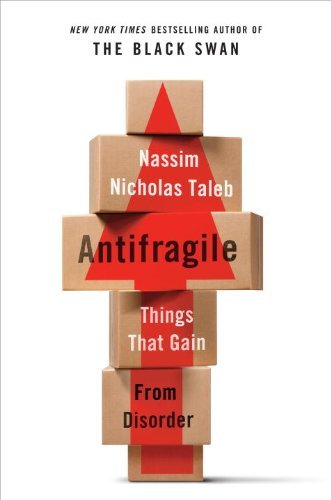
From Edge, former mathematical trader and current risk manager, and author of The Black Swan: Second Edition: The Impact of the Highly Improbable: With a new section: "On Robustness and Fragility", Nassim Nicholas Taleb talks about the ideas in his newest book, Antifragile: Things That Gain from Disorder.

Here is the publisher's ad-copy for the book:
Nassim Nicholas Taleb, the bestselling author of The Black Swan and one of the foremost thinkers of our time, reveals how to thrive in an uncertain world. 
Just as human bones get stronger when subjected to stress and tension, and rumors or riots intensify when someone tries to repress them, many things in life benefit from stress, disorder, volatility, and turmoil. What Taleb has identified and calls “antifragile” is that category of things that not only gain from chaos but need it in order to survive and flourish.

In The Black Swan, Taleb showed us that highly improbable and unpredictable events underlie almost everything about our world. In Antifragile, Taleb stands uncertainty on its head, making it desirable, even necessary, and proposes that things be built in an antifragile manner. The antifragile is beyond the resilient or robust. The resilient resists shocks and stays the same; the antifragile gets better and better.

Furthermore, the antifragile is immune to prediction errors and protected from adverse events. Why is the city-state better than the nation-state, why is debt bad for you, and why is what we call “efficient” not efficient at all? Why do government responses and social policies protect the strong and hurt the weak? Why should you write your resignation letter before even starting on the job? How did the sinking of the Titanic save lives? The book spans innovation by trial and error, life decisions, politics, urban planning, war, personal finance, economic systems, and medicine. And throughout, in addition to the street wisdom of Fat Tony of Brooklyn, the voices and recipes of ancient wisdom, from Roman, Greek, Semitic, and medieval sources, are loud and clear. 
Antifragile is a blueprint for living in a Black Swan world. 
Erudite, witty, and iconoclastic, Taleb’s message is revolutionary: The antifragile, and only the antifragile, will make it.
That's high praise, but this does look like a very interesting book for those who are into systems thinking.

UNDERSTANDING IS A POOR SUBSTITUTE FOR CONVEXITY (ANTIFRAGILITY)

Nassim Nicholas Taleb [12.12.12]


The point we will be making here is that logically, neither trial and error nor "chance" and serendipity can be behind the gains in technology and empirical science attributed to them. By definition chance cannot lead to long term gains (it would no longer be chance); trial and error cannot be unconditionally effective: errors cause planes to crash, buildings to collapse, and knowledge to regress.

NASSIM NICHOLAS TALEB, essayist and former mathematical trader, is Distinguished Professor of Risk Engineering at NYU’s Polytechnic Institute. He is the author the international bestseller The Black Swan and the recently published Antifragile: Things That Gain from Disorder (Amazon). (US: Random House; UK: Penguin Press)

Nassim Nicholas Taleb's Edge Bio

UNDERSTANDING IS A POOR SUBSTITUTE FOR CONVEXITY (ANTIFRAGILITY)


Something central, very central, is missing in historical accounts of scientific and technological discovery. The discourse and controversies focus on the role of luck as opposed to teleological programs (from telos, "aim"), that is, ones that rely on pre-set direction from formal science. This is a faux-debate: luck cannot lead to formal research policies; one cannot systematize, formalize, and program randomness. The driver is neither luck nor direction, but must be in the asymmetry (or convexity) of payoffs, a simple mathematical property that has lied hidden from the discourse, and the understanding of which can lead to precise research principles and protocols.

MISSING THE ASYMMETRY

The luck versus knowledge story is as follows. Ironically, we have vastly more evidence for results linked to luck than to those coming from the teleological, outside physics—even after discounting for the sensationalism. In some opaque and nonlinear fields, like medicine or engineering, the teleological exceptions are in the minority, such as a small number of designer drugs. This makes us live in the contradiction that we largely got here to where we are thanks to undirected chance, but we build research programs going forward based on direction and narratives. And, what is worse, we are fully conscious of the inconsistency.

The point we will be making here is that logically, neither trial and error nor "chance" and serendipity can be behind the gains in technology and empirical science attributed to them. By definition chance cannot lead to long term gains (it would no longer be chance); trial and error cannot be unconditionally effective: errors cause planes to crash, buildings to collapse, and knowledge to regress.

The beneficial properties have to reside in the type of exposure, that is, the payoff function and not in the "luck" part: there needs to be a significant asymmetry between the gains (as they need to be large) and the errors (small or harmless), and it is from such asymmetry that luck and trial and error can produce results. The general mathematical property of this asymmetry is convexity (which is explained in Figure 1); functions with larger gains than losses are nonlinear-convex and resemble financial options. Critically, convex payoffs benefit from uncertainty and disorder. The nonlinear properties of the payoff function, that is, convexity, allow us to formulate rational and rigorous research policies, and ones that allow the harvesting of randomness.

Figure 1- More Gain than Pain from a Random Event. The performance curves outward, hence looks "convex". Anywhere where such asymmetry prevails, we can call it convex, otherwise we are in a concave position. The implication is that you are harmed much less by an error (or a variation) than you can benefit from it, you would welcome uncertainty in the long run.

OPAQUE SYSTEMS AND OPTIONALITY

Further, it is in complex systems, ones in which we have little visibility of the chains of cause-consequences, that tinkering, bricolage, or similar variations of trial and error have been shown to vastly outperform the teleological—it is nature's modus operandi. But tinkering needs to be convex; it is imperative. Take the most opaque of all, cooking, which relies entirely on the heuristics of trial and error, as it has not been possible for us to design a dish directly from chemical equations or reverse-engineer a taste from nutritional labels. We take hummus, add an ingredient, say a spice, taste to see if there is an improvement from the complex interaction, and retain if we like the addition or discard the rest. Critically we have the option, not the obligation to keep the result, which allows us to retain the upper bound and be unaffected by adverse outcomes.

This "optionality" is what is behind the convexity of research outcomes. An option allows its user to get more upside than downside as he can select among the results what fits him and forget about the rest (he has the option, not the obligation). Hence our understanding of optionality can be extended to research programs — this discussion is motivated by the fact that the author spent most of his adult life as an option trader. If we translate François Jacob's idea into these terms, evolution is a convex function of stressors and errors —genetic mutations come at no cost and are retained only if they are an improvement (i). So are the ancestral heuristics and rules of thumbs embedded in society; formed like recipes by continuously taking the upper-bound of "what works". But unlike nature where choices are made in an automatic way via survival, human optionality requires the exercise of rational choice to ratchet up to something better than what precedes it —and, alas, humans have mental biases and cultural hindrances that nature doesn't have. Optionality frees us from the straightjacket of direction, predictions, plans, and narratives. (To use a metaphor from information theory, if you are going to a vacation resort offering you more options, you can predict your activities by asking a smaller number of questions ahead of time.)

While getting a better recipe for hummus will not change the world, some results offer abnormally large benefits from discovery; consider penicillin or chemotherapy or potential clean technologies and similar high impact events ("Black Swans"). The discovery of the first antimicrobial drugs came at the heel of hundreds of systematic (convex) trials in the 1920s by such people as Domagk whose research program consisted in trying out dyes without much understanding of the biological process behind the results. And unlike an explicit financial option for which the buyer pays a fee to a seller, hence tend to trade in a way to prevent undue profits, benefits from research are not zero-sum.

THINGS LOVE UNCERTAINTY

What allows us to map a research funding and investment methodology is a collection of mathematical properties that we have known heuristically since at least the 1700s and explicitly since around 1900 (with the results of Johan Jensen and Louis Bachelier). These properties identify the inevitability of gains from convexity and the counterintuitive benefit of uncertainty (ii, iii). Let us call the "convexity bias" the difference between the results of trial and error in which gains and harm are equal (linear), and one in which gains and harm are asymmetric ( to repeat, a convex payoff function). The central and useful properties are that a) The more convex the payoff function, expressed in difference between potential benefits and harm, the larger the bias. b) The more volatile the environment, the larger the bias. This last property is missed as humans have a propensity to hate uncertainty.

Antifragile is the name this author gave (for lack of a better one) to the broad class of phenomena endowed with such a convexity bias, as they gain from the "disorder cluster", namely volatility, uncertainty, disturbances, randomness, and stressors. The antifragile is the exact opposite of the fragile which can be defined as hating disorder. A coffee cup is fragile because it wants tranquility and a low volatility environment, the antifragile wants the opposite: high volatility increases its welfare. This latter attribute, gaining from uncertainty, favors optionality over the teleological in an opaque system, as it can be shown that the teleological is hurt under increased uncertainty. The point can be made clear with the following. When you inject uncertainty and errors into airplane ride (the fragile or concave case) the result is worsened, as errors invariably lead to plane delays and increased costs —not counting a potential plane crash. The same with bank portfolios and fragile constructs. But it you inject uncertainty into a convex exposure such as some types of research, the result improves, since uncertainty increases the upside but not the downside. This differential maps the way. The convexity bias, unlike serendipity et al., can be defined, formalized, identified, even on the occasion measured scientifically, and can lead to a formal policy of decision making under uncertainty, and classify strategies based on their ex ante predicted efficiency and projected success, as we will do next with the following 7 rules.

Figure 2 The Antifragility Edge (Convexity Bias). A random simulation shows the difference between a) the process with convex trial and error (antifragile) b) a process of pure knowledge devoid of convex tinkering (knowledge based), c) the process of nonconvex trial and error; where errors are equal in harm and gains (pure chance). As we can see there are domains in which rational and convex tinkering dwarfs the effect of pure knowledge (iv).

SEVEN RULES OF ANTIFRAGILITY (CONVEXITY) IN RESEARCH

Next I outline the rules. In parentheses are fancier words that link the idea to option theory.

1) Convexity is easier to attain than knowledge (in the technical jargon, the "long-gamma" property): As we saw in Figure 2, under some level of uncertainty, we benefit more from improving the payoff function than from knowledge about what exactly we are looking for. Convexity can be increased by lowering costs per unit of trial (to improve the downside).

2) A "1/N" strategy is almost always best with convex strategies (the dispersion property):following point (1) and reducing the costs per attempt, compensate by multiplying the number of trials and allocating 1/N of the potential investment across N investments, and make N as large as possible. This allows us to minimize the probability of missing rather than maximize profits should one have a win, as the latter teleological strategy lowers the probability of a win. A large exposure to a single trial has lower expected return than a portfolio of small trials.

Further, research payoffs have "fat tails", with results in the "tails" of the distribution dominating the properties; the bulk of the gains come from the rare event, "Black Swan": 1 in 1000 trials can lead to 50% of the total contributions—similar to size of companies (50% of capitalization often comes from 1 in 1000 companies), bestsellers (think Harry Potter), or wealth. And critically we don't know the winner ahead of time.

Figure 3-Fat Tails: Small Probability, High Impact Payoffs: The horizontal line can be the payoff over time, or cross-sectional over many simultaneous trials. 
3) Serial optionality (the cliquet property). A rigid business plan gets one locked into a preset invariant policy, like a highway without exits —hence devoid of optionality. One needs the ability to change opportunistically and "reset" the option for a new option, by ratcheting up, and getting locked up in a higher state. To translate into practical terms, plans need to 1) stay flexible with frequent ways out, and, counter to intuition 2) be very short term, in order to properly capture the long term. Mathematically, five sequential one-year options are vastly more valuable than a single five-year option.

This explains why matters such as strategic planning have never born fruit in empirical reality: planning has a side effect to restrict optionality. It also explains why top-down centralized decisions tend to fail.

4) Nonnarrative Research (the optionality property). Technologists in California "harvesting Black Swans" tend to invest with agents rather than plans and narratives that look good on paper, and agents who know how to use the option by opportunistically switching and ratcheting up —typically people try six or seven technological ventures before getting to destination. Note the failure in "strategic planning" to compete with convexity.

5) Theory is born from (convex) practice more often than the reverse (the nonteleological property). Textbooks tend to show technology flowing from science, when it is more often the opposite case, dubbed the "lecturing birds on how to fly" effect (v, vi). In such developments as the industrial revolution (and more generally outside linear domains such as physics), there is very little historical evidence for the contribution of fundamental research compared to that of tinkering by hobbyists. (vii) Figure 2 shows, more technically how in a random process characterized by "skills" and "luck", and some opacity, antifragility —the convexity bias— can be shown to severely outperform "skills". And convexity is missed in histories of technologies, replaced with ex post narratives.

6) Premium for simplicity (the less-is-more property). It took at least five millennia between the invention of the wheel and the innovation of putting wheels under suitcases. It is sometimes the simplest technologies that are ignored. In practice there is no premium for complexification; in academia there is. Looking for rationalizations, narratives and theories invites for complexity. In an opaque operation to figure out ex ante what knowledge is required to navigate is impossible.

7) Better cataloguing of negative results (the via negativa property). Optionality works by negative information, reducing the space of what we do by knowledge of what does not work. For that we need to pay for negative results.

Some of the critics of these ideas —over the past two decades— have been countering that this proposal resembles buying "lottery tickets". Lottery tickets are patently overpriced, reflecting the "long shot bias" by which agents, according to economists, overpay for long odds. This comparison, it turns out is fallacious, as the effect of the long shot bias is limited to artificial setups: lotteries are sterilized randomness, constructed and sold by humans, and have a known upper bound. This author calls such a problem the "ludic fallacy". Research has explosive payoffs, with unknown upper bound —a "free option", literally. And we have evidence (from the performance of banks) that in the real world, betting against long shots does not pay, which makes research a form of reverse-banking (viii).

NOTES

i Jacob, F. , 1977, Evolution and tinkering. Science, 196(4295):1161–1166.
ii Bachelier, L. ,1900, Theorie de la spéculation, Gauthiers Villard.
iii Jensen, J.L.W.V., 1906, “Sur les fonctions convexes et les inégalités entre les valeurs moyennes.” Acta Mathematica 30.
iv Take F[x] = Max[x,0], where x is the outcome of trial and error and F is the payoff. ∫ F(x) p(x) dx ≥ F(∫ x p(x)) , by Jensen's inequality. The difference between the two sides is the convexity bias, which increases with uncertainty.
v Taleb, N., and Douady, R., 2013, "Mathematical Definition and Mapping of (Anti)Fragility",f.. Quantitative Finance
vi Mokyr, Joel, 2002, The Gifts of Athena: Historical Origins of the Knowledge Economy. Princeton, N.J.: Princeton University Press.
vii Kealey, T., 1996, The Economic Laws of Scientific Research. London: Macmillan.
viii Briys, E., Nock,R. ,& Magdalou, B., 2012, Convexity and Conflation Biases as Bregman Divergences: A note on Taleb's Antifragile.

Neuroscience and Morality on The Mind Report - Jonathan Phillips (Yale University) and Liane Young (Boston College)

This week's episode of The Mind Report (from BloggingHeads.tv) features Jonathan Phillips (Yale University) and Liane Young (Boston College) discussing the neuroscience of morality and the mind.

THE MIND REPORT

Vanessa Fisher and Bonnitta Roy - Dancing with the Shadow: A Deep Dive into the Many Layers of Self

Here is a wonderful new conversation from Vanessa Fisher's on-going series of dialogues, Dancing in the Liminal: A Global, Border-crossing Inquiry into Art, Activism, Spirituality & Leadership for the 21st Century, this time with noted integral theorist and equine therapist, Bonnitta Roy.

Their conversation on the shadow uses Jung's conception of the idea and his understanding of the self as a system - and there is also some discussion of how this relates to shamanism, so you might see why I enjoyed this conversation.


Dancing with the Shadow: A Deep Dive into the Many Layers of Self

Posted by Vanessa Fisher on Monday, December 10, 2012
With Bonnitta Roy


Download this Dialogue as an MP3

Bonnitta Roy is the seventeenth guest on my Dialogue Series, Dancing in the Liminal: A Global, Border-crossing Inquiry into Art, Activism, Spirituality & Leadership for the 21st Century (see overview for this series here).

Bonnitta is an award winning process philosopher whose work on consciousness has twice been awarded for academic achievement at international conferences.

She is an associate editor of Integral Review and a guest faculty of the Conscious Evolution Masters Course at The Graduate Institute. She is also the founder/curator of The Magellan Courses, an on-line experimental course in post-conventional learning.


Bonnitta and her partner are stewards of their home-farm in northwest Connecticut where they host equine-facilitated workshops on energy awareness, body language and emotional balance. They also opened Alderlore Insight Center which offers on-site retreats, facilitated meetings, and workshops in transformative inquiry,

In this interview, Bonnitta and I engage a discussion on her ideas about the many dimensions of shadow. Bonnitta will expand on the notion of the “shadow” into deeper realms of being through a framework that is based on Carl Jung's understanding of the self as a system, and the trajectory of his later work which was beginning to be informed by his interest in shamanism.

In January, Bonnitta will be offering a course titled Dancing with the Shadow, as part of the Magellan Fellowship Initiative which brings original new views on timeless ideas.


Sunday, December 16, 2012

Anonymous Hacks Westboro Baptist Church Over Plans to Picket Connecticut Shooting Funerals


Back in 2011, Anonymous declared war on the Westboro Baptist Church, which is really little more than the Phelps extended family members. After offering a peace agreement, Anonymous gave a live demonstration of their hacking prowess as one of their "followers" was being interviewed on a radio show and claiming their websites were protected by god.

Now the feud is back on. After the Westboro cult announced that they would picket the funerals of the children killed Friday in Connecticut, Anonymous retaliated by posting the contact information for all of the church's members online.

This was the original story in Salon in 2011:
Anonymous shuts down Westboro Baptist Church site — during a live interview

After asking for peace, the renegade hacker group launched its first attack on the infamous Christian group

BY ADAM CLARK ESTES

Less than a week ago, a rumor spread that the vigilante hacker organization Anonymous had declared war on the Westboro Baptist Church. Though quickly dismissed as a hoax, the headline-grabbing possibility spread through the media faster than an offensive Kanye West tweet. Given the clandestine nature of Anonymous — as the name implies, all of the member of the group are, in fact, anonymous — the truth proved elusive. Regardless, the Westboro Baptist Church started a smear campaign against Anonymous and insisted that their message could not be silenced. In the words of WBC: “Bring it.“

Hoping to clear the air, radio talk show host David Pakman invited Shirley Phelps-Roper, spokesperson from the Westboro Baptist Church, and an (anonymous) member of Anonymous onto his show for a live web chat. Pakman moderated the conversation, and the banter started out almost cordial. However despite Anonymous’ continued denial of a war or plans of an attack, Phelps-Roper persistently insulted the group and its representative. After Phelps-Roper tells the Anonymous representative he’s going to Hell, Anonymous says, “I have a surprise for you.”

Anonymous unleashed an attack during the insults and directed the audience towards downloads.westborobaptistchurch.com with a notice from Anonymous:


Watch the full interview here. The attack happens around the 9:00 mark.

At the time of publishing this post, all of the Westboro Baptist Church’s various sites — including godhatesfags.com — were inaccessible.

~ Adam Clark Estes blogs the news for Salon.
Here is Salon's take on the new actions by Anonymous.

Anonymous hit Westboro Baptist Church over Sandy Hook picket plans

Hackers publish private information about church members following news that it would picket the Newtown school 

BY NATASHA LENNARD

Anonymous hit Westboro Baptist Church over Sandy Hook picket plans
A Westboro picket in 2005 (Wikimedia)

The ever-hateful Westboro Baptist Church have not failed to deliver in the wake of the Newtown school massacre. The Church, notorious for picketing the funerals of fallen troops with “God Hates Fags” placards, announced Saturday that they would picket Sandy Hook elementary school, where 20 children and six adults were shot dead Friday. Tweets from the Phelps family suggest they believe the horrors in Connecticut are a punishment from God for gay marriage.

Hacker collective Anonymous were swift to respond, releasing private information of Westboro members including email addresses, phone numbers and home addresses. This video, decrying the church for spreading “seeds of hatred.” The video warns, “We will destroy you. We are coming.”
[h/t BetaBeat]

~ Natasha Lennard is an assistant news editor at Salon, covering non-electoral politics, general news and rabble-rousing. Follow her on Twitter @natashalennard, email: nlennard@salon.com.
In case anybody would like to speak to some of the members of the Westboro Baptist Church in regards to their plans to picket the funerals of those children who died, here is the list - Thanks, Anonymous. Here are a few names with which to begin:

Westboro Baptist Church
3701 SW 12th St 
Topeka, KS 66604 
Phone: 785-273-0325 

Phelps Law Firm 
Phelps Chartered 
1414 SW Topeka Boulevard 
Topeka, KS 66612 
PO Box 1886 
Topeka, KS 66601 
Phone: 785-233-4162 
Fax: 785-233-0766 
Fax: 785-969-9017 
Email: slpr@cox.net 

* * *

Fred Waldron Phelps, Sr 
Founder of Westboro Baptist Church 
Pastor of Westboro Baptist Church 
Born 1929 
Husband of Margerie "Margie" M. Simms 
Westboro Baptist Church 
3791 SW 12th Street 
Topeka, KS 66604 
Po Box 1886 
Topeka, KS 66601 
Phone: 785-272-4135 
Phone: 785-273-0325 
Phone: 785-273-0338 
Fax: 785-273-9228

Margerie "Margie" Marie Simms-Phelps 
Born ~ 1930's 
Wife of Fred Waldron Phelps, Sr 
Westboro Baptist Church 
3701 SW 12th Street 
Topeka, KS 66604 
Phone: 785-273-0325 
Phone: 785-273-0338 
Fax: 785-273-9228

Fred W. Phelps, Jr 
Lawyer at Phelps Chartered 
Staff Attorney for Kansas Department of Corrections 
Born 1953 
Son of Fred Waldron Phelps, Sr 
Wife of Betty Joan Schurle-Phelps 
3600 SW Holly Lane 
Topeka, KS 66604 
Phone: 785-273-0438 
Home: 785-273-0529 
Work: 785-296-3195

Mara Jones-Phelps 
Born ~ Mid-1970's/Mid-1980's 
Wife of Fred W. Phelps, Jr 
3120 SW Westover Rd 
Topeka, KS 66604 
Phone: 785-235-6999 

David Eagleman's Rational, Scientific Worldview

Earlier today I criticized Mike Huckabee's "we need more god in schools" approach to ending mass murders. Here I want to offer a commentary by neuroscientist David Eagleman (author of Incognito: The Secret Lives of the Brain) on Friday's tragedy in Connecticut, from his blog. David Eagleman directs the Initiative on Neuroscience and Law.

Being a neuroscientist, his worldview leans heavily on material causes - and in the case of mental illness and violent acts, he prefers to understand brain chemistry and hormone interactions as causes and not to assign blame from a moralistic perspective.

His view is nearly 180 degrees fro Huckabee's.

After Sandy Hook: Why mental illness matters


The tragic shootings at Sandy Hook have sparked debate ranging from gun control to bulletproof windows at elementary schools.

I suggest the more important issue is to prioritize our national discussion of mental illness.

There seem to be two problems with the discussion at present. The first is a lack of understanding about the terms and their meanings. To illustrate, here’s the complete text from a two-sentence article from Fox News:
Ryan Lanza, 24, brother of gunman Adam Lanza, 20, tells authorities that his younger brother is autistic, or has Asperger syndrome and a “personality disorder.” Neighbors described the younger man to ABC as “odd” and displaying characteristics associated with obsessive-compulsive disorder.
One might consider it impressive to embed so many problems into such a concise article.

First, the phrasing of the first sentence appears to suggest that autism is something like a sum of Asperger’s and a personality disorder. That’s incorrect. Asperger’s is simply a milder form of autism: both are different degrees on a single autistic disorder spectrum, a broad-ranging developmental disorder characterized by problems in relationships and communication. Importantly, there is no known link between autism and pre-meditated violence.

Let’s turn to the item at the end of the first sentence. A personality disorder is a pervasive and inflexible pattern of behavior that causes distress or limits social progress. Because the term personality disorder is standard clinical nomenclature, there is no reason for a reporter to put that term in quotation marks. Perhaps he was simply quoting Ryan? But we wouldn’t expect a reporter to write that Ryan’s “younger brother” is “autistic”. The quotation marks around personality disorder could suggest to the uninitiated reader that the concept is simply a colloquialism, which could—in the worst case—promote dismissal of the important issues around it.

Finally, let’s consider obsessive-compulsive disorder, in which people suffer anxiety from recurrent thoughts and compulsions toward repetitive behaviors. Is its mention in the article an important clue? Probably not: as with autism, there is no known relationship between obsessive-compulsive disorder and violence.

In sum, the two-sentence report uses four mental health terms, two of which are different degrees of the same disorder, one of which is wrapped in quotation marks, and most of which have no plausible bearing on the Sandy Hook shootings.

Did these problems arise from the brother’s misunderstanding, or the neighbors’, or the reporter’s? Whatever the case, the readership is given poor information (and potentially misinformation) about important mental health issues.

Does a public understanding of mental illness matter? Very much. A deeper understanding can fuel early detection, resources,prevention, rehabilitation, and cures. Adam Lanza is dead, and we may never know what pathologies were lurking in the patterns of his neural circuits. But he’s not the point anymore. It’s the next Adam Lanza, growing up now, lurking in the wings of the future.

I suggest we take this tragedy as a wake-up call about how we want to address mental illness in our society. Research and care programs for those with mental problems are continuously under-funded. And as we head for the fiscal cliff, scientists funded by the National Institutes of Health are bracing themselves for the plunge from an already tight budget.
Eagleman goes on to examine some of the comments on that article, and the three he quotes are actually quite in line with Huckabee's perspective - tough discipline and prayer in schools. Here is his response to this type of thinking:
These viewpoints represent a potentially disastrous misunderstanding about mental health illness. At the time of this writing, it is far from clear what was wrong with Adam Lanza—but his behavior alone is sufficient evidence that something was abnormal about his brain. Millions of 20-year-olds on this planet play video games, have divorced parents, are eccentric, have access to guns, and so on—but Lanza tops the news because his actions are so exceptionally rare. Such abnormal decision-making unmasks abnormalities in brain function. To assume that prayer in schools and tough-love parenting is a meaningful solution to brain abnormalities is to miss the boat entirely. It represents unfamiliarity with the long history of brain science. I’ve written about this issue before in Incognito, so I’ll take an excerpt here:
The study of brains and behaviors finds itself in the middle of a conceptual shift. As recently as a century ago, the prevailing attitude was to get psychiatric patients to “toughen up,” either by deprivation, pleading, or torture. The same attitude applied to many disorders; for example, some hundreds of years ago, epileptics were often abhorred because their seizures were understood as demonic possessions—perhaps in direct retribution for earlier behavior. Not surprisingly, this proved an unsuccessful approach.
Indeed, the past century has witnessed a shift from blame to biology. But why? Continuing the excerpt:
Perhaps the largest driving force is the effectiveness of the pharmaceutical treatments. No amount of beating will chase away depression, but a little pill called fluoxetine often does the trick. Schizophrenic symptoms cannot be overcome by exorcism, but can be controlled by risperidone. Mania responds not to talking or to ostracism, but to lithium.
I’m not a great fan of the purely pharmaceutical approach, but its successes underscore the idea that mental problems can be approached in the same clear-eyed manner with which we might approach diabetes, cancer, or an inflammation. More from Incognito:
The more we discover about the circuitry of the brain, the more the answers tip away from accusations of indulgence, lack of motivation, and poor discipline—and move toward the details of the biology. The shift from blame to science reflects our modern understanding that our perceptions and behaviors are controlled by inaccessible subroutines that can be easily perturbed.
In this light, consider this series of provocative questions from my neuroscience colleague Robert Sapolsky:
Is a loved one, sunk in a depression so severe that she cannot function, a case of a disease whose biochemical basis is as “real” as is the biochemistry of, say, diabetes, or is she merely indulging herself? Is a child doing poorly at school because he is unmotivated and slow, or because there is a neurobiologically based learning disability? Is a friend, edging towards a serious problem with substance abuse, displaying a simple lack of discipline, or suffering from problems with the neurochemistry of reward?
To the newsreaders who feel that mental illness is best viewed as an excuse, let me suggest instead that we might more effectually recognize it as a national priority for social policy. If we care to prevent the next mass shooting, we should concentrate our efforts on getting meaningful diagnoses and resources to the next Adam Lanza. There is no advantage in imagining that all brains are the same on the inside, because they’re not. There is no point in concluding that your own child did not perpetrate a school shooting solely because of your terrific parenting. This is not meant to diminish the importance of excellence in parenting—but mental illness is real, and online tips about parental discipline and school prayer will remain insufficient solutions.

Mike Huckabee's Ignorant Mythic Authoritarian Worldview


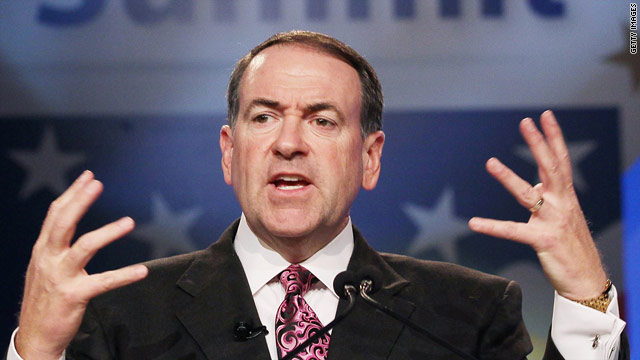
Now that Mike Huckabee is no longer a political animal, having to measure his words to appear sane and not offend potential voters or donors, he has come unhinged in his mythic authoritarian worldview. This is nowhere more apparent than in his comments about the tragic mass killing in Connecticut. CNN's Belief Blog posted his comments without much in the way of analysis, nor was there any analysis of the longer version posted on their Political Ticker blog.

Generally, I try to ignore people like him, but he has a national platform (Fox News) and there are significant numbers of people who share his (world)view to a greater or lesser extent.

Here is the story:
Huckabee: Lack of religion inclassroom leads to violence in schools

"We ask why there's violence in our school but we've systematically removed God from our schools," Huckabee said on Fox News. "Should we be so surprised that schools have become such a place of carnage? Because we've made it a place where we don't want to talk about eternity, life, what responsibility means, accountability."
"That we're not just gonna have to be accountable to the police if they catch us but one day we stand before a holy God in judgment. If we don't believe that, then we don't fear that," he said.
"People are going to want to pass new laws," Huckabee continued. "This is a heart issue ... laws don't change this kind of thing."
Huckabee made similar comments following the mass shooting at a movie theater in Aurora, Colorado, earlier this year saying violent acts should not be a surprise considering the removal of religion from public forums.
"We don't have a crime problem, or a gun problem, or even a violence problem. What we have is a sin problem," he said after the July shooting on Fox News. "And since we've ordered God out of our schools and communities; the military and public conversations... we really shouldn't act so surprised when all hell breaks loose."
Friday morning a gunman entered Sandy Hook Elementary School in Newtown, Connecticut, and opened fire killing 20 students and six adults before apparently killing himself. The tragedy has intensified the debate over gun laws in the U.S.
This tragedy is less about "violence in our schools," although in another sense it is (but not how Huckabee is framing it), and more about how we fail those disturbed young people in our families, our schools, and our communities. This was not Columbine, it was not bullied, disaffected students taking guns into the school and killing fellow students - this was a 20-year-old man who had not been in that school for many, many years.

We may never know what caused this young man to kill his mother and then drive her car to the school and kill 26 young students and faculty, and then himself. [For another perspective, check out the thoughts of neuroscientist David Eagleman.]

I do know that teaching children to fear judgment by an imaginary god is not going to deter mentally ill people from doing things we cannot fathom. [This is not to imply that all mentally ill people are prone to violence, however, people who commit acts such as this are mentally ill.]

We need to do a better job of identifying children who are at risk - those who are outsiders, who have few or no friends, who struggle with social roles, or who exhibit suicidal or homicidal ideation. We need to get them into counseling, into support groups, and, yes, even into spiritual communities and churches.

Children do not grow up to be mass murderers unless something has gone horribly, tragically wrong in their lives. This is where we need to focus our attention.

This Week's Weather Forecast


Saturday, December 15, 2012

Stephen Colbert | "America Again: Re-Becoming the Greatness We Never Weren't"


A few days ago I posted a short preview video of this Stephen Colbert talk at Authors@Google - and now the whole hour long interview is available, so here it is. Seems a little laughter today might take our (my) minds off of yesterday's tragedy.

The interview/talk is part of the publicity tour for Colbert's new book, America Again: Re-Becoming the Greatness We Never Weren't.


Stephen Colbert | "America Again: Re-Becoming the Greatness We Never Weren't"

The uncut interview of Stephen Colbert's visit to the Google New York offices.

America Again: Re-Becoming the Greatness We Never Weren't is more of a coffee-table book, with large color pictures, and chapter photos that require the use of included 3-D glasses. It falls somewhere between I Am America and the Daily Show faux-textbooks America (The Book) and Earth (The Book), which used that organizing principle to their advantage. The premise follows the many apocalyptic views of the past four years, claiming America has gone off the rails and completely lost its way, and that only this book offers the true path to restore America's greatness. Which was never really gone, because it's America.

The best idea America Again mocks is the one contained in its title. In particular, it skewers Newt Gingrich's 2011 book A Nation Like No Other, which claimed, "America's exceptional greatness is not based on that fact that we are the most powerful, most prosperous—and most generous—nation on earth. Rather, those things are the result of American Exceptionalism." That is one preposterously arrogant whopper, which America Again exploits as an illogical chicken/egg position. The subtle difference between a beneficial amount of pride and the unchecked belief in exceptionalism is ripe for mockery.

Stephen Colbert has been playing Stephen T. Colbert since 2005. In those seven years, he's built an impressive mythology to his character, a funhouse mirror held up to shame all other egomaniacal pundits for their hubris. But while the shtick is still reliably funny on television, it doesn't translate as well into print, because a book doesn't have television's immediacy. There's no Super PAC plotline, just a bunch of chapters that respond to issues a bit too late. Colbert and his staff are still extraordinarily funny, but in reaching for a middle-of-the-road coffee table humor book, America Again finds the limits of their comedic talent.

Hosted by Eric Schmidt
Directed by Lee Stimmel

Bowling for Columbine (Revisited)


After yesterday's horrific killings in Connecticut, Open Culture re-posted the Michael Moore documentary, Bowling for Columbine, which is freely available on YouTube. In the years since that event, mass killings have become more common and even more troubling for the simple reason that we seem to learn nothing from these events. The gun lobby has succeeded in not only preventing more regulation of gun sales, but in many states, like Arizona, gun laws become more and more relaxed - to the point that we are a state that does not require ANY training or permits to carry a concealed weapon.

Bowling for Columbine Revisited

December 14th, 2012

In April 1999, Eric Harris and Dylan Klebold murdered 12 students and one teacher in Columbine, Colorado, while injuring 21 others. Michael Moore documented the tragedy in his 2002 film, Bowling for Columbine, which sits on YouTube, available for everyone to see. It’s heartbreaking to think that a decade later, students are no safer at their schools. If anything, gun control has slackened during the intervening years (thanks partly to the Supreme Court) and mass murders have become more commonplace, if not a monthly occurrence. 12 were killed and 52 injured in Aurora, CO in July. 10 killed in a Sikh temple shooting in Wisconsin this August. Five gunned down at Accent Signage Systems in Minnesota in October. Two shot dead at a mall in Portland, Oregon earlier this week. And now 20 youngsters and seven adults killed at an elementary school today in Connecticut. We’ve reached the point where it has become an exceptional American pathology and too much to bear. (If you’re counting, we’ve had 27 mass murders since Columbine, and exponentially more gun-related deaths than any other country in the developed world.) I sincerely hope this isn’t another instance where we breathlessly express outrage for a week, then turn back to the Kardashians, until the next shooting happens in February at best. Public spaces should be safe, schools all the more so. (Let’s not forget Virginia Tech, which left us with another 32 students dead.) It’s time to take some action. And it’s time for our leaders to stop worrying about lobbies and finally lead.

Friday, December 14, 2012

Carl Jung and Active Imagination

Rishidev Chaudhuri - at 3 Quarks Daily - wrote this interesting look at the legacy of Carl Gustav Jung in light of his contribution in the field of active imagination, a technique used by many therapists who likely do not know it comes from the Analytical Psychology of Jung (although many of the world's religions contain practices that employ the imagination). Anyway, this is a bit of a tribute in that it values the hope for transformation inherent in Jung's somewhat idealized conception of human being.

ACTIVE IMAGINATION 
by Rishidev Chaudhuri 
 
In many ways, Jung has aged worse than Papa Freud. His world now seems quaint and naïve in its lack of suspicion and irony, in its insistence on treating symbols as universal, in its belief that all peoples are telling the same stories and meaning much the same things, albeit with slightly different flourishes. And his view of the self (part romantic, part enthusiastic humanist) as the mediator between the everyday world and a trans-personal inner world of archetypes is foreign to us, with our unstable selves that are constantly emerging from, being reproduced by and disappearing into the particular contextual forces that surround us. And even the ultimate benevolence of the collective unconscious (so that in the last instance the archetypes are leading us towards meaning and a more complete self) can seem excessively optimistic to us, used to uncaring worlds and unconsciousnesses that are actively trying to strangle us. 
And yet there is much grandeur and richness in his world. Few thinkers have given such a central place to creativity and the imaginative life. And his pantheon of symbols, at their best, allow us a polytheism of the world and of the self, allowing us to honor ambiguity, allowing a personality to speak through a multitude of voices and in a multitude of ways, and permitting a playful approach to symbols that enriches the world. His is a worldview extraordinarily sympathetic to meaning-making and narrative-construction, to framing the world in terms of journey and discovery and the reenchantment of life, which is a useful contrast for us, who so often seem to oscillate between attempting to master a world of ever better understood and yet more indifferent matter and the paralysis that comes with the recognition of the contingency of meaning and of the opacity of the selves we cobble together. And Jungian thought has a friendliness and openness to chance and coincidence and the possibilities they allow, made palatable to the rational mind by telling us that it is simply the unconscious expressing itself; that when we flip over a tarot card or open the I Ching to plan for the future we are expanding the space of possibility and that what we find is not random but is allowing a space for the unconscious to speak. And in doing so it allows for the irrational and the differently rational to sweep through and enchant us in their passing. 
Active Imagination is a Jungian practice that embodies this richness and openness to symbolic possibility. It's a form of imaginative storytelling used to enter into a dialogue with the unconscious. You center a session around an initial image or figure (often from a dream or myth) and then leave yourself open to how it evolves, and to the related images and figures that drift into consciousness. A session might start with you shutting your eyes (or not), and waiting for a mental image to appear. Perhaps you see yourself walking in a forest. And then you let it unfold, so that perhaps you follow a winding path between the trees, and in the distance you see a hunched figure, and you follow and you try to get closer but the figure keep shuffling away, and you see it turn off the path and enter a house, and you follow it into the house, and it turns out to be an old woman who has laid out a plate of bread and cheese for you. And you start to talk to her. And so on and so forth. It's a meditative process, one where you bracket out the discursive mind and try to simply let yourself be lead along by your imaginings. It's a bit like an interactive process of free association, but you don't just let yourself jump from subject to subject; for example, if you suddenly get distracted by what you plan to have for breakfast, you'd let that go and bring yourself back to the fantasy. As a practice it's actively creative and not just a “quiet-watching” meditative practice. 
Another possible way of letting this process unfold is to find a figure or an object that has been in your mind (from a dream, from real life, from a painting, from a tarot card), and start a conversation with it. You say your piece, let the figure says its piece (which you imaginatively fill in without really thinking about it) and so on, back and forth. This can be done in writing (rather like automatic writing), or as an imagined mental conversation. It takes a few tries to get the hang of, but it's a fascinating process. And, of course, you can have dialogues between any number of symbols and figures. 
A third approach, not quite Active Imagination but similar, is to consult some semi-random oracle for insight (like tarot cards, or the I Ching, or randomly open up a book at some page and treat what is on that page as guidance), and then try to implement that advice in your life. Again, the idea is that what you find is not random, but is read through your unconscious and semi-conscious preoccupations and needs, and that, at the very least, it will lead you in new and creative directions. 
Active imagination is easily ported to other spheres and to artistic practice; for example, you could have these dialogues and tell these stories in paint. It seems to work especially well in movement, as in the odd but compelling body of practice called Authentic Movement, which is halfway between a detached movement meditation and a choreography exercise. In a typical setting, it's performed by a group of people who break up into two. Half the group sits in a circle around the other half and silently witnesses what they do, attempting to be present and non-judgmental. The other half sit, lie and stand inside the circle and then wait until they feel the need to move. And then they move, in the ways that seem natural, but trying to bracket out planning and scripts and just to follow urges, either physical or imaginative. It's a surprisingly productive way of tapping into creative movement possibilities. The initial fear, of course, is that you'll have no interesting ways to move (much like worrying that, if you do Active Imagination, you'll have nothing interesting to imagine), and this fear is enhanced by the presence of the audience. But wait through this fear and permit yourself to move in boring ways and then you start to move in interesting ways: you find interesting movement textures that seem natural; you find interesting imaginative journeys that you lead yourself on. Like Active Imagination, Authentic Movement aims to not be goal directed. I remember a series of sessions where I lay down and took a nap for a half hour or so. Afterwards, I felt like a fraud and in some ways I was, but this was irrelevant. In the following session, I remember waking and stumbling to my feet, my body feeling like that of a wobbly child, and I remember stepping and feeling my weight and relearning how to balance and to walk. It was a simple set of movements, but I find that I often think of that particular texture, both tentative and trusting, when I'm walking about the everyday world and it always subtly shifts the way I experience walking. 
Of course it would be foolish for me to prescribe a general approach to these practices or a general way that we should understand the symbols and stories that emerge. At one point in my life, I believed that they represented deep universal truths and that I was excavating my true and authentic inner self. For the usual variety of reasons, I don't think this any more and I'm broadly suspicious of true and authentic selves, and of interiority and excavation as guiding metaphors. But a self that is not pre-given is a self that can be created, even if most of the productive forces are obscure and perhaps sinister, and I still find these practices very compelling in their creative potential and their playfulness. The symbols and archetypes and the movements and the stories all allow for a more expansive and creative self, and seem to open up new possibilities, and the meanings they allow are still valuable even if they are no longer unconditioned or universal. And still, sometimes, when I'm feeling romantic or naively optimistic, they allow me to think that maybe after all there is some transcendent self-discovery awaiting and maybe the universe is conspiring on our behalf and maybe we stumble upon that conspiracy in the midst of creative play.

Parkour goes ‘x’ - TEDxYouth@Alexandria

Too short a video, but this example of parkour is very cool.

Parkour goes ‘x’

13 December 2012


Kind of like skateboarding without the skateboard, parkour is a physical art form in which practitioners, run, jump, twist and flip off the landscapes around them. In this video trailer for TEDxYouth@Alexandria, several adventurous young TEDx’ers backflip their way through the Egyptian city, spreading the power of “x” as they show off their parkour maneuvers.

This video originally appeared on the TEDx Blog. Head there to see many more great info from TEDx events »

All in the Mind - THE SCIENCE OF COMPASSION

This episode of ABC's All in the Mind is definitely worth a listen if you are interested in the way compassion works in our brains. James Doty is the founder and Director of the Center for Compassion and Altruism Research and Education (CCARE) at Stanford University.

THE SCIENCE OF COMPASSION

Listen now | Download audio | show transcript 

Broadcast:  Sunday 9 December 2012

James Doty emerged from a disadvantaged background in the United States to become a neurosurgeon, an entrepreneur and a philanthropist—only to let his fortune go and dedicate his professional life to the scientific study of compassion and altruism.


Guests:
Professor James Doty, Professor of Neurosurgery, Founder and Director of the Centre for Compassion and Altruism Research and Education at Stanford University 
Further Information: The Center for Compassion and Altruism Research and Education 
Presenter: Lynne Malcolm