Showing posts with label statistics. Show all posts

Tuesday, June 10, 2014

Proof of Precognition or Statistical Manipulation?


In 2011, a widely publicized study by Daryl Bem claimed evidence of precognition (Bem, 2011). The article was widely reported in the popular press, but widely dismissed in the scientific research world due to questions about the statistical approach applied in testing these effects (Bem et al., 2011; Rouder and Morey, 2011; Wagenmakers et al., 2011).

A series of attempts to replicate the findings ensued, most of which (especially those conducted by researchers skeptical of precognition) have failed (Galak et al., 2012; Ritchie et al., 2012; Wagenmakers et al., 2012).

Over the last two years, two articles in Frontiers in Psychology and Frontiers in Human Neuroscience reported a meta-analysis of experiments on “predictive anticipatory activity” or “presentiment” (Mossbridge et al., 2012, 2014).
In that paradigm participants are exposed to a series of random stimuli, some arousing (violent/erotic images, loud sounds), others calm controls (neutral images, silence). Apparently, physiological responses evoked by the two trial types prior to stimulus onset predict the upcoming stimulus.
It's easy to get caught up in the possibilities of a reality where this were the case - the second law of thermodynamics would no longer be an absolute law, and if these claims were true, one must be prepared to accept the existence of perpetual motion and time travel.

But the data and the statistical manipulations are not supportive - at this point - of the conclusion of precognition. In this opinion article from Frontiers in Human Neuroscience, D. Samuel Schwarzkopf outlines some steps that should be met before one accepts precognition as a real phenomenon.

Full Citation: 

Schwarzkopf, DS. (2014, May 27). We should have seen this coming. Frontiers in Human Neuroscience; 8:332. doi: 10.3389/fnhum.2014.00332

We should have seen this coming

D. Samuel Schwarzkopf
  • Experimental Psychology, University College London, London, UK
The possibility of precognition has fascinated humanity since ancient times making it a recurring theme in fiction and mythology. It has also been a topic for scientific investigation. While the majority of such parapsychological studies have been ignored by the larger scientific community, several recent studies of purported precognitive phenomena were published by major international psychology journals. A widely publicized study by Daryl Bem claimed to have found evidence of precognition (Bem, 2011). In its wake have been discussions about the appropriate statistical approach for testing these effects (Bem et al., 2011; Rouder and Morey, 2011; Wagenmakers et al., 2011), and it caused a wave of replication attempts most of which, at least those conducted by researchers skeptical of precognition, have failed (Galak et al., 2012; Ritchie et al., 2012; Wagenmakers et al., 2012). More recently, two articles in Frontiers in Psychology and Frontiers in Human Neuroscience reported a meta-analysis of experiments on “predictive anticipatory activity” or “presentiment” (Mossbridge et al., 2012, 2014). In that paradigm participants are exposed to a series of random stimuli, some arousing (violent/erotic images, loud sounds), others calm controls (neutral images, silence). Apparently, physiological responses evoked by the two trial types prior to stimulus onset predict the upcoming stimulus.

Such findings of “psi” effects fuel the imagination and most people probably agree that there are things that current scientific knowledge cannot explain. However, the seismic nature of these claims cannot be overstated: future events influencing the past breaks the second law of thermodynamics. If one accepts these claims to be true, one should also be prepared to accept the existence of perpetual motion and time travel. It also completely undermines over a century of experimental research based on the assumption that causes precede effects. Differences in pre-stimulus activity would invalidate baseline correction procedures fundamental to many different types of data analysis. While the meta-analysis briefly discusses this implication (Mossbridge et al., 2012), the authors are seemingly unaware of the far-reaching consequences of their claims: they effectively invalidate most of the neuroscience and psychology literature, from electrophysiology and neuroimaging to temporal effects found in psychophysical research. Thus, it seems justified to ask for extraordinary evidence to support claims of this magnitude (Truzzi, 1978; Sagan, 1995).

But what constitutes extraordinary evidence? The results of this and other similar meta-analyses on psi effects are highly significant under commonly used inferential statistics and in many cases also strongly supported by Bayesian inference. Applying the standards accepted by the larger scientific community, should this not suffice to convince us that precognition/presentiment are real?

To me this interpretation betrays a deep-seated misapprehension of the scientific method. Statistical inference, regardless of whatever form it takes, only assigns probabilities. It cannot ever prove or disprove a theory. In fact, unlike mathematical theorems, scientific theories are never proven. They can only be supported by evidence and must always be subjected to scientific skepticism. The presentiment meta-analysis (Mossbridge et al., 2012, 2014) illustrates how this process can be misapplied. A significant effect does not confirm psi but it raises many new questions.

First, any meta-analysis can only be as good as the primary studies it analyzes. Several of the studies included are of questionable quality, e.g., the fMRI experiment (Bierman and Scholte, 2002) commits major errors with multiple comparison correction and circular inference (Kriegeskorte et al., 2009; Vul et al., 2009) and has such poor presentation that it is unlikely it would have been accepted for publication in any major neuroimaging journal. Moreover, many studies were in fact published in conference proceedings and did not pass formal peer review. Admittedly, the authors go to some lengths to assess the quality of each study but it is unclear how appropriate those quality scores were. In fact the rationale for the formula used to combine the different measures is debatable. A more detailed breakdown of how these different parameters influence the results would have been far more interesting. Does the type of random number generator used, or whether a study was peer reviewed, make any difference to the results? Related to this, additional factors would have been of importance, such as whether the experimenters expected to find a presentiment effect (see also: Galak et al., 2012).

Second, the meta-analysis should be much broader including myriad studies not conducted by psi researchers that used similar designs. While the authors tested for potential publication bias (the possibility that many null-results that would have made the results non-significant are missing from the database), there must be a large number of data sets from similar protocols in the wider literature, in particular in emotion research, whose inclusion would greatly enhance the power of this analysis. An often used argument, that these studies are invalid because they used counterbalanced designs and are thus confounded by expectation bias, is a straw man and also rather ironic given the topic of investigation: unless participants knew in advance that stimuli were counterbalanced this could not possibly change their expectations.

Third, a particular critical factor that should have been analyzed directly is the imbalance between control (calm) and target (arousing) trials typically used in these studies. While the authors themselves acknowledge that this is usually approximately 2:1 (Mossbridge et al., 2012), this is neglected by the meta-analysis and seemingly most primary studies even though such an imbalance means that an attentive participant will quickly learn statistical properties of the sequence and thus affects how the brain responds to the different stimulus classes. Rather than predicting future events, what such pre-stimulus physiological activity may actually reflect is that the brain can make predictions of probable events. One important factor to be included in the meta-analysis therefore should have been whether the ratio of target and control trials affects the magnitude of these pre-stimulus effects.

Fourth, could these effects be at least partially explained by analytical artifacts? In many of these studies (Bierman and Scholte, 2002; Radin, 2004) the data are not only baseline corrected to the mean activity level prior to stimulus onset, but they are further “clamped” to a particular time point prior to the stimulus. This should not necessarily influence the results if this point is a true baseline. However, if this pre-stimulus period is still affected by the response to the previous stimulus (e.g., the signal could decay back to baseline more slowly after an arousing than a calm trial) such a correction would inadvertently introduce artifacts in the pre-stimulus period. As such it may also be a much greater problem for slow than fast physiological measures. Either way, it would have been another factor worthy of attention in the meta-analysis.

Fifth, the effect of expectation and trial order must be tested explicitly. Many of these studies test for the presence of expectation bias by correlating the presentiment effect with the time between target events (Mossbridge et al., 2012). The rationale is that expectation bias increases with the number of control trials—a gambler's fallacy. Therefore, so the reasoning goes, the pre-stimulus activity should also increase. However, this is based on an unproven assumption that these physiological effects scale linearly with expectation. Further, because the probability of sequences of control trials falls off exponentially with their length, the presentiment effect cannot be estimated with the same reliability for long sequences as for short ones. This means that even if a linear relationship exists, the power to detect it is low as the presentiment response is subject to variability. Critically, this analysis cannot possibly detect whether participants learn statistical regularities in the trial sequence. The best approach to understand the role of trial order and expectation would be to design experiments that directly test these factors. Order effects are quantified by exposing participants to different stimulus pairs. Expectation bias can be manipulated by cuing participants to the probability that the upcoming trial is a target. If the predictive activity were similar to the presentiment effect when participants strongly expect a target trial, this would indicate that it may in fact be an expectation effect. Crucially, does presentiment persist when participants do not expect a target even when the next trial is one?

Lastly, are the purported effects even biologically plausible? These studies employ vastly different measurements from skin conductance and electrophysiology to hemodynamic responses. Under conventional knowledge these are assumed to be caused by preceding neural events, e.g., a typical hemodynamic response peaks ~6 s after a neural event (Boynton et al., 1996). Conversely, electrophysiological measures have a latency of fractions of a second, while skin conductance measures, heart rates, pupil dilation etc. probably fall somewhere in between. Thus, the same precognitive neural event probably cannot cause all of these responses. Alternatively, if these responses themselves reverse the arrow of time and are caused by future stimuli, this will require a complete overhaul of current theory. Why should blood oxygenation increase before neural activity in such a way that predicts the up-coming stimulus?

In my mind, only if all these points were addressed appropriately, should one even entertain the thought that such presentiment effects have been empirically demonstrated. The first four could have certainly formed part of the meta-analysis; it is frankly a clear failure of the peer review process that they were not. The final two points should at the very least be discussed as critical further steps before assuming that the effects reverse causality.

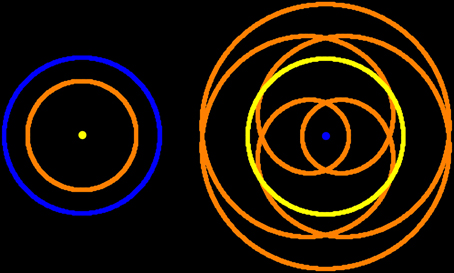
Much of parapsychology research is concerned with proving that psi is real (Alcock, 2003), that is, it rests on the notion that “there is an anomalous effect in need of an explanation” (Utts, 1991). But there is always unexplained variance in any data regardless of how significant the results are. It is the purpose of scientific investigation to explain as much as possible, not to conclude that there remains something we do not currently understand. Science works by formulating falsifiable hypotheses and testing them. This in turn will produce new findings that can be used to generate better theories. Further, one should always start from the most parsimonious explanation for a result. Only if a more complex model has greater explanatory power should we stray from the one requiring the least assumptions (Figure 1). Since the psi hypothesis merely postulates that some results remain unexplained, it does not lead to any falsifiable hypothesis that could help explain these effects. Post-hoc speculations of quantum biology or psychokinesis are insufficient unless they can make testable predictions and they are hardly the most parsimonious explanations.
FIGURE 1
http://www.frontiersin.org/files/Articles/97849/fnhum-08-00332-HTML/image_m/fnhum-08-00332-g001.jpg
Figure 1. Simplistic schematic of the heliocentric model (left) and the geocentric model (right). The motion of the Sun (yellow) and the planets Earth (blue) and Venus (orange) is shown. Under the heliocentric model both Earth and Venus have simple circular orbits around the Sun. In contrast, under the geocentric model Venus describes a complicated (albeit beautiful) path. The heliocentric model is by far the more parsimonious explanation for our observation of the motions of celestial bodies, especially when taking Newtonian physics into account. It is important to note that this heliocentric model is not the “true” model as for instance the orbits are not circular and the planets do not strictly revolve around the center of the sun. However, it is certainly the better model of the two as it requires fewer assumptions.
Certainly, science should be open-minded and no hypothesis must be dismissed out of hand—but this does not mean that every possible hypothesis is equally likely. A former colleague of mine once wrote very eloquently: “Science is not about finding the truth at all, but about finding better ways of being wrong” (Schofield, 2013). Not only does our present understanding fail to explain everything about the universe, we must accept that we will never explain everything. Importantly, this also means that we must always remain skeptical of any claims but especially our own.

It would be an easy mistake for “mainstream” researchers to accuse parapsychologists of being solely responsible for perpetuating this non-skeptical thinking. Yet it is only human to cling to theories against compelling evidence to the contrary. We all must be more critical. As Richard Feynman put it: “The first principle is that you must not fool yourself and you are the easiest person to fool” (Feynman, 2010). If some result is too good to be true, it probably is. We should actively strive for our hypotheses to be proven incorrect. And we should stop relying on statistics at the expense of objective reasoning. If we do not, I predict we will see many more such studies (on psi or something else) published in major science journals. They will not bring us any closer to understanding the cosmos.

Conflict of Interest Statement

The author declares that the research was conducted in the absence of any commercial or financial relationships that could be construed as a potential conflict of interest.

Acknowledgments

I dedicate this article to two individuals whose words have greatly inspired my thinking: Carl Sagan (1934–1996) and my colleague Tom Schofield (1976–2010). The author is supported by a ERC Starting Grant.

References available at the Frontiers site.
Sunday, January 26, 2014

The Changing Face of Psychology

Interesting post from The Guardian (UK) on a few changes occurring in the world of academic/research psychology, most importantly a move toward more open access and more replication studies.

I do a lot of research in the worlds of cell biology, nutrition, and psychology/neuroscience. Of these three fields, psych/neuroscience is by far the least open access and open data. The publishers gouge researchers and universities for publication fees and then gouge libraries and individuals for access to the publication (with electronic versions costing as much as print versions, even though they often receive the material "camera ready" and have to do NO processing of the manuscripts). It's the only business I know of that charges producers and consumers for intellectual property it has not created. What a scam.

The changing face of psychology

After 50 years of stagnation in research practices, psychology is leading reforms that will benefit all life sciences


Posted by Chris Chambers
Friday 24 January 2014


Psychology is championing important changes to culture and practice, including a greater emphasis on transparency, reliability, and adherence to the scientific method. 
Photograph: Sebastian Kaulitzki/Alamy

In 1959, an American researcher named Ted Sterling reported something disturbing. Of 294 articles published across four major psychology journals, 286 had reported positive results – that is, a staggering 97% of published papers were underpinned by statistically significant effects. Where, he wondered, were all the negative results – the less exciting or less conclusive findings? Sterling labelled this publication bias a form of malpractice. After all, getting published in science should never depend on getting the “right results”.

You might think that Sterling’s discovery would have led the psychologists of 1959 to sit up and take notice. Groups would be assembled to combat the problem, ensuring that the scientific record reflected a balanced sum of the evidence. Journal policies would be changed, incentives realigned.

Sadly, that never happened. Thirty-six years later, in 1995, Sterling took another look at the literature and found exactly the same problem – negative results were still being censored. Fifteen years after that, Daniele Fanelli from the University of Edinburgh confirmed it yet again. Publication bias had turned out to be the ultimate bad car smell, a prime example of how irrational research practices can linger on and on.

Now, finally, the tide is turning. A growing number of psychologists – particularly the younger generation – are fed up with results that don’t replicate, journals that value story-telling over truth, and an academic culture in which researchers treat data as their personal property. Psychologists are realising that major scientific advances will require us to stamp out malpractice, face our own weaknesses, and overcome the ego-driven ideals that maintain the status quo.

Here are five key developments to watch in 2014.

1. Replication


The problem: The best evidence for a genuine discovery is showing that independent scientists can replicate it using the same method. If it replicates repeatedly then we can use it to build better theories. If it doesn't then it belongs in the trash bin of history. This simple logic underpins all science – without replication we’d still believe in phlogiston and faster-than-light neutrinos.

In psychology, attempts to closely reproduce previous methods are rarely attempted. Psychologists tend to see such work as boring, lacking in intellectual prowess, and a waste of limited resources. Some of the most prominent psychology journals even have explicit policies against publishing replications, instead offering readers a diet of fast food: results that are novel, eye catching, and even counter-intuitive. Exciting results are fine provided they replicate. The problem is that nobody bothers to try, which litters the field with results of unknown (likely low) value.

How it’s changing: The new generation of psychologists understands that independent replication is crucial for real advancement and to earn wider credibility in science. A beautiful example of this drive is the Many Labs project led by Brian Nosek from the University of Virginia. Nosek and a team of 50 colleagues located in 36 labs worldwide sought to replicate 13 key findings in psychology, across a sample of 6,344 participants. Ten of the effects replicated successfully.

Journals are also beginning to respect the importance of replication. The prominent outlet Perspectives on Psychological Science recently launched an initiative that specifically publishes direct replications of previous studies. Meanwhile, journals such as BMC Psychology and PLOS ONE officially disown the requirement for researchers to report novel, positive findings.

2. Open access


The problem: Strictly speaking, most psychology research isn’t really “published” – it is printed within journals that expressly deny access to the public (unless you are willing to pay for a personal subscription or spend £30+ on a single article). Some might say this is no different to traditional book publishing, so what's the problem? But remember that the public being denied access to science is the very same public that already funds most psychology research, including the subscription fees for universities. So why, you might ask, is taxpayer-funded research invisible to the taxpayers that funded it? The answer is complicated enough to fill a 140-page government report, but the short version is that the government places the business interests of corporate publishers ahead of the public interest in accessing science.

How it’s changing: The open access movement is growing in size and influence. Since April 2013, all research funded by UK research councils, including psychology, must now be fully open access – freely viewable to the public. Charities such as the Wellcome Trust have similar policies. These moves help alleviate the symptoms of closed access but don’t address the root cause, which is market dominance by traditional subscription publishers. Rather than requiring journals to make articles publicly available, the research councils and charities are merely subsidising those publishers, in some cases paying them extra for open access on top of their existing subscription fees. What other business in society is paid twice for a product that it didn’t produce in the first place? It remains a mystery who, other than the publishers themselves, would call this bizarre set of circumstances a “solution”.

3. Open science


The problem: Data sharing is crucial for science but rare in psychology. Even though ethical guidelines require authors to share data when requested, such requests are usually ignored or denied, even when coming from other psychologists. Failing to publicly share data makes it harder to do meta-analysis and easier for unscrupulous researchers to get away with fraud. The most serious fraud cases, such as Diederik Stapel, would have been caught years earlier if journals required the raw data to be published alongside research articles.

How it’s changing: Data sharing isn’t yet mandatory, but it is gradually becoming unacceptable for psychologists not to share. Evidence shows that studies which share data tend to be more accurate and less likely to make statistical errors. Public repositories such as Figshare and the Open Science Framework now make the act of sharing easy, and new journals including the Journal of Open Psychology Data have been launched specifically to provide authors with a way of publicising data sharing.

Some existing journals are also introducing rewards to encourage data sharing. Since 2014, authors who share data at the journal Psychological Science will earn an Open Data badge, printed at the top of the article. Coordinated data sharing carries all kinds of other benefits too – for instance, it allows future researchers to run meta-analysis on huge volumes of existing data, answering questions that simply can’t be tackled with smaller datasets.

4. Bigger data


The problem: We’ve known for decades that psychology research is statistically underpowered. What this means is that even when genuine phenomena exist, most experiments don’t have sufficiently large samples to detect them. The curse of low power cuts both ways: not only is an underpowered experiment likely to miss finding water in the desert, it’s also more likely to lead us to a mirage.

How it’s changing: Psychologists are beginning to develop innovative ways to acquire larger samples. An exciting approach is Internet testing, which enables easy data collection from thousands of participants. One recent study managed to replicate 10 major effects in psychology using Amazon’s Mechanical Turk. Psychologists are also starting to work alongside organisations that already collect large amounts of useful data (and no, I don’t mean GCHQ). A great example is collaborative research with online gaming companies. Tom Stafford from the University of Sheffield recently published an extraordinary study of learning patterns in over 850,000 people by working with a game developer.

5. Limiting researcher “degrees of freedom”


The problem: In psychology, discoveries tend to be statistical. This means that to test a particular hypothesis, say, about motor actions, we might measure the difference in reaction times or response accuracy between two experimental conditions. Because the measurements contain noise (or “unexplained variability”), we rely on statistical tests to provide us with a level of certainty in the outcome. This is different to other sciences where discoveries are more black and white, like finding a new rock layer or observing a supernova.

Whenever experiments rely on inferences from statistics, researchers can exploit “degrees of freedom” in the analyses to produce desirable outcomes. This might involve trying different ways of removing statistical outliers or the effect of different statistical models, and then only reporting the approach that “worked” best in producing attractive results. Just as buying all the tickets in a raffle guarantees a win, exploiting researcher degrees of freedom can guarantee a false discovery.

The reason we fall into this trap is because of incentives and human nature. As Sterling showed in 1959, psychology journals select which studies to publish not based on the methods but on the results: getting published in the most prominent, career-making journals requires researchers to obtain novel, positive, statistically significant effects. And because statistical significance is an arbitrary threshold (p<.05), researchers have every incentive to tweak their analyses until the results cross the line. These behaviours are common in psychology – a recent survey led by Leslie John from Harvard University estimated that at least 60% of psychologists selectively report analyses that “work”. In many cases such behaviour may even be unconscious.

How it’s changing: The best cure for researcher degrees of freedom is to pre-register the predictions and planned analyses of experiments before looking at the data. This approach is standard practice in medicine because it helps prevent the desires of the researcher from influencing the outcome. Among the basic life sciences, psychology is now leading the way in advancing pre-registration. The journals Cortex, Attention Perception & Psychophysics, AIMS Neuroscience and Experimental Psychology offer pre-registered articles in which peer review happens before experiments are conducted. Not only does pre-registration put the reins on researcher degrees of freedom, it also prevents journals from selecting which papers to publish based on the results.

Journals aren’t the only organisations embracing pre-registration. The Open Science Framework invites psychologists to publish their protocols, and the 2013 Declaration of Helsinki now requires public pre-registration of all human research “before recruitment of the first subject”.

We’ll continue to cover these developments at HQ as they progress throughout 2014.

Thursday, May 02, 2013

Gary Marcus - THE CRISIS IN SOCIAL PSYCHOLOGY THAT ISN’T

This article appeared in The New Yorker, written by neuroscientist Gary Marcus, author of Kluge: The Haphazard Evolution of the Human Mind (2008), one of the best books in recent years for an explanation of why our brains function - and dysfunction - as they do. He is also author of The Birth of the Mind: How a Tiny Number of Genes Creates The Complexities of Human Thought (2004) and The Algebraic Mind: Integrating Connectionism and Cognitive Science (Learning, Development, and Conceptual Change) (2003).

Social psychology has had a rough week or two in the media, with articles in Nature and The New York Times Magazine profiling either fraud or statistically weak findings taken as fact. Marcus wants to make sure we know that the field is much stronger than these articles might have us believe.

THE CRISIS IN SOCIAL PSYCHOLOGY THAT ISN’T

POSTED BY GARY MARCUS
MAY 1, 2013


According to the headlines, social psychology has had a terrible year—and, at any rate, a bad week. The New York Times Magazine devoted nearly seven thousand words to Diederik Stapel, the Dutch researcher who committed fraud in at least fifty-four scientific papers, while Nature just published a report about another controversy, questioning whether some well-known “social-priming” results from the social psychologist Ap Dijksterhuis are replicable. Dijksterhuis famously found that thinking about a professor before taking an exam improves your performance, while thinking about a soccer ruffian makes you do worse. Although nobody doubts that Dijksterhuis ran the experiment that he says he did, it may be that his finding is either weak, or simply wrong—perhaps the peril of a field that relies too heavily on the notion that if something is statistically likely, it can be counted on.

Things aren’t quite as bad as they seem, though. Although Nature’s report was headlined “Disputed results a fresh blow for social psychology,” it scarcely noted that there have been some replications of experiments modelled on Dijksterhuis’s phenomenon. His finding could still out turn to be right, if weaker than first thought. More broadly, social priming is just one thread in the very rich fabric of social psychology. The field will survive, even if social priming turns out to have been overrated or an unfortunate detour.

Even if this one particular line of work is under a shroud, it is important not to lose sight of the fact many of the old standbys from social psychology have been endlessly replicated, like the Milgram effect—the old study of obedience in which subjects turned up electrical shocks (or what they thought were electrical shocks) all the way to four hundred and fifty volts, apparently causing great pain to their subjects, simply because they’d been asked to do it. Milgram himself replicated the experiment numerous times, in many different populations, with groups of differing backgrounds. It is still robust (in hands of other researchers) nearly fifty years later. And even today, people are still extending that result; just last week I read about a study in which intrepid experimenters asked whether people might administer electric shocks to robots, under similar circumstances. (Answer: yes.)

More importantly, there is something positive that has come out of the crisis of replicability—something vitally important for all experimental sciences. For years, it was extremely difficult to publish a direct replication, or a failure to replicate an experiment, in a good journal. Throughout my career, and long before it, journals emphasized that new papers have to publish original results; I completely failed to replicate a particular study a few years ago, but at the time didn’t bother to submit it to a journal because I knew few people would be interested. Now, happily, the scientific culture has changed. Since I first mentioned these issues in late December, several leading researchers in psychology have announced major efforts to replicate previous work, and to change the incentives so that scientists can do the right thing without feeling like they are spending time doing something that might not be valued by tenure committees.

The Reproducibility Project, from the Center for Open Science is now underway, with its first white paper on the psychology and sociology of replication itself. Thanks to Daniel Simons and Bobbie Spellman, the journal Perspectives in Psychological Science is now accepting submissions for a new section of each issue devoted to replicability. The journal Social Psychology is planning a special issue on replications for important results in social psychology, and has already received forty proposals. Other journals in neuroscience and medicine are engaged in similar efforts: my N.Y.U. colleague Todd Gureckis just used Amazon’s Mechanical Turk to replicate a wide range of basic results in cognitive psychology. And just last week, Uri Simonsohn released a paper on coping with the famous file-drawer problem, in which failed studies have historically been underreported.

It’s worth remembering, too, that social psychology isn’t the only field affected by these problems—medicine, for example, has been coping with the same concerns. But as Brian Nosek, of the Center for Open Science, wrote to me in an e-mail, psychologists are specially equipped to deal with these issues. “Psychology is at the forefront of wrestling with reproducibility by turning its research expertise on itself,” he said.

Whether or not social priming does prove real, and whether or not it turns out to be a large contributor to our mental lives—or only a trivial one that is easily overrun by other factors—all of psychology, and all of science, will be better off for the increased effort on replication. If, in the worst case, a decade’s studies turn out to be less important than we initially believed, it won’t be the end of the world. And if it accidentally leads to a culture of more careful science, on balance we all will have come out ahead.

Illustration by Nishant Choksi.

Tuesday, March 01, 2011

Dr. Hans Rosling Explains Last 200 Years of World Progress in 4 Minutes (The Joy of Stats)

Several friends have posted this BBC video of a very enthusiastic Dr. Hans Rosling explaining the past 200 years of world progress in only four minutes using a fascinating graph. You can check it out below:
Hans Rosling's 200 Countries, 200 Years, 4 Minutes - The Joy of Stats

Hans Rosling's famous lectures combine enormous quantities of public data with a sport's commentator's style to reveal the story of the world's past, present and future development. Now he explores stats in a way he has never done before - using augmented reality animation. In this spectacular section of 'The Joy of Stats' he tells the story of the world in 200 countries over 200 years using 120,000 numbers - in just four minutes. Plotting life expectancy against income for every country since 1810, Hans shows how the world we live in is radically different from the world most of us imagine.


Sunday, June 22, 2008

US Ranks "Low" on Global Peace Index

This is quite interesting, though not surprising. The US rates a "low" on the Global Peace Index, with a ranking of 97 (out of 140 countries).

Here are the top 10:

1. Iceland Iceland
3. Norway Norway
5. Japan Japan
10. Austria Austria

This is a world map, color-coded to show the peace ranking for each country:


Here is the explanation of methodology.
Methodology and Data Sources

The indicators

Twenty-four indicators of the existence or absence of peace were chosen by the panel, which are divided into three key thematic categories. Many of the indicators have been "banded" on a scale of 1-5; qualitative indicators in the index have been scored by the Economist Intelligence Unit's extensive team of country analysts, and gaps in the quantitative data have been filled by estimates. Indicators of quantitative data such as military expenditure or jailed population have been normalised on the basis of:

x = (x-Min(x)) / (Max (x) - Min (x))

Where Min (x) and Max (x) are respectively the lowest and highest values in the 140 countries for any given indicator. The normalised value is then transformed from a 0-1 value to a 1-5 score to make it comparable with the other indicators.

Measures of ongoing domestic and international conflict

The Global Peace Index is intended as a review of the state of peace in nations over the past year, although many indicators are based on available data from the last two years. The advisory panel decided against including data reflecting a country's longer-term historical experience of domestic and international conflict on the grounds that the GPI uses authoritative statistics on ongoing civil and trans-national wars collated by institutes such as the Uppsala Conflict Data Program and the International Peace Research Institute, Oslo. These, combined with two indicators scored by the Economist Intelligence Unit's analysts, comprise five of the 24 indicators.
  • Number of external and internal conflicts fought: 2001-06
  • Estimated number of deaths from organised conflict (external)
  • Number of deaths from organised conflict (internal)
  • Level of organised conflict (internal)
  • Relations with neighbouring countries
Measures of societal safety and security

Ten of the indicators assess the levels of safety and security in a society (country), ranging from the level of distrust in other citizens, to the level of respect for human rights and the rate of homicides and violent crimes. Crime data is from the UN Office of Drugs and Crime (UNODC). Five of these indicators have been scored by the Economist Intelligence Unit's team of country analysts.
  • Level of distrust in other citizens
  • Number of displaced people as a percentage of the population
  • Political instability
  • Level of disrespect for human rights (Political Terror Scale)
  • Potential for terrorist acts
  • Number of homicides per 100,000 people
  • Level of violent crime
  • Likelihood of violent demonstrations
  • Number of jailed population per 100,000 people
  • Number of internal security officers and police per 100,000 people
Measures of militarization

Nine of the indicators are related to a country's military build-up - reflecting the assertion that the level of militarization and access to weapons is directly linked to how at peace a country feels internationally. Comparable data are readily available from sources such as the International Institute of Strategic Studies (IISS).
  • Military expenditure as a percentage of GDP
  • Number of armed services personnel per 100,000 people
  • Volume of transfers (imports) of major conventional weapons per 100,000 people
  • Volume of transfers (exports) of major conventional weapons per 100,000 people
  • UN Deployments 2007-08 (percentage of total armed forces)
  • Non-UN Deployments 2007-08 (percentage of total armed forces)
  • Aggregate number of heavy weapons per 100,000 people
  • Ease of access to small arms and light weapons
  • Military capability/sophistication
Weighting the index

The advisory panel apportioned scores based on the relative importance of each of the indicators on a 1-5 scale. Two sub-component weighted indices were then calculated from the GPI group of indicators, 1) a measure of how at peace a country is internally; 2) a measure of how at peace a country is externally (its state of peace beyond its borders). The overall composite score and index was then formulated by applying a weight of 60% to the measure of internal peace and 40% for external peace. The heavier weight applied to internal peace was agreed within the advisory panel, following robust debate. The decision was based on the innovative notion that a greater level of internal peace is likely to lead to, or at least correlate with, lower external conflict - in other words, if ‘charity begins at home' - so might peace.
For more information on the Global Peace Index, and Vision of Humanity, follow the links.


Friday, May 30, 2008

Cracked: The 6 Most Frequently Quoted Bullsh*t Statistics

A great post over at Cracked. I knew about the brain thing, that's just nonsense to anyone who has ever seen an fMRI scan of the brain. I had my doubts about the sex thing with men, too, although I thought maybe I was just weird for not thinking about sex at least eight times a minute.

The 6 Most Frequently Quoted Bullsh*t Statistics

By Levi Ritchie

Every once in awhile, you'll hear a statistic so striking you can hardly believe it's true. Our first impulse is to repeat it, because knowing interesting things tends to make people like us better.

Unfortunately, some people are so desperate for interesting facts to quote, that they'll just pull them right out of their ass. Then those facts get repeated, by--you guessed it--people like us.

The six most quoted "too awesome to be true" stats that, in fact, are ...

#6. You Accidentally Swallow About 8 Spiders a Year

This extremely commonly believed statistic has been fed to us by countless internet chain mails, and probably by some know-it-all kid who sat next to you in some class or other. When you sleep, you open your mouth to breath (and drool on your pillow), and supposedly this is the ideal window of oppurtunity for all the spiders who hang out near your bed hoping to be eaten alive.

Why Is It a Load of Crap?

Well, first of all, this a real kick in the crotch of the intellect of spiders everywhere. Although spiders are occasionally seen doing stupid things, it's safe to assume they have enough wit to realize when they're about to crawl through the mouth of a damned giant. If the giant white teeth aren't enough to deter them from going spelunking down your dark, wet throat (apparently no other animals have these) you'd think the heavy draft and deafening snoring sounds would be some sort of indication of how terrible a home your mouth would be.

Who Started It?

Back in 1993, people were already getting fooled by online urban legends at an amusing rate. So, a columnist for PC Professional named Lisa Holst decided to prove that you could make up anything on the internet and people would believe it.

She did this by making up a set of facts that were utterly ridiculous, the spider myth among them (which itself was taken from a collection of insect folklore that dates back to the 1950s), and unleashing it on the world in the form of emails.

In a twist of oh-so-predictable irony, people who forwarded chain mail about this just "happened" to forget to include the fact that these were completely fake.

Who Was Fooled?

Ask a group of internet strangers and you'll find at least a handful of people who wholeheartedly believe this myth. Presumably because they read it somewhere. You've even got this supposed entomologist from Experts.com quoting it.

In 2006 The UK's Daily Mirror warned that "the average person will swallow anything from eight to 20 spiders before they die."

Not satisfied to go along with the normal fudged data, The Mirror upped the ante of retardation by adding "A spider is also likely to drink from your eye at least THREE times in your life. Some experts have suggested they are attracted by the vibrations of snoring and the smell of undigested food - a good reason to floss your teeth before bedtime."

Really, is that what it takes to get the UK to worry about dental hygiene?

#5. You Only Use 10% of Your Brain

You've heard it since you were a child, and it might have even crept into one of your textbooks: "We only use 10% of our brain! Just think what we'd be capable of if we could tap into the rest!"

The idea that the brain has UNLIMITED POTENTIAL is probably pretty appealing to 2nd grade teachers whose students complain that they can't do ONE MORE math problem. We still remember our teachers happily informing us that we're only using 10% of our brains, so we could do ten more if we wanted. The implication was of course that if we worked hard enough, we'd be able to set fire to the school with the power of our minds.

Why Is It a Load of Crap?

How fast are you reading this article? Well, let's suppose you are only using 10% of your brain. Now, read it 10x faster. Go, do it now! Are you having trouble? Yeah, that's because you can't devote that other 90% to just whatever you want. The parts of the brain are specialized, so trying to use all of it at once isn't going to make you any smarter. That would be like trying to become a better writer by striving to use all the keys on your keyboard in every sentence.

So the part of your brain you're using to read this article is not the same part you'll be using tonight when you get drunk and fight a hobo. There's even a special part of the brain that apparently keeps you from turning into a dick (No, really).

Who Started It?

There is a bit of debate on who exactly brought this bullshit statistic into the world. A series of neurologists over the past few hundred years figured out that a human can survive when parts of the brain are removed. Over time, this was misinterpreted to mean that the brain uses little of its potential, and thus the 10% statistic was born.

Facts tend to survive based on how interesting they are, rather than whether or not they're true.

Who Was Fooled?

Surely nobody takes this seriously any more, not when a ten-second Google search can tell you otherwise, right? Well don't tell that to Psychology Today, who ran that helpful 2006 article on how to access the lazy 90% of your grey matter.

One of their tips is to replenish the brain with nutrients, but we're assuming we get plenty with all the spiders we've eaten.

#4. Men Think About Sex Every Seven Seconds

As we all know, men do nothing all day but think about having sex with their girlfriend/ex-girlfriend/friend that happens to be a girl/friend's sister. It should come naturally, then, that, on average, men think about sex every seven seconds or so, right? I mean, what else are men going to think about? Their jobs?

"Puhleaze, sister. We all know what's going on in there."

Why Is It a Load of Crap?

Let's suppose for a moment that you are a man. Have you thought about sex since you began reading this article? Well, probably, yes, because you just read the word "sex" several times. How about when you were reading the spider-eating segment moments ago? Were you imaging a massive spider-orgy? If so, you are unlike most men in the world. As a matter of fact, many experts estimate that 30% of men don't think about sex during the day at all. There are variants of this myth, usually ranging from 3 seconds to 20 seconds, but none of them are based on any actual research, and none of them are really true.

After all, how would they even arrive at such a number? Hook electrodes up to a dude's head and have him walk around for a week, counting how many times the sex lobe lights up?

Who Started It?

The origins of this statistic stretch long and far (no "that's what she said" intended), so again we can't pin it on a single person. We all know who it really was, though. A group of wives sitting at a table drinking tea or coffee, start talking about their horrible husbands. They just hate how it is always about sex sex sex sex sex. So, one of them pulls a number out of her head for a joke. "Did you know that men think about sex every seven seconds?"

The others have a good, womanly laugh about their husbands, and then they all run off to do womanly things, like quilting, or going to the bathroom at the same time. That's what women do, right? We don't really know.

Who Was Fooled?

Well, about half of us, according to this online poll. Countless sites are still including it among their "interesting facts" about sex, like this one and this one over here.

It seems like common sense would have squashed this one even before it got started. Obviously there are long stretches where a guy isn't thinking about sex (say, while spending 45 infuriating minutes on the phone with Microsoft tech support). To make up that average later he would have to think about sex every, what 2 seconds? So for the rest of the day his brain just turns into a spinning kaleidoscope of titty?


You can see the final three here.