Showing posts with label interdisciplinary. Show all posts

Saturday, July 19, 2014

Clinicians and Neuroscientists Must Work Together to Understand and Improve Psychological Treatments


In this interesting commentary article from the journal Nature, the authors argue that we need to create a mental health science that draws from both the neuroscientific literature as well as the clinical research and practice side. These two camps rarely communicate with each other and there has been very little interdisciplinary work so far. Let's hope that changes.


Full Citation:
Emily A. Holmes, E.A., Craske, M.G. & Graybiel, A.M. (2014, Jul 17). Psychological treatments: A call for mental-health science. Nature; 511:287–289. doi:10.1038/511287a

Psychological treatments: A call for mental-health science

Emily A. Holmes, Michelle G. Craske & Ann M. Graybiel
16 July 2014

Clinicians and neuroscientists must work together to understand and improve psychological treatments, urge Emily A. Holmes, Michelle G. Craske and Ann M. Graybiel.


Illustration by David Parkins


How does one human talking to another, as occurs in psychological therapy, bring about changes in brain activity and cure or ease mental disorders? We don't really know. We need to.

Mental-health conditions, such as post-traumatic stress disorder (PTSD), obsessive–compulsive disorder (OCD), eating disorders, schizophrenia and depression, affect one in four people worldwide. Depression is the third leading contributor to the global burden of disease, according to the World Health Organization. Psychological treatments have been subjected to hundreds of randomized clinical trials and hold the strongest evidence base for addressing many such conditions. These activities, techniques or strategies target behavioural, cognitive, social, emotional or environmental factors to improve mental or physical health or related functioning. Despite the time and effort involved, they are the treatment of choice for most people (see ‘Treating trauma with talk therapy’).

For example, eating disorders were previously considered intractable within our life time. They can now be addressed with a specific form of cognitive behavioural therapy (CBT) [1] that targets attitudes to body shape and disturbances in eating habits. For depression, CBT can be as effective as antidepressant medication and provide benefits that are longer lasting [2]. There is also evidence that interpersonal psychotherapy (IPT) is effective for treating depression.
Treating trauma with talk therapy

Ian was filling his car with petrol and was caught in the cross-fire of an armed robbery. His daughter was severely injured. For the following decade Ian suffered nightmares, intrusive memories, flashbacks of the trauma and was reluctant to drive — symptoms of post-traumatic stress disorder (PTSD).

Ian had twelve 90-minute sessions of trauma-focused cognitive behavioural therapy, the treatment with the strongest evidence-base for PTSD, which brings about improvement in about 75% of cases. As part of his therapy, Ian was asked to replay the traumatic memory vividly in his mind's eye. Ian also learned that by avoiding reminders of the trauma his memories remained easily triggered, creating a vicious cycle. Treatment focused on breaking this cycle by bringing back to his mind perceptual, emotional and cognitive details of the trauma memory.

After three months of treatment, Ian could remember the event without being overwhelmed with fear and guilt. The memory no longer flashed back involuntarily and his nightmares stopped. He began to drive again. 
 

A house divided


But evidence-based psychological treatments need improvement. Although the majority of patients benefit, only about half experience a clinically meaningful reduction in symptoms or full remission, at least for the most common conditions. For example, although response rates vary across studies, about 60% of individuals show significant improvement after CBT for OCD, but nearly 30% of those who begin therapy do not complete it [3]. And on average, more than 10% of those who have improved later relapse [4]. For some conditions, such as bipolar disorder, psychological treatments are not effective or are in their infancy.

Moreover, despite progress, we do not yet fully understand how psychological therapies work — or when they don't. Neuroscience is shedding light on how to modulate emotion and memory, habit and fear learning. But psychological understanding and treatments have, as yet, profited much too little from such developments.

It is time to use science to advance the psychological, not just the pharmaceutical, treatment of those with mental-health problems. Great strides can and must be made by focusing on concerns that are common to fields from psychology, psychiatry and pharmacology to genetics and molecular biology, neurology, neuroscience, cognitive and social sciences, computer science, and mathematics. Molecular and theoretical scientists need to engage with the challenges that face the clinical scientists who develop and deliver psychological treatments, and who evaluate their outcomes. And clinicians need to get involved in experimental science. Patients, mental-health-care providers and researchers of all stripes stand to benefit.

Interdisciplinary communication is a problem. Neuroscientists and clinical scientists meet infrequently, rarely work together, read different journals, and know relatively little of each other's needs and discoveries. This culture gap in the field of mental health has widened as brain science has exploded. Researchers in different disciplines no longer work in the same building, let alone the same department, eroding communication. Separate career paths in neuroscience, clinical psychology and psychiatry put the fields in competition for scarce funding.

Part of the problem is that for many people, psychological treatments still conjure up notions of couches and quasi-mystical experiences. That evidence-based psychological treatments target processes of learning, emotion regulation and habit formation is not clear to some neuroscientists and cell biologists. In our experience, many even challenge the idea of clinical psychology as a science and many are unaware of its evidence base. Equally, laboratory science can seem abstract and remote to clinicians working with patients with extreme emotional distress and behavioural dysfunction.

Changing attitudes

Research on psychological treatments is, in the words of this journal, “scandalously under-supported” (see Nature 489, 473–474; 2012). Mental-health disorders account for more than 15% of the disease burden in developed countries, more than all forms of cancer. Yet it has been estimated that the proportion of research funds spent on mental health is as low as 7% in North America and 2% in the European Union.

Within those slender mental-health budgets, psychological treatments receive a small slice — in the United Kingdom less than 15% of the government and charity funding for mental-health research, and in the United States the share of National Institute of Mental Health funding is estimated to be similar. Further research on psychological treatments has no funding stream analogous to investment in the pharmaceutical industry.

This Cinderella status contributes to the fact that evidence-based psychological treatments, such as CBT, IPT, behaviour therapy and family therapy, have not yet fully benefitted from the range of dramatic advances in the neuroscience related to emotion, behaviour and cognition. Meanwhile, much of neuroscience is unaware of the potential of psychological treatments. Fixing this will require at least three steps.


Three steps


Uncover the mechanisms of existing psychological treatments. There is a very effective behavioural technique, for example, for phobias and anxiety disorders called exposure therapy. This protocol originated in the 1960s from the science of fear-extinction learning and involves designed experiences with feared stimuli. So an individual who fears that doorknobs are contaminated might be guided to handle doorknobs without performing their compulsive cleansing rituals. They learn that the feared stimulus (the doorknob) is not as harmful as anticipated; their fears are extinguished by the repeated presence of the conditional stimulus (the doorknobs) without safety behaviours (washing the doorknobs, for example) and without the unconditional stimulus (fatal illness, for example) that was previously signalled by touching the doorknob.

But in OCD, for instance, nearly half of the people who undergo exposure therapy do not benefit, and a significant minority relapse. One reason could be that extinction learning is fragile — vulnerable to factors such as failure to consolidate or generalize to new contexts. Increasingly, fear extinction is viewed [5] as involving inhibitory pathways from a part of the brain called the ventromedial prefrontal cortex to the amygdala, regions of the brain involved in decision-making, suggesting molecular targets for extinction learning. For example, a team led by one of us (M.G.C.), a biobehavioural clinical scientist at the University of California, Los Angeles, is investigating the drug scopolamine (usually used for motion sickness and Parkinson's disease) to augment the generalization of extinction learning in exposure therapy across contexts. Others are trialling D-cycloserine (originally used as an antibiotic to treat tuberculosis) to enhance the response to exposure therapy [6].

Another example illustrates the power of interdisciplinary research to explore cognitive mechanisms. CBT asserts that many clinical symptoms are produced and maintained by dysfunctional biases in how emotional information is selectively attended to, interpreted and then represented in memory. People who become so fearful and anxious about speaking to other people that they avoid eye contact and are unable to attend their children's school play or a job interview might notice only those people who seem to be looking at them strangely (negative attention bias), fuelling their anxiety about contact with others. A CBT therapist might ask a patient to practice attending to positive and benign faces, rather than negative ones.

In the past 15 years, researchers have discovered that computerized training can also modify cognitive biases [7]. For example, asking a patient (or a control participant) to repeatedly select the one smiling face from a crowd of frowning faces can induce a more positive attention bias. This approach enables researchers to do several things: test the degree to which a given cognitive bias produces clinical symptoms; focus on how treatments change biases; and explore ways to boost therapeutic effects.

One of us (E.A.H.) has shown with colleagues that computerized cognitive bias modification alters activity in the lateral prefrontal cortex [8], part of the brain system that controls attention. Stimulating neural activity in this region electrically augments the computer training. Such game-type tools offer the possibility of scalable, 'therapist-free' therapy.

Optimize psychological treatments and generate new ones. Neuroscience is providing unprecedented information about processes that can result in, or relieve, dysfunctional behaviour. Such work is probing the flexibility of memory storage, the degree to which emotions and memories can be dissociated, and the selective neural pathways that seem to be crucial for highly specialized aspects of the emotional landscape and can be switched on and off experimentally. These advances can be translated to the clinical sphere.

For example, neuroscientists (including A.M.G.) have now used optogenetics to block [9] and produce [10] compulsive behaviour such as excessive grooming by targeting different parts of the orbitofrontal cortex. The work was inspired by clinical observations that OCD symptoms, in part, reflect an over-reaction to conditioned stimuli in the environment (the doorknobs in the earlier example). These experiments suggest that a compulsion, such as excessive grooming, can be made or broken in seconds through targeted manipulation of brain activity. Such experiments, and related work turning on and off 'normal' habits with light that manipulates individual cells (optogenetics), raise the tantalizing possibility of optimizing behavioural techniques to activate the brain circuitry in question.

Forge links between clinical and laboratory researchers. We propose an umbrella discipline of mental-health science that joins behavioural and neuroscience approaches to problems including improving psychological treatments. Many efforts are already being made, but we need to galvanize the next generation of clinical scientists and neuroscientists to interact by creating career opportunities that enable them to experience advanced methods in both.

New funding from charities, the US National Institutes of Health and the European framework Horizon 2020 should strive to maximize links between fields. A positive step was the announcement in February by the US National Institute of Mental Health that it will fund only the psychotherapy trials that seek to identify mechanisms.

Neuroscientists and clinical scientists could benefit enormously from national and international meetings. The psychological treatments conference convened by the mental-health charity MQ in London in December 2013 showed us that bringing these groups together can catalyse new ideas and opportunities for collaboration. (The editor-in-chief of this journal, Philip Campbell, is on the board of MQ.) Journals should welcome interdisciplinary efforts — their publication will make it easier for hiring committees, funders and philanthropists to appreciate the importance of such work.
What next

By the end of 2015, representatives of the leading clinical and neuroscience bodies should meet to hammer out the ten most pressing research questions for psychological treatments. This list should be disseminated to granting agencies, scientists, clinicians and the public internationally.

Mental-health charities can help by urging national funding bodies to reconsider the proportion of their investments in mental health relative to other diseases. The amount spent on research into psychological treatments needs to be commensurate with their impact. There is enormous promise here. Psychological treatments are a lifeline to so many — and could be to so many more.

References

1. Fairburn, C. G. et al. Am. J. Psychiatry 166, 311–319 (2009).
2. Hollon, S. D. et al. Arch. Gen. Psychiatry 62, 417–422 (2005).
3. Foa, E. B. et al. Am. J. Psychiatry 162, 151–161 (2005).
4. Simpson, H. B. et al. Depress. Anxiety 19, 225–233 (2004).
5. Vervliet, B., Craske, M. G. & Hermans, D. Annu. Rev. Clin. Psychol. 9, 215–248 (2013).
6. Otto, M. W. et al. Biol. Psychiatry 67, 365–370 (2010).
7. MacLeod, C. & Mathews, A. Annu. Rev. Clin. Psychol. 8, 189–217 (2012).
8. Browning, M., Holmes, E. A., Murphy, S. E., Goodwin, G. M. & Harmer, C. J. Biol. Psychiatry 67, 919–925 (2010).
9. Burguière, E., Monteiro, P., Feng, G. & Graybiel, A. M. Science 340, 1243–1246 (2013).
10. Ahmari, S. E. et al. Science 340, 1234–1239 (2013).

Affiliations

Emily A. Holmes is at the Medical Research Council Cognition & Brain Sciences Unit, Cambridge, UK, and in the Department for Clinical Neuroscience, Karolinska Institute, Stockholm, Sweden.

Michelle G. Craske is in the Department of Psychology and Department of Psychiatry and Biobehavioral Sciences, University of California, Los Angeles, USA.

Ann M. Graybiel is in the Department of Brain and Cognitive Sciences, McGovern Institute for Brain Research, Massachusetts Institute of Technology, Cambridge, Massachusetts, USA.

Monday, June 23, 2014

Robert David Steele - The Open Source Revolution Is Coming and It Will Conquer the 1%


Nafeez Mosaddeq Ahmed is the author of A User's Guide to the Crisis of Civilization: And How to Save It (2010) - and he is also a columnist for The Guardian (UK). In this recent article, Ahmed speaks with Robert David Steele, author of book, The Open-Source Everything Manifesto: Transparency, Truth and Trust (2012), and summarizes his work.

Here is a summary of the book, published by Evolver Editions:
What the world lacks right now—especially the United States, where every form of organization from government to banks to labor unions has betrayed the public trust—is integrity. Also lacking is public intelligence in the sense of decision-support: knowing what one needs to know in order to make honest decisions for the good of all, rather than corrupt decisions for the good of the few.
The Open-Source Everything Manifesto is a distillation of author, strategist, analyst, and reformer Robert David Steele life's work: the transition from top-down secret command and control to a world of bottom-up, consensual, collective decision-making as a means to solve the major crises facing our world today. The book is intended to be a catalyst for citizen dialog and deliberation, and for inspiring the continued evolution of a nation in which all citizens realize our shared aspiration of direct democracy—informed participatory democracy. Open-Source Everything is a cultural and philosophical concept that is essential to creating a prosperous world at peace, a world that works for one hundred percent of humanity. The future of intelligence is not secret, not federal, and not expensive. It is about transparency, truth, and trust among our local to global collective. Only "open" is scalable.

As we strive to recover from the closed world corruption and secrecy that has enabled massive fraud within governments, banks, corporations, and even non-profits and universities, this timely book is a manifesto for liberation—not just open technology, but open everything.
This is a fascinating article - and there is quite a bit of higher order thinking apparent here.

I hope to hell Steele is correct, and the sooner the better.

The open source revolution is coming and it will conquer the 1% - ex CIA spy

The man who trained more than 66 countries in open source methods calls for re-invention of intelligence to re-engineer Earth


Earth insight badge

A businessman tries to break through a line of Occupy Wall Street protesters who had blocked access to the New York Stock Exchange area in November 2011. 
Photograph: Don Emmert/AFP/Getty Images

Robert David Steele, former Marine, CIA case officer, and US co-founder of the US Marine Corps intelligence activity, is a man on a mission. But it's a mission that frightens the US intelligence establishment to its core.

With 18 years experience working across the US intelligence community, followed by 20 more years in commercial intelligence and training, Steele's exemplary career has spanned almost all areas of both the clandestine world.

Steele started off as a Marine Corps infantry and intelligence officer. After four years on active duty, he joined the CIA for about a decade before co-founding the Marine Corps Intelligence Activity, where he was deputy director. Widely recognised as the leader of the Open Source Intelligence (OSINT) paradigm, Steele went on to write the handbooks on OSINT for NATO, the US Defense Intelligence Agency and the U.S. Special Operations Forces. In passing, he personally trained 7,500 officers from over 66 countries.

In 1992, despite opposition from the CIA, he obtained Marine Corps permission to organise a landmark international conference on open source intelligence – the paradigm of deriving information to support policy decisions not through secret activities, but from open public sources available to all. The conference was such a success it brought in over 620 attendees from the intelligence world.

But the CIA wasn't happy, and ensured that Steele was prohibited from running a second conference. The clash prompted him to resign from his position as second-ranking civilian in Marine Corps intelligence, and pursue the open source paradigm elsewhere. He went on to found and head up the Open Source Solutions Network Inc. and later the non-profit Earth Intelligence Network which runs the Public Intelligence Blog.

 
Former CIA spy and Open Source Intelligence pioneer, Robert David Steele speaking at the Inter-American Defense Board in 2013

I first came across Steele when I discovered his Amazon review of my third book, The War on Truth: 9/11, Disinformation and the Anatomy of Terrorism. A voracious reader, Steele is the number 1 Amazon reviewer for non-fiction across 98 categories. He also reviewed my latest book, A User's Guide to the Crisis of Civilization, but told me I'd overlooked an important early work – 'A More Secure World: Our Shared Responsibility, Report of the UN High-Level Panel on Threats, Challenges, and Change.'

Last month, Steele presented a startling paper at the Libtech conference in New York, sponsored by the Internet Society and Reclaim. Drawing on principles set out in his latest book, The Open-Source Everything Manifesto: Transparency, Truth and Trust, he told the audience that all the major preconditions for revolution – set out in his 1976 graduate thesis – were now present in the United States and Britain.

Steele's book is a must-read, a powerful yet still pragmatic roadmap to a new civilisational paradigm that simultaneously offers a trenchant, unrelenting critique of the prevailing global order. His interdisciplinary 'whole systems' approach dramatically connects up the increasing corruption, inefficiency and unaccountability of the intelligence system and its political and financial masters with escalating inequalities and environmental crises. But he also offers a comprehensive vision of hope that activist networks like Reclaim are implementing today.

"We are at the end of a five-thousand-year-plus historical process during which human society grew in scale while it abandoned the early indigenous wisdom councils and communal decision-making," he writes in The Open Source Everything Manifesto. "Power was centralised in the hands of increasingly specialised 'elites' and 'experts' who not only failed to achieve all they promised but used secrecy and the control of information to deceive the public into allowing them to retain power over community resources that they ultimately looted."

Today's capitalism, he argues, is inherently predatory and destructive:
"Over the course of the last centuries, the commons was fenced, and everything from agriculture to water was commoditised without regard to the true cost in non-renewable resources. Human beings, who had spent centuries evolving away from slavery, were re-commoditised by the Industrial Era."
Open source everything, in this context, offers us the chance to build on what we've learned through industrialisation, to learn from our mistakes, and catalyse the re-opening of the commons, in the process breaking the grip of defunct power structures and enabling the possibility of prosperity for all.
"Sharing, not secrecy, is the means by which we realise such a lofty destiny as well as create infinite wealth. The wealth of networks, the wealth of knowledge, revolutionary wealth - all can create a nonzero win-win Earth that works for one hundred percent of humanity. This is the 'utopia' that Buckminster Fuller foresaw, now within our reach."
The goal, he concludes, is to reject:
"... concentrated illicitly aggregated and largely phantom wealth in favor of community wealth defined by community knowledge, community sharing of information, and community definition of truth derived in transparency and authenticity, the latter being the ultimate arbiter of shared wealth."
Despite this unabashedly radical vision, Steele is hugely respected by senior military intelligence experts across the world. As a researcher at the US Army War College's Strategic Studies Institute, he has authored several monographs advocating the need for open source methods to transform the craft of intelligence. He has lectured to the US State Department and Department of Homeland Security as well as National Security Councils in various countries, and his new book has received accolades from senior intelligence officials across multiple countries including France and Turkey.

Yet he remains an outspoken critic of US intelligence practices and what he sees as their integral role in aggravating rather than ameliorating the world's greatest threats and challenges.

This week, I had the good fortune of being able to touch base with Steele to dig deeper into his recent analysis of the future of US politics in the context of our accelerating environmental challenges. The first thing I asked him was where he sees things going over the next decade, given his holistic take.

"Properly educated people always appreciate holistic approaches to any challenge. This means that they understand both cause and effect, and intertwined complexities," he said. "A major part of our problem in the public policy arena is the decline in intelligence with integrity among key politicians and staff at the same time that think tanks and universities and non-governmental organisations have also suffered a similar intellectual diminishment.

"My early graduate education was in the 1970's when Limits to Growth and World Federalism were the rage. Both sought to achieve an over-view of systemic challenges, but both also suffered from the myth of top-down hubris. What was clear in the 1970s, that has been obscured by political and financial treason in the past half-century, is that everything is connected – what we do in the way of paving over wetlands, or in poisoning ground water 'inadvertently' because of our reliance on pesticides and fertilisers that are not subject to the integrity of the 'Precautionary Principle,' ultimately leads to climate catastrophes that are acts of man, not acts of god."

He points me to his tremendous collection of reviews of books on climate change, disease, environmental degradation, peak oil, and water scarcity. "I see five major overlapping threats on the immediate horizon," he continues. "They are all related: the collapse of complex societies, the acceleration of the Earth's demise with changes that used to take 10,000 years now taking three or less, predatory or shock capitalism and financial crime out of the City of London and Wall Street, and political corruption at scale, to include the west supporting 42 of 44 dictators. We are close to multiple mass catastrophes."

What about the claim that the US is on the brink of revolution? "Revolution is overthrow – the complete reversal of the status quo ante. We are at the end of centuries of what Lionel Tiger calls 'The Manufacture of Evil,' in which merchant banks led by the City of London have conspired with captive governments to concentrate wealth and commoditise everything including humans. What revolution means in practical terms is that balance has been lost and the status quo ante is unsustainable. There are two 'stops' on greed to the nth degree: the first is the carrying capacity of Earth, and the second is human sensibility. We are now at a point where both stops are activating."
Former CIA officer's matrix on the preconditions for revolution

It's not just the US, he adds. "The preconditions of revolution exist in the UK, and most western countries. The number of active pre-conditions is quite stunning, from elite isolation to concentrated wealth to inadequate socialisation and education, to concentrated land holdings to loss of authority to repression of new technologies especially in relation to energy, to the atrophy of the public sector and spread of corruption, to media dishonesty, to mass unemployment of young men and on and on and on."

So why isn't it happening yet?

"Preconditions are not the same as precipitants. We are waiting for our Tunisian fruit seller. The public will endure great repression, especially when most media outlets and schools are actively aiding the repressive meme of 'you are helpless, this is the order of things.' When we have a scandal so powerful that it cannot be ignored by the average Briton or American, we will have a revolution that overturns the corrupt political systems in both countries, and perhaps puts many banks out of business. Vaclav Havel calls this 'The Power of the Powerless.' One spark, one massive fire."

But we need more than revolution, in the sense of overthrow, to effect change, surely. How does your manifesto for 'open source everything' fit into this? "The west has pursued an industrialisation path that allows for the privatisation of wealth from the commons, along with the criminalisation of commons rights of the public, as well as the externalisation of all true costs. Never mind that fracking produces earthquakes and poisons aquifers – corrupt politicians at local, state or province, and national levels are all too happy to take money for looking the other way. Our entire commercial, diplomatic, and informational systems are now cancerous. When trade treaties have secret sections – or are entirely secret – one can be certain the public is being screwed and the secrecy is an attempt to avoid accountability. Secrecy enables corruption. So also does an inattentive public enable corruption."

Is this a crisis of capitalism, then? Does capitalism need to end for us to resolve these problems? And if so, how? "Predatory capitalism is based on the privatisation of profit and the externalisation of cost. It is an extension of the fencing of the commons, of enclosures, along with the criminalisation of prior common customs and rights. What we need is a system that fully accounts for all costs. Whether we call that capitalism or not is irrelevant to me. But doing so would fundamentally transform the dynamic of present day capitalism, by making capital open source. For example, and as calculated by my colleague JZ Liszkiewicz, a white cotton T-shirt contains roughly 570 gallons of water, 11 to 29 gallons of fuel, and a number of toxins and emissions including pesticides, diesel exhaust, and heavy metals and other volatile compounds – it also generally includes child labor. Accounting for those costs and their real social, human and environmental impacts has totally different implications for how we should organise production and consumption than current predatory capitalism."

So what exactly do you mean by open source everything? "We have over 5 billion human brains that are the one infinite resource available to us going forward. Crowd-sourcing and cognitive surplus are two terms of art for the changing power dynamic between those at the top that are ignorant and corrupt, and those across the bottom that are attentive and ethical. The open source ecology is made up of a wide range of opens – open farm technology, open source software, open hardware, open networks, open money, open small business technology, open patents – to name just a few. The key point is that they must all develop together, otherwise the existing system will isolate them into ineffectiveness. Open data is largely worthless unless you have open hardware and open software. Open government demands open cloud and open spectrum, or money will dominate feeds and speeds."

 
Robert Steele's vision for open source systems

On 1st May, Steele sent an open letter to US vice president Joe Biden requesting him to consider establishing an Open Source Agency that would transform the operation of the intelligence community, dramatically reduce costs, increasing oversight and accountability, while increasing access to the best possible information to support holistic policy-making. To date, he has received no response.

I'm not particularly surprised. Open source everything pretty much undermines everything the national security state stands for. Why bother even asking vice president Biden to consider it? "The national security state is rooted in secrecy as a means of avoiding accountability. My first book, On Intelligence: Spies and Secrecy in an Open World – which by the way had a foreword from Senator David Boren, the immediate past chairman of the Senate Select Committee for Intelligence - made it quite clear that the national security state is an expensive, ineffective monstrosity that is simply not fit for purpose. In that sense, the national security state is it's own worst enemy – it's bound to fail."

Given his standing as an intelligence expert, Steele's criticisms of US intelligence excesses are beyond scathing – they are damning. "Most of what is produced through secret methods is not actually intelligence at all. It is simply secret information that is, most of the time, rather generic and therefore not actually very useful for making critical decisions at a government level. The National Security Agency (NSA) has not prevented any terrorist incidents. CIA cannot even get the population of Syria correct and provides no intelligence - decision-support - to most cabinet secretaries, assistant secretaries, and department heads. Indeed General Tony Zinni, when he was commander in chief of the US Central Command as it was at war, is on record as saying that he received, 'at best,' a meagre 4% of what he needed to know from secret sources and methods."

So does open source mean you are calling for abolition of intelligence agencies as we know them, I ask. "I'm a former spy and I believe we still need spies and secrecy, but we need to redirect the vast majority of the funds now spent on secrecy toward savings and narrowly focused endeavors at home. For instance, utterly ruthless counterintelligence against corruption, or horrendous evils like paedophilia.

"Believe it or not, 95% of what we need for ethical evidence-based decision support cannot be obtained through the secret methods of standard intelligence practices. But it can be obtained quite openly and cheaply from academics, civil society, commerce, governments, law enforcement organisations, the media, all militaries, and non-governmental organisations. An Open Source Agency, as I've proposed it, would not just meet 95% of our intelligence requirements, it would do the same at all levels of government and carry over by enriching education, commerce, and research – it would create what I called in 1995 a 'Smart Nation.'

"The whole point of Open Source Everything is to restore public agency. Open Source is the only form of information and information technology that is affordable to the majority, interoperable across all boundaries, and rapidly scalable from local to global without the curse of overhead that proprietary corporations impose."

 
Robert Steele's graphic on open source systems thinking

It's clear to me that when Steele talks about intelligence as 'decision-support,' he really does intend that we grasp "all information in all languages all the time" – that we do multidisciplinary research spanning centuries into the past as well as into the future. His most intriguing premise is that the 1% are simply not as powerful as they, and we, assume them to be. "The collective buying power of the five billion poor is four times that of the one billion rich according to the late Harvard business thinker Prof C. K. Prahalad – open source everything is about the five billion poor coming together to reclaim their collective wealth and mobilise it to transform their lives. There is zero chance of the revolution being put down. Public agency is emergent, and the ability of the public to literally put any bank or corporation out of business overnight is looming. To paraphrase Abe Lincoln, you cannot screw all of the people all of the time. We're there. All we lack is a major precipitant – our Tunisian fruit seller. When it happens the revolution will be deep and lasting."

The Arab spring analogy has its negatives. So far, there really isn't much to root for. I want to know what's to stop this revolution from turning into a violent, destructive mess. Steele is characteristically optimistic. "I have struggled with this question. What I see happening is an end to national dictat and the emergence of bottom-up clarity, diversity, integrity, and sustainability. Individual towns across the USA are now nullifying federal and state regulations - for example gag laws on animal cruelty, blanket permissions for fracking. Those such as my colleague Parag Khanna that speak to a new era of city-states are correct in my view. Top down power has failed in a most spectacular manner, and bottom-up consensus power is emergent. 'Not in my neighborhood' is beginning to trump 'Because I say so.' The one unlimited resource we have on the planet is the human brain – the current strategy of 1% capitalism is failing because it is killing the Golden Goose at multiple levels. Unfortunately, the gap between those with money and power and those who actually know what they are talking about has grown catastrophic. The rich are surrounded by sycophants and pretenders whose continued employment demands that they not question the premises. As Larry Summers lectured Elizabeth Warren, 'insiders do not criticise insiders.'"

But how can activists actually start moving toward the open source vision now? "For starters, there are eight 'tribes' that among them can bring together all relevant information: academia, civil society including labor unions and religions, commerce especially small business, government especially local, law enforcement, media, military, and non-government/non-profit. At every level from local to global, across every mission area, we need to create stewardship councils integrating personalities and information from all eight tribes. We don't need to wait around for someone else to get started. All of us who recognise the vitality of this possibility can begin creating these new grassroots structures from the bottom-up, right now."

So how does open source everything have the potential to 're-engineer the Earth'? For me, this is the most important question, and Steele's answer is inspiring. "Open Source Everything overturns top-down 'because I say so at the point of a gun' power. Open Source Everything makes truth rather than violence the currency of power. Open Source Everything demands that true cost economics and the indigenous concept of 'seventh generation thinking' – how will this affect society 200 years ahead – become central. Most of our problems today can be traced to the ascendance of unilateral militarism, virtual colonialism, and predatory capitalism, all based on force and lies and encroachment on the commons. The national security state works for the City of London and Wall Street – both are about to be toppled by a combination of Eastern alternative banking and alternative international development capabilities, and individuals who recognise that they have the power to pull their money out of the banks and not buy the consumer goods that subsidise corruption and the concentration of wealth. The opportunity to take back the commons for the benefit of humanity as a whole is open – here and now."

For Steele, the open source revolution is inevitable, simply because the demise of the system presided over by the 1% cannot be stopped – and because the alternatives to reclaiming the commons are too dismal to contemplate. We have no choice but to step up.

"My motto, a play on the CIA motto that is disgraced every day, is 'the truth at any cost lowers all other costs'", he tells me. "Others wiser than I have pointed out that nature bats last. We are at the end of an era in which lies can be used to steal from the public and the commons. We are at the beginning of an era in which truth in public service can restore us all to a state of grace."

Dr. Nafeez Ahmed is an international security journalist and academic. He is the author of A User's Guide to the Crisis of Civilization: And How to Save It, and the forthcoming science fiction thriller, ZERO POINT. ZERO POINT is set in a near future following a Fourth Iraq War. Follow Ahmed on Facebook and Twitter.

Saturday, September 21, 2013

Bringing Embodied Cognition to the Clinical Domain (Giovanni Ottoboni)


In this new paper from Frontiers in Psychology: Cognition, Giovanni Ottoboni advocates for an interdisciplinary approach that would combine embodied cognition with clinical psychotherapy. While his argument is solid and useful, he fails to acknowledge the wide body of literature and approaches already working in that realm.

Peter Levine's Somatic Experiencing (Waking the Tiger: Healing Trauma: The Innate Capacity to Transform Overwhelming Experiences, 1997; and In an Unspoken Voice: How the Body Releases Trauma and Restores Goodness, 2010, among others) and Pat Ogden's Sensorimotor Psychotherapy (Trauma and the Body: A Sensorimotor Approach to Psychotherapy, 2006) are two of the best known and clinically supported models.

Going back even further, there was Wilhelm Reich and his body-centered psychoanalytic approach (Character Analysis, 1933), out of which Alexander Lowen developed his own particular model, called Bioenergetics (Bioenergetics: The Revolutionary Therapy That Uses the Language of the Body to Heal the Problems of the Mind).

Anyway, there is more history to this idea than presented here, but this is still an interesting article.

Grounding clinical and cognitive scientists in an interdisciplinary discussion

Giovanni Ottoboni [1,2]
1. Department of Psychology, University of Bologna, Bologna, Italy
2. Centro di Psicologia e Psicoterapia Funzionale Integrata, Trieste, Italy
In most clinical approaches the body receives little attention. In cognitive science, in contrast, the embodied and grounded perspective, which emphasizes the importance of the body, has been intensively explored over the last decade. The present article aims to engage theorists of embodied cognition and clinical experts in a discussion encouraging them to consider the insights that may arise from each other’s approaches. In a review of the cognitive and clinical literature substantial overlap is revealed between cognitive and clinical domains.

Full Citation: 
Ottoboni G. (2013, Sep 19). Grounding clinical and cognitive scientists in an interdisciplinary discussion. Frontiers in Psychology: Cognition, 4:630. doi: 10.3389/fpsyg.2013.00630
The interpretations academics and professionals offer for psychological disorders are not unanimous. Traditional therapeutic approaches explain that psychological disorders arise from irrational beliefs and illogical thought patterns or from unresolved emotional conflicts (e.g., Zeig, 1997; Sutker and Adams, 2001). Within these perspectives, an even wider range of treatments is offered. Some treatment options are targeted at changing learned behaviors, others are aimed at reshaping old attachment styles, others work on memories arising from relations occurring within the original family system, and others involve medical psychosomatic concepts. Few approaches to clinical treatment, however, are able to provide a comprehensive and integrated theoretical account of all human expressions (Palmer and Woolfe, 2000).

Alongside such views, the connection between the body (and bodily states), cognition and emotion is theoretically accepted (Van Oudenhove and Cuypers, 2010). According to some therapeutic approaches (Totton, 2003), and even in some early works in psychodynamic theory – later studied in depth by other psychoanalysts such as Perrin (2010) – the body plays an important causal role in the development of mental disorders. From a more body-oriented perspective it is argued that the body is included in all processes involved in self-awareness (Segal et al., 2002). Röhricht and colleagues (Röhricht and Priebe, 2006; Röhricht et al., 2013) provide congruent evidence. For example, the authors specifically report on the positive effects of the bodily therapy in two separate groups of schizophrenic and depressed patients. They showed that the negative, depressive symptoms decreased more than in controls. The authors also report that bodily techniques are effective for treatment of mental disorders among patients who do not respond to traditional talking therapies, e.g., somatoform disorders/medically unexplained syndromes, post-traumatic stress disorder (PTSD), anorexia nervosa, and chronic schizophrenia (Röhricht and Priebe, 2006; Röhricht, 2009). Also for medical practice, a number of clinical studies support that bodily therapies have positive impacts in pathological conditions (Moyer et al., 2004; Tsao, 2007).

One of the approaches that is presently attracting the attention of researchers and professionals by claiming a full integration between the bodily and the psychological aspects is the Mindfulness approach. Mindfulness is described as “a process of regulating [clients’] attention in order to bring a quality of non-elaborative awareness to current experience and a quality of relating to one’s experience within an orientation of curiosity, experiential openness, and acceptance” (Bishop et al., 2004, p. 234). In recent years, a number of studies have investigated the both the psychological and the physical modulations that can be achieved when people reach certain states of mindful awareness (Grossman et al., 2004; Michalak et al., 2010). Mindfulness techniques have been used to enhance self-observation from inner and outer perspectives. The mindfulness approach represents a third-wave for many clinical and non-clinical treatments because it prepares people to respond functionally and consciously to their environment (e.g., Boyle, 2011).

In recent years, the connection between what is expressed and conveyed by the body and cognitive, functional and emotional expressions has received renewed interest from a wide range of neuroscientists. Damasio (2005) approached the mind-body link directly by proposing that somatic markers are intimately related to thinking and decision-making. In a similar manner, other scholars have suggested the existence of a gut–brain/brain–gut axes (Mayer, 2011). Gut microbes appear able to transmit information directly to the central nervous system (CNS), communicating many of the changes that occur in the gut. Through this communication pathway, the CNS can identify the presence of pathogens in the gut lumen and activate appropriate response mechanisms. It seems that the level of intestinal microbiota and inflammation markers have a role, as for example, in the depression states (Bested et al., 2013; Rawdin et al., 2013).

From a cognitive perspective, the body–mind coupling has been at the center of scientific discussion in neuroscience for many years. In the middle of the last century, Yarbus (1967) described the importance of the muscular eye movement for vision and visual attention. Similarly, Liberman et al. (1967) proposed that language comprehension is inseparable from language production. More recently, a group of neurons was discovered in the monkey premotor cortex (di Pellegrino et al., 1992). The neurons able to produce electrophysiological spikes that have a similar pattern regardless of whether the monkey is executing an action or observing the same action but performed by the experimenter (i.e., grasping some monkey food). The double-firing property has led to this group of neurons to be termed Mirror Neurons (Gallese et al., 1996). When evidence of a similar system was reported in humans (Mukamel et al., 2010), the connection between body and mind entered centrally in the domain of psychology. The mirror neuron network serves as an automatic and involuntary system that is strengthened by links, such as motor expertise, between the action observer and the action performer (Castiello et al., 2009). Dysfunctions within this reverberating network are also considered to be a basis of empathic deficits associated with autistic spectrum disorder (Williams, 2008). In last years, the human mirror neuron system network has been found to respond to various stimuli, including action words (D’Ausilio et al., 2009) and pain-related stimuli. Avenanti et al. (2005) reported higher levels of activation in the brain area that principally controls hand movements when participants watched a video clip of a needle piercing a person’s hand than when participants watched a neutral video in a control condition. However, in some cases, the mirror neuron network has been used to explain even the mechanisms of empathic and emotional resonance that come into play in therapeutic settings (Berrol, 2006; Gallese et al., 2007; Schermer, 2010), as well as cultural, social, and psychodynamic interactions (Vanderwert et al., 2012).

With the growing evidence for the influence of the body in the control of cognitive processes, a new perspective (e.g., Varela et al., 1991; Borghi and Pecher, 2012), known as Embodied Cognition (EC) has developed. Recently, theorists have argued that mind-body influences are related to bodily states as well as to the physical and bodily experiences people have (Fischer, 2012). Along this vein, Barsalou (2008) suggested that the use of the concept of grounding is preferable to embodiment because the former includes concepts relating to simulation that are able to occur even when the action actor and the action observer do not share the same action motor control. This would be the case if a patient suffering apraxic were to engage in conversation about a pen. The patient would be able to name and describe the pen and provide relevant information about it, such as where it can usually be found, but would not be able to perform actions with the pen, such as write with the pen. In this way, aside from the boundaries of the body, the concept of grounding relies more on the effectiveness with which physical experiences interact with cognitive processes (e.g., Symes et al., 2008; Eder and Hommel, 2013).

Aside from the growing scientific and clinical evidence supporting the grounded body–mind interconnection, what appears missing from both fields is a proper translational process that integrates the scientific and clinical domains. Regarding clinical psychology, the opinions of academics and professionals differ greatly: there are cases in which grounding the therapeutic process in bodily terms using movements, posture, and physiological indexes is neglected or it is used only metaphorically (Sensky et al., 2007). There are examples of professionals who commit to theater, yoga, and dance the bodily healing aspect. Such a process of devolution is necessary when it is not possible to theoretically integrate such aspects into the existing theory (Palmer and Woolfe, 2000). On the other hand, there are health care professionals who are accustomed to working only with the physicality of the body and who find themselves unprepared for dealing with emotional and psychological aspects that arise during treatment.

One relatively new clinical approach that integrates bodily and psychological aspects is the Neo-Functionalism (NF) approach (Rispoli, 2008; Ottoboni and Iacono, 2013). The NF approach was developed from the body-centered perspectives. The involvement of the body within the therapeutic setting has generated two kinds of advantages: it provides the clients with the opportunity to communicate their psychological states directly without limits and it provides the therapist with the opportunity to get deeply in touch with the clients’ emotions and expressions. According to this view, indeed, the body conveys and communicates the individual’s psychological states as it receives feedback from outcomes of physical actions. Body movements and facial expressions, as well as the contextual information have been indicated as influencing psychological states and activities, such as memory, predisposition, and decision-making (Strack et al., 1988; Hatfield et al., 1992; Craig, 2002; Dijkstra et al., 2007) and pain perception (Avenanti et al., 2005).

In the process of clinical evaluation and treatment, NF considers all life experiences people have had according to the experiences’ grounded and embodied aspects. The core concept of the NF approach relies on a discrete group of life instances whose experiences affect cognitive functioning and expressions (Rispoli, 2008; Ottoboni and Iacono, 2013). They are claimed to be universal and are called Basic Experiences of the Self (BEsS) to denote the strict connection between two concepts, the Self and grounded experiences. Indeed, the connection between behaviors (independently of their sane or deviant forms), the neurological background (intact or damaged), the social context (read social experiences) and the development of the Self has recently arisen a number of interesting debates within the scientific community (see, for example, Blanke and Metzinger, 2009; Brugger et al., 2013; Reed and McIntosh, 2013).

The way individuals experience each Basic Experience of the Self (BES) produces cognitive, emotional, physiological, and postural-related outcomes. Each time the same BES is experienced the individual stores a memory of the outcomes of the experience, matches them with past experiences and uses them to create expectations for the future (see Logan, 2002; see also Mancia, 2006 for a psychodynamic perspective). If the BES is experienced positively, memories are formed and are made available later for dealing with novel situations. In contrast, if the response to the BES is maladaptive, it may generate a sense of inability to deal with novel situations (Rispoli, 2008; Ottoboni and Iacono, 2013). Each BES may be experienced several times during the lifespan. The averaged mode in which each BES is experienced determines the manner in which memories of the BES are stored. The account that only the repeated outcomes of the same BES can modulate the behavior highlights that such a grounding process of memory development is not a point-to-point process; it required time either to form the maladaptive responses or to develop positive responses. Hence, if a large number of BEsS are experienced negatively, the individual’s responses to environmental demands will be poor because of a low level of resilience (Rothschild, 2000); indeed, the higher the functioning, the more adaptive the responses.

The NF interpretation of the word functioning is the same that grounding theory provides: each bodily expression (i.e., function) comprehends cognitive, emotional, postural, and physiological features (see also Hatfield et al., 1992). In line with this view, a depressed demeanor expresses a number of cognitive, physiological, and emotional features as well as bodily postures that must all be taken into account during therapeutic treatment (e.g., Michalak et al., 2009). By considering human expression as complex in nature, the NF therapist is able to find the most appropriate manner for interacting with the client. If one manner of expression is inappropriate, another manner may be pursued, and, as suggested by Röhricht (2009) in referring to body-centered techniques, unexpected results can be achieved. Let us consider, for example, a person suffering ruminations. The patient may be very careful and skilled at identifying appropriate verbal responses to the therapist’s requests. In such cases the therapeutic process could be made difficult. A way to achieve treatment results in such cases would be for the therapist to use the physical channel. The therapist must thus work on the client’s body (Ottoboni and Iacono, 2013) with calm and wide hand-on massages. Indeed, the focus of this therapeutic technique would be to calm the patient’s thoughts and let the therapeutic process to begin.

The healing outcomes are achieved by helping the client to re-experience the BEsS that were not positively experienced in the past. The process is intensive because, by using a grounding approach, the therapists tend to re-create the same physical and emotional conditions the patient experienced when the trauma begun. Mental thoughts, verbal expressions and body-related experiences are used in a combined fashion. The clients could, for example, be asked to lie down on the ground as they did in childhood, to wander in the room and express their feeling during the walk, or to vocalize with pre-verbal utterances the psychophysical sensations that therapeutic hand-on messages have made emerge. To repeat, these techniques are mainly used to make the patients emotionally regress to the specific moment of their past, because, in this way, the client may discharge the old memories and form new ones from the experience just-lived (Rispoli, 2008; Ottoboni and Iacono, 2013).

The change in the patient that the NF therapist aims to achieve concerns the attempt to reconstruct the harmonious organization of the Self as it was in the womb. Even if such a concept could be criticized for not accounting for the gestational period, the fetus could potentially experience problems and disease, premonitory of future functioning. I personally consider that the harmonious state indicates a general and natural state toward which everybody is inclined to experience. Using a Mindfulness concept, it could be claimed that such a harmonious state is the state of acceptance of internal and external changes (Grossman et al., 2004). This state involves a calm and relaxed state of mind.
 

Conclusion


A growing number of studies have shown that human cognition, emotions, and behaviors have embodied features, or as Barsalou (2008) has preferred to describe, grounded features.

However, this knowledge still remains in the research domain and is rarely applied in clinical practice. An attempt to translate grounded evidence in clinical practice has been introduced in a recent paper. Bedford (2012) theorizes that the visual component of perception can cure a number of medical symptoms by affecting the immune system. Vision, however, is controlled and modulated (Rizzolatti et al., 1994) by the motor system, as in the case of visual awareness studies demonstrating that the motor plan moderates perceptions of plan-congruent objects (Symes et al., 2008), or the reaching of a target in absence of visual awareness (Binsted et al., 2007). Interestingly, the visual information concerning the body is integrated and combined in several areas in the brain with information coming from the other senses too (see Blanke, 2012 for a review). As soon as the visually based information, mainly defining a map-like representation of body (e.g., Tessari et al., 2010), are integrated with kinesthetic and vestibular information, a body-based sense of self takes place (Blanke and Metzinger, 2009).

In sum, it appears that the approaches that effectively integrate cognitive and motor aspects of human behavior are few in number. One such approach is the NF approach (Rispoli, 2008; Ottoboni and Iacono, 2013). By working simultaneously on imagery-related techniques, verbal and bodily techniques (such as hand-on massages or body movements), the NF approach accounts for all aspects of human expression from a grounded perspective. During treatment, past experiences, which generate actual psychological states, are recalled and experienced again physically within a clinical setting.

However, the grounded assumptions, as well as the grounded techniques, must be tested thoroughly. As this review demonstrates, embodied cognition and grounded clinical approaches are still far from integrated with each other. Research exploring the effects of grounded therapeutic approaches should be a priority for scientists interested in understanding human behavior and its therapeutic treatments.

Scientific evidence suggests that embodied cognition could be very useful for achieving such an aim. Equally, studies dealing with embodied cognition could take advantage of what is known in clinical settings.


Conflict of Interest Statement

The author declares that the research was conducted in the absence of any commercial or financial relationships that could be construed as a potential conflict of interest.
 

Acknowledgments

The author would like to thank Valerie Womble, Jonathan Rolison, and Anna Borghi for the critical discussion during the various stages of this manuscript. The author would also like to acknowledge the EU FP7 project ROSSI (No. 216125) for the initial economic support provided for personal assistance to the author.


References are available at the Frontiers site.

Wednesday, July 03, 2013

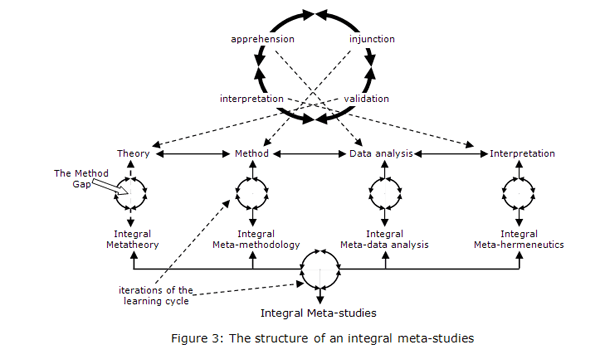
Mark Edwards - Towards an Integral Meta-Studies: Describing and Transcending Boundaries in the Development of Big Picture Science


In the newest issue of The Integral Review (9:2; June 2013), integral scholar Mark Edwards offers an excellent article on efforts toward an integrally-based meta-studies model, particularly in the realm of "big picture science."
I propose a general schema, called integral meta-studies, that describes some of the characteristics of this meta-level science. Integral here refers to the long tradition of scientific and philosophic endeavours to develop integrative models and methods. Given the disastrous outcomes of some of the totalising theories of the nineteenth century, the subsequent focus on ideas of the middle-range is entirely understandable. But middle-range theory will not resolve global problems. A more reflexive and wider conceptual vision is required.
This article appears as part of the special issue on transdisciplinary studies (International Symposium: Research Across Boundaries, Part 1).

[Image at the top is from Edwards' article at Integral World, Where's the Method to Our Integral Madness? An Outline for an Integral Meta-Studies.


Towards an Integral Meta-Studies: Describing and Transcending Boundaries in the Development of Big Picture Science [1]


by Mark G. Edwards [2]


Abstract 


We are entering a period in human civilisation when we will either act globally to establish a sustainable and sustaining network of world societies or be enmired, for the foreseeable future, in a regressive cycle of ever-deepening global crises. We will need to develop global forms of big picture science that possess institutionalised capacities for carrying out meta-level research and practice. It will be global in that such research cannot be undertaken in isolation from practical global concerns and global social movements. In this paper I propose a general schema, called integral meta-studies, that describes some of the characteristics of this meta-level science. Integral here refers to the long tradition of scientific and philosophic endeavours to develop integrative models and methods. Given the disastrous outcomes of some of the totalising theories of the nineteenth century, the subsequent focus on ideas of the middle-range is entirely understandable. But middle-range theory will not resolve global problems. A more reflexive and wider conceptual vision is required. Global problems of the scale that we currently face require a response that can navigate through theoretical pluralism and not be swallowed up by it. In saying that, twenty-first-century metatheories will need to be different from the monistic, grand theories of the past. They will have to be integrative rather than totalising, pluralistic rather than monistic, based on science and not only on philosophy, methodical rather than idiosyncratic, find inspiration in theories, methods and interpretive frameworks from the edge more than from the centre and provide means for inventing new ways of understanding as much as new technologies. Integrative metastudies describes an open system, inquiry space or clearing that has a place for many forms of scientific inquiry and their respective theories, methods, techniques of analysis and interpretive frameworks.

1. The word “integral” is used here to refer to the long tradition of integrative big pictures as exemplified in the work of such figures as Thomas Aquinas, Georg Hegel, Michil Bakunin, Vladamir Solovyov, Pitrim Sorokin, Rudolph Steiner, Jean Gebser, Aurobindo Ghose, Jacques Maritain, Bill Torbert, Ken Wilber, Ervin László, Fred Dallmyr, Ronnie Lessem and Alexander Schieffer. 

2. Mark Edwards is Assistant professor at the Business School, University of Western Australia where he teaches in the areas of business ethics and organisational transformation. Mark’s PhD thesis (awarded with distinction) was published in a series on business ethics by Routledge/Taylor-Francis in August 2010 and was awarded book of the year by Integral Leadership of the year in 2011. The book focuses on the integration of knowledge as applied to the fields of organisational transformation and sustainability. Mark’s research has been published in several leading academic journals and covers a diverse range of topics including business ethics, management studies, systems research, futures studies, psychotherapy and spirituality, sustainability and organisational transformation. mark.edwards@uwa.edu.au 


Introduction 


We are entering a period in human civilisation when we will either act globally to establish a sustainable and sustaining network of world societies or be enmired, for the foreseeable future, in a regressive cycle of ever-deepening global crises. If we are to take the former pathway then we must, as a matter of some urgency, develop and institutionalise integrative and meta-level forms of scientific sense-making. This meta-level form of sense making will complement existing disciplines to establish a multi-layered understanding of science that will have the capacity to take a reflexive perspective on current scientific and philosophical theory building and testing. We will need to develop global forms of big picture science that possess institutionalised capacities for carrying out meta-level research. It will be global in that such research cannot be undertaken in isolation from practical global concerns and global social movements. In this paper I propose a general schema, called integral meta-studies, that describes some of the characteristics of this meta-level science. Integral here refers to the long tradition of scientific and philosophic endeavours to develop integrative models and methods. There are many precursors and formative examples that I draw on in developing the integral meta-studies framework and what I want to do here is present something an overview that can help to situate meta-level scientific and philosophical studies within the current landscape of knowledge quests. Integrative metatheorising is an ambitious project. It is based on the premise that the critical appreciation and integration of diverse theoretical and methodological perspectives offers a new way forward in the development of science. It seeks to find insights through the connection of knowledge rather than the specialisation of knowledge. It takes an appreciative rather than a depreciative view towards systems of knowledge, irrespective of their place within the mainstream or the periphery. The big pictures that emerge from this process stand in contrast to the goals of mainstream social science which are almost exclusively concerned with the building and testing of middle-range theory.

Given the disastrous outcomes of some of the totalising theories of the nineteenth century, the subsequent focus on ideas of the middle-range is entirely understandable. But middle-range theory will not resolve global problems. A more reflexive and wider conceptual vision is required. Global problems of the scale that we currently face require a response that can navigate through theoretical pluralism and not be swallowed up by it. In saying that, twenty-first-century metatheories will need to be different from the monistic, grand theories of the past. They will have to be integrative rather than totalising, pluralistic rather than monistic, based on science and not only on philosophy, methodical rather than idiosyncratic, find inspiration in theories, methods and interpretive frameworks from the edge more than from the centre and provide means for inventing new ways of understanding as much as new technologies. Integrative metastudies describes an open system of knowledge acquisition that has a place for many forms of scientific inquiry and their respective theories, methods, techniques of analysis and interpretive frameworks. We have, in fact, been developing these meta-level capacities and models for a very long time and the time is now ripe for a more overt description and institutionalisation of these perspectives and practices.


The Challenge of Pluralism


The great proliferation in empirical studies that occurred through the 1970s and 1980s brought with it the rise of meta-data-analysis. The sheer outpouring of empirical information, particularly in the health and medical sciences, required a scientific response that could somehow make sense and form some overarching big picture of the mass of data pouring out of journals and scientific laboratories. Gene Glass was one of the pioneers of these early approaches to the integration of empirical findings and he proposed the term meta-analysis to describe the “analysis of a large collection of analysis results from individual studies for the purposes of integrating the findings” (Glass, 1976, p. 3). Glass described the emergence of meta-analysis as follows (1977, pp. 351–352):
By the late 1960s, the research literature had swollen to gigantic proportions. Although scholars continued to integrate studies narratively, it was becoming clear that chronologically arranged verbal descriptions of research failed to portray the accumulated knowledge. Reviewers began to make crude classifications and measurements of the conditions and results of studies. Typically, studies were classified in contingency tables by type and by whether outcomes reached statistical significance. Integrating the research literature of the 1970s demands more sophisticated techniques of measurement and statistical analysis. The accumulated findings of dozens or even hundreds of studies should be regarded as complex data points, no more comprehensible without the full use of statistical analysis than hundreds of data points in a single study could be so casually understood. Contemporary research reviewing ought to be undertaken in a style more technical and statistical than narrative and rhetorical. Toward this end, I have suggested a name to make the needed approach distinctive; I referred to this approach as the meta-analysis of research. 
Precisely this situation exists today, for not only research data but, for the multitudinous varieties of theory, methods and interpretive systems that are employed to make scientific sense of the complex worlds we inhabit today. And we need corresponding meta-level schools of scientific research in each of these realms. Indeed, we can see many different forms of these meta-level studies emerging today across all kinds of scholarly outputs. On the theory side we see the emergence of meta-level theoretical frameworks, multiparadigm studies and overarching conceptual models in many social sciences. In the study of scientific research methods we see the development of meta-methods and the associated approaches of mixed and multi-methodologies and with the variety of new epistemological orientations we see the rise of meta-level and general hermeneutics. Together, these overarching forms of analysis constitute a meta-level science and they formalise a way of developing knowledge that has been part of the human story of meaning-making for a very long time. What makes these meta-level disciplines different is that now we can build and test these big pictures from a scientific perspective.

These meta-level studies form a new layer of global research in that they emerge out of the pluralism of diverse views of reality that are present across different cultures, different political and geographical regions different social histories. Where modernistic forms integrative science have attempted to develop unified grand theories and the single big Theory of Everything, the new integrative meta-level approach recognises the postmodern turns towards interpretive, methodological and theoretical diversity. The goal then is not for a unified grand monism but an open space for pursuing scientific big picture inquiry in which multiple perspectives can be appreciatively and critically considered. Hence, this new meta-level inquiry offers a scientific response to one of the central questions of the 21st century - how are we to develop global conversations around, what Raiman Panikkar call, “the pluralisms of truth” (Panikkar, 1990, p. 16).
... truth is pluralistic because reality itself is pluralistic, not being an objectifiable entity. We subjects are also part of it. We are not only spectators of the Real, we are also co-actors and even co-authors of it. This is precisely our human dignity. 
During the twentieth-century we saw a procession of big pictures come and go with some useful insights and advances but also with often disastrous results. In the domains of politics, economics, education, commerce and trade and organisation and management we have seen a litany of big scientific ideas come and then drift off into marginality. While each of them had their partial truths and valid points, overall, when championed as complete and universal schemes of salvation, big pictures have not had a good track record. From Marxism to monetarism, from rational choice theory to marketism, from globalism to the promises of hyper-technologies - all of these big pictures have their respective insights and have resulted in great advances in understanding but they have also resulted in ideologies of various kinds that are fundamentally degrading the environmental, social, economic and intellectual resources of the planet. The human predilection for creating big pictures will continue and will grow even more as we enter further into the age globalisation. Given this, how can we develop and validate our metatheories via a more conscious form of doing science? How can we build a deep science which is integrative, pluralistic, reflexive, and appreciative of contending views rather than specialist, monistic, objectifying and aimed at finding the one true theory or method? Before looking at this I should first discuss a little more about what I mean by science and social science. I argue that meta-studies, or big picture science, will play an important role in the development of planetary culture in the coming decades and so it might be useful to describe in further detail how I view scientific activity and its role in contemporary society.
Read the whole article.

Friday, June 01, 2012

Culture-Gene Interactions in Human Origins - 3 Talks


From the University of California at San Diego and the Salk Institute for Biological Studies, this is another installment in the CARTA (the Center for Academic Research and Training in Anthropogeny) series of talks that have been held for the past few years. I could be biased, but this sounds like another take on E.O. Wilson's sociobiology.
The Center for Academic Research and Training in Anthropogeny* (CARTA) was established in a collaboration between faculty at UC San Diego and at the Salk Institute for Biological Studies, along with interested scientists at other institutions. CARTA became a UC San Diego recognized Organized Research Unit (ORU) in January 2008.

As the word anthropogeny implies, the primary goal of CARTA is to “explore and explain the origins of the human phenomenon.” In other words, finding the answers to the two age-old questions regarding humans:
  • Where did we come from?
  • How did we get here?
CARTA is a virtual organization formed in order to promote transdisciplinary research into human origins, drawing on methods from a number of traditional disciplines spanning the humanities, social, biomedical, biological, computational & engineering and physical & chemical sciences.

*Anthropogeny: The investigation of the origin of man (humans); Oxford English Dictionary, 2006. (1839 HOOPER Med. Dict., Anthropogeny, the study of the generation of man.)

CARTA Brochure
Interested in learning more about CARTA? We invite you to download the CARTA brochure, which provides a concise overview of CARTA's mission and activities.


This series of short lectures looks at how cultural traditions have shaped, and continue to shape, our genomes with the following presentations:
  • Origins of Modern Human Behavior (Alison Brooks)
  • Culture-led Gene-culture Coevolution (Peter Richerson)
  • Human Adaptations to Diverse Environments (Anna Di Rienzo) 
(Visit: http://www.uctv.tv/carta for more video)