Showing posts with label cholesterol. Show all posts

Monday, January 20, 2014

Grain Brain, Sugars, and Brain Health


James R Hamblin's review (This Is Your Brain on Gluten) in The Atlantic (where he is a senior editor) of David Perlmutter's Grain Brain: The Surprising Truth about Wheat, Carbs, and Sugar--Your Brain's Silent Killers has generated a lot of backlash against Perlmutter's claims in the book.


Perlmutter makes a few claims that are nearly opposite of what mainstream nutrition teaches us is true (as in the 1992 USDA Food Pyramid above):
  1. Gluten is poison, and we should not eat any wheat (or rye, barley, and several other grains)
  2. Sugars, especially fructose, are also poisons and we should seriously restrict their intake
  3. LDL cholesterol is only a problem when it becomes oxidized (which occurs with carbohydrate consumption)
  4. Cholesterol is good for us - there is no such thing as too much
  5. If we adhere to these four points, we can prevent a LOT of neurodegenerative diseases
Perlmutter has introduced his own "inverse food pyramid" that resembles the one created by Dr. Mercola, although Perlmutter places an even greater emphasis on consuming fats (they should be 70% of our calories according to his model) than Mercola does:


There is also a brief video of Perlmutter outlining his inverse food pyramid:


Hamblin's review in The Atlantic was highly skeptical in tone and content - but while he tried to refute several of Perlmutter's central ideas, the research he sites supports the premise, although it is not nearly as conclusive as Perlmutter presents it.
I read the book with an eye for the most dangerous claim. What stuck out to me was Perlmutter’s case for cholesterol. He basically says that we can’t have too much.

“Nothing could be further from the truth than the myth that if we lower our cholesterol levels, we might have a chance of living longer and healthier lives,” Perlmutter writes . He recommends disowning the notion that LDL is bad cholesterol and HDL is good cholesterol; rather, both are generally good. LDL is only bad when it is oxidized, and it only becomes so in the presence of the sort of oxidative stress brought about by carbs and gluten. Avoid those, and cholesterol is innocuous.

Beyond that, Perlmutter says that cholesterol-lowering statin medicines like Lipitor, which are prescribed for a quarter of Americans over 40, should actually be vehemently avoided. Cholesterol is necessary for the brain in high levels, he says, and lowering it is contributing to dementia.

I took this to Katz, too.

“Is there a weight of evidence that says we can totally ignore both dietary cholesterol and LDL? Absolutely not,” he said. “You can legitimately say we’re starting to rethink some things, but ignoring LDL could absolutely result in heart attacks and strokes. Perlmutter is way ahead of any justifiable conclusion.”

The medical community’s understanding of the danger of cholesterol is changing. Many cardiologists are starting to think that independent of other considerations, the level of LDL in our blood may not be as important as it previously seemed. In November, the American Heart Association and the American College of Cardiology released new guidelines that redefined the use of statins. While they continue to recommend that people at high risk for heart disease and people with LDL levels above 189 take a statin, the long-standing goal of lowering one’s LDL level to 70 is no longer deemed worthwhile to monitor.
The reality about cholesterol is not quite as clear-cut as Perlmutter argues, but it is true that there is only about a 5-15% correlation between dietary intake of cholesterol and blood levels of cholesterol. From Wikipedia:
Most ingested cholesterol is esterified, and esterified cholesterol is poorly absorbed. The body also compensates for any absorption of additional cholesterol by reducing cholesterol synthesis.[9] For these reasons, cholesterol intake in food has little, if any, effect on total body cholesterol content or concentrations of cholesterol in the blood.
The primary reason for this, as Perlmutter describes, is that the body would much prefer to use dietary cholesterol for the many cellular and hormonal processes based on its metabolism (most notably as an essential structural component of cell membranes and necessary to establish proper membrane permeability and fluidity, as well as it's role as the building block of sex hormones like testosterone and estrogen). Making cholesterol from sugars and saturated fats is an energy demanding process. Importantly, cholesterol is NOT really a fat - it is technically a sterol, a modified steroid.

LDL cholesterol is the evil cause of heart disease and a host of other diseases according to the medical mainstream. However, research from a few years back indicates that low cholesterol may actually cause more non-coronary deaths than high cholesterol. Moreover, as Perlmutter argues, statins that lower cholesterol compromise brain function because they don't only stop the liver from making cholesterol, they also stop the brain from doing so.
Yeon-Kyun Shin, a biophysics professor in the department of biochemistry, biophysics and molecular biology, says the results of his study show that drugs that inhibit the liver from making cholesterol may also keep the brain from making cholesterol, which is vital to efficient brain function.

"If you deprive cholesterol from the brain, then you directly affect the machinery that triggers the release of neurotransmitters," said Shin. "Neurotransmitters affect the data-processing and memory functions. In other words -- how smart you are and how well you remember things."

Another fallacy around cholesterol and health is that fat is the primary source of increased circulating LDL cholesterol. Fructose is a much larger issue - as soon as fructose is ingested it goes straight to the liver where it is converted into triglycerides to be stored as fat. Considering the enormous levels of high-fructose corn syrup consumed by the Western world, it's no wonder obesity is such a rampant problem.
The effects of different dietary sugars, with or without exogenously induced hyperinsulinemia, on rat plasma triglyceride kinetics have been studied. Glucose, sucrose, or fructose were supplied as 10% drinking solutions. The sugar-supplemented groups were each divided into subgroups, one receiving 6 U of insulin per day for 2 wk from intraperitoneally implanted minipumps and the other receiving none. The same degree of hyperglycemia and of endogenous hyperinsulinemia was seen in each sugar-supplemented group. Infusing exogenous insulin restored normoglycemia and produced more pronounced but equal hyperinsulinemia in each subgroup. In those rats that received no exogenous insulin, triglyceride production increased 18% in the sucrose-supplemented group and 20% in the fructose supplemented subgroups, but not at all in the glucose-supplemented subgroup. This 20% increase in triglyceride production in the fructose-supplemented subgroup was accompanied by a six times greater (120%) increase in triglyceride concentration. This suggested that dietary fructose not only increased triglyceride production, but also impaired triglyceride removal. Exogenously induced hyperinsulinemia further increased triglyceride production in those rats receiving dietary fructose, either as the monosaccharide or as sucrose, but not in those receiving only glucose. Thus, in the presence of fructose, but not glucose, insulin stimulates triglyceride production. As exogenous insulin returned the triglyceride concentrations to normal in the fructose-supplemented rats, it also appeared to overcome any fructose-associated impairment of triglyceride removal.
[Emphasis added.] While fructose is clearly the culprit in triglyceride levels, glucose is not so harmless as the above study might indicate. Perlmutter claims that glucose is very damaging to the brain, and there is research to support a correlation, although not yet a causative relationship:
Our results indicate that even in the absence of manifest type 2 diabetes mellitus or impaired glucose tolerance, chronically higher blood glucose levels exert a negative influence on cognition, possibly mediated by structural changes in learning-relevant brain areas. Therefore, stratgies aimed at lowering glucose levels even in the normal range may beneficially influence cognition in the older population, a hypothesis to be examined in future interventional trials.
So it appears that Perlmutter is not so far off after all. He is a little too absolute given the current evidence, but it's not likely that the millions of Americans who read his book are actually going to stop eating wheat and other grain products - Americans are simply not that concerned with the long-term consequences of immediate whims and desires.

Here is a longer talk by Perlmutter being interviewed for Underground Wellness:


Here are time notes:
5:06 -- The impact Dr. Perlmutter had on Dr. Oz.
9:10 -- Why you shouldn't let the government tell you what to eat.
14:42 -- LDL vs oxidized LDL -- know the difference!
17:10 -- 4 vital functions that require cholesterol in the brain.
20:20 -- Why cholesterol should be your BFF, not your worst enemy.
23:43 -- Is whole-grain wheat bread more toxic than a Snickers bar?
29:07 -- Your brain on gluten.
32:20 -- Heard of leaky gut? There's even leaky brain.
34:15 -- Do your kids a favor -- put them on a gluten-free diet.
36:15 -- Dr. Perlmutter's opinion on quinoa.
38:40 -- The antioxidant hoax. And why Sean was right about Protandim.
40:52 -- 5 foods that prevent oxidative stress.
42:00 -- Caller Q: Can gluten-free products still affect the brain?
44:26 -- Caller Q: Is brain fog the result of a gluten sensitivity?
46:47 -- Caller Q: How effective is liposomal glutathione?
49:10 -- Caller Q: If you're on a gluten-free diet, do you only eat protein and vegetables?
51:06 -- Caller Q: Are there other harmful elements in grains beyond gluten?
55:45 -- Caller Q: Is there a difference between the diet Dr. Perlmutter recommends and the paleo diet?
57:30 -- Caller Q: What is Dr. Perlmutter's opinion on the supplement KetoForce?
1:01:24 -- Caller Q: Can you fully recover from damage caused by gluten?
1:03:10 -- Why MS is a gut-related disease
1:09:41 -- Suffering from blood sugar issues? Here's a marker you should test for.
1:15:35 -- How to lower triglycerides.
1:16:33 -- Report your gluten-free success stories to Dr. Perlmutter!
1:17:56 -- The Grain Brain breakdown.

Tuesday, November 05, 2013

Heart of the Matter (2 Parts: The Cholesterol Myth and the Cholesterol Drug War)


Australia's ABC 1 has a show called Catalyst - they recently ran a two-part show debunking the dietary-fat-and-cholesterol-will-kill-you myth. We have known for decades that this is not really true, but the medical establishment has been reluctant to update their thinking.

When Dr. Atkins first introduced his low-carb diet model in the 1970s, he did not distinguish between good fats and bad fats, and still his patients showed better lipid profiles than those on the high carbohydrate, low fat programs (Dr. Ornish). Over the years he refined his thinking on healthy fats and his program became even more effective.

Michael Eades, M.D. has been making the same argument for years as part of his "protein power" program. Likewise, Loren Cordain, the originator of the Paleo Diet, has also been advocating minimal carbs and more fats.

This two-part show looks at the evidence and it comes up lacking.

You can download the evidence for yourself from this excellent collection of papers.

Heart of the Matter, Part 1: Dietary Villains


Published on Oct 24, 2013 

Is the role of cholesterol in heart disease really one of the biggest myths in the history of medicine? For the last four decades we've been told that saturated fat clogs our arteries and high cholesterol causes heart disease. It has spawned a multi-billion dollar drug and food industry of "cholesterol free" products promising to lower our cholesterol and decrease our risk of heart disease.

But what if it all isn't true? What if it's never been proven that saturated fat causes heart disease?

For more information, extended interviews and original papers head here, Catalyst.


Heart of the Matter Part 2 Cholesterol Drug War


Published on Oct 28, 2013 

We've been told that medications to lower cholesterol can save lives. And now over 40 million worldwide take drugs to lower their cholesterol.

But what if the majority of these patients won't benefit from taking these pills?

And, what if drug companies are distorting the data to make cholesterol lowering medications seem more effective than they are?

In our second episode of Heart of the Matter airing on Thursday the 31st of October, Dr Maryanne Demasi puts the billion dollar drug industry under the microscope, and asks who really benefits from taking cholesterol lowering medication?

Monday, September 24, 2012

Fat Storage Is How the Body Protects Itself from Poor Nutrition


We eat too much food (too many calories) and we get fat. Being fat brings a host of other health issues, such as heart and other cardiovascular diseases, high cholesterol, diabetes, and on the list could go. Pretty simple, right? Wrong.

Storing excess calories (energy) as fat is how the body tries to protect us from poor nutritional choices and excess calories, in order to prevent high cholesterol, heart disease, diabetes, and so on.

Let's break it down

We (human beings in Western nations) eat too much, most of which is not healthy, i.e., filled with simple carbohydrates (sugars, white flour, etc), saturated fats and trans fats, and most of it is processed, far from what nature intended.

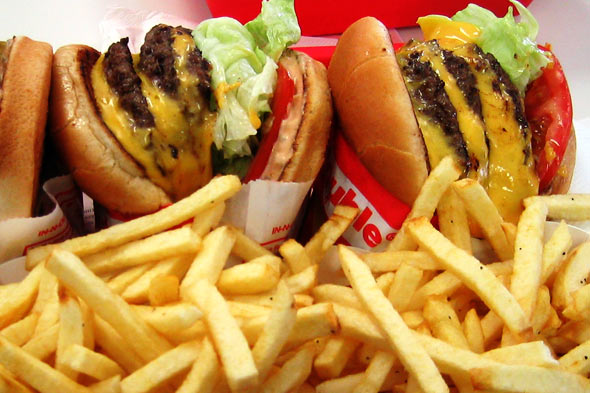
For example, we go to Burger King and get a BK Quad Stacker (930 calories, 28 grams of saturated fat), a large fries, and a chocolate milkshake. That's lunch or dinner. That meal is easily over 1500 calories, and unless you plan to run a marathon in a couple of hours, that is about 1100 calories more than you need, not to mention all of the saturated fat, simple carbohydrates, sugar, and salt.

The body does its best to do its job. The stomach and large intestine digest the food and send the "nutrients" into the bloodstream to be used for energy. The pancreas gets the message that there is a serious load of energy in the blood, so it produces more insulin to handle the increased calorie load. Meanwhile, the liver is doing its job in converting the extra glucose (sugar) and fats (mostly unhealthy fats in this case) into triglycerides. Some of the saturated fat is also being converted into LDL cholesterol.

At this point, our blood stream is filled with glucose, triglycerides, lipids (fats), cholesterol, and now some insulin is shooting onto the seen. It's job is to kick ass and take names.

The insulin stores glucose in the muscles and liver until they are full (and unless you just worked out, they are already probably full), then it stuffs triglycerides into fat cells, as well as sending extra glucose and fat back to the liver to be converted into triglycerides to be stored as fat.

The fact that the body does this is essential. Too much glucose in the blood, as we know from diabetics, can cause blindness, neuropathy, and other serious health issues. To much fat in the blood clogs the arteries and we have a heart attack or a stroke.

If the body did not store all of this extra "energy" as fat, we would die young, but thinner.

What this explains, in part, is why overweight people can have normal cholesterol, triglyceride, and glucose levels. On the other hand, take these measurements following a meal at their favorite fast food joint and their scores will be off the charts - the heavier we get, the less well our bodies handle unhealthy foods, until we get to a point where the pancreas cannot generate enough insulin anymore.

I don't want to create the wrong idea here - being fat is not healthy. Fat cells are less sensitive to insulin the more full they are, until the body has to make more of them. In addition, fat cells produce estrogen, and the majority of major cancers are estrogen related (including breast and prostate). Finally, when fats cells are unresponsive, the body will store fat in muscle cells, and this has been linked to diabetes. 

Over at the PLoS ONE blog, Obesity Panacea, Peter Janiszewski, Ph.D. reports on the research that supports this version of how the body works. It's very cool, and has some good links.

Not enough, rather than too much fat, causes metabolic problems of obesity

Thursday, September 13, 2012

High Fructose Intake Linked to Poor Liver Health


Unlike glucose (the simplest sugar, and the foundation of carbohydrate energy use in the body), which can be metabolized and used for energy by cells throughout the body, fructose (fruit sugar) must be metabolized through a rather complex process in the liver, where some of it becomes glucose eventually, and a substantial portion is bound in triglycerides, destined to become very-low-density lipoproteins (VLDL) or be stored as fat (or to clog arteries as VLDL cholesterol).

A new study shows that this process, fructolysis, increases uric acid levels in the liver and decreases  ATP levels (the energy that powers cells) - this was with obese and diabetic subjects, but there is ample evidence that this is not confined only to this population.
For the present study, 244 obese and diabetic adults from the Look AHEAD Study were evaluated, with dietary fructose consumption estimated by the food frequency questionnaire. Liver ATP and uric acid levels were measured in 105 patients who participated in the Look AHEAD Fatty Liver Ancillary Study. Researchers assessed the change in liver ATP content using an IV fructose challenge in 25 subjects, comparing patients with low fructose consumption (less than 15 grams per day) to those with high fructose consumption (greater than 15 grams per day).

The team found that participants with a high intake of dietary fructose had lower liver ATP levels at baseline and a greater change in ATP content following the fructose challenge than those who consumed a lower amount of fructose. Patients with high uric acid levels (5.5 mg/dL or more) displayed lower ATP stores in response to fructose.

Dr. Abdelmalek concludes, “High fructose consumption and elevated levels of uric acid are associated with more severe depletion of liver ATP. Our findings suggest that increased dietary fructose intake may impair liver “energy balance.” Further research to define the clinical implications of these findings on metabolism and NAFLD is necessary.” The authors highlight the importance of public awareness of the risks associated with a diet high in fructose.
The study citation, as given in the press release:
“Higher Dietary Fructose Is Associated with Impaired Hepatic ATP Homeostasis in Obese Individuals with Type 2 Diabetes.” Manal F. Abdelmalek, Mariana Lazo, Alena Horska, Susanne Bonekamp, Edward W. Lipkin, Ashok Balasubramanyam, John P. Bantle, Richard J. Johnson, Anna Mae Diehl, Jeanne M. Clark, and the Fatty Liver Subgroup of the Look AHEAD Research Group. Hepatology; (DOI: 10.1002/hep.25741); Print Issue Date: September, 2012. URL: http://onlinelibrary.wiley.com/doi/10.1002/hep.25741/abstract

Here is some additional information on fructose metabolism from Wikipedia:

Metabolism

In a 2012 meta-analysis of controlled feeding clinical trials, fructose was not an independent factor for weight gain. Fructose consumption did cause weight gain in a diet with excessive calories, which could be due to the extra calories rather than fructose per se.[40]

Excess fructose consumption has been hypothesized to be a cause of insulin resistance, obesity,[41] elevated LDL cholesterol and triglycerides, leading to metabolic syndrome.[42] In preliminary research, fructose consumption was correlated with obesity.[43][44] A study in mice showed that a high fructose intake may increase adiposity.[45]

Although all simple sugars have nearly identical chemical formulae, each has distinct chemical properties. This can be illustrated with pure fructose. A journal article reports that, "...fructose given alone increased the blood glucose almost as much as a similar amount of glucose (78% of the glucose-alone area)".[46][47][48][48][49]

In Wistar fatty rats, a laboratory model of diabetes, 10% fructose feeding as opposed to 10% glucose feeding was found to increase blood triglyceride levels by 86%, whereas the same amount of glucose had no effect on triglycerides.[50] Neither glucose nor fructose influenced insulin or blood sugar in this model. The authors concluded "These results show that in genetically obese, diabetic rats feeding fructose and glucose is associated with an increase in hepatic lipogenic enzyme activities and triglyceride production, and suggest that fructose stimulates triglyceride production but impairs triglyceride removal, whereas glucose stimulates both of them.[50]

Another study in humans concluded that fructose and sucrose are metabolized similarly,[51] whereas a different analysis "produced significantly higher fasting plasma triglyceride values than did the glucose diet in men" and "...if plasma triacylglycerols are a risk factor for cardiovascular disease, then diets high in fructose may be undesirable".[52]

Fructose is a reducing sugar, as are all monosaccharides. The spontaneous chemical reaction of simple sugar molecules binding to proteins is known as glycation. Showing potential cause of skin and bone damage in a rat model of diabetes, investigators suggested "that long-term fructose consumption negatively affects the aging process."[53] Another study using human proteins showed that the glycation caused by fructose appears to be equivalent to glucose and so does not seem to be a better answer for diabetes for this reason alone, save for the smaller quantities required to achieve equivalent sweetness in some foods. It also found evidence for glycation of human lens proteins caused by fructose.[54]

The people most at risk of increased triglycerides and fat storage from eating fructose are those who are consuming more calories than they need. Consumption of high-fructose corn syrup is also a huge risk factor for anyone, healthy or overweight.

If you eat fruits, and you should, be sure your daily calorie intake is in check and that you are exercising regularly. Then, try to choose fruits lower in sugar, such as apples, berries, melons, and so on, that also offer good nutrient and antioxidant benefits.

Friday, August 31, 2012

Are Eggs Really as Bad as Cigarettes for Our Health?


The short answer is NO. The question stems from an August 14th article in The Atlantic, Study: Eggs Are Nearly as Bad for Your Arteries as Cigarettes. It wasn't until the 2nd sentence in the article that the author went off the rails with the claim: "Because egg yolks are high in cholesterol, eating whole eggs increases cholesterol, a known risk factor for coronary artery disease (CAD) and heart attacks."

Wow, I thought that nonsense had been dispelled years ago, but seems we need to do it again - dietary cholesterol has a very minimal correlation with blood concentrations of cholesterol. Saturated fat in the diet is correlated with blood cholesterol levels. This brief summary of the issue is from Discovery Health:
About 85 percent of your blood cholesterol level is endogenous, which means it is produced by your body. The other 15 percent or so comes from an external source -- your diet. Your dietary cholesterol originates from meat, poultry, fish, seafood and dairy products. It's possible for some people to eat foods high in cholesterol and still have low blood cholesterol levels. Likewise, it's possible to eat foods low in cholesterol and have a high blood cholesterol level.  
At this point, the whole study has been discredited, since all of their conclusions follow from the false premise.

As discussed by Cassandra Willyard at The Last Word on Nothing, the majority of the media did not even bother to check facts or speak with experts about the study. The one exception is Sydney Lupkin at ABC News who, you known, spoke to other doctors and researchers and revealed how deeply flawed the study is, beyond it's flawed premise.
“This is very poor quality research that should not influence patient’s dietary choices,” said Dr. Steven Nissen, who chairs the department of Cardiovascular Medicine at the Cleveland Clinic Foundation, in an email. “It is extremely important to understand the differences between ‘association’ and ‘causation’.”

Nissen said the researchers relied on patients to recall how many eggs they consumed, but asked them once and assumed it remained constant, which isn’t reliable. He said the way researchers measured patients’ plaque has come under “considerable criticism,” and that researchers failed to adjust for other dietary factors.

Dr. David Frid, a cardiologist at the Cleveland Clinic, told ABCNews.com he doesn’t think smoking should be equated with eating eggs because eggs have an indirect rather than direct impact on heart disease. The eggs have to first increase cholesterol to create plaque build-up. The impact of smoking on heart disease is direct because smoking causes arteries to become inflamed, which prompts the body to respond with plaque.

He said the study fails to take exercise or other dietary habits into account. Study participants could have consumed more salt, or they could have been on cholesterol-reducing drugs, too.

“It may be that people who consume a lot of eggs also consume a lot of other fatty foods,” Frid said, adding that how the egg is prepared should also be taken into account.
Beyond the failed study itself, the media handled this so badly that it becomes a perfect case example of how poorly the media handles science.

[T]he good headline potential was too tempting for several media outlets to ignore and the story ran widely, and in some cases without any comment from outside experts

Dr. Tom Linden, a medical journalism professor at the University of North Carolina,said journalists should exercise caution when writing about studies like this. He said they should put the studies into context by explaining the caveats and consulting experts.

“The danger here is headline writers who aren’t necessarily science writers may go way overboard in headlining the story,” Linden said.

Linden said his bottom line is that journalists and readers should be cautious when they interpret study results. Studies need to be put in context beyond the snappy headline or lead.
We need more writers like Lupkin, authors who do research and talk to other experts.