Showing posts with label vegetarianism. Show all posts

Thursday, August 09, 2012

Early Meat-Eating Human Ancestors Thrived While Vegetarian Hominin Died Out

Make of this what you will . . . but it seems to support the premise that humans are omnivores. Before the commentary from Katherine Harmon at Scientific American, here is the story form Science Daily.

Early Human Ancestors Had More Variable Diet

ScienceDaily (Aug. 8, 2012) — New research sheds more light on the diet and home ranges of early hominins belonging to three different genera, notably Australopithecus, Paranthropus and Homo -- that were discovered at sites such as Sterkfontein, Swartkrans and Kromdraai in the Cradle of Humankind, about 50 kilometres from Johannesburg. Australopithecus existed before the other two genera evolved about 2 million years ago.

Scientists conducted an analysis of the fossil teeth, indicating that Australopithecus, a predecessor of early Homo, had a more varied diet than early Homo. Its diet was also more variable than the diet of another distant human relative known as Paranthropus.

An international team of researchers, including Professor Francis Thackeray, Director of the Institute for Human Evolution at Wits University, will be publishing their latest research on what our early ancestors ate, online in the journal, Nature, on August 8, 2012. The paper titled 'Evidence for diet but not landscape use in South African early hominins' was authored by Vincent Balter from the Ecole Normale Supérieure in Lyon, France; Jose´ Braga from the Université de Toulouse Paul Sabatier in Toulouse in France; Philippe Te´louk from the Ecole Normale Supérieure in Lyon in France; and Thackeray from the University of the Witwatersrand in Johannesburg in South Africa.

According to Thackeray, the results of the study show that Paranthropus had a primarily herbivorous-like diet, while Homo included a greater consumption of meat.

Signatures of essential chemical elements have been found in trace amounts in the tooth enamel of the three fossils genera, and the results are indicators of what South African hominins ate and what their habitat preferences were.

Strontium and barium levels in organic tissues, including teeth, decrease in animals higher in the food chain. The scientists used a laser ablation device, which allowed them to sample very small quantities of fossil material for analysis. Since the laser beam was pointed along the growth prisms of dental enamel, it was possible to reconstruct the dietary changes for each hominin individual.

Thackeray states that the greater consumption of meat in the diet of early forms of Homo could have contributed to the increase in brain size in this genus.

Australopithecus probably ate both meat and the leaves and fruits of woody plants. The composition of this diet may have varied seasonally.

Apart from the dietary differences, the new results indicate that the home-range area was of similar size for species of the three hominin genera.

The scientists have also measured the strontium isotope composition of dental enamel. Strontium isotope compositions are free of dietary effects but are characteristic of the geological substrate on which the animals lived.

According to the results all the hominids lived in the same general area, not far from the caves where their bones and teeth are found today.

Professor Vincent Balter of the Geological Laboratory of Lyon in France, suggests that up until two millions years ago in South Africa, the Australopithecines were generalists, but gave up their broad niche to Paranthropus and Homo, both being more specialised than their common ancestor.

That is the press release from the University of Witwatersrand - and here is the commentary on that news. I do not agree with Harmon's conclusion, and she repeats the red meat = health problems nonsense (its all in how it's cooked and where it comes from). Even now, children who do not get adequate protein in development are smaller and have lower IQ scores - and there are many other sources of meat than the drug-filled factory cows the meat industry foists on the market.

Early Meat-Eating Human Ancestors Thrived While Vegetarian Hominin Died Out


early human ancestor tooth varied diet
Early Homo molar; image courtesy of Jose Braga/Didier Descouens

There has been fierce debate recently over whether the original “caveman” diet was one of heaps of bloody meat or fields of greens. New findings suggest that some of our early ancestors were actually quite omnivorous. But subsequently, our line and an ill-fated group of hominins developed very different dietary strategies. One chose meat while the other moved toward more plants.

The hominin Australopithecus, which lived from about 4 million to 2 million years ago, is presumed to be a common ancestor of both the Homo lineage, which emerged some 2.3 million years ago and gave rise to us, and to the Paranthropus genius, which is first documented about 2.7 million years ago and died out about 1 million years ago. Some have attributed the extinction of Paranthropus to an inflexible diet or limited territory, especially in the face of climactic changes.

A team of researchers led by Vincent Balter, of École Normale Supérieure de Lyon, decided to probe into some of these debates. They used lasers to analyze the enamel from fossilized teeth belonging to Australopithecus africanus, Paranthropus robustus and early Homo specimens, which were all from southern Africa. By assessing ratios of calcium, barium and strontium as well as the number of strontium isotopes, the team was able to deduce both diet and the size of the area that these individuals ranged over. The findings were published online August 8 in Nature (Scientific American is part of Nature Publishing Group).

The ancestral Australopithecus consumed a wide range of foods, including, meat, leaves and fruits. This varied diet might have been flexible to shift with food availability in different seasons, ensuring that they almost always had something to eat. Paranthropus, according to the elemental analysis, was largely a plant eater, which matches up with previous studies of tooth morphology and wear patterns. It also helps to explain the massive jaw structure they possessed, which could have come in handy for tough food stuffs and earned one specimen the nickname “nutcracker man.” Early Homo, on the other hand, went in for a meat-heavy diet—possibly enabled by the use of tools for hunting and butchering.

However, just because a meatier diet was good for our early Homo forbearers does not necessarily it will keep each of us contemporary humans alive longer. Now that we no longer have to fend for ourselves in quite the same way, increased red meat consumption has actually been linked to shorter individual life spans. So next time you’re flummoxed by food choices, don’t be afraid to go a little Paranthropus and hit the salad bar.

Katherine Harmon 
 About the Author: Katherine Harmon is an associate editor for Scientific American covering health, medicine and life sciences. Follow on Twitter @katherineharmon.
The views expressed are those of the author and are not necessarily those of Scientific American.

Wednesday, May 19, 2010

TED Talks - Graham Hill: Why I'm a weekday vegetarian

A very brief (less than six minutes) talk from TreeHugger founder Graham Hill on why he is a weekday vegetarian. This is not a bad idea. While I consider myself an omnivore, there are many days that I do not eat meat of any kind - partly to not eat meat as much, and partly to have a more diverse diet.

Why I'm a weekday vegetarian

We all know the arguments that being vegetarian is better for the environment and for the animals -- but in a carnivorous culture, it can be hard to make the change. Graham Hill has a powerful, pragmatic suggestion: Be a weekday veg.

About Graham Hill

Graham Hill founded the eco-blog and vlog TreeHugger.com, to help, as he says, "push sustainability into the mainstream," with a design-forward style and an international, wide-ranging team committed to transforming complex issues into everyday concepts. It's been called "the Green CNN." The TreeHugger team was even asked to join the Discovery Communications network as a part of their Planet Green initiative, and Hill now makes appearances on the green-oriented cable channel.

Before Treehugger, Hill studied architecture and design (his side business is making those cool ceramic Greek cups). His other company, ExceptionLab, is devoted to creating sustainable prototypes -- think lamps made from recycled blinds and ultra-mod planters that are also air filters.


If you would rather read than watch/listen, here is the transcript:

About a year ago, I asked myself a question: "Knowing what I know, why am I not a vegetarian?" After all, I'm one of the green guys. I grew up with hippie parents in a log cabin. I started a site called Treehugger. I care about this stuff. I knew that eating a mere hamburger a day can increase my risk of dying by a third. Cruelty, I knew that the 10 billion animals we raise each year for meat, are raised in factory farm conditions that we, hypocritically, wouldn't even consider for our own cats, dogs and other pets. Environmentally, meat, amazingly, causes more emissions than all of transportation combined, cars, trains, planes, buses, boats, all of it. And beef production uses 100 times the water that most vegetables do.

I also knew that I'm not alone. We as a society are eating twice as much meat as we did in the 50s. So what was once the special, little side treat, now is the main, much more regular. So really, any of these angles should have been enough to go vegetarian. Yet, there I was, chk, chk,, chk, tucking into a big, old steak.

So why was I stalling? I realized that what I was being pitched was a binary solution. It was either you're a meat eater, or you're a vegetarian. And I guess I just wasn't quite ready. Imagine your last hamburger. (Laughter) So my common sense, my good intentions, were in conflict with my taste buds. And I'd commit to doing it later. And not surprisingly, later never came. Sound familiar?

So I wondered, might there be a third solution? And I thought about it. And I came up with one. And I've been doing it for the last year, and it's great. It's called weekday veg. The name says it all. Nothing with a face Monday through Friday. On the weekend, your choice. Simple. If you want to take it to the next level, remember, the major culprits, in terms of environmental damage and health, are red and processed meats. So you want to swap those out with some good, sustainably harvested fish. It's structured, so it ends up being simple to remember. And it's okay to break it here and there. After all, cutting five days a week is cutting 70 percent of your meat intake.

The program has been great, weekday veg. My footprint's smaller I'm lessening pollution. I feel better about the animals. I'm even saving money. Best of all, I'm healthier, I know that I'm going to live longer, and I've even lost a little weight.

So please, ask yourselves, for your health, for your pocketbook, for the environment, for the animals, what's stopping you from giving weekday veg a shot? After all, if all of us ate half as much meat, it would be like half of us were vegetarians.

Thank you.

(Applause)


Thursday, November 05, 2009

Elizabeth Kolbert - Should You Eat Meat?

Interesting article from The New Yorker. It's essentially a review of Jonathan Safran Foer’s new book, Eating Animals, which is a novel of the postmodern variety. Foer appears to be anti-meat for the most part, on moral grounds not ecological, but he concedes that humane meat eating is possible later in the book, at least according to the review.

Flesh of Your Flesh

Should you eat meat?

by Elizabeth Kolbert November 9, 2009

This year, Americans will consume some thirty-five million cows, a hundred and fifteen million pigs, and nine billion birds.

This year, Americans will consume some thirty-five million cows, a hundred and fifteen million pigs, and nine billion birds.

Americans love animals. Forty-six million families in the United States own at least one dog, and thirty-eight million keep cats. Thirteen million maintain freshwater aquariums in which swim a total of more than a hundred and seventy million fish. Collectively, these creatures cost Americans some forty billion dollars annually. (Seventeen billion goes to food and another twelve billion to veterinary bills.) Despite the recession, pet-related expenditures this year are expected to increase five per cent over 2008, in part owing to outlays on luxury items like avian manicures and canine bath spritz. “We have so many customers who say they’d eat macaroni and cheese before they’d cut back on their dogs,” a Colorado pet-store owner recently told the Denver Post. In a survey released this past August, more than half of all dog, cat, and bird owners reported having bought presents for their animals during the previous twelve months, often for no special occasion, just out of love. (Fish enthusiasts may bring home fewer gifts, but they spend more on each one, with the average fish gift coming to thirty-seven dollars.) A majority of owners report that one of the reasons they enjoy keeping pets is that they consider them part of the family.

Americans also love to eat animals. This year, they will cook roughly twenty-seven billion pounds of beef, sliced from some thirty-five million cows. Additionally, they will consume roughly twenty-three billion pounds of pork, or the bodies of more than a hundred and fifteen million pigs, and thirty-eight billion pounds of poultry, some nine billion birds. Most of these creatures have been raised under conditions that are, as Americans know—or, at least, by this point have no excuse not to know—barbaric. Broiler chickens, also known, depending on size, as fryers or roasters, typically spend their lives in windowless sheds, packed in with upward of thirty thousand other birds and generations of accumulated waste. The ammonia fumes thrown off by their rotting excrement lead to breast blisters, leg sores, and respiratory disease. Bred to produce the maximum amount of meat in the minimum amount of time, fryers often become so top-heavy that they can’t support their own weight. At slaughtering time, they are shackled by their feet, hung from a conveyor belt, and dipped into an electrified bath known as “the stunner.”

For pigs, conditions are little better. Shortly after birth, piglets have their tails chopped off; this discourages the bored and frustrated animals from gnawing one another’s rumps. Male piglets also have their testicles removed, a procedure performed without anesthetic. Before being butchered, hogs are typically incapacitated with a tonglike instrument designed to induce cardiac arrest. Sometimes their muscles contract so violently that they end up not just dead but with a broken back.

How is it that Americans, so solicitous of the animals they keep as pets, are so indifferent toward the ones they cook for dinner? The answer cannot lie in the beasts themselves. Pigs, after all, are quite companionable, and dogs are said to be delicious.

This inconsistency is the subject of Jonathan Safran Foer’s “Eating Animals” (Little, Brown; $25.99). Unlike Foer’s two previous books, “Everything Is Illuminated” and “Extremely Loud and Incredibly Close,” his latest is nonfiction. The task it sets itself is less to make sense of our behavior than to show how, when our stomachs are involved, it is often senseless. “Food choices are determined by many factors, but reason (even consciousness) is not generally high on the list,” Foer writes.

Foer was just nine years old when the problem of being an “eating animal” first presented itself. One evening, his parents left him and his older brother with a babysitter and a platter of chicken. The babysitter declined to join the boys for dinner.

“You know that chicken is chicken, right?” she pointed out. Foer’s older brother sniggered. Where had their parents found this moron? But Foer was shaken. That chicken was a chicken! Why had he never thought of this before? He put down his fork. Within a few years, however, he went back to eating chickens and other animals. During high school and college, he converted to vegetarianism several more times, partly to salve his conscience and partly, as he puts it, “to get closer to the breasts” of female activists. Later, he became engaged to a woman (the novelist Nicole Krauss) with a similar history of relapse. They resolved to do better, and immediately violated that resolve by serving meat at their wedding and eating it on their honeymoon. Finally, when he was about to become a father, Foer felt compelled to think about the issue more deeply, and, at the same time, to write about it. “We decided to have a child, and that was a different story that would necessitate a different story,” he says.

Foer ends up telling several stories, though all have the same horrific ending. One is about shit. Animals, he explains, produce a lot of it. Crowded into “concentrated animal feeding operations,” or CAFOs, they can produce entire cities’ worth. (The pigs processed by a single company, Smithfield Foods, generate as much excrement as all of the human residents of the states of California and Texas combined.) Unlike cities, though, CAFOs have no waste-treatment systems. The shit simply gets dumped in holding ponds. Imagine, Foer writes, if “every man, woman, and child in every city and town in all of California and all of Texas crapped and pissed in a huge open-air pit for a day. Now imagine that they don’t do this for just a day, but all year round, in perpetuity.” Not surprisingly, the shit in the ponds tends to migrate to nearby streams and rivers, causing algae blooms that kill fish and leave behind aquatic “dead zones.” According to the Environmental Protection Agency, some thirty-five thousand miles of American waterways have been contaminated by animal excrement.

Another of Foer’s stories is about microbes. In the U.S., Foer reports, people are prescribed about three million pounds of antibiotics a year. Livestock are fed nearly twenty-eight million pounds, according to the drug industry. By pumping cows and chickens full of antibiotics, farmers have been instrumental in producing new, resistant strains of germs—so-called superbugs. As soon as the Food and Drug Administration approved the use of a class of drugs known as fluoroquinolones in chickens, for instance, the percentage of bacteria resistant to fluoroquinolones shot up. Officials at many health organizations, including the Centers for Disease Control, have called for an end to the indiscriminate use of antibiotics on farms, but, of course, the practice continues.

A third story is about suffering. Intuitively, we all know that animals feel pain. (This, presumably, is why we spend so much money on vet bills.) “No reader of this book would tolerate someone swinging a pickax at a dog’s face,” Foer observes. And yet, he notes, we routinely eat fish that have been killed in this way, as well as chickens who have been dragged through the stunner and pigs who have been electrocuted and cows who have had bolts shot into their heads. (In many cases, the cows are not quite killed by the bolts, and so remain conscious as they are skinned and dismembered.)

Foer relates how, one night, he sneaked onto a California turkey farm with an animal-rights activist he calls C. Most of the buildings were locked, but the two managed to slip into a shed that housed tens of thousands of turkey chicks. At first, the conditions seemed not so bad. Some of the chicks were sleeping. Others were struggling to get closer to the heat lamps that substitute for their mothers. Then Foer started noticing how many of the chicks were dead. They were covered with sores, or matted with blood, or withered like dry leaves. C spotted one chick splayed out on the floor, trembling. Its eyes were crusted over and its head was shaking back and forth. C slit its throat.

“If you stop and think about it, it’s crazy,” she later told Foer. “How would you judge an artist who mutilated animals in a gallery because it was visually arresting? How riveting would the sound of a tortured animal need to be to make you want to hear it that badly? Try to imagine any end other than taste for which it would be justifiable to do what we do to farmed animals.”

One day while in Berlin, Franz Kafka went to visit the city’s famous aquarium. According to his friend and biographer Max Brod, Kafka, gazing into the illuminated tanks, addressed the fish directly. “Now at last I can look at you in peace,” he told them. “I don’t eat you anymore.”

Kafka, who became what Brod calls a strenger Vegetarianer—a strict vegetarian—is one of the heroes of “Eating Animals.” So is the philosopher Jacques Derrida, and a vegan theology professor named Aaron Gross, who is working on plans for a model slaughterhouse. “This is not paradoxical or ironic,” Gross says of his slaughterhouse work.

Foer’s villains include Smithfield, Tyson Foods, the U.S. Department of Agriculture, and—rather more surprisingly—Michael Pollan. There is perhaps no more influential critic of the factory farm than Pollan, and Foer acknowledges that he “has written as thoughtfully about food as anyone.” But when Pollan looks at animals he doesn’t feel worried or guilty or embarrassed. He feels, well, hungry.

“I have to say there is a part of me that envies the moral clarity of the vegetarian, the blamelessness of the tofu eater,” Pollan observes toward the end of his book “The Omnivore’s Dilemma,” shortly after describing the thrill of shooting a pig. “Yet part of me pities him, too. Dreams of innocence are just that; they usually depend on a denial of reality that can be its own form of hubris.”

Read the whole review.


Friday, June 12, 2009

The Vegetarian Myth: Food Justice and Sustainability

A review of The Vegetarian Myth: Food Justice and Sustainability over at Reality Sandwich - seems like a necessary antidote to all the extremists on the vegetarian side.

Vegetarian Myth Buster

Jennifer Flynn

As a vegan for 20 years, Lierre Kieth, experienced a wake up call, a call that she refers to as growing up into adulthood while she searched to live in peace with her natural surroundings. Kieth's investigates and challenges her own personal beliefs regarding vegetarians, agricultural practices, and ecological science in her new book, The Vegetarian Myth: Food Justice and Sustainability.

Referencing farmers who have put sustainable and ethical practices in place on their land, Kieth makes us question the accuracy of vegetarians touting the "wise" techniques of current agricultural systems and calls for a return to realism where observation of the natural world leads us to practices that would truly benefit the world and human health. Positing that vegetarianism is not a sustainable response to the food crisis and that current agricultural practices of raising animal based food products is not the answer either, The Vegetarian Myth raises awareness of the integral problem of modern civilization in which the food we eat and the way it is raised is a symptom of our lifestyle of disconnectedness from the natural world. Simply saving the lives of animals by not eating them will not save these species, the human race, or the planet as we know it.

Keith points to the cyclical nature of diet and the elimination of carnivores and herbivores in the natural environment. She uses the Serengeti, where grazing animals digest grasses and give back to the parched soil, as an example. The grazing animals are consumed by carnivores and omnivores, including humans. But with an overpopulation of grazing animals, the ecosystem would become unbalanced with every bit of green eaten. With an overpopulation of predatory animals, grasslands become piled with plant material that is slow to break down in the arid climate. Human intervention into this cycle, particularly vegetarianism, can upset the balance.

To approach sustainability, Keith urges a development in thought surrounding vegetarianism and lifestyle, relying on the wisdom of the Earth.

6-11-09

Thursday, May 21, 2009

Steven Best - Minding the Animals: Ethology and the Obsolescence of Left Humanism

Steven Best is a radical - he favors the liberation of all beings, animal, human, the planet. He argues here that the emergence of research into animal intelligence should be the death-knell of leftist submission to eating meat. He's also pretty persuasive.

Minding the Animals: Ethology and the Obsolescence of Left Humanism

By STEVEN BEST
"We do not regard the animals as moral beings. But do you suppose the animals regard us as moral beings? — An animal which could speak said: ´Humanity is a prejudice of which we animals at least are free.´"

Friedrich Nietzsche
What does it mean to be "human"? The question, though it has occupied some of the greatest Western minds of philosophy, science, history, and political theory, could not have been answered with any plausibility until recently, for we have only begin to acquire the scientific knowledge necessary to provide an informed response. At the same time, recent scientific and technological developments have produced radical and vertiginous change. The possibilities of artificial intelligence, robotics, cloning, pharmacology, stem cell research, and genetic modification pose entirely new challenges for attempts to define "human" in fixed and essentialist rather than fluid and plastic terms.[1]

Despite our deep-rooted biological and social evolution, "humanity" is a social construct involving the identity and conception humans have of themselves as members of a species. In its arrogant, alienated, and domineering Western form, human identity reflects a host of problematic assumptions, biases, prejudices, and myths derived from religion, philosophy, science, and culture as a whole. The massive, tangled knot of ideologies involved in the social construction of our species identity need to be critically unraveled, so that we can develop new identities and societies and forge sane, ethical, ecological, and sustainable life ways. To an important degree, the new identities must emerge from an ethic of respect and connectedness to all sentient life – human and nonhuman – and to the Earth as a whole. Ethically progressive and inclusive, new post-humanist identities and values would also be scientifically valid, by accurately representing the true place of Homo sapiens in the social, sentient, and ecological communities in which it finds itself enmeshed.

Profound change has been stirring in areas such as philosophy and religion, but in many key ways science is paving the way, with new discoveries forcing a rethinking of human identity and ethics and carrying a number of profound social and political implications as well. In urging systematic conceptual shifts in our views of the natural world and specifically nonhuman animals, this essay also underscores an irony and problem that has received little if any attention. This concerns the gross failures of the Left ¯ the entire spectrum of positions from Left-liberalism to Marxism to socialism and anarchism ¯ to engage one of the most significant intellectual convulsions of the modern era, namely, cognitive ethology: the scientific study of animal intelligence, emotions, behaviors, and social life. Although Darwin was an early pioneer of the field in the mid-nineteenth century, ethology did not gain decisive ground until the 1980s, when advanced by visionaries such as Donald Griffin, and subsequently was popularized by scientists and writers such as Marc Bekoff. In our current time, hardly a day passes without new and exciting breakthroughs, as the number of conferences, articles, and books on the topic continue to proliferate and the findings of ethological research continue to amaze – and humble ¯ the research community and lay audience.

Science has always been important to the Left, as progressives and radicals proudly wore the mantle of the European Enlightenment and championed the beneficial consequences of scientific advance that brought intellectual, moral, and social progress. In radical traditions from the nineteenth century to the present, Leftists prided themselves on their empiricism, naturalism, evolutionary outlook, skepticism, and agnosticism or atheism. Inseparably related to their support of scientific and Enlightenment values of learning, critical thinking, and autonomy, Leftists have also embraced the moral and political values of the modern revolutionary traditions that emphasized rights, democracy, equality, justice, and autonomy.

While an ecological turn did not take hold in Leftist thought until the 1970s, the Left today seems to be decades or another century away from discerning the moral, political, social, and ecological importance of animal liberation and the critique of speciesism[2] (the belief in the inherent superiority of humans over all other species due to their alleged unique cognitive capacities). With few exceptions, Leftists have systematically devalued or ignored the horrific plight of animals as a trivial issue compared to human suffering, and they have therefore mocked or dismissed the animal liberation movement that emerged in the 1970s to become a global movement more dynamic, powerful, and widespread than virtually any human cause or liberation movement. Despite their affirmation of Darwinian theory, which views human beings as natural beings who co-evolved with other animals in an organic continuum, the humanist elements of Leftist culture ¯ which emphasize the radical uniqueness and singularity of humans as "superior" animals ¯ prevailed over the naturalist elements ¯ which emphasize the continuum of biological evolution, even as it phases into social evolution and cultural development.

This essay raises various questions concerning human identity politics ¯ the social, political, and environmental implications of how humans view and conduct themselves as members of a distinct species in relation to other species and the Earth as a whole ¯ and situates Left humanist views as a variant, rather than rejection, of Western anthropocentrism, speciesism, and the pathology of humanism. As part of the problem rather than the solution, I argue that Leftist humanist theories (including "eco-humanist" variants) fail to advance a truly revolutionary break with the mindsets and institutions underpinning hierarchy, oppression, violence, species extinction, and the current global ecological crisis. I claim that because of the atavistic, unenlightened, pre-scientific, and discriminatory views toward nonhuman animals, such as led them to miss some of the most profound scientific and moral revolutions of the era, Leftists cannot regain their place of pride in progressive culture until they jettison their shopworn hierarchical and exploitative views, a process that can be catalyzed by engaging the major themes and findings of ethology.

Modernity and its Discontinuities
"Man, if we look to final causes, may be regarded as the centre of the world."

Francis Bacon

"The most calamitous and fragile of all creatures is man, and yet the most arrogant. (…) Is it possible to imagine anything so ridiculous as that this pitiful, miserable creature, who is not even master of himself, should call himself master and lord of the universe? It is apparent that it is not by a true judgment, but by foolish pride and stubbornness, that we set ourselves before other animals and sequester ourselves from their condition and society."

—Michel Montaigne
As humans continue to explore their evolutionary past and gain a more accurate knowledge of the intelligence of great apes and other animals, as they probe the depths of the cosmos in search of life more advanced than themselves, as they develop increasingly sophisticated computers and forms of artificial intelligence and artificial life (self-reproducing "digital DNA"), as they create transgenic beings and cross species boundaries to exchange their genes with animals, as they clone forms and create others virtually from scratch, and as they merge ever more intimately with technology and computers to construct bionic bodies and become cyborgs, the question inexorably arises: Who/what is Homo sapiens?

Since the first cosmologies, ancient Greek philosophy, Christian theology, and modern science to Marxist humanism and naturalism, Western culture has struggled, and failed, to attain an adequate understanding of the human species. From religious attempts to define us as immortal souls made in the image of God to philosophical efforts to classify us as disembodied minds, thinkers have approached the question of human nature apart from their bodies, animal past, and evolutionary history. Whereas such fictions vaporize biological realities and exaggerate human uniqueness in relation to other animal species, sociobiology reduces humans to instinct-driven, DNA-bearing organisms devoid of free will and cognitive complexity. Both extremes fail to grasp the tensions and mediations that shape the human animal, a term/being that exists within the tension of culture/nature, of the long biological and social evolutionary journey that shaped Homo sapiens. A deep understanding of human nature has been obscured by vanity, arrogance, error, and pomposity, as well as fear and insecurity of being "merely" animal.

Human identity in Western culture has been formed through the potent combination of agricultural domestication of animals and plants, Judeo-Christian anthropocentrism, Greco-Roman rationalism, medieval theology, Renaissance humanism, and modern mechanistic science. Whether religious or secular, philosophical or scientific, these sources concur in the belief that humans are wholly unique beings, existing in culture rather than nature, alone in having language and reason, and thus humans are ontologically divorced from animals and the Earth. Throughout ancient and medieval societies, during the Greek, Roman, and Christian empires, humans easily imagined themselves to be the most unique and advanced forms of life on Earth, the ends to which all other beings and things were mere means. Whether ancient or modern, religious or secular, there has been an unbroken continuity of human separation, arrogance, and domination over animals and the natural world, such as is inseparable from our domination over one another.[3]

Beginning in the sixteenth century, however, the dominionist, anthropocentric, speciesist, theocratic, and geocentric worldview of Western society suffered a series of powerful intellectual blows that decentered humans from their cosmological throne and self-assigned position of power and privilege. Each conceptual bomb destabilized the medieval cosmological picture in which God is the center of all things, the Earth is the heart of the universe, "Man" is the core of the Earth, and the soul or reason is the essence of the human. Over the last five hundred years, this cosmology ¯ which can be visually depicted as a series of concentric circles ¯ has been overturned through a series of "discontinuities." These involve intellectual, scientific, and technological developments that shatter the illusory privilege, harmony, and coherence that human beings vaingloriously attempt to establish between themselves and the universe. Whenever a rift opens in their narcissistic map of reality, humans are forced to reevaluate the nature of the universe, to rethink their place in it, and to restore philosophical order. Invariably, this process occurs by reestablishing their alleged privilege and uniqueness in a new way. Of course, while many push for change amidst the destabilization of paradigms, others resist it, and opposing viewpoints clash and struggle for the power of truth and the truth of power.

As a strong reaction to theism, the hegemony of theology, and the oppressive and hostile stance the Christian Church took toward scientific and technological advance, humanism sought the unleashing of the powers of science and industry, it sought to replace the domination of nature over humans by the domination of humans over nature, and urged humans to seize command over the natural world and use it improve human life.[4] This Promethean outlook tended to further separate culture and nature, and despite an expanding scientific optic it further polarized the "animal" and "human" worlds, such that animals were unthinking beasts contrasted to the luminescence of human reason. The rationality, technology, culture, and other core attributes of humans were defined not as elaborations of the animal world but as arising ex nihilo as singular phenomena utterly and radically new in history.

In his book, The Fourth Discontinuity, Bruce Mazlish identifies four ruptures in the medieval picture of reality brought about by dynamic changes in the modern world.[5] The first discontinuity opened with the Copernican revolution in the sixteenth century. In place of the dominant geocentric worldview that situated the Earth at the epicenter of the universe and claimed that the sun revolved around it, Copernicus, and subsequently Galileo in the seventeenth century, argued that the sun occupies the center of the universe and the Earth revolves around the sun. Under the spell of the Ptolemy and medieval cosmology, human beings had to confront the fact that their planet is not the physical center of the universe. Not only did this fact contradict official Church dogma, the spatial decentering entailed a psychological decentering, moving the Earth and possibly humanity itself from the center of the picture to the margins. Of course, science has since demonstrated that there is no center to the universe, that its limits are endless. There have been rich speculations, moreover, that alien species exist that are far more intelligent and advanced than humans, that there may be other or "parallel" universes, and that humankind inhabits a "small planet attached to an insignificant star in a backwater galaxy."[6]
Read the whole article.


Friday, February 27, 2009

Plant-based Diet for Muscle Building - JB's Results

A while back I posted on Dr. John Berardi's experiment with a plant-based diet for muscle building. Well, the results are in and they look pretty good. Keep in mind he did eat eggs, but other than that, he was vegetarian.

He did a little more bodyfat that I would like to see in a month, but when putting on SEVEN POUNDS in a month, some bodyfat is to be expected.

Here are the results
(I deleted a few charts on skinfold measurements):

The Experiment, A Synopsis

For those of you who haven’t been following along, back on January 13th, I announced my crazy scheme. After what was essentially a dare, I decided to test the idea that with hard training and exceptional attention to dietary detail, I could pack on a bunch of body weight (most of it coming from lean body mass) and muscle strength eating a mostly vegan diet. In other words, no animals, only vegetables.

Yes, someone did mail me steak.

Here’s the original article for those of you interested:
http://www.precisionnutrition.com/jb-goes-vegetarian

Some thought the idea was really cool, while others got really mad. Some were very supportive while others sent free-range steak in the mail.

Regardless of the distractions, I pressed on. I spent the next month following a pretty strict animal-free diet, eating nothing but plant based foods like nuts, veggies, legumes, quinoa, sprouted grains, etc.

Now, for the record, I did include 3 eggs with almost every breakfast. And I occasionally included some honey in my granola. But despite those two “vegan transgressions” I was able to successfully complete a full month of meat-free, plant-based eating.

The Articles, The Attention

Throughout this process, my experiment got a lot of attention. I was interview by Chris Shugart of T-nation (here) and appeared on a host of TV and radio programs where pro-vegetarians and anti-vegetarians ran me through a veritable gauntlet of questions.

I also published two additional articles right here on the Precision Nutrition web site, sharing some important lessons I learned along the way.

Omnivore…Vegetarian…Flexitarian
http://www.precisionnutrition.com/flexitarian

Meat: Good For Us or Disease Waiting to Happen
http://www.precisionnutrition.com/meat-and-health

In the end, I must say that I’m really happy I did this experiment. I got the chance to be exposed to a new way of eating and a new group of people. I got a chance to help educate the public about what good nutrition means, whether or not it includes meat. And, as you’ll see below, I even built a little muscle for my trouble.

(Although, I must admit, the day after the experiment ended, my friends and neighbors discovered me giggling maniacally over a big Omaha steak).

The Results - My Stats

At this point, I’m sure most of you are wondering one thing: did I accomplish my goal and pack on the lean mass. Or did I fail miserably. Well, it’s time for the moment of truth.

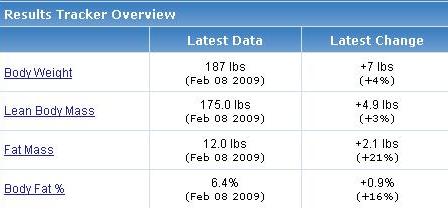
Tracking a host of skinfold measures and girth measures - and recording them using the Precision Nutrition Results Tracker - I did end up gaining 7 total pounds, 4.9 lbs being lean body mass, and 2.1 lbs being fat mass.

To start with, here’s a complete comparison of my pre (Jan 12th) and post (Feb 8th) measures.

Comparison of Pre (Jan 12th) and Post (Feb 8th) Body Comp Data

Comparison of Pre (Jan 12th) and Post (Feb 8th) Body Comp, Skinfolds, and Girt Data - All Courtesy of the Precision Nutrition Results Tracker

Also, here’s some individual body comp data:

Body Weight, Lean, and Fat After My Plant-Based Diet - Along With A Comparison of The Changes Made

Body Weight, Lean Mass, Fat Mass, and Fat Percentage After My Plant-Based Diet -- On The Right You'll Notice The Total Changes Made Since My Last Measurements.

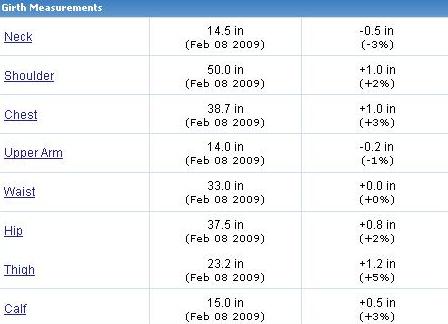
And here’s some girth data:

Girth Recordings After My Plant-Based Diet -- On The Right You'll Notice The Total Changes Made Since The Last Measurement Period.

All in all, I’d say a pretty successful month.

It appears that even without eating meat or many animal products, my training regime (which I didn’t change) and my diet regime (which was based on the principles shared in the Precision Nutrition Plant-Based Diet Guide and included a surplus of calories) allowed me to gain 7lbs with a 2.5:1 ratio of lean mass to fat mass.

The Results - My Pics

Now, I know you want to see the results with your own eyes. So, next up, the before and after pics. Here are some pics of the scale to confirm my body weight changes.

Body Weight Before

Body Weight After

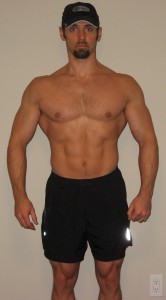
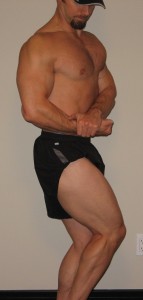
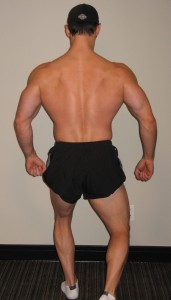
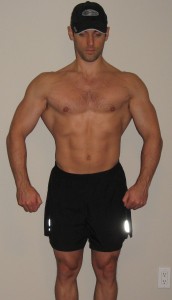
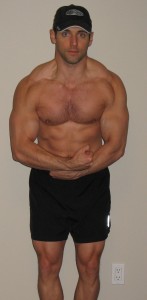
xHere’s what I looked like at the start of this experiment:

xx xx xx

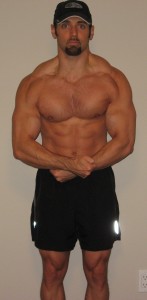
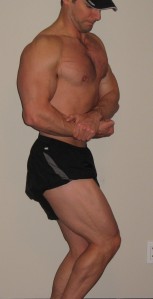
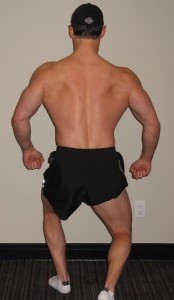
And here’s what I looked like at the end (minus the facial hair; trying to be sexier, ya know):

xx x xx xx

All in all, visually, the changes are small.

Although if you squint hard enough, I think you’ll see that I do look a little fuller and heavier in the second set of pictures. Also, if you’re still squinting, you might notice that I’ve lost a small amount of definition too. But that’s usually to be expected when trying to pack on body mass.