Showing posts with label television. Show all posts

Tuesday, October 28, 2014

Secrets of The Human Brain (Full Documentary)

http://img.clasf.co.ve/2013/05/21/Programacin-Mental-Mega-Alfa-20130521162624.jpg

This is a full 90-minute documentary on the human brain from The History Channel. Like all of their documentaries, there is some stupid sh!t - seems they can't help themselves from pandering to the lowest common denominator.

Secrets of The Human Brain (Full Documentary)


Unlock the secrets of this three-pound organ to reveal the untapped abilities that we all have inside our heads.

Monday, April 07, 2014

Nine Inch Nails on Austin City Limits (April 5, 2014)


Courtesy of Rolling Stone, we get to see the video performance of Nine Inch Nails that aired on Austin City Limits Saturday night. They recorded 19 songs in their live show, 10 of which made it onto the show. There is also a 15-minute interview with Trent Reznor - a real bonus for fans.

photo by Scott Newton

Enjoy!

Watch Nine Inch Nails' 'Austin City Limits' Show

The show also posted a 15-minute interview with Trent Reznor, in which he explains why he has shied away from television concerts


By Kory Grow
April 7, 2014

It may have taken Nine Inch Nails a quarter of a century, but the industrial rock pioneers played the first television-specific concert of their career last week on Austin City Limits. The full, hour-long concert is now streaming here. The band's set list drew tracks from its 1989 debut, Pretty Hate Machine, as well as Year Zero, The Fragile and The Downward Spiral, but it weighed most heavily on the group's most recent album, 2013's Hesitation Marks. In fact, the group played 19 songs at Austin, Texas' 2,750-person-capacity Moody Theater for the taping, 11 of which were from Hesitation Marks, but only 10 songs made it to air. The show also put one outtake, Hesitation Marks' "Satellite," online.

Prior to the taping, Austin City Limits released an impossibly short comment from frontman Trent Reznor about the taping: "We've waited a long time to do anything like this." But now the show has also posted a 15-minute interview with Reznor, viewable below. "I've shied away from really any television, live or otherwise, because I think a lot about the context in where you hear the performance and the experience that the audience goes through," he said. "And we spent a lot of time thinking about that before tour, how we're going to present it, and a lot of emphasis goes into production and the right setting. So you're coming into our place and we're framing the music in an experience that's special. It's an event, it's a thing."


Here is the set list that aired from Nine Inch Nails' Austin City Limits performance:
"All Time Low"
"Sanctified"
"Came Back Haunted"
"Copy of A"
"The Frail"/"The Wretched"
"The Big Come Down"
"In This Twilight"
"While I'm Still Here"
"Hurt"

Related

Wednesday, March 12, 2014

Missed the First Episode of Neil deGrasse Tyson’s Cosmos Reboot? Watch it on Hulu (US Only)


If you, like me, did not see the first episode of Neil deGrasse Tyson’s Cosmos reboot (and not having tv, there was no way for me to watch it live), Hulu has made it available for free to those in the United States (sorry to the rest of 6.7 billion people on the Earth).

Watch the First Episode of Neil deGrasse Tyson’s Cosmos Reboot on Hulu (US Viewers)


March 11th, 2014


After a long wait, Neil deGrasse Tyson’s reboot of Cosmos began airing on Fox this past Sunday night, some 34 years after Carl Sagan launched his epic series on the more heady airwaves of PBS. Fox execs predicted big numbers for the first show — 40 million viewers. But only 5.8 million showed up. But, as we know, quantity has nothing to do with quality. Critics have called Tyson’s show a “striking and worthy update” of the original. If you live in the US, you can see for yourself. Episode 1 appears above, and it looks like the remaining 12 episodes will appear on Hulu. For those outside the US, our apologies that you can’t see this one.

via Kottke

Related Content:

Wednesday, February 26, 2014

David Wallis - Is it Normal to Hoard?

Randy Frost's Stuff: Compulsive Hoarding and the Meaning of Things (2010) is one of the best books on hoarding I have read. It's not a treatment guide so much as an explanation for how hoarding develops and how it impacts the lives of those afflicted with it. This article from Nautilus mentions Frost's work and offers a nice overview of the hoarding phenomenon and our culture's fascination with it (there are two different reality shows about hoarders).

Is It Normal to Hoard?

Hoarding shows us at our best, and worst.

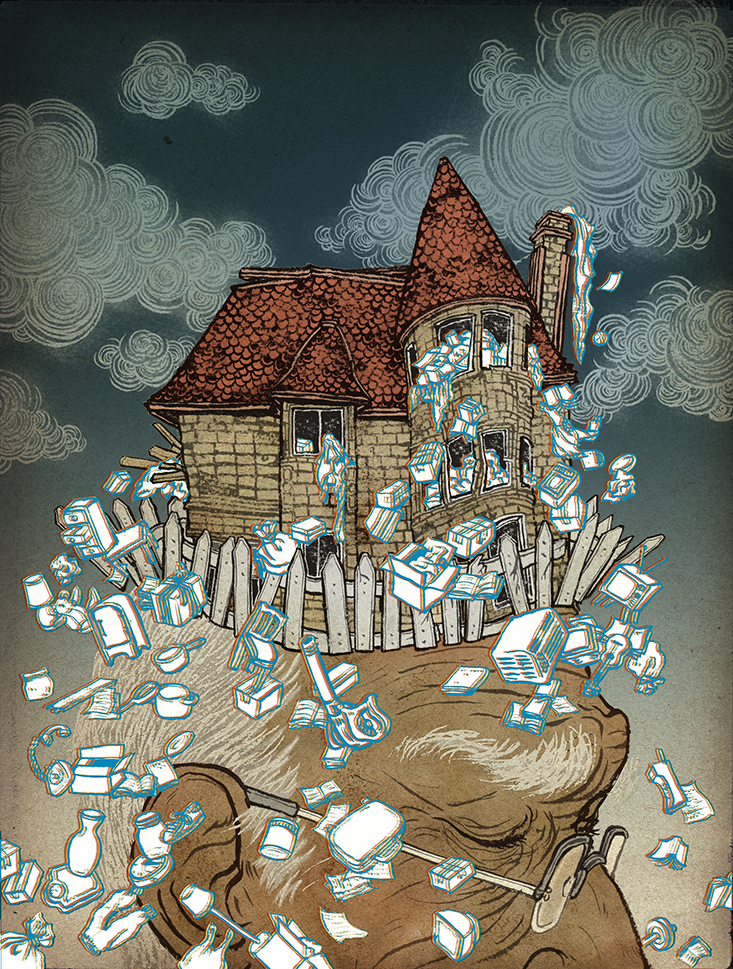
By David Wallis Illustration by Yuko Shimizu February 20, 2014


http://static.nautil.us/2636_c61fbef63df5ff317aecdc3670094472.png

ANIMALS like to hoard. Christopher E. Overtree, director of the Psychological Services Center at the University of Massachusetts, Amherst and a specialist in treating hoarding, says that “the mechanisms triggering this kind of biological reflex are present in all of us.” A friend of his in Minnesota had an eagle’s nest on his property fall from a tree. This led to a surprising discovery: 23 dog and cat collars. “The eagle ate the animals but saved the collars,” says Overtree. His own cat, Gus, wasn’t much better. Overtree recently tailed his cat sneaking off with his wife’s costume jewelry, dragging the trinkets into the attic and stashing them in a hole in the floor. “I realized he must be saving it,” says Overtree. “I think it is interesting to see a behavior that has no practical value in an animal.”

Hoarding, some scientists suggest, is a sensible action to take in an uncertain world. “We have been shaped by evolutionary pressures in the past to deal with resource scarcity, and hoarding is one of those possible strategies,” says John L. Koprowski, professor of wildlife conservation and management at the University of Arizona and an authority on squirrels. He refutes the conventional wisdom that squirrels only gather what they need to survive winters. Studies of eastern gray squirrels, for instance, suggest that up to 74 percent of buried acorns are never recovered. They could be lost—or simply stored, just in case.

While saving up in this manner seems both sensible and prevalent among animals, it is a bona fide disease among humans. This year, for the first time, the fifth edition of the Diagnostic and Statistical Manual of Mental Disorders, or DSM—the bible of psychiatrists and insurers—listed it as a distinct disorder. It is also one with serious consequences, with the potential to ruin relationships, result in evictions, and fuel lethal fires. And according to the American Psychiatric Association, 2 to 5 percent of the United States population suffers from it.

After all, we are being pushed to consume. “Contemporary U.S. households have more possessions per household than any society in global history,” explains Jeanne E. Arnold, professor of anthropology at the University of California, Los Angeles (UCLA). In 2012, Arnold and a team of sociologists and anthropologists published a book, Life at Home in the Twenty-First Century, based on a four-year study of 32 middle class, dual-income families in Los Angeles. The authors found that 75 percent of families banished their cars from garages “to make way for rejected furniture and cascading bins and boxes of mostly forgotten household goods.” Superstores like Costco, they argued, have increased our tendency to stockpile food and cleaning supplies—and the result at home is stress. Women who described their homes as cluttered had higher cortisol levels—a sign of stress—than those who didn’t.

The line between hoarding, the mental disorder, and hoarding, the bad habit (or natural tendency), is worth considering. Does saving your children’s finger paintings from 1982 mean you have a de-acquisitioning problem? What about those boxes of clothes sized 30 pounds ago in your closet instead of at Goodwill? The popularity of hit reality shows like Hoarders and Hoarding: Buried Alive is surely due in part to the fact that we see ourselves in even the most extreme cases. The boundaries of this debate reveal something about who we are as people.


ON A TIDY street in a resurgent New England mill town, where the trimmed bushes look like green thimbles mounted in mulch, Melvin’s large Victorian house sticks out. Two bicycles, one missing the front wheel, lean against threadbare front steps; stacks of two-by-fours, rakes, and bicycle tires piled up on a desk surround the front door. Melvin, an erudite lawyer in his late 60s who requested a pseudonym, wears khakis and a pressed blue-and-white shirt with neatly rolled up cuffs, looking a bit like the late Canadian actor Conrad Bain. He speaks fluent French and can get by in Russian. He nimbly chats about Robert Pinsky one minute and Oriana Fallaci the next. The divorced father of two is quick with a joke or a boast about his children. He loves to bake, particularly Linzer tortes.

Melvin hasn’t invited anyone into his home in more than a year; he reveals this while leading me, single file, through piles of possessions on narrow paths, known in hoarder parlance as “goat trails.” Cans, dishes, and mugs blanket kitchen countertops. He hands me a laser pointer so I can ask about his many inaccessible items as we stroll through the house. We encounter roughly 200 musical instruments in various states of repair, scores of VHS tapes, racks of dress shirts, vintage radios, several skis, a dozen or so motorcycle helmets, and countless books—some in barrister bookcases, others in boxes. He owns a valuable watercolor by Whistler as well as a worthless stuffed blue parrot that looks like a carnival prize.

Melvin says he can remember a time before the clutter crept up on him and the house was “light and airy.” He bought his place about 20 years ago after a bitter divorce and soon found a housemate he enjoyed socializing with. He hosted home-cooked dinners and raucous dance parties, but after his housemate moved out, stuff moved in. “Slowly it got filled up floor to ceiling,” he says. Melvin, however, insists that he is not a hoarder. “I don’t think of it as hoarding at all,” he says. “That implies greed, one of the medieval sins. It’s really an accumulation of stuff, and it happens because I have an eye for everything under history.” But, I ask, wouldn’t he admit his collecting has gotten out of hand? He thinks about it and responds, gently, “I have a problem de-acquisitioning things.”

Is Melvin’s self-diagnosis right? Is he really a quirky, but normal, collecting enthusiast with a particularly strong attachment to what he judges as treasures? Probably not. In fact, it is this very human feeling of attachment which is the first step in a hoarding disorder. Randy O. Frost, a professor of psychology at Smith College, and coauthor of Stuff: Compulsive Hoarding and the Meaning of Things, saw this extreme attachment form in real time, in a set of psychology experiments involving a rather unexciting collectible: Key chains. He distributed key chains to both hoarders and non-hoarders, asking each group to rate their attachment to the trinket during the course of a week. He expected the connection to grow gradually. “That didn’t happen,” he recounts. “[Hoarders] had it immediately. It told me something about the way in which attachment occurs, that it happens immediately on ownership.”

Attachment becomes strengthened by forgetting that the object is just an object. Carolyn Rodriguez, who directs the Hoarding Disorder Research Program at Columbia University, says some of her clients assign human qualities to objects. “For many patients, the main relationship in their lives is not with another person,” she observes. “Instead, it’s a relationship they have with their stuff—and their stuff is what they turn to for companionship and comfort.” The objects can serve as a stand-in for a person. “People will pull a calendar from 2002 out of a box and cry at how deeply that calendar connects them to the things they did in 2002, or the people they loved in 2002,” says Overtree, the Amherst psychologist. Discarding something stops being a simple or rational act.

Those with hoarding disorders, then, have an amplified sense of something that all of us cherish: Our deepest feelings for our families and close friends, and our artistic sensibilities. On the second floor of Melvin’s house, he has half-a-dozen pairs of cowboy boots in boxes, but he owns many more. “This isn’t my Western boot room,” he jokes. He has a thing for the Luccese brand—“the best American cowboy boots” in his opinion—so he buys them at yard sales, flea markets, and thrift shops. “I’ll pick them up for any friends I have that might be that size,” he says. Melvin’s daughter says that her father is one of the most generous people she knows, but he obviously amasses more gifts than he has potential recipients.

While Melvin’s house is overstuffed, many of his books, vintage radios, and musical instruments mean the world to him. “I appreciate the craftsmanship and the beauty that goes into them,” he says. “Everybody else has an iPhone and walks around being governed by an iPhone. For me it’s objects, and I love them.”

Overtree says people who can’t part with their possessions often see an inherent beauty in them. And that’s a quality he doesn’t want to tarnish. “I have been trying to figure out where is the sweet spot between curing somebody and helping them live a happy and productive life,” he says. Beauty is a dangerous thing, another psychologist told me. How do we hold onto the things that we love and cherish without being overwhelmed by them? How do we learn to let go?

THERE IS, however, a second component to hoarding disorders that has less to do with an amplification of what makes us human, and more to do with a diminishment. Psychiatrist Sanjaya Saxena of the University of California, San Diego, found that patients with compulsive hoarding syndrome showed “diminished activity in several parts of the cingulate cortex,” the part of the brain that governs motivation, executive control, and response to conflict. Phil Wolfson, a psychiatrist based in San Francisco, told me patients with hoarding problems “are often depressed, they are often isolated socially or socially phobic, or they are obsessive-compulsive people; they have all kinds of other habits, difficulties, and anxieties.”

But some of the same brain areas that are underactive under normal circumstances become hyperactive when hoarders are confronted with their possessions. David F. Tolin of the Yale University School of Medicine asked participants in a study to decide whether their old papers can be shredded, while monitoring their brain activity. He found that hoarders’ brains zoomed into overdrive like a seismograph measuring an earthquake—compared to healthy controls. (That didn’t happen when they watched someone else’s papers being ditched.) “The parts of the brain involved in helping you gauge that something is important are kicked into such overdrive that they are maxed out, so everything seems important,” Tolin explains.

Monika Eckfield, a professor of physiological nursing at California State University, San Francisco, concurs that many hoarding patients struggle with processing information. To avoid the anxiety of throwing something away, they simply put off the decision to do so. “This is common to all of us,” Eckfield says. Like the neuroscientists, she believes hoarding becomes abnormal as a result of “mis-wiring” in the brain’s executive functions. Chronic hoarders “have a much harder time following through,” she says. “They get distracted. They get disorganized. They end up adding to the pile, and the idea of sorting through those piles is very overwhelming.”

MODERN science has clearly revealed why hoarding deserves the designation of “disorder”: It is reflected in physical differences in how the brain is wired. At the same time, it is something that reflects to us some of the qualities and decisions with which we all struggle: Consumerism, attachment, decision-making, time management—and, at some level, survival. I’m left wondering if it is any coincidence that it was in 2013, when society demands so much from us in each of these capacities, that hoarding has taken on full-fledged disorder status in the DSM-V handbook.


~ David Wallis has contributed to The New Yorker, Wired, Esquire, The New York Times, and other publications. He is also the editor of Killed: Great Journalism Too Hot To Print, and Killed Cartoons: Casualties from the War on Free Expression.

Authors@Google: George R.R. Martin (Game of Thrones)


This appearance at Google was from 2011, but I just discovered it. When it first aired, Game of Thrones had probably just started on HBO, but certainly did not have the following it has now.

I should probably offer a spoiler alert, but hell, we're all adults here. Take care of your own needs.

Authors@Google: George R.R. Martin

Uploaded on Aug 6, 2011


George R. R. Martin, the acclaimed author of the Game of Thrones novels -- also a recent hit HBO series -- came to Google for a live-streamed interview where he answered your questions submitted online. The interview, part of the Authors@Google series as well as Martin's book tour promoting his latest novel A Dance with Dragons, took place on July 28th at 12pm PDT.

Martin is a bestselling author most famous for his A Song of Ice and Fire fantasy series of novels that has been adapted to the popular HBO drama Game of Thrones. Time magazine has dubbed him an "American Tolkien". In his series, Martin creates a rich world populated by a large cast of intriguing characters and interwoven storylines.

It should come as no surprise that in addition to technology, Googlers love things like dragons and fantasy worlds, and we also love meeting talented writers like Martin.

Tuesday, December 10, 2013

Watch David Lynch’s Hotel Room: The Complete Miniseries Featuring Harry Dean Stanton, Griffin Dunne, and Crispin Glover (1993)

Here is a little macabre fun for your Tuesday morning - an old David Lynch miniseries (from 1993). This comes via Open Culture, the curators of cool on the interwebs.

Watch David Lynch’s Hotel Room: The Complete Miniseries Featuring Harry Dean Stanton, Griffin Dunne, and Crispin Glover (1993)


December 9th, 2013


David Foster Wallace once came up with this academic definition of the Lynchian: “a particular kind of irony where the very macabre and the very mundane combine to reveal the former’s perpetual containment within the latter.” Twin Peaks, the famously David Lynch-created series that ran in ABC primetime in 1990 and 1991, gave American television its first strong shot of the Lynchian. Though the director who had earlier offered up Eraserhead and Blue Velvet would spend most of his creative energy later that decade on cinema — the Twin Peaks movie Fire Walk with Me, the twitchy neo-noir Lost Highway, and the seemingly heartwarming but deceptively grim The Straight Story — he followed up Twin Peaks by making more TV shows, expressing varying degrees of the Lynchian, and meeting with varying degrees of acclaim. These include the documentary series American Chronicles, the retro sitcom On the Air (which Wallace describes as “mercifully ablated”), and the more highly appreciated (if even lesser-known) HBO miniseries Hotel Room, all of whose three episodes you can watch above. Lynch directed, and Barry Gifford (collaborator on Lost Highway and Wild at Heart) wrote, the first and third episodes; the second comes directed by James Signorelli and written by Bright Lights, Big City author Jay McInerney.

“For a millennium the space for the hotel room existed – undefined,” pronounces Lynch at the top of each chapter. “Mankind captured it and gave it shape and passed through. And sometimes when passing through, they found themselves brushing up against the secret names of truth.” All of Hotel Room‘s episodes play out in one such space in particular, number 603 of New York City’s Railroad Hotel. Each visits it in a different era, though, in typically Lynchian fashion, the hotel’s ageless maid and bellboy exist outside of time. The first story, set in 1969, finds 603 occupied by a prostitute, her hapless john Moe (played by Harry Dean Stanton), and a shady fellow who knows a bit too much about Moe’s past. The second, featuring Griffin Dunne and Mariska Hargitay, tells the then-present day tale of three fashionable young ladies and how they deal with one’s unstoppably amorous fiancée. The most enclosed and haunting of these chamber pieces happens during a blackout in 1936 wherein 603′s occupants, a couple played by Crispin Glover and Alicia Witt, make their way through a psychologically harrowing confrontation with the death of their son. While little in Hotel Room qualifies as “very macabre,” per se, the series still reflects a distinctive vision of America as a flat and colloquial yet crisply formal interplay of light and dark — one I can only call Lynchian.

Related Content:

~ Colin Marshall hosts and produces Notebook on Cities and Culture and writes essays on cities, Asia, film, literature, and aesthetics. He’s at work on a book about Los Angeles, A Los Angeles Primer. Follow him on Twitter at @colinmarshall or on his brand new Facebook page.

Friday, October 18, 2013

Verbal Humor in "The Big Bang Theory" Comes from the Contrast Between Maximal Relevance and Optimal Relevance


Huh? Way to take the fun out of the best sit-com in ages. Still, it's cool to see a linguistic philosophical examination of a popular culture artifact.


Full Citation:
HU Shuqin. (2013). A Relevance Theoretic Analysis of Verbal Humor in The Big Bang Theory. Studies in Literature and Language, 7 (1), 10-14. DOI: http://dx.doi.org/10.3968/j.sll.1923156320130701.2549


Shuqin HU

Abstract


Relevance theory proposes a hypothesis of relevance in human communication. Human communication is an ostensive-inferential process, in which the hearer tries to seek the intended relevance by selecting different context assumptions. It is applicable to humor study. This paper takes the sitcom The Big Bang Theory as a case study. By analyzing some verbal humor examples within this framework, it proves that humor comes from the contrast between maximal relevance and optimal relevance.

INTRODUCTION

As a special kind of human communication, humor is always welcomed by people. No one can resist its power, because it can bring happiness and pleasant feeling to a person in depression; it can sooth a sad heart and give people a comfortable feeling. In a sense, humor is a way to a happy and colorful life. Since it plays an indispensable role in human communication, humor has been studied from different disciplinary viewpoints including philosophy, psychology, sociology, literature, rhetoric, linguistics and so on. With the development of humor study, the linguistic perspective is becoming the mainstream of thoughts because it is more applicable and more systematic. In this paper, a pragmatic theory, relevance theory will be employed in studying the creation and appreciation of humor. The theory is developed on the basis of communication and cognition. Although Relevance theory is not specially designed to study humor, it has been proved a very efficient framework to study humor, a special kind of communication.

American situation comedy is gaining on popularity in China, especially among young people. The recent hit series The Big Bang Theory will be taken as data source in this humor study.

The study of the verbal humor in sitcoms has both theoretical and practical values. Theoretically, it will enrich humor study, an important aspect of linguistic study. Practically, it will help Chinese people appreciate this form of TV artistic work better and hence enhance cross-cultural communication. At the same time, this kind of study also helps with English teaching in China. This paper will analyze the verbal humor in one of the recently popular sitcom The Big Bang Theory cognitively within the framework of the relevance theory. In the following, a general research history of humor and an introduction of The Big Bang Theory will be given respectively.

Research on Humor
 
The study of humor can trace back to the time of Aristotle and Freud. A commonly accepted classification divides traditional theories of humor into three groups: the Superiority Theory, the Release Theory, and the Incongruity Theory.

The Superiority Theory is mainly advocated by Aristotle and Hobbes. It holds that humor is an expression of superiority. We laugh at other’s misfortune or shortcoming, which reflect our sense of superiority. It’s characterized by one’s cognitive comparison of self against others on the basis of intelligence, beauty, strength, wealth and in a subsequent personally-experienced elation, triumph or victory as a result of such self-others comparisons.

The Release Theory examines humor from psychological perspectives. It points out that laughter is a means which can be used to release or reduce the strain coming from controlled thought or rationality. Freud is the chief exponent for the release theory.

The Incongruity Theory studies humor cognitively for the first time. In this theory, humor involves some kind of difference between what one expects and what one receives. It’s based on the mismatch between two ideas in the broadest possible sense.
As the linguistic research on humor in modern times develops, Semantic-oriented studies on humor prevail in the early year of humor research, among which the Semantic Script Theory of Humor (SSTH), and the General Theory of Verbal Humor (GTVH) are the most influential. However, many recent studies have given attention to the social factors, especially in pragmatic-oriented studies of humor. Pragmatics, with its programmatic lack of boundaries, is becoming the natural place to locate the linguistic side of the interdisciplinary study of humor.

A Short Introduction of The Big Bang Theory

Situation comedy or sitcom is a television program lasting nearly half an hour long with a regular cast and in a regular location such as household or workplace. Humor, especially verbal humor plays a crucial part in creating the entertaining effect of the comedy.

The Big Bang Theory is an American situation comedy created and produced by Warner Bros. Television and Chuck Lorre Productions. It won the best comedy series TCA award in August 2009, and is honored as “the best situation comedy after Friends.

The two main characters in the show are two roommates who work at the California Institute of Technology, one is experimental physicist Leonard Hofstadter and the other is theoretical physicist Sheldon Cooper. They are brilliant physicists with higher than average IQ, but quite awkward in social skills. They have two equally geeky friends and co-workers, Howard Wolowitz, an aerospace engineer, and Rajesh Koothrappali, a particle astrophysicist. Across the hall lives Penny, an attractive blonde waitress and aspiring actress, who later becomes Leonard’s girl friend; the geekiness and intellect of the four guys is contrasted with Penny’s social skills and common sense for comic effect.

Read the Full Text: PDF

References

  • Attardo, S. (2001). Humorous text: A semantic and pragmatic analysis. Berlin/New York: Mouton de Gruyter.
  • Freud, S. (1976). Jokes and their relation to the unconscious. London: Penguin Books.
  • Liao, D. H. (2010). Relevance theory and the interpretation of English humor. Journal of Chongqing College Education.
  • Sperber, D., & Wilson, D. (1986/1995). Relevance: Communication and cognition. Oxford Blackwell.
  • Thomas, J. (1995). Meaning in interaction: An introduction to pragmatics. London: Longman Group limited.
  • Xiong, X. L. (2004). Cognitive pragmatics. Shanghai: Shanghai Foreign Language Education Press.
  • Xiong, X. L. (2004). Cognitive pragmatics. Shanghai: Shanghai Foreign Language Education Press.
  • Yus, F. (2003). Humor and the search for relevance. Journal of Pragmatics.

Monday, September 30, 2013

Reviewing the Final Episode of Breaking Bad

[WARNING: Spoiler alert - if you have not seen the finale do not read this post.]

NOTE: This post also appears at my other blog, The Masculine Heart.

As the music played and the camera panned away from Walt's body, I felt a kind of relief, as though I had been holding my breath for five seasons waiting for the conclusion that was inevitable at the beginning of the show.

And still I am haunted (as much as one can be by a television show) by the vagueness of Jesse's fate. He was, for many reasons, my favorite character on the show. Perhaps I identified with his troubled family background and retreat into drug use (all too familiar in my youth), or I saw in him the path not taken when I decided to get my act together, quit the drugs, and go back to school.

More than that, Jesse was the heart of the show in many ways. He FELT the things the happened, the killings, the manipulations, the torture. Walt was able to compartmentalize it all, rationalize it all, but not Jesse - he was tormented by the things that happened, the things he nonetheless participated in. If Walt was the brain, Jesse was the heart.

I want a whole new series, set two years after this finale, with Jesse as the central character, possibly raising Brock as a single father now that Andrea was killed. I won't get that wish. But I like to think that is the path Jesse took following his primal scream of freedom, loss, suffering, frustration, relief, and maybe even happiness that he survived.

I liked the finale. How about you?

Here are several of the multitude of morning-after evaluations of the most talked about series finale in years.

Two from Salon:

Was the “Breaking Bad” ending too neat?

The show's finale was well-received, but some critics wonder if it was true to the characters and the show 
By Prachi Gupta

Was the  

AMC’s epic crime drama “Breaking Bad” has come to its bloody end, and so far, reception from television critics has been overwhelmingly positive — good news for show creator Vince Gilligan, who had predicted that it would be “polarizing.” On “Talking Bad,” which aired immediately following the finale, Gilligan said that unlike “The Sopranos,” “Breaking Bad’s” finale episode, “Felina,” needed to tie up lose ends. “This show was intended all along to be very finite. It’s a story that starts at A and ends at Z, as it were. It’s a very closed-ended thing.” 

* * *

In the end, Walt won


Whether he was a hero or a villain, Walter White got nearly everything he ever wanted
By Neil Drumming


“When I pop the trunk, hit the deck.” — The Beatnuts, “Reign of the Tec”

Last night, we witnessed the end of AMC’s “Breaking Bad.” I’d been dreading that moment for a week and not just because I am a faithful disciple of the program and hate to see it disappear from my Sunday ritual. I was dreading the finale because I knew that as soon as the credits rolled I would have to craft some sort of coherent and cohesive reaction to something that had taken me years to consume and would likely take days if not weeks to digest.

 * * * * *

Two from Rolling Stone:

Lessons of the 'Breaking Bad' Series Finale

Five takeaways from the last episode of a modern saga


By Scott Neumyer
September 30, 2013

Breaking Bad premiered its first episode on AMC in January 2008. Five years, five seasons and 62 episodes later, one of the greatest television dramas of all time came to an end last night as Vince Gilligan's landmark series took its final, bloody bow. In a TV landscape that has, in recent years, found it difficult to satisfyingly wrap up beloved shows in a way that hits the right emotional notes while also tying up loose ends, Breaking Bad's final episode may prove to be one of the most fulfilling and well-made farewells ever. And while we're sure to keep "Felina" on our DVRs for repeated close inspection of the episode over the next few weeks, here are a few quick takeaways.

* * *

'Breaking Bad' Finale Recap: Heisenberg Certainty Principle

Like Walter White's meth, the finale's formula was flawless – but is that a good thing?

September 30, 2013 
Jesse Pinkman built the perfect box. He sawed it off, sanded it down, hammered it together, smoothed it out, and carried it away with all the pride of a first-time father. This is the fantasy-memory he retreated to when reality became too broken for him to face at last – the one time in his life when he felt he accomplished exactly what he set out to do, the one time he made everything fit.

For better or for worse, that box is Breaking Bad.


* * * * *

From Vulture:
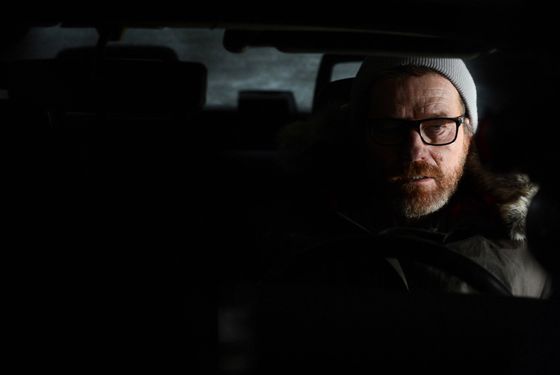
Walter White (Bryan Cranston) - Breaking Bad _ Season 5, Episode 16 - Photo Credit: Ursula Coyote/AMC
"Strike, Shadow, strike! And see his good deeds springing from the wound, to sow the world with life immortal!" Charles Dickens, A Christmas Carol

"Hello, Carol."

That is, if I'm not mistaken, the first line in the final eight-episode stretch of Breaking Bad, uttered at the end of the prologue in "Blood Money." We heard the name of that previously unmet neighbor, Carol, again in "Felina." The episode's title is an anagram for "finale" as well as a reference to The Girl in Marty Robbins's classic "El Paso," whose lyrics are echoed in this chapter's Western-ballad-like tale of an outlaw dying an outlaw's death. In a phone conversation between Skyler and Marie about Walt's return to Albuquerque, series creator Vince Gilligan, who wrote and directed this series ender, repeated her name and even had Skyler situate her geographically. "Hello, Carol": or hello, Carol. As in A Christmas Carol.

* * * * *

From NPR:


Bryan Cranston wrapped up his run Sunday night as Walter White in Breaking Bad.
Breaking Bad creator Vince Gilligan signaled in interviews leading up to Sunday night's series finale that those who craved some redemption for Walter White were the ones most likely to leave happy.

"We feel it's a satisfying ending," Gilligan told Entertainment Weekly. "Walt ends things more or less on his own terms."

For Gilligan, those things were self-evidently connected: the satisfaction of the ending and the degree to which the terms of that ending are set by Walt. And that's probably true for broad segments of the show's legions of fans who continued to root for Walt at some elemental level, or least to root for him to become root-able again.

Breaking Bad Is Over and Everyone Has an Opinion

Last night was the final 75 minutes of one of the most compelling television shows in my lifetime. I can not remember and show whose final episodes has engendered such a profusion of opinions, assessments, analysis, or explication. Many bloggers and critics are reading this series as one might read a novel . . . and employing many of the same tools of exegesis.

ALL of the articles listed below were written before the airing of the final episode, so none of them have the advantage of knowing the whole story, yet they still have a profound need to write, including at least one plea for Walt's death.

I'm just posting a little taste of these articles - follow the links to read the whole of any article(s) about which you are curious. Here they are, in no particular order.

Why You’re Hooked On Breaking Bad

The show developed legions of fans thanks to deft writing, superb acting and the miracles of binge-watching

By Eric Dodds
Sept. 28, 2013


Though the premise for Breaking Bad — a high school chemistry teacher transforms himself into a meth kingpin — might sound far-fetched, the explanation for Walter White’s rapid ascension to the top of the drug game is not. He has the best product, the best distribution and the best reputation. In the landscape of television dramas, the same is true of Breaking Bad show-runner Vince Gilligan.

Since its debut in 2008, Breaking Bad has arguably been the best drama on television — not unlike Heisenberg’s blue meth. Of course, there are plenty of other reasons why the show has become so incredibly popular over the last year (we’ll get to those in a bit), but that popularity begins and ends with the fact that Breaking Bad is simply better than its peers. That superiority is thanks, in large part, to Gilligan, who was a writer for the X-Files prior to creating Bad. His vision for the show (taking Mr. Chips and turning him into Scarface) has been unwavering since the beginning, but what’s far more impressive is the way in which he has realized that vision without veering off into the convoluted plot twists and unnecessary melodrama that afflicted so many of Bad‘s contemporaries.
* * * * *

“Breaking Bad”: Walter White must be punished – America, finally, needs to see someone pay
We'll be rooting for justice because there's so little of it: Jamie Dimon walks free but whistleblowers face prison

By Colin McEnroe
 
 
Jamie Dimon, Walter White, James Clapper (Credit: AMC/Ursula Coyote/Reuters/Gary Cameron/Jason Reed)

You may be aswim with doubts about the real-world efficacy of punishment, the usefulness of the “war on drugs” and the morality of the death penalty, but I’m betting you expect to see Walter White die in the final episode of “Breaking Bad.” I’m betting you even need that.

Maybe it’s a little easier because Walt is dying from cancer anyway. He’s a pre-digested protein. He’ll zoom through Death’s intestines like a kid on a water park slide.

We all have strong ideas about the fates of Walt and the people around him partly because – here in real life — crime and punishment seem more disjointed from one another than ever before. You’re more likely to be prosecuted for lying to Congress about steroids and strikeouts than for bald-faced perjury about the wholesale government espionage directed at all of its citizens. You can run a major investment bank using the handbook from a pirate ship and never face criminal indictment. Blow the whistle about war crimes, and you could be looking at serious prison time.

And it’s not just the crimes. There’s something in Walt’s self-righteous tone and his indifference to the little people who get hurt that we recognize from today’s news. In 2010, Charlie Munger, number two guy at Berkshire Hathaway, was asked if bailout money should have gone to beleaguered homeowners instead of to big banks. His answer: “At a certain place, you’ve got to say to people: Suck it in and cope, Buddy. Suck it in and cope.” And this week AIG CEO Robert Benmosche told the Wall Street Journal the public caterwauling about bonuses for executives at bailed-out banks was “just as bad and just as wrong” as the lynchings decades ago in the Deep South.
* * * * *

The hidden clues to “Breaking Bad’s” meaning
 

The show's many visual "Easter eggs" reveal its deeper message 
By Michael Darnell 
 
Aaron Paul as Jesse Pinkman in "Breaking Bad" (Credit: AMC/Ursula Coyote) 
At the end of “Breaking Bad’s” five-season run, I, like so many others, have turned to the Internet to squeeze every last drop of enjoyment from this remarkably rich series. Redditors in particular have long been poring over the subtle callbacks and visual motifs that have become “Breaking Bad’s” signature, compiling a virtual archive of many details that I, for one, missed on my first viewing. (This piece is much indebted to the Redditors’ keen eyes.) Much has been made, for example, of Season 2′s pink teddy bear, which, having fallen in the wreckage of Wayfarer 515, haunts the show as a constant reminder of the chaos wrought by Walter White. These Easter eggs are a reward to dedicated fans and a boon to television theorists who read them as messages from Vince Gilligan himself. But they’re also invitations for an ethical interpretation of a show based around the effects of violence.

“Breaking Bad’s” main ethical dilemma challenges the viewer to decide at what point Walter White ceases to be the hero and starts to be the villain of his own story; and implicit to this question are still stickier ones. What acts of violence are we prepared to accept as somehow not bad enough to deserve our contempt? And why are we willing to condone our protagonist’s violence while condemning the violence of others?

The pink teddy bear invites us to consider these questions by subtly connecting three seemingly unrelated acts of violence with the visual of a half-destroyed face. The charred bear initially signals Walt’s indirect blame for the death of Jesse Pinkman’s girlfriend Jane when he chooses not to save her from a fatal overdose. His inaction ultimately leads Jane’s grieving father, an air traffic controller, to cause the midair collision where we first see the bear. Two seasons later, after we’ve forgotten Wayfarer 515 and the telltale teddy bear, the symbol returns as the mangled face of drug lord Gus Fring who, himself guilty of several grisly murders, is justifiably (apparently) killed by Hector Salamanca at Walt’s behest. And most recently, Jesse’s face is similarly mutilated after Walt hands him over to the Aryan Brotherhood for going to the DEA.

The One Who Knocked First 
From start to finish, Breaking Bad has echoed the uncannily similar—and equally good—cop show The Shield.
By Mark Peters 
 
Michael Chiklis on The Shield and Bryan Cranston on Breaking Bad. Photos courtesy FX, AMC 
My favorite TV show is a Shakespearean tragedy in which the antihero’s sins, spinning out from a fatal decision he makes in the pilot, slowly destroy everyone around him. The main character insists he’s doing it all for his family—but he’s lying, especially to himself. There’s a lot of collateral damage, but this murderer’s worst crime might be the corruption of his vulnerable younger partner. The show maintains a remarkable level of quality throughout its run, and helped put its network on the map. It was largely carried by a great performance from its lead actor, a man previously known mainly for comedy who transformed himself into an Emmy-winning badass. 
Of course, I’m talking about The Shield.
As Breaking Bad winds down, conventional wisdom says it’s a contender for Best Show Ever, along with The Wire and The Sopranos. No argument there. But major argument here: The Shield should be in that conversation, too. Shawn Ryan’s saga of Vic Mackey (Michael Chiklis) and the Strike Team, which aired on FX from 2002 to 2008, remains—pardon the expression—criminally underrated. It was every bit as riveting and consistent as Breaking Bad. And the two shows are also remarkably similar. In many ways, The Shield was Breaking Bad before Breaking Bad.

* * * * *

Breaking Bad Is TV’s Best Medical Drama, Ever
 
Not that there’s a lot of worthy competition.
 

By Haider Javed Warraich 
 
Jesse Pinkman (Aarol Paul) in Breaking Bad | Courtesy of AMC 
Breaking Bad is about a lot of things—the contextualization of evil, the blind bond of family, the consequences of lifelong repression—and of course, the macro and micro-economics of the methamphetamine industry. But wrapped within all of this is a medical drama unlike any other, possibly the best medical drama on TV, ever. 
Not that current medical dramas offer any meaningful competition. Personal disclaimer: As a physician, I can’t stand watching medical dramas. They are inaccurate, over the top, and give a very poor representation of the environments we work in, the nature of the work, and the people involved. But my wife sees enough, leaving me to explain that not every shower taken in the hospital involves collateral canoodling à la Grey’s Anatomy or that it’s impossible for me to simultaneously do both surgery and cardiac catheterization and run all my own lab tests à la House. Even when there are interesting subplots, deeper themes, or stellar performances, the lack of overall believability makes it hard for me to become engrossed or to separate the medical setting from the drama.
* * * * *

Jesse Pinkman: One Sorry Individual 
 

Every single bad thing that's happened to Breaking Bad’s saddest soul.

By Andrew Bouvé


Breaking Bad comes to an end Sunday after five grueling seasons, and no one has had a harder time than poor Jesse Pinkman. Here is our video goodbye.
* * * * *

Breaking Bad Has a Pinkman Problem
By Jessica Winter
   
In the pilot episode of Breaking Bad, Jesse Pinkman is sprinting away from the fearsome drug dealers Emilio and Krazy 8 when he trips and falls eye-socket-first onto a rock in the New Mexico desert. When he wakes up, he’ll have a scone-shaped shiner the color of a Marie Schrader accent wall. But for the moment, he’s out cold, and Emilio can’t resist kicking him—hard, spitefully, once in the side—when he’s down.
As goes Emilio, so goes Breaking Bad. This show has never passed up an opportunity to kick Jesse Pinkman when he’s down. It’s forever endeavoring to find new, more vigorous techniques for kicking him when he’s down—through pirouettes of plot and calisthenics of character development—and new, pliant body regions to kick or, when the kicking is done, punch or stomp or split open bleeding. What horrible thing hasn’t happened to Jesse, perhaps repeatedly, over the last five seasons? Psycho Tuco beat him bad enough to put him in the hospital. Psycho Hank beat him bad enough to put him in the hospital again. He awoke one morning to find his beloved Jane dead beside him. He feels responsible for the deaths of Jane and Combo and Tomás. He is responsible for the death of Gale, although Walter was the one really pulling the strings. He’s been rejected by his biological family, and lost his adopted one—Andrea and Brock—around the time that Walter decided the best plan of action for preserving his meth empire was to poison a small child and later plant a ricin cigarette in Jesse’s Roomba, just to reinforce one more time (but not one last time) what a stupid worthless junkie imbecile Jesse is, because that’s always been Walter’s favorite topic of discussion—his go-to when the cocktail chatter is flagging.
However difficult this may be to watch, Jesse’s ongoing abasement served a narrative purpose. Jesse evolved from bratty burnout to, for a time, the show’s most complex and interesting character—a “bad” kid who increasingly, desperately wanted to be good, without knowing that in the pitiless Breaking Bad universe, no good deed goes unpunished.
* * * * *

Breaking Bad: I Want Walter White to Survive the Finale
How wrong is it that some fans want this evil person to get away with his crimes?
By Charlotte Alter Sept. 27, 2013
 
Walter White (Bryan Cranston) | Frank Ockenfels/AMC 
Unless you’re decomposing in a barrel of acid, you are likely aware that Breaking Bad ends this Sunday.
And unless you’re one of the 15% of Americans who don’t have Internet, you must also have come across some of the endless back-and-forth about how the show will end, and why. Who shall live, and who shall die; who by ricin and who by Uncle Jack; who shall be degraded and who shall be mourned.
But for some TV critics and active tweeters, the question of Breaking Bad’s ending has become as much a moral question as an artistic one. And while I love the back-and-forth, it’s getting a little sanctimonious for my taste.
You see, I want Walt to get away with all the horrible things he’s done. So sue me.
I’d like to see him drive across the desert with little Holly and a truck full of cash, off to start a new life somewhere like Mike and his granddaughter might have done. Skyler, I have a lot of respect for you, and I wish you the best. Walter Jr., whatever.
* * * * *

The World According to Team Walt
By ROSS DOUTHAT
Published: September 28, 2013
ACROSS five seasons of riveting television, the antihero of AMC’s “Breaking Bad,” Walter Hartwell White, has committed enough crimes to earn several life sentences from any reasonable jury. He has cooked crystal meth in bulk, hooking addicts from his native Albuquerque all the way to Prague. He has personally killed at least seven people and is implicated in the deaths of hundreds more. He has poisoned an innocent child, taken out a contract on his longtime partner, and stood by and watched a young woman choke to death.

But one thing he hasn’t done, as this weekend’s series finale looms, is entirely forfeit the sympathies of his audience. As a cultural phenomenon, this is the most striking aspect of “Breaking Bad” — the persistence, after everything he’s done, of a Team Walt that still wants him to prevail. In the online realms where hit shows are dissected, critics who pass judgment on Walt’s sins find themselves tangling with a multitude of commenters who don’t think he needs forgiveness. And it isn’t just the anonymous hordes who take his side. “You’d think I’d bear Walt some serious ill will considering he sat there and watched Jane die,” the actress who played his vomit-choked victim wrote for New York magazine last week, “but I’m still rooting for everything to work out for the guy.”
* * * * *
The Psychology of Becoming Walter White  
Six reasons why breaking bad is easier than it looks  
Published on September 28, 2013 by Thomas Hills, Ph.D. in Statistical Life
Vince Gilligan, creator of Breaking Bad, said that his goal with Walter White was to turn Mr. Chips into Scarface. Take a regular person, like you—assume you’re regular for a second—and then make you nice and evil, like a witch in a gingerbread house. Is that really even possible? Could you become another Walter White?
I’m inclined to believe that most of us still think some people are good and some people are bad, and never the twain shall meet. Despite the lessons we learned from Buffy the Vampire Slayer, we still think that good and evil belong in different people. Walter clearly shows that it doesn’t. And he demonstrates this with so many good psychological reasons—reasons that experimental psychologists observe in ‘normal’ people on a daily basis.
What are these reasons and do they apply to you? See for yourself.
* * * * *

Walter White’s sickness mirrors America
"Breaking Bad" strikes such a nerve because Walt's ills of body and soul are also those of our country
By David Sirota
 
Bryan Cranston as Walter White in "Breaking Bad" (Credit: AMC/Frank Ockenfels 3)
It is safe to say that as “Breaking Bad” comes to a close, Vince Gilligan’s series is the moment’s Best Show In the History of Television. Incredibly, the show isn’t even over yet, and it is already a cult classic, with all the attendant prop fetishization and tourism industries that come with such a designation. But as we approach the final episode, there’s an unanswered question: What makes the show so historically important?
Critics have rightly lauded the series for, among other things, its cinematography, its dialogue, its character development and its carefully constructed plot twists. Yet, in this much-vaunted new Golden Age of TV, there are plenty of programs with great visuals, terrific conversations, nuanced personalities and enticing stories — but most never achieve the same notoriety as the life of Walter White. Similarly, “Breaking Bad” is part crime drama, part satire of the legal system and part commentary on family dysfunction — but those narrative vectors are hardly unexplored territory in television. So what makes the story of Walter White so special?
Here’s a theory: Maybe “Breaking Bad” has ascended to the cult firmament because it so perfectly captures the specific pressures and ideologies that make America exceptional at the very moment the country is itself breaking bad.
Whew . . . and that was only the ones that showed up in my feeds the last couple of days.

Saturday, May 25, 2013

I Love ‘The Big Bang Theory.’ And You Should, Too


This article (by Rob Hoerburger at the New York Times) pretty much sums up my affection for The Big Bang Theory, the only network show I have been hooked on in recent years (with the ocassional exception of Criminal Minds - profiling serial killers is so much fun!).

The Big Bang Theory, despite its brilliance in acting and writing (some of the most sophisticated humor I have ever seen on television, which is juxtaposed with some of the base humor one expects for a Chuck Lorre show [he is responsible for Two and Half Men]), has never really been embraced by the society as a whole - not the way have Seinfeld or, currently, Modern Family.

Viewers who love the show, however, spread the word to friends, family, acquaintences who might also like the show. The word-of-mouth approach has moved the show into the top 20 in the ratings wars. Deservedly.

I Love ‘The Big Bang Theory.’ And You Should, Too

Illustration by Tom Gauld


By ROB HOERBURGER
Published: May 24, 2013

There is probably no more grievous transgression in the current culture wars than being a late adopter, missing the boat, signing on to something that the rest of the plugged-in world absorbed, analyzed, digitized and deleted last year, last month, five minutes ago. Even though the avalanche of movies, TV shows, music, e-books, apps, social media, gadgets, etc., has made it impossible for anyone to be a prescient expert on everything — even everything good.

Such a surplus of options can lead to a kind of cultural snobbery, the denigration of an artist or art form simply because you missed it the first time around. More than one prominent music critic, for instance, didn’t anticipate the fireball that was Adele in 2011 and then, several platinum certifications later, wrote begrudging mea culpas that basically said, “I guess she’s O.K.”

I was guilty of this kind of critical elitism. Until a year and a half ago, I had never seen an episode of “The Big Bang Theory.” Yes, that “Big Bang Theory.”

The show, which seemed to be a fairly traditional sitcom about four scientists at a Pasadena university and their quest to navigate the world from a book-smart yet socially addled perspective, with the help of their street-smart waitress-actress neighbor, had been on the air for four years, and my avoidance of it was textbook snob. It was a prime-time network show, and I hadn’t been beholden to anything prime-time and network since “Seinfeld” ended its run in 1998. And “The Big Bang Theory” was on CBS, long seen as “the old-people network.” Moreover, one of its creators was Chuck Lorre, who was partly responsible for another CBS sitcom, “Two and a Half Men,” that seemed one-jokey and never really held my attention for more than two and a half minutes. When “The Big Bang Theory” appeared in 2007 alongside “Two and a Half Men,” I figured it would be a cheap grab at ratings from the undiscerning set.

Even when Jim Parsons, who plays the Nobel-craving, coitus-avoiding, Purell-packing, sarcasm-challenged, boy-man genius Sheldon Cooper, won an Emmy after the third season, the show still wasn’t generating much buzz in any of the oh-so-hip Web forums I visited or at my weekly happy hour, where more than half the discussion is usually about TV. In the back of my mind I was thinking, Eh, it’s O.K., even though I still had not seen a single episode.

Then Parsons won a second Emmy. The ratings steadily ticked up to the Top 20 from No. 68 in the first season. The show was moved to Thursday night, where it proved stiff competition for “American Idol.” Somebody, or rather, lots of somebodies, knew something was going on. In the fall of 2011, with the show now in inescapable syndication, I decided to actually watch an episode.

It took roughly a week of nightly viewing before I realized how impoverished my life had been for the four years that I was oblivious to “The Big Bang Theory.”

The touchstone, the lodestar, the flypaper for me at first was, predictably, Parsons. In his dervishy nerdiness, he seemed to evoke any number of classic TV neurotics or fussbudgets: Paul Lynde, Tony Randall, Pee-wee Herman. Watching Parsons’s every twitch, wiggle, full-body smirk or social paroxysm — his O.C.D. knocking on friends’ doors (three knocks/name, three knocks/name, three knocks/name), his recurring line about “I’m not crazy, my mother had me tested,” his litany of his “61 mortal enemies,” his continued rebuffing of the advances of his girlfriend, Amy Farrah Fowler (Mayim Bialik) — is alone worth any half-hour spent on the show.

But as the weeks went by, the show’s many other virtues unfurled (by the end of 2011, I had seen almost all the older episodes more than once and started collecting the DVDs; some nights I would wake up after midnight just to watch the most recent episode as soon as it became available on demand). Here was a popular prime-time sitcom in which five of the seven main characters were Ph.D.’s and another had “only” a master’s from M.I.T., a hit show that regularly referenced bosons and derivatives and string theory, a show in which there were running gags about Madame Curie and Schrödinger’s cat.

The real behind-the-scenes heroes, though, are not the science advisers but the geek experts. The accuracy of the nerd oeuvre — the obsession with superheroes, “Star Trek” and “Star Wars” (before their umpteenth viewing of the movie, Howard, the M.I.T. engineer, says to Sheldon, “If we don’t start soon, George Lucas is going to change it again”), comic books and video games — is sometimes so eerie that I feel as if I’m watching a high- (or low-) light reel of my own life. In one episode, Sheldon goes to a computer store and is soon being asked for advice from tech-illiterate customers, to the point where he hacks into the store’s mainframe to check on the availability of an item. (“O.K., we don’t have that in stock,” he says to a customer, “but I can special-order it for you.”) He stops only when a real salesclerk reminds him that he doesn’t actually work there. Change the date to 1971, the computer store to a record store and the item in question to Judy Collins’s version of “Amazing Grace,” and that could have been me.

Beyond any navel-gazing thrill for me or other current or former nerds, the masterminds of the show — Lorre, Bill Prady, the showrunner Steven Molaro and others — have dared to produce a TV program that plays not a whit to the aspirations of its audience. You might laugh at the characters, pity them or love them, but you don’t want to be them (especially because you might already be them). There are a good amount of pre- and postcoital scenes, but they’re not especially sexy. These are not especially pretty people. A friend of mine who’s also a recent convert to the show says that she has a problem with Howard (Simon Helberg), the gnomish, dickie-sporting mama’s boy. “I can’t look at him,” she says. Even Penny (Kaley Cuoco), the bombshell across the hall, often appears rumpled or with a bottle of cheap wine hanging from her like an extra limb.

By the end of the sixth season, which wrapped last week, the characters had started to mature, while remaining true to their essence. Howard has been somewhat redeemed by living the ultimate nerd fantasy — becoming an astronaut — but even more by the love of a good woman, Bernadette (Melissa Rauch), whose oft-remarked-upon “ample bosom” is overshadowed by the fact that she’s smarter than he is and makes more money. Raj (Kunal Nayyar) finally seemed on the verge of a real relationship with a new character named Lucy (until she dumped him in the season finale last week), even as his sublimated love for Howard continues to surface in spontaneous belches. (In Raj and Amy, “The Big Bang Theory” could very well have two bona fide bisexuals among its characters.) Sheldon appears headed for some kind of revelation — either a Nobel-worthy discovery, his first real sexual experience or a nervous breakdown. The on-again-off-again (currently on) romance between Penny and Leonard (Johnny Galecki) may reach some resolution, but it almost certainly won’t have the fairy-tale ending of Ross and Rachel on “Friends” or Carrie and Big on “Sex and the City.” If they ever do marry, Leonard will most likely have one hand on his asthma inhaler at the ceremony and Penny will have one hand on a bottle of chardonnay. (Or a basic physics text; one roadblock to their relationship has been her concern that she’s not smart enough for him.)

The main direction that all of these characters continue to head in, though, is toward one another. With their social “shields” down (as one character puts it), they have direct access to their own and one another’s feelings — and buttons, especially when formulating the perfect insult. The intimacy that they achieve, and the chemistry among the actors, is certainly on a par with that of long-running sitcoms like “Cheers” or “Will and Grace” and is approaching the territory of maybe the greatest TV ensemble cast of all time, from the show about the Minneapolis TV-news producer and her coterie of kooky, lovable friends and co-workers, people whom you didn’t necessarily want to be but whom you always wanted to be around.

Unlike “The Mary Tyler Moore Show” (29 Emmys in its seven years on the air), “The Big Bang Theory” is a bit underdecorated. Parsons has his two Emmys, but he should have easily won a third for his work in the fifth season, if for nothing else than playing the bongos and singing about the subjunctive mood. Galecki and Bialik have received single Emmy nominations, but the show has never won for best comedy series, and its writing and directing have never even been nominated, having most recently run up against the awards juggernaut of “Modern Family,” an altogether hipper, sexier (if not necessarily funnier or smarter) show.

And while my own proselytizing about “The Big Bang Theory” has earned it a few new fans, many of my would-be converts remain unconvinced. When at one happy hour I lauded the guest appearances of Christine Baranski as Leonard’s mother, one of my buddies sneered, “She’s too good for that show.” When I praised the show in passing in a previous column, one of my editors strongly urged me to reconsider (“Replace it with anything else,” he said). And this from my haircutter: “But isn’t it about . . . nerds?” (She eventually came around.) So even though the show has lately been earning its highest ratings (20 million viewers for one episode in January) and has been regularly finishing at No. 1 on the Nielsen list, it has remained something of a guilty pleasure, an affection that you don’t broadcast too loudly. It’s still a little lonely at the top.

For me, though, true validation came last summer when I was on vacation, walking up a darkened hill in the kind of resort town where the smart TV talk veers toward shows like “Girls” and “Mad Men.” I was wearing a T-shirt emblazoned with the word “bazinga,” Sheldon’s self-satisfied exclamation whenever he thinks he’s got the better of one of his pals. A car crept toward me, a window rolled down and my shields went up: Uh-oh, I thought, here comes some snarky comment. Instead the driver just said the word, Sheldon-like, quietly but rascally: “ba-ZING-a,” and then moved on. It was an acknowledgment of a shared secret, a coded utterance of the sentence that some people wait a lifetime to hear: How cool are we!

Twenty million nerds can’t be wrong.


A version of this article appeared in print on May 26, 2013, on page MM44 of the Sunday Magazine with the headline: ‘Somebody, or Rather, Lots of Somebodies, Knew Something Was Going On’.