Showing posts with label social change. Show all posts

Tuesday, October 22, 2013

RSA Animate - Re-Imagining Work


Here is another intriguing RSA Animate video from a talk given by Dave Coplin (Microsoft) back in April of this year.

RSA Animate - Re-Imagining Work

How can we get people more engaged, more productive, and happier at work? Is technology part of the problem – and could it also be part of the solution? Dave Coplin, Chief Envisioning Officer at Microsoft, imagines what might be possible if more organisations embraced the full, empowering potential of technology and encouraged a truly open, collaborative and flexible working culture. Taken from a talk given by Dave Coplin as part of the RSA's free public events programme.

Here are the video hightlights of Coplin's talk,, as well as the full audio file to download or to listen.

Re-Imagining Work: Shifts in the digital revolution


08 Apr 2013

Dave Coplin, Chief Envisioning Officer at Microsoft, imagines what might be possible if organisations really began to think differently about the power of technological and social change to transform the way we do business.


  • Listen to the podcast of the full event including audience Q&A

Download the video (mp4)

Tuesday, December 04, 2012

RSA Animate - The Power of Outrospection


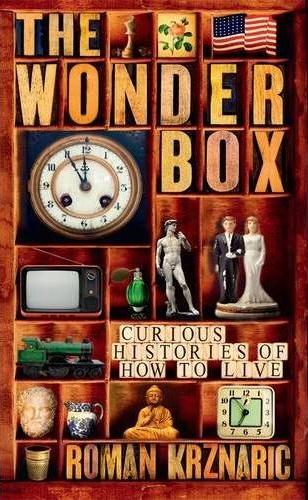
The RSA has released a new RSA Animate on the power of outrospection. Below the video is a summary of the full talk and a download link to listen to the original podcast. The animation is based on Roman Krnaric's book, The Wonderbox: Curious Histories of How to Live.

Introspection is out, and outrospection is in. Philosopher and author Roman Krznaric explains how we can help drive social change by stepping outside ourselves. Taken from a lecture given by Roman Krznaric as part of the RSA's free public events programme.

Download RSA Animate - The Six Habits of Highly Empathic People 


The Six Habits of Highly Empathic People

February 16, 2012 by
 
At lunchtime I chaired an event with Roman Krznaric that will soon be available to download from our website. In light of the event’s intriguing title, and my current oppressive workload, I wanted just to list the six habits(from scribbles of shifting slides, so not verbatim), and add a little thoughtlet on each of them.

1) Develop curiosity about strangers
Who are all these people? Roman mentioned that people inclined towards empathy typically look for things that bring people together, rather than those that separate them. The next time you see a stranger who looks like a radically different creature, consider the abundance of things you must have in common, by virtue of being human, but also allow yourself to be pleasantly surprised by the differences.

2) Move beyond limiting assumptions
As my mother in law once told me: When we assume, we make an ‘ass’ out of ‘u’ and ‘me’.

3) Play ‘extreme sports’ i.e. take time to experience the lives of others.
As my mother in law once told me: When we assume, we make an ‘ass’ out of ‘u’ and ‘me’.
 
Roman gave examples of people who had taken extreme measures to learn what it might feel like to be others. Once recent example, close to my heart, is what it feels like to be diabetic.

Another, not mentioned by Roman, was the eighties film ‘Soul Man‘ in which a white student takes tanning pills in order to become eligible for a scholarship reserved for Black students to get into Harvard Law School. There is a great scene near the end, when the whole charade has blown up in which the (Black) professor says: “You have learnt something I could never teach you. You have learnt what it is like to be Black.” To which the chastened student says: “No sir, I don’t really know what it’s like. If I didn’t like it, I could always get out.” To which the professor says: “You have learnt a great deal more than I thought.” I watched that scene over and over when I was about 12 and it made a big impression on me.

4) Cultivate the art of conversation
It’s not completely straightforward to talk to people you don’t know, but I agree that there is an ‘art’ to it…a way of creating a shared adventure without being too intrusive. As with most forms of expertise, practice is no doubt important- the more we do it, the easier it becomes.

5) Inspire Mass Action and Social Change
Roman seemed to be saying that empathy is no mere afterthought, but something that should be at the heart of our social, economic and political decisions. One example he used was climate change, where empathy with those more immediately and directly effected was urgently needed.

6) Be Ambitiously Imaginative.
I forget the heart of this point, but I think it was about not limiting yourself to cultivating empathy in safe and predictable ways e.g. with neighbours or colleagues, but rather to challenge yourself and try to do it with people who are radically different and whom you may not particularly like.

It was a great talk, and well worth a listen when it becomes available. 
 * * * * *

The Six Habits of Highly Empathic People

16th Feb 2012

Listen to the audio

(full recording including audience Q&A)
Please right-click link and choose "Save Link As..." to download audio file onto your computer.

Watch the video (edited highlights)

RSA Thursday

Drawing on his new book, 'The Wonderbox: Curious Histories of How to Live', cultural thinker Roman Krznaric reveals how empathy - the art of stepping into the shoes of another person and seeing the world from their perspective - can not only enrich your own life but also help create social change by helping us challenge prejudices and overcome social divides.

Drawing on everything from the empathy experiments of George Orwell to developments in industrial design, from the struggle against slavery in the eighteenth century to the Middle East crisis today, Roman explores six different ways we can expand our empathic potential.

Chair: Dr Jonathan Rowson, the RSA Social Brain project.

Saturday, September 08, 2012

Benedict Dellot - Our Moral Palates

This is a nice overview of the work in moral social-psychology embraced by the RSA (Royal Society for the encouragement of Arts, Manufactures and Commerce). Smells a bit like Spiral Dynamics in some places - it's also heavily reliant on Jonathan Haidt's recent work, which poses problems for me due to Haidt's conservative bias (which he denies, and thus the problem).


Our Moral Palates

September 1, 2012 by

Not long ago, I described 3 particular ‘meta concepts’ that are present or emerging in the RSA’s work. These were:

(i) Mental complexity and adult development – the notion that there exists a ‘hidden curriculum’ of mental tasks in life that require a certain level of mental complexity in order to navigate effectively. Central to this concept is the importance of how we know, not just what we know, and of taking things as object that were once subject.

(ii) Cultural theory – the notion that there are, to varying extents, four dominant cultures at play in the world: egalitarianism, hierarchicalism, individualism and fatalism. Proponents of this theory argue that efforts to tackle major challenges usually need to embrace and draw upon a mixture of all of these (except fatalism). This is particularly true of ‘wicked’ problems, which unlike ‘tame’ ones cannot be addressed through ‘elegant’ but blunt solutions e.g. using only hierarchical sanctions to combat crime or individualist incentives to overcome climate change.

(iii) Values modes – the notion that most people fall into 3 predominant value groups: settlers, prospectors and pioneers. Which type best defines you depends upon the extent to which you are ‘inner directed’ or ‘outer directed’. The lesson for policymakers is that policies and political messages need to be tailored to fit each group, otherwise efforts at changing behaviour may prove fruitless.

As I mentioned in a previous blog post, the reason why I’m trying to identify these broader concepts is because they help us to make sense of the world, acting in a way as umbrellas for all the other minor lessons and rules that seek to guide our day-to-day actions. To put it another way, the likes of cultural theory, mental complexity and values modes offer maps of life’s terrain, whereas tit bits of information and the latest research insights only give a narrow set of directions to where we want to go, some of which often appear to contradict the paths laid out by others.

Since posting that blog, I had a chance to read Jonathan Haidt’s new book, The Righteous Mind. This, I believe, may act as a contender for a 4th spot in the guidebook of meta concepts. Haidt’s book is an extraordinarily rich account of the origins of moral psychology and a revealing exploration of how the different states of our moral minds are able to shape group behaviour and drive divisions in political and religious communities.

Trying to distil the book’s contents into a single line or two is an impossible task, but his central thesis can be broadly understand as follows: there exist in the world a variety of intrinsically-borne ‘moral matrices’ that have helped to bind people into successful groups, but which have also left us divided on lots of different issues. When Haidt talks about ‘moral matrices’, he is referring to the different assortment of ‘moral foundations’ – what might be colloquially termed as morals or values – that each individual or group has. To put it in simpler terms, Haidt draws parallels between moral foundations and taste receptors; just as everybody has different preferences of flavours, so too do they have their own distinctive moral palates.

Moral Foundations Theory, as it is formally known, identifies 6 particular moral foundations that make up our moral matrices, some of which are more prevalent than others. Each of these are summarised in the table below.


Drawing upon the data gathered on his research website YourMorals.org, Haidt argues that liberals tend to have moral matrices that are built with only 3 of the Foundations – Care, Fairness and Liberty – whereas conservatives have moral matrices that rest upon all 6. As a result of the sheer breadth of their moral palates, the messages and policies of conservatives are more likely to resonate with a wider segment of the population than are those of liberals (or liberatarians).

The Righteous Mind goes on to explore many issues in depth, but the Moral Foundations Theory alone is likely to have sizeable implications for the way in which we seek to pursue political, social and economic progress. We are already seeing, for instance, how the left are attempting to tap into people’s Fairness foundation receptors (a sensitivity for proportionality, not just equality). Think Labour’s recent internal debate about introducing conditionality within the welfare state. Conversely, witness how Mitt Romney’s speech to the GOP convention was littered with phrases that were intended to prompt people’s Care foundation (it will be interesting to see what comes out when Obama gives his own speech in a week or so’s time).

I imagine the Moral Foundations Theory could also be a useful resource beyond the world of political messaging and grand policy-making. For example, could it tell us anything about how to make behaviour change initiatives more effective? Or about how teaching methods could better support children with different moral dispositions?

Sunday, April 08, 2012

TEDxSwarthmore - What Makes a Good Society?


The topic of TEDxSwarthmore was the making of a good society. There were a lot of cool talks, of which I have selected the ones I found most interesting, including one by psychologist Barry Schwartz, whose work explores the social and psychological effects of free-market economic institutions on moral, social, and civic concerns. You can see all of the talks by clicking the link in the first sentence.


TEDxSwarthmore - What makes a good society?
TEDxSwarthmore hopes to challenge and inspire our audience to think big and become leaders of social change in their communities. Our theme "What makes a good society?" is a question that many in the Swarthmore community frequently tackle.

We hope that you will attend TEDxSwarthmore and mark March 31, 2012 on your calendars.

To find out more, go to:
www.TEDxSwarthmore.com

Please follow us on:
Facebook: www.facebook.com/tedxswat
Twitter: www.twitter.com/tedxswarthmore


Amy Cheng Vollmer - The Role of Science and Science Literacy
A "good society" benefits from having specialists. Among those specialists who lend their creative skills to society are scientists. Others are often surprised to hear that the scientific enterprise is a creative one; this is partly due to lack of clear and compassionate communication between scientists and nonscientists. While people do not deny that their lives benefit from many aspects of technology, few understand or appreciate that the foundation for the technology is scientific discovery. I will share ideas about building a scientifically literate society in which there is open communication based on mutual respect and trust.

Professor of Biology Amy Cheng Vollmer, an authority on microbiology and biotechnology, focuses her research on bacterial stress response, particularly in prokaryotes such as E. coli. She also is the president of the Waksman Foundation for Microbiology.


Mary Jean Chan - A Tapestry of Narratives: Conversations through Poetry
Watching the Nigerian writer Chimamanda Adichie's TED talk, "The Danger of a Single Story," was a powerful reminder for Chan that ideas about what constitutes a "good" society can only emerge from the tapestry of narratives that we weave every day of our lives. Chan loves poet Adrienne Rich's quote "If from time to time ... / I long ... / for return to the concrete and everlasting world / what in fact I keep choosing / are these words, these whispers, conversations / from which time after time the truth breaks moist and green." Genuine discourse and dialogue may seem like very simple things, albeit often yielding more questions than answers, but Chan believes them to be crucial pieces in furthering our daily attempt at building a better society.

A political science honors major and English literature minor from Hong Kong, Mary Jean Chan ('12) is passionate about heterodox economics, the intersection between politics and poetry, and other forms of literary expression. She was selected through the TEDxSwarthmore Student Challenge to join the speaker lineup as a student representative of Swarthmore College.


Barry Schwartz - Why Justice Isn't Enough
Whatever else a good society should be, it should be a just society. But what does it mean to say that a society is just? For most people, a just society is one in which people deserve what they get and people get what they deserve. Whereas it may be possible to achieve the first of these goals, it is not possible to achieve the second. This is true when it comes to admission to selective colleges, and it is true when it comes to any form of material success. Lots of people do not get what they deserve. Aside from merit, success depends on luck. If we appreciate the importance of luck in our own lives, we may be more favorably disposed to helping people who deserve success just as much as we do but haven't been as lucky.

Frequent TED and TEDx speaker Barry Schwartz is Dorwin P. Cartwright Professor of Social Theory and Social Action. His work explores the social and psychological effects of free-market economic institutions on moral, social, and civic concerns. In the book Practical Wisdom (2011), which Schwartz co-wrote with Kenneth Sharpe, William R. Kenan Jr. Professor of Political Science, the authors argue that without such wisdom, neither detailed rules nor clever incentives will be enough to solve the problems we face.


Corinna Lathan - Innovation, Empathy, and the Future of Human-Machine Interaction
The interaction between humans and technology has changed drastically in the last 20 years. This relationship shapes our society in positive and negative ways, and the next 20 years promises to bring about even more profound changes.

Perhaps you remember the "Borg Collective" from Star Trek: The Next Generation. The Borg used neural interfaces to connect every member of their society to each other and their leader. What if instead of a dictatorial society, the Borg had used their neural interconnections to create an advanced egalitarian society?

They didn't. But maybe we can.

As founder and CEO of AnthroTronix Inc., Corinna Lathan's ('88) work with children with disabilities has been featured in Forbes, Time, and The New Yorker and has led to her being named one of MIT Technology Review's "Top 100 World Innovators" and Fast Company's "Most Creative People in Business." Lathan also is the founder of Keys to Empowering Youth, an engineering mentoring program for young girls.


Donna Jo Napoli - What Children (and Everyone Else) Need to Read
Children's books often are banned because people feel that the vulnerability of childhood gives them the right and responsibility to protect children. They see books that touch on certain topics as dangerous. Although the motivations of these adults are understandable, Napoli argues that the top 12 reasons why books are banned are actually reasons why books should be read. She will discuss the unprotected child and the protected child and what these books do for each.

Professor of Linguistics Donna Jo Napoli's teaching areas include syntax, morphology, and the structure of American Sign Language. She also is a prolific and award-winning author of books for children and young adults, including Mama Miti (2010) and A Treasury of Greek Mythology (2011).


Mark Kuperberg -The Case for Big Government: The Case Americans Don't Want to Hear
Although America was founded on the principle of limited government, it was established when all existing governments were tyrannical to a large degree. It is time for us to rise above the circumstances of our birth. Today, our society faces many problems, including:

1) Rising economic inequality
2) Increased competition from large emerging economies in a globalized trading system
3) Pollution and climate change. All will require bigger government for their solutions.

Professor of Economics Mark Kuperberg, who joined Swarthmore's faculty in 1977, teaches popular courses on macroeconomics. His main areas of interest also include public finance and law and economics.


Rebecca Chopp - Moral Imagination, Liberal Arts, and the Good Society
Moral imagination is the ability to renew the world, to create new horizons, to set aright wrongs, and to imagine new possibilities. But in our increasingly consumer-driven culture, moral imagination is not a consumer good. Nor is it something you can master through rote learning. Rather, knowledge, virtue, art, and science combine to create the moral imagination of a community. Where do you find these ingredients in one place? In our liberal arts colleges and universities—the boldest incubators of moral imagination in the United States.

Since joining Swarthmore's community as president in 2009, Rebecca Chopp has focused her work on the College's role in cultivating a global intellectual community that will nurture innovative and ethical leaders in a variety of fields and endeavors.


Paul Starr - The American Struggle over Health Care Reform
Starr explores how the United States became so stubbornly different in health care and why we've been fighting over it for a century.

Paul Starr (P, '13) is a professor of sociology and public affairs at Princeton University and co-founder and co-editor of The American Prospect. He received the 1984 Pulitzer Prize for Nonfiction and the Bancroft Prize in American History for The Social Transformation of American Medicine (1982). His most recent book is Remedy and Reaction: The Peculiar American Struggle over Health Care Reform (2011). He is the father of Abigail Starr '13.


Monday, February 20, 2012

Roman Krznaric - The Six Habits of Highly Empathic People


A couple of days ago, I posted Jonathan Rowson's brief summary of a talk by Roman Krznaric on The Six Habits of Highly Empathic People. I promised to share the audio of the full lecture when it became available - and now it is. So here is that lecture from The RSA.

The talk is based on Krznaric's book, The Wonderbox: Curious Histories of How to Live. You can learn more about Krznaric's work at his personal site and at the Center for Building a Culture of Empathy site (this is a phenomenal resource for information on empathy!).

The Six Habits of Highly Empathic People

16th Feb 2012

Listen to the audio
(full recording including audience Q&A)

RSA Thursday

Drawing on his new book, 'The Wonderbox: Curious Histories of How to Live', cultural thinker Roman Krznaric reveals how empathy - the art of stepping into the shoes of another person and seeing the world from their perspective - can not only enrich your own life but also help create social change by helping us challenge prejudices and overcome social divides.

Drawing on everything from the empathy experiments of George Orwell to developments in industrial design, from the struggle against slavery in the eighteenth century to the Middle East crisis today, Roman explores six different ways we can expand our empathic potential.

Chair: Dr Jonathan Rowson, the RSA Social Brain project.

Monday, January 16, 2012

What Has Become of the Wider Dream of Martin Luther King, Jr.?


Martin Luther King, Jr. had a dream of racial equality and freedom for all people. But he also had a dream of a better nation, a better world, where social justice and caring for the poorest among us were more important than military spending and political games.

On the surface it seems there is more racial equality than there was when he marched on Selma, Alabama. But there is still discrimination and bigotry, it's just more subtle and covert.

The other dream he held, well, I think he would be seriously discouraged to see the America we now have, where government budget cuts impact the poor, the homeless, the hungry, and the mentally ill first, and military spending is a sacred cow that can never be touched - where partisanship on both sides is more important than solving our problems.

In memory of Dr. King, here are a few of his quotes about the nation he hoped we might become.

  • A nation or civilization that continues to produce soft-minded men purchases its own spiritual death on the installment plan.
  • A nation that continues year after year to spend more money on military defense than on programs of social uplift is approaching spiritual doom.
  • A riot is the language of the unheard.
  • An individual has not started living until he can rise above the narrow confines of his individualistic concerns to the broader concerns of all humanity.
  • Darkness cannot drive out darkness; only light can do that. Hate cannot drive out hate; only love can do that.
  • Every man must decide whether he will walk in the light of creative altruism or in the darkness of destructive selfishness.
  • Everything that we see is a shadow cast by that which we do not see.
  • Have we not come to such an impasse in the modern world that we must love our enemies - or else? The chain reaction of evil - hate begetting hate, wars producing more wars - must be broken, or else we shall be plunged into the dark abyss of annihilation.
  • He who passively accepts evil is as much involved in it as he who helps to perpetrate it. He who accepts evil without protesting against it is really cooperating with it.
  • History will have to record that the greatest tragedy of this period of social transition was not the strident clamor of the bad people, but the appalling silence of the good people.
  • Human progress is neither automatic nor inevitable... Every step toward the goal of justice requires sacrifice, suffering, and struggle; the tireless exertions and passionate concern of dedicated individuals.
  • Life's most persistent and urgent question is, 'What are you doing for others?'
  • Love is the only force capable of transforming an enemy into friend.
  • Man must evolve for all human conflict a method which rejects revenge, aggression and retaliation. The foundation of such a method is love.

Sunday, December 11, 2011

NPR - Nobel Peace Prize Accepted By 3 Women


The first Arab woman to win a Nobel Peace Prize, along with two women from Liberia who helped remove Charles Taylor from power. Very cool. The New York Times has a good story about their acceptance ceremony if you would like to read more.

Nobel Peace Prize Accepted By 3 Women

December 10, 2011
For the first time, an Arab woman has been awarded the Nobel Peace Prize. At a ceremony in Oslo, Norway, Saturday, Tawakkul Karman known as the "mother of Yemen's democratic revolution"— shared the 2011 prize with two Liberian women, President Ellen Johnson Sirleaf and Leymah Gbowee, who helped lead the protests.that ousted former Liberian President Charles Taylor.
You can read the short transcript at the NPR site.

Friday, November 18, 2011

Carl Poll - Values-Based Social Change - Exploring new frontiers

Via the RSA.


Carl Poll, a Trustee of Manavodaya Institute of Participatory Development, explains how shared values are achieved through self-awareness, dialogue and reflection, and systems are adapted according to local needs and culture, empowering communities to effect their own change.


Download the video (mp4)


Watch Carl Poll on our YouTube channel


Watch Carl Poll on our Vimeo channel

Thursday, October 20, 2011

A Wildly Diverse Collection of Links to Stories on the #OWS and #OccupyEverywhere Movements

Bookforum has been collecting the link over the past week, so here is enough reading material to keep you busy through the weekend.


The United States’ long history of protest: Sidney Tarrow on why Occupy Wall Street is not the Tea Party of the Left. David Weigel on the Tea Party and #OWS, in Venn Diagram form. Alex Altman on why Occupy Wall Street is more popular than the Tea Party — for now. Should liberals like Occupy Wall Street? Jonathan Chait wonders. John Judis and Jonathan Cohn on why liberals should embrace Occupy Wall Street. From n+1, Jeremy Kessler writes an open letter to the men and women of the New York City Police Department. From Newtopia, an interview of Occupy Wall Street’s Kelly Heresy. Is Kevin Bacon the force behind Occupy Wall Street? It's irresponsible not to ask. Wouldn’t it be ironic if Occupy Wall Street — the soi-disant “99%” — were being secretly funded by billionaire Davos Man George Soros, exemplar of the 1%? Jeff Reifman and Thomas Linzey on turning occupation into lasting change. Here's what the Wall Street protesters are so angry about. Doug Henwood on OWS and the Fed. Bernard E. Harcourt on Occupy Wall Street’s "political disobedience". Nouriel Roubini and Ian Bremmer let fly on Occupy Wall Street and why the GOP's cynical economic strategy is designed to make things worse. A taxing situation: Why the GOP isadvocating a tax increase on the middle class. What role, if any, does tax policy play in creating a wealth gap in the US? Lowering taxes is the biggest policy goal for Republicans, and on that, they're wrong. EJ Dionne on the GOP's favorite solution: Doing nothing. Joshua Holland on 6 ways the rich are waging a class war against the American people. Struck out: Labor has lost its best tactics, which helps explain its decline. Amid all our disasters, why are the only revolutionaries on the right? Get out the hate: A lot of political participation is driven by simple dislike for the opposing party. Land of the free, home of the turncoats: In its nihilistic demonization of government, the right has declared war on America. From The American Interest, Francis Fukuyama on American political dysfunction.
They have also collected some links on the Tea Party crowd, as well as the #OWS protests.
Rightbloggers work on the Nixonization of Occupy Wall Street. Nate Silver on the geography of Occupying Wall Street (and everywhere else). A geography lesson for the Tea Party: Even as the movement’s grip tightens on the GOP, its influence is melting away across vast swaths of America, thanks to centuries-old regional traditions that few of us understand. Tea Party Death Trip: Why are some Americans so comfortable letting fellow citizens die?
 Just for fun, here are some other libertarian and conservative perspectives.


From Modern Age, a review of Majority Rule versus Consensus: The Political Thought of John C. Calhoun by James H. Read; and a review of The Golden Age of the Classics in America: Greece, Rome, and the Antebellum United States by Carl J. Richard. A review of The Declaration of Independents: How Libertarian Politics Can Fix What’s Wrong With America by Nick Gillespie and Matt Welch. A review of The Neoconservative Persuasion: Selected Essays, 1942-2009 by Irving Kristol. From The University Bookman, a symposium on Conservatism and Empire, including Paul Gottfried on how the GOP swallowed the conservative movement; and James Kalb on empire and the crisis of American conservatism. A review of The Reactionary Mind: Conservatism from Edmund Burke to Sarah Palin by Corey Robin (and a response by Robin, and more). Ben Alpers on the Frankfurt School, right-wing conspiracy theories, and American conservatism (and more). Libertarians and conservatives must choose: Competitive enterprise or idolatry of property. Gavin McInnes on ten things to hate about the Right. Sam Tanenhaus on imperial conservatism’s last gasp. Marx’s Tea Party: The populist right has forgotten an older form of class analysis. A review of The Roots of Modern Conservatism: Dewey, Taft, and the Battle for the Soul of the Republican Party by Michael Bowen. The moral foundation of a free society: Craig Biddle on Ayn Rand's theory of rights. Capitalists of the world, unite: Peter Frase on the "capital strike", the right’s favorite strike. James Joyner on the changing definition of "conservative": Since John McCain's defeat in 2008, the right has rejected the people and ideas it once praised. A review of Libertarianism Today by Jacob H. Huebert. Diplomats, demagogues and innocents abroad: Tristan Abbey on why conservatives should resist pressure from within to retreat from world affairs and embrace their diplomatic heritage.
******


From the Hannah Arendt Center for Politics and Humanities, don’t be afraid to say “revolution”, #OWS. The "Last Place Aversion" Paradox: Ilyana Kuziemko and Michael I. Norton on the surprising psychology of the Occupy Wall Street protests. If Zuccotti Park falls, where will the Occupy Wall Street movement move next? The all-American occupation: Steve Fraser on a century of Our Streets vs. Wall Street. Harold Meyerson on how politicians can kick the Wall Street habit: Candidates should take a no-bank-money pledge. How Occupy Wall Street is really funded: Who's behind the Wall Street protests? Welcome to the occupations: Ben Ehrenreich on Occupy L.A. As the OWS protest blossoms across America, they are no doubt being watched over by the country’s patron saint of civil disobedience — Herman Melville’s Bartleby. Occupy Wall Street and the Tea Party: One looks cooler, the other smells better — do they agree on anything? (and more) Immanuel Wallerstein on the fantastic success of Occupy Wall Street. As the demonstrations grow, the different worldviews of bankers show the wide chasms that have opened over who is to blame for economic malaise. Nouriel Roubini on why almost every continent on Earth is experiencing social and political turmoil. In three months, an idea and a hashtag became a worldwide movement — here’s how they did it. An interview with Frances Fox Piven on the Occupy Wall Street protests and the complex interplay between social movements and electoral politics. Scott McLemee interviewsfour professors who are tracking the movement. What will become of Occupy Wall Street? A protest historian’s guide. Harvard Business Review on what businesses need to know about #OWS. Dean Baker on how we can make the "free market" work for the 99%. A look at 3 types of Wall Street protesters hurting their own cause. Here are 5 facts about the wealthiest 1 percent. We are the 1%, Bitches.
And from today's link collections, here are a few more:
Worried we can't forget enough


From Boston Review, T.M. Scanlon on Libertarianism and Liberty: How not to argue for limited government and lower taxes. From TNR, a symposium on Liberalism and Occupy Wall Street, with contributions by Paul BermanTodd GitlinWilliam GalstonDavid Greenberg, and more. From Jacobin, here is a debate onleft politics and strategy. Conor Friedersdorf on 8 well-intentioned ideas that Occupy Wall Street should reject. Should protesters have just voted instead? Rep. Barney Frank sympathizes with OWS, but wonders where protesters were a year ago, when the anti-regulation GOP cleaned up at the ballot box. David Meyer on what Occupy Wall Street learned from the Tea Party. From Downtown Express, a month in, O.W.S. and community are trying to coexist (and more and more).