Showing posts with label relativism. Show all posts

Saturday, August 30, 2014

Alan Lightman - My Own Personal Nothingness

Physicist and novelist Alan Lightman is one of my favorite science authors and has been ever since I read his novel, Einstein's Dreams back in 1993. His most recent book (Jan, 2014) is The Accidental Universe: The World You Thought You Knew. [He is also the author of A Sense of the Mysterious: Science and the Human Spirit (2005).]

This cool essay comes from Nautilus magazine, Issue 16, Chapter 4, on the topic of Nothingness.


My Own Personal Nothingness


From a childhood hallucination to the halls of theoretical physics.


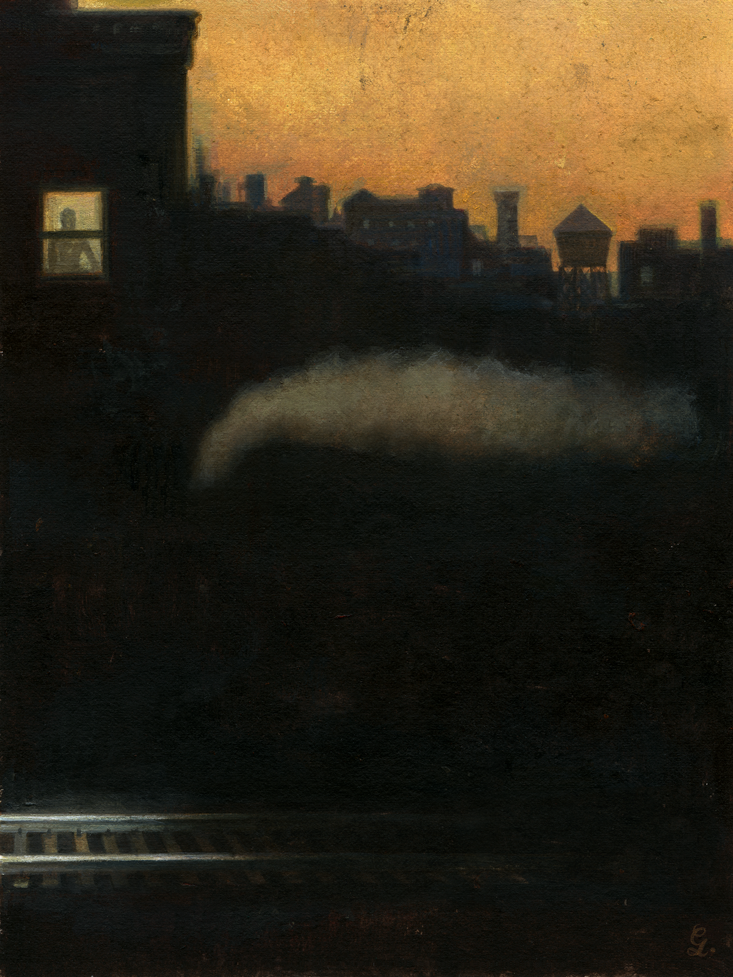
By Alan Lightman | Illustration By Gérard DuBois
August 28, 2014
“Nothing will come of nothing.”
(William Shakespeare, King Lear)

“Man is equally incapable of seeing the nothingness from which he emerges and the infinity in which he is engulfed.”
(Blaise Pascal, Pensées, The Misery of Man Without God)

“The… ‘lumniferous ether’ will prove to be superfluous as the view to be developed here will eliminate [the condition of] absolute rest in space.”
(Albert Einstein, On the Electrodynamics of Moving Bodies)
MY MOST VIVID encounter with Nothingness occurred in a remarkable experience I had as a child of 9 years old. It was a Sunday afternoon. I was standing alone in a bedroom of my home in Memphis Tennessee, gazing out the window at the empty street, listening to the faint sound of a train passing a great distance away, and suddenly I felt that I was looking at myself from outside my body. I was somewhere in the cosmos. For a brief few moments, I had the sensation of seeing my entire life, and indeed the life of the entire planet, as a brief flicker in a vast chasm of time, with an infinite span of time before my existence and an infinite span of time afterward. My fleeting sensation included infinite space. Without body or mind, I was somehow floating in the gargantuan stretch of space, far beyond the solar system and even the galaxy, space that stretched on and on and on. I felt myself to be a tiny speck, insignificant in a vast universe that cared nothing about me or any living beings and their little dots of existence, a universe that simply was. And I felt that everything I had experienced in my young life, the joy and the sadness, and everything that I would later experience, meant absolutely nothing in the grand scheme of things. It was a realization both liberating and terrifying at once. Then, the moment was over, and I was back in my body.

The strange hallucination lasted only a minute or so. I have never experienced it since. Although Nothingness would seem to exclude awareness along with the exclusion of everything else, awareness was part of that childhood experience, but not the usual awareness I would locate within the three pounds of gray matter in my head. It was a different kind of awareness. I am not religious, and I do not believe in the supernatural. I do not think for a minute that my mind actually left my body. But for a few moments I did experience a profound absence of the familiar surroundings and thoughts we create to anchor our lives. It was a kind of Nothingness.

TO UNDERSTAND anything, as Aristotle argued, we must understand what it is not, and Nothingness is the ultimate opposition to any thing. To understand matter, said the ancient Greeks, we must understand the “void,” or the absence of matter. Indeed, in the fifth century B.C., Leucippus argued that without the void there could be no motion because there would be no empty spaces for matter to move into. According to Buddhism, to understand our ego we must understand the ego-free state of “emptiness,” called śūnyatā. To understand the civilizing effects of society, we must understand the behavior of human beings removed from society, as William Golding so powerfully explored in his novel Lord of the Flies.

Following Aristotle, let me say what Nothingness is not. It is not a unique and absolute condition. Nothingness means different things in different contexts. From the perspective of life, Nothingness might mean death. To a physicist, it might mean the complete absence of matter and energy (an impossibility, as we will see), or even the absence of time and space. To a lover, Nothingness might mean the absence of the beloved. To a parent, it might mean the absence of children. To a painter, the absence of color. To a reader, a world without books. To a person impassioned with empathy, emotional numbness. To a theologian or philosopher like Pascal, Nothingness meant the timeless and spaceless infinity known only by God. When King Lear says to his daughter Cordelia, “Nothing will come of nothing,” he means that she will receive far less of his kingdom than her two fawning sisters unless she can express her boundless love for him. The second “nothing” refers to Cordelia’s silence contrasted with her sisters’ gushing adoration, while the first is her impending one-room shack compared to their opulent palaces.

Although Nothingness may have different meanings in different circumstances, I want to emphasize what is perhaps obvious: All of its meanings involve a comparison to a material thing or condition we know. That is, Nothingness is a relative concept. We cannot conceive of anything that has no relation to the material things, thoughts, and conditions of our existence. Sadness, by itself, has no meaning without reference to joy. Poverty is defined in terms of a minimum income and standard of living. The sensation of a full stomach exists in comparison to that of an empty one. The sensation of Nothingness I experienced as a child was a contrast to feeling centered in my body and in time.


 
The Commute: Alan Lightman en route to his summer home off the coast of Maine. Michael Segal

MY FIRST experience with Nothingness in the material world of science occurred when I was a graduate student in theoretical physics at the California Institute of Technology. In my second year, I took a formidable course with the title of Quantum Field Theory, which explained how all of space is filled up with “energy fields,” usually called just “fields” by physicists. There is a field for gravity and a field for electricity and magnetism, and so on. What we regard as physical “matter” is the excitation of the underlying fields. A key point is that according to the laws of quantum physics, all of these fields are constantly jittering a bit—it is an impossibility for a field to be completely dormant—and the jittering causes subatomic particles like electrons and their antiparticles, called positrons, to appear for a brief moment and then disappear again, even when there is no persistent matter. Physicists call a region of space with the lowest possible amount of energy in it the “vacuum.” But the vacuum cannot be free of fields. The fields necessarily permeate all space. And because they are constantly jittering, they are constantly producing matter and energy, at least for brief periods of time. Thus the “vacuum” in modern physics is not the void of the ancient Greeks. The void does not exist. Every cubic centimeter of space in the universe, no matter how empty it seems, is actually a chaotic circus of fluctuating fields and particles flickering in and out of existence on the subatomic scale. Thus, at the material level, there is no such thing as Nothingness.

Remarkably, the active nature of the “vacuum” has been observed in the lab. The principal example lies in the energies of electrons in hydrogen atoms, which can be measured to high accuracy by the light they emit. According to quantum mechanics, the electric and magnetic field of the vacuum is constantly producing short-lived pairs of electrons and positrons. These ghostlike particles pop out of the vacuum into being, enjoy their lives for about one-billionth of one-billionth of a second, and then disappear again.

In an isolated hydrogen atom, surrounded by seemingly empty space, the proton at the center of the atom draws the fleeting vacuum electrons toward it and repulses the vacuum positrons, causing its electrical charge to be slightly reduced. This reduction of the proton’s charge, in turn, slightly modifies the energy of the orbiting (non vacuum) electrons in a process called the Lamb shift, named after physicist Willis Lamb and first measured in 1947. The measured shift in energy is quite small, only three parts in 100 million. But it agrees very closely with the complex equations of the theory—a fantastic validation of the quantum theory of the vacuum. It is a triumph of the human mind to understand so much about empty space.

The concept of empty space—and Nothingness—played a major role in modern physics even before our understanding of the quantum vacuum. According to findings in the mid 19th century, light is a traveling wave of electromagnetic energy, and it was conventional wisdom that all waves, such as sound waves and water waves, required a material medium to carry them along. Take the air out of a room, and you will not hear someone speaking. Take the water out of a lake, and you cannot make waves. The material medium hypothesized to convey light was a gossamer substance called the “ether.” Because we can see light from distant stars, the ether had to fill up all space. Thus, there was no such thing as empty space. Space was filled with the ether.

In 1887, in one of the most famous experiments in all of physics, two American physicists at what is now Case Western Reserve University in Cleveland, Ohio attempted to measure the motion of the earth through the ether. Their experiment failed. Or rather, they could not detect any effects of the ether. Then, in 1905, the 26-year-old Albert Einstein proposed that the ether did not exist. Instead, he hypothesized that light, unlike all other waves, could propagate through completely empty space. All this was before quantum physics.

That denial of the ether, and hence embrace of a true emptiness, followed from a deeper hypothesis of the young Einstein: There is no condition of absolute rest in the cosmos. Without absolute rest, there cannot be absolute motion. You cannot say that a train is moving at a speed of 50 miles per hour in any absolute sense. You can say only that the train is moving at 50 miles per hour relative to another object, like a train station. Only the relative motion between two objects has any meaning. The reason Einstein did away with the ether is because it would have established a reference frame of absolute rest in the cosmos. With a material ether filling up all space, you could say whether an object is at rest or not, just as you can say whether a boat in a lake is at rest or in motion with respect to the water. So, through the work of Einstein, the idea of material emptiness, or Nothingness, was connected to the rejection of absolute rest in the cosmos. In sum, first there was the ether filling up all space. Then Einstein removed the ether, leaving truly empty space. Then other physicists filled space again with quantum fields. But quantum fields do not restore a reference frame of absolute rest because they are not a static material in space. Einstein’s principle of relativity remained.

One of the pioneers of quantum field theory was the legendary physicist Richard Feynman, a professor at Caltech and a member of my thesis committee. In the late 1940s, Feynman and others developed the theory of how electrons interact with the ghostly particles of the vacuum. Earlier in that decade, as a cocky young scientist, he had worked on the Manhattan Project. By the time I knew him at Caltech, in the early 1970s, Feynman had mellowed a bit but was still ready to overturn received wisdom at the drop of a hat. Every day, he wore white shirts, exclusively white shirts, because he said they were easier to match with different colored pants, and he hated to spend time fussing about his clothes. Feynman also had a strong distaste for philosophy. Although he had quite a wit, he viewed the material world in a highly straightforward manner, without caring to speculate on the purely hypothetical or subjective. He could and did talk for hours about the behavior of the quantum vacuum, but he would not waste a minute on philosophical or theological considerations of Nothingness. My experience with Feynman taught me that a person can be a great scientist without concerning him or herself with questions of “Why,” which fall beyond the scientifically provable.

However, Feynman did understand that the mind can create its own reality. That understanding was revealed in the Commencement address he gave at my graduation from Caltech in 1974. It was a boiling day in late May, outdoors of course, and we graduates were all sweating heavily in our caps and gowns. In his talk, Feynman made the point that before publishing any scientific results, we should think of all the possible ways that we could be wrong. “The first principle” he said, “is that you must not fool yourself—and you are the easiest person to fool.”


IN THE Wachowski Brothers’ landmark film The Matrix (1999), we are well into the drama before we realize that all the reality experienced by the characters—the pedestrians walking the streets, the buildings and restaurants and night clubs, the entire cityscape—is an illusion, a fake movie played in the brains of human beings by a master computer. Actual reality is a devastated and desolate planet, in which human beings are imprisoned, comatose, in leaf-like pods and drained of their life energy to power the machines. I would argue that much of what we call reality in our lives is also an illusion, and that we are much closer to dissolution, and Nothingness, than we usually acknowledge.

Let me explain. A highly unpleasant idea, but one that has been accepted by scientists over the last couple of centuries, is that we human beings, and all living beings, are completely material. That is, we are made of material atoms, and only material atoms. To be precise, the average human being consists of about 7 x 1027 atoms (7,000 trillion trillion atoms)—65 percent oxygen, 18 percent carbon, 10 percent hydrogen, 3 percent nitrogen, 1.4 percent calcium, 1.1 percent phosphorous, and traces of 54 other chemical elements. The totality of our tissues and muscles and organs and brain cells is composed of these atoms. And there is nothing else. To a vast cosmic being, each of us would appear to be an assemblage of atoms. To be sure, it is a special assemblage. A rock does not behave like a person. But the mental sensations we experience as consciousness and thought are purely material consequences of the purely material electrical and chemical interactions between neurons, which in turn are simply assemblages of atoms. And when we die, this special assemblage disassembles. The total number of atoms in our body at our last breath remains constant. Each atom could be tagged and tracked as it subsequently mingled with air and water and soil. The material would remain, scattered about. Each of us is a temporary assemblage of atoms, not more and not less. We are all on the verge of material disassemblage and dissolution.

All that having been said, the sensation of consciousness is so powerful and compelling that we endow other human beings—i.e. certain other assemblages of atoms—with a transcendent quality, some nonmaterial and magnificent essence. And as the assemblage of atoms most important to each of us is our own self, we endow ourselves with a transcendent quality—a self, an ego, an “I-ness”—that blooms far larger and more significant than merely a collection of atoms.

Likewise, our human-made institutions. We endow our art and our cultures and our codes of ethics and our laws with a grand and everlasting existence. We give these institutions an authority that extends far beyond ourselves. But in fact, all of these are constructions of our minds. That is, these institutions and codes and their imputed meanings are all consequences of exchanges between neurons, which in turn are simply material atoms. They are all mental constructions. They have no reality other than that which we give them, individually and collectively.

The Buddhists have understood this notion for centuries. It is part of the Buddhist concepts of emptiness and impermanence. The transcendent, nonmaterial, long-lasting qualities that we impart to other human beings and to human institutions are an illusion, like the computer-generated world in The Matrix. It is certainly true that we human beings have achieved what, to our minds, is extraordinary accomplishment. We have scientific theories that can make accurate predictions about the world. We have created paintings and music and literature that we consider beautiful and meaningful. We have entire systems of laws and social codes. But these things have no intrinsic value outside of our minds. And our minds are a collection of atoms, fated to disassemble and dissolve. And in that sense, we and our institutions are always approaching Nothingness.

So where do such sobering thoughts leave us? Given our temporary and self-constructed reality, how should we then live our lives, as individuals and as a society? As I have been approaching my own personal Nothingness, I have mulled these questions over quite a bit, and I have come to some tentative conclusions to guide my own life. Each person must think through these profound questions for him or herself—there are no right answers. I believe that as a society we need to realize we have great power to make our laws and other institutions whatever we wish to make them. There is no external authority. There are no external limitations. The only limitation is our own imagination. So, we should take the time to think expansively about who we are and what we want to be.

As for each of us as individuals, until the day when we can upload our minds to computers, we are confined to our physical body and brain. And, for better or for worse, we are stuck with our personal mental state, which includes our personal pleasures and pains. Whatever concept we have of reality, without a doubt we experience personal pleasure and pain. We feel. Descartes famously said, “I think, therefore I am.” We might also say, “I feel, therefore I am.” And when I talk about feeling pleasure and pain, I do not mean merely physical pleasure and pain. Like the ancient Epicureans, I mean all forms of pleasure and pain: intellectual, artistic, moral, philosophical, and so on. All of these forms of pleasure and pain we experience, and we cannot avoid experiencing them. They are the reality of our bodies and minds, our internal reality. And here is the point I have reached: I might as well live in such a way as to maximize my pleasure and minimize my pain. Accordingly, I try to eat delicious food, to support my family, to create beautiful things, and to help those less fortunate than myself because those activities bring me pleasure. Likewise, I try to avoid leading a dull life, to avoid personal anarchy, and to avoid hurting others because those activities bring me pain. That is how I should live. A number of thinkers far deeper than I, most notably the British philosopher Jeremy Bentham, have come to these same conclusions via very different routes.

What I feel and I know is that I am here now, at this moment in the grand sweep of time. I am not part of the void. I am not a fluctuation in the quantum vacuum. Even though I understand that someday my atoms will be scattered in soil and in air, that I will no longer exist, that I will join some kind of Nothingness, I am alive now. I am feeling this moment. I can see my hand on my writing desk. I can feel the warmth of the sun through the window. And looking out, I can see the pine-needled path that goes down to the sea. Now.

~ Alan Lightman is a physicist, novelist, and professor of the practice of the humanities at the Massachusetts Institute of Technology. His latest book is The Accidental Universe: The World You Thought You Knew.
Friday, October 11, 2013

Debate: After Relativism - The Institute of Art and Ideas

From the Institute of Art and Ideas (iai), this is a cool conversation (debate) about the meaning of the world after relativism.

Topics:
  • Relativism is a patronising and unhelpful mistake
  • The lessons of relativism can improve scientific practice
  • The theory of closure offers a powerful means of overcoming the problems of relativism
  • Is relativism an error?
  • Is truth an illusion?
  • After relativism

After Relativism


Participants
Michela Massimi, Simon Blackburn. Hilary Lawson, Shahidha Bari (host)

"Everything is relative" has become the mantra of our age - in ethics, in art and in science. But does this in fact mean we are lost? Should we retreat to the safe havens of absolute truth, or is there an alternative adventure beyond postmodernity? 
The Panel

Author of Truth: A Guide, Simon Blackburn, non-realist philosopher and Closure theorist (Closure: A Story of Everything) Hilary Lawson, and philosopher of science Michela Massimi, author of Pauli's Exclusion Principle: The Origin and Validation of a Scientific Principle, explore ways forward from postmodernity.

Tuesday, April 16, 2013

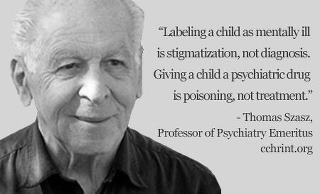
Mad or Bad - Thomas Szasz


Thomas Szasz first presented his attack on the legal usage of the term "mental illness" in a 1958 Columbia Law Review article. He argued that mental illness has no more bearing on a person's guilt than possession by the devil.

In 1961, Szasz testified before a United States Senate committee, arguing that the use of mental hospitals to incarcerate people defined as insane violated the general assumptions of patient-and-doctor relationships and turned the doctor into a warden and a keeper of a prison. (1)
(1) Summarized from Wikipedia.
The article is long, but very interesting - here are the first two sections, which largely serve as an introduction.

Mad, or Bad?


Even in the decade of dissent, Thomas Szasz stood alone when he attacked the concept of madness from the political right


by Holly Case

Stir crazy: Jack Nicholson in the 1975 film of Ken Kesey's book One Flew Over the Cuckoo's Nest.
Photo by Rex

Holly Case is associate professor of history at Cornell University and the author of Between States: The Transylvanian Question and the European Idea during the Second World War (2009).


In 1961, a young psychiatrist initiated a one-man insurgency against his own profession. ‘Psychiatry is conventionally defined as a medical specialty concerned with the diagnosis and treatment of mental diseases,’ he wrote. ‘I submit that this definition, which is still widely accepted, places psychiatry in the company of alchemy and astrology and commits it to the category of pseudoscience. The reason for this is that there is no such thing as “mental illness”.’

Fifty years after his book The Myth of Mental Illness: Foundations of a Theory of Personal Conduct first ventured this uncompromising view, its author Thomas Szasz visited Cornell University in upstate New York. He was there to speak to an audience of students, many of them coerced or bribed by their professors to attend, plus a few local lawyers and psychiatrists. His subject was ‘The Insanity Defence: The Case for Abolition’. The talk started late because a man in a wheelchair was being positioned near the front of the lecture hall. Szasz greeted him enthusiastically; the audience would later learn that he was Ronald Leifer, a psychiatrist who had been denied tenure at the Upstate Medical Center at Syracuse in 1966 for defending Szasz and his iconoclastic ideas against practically the whole of the psychiatric profession.

When it finally started, the lecture was heavily anecdotal and lasted barely half an hour. The 91-year-old psychiatrist spoke in a quiet voice and with a thick Hungarian accent. Students shifted in their seats. Then came the Q&A. Although the subject was the insanity defence, the audience was more interested in Szasz’s assertion that there was no such thing as mental illness. ‘What about schizophrenia?’ ‘How can you be a practising psychiatrist if you don’t believe in mental illness?’

One student asked him: ‘Are you trying to say we all have different brains?’ The lecturer seemed unsteady on his feet. ‘Yes,’ he replied, ‘we do.’ Another student put it to him that we might be determined by our neurological make-up. ‘I think you and I have different brains,’ Szasz replied. That got a laugh from the audience. It was clear that being the only one in the room with a brain like his was part of his persona; being contrarian was his way of being right. Throughout his career, even friendly co-optation irked him. When scholars started associating him with the anti-psychiatry movement, he wrote a book entitled Antipsychiatry: Quackery Squared (2009).

Szasz liked to present himself as a dissident. And yet, when he began dynamiting the foundations of psychiatry in the 1960s, rebellion was in vogue, and he seemed very much a man of his time. Along with so many other radicals of the decade of dissent who got half of what they wished for, he has largely been forgotten, his troubling declarations defused by decades over which he worked as an academic and a practising psychiatrist.

After the talk at Cornell, he confided over a stiff drink that he generally did not give talks anymore. ‘I’m too old,’ he told me. ‘Plus, not many people know I’m still alive.’ Indeed, not long after our conversation, Szasz died, last fall. But did his ideas die with him? On the contrary, it might be that the world has only recently come around to his way of thinking.

Near Szasz’s school in Budapest there stood a statue of Ignaz Semmelweis, a Hungarian obstetrician who found posthumous fame as a 19th-century martyr of science. To Szasz, the sickly and discontented young son of a Jewish businessman, Semmelweis became something of a hero. The late doctor’s claim to fame had been the discovery that it was possible to practically eliminate the often-fatal ‘childbed fever’ common among new mothers in hospitals if doctors simply washed their hands before assisting with childbirth — especially if they had just been performing autopsies. When his findings became more widely known in the 1840s, he expected a revolution in hospital hygiene. It didn’t come, and Semmelweis grew increasingly outspoken and hostile towards doctors who refused to acknowledge his discovery. Vitriolic academic exchanges ensued, and he was eventually lured to a mental hospital where his opponents had arranged for his incarceration. He was beaten severely and put in a straitjacket. He died within two weeks. Echoing Voltaire, Szasz recalled the doctor’s tragic life in an autobiographical sketch in 2004:
It taught me, at an early age, the lesson that it can be dangerous to be wrong, but, to be right, when society regards the majority’s falsehood as truth, could be fatal. This principle is especially true with respect to false truths that form an important part of an entire society’s belief system. In the past, such basic false truths were religious in nature. In the modern world, they are medical and political in nature.
Szasz was still a teenager when his Jewish family left Hungary, and just preparing for college when they settled in the US in 1938. He later confessed that his knowledge of America prior to his arrival was sketchy, and largely based on reading The Adventures of Tom Sawyer (1876) by Mark Twain. He had heard the ‘usual tales’ about ‘the land of movies, money, and the mistreatment of blacks’. When he enrolled in the University of Cincinnati in the winter of 1939, he discovered that discrimination against Jews, ‘not to mention blacks and women’, was ‘perhaps even more intense’ than it had been in Hungary.

Though he earned a degree in medicine, Szasz was much more interested in politics and philosophy. He chose training in psychoanalysis in Chicago, then a centre of the psychoanalytic craze, over a career as a medical doctor. Demonstrating textbook psychoanalytic ambivalence, he was simultaneously attracted and repelled by the prevailing image of psychoanalysts as the elect. In the same autobiographical sketch from 2004, published as part of the collection Szasz Under Fire: The Psychiatric Abolitionist Faces his Critics, edited by Jeffrey Schaler, he recalls:
The analysts passionately believed that they were treating real diseases, never voiced objections against psychiatric coercions, and believed that criminals were mentally ill and ought to be treated, not punished. These beliefs were an integral part of their self-perception as members of an avant-garde of scientific, liberal intellectuals.
His fellow psychoanalysts, with their ‘left-liberal “progressive” prejudices’, fanatically denounced Republicans as ‘either fascists or sick or both’. As a practising psychoanalyst, an academic psychiatrist (with tenure) and a staunch Republican, Szasz felt he belonged to an embattled minority, an elect of a different sort. It was the ideal position from which to deliver his dissident strike.

It came in 1961 with the publication of The Myth of Mental Illness, wherein Szasz asserted that psychiatry, unlike medicine, could demonstrate no physical basis for the ‘diseases’ it identified and ‘treated’.

‘To speak of elevated blood pressure and hypertension,’ he wrote, ‘of sugar in the urine and diabetes, all as “organic symptoms”, and to place them in the same category as hysterical pains and paralyses is a misuse of language; it is nonsensical.’ Masquerading as scientists, psychiatrists abused scientific concepts and deluded their patients.

Worse still, they acted as henchmen for society and state. ‘[T]herapeutic interventions have two faces,’ Szasz wrote; ‘one is to heal the sick, the other is to control the wicked’. Yet the standard for wickedness is always subjective and variable, and so the psychiatrist inherited from the Inquisition the task of quarantining society’s dangerous elements. It was not a coincidence that, even decades after the word ‘psychiatrist’ entered English in 1890, practitioners were often called ‘alienists’, derived from the French aliéné, meaning both ‘alienated’ and ‘insane’. First, Szasz wrote, it was ‘God and the priests’ who kept the unruly in check. Then came ‘the totalitarian leader and his apologists’, along with ‘Freud and the psychoanalysts’.

Dr Thomas Szasz pictured at his 90th birthday seminar in London. Photo by Jenny photos

Tuesday, August 07, 2012

Bookforum Omnivore - Philosophical Inquiry and the Popularity of Philosophy

Here are three different collections of links on philosophy and philosophy-related topics courtesy of Bookforum's Omnivore blog. There are some interesting articles and reviews of some books that look enticing. Enjoy.


  • A new issue of Philosophy in Review is out.
  • Kevin Tobia, Wesley Buckwalter and Stephen Stich (Rutgers): Moral Intuitions: Are Philosophers Experts?
  • J. David Velleman (NYU): Foundations for Moral Relativism.
  • From NDPR, a review of The Ethical Project by Philip Kitcher; a review of The Ethics of Need: Agency, Dignity, and Obligation by Sarah Clark Miller; a review of Moralism: A Study of a Vice by Craig Taylor; and a review of Against Moral Responsibility by Bruce N. Waller.
  • From The Utopian, an interview with T. M. Scanlon.
  • The new leveller: An interview with Elizabeth Anderson.
  • A review of Philosophers Past and Present: Selected Essays by Barry Stroud.
  • Is philosophy literature? Analytic philosophy is reputed to be overly dry and technical, but a host of 20th century works are lyrical, engaging and a delight to read.
  • Addicts, mythmakers and philosophers: Alan Brody explains Plato’s/Socrates’ understanding of habitually bad behavior.
  • Public forums for the discussion of ideas are flourishing everywhere, from festivals to pubs, but will the popularity of philosophy groups have any lasting impact?


  • Ali Rizvi (UBD): A Critique of Modern Philosophy
  • James Mensch (Charles): Violence and Existence: An Examination of Schmitt's Political Philosophy. 
  • From Marx & Philosophy Review of Books, a review essay on Jurgen Habermas
  • You are all proletariats: A review of Towards a New Manifesto by Theodor Adorno and Max Horkheimer (translated by Rodney Livingstone; Verso 2011). 
  • A review of Adorno for Revolutionaries by Ben Watson. 
  • A riposte to the Habermases, Rawls and Bidets of the world: A review of Proletarian Nights: Workers’ Dream in Nineteenth Century France by Jacques Ranciere and 1839: The Chartist Insurrection by David Black and Chris Ford. 
  • A review of Critical Ecologies: The Frankfurt School and Contemporary Environmental Crises
  • Rasmus Fleischer on Robert Kurz and the collapse of modernity: A quarter of a century ago, the Nurnberg school of Wertkritik (value-critical theory) emerged as a project to develop a third critical theory, pertinent to the third industrial revolution. 
  • Paul Mason and/or Karl Marx: Paul Le Blanc on occupations, insurgencies and human nature.

Friday, January 20, 2012

Hana Owen - BAKHTINIAN THOUGHT AND THE DEFENCE OF NARRATIVE: OVERCOMING UNIVERSALISM AND RELATIVISM


Very interesting article from Cosmos and History: The Journal of Natural and Social Philosophy, vol. 7, no. 2, 2011. Bakhtin's narrative theory is one of the foundational ideas beneath Dialogic Self Theory as developed by Hermans, so it has been of particular interest to me. For some reason, I never really paid much attention to this material in my literary theories classes in my first go-round of grad school.

BAKHTINIAN THOUGHT AND THE DEFENCE OF NARRATIVE: OVERCOMING UNIVERSALISM AND RELATIVISM.

Hana M. Owen

ABTRACT:
In light of recalcitrant global problems such as the prevalence of various levels and forms of inequality and increased environmental destruction, there is a growing recognition of the limitations, epistemological, political, social, cultural, ethical and ecological, of the modes of thought that have dominantly governed and continue to govern our worldview. The modernist project, despite various attempts to give voice to those previously denied, has come under criticism for tendencies to totalise experience and overlook or exclude differences. On the other hand, the postmodernist glorification of difference and tendency to isolate and fragment has generated a kind of debilitating uncertainty in the form of absolute relativism rendering any pursuit of meaning meaningless. Alongside the recognition of these limitations are attempts to overcome the negative effects of these modes of understanding and to create new ways of understanding ourselves, our relationship to others, human and non-human and to the larger world process in which we find ourselves. Despite the supposed opposition between the modern and postmodern projects, the two share in common the tendency to undermine another mode of understanding that by its very nature both precludes and succeeds them. The mode of understanding referred to is narrative understanding which has the potential to pave a middle way between modernity’s totalising exclusions and postmodernity’s fragmenting nihilism, furthermore when the narrative approach is seriously undertaken it becomes clear that the formerly polarised dominant modes of thought are part of a wider, more heterogeneous process. The following article examines and highlights in detail some of the problems surrounding the modern and postmodern modes of thought in order to demonstrate the usefulness of narrative theory in overcoming these problems. In order to augment the defence of narrative theory this article also draws considerably from the work of Mikhail Bakhtin whose philosophy, it will be argued, both compliments and enhances narrative understanding and has considerable potential for generating a more inclusive and creative understanding of humanity, its relationships to others and to the world in which it is inextricably linked.

The following essay examines and highlights in detail some of the problems surrounding the modern and post-modern modes of thought in order to demonstrate the usefulness of narrative theory in overcoming these problems. In particular, it argues that the abstract theories of both modernism and postmodernism are unfruitful for understanding humans as a process of becoming and tend to either limit humans to egoistic individuals or hinder the development of identity through fragmentation and relativism. It will be argued that modernity, through its tendency to totalise, excludes other modes of understanding and the postmodern response to this totalisation, an utter respect for and celebration of difference, has rendered the search for any kind of meaning unintelligible. In order to overcome these limitations and to augment the defence of narrative theory this article draws considerably from the work of Mikhail Bakhtin whose philosophy both compliments and enhances narrative understanding and has considerable potential in generating a more inclusive and creative understanding of humanity, our relationships to others and to the world in which we are inextricably linked. Through recognition of the dialogism inherent in the world, this article seeks neither to discredit nor destroy the two modes of thought in question, but to overcome their limitations and to recognise these modes of thought as apart of a wider process of interactive, intersubjective and creative becoming. Rather than accepting the modern dogmatism of absolute truths or the postmodern scepticism towards truth, it will be argued that narrative understanding, alongside Bakhtin’s dialogism, allow for truth to be provisional and alterable in light of an ever expanding horizon of understanding.

In light of continuing global issues including the prevalence of various levels and forms of inequality and increased environmental destruction, there is a growing recognition of the limitations, epistemological, political, social, cultural, ethical and ecological, of the modes of thought that have dominantly governed and continue to govern our worldview. Alongside the recognition of these limitations are attempts to overcome the negative affects of these modes of understanding and to create new ways of understanding ourselves, our relationship to others, human and non-human and to the larger world process in which we find ourselves.

The modernist project, despite various attempts to give voice to those previously denied, has come under criticism for tendencies to totalise experience and overlook or exclude differences. The orthodox Marxist movement for example aimed to defend the proletariat from exploitation but failed to include women in the emancipatory endeavour. Similarly, the first wave feminist movement to some extent sought to overcome inequality by extending suffrage to women, however their own endeavours were limited to white western women and failed to represent women of other cultures.

On the other hand, the post-modern attack on all things modern, its glorification of difference and its tendency to isolate and fragment, has generated a kind of debilitating uncertainty in the form of absolute relativism rendering any pursuit of meaning meaningless.

Despite the supposed opposition between the modern and postmodern projects, the two share the tendency to undermine another mode of understanding that by its very nature both precludes and succeeds them. The mode of understanding referred to is narrative understanding which has the potential to pave a middle way between modernity’s totalising exclusions and post-modernity’s fragmenting nihilism. Furthermore, when the narrative approach is seriously undertaken, it becomes clear that the formerly polarised dominant modes of thought are both are part of a wider more heterogeneous process.

Read the whole article.

Wednesday, December 22, 2010

Michael Shermer - Stephen Hawking’s Radical Philosophy of Science

I did not know that Stephen Hawking had become a relativist in his perspective on science - or as Shermer calls it, belief-dependent realism: "None of us can ever be completely sure that the world really is as it appears, or if our minds have unconsciously imposed a misleading pattern on the data." Shermer refers to studies (and there are a lot of them) that show are beliefs, assumptions, biases shade the way we view the world, speak about it, and relate to it.

Hawking's new perspective is similar:
Hawking presents a philosophy of science he calls “model-dependent realism,” which is based on the assumption that our brains form models of the world from sensory input, that we use the model most successful at explaining events and assume that the models match reality (even if they do not), and that when more than one model makes accurate predictions “we are free to use whichever model is most convenient.”
Here is the whole article - very interesting reading from my perspective.

From Big Questions Online:

Stephen Hawking’s Radical Philosophy of Science

Is Hawking right to claim that reality is dependent on the model used to describe it?

Stephen Hawking in zero-G
photo: NASA
Tuesday, November 23, 2010

Do you think that there is a computer screen sitting in front of you right now?

It would certainly seem so if you are reading these words online, but in fact you are not actually “seeing” the computer screen in front of you. What you see are photons of light bouncing off the screen (and generated by the internal electronics of the screen itself), which pass through the hole in the iris of your eye, through the liquid medium inside your eye, wending their way through the bipolar and ganglion cells to strike the rods and cones at the back of your retina. These photons of light carry just enough energy to bend the molecules inside the rods and cones to change the electrochemical balance inside these cells, causing them to fire, or have what neuroscientists call an “action potential.”

From there the nerve impulse races along the neural pathway from the retina to the back of the brain, leaping from neuron to neuron across tiny gaps called synaptic clefts by means of neurotransmitter substances that flow across those gaps. Finally, they encounter the visual cortex, where other neurons record the signals that have been transduced from those photons of light, and reconstruct the image that is out there in the world.

Out of an incomprehensible number of data signals pouring in from the senses, the brain forms models of faces, tables, cars, trees, and every conceivable known (and even unknown — imagined) object and event. It does this through something called neural binding. A “red circle” would be an example of two neural network inputs (“red” and “circle”) bound into one percept of a red circle. Downstream neural inputs, such as those closer to muscles and sensory organs, converge as they move upstream through convergence zones, which are brain regions that integrate information coming from various neural inputs (eyes, ears, touch, etc.) You end up perceiving a whole object instead of countless fragments of an image. This is why you are seeing an entire computer screen with a meaningful block of text in front of you right now, and not just a jumble of data.

At any given moment there are, in fact, hundreds of percepts streaming into the brain from the various senses. All of them must be bound together for higher brain regions to make sense of it all. Large brain areas such as the cerebral cortex coordinate inputs from smaller brain areas such as the temporal lobes, which themselves collate neural events from still smaller brain modules such as the fusiform gyrus (for facial recognition). This reduction continues all the way down to the single neuron level, where highly selective neurons — sometimes described as “grandmother” neurons — fire only when subjects see someone familiar. Other neurons only fire when an object moves left to right across one’s visual field. Still other neurons only fire when an object moves right to left across the visual field. And so on, up the networks, goes the binding process. Caltech neuroscientists Christof Koch and Gabriel Kreiman, in conjunction with UCLA neurosurgeon Itzhak Fried, for example, have even found a single neuron that fires when the subject is shown a photograph of Bill Clinton (PDF) and no one else!

The models generated by biochemical processes in our brains constitute “reality.” None of us can ever be completely sure that the world really is as it appears, or if our minds have unconsciously imposed a misleading pattern on the data. I call this belief-dependent realism. In my forthcoming book, The Believing Brain, I demonstrate the myriad ways that our beliefs shape, influence, and even control everything we think, do, and say about the world. The power of belief is so strong that we typically form our beliefs first, then construct a rationale for holding those beliefs after the fact. I claim that the only escape from this epistemological trap is science. Flawed as it may be because it is conducted by scientists who have their own set of beliefs determining their reality, science itself has a set of methods to bypass the cognitive biases that so cripple our grasp of the reality that really does exist out there.

According to the University of Cambridge cosmologist Stephen Hawking, however, not even science can pull us out of such belief dependency. In his new book, The Grand Design, co-authored with the Caltech mathematician Leonard Mlodinow, Hawking presents a philosophy of science he calls “model-dependent realism,” which is based on the assumption that our brains form models of the world from sensory input, that we use the model most successful at explaining events and assume that the models match reality (even if they do not), and that when more than one model makes accurate predictions “we are free to use whichever model is most convenient.” Employing this method, Hawking and Mlodinow claim that “it is pointless to ask whether a model is real, only whether it agrees with observation.”

For example, in physics experiments sometimes light acts as a particle and sometimes it acts as a wave. Well, which is it, particle or wave? The answer depends on which model of light you use. In the famous double-slit experiment, light is passed through two slits and forms an interference pattern of waves on the back surface. When you send single photons of light one at a time through one slit, the light acts like individual particles. But when you shoot the single photons of light one at a time through two slits, they form an interference wave pattern as if they were interacting with other photons, even though they are not … at least not in this universe!

How is this possible? One solution to the mystery is that the photons are interacting with photons in other universes. Hawking and Mlodinow employ the model developed by Richard Feynman called “sum over histories,” in which every particle in the double-slit experiment takes every possible path that it can, and thus interacts with itself in its different histories.

So which model of light best matches reality? According to Hawking and Mlodinow, none of them do, or they all do. “There is no picture- or theory-independent concept of reality,” the scientists conclude. “If there are two models that both agree with observation, like the goldfish’s picture and ours, then one cannot say that one is more real than another. One can use whichever model is more convenient in the situation under consideration.”

Model-dependent realism argues that there is no privileged position in the universe — no Archimedean point outside of our brain that we can access to know what reality really is. There are just models. It is not possible to understand reality without having some model of reality, so we are really talking about models, not reality. Is there a way around this apparent epistemological trap?

There is. It’s called science.

The tools and methods of science were designed to test whether or not a particular model or belief about reality matches observations made not just by ourselves but by others as well. When one scientific lab corroborates the findings of another lab, and those findings support of a tested model, then it strengthens our confidence that the model (or hypothesis, or theory) more closely corresponds to reality, even if we can never know with 100 percent certainty the true nature of that reality.

Even when two models appear to be equally supported by observations, over time we accumulate more precise observations that tell us which model more closely matches reality. Historians of science contend that in the 16th century, the newly introduced Copernican sun-centered model of the solar system was, in fact, no better at explaining the observations of the movement of the planets than was the Ptolemaic earth-centered model. As observations of the movement of planets increased in accuracy, the Copernican model won out.

If model-dependent realism were taken to its nth degree, we could never actually say that the Copernican model is better than, or superior to, or more closely matches reality than the Ptolemaic model. Hawking and Mlodinow would surely agree, because they argue that a model is good if it meets four criteria:

  • Is elegant
  • Contains few arbitrary or adjustable elements
  • Agrees with and explains all existing observations
  • Makes detailed predictions about future observations that can disprove or falsify the model if they are not borne out

As a historian of science, I conclude that, in fact, nearly all scientific models — indeed, belief models of all sorts — can be parsed in such a manner and, in time, found to be better or worse than other models. In the long run, we discard some models and keep others based on their validity, reliability, predictability, and perceived match to reality. Yes, even though there is no Archimedean point outside of our brains, I believe there is a real reality, and that we can come close to knowing it through the lens of science — despite the indelible imperfection of our brains, our models, and our theories.

Such is the nature of science, which is what sets it apart from all other knowledge traditions.

Michael Shermer is the publisher of Skeptic magazine, a monthly columnist for Scientific American, and an adjunct professor at Claremont Graduate University. His books include The Science of Good and Evil, Why Darwin Matters, and The Mind of the Market. He can be reached at mshermer@skeptic.com.

Monday, December 20, 2010

Michael Bérubé - The Science Wars Redux

The current issue of Democracy: A Journal of Ideas, Michael Bérubé looks at the new science wars - The Science Wars Redux. This time it's not the liberals waging a war on science (hardcore postmodernist theory views science as only one perspective among many, not the final and only truth), it's the conservatives who now argue that science is not on objectively true version of reality - it's only one perspective (and their Christian perspective is equally, or more true).

The Sokal Hoax refers to physicist Alan Sokal's experiment during the 1990s in composing and publishing a completely nonsensical "scientific" article in order prove the that contemporary humanities (postmodern theory) and its critique of science was lamesauce.
He then placed a big red bow on the package, titling the essay “Transgressing the Boundaries: Toward a Transformative Hermeneutics of Quantum Gravity.” The result was a very weird essay, a heady mix–and a shot heard ’round the world. For Sokal decided to submit it to the journal Social Text, where it wound up in a special issue edited by Ross and Aronowitz on . . . the “Science Wars.” Yes, that’s right: Social Text accepted an essay chock-full of nonsense and proceeded to publish it in a special issue that was designed to answer the critics of science studies–especially, but not exclusively, Gross and Levitt. It was more than a great hoax on Sokal’s part; it was also, on the part of Social Text, one of the great own-foot-shootings in the history of self-inflicted injury.
The fallout from this experiment was considerable. The left split between social issues (wealth, oppression, class struggle) and more academic issues (feminism, gender, language) - with many people painting Sokal and his supporters (mostly liberal) as
“left conservatives.”

Anyway, this is a very engaging article - here is some more:

In his Lingua Franca essay, "A Physicist Experiments with Cultural Studies," he wrote, “the results of my little experiment demonstrate, at the very least, that some fashionable sectors of the American academic Left have been getting intellectually lazy.” At the very least, indeed: for Sokal claimed that his hoax proved much more. He had proven, he wrote, that in the realm of theory, "Incomprehensibility becomes a virtue; allusions, metaphors, and puns substitute for evidence and logic. My own article is, if anything, an extremely modest example of this well-established genre.” And then he threw down the gauntlet. Sokal was not, as he explained, trying to embarrass Social Text; his broader aim was political, for he believed–and he was not alone–that postmodernism and theory were bad for the left, and that the academic wing of the left was aggressively undermining the foundations of progressive politics:

For most of the past two centuries, the Left has been identified with science and against obscurantism; we have believed that rational thought and the fearless analysis of objective reality (both natural and social) are incisive tools for combating the mystifications promoted by the powerful–not to mention being desirable human ends in their own right. The recent turn of many “progressive” or “leftist” academic humanists and social scientists toward one or another form of epistemic relativism betrays this worthy heritage and undermines the already fragile prospects for progressive social critique.
Sokal’s own left credentials were quite strong; as he noted, he spent part of the 1980s teaching math in Sandinist Nicaragua. But here was an argument worth having, particularly with regard to the phrase “objective reality (both natural and social),” which makes the terrible mistake of conflating two different things, and of suggesting that the analysis of social reality should proceed like the analysis of physical reality–as if the pursuit of social justice is a matter of discovering the physical properties of the universe. Of all the contemporaneous responses–and there were hundreds–only Village Voice writer and cultural critic Ellen Willis honed in on this notion, arguing that the idea that “the left” should see politics in Sokal’s terms was thoroughly self-defeating, inasmuch as the belief that morality and justice are a matter of immutable natural law is far more congenial to conservatism than to a movement trying to imagine that another world is possible. More, Sokal’s essay spoke to a strain of leftist thought, Willis wrote, in which “cultural analysis is a waste of time.”
Now, over the years since Sokal's article and its fallout, the conservative right is making the same arguments he made in his article - that objective science is not the final arbiter of reality. They have built a creationist museum of young-Earth "science," they promote the teaching of mythology as science is school textbooks, they refute the data on climate change, and the list goes on.

That one, alas, has held up very well, for it turns out that the critique of scientific “objectivity” and the insistence on the inevitable “partiality” of knowledge can serve the purposes of climate-change deniers and young-Earth creationists quite nicely. That’s not because there was something fundamentally rotten at the core of philosophical anti-foundationalism (whose leading American exponent, Richard Rorty, remained a progressive Democrat all his life), but it might very well have had something to do with the cloistered nature of the academic left. It was as if we had tacitly assumed, all along, that we were speaking only to one another, so that whenever we championed Jean-François Lyotard’s defense of the “hetereogeneity of language games” and spat on Jürgen Habermas’s ideal of a conversation oriented toward “consensus,” we assumed a strong consensus among us that anyone on the side of heterogeneity was on the side of the angels.

But now the climate-change deniers and the young-Earth creationists are coming after the natural scientists, just as I predicted–and they’re using some of the very arguments developed by an academic left that thought it was speaking only to people of like mind. Some standard left arguments, combined with the left-populist distrust of “experts” and “professionals” and assorted high-and-mighty muckety-mucks who think they’re the boss of us, were fashioned by the right into a powerful device for delegitimating scientific research. For example, when Andrew Ross asked in Strange Weather, “How can metaphysical life theories and explanations taken seriously by millions be ignored or excluded by a small group of powerful people called ‘scientists’?,” everyone was supposed to understand that he was referring to alternative medicine, and that his critique of “scientists” was meant to bring power to the people. The countercultural account of “metaphysical life theories” that gives people a sense of dignity in the face of scientific authority sounds good–until one substitutes “astrology” or “homeopathy” or “creationism” (all of which are certainly taken seriously by millions) in its place.

Please take the time to read the whole article - it's worth the time - he makes some very important points in understanding how the conservative right has now adopted the arguments of the postmodern left (whom they abhor) to further their own agenda.


Monday, September 20, 2010

Philosophy TV - Joshua Knobe and Andy Egan on Moral Relativism and Folk Psychology

Interesting discussion on a geeky topic from the folks at the newish Philosophy TV. To see the video, follow the title link or download from the link below.

Joshua Knobe and Andy Egan

Knobe explains his surprising research suggesting that folk intuitions are are more closely aligned with relativism than philosophers often assume. Egan describes his ongoing work on relativist semantics. Knobe presses Egan on whether Egan’s views provide a satisfactory account of moral disagreement and of the grounds for criticism of an ideally coherent sadist. Along the way, they discuss whether philosophical analysis of shared concepts ought to be “hermeneutic” or “revolutionary.”

Related works

by Egan:
Relativism about Epistemic Modals” (forthcoming)
Epistemic Modals, Relativism, and Assertion” (2007)

by Knobe:
with et al., “Folk Moral Relativism” (forthcoming)

See also:
John Burgess and Gideon Rosen, A Subject With No Object (1997)
Experimental Philosophy: Hagop Sarkissian, Are People Actually Moral Objectivists?

More video:
Joshua Knobe’s diavlogs (BhTV)

To download this episode of Philosophy TV right click here and select “save link as” to download a .mp4 version of this conversation. If your mobile device supports .mp4 streaming, clicking that link will allow you stream the video.