Showing posts with label imperfection. Show all posts

Monday, January 27, 2014

Polly Young-Eisendrath - Embracing Our Imperfect Life

Polly Young-Eisendrath is a Buddhist and a Jungian analyst, as well as authoring many excellent books, including The Resilient Spirit: Transforming Suffering Into Insight And Renewal (1997), The Psychology of Mature Spirituality: Integrity, Wisdom, Transcendence (2000), Subject to Change: Jung, Gender and Subjectivity in Psychoanalysis (2004), and The Self-Esteem Trap: Raising Confident and Compassionate Kids in an Age of Self-Importance (2009).

This is from a group blog she is part of at Psychology Today - it was one of the "Best of the Blogs" selections for this past week.


Embracing Our Imperfect Life

Listening to Leonard Cohen and learning to relish defeat.

Published on January 19, 2014 by The Contemporary Psychoanalysis Group in Contemporary Psychoanalysis in Action
By Polly Young-Eisendrath, Ph.D.


In my car on a sunny Vermont winter morning, I am listening to Leonard Cohen sing his view of reality: a Zen teaching on how to relish defeat. He says you can’t be a hero in your own life and, more important, you can’t be happy until you know how thoroughly broken life itself is, everyone’s life, not just yours. He sounds sexy and ironic and wise. There really is no one else quite like Leonard.

I am also thinking about what a therapy patient said to me yesterday: that he’s spent hundreds of thousands of dollars on four different psychotherapies, which have extended over most of his adult years. He is a minister and he’s in psychoanalytic psychotherapy with me. ALL this therapy, he said, was “a f***ing hopeless cause.” He’s never had the relationship he’s really wanted or a job that expresses his creativity or the self-confidence he should have. I work hard to understand his feelings and I delight in this man as a human being (flaws and all) and admire his dedication to his work. I praise his strengths and am interested in his weaknesses. I don’t have a “fix it” attitude towards him or his life.

As I think about my patient, I recall a teaching I heard from a Tibetan Buddhist monk. He noted that North Americans rarely appreciate the enormous privileges they enjoy every day: that we are free to talk and write about our ideas, feelings, and opinions. We are educated and encouraged to have our own points of view. By contrast, Rinpoche says, 80 percent of Tibetans are illiterate. Those who live in China are not free to speak their native language or to express their feelings and opinions about many things, including their own Tibetan culture and religion. I found Rinpoche’s reflections on American culture fresh and interesting. He did not criticize American materialism or our “fast” style, but he noticed how much we take our individual rights for granted.

Just as I am having warm thoughts about Rinpoche, Leonard is singing:

I fought against the bottle,
But I had to do it drunk –
Took my diamond to the pawnshop –
But that don’t make it junk.

I know that I’m forgiven,
But I don’t know how I know
I don’t trust my inner feelings –
Inner feelings come and go.
Of course, as a Zen practitioner myself, I know about Leonard’s distrust of inner feelings and of the Buddha’s cautionary teachings on the importance of watching our feelings arise and pass away instead of becoming invested in a narrative about them. This skill of “simply experiencing” our feelings – instead of discharging or suppressing them – is something I have incorporated into my psychotherapeutic work. I sit with people as they watch their shame, envy, joy, sadness or anger arise and pass away. This leads to a new kind of freedom. But there is something more in what Leonard is singing. He’s not ashamed that he fought against the bottle while he was drunk.

Admittedly, Leonard is a scoundrel and a hard man to pin down. After I read his biography, I stopped romanticizing him as my perfect soul mate! More than a handful of beautiful, kind, talented women have tried and failed to have a long-term love relationship with him. He has fought against commitment. His struggle with depression is legendary. And yet, his conviction that there is no ideal way to live conveys a remarkable grace, strength and freedom. This perspective--no ideal way to live--is often absent in my patients and in my psychoanalytic colleagues, as well.

We psychoanalysts can still sound as though there is an ideal way to live. Look closely into the lives of many great masters of art, literature, and spiritual practice and you will find abundant tribulation. Human beings who are challenged, even at a young age, to make sense of a world that is deeply disappointing and frustrating can become resilient and insightful in a way that supports a lifetime of transformation. The importance of anxiety, suffering, and difficulty cannot be overestimated in helping us appreciate how little is under our control.

My therapy patient is relentlessly and bitterly disappointed, even though he has meaningful creative work, a grown daughter who is doing well, and lots of friends. He often explains his bitterness in terms of his parents’ self-absorption, a narrative he developed as a result of years of psychotherapy. Instead of observing his inner feelings just coming and going, he relies on a particular story about his life: he has low self-esteem and lacks confidence due to his parents’ shortcomings. He ignores the richness he has developed in his inner life as a result of his freedom to examine his thoughts, feelings, and life story – freedom he has engaged over years of psychotherapy.

What I adore in Leonard Cohen is he is NOT advising us to grieve our losses and our flaws. He wants us to celebrate them. He wants us to develop a sense of humor about them and to see how they link us to one another. We are not gods. When you have to pawn your diamond because you run out of money, your diamond is not “a f***ing hopeless cause.”

What is most appealing about Leonard is not his accomplishments or perfections, but his poetic account of his peculiar failures and weaknesses. He teaches us, too, that our peculiarities can become our cherished particularities when we embrace our selves with lightness and friendship.

Polly Young-Eisendrath, Ph.D., is a psychologist, speaker, writer, mindfulness teacher and Jungian analyst who maintains a clinical and consulting practice in central Vermont. A practicing Buddhist since 1971, she is also chairperson of the non-profit "Enlightening Conversations: Buddhism and Psychoanalysis Meeting in Person" that hosts conferences in cities around the USA.

Dr. Young-Eisendrath will speak at The William Alanson White Institute in New York City on Wednesday, February 5, 8 PM. To register, click here.

Sunday, December 08, 2013

Brené Brown on the Courage to be Vulnerable (On Being)

This is an encore presentation of Brené Brown's appearance on the NPR program, On Being, originally aired in November of 2012 - and I'm pretty sure I posted it then. But this is good, and there are a lot of additional resources provided by the On Being staff, so here it is again.

Brené Brown on the Courage to be Vulnerable

December 5, 2013


Photo by Martin Gommel

Courage is borne out of vulnerability, not strength. This finding of Brené Brown’s research on shame and "wholeheartedness" shook the perfectionist ground beneath her own feet. And now it’s inspiring millions to reconsider the way they live, parent, and navigate relations with members of the opposite gender.

Listen

Voices on the Radio


Brené Brown
Brené Brown is Research Professor at the University of Houston Graduate College of Social Work. Her books include: The Gifts of Imperfection and Daring Greatly: How the Courage to Be Vulnerable Transforms the Way We Live, Love, Parent, and Lead.

Recommended Reading


http://www.amazon.com/gp/product/1592403352/ref=as_li_ss_tl?ie=UTF8&camp=1789&creative=390957&creativeASIN=1592403352&linkCode=as2&tag=integraloptio-20
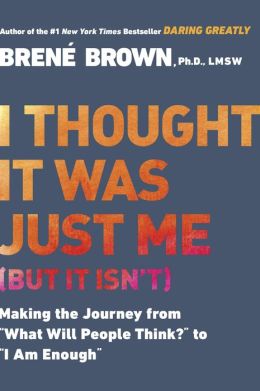
I Thought It Was Just Me (but it isn't): Making the Journey from "What Will People Think?" to "I Am Enough" by Brene Brown (2007)

https://www.amazon.com/dp/159285849X/ref=as_li_ss_til?tag=integraloptio-20&camp=0&creative=0&linkCode=as4&creativeASIN=159285849X&adid=1TRJNEJ7YD9A3WB3J2WP&
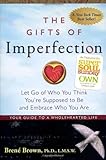
The Gifts of Imperfection: Let Go of Who You Think You're Supposed to Be and Embrace Who You Are by Brene Brown (2010)

http://www.amazon.com/gp/product/1592407331/ref=as_li_ss_tl?ie=UTF8&camp=1789&creative=390957&creativeASIN=1592407331&linkCode=as2&tag=integraloptio-20
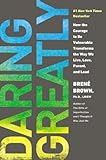
Daring Greatly: How the Courage to Be Vulnerable Transforms the Way We Live, Love, Parent, and Lead by Brene Brown (2012)

Production Credits

Host/Producer: Krista Tippett
Executive Editor/Chief Curator: Trent Gilliss
Technical Director/Producer: Chris Heagle
Senior Producer: Lily Percy

Like-Minded Conversations


Investigating Healthy Minds with Richard Davidson
Neuroscientist Richard Davidson is revealing that the choices we make can actually “rewire” our brains. He’s studied the brains of meditating Buddhist monks, and now he’s using his research with children and adolescents to look at things like ADHD, autism, and kindness.


Getting Revenge and Forgiveness
Michael McCullough describes science that helps us comprehend how revenge came to have a purpose in human life. At the same time, he stresses, science is also revealing that human beings are more instinctively equipped for forgiveness than we've perhaps given ourselves credit for. Knowing this suggests ways to calm the revenge instinct in ourselves and others and embolden the forgiveness intuition.

Pertinent Posts from the On Being Blog


Brené Brown on Leaning Into Our Vulnerability (video)
One of TED's most popular lectures, Dr. Brené Brown offers solutions on how we can deal with vulnerability, courage, authenticity, and shame.


Completely Free to Be Vulnerable: Martha Depp on Art and Cancer
We received this remarkable video from a brother to his sister. A tribute on art, cancer, and vulnerability that touched us deeply.


"Compassion comes from the recognition that all of us are vulnerable."
The director of the Stanford University Forgiveness Project connects the dots between compassion and vulnerability.


Guilt vs. Shame: Which Signals Leadership Potential?
Feelings of guilt, normally shunned or discouraged, can actually signal a capacity for leadership. What does this say about people who never feel guilt?


Into the Wilderness: Parenting a Terminally Ill Child
A story of learning and friendship and circles of learning in which each person is a teacher — of learning how to live with death and learning how to live.


Time-Lapse of Graphic Recording Session of Brené Brown Interview

Art evolves in its iterations, and it's fascinating to see how Doug Neill's graphic recording session of our show with Brené Brown progresses before our very eyes.


Human Connections Matter, Discover Israeli and Pakistani Peers
What do Israeli and Pakistani peers have in common? A Jewish American journalist looks beyond Western media's portrayal of Pakistan and discovers universal values.


It Gets Better Project

Another kind of contribution to civility, an act of care for "despairing LGBT kids who are being bullied and harassed, kids who don't think they have a future" from syndicated columnist Dan Savage.


Brené Brown: A Twitterscript

A compilation of time-shift tweets of Krista's interview with Dr. Brené Brown. Was this an interview or therapy session?


Finding an Image for Vulnerability

The story behind this one powerful shot of "vulnerability and shame" from Segovia, Columbia.

Friday, March 23, 2012

Brene Brown at The UP Experience (2009) and TEDxKC (2010)

Brene Brown broke onto the TED Talk scene in October of 2010 with an amazing talk (The Power of Vulnerability), but she was already doing a lot of public speaking before that. This talk is from 2009 at the UP Experience. Below this talk, there is another TEDx Talk from 2010.

Dr. Brown's books are The Gifts of Imperfection: Let Go of Who You Think You're Supposed to Be and Embrace Who You Are and I Thought It Was Just Me (but it isn't): Telling the Truth About Perfectionism, Inadequacy, and Power.


Brene Brown at The UP Experience
"The heart of my work is about the very human need to live with authenticity, resilience and a deep sense of love and belonging," says Brené. Dr. Brown is a researcher, author and award-winning teacher of graduate studies at the University of Houston, where her focus has been the areas of shame, empathy and vulnerability and the effect those powerful emotions have on the way we love, parent and build relationships.
Brene Brown appeared at TEDxKC not long after her TEDxHouston debut - and she offered another great talk.


TEDxKC - Brené Brown - The Price of Invulnerability

TEDxKC talk synopsis: In our anxious world, we often protect ourselves by closing off parts of our lives that leave us feeling most vulnerable. Yet invulnerability has a price. When we knowingly or unknowingly numb ourselves to what we sense threatens us, we sacrifice an essential tool for navigating uncertain times -- joy. This talk will explore how and why fear and collective scarcity has profoundly dangerous consequences on how we live, love, parent, work and engage in relationships -- and how simple acts can restore our sense of purpose and meaning.

Speaker: Dr. Brené Brown is a research professor at the University of Houston Graduate College of Social Work where she has spent the past 10 years studying courage, shame and authenticity. She is the Behavioral Health Scholar-in-Residence at the Council on Alcohol and Drugs and has written several books on her research.