Showing posts with label grains. Show all posts

Thursday, February 06, 2014

Americans Need to Eat More Whole Grains, According to General Mills

general mills brands banner

Uh, <cough> bullshit <cough>. That was my first thought when I saw the headline, then I read the article and saw that the researchers and the funding came from General Mills, you know, the people whose livelihood is based on Americans consuming a LOT of grains. They own brands such as Cheerios, Betty Crocker, Gold Medal (flour), Wheaties, and tons of other crap.

There is one point in the article that is valid - Americans do not get enough fiber in their diets. However, we do NOT need to eat more grains to get more fiber - we need to eat more fibrous vegetables, such as broccoli, asparagus, celery, pumpkin and other squashes, and so on, as well as beans and lentils.

Oh, one last point. I eat ZERO whole grains (or any other kind of grain) and I get around 40 grams of fiber each day on average. Americans have been seriously mislead by the agricultural industry into thinking we need grains (whole or otherwise) in our diet - and the USDA has been their enabler for more than 30 years.

Here is the whole article - as you read it please keep in mind who funded the "research." This should have been posted as an advertorial.

Americans need to eat more whole grains, study suggests

By Shereen Jegtvig
Wed Feb 5, 2014


General Mills cereals are displayed on a kitchen counter in Golden, Colorado December 17, 2009. Credit: Reuters/Rick Wilking

(Reuters Health) - Most children and adults in the U.S. are getting less than the recommended amounts of whole grains and dietary fiber, according to a recent study.

Researchers found people who did eat the recommended three or more servings of whole grains each day also tended to consume the most fiber.

Whole grains are present in some types of hot and cold cereal and bread. Previous studies have tied whole grain intake to a reduced risk of type 2 diabetes and heart disease among adults. The health benefits are in part attributed to the fiber in whole grains.

"Most people do not consume whole grains in amounts that can be most beneficial, also many people, even health professionals, are confused about the relationship between whole grain and fiber," Marla Reicks told Reuters Health in an email.

Reicks led the study at the University of Minnesota in St. Paul. Her coauthors are all affiliated with General Mills, which funded the study.

Eating fiber, Reicks said, has been linked to better gut health, less heart disease and lower weights. Fiber is found in whole grains in varying quantities as well as in fruits, vegetables and beans.

Dietary guidelines from the U.S. Department of Agriculture and Department of Health and Human Services say at least half of all grains consumed should be whole grains. That works out to a minimum of three one-ounce servings per day for adults and some kids.

Fiber recommendations vary by age. Young kids need 19 to 25 grams of fiber each day while older kids, teens and adults need anywhere from 21 to 38 grams per day.

Reicks and her colleagues compared whole grain and dietary fiber intakes among Americans ages two and up using a large national nutrition and health survey. They included data from 9,042 people surveyed in 2009 and 2010.

The study team discovered 39 percent of children and teens and 42 percent of adults consumed no whole grains at all. Only 3 percent of children and teens and about 8 percent of adults ate at least the recommended three servings per day.

The researchers also found people who ate the most whole grains had the highest fiber intakes: on average, 24.5 grams per day for kids and 28 grams per day for adults, according to findings published in Nutrition Research.

Children who ate the recommended amount of whole grains were 59 times more likely to be in the top third of fiber consumers, compared to those who ate no whole grains. Adults who met the whole grain recommendations were 76 times more likely to get the most fiber.

Major sources of whole grains for study participants included breakfast cereal, breads and rolls, oatmeal and popcorn.

Reicks said people should strive to eat whole grain versions of breads, oatmeal and breakfast cereals when possible.

She said having only whole grain versions of those foods available at home will help children see that they are tasty, usual foods and build habits that may last into older childhood and adulthood.

Consumers can read labels and look for a special whole grain stamp when shopping.

"Some products indicate the whole grain content in grams on the label, which is very useful if you know how much whole grain is needed to count as a serving, and some use the whole grain stamp (The Whole Grains Council), but not all," Reicks said. Stamped products are explained on the group's Website here: bit.ly/1kchZ1J.

Reicks added that until labeling is made consistent, a good method is to look at a food's ingredient list. If the first ingredient is whole grain, the product will probably contain enough of it to count as a whole grain product.

"The study reinforces the preponderance of scientific evidence and supports the recommendations set forth by many dietary guidelines advisory committees within the U.S. and throughout the globe," Roger Clemens told Reuters Health in an email.

Clemens, from the University of Southern California in Los Angeles, was an adviser for the most recent government-backed U.S. dietary guidelines. He was not involved with the study.

Clemens said there are many reasons why people do not meet dietary recommendations for fiber, including taste and texture of whole grain products. Another reason is that high-fiber foods tend to cause gas.

He noted that different sources of dietary fiber contain different types of fiber, including soluble and insoluble fiber.

"This is important since different types of dietary fiber have different functions in our bodies," he said.

Whole grains are equally complex, Clemens added. He said oats are among the whole grains highest in fiber.

SOURCE: bit.ly/1aolUp5 Nutrition Research, online January 17, 2014.

Monday, January 20, 2014

Grain Brain, Sugars, and Brain Health


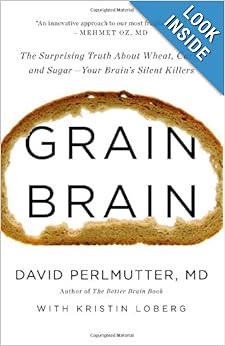
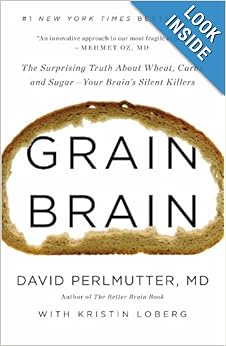
James R Hamblin's review (This Is Your Brain on Gluten) in The Atlantic (where he is a senior editor) of David Perlmutter's Grain Brain: The Surprising Truth about Wheat, Carbs, and Sugar--Your Brain's Silent Killers has generated a lot of backlash against Perlmutter's claims in the book.


Perlmutter makes a few claims that are nearly opposite of what mainstream nutrition teaches us is true (as in the 1992 USDA Food Pyramid above):
  1. Gluten is poison, and we should not eat any wheat (or rye, barley, and several other grains)
  2. Sugars, especially fructose, are also poisons and we should seriously restrict their intake
  3. LDL cholesterol is only a problem when it becomes oxidized (which occurs with carbohydrate consumption)
  4. Cholesterol is good for us - there is no such thing as too much
  5. If we adhere to these four points, we can prevent a LOT of neurodegenerative diseases
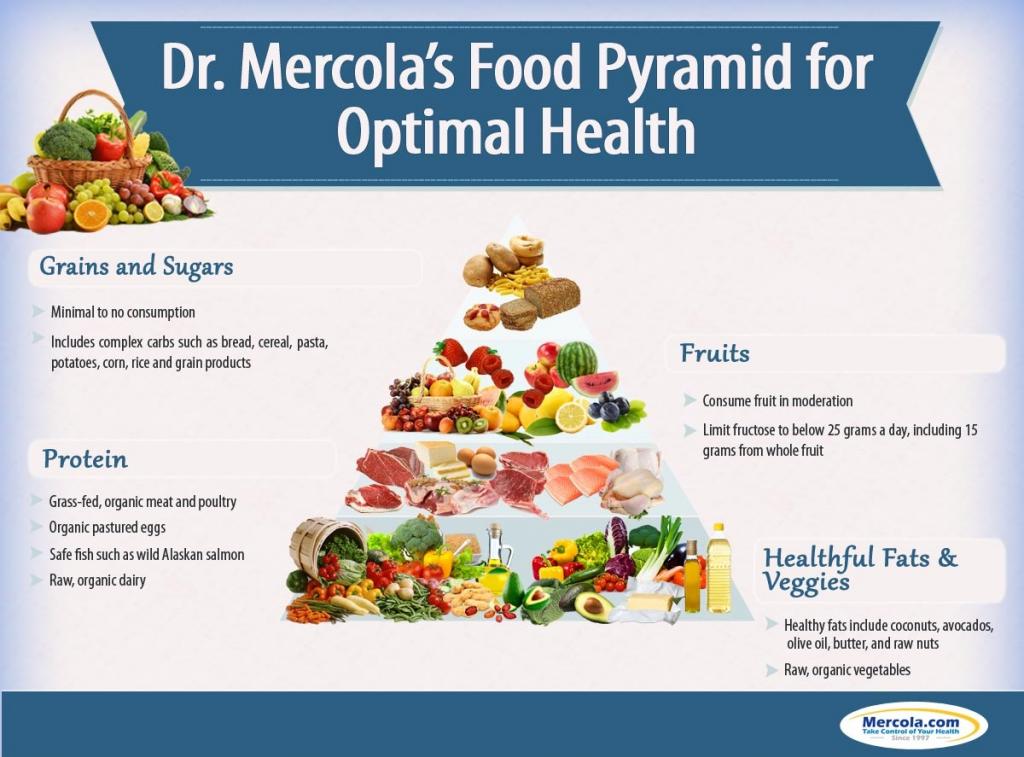
Perlmutter has introduced his own "inverse food pyramid" that resembles the one created by Dr. Mercola, although Perlmutter places an even greater emphasis on consuming fats (they should be 70% of our calories according to his model) than Mercola does:


There is also a brief video of Perlmutter outlining his inverse food pyramid:


Hamblin's review in The Atlantic was highly skeptical in tone and content - but while he tried to refute several of Perlmutter's central ideas, the research he sites supports the premise, although it is not nearly as conclusive as Perlmutter presents it.
I read the book with an eye for the most dangerous claim. What stuck out to me was Perlmutter’s case for cholesterol. He basically says that we can’t have too much.

“Nothing could be further from the truth than the myth that if we lower our cholesterol levels, we might have a chance of living longer and healthier lives,” Perlmutter writes . He recommends disowning the notion that LDL is bad cholesterol and HDL is good cholesterol; rather, both are generally good. LDL is only bad when it is oxidized, and it only becomes so in the presence of the sort of oxidative stress brought about by carbs and gluten. Avoid those, and cholesterol is innocuous.

Beyond that, Perlmutter says that cholesterol-lowering statin medicines like Lipitor, which are prescribed for a quarter of Americans over 40, should actually be vehemently avoided. Cholesterol is necessary for the brain in high levels, he says, and lowering it is contributing to dementia.

I took this to Katz, too.

“Is there a weight of evidence that says we can totally ignore both dietary cholesterol and LDL? Absolutely not,” he said. “You can legitimately say we’re starting to rethink some things, but ignoring LDL could absolutely result in heart attacks and strokes. Perlmutter is way ahead of any justifiable conclusion.”

The medical community’s understanding of the danger of cholesterol is changing. Many cardiologists are starting to think that independent of other considerations, the level of LDL in our blood may not be as important as it previously seemed. In November, the American Heart Association and the American College of Cardiology released new guidelines that redefined the use of statins. While they continue to recommend that people at high risk for heart disease and people with LDL levels above 189 take a statin, the long-standing goal of lowering one’s LDL level to 70 is no longer deemed worthwhile to monitor.
The reality about cholesterol is not quite as clear-cut as Perlmutter argues, but it is true that there is only about a 5-15% correlation between dietary intake of cholesterol and blood levels of cholesterol. From Wikipedia:
Most ingested cholesterol is esterified, and esterified cholesterol is poorly absorbed. The body also compensates for any absorption of additional cholesterol by reducing cholesterol synthesis.[9] For these reasons, cholesterol intake in food has little, if any, effect on total body cholesterol content or concentrations of cholesterol in the blood.
The primary reason for this, as Perlmutter describes, is that the body would much prefer to use dietary cholesterol for the many cellular and hormonal processes based on its metabolism (most notably as an essential structural component of cell membranes and necessary to establish proper membrane permeability and fluidity, as well as it's role as the building block of sex hormones like testosterone and estrogen). Making cholesterol from sugars and saturated fats is an energy demanding process. Importantly, cholesterol is NOT really a fat - it is technically a sterol, a modified steroid.

LDL cholesterol is the evil cause of heart disease and a host of other diseases according to the medical mainstream. However, research from a few years back indicates that low cholesterol may actually cause more non-coronary deaths than high cholesterol. Moreover, as Perlmutter argues, statins that lower cholesterol compromise brain function because they don't only stop the liver from making cholesterol, they also stop the brain from doing so.
Yeon-Kyun Shin, a biophysics professor in the department of biochemistry, biophysics and molecular biology, says the results of his study show that drugs that inhibit the liver from making cholesterol may also keep the brain from making cholesterol, which is vital to efficient brain function.

"If you deprive cholesterol from the brain, then you directly affect the machinery that triggers the release of neurotransmitters," said Shin. "Neurotransmitters affect the data-processing and memory functions. In other words -- how smart you are and how well you remember things."

Another fallacy around cholesterol and health is that fat is the primary source of increased circulating LDL cholesterol. Fructose is a much larger issue - as soon as fructose is ingested it goes straight to the liver where it is converted into triglycerides to be stored as fat. Considering the enormous levels of high-fructose corn syrup consumed by the Western world, it's no wonder obesity is such a rampant problem.
The effects of different dietary sugars, with or without exogenously induced hyperinsulinemia, on rat plasma triglyceride kinetics have been studied. Glucose, sucrose, or fructose were supplied as 10% drinking solutions. The sugar-supplemented groups were each divided into subgroups, one receiving 6 U of insulin per day for 2 wk from intraperitoneally implanted minipumps and the other receiving none. The same degree of hyperglycemia and of endogenous hyperinsulinemia was seen in each sugar-supplemented group. Infusing exogenous insulin restored normoglycemia and produced more pronounced but equal hyperinsulinemia in each subgroup. In those rats that received no exogenous insulin, triglyceride production increased 18% in the sucrose-supplemented group and 20% in the fructose supplemented subgroups, but not at all in the glucose-supplemented subgroup. This 20% increase in triglyceride production in the fructose-supplemented subgroup was accompanied by a six times greater (120%) increase in triglyceride concentration. This suggested that dietary fructose not only increased triglyceride production, but also impaired triglyceride removal. Exogenously induced hyperinsulinemia further increased triglyceride production in those rats receiving dietary fructose, either as the monosaccharide or as sucrose, but not in those receiving only glucose. Thus, in the presence of fructose, but not glucose, insulin stimulates triglyceride production. As exogenous insulin returned the triglyceride concentrations to normal in the fructose-supplemented rats, it also appeared to overcome any fructose-associated impairment of triglyceride removal.
[Emphasis added.] While fructose is clearly the culprit in triglyceride levels, glucose is not so harmless as the above study might indicate. Perlmutter claims that glucose is very damaging to the brain, and there is research to support a correlation, although not yet a causative relationship:
Our results indicate that even in the absence of manifest type 2 diabetes mellitus or impaired glucose tolerance, chronically higher blood glucose levels exert a negative influence on cognition, possibly mediated by structural changes in learning-relevant brain areas. Therefore, stratgies aimed at lowering glucose levels even in the normal range may beneficially influence cognition in the older population, a hypothesis to be examined in future interventional trials.
So it appears that Perlmutter is not so far off after all. He is a little too absolute given the current evidence, but it's not likely that the millions of Americans who read his book are actually going to stop eating wheat and other grain products - Americans are simply not that concerned with the long-term consequences of immediate whims and desires.

Here is a longer talk by Perlmutter being interviewed for Underground Wellness:


Here are time notes:
5:06 -- The impact Dr. Perlmutter had on Dr. Oz.
9:10 -- Why you shouldn't let the government tell you what to eat.
14:42 -- LDL vs oxidized LDL -- know the difference!
17:10 -- 4 vital functions that require cholesterol in the brain.
20:20 -- Why cholesterol should be your BFF, not your worst enemy.
23:43 -- Is whole-grain wheat bread more toxic than a Snickers bar?
29:07 -- Your brain on gluten.
32:20 -- Heard of leaky gut? There's even leaky brain.
34:15 -- Do your kids a favor -- put them on a gluten-free diet.
36:15 -- Dr. Perlmutter's opinion on quinoa.
38:40 -- The antioxidant hoax. And why Sean was right about Protandim.
40:52 -- 5 foods that prevent oxidative stress.
42:00 -- Caller Q: Can gluten-free products still affect the brain?
44:26 -- Caller Q: Is brain fog the result of a gluten sensitivity?
46:47 -- Caller Q: How effective is liposomal glutathione?
49:10 -- Caller Q: If you're on a gluten-free diet, do you only eat protein and vegetables?
51:06 -- Caller Q: Are there other harmful elements in grains beyond gluten?
55:45 -- Caller Q: Is there a difference between the diet Dr. Perlmutter recommends and the paleo diet?
57:30 -- Caller Q: What is Dr. Perlmutter's opinion on the supplement KetoForce?
1:01:24 -- Caller Q: Can you fully recover from damage caused by gluten?
1:03:10 -- Why MS is a gut-related disease
1:09:41 -- Suffering from blood sugar issues? Here's a marker you should test for.
1:15:35 -- How to lower triglycerides.
1:16:33 -- Report your gluten-free success stories to Dr. Perlmutter!
1:17:56 -- The Grain Brain breakdown.

Monday, November 18, 2013

What Grain Is Doing To Your Brain (from Forbes)


I agree completely. I am 99% grain free - and when I do eat grains (especially wheat), I feel like hell. Almost like a hangover. The article discusses the work of neurologist David Perlmutter, author of Grain Brain: The Surprising Truth About Wheat, Carbs, and Sugar – Your Brain’s Silent Killers (2013).

Here is the publisher's summary of the book:
The devastating truth about the effects of wheat, sugar, and carbs on the brain, with a 30-day plan to achieve optimum health.

Renowned neurologist David Perlmutter, MD, blows the lid off a topic that's been buried in medical literature for far too long: carbs are destroying your brain. And not just unhealthy carbs, but even healthy ones like whole grains can cause dementia, ADHD, anxiety, chronic headaches, depression, and much more. Dr. Perlmutter explains what happens when the brain encounters common ingredients in your daily bread and fruit bowls, why your brain thrives on fat and cholesterol, and how you can spur the growth of new brain cells at any age. He offers an in-depth look at how we can take control of our "smart genes" through specific dietary choices and lifestyle habits, demonstrating how to remedy our most feared maladies without drugs. With a revolutionary 30-day plan, GRAIN BRAIN teaches us how we can reprogram our genetic destiny for the better.
Dementia, chronic headaches, depression, epilepsy and other contemporary scourges are not in our genes, Perlmutter claims. “It’s in the food you eat,”

What Grain Is Doing To Your Brain


  Gary Drevitch, Forbes Contributor

It’s tempting to call David Perlmutter’s dietary advice radical. The neurologist and president of the Perlmutter Health Center in Naples, Fla., believes all carbs, including highly touted whole grains, are devastating to our brains. He claims we must make major changes in our eating habits as a society to ward off terrifying increases in Alzheimer’s disease and dementia rates.

And yet Perlmutter argues that his recommendations are not radical at all. In fact, he says, his suggested menu adheres more closely to the way mankind has eaten for most of human history.

What’s deviant, he insists, is our modern diet. Dementia, chronic headaches, depression, epilepsy and other contemporary scourges are not in our genes, he claims. “It’s in the food you eat,” Perlmutter writes in his bestselling new book, Grain Brain: The Surprising Truth About Wheat, Carbs, and Sugar – Your Brain’s Silent Killers. “The origin of brain disease is in many cases predominantly dietary.”

 
Ten Health Benefits of a High Fiber Diet

The FDA recommends between 20 and 30 grams of fiber per day, but most Americans aren't eating half of that. With benefits that range from weight management to cardiovascular health, is it any wonder we're an overweight nation? Here, 10 health benefits of increasing your fiber intake.

How We Got Here


Perlmutter’s book is propelled by a growing body of research indicating that Alzheimer’s disease may really be a third type of diabetes, a discovery that highlights the close relationship between lifestyle and dementia. It also reveals a potential opening to successfully warding off debilitating brain disease through dietary changes.

(MORE: Is Alzheimer’s Really a Type of Diabetes?)

Perlmutter says we need to return to the eating habits of early man, a diet generally thought to be about 75% fat and 5% carbs. The average U.S. diet today features about 60% carbs and 20% fat. (A 20% share of dietary protein has remained fairly consistent, experts believe.)

Some in the nutrition and medical communities take issue with Perlmutter’s premise and prescription. Several critics, while not questioning the neurological risks of a high-carb diet, have pointed out that readers may interpret his book as a green light to load up on meat and dairy instead, a choice that has its own well-documented cardiovascular heart risks.

“Perlmutter uses bits and pieces of the effects of diet on cognitive outcomes — that obese people have a higher risk of cognitive impairment, for example — to construct an ultimately misleading picture of what people should eat for optimal cognitive and overall health,” St. Catherine University professor emerita Julie Miller Jones, Ph. D., told the website FoodNavigator-USA.

Grain Brain does delve deeply into the negative neurological effects of dietary sugar. “The food we eat goes beyond its macronutrients of carbohydrates, fat and protein,” Perlmutter said in a recent interview with Next Avenue. “It’s information. It interacts with and instructs our genome with every mouthful, changing genetic expression.”

Human genes, he says, have evolved over thousands of years to accommodate a high-fat, low-carb diet. But today we feed our bodies almost the opposite, with seemingly major effects on our brains. A Mayo Clinic study published earlier this year in the Journal of Alzheimer’s Disease found that people 70 and older with a high-carbohydrate diet face a risk of developing mild cognitive impairment 3.6 times higher than those who follow low-carb regimens. Those with the diets highest in sugar did not fare much better. However, subjects with the diets highest in fat were 42% less likely to face cognitive impairment than the participants whose diets were lowest in fat.

Further research published in the New England Journal of Medicine in August showed that people with even mildly elevated levels of blood sugar — too low to register as a Type 2 diabetes risk — still had a significantly higher risk of developing dementia.

(MORE: Fifty-something Diet: Boosting Your Longevity Odds)

“This low-fat idea that’s been drummed into our heads and bellies,” Perlmutter says, “is completely off-base and deeply responsible for most of our modern ills.”

Turning to Nutrition, Not Pills


This fall, the federal government committed $33.2 million to testing a drug designed to prevent Alzheimer’s in healthy people with elevated risk factors for the disease, but “the idea of lifestyle modification for Alzheimer’s has been with us for years,” Perlmutter says, and it’s cost-free.

The author hopes his book and other related media on the diet-dementia connection will inspire more people to change the way they eat. “Dementia is our most-feared illness, more than heart disease or cancer,” Perlmutter says. “When you let Type 2 diabetics know they’re doubling their risk for Alzheimer’s disease, they suddenly open their eyes and take notice.

“People are getting to this place of understanding that their lifestyle choices actually do matter a whole lot,” he says, “as opposed to this notion that you live your life come what may and hope for a pill.”

As we learn more about the brain’s ability to maintain or even gain strength as we age, Perlmutter believes, diet overhauls could become all the more valuable.

“Lifestyle changes can have profound effects later in life,” he says. “I’m watching people who’d already started to forget why they walked into a room change and reverse this. We have this incredible ability to grow back new brain cells. The brain can regenerate itself, if we give it what it needs.”

What it needs most of all, Perlmutter says, is “wonderful fat.” There’s no room in anyone’s diet for modified fats or trans fats, he says, but a diet rich in extra-virgin olive oil, grass-fed beef and wild fish provides “life-sustaining fat that modern American diets are so desperate for.”

Too few of us understand there’s “a big difference between eating fat and being fat,” he says. People who eat more fat tend to consume fewer carbs. As a result, they produce less insulin and store less fat in their bodies.

Change We Ought to Believe In


Changing minds, however, is an uphill climb. “The idea that grains are good for you seems to get so much play,” he says. “But grains are categorically not good for you,” not even whole grains.

“We like to think a whole-grain bagel and orange juice makes for the perfect breakfast,” Perlmutter continues. “But that bagel has 400 calories, almost completely carbohydrates with gluten. And the hidden source of carbs in this picture is that 12-ounce glass of fresh-squeezed orange juice. It has nine full teaspoons of pure sugar, the same as a can of Coke. It’s doing a service with Vitamin C, but you’ve already gotten 72 grams of carbs.

“It’s time to relearn,” he says. “You can have vegetables at breakfast – the world won’t come to an end. You can have smoked salmon, free-range eggs with olive oil and organic goat cheese and you’re ready for the day. And you’re not having a high-carb breakfast that can cause you to bang on a vending machine at 10 a.m. because your blood sugar is plummeting and your brain isn’t working.”

Changing one’s diet is a challenge, he acknowledges. Giving up the gluten found in most carbs makes it even tougher. “The exact parts of the brain that allow people to become addicted to narcotics are stimulated by gluten,” Perlmutter points out. “People absolutely go through withdrawal from gluten. It takes a couple of weeks.”

But the change is worth making, he says, at any age.

“Nutrition matters,” Perlmutter says. “The brain is more responsive to diet and lifestyle than any other part of the body and until now it’s been virtually ignored. We load up on medications when our mood is off, we hope for an Alzheimer’s disease pill when we get older. I submit that we need to take a step back and ask, ‘Is this really how we want to treat ourselves?’”

~ Gary Drevitch is senior Web editor for Next Avenue’s Caregiving and Health & Well-Being channels. Follow Gary on Twitter @GaryDrevitch.