Showing posts with label brain disease. Show all posts

Monday, January 20, 2014

Grain Brain, Sugars, and Brain Health


James R Hamblin's review (This Is Your Brain on Gluten) in The Atlantic (where he is a senior editor) of David Perlmutter's Grain Brain: The Surprising Truth about Wheat, Carbs, and Sugar--Your Brain's Silent Killers has generated a lot of backlash against Perlmutter's claims in the book.


Perlmutter makes a few claims that are nearly opposite of what mainstream nutrition teaches us is true (as in the 1992 USDA Food Pyramid above):
  1. Gluten is poison, and we should not eat any wheat (or rye, barley, and several other grains)
  2. Sugars, especially fructose, are also poisons and we should seriously restrict their intake
  3. LDL cholesterol is only a problem when it becomes oxidized (which occurs with carbohydrate consumption)
  4. Cholesterol is good for us - there is no such thing as too much
  5. If we adhere to these four points, we can prevent a LOT of neurodegenerative diseases
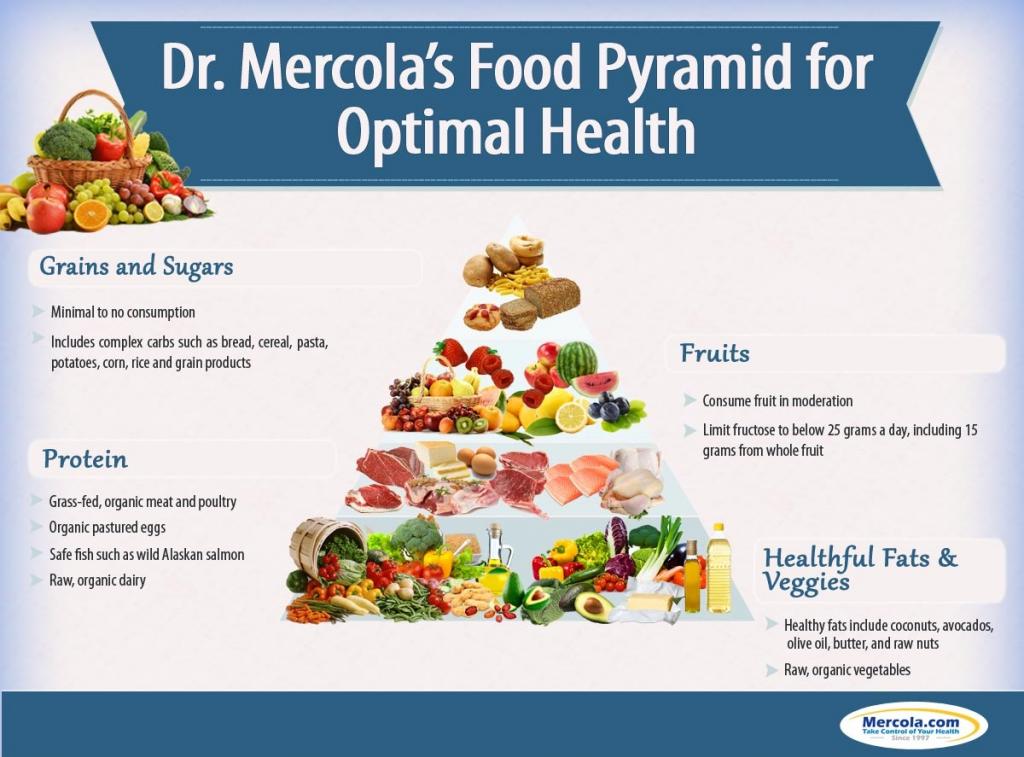
Perlmutter has introduced his own "inverse food pyramid" that resembles the one created by Dr. Mercola, although Perlmutter places an even greater emphasis on consuming fats (they should be 70% of our calories according to his model) than Mercola does:


There is also a brief video of Perlmutter outlining his inverse food pyramid:


Hamblin's review in The Atlantic was highly skeptical in tone and content - but while he tried to refute several of Perlmutter's central ideas, the research he sites supports the premise, although it is not nearly as conclusive as Perlmutter presents it.
I read the book with an eye for the most dangerous claim. What stuck out to me was Perlmutter’s case for cholesterol. He basically says that we can’t have too much.

“Nothing could be further from the truth than the myth that if we lower our cholesterol levels, we might have a chance of living longer and healthier lives,” Perlmutter writes . He recommends disowning the notion that LDL is bad cholesterol and HDL is good cholesterol; rather, both are generally good. LDL is only bad when it is oxidized, and it only becomes so in the presence of the sort of oxidative stress brought about by carbs and gluten. Avoid those, and cholesterol is innocuous.

Beyond that, Perlmutter says that cholesterol-lowering statin medicines like Lipitor, which are prescribed for a quarter of Americans over 40, should actually be vehemently avoided. Cholesterol is necessary for the brain in high levels, he says, and lowering it is contributing to dementia.

I took this to Katz, too.

“Is there a weight of evidence that says we can totally ignore both dietary cholesterol and LDL? Absolutely not,” he said. “You can legitimately say we’re starting to rethink some things, but ignoring LDL could absolutely result in heart attacks and strokes. Perlmutter is way ahead of any justifiable conclusion.”

The medical community’s understanding of the danger of cholesterol is changing. Many cardiologists are starting to think that independent of other considerations, the level of LDL in our blood may not be as important as it previously seemed. In November, the American Heart Association and the American College of Cardiology released new guidelines that redefined the use of statins. While they continue to recommend that people at high risk for heart disease and people with LDL levels above 189 take a statin, the long-standing goal of lowering one’s LDL level to 70 is no longer deemed worthwhile to monitor.
The reality about cholesterol is not quite as clear-cut as Perlmutter argues, but it is true that there is only about a 5-15% correlation between dietary intake of cholesterol and blood levels of cholesterol. From Wikipedia:
Most ingested cholesterol is esterified, and esterified cholesterol is poorly absorbed. The body also compensates for any absorption of additional cholesterol by reducing cholesterol synthesis.[9] For these reasons, cholesterol intake in food has little, if any, effect on total body cholesterol content or concentrations of cholesterol in the blood.
The primary reason for this, as Perlmutter describes, is that the body would much prefer to use dietary cholesterol for the many cellular and hormonal processes based on its metabolism (most notably as an essential structural component of cell membranes and necessary to establish proper membrane permeability and fluidity, as well as it's role as the building block of sex hormones like testosterone and estrogen). Making cholesterol from sugars and saturated fats is an energy demanding process. Importantly, cholesterol is NOT really a fat - it is technically a sterol, a modified steroid.

LDL cholesterol is the evil cause of heart disease and a host of other diseases according to the medical mainstream. However, research from a few years back indicates that low cholesterol may actually cause more non-coronary deaths than high cholesterol. Moreover, as Perlmutter argues, statins that lower cholesterol compromise brain function because they don't only stop the liver from making cholesterol, they also stop the brain from doing so.
Yeon-Kyun Shin, a biophysics professor in the department of biochemistry, biophysics and molecular biology, says the results of his study show that drugs that inhibit the liver from making cholesterol may also keep the brain from making cholesterol, which is vital to efficient brain function.

"If you deprive cholesterol from the brain, then you directly affect the machinery that triggers the release of neurotransmitters," said Shin. "Neurotransmitters affect the data-processing and memory functions. In other words -- how smart you are and how well you remember things."

Another fallacy around cholesterol and health is that fat is the primary source of increased circulating LDL cholesterol. Fructose is a much larger issue - as soon as fructose is ingested it goes straight to the liver where it is converted into triglycerides to be stored as fat. Considering the enormous levels of high-fructose corn syrup consumed by the Western world, it's no wonder obesity is such a rampant problem.
The effects of different dietary sugars, with or without exogenously induced hyperinsulinemia, on rat plasma triglyceride kinetics have been studied. Glucose, sucrose, or fructose were supplied as 10% drinking solutions. The sugar-supplemented groups were each divided into subgroups, one receiving 6 U of insulin per day for 2 wk from intraperitoneally implanted minipumps and the other receiving none. The same degree of hyperglycemia and of endogenous hyperinsulinemia was seen in each sugar-supplemented group. Infusing exogenous insulin restored normoglycemia and produced more pronounced but equal hyperinsulinemia in each subgroup. In those rats that received no exogenous insulin, triglyceride production increased 18% in the sucrose-supplemented group and 20% in the fructose supplemented subgroups, but not at all in the glucose-supplemented subgroup. This 20% increase in triglyceride production in the fructose-supplemented subgroup was accompanied by a six times greater (120%) increase in triglyceride concentration. This suggested that dietary fructose not only increased triglyceride production, but also impaired triglyceride removal. Exogenously induced hyperinsulinemia further increased triglyceride production in those rats receiving dietary fructose, either as the monosaccharide or as sucrose, but not in those receiving only glucose. Thus, in the presence of fructose, but not glucose, insulin stimulates triglyceride production. As exogenous insulin returned the triglyceride concentrations to normal in the fructose-supplemented rats, it also appeared to overcome any fructose-associated impairment of triglyceride removal.
[Emphasis added.] While fructose is clearly the culprit in triglyceride levels, glucose is not so harmless as the above study might indicate. Perlmutter claims that glucose is very damaging to the brain, and there is research to support a correlation, although not yet a causative relationship:
Our results indicate that even in the absence of manifest type 2 diabetes mellitus or impaired glucose tolerance, chronically higher blood glucose levels exert a negative influence on cognition, possibly mediated by structural changes in learning-relevant brain areas. Therefore, stratgies aimed at lowering glucose levels even in the normal range may beneficially influence cognition in the older population, a hypothesis to be examined in future interventional trials.
So it appears that Perlmutter is not so far off after all. He is a little too absolute given the current evidence, but it's not likely that the millions of Americans who read his book are actually going to stop eating wheat and other grain products - Americans are simply not that concerned with the long-term consequences of immediate whims and desires.

Here is a longer talk by Perlmutter being interviewed for Underground Wellness:


Here are time notes:
5:06 -- The impact Dr. Perlmutter had on Dr. Oz.
9:10 -- Why you shouldn't let the government tell you what to eat.
14:42 -- LDL vs oxidized LDL -- know the difference!
17:10 -- 4 vital functions that require cholesterol in the brain.
20:20 -- Why cholesterol should be your BFF, not your worst enemy.
23:43 -- Is whole-grain wheat bread more toxic than a Snickers bar?
29:07 -- Your brain on gluten.
32:20 -- Heard of leaky gut? There's even leaky brain.
34:15 -- Do your kids a favor -- put them on a gluten-free diet.
36:15 -- Dr. Perlmutter's opinion on quinoa.
38:40 -- The antioxidant hoax. And why Sean was right about Protandim.
40:52 -- 5 foods that prevent oxidative stress.
42:00 -- Caller Q: Can gluten-free products still affect the brain?
44:26 -- Caller Q: Is brain fog the result of a gluten sensitivity?
46:47 -- Caller Q: How effective is liposomal glutathione?
49:10 -- Caller Q: If you're on a gluten-free diet, do you only eat protein and vegetables?
51:06 -- Caller Q: Are there other harmful elements in grains beyond gluten?
55:45 -- Caller Q: Is there a difference between the diet Dr. Perlmutter recommends and the paleo diet?
57:30 -- Caller Q: What is Dr. Perlmutter's opinion on the supplement KetoForce?
1:01:24 -- Caller Q: Can you fully recover from damage caused by gluten?
1:03:10 -- Why MS is a gut-related disease
1:09:41 -- Suffering from blood sugar issues? Here's a marker you should test for.
1:15:35 -- How to lower triglycerides.
1:16:33 -- Report your gluten-free success stories to Dr. Perlmutter!
1:17:56 -- The Grain Brain breakdown.

Saturday, May 04, 2013

National Institute of Mental Health Abandoning the DSM in Favor of a "Brain Disorder" Model


This morning, Mind Hacks posted an article about the decision by the NIMH to abandon the DSM model for diagnosing mental illness - two weeks before its planned publication date. Undoubtedly, the is a major blow to the American Psychiatric Association (APA), the creators and publishers of the DSM.

This may appear to be a good thing on the surface, since the DSM is considered by most of us in the "trenches" to be little more than a coding guide for billing insurance companies. There is also the issue that the DSM, especially in the 5th iteration, is moving closer and closer to a pure medical model and away from its original psychodynamic perspective.

As much as that seems ludicrous to those of us who work with clients - who sit with them and hear about the abuse and neglect they suffered, or the simple lack of nurturing caregivers - NIMH Director Thomas Insel says the DSM lacks validity and that “patients with mental disorders deserve better.” And by better he means a model that can offer a pill, an implant, or a gene manipulation for every mental illness. In essence, he believes (as he said in his recent TED Talk) that all mental illness is a "brain disorder."

Obviously, this is in complete opposition to the piles of research from the interpersonal neurobiological model, attachment theory, and intersubjective systems theory - all of which demonstrate beyond a doubt that much of our mental illness derives from failed relational needs in infancy and childhood.

Those who were fortunate to have relatively happy and healthy childhoods have the necessary resilience to deal with traumas that arise in adulthood - but those with childhood trauma do not.

Here are the most pertinent sections, in my opinion:
NIMH has launched the Research Domain Criteria (RDoC) project to transform diagnosis by incorporating genetics, imaging, cognitive science, and other levels of information to lay the foundation for a new classification system. Through a series of workshops over the past 18 months, we have tried to define several major categories for a new nosology (see below). This approach began with several assumptions:
  • A diagnostic approach based on the biology as well as the symptoms must not be constrained by the current DSM categories,
  • Mental disorders are biological disorders involving brain circuits that implicate specific domains of cognition, emotion, or behavior,
  • Each level of analysis needs to be understood across a dimension of function,
  • Mapping the cognitive, circuit, and genetic aspects of mental disorders will yield new and better targets for treatment.
It became immediately clear that we cannot design a system based on biomarkers or cognitive performance because we lack the data. In this sense, RDoC is a framework for collecting the data needed for a new nosology. But it is critical to realize that we cannot succeed if we use DSM categories as the “gold standard.”2 The diagnostic system has to be based on the emerging research data, not on the current symptom-based categories. Imagine deciding that EKGs were not useful because many patients with chest pain did not have EKG changes. That is what we have been doing for decades when we reject a biomarker because it does not detect a DSM category. We need to begin collecting the genetic, imaging, physiologic, and cognitive data to see how all the data – not just the symptoms – cluster and how these clusters relate to treatment response.

That is why NIMH will be re-orienting its research away from DSM categories. Going forward, we will be supporting research projects that look across current categories – or sub-divide current categories – to begin to develop a better system. What does this mean for applicants? Clinical trials might study all patients in a mood clinic rather than those meeting strict major depressive disorder criteria. Studies of biomarkers for “depression” might begin by looking across many disorders with anhedonia or emotional appraisal bias or psychomotor retardation to understand the circuitry underlying these symptoms. What does this mean for patients? We are committed to new and better treatments, but we feel this will only happen by developing a more precise diagnostic system. The best reason to develop RDoC is to seek better outcomes.

RDoC, for now, is a research framework, not a clinical tool. This is a decade-long project that is just beginning. Many NIMH researchers, already stressed by budget cuts and tough competition for research funding, will not welcome this change. Some will see RDoC as an academic exercise divorced from clinical practice. But patients and families should welcome this change as a first step towards "precision medicine,” the movement that has transformed cancer diagnosis and treatment. RDoC is nothing less than a plan to transform clinical practice by bringing a new generation of research to inform how we diagnose and treat mental disorders. As two eminent psychiatric geneticists recently concluded, “At the end of the 19th century, it was logical to use a simple diagnostic approach that offered reasonable prognostic validity. At the beginning of the 21st century, we must set our sights higher.”3

The major RDoC research domains:

  • Negative Valence Systems
  • Positive Valence Systems
  • Cognitive Systems
  • Systems for Social Processes
  • Arousal/Modulatory Systems
What this means at the research level is that only research in the domains of neurobiology, genetics, and brain circuits are likely to receive funding in the future. Even the most "evidence-based model" we have, CBT, is likely to be defunded under this agenda. While I am not sad to see CBT get pushed aside, it also means there will be no future research into psychodynamic therapies funded by the NIMH.

Pitiful.

Friday, May 03, 2013

Paris Williams - A Response to Linda Hogan's NYT Magazine Article on Her Bipolar Disorder

The other day I posted an article from The New York Times Magazine by Linda Hogan on The Problem with How We Treat Bipolar Disorder. It's been an incredibly popular article here, and obviously more so at the New York Times site.

Over at Mad in America, Paris Williams has offered a response and a critical appraisal of the subtext in Hogan's article. His essential point - and it's an important one - is this: "Linda has clearly adopted the 'mental illness as a lifelong brain disease' paradigm and has personally identified as someone who has such a "'mental illness.'"

I agree with his assessment - and because I subscribe to the trauma model of mental illness (that it is wounding and not a disease), I see nearly all mental illness as adaptations to horrible circumstances.

This is a good piece - read all of it.

The “Mental Illness” Paradigm:  An “Illness” That is out of Control


May 2, 2013


Paris Williams

For those of you who haven’t read this recent story in the New York Times, I highly recommend it. It is essentially a woman’s (Linda Logan’s) rich and moving autobiographical account of her struggle with “bipolar disorder.” The main message that I imagine most people will take away from this story is that the current mental health care system has some real problems — especially with regard to the often cold and dehumanizing way that “patients” are treated—but that the general paradigm from which this treatment model has emerged is simply not to be questioned. In other words, Linda has clearly adopted the “mental illness as a lifelong brain disease” paradigm and has personally identified as someone who has such a “mental illness.”

Anyone who knows my work will know that I have a real problem with this paradigm, believing that it generally causes much more harm than benefit (though I don’t discount that some people do believe that they experience some benefit from it). So, what is it then about this story that grabbed me? I recognized that if we read Linda’s story while holding a different paradigm (i.e., a different basic set of assumptions) than what she intended, then this story reveals in plain sight what I believe are some of the most fundamental issues at the heart of this epidemic of “mental illness” that so pervades our society.

What is this basic shift of assumptions? Linda clearly frames her story within the “mental illness as a lifelong brain disease” paradigm (what I’ll refer to simply as the “mental illness” paradigm). What if we shift to a significantly different and in many ways more “common sense” paradigm? What if we let go of the concept of “mental illness” altogether and adopt a very different set of assumptions: (a) Human beings (and indeed all living organisms) strive continuously towards a healthy, enjoyable existence; (b) moving towards and maintaining such an existence requires that we find relative peace with certain dilemmas that are inherent within our existence (e.g., death, loss, personal identity, balancing autonomy and relationship, balancing freedom and security, finding meaning, etc.); (c) the more difficulty we have in finding relative peace with these dilemmas, the more we suffer; and finally (d) some individuals, for various reasons and at different points in their lives, are particularly vulnerable/sensitive/aware of/challenged by these dilemmas and are therefore more prone to experiencing intense suffering associated with them. In other words, I’m suggesting that we return to Linda’s story after trying on a different lens—one that allows us to see those conditions we generally refer to as “mental illnesses” as instead the natural manifestations of an individual’s struggles with the fundamental dilemmas inherent in simply being alive. So we make the shift from a “mental illness” paradigm to an “overwhelmed by natural human experience” paradigm. What I find particularly interesting about Linda’s story is that she’s clearly narrating it from the “mental illness” paradigm, and yet allusions to this latter paradigm are practically bursting through the seams.

So with this paradigm shift in mind, let’s look more closely at some of the overarching themes in Linda’s story and compare just how different the methods of support and outcomes are likely to be when acting from each of these different paradigms.
Read the whole article.

Main points:
  • The “mental illness” paradigm creates a self fulfilling prophecy of actual brain disease
  • The “mental illness” paradigm interferes with our own natural resources and innate movement towards healing and growth
  • Even the “mental illness” paradigm, as harmful as it is, has a difficult time squashing our fundamental drive towards health and wholeness
  • Use of the term “mental illness” itself contributes to the entrenchment of the “mental illness” paradigm
  • The “mental illness” paradigm—an insidious cancer
  • So what do we do about it?