Showing posts with label chaos. Show all posts

Saturday, July 12, 2014

Emergence and Persistence of Communities in Coevolutionary Networks

Here is some serious geekery for your Saturday entertainment. This is a fairly complex and computational model of how social communities emerge and survive over time through a process called "adaptive rewiring."

Here is a brief overview of how these coevolutionary networks might exist in different realms:
In a social network, communities might indicate factions, interest groups, or social divisions [1]; in biological networks, they encompass entities having the same biological function [5–7]; in the WorldWideWeb they may correspond to groups of pages dealing with the same or related topics [8]; in food webs they may identify compartments [9]; and a community in a metabolic or genetic network might be related to a specific functional task [10].
And for those of us who are not familiar with this field or its terminology, here is a glossary of network terminology, taken from Gross and Blasius (2008).
A brief network glossary.

Degree. The degree of a node is the number of nearest neighbours to which a node is connected. The mean degree of the network is the mean of the individual degrees of all nodes in the network.
Dynamics. Depending on the context, the term dynamics is used in the literature to refer to a temporal change of either the state or the topology of a network. In this paper, we use the term dynamics exclusively to describe a change in the state, while the term evolution is used to describe a change in the topology.
Evolution. Depending on the context the term evolution is used in the literature to refer to a temporal change of either the state or the topology of a network. In this paper, we use the term evolution exclusively to describe a change in the topology, while the term dynamics is used to describe a change in the state.
Frozen nodes. A node is said to be frozen if its state does not change over in the long-term behaviour of the network. In certain systems discussed here, the state of frozen nodes can change nevertheless on an even longer (topological) time scale.
Link. A link is a connection between two nodes in the networks. Links are also sometimes called edges or simply network connections.
Neighbours. Two nodes are said to be neighbours if they are connected by a link.
Node. The node is the principal unit of the network. A network consists of a number of nodes connected by links. Nodes are sometimes also called vertices.
Scale-free network. In scale-free networks, the distribution of node degrees follows a power law.
State of the network. Depending on the context, the state of a network is used either to describe the state of the network nodes or the state of the whole network including the nodes and the topology. In this review, we use the term state to refer exclusively to the collective state of the nodes. Thus, the state is a priori independent of the network topology.
Topology of the network. The topology of a network defines a specific pattern of connections between the network nodes.
And from the same authors (citation at the bottom of the post), here is a visual representation of how adaptive rewiring might look:


This is interesting stuff and it seems very relevant to emerging coevolutionary networks in P2P communities and other cooperative networks that emerging in the post-capitalist world.

Full Citation:
González-Avella, JC, Cosenza, MG, Herrera, JL, & Tucci, K. (2014, Jul 1). Emergence and persistence of communities in coevolutionary networks. arXiv:1407.0388v1

Emergence and persistence of communities in coevolutionary networks

J. C. González-Avella, M. G. Cosenza, J. L. Herrera, K. Tucci
ABSTRACT
We investigate the emergence and persistence of communities through a recently proposed mechanism of adaptive rewiring in coevolutionary networks. We characterize the topological structures arising in a coevolutionary network subject to an adaptive rewiring process and a node dynamics given by a simple voterlike rule. We find that, for some values of the parameters describing the adaptive rewiring process, a community structure emerges on a connected network. We show that the emergence of communities is associated to a decrease in the number of active links in the system, i.e. links that connect two nodes in different states. The lifetime of the community structure state scales exponentially with the size of the system. Additionally, we find that a small noise in the node dynamics can sustain a diversity of states and a community structure in time in a finite size system. Thus, large system size and/or local noise can explain the persistence of communities and diversity in many real systems.

I. INTRODUCTION

Many social, biological, and technological systems possess a characteristic network structure consisting of communities or modules, which are groups of nodes distinguished by having a high density of links between nodes of the same group and a comparatively low density of links between nodes of different groups [1–4]. Such a network structure is expected to play an important functional role in many systems. In a social network, communities might indicate factions, interest groups, or social divisions [1]; in biological networks, they encompass entities having the same biological function [5–7]; in the WorldWideWeb they may correspond to groups of pages dealing with the same or related topics [8]; in food webs they may identify compartments [9]; and a community in a metabolic or genetic network might be related to a specific functional task [10].

Since community structure constitutes a fundamental feature of many networks, the development of methods and techniques for the detection of communities represents one of the most active research areas in network science [2, 11–17]. In comparison, much less work has been done to address a fundamental question: how do communities arise in networks? [18].

Clearly, the emergence of characteristic topological structures, including communities, from a random or featureless network requires some dynamical process that modifies the properties of the links representing the interactions between nodes. We refer to such link dynamics as a rewiring process. Links can vary their strength, or they can appear and disappear as a consequence of a rewiring process. In our view, two classes of rewiring processes leading to the formation of structures in networks can be distinguished: (i) rewirings based on local connectivity properties regardless of the values of the state variables of the nodes, which we denote as topological rewirings; and (ii) rewirings that depend on the state variables of the nodes, where the link dynamics is coupled to the node state dynamics and which we call adaptive rewirings.

Topological rewiring processes have been employed to explain the origin of small-world and scale-free networks [19, 20]. These rewirings can lead to the appearance of community structures in networks with weighted links [21] or by preferential attachment driven by local clustering [22]. On the other hand, there is currently much interest in the study of networks that exhibit a coupling between topology and states, since many systems observed in nature can be described as dynamical networks of interacting nodes where the connections and the states of the nodes affect each other and evolve simultaneously [23–29]. These systems have been denoted as coevolutionary dynamical systems or adaptive networks and, according to our classification above, they are subject to adaptive rewiring processes. The collective behavior of coevolutionary systems is determined by the competition of the time scales of the node dynamics and the rewiring process. Most works that employ coevolutionary dynamics have focused on the characterization of the phenomenon of network fragmentation arising from this competition. Although community structures have been found in some coevolutionary systems [30–33], investigating the mechanisms for the formation of perdurable communities remains an open problem.

In this paper we investigate the emergence and the persistence of communities in networks induced by a process of adaptive rewiring. Our work is based on a recently proposed general framework for coevolutionary dynamics in networks [29]. We characterize the topological structures forming in a coevolutionary network having a simple node dynamics. We unveil a region of parameters where the formation of a supertransient modular structure on the network occurs. We study the stability of the community configuration under small perturbations of the node dynamics, as well as for different initial conditions of the system.

Reference:
Gross, T, and Blasius, B. (2008, Mar). Adaptive coevolutionary networks: A review. Journal of the Royal Society Interface; 5(20): 259-271. doi: 10.1098/​rsif.2007.1229

Friday, July 11, 2014

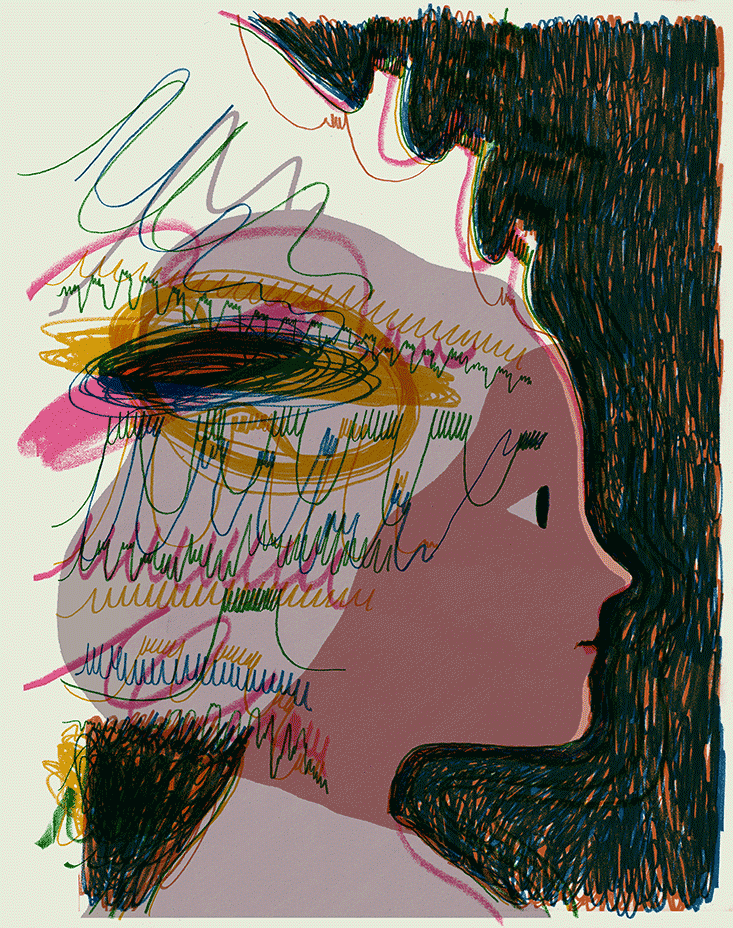
Kelly Clancy - Your Brain Is On the Brink of Chaos


From Nautilus, Kelly Clancy takes a look at the increasing evidence for chaos in the brain and nervous system. The nervous system is literally overwhelmed by incoming sensory data, so much so that much of it never makes it into consciousness.

On the other hand, the brain stem and its adjacent structures, a collection of filters in one sense (which Antonio Damasio calls the protoself), function as gatekeepers to decide what gets passed up into the limbic system and cerebral cortex (i.e., what becomes conscious).

The proposal that there is some chaos in this system is perfectly reasonable - a lot of biological systems contain chaos, which is not the same as disorder. That is an important point that is made in this article:
While disordered systems cannot be predicted, chaos is actually deterministic: The present state of the system determines its future. Yet even so, its behavior is only predictable on short time scales: Tiny differences in inputs result in vastly different outcomes. Chaotic systems can also exhibit stable patterns called “attractors” that emerge to the patient observer. Over time, chaotic trajectories will gravitate toward them. Because chaos can be controlled, it strikes a fine balance between reliability and exploration. Yet because it’s unpredictable, it’s a strong candidate for the dynamical substrate of free will. 
Even with these qualifications, chaos in the nervous system makes a lot of neuroscientists, specifically the computationalists, very nervous because it would completely derail their model.

http://static.nautil.us/3724_4172f3101212a2009c74b547b6ddf935.png

Your Brain Is On the Brink of Chaos

Neurological evidence for chaos in the nervous system is growing.

By Kelly Clancy Illustration by Josh Cochran July 10, 2014

IN ONE IMPORTANT WAY, the recipient of a heart transplant ignores its new organ: Its nervous system usually doesn’t rewire to communicate with it. The 40,000 neurons controlling a heart operate so perfectly, and are so self-contained, that a heart can be cut out of one body, placed into another, and continue to function perfectly, even in the absence of external control, for a decade or more. This seems necessary: The parts of our nervous system managing our most essential functions behave like a Swiss watch, precisely timed and impervious to perturbations. Chaotic behavior has been throttled out.

Or has it? Two simple pendulums that swing with perfect regularity can, when yoked together, move in a chaotic trajectory. Given that the billions of neurons in our brain are each like a pendulum, oscillating back and forth between resting and firing, and connected to 10,000 other neurons, isn’t chaos in our nervous system unavoidable?

The prospect is terrifying to imagine. Chaos is extremely sensitive to initial conditions—just think of the butterfly effect. What if the wrong perturbation plunged us into irrevocable madness? Among many scientists, too, there is a great deal of resistance to the idea that chaos is at work in biological systems. Many intentionally preclude it from their models. It subverts computationalism, which is the idea that the brain is nothing more than a complicated, but fundamentally rule-based, computer. Chaos seems unqualified as a mechanism of biological information processing, as it allows noise to propagate without bounds, corrupting information transmission and storage.

At the same time, chaos has its advantages. On a behavioral level, the arms race between predator and prey has wired erratic strategies into our nervous system.[1] A moth sensing an echo-locating bat, for example, immediately directs itself away from the ultrasound source. The neurons controlling its flight fire in an increasingly erratic manner as the bat draws closer, until the moth, darting in fits, appears to be nothing but a tumble of wings and legs. More generally, chaos could grant our brains a great deal of computational power, by exploring many possibilities at great speed.

Motivated by these and other potential advantages, and with an accumulation of evidence in hand, neuroscientists are gradually accepting the potential importance of chaos in the brain.

CHAOS IS NOT the same as disorder. While disordered systems cannot be predicted, chaos is actually deterministic: The present state of the system determines its future. Yet even so, its behavior is only predictable on short time scales: Tiny differences in inputs result in vastly different outcomes. Chaotic systems can also exhibit stable patterns called “attractors” that emerge to the patient observer. Over time, chaotic trajectories will gravitate toward them. Because chaos can be controlled, it strikes a fine balance between reliability and exploration. Yet because it’s unpredictable, it’s a strong candidate for the dynamical substrate of free will.

The similarity to random disorder (or stochasticity) has been a thorn in the side of formal studies of chaos. It can be mathematically tricky to distinguish between the two—especially in biological systems. There are no definite tests for chaos when dealing with multi-dimensional, fluctuating biological data. Walter Freeman and his colleagues spearheaded some of the earliest studies attempting to prove the existence of chaos in the brain, but came to extreme conclusions on limited data. He’s argued, for example, that neuropil, the extracellular mix of axons and dendrites, is the organ of consciousness—a strong assertion in any light. Philosophers soon latched onto these ideas, taking even the earliest studies at face value. Articles by philosophers and scientists alike can be as apt to quote Jiddu Krishnamurti as Henri Poincaré, and chaos is often handled with a semi-mystical reverence.[2, 3]

As a result, researchers must tread carefully to be taken seriously. But the search for chaos is not purely poetic. The strongest current evidence comes from single cells. The squid giant axon, for example, operates in a resting mode or a repetitive firing mode, depending on the external sodium concentration. Between these extremes, it exhibits unpredictable bursting that resembles the wandering behavior of a chaotic trajectory before it settles into an attractor. When a periodic input is applied, the squid giant axon responds with a mixture of both oscillating and chaotic activity.[4] There is chaos in networks of cells, too. The neurons in a patch of rat skin can distinguish between chaotic and disordered patterns of skin stretching.[5]


More evidence for chaos in the nervous system can be found at the level of global brain activity. Bizarrely, an apt metaphor for this behavior is an iron slab.[6] The electrons it contains can each point in different directions (more precisely, their spins can point). Like tiny magnets, neighboring spins influence each other. When the slab is cold, there is not enough energy to overcome the influence of neighboring spins, and all spins align in the same direction, forming one solid magnet. When the slab is hot, each spin has so much energy that it can shrug off the influence of its neighbor, and the slab’s spins are disordered. When the slab is halfway between hot and cold, it is in the so-called “critical regime.” This is characterized by fluctuating domains of same-spin regions which exhibit the highest possible dynamic correlations—that is, the best balance between a spin’s ability to influence its neighbors, and its ability to be changed.

The critical state can be quite useful for the brain, allowing it to exploit both order and disorder in its computations—employing a redundant network with rich, rapid chaotic dynamics, and an orderly readout function to stably map the network state to outputs. The critical state would be maintained not by temperature, but the balance of neural excitation and inhibition. If the balance is tipped in favor of more inhibition, the brain is “frozen” and nothing happens. If there is too much excitation, it will descend into chaos. The critical point is analogous to an attractor.

But how can we tell whether the brain operates at the critical point? One clue is the structure of the signals generated by the activity of its billions of neurons. We can measure the power of the brain’s electrical activity at different oscillation frequencies. It turns out that the power of activity falls off as the inverse of the frequency of that activity. Once referred to as 1/f “noise,” this relationship is actually a hallmark of systems balanced at their critical point.[7] The spatial extent of regions of coordinated neuronal activity also depend inversely on frequency, another hallmark of criticality. When the brain is pushed away from its usual operating regime using pharmacological agents, it usually loses both these hallmarks,[8, 9] and the efficiency of its information encoding and transmission is reduced.[10]

THE PHILOSOPHER Gilles Deleuze and psychiatrist Felix Guattari contended that the brain’s main function is to protect us, like an umbrella, from chaos. It seems to have done so by exploiting chaos itself. At the same time, neural networks are also capable of near-perfect reliability, as with the beating heart. Order and disorder enjoy a symbiotic relationship, and a neuron’s firing may wander chaotically until a memory or perception propels it into an attractor. Sensory input would then serve to “stabilize” chaos. Indeed, the presentation of a stimulus reduces variability in neuronal firing across a surprising number of different species and systems,[11] as if a high-dimensional chaotic trajectory fell into an attractor. By “taming” chaos, attractors may represent a strategy for maintaining reliability in a sensitive system.[12] Recent theoretical and experimental studies of large networks of independent oscillators have also shown that order and chaos can co-exist in surprising harmony, in so-called chimera states.[13]

The current research paradigm in neuroscience, which considers neurons in a snapshot of time as stationary computational units, and not as members of a shifting dynamical entity, might be missing the mark entirely. If chaos plays an important role in the brain, then neural computations do not operate as a static read-out, a lockstep march from the transduction of photons to the experience of light, but a high-dimensional dynamic trajectory as spikes dance across the brain in self-choreographed cadence.

While hundreds of millions of dollars are being funneled into building the connectome—a neuron-by-neuron map of the brain—scientists like Eve Marder have argued that, due to the complexity of these circuits, a structural map alone will not get us very far. Functional connections can flicker in and out of existence in milliseconds. Individual neurons appear to change their tuning properties over time [14, 15] and thus may not be “byte-addressable”—that is, stably represent some piece of information—but instead operate within a dynamic dictionary that constantly shifts to make room for new meaning. Chaos encourages us to think of certain disorders as dynamical diseases, epileptic seizures being the most dramatic example of the potential failure of chaos.[16] Chaos might also serve as a signature of brain health: For example, researchers reported less chaotic dynamics in the dopamine-producing cells of rodents with brain lesions, as opposed to healthy rodents, which could have implications in diagnosing and treating Parkinson’s and other dopamine-related disorders.[17]

Economist Murray Rothbard described chaos theory as “destroying math from within.” It usurps the human impulse to simplify, replacing the clear linear relationships we seek in nature with the messy and unpredictable. Similarly, chaos in the brain undermines glib caricatures of human behavior. Economists often model humans as “rational agents”: hedonistic calculators who act for their future good. But we can’t really act out of self-interest—though that would be a reasonable thing to do—because we are terrible at predicting what that is. After all, how could we? It’s precisely this failure that makes us what we are.

Kelly Clancy studied physics at MIT, then worked as an itinerant astronomer for several years before serving with the Peace Corps in Turkmenistan. As a National Science Foundation fellow, she recently finished her PhD in biophysics at the University of California, Berkeley. She will begin her postdoctoral research at Biozentrum in Switzerland this fall.

References

1. Humphries, D.A. & Driver, P.M. Protean defence by prey animals. Oecologia 5, 285–302 (1970).
2. Abraham, F.D. Chaos, bifurcations, and self-organization: dynamical extensions of neurological positivism. Psychoscience 1, 85-118 (1992).
3. O’Nuallain, S. Zero power and selflessness: what meditation and conscious perception have in common. Cognitive Science 4, 49-64 (2008).
4. Korn, H. & Faure, P. Is there chaos in the brain? II. Experimental evidence and related models. Comptes Rendus Biologies 326, 787–840 (2003).
5. Richardson, K.A., Imhoff, T.T., Grigg, P. & Collins, J.J. Encoding chaos in neural spike trains. Physical Review Letters 80, 2485–2488 (1998).
6. Beggs, J.M. & Timme, N. Being critical of criticality in the brain. Frontiers in Physiology 3, 1–14 (2012).
7. Bak, P., Tang, C. & Wiesenfeld, K. Self-organized criticality: an explanation of 1/f noise. Physical Review Letters 59, 381–384 (1987).
8. Mazzoni, A. et al. On the dynamics of the spontaneous activity in neuronal networks. PLoS ONE 2 e439 (2007).
9. Beggs, J.M. & Plenz, D. Neuronal avalanches in neocortical circuits. Journal of Neuroscience 23, 11167–11177 (2003).
10. Shew, W.L., Yang, H., Yu, S., Roy, R. & Plenz, D. Information capacity and transmission are maximized in balanced cortical networks with neuronal avalanches. Journal of Neuroscience 31, 55–63 (2011).
11. Churchland, M.M. et al. Stimulus onset quenches neural variability: a widespread cortical phenomenon. Nature Neuroscience 13, 369–378 (2010).
12. Laje, R. & Buonomano, D.V. Robust timing and motor patterns by taming chaos in recurrent neural networks. Nature Neuroscience 16, 925–933 (2013).
13. Kuramoto, Y. & Battogtokh, D. Coexistence of coherence and incoherence in nonlocally coupled phase oscillators: a soluble case. Nonlinearity 26, 2469-2498 (2002).
14. Margolis, D.J. et al. Reorganization of cortical population activity imaged throughout long-term sensory deprivation. Nature Neuroscience 15, 1539–1546 (2012).
15. Ziv, Y. et al. Long-term dynamics of CA1 hippocampal place codes. Nature Neuroscience 16, 264–266 (2013).
16. Schiff, S.J. et al. Controlling chaos in the brain. Nature 370, 615–620 (1994).
17. di Mascio, M., di Giovanni, G., di Matteo, V. & Esposito, E. Decreased chaos of midbrain dopaminergic neurons after serotonin denervation. Neuroscience 92, 237–243 (1999).

Tuesday, June 17, 2014

A World-Is-Random Model to Explain How Disorder and Chaos Skews Cognitve Scripts


From Frontiers in Psychology: Personality and Social Psychology, this is an interesting cognitive model for understanding how perceived chaos and disorder can create a world-is-chaotic mindset that shapes expectations and one's sense of self-efficacy and personal agency.

Full Citation: 
Kotabe, HP. (2014, Jun 13). The world is random: A cognitive perspective on perceived disorder. Frontiers in Psychology: Personality and Social Psychology; 5:606. doi: 10.3389/fpsyg.2014.00606

The world is random: a cognitive perspective on perceived disorder

Hiroki P. Kotabe
  • Center for Decision Research and Department of Psychology, University of Chicago, Chicago, IL, USA
Abstract

Research on the consequences of perceiving disorder is largely sociological and concerns broken windows theory, which states that signs of social disorder cause further social disorder. The predominant psychological explanations for this phenomenon are primarily social. In contrast, I propose a parsimonious cognitive model (“world-is-random” model; WIR) that may partly account for these effects. Basically, WIR proposes that perceiving disorder primes randomness-related concepts, which results in a reduction to one’s sense of personal control, which has diverse affective, judgmental, and behavioral consequences. I review recent developments on the psychological consequences of perceiving disorder and argue that WIR can explain all of these findings. I also cover select correlational findings from the sociological literature and explain how WIR can at least partly explain them. In a general discussion, I consider possible alternative psychological models and argue that they do not adequately explain the most recent psychological research on disorder. I then propose future directions which include determining whether perceiving disorder causes a “unique psychology” and delimiting boundary conditions.

Most of the research on the possible effects of perceived disorder on humans is sociological and concerns broken windows theory (BWT). BWT basically states that signs of social disorder (e.g., broken windows) cause further social disorder (e.g., more vandalism, theft; Wilson and Kelling, 1982; see also Keizer et al., 2008). Explanations for broken windows effects (BWE) are generally social. They focus on social norms, social signaling, and lack of social monitoring. In contrast, in this article, I propose a cognitive, “inside-one-head” model of the psychological consequences of perceiving disorder. After proceeding with the cognitive analysis, I turn back to the important naturally occurring social phenomena that I believe are partly explained by this cognitive model.

Before reviewing some recent developments relevant to this model, I should operationalize what I mean by “perceived disorder” (and “perceived order”): Perceived disorder is an interpreted state of the world in which things are in non-patterned and non-coherent positions. Oppositely, perceived order is an interpreted state of the world in which things are in patterned and coherent positions. Note that these broad definitions include all animate or inanimate things (i.e., all things that can be represented in mental “chunks”), and thus may apply both to purely physical disorder (e.g., objects randomly scattered about on a computer screen) and social disorder (e.g., littering, crime). The key requirement is that the stimuli are processed as non-patterned and non-coherent chunks.

There seems to be a developing interest among psychologists in the consequences of perceived disorder on human psychology (not necessarily in the context of BWT, however). Recently, some consequences of perceived disorder pertinent to the proposed model were documented by – in chronological order – Heintzelman et al. (2013), Vohs et al. (2013), and Chae and Zhu (2014): Heintzelman et al. (2013) documented a psychological state consequence of disorder. Across four studies, they manipulated perceived disorder either by (a) presenting people with pictures of seasons in temporal sequence (e.g., autumn, winter, spring, summer) or random sequence (e.g., winter, autumn, summer, spring; Experiments 1 and 2) or, in a more stripped-down presentation, (b) presenting people with semantic triads (i.e., Remote Associates Test items; Mednick, 1962) that were either coherent (e.g., “falling, actor, dust”; common associate: star) or incoherent (e.g., “belt, deal, nose”; Experiments 3 and 4). Subsequently, people across all four experiments reported less meaning in life in the disorderly condition than in the orderly condition (ds ranging from 0.37 to 0.54). Vohs et al. (2013) documented some judgment and behavioral consequences of perceived disorder. Across three experiments, they manipulated the immediate lab environment to be either orderly or disorderly. People in disorderly environments donated less (d = 0.73) and chose fewer healthier snacks (φ = 0.37; Experiment 1); they were rated as more creative in coming up with alternative uses for an ordinary object (d = 0.61; Experiment 2); and they showed stronger preference for an unconventional product whereas those in the orderly environment showed stronger preference for a conventional product (interaction, φ = 0.20; Experiment 3). Most recently, Chae and Zhu (2014) documented some other judgment, behavioral, and state consequences of perceived disorder. Across four experiments, they manipulated perceived disorder à la Vohs et al. (2013) – by having people do tasks in either a disorderly or orderly lab environment. Compared with people in the orderly environment, people in disorderly environments reported being willing to pay more for tempting but unnecessary products (d = 0.43; Experiment 1); they reacted slower in a Stroop task (d = 0.46) and reported feeling more depleted (d = 0.69; Experiment 2); and they did not persist as long on an unsolvable puzzle (d = 0.42, Experiment 3; d = 0.73, Experiment 4). Further, and most germane to the proposed model, they found in Experiment 4 that a threat to feeling in control mediated the effects of perceived disorder on persistence.

Perceived disorder apparently has a variety of psychological consequences for affect (broadly defined, see Gross and Thompson, 2007), judgment, and behavior. Is there a common process underlying these effects? Next, I will elaborate on a model that could account for the foregoing experimental findings as well as correlational findings in the sociological literature. In a general discussion, I will discuss three possible alternative psychological models that may explain some but not all of these findings, as well as future directions.

The World is Random


To follow along, see Figure 1 for a diagram of the proposed world-is-random model (WIR): Neglecting randomness, chance, and luck leads us to an illusion of control. WIR proposes that perceiving disorder primes concepts related with randomness/chance/luck (thus creating a “world-is-random” mindset). It may thus lead us to (accurately) believe we have less control over outcomes in low-control/high-chance situations because we weight available representations related to randomness/chance/luck more (Tversky and Kahneman, 1973). Through the same mechanism, it may even lead us to (erroneously) believe we have less control over ourselves when strongly tempted (i.e., when in a state of low-control/high-chance). This sense of losing personal control may have a variety of affective, judgmental, and behavioral consequences.
FIGURE 1
http://www.frontiersin.org/files/Articles/91733/fpsyg-05-00606-HTML/image_m/fpsyg-05-00606-g001.jpg
FIGURE 1. The world-is-random (WIR) model.
WIR can account for the experimental findings discussed earlier. Regarding the investigation on perceived disorder and meaning in life by Heintzelman et al. (2013), WIR explains these results as a negative consequence of losing a sense of personal control. Feeling in control is a fundamental human need (White, 1959; Bandura, 1977; Deci and Ryan, 1985; Higgins, 2011). If not met, humans suffer. One plausible manifestation, according to self-determination theory, is a feeling that life is meaningless because one cannot control outcomes (unfulfilled competence need) or choose their own way (unfulfilled autonomy need).

The sense of losing control resulting from perceiving disorder can also explain the results from the experiments by Vohs et al. (2013). In Experiment 1, people in a disorderly environment (a) donated less and (b) chose fewer healthy snacks. Having personal control means being able to agentically influence outcomes (White, 1959; Deci and Ryan, 1985). Thus, people whose sense of personal control is reduced, by definition, see their actions (e.g., donating) as having less consequence. Similarly, people whose sense of personal control is reduced are likely to see their efforts to control oneself as more in vain, thus it follows that they would exert less self-control. In Experiment 2, people in a disorderly environment were rated as more creative. Research has shown that people are more creative when they enter a state of “flow,” which necessitates, among other operating conditions, a reduction in executive control (Csikszentmihalyi, 1997). WIR proposes that, through priming and increasing the judgment weight of randomness-related concepts, perceived disorder decreases our sense of control over oneself. Such changes to our beliefs may reduce the motivation to exert executive control (Job et al., 2010; Kotabe and Hofmann, submitted), facilitating advancement into a flow state of unshackled creativity. Regarding Experiment 3, people in a disorderly environment more strongly preferred an unconventional product whereas people in an orderly environment more strongly preferred a conventional product. WIR explains these results similar to how it explains the results from Experiment 2. By reducing our sense of personal control and use of control resources, perceived disorder may facilitate a state of flow in which conventional boundaries “disappear.”

World-is-random explains the results from the experiments by Chae and Zhu (2014) in a slightly different way. It assumes that the sense of losing control is threatening, and that this threat, in turn, is depleting to cognitive resources (Glass et al., 1969; Baumeister et al., 2007; Inzlicht and Kang, 2010), thus resulting in more impulsive behaviors across various domains. Accordingly, in Experiment 1, people in a disorderly environment were willing to pay more for tempting products and, in Experiment 2, people in a disorderly environment were slower to react in a Stroop task and reported feeling more depleted. In Experiments 3 and 4, people in a disorderly environment persisted less on an unsolvable puzzle. Moreover, the authors showed that a reduction in and threat to one’s sense of personal control mediated the effect of perceived disorder on persistence in Experiment 4, consistent with the mechanisms I propose.

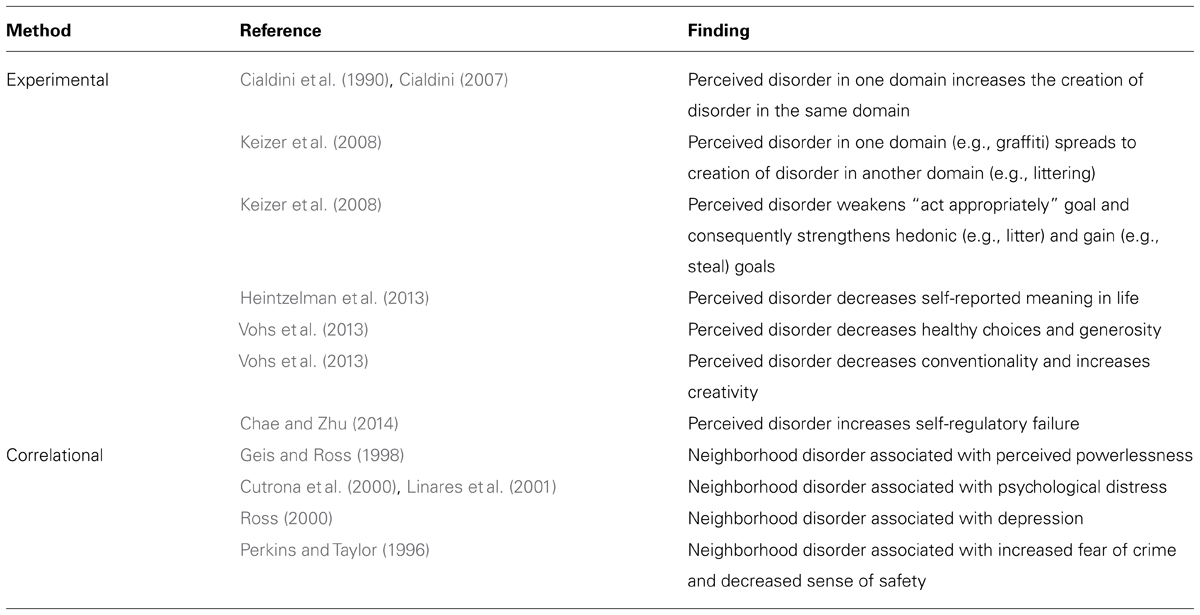
WIR can also (partly) explain a variety of correlational findings in the sociological literature. For brevity, and because this paper does not focus on the sociological consequences of perceived disorder, I will only review select research intended to demonstrate the breadth of findings WIR may at least partly account for (for a summary, see Table 1)1. First, take a cross-sectional study by Geis and Ross (1998). Analyzing data of a representative sample of 2,482 adults, aged 18–92 years, in Illinois (from the 1995 survey of Community Crime and Health), they found that neighborhood-level disorder was associated with perceived powerlessness. WIR can explain this similarly to how it explains the “meaning in life” findings by Heintzelman et al. (2013). That is, by making the world feel random, people start to lose a sense of control which manifests itself in negative outlooks on life such as feeling powerless and meaningless. Another likely manifestation is distress; Cutrona et al. (2000) found that neighborhood-level disorder was associated with distress, and this was moderated by life outlook, temperament, and quality of relationships. Specifically, disorder was associated with higher distress among people with a more negative life outlook, more negative temperament, and low-quality relationships. Importantly, this study suggests that although perceiving disorder may result in negative affect via a reduction in a sense of personal control, it is not inevitable. This is consistent with recent psychological research showing that people sometimes buffer against the threat of losing control through compensatory control mechanisms (Whitson and Galinsky, 2008; Kay et al., 2010). It seems to be currently assumed that people generally possess and use this ability, but future research may find that there are individual differences. This would clearly have implications for the proposed model, and may necessitate including moderators. Ross (2000) analyzed other data from the 1995 survey of Community Crime and Health and found that neighborhood disorder was associated with self-reported depression. Again, these results are consistent with the idea that perceived disorder results in a sense of losing control, which has insidious psychological consequences. Lastly, Perkins and Taylor (1996) surveyed 412 people across 50 neighborhoods in Baltimore to evaluate the relationship between neighborhood disorder and fear of crime. Three methods were used to measure both physical and social dimensions of neighborhood disorder: self-reported resident perceptions, on-site observations by trained raters, and newspaper content analysis. All three measures of neighborhood disorder predicted fear of crime, corroborating the general definition of perceived disorder assumed in WIR. As fear is an affective response to threat (Watson, 2000), these findings can be explained by the sense of threat resulting from losing a sense of control: When we are threatened, we generate a primitive fight-or-flight response in which we pay particular attention to sources of threat in our environment (so we can avoid them or prepare for them), such as lurking criminals. It follows that people would start to lose a sense of security and safety, as documented in this study.
TABLE 1
http://www.frontiersin.org/files/Articles/91733/fpsyg-05-00606-HTML/image_m/fpsyg-05-00606-t001.jpg

TABLE 1. Select experimental and correlational findings on the psychological consequences of disorder.

General Discussion


In the following discussion, I consider possible alternatives to WIR and explain why they may be inadequate. I then discuss some future directions for psychological research on perceived disorder.

Alternative Explanations


Cognitive Disfluency Explanation

Perceived disorder might be cognitively processed more disfluently than perceived order. Disfluency is thought to make people think more deeply and abstractly (Alter, 2013). Therefore, perceived disorder might have effects on judgment and behavior through disfluency, though it is unlikely that disfluency would have as severely negative affective consequences as the sense of losing control proposed by WIR. That said, both accounts could explain how perceived disorder may result in more accurate judgments in low-control/high-chance situations – the difference being the mechanism through which this happens. WIR would make this prediction by stating that disorder in the environment results in priming concepts related to randomness/chance/luck, and thus, through the availability heuristic, these concepts are appropriately weighted more in judgment. The cognitive fluency explanation would make this prediction by stating that people make more accurate judgments in a disorderly environment because they think harder (utilizing more effortful “system 2” processing, Kahneman, 2011). Both mechanisms could jointly work together, however, the recent experimental research reviewed in this article is more consistent with the conditioning/priming account of WIR than a disfluency account, since it seems unlikely that cognitive disfluency would result in the sense of losing control. If anything, it would result in the opposite.

Social/Rational Agent Explanation

This general and prevalent view concerns how perceived disorder may signal information about social norms and social monitoring. It suggests that people’s judgments and behaviors in disorderly environments can be understood as rationally aimed at minimizing expected costs and maximizing expected benefits, given the available social information. Regarding social norms and signaling, environmental disorder (e.g., litter) defines the descriptive norm (“littering is okay here”) which inhibits the effectiveness of the injunctive norm (e.g., no littering policy), thus the perceived costs of littering are lowered and people litter (Cialdini et al., 1990; Cialdini, 2007). Regarding social monitoring, perceived disorder may reduce the perceived costs of crime (e.g., littering) by signaling that monitoring/policing is low and thus punishment is unlikely, thus reducing expected costs of committing crimes. While these explanations can account widely for BWE (thus their popularity), they do not provide a clear account for the recent advances in psychological research on perceived disorder, which has documented that perceived disorder results in threats to and reductions of the sense of control. That being said, I do not doubt that perceived disorder can have such social effects, which is partly why I think that there may be a “unique psychology” (i.e., a distinct constellation of psychological phenomena) caused by perceiving disorder―more on that later.

Goal-Based Explanation

This explanation makes similar predictions to the social/rational agent explanation. Basically, a reduction in the expected costs of a crime (e.g., littering) due to perceived disorder of that form in the environment results in a weakened ‘act-appropriately’ goal and consequently increases the strength of “hedonic” (e.g., littering) and “gain” (e.g., stealing) goals (see Lindenberg and Steg, 2007; Keizer et al., 2008). Thus, people who see litter in the environment also commit other crimes such as illegally using graffiti and stealing. Again, while this can explain BWE and the “spreading of disorder” (see Keizer et al., 2008), it does not seem to relate with the documented reduction in a sense of personal control.

Future Directions


A Unique Psychology?

As mentioned above, one direction for future research is to determine whether there is a distinct cluster of psychological consequences caused by perceiving disorder. Is there more to it than just priming randomness-related concepts and the associated consequences proposed by WIR? To my knowledge, there is no experimental evidence yet to confirm this. Although Keizer et al. (2008) proposed that goals are activated and deactivated in response to perceiving disorder, they did not measure this, and rather it is implied from the behavioral evidence which may be completely accounted for by reduced self-control. However, given the related research on social norms and signaling, I do not doubt that there is indeed more to the story. Further research can determine this conclusively.

Individual Differences?

Cutrona et al. (2000) provides correlational evidence that effects of perceiving disorder may be moderated by individual differences such as negativity and poor relationships. Moving forward, we should experimentally test whether personality measures of negative temperament (e.g., adult temperament questionnaire, Rothbart et al., 2000) and relationship quality (e.g., the positive relations with others scale, Ryff, 1989) have moderating effects and why. One possibility is that some people may not use compensatory control mechanisms (effectively). Further, Vohs et al. (2013) assumes that individual differences in reactions to perceiving disorder may translate into reactions to situational-level disorder. In light of this proposition, it may make sense to test whether there are interactions between classic personality measures regarding reactions to perceived disorder – such as preference for consistency (Cialdini et al., 1995), need for structure (Neuberg and Newsom, 1993), need for closure (Webster and Kruglanski, 1994), and ambiguity tolerance (Norton, 1975) – and perceiving disorder in one’s surroundings.

Dependent Variables

To advance an interdisciplinary connection between the psychology of perceived disorder and the sociology of BWT, it will be important to develop laboratory measures analogous to those interpreted in the sociology of BWT. What would a laboratory analog be for “throwing a rock through the window of an abandoned building?” One may look to the aggression literature for inspiration. For example, research in this domain has employed creative behavioral measures such as serving hot sauce to a confederate (Bushman et al., 2005), blasting a confederate with aversive noise (Bushman et al., 2005), and delivering ostensibly painful shocks (Zillmann, 1971) to assess aggressive tendencies, which may have some parallels with criminal behaviors such as vandalism and theft.

Concluding Remarks

Research on the psychology of perceived disorder is a new and exciting development. In this article, I propose a parsimonious cognitive model possibly explaining a variety of effects and relationships concerning perceived disorder documented across the psychological and sociological literatures. To recap, WIR proposes that perceiving disorder results in a threatening sense of losing personal control (via priming randomness-related concepts), which can account for a variety of affective, judgmental, and behavioral findings in the literatures. Going forward, it is important to further corroborate each link in this model and delineate boundary conditions. It is also important to determine what aspects of this model have to do with BWT and what aspects do not. A broader and more challenging future direction is determining whether there are parallel psychological processes triggered by perceived disorder that collectively define a unique constellation of psychological phenomena.

Conflict of Interest Statement
The author declares that the research was conducted in the absence of any commercial or financial relationships that could be construed as a potential conflict of interest.

Acknowledgments

The author thanks the anonymous reviewers, Reid Hastie, Ayelet Fishbach, and Spike W. S. Lee for their useful feedback.

Footnotes


1. ^Across the selected studies, they control for various community- and individual-level variables such as urban area, neighborhood disadvantage, race, education, and income that may correlate with the dependent variables, yet perceived disorder remained a significant covariate.

Tuesday, June 11, 2013

Shunyamurti - The Transcendental Party at the End of Time Is Now Officially Under Way

From Reality Sandwich, this is a partly interesting article and a partly misguided article. The analysis of the breakdown of society as it now exists is accurate. However, the notion that entheogenic consciousness is the only option to replace the current system is wishful and naive thinking.

Or maybe it's just been too many years since I last ingested an entheogen.

Emergence of the Entheopolitan

Shunyamurti


A mass transmutation is occurring on our planet, leading to the emergence of a new kind of transhuman being: the Entheopolitan. Consider this essay an outline of both the complex dissipative environment in which this rhizomatic interconnective supercharging shamanic shape shift is happening and some of the early, unintended consequences of this unpredictable event-in-process.
First, we need to examine the intersection of a number of factors and actants in the current sociopolitical level of reality that has served as the petri dish for the emergence of our new species. 

The main ones are the following:
1. The slo-mo collapse of global civilization and particularly of the capitalist empire that pulls its strings; 
2. Climate change acceleration, heightened seismic and volcanic activity and the distributive effects of drought, plagues, floods, and superstorms on global stability; 
3. The fall of the petro-citizen paradigm and its hobbling of conscious creativity and alienation from nature;
4. The loss of religious, ethical, and social paradigms that once channeled collective psychic energies into sublimating tendencies that served to contain the lower death drive; and simultaneously the almost ironic occurrence of a new wave of near-death experiences and other paranormal phenomena by neuroscientists and doctors, among other credible witnesses; 
5. The chaotic state of current science, with the lack of consensus on the meaning of quantum physics, and the return of the “hidden variables” theorists (those who refuse to give up obsolete paradigms, claiming that someday there will appear hidden variables that will prove their newtonian perspective to be correct); the credible challenge to neo-darwinism by some non-mythic form of intelligent design theory; and the discovery of new anomalies—requiring hypotheses such as dark energy and dark matter and alternatives to big bang cosmologies; plus the far more immediately disconcerting loss of consensus on the psychological, not to mention ontological foundations of human consciousness (thanks to the fall of the psychoanalytic establishment and the lack of any widely accepted alternative concepts of the unconscious and of human development and awareness—Jung, Deleuze, the Dalai Lama, and Ken Wilber notwithstanding); 
6. The massive disinformation campaigns led by government-controlled mass media, abetted by governmental and corporate corruption and not-so-secret plans for a new world order; the so-called austerity measures that are destroying the social fabric of the developed world; plus the irrational conspiratorial paranoia that inevitably surrounds such a situation; all this exacerbated by the growing awareness of the extraterrestrial presence and secret involvement in world affairs; 
7. The consequent loss of consensus in relation to discourse itself; the lack of common ground between different sub-cultures; the lack of trust among humans at all levels of organization; the hyper-politicization of psychiatry and diagnostic paradigms influenced greatly by the military-industrial phalanx led by the pharmaceutical industry; the accelerated fragmenting and destabilizing of individual ego consciousness, leading to a pandemic of psychosis; and thus to a new understanding of the unconscious mind and its relation to consciousness as well as to the long-denied reality of super-consciousness and the cosmic noosphere.
All of the above leaves us in the abyss, groundless, with nothing to hold onto in our relentless search for security and wisdom. For this reason, most people choose one of the following strategies:
• Denial—and submission to the system;
• Alcoholism or some other addiction or behavioral pathology or mental disorder, including psychosis;
• Despair, sometimes leading to suicide;
• Savage hyper-religiosity and/or extreme nationalism;
• Political activism and civil protest—which usually ends in violent repression;
• Weaponized survivalism;
• Transmutation into Entheopolitans.
The last-named alternative is the only path that leads through the oncoming singularity into the possibility of a new age of benign world structures and life-supportive existential conditions. The choosing of the Entheopolitan alternative is in itself only explicable as a karmic emergence of hyper-complexity through an individual’s traversal of hopelessness (rather than denial) and initiation into the dark knighthood of the soul, through courageous dedication of the power of consciousness to truth, love, and the unknowable potentialities that can arise through self-discipline and perseverance in the striving toward the highest possible destiny.

To break through pre-conceptions, even those of a religious dimensionality to the point of bringing about an ego death and rebirth into entheocentricity, requires infinite trust in the fundamental goodness of Being, openness to awe and wonder, and recognition of the unique importance of living as a psychonaut willing to enter into the depths of crazy wisdom without submitting to the paralyzing fear of going insane or being perceived by others as mad.

This crossing of the border between conventional sanity and the sublime madness of higher knowledge in order to bring back touchstones of the miraculous is the imperative that underlies our power to survive and thrive as beings of ontological centrality to the purpose of existence itself. The meme of survival of the fittest now reaches to the farther shore of shamanic magic and nirvanic Self-realization, if we are to leap the gap between imminent mass die-off and tantric creation of a new world aeon.

We have reached the tipping point in the psycho-spiritual development of consciousness, in which the complexity accumulated in our collective chronology is meeting the resistance of the deadlock of non-adaptive egocentricity; yet in those who can withstand the pressure, the kairos of clairvoyance is erupting as a change in our essential nature. A new type of consciousness is emerging, one foreshadowed by religion—and by such metaphors as coal into diamond, caterpillar into butterfly, snake shedding its skin, matter becoming light, and human morphing into angel.

The qualitative change that we are undergoing is accelerating most in those who have successfully traversed the ego’s event horizon, whether through the assistance of entheogenic substances and/or of entheonic practices, such as meditation or other techniques of sustained recognition of non-duality.

The transmutation is being accompanied, and furthered, by the creation of new works of art that bring the truth of the entheopolitan consciousness into the Real. Such artists as Alex Grey, Android Jones, and Pablo Amaringo open a visual portal into entheogenic reality, just as the writings of recent psychonauts like Terence McKenna and a host of others, not to mention all the great sages of superconsciousness from Ramana Maharshi back to the Buddha and Yeshua the Christed, kept open the cognitive portal to the Immanent Beyond for all of us throughout history.

What is different about this moment, and why it is indeed fair to call this the end time, is that not only are we pouring the ancient wine into new bottles, but now we are finally drinking it! We are not just keeping it in our wine cellars to be handed down to a future generation.

Once enough of us have drunk the divine nectar of entheogenic consciousness, the vibrational field that supports the current constructs of reality will be realized by one and all as demonic delusion. The intensification of full-spectrum consciousness will open us all to the gravity-less rainbow of infinite delight, boundless, weightless, timeless freedom, and pure insight from the mind of the Beingless God. The kingdom will only come when the kingly Samadhi of omnicentric unity has made royal again our raging egos, melting down desire into love supreme, through the zero point of raja yogic reinstatement of the Absolute as ruler of every soul.

This imminent moment, when the breakthrough of original memory, the vision of the future as our lost past, is our longshot bet on the long-promised eternal return, the omega point is our alpha bet, the decisive commitment to be that ultimate uncreated indestructible residue that remains after all the planet has imploded, to blossom again into a new world of unimaginable perfection.

The ego mind is now too loaded on death and fury, its nihilistic gnostics cannot imagine the luminous infinite, the intelligence that lies beyond the matrix, the ecstasy engineers who tape the edges of the tapestry of time by tapping into the archetypes of mathematics, hyper-dimensional topologies fleshed out with color, sound, and sublime living mandalas of beauty.

It was such a vision, far more than the concupiscence of conquistadors, which launched the thousand ships of longing for the goddess of the new world and brought us to the shores of our lost cause.

This was once the vision of Columbia, our statue to lost liberty, which brought Columbus and so many other pilgrims from around the world, to a district of Columbia inspired by founding fathers now foundering in a false-flag fascist fatalism and reduced now to a columbarium, and to the meme of Columbine, reiterated daily, now sandy hooked and (bo)stoned by a marathon of murders, including the assassination of hope. Long ago, we buried our heart at Wounded Knee. Now we murder our minds before the TV.

This is the message of the mainstream. Terror, TINA (There Is No Alternative), and titillation are the only reactions allowed. Those who turn away (becoming TINA turners, singing out their pain) too often take a path of violent resistance that only accelerates the trend toward totalitarian control, martial law, and concentration camps. Guantanamo was only an hors d’oeuvre to start the rollback of all movements of freedom since before the Magna Carta; the wars we have witnessed in recent years are only trifles to tempt the appetite for aggression to the mad max, total war to destroy every society once and for all time.

There is a logic to this madness. But to understand it requires a deeper madness, really a deeper sanity, that can see the full picture even with only a few of the dots connected. This is the significance of entheonic intelligence. To develop this level of mind power on a collective basis requires the creation of new kinds of communities, brainstorming rather than brainwashing communities, led by sages and seers of our true mindnature, willing and able to think outside every box, synthesizing the wisdom of the past, from all the world’s philosophic and spiritual traditions, with the most avant-garde, overlooked, marginalized and “minor” thinkers of the present day.

And of course we need the work of those who do more than think—those who dare to feel, those who risk heightened sensation and enhanced intuitive knowing, who open the gates of gnosis, who will bomb the inner censor with substances or the Shakti of Self-enquiry; those who invoke the benign interstellar presences and download their discourse; who bring about the elimination of the deepest repression barrier and accept the onslaught of akashic information overload that goes direct to heart of the Self.

But the Entheopolitan is not a naïve smiley-faced fool who smokes too much weed. One enters the new consciousness through the old hard work miracle, the discipline of self-transformation, the willingness to face the inner darkness, to struggle with the projections and distortions of one’s own ego, to recognize the il n’y a pas (there is no possibility of authentic relationship at the ego level); to pass through the field of unconscious phantasies and conventional standards of beauty and meaning to reach the core of the Supreme Real. The Entheopolitan goes through many rites of passage before attaining the goal; in fact, it is never attained, because the end is the Endless. But the passage goes through Absolute Nothingness, to numinous multiplicity to unitive noumenal fullness, and every stop in between.

The Entheopolitan is at home everywhere because the mind of God is everywhere. The within is also without. The intersubjective seeks the intergalactic. The noocosm is Indra’s net prophet from the exchange of vibrational currencies in the mana market of the many worlds. We are all implicated in the implicate order that is now explicating itself in the apocalyptic revelations ripping apart our world to reveal our unmanifest destiny. Let us accept the coup de grace with full grace.

The Entheopolitan is emerging. When the critical mass is reached, the Entheopolitans will create an authentic Entheopolis, a cosmic City of the All-One God-Self, inhabited by enlightened and magical beings of bodhisattvic beauty and joyous generosity and genius. The Entheopolitans are already morphing into egoless leaders, Entheopoliticians, and soon a sublime alternative cosmic order will be negotiated in a constituent assembly of buddhas and beatified ones, devas and dakinis, reminiscent of the Lankavatara Sutra and other Madhyamaka visions of the promised, pure land of Sukhavati, the same Satya Yuga alluded to in the most ancient Vedic texts.

The great shift, the new kalpa, the transcendental party at the end of time, is now officially under way. Please RSVP.

Namaste,
Shunyamurti


Image by Bill David Brooks, courtesy of Creative Commons license.

Thursday, January 03, 2013

Authors@Google Presents: Nassim Nicholas Taleb


Nassim Nicholas Taleb stopped by the Google offices a couple of weeks ago (December 12, 2012) to talk about his most recent book, Antifragile: Things That Gain from Disorder. Taleb is also the author of The Black Swan: The Impact of the Highly Improbable (2007) and Fooled by Randomness: The Hidden Role of Chance in Life and in the Markets (2005).

Authors@Google Presents: Nassim Nicholas Taleb


Posted on Jan 2, 2013
Authors@Google is proud to present Nassim N. Taleb, author of Fooled By Randomness and The Black Swan, talking about his new book, Antifragile.

Monday, December 17, 2012

Nassim Nicholas Taleb - UNDERSTANDING IS A POOR SUBSTITUTE FOR CONVEXITY (ANTIFRAGILITY)


From Edge, former mathematical trader and current risk manager, and author of The Black Swan: Second Edition: The Impact of the Highly Improbable: With a new section: "On Robustness and Fragility", Nassim Nicholas Taleb talks about the ideas in his newest book, Antifragile: Things That Gain from Disorder.

Here is the publisher's ad-copy for the book:
Nassim Nicholas Taleb, the bestselling author of The Black Swan and one of the foremost thinkers of our time, reveals how to thrive in an uncertain world. 
Just as human bones get stronger when subjected to stress and tension, and rumors or riots intensify when someone tries to repress them, many things in life benefit from stress, disorder, volatility, and turmoil. What Taleb has identified and calls “antifragile” is that category of things that not only gain from chaos but need it in order to survive and flourish.

In The Black Swan, Taleb showed us that highly improbable and unpredictable events underlie almost everything about our world. In Antifragile, Taleb stands uncertainty on its head, making it desirable, even necessary, and proposes that things be built in an antifragile manner. The antifragile is beyond the resilient or robust. The resilient resists shocks and stays the same; the antifragile gets better and better.

Furthermore, the antifragile is immune to prediction errors and protected from adverse events. Why is the city-state better than the nation-state, why is debt bad for you, and why is what we call “efficient” not efficient at all? Why do government responses and social policies protect the strong and hurt the weak? Why should you write your resignation letter before even starting on the job? How did the sinking of the Titanic save lives? The book spans innovation by trial and error, life decisions, politics, urban planning, war, personal finance, economic systems, and medicine. And throughout, in addition to the street wisdom of Fat Tony of Brooklyn, the voices and recipes of ancient wisdom, from Roman, Greek, Semitic, and medieval sources, are loud and clear. 
Antifragile is a blueprint for living in a Black Swan world. 
Erudite, witty, and iconoclastic, Taleb’s message is revolutionary: The antifragile, and only the antifragile, will make it.
That's high praise, but this does look like a very interesting book for those who are into systems thinking.

UNDERSTANDING IS A POOR SUBSTITUTE FOR CONVEXITY (ANTIFRAGILITY)

Nassim Nicholas Taleb [12.12.12]


The point we will be making here is that logically, neither trial and error nor "chance" and serendipity can be behind the gains in technology and empirical science attributed to them. By definition chance cannot lead to long term gains (it would no longer be chance); trial and error cannot be unconditionally effective: errors cause planes to crash, buildings to collapse, and knowledge to regress.

NASSIM NICHOLAS TALEB, essayist and former mathematical trader, is Distinguished Professor of Risk Engineering at NYU’s Polytechnic Institute. He is the author the international bestseller The Black Swan and the recently published Antifragile: Things That Gain from Disorder (Amazon). (US: Random House; UK: Penguin Press)

Nassim Nicholas Taleb's Edge Bio

UNDERSTANDING IS A POOR SUBSTITUTE FOR CONVEXITY (ANTIFRAGILITY)


Something central, very central, is missing in historical accounts of scientific and technological discovery. The discourse and controversies focus on the role of luck as opposed to teleological programs (from telos, "aim"), that is, ones that rely on pre-set direction from formal science. This is a faux-debate: luck cannot lead to formal research policies; one cannot systematize, formalize, and program randomness. The driver is neither luck nor direction, but must be in the asymmetry (or convexity) of payoffs, a simple mathematical property that has lied hidden from the discourse, and the understanding of which can lead to precise research principles and protocols.

MISSING THE ASYMMETRY

The luck versus knowledge story is as follows. Ironically, we have vastly more evidence for results linked to luck than to those coming from the teleological, outside physics—even after discounting for the sensationalism. In some opaque and nonlinear fields, like medicine or engineering, the teleological exceptions are in the minority, such as a small number of designer drugs. This makes us live in the contradiction that we largely got here to where we are thanks to undirected chance, but we build research programs going forward based on direction and narratives. And, what is worse, we are fully conscious of the inconsistency.

The point we will be making here is that logically, neither trial and error nor "chance" and serendipity can be behind the gains in technology and empirical science attributed to them. By definition chance cannot lead to long term gains (it would no longer be chance); trial and error cannot be unconditionally effective: errors cause planes to crash, buildings to collapse, and knowledge to regress.

The beneficial properties have to reside in the type of exposure, that is, the payoff function and not in the "luck" part: there needs to be a significant asymmetry between the gains (as they need to be large) and the errors (small or harmless), and it is from such asymmetry that luck and trial and error can produce results. The general mathematical property of this asymmetry is convexity (which is explained in Figure 1); functions with larger gains than losses are nonlinear-convex and resemble financial options. Critically, convex payoffs benefit from uncertainty and disorder. The nonlinear properties of the payoff function, that is, convexity, allow us to formulate rational and rigorous research policies, and ones that allow the harvesting of randomness.
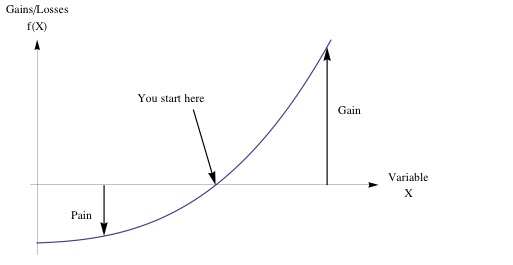
Figure 1- More Gain than Pain from a Random Event. The performance curves outward, hence looks "convex". Anywhere where such asymmetry prevails, we can call it convex, otherwise we are in a concave position. The implication is that you are harmed much less by an error (or a variation) than you can benefit from it, you would welcome uncertainty in the long run.

OPAQUE SYSTEMS AND OPTIONALITY

Further, it is in complex systems, ones in which we have little visibility of the chains of cause-consequences, that tinkering, bricolage, or similar variations of trial and error have been shown to vastly outperform the teleological—it is nature's modus operandi. But tinkering needs to be convex; it is imperative. Take the most opaque of all, cooking, which relies entirely on the heuristics of trial and error, as it has not been possible for us to design a dish directly from chemical equations or reverse-engineer a taste from nutritional labels. We take hummus, add an ingredient, say a spice, taste to see if there is an improvement from the complex interaction, and retain if we like the addition or discard the rest. Critically we have the option, not the obligation to keep the result, which allows us to retain the upper bound and be unaffected by adverse outcomes.

This "optionality" is what is behind the convexity of research outcomes. An option allows its user to get more upside than downside as he can select among the results what fits him and forget about the rest (he has the option, not the obligation). Hence our understanding of optionality can be extended to research programs — this discussion is motivated by the fact that the author spent most of his adult life as an option trader. If we translate François Jacob's idea into these terms, evolution is a convex function of stressors and errors —genetic mutations come at no cost and are retained only if they are an improvement (i). So are the ancestral heuristics and rules of thumbs embedded in society; formed like recipes by continuously taking the upper-bound of "what works". But unlike nature where choices are made in an automatic way via survival, human optionality requires the exercise of rational choice to ratchet up to something better than what precedes it —and, alas, humans have mental biases and cultural hindrances that nature doesn't have. Optionality frees us from the straightjacket of direction, predictions, plans, and narratives. (To use a metaphor from information theory, if you are going to a vacation resort offering you more options, you can predict your activities by asking a smaller number of questions ahead of time.)

While getting a better recipe for hummus will not change the world, some results offer abnormally large benefits from discovery; consider penicillin or chemotherapy or potential clean technologies and similar high impact events ("Black Swans"). The discovery of the first antimicrobial drugs came at the heel of hundreds of systematic (convex) trials in the 1920s by such people as Domagk whose research program consisted in trying out dyes without much understanding of the biological process behind the results. And unlike an explicit financial option for which the buyer pays a fee to a seller, hence tend to trade in a way to prevent undue profits, benefits from research are not zero-sum.

THINGS LOVE UNCERTAINTY

What allows us to map a research funding and investment methodology is a collection of mathematical properties that we have known heuristically since at least the 1700s and explicitly since around 1900 (with the results of Johan Jensen and Louis Bachelier). These properties identify the inevitability of gains from convexity and the counterintuitive benefit of uncertainty (ii, iii). Let us call the "convexity bias" the difference between the results of trial and error in which gains and harm are equal (linear), and one in which gains and harm are asymmetric ( to repeat, a convex payoff function). The central and useful properties are that a) The more convex the payoff function, expressed in difference between potential benefits and harm, the larger the bias. b) The more volatile the environment, the larger the bias. This last property is missed as humans have a propensity to hate uncertainty.

Antifragile is the name this author gave (for lack of a better one) to the broad class of phenomena endowed with such a convexity bias, as they gain from the "disorder cluster", namely volatility, uncertainty, disturbances, randomness, and stressors. The antifragile is the exact opposite of the fragile which can be defined as hating disorder. A coffee cup is fragile because it wants tranquility and a low volatility environment, the antifragile wants the opposite: high volatility increases its welfare. This latter attribute, gaining from uncertainty, favors optionality over the teleological in an opaque system, as it can be shown that the teleological is hurt under increased uncertainty. The point can be made clear with the following. When you inject uncertainty and errors into airplane ride (the fragile or concave case) the result is worsened, as errors invariably lead to plane delays and increased costs —not counting a potential plane crash. The same with bank portfolios and fragile constructs. But it you inject uncertainty into a convex exposure such as some types of research, the result improves, since uncertainty increases the upside but not the downside. This differential maps the way. The convexity bias, unlike serendipity et al., can be defined, formalized, identified, even on the occasion measured scientifically, and can lead to a formal policy of decision making under uncertainty, and classify strategies based on their ex ante predicted efficiency and projected success, as we will do next with the following 7 rules.
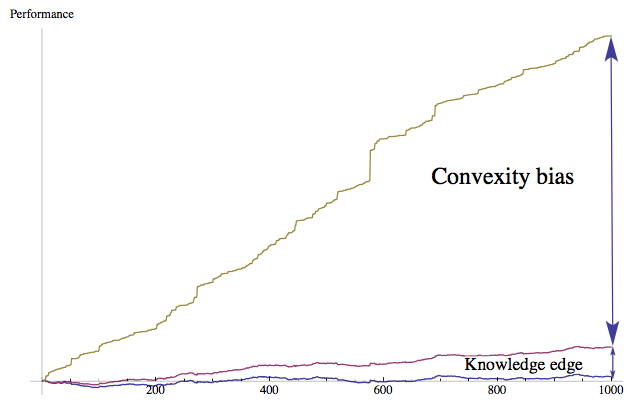
Figure 2 The Antifragility Edge (Convexity Bias). A random simulation shows the difference between a) the process with convex trial and error (antifragile) b) a process of pure knowledge devoid of convex tinkering (knowledge based), c) the process of nonconvex trial and error; where errors are equal in harm and gains (pure chance). As we can see there are domains in which rational and convex tinkering dwarfs the effect of pure knowledge (iv).

SEVEN RULES OF ANTIFRAGILITY (CONVEXITY) IN RESEARCH

Next I outline the rules. In parentheses are fancier words that link the idea to option theory.

1) Convexity is easier to attain than knowledge (in the technical jargon, the "long-gamma" property): As we saw in Figure 2, under some level of uncertainty, we benefit more from improving the payoff function than from knowledge about what exactly we are looking for. Convexity can be increased by lowering costs per unit of trial (to improve the downside).

2) A "1/N" strategy is almost always best with convex strategies (the dispersion property):following point (1) and reducing the costs per attempt, compensate by multiplying the number of trials and allocating 1/N of the potential investment across N investments, and make N as large as possible. This allows us to minimize the probability of missing rather than maximize profits should one have a win, as the latter teleological strategy lowers the probability of a win. A large exposure to a single trial has lower expected return than a portfolio of small trials.

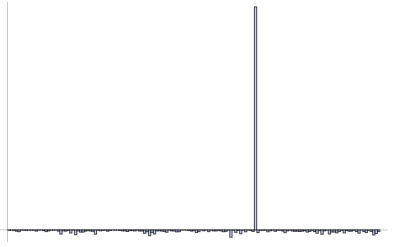
Further, research payoffs have "fat tails", with results in the "tails" of the distribution dominating the properties; the bulk of the gains come from the rare event, "Black Swan": 1 in 1000 trials can lead to 50% of the total contributions—similar to size of companies (50% of capitalization often comes from 1 in 1000 companies), bestsellers (think Harry Potter), or wealth. And critically we don't know the winner ahead of time.

Figure 3-Fat Tails: Small Probability, High Impact Payoffs: The horizontal line can be the payoff over time, or cross-sectional over many simultaneous trials. 
3) Serial optionality (the cliquet property). A rigid business plan gets one locked into a preset invariant policy, like a highway without exits —hence devoid of optionality. One needs the ability to change opportunistically and "reset" the option for a new option, by ratcheting up, and getting locked up in a higher state. To translate into practical terms, plans need to 1) stay flexible with frequent ways out, and, counter to intuition 2) be very short term, in order to properly capture the long term. Mathematically, five sequential one-year options are vastly more valuable than a single five-year option.

This explains why matters such as strategic planning have never born fruit in empirical reality: planning has a side effect to restrict optionality. It also explains why top-down centralized decisions tend to fail.

4) Nonnarrative Research (the optionality property). Technologists in California "harvesting Black Swans" tend to invest with agents rather than plans and narratives that look good on paper, and agents who know how to use the option by opportunistically switching and ratcheting up —typically people try six or seven technological ventures before getting to destination. Note the failure in "strategic planning" to compete with convexity.

5) Theory is born from (convex) practice more often than the reverse (the nonteleological property). Textbooks tend to show technology flowing from science, when it is more often the opposite case, dubbed the "lecturing birds on how to fly" effect (v, vi). In such developments as the industrial revolution (and more generally outside linear domains such as physics), there is very little historical evidence for the contribution of fundamental research compared to that of tinkering by hobbyists. (vii) Figure 2 shows, more technically how in a random process characterized by "skills" and "luck", and some opacity, antifragility —the convexity bias— can be shown to severely outperform "skills". And convexity is missed in histories of technologies, replaced with ex post narratives.

6) Premium for simplicity (the less-is-more property). It took at least five millennia between the invention of the wheel and the innovation of putting wheels under suitcases. It is sometimes the simplest technologies that are ignored. In practice there is no premium for complexification; in academia there is. Looking for rationalizations, narratives and theories invites for complexity. In an opaque operation to figure out ex ante what knowledge is required to navigate is impossible.

7) Better cataloguing of negative results (the via negativa property). Optionality works by negative information, reducing the space of what we do by knowledge of what does not work. For that we need to pay for negative results.

Some of the critics of these ideas —over the past two decades— have been countering that this proposal resembles buying "lottery tickets". Lottery tickets are patently overpriced, reflecting the "long shot bias" by which agents, according to economists, overpay for long odds. This comparison, it turns out is fallacious, as the effect of the long shot bias is limited to artificial setups: lotteries are sterilized randomness, constructed and sold by humans, and have a known upper bound. This author calls such a problem the "ludic fallacy". Research has explosive payoffs, with unknown upper bound —a "free option", literally. And we have evidence (from the performance of banks) that in the real world, betting against long shots does not pay, which makes research a form of reverse-banking (viii).

NOTES

i Jacob, F. , 1977, Evolution and tinkering. Science, 196(4295):1161–1166.
ii Bachelier, L. ,1900, Theorie de la spéculation, Gauthiers Villard.
iii Jensen, J.L.W.V., 1906, “Sur les fonctions convexes et les inégalités entre les valeurs moyennes.” Acta Mathematica 30.
iv Take F[x] = Max[x,0], where x is the outcome of trial and error and F is the payoff. ∫ F(x) p(x) dx ≥ F(∫ x p(x)) , by Jensen's inequality. The difference between the two sides is the convexity bias, which increases with uncertainty.
v Taleb, N., and Douady, R., 2013, "Mathematical Definition and Mapping of (Anti)Fragility",f.. Quantitative Finance
vi Mokyr, Joel, 2002, The Gifts of Athena: Historical Origins of the Knowledge Economy. Princeton, N.J.: Princeton University Press.
vii Kealey, T., 1996, The Economic Laws of Scientific Research. London: Macmillan.
viii Briys, E., Nock,R. ,& Magdalou, B., 2012, Convexity and Conflation Biases as Bregman Divergences: A note on Taleb's Antifragile.