Showing posts with label brain stimulation. Show all posts

Sunday, July 06, 2014

Is the Claustrum the On-Off Switch for Consciousness?

The hidden key
Seems that a group of scientists led by Mohamad Koubeissi, at the George Washington University in Washington DC, have found that stimulating a deep brain structure called the claustrum can turn consciousness on and off. Here is the abstract to that article:

Electrical stimulation of a small brain area reversibly disrupts consciousness

Mohamad Z. Koubeissi, Fabrice Bartolomei, Abdelrahman Beltagy, Fabienne Picard

DOI: 10.1016/j.yebeh.2014.05.027

Abstract

The neural mechanisms that underlie consciousness are not fully understood. We describe a region in the human brain where electrical stimulation reproducibly disrupted consciousness. A 54-year-old woman with intractable epilepsy underwent depth electrode implantation and electrical stimulation mapping. The electrode whose stimulation disrupted consciousness was between the left claustrum and anterior-dorsal insula. Stimulation of electrodes within 5 mm did not affect consciousness. We studied the interdependencies among depth recording signals as a function of time by nonlinear regression analysis (h2 coefficient) during stimulations that altered consciousness and stimulations of the same electrode at lower current intensities that were asymptomatic. Stimulation of the claustral electrode reproducibly resulted in a complete arrest of volitional behavior, unresponsiveness, and amnesia without negative motor symptoms or mere aphasia. The disruption of consciousness did not outlast the stimulation and occurred without any epileptiform discharges. We found a significant increase in correlation for interactions affecting medial parietal and posterior frontal channels during stimulations that disrupted consciousness compared with those that did not. Our findings suggest that the left claustrum/anterior insula is an important part of a network that subserves consciousness and that disruption of consciousness is related to increased EEG signal synchrony within frontal–parietal networks.
The article is paywalled, of course (Science Direct are thieves), so it will cost you $39.95 to read it.

Getting back to the claustrum, according to the late Francis Crick and Christof Koch (2005):
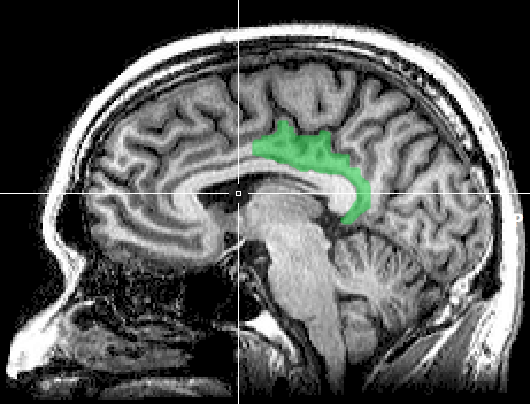
The claustrum is a thin, irregular, sheet-like neuronal structure hidden beneath the inner surface of the neocortex in the general region of the insula. Its function is enigmatic. Its anatomy is quite remarkable in that it receives input from almost all regions of cortex and projects back to almost all regions of cortex.
Crick and Koch believe that the claustrum "appears to be in an ideal position to integrate the most diverse kinds of information that underlie conscious perception, cognition and action."

Some of the sensory integration aspects of the claustrum have been called into question by more recent studies, so the claustrum remains an enigma.

However, the buzz generated by this recent study has overlooked the fact that this was not a normal brain - the patient has epilepsy and part of her hippocampus has been removed to control the seizures.

On the other hand, it does offer a new piece of information in that she was awake and not asleep or in a coma, under anesthesia, or in a vegetative state.

Rather than discussing this discovery as having found an on/off switch for consciousness, which feels to me very reductionist, it might be useful to look at how this tiny region of the brain plays a role in integrating the lower (reptilian) brain with the higher (mammalian) brain.

Further, it might be useful to then look at the posteromedial cortices (PMCs), one of what Antonio Damasio describes as convergence-divergence regions or CDRegions (see Self Comes to Mind: Constructing the Conscious Brain, 2010).
CDRegions are strategically located within high-order association cortices but not within the image-making sensory cortices. They surface in sites such as the temporoparietal junction, the lateral and medial temporal cortices, the lateral parietal cortices, the lateral and medial frontal cortices, and the posteromedial cortices. These CDRegions hold records of previously acquired knowledge regarding the most diverse themes. The activation of any of these regions promotes the reconstruction, by means of divergence and retroactivation into image-making areas, of varied aspects of past knowledge, including those that pertain to one’s biography, as well as those that describe genetic, nonpersonal knowledge.
And:
One of the main CDRegions, the posteromedial cortices (PMCs), appears to have a higher functional hierarchy relative to the others and exhibits several anatomical and functional traits that distinguish it from the rest. A decade ago I suggested that the PMC region was linked to the self process, albeit not in the role I now envision. Evidence obtained in recent years suggests that the PMC region is indeed involved in consciousness, quite specifically in self-related processes, and has provided previously unavailable information regarding the neuroanatomy and physiology of the region.
And:
The final candidate is a dark horse, a mysterious structure known as the claustrum, which is closely related to the CDRegions. The claustrum, which is located between the insular cortex and the basal ganglia of each hemisphere, has cortical connections that might potentially play a coordinating role. ... The evidence from experimental neuroanatomy does reveal connections to varied sensory regions, thus making the coordinating role quite plausible. Intriguingly, it has a robust projection to the important CDRegion that I mentioned earlier, the PMC.
Clearly, according to Damasio, there is some connection between the claustrum and the PMC, and this would make a lot more sense in that most brain functions are carried out in parallel processes, not in linear processes.

It may be that stimulating the claustrum with an electrical charge disrupts a primary switching point in the brain that helps organize conscious experience, and that rather than being an off-switch for consciousness, the brain "goes offline" so as not to engender further damage. It might be little more than a system protection mechanism (like the "blue screen" in Microsoft Windows - the computer isn't dead, but it shut itself off to protect the system).

Consciousness on-off switch discovered deep in brain

02 July 2014 by Helen Thomson
Magazine issue 2976.

ONE moment you're conscious, the next you're not. For the first time, researchers have switched off consciousness by electrically stimulating a single brain area.

Scientists have been probing individual regions of the brain for over a century, exploring their function by zapping them with electricity and temporarily putting them out of action. Despite this, they have never been able to turn off consciousness – until now.

Although only tested in one person, the discovery suggests that a single area – the claustrum – might be integral to combining disparate brain activity into a seamless package of thoughts, sensations and emotions. It takes us a step closer to answering a problem that has confounded scientists and philosophers for millennia – namely how our conscious awareness arises.

Many theories abound but most agree that consciousness has to involve the integration of activity from several brain networks, allowing us to perceive our surroundings as one single unifying experience rather than isolated sensory perceptions.

One proponent of this idea was Francis Crick, a pioneering neuroscientist who earlier in his career had identified the structure of DNA. Just days before he died in July 2004, Crick was working on a paper that suggested our consciousness needs something akin to an orchestra conductor to bind all of our different external and internal perceptions together.

With his colleague Christof Koch, at the Allen Institute for Brain Science in Seattle, he hypothesised that this conductor would need to rapidly integrate information across distinct regions of the brain and bind together information arriving at different times. For example, information about the smell and colour of a rose, its name, and a memory of its relevance, can be bound into one conscious experience of being handed a rose on Valentine's day.

The pair suggested that the claustrum – a thin, sheet-like structure that lies hidden deep inside the brain – is perfectly suited to this job (Philosophical Transactions of The Royal Society B, doi.org/djjw5m).

It now looks as if Crick and Koch were on to something. In a study published last week, Mohamad Koubeissi at the George Washington University in Washington DC and his colleagues describe how they managed to switch a woman's consciousness off and on by stimulating her claustrum. The woman has epilepsy so the team were using deep brain electrodes to record signals from different brain regions to work out where her seizures originate. One electrode was positioned next to the claustrum, an area that had never been stimulated before.

When the team zapped the area with high frequency electrical impulses, the woman lost consciousness. She stopped reading and stared blankly into space, she didn't respond to auditory or visual commands and her breathing slowed. As soon as the stimulation stopped, she immediately regained consciousness with no memory of the event. The same thing happened every time the area was stimulated during two days of experiments (Epilepsy and Behavior, doi.org/tgn).

To confirm that they were affecting the woman's consciousness rather than just her ability to speak or move, the team asked her to repeat the word "house" or snap her fingers before the stimulation began. If the stimulation was disrupting a brain region responsible for movement or language she would have stopped moving or talking almost immediately. Instead, she gradually spoke more quietly or moved less and less until she drifted into unconsciousness. Since there was no sign of epileptic brain activity during or after the stimulation, the team is sure that it wasn't a side effect of a seizure.

Koubeissi thinks that the results do indeed suggest that the claustrum plays a vital role in triggering conscious experience. "I would liken it to a car," he says. "A car on the road has many parts that facilitate its movement – the gas, the transmission, the engine – but there's only one spot where you turn the key and it all switches on and works together. So while consciousness is a complicated process created via many structures and networks – we may have found the key."

Awake but unconscious

Counter-intuitively, Koubeissi's team found that the woman's loss of consciousness was associated with increased synchrony of electrical activity, or brainwaves, in the frontal and parietal regions of the brain that participate in conscious awareness. Although different areas of the brain are thought to synchronise activity to bind different aspects of an experience together, too much synchronisation seems to be bad. The brain can't distinguish one aspect from another, stopping a cohesive experience emerging.

Since similar brainwaves occur during an epileptic seizure, Koubeissi's team now plans to investigate whether lower frequency stimulation of the claustrum could jolt them back to normal. It may even be worth trying for people in a minimally conscious state, he says. "Perhaps we could try to stimulate this region in an attempt to push them out of this state."

Anil Seth, who studies consciousness at the University of Sussex, UK, warns that we have to be cautious when interpreting behaviour from a single case study. The woman was missing part of her hippocampus, which was removed to treat her epilepsy, so she doesn't represent a "normal" brain, he says.

However, he points out that the interesting thing about this study is that the person was still awake. "Normally when we look at conscious states we are looking at awake versus sleep, or coma versus vegetative state, or anaesthesia." Most of these involve changes of wakefulness as well as consciousness but not this time, says Seth. "So even though it's a single case study, it's potentially quite informative about what's happening when you selectively modulate consciousness alone."

"Francis would have been pleased as punch," says Koch, who was told by Crick's wife that on his deathbed, Crick was hallucinating an argument with Koch about the claustrum and its connection to consciousness.

"Ultimately, if we know how consciousness is created and which parts of the brain are involved then we can understand who has it and who doesn't," says Koch. "Do robots have it? Do fetuses? Does a cat or dog or worm? This study is incredibly intriguing but it is one brick in a large edifice of consciousness that we're trying to build."

This article appeared in print under the headline "Consciousness – we hit its sweet spot"

Sunday, May 18, 2014

Christian Jarrett Questions the Recent Brain Stim-Lucid Dream Article

Last Tuesday (May 13), I posted on the new research in Nature Neuroscience that suggests low-current (gamma range) brain stimulation can induce lucid dreams. Perhaps all of us who jumped on that story were a little hasty.

Shortly after the original research came out, cognitive neuroscientist Christian Jarrett, writing at his WIRED blog, Brain Watch, posted a serious critique of the research and the conclusions reached.

Too bad - it seemed promising, and maybe it still is when the technology is more refined.

Psychologists Give People Control of Their Dreams Using Brain Stimulation. Really?

05.12.14 | By Christian Jarrett


Image: Old Visuals Everett Collection/Getty

My dreams are often like a bad TV night – full of repeats that I’ve slept through many times before. Other people are luckier. Their dreams are more like a movie experience, but one where they not only get to choose the film, they can also take directorial control and influence the course of events. This is known as “lucid dreaming” and considered a half-way house between sleep and wakefulness.

In a study out this week, a team of psychologists led by Ursula Voss at the J.W. Goethe University in Frankfurt, claim to have given non lucid-dreamers the power of lucid dreaming by applying weak electrical current to the surface of their scalps and into their brains.

The rationale behind the study is simple. Past research has associated lucid dreaming with electrical brain activity in the low gamma range – around 40Hz. Voss and colleagues therefore used transcranial alternating current stimulation (tACS) to promote gamma activity in frontal and temporal regions of their participants’ brains, in the hope that this would provoke lucid dreaming (tACS is similar tDCS, which I’ve written about on this blog before).

I have to admit this reasoning tickled my BS-detector a little. Neurobunk research conducted in the 1960s made the mistake of assuming that because experienced meditators exhibit brain activity in the alpha range (around 10Hz), then teaching people to express alpha brainwaves would give them a shortcut to the peace and enlightenment associated with years of meditative practice. It was an elementary case of confusing correlation for causality and results were disappointing.

Despite my initial skepticism, it turns out that, aside from a small sample, this new dream research is well conducted. Voss and her team tested 27 healthy volunteers (15 women, 12 men, none of whom usually have lucid dreams) on four successive nights. Each night, the participants were zapped with electricity in a different frequency range or – and it’s important they included this condition – with no electricity at all (known as a “sham” treatment). The stimulation was delivered after between two and three minutes of uninterrupted REM sleep. Shortly afterwards the participants were woken and they answered questions about the dream they’d just had.

The main result is that stimulation specifically delivered in the low gamma range, at 40Hz, and to a lesser extent at 25Hz, was associated with a greater experience of lucid dreaming, as compared to stimulation at other higher and lower frequencies or to sham treatment. “Our experiment is, to the best of our knowledge, the first to demonstrate altered conscious awareness as a direct consequence of induced gamma-band oscillations during sleep,” the researchers concluded. Excitable headlines have followed, such as “Brain Zap Could Help You Control Your Dreams” and “Having Nightmares? Control Your Dreams With Electric Currents“.

Despite the robust methodology, I think these headlines are getting carried away. Here’s why. Lucid dreaming was defined by higher scores in participants’ feelings of insight (knowing that they were dreaming); dissociation (taking a third person perspective); and control (being able to shape events). I looked up the paper where the researchers first described their scale for measuring these factors. If I understand correctly, the participants rated their experience of these three factors on a scale of 0 (strongly disagree that I had such an experience) to 5 (strongly agree). Now if we look to see the scores they gave for how much dream insight, dissociation and control they had, we find that the averages for the gamma stimulation condition are around 0.6, 1.3, and 0.5 respectively.

Yes, these scores are significantly higher compared with stimulation at other frequencies and with sham treatment, but they are nonetheless incredibly low. A real life creation of the dream control depicted in the movie Inception, this is not! I suppose this study is a proof of principle, so let’s wait and see what comes from future research.

But actually one more thing – these kind of studies that examine the impact of brain stimulation seem so crude. Do the researchers really know what neural effect the stimulation is having and why? I don’t think they do – the explanation in this paper is typically sketchy. “We assume that lower gamma activity is mediated by activation of fast-spiking interneurons that are known to generate gamma oscillations in cortical networks … These networks have been proposed to gate sensory processing, which might also enable lucid dreaming in a temporarily specific manner.” Got that? No, me neither.

Tuesday, May 13, 2014

Induction of Self-Awareness in Dreams Through Frontal Low-Current Stimulation of Gamma Activity

New research released on Sunday suggests that lucid dreaming may be triggered by a non-invasive neural stimulation method called transcranial alternating current stimulation (tACS), which targets low-intensity electricity through the frontal and temporal lobes of the dreamer.

I can see this rapidly becoming a DIY product for the spiritual and self-enhancement markets. But there is also potential (especially in PTSD) to give those suffering nightmares a way to "reframe" the dreamscape.

Pretty cool.

As usual, the full article is safely ensconced behind a paywall to keep the riffraff from having access, so here is the abstract, followed by a summary from IEEE Spectrum.

Full Citation:
Voss, U, Holzmann, R, Hobson, A, Paulus, W, Koppehele-Gossel, J, Klimke, A & Nitsche, MA. (2014, May 11). Induction of self awareness in dreams through frontal low current stimulation of gamma activity. Nature Neuroscience; doi:10.1038/nn.3719

Induction of self awareness in dreams through frontal low current stimulation of gamma activity

Ursula Voss, Romain Holzmann, Allan Hobson, Walter Paulus, Judith Koppehele-Gossel, Ansgar Klimke & Michael A Nitsche

Abstract

Recent findings link fronto-temporal gamma electroencephalographic (EEG) activity to conscious awareness in dreams, but a causal relationship has not yet been established. We found that current stimulation in the lower gamma band during REM sleep influences ongoing brain activity and induces self-reflective awareness in dreams. Other stimulation frequencies were not effective, suggesting that higher order consciousness is indeed related to synchronous oscillations around 25 and 40 Hz.
Here is the summary of the research from IEEE Spectrum:

Zapping Sleepers' Brains Causes Lucid Dreaming

By Eliza Strickland
Posted 12 May 2014

Illustration: Randi Klett

Lucid dreams offer us the heady chance to shape our own fates in a fantasy world. In these dreams, sleepers realize they're dreaming and can sometimes take over their dreams' plots, allowing them to turn the tables on their enemies, soar into the sky, or embrace that special someone. Now, researchers in Germany have demonstrated that they can trigger lucid dreams by zapping sleeping people's brains with electricity.

The researchers used a non-invasive neural stimulation method called transcranial alternating current stimulation (tACS) to send low-intensity electricity through the frontal and temporal lobes of 27 sleepers' brains. These portions of the cerebral cortex are associated with higher order cognitive functions, the researchers write, such as self-reflective awareness, abstract thinking, volition, and metacognition (thinking about thinking). Prior studies have shown that these brain regions are dormant during typical REM sleep, when dreams occur, yet are active during lucid dreams.

The tACS stimulation doesn't cause any noise or sensation, so it could be applied to the sleepers without waking them up. The researchers waited until their monitors showed that the subjects were in REM sleep, turned on the current, then woke them up and asked them about the dreams they were having. The test subjects, none of who had experience with lucid dreaming, rated their dreams on factors like insight into the fact that they were dreaming, control of the dream plot, and dissociation, as if they were watching the dream from a third-person perspective.

Not every jolt of electricity produced a lucid dream report. Crucially, the researchers discovered that the effect depended on the frequency of the stimulation. Using the frequency of 40 Hz, researchers found that 77 percent of the reported dreams were rated lucid. At the frequency of 25 Hz, 58 percent of dreams met the criteria, while other frequencies (2, 6, 12, 70, and 100 Hz) produced a much smaller effect or no effect at all. This makes sense, the researchers say, because prior studies that have recorded the activity of the fronto-temporal lobes during lucid dreams have detected neural oscillations (patterns of neural activity) at the gamma frequency band, centered around 40 Hz. It seems stimulation at that frequency mimicked the brain mechanism that can naturally cause lucid dreams.

But enough with the science, let's hear about those test subjects' dreams. Here are two reports from the paper:
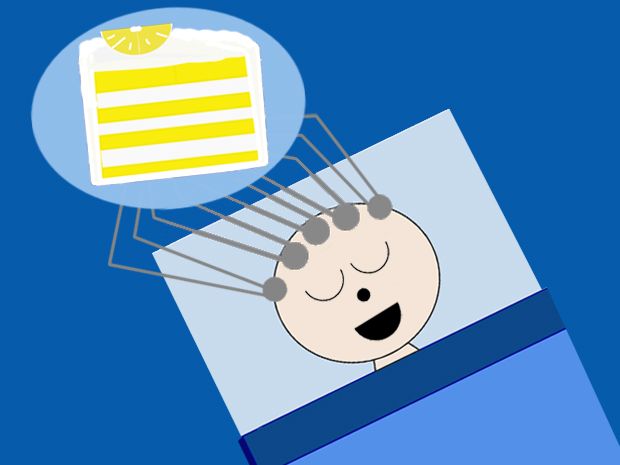
Example of lucid dream report following 40-Hz stimulation: I was dreaming about lemon cake. It looked translucent, but then again, it didn’t. It was a bit like in an animated movie, like The Simpsons. And then I started falling and the scenery changed and I was talking to Matthias Schweighöfer (a German actor) and two foreign exchange students. And I was wondering about the actor and they told me “yes, you met him before,” so then I realized “oops, you are dreaming.” I mean, while I was dreaming! So strange!

Example of a non-lucid dream report (6 Hz): I am driving in my car, for a long time. Then I arrive at this place where I haven’t been before. And there are a lot of people there. I think maybe I know some of them but they are all in a bad mood so I go to a separate room, all by myself.
Neural stimulation is all the rage these days. A DIY community has sprung up around transcranial direct current stimulation (tDCS), a method similar to that used by the German researchers. Brain hackers are experimenting with using tDCS to tweak their cognition in various ways, such as improving memory and speeding up learning. In labs around the world, researchers are also investigating whether tDCS can be used to treat a wide variety of disorders, including depression, ADHD, and chronic pain. The age of brain zapping is upon us!

Saturday, March 08, 2014

Disconnecting Consciousness from the External Environment with Electrical Stimulation


From the Neuroskeptic blog at Discover Magazine, this is a cool article describing a new discovery a small region in the brain (in the white matter beneath the left posterior cingulate cortex [PCC]) that when stimulated creates a state of dissociation that is experienced as a dream for the person whose brain has been stimulated. Very interesting stuff.

Disconnecting Consciousness from the External Environment

By Neuroskeptic | February 23, 2014

An very interesting report from a group of French neurosurgeons sheds light on the neural basis of consciousness and dreams.

Guillaume Herbet and colleagues describe the case of a 45 year old man in whom electrical stimulation of a particular spot in the brain “induced a dramatic alteration of conscious experience in a highly reproducible manner.

The man had brain cancer (a diffuse low-grade glioma of the posterior left hemisphere). During the surgery to remove the tumour, Herbet et al stimulated various points on his brain to map out the areas that were functionally most important. This is a standard procedure to allow surgeons to know which bits they ought to leave intact, where possible.

Most of the stimulations didn’t do much, but there was a particular point, in the white matter beneath the left posterior cingulate cortex (PCC), where the electrical pulse caused the patient to become unresponsive – to ‘zone out’, essentially – for a few seconds. This point is marked as “S1″ (small blue spot) on these images. The red zone on the left is the area that was eventually removed.


Upon regaining awareness after the stimulation, the patient reported that he had been ‘in a dream’. Three stimulations of the same area produced three such reveries:
Quite surprisingly, he described himself retrospectively as in a dream, outside the operating room, and was able to fleetingly report his subjective experiences (stimulation 1: “I was as in a dream, there was a sun”; stimulation 2: I was as in a dream, I was on the beach”; stimulation 3: “I was as in a dream, I was surrounded by a white landscape”. No additional sites in the surrounding anatomical space were found to elicit this manifestation.
Suns and beaches doesn’t sound like the stuff of nightmares. But the patient said that these dreams were, in fact, unspeakably horrible:
However, the simple mention of the event was associated with a strong emotional discharge, including crying and tremors, and finally the patient always said: “I don’t remember, I don’t want to remember”
All very gothic. But what does it mean? Herbet et al say that
Disrupting the subcortical connectivity of the left posterior cingulate cortex (PCC) reliably induced a breakdown in conscious experience.
Which fits with the theory that the PCC – a ringleader of the brain’s default mode network – is central to waking consciousness. But what’s odd is that a large chunk of the left PCC was not just disrupted but permanently cut out, and it didn’t destroy the patient’s consciousness – although
He reported experiencing no rumination and no negative thought for almost a month after the surgery. He described himself in a kind of contemplative state, with a subjective feeling of absolute happiness and timelessness.
Sounds almost like spiritual enlightenment, but it only lasted a month; after that, it seems, he returned more or less to normal consciousness – even thought that chunk of PCC was still gone. So I’d say this case report, while fascinating, raises more questions than it answers.

Full Citation:
Herbet G, Lafargue G, de Champfleur NM, Moritz-Gasser S, le Bars E, Bonnetblanc F, & Duffau H (2014). Disrupting posterior cingulate connectivity disconnects consciousness from the external environment. Neuropsychologia, 56C, 239-244 PMID: 24508051
Full abstract for the original article - the article itself is behind a paywall.

Disrupting posterior cingulate connectivity disconnects consciousness from the external environment.

Neuropsychologia. 2014 Feb 4;56C:239-244. doi: 10.1016/j.neuropsychologia.2014.01.020. [Epub ahead of print]

Abstract

Neurophysiological and neuroimaging studies including both patients with disorders of consciousness and healthy subjects with modified states of consciousness suggest a crucial role of the medial posteroparietal cortex in conscious information processing. However no direct neuropsychological evidence supports this hypothesis and studies including patients with restricted lesions of this brain region are almost non-existent. Using direct intraoperative electrostimulations, we showed in a rare patient that disrupting the subcortical connectivity of the left posterior cingulate cortex (PCC) reliably induced a breakdown in conscious experience. This acute phenomenon was mainly characterized by a transient behavioral unresponsiveness with loss of external connectedness. In all cases, when he regained consciousness, the patient described himself as in dream, outside the operating room. This finding suggests that functional integrity of the PPC connectivity is necessary for maintaining consciousness of external environment.

Friday, September 20, 2013

Targeted Brain Stimulation Provokes Feelings of Bliss


I wonder how long it's going to take for the first implant based on this discovery to hit the FDA approval cycle? I'm sure people would line up to have a little implant (in their anterior-dorsal insula) that would allow them to press a button and experience instant bliss - like really good ecstasy without the hangover. It's the magic pill everyone has been searching for.

This article comes from Christian Jarrett at the BPS Research Digest.

Targeted brain stimulation provokes feelings of bliss

Posted by Christian Jarrett | BPS Research Digest


It's hard to fathom how our subjective lives can be rooted in the spongy flesh of brain matter. Yet the reality of the brain-mind link was made stark half way through the last century by the Canadian neurosurgeon Wilder Penfield. Before conducting neurosurgery on epilepsy patients he stimulated parts of their brains directly with an electrode, triggering in them subjective sensations that varied according to the source of stimulation.

In a new case study, a team of Swiss and French neurologists followed a similar strategy during brain surgery with a 23-year-old female patient. She has temporal lobe epilepsy and experiences "ecstatic auras" before seizure onset. During these periods she has "intense feelings of bliss and well-being", a floating sensation in her stomach, enhanced senses and time appears to contract.

Fabienne Picard and his colleagues stimulated different parts of the woman's temporal lobes with electrodes to try to find the precise source of her epileptic seizures. In fact none of their stimulations caused her to have a seizure. However they did observe some intriguing subjective experiences in the woman. When they stimulated her anterior-dorsal insula - a brain region implicated in many functions, including representing the internal state of the body - she experienced the same feelings of bliss and ecstasy that she reports prior to a seizure. "I feel really well with a very pleasant funny sensation of floating and a sweet shiver in my arms," she said. Such sensations were not triggered by stimulation in any other part of her temporal lobe.

Prior research has shown that stimulation of other brain regions, including the amygdala and other parts of the insula, can evoke pleasant memories and pleasant sensory experiences, but the researchers said theirs is the first ever account of neurostimulation leading to feelings of bliss or ecstasy. It complements brain imaging research that has found correlations between anterior insula activity and feelings of intense love and joy, and also oneness with God.

It's important not to be lulled into thinking this case study has helped identify the brain's "pleasure centre". Many parts of the brain are involved in motivation and hedonic experience. Stimulation of the nucleus accumbens, part of the brain's so-called "reward pathway", is being explored as a treatment for depression (although it has not been linked with the sensations of bliss reported here). Research also shows that rats will press a lever for hundreds of hours so as to receive stimulation of the nucleus accumbens, but it's thought this stimulation may trigger wanting and craving rather than pleasure per se. Activity in orbitofrontal cortex (at the front and bottom of the brain) has been associated with enjoyment of food and other sensory pleasures.

With that caveat aside, this case study makes a useful contribution. "Our findings, if reproduced in future studies, should aid in the understanding of the brain mechanisms causing feelings of happiness/bliss, whether they are elicited externally (for example, by highly positive emotional stimuli) or internally (for example, by religious or deep meditative states, or by seizures)," the researchers said.
_________________________________


Citation:
Picard, F, Scavarda, D. and Bartolomei, F. (2013, Sep 3). Induction of a sense of bliss by electrical stimulation of the anterior insula. Cortex, online first. DOI: 10.1016/j.cortex.2013.08.013

Post written by Christian Jarrett (@psych_writer) for the BPS Research Digest.