Showing posts with label big pharma. Show all posts

Saturday, August 23, 2014

Manufacturer-Funded Research Compromises Patient Care

How interesting to see Forbes run a story on the way Big Pharma is manipulating research to support their drugs, but every effort to expose this dangerous and possibly criminal behavior on the part of these mega-companies is welcome.


How Manufacturer-Funded Research Compromises Patient Care


7/24/2014

To improve patient care, doctors rely on research and published information.

According to an American Medical News report, professional journals are still the most popular source of up-to-date medical information among doctors.

These medical publications inform physicians on new drugs and treatments, and they contain peer-reviewed studies that both physicians and patients assume are scientifically accurate.

But all too often, research findings aren’t as scientific as they should be. And some are flat-out biased.

Research Studies Confirm Bias In Research

In 2012, the report “Industry sponsorship and research outcome” concluded that studies sponsored by a drug or device company lead to “more favorable results and conclusions” about the products studied than independently sponsored ones.

And a recent study from the Harvard Medical School on plastic surgery outcomes concluded, “Studies authored by groups with conflicts of interest are significantly associated with reporting lower surgical complications and therefore describing positive research findings.”

This was especially true when manufacturer-marketed products were used in the study, according to the study’s abstract.

Perhaps the most damning study comes by way of the National Center for Biotechnology Information.

In it, the authors identified 24 peer-reviewed studies published in highly respected medical journals. Each study compared two different types of suction devices that help wounds heal faster.

One device uses a sponge-type material while the other relies on a gauze-wound interface.

The researchers asked five independent surgeons to read all 24 papers and determine which product was judged as better in each study.

The conclusion: Seven papers seemed to favor the first treatment, 15 favored the second and 2 didn’t reach a definitive judgment.

Now, Here’s The Kicker

Of the 24 studies, 19 were funded by a manufacturer of one of the two devices. Lo and behold, based on determinations made by the independent surgeons, 18 of those 19 papers recommended the product made by the manufacturer who funded the research. Just one manufacturer-funded study was deemed to have a neutral conclusion.


Research advances medicine but conflicts of interest can corrupt outcomes and compromise patient care. (Photo credit: Wikipedia)

From a statistical perspective, this is nearly an impossible outcome.

Flip a coin 19 times and there’s a 1 in 524,288 chance it comes up heads each time.

We might expect that if the two alternative products were relatively equivalent and the research truly unbiased, the product sold by the non-funding company should come out on top about half the time. To have no study go against the funding company yields nearly impossible odds.

And if they are not equivalent, the better product should be identified in nearly all studies, regardless of the source of the researcher’s funding.

There is no way to interpret these results, except to assume the researchers themselves were biased based on who paid for their work.

Biased outcomes like these would raise red flags in any other context. They would have signaled some sort of inappropriate influence. The scientific results would have been rejected by medical journals.

But not under these circumstances.

How Bias Gets By In Medical Research

No manufacturer is foolish enough to demand that investigators reach a specific conclusion in their research. Discovery of such a quid pro quo relationship could result in a major scandal for the company and the termination of the researchers.

The origin of bias in these manufacturer-funded studies may be subconscious, but no less effective.

Researchers and research sponsors interact at events and meetings during the time the work itself is being performance and during subsequent clinical trials.

And social science literature has clearly demonstrated people have a strong desire to reciprocate a gift.

At a minimum, grateful researchers unconsciously want to “return the favor” to their funding organizations.

And given the constant pressure in academia to “publish or perish,” this bias could be more overt as researchers fear losing funding – even if a threat is never explicitly conveyed.

Regardless of the etiology, research bias and skewed results are real when medical companies fund studies on their products. And whether it’s conscious or unconscious, bias is inappropriate in any scientific context.

Curbing Bias In Medical Research

Over the past decades, attempts have been made to limit the inappropriate influence of bias in research.

Today, authors of peer-reviewed articles and presenters at accredited meetings are required to disclose any personal financial benefit from the research. They must also disclose financial dealings with the manufacturer – but not any of the details.

Researchers receiving federally funded grants must register their trials on clinicaltrials.gov and publish their results even when findings don’t favor the funding organization.

The days of sponsors suppressing unfavorable outcomes or helping investigators write their papers before submission are largely behind us.

But as the data demonstrate, today’s system is far from effective at ensuring scientific integrity.

The Negative Consequences of Manufacturer-Funded Research

Physicians rely on published data to determine the best treatment for their patients. When it is contaminated by inappropriate influence, doctors can’t provide the best possible care.

As a result, patients end up with lower quality care, increased complications and higher costs.

Public and private entities could take a number of big steps to curb medical research bias.

For starters, peer-reviewed journals could refuse to publish articles funded by a single company.

If manufacturers wanted to advance medical knowledge, competing drug and device companies could contribute to a common, independent research fund for their particular industry. This would eliminate the manufacturer-researcher relationship from a study’s equation.

Alternatively, a small fee could be added to the sales price of medical devices and drugs to fund independent research. Organizations like the National Institute of Health (NIH) could oversee the distribution of these dollars.

Of course, we should expect manufacturers to resist such changes. After all, drug and device companies aspire to drive product sales, not produce unbiased research.

But the problems created by the current system are far too serious to accept the status quo.

We need to stop hiding our heads in the sand. The data is clear. Change is essential.

~ Dr. Robert Pearl is the CEO of The Permanente Medical Group, a certified plastic and reconstructive surgeon, and Stanford University professor. Follow him on Twitter: @RobertPearlMD.

Monday, August 11, 2014

Peter Gøtzsche - Deadly Medicines and Organised Crime: How Big Pharma Has Corrupted Healthcare


I came across this book kind of by accident yesterday, but it looks to be an important book ("Prescription drugs are the third leading cause of death after heart disease and cancer"). Peter C Gøtzsche is a Professor of Clinical Research Design and Analysis, and Director, The Nordic Cochrane Centre, and Chief Physician, Rigshospitalet and the University of Copenhagen, Denmark. He is highly respected in the field, having published more than 50 papers in "the big five" (BMJ, Lancet, JAMA, Annals of Internal Medicine, and New England Journal of Medicine) and his scientific works have been cited over 10 000 times.

Deadly Medicines and Organised Crime: How Big Pharma Has Corrupted Healthcare (August, 2013), 320 pages; also available as an ebook for the Kindle, here.

Here is the publisher's ad copy for the book, an interview with the author, and a link to a sample chapter.
From the Introduction

'The main reason we take so many drugs is that drug companies don't sell drugs, they sell lies about drugs. This is what makes drugs so different from anything else in life...Virtually everything we know about drugs is what the companies have chosen to tell us and our doctors...the reason patients trust their medicine is that they extrapolate the trust they have in their doctors into the medicines they prescribe. The patients don't realise that, although their doctors may know a lot about diseases and human physiology and psychology, they know very, very little about drugs that hasn't been carefully concocted and dressed up by the drug industry…If you don't think the system is out of control, then please email me and explain why drugs are the third leading cause of death…If such a hugely lethal epidemic had been caused by a new bacterium or a virus, or even one hundredth of it, we would have done everything we could to get it under control.'​

Prescription drugs are the third leading cause of death after heart disease and cancer.

In his latest ground-breaking book, Peter Gøtzsche exposes the pharmaceutical industries and their charade of fraudulent behavior, both in research and marketing where the morally repugnant disregard for human lives is the norm. He convincingly draws close comparisons with the tobacco conglomerates, revealing the extraordinary truth behind efforts to confuse and distract the public and their politicians.

The book addresses, in evidence-based detail, an extraordinary system failure caused by widespread crime, corruption, bribery and impotent drug regulation in need of radical reforms.

The author and publisher have no liability or responsibility to any entity regarding loss or damage incurred, or alleged to have incurred, directly or indirectly, by the information contained in this book.

Benefits
• Peter C Gøtzsche reveals how drug companies have hidden the lethal harms of their drugs by fraudulent behaviour, and denials when confronted with the facts.
• Addresses a general system failure caused by widespread crime, corruption and impotent drug regulation in need of radical reforms
• Evidence-based and fully referenced for further investigation of key issues and provides an in-depth level of knowledge in this area.
Sample Chapter
Alliance for Natural Health, Exclusive Interview:

We wanted to learn more about this important new book from the author himself. so we put together a list of questions to which Dr Gøtzsche was kind enough to respond by email. The questions and answers are reproduced below with minimal editing by ANH-Intl.

Dr Peter Gøtzsche, author of Deadly Medicines and Organised Crime: How big pharma has corrupted healthcare

ANH-Intl: What do you think is the single biggest threat to the safe practice of medicine that ensures the delivery of the highest quality care and best possible outcomes?

PG: That we have allowed the industry to be its own judge. As long as testing drugs is not a public enterprise, performed by disinterested researchers, we cannot trust what comes out of it.

ANH-Intl: How important are non-pharmaceutical approaches to the combat of escalating rates of major chronic diseases, such as heart disease, cancer, type 2 diabetes and obesity?

PG: Non-pharmaceutical approaches can be more important than drugs. Exercise works equally well for diabetes and depression as drugs and, in contrast to drugs, it has many other beneficial effects. Psychotherapy for depression doesn’t make people dependent on drugs and doesn’t turn transient problems into a chronic disease when people cannot stop taking their drugs. Most important of all, we need to tackle the food industry and ban junk food and junk drinks.

ANH-Intl: What is your opinion of the AllTrials initiative in terms of its potential to significantly improve the objectivity of the medical literature in future?

PG: I have campaigned for access to all data, including the raw data, from research on patients for many years. In 2010, we succeeded in gaining access, for the first time in the world, to unpublished clinical study reports at the European Medicines Agency, which had the effect that the Agency changed its policy from one of extreme secrecy – like the current FDA policy – to one of candid openness. This was to the drug industry’s great chagrin, as its business model hinges on publishing flawed research.

ANH-Intl: Similarly, do you think a sea-change in medical student education is needed to deliver better health outcomes, especially for chronic degenerative diseases?

PG: Yes. There is far too much focus on drugs as the solution to everything and far too little focus on their harms, and the education by necessity builds on flawed research, as this is what gets done and published.

ANH-Intl: Towards the end of your book you state that “What we should do is...identify overdiagnosed and overtreated patients, take patients off most or all of their drugs, and teach them that a life without drugs is possible for most of us.” Can you please explain this a little further? Should the removal of drugs be accompanied with any new modality, and if so which ones might be among the most important?

PG: Removal of drugs should usually not be accompanied by the introduction of other types of treatment. Many patients would gain a better quality of life if their drugs were taken away from them. What we need is to remember Brian McFerrin’s song: “Don’t worry, be happy”. We shall all die, but we should remember to live while we are here without worrying that some day in the future we might get ill. It is daunting how many healthy people are put on drugs that lower blood pressure or cholesterol, and it changes people from healthy citizens to patients who may start worrying about their good health. This can have profound psychological consequences apart from the side effects of the drugs that the patients don’t always realise are side effects, e.g. if they get more tired or depressed after starting antihypertensive therapy or experience problems in their sex life.

ANH-Intl: What can the public and patients do to help redress the situation? Are they effectively disempowered or are there things they can do to help build a more functional healthcare system?

PG: First of all, the public needs to know the extent to which they are being deceived in the current system, e.g. few people know that prescription drugs are the third major killer. If drug testing and drug regulation were effective, this wouldn’t happen.

ANH-Intl: Numerous problems with the medical literature are cited in your book, among them unpublished trials, fiddled statistics, unsuitable comparators and other methodological weaknesses and the preponderance of academic ‘flak’ in the form of weak, industry-sourced publications designed to muddy the waters. Bearing this in mind, what advice would you have for anyone wishing to locate high-quality published data?

PG: There are very little high-quality published data. Neither the drug industry nor publicly employed researchers are particularly willing to share their data with others, which essentially means that science ceases to exist. Scrutiny of data by others is a fundamental aspect of science that moves science forward, but that’s not how it works in healthcare. Most doctors are willing to add their names to articles produced by drug companies, although they are being denied access to the data they and their patients have produced and without which the articles cannot be written. This is corruption of academic integrity and betrayal of the trust patients have in the research enterprise. No self-respecting scientists should publish findings based on data to which they do not have free and full access.
 
ANH-Intl: Are there any classes of drug, as opposed to individual products, for which, in your opinion, there is no valid scientific or medical justification for their use in healthcare?

PG: There are several classes of drugs, e.g. cough medicines and anticholinergic drugs for urinary incontinence, where the effect is doubtful but there is no doubt about their harms, which in my opinion means they should be withdrawn from the market. There are many other types of drugs that likely have no effect. All drugs have side effects, and it is therefore difficult to blind placebo-controlled trials effectively. We know that lack of blinding leads to exaggerated views on the effect for subjective outcomes, such as dementia, depression and pain, and it is for this reason that many drugs, which are believed to have minor effects, likely aren't effective at all.

There are also classes of drugs where, although an effect has been demonstrated, their availability likely does more harm than good. I write in my book that, although some psychiatric drugs can be helpful sometimes for some patients, our citizens would be far better off if we removed all the psychotropic drugs from the market, as doctors are unable to handle them. Patients get dependent on them, and if used for more than a few weeks, several drugs will cause even worse disorders than the one that led to starting the drugs. As far as I can see, it is inescapable that their availability does more harm than good.

ANH-Intl: The chapter in your book entitled “Intimidation, violence and threats to protect sales” begins as follows: “It takes great courage to become a whistle-blower. Healthcare is so corrupt that those who expose drug companies’ criminal acts become pariahs.” Have you experienced any blowback since publishing the book?

PG: No, quite the contrary, as people have praised the book. I don't hear from the drug industry of course, but I have seen blunt lies about the book being propagated by drug industry associations and their paid allies among doctors.


Friday, August 08, 2014

Medium Exposes Big Pharma's Corruption and Unethical Behavior

Two recent articles in the online magazine Medium expose the unethical behavior and internal corruption of Big Pharma - which is not new information, but in these cases (testing drugs on the homeless and disgraced, addict doctors running drug trials), the story is kind of frightening.

It's no wonder that so many of the Next Big Things in pharmacology end up, a few years later, being implicated in causing disease and even death.

The Best-Selling, Billion-Dollar Pills Tested on Homeless People

How the destitute and the mentally ill are being used as human lab rat

By Carl Elliott
Photographs by Jeffrey Stockbridge
Illustrations by Matt Rota

Two years ago, on a gray January afternoon, I visited the Ridge Avenue homeless shelter in Philadelphia. I was looking for poor people who had been paid to test experimental drugs. The streets outside the shelter were lined with ruined buildings and razor wire, and a pit bull barked behind a chain-link fence. A young guy was slumped on the curb, glassy-eyed and shaky. My guide, a local mental health activist named Connie Schuster, asked the guy if he was okay, but he didn’t answer. “My guess is heroin,” she said.

We arrived at the shelter, where a security guard was patting down residents for weapons. It didn’t take long for the shelter employees to confirm that some of the people living there were taking part in research studies. They said that the studies are advertised in local newspapers, and that recruiters visit the shelter. “They’ll give you a sheet this big filled with pills,” a resident in the shelter’s day room told me the next day, holding up a large notebook. He had volunteered for two studies. He pointed out a stack of business cards on a desk next to us; they had been left by a local study recruiter. As we spoke, I noticed that an ad for a study of a new ADHD drug was running on a television across the room.

If you’re looking for poor people who have been paid to test experimental drugs, Philadelphia is a good place to start. The city is home to five medical schools, and pharmaceutical and drug-testing companies line a corridor that stretches northeast into New Jersey. It also has one of the most visible homeless populations in the country. In Philly, homeless people seem to be everywhere: sleeping in Love Park, slumped on benches in Suburban Station, or gathered along the Benjamin Franklin Parkway, waiting for the free meals that a local church gives out on Saturdays.

* * * * *

Why Are Dope-Addicted, Disgraced Doctors Running Our Drug Trials?

By Peter Aldhous
Photographs by Grant Cornett


At around 7 p.m. on February 28, 2003, a 66-year-old woman showed up at the Pioneers Memorial Hospital in Brawley, a small Californian town not far from the Mexican border. She was seen by one of the doctors on duty in the emergency room that night, a man named Michael Berger. He learned that the woman, identified as “B.P.” in a later investigation, was in pain. A cramping sensation in her right thigh was radiating down her calf. Records show that she had a weak pulse in the same leg, and was short of breath. Her right foot felt numb.

Berger had options. He might have reviewed B.P.’s medical records, or tried to reach her primary care doctor to learn more about her history. He might have ordered an ultrasound or an x-ray. Either scan could have revealed the blockage in the artery in B.P.’s right leg. But Berger didn’t do those things. After consulting with a colleague, he sent B.P. home, with instructions to rest, drink plenty of fluids and take painkillers and blood-thinning meds. When she returned to the ER two days later, her leg was pale and cold—too far gone to save. She was flown to a larger hospital in San Diego, where surgeons removed the limb above the knee.

Berger’s career did not improve much afterwards. One day in 2004, he turned up for work impaired, a situation he blamed on taking sleeping pills. Other problems were noted when his employers asked a team of doctors to review his performance: failing to properly monitor patients after prescribing them dangerous drugs; prescribing excessive amounts of painkillers to his wife; a series of incidents while driving, which may have been related to his own drug use.


In 2008, the Medical Board of California put Berger on a seven-year probation. It was an unusually lengthy sanction, and it included limits on his ability to prescribe narcotics, and a requirement that he take regular blood tests to check for drug abuse. By then his career as an ER physician was effectively over: The California Emergency Physicians Medical Group, which employs ER doctors at Pioneers and dozens of other hospitals across the state, had handed him an indefinite suspension. Already his mid-60s, you might imagine that Berger would have taken these sanctions as a cue to slip into retirement.

But that’s not what happened.
Read the whole article.

Tuesday, May 13, 2014

In Depression, No, It’s Not the Neurotransmitters


Dr. Robert Berezin is a psychiatrist and author of Psychotherapy of Character: The Play of Consciousness in the Theater of the Brain (2013). Here are a few paragraphs of the "about" section at his site:
For many years I have been troubled by the rapid and tragic degeneration of my field. Contemporary psychiatry has fallen under the sway of biological psychiatry, where patients no longer receive proper care. Today’s commonly held and misguided belief is that human suffering is a brain problem. And the cure for human pain has been reduced to a pill, as if pharmaceuticals address the agency of human suffering. Human struggle is not now, nor ever has been a brain problem. It is a human problem, pure and simple. Psychotherapy has become a lost practice.
Recently, there has been a growing number of critiques about pharmaceutical psychiatry’s corrupt and destructive practices. I address these issues with a constructive presentation of an alternative understanding and practice, which I put into book form, The Psychotherapy of Character, The Play of Consciousness in the Theater of the Brain, written as a narrative. It tells the story of my patient Eddie from his conception through his adulthood culminating with the story of his psychotherapy. It presents a new paradigm, a unified field theory of human consciousness, that encompasses psychiatry, neuroscience, dreams, myths, religion, and art, all elements of the same thing. The central paradigm is that consciousness is organized as a living drama in the theater of the brain. The ‘play’ is an entire representational world which consists of a cast of characters, who relate together by feeling, as well as plots, set designs, and landscape. Eddie’s unique play is shown to be written by his brain, as his ‘nurture’—responsiveness, deprivation, and abuse—was digested by his ‘nature’—his genetic temperament. This paradigm is as relevant to the neuroscience and biology of consciousness and the brain as it is to my own field. It orients neuroscience understanding to its proper place, as the creator of the play in the service of our biological thriving, surviving, and propagation.

The ‘play’, in consciousness, encompasses the ineffable human mysteries—birth, death, and the disparity between our ordinary sense of self and our intimation of a deeper authenticity. It includes, as well, the dark side of our nature. It derives from and is consonant with our child rearing and culture. And finally, it holds the key to the nature of ‘beliefs’ in general. Human consciousness and human nature are one and the same. The psychotherapy of character is shown to be at one with the play of consciousness, and is the real avenue to deal with human suffering.
Sounds like an excellent book, so I just ordered it.

Here is a recent article from his The Theater of the Brain at Psychology Today. In the article he totally and completely rejects the biological model of depression: "The theory that depression is a biological disease, caused by an imbalance of serotonin and the other neurotransmitters is invalid." He reveals here something a friend of mine (a PhD pharmacologist who consults with drug companies and insurance companies of getting new medications covered) told me several years ago: Big Pharma twists the statistics so that "if  antidepressants work 40% of the time and placebos work 30% of the time, it is deemed to be an effective drug. This means that the antidepressants apparently work 10% of the time."  Lies, damned lies, and statistics.

Hallelujah!

No, It’s not the Neurotransmitters

Depression is not a biological disease caused by an imbalance of serotonin.

Published on May 10, 2014 by Robert Berezin, M.D. in The Theater of the Brain


The theory that depression is a biological disease, caused by an imbalance of serotonin and the other neurotransmitters is invalid. It is a house of cards promoted by Big Pharma and its influence peddling in academic psychiatry. It has been completely accepted by the American Psychiatric Association with its DSM-5 and the culture at large. And the treatment for ‘clinical depression’ is promoted to be antidepressants. Beyond recognizing that this theory is untrue, it is incumbent to present a valid understanding of depression, the brain, and consciousness and the appropriate treatment.

The pharmaceutical industry has been exposed having been engaged in study suppression, falsification, strategic marketing, and financial incentives. Sales of antidepressants in 2011 was 11 billion dollars. Ben Goldacre is his illuminating Ted lecture, “What doctors don't know about the drugs they prescribe” addressed the issue of study suppression. A fifteen year review of antidepressant studies showed that 50% of the 76 studies were positive and 50% were negative. All of the positive studies were published and all but three of the negative studies were suppressed and not published. In 2004 approximately half of all studies that weren’t already suppressed by the pharmaceutical industry concluded that antidepressants are not significantly more effective than placebo alone. And two thirds of studies for children given antidepressants show the same. Even the standard for the positive studies by which effectiveness is scientifically accepted is that if antidepressants work 40% of the time and Placebos work 30% of the time, it is deemed to be an effective drug. This means that the antidepressants apparently work 10% of the time. So much for this evidence based theory. In real science, the exception proves the rule.For a theory to be correct it has to be correct 100% of the time. I will not go into the negative effects of these drugs here – in addition to not being efficacious there are considerable side effects, habituation, drug tolerance and addiction.

[See the download “Do No Harm”, the Appendix of my book.]

The real cause of depression, and all the rest of psychiatric symptoms, follows from the way one’s unique consciousness is formed in the brain all through development from embryonic life to age twenty. Our developmental experience is mapped in the limbic-cortex as incredibly complex circuits of neuronal maps that reflect the impacts of love, respect, deprivation, and abuse as digested by one’s unique temperament. These brain maps generate human consciousness - which is organized in as a drama in the theater of the brain with a cast of personas, feeling relationships between them, scenarios, plots, set designs and landscapes. The internal play is the consummate creation of the human genome. Once established, beginning at age three, the representational play operates via top down cortical processing, and is the invisible prism through which we live our lives.

Serotonin and the other neurotransmitters operate in the synapses of our limbic cortical maps connecting the trillions of neurons that create the mappings that form our plays. Serotonin has no life of its own. It is merely a brain mechanism that serves the neuronal organization of consciousness, the play itself. The way the limbic-cortical brain maps our experience reflects the actuality of our experience. If our character play is too damaged by deprivation and abuse, it generates an invisible sadomasochistic play that is filled with attack and humiliation, endless war. Consequently the activated internal play is one of continuous internal fighting between personas. As such it feeds on the serotonin supply on an ongoing basis. It is inevitable that the supply will be overtaxed. This is not the result of a serotonin problem. It is built in from a damaged characterological play. It is not a question of ‘if’, but only ‘when’ serotonin will be overused and depression will appear.

Depression is the signal that there are problematic fault lines in one’s characterological play. It does not mean there is a neurotransmitter problem. It means there is an internal play problem. If one feeds more serotonin into the system, one actually feeds and builds the internal war which only worsens the situation. In fact, the antidepressants actually harden people and makes them unconflicted about selfishness, which can be experienced as feeling better. But the real problem is the damaging problematic play. This is what needs to addressed and healed rather than fueled.

The treatment is the psychotherapy of character. Psychotherapy operates in exactly the same way as our plays were created in the first place. In therapy, one mourns one’s problematic experience within the boundaries and emotional holding relationship with the therapist. A patient digests and relinquishes his old play, and then writes a new play that is not sadomasochistic. Symptoms disappear all by themselves as the old play, where serotonin was being over consumed, is no longer activated. In its place, a new play, grounded in authenticity and love is established and activated. The brain is dynamic and responds to psychotherapy in its characteristic way. Studies have repeatedly shown than that the brain changes from psychotherapy. How can that be if symptoms are a serotonin disease?

For a theory to be valid, it has to conform to the actual brain-body in its development and organization. It has to correspond to the actualities of the human genome as it orchestrates morphogenesis into the mature adult brain-body. Likewise, in order for an understanding of the operations of the brain-body to be meaningful, it has to be consonant with actualities of human life and struggle. There has never been any evidence for the neurotransmitter disease model. On the other hand, I propose a model that is consonant to the realities of human life and development. It is a unified field theory that encompasses dreams, myths, art, human character, religion, and beliefs.

Robert A. Berezin, MD is the author of Psychotherapy of Character: The Play of Consciousness in the Theater of the Brain

Dr. Berezin's personal web page

Tuesday, November 12, 2013

Susan C. Hawthorne - ADHD: Time to Change Course


Susan C. Hawthorne is the author of Accidental Intolerance: How We Stigmatize ADHD and How We Can Stop, and is Assistant Professor, Department of Philosophy, St. Catherine University.

In this article from the Oxford University Press blog, Hawthorne questions the current status quo around ADHD and the overuse of pharmaceutical interventions.

Recently, over lunch with a fellow therapist (and like me, a person who in his youth did a fair amount of "reality adjustment"), we were discussing the ADHD issue. We both conclude that if you give ANYONE amphetamines that person will be more focused and get more done. Just because we give the drugs to kids who we think are doing poorly in school and they begin to do better does not even begin to mean they have/had ADHD - it means the amphetamines are working.

And I now return you to the article at hand.

ADHD: time to change course

Posted on Sunday, November 10th, 2013 
By Susan C. Hawthorne

In March 2013, we learned that 11% of US children and teens have received an ADHD diagnosis, an increase of 41% in 10 years. Diagnoses among adults have sharply increased as well. Some ADHD experts welcome this change. They interpret these high rates as signs that much-needed attention is finally being given to people whose biology has been a disadvantage in work, school, and relationships. Other professionals have been taken aback by the current diagnostic rate and its purported repercussions, citing risks such as overprescription of drugs, medicalization of normal behaviors, and drug diversion to street use.

No general uproar has materialized, however. On the contrary, it’s looking like the upward trend will continue. Recent publications explain how to increase screening rates via computerized assessments, and how to hone diagnosis with a new EEG test. Most important, the new diagnostic guidelines in the American Psychiatric Association’s DSM-5 relax the diagnostic criteria, pulling more people, especially adolescents and adults, under the “ADHD” umbrella. The ADHD therapeutics market has responded enthusiastically, predicting high profits from increased diagnostic rates.

Children and their teacher in a classroom

One reason for the lack of outcry might be that people see this as the continuation of a steady trend: same old, same old. Diagnostic rates have been increasing for decades. Another might be the continued sway of the pharmaceutical business. It has effectively hyped the diagnosis for 40 years through targeted medical education; advertising to physicians, patients, and parents; and a smorgasbord of perks for “opinion leaders” and clinicians.

I think, though, that the reason for accepting this status quo involves much more than the drug industry. Basically, a lot of people—and a lot of the social systems in which they participate—like the diagnosis.
  • Teachers and education administrators like it: Within the strained education system, it addresses needs of overworked teachers and overcrowded classrooms.
  • Physicians and medical insurers like it: It’s a win-win in the medical system because the diagnosis (in the predominant interpretation as a biological dysfunction in individuals) falls in physicians’ purview; current care is quick and easy, often consisting only of a prescription.
  • Clinical scientists like it: Research dollars flow toward it because the diagnosis—hence the fruits of research—promises to solve problems.
  • And of course parents and adult diagnosees, who typically self-refer, like it: The short-term effects of medication help with behavior issues they deal with, and the promise of long-term effectiveness gives them hope. (Never mind that long-term effectiveness has not yet been demonstrated.)
If so many people like the diagnosis, what’s the problem? The much-discussed worry that we are overusing psychotropics, especially in children, is worth reconsidering. But two other issues also need to be aired

The first is that the continued reliance on ADHD as a research category puts clinical science in a rut—repeatedly studying ADHD and non-ADHD groups assumes that ADHD is a relevant and important category. More research should question that assumption. Investigating other hypotheses opens avenues of research that might better address clinical needs, as well as leading to more knowledge about mental health and illness.

The second issue is the stigmatization of those who are diagnosed as having ADHD. Years of research has shown that ADHD diagnosis correlates with multiple life choices and outcomes generally considered negative, such as increased rates of accidents, substance abuse, poor relationships, low educational and work achievement, and higher medical and education expenses. Drawing attention to “ADHD” as a contributor to these life tracks puts the blame on supposed biological facts about the individuals. Then, despite efforts to spin attitudes toward compassion for these (putatively) inborn circumstances, the opposite often occurs. The correlation between ADHD diagnosis and negatively perceived life tracks instead provides a medically and scientifically justified target for social disapproval—that is, ADHD-diagnosed people are stereotyped and stigmatized. Alternatives suggest that the biological claims are at best incomplete, and that social circumstances require investigation and intervention as well.

For these reasons, I think that it is time for new directions. More specifically, it is time to reassess clinical and research needs, and to find new ways to address both without relying on the “ADHD” catch-all. However, arguments pointing to evidence of progress via the current direction and arguments favoring the vested interests in the status quo—economic, educational, medical, scientific, and personal—weigh in the opposite direction.

Should we change course? I welcome your ideas.
Susan C. Hawthorne, author of Accidental Intolerance: How We Stigmatize ADHD and How We Can Stop, is Assistant Professor, Department of Philosophy, St. Catherine University.
Subscribe to the OUPblog via email or RSS.

Subscribe to only health and medicine articles on the OUPblog via email or RSS.

Image credit: Children in a classroom by Michael Anderson, National Cancer Institute. Public domain via Wikimedia Commons.

Tuesday, November 05, 2013

Heart of the Matter (2 Parts: The Cholesterol Myth and the Cholesterol Drug War)


Australia's ABC 1 has a show called Catalyst - they recently ran a two-part show debunking the dietary-fat-and-cholesterol-will-kill-you myth. We have known for decades that this is not really true, but the medical establishment has been reluctant to update their thinking.

When Dr. Atkins first introduced his low-carb diet model in the 1970s, he did not distinguish between good fats and bad fats, and still his patients showed better lipid profiles than those on the high carbohydrate, low fat programs (Dr. Ornish). Over the years he refined his thinking on healthy fats and his program became even more effective.

Michael Eades, M.D. has been making the same argument for years as part of his "protein power" program. Likewise, Loren Cordain, the originator of the Paleo Diet, has also been advocating minimal carbs and more fats.

This two-part show looks at the evidence and it comes up lacking.

You can download the evidence for yourself from this excellent collection of papers.

Heart of the Matter, Part 1: Dietary Villains


Published on Oct 24, 2013 

Is the role of cholesterol in heart disease really one of the biggest myths in the history of medicine? For the last four decades we've been told that saturated fat clogs our arteries and high cholesterol causes heart disease. It has spawned a multi-billion dollar drug and food industry of "cholesterol free" products promising to lower our cholesterol and decrease our risk of heart disease.

But what if it all isn't true? What if it's never been proven that saturated fat causes heart disease?

For more information, extended interviews and original papers head here, Catalyst.


Heart of the Matter Part 2 Cholesterol Drug War


Published on Oct 28, 2013 

We've been told that medications to lower cholesterol can save lives. And now over 40 million worldwide take drugs to lower their cholesterol.

But what if the majority of these patients won't benefit from taking these pills?

And, what if drug companies are distorting the data to make cholesterol lowering medications seem more effective than they are?

In our second episode of Heart of the Matter airing on Thursday the 31st of October, Dr Maryanne Demasi puts the billion dollar drug industry under the microscope, and asks who really benefits from taking cholesterol lowering medication?

Sunday, September 15, 2013

Scientific American: A 3-Part Series on Ketamine and Next-Gen Depression Medications

Over at Scientific American, Gary Stix, Sci Am editor, writer, and blogger at Talking Back, has posted a 3-part series on research into ketamine as an antidepressant. Right now, any doctor or psychiatrist prescribing ketamine for depression is doing so off-label (i.e., the FDA has not approved that drug as a treatment for that condition). There are an increasing number of clinics who doing just that.

In essence, these doctors are using ketamine (okay, yes, some doctors are probably less than ethical in this realm) as the research suggests has been most useful - slow infusion therapy. But for Big Pharma, there is no money in a chemical that cannot be patented (it's fully available as a generic), so they are tinkering with the chemical structure to make it more effective, more long-lasting, anything, so long as it can be patented as a new chemical.

This is a good series - and it feels like balanced reporting.

From Club to Clinic: Physicians Push Off-Label Ketamine as Rapid Depression Treatment, Part 1


By Gary Stix | September 11, 2013


New types of drugs for schizophrenia, depression and other psychiatric disorders are few and far between—and a number of companies have scaled back or dropped development of this class of pharmaceuticals. One exception stands out. Ketamine, the anesthetic and illegal club drug, is now being repurposed as the first rapid-acting antidepressant drug and has been lauded as possibly the biggest advance in the treatment of depression in 50 years.

A few trials by large pharma outfits are now underway on a new, purportedly improved and, of course, more profitable variant of ketamine, which in its current generic drug form does not make pharmaceutical marketing departments salivate.

Some physicians have decided they simply can’t wait for the lengthy protocols of the drug approval process to be sorted out. They have read about experimental trials in which a low-dose, slow-infusion of ketamine seems to produce what no Prozac-like pill can achieve, lifting the black cloud in hours, not weeks.

With nothing to offer desperate, sometimes suicidal patients, physicians have decided against waiting for an expensive, ketamine lookalike to arrive and have started writing scripts for the plain, vanilla generic version that has been used for decades as an anesthetic. Ketamine, it seems, has captivated a bunch of white coats with the same grassroots energy that has propelled the medical marijuana movement.

No formal tally of off-label ketamine prescriptions has been made. But Carlos Zarate of the National Institute of Mental Health, a leader in researching ketamine for depression, receives numerous e-mails from physicians and patients. “It’s being used in many states,” Zarate says. “I know of [people in] California, New Jersey, Pennsylvania, New York, Texas Florida and around the world, Australia, Germany, the U.K.”

Physicians are allowed to prescribe drugs off-label—in other words, uses for which they have not received approval from a regulatory agency. The practice is widespread: in fact, ketamine itself is often administered for chronic pain, a use never approved by the U.S. Food and Drug Administration.

Legalities aside, not every physician thinks ketamine has met the required thresholds of safety and efficacy to become a mainstay of a walk-in clinic. “Clearly, the use of ketamine for treatment-resistant depression is not ready for prime time,” says Caleb Alexander, a physician who is a professor of epidemiology at Johns Hopkins University and co-director of the Johns Hopkins Center for Drug Safety and Effectiveness. “We have remarkably little solid scientific evidence to support its use in nonexperimental settings, that is to say, to support its use beyond research settings.”

Ketamine has a well-known side effect of inducing a trancelike state that club aesthetes dub the “K hole”—the reason it is known in clinical terminology as a “dissociative” anesthetic. Some users get sucked into the vortex spun by Special K, Vitamin K, “jet,” “special L.A. coke,” “K,” or one of the drug’s other monikers. The physician and neuroscientist John Lilly, known for his work on dolphin communication, almost drowned under the influence while immersed in his own invention, the sensory deprivation tank and had to resuscitated by his wife. Undeterred, Lilly continued binging, at one point injecting himself almost hourly for three weeks. Others haven’t been as lucky and have succumbed fatally to what Lilly’s wife called “the seduction of K.”

In the low doses administered in off-label clinics, side effects are rare or mild. “If I closed my eyes, images would present themselves like the opening credits of Dr. Who, with a tunnel of light,” says one patient.” Even so, a prospective patient must be carefully screened and turned away if there is any history of psychotic episodes.

In prescribing ketamine for depression, clinicians take it upon themselves to determine proper treatment protocols through trial and error, either by consulting colleagues or reading the methods sections of scientific papers that report the results of preliminary experimental trials not intended to evaluate the drug for clinical use. The risks are worth taking, say some psychiatrists, particularly if a patient has tried psychotherapy and one antidepressant after another with poor results—and any mention of electroconvulsive therapy produces a look of abject terror.

“I have patients who will try anything that is reasonably safe, says David Feifel, the physician who heads Adult Psychiatric Services at the University of California, San Diego, Medical Center. Feifel read the major study by Zarate in 2006 and decided to put in place one of the first clinical programs anywhere for ketamine therapy. After receiving approval from the hospital’s pharmacy and therapeutic committee, Feifel and his team began providing ketamine therapy on a routine basis in 2011. So far, 50 people with depression that did not respond to other treatments have been willing to pay out of pocket for the infusions. As many as three times that number, some from outside the U.S., have made inquiries.

Feifel shared some e-mails: “So many days I wake up and want to die, but not today,” wrote one patient after the therapy. “Thank you so much for this day of hope and contentment. It was the most beautiful day I can remember. I was a new person today and I’m looking forward to tomorrow, which is something I never say.” Another wrote: “I wanted to go out to eat last night and go for a walk today—both things I haven’t wanted to do for years.”

Feifel estimates that seven out of 10 patients have improved, a substantially higher number than respond to Prozac and other conventional antidepressants and a rate comparable to reports in experimental studies. Side effects have been minimal—and the high from the drug, no problem. “If anything, the patients enjoy that,” Feifel says.

Feifel does not see himself in the role of proselytizer. Whether ketamine becomes a depression breakthrough depends on overcoming treatment effects that often last just a few weeks, even with multiple infusions. “This is in my opinion the biggest challenge, whether this is really going be a game changer for depression or a limited tool is if we can figure out how to make this a durable benefit,” he says.

Feifel always lays out multiple treatment options tailored to a particular patient, not just ketamine alone. He might, for instance, try to disabuse patients of misconceptions about the dangers of electroconvulsive therapy. The hospital is also exploring other new approaches: transcranial magnetic stimulation, a magnetic field trained on a brain area affected by depression; and treatment with scopolamine, another anesthetic that may possibly offer patients quick mood relief.

Off-label prescribing of ketamine does not usually take place at major university hospitals like U.C. San Diego Medical Center but, rather, in small clinics, some of which appear to be largely devoted to dispensing the drug. “There’s nothing else they have to offer really,” Feifel says. That one-track approach has the drawback of possibly leaving a patient who doesn’t respond to ketamine feeling even more desperate.


* * * * *


Is Ketamine Right for You? Off-Label Prescriptions for Depression Pick Up in Small Clinics, Part 2


By Gary Stix | September 12, 2013


Dennis Hartman, a 47-year-old former business executive for an Illinois gaming company, described the diagnosis he had been given as “major depression disorder with severity of the extreme, social phobia and generalized anxiety disorder,” something he had lived with for more than 30 years. He had tried Prozac-like drugs, an earlier generation of antidepressants, tranquilizers, mood stabilizers, supplements, meditation and psychotherapy. Nothing helped.

Last year he set a date and made a plan for how he would take his own life. He had given himself some time to get his affairs in order to cause as little distress as possible to his family. One night last fall before the date he had mentally set for himself, Hartman was up at 3 A.M., distraught and unable to sleep. Milling about the Web, he came upon an article about ketamine, an anesthetic and hallucinogenic club drug that is being intensively researched because of growing evidence that it can rapidly relieve major depression. He read about a study underway at the National Institutes of Health that was enrolling patients. He called the next day and was quickly accepted.

“I received a single infusion as part of that study,” Hartman says, “and I achieved 100 percent remission—a complete relief of all symptoms, which for me was dysphoria, anhedonia, extreme anxiety, cognitive impairment, very severe physical fatigue—I felt normal and healthy and happy within three or four hours after the infusion.”

The study protocol only allowed for one infusion—and the dramatic transformation began to gradually wear off beginning three weeks later. During that time Hartman, still at NIH as researchers conducted brain imaging and other studies, began a determined search of the Internet for a physician who might be willing to provide more ketamine, despite cautions conveyed by researchers that the drug was still experimental and had never been approved by the U.S. Food and Drug Administration for depression.

Hartman didn’t have far to look. Grassroots ketamine prescribing is on the upswing (read part 1), as physicians channel some of the same DIY-sentiment behind the medical marijuana movement, even while drug companies try to figure out ways to create a new class of antidepressant derived from ketamine’s chemical makeup. Ketamine itself holds little interest to pharma outfits because of its generic status. A raft of studies has shown that the compound can provide rapid reversal of symptoms for patients who have not responded to psychotherapy or the standard line of antidepressants.

Drugmakers have begun trials of ketaminelike pharmaceuticals. Some physicians, though, have decided that desperate patients simply can’t wait years for completion of clinical trials and regulatory approval. Prescribing a drug for a use other than the one for which it was approved—in other words, off the label—does not break any laws. That has given psychiatrists and anesthesiologists in the U.S. the latitude to begin prescribing ketamine from their offices or to set up small specialty clinics for dispensing the drug.

After he left the study Hartman went first to a physician in San Diego and later ended up at New York Ketamine Infusions in New York City where he received six treatments, at $525 apiece, which again achieved relief of the depression symptoms. Clinics like the one Hartman went to take their message to customers with direct, very direct, advertising. A drug company can get saddled with fines reaching into the megamillions if its sales reps promote a drug off-label. Nothing, however, stops a physician who prescribes off-label from buying an ad. Plugging ketamine resembles a cross between highway billboards trumpeting physicians offering Botox and drug company direct-to-consumer ads. The New York Ketamine Infusions Web site has a link titled: “Is Ketamine Right for me?” On the home page, the phrase “Dramatic Improvements in Mood within Hours flashes on the screen. A Massachusetts clinic offers a “revolutionary and promising new treatment” from a Dr. Ablow [first name omitted], identified on the site as “America’s most well-known psychiatrist.”

Acknowledging the amateurish marketing tone, Hartman says he will be “first in line” when the FDA approves a ketaminelike drug for depression, but for the moment the clinics are essential for him to deal with the profound anguish that has beset him his entire adult life. “When I’m talking to friends and family and people who have not heard my story, I try to make it an easy, brief metaphor,” he says. “I’m the guy in a burning car who is unconscious and there is somebody who could rescue me, and they have to smash out the window with a hammer or ax, and the people who are discouraging ketamine use are the ones who are saying: ‘Don’t hit that window because you might hit Dennis and you might hurt him.’ But if you don’t break the window with the ketamine ax, I’m going to die a horrible death. That’s how I view things.”

Physicians are treating more and more patients like Hartman. A Santa Barbara physician, Robert Early, had been interested for years in finding alternatives to electroconvulsive therapy for patients who didn’t respond or were petrified of the side effects. When a pivotal study on ketamine and depression was published in 2006, Early, then at Baylor College of Medicine in Houston, saw an opportunity and started doing the procedure within six months. There and in Santa Barbara, Early has administered the therapy to some 125 patients—having prescribed it more than 700 times to that group.

An Arizona entrepreneur may have the most ambitious vision for supplying ketamine: Gerald Gaines started a company last year called Depression Recovery Centers with a single clinic in Scottsdale. As the name suggests, Gaines wants to make a brand out of walk-in clinics for depression, perhaps expanding nationwide, making them as common as suburban kidney dialysis centers.

A Harvard MBA who was instrumental in the launch of Sprint PCS, Gaines has suffered from lifelong manic-depressive episodes—and has numerous family members who have also wrestled with depression. Gaines became involved with the medical marijuana business, with the hope that some of the multitude of compounds that can be isolated from the plant’s leaves might be extracted to help with mania. He still donates money for this line of research but has given up for the moment on the idea that a pot-derived depression drug will arrive anytime soon.

Instead, he became intrigued with research on ketamine, which led to his opening the Scottsdale clinic. So far, the clinic has treated 30 patients under the care of an anesthesiologist and a psychologist. Most patients require more than one infusion, and the clinic has delivered in excess of 200 infusions since it opened. (The clinic posted “Tiffany’s Transformation Day” on Vimeo about one patient’s before-and-after experience.) Gaines himself is a customer. “I’ve been symptomatic for 45 years and have had two or three depressions every year, except for the last year, when I’ve had none,” he says. “I’ve had five treatments in last 12 months, and that’s the typical pattern of what we’re seeing for bipolar disorder.”

The cost of each infusion, at $750, is not covered by insurance. “Our target market very unfortunately—anybody who knows me knows I don’t feel good about this—is the top 10 percent of family income individuals,” Gaines says. A course of treatment typically costs $4,000 and can range up to $15,000—and may need to be repeated as the effects wear off.

Absent large-scale clinical trials, ketamine for depression will remain a form of drug development based on testimonial and anecdote. Drugs in the pipeline at major pharmaceutical companies may help fill in some of the blanks, but the first one may not arrive before 2017 and questions linger about whether these rejigged versions of ketamine will be any better than what is currently available from off-label clinics.


* * * * *


Ketamine, a Darling of the Club Scene, Inspires Development of Next-Generation Antidepressants, Part 3


By Gary Stix | September 13, 2013


Ketamine induces growth of tiny protuberances on a rat neuron (bottom)  
to allow it to better connect with neighbors.

Recent experimental research showing that the anesthetic and club drug ketamine can relieve depression quickly has intrigued a number of major pharmaceutical companies. Depression, it goes without saying, affects huge numbers and a fundamentally new and effective pharmaceutical approach to treating the disorder hasn’t emerged in decades.

The enthusiasm for ketamine is such that physicians, often working out of small clinics, have already started prescribing low doses of the generic anesthetic off-label for fast relief of le cafard—and drug companies are contemplating whether to get into the act by creating new drugs based on ketamine’s biochemistry (Read part 1 and part 2).

A Johnson & Johnson subsidiary in Europe has gone as far as midstage clinical trials for a ketamine nasal spray. The trial there uses a slightly altered version of ketamine (esketamine, the “s” isomer for techies), which omits part of the molecule and leaves the most pharmacologically active portion in place, enabling less of the compound to be administered. “You can get away with a 30 to 40 percent lower dose,” says Husseini Manji who leads neuroscience research at Johnson & Johnson.

The U.S. Food and Drug Administration has put Johnson & Johnson’s version of esketamine on a fast track for approval, although, even if all goes well, patients may still have to wait a years to get a script. Esketamine, already used as an anesthetic in Europe, is not the only idea on the table. Ketamine appears to work (details still coming in from labs) by blocking a docking site, or receptor, on a neuron—in this case a spot where the essential signaling molecule glutamate attaches. The blockade triggers a complex chemical cascade that ends up restoring an impaired neuron’s ability to communicate with other brain cells.

If that process is multiplied over millions of neurons in two critical brain regions—the hippocampus and the prefrontal cortex—drugmakers hope the blues will lift like a cloud. Johnson & Johnson is working on other projects that tap into ketamine research—one of which is looking at a wholly new drug that targets selected portions of this glutamate receptor in the hope of fine-tuning the antidepressant effects further. Other large pharmas, including AstraZeneca and Roche, are pursuing similar strategies.

If a formal FDA imprimatur is forthcoming, the issue of off-label prescribing may persist. One issue, which must be resolved through clinical trials rather than trial and error at ketamine clinics, is whether a spray works as well as intravenous infusions. The generic non-isomer form of ketamine is already used off-label as a nasal spray and not all reviews are positive. “It helped but not as much as the infusion,” says Dennis Hartman, a patient with depression who sought help from ketamine-prescribing physicians, one of whom provided a spray.

A ketamine-like drug, if approved, will inevitably be more expensive than the generic anesthetic deployed in upstart depression clinics. Esketamine or one of its FDA-sanctioned cousins will probably be covered via a health insurance plan, but insurers’ love of low-cost generics may mean that consideration could still be given to covering plain-vanilla ketamine, even if it hasn’t run the clinical-trial gantlet. In fact, Carlos Zarate, a leading ketamine researcher who works at the National Institute of Mental Health, has even fielded calls from insurers wanting to know more about the generic drug to determine whether to put it on their formularies.

It is also still unclear whether the medical establishment, with a helping hand from law enforcement, may have to come to terms with what might be described as off–off-label prescribing—the depressed patient without insurance who learns about the possibility of a mood-altering quick fix and engages in the unsupervised self administration of Special K purchased in a club or on the street.

Hartman knows someone who went this route. “This personal friend received a ketamine infusion [from a physician],” Hartman says. “He achieved very strong relief, very similar to mine. After he relapsed, he went and sought this illegal form and he did not get the same effect.” If Johnson & Johnson’s esketamine trials result in a salable drug, the company has plans to safeguard it from those who want to divert it for recreational use.

What to do about ketamine is a question being posed everywhere, not just stateside. A New Zealand government official issued a report in July that instructed health boards throughout the country to scrutinize off-label prescribing more closely after a complaint lodged against a ketamine-supplying physician.

Inevitably, the grassroots appeal of an old drug with a new use that might provide hope for the deeply depressed is starting to generate its own social networks. As many as 20 physicians involved in prescribing ketamine interact on the Linked-In group called Ketamine for Psychiatry. Hartman is involved with setting up a new Web site, The Ketamine Advocacy Network, to foster activism among patients—another echo of medical marijuana’s legacy.

The desperation to find new antidepressants means that ketamine will remain an object of fascination for mental health professionals and their patients. In the next five years, regulators and physicians are going to have to figure out how, if at all, the drug fits into the psychiatrist’s pharmacopoeia. In the meantime, doctors and patients are increasingly adopting their own home-grown solutions.


About the Author: Gary Stix, a senior editor, commissions, writes, and edits features, news articles and Web blogs for SCIENTIFIC AMERICAN. His area of coverage is neuroscience. He also has frequently been the issue or section editor for special issues or reports on topics ranging from nanotechnology to obesity. He has worked for more than 20 years at SCIENTIFIC AMERICAN, following three years as a science journalist at IEEE Spectrum, the flagship publication for the Institute of Electrical and Electronics Engineers. He has an undergraduate degree in journalism from New York University. With his wife, Miriam Lacob, he wrote a general primer on technology called Who Gives a Gigabyte? Follow on Twitter @@gstix1.


The views expressed are those of the author and are not necessarily those of Scientific American.


Thursday, August 15, 2013

Why Life in America Can Literally Drive You Insane (Hint: It's not just Big Pharma)


Interesting and important article, found at AlterNet.

Why Life in America Can Literally Drive You Insane

It's not just Big Pharma


By Bruce E. Levine
July 30, 2013

In “The Epidemic of Mental Illness: Why?” (New York Review of Books, 2011), Marcia Angell, former editor-in-chief of the New England Journal of Medicine, discusses over-diagnosis of psychiatric disorders, pathologizing of normal behaviors, Big Pharma corruption of psychiatry, and the adverse effects of psychiatric medications. While diagnostic expansionism and Big Pharma certainly deserve a large share of the blame for this epidemic, there is another reason.

A June 2013 Gallup poll revealed that 70% of Americans hate their jobs or have “checked out” of them. Life may or may not suck any more than it did a generation ago, but our belief in “progress” has increased expectations that life should be more satisfying, resulting in mass disappointment. For many of us, society has become increasingly alienating, isolating and insane, and earning a buck means more degrees, compliance, ass-kissing, shit-eating, and inauthenticity. So, we want to rebel. However, many of us feel hopeless about the possibility of either our own escape from societal oppression or that political activism can create societal change. So, many of us, especially young Americans, rebel by what is commonly called mental illness.

While historically some Americans have consciously faked mental illness to rebel from oppressive societal demands (e.g., a young Malcolm X acted crazy to successfully avoid military service), today, the vast majority of Americans who are diagnosed and treated for mental illness are in no way proud malingerers in the fashion of Malcolm X. Many of us, sadly, are ashamed of our inefficiency and nonproductivity and desperately try to fit in. However, try as we might to pay attention, adapt, adjust, and comply with our alienating jobs, boring schools, and sterile society, our humanity gets in the way, and we become anxious, depressed and dysfunctional.

The Mental Illness Epidemic

Severe, disabling mental illness has dramatically increased in the Untied States. Marcia Angell, in her 2011 New York Review of Books piece, summarizes: “The tally of those who are so disabled by mental disorders that they qualify for Supplemental Security Income (SSI) or Social Security Disability Insurance (SSDI) increased nearly two and a half times between 1987 and 2007—from 1 in 184 Americans to 1 in 76. For children, the rise is even more startling—a thirty-five-fold increase in the same two decades.”

Angell also reports that a large survey of adults conducted between 2001 and 2003 sponsored by the National Institute of Mental Health found that at some point in their lives, 46% of Americans met the criteria established by the American Psychiatric Association for at least one mental illness.

In 1998, Martin Seligman, then president of the American Psychological Association, spoke to the National Press Club about an American depression epidemic: “We discovered two astonishing things about the rate of depression across the century. The first was there is now between ten and twenty times as much of it as there was fifty years ago. And the second is that it has become a young person’s problem. When I first started working in depression thirty years ago. . . the average age of which the first onset of depression occurred was 29.5. . . .Now the average age is between 14 and 15.”

In 2011, the U.S. Centers for Disease Control and Prevention (CDC) reported that antidepressant use in the United States has increased nearly 400% in the last two decades, making antidepressants the most frequently used class of medications by Americans ages 18-44 years. By 2008, 23% of women ages 40–59 years were taking antidepressants.

The CDC, on May 3, 2013, reported that the suicide rate among Americans ages 35–64 years increased 28.4% between 1999 and 2010 (from 13.7 suicides per 100,000 population in 1999 to 17.6 per 100,000 in 2010).

The New York Times reported in 2007 that the number of American children and adolescents treated for bipolar disorder had increased 40-fold between 1994 and 2003. In May 2013, CDC reported in “Mental Health Surveillance Among Children—United States, 2005–2011,” the following: “A total of 13%–20% of children living in the United States experience a mental disorder in a given year, and surveillance during 1994–2011 has shown the prevalence of these conditions to be increasing.”

Over-Diagnosis, Pathologizing the Normal and Psychiatric Drug Adverse Effects

Even within mainstream psychiatry, few continue to argue that the increase in mental illness is due to previous under-diagnosis of mental disorders. The most common explanations for the mental illness epidemic include recent over-diagnosis of psychiatric disorders, diagnoses expansionism, and psychiatry’s pathologizing normal behavior.

The first DSM (Diagnostic and Statistical Manual of Mental Disorders), psychiatry’s diagnostic bible, was published by the American Psychiatric Association in 1952 and listed 106 disorders (initially called “reactions”). DSM-2 was published in 1968, and the number of disorders increased to 182. DSM-3 was published in 1980, and though homosexuality was dropped from it, diagnoses were expanded to 265, with several child disorders added that would soon become popular, including oppositional defiant disorder (ODD). DSM-4, published in 1994, contained 365 diagnoses.

DSM-5 was published in May, 2013. The journal PLOS Medicine reported in 2012, “69% of the DSM-5 task force members report having ties to the pharmaceutical industry.” DSM-5 did not add as many new diagnoses as had previous revisions. However, DSM-5 has been criticized even by some mainstream psychiatrists such as Allen Frances, the former chair of the DSM-4 taskforce, for creating more mental patients by making it easier to qualify for a mental illness, especially for depression. (See Frances’ “Last Plea To DSM-5: Save Grief From the Drug Companies.”)

In the last two decades, there have been a slew of books written by journalists and mental health professionals about the lack of science behind the DSM, the over-diagnosis of psychiatric disorders, and the pathologizing of normal behaviors. A sample of these books includes: Paula Caplan’s They Say You’re Crazy (1995), Herb Kutchins and Stuart Kirk’s Making Us Crazy (1997), Allan Horwitz and Jerome Wakefield’s The Loss of Sadness: How Psychiatry Transformed Normal Sorrow into Depressive Disorder (2007), Christopher Lane’s Shyness: How Normal Behavior Became a Sickness (2008), Stuart Kirk, Tomi Gomory, and David Cohen’s Mad Science: Psychiatric Coercion, Diagnosis, and Drugs (2013), Gary Greenberg’s The Book of Woe: The DSM and the Unmaking of Psychiatry (2013), and Allen Frances’ Saving Normal (2013).

Even more remarkable than former chair of the DSM-4 taskforce, Allen Frances, jumping on the DSM-trashing bandwagon has been the harsh critique of DSM-5 by Thomas Insel, director of the National Institute of Mental Health (NIMH). Insel recently announced that the DSM’s diagnostic categories lack validity, and that “NIMH will be re-orienting its research away from DSM categories.” And psychiatrist Robert Spitzer, former chair of the DSM-3 task force, wrote the foreword to Horwitz and Wakefield’s The Loss of Sadness and is now critical of DSM’s inattention to context in which the symptoms occur which, he points out, can medicalize normal experiences.

So, in just two decades, pointing out the pseudoscience of the DSM has gone from being an “extremist slur of radical anti-psychiatrists” to a mainstream proposition from the former chairs of both the DSM-3 and DSM-4 taskforces and the director of NIMH.

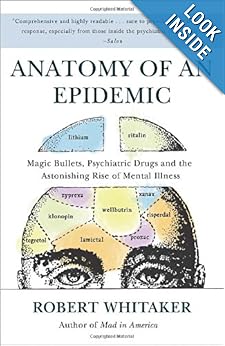
Yet another explanation for the epidemic may also be evolving from radical to mainstream, thanks primarily to the efforts of investigative journalist Robert Whitaker and his book Anatomy of An Epidemic (2010). Whitaker argues that the adverse effects of psychiatric medications are the primary cause of the epidemic. He reports that these drugs, for many patients, cause episodic and moderate emotional and behavioral problems to become severe, chronic and disabling ones.

Examining the scientific literature that now extends over 50 years, Whitaker discovered that while some psychiatric medications for some people may be effective over the short term, these drugs increase the likelihood that a person will become chronically ill over the long term. Whitaker reports, “The scientific literature shows that many patients treated for a milder problem will worsen in response to a drug—say have a manic episode after taking an antidepressant—and that can lead to a new and more severe diagnosis like bipolar disorder.”

With respect to the dramatic increase of pediatric bipolar disorder, Whitaker points out that, “Once psychiatrists started putting ‘hyperactive’ children on Ritalin, they started to see prepubertal children with manic symptoms. Same thing happened when psychiatrists started prescribing antidepressants to children and teenagers. A significant percentage had manic or hypomanic reactions to the antidepressants.” And then these children and teenagers are put on heavier duty drugs, including drug cocktails, often do not respond favorably to treatment and deteriorate. And that, for Whitaker, is a major reason for the 35-fold increase between 1987 and 2007 of children classified as being disabled by mental disorders. (See my 2010 interview with him, “Are Prozac and Other Psychiatric Drugs Causing the Astonishing Rise of Mental Illness in America?”)

Whitaker’s explanation for the epidemic has now, even within mainstream psychiatric institutions, entered into the debate; for example, Whitaker was invited by the National Alliance for the Mentally Ill (NAMI) to speak at their 2013 annual convention that took place last June While Whitaker concludes that psychiatry’s drug-based paradigm of care is the primary cause of the epidemic, he does not rule out the possibility that various cultural factors may also be contributing to the increase in the number of mentally ill.

Mental Illness as Rebellion Against Society
"The most deadly criticism one could make of modern civilization is that apart from its man-made crises and catastrophes, is not humanly interesting. . . . In the end, such a civilization can produce only a mass man: incapable of spontaneous, self-directed activities: at best patient, docile, disciplined to monotonous work to an almost pathetic degree. . . . Ultimately such a society produces only two groups of men: the conditioners and the conditioned, the active and passive barbarians." — Lewis Mumford, 1951
Once it was routine for many respected social critics such as Lewis Mumford and Erich Fromm to express concern about the impact of modern civilization on our mental health. But today the idea that the mental illness epidemic is also being caused by a peculiar rebellion against a dehumanizing society has been, for the most part, removed from the mainstream map. When a societal problem grows to become all encompassing, we often no longer even notice it.

We are today disengaged from our jobs and our schooling. Young people are pressured to accrue increasingly large student-loan debt so as to acquire the credentials to get a job, often one which they will have little enthusiasm about. And increasing numbers of us are completely socially isolated, having nobody who cares about us.

Returning to that June 2013 Gallup survey, “The State of the American Workplace: Employee Engagement,” only 30% of workers “were engaged, or involved in, enthusiastic about, and committed to their workplace.” In contrast to this “actively engaged group,” 50% were “not engaged,” simply going through the motions to get a paycheck, while 20% were classified as “actively disengaged,” hating going to work and putting energy into undermining their workplace. Those with higher education levels reported more discontent with their workplace.

How engaged are we with our schooling? Another Gallup poll “The School Cliff: Student Engagement Drops With Each School Year” (released in January 2013), reported that the longer students stay in school, the less engaged they become. The poll surveyed nearly 500,000 students in 37 states in 2012, and found nearly 80% of elementary students reported being engaged with school, but by high school, only 40% reported being engaged. As the pollsters point out, “If we were doing right by our students and our future, these numbers would be the absolute opposite. For each year a student progresses in school, they should be more engaged, not less.”

Life clearly sucks more than it did a generation ago when it comes to student loan debt. According to American Student Assistance’s “Student Debt Loan Statistics,” approximately 37 million Americans have student loan debt. The majority of borrowers still paying back their loans are in their 30s or older. Approximately two-thirds of students graduate college with some education debt. Nearly 30% of college students who take out loans drop out of school, and students who drop out of college before earning a degree struggle most with student loans. As of October 2012, the average amount of student loan debt for the Class of 2011 was $26,600, a 5% increase from 2010. Only about 37% of federal student-loan borrowers between 2004 and 2009 managed to make timely payments without postponing payments or becoming delinquent.

In addition to the pain of jobs, school, and debt, there is increasingly more pain of social isolation. A major study reported in the American Sociological Review in 2006, “Social Isolation in America: Changes in Core Discussion Networks Over Two Decades,” examined Americans’ core network of confidants (those people in our lives we consider close enough to trust with personal information and whom we rely on as a sounding board). Authors reported that in 1985, 10% of Americans said that they had no confidants in their lives; but by 2004, 25% of Americans stated they had no confidants in their lives. This study confirmed the continuation of trends that came to public attention in sociologist Robert Putnam’s 2000 book Bowling Alone.

Underlying many of psychiatry's nearly 400 diagnoses is the experience of helplessness, hopelessness, passivity, boredom, fear, isolation, and dehumanization—culminating in a loss of autonomy and community-connectedness. Do our societal institutions promote:
Enthusiasm—or passivity?
Respectful personal relationships—or manipulative impersonal ones?
Community, trust, and confidence—or isolation, fear and paranoia?
Empowerment—or helplessness?
Autonomy (self-direction)—or heteronomy (institutional-direction)?
Participatory democracy—or authoritarian hierarchies?
Diversity and stimulation—or homogeneity and boredom?
Research (that I documented in Commonsense Rebellion) shows that those labeled with attention deficit hyperactivity disorder (ADHD) do worst in environments that are boring, repetitive, and externally controlled; and that ADHD-labeled children are indistinguishable from “normals” when they have chosen their learning activities and are interested in them. Thus, the standard classroom could not be more imperfectly designed to meet the learning needs of young people who are labeled with ADHD.

As I discussed last year in AlterNet in “Would We Have Drugged Up Einstein? How Anti-Authoritarianism Is Deemed a Mental Health Problem,” there is a fundamental bias in mental health professionals for interpreting inattention and noncompliance as a mental disorder. Those with extended schooling have lived for many years in a world where all pay attention to much that is unstimulating. In this world, one routinely complies with the demands of authorities. Thus for many M.D.s and Ph.D.s, people who rebel against this attentional and behavioral compliance appear to be from another world—a diagnosable one.

The reality is that with enough helplessness, hopelessness, passivity, boredom, fear, isolation, and dehumanization, we rebel and refuse to comply. Some of us rebel by becoming inattentive. Others become aggressive. In large numbers we eat, drink and gamble too much. Still others become addicted to drugs, illicit and prescription. Millions work slavishly at dissatisfying jobs, become depressed and passive aggressive, while no small number of us can’t cut it and become homeless and appear crazy. Feeling misunderstood and uncared about, millions of us ultimately rebel against societal demands, however, given our wherewithal, our rebellions are often passive and disorganized, and routinely futile and self-destructive.

When we have hope, energy and friends, we can choose to rebel against societal oppression with, for example, a wildcat strike or a back-to-the-land commune. But when we lack hope, energy and friends, we routinely rebel without consciousness of rebellion and in a manner in which we today commonly call mental illness.

For some Americans, no doubt, the conscious goal is to get classified as mentally disabled so as to receive disability payments (averaging $700 to 1,400 per month). But isn’t that too a withdrawal of cooperation with society and a rebellion of sorts, based on the judgment that this is the best paying and least miserable financial option?


Bruce E. Levine, a practicing clinical psychologist, writes and speaks about how society, culture, politics and psychology intersect. His latest book is Get Up, Stand Up: Uniting Populists, Energizing the Defeated, and Battling the Corporate Elite. His Web site is www.brucelevine.net