Wednesday, February 27, 2013

Chela Davison - I Heart Beams and Struts: A Eulogy

It was with heavy heart that I discovered that Beams and Struts is to cease publication at the end of February. Beams has been the leading integral blog over the last several years, and it's absence will leave a deep void for many of us.

Chela Davison has written a very personal eulogy for Beams - at the risk of insult I have included the whole post here. Beams will continue to be available as a repository for all of the wonderful material that has been posted.

I Heart Beams and Struts: A Eulogy

Written by Chela Davison

Tuesday, 26 February 2013
What is your relationship to completion? It’s a question I’ve become quite intimate with over the past few years because it’s one I explore a lot in my work. As an Integral Coach™, with each client, as we approach the end of their program, we explore this together. Being awake to how we relate to endings can enable us to complete as consciously as possible. It helps the client to further embody what they’ve been developing over our time together by catching on to the habitual ways they relate to and behave around endings and offers the opportunity to close our work in a new way. This exploration is always a trip for me because I get to see myself being lured into my own habits around completion and the overarching theme is that I want to be asleep for it and get on with things already.
train

My mind tells me that because I explore this so regularly, I’m totally awake to my habits and ways of being around endings. I want them to be quick. I feel relief around them. I feel no need to get sentimental. I’m a starter, that’s where the energy is, when things end I’m onto the next thing before the sound of the closing door’s click echoes in my ear. As I become aware of this, I’m able to slow down and drop in and bring reverence to where we’ve been. I can sit in the death openheartedly. This is where is gets funny, or ironic, or annoying, or absurdly human. Because I’m intimate with this habit, I tell myself that I’m present and use my awareness of the past as evidence that I’m doing the work of conscious completion and when I do that, it becomes a tactic, a mental game I use to go unconscious and lift up and out of the experience.
I catch myself doing this over and over and over.
We’ve been moving towards completion and closure here at Beams and Struts for a few months. Together we explored how things like this often end. A group of people start a project. It goes for a while. It works. Or it doesn’t work. Eventually it comes to an end. Exactly how that end comes about and plays out is a little foggy. Why it’s foggy is because endings aren’t as publicly explored as the building or creating of things. Projects that once were, are no longer and the death of them are usually not navigated intentionally or purposefully.
At different points in this project, there’ve been varying degrees of shared vision. At times we were all pointing in the same direction, sharing a purposeful compass. At other times it’s felt like we’re all walking down our own separate streets in the same busy city, carrying our own heavy loads. It was exciting to me when we came to the decision to close publication, and to do this consciously, mostly because it felt so good to have a shared purpose that we’re working towards together. Close. Close well. Be aware for death. Be awake in death. Honour this life by honouring its death.
tunnel

But the intention to be awake in death and the reality of what that takes are different beasts. I was so excited to write this article at first, excited to tell you all about what this project has meant to me, how it’s shaped me as a human and as a writer. But I put it off. I don’t want to touch the end. I just want it to be over. I don’t want any more Beams threads in my inbox, I don’t want any more Beams related actions scribbled on my to-do list. I want the sweet relief of the exhale. I want the space, the emptiness that holds the moment after death. I don’t want to feel the dying. Telling you how awake we’re being in this ending is a way to step out of the feeling of the ending. We may not be as awake as we intended. We may not be working as consciously as we could be. We’re not really operating as a collective. We’re not grieving together or celebrating together. That’s not to say we won’t. But right now it seems, we’re all just getting through it, and mostly doing that on our own. And isn’t that how many of us deal with death? Quietly, achingly, distractedly, independently, cornering off aspects of our experience. And as I write this, I am aware that I can’t speak for the experience of the others. And that’s what I’m talking about. I’m not intimate with their experiences. The collective experience isn’t one that’s currently being collectively pointed to and shared.
Our email threads are pretty silent these days, many not chiming in, ideas that were put forth with enthusiasm have been dropped, loose ends blowing wildly in the winds of our minds. I don’t share this with you as a judgment of this being good or bad, I have no problem with how things are going or not going. The content of how we’re ending this project does not cause me pain. it’s in the loss itself where the pain is. I share this because as these words fall before you, this is my own practice with death. Can I be awake to reality and not to the fantasy of how things are going? Can I bring awareness to this ending and invite all of us into awareness around how we’re impacted by completion? How do we show up or not show up? And as we explore that, as we consider it here, can this be training, however small, for death?

Beams: A Love Story
I heart Beams and Struts because I can start an article off like that and not come across as a total weirdo. I heart Beams and Struts because it’s a project that’s had me practicing on my edge in how I write, how I relate, how I lead and how I receive. This is my Eulogy. 
real heart

I want to honour this project by touching on the ways in which it has been its own live system and which aspects of that system have been the most transformative for me. In the fore are the relationships, how they’ve made a writer out of me, helped me to create community, step into leadership and who I am as a woman. (yep, a bunch of men helped me be more of a woman- we’ll get there.)
I’m pretty relational. I can get heady too. I like to riff on ideas and have spent a lot of time doing that with these folks over the past couple of years but for me it’s always been more about the relationships than about the content of the ideas. I’m most interested in how our ways of relating give rise to these ideas and how they evolve through the collective space.
I wasn’t one of the founders of this site. I came on as a core contributor later in the game, after the first year. And I came to it through relationship.
I’ve known Trevor Malkinson since I was 16. We worked in a restaurant together and he introduced me to philosophy. He was the first person I’d ever met who could feed my hungry brain in dialogue. Worlds I’d only imagined became vibrant through the roads he led me down.
I’ve known Scott Payne since I was 13. He was my big brother’s friend’s big brother. Older, wiser, funny as hell.
Trevor introduced me to Juma Wood when I was 22. Juma introduced me to Integral Theory and it changed my world, altered how I was running my business and stirred up how I approached my development in very important ways. I met Chris Dierkes around that time too, more in passing, but that’s only significant because we’ve become so close years later.
I’d heard about Andrew Baxter for a decade before finally meeting him. TJ Dawe’s name was around as well, brilliant actor, brilliant writer. It was my girlfriends, not the guys, who first told me about how radBergen Vermette is, which shouldn’t surprise you if you’ve ever met the guy. He turned out to be my twin.
I remember the first time I heard about Beams and Struts, it was an idea in the making that Trevor was so stoked to share about it. As he told me about who was involved and that they wanted to create this network of ideas and perspectives and press into the world of integral theory and bust it open with a deep exploration of what it means to actually live this stuff, to grapple with it on the ground of our evolving culture, to meet the street and burn the map to light the way on that ledge over there, it made so much sense that this group of men was coming together to create something like this. Trevor planted the seed that perhaps I’d want to contribute. In all honesty, I’d spent a good number of years feeling pretty intellectually intimidated by these characters, so that seed was left unattended for some time.  
forlorn

My first Ken Wilber book was a grind to get through and it was only a bite sized one, The Marriage of Sense and Soul. I was like, what the FUCK do these words mean? So I’d read it with a dictionary next to me and was even looking up the definitions of words that were in the definitions of the words that were in that book. So, yeah, maybe I’ll participate in some way Trevor, if like I don’t have to cite a bunch of theory or argue a bunch of concepts or think very hard.
After the project had been going for a while, I was invited to contribute with more push. Trevor was really looking at the partiality of the site, the all male voices. He thought I could bring in other perspectives. That’s part of what we’ve always been trying to do here, create a platform for diversity, bringing together voices and ideas that didn’t yet have a platform. Bring more and more and more perspectives, have those perspectives come together, dance together, smash into one another, push, pull, create and evolve, take new shape and form on behalf of what may be possible for our world.
I felt really scared to write something for Beams and Struts.
A group of men jerking off all over a theoretical map can be both off-putting and daunting. I’m not saying that’s what’s been going on around these parts (though such an assertion would be partial wouldn’t it?) But for someone who identifies as more creative or relationally focused, when a bunch of academics start a website with the tagline: An integral inquiry into post-post modern age, you might make some assumptions and get to thinking that it’s not be the kind of party you could hold your own at.
So finally I decided to go for it and as one who tends not to tip toe, I wrote a several thousand word article about vaginas. Primarily from my own experience and collection of perspectives, it was neither academic nor masculine and apparently just what was wanted at the site. I was told about the editing process for articles. I’d written articles for print publications before and the editing was primarily for grammar. But it was in going through the editing process, whereby three of the core team edited not only for grammar but also fleshed out ideas, challenged perspectives and pushed me to go further and deeper, that I started to get really curious about what was going on here, started to see what this experiment in collective intelligence is all about.
I remember taking two days to even open my edits on that first piece. I was scared. I was scared of the feedback, I was afraid of being criticized. I was scared to find out that I was a shitty writer, or that my seeing is so partial that what I have to offer is superficial or banal. Instead, those edits gave me the permission I’d been waiting for my whole life.

Becoming a writer
I identified as a writer before I could read. In every hike in the forest I’ve ever been on since I was a little girl, when there’s silence, my mind is writing. It was my writing that kept my GPA up in high school, my writing that won me awards in English, my writing that connected me to my deepest angst and expressed what I truly felt in relationship. Years ago, my partner at the time said he learned more about what was really going on for me by reading my blog than in our relating. My writing has helped me communicate effectively in my work and my articles are now better than marketing copy when it comes to building and expanding my business. But in all those years, from those first few books that swept me away when I realized I could do this- I have to do this, I always said I want to be a writer. I want to be a writer is very different than I am a writer.
writer

I became a writer at Beams and Struts. This is the part of the eulogy where if we were in a room together, I’d become all verklempt and have to take a moment to collect myself.
Though my first article was published in a newspaper, which I got paid for, almost ten years ago, I was no writer. I was aspiring and sometimes I’d even write. Sometimes not. I self-published some poetry, started a couple of blogs, chipped away at a novel with my baby at my breast. But none of this made me a writer, it all just fueled my longing to be a writer, my longing for legitimacy.
My voice as a writer was found here, shared here, heard here. The editing process called me out. It called me out in my talent, in my awareness and in my limitations. It brought me to my edge over and over again, it gave me confidence and shoved me, it gave me extra eyes and hearts to see and feel what I couldn’t or back up what I could.
Everyone on this team has been so important to me in so many ways. TJ Dawe and Bergen Vermette have been two of the greatest influences when it’s come to owning being a writer. TJ Dawe is a professional. TJ taught me to shut the fuck up and write, to get over it and promote my shit already. TJ didn’t just tell me, he showed me what it means to take yourself seriously as an artist. He taught me what it means to show up for your work and he taught me that, not only through disciplined practice and through getting us all in a room to write together, but by sharing his own interior world of what happens through the creative process. When I stopped believing in what I was writing, when I started thinking that I make no sense or have nothing of value to offer, he validated that this is totally normal, that this is part of what happens when we’re creating and that it doesn’t matter. Keep writing. He taught me not to indulge the pettiness that wants to keep me holed up and avoiding the page, that being a writer, rather than wanting to be a writer, means writing. Then publishing. Over and over and over.
Bergen Vermette has edited most of my articles and has been in my corner in all the dramatic ways that I try to get away from showing up. He’s pointed out, over and over, the subtle ways that I would dilute the power of what I was offering. This feedback in his edits helped me to shape and build my voice, to step up and step in and say what I actually mean and that what I have to say is wanted, even needed. And that’s important to feel as an artist.
And so as my writing got more attention on this site, it started to spread to other sites. People started to contact me and ask to publish my work. I started contributing to Integral Chicks and The Huffington Post, I started writing a lot more often on my own site and was picked up as a regular contributor for personal development blogs. This is not a hobby. This is one vein of my life’s work, one way in which my own sense of purpose gets to be expressed in the world. And as soon as that started to happen, the desire, the impulse to expand that outward to others became fierce.

Building a Community
Many people found their voices here at Beams. Not just the creators but the contributors. Not just the contributors but so many who joined the discussions.
cute note

Not only did I become a writer here, I became an editor. What amazing training that’s been in being a writer and in becoming more intimate with the craft and with other brilliant minds. I was blessed to go from editing articles of the core team’s, to editing articles that had been submitted, to soliciting submissions, to creating themes for publication and approaching both established and first time writers to contribute and then edited most of them.
Because I am a writer, I know how vulnerable and important it is to craft just the right sentence, to get just the right tone, to convey exactly this and none of that. Helping others to bring that forward has been deeply fulfilling for me and watching the way in which this project grew into a platform for new voices, the way it blew open doors for so many makes me weep in awe and gratitude. Seriously.
Check out this article of appreciation from our contributors. Time and time again we’d hear how Beams and Struts helped to build confidence, share something that caught on, start a writing career or spread an idea. Our comment sections were more than a place to share a perspective, they became neighbourhoods where people could gather and explore with and challenge one another.
After closing publication, we’re building archives such that all of our work may be better organized and searched. This community will remain alive, these articles that have had so much intension and commitment put into getting them out in the world will continue to be available.
And as each of us move on to our next areas of focus, our next projects, we’ve got a community that’s been built. Some of my most important relationships have been formed here, not only with this core team, but with many who’ve contributed at this site.

Taking My Seat
I’m going to take a sharp left here and talk about gender, you still with me?
Would it surprise you if I told you that sometimes I’d hold back sharing an opinion amongst the team here because I’m just a girl? Well, that surprised me too.
I wasn’t raised with much awareness of being in a patriarchal soup. My parents were pretty post-modern and encouraged my brother and me to play with the same toys in an attempt to slay stereotypical gender conditioning. I received no messages from my family that opportunities or expectations would be different for me than for my bro. I thought that inequality was a thing of the past and have never had much of a radar go off around this being a ‘man’s world’.
men at table

My experience as a core contributor at Beams and Struts really helped to bring this more fully into my awareness. I realize that my own orientation as a woman in society was not what I thought it was. All this time I thought that I was pretty unaffected by the patriarchy and now I realize why that is, I’ve tended to just direct my own lifestyle compass towards places where I wouldn’t have to face or confront ‘just being a girl’. I’ve always been self-employed and the industries I played in were female dominated. I’ve never really needed to hold my own or carve my place anywhere that’s been male dominated.
I’ve always liked men and felt at ease amongst them. Perhaps it’s from having an older brother, but I’ve probably felt more longing to belong in the boys club than anywhere else and by the very nature of being female I don’t get to do that. But I’ve always had close male friends and my delight for vulgarity seemed earn me a free pass into some conversations that left me wondering if soon they’d remember there was a woman present and shut their mouths.
It didn’t occur to me, when starting to work with an all male team, that my femaleness would be so glaring to me. What started happening within my experience, I found shocking and strange. I’ve always been outspoken and confident. I’ve generally been successful in whatever direction I’ve decided to go. While I’ve certainly had a lot of interior doubt or anxiety or fear, I’ve rarely questioned my right to be here. But I could feel that in meetings, I could feel that with these guys. I noticed that for the first time in my life, I felt that I did have an unconscious operating belief system that I, as a woman, am inferior to men. I could feel the pull to adapt in this room of men by being more like them and less like me. I could feel what other women have talked about, the nagging feeling that the only way to carve your place amongst a group of men is to be more male.
And yet, didn’t they say they wanted to a female perspective? Didn’t I get supported and encouraged to write these pieces that were more personal narrative, more feminine than the masculine manner in which ideas and inquiry can often be laid out? Didn’t they welcome my emphasis on care and appreciation and relationship? Didn’t they smile sweetly when, once again, I’d cry in a meeting from being emotionally moved by something that was happening?
My own femininity or womanly orientation wasn’t negated, invalidated or gaslit, it was welcomed. After a while I stared to actually feel what I could contribute to the space, just by the fact that I don’t have balls, that couldn’t be created by anyone else here. My experience of my own value as a woman got stronger for me in being in this group, by them being open and receptive to what I had to uniquely contribute. Over time I’d feel the ways in which I’d actually intentionally bring more emotional current into the space for the sake of deepening what was happening between us.
Through the subtle shifts that occurred for me around who I am as a woman, that I can bring all my intellect and perspectives and opinions to the table but that I don’t have to do that in a masculine way, expanded my comfort in holding my own with deep authenticity in any setting, particularly at an all man table.
While it seems to my rational mind like it should be crazy to feel that my gender would automatically negate the validity of my offering with a group of men, particularly if what I’m offering isn’t sexual, that’s exactly what was running in the background for me, that I either need to be one of the boys or be fucking one of the boys in order to be of value and that is a pretty gross piece of my existence that I’m happy to let die.

This is the End
pensil

And so this is the end. I notice now that I don’t want to just get through it or lift up and out of it. I don’t want this to end. I want to linger here and savor its sweetness. I’m sure going to miss the boisterous meetings with all the ideas that won’t get implemented now. I’m going to miss the never ending email threads that digress into all sorts or ridiculousness. I am going to miss TJ telling me to use more contractions.  I’m going to miss the steadiness that Chris Dierkes brought herding all of us cats. Didn’t we seem to have our shit together? Publishing articles every Monday and Wednesday and being super consistent. That was Chris, chiming in no matter where we’d all stray with what was coming and what was due when andwhere is that article at that you said you’d complete? When I grow up, I want to be like Chris.
Helping to create, build, expand and produce Beams and Struts hasn’t just been transformative; it’s been a right of passage. I’ve received far more than I’ve given and I’ve barely read most of the articles on our site. Maybe I shouldn’t admit that, but c’mon, have you seen how much we’ve been publishing? Who can keep up with that? (Besides the astounding Trevor, who heroically combs every word here.) It strikes me as I feel into just how much of this site I’ve not even touched, or been touched by that as time goes on, as I peruse the archives, the full impact of what’s been created here may not settle in for some time. Like an actual death, the impact the life's had on us will continue to make its grooves. How lucky we are.
Beams and Struts thank you for feeding my hungry brain and quenching my thirsty soul. 

Tuesday, February 26, 2013

To End Extreme Poverty, End Extreme Wealth


This article comes from Too Much: An Online Weekly on Excess and Inequality - and it's followed by two other articles worth your time on the same topic.

To End Extreme Poverty, End Extreme Wealth


The world's wealthy once again gathered in the Alps last week to discuss how to 'solve' the world's problems. Their wealth, suggests a top global anti-poverty outfit, has become the problem.

Apologists for inequality have a standard retort to anyone who calls for a more equal distribution of the world’s treasure. If you took all the wealth of the wealthy and divvied it up equally among the poor, the retort goes, no one would gain nearly enough to accomplish much of anything.

Oxfam International, one of the world’s premiere anti-poverty charitable organizations, would beg to differ. The world’s top 100 billionaires now hold so much wealth, says a new Oxfam report, that just the increase in their net worth last year would be “enough to make extreme poverty history four times over.”

“Oxfam's mission is to work with others to end poverty,” Oxfam analyst Emma Seery noted last week. “But in a world with limited resources, this is no longer possible without an end to extreme wealth.”

Oxfam timed its new analysis, The cost of inequality: how wealth and income extremes hurt us all, to appear right on the eve of last week’s World Economic Forum in Davos, Switzerland. This earnest “issues” confab annually brings together a glittering array of global business and political leaders.

The world’s corporate and financial elites began this January trek into the Alps back in 1971. But the Davos sessions really didn’t start grabbing big-time global media attention until the go-go 1990s.

“Throughout the boom years,” as a UK Guardian profile last week noted, “chief executives would gather every winter high up in the Swiss Alps to discuss in a lordly fashion the world economy and how it could be revised to suit their objectives and views.”

But in these days of deep global economic uncertainty, the power suits that frequent Davos have lost their mojo — and even feel pressured to address the global economic inequality they've so long tried to sweep under the rug.

That pressure last week came from figures like Christine Lagarde, the former French finance minister who now directs the International Monetary Fund. Lagarde blasted outsized executive pay in high finance, attacked bankers for lobbying against new regulation, and called for more “robust social safety nets.”

Oxfam, for its part, is calling for much bolder steps to narrow the stunning gap between the global uber rich and everyone else. The group is urging world leaders to “commit to reducing inequality to at least 1990 levels.”

Meeting that goal, the new Oxfam report relates, would require a wide range of measures, everything from far more steeply graduated income tax rates to actual pay caps that limit how much corporate executives can take home to a multiple of what the lowest-paid workers in the firms they run are making.

But don’t hold your breath waiting for the Davos crowd to buy into any of this bolder agenda. Even the modest reforms that the IMF's Lagarde urged last week found no wide support among the corporate and banking movers and shakers who ambled up to the Alps for this year’s Davos gathering.Oxfam is also emphasizing the importance of cracking down on offshore tax havens. As much as a quarter of global wealth now sits shielded offshore.

One American on hand for the 2013 Davos festivities, JPMorgan Chase chief exec Jamie Dimon, made no move to hide his distaste for reformers. Bank regulators, he charged, were “trying to do too much, too fast” — and spreading “huge misinformation” about the noble work underway at banks like his.

“We’re doing the right thing,” Dimon assured his fellow Davos notables.

Other global corporate notables at Davos sang a similar tune. Azim Premji, the chairman of the Bangalore-based Indian high-tech giant Wipro, admitted that the new Oxfam data — on how the richest 100 people in the world are earning much more than enough to end the world’s worst poverty — do “sadden” him.

But Premji declined in an interview to term the incredible concentration of the world's wealth in any way “unethical.” We need not waste time, he suggested, worrying about “redistribution.” We need instead to help the rich grasp their “obligation,” their “trusteeship responsibility,” to wield their wealth for good.

Trust the rich, in other words, to solve our problems.

Not on your life, says Oxfam.

“In a world where even basic resources such as land and water are increasingly scarce,” Oxfam's Jeremy Hobbs sums up, “we cannot afford to concentrate assets in the hands of a few and leave the many to struggle over what's left.”
Like this article? Sign up to receive the Too Much weekly in your email inbox.


* * * * *

Does The Richness Of The Few Benefit Us All? By Zygmunt Bauman

28/01/2013 BY ZYGMUNT BAUMAN


A most recent study by the World Institute for Development Economics Research at the United Nations University reports that the richest 1% of adult humans alone owned 40% of global assets in the year 2000, and that the richest 10% of adults accounted for 85% of the total world wealth. The bottom half of the world adult population owned 1% of global wealth. [i] This is, though, but a snapshot of the on-going process… Yet more and more bad and ever worse news for equality of humans, and so also for the quality of life of all of us, are lining up daily.

“Social inequalities would have made the inventors of the modern project blush of shame” – so Michel Rocard, Dominique Bourg and Floran Augagner conclude in the article “Human species, endangered” they co-authored and published in Le Monde of 3rd April 2011. In the era of the Enlightenment, during the lifetimes of Francis Bacon, Descartes or even Hegel, in no place of Earth the standard of living was more than twice as high as in its poorest region. Today, the richest country, Qatar, boasts an income per head 428 times higher than the poorest, Zimbabwe. And these are, let’s never forget, comparisons between averages – and so akin to the facetious recipe for the hare-and-horsemeat paté: take one hare and one horse…

The stubborn persistence of poverty on a planet in the throes of economic-growth fundamentalism is enough to make thoughtful people to pause and reflect on the direct as much as the collateral casualties of that redistribution of wealth. The deepening abyss separating the poor and prospect-less from the well off, sanguine, self-confident and boisterous – an abyss of the depth already exceeding the ability of any but the most muscular and the least scrupulous hikers to climb – is an obvious reason to be gravely concerned.
Read the whole article.

* * * * *

Can we fight poverty by ending extreme wealth?


Posted by Olga Khazan on January 20, 2013

Nonprofits owe much of their budgets to wealthy donors, so it’s unusual for a major charity group to implicate extremely rich individuals as part of the problem.

A Yemeni shoe repairman, Zakaria Saleh, 25, left, works on a street in Sanaa, Yemen. 
(AP Photo/Hani Mohammed)

In a sign that the “Occupy” and “99 percent” movements that swept the United States in recent years have taken on increased global relevance, Oxfam International this week called for “a new global goal to end extreme wealth by 2025,” as a way to stem income inequality and continue the fight against poverty.

In a press release, the group wrote that the anti-poverty movement needs to include a new, anti-extreme-wealth component:

In the last decade, the focus has been exclusively on one half of the inequality equation – ending extreme poverty. Inequality and the extreme wealth that contributes to it were seen as either not relevant, or a prerequisite for the growth that would also help the poorest, as the wealth created trickled down to the benefit of everyone.

Oxfam does have a point. The movement against income inequality has been gaining momentum as the world’s rich have continued to amass larger shares of their countries’ fortunes. In the United States, according to the group, the share of national income going to the top 1 percent of the population has increased to 20 percent, from 10 percent in 1980.

Globally, 1 percent of the population have seen their incomes rise by 60 percent in recent years, according to Oxfam. In China, where the top 10 percent earn nearly 60 percent of the country’s income, Internet users regularly take to social networks to criticize public officials thought to be flaunting status items.

“The top 100 billionaires added $240 billion to their wealth in 2012- enough to end world poverty four times over,” Oxfam argues.

The World Economic Forum also recently rated “severe income disparity” as one of its top global risks for 2013.
Read the whole article.

This is Your Brain on Sex and Religion: Experiments in Neuroscience


This is an older video from Open Culture (from December, 2011), but I had never seen it and it's pretty cool. There are 80 brain regions involved in the female orgasm - that's pretty amazing.

This is Your Brain on Sex and Religion: Experiments in Neuroscience


December 6th, 2011


Female Brain Orgasm Video

If you attended the recent Society for Neuroscience conference, you had the chance to see some unprecedented 3D imaging of the brain — images that showed the exact order in which women’s brain regions (80 in total) are activated in the sequence leading to an orgasm. For Barry Komisaruk (professor of psychology at Rutgers University), this imaging isn’t gratuitous. The whole point is to demystify how the brain experiences pleasure, something that could eventually inform our understanding of addiction and depression. Komisaruk said:

It’s a beautiful system in which to study the brain’s connectivity. We expect that this movie [above], a dynamic representation of the gradual buildup of brain activity to a climax, followed by resolution, will facilitate our understanding of pathological conditions such as anorgasmia by emphasizing where in the brain the sequential process breaks down.


Meanwhile, back at the neuroscience ranch, researchers are also using imaging technology to observe the human brain in another state, the state where people experience mystical awakenings during prayer and meditation or other spiritual epiphanies. Scientific American took a fairly deep look at this cutting-edge field several years ago (read the full piece here), and now NPR has produced a multimedia glimpse into the evolving science of spirituality. The presentation (click here or the image above) combines audio, video, articles, book excerpts, etc. and delves into the fundamental question: Is God a delusion created by brain chemistry, or is brain chemistry a necessary conduit for people to reach God?

If you want to learn more about the brain and neuroscience, don’t miss the courses listed in the Psychology/Neuroscience section of our big collection of Free Online Courses.

Time and The Guardian have more on the first story above here and here.

Joan Halifax Roshi - Radical Compassion from Wisdom 2.0


Roshi Joan Halifax spoke at the just concluded Wisdom 2.0 conference on Radical Compassion. Here is the video of that talk - enjoy!

Monday, February 25, 2013

85th Annual Academy Awards Winners


I did not see the show last night (we went out to dinner with a friend instead) - besides, I find these things unbearable to watch. So, if you, like me, missed the show, but like to know who won (these movies get added to my must-see list), here is the list of winners, (with snarky commentary) courtesy of I Watch Stuff. Winners are in red text.

It seems they spread the wealth this year - no one film dominated the major categories. As an aside, based on what I have heard from friends, Wreck-It Ralph should have been nominated for Best Picture, and therefore was robbed in not winning the Best Animated Feature category.

Your 85th Annual Academy Awards Winners

February 24, 2013


argo-ben-affleck.jpg

Hollywood's biggest night of listing things is at last over, the Academy of Motion Picture Arts and Sciences last night giving Argo the year's highest honor, The Best Film Ben Affleck Made Since at Least The Town, in Sunday night's 85th Annual Oscars. Meanwhile, Daniel Day-Lewis won Best Actor for his portrayal of historic Linkin Park frontman Abraham Linkin; Jennifer Lawrence can feel good about herself for besting both child and the elderly; and Spielberg went home thinking he should have just made fucking Schindler's Other List, if everyone's going to be like this. Here are the full results:

BEST PICTURE
Amour
Argo
Beasts of the Southern Wild
Django Unchained
Les Misérables
Life of Pi
Lincoln
Silver Linings Playbook
Zero Dark Thirty

BEST ACTOR
Bradley Cooper, Silver Linings Playbook
Daniel Day-Lewis, Lincoln
Denzel Washington, Flight
Hugh Jackman, Les Misérables
Joaquin Phoenix, The Master

BEST ACTRESS
Emmanuelle Riva, Amour
Jennifer Lawrence, Silver Linings Playbook
Jessica Chastain, Zero Dark Thirty
Naomi Watts, The Impossible
Quvenzhane Wallis, Beasts of the Southern Wild

BEST SUPPORTING ACTRESS
Amy Adams, The Master
Anne Hathaway, Les Misérables
Sally Field, Lincoln
Helen Hunt, The Sessions
Jacki Weaver, Silver Linings Playbook

BEST SUPPORTING ACTOR
Alan Arkin, Argo
Christoph Waltz, Django Unchained
Philip Seymour Hoffman, The Master
Robert De Niro, Silver Linings Playbook
Tommy Lee Jones, Lincoln

BEST DIRECTOR
Ang Lee, Life of Pi
David O. Russell, Silver Linings Playbook
Benh Zeitlin, Beast of the Southern Wild
Michael Haneke, Amour
Steven Spielberg, Lincoln

BEST ORIGINAL SCREENPLAY
Amour
Django Unchained
Flight
Moonrise Kingdom
Zero Dark Thirty

BEST ADAPTED SCREENPLAY
Argo
Beasts of the Southern Wild
Life of Pi
Lincoln
Silver Linings Playbook

BEST ANIMATED FEATURE
Brave
Frankenweenie
ParaNorman
The Pirates! Band of Misfits
Wreck-It Ralph

BEST FOREIGN LANGUAGE FILM
Amour
A Royal Affair
No
Kon-Tiki
War Witch

BEST CINEMATOGRAPHY
Anna Karenina
Django Unchained
Life of Pi
Lincoln
Skyfall

BEST COSTUME DESIGN
Anna Karenina
Les Misérables
Lincoln
Mirror Mirror
Snow White and the Huntsman

BEST DOCUMENTARY FEATURE
5 Broken Cameras
The Gatekeepers
How to Survive a Plague
The Invisible War
Searching for Sugar Man

BEST DOCUMENTARY SHORT
Inocente
Kings Point
Mondays at Racine
Open Heart
Redemption

BEST FILM EDITING
Argo
Life of Pi
Lincoln
Silver Linings Playbook
Zero Dark Thirty

BEST MAKEUP AND HAIRSTYLING
Hitchcock
The Hobbit: An Unexpected Journey
Les Misérables

BEST ORIGINAL SCORE
Anna Karenina
Argo
Life of Pi
Lincoln
Skyfall

BEST ORIGINAL SONG
"Before My Time" from Chasing Ice
"Everybody Needs a Best Friend" from Ted
"Pi's Lullaby" from Life of Pi
"Skyfall" from Skyfall
"Suddenly"from Les Misérables

BEST PRODUCTION DESIGN
Anna Karenina
The Hobbit: An Unexpected Journey
Les Misérables
Life of Pi
Lincoln

BEST ANIMATED SHORT
Adam and Dog
Fresh Guacamole
Head Over Heels
Maggie Simpson in 'The Longest Daycare'
Paperman

BEST LIVE ACTION SHORT
Asad
Buzkashi Boys
Curfew
Death of a Shadow (Dood van een Schaduw)
Henry

BEST SOUND EDITING
Argo
Django Unchained
Life of Pi
Skyfall
Zero Dark Thirty
(A G.D. tie! Apparently that's allowed?)

BEST SOUND MIXING
Argo
Les Misérables
Life of Pi
Lincoln
Skyfall

BEST VISUAL EFFECTS
The Hobbit: An Unexpected Journey
Life of Pi
The Avengers
Prometheus
Snow White and the Huntsman

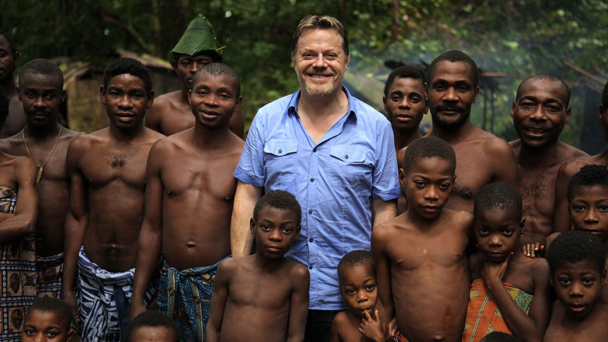
Meet The Izzards (Eddie Izzard Traces His Genetic Heritage)


This is cool on a science level, but even more so on an "Eddie Izzard is awesome" level. Two parts - one looks at the maternal line and the second looks at the paternal line. Enjoy Meet the Izzards!

Meet The Izzards Episode 1: The Mum's Line

BBC One | Comedian and actor Eddie Izzard embarks on a unique, epic and personal journey using his own DNA to trace the migration of his ancestors out of Africa and into Europe over almost 200,000 years. A simple saliva swab and the latest cutting-edge DNA science help Eddie explore the secrets of his genetic history. In this first film Eddie explores his mum's line over the last 10,000 generations, tracing her ancestral route across 10,000 miles all the way back home to Britain.

Along the way he meets some of his modern DNA cousins, from the African bush to the shores of the Red Sea, as he discovers how humans populated the globe, why he has blue eyes and how the Izzards ended up in Europe.
* * * * *

Meet The Izzards Episode 2: The Dad's Line

BBC One | In the second episode of a two-part documentary, comedian and actor Eddie Izzard embarks on a unique, epic and personal journey using his own DNA to trace the migration of his ancestors out of Africa and into Europe. A simple saliva swab and the latest cutting-edge DNA science help Eddie explore the secrets of his father's family history. He traces his male ancestral route over hundreds of thousands of years and across 10,000 miles all the way back home to Britain.

Along the way he meets some of his DNA cousins among the Bakola pygmies of Cameroon, and in the Middle East he discovers how we first had sex with Neanderthals, as he finds out where the male Izzards came from.

Maternal Stress Induces Epigenetic Signatures of Psychiatric and Neurological Diseases in the Offspring

Image from "Transgenerational programming of maternal behaviour by prenatal stress," Ward et al. BMC Pregnancy and Childbirth, 2013, 13(Suppl 1):S9. http://www.biomedcentral.com/1471-2393/13/S1/S9

A couple of days ago, I posted an overview article on the science of epigenetics that looked specifically at how experience can impact our offspring (the article did not mention this, nor did I in my brief commentary, but this is painfully obvious in intergenerational trauma [interestingly, the Native American uses the term "intergenerational trauma," but the Jewish community uses the term "transgenerational trauma"]).

A new article in PLoS ONE looks at how maternal stress can trigger markers for psychological diseases (psychiatric and neurological) in their offspring. The abstract and introduction to the article are included below. The article id open access and be found at the link embedded in the title.


Figure 1. Gestational stress disrupts antepartum maternal behaviour. Time spent engaged in tail chasing behaviours and the number of rotations performed at 19–18 hours prior to delivery (all data transformed to square root). Gestational stress decreased the time spent in tail chasing activities and the number of rotations, indicating reduced maternal preparatory activity (n = 6 non-stress controls, n = 9 gestational stress). *p≤0.05, mean ± SEM.

Maternal Stress Induces Epigenetic Signatures of Psychiatric and Neurological Diseases in the Offspring


Fabiola C. R. Zucchi, Youli Yao, Isaac D. Ward, Yaroslav Ilnytskyy, David M. Olson, Karen Benzies, Igor Kovalchuk, Olga Kovalchuk, Gerlinde A. S. Metz


Abstract


The gestational state is a period of particular vulnerability to diseases that affect maternal and fetal health. Stress during gestation may represent a powerful influence on maternal mental health and offspring brain plasticity and development. Here we show that the fetal transcriptome, through microRNA (miRNA) regulation, responds to prenatal stress in association with epigenetic signatures of psychiatric and neurological diseases. Pregnant Long-Evans rats were assigned to stress from gestational days 12 to 18 while others served as handled controls. Gestational stress in the dam disrupted parturient maternal behaviour and was accompanied by characteristic brain miRNA profiles in the mother and her offspring, and altered transcriptomic brain profiles in the offspring. In the offspring brains, prenatal stress upregulated miR-103, which is involved in brain pathologies, and downregulated its potential gene target Ptplb. Prenatal stress downregulated miR-145, a marker of multiple sclerosis in humans. Prenatal stress also upregulated miR-323 and miR-98, which may alter inflammatory responses in the brain. Furthermore, prenatal stress upregulated miR-219, which targets the gene Dazap1. Both miR-219 and Dazap1 are putative markers of schizophrenia and bipolar affective disorder in humans. Offspring transcriptomic changes included genes related to development, axonal guidance and neuropathology. These findings indicate that prenatal stress modifies epigenetic signatures linked to disease during critical periods of fetal brain development. These observations provide a new mechanistic association between environmental and genetic risk factors in psychiatric and neurological disease.
Full Citation: 
Zucchi FCR, Yao Y, Ward ID, Ilnytskyy Y, Olson DM, et al. (2013) Maternal Stress Induces Epigenetic Signatures of Psychiatric and Neurological Diseases in the Offspring. PLoS ONE 8(2): e56967. doi: 10.1371/journal.pone.0056967

Introduction


The gestational state is a period of particular vulnerability for both the mother and her offspring. Experience of distress during pregnancy may critically determine maternal health and alter offspring brain physiology and behaviour with life-long consequences [1], [2]. Gestational stress disrupts post-partum maternal care, which impedes brain and behavioural development of the offspring [3], [4]. It was proposed that the effects of maternal care are possibly transmitted across generations through non-genomic mechanisms [3]. Mechanisms of transfer include altered gestational endocrine milieu, maternal behaviour and transgenerational epigenetic programming [5]–[9]. Moreover, gestational stress directly influences fetal brain development and programming of hypothalamic-pituitary-adrenal (HPA) axis function [10], [11] to induce life-long changes in stress responsiveness [12] and possibly enhanced vulnerability to psychiatric conditions, including depression and bipolar affective disorder [13]–[16] and schizophrenia[17]–[20]. The prefrontal cortex in particular is relevant to mental health disorders, which may be precipitated or exaggerated by stress, pregnancy and childbirth [21]–[23].

Behavioural and physiological changes in stressed mothers and their offspring may be linked to altered gene expression in the brain, which is epigenetically regulated by experience. Epigenetic changes, including expression of microRNA (miRNA) enable rapid adjustments in gene expression without altering nucleotide sequences. Altered miRNA expression was suggested to prime neuroplasticity and physiological processes in response to early environment [8], [24] and the experience of stress [7], [25]. miRNA may be a critical component to mediate the effects of prenatal stress and maternal care on offspring development [26], [27]. Notably, miRNA expression is altered in many common psychiatric and neurological disorders, such as bipolar disorder, schizophrenia, autism, depression, and inflammatory conditions [28]–[33]. Most of these conditions share a suspected etiology that includes both the influence of adverse perinatal origins as well as a transcriptomic component, suggesting that epigenetic regulation of gene expression may represent a central common feature in individual disease etiology [34].

Here we provide a link between gestational adverse experience and epigenetic re-programming of the transcriptome by means of miRNA in the brains of gravid dams and their offspring. Maternal stress altered maternal antepartum behaviour and brain miRNA expression patterns in the frontal cortex, a region involved in maternal care, decision-making and stress responses. These changes translated to altered offspring miRNA signatures related to disease. Our observations allow proposing a mechanism by which gestational experience modulates gene expression with possibly life-long phenotypical consequences in the offspring.

5 Simple Things The Media Gets Wrong About The “Neuroscience Of Love”

From BuzzFeed. This was posted for Valentine's Day, but it's still an interesting selection of valid concerns about the ways in which the media misinterprets the science.

5 Simple Things The Media Gets Wrong About The “Neuroscience Of Love”


Scientists study love and emotion to better-understand how our brain works. But despite what the media tells you in annual “Neuroscience of Love” trend stories, we still don't get it. Happy Valentine's Day!


Posted on February 14, 2013


noahWG
Community Contributor

1. There is a region of the brain responsible for love.


No. The caudate nucleus (above) is one of several brain areas that have been found to be active when a subject looks at a picture of a loved one, but then again, the caudate is also active during voluntary movement, learning and memory and in feedback processing. No single region of the brain is responsible for a complex emotion such as love.
Source: Wikipedia

2. Love is a unique state of mind.


The truth of the matter here is: We don't know. Several studies have found reward circuits, motivational drive and other goal-oriented states as converging to give us what we call love. So a sum total of other circuits. In fact, as one study describes it, love may be best characterized as a motivational state that triggers or modulatesother emotional states (giddiness, anxiety, anger.) But again, let's play it safe: we don't know.

3. Dopamine is a pleasure chemical!!!!


Stop. Dopamine does a lot of things in the brain, but because of its connection to reward and addiction, the "feel-good" label persists. it's more accurate to place dopamine in context with motivation, prediction errors, attention and even movement. So enough with the "squirt of dopamine to make you feel goooood" commentary.
Source: 3DChem / via: @scicurious

4. Oxytocin is the "hug hormone."


As Ed Yong so elegantly put it in this piece, the hype about oxytocin is dumb and dangerous. Science and biology are neither neat nor tidy. Although bonding behaviors have been shown to involve oxytocin, this molecule also plays significant roles in boosting the very non-huggy states of envy, schadenfreude and group favoritism. Can't we all just agree that oxytocin biology is more complicated thanTED talks tell us??

5. We <3 our iPhones!!


Ok fine, this is only kind of about the neuroscience of love but I had to bring it up. We may like our iPhones, but we don't love our iPhones. Making such a statement based simply on brain activity observations isn't even a decent example of the "correlation does not equal causation" problem. It's actually a reverse inference fallacy. So despite what you feel, we still lack concrete scientific evidence that you prefer devices to people.

Sunday, February 24, 2013

Sounds True: The Self-Acceptance Project - Finding Our Sense of Fundamental Worthiness

From Sounds True, a new FREE 12-week program on self-acceptance (begins March 4), featuring some of the leading figures in the personal growth field, including Brene Brown, Kristin Neff, Robert Agustus Masters, and Tara Brach, among many others.

You can regsiter here.


The Self-Acceptance Project
Finding Our Sense of Fundamental Worthiness

A FREE 12-week Video Event Series, beginning Monday, March 4, 2013.


Self-acceptance is one of our most difficult challenges, no matter how much meditation or therapy we’ve tried. In this FREE 12-week video event series, Tami Simon speaks with contemporary luminaries in spirituality, psychology, and creativity to learn how we can truly embrace who we are.

No matter how much spiritual practice, self-improvement, or therapy we’ve undertaken, there is one area where many of us still find ourselves challenged every day: self-acceptance. It seems all too easy to fall into the trap of judging ourselves as inadequate, finding fault with our achievements or our bodies, and believing our self-critical inner voices that insist we’ll never measure up to who we ought to be. Is there a solution?

Sounds True created The Self-Acceptance Project to find out.

In this FREE online video event series, each week Tami Simon will speak with two contemporary luminaries in the fields of spirituality, psychology, and creativity. Together they will explore the questions around self-acceptance—and investigate how we can overcome the difficulties of embracing who we are. Where do our self-critical voices come from? Can we silence them, or is there a better way to deal with them? Can we be motivated to change and excel while still accepting ourselves as we are? Why is it often so much easier to feel compassion and forgiveness towards others than towards ourselves?

The Self-Acceptance Project was created to offer you insights, practices, and strategies for living with a sense of your own fundamental worthiness. In this 12-week free video series, you’ll hear from a wide variety of thinkers and teachers as they share their stories and wisdom about self-acceptance, including:


The Self-Acceptance Project Guests:


At Sounds True, we have come to recognize that self-acceptance is one of the most difficult yet vital challenges of the human journey. Beginning March 4, 2013, we invite you to join us for an investigation into the heart of our relationship with ourselves—so we may discover how to treat ourselves with kindness, compassion, and love.

Each week, a new video event will be available to stream/download by 7 pm Eastern Time (GMT -4).