Who is responsible for the US shutdown? The same idiots responsible for the 2008 meltdown
In opposing Obamacare, the radical-populist right exposes its own twisted ideology

Slavoj Žižek
The Guardian, Friday 11 October 2013
A Tea Party rally against the Affordable Care Act in Washington, DC last month. 'An opinion poll [in] 2012 showed that a majority of Americans, while opposing Obamacare, strongly support most of its provisions.' Photograph: UPI /Landov / Barcroft Media
In April 2009 I was resting in a hotel room in Syracuse, hopping between two channels: a PBS documentary on Pete Seeger, the great American country singer of the left; and a Fox News report on the anti-tax Tea Party, with a country singer performing a populist song about how Washington is taxing hard-working ordinary people to finance the Wall Street financiers. There was a weird similarity between the two singers: both were articulating an anti-establishment, populist complaint against the exploitative rich and their state; both were calling for radical measures, including civil disobedience.
It was another painful reminder that today's radical-populist right reminds us of the old radical-populist left (are today's Christian survivalist-fundamentalist groups with their half-illegal status not organised like Black Panthers back in the 1960s?). It is a masterful ideological manipulation: the Tea Party agenda is fundamentally irrational in that it wants to protect the interests of hardworking ordinary people by privileging the "exploitative rich", thus literally countering their own interests.
This twisted ideology is also behind the current federal government shutdown in the US. An opinion poll at the end of June 2012 showed that a majority of Americans, while opposing Obamacare, strongly support most of its provisions. Here we encounter Tea Party ideology at its purest: the majority wants to have its ideological cake and eat the real baking. They want the real benefits of healthcare reform, while rejecting its ideological form, which they perceive as a threat to the "freedom of choice". They reject the concept of fruit, but they want apples, plums and strawberries.
Some of us remember the infamous communist tirades against bourgeois "formal" freedom. Ridiculous as these arguments were, there is some truth in the distinction between "formal" and "actual" freedom. A manager in a company in crisis has the "freedom" to fire workers, but not the freedom to change the situation that imposes on him this choice. We see it in the US healthcare debate, too: Obamacare would deliver many people from the dubious "freedom" to worry about who will cover their illness.
Freedom of choice is something that only functions if a complex network of legal, educational, ethical, economic and other conditions exists – the constraints that form the invisible underpinning to the exercise of our freedom. This is why, as an antidote to the populist rightwing ideology of choice, countries such as Norway should be held up as a model: although all main agents respect a basic social agreement and large social projects are enacted in solidarity, the economy is thriving (and not only because of the oil reserves), flatly contradicting the common wisdom that such a society should be stagnating.
Not many people know – and even fewer appreciate the irony of the fact – that Frank Sinatra's iconic song My Way – which is supposed to epitomise the American individualist attitude – is in fact a version of the French song Comme d'Habitude, which means "as usual, as is customary". It is all too easy to see this as yet another example of the opposition between sterile French manners and American inventiveness. But what if this is a phoney opposition? What if, in order to be able to do it my way, I have to rely on things going on comme d'habitude? A lot of things have to be regulated if we are to enjoy our non-regulated freedom.
One often hears that the US shutdown is the result of partisan bickering, that politicians should learn to rise above it and find bipartisan solutions for the good of the nation. Not only the Tea Party, but also Barack Obama is accused of dividing the American people instead of bringing them together. But what if this, precisely, is what is good about Obama? In situations of deep crisis, an authentic division is urgently needed: a division between those who want to drag on within the old parameters and those who are aware of the need for radical change. This, not opportunistic compromise, is the only path to true unity.
One of the weird consequences of the 2008 financial meltdown and the measures taken to counteract it (enormous sums of money to help banks) was the revival of the work of Ayn Rand, the closest one can get to an ideologist of the "greed is good" radical capitalism. The sales of her opus Atlas Shrugged exploded. According to some reports, there are already signs that the scenario described in Atlas Shrugged – the creative capitalists themselves going on strike – is coming to pass in the form of a populist right. However, this misreads the situation: what is effectively taking place today is almost the exact opposite. Most of the bailout money is going precisely to the Randian "titans", the bankers who failed in their "creative" schemes and thereby brought about the financial meltdown. It is not the "creative geniuses" who are now helping ordinary people, it is the ordinary people who are helping the failed "creative geniuses".
John Galt, the central character in Atlas Shrugged, is not named until near the end of the novel. Before his identity is revealed, the question is repeatedly asked, "Who is John Galt". Now we know precisely who he is: John Galt is the idiot responsible for the 2008 financial meltdown, and for the ongoing federal government shutdown in the US.
Showing posts with label tea party. Show all posts
Showing posts with label tea party. Show all posts
Tuesday, October 15, 2013
Slavoj Žižek - Who Is Responsible for the US Shutdown? The Same Idiots Responsible for the 2008 Meltdown
Slavoj Žižek is often very entertaining. In this recent op-ed for the UK's The Guardian, Žižek seems to think he has discovered a hornets next, so of course he gives it a good swift kick. On the other hand, anyone who can find a cogent argument to pin this current financial mess on Ayn Rand is cool with me.


Monday, December 24, 2012
Gunsmoke: USA (i.e. Arizona)

Disturbing documentary about guns and gun mentality in my current state, Arizona. When we combine Tea Party racism with 2nd Amendment fanaticism, the mix is pretty volatile.
An ongoing source of controversy in America, gun laws are increasingly polarizing the Southern states and Washington. In Arizona, Tea Party supporting, heavily armed, vigilante groups are taking over.
“The one thing we know about gun control is that it has never provided security”, argues former Arizona sheriff and local hero, Richard Mack.
Despite the recent massacres, the majority still support free gun laws. Heavily armed citizens take Mexican border security into their own hands in this “state with a frontier mentality”.
With over 100 new civilian militia groups forming in the last 2 years, it is fertile ground for Tea Party supporters. There is no doubt as to who is the real enemy here: “The greatest threat to our God-given American liberty is our own federal government”.
With the cultural divide between North and South looking dangerously wide, Arizona is becoming more than a state: it’s a state of mind.
Watch the full documentary now - 23 min

Friday, August 17, 2012
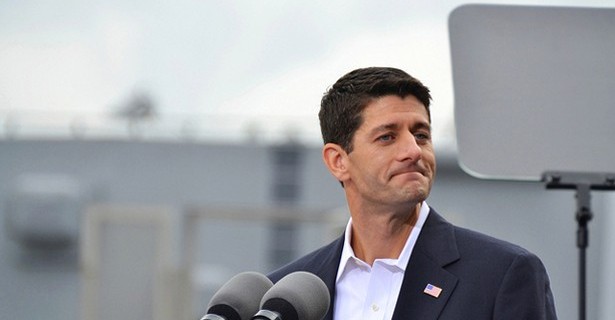
Paul Ryan: The Flesh-and-Blood Embodiment of Political Deception and Media Obfuscation
and In These Times looks at Paul Ryan, the man versus the myth created by the GOP and the media. The image perpetrated by the media and political establishments have very little to do with the reality of Ryan and his agenda.
Who Is Paul Ryan?
The media’s image of Romney’s running mate doesn’t mesh with reality
Wisconsin congressman Paul Ryan admires Ayn Rand, and if you believe Republican Party mythology, Ryan is a messianic John Galt who will save America from a secret socialist conspiracy. Thus, in Rand fashion, it's worth asking: Who Is Paul Ryan?The GOP's presumptive vice presidential nominee is the 21st century's flesh-and-blood embodiment of political deception and media obfuscation.
The answer is simple: the GOP's presumptive vice presidential nominee is the 21st century's flesh-and-blood embodiment of political deception and media obfuscation.
Purporting to be a small-government budget hawk, Ryan publicly decries corporate welfare and says he wants “to get Washington out of the business of picking winners and losers.” This has generated press coverage promoting Ryan as a great fiscal conservative. Yet, written out of the story is the fact that Ryan is a Huge Government Republican who voted for–and in some cases, still defends–the biggest examples of corporate welfare in American history.
Ryan, you see, was the Huge Government Republican who backed this era's massive corporate bailouts–the one that picked politically connected companies as winners and taxpayers as losers. He was the Huge Government Republican who regularly voted for profligate war spending bills–the ones that blew a gaping hole in the federal budget. And he is the Huge Government Republican now using his committee chairmanship to oppose serious cuts to the deficit-exploding corporate welfare still embedded in the bloated Pentagon budget.
Similarly, Ryan claims to be, and is billed in the press as, a libertarian-inspired acolyte of Rand–a man who supposedly values freedom and limited government. But as a Huge Government Republican, he has consistently voted to expand the surveillance state, endorse warrantless wiretapping and permit indefinite detention. Oh, and in contradiction to Rand's writings, he has also pushed to use the power of Huge Government to end a woman's right to choose an abortion.
Like so many Republicans, Ryan genuflects to the private sector and insinuates that the government is not a job creator. It's funny coming from a guy who has spent most of his adult life as a federal employee and whose family's construction company brags of building its fortune off government highway contracts.
Ryan labels himself an opponent of “crony capitalism” and is often promoted by reporters as someone who can help Mitt Romney thwart the Washington insiders who corrupt our politics. Somehow, we are expected to ignore the fact that Ryan has spent the vast majority of his adult life in Washington; that his wife served as a top pharmaceutical and oil lobbyist in Washington; and that, as Newsweek reported in 2011, he tried to insert special provisions into federal law that would boost his personal oil investment portfolio.
Then there are Ryan's budget proposals, whose central premises are that Medicare must be gutted and Social Security must be turned over to Wall Street because we allegedly don't have enough revenue to fund them. In response, the press often credits Ryan's blueprint for being courageous and honest. Yet, in the very same plans, Ryan proposes to severely deplete public revenues by eliminating all taxes on capital gains, interest and dividends, meaning that, according to The Atlantic magazine, Mitt Romney would pay a 0.82 percent tax rate on his $21 million annual earnings.
Republican powerbrokers, of course, hope you never learn any of this. They hope you and an obsequious press don't bother to review Ryan's congressional votes or his legislative history. They are hoping, in other words, that when you see Ryan's boyish Midwestern visage, you won't see the real Ryan–and you won't see what his ascent to vice president might mean for the future of America.ABOUT THIS AUTHOR
David Sirota, an In These Times senior editor and syndicated columnist, is a bestselling author whose book Back to Our Future: How the 1980s Explain the World We Live In Now—Our Culture, Our Politics, Our Everything was released in 2011. Sirota, whose previous books include The Uprising and Hostile Takeover, co-hosts "The Rundown" on AM630 KHOW in Colorado. E-mail him at ds@davidsirota.com, follow him on Twitter @davidsirota or visit his website at www.davidsirota.com.
Thursday, October 20, 2011
A Wildly Diverse Collection of Links to Stories on the #OWS and #OccupyEverywhere Movements
Bookforum has been collecting the link over the past week, so here is enough reading material to keep you busy through the weekend.
They have also collected some links on the Tea Party crowd, as well as the #OWS protests.
The United States’ long history of protest: Sidney Tarrow on why Occupy Wall Street is not the Tea Party of the Left. David Weigel on the Tea Party and #OWS, in Venn Diagram form. Alex Altman on why Occupy Wall Street is more popular than the Tea Party — for now. Should liberals like Occupy Wall Street? Jonathan Chait wonders. John Judis and Jonathan Cohn on why liberals should embrace Occupy Wall Street. From n+1, Jeremy Kessler writes an open letter to the men and women of the New York City Police Department. From Newtopia, an interview of Occupy Wall Street’s Kelly Heresy. Is Kevin Bacon the force behind Occupy Wall Street? It's irresponsible not to ask. Wouldn’t it be ironic if Occupy Wall Street — the soi-disant “99%” — were being secretly funded by billionaire Davos Man George Soros, exemplar of the 1%? Jeff Reifman and Thomas Linzey on turning occupation into lasting change. Here's what the Wall Street protesters are so angry about. Doug Henwood on OWS and the Fed. Bernard E. Harcourt on Occupy Wall Street’s "political disobedience". Nouriel Roubini and Ian Bremmer let fly on Occupy Wall Street and why the GOP's cynical economic strategy is designed to make things worse. A taxing situation: Why the GOP isadvocating a tax increase on the middle class. What role, if any, does tax policy play in creating a wealth gap in the US? Lowering taxes is the biggest policy goal for Republicans, and on that, they're wrong. EJ Dionne on the GOP's favorite solution: Doing nothing. Joshua Holland on 6 ways the rich are waging a class war against the American people. Struck out: Labor has lost its best tactics, which helps explain its decline. Amid all our disasters, why are the only revolutionaries on the right? Get out the hate: A lot of political participation is driven by simple dislike for the opposing party. Land of the free, home of the turncoats: In its nihilistic demonization of government, the right has declared war on America. From The American Interest, Francis Fukuyama on American political dysfunction.

Rightbloggers work on the Nixonization of Occupy Wall Street. Nate Silver on the geography of Occupying Wall Street (and everywhere else). A geography lesson for the Tea Party: Even as the movement’s grip tightens on the GOP, its influence is melting away across vast swaths of America, thanks to centuries-old regional traditions that few of us understand. Tea Party Death Trip: Why are some Americans so comfortable letting fellow citizens die?Just for fun, here are some other libertarian and conservative perspectives.
******
From Modern Age, a review of Majority Rule versus Consensus: The Political Thought of John C. Calhoun by James H. Read; and a review of The Golden Age of the Classics in America: Greece, Rome, and the Antebellum United States by Carl J. Richard. A review of The Declaration of Independents: How Libertarian Politics Can Fix What’s Wrong With America by Nick Gillespie and Matt Welch. A review of The Neoconservative Persuasion: Selected Essays, 1942-2009 by Irving Kristol. From The University Bookman, a symposium on Conservatism and Empire, including Paul Gottfried on how the GOP swallowed the conservative movement; and James Kalb on empire and the crisis of American conservatism. A review of The Reactionary Mind: Conservatism from Edmund Burke to Sarah Palin by Corey Robin (and a response by Robin, and more). Ben Alpers on the Frankfurt School, right-wing conspiracy theories, and American conservatism (and more). Libertarians and conservatives must choose: Competitive enterprise or idolatry of property. Gavin McInnes on ten things to hate about the Right. Sam Tanenhaus on imperial conservatism’s last gasp. Marx’s Tea Party: The populist right has forgotten an older form of class analysis. A review of The Roots of Modern Conservatism: Dewey, Taft, and the Battle for the Soul of the Republican Party by Michael Bowen. The moral foundation of a free society: Craig Biddle on Ayn Rand's theory of rights. Capitalists of the world, unite: Peter Frase on the "capital strike", the right’s favorite strike. James Joyner on the changing definition of "conservative": Since John McCain's defeat in 2008, the right has rejected the people and ideas it once praised. A review of Libertarianism Today by Jacob H. Huebert. Diplomats, demagogues and innocents abroad: Tristan Abbey on why conservatives should resist pressure from within to retreat from world affairs and embrace their diplomatic heritage.

From the Hannah Arendt Center for Politics and Humanities, don’t be afraid to say “revolution”, #OWS. The "Last Place Aversion" Paradox: Ilyana Kuziemko and Michael I. Norton on the surprising psychology of the Occupy Wall Street protests. If Zuccotti Park falls, where will the Occupy Wall Street movement move next? The all-American occupation: Steve Fraser on a century of Our Streets vs. Wall Street. Harold Meyerson on how politicians can kick the Wall Street habit: Candidates should take a no-bank-money pledge. How Occupy Wall Street is really funded: Who's behind the Wall Street protests? Welcome to the occupations: Ben Ehrenreich on Occupy L.A. As the OWS protest blossoms across America, they are no doubt being watched over by the country’s patron saint of civil disobedience — Herman Melville’s Bartleby. Occupy Wall Street and the Tea Party: One looks cooler, the other smells better — do they agree on anything? (and more) Immanuel Wallerstein on the fantastic success of Occupy Wall Street. As the demonstrations grow, the different worldviews of bankers show the wide chasms that have opened over who is to blame for economic malaise. Nouriel Roubini on why almost every continent on Earth is experiencing social and political turmoil. In three months, an idea and a hashtag became a worldwide movement — here’s how they did it. An interview with Frances Fox Piven on the Occupy Wall Street protests and the complex interplay between social movements and electoral politics. Scott McLemee interviewsfour professors who are tracking the movement. What will become of Occupy Wall Street? A protest historian’s guide. Harvard Business Review on what businesses need to know about #OWS. Dean Baker on how we can make the "free market" work for the 99%. A look at 3 types of Wall Street protesters hurting their own cause. Here are 5 facts about the wealthiest 1 percent. We are the 1%, Bitches.

And from today's link collections, here are a few more:
Worried we can't forget enough
From Boston Review, T.M. Scanlon on Libertarianism and Liberty: How not to argue for limited government and lower taxes. From TNR, a symposium on Liberalism and Occupy Wall Street, with contributions by Paul Berman, Todd Gitlin, William Galston, David Greenberg, and more. From Jacobin, here is a debate onleft politics and strategy. Conor Friedersdorf on 8 well-intentioned ideas that Occupy Wall Street should reject. Should protesters have just voted instead? Rep. Barney Frank sympathizes with OWS, but wonders where protesters were a year ago, when the anti-regulation GOP cleaned up at the ballot box. David Meyer on what Occupy Wall Street learned from the Tea Party. From Downtown Express, a month in, O.W.S. and community are trying to coexist (and more and more).


Subscribe to:
Posts (Atom)