Showing posts with label Darwin. Show all posts

Sunday, June 01, 2014

Eric Michael Johnson - Survival of the ... Nicest? Check Out the Other Theory of Evolution

This comes from Yes! Magazine. The article is about a year old, but it's message - that humans probably evolved through cooperation more than competition (as argued by E.O. Wilson, among others) - is still highly relevant as we totter down the road of incredible wealth disparity, unbridled capitalism, and wholesale destruction of the earth.

Survival of the ... Nicest? Check Out the Other Theory of Evolution

A new theory of human origins says cooperation—not competition—is instinctive.

by Eric Michael Johnson
posted May 03, 2013


Photo by Harlan Harris.

A century ago, industrialists like Andrew Carnegie believed that Darwin’s theories justified an economy of vicious competition and inequality. They left us with an ideological legacy that says the corporate economy, in which wealth concentrates in the hands of a few, produces the best for humanity. This was always a distortion of Darwin’s ideas. His 1871 book The Descent of Man argued that the human species had succeeded because of traits like sharing and compassion. “Those communities,” he wrote, “which included the greatest number of the most sympathetic members would flourish best, and rear the greatest number of offspring.” Darwin was no economist, but wealth-sharing and cooperation have always looked more consistent with his observations about human survival than the elitism and hierarchy that dominates contemporary corporate life. 

Nearly 150 years later, modern science has verified Darwin’s early insights with direct implications for how we do business in our society. New peer-reviewed research by Michael Tomasello, an American psychologist and co-director of the Max Planck Institute for Evolutionary Anthropology in Leipzig, Germany, has synthesized three decades of research to develop a comprehensive evolutionary theory of human cooperation. What can we learn about sharing as a result?

Tomasello holds that there were two key steps that led to humans’ unique form of interdependence. The first was all about who was coming to dinner. Approximately two million years ago, a fledgling species known as Homo habilis emerged on the great plains of Africa. At the same time that these four-foot-tall, bipedal apes appeared, a period of global cooling produced vast, open environments. This climate change event ultimately forced our hominid ancestors to adapt to a new way of life or perish entirely. Since they lacked the ability to take down large game, like the ferocious carnivores of the early Pleistocene, the solution they hit upon was scavenging the carcasses of recently killed large mammals. The analysis of fossil bones from this period has revealed evidence of stone-tool cut marks overlaid on top of carnivore teeth marks. The precursors of modern humans had a habit of arriving late to the feast.

However, this survival strategy brought an entirely new set of challenges: Individuals now had to coordinate their behaviors, work together, and learn how to share. For apes living in the dense rainforest, the search for ripe fruit and nuts was largely an individual activity. But on the plains, our ancestors needed to travel in groups to survive, and the act of scavenging from a single animal carcass forced proto-humans to learn to tolerate each other and allow each other a fair share. This resulted in a form of social selection that favored cooperation: “Individuals who attempted to hog all of the food at a scavenged carcass would be actively repelled by others,” writes Tomasello, “and perhaps shunned in other ways as well.”

This evolutionary legacy can be seen in our behavior today, particularly among children who are too young to have been taught such notions of fairness. For example, in a 2011 study published in the journal Nature, anthropologist Katharina Hamann and her colleagues found that 3-year-old children share food more equitably if they gain it through cooperative effort rather than via individual labor or no work at all. In contrast, chimpanzees showed no difference in how they shared food under these different scenarios; they wouldn’t necessarily hoard the food individually, but they placed no value on cooperative efforts either. The implication, according to Tomasello, is that human evolution has predisposed us to work collaboratively and given us an intuitive sense that cooperation deserves equal rewards.

The second step in Tomasello’s theory leads directly into what kinds of businesses and economies are more in line with human evolution. Humans have, of course, uniquely large population sizes—much larger than those of other primates. It was the human penchant for cooperation that allowed groups to grow in number and eventually become tribal societies.

Humans, more than any other primate, developed psychological adaptations that allowed them to quickly recognize members of their own group (through unique behaviors, traditions, or forms of language) and develop a shared cultural identity in the pursuit of a common goal.

“The result,” says Tomasello, “was a new kind of interdependence and group-mindedness that went well beyond the joint intentionality of small-scale cooperation to a kind of collective intentionality at the level of the entire society.”

What does this mean for the different forms of business today? Corporate workplaces probably aren’t in sync with our evolutionary roots and may not be good for our long-term success as humans. Corporate culture imposes uniformity, mandated from the top down, throughout the organization. But the cooperative—the financial model in which a group of members owns a business and makes the rules about how to run it—is a modern institution that has much in common with the collective tribal heritage of our species. Worker-owned cooperatives are regionally distinct and organized around their constituent members. As a result, worker co-ops develop unique cultures that, following Tomasello’s theory, would be expected to better promote a shared identity among all members of the group. This shared identity would give rise to greater trust and collaboration without the need for centralized control.

Moreover, the structure of corporations is a recipe for worker alienation and dissatisfaction. Humans have evolved the ability to quickly form collective intentionality that motivates group members to pursue a shared goal. “Once they have formed a joint goal,” Tomasello says, “humans are committed to it.” Corporations, by law, are required to maximize profits for their investors. The shared goal among corporate employees is not to benefit their own community but rather a distant population of financiers who have no personal connection to their lives or labor.

However, because worker-owned cooperatives focus on maximizing value for their members, the cooperative is operated by and for the local community—a goal much more consistent with our evolutionary heritage. As Darwin concluded in The Descent of Man, “The more enduring social instincts conquer the less persistent instincts.” As worker-owned cooperatives continue to gain prominence around the world, we may ultimately witness the downfall of Carnegie’s “law of competition” and a return to the collaborative environments that the human species has long called home.

~ Eric Michael Johnson wrote this article for How Cooperatives Are Driving the New Economy, the Spring 2013 issue of YES! Magazine. Eric is a doctoral student in the history of science at the University of British Columbia. His research examines the interplay between evolutionary biology and politics.

Monday, December 09, 2013

An Online Debate Erupts Around David Dobbs' Aeon Article Dismissing the Selfish Gene


A few days ago, I posted David Dobbs' excellent article (Die, selfish gene, die) on the need for Richard Dawkins' selfish gene theory to go the way of the dinosaurs. As noted by Ed Yong in his weekly science link-fest, I've Got Your Missing Links Right Here, the perspective Dobbs offered has been, uh, a wee bit controversial.

David Dobbs’ beautifully written but controversial take on the selfish gene metaphor. Reactions have been fierce. PZ Myers liked it and expanded on some of the ideas, Jerry Coyne loathed it and deconstructed it in two postsLarry Moran agreed with Coyne’s criticism but has his own gripes with the metaphor, Dawkins defends himself, and Dobbs defends himself (twice). All of this, I think, is enlightening and well worth reading.
These responses are certainly worth a little time to read . . . this may be a pivotal moment in evolutionary biology.

Wednesday, December 04, 2013

The Uniqueness of Humanity: Is Evolution Progress?


From The Institute of Art and Ideas (IAI) and their ongoing series of debates on compelling topics, evolutionary psychologist Nicholas Humphrey and evolutionary game theorist Ken Binmore square off with cultural critic Eva Aldea and philosopher of science Nick Maxwell on the uniqueness of humanity and the purpose of evolution - is it blind change, or is it, as the name implies, a progression (toward something)?

Good stuff.

The Uniqueness of Humanity: Is Evolution Progress?


Darwin's Origin of Species appears to ally evolution with advance, and as humans we place ourselves at the top of the tree. But is evolution progress or simply change for good or ill? Have we transcended our animal nature, or is this a dangerous illusion?

The Panel

Evolutionary psychologist Nicholas Humphrey and evolutionary game theorist Ken Binmore clash with cultural critic Eva Aldea and philosopher of science Nick Maxwell. David Malone hosts.

Thursday, September 19, 2013

Distilling the Essence of an Evolutionary Process: Implications for a Formal Description of Culture


From arXiv.org's division of quantitative biology, a production of the Cornell University Library, this is an older paper just now posted at this site outlining a model for understanding cultural evolution by looking at a specific process of biological evolution - selection.

Their model echoes the argument in favor of the human brain's open architecture (posted here yesterday), that the unique ability of the human brain are responsible for culture:
To invent in the strategic, intuitive manner characteristic of humans requires a cognitive architecture that supports the capacity to spontaneously adapt concepts to new circumstances and merge them together to conceptualize new situations.
This article is more than 10 years old, presented in 2000 at a conference and then published in 2005 in a book. Still, this is a cutting edge topic right now as we begin to embrace the idea that cultural evolution is an emergent property of biological and consciousness evolution.

Oh yeah, a note on the image above. In terms of variation, biological evolution is much less random than we imagined (and certainly less so than Darwinians, like Richard Dawkins, will currently admit). Likewise, cultural evolution is much less directed than originally believed. In a marketplace of ideas, so to speak, new memes (like "twerking") are generally random in their emergence, not orchestrated and directed.

Distilling the Essence of an Evolutionary Process and Implications for a Formal Description of Culture 

Liane Gabora, Diederik Aerts

(Submitted on 18 Sep 2013)

It has been proposed that, since the origin of life and the ensuing evolution of biological species, a second evolutionary process has appeared on our planet. It is the evolution of culture-e.g., ideas, beliefs, and artifacts. Does culture evolve in the same genuine sense as biological life? And if so, does it evolve through natural selection, or by some other means? Why does no other species remotely approach the degree of cultural complexity of humans? These questions lie at the foundation of who we are and what makes our lives meaningful. Although much research has been done on how selective pressures operating at the biological level affect cognition and culture, little research has focused on culture as an evolutionary process in its own right. Like biological forms, cultural forms - ideas, attitudes, artifacts, mannerisms, etc. - incrementally adapt to the constraints and affordances of their environment through descent with modification. In some respects culture appears to be Darwinian, i.e., a process of differential replication and selection amongst randomly generated variants. This suggests that knowledge of biological evolution can be put to use to gain insight into culture. However, attempts to apply Darwinian theory to culture have not yielded the kind of unifying framework for the social sciences that it provided for the biological sciences, largely because of the nonrandom manner in which the mind - the hub of cultural change - generates and assimilates novelty. This paper investigates how and when humans became capable of supporting culture, and what previously held it back, focusing on how we attained the creative powers we now possess. To invent in the strategic, intuitive manner characteristic of humans requires a cognitive architecture that supports the capacity to spontaneously adapt concepts to new circumstances and merge them together to conceptualize new situations.

Journal Reference: 
Gabora, L. & Aerts, D. (2005). In (W. Kistler, Ed.) Proceedings of Center for Human Evolution Workshop #4: Cultural Evolution, May 18-19, 2000. Bellevue, WA: Foundation for the Future.

Cite as: arXiv:1309.4712 [q-bio.PE]
(or arXiv:1309.4712v1 [q-bio.PE] for this version)

CONTENTS

1 Do Evolutionary Models Capture the Dynamics of Culture? ................. 3

1.1 Memes .............................................................................................. 4
1.2 Mathematical Approaches ................................................................ 4
1.3 Computer Models ............................................................................. 4
1.4 Where Do We Stand? ........................................................................ 6
2 Background from Cognitive Science .......................................................... 6
2.1 Conceptual Space and the Distributed Nature of Memory................. 6
2.2 Conceptual Integration....................................................................... 7
2.3 Focusing and Defocusing................................................................... 7
3 Evolution of the Culture-evolving Mind ..................................................... 8
3.1 What Sparked the Origin of Culture?................................................. 8
3.2 The Earliest Modern Minds and the ‘Cultural Revolution’................ 8
4 Rethinking Evolution .................................................................................... 9
4.1 The Cultural Replicator: Minds Not Memes....................................... 9
4.2 Creative Thought is Not a Darwinian Process .................................. 10
4.3 Evolution as Context-driven Actualization of Potential.................... 11
5 Concepts: An Enigma at the Heart of the Problem .................................. 12
5.1 The SCOP Representation of a Concept ........................................... 12
5.2 Embedding the SCOP in Complex Hilbert Space ............................. 13
5.3 Concept Combination ........................................................................ 14
6 Summary and Conclusions .......................................................................... 14

Introduction


It has been proposed that, since the origin of life and the ensuing evolution of biological species, a second evolutionary process has appeared on our planet. It is the evolution of culture—e.g. ideas, beliefs, and artifacts—and the creative minds that invent them, adapt them to new situations, and play with them for artistic expression and fun. But does culture evolve in the same genuine sense as biological life? And if so, does it evolve through natural selection, or by some other means? Why does no other species remotely approach the degree of cultural complexity of humans? These are questions that must be addressed because they lie at the foundation of who we are and what makes our lives meaningful.

Although much research has been done on how selective pressures operating at the biological level affect cognition and culture, little research has focused on culture as an evolutionary process in its own right. Nonetheless, culture does appear to evolve. Like biological forms, cultural forms—ideas, attitudes, artifacts, mannerisms, etc.—incrementally adapt to the constraints and affordances of their environment through descent with modification. Agricultural techniques become more efficient, computers get faster, scientific theories predict and account for more observations, new designs are often artistic spin-offs of those that preceded them. And in some respects culture appears to be Darwinian, that is, a process of differential replication and selection amongst randomly generated variants. For example, different brands of peanut butter may be said to compete to be ‘selected’ by consumers. This suggests that knowledge of biological evolution can be put to use to gain insight into cultural patterns. However, the attempt to straightforwardly apply Darwinian theory to culture has not been overwhelmingly fruitful. It certainly hasn’t provided the kind of unifying framework for the social sciences that Darwin’s idea of natural selection provided for the biological sciences. This is largely because the underlying substrate of the process—human beings—are notoriously complex and unpredictable! For example, natural selection cannot tell us much about how someone came up with the idea for turning peanuts into a spreadable substance in the first place!


The difficulty applying evolutionary theory as it has been developed in biology to culture arises largely because of the highly nonrandom manner in which the mind—the hub of cultural change—generates and assimilates novelty. To understand how, when, and why the human mind became capable of supporting culture, and what may have previously held it back, we need to know something about how we attained the creative powers we now possess, and how creative processes actually work, in groups as well as individuals. To invent in the strategic, intuitive manner characteristic of the human mind requires a cognitive architecture that supports the capacity to spontaneously adapt concepts to new circumstances and merge them together to conceptualize new situations. Thus we find that at the heart of the puzzle of how culture evolves lies the problem of concepts, not so much just how we use them to identify and classify objects in the world, but their contextuality and compositionality, and the creative processes thereby enabled.


We will see that the change-of-state a mind undergoes as it develops an idea is not a natural selection process, and indeed it may be that culture evolves, but only in small part through Darwinian mechanisms. We suggest that its basic mode of evolving turns out to be a more general process referred to as context-driven actualization of potential. Thus the story of how ideas are born and bred in one mind after another leads us to another story, that of what it means to evolve, and how an evolutionary process could work. Finally, this paper will touch on how an evolutionary perspective on culture can shed light on questions of a philosophical or spiritual nature that have been with us since the first fledgling creative insights glimmered in our ancestors’ brains.
 

1. Do Evolutionary Models Capture the Dynamics of Culture?


Let us consider how well attempts to formally or informally describe culture as an evolutionary process do at capturing the cultural dynamic.
 

1.1 Memes

Perhaps the most well known attempt to apply Darwinism to culture is the meme approach (Aunger 2000; Blackmore 1999, 2000; Dawkins 1976). It simplifies things by restricting what counts as ‘culturally transmitted’ to things that are passed from one person to another relatively intact, such as eye-catching fashions, or belief in God. This approach quickly runs into problems. First because ideas and stories are not simply stored, outputted, and copied by others as discreet chunks, complete unto themselves. They are dynamically influenced by the context in which they appear, and we process and re-process them in ways that reflect our unique experiences and unique style of weaving them into an internal model of the world, or worldview. Furthermore, the meme perspective leads us to view ourselves as ‘meme hosts’, passive imitators and transmitters of memes. Although some authors have capitalized on the shock value of the ensuing dismal view of the human condition, clearly we are not merely passive hosts but active evolvers of culture.
 

1.2 Mathematical Approaches

Others have drawn from mathematical models of population genetics and epidemiology to model the spread of ideas (Cavalli-Sforza & Feldman, 1981; Schuster & Sigmund, 1983; Boyd & Richerson, 1985). They examine the conditions under which mutated units of culture pass vertically via family, or horizontally through a community by imitation within an age cohort, and proliferate. The limitations of this approach are expressed succinctly by Kauffman (1999):
True, but impoverished. Why impoverished? Because the concept of meme, and its descent with modification is taken as a, or perhaps ‘the’ central conceptual contribution to the evolution of human culture. But the conceptual framework is so limited as to be nearly trivial. Like NeoDarwinism, it suffers from the inability to account for the source of new forms, new memes. Further, mere descent with modification is a vastly oversimplified image.

Consider the new concepts, artifacts, legal systems, modes of governance, modes of coevolving organizations at different levels that have come into existence in the past three million years. Our understanding of these and other aspects of culture transforms every day. Take, for instance, the Wright brother’s airplane. It is a recombination of four technological facts: an airfoil, a light gas engine, bicycle wheels, and a propeller. The more diversity that exists in a technological community, the more diversity of novel combinations of existing elements are present that might later prove useful in some context. Thus, 200,000 years ago, the diversity of the economic web of goods and services was severely limited. Today it is vast. 200,000 years ago, finding a technological novelty with the stone and bone implements available was hard. Today, with millions of artifacts already in existence, the generation of novel ones is easy.
 

In short, memes do not just descend with modification. A rich web of conceptual interactions is at work as humans happen upon, design, and implement a combinatorially exploding diversity of new goods and services. This WEB structure of technological and cultural evolution is far richer, and far closer to the truth, than mere meme descent with modification. Indeed, this broader view helps us begin to understand how and why memes recombine and diversify. It is a more generative picture, undoubtedly still inadequate, but far better than a naïve copying of neoDarwinism.

1.3 Computer Models

To what extent we can computationally abstract the underlying skeleton of the cultural process and actually evolve something with it? If culture, like biology, is a form of evolution, it should be possible to develop a minimal model of it analogous to the genetic algorithm, a biologically inspired search tool that evolves solutions to complex problems through a reiterated process of randomly mutating information patterns and selectively replicating those that come closest to a solution (Holland 1975). Meme and Variations (or MAV for short) is to our knowledge the first computer model of the process by which culture evolves in a society of interacting individuals. It is discussed only briefly here since it is presented in detail elsewhere (Gabora 1995). MAV consists of an artificial society of neural network-based agents that don’t have genomes, and neither die nor have offspring, but that can invent, assess, imitate, and implement ideas, and thereby gradually increase the fitness of their actions. Agents have an unsophisticated but functional capacity to mentally simulate or assess the relative fitness of an action before actually implementing it (and this capacity can be turned off). They are also able to invent strategically and intuitively, as opposed to randomly, building up ‘hunches’ based on trends that worked in the past (and this too can be turned off). This was possible because of the integrated structure of the neural network. All the agents’ concepts are connected, if indirectly, to one another, and thus each can influence, if only weakly, each other. The architecture of MAV is also such that it implements a cultural version of epistasis. In biological epistasis, the fitness conferred by one gene depends on which allele is present at another gene. In MAV, the fitness conferred by the locus determining the movement of one limb depends on what the other limbs are doing.

Initially all agents are immobile. Every iteration, each agent has the opportunity to acquire a new idea for some action, either through 1) innovation, by strategically modifying a previously learned idea, or 2) imitation, by copying an action performed by a neighbor. Quickly some agent invents an action that has a higher fitness than doing nothing, and this action gets imitated by others. As ideas continue to be invented, assessed, implemented as actions, and spread through imitation, the diversity of actions increases. Diversity then decreases as the society evolves toward implementing only those actions that are most fit.


MAV exhibits many phenomena observed in biology, such as drift—changes in the relative frequencies of different alleles (forms of a gene) as a statistical byproduct of randomly sampling from a finite population. Second, as in biology we find that epistasis increases the amount of time it takes to evolve. Third, although in the absence of variation-generating operations culture does not evolve, increasing innovation much beyond the minimum necessary causes average fitness to decrease, just as in biology.


MAV also addresses the evolutionary consequences of phenomena unique to culture. Imitation, mental simulation, and strategic (as opposed to random) generation of variation all increase the rate at which fitter actions evolve. The higher the ratio of innovation to imitation, the greater the diversity,  and the higher the fitness of the fittest action. Interestingly however, for the society as a whole, the optimal innovation-to-imitation ratio was approximately 2:1 (but diversity is compromised). For the agent with the fittest behavior, the less it imitated (i.e. the more effort reserved for innovation), the better. This suggests if you’re the smartest one around, don’t waste time copying what others are doing!
 

Thus it is possible to genuinely evolve information using a computer algorithm that mimics the mechanics of culture [1]. More recent computer models of cultural evolution (e.g. Spector & Luke, 1996a, b; Baldassarre, 2001) embed the cultural dynamic in a genetic algorithm. Thus agents not only exchange ideas but bear offspring and die. Although these models have unearthed interesting results concerning the interaction between biological and cultural evolution, we believe the first priority is to first learn what we can through computer simulations of culture alone before combining the two. After all, culture is not merely an extension of biology. Biology does not provide adequate explanatory power to account for the existence of widgets (just as physics cannot explain the existence of worms). Culture is spectacularly unlike anything else biological processes have given rise to. Indeed there is much left to do with such a culture-only modeling approach. Everyday experience suggests that human culture exhibits other phenomena observed in biological evolution that could be investigated with this kind of computer model, such as Founder Effect (stabilization in a  closed-off social group) and altruism (being especially nice to those who are related to you). In fact one could argue that humans feel more altruistic toward their ‘cultural kin’ than their biological kin. (For example, who would you go out of your way for the most: someone who has the same eye color or blood type as you, or someone who shares your interests?)

1.4 Where Do We Stand?
 

How well have we done at capturing what really happens in cultural evolution? At best, invention and imitation are modeled as single-step processes, in no way coming close to what really happens as a novel idea is churned through. There is a saying, ‘you never step into the same stream twice’, and it applies to streams of thought as well as streams of water. Units of culture are not retrieved whole and discreet from memory like apples from a box. Humans not only have the ability to blend and adapt ideas to new situations and see them in new perspectives, we are compelled to. And we are compelled to entice others to see things our way too, or to bat ideas around with one another, using each other as a mental scaffold. Moreover, just about anything is food for thought, and thus food for culturally transmittable behavior. Some items in memory, such as a recipe for goulash, may be straightforwardly transmitted through imitation. Others, such as, say, an attitude of racial prejudice, appear to be culturally transmitted, but it is impossible to point to any particular phrase or gesture through which this transmission is mediated. Still others partake in the cultural dynamic in even subtler ways, as when a composer releases the painful experience of his daughter’s death in a piece of music.
 

As an idea passes from one individual to another, it assimilates into the various minds it encounters, and these minds are altered to accommodate not only the idea but also what it may, perhaps only subtly, imply or suggest. An idea has a different impact on different individuals, depending on the beliefs and preconceptions already in place. Furthermore, individuals differ in the extent to which they process it, and thus the extent to which their worldview is affected by it and by its ‘halo’ of implications. They also differ in the extent to which their processing of the idea takes place alone or through interaction with others. There are individuals who are never directly exposed to the idea, but indirectly altered by it nevertheless, through exposure to others who are directly exposed. In short, the evolution of the ideas, stories, and artifacts that constitute culture is a subtle matter.

Notes:
1. MAV will be elaborated such that agents have a more realistic method of generating novelty, and multiple drives that are satisfied to different degrees by different actions, and the fitness function for the evaluation of an idea emerges from the drive strengths.
Go read the whole article.

Tuesday, July 23, 2013

Carl Zimmer - The Surprising Origins of Evolutionary Complexity


From the current issue of Scientific American, science writer Carl Zimmer offers an extensive overview of the complexity of evolutionary processes - and the tendency for complexity and diversity to increase in evolutionary systems.

A group of Canadian biologists, including Michael Gray of Dalhousie University in Halifax, proposed that some mutations might give rise to complex structures "without going through a series of intermediates that are each selected for their help in adapting an organism to its environment. They dubbed this process constructive neutral evolution."

Two of the authors featured in this piece, Daniel W. McShea and Robert N. Brandon (authors of Biology's First Law: The Tendency for Diversity and Complexity to Increase in Evolutionary Systems, 2010), have proposed (in that book) something called the zero force evolutionary law (ZFEL).
ZFEL says (roughly) that when there are no evolutionary forces acting on a population, the population’s complexity (i.e., how diverse its member organisms are) will increase. 
There is some really interesting research presented here - and Zimmer is one of the best science writers around.


The Surprising Origins of Evolutionary Complexity

Scientists are exploring how organisms can evolve elaborate structures without Darwinian selection


By Carl Zimmer | Tuesday, July 16, 2013


LAB-RAISED fruit flies are more complex than wild ones because their sheltered environment allows even disadvantageous mutations to spread. This artist's conception contrasts typical wild fly anatomy (left) with representative mutations that arise in lab flies (right). Image: Cherie Sinnen
Charles Darwin was not yet 30 when he got the basic idea for the theory of evolution. But it wasn't until he turned 50 that he presented his argument to the world. He spent those two decades methodically compiling evidence for his theory and coming up with responses to every skeptical counter-argument he could think of. And the counterargument he anticipated most of all was that the gradual evolutionary process he envisioned could not produce certain complex structures.

Consider the human eye. It is made up of many parts—a retina, a lens, muscles, jelly, and so on—all of which must interact for sight to occur. Damage one part—detach the retina, for instance—and blindness can follow. In fact, the eye functions only if the parts are of the right size and shape to work with one another. If Darwin was right, then the complex eye had evolved from simple precursors. In On the Origin of Species, Darwin wrote that this idea “seems, I freely confess, absurd in the highest possible degree.”

But Darwin could nonetheless see a path to the evolution of complexity. In each generation, individuals varied in their traits. Some variations increased their survival and allowed them to have more offspring. Over generations those advantageous variations would become more common—would, in a word, be “selected.” As new variations emerged and spread, they could gradually tinker with anatomy, producing complex structures.

The human eye, Darwin argued, could have evolved from a simple light-catching patch of tissue of the kind that animals such as flatworms grow today. Natural selection could have turned the patch into a cup that could detect the direction of the light. Then, some added feature would work with the cup to further improve vision, better adapting an organism to its surroundings, and so this intermediate precursor of an eye would be passed down to future generations. And, step-by-step, natural selection could drive this transformation to increased complexity because each intermediate form would provide an advantage over what came before.

Darwin's musings on the origin of complexity have found support in modern biology. Today biologists can probe the eye and other organs in detail at the molecular level, where they find immensely complex proteins joining together to make structures that bear a striking resemblance to portals, conveyor belts and motors. Such intricate systems of proteins can evolve from simpler ones, with natural selection favoring the intermediates along the way.

But recently some scientists and philosophers have suggested that complexity can arise through other routes. Some argue that life has a built-in tendency to become more complex over time. Others maintain that as random mutations arise, complexity emerges as a side effect, even without natural selection to help it along. Complexity, they say, is not purely the result of millions of years of fine-tuning through natural selection—the process that Richard Dawkins famously dubbed “the blind watchmaker.” To some extent, it just happens.

A Sum of Varied Parts


Biologists and philosophers have pondered the evolution of complexity for decades, but according to Daniel W. McShea, a paleobiologist at Duke University, they have been hobbled by vague definitions. “It's not just that they don't know how to put a number on it. They don't know what they mean by the word,” McShea says.

McShea has been contemplating this question for years, working closely with Robert N. Brandon, also at Duke. McShea and Brandon suggest that we look not only at the sheer number of parts making up living things but at the types of parts. Our bodies are made of 10 trillion cells. If they were all of one type, we would be featureless heaps of protoplasm. Instead we have muscle cells, red blood cells, skin cells, and so on. Even a single organ can have many different cell types. The retina, for example, has about 60 different kinds of neurons, each with a distinct task. By this measure, we can say that we humans are, indeed, more complex than an animal such as a sponge, which has perhaps only six cell types.

One advantage of this definition is that you can measure complexity in many ways. Our skeletons have different types of bones, for example, each with a distinctive shape. Even the spine is made up of different types of parts, from the vertebrae in the neck that hold up our head to the ones that support our rib cage.

In their 2010 book Biology's First Law, McShea and Brandon outlined a way that complexity defined in this way could arise. They argued that a bunch of parts that start out more or less the same should differentiate over time. Whenever organisms reproduce, one or more of their genes may mutate. And sometimes these mutations give rise to more types of parts. Once an organism has more parts, those units have an opportunity to become different. After a gene is accidentally copied, the duplicate may pick up mutations that the original does not share. Thus, if you start with a set of identical parts, according to McShea and Brandon, they will tend to become increasingly different from one another. In other words, the organism's complexity will increase.

As complexity arises, it may help an organism survive better or have more offspring. If so, it will be favored by natural selection and spread through the population. Mammals, for example, smell by binding odor molecules to receptors on nerve endings in their nose. These receptor genes have repeatedly duplicated over millions of years. The new copies mutate, allowing mammals to smell a wider range of aromas. Animals that rely heavily on their nose, such as mice and dogs, have more than 1,000 of these receptor genes. On the other hand, complexity can be a burden. Mutations can change the shape of a neck vertebra, for instance, making it hard for the head to turn. Natural selection will keep these mutations from spreading through populations. That is, organisms born with those traits will tend to die before reproducing, thus taking the deleterious traits out of circulation when they go. In these cases, natural selection works against complexity.

Unlike standard evolutionary theory, McShea and Brandon see complexity increasing even in the absence of natural selection. This statement is, they maintain, a fundamental law of biology—perhaps its only one. They have dubbed it the zero-force evolutionary law.

The Fruit-Fly Test


Recently McShea and Leonore Fleming, a graduate student at Duke, put the zero-force evolutionary law to the test. The subjects wereDrosophila flies. For more than a century scientists have reared stocks of the flies to use in experiments. In their laboratory homes, the flies have led a pampered life, provided with a constant supply of food and a steady, warm climate. Their wild relatives, meanwhile, have to contend with starvation, predators, cold and heat. Natural selection is strong among the wild flies, eliminating mutations that make flies unable to cope with their many challenges. In the sheltered environment of the labs, in contrast, natural selection is feeble.

The zero-force evolutionary law makes a clear prediction: over the past century the lab flies should have been less subject to the elimination of disadvantageous mutations and thus should have become more complex than the wild ones.

Fleming and McShea examined the scientific literature for 916 laboratory lines of flies. They made many different measures of complexity in each population. In the journal Evolution & Development, they recently reported that the lab flies were indeed more complex than wild ones. Some of the insects had irregular legs. Others acquired complicated patterns of colors on their wings. The segments of their antennae took on different shapes. Freed from natural selection, flies have reveled in complexity, just as the law predicts.

Although some biologists have endorsed the zero-force evolutionary law, Douglas Erwin, a leading paleontologist at the Smithsonian National Museum of Natural History, thinks it has some serious flaws. “One of its basic assumptions fails,” he argues. According to the law, complexity may increase in the absence of selection. But that would be true only if organisms could actually exist beyond the influence of selection. In the real world, even when they are pampered by the most doting of scientists, Erwin contends, selection still exerts a force. For an animal such as a fly to develop properly, hundreds of genes have to interact in an elaborate choreography, turning one cell into many, giving rise to different organs, and so on. Mutations may disrupt that choreography, preventing the flies from becoming viable adults.

An organism can exist without external selection—without the environment determining who wins and loses in the evolutionary race—but it will still be subject to internal selection, which takes place within organisms. In their new study, McShea and Fleming do not provide evidence for the zero-force evolutionary law, according to Erwin, “because they only consider adult variants.” The researchers did not look at the mutants that died from developmental disorders before reaching maturity, despite being cared for by scientists.

Another objection Erwin and other critics have raised is that McShea and Brandon's version of complexity does not jibe with how most people define the term. After all, an eye does not just have many different parts. Those parts also carry out a task together, and each one has a particular job to do. But McShea and Brandon argue that the kind of complexity that they are examining could lead to complexity of other sorts. “The kind of complexity that we're seeing in this Drosophila population is the foundation for really interesting stuff that selection could get hold of” to build complex structures that function to aid survival, McShea says.

Molecular Complexity


As a paleobiologist, McShea is accustomed to thinking about the kind of complexity he can see in fossils—bones fitting together into a skeleton, for example. But in recent years a number of molecular biologists have independently begun to think much as he does about how complexity emerges.

In the 1990s a group of Canadian biologists started to ponder the fact that mutations often have no effect on an organism at all. These mutations are, in the jargon of evolutionary biology, neutral. The scientists, including Michael Gray of Dalhousie University in Halifax, proposed that the mutations could give rise to complex structures without going through a series of intermediates that are each selected for their help in adapting an organism to its environment. They dubbed this process “constructive neutral evolution.”

Gray has been encouraged by some recent studies that provide compelling evidence for constructive neutral evolution. One of the leaders in this research is Joe Thornton of the University of Oregon. He and his colleagues have found what appears to be an example in the cells of fungi. In fungi, such as a portobello mushroom, cells have to move atoms from one place to another to stay alive. One of the ways they do so is with molecular pumps called vacuolar ATPase complexes. A spinning ring of proteins shuttles atoms from one side of a membrane in the fungus to another. This ring is clearly a complex structure. It contains six protein molecules. Four of the molecules consist of the protein known as Vma3. The fifth is Vma11 and the sixth Vma16. All three types of protein are essential for the ring to spin.

To find out how this complex structure evolved, Thornton and his colleagues compared the proteins with related versions in other organisms, such as animals. (Fungi and animals share a common ancestor that lived around a billion years ago.)

In animals, the vacuolar ATPase complexes also have spinning rings made of six proteins. But those rings are different in one crucial way: instead of having three types of proteins in their rings, they have only two. Each animal ring is made up of five copies of Vma3 and one of Vma16. They have no Vma11. By McShea and Brandon's definition of complexity, fungi are more complex than animals—at least when it comes to their vacuolar ATPase complexes.

The scientists looked closely at the genes encoding the ring proteins. Vma11, the ring protein unique to fungi, turns out to be a close relative of the Vma3 in both animals and fungi. The genes for Vma3 and Vma11 must therefore share a common ancestry. Thornton and his colleagues concluded that early in the evolution of fungi, an ancestral gene for ring proteins was accidentally duplicated. Those two copies then evolved into Vma3 and Vma11.

By comparing the differences in the genes for Vma3 and Vma11, Thornton and his colleagues reconstructed the ancestral gene from which they both evolved. They then used that DNA sequence to create a corresponding protein—in effect, resurrecting an 800-million-year-old protein. The scientists called this protein Anc.3-11—short for ancestor of Vma3 and Vma11. They wondered how the protein ring functioned with this ancestral protein. To find out, they inserted the gene for Anc.3-11 into the DNA of yeast. They also shut down its descendant genes, Vma3 and Vma11. Normally, shutting down the genes for the Vma3 and Vma11 proteins would be fatal because the yeast could no longer make their rings. But Thornton and his co-workers found that the yeast could survive with Anc.3-11 instead. It combined Anc.3-11 with Vma16 to make fully functional rings.

Experiments such as this one allowed the scientists to formulate a hypothesis for how the fungal ring became more complex. Fungi started out with rings made from only two proteins—the same ones found in animals like us. The proteins were versatile, able to bind to themselves or to their partners, joining up to proteins either on their right or on their left. Later the gene for Anc.3-11 duplicated into Vma3 and Vma11. These new proteins kept doing what the old ones had done: they assembled into rings for pumps. But over millions of generations of fungi, they began to mutate. Some of those mutations took away some of their versatility. Vma11, for example, lost the ability to bind to Vma3 on its clockwise side. Vma3 lost the ability to bind to Vma16 on its clockwise side. These mutations did not kill the yeast, because the proteins could still link together into a ring. They were neutral mutations, in other words. But now the ring had to be more complex because it could form successfully only if all three proteins were present and only if they arranged themselves in one pattern.

Thornton and his colleagues have uncovered precisely the kind of evolutionary episode predicted by the zero-force evolutionary law. Over time, life produced more parts—that is, more ring proteins. And then those extra parts began to diverge from one another. The fungi ended up with a more complex structure than their ancestors had. But it did not happen the way Darwin had imagined, with natural selection favoring a series of intermediate forms. Instead the fungal ring degenerated its way into complexity.

Fixing Mistakes


Gray has found another example of constructive neutral evolution in the way many species edit their genes. When cells need to make a given protein, they transcribe the DNA of its gene into RNA, the single-stranded counterpart of DNA, and then use special enzymes to replace certain RNA building blocks (called nucleotides) with other ones. RNA editing is essential to many species, including us—the unedited RNA molecules produce proteins that do not work. But there is also something decidedly odd about it. Why don't we just have genes with the correct original sequence, making RNA editing unnecessary?

The scenario that Gray proposes for the evolution of RNA editing goes like this: an enzyme mutates so that it can latch onto RNA and change certain nucleotides. This enzyme does not harm the cell, nor does it help it—at least not at first. Doing no harm, it persists. Later a harmful mutation occurs in a gene. Fortunately, the cell already has the RNA-binding enzyme, which can compensate for this mutation by editing the RNA. It shields the cell from the harm of the mutation, allowing the mutation to get passed down to the next generation and spread throughout the population. The evolution of this RNA-editing enzyme and the mutation it fixed was not driven by natural selection, Gray argues. Instead this extra layer of complexity evolved on its own—“neutrally.” Then, once it became widespread, there was no way to get rid of it.

David Speijer, a biochemist at the University of Amsterdam, thinks that Gray and his colleagues have done biology a service with the idea of constructive neutral evolution, especially by challenging the notion that all complexity must be adaptive.But Speijer worries they may be pushing their argument too hard in some cases. On one hand, he thinks that the fungus pumps are a good example of constructive neutral evolution. “Everybody in their right mind would totally agree with it,” he says. In other cases, such as RNA editing, scientists should not, in his view, dismiss the possibility that natural selection was at work, even if the complexity seems useless.

Gray, McShea and Brandon acknowledge the important role of natural selection in the rise of the complexity that surrounds us, from the biochemistry that builds a feather to the photosynthetic factories inside the leaves of trees. Yet they hope their research will coax other biologists to think beyond natural selection and to see the possibility that random mutation can fuel the evolution of complexity on its own. “We don't dismiss adaptation at all as part of that,” Gray says. “We just don't think it explains everything.”

This article was produced in collaboration with Quanta Magazine, an editorially independent division of SimonsFoundation.org.

Monday, April 08, 2013

Massimo Pigliucci - Is Cultural Evolution a Darwinian Process?


This post comes from Rationally Speaking, a blog by Professor Massimo Pigliucci, a philosopher at the City University of New York. In this post, he discusses a recent paper by Chris Buskes, published in Philosophia, entitled “Darwinism Extended: A Survey of How the Idea of Cultural Evolution Evolved.” Buskes supports a Darwinian model of cultural evolution, Pigliucci, however, does not. It's an interesting discussion.

On my end, I have trouble with the accepted version of Darwinian evolution, specifically that variation is random. The evidence is mounting that many (if not most) variations--including those leading to new species--are the result of epigenetic changes, and these most often occur in response to environmental factors or conditions. This is not random.

Further, where Darwinian evolution sees unintelligent selection, the existing evidence seems to indicate--even in a survival of the fittest model--that selection is not only intelligent, it is directed (and this need not invoke an unseen deity or any such nonsense), and it seems to favor increasing complexity (sometimes) and greater diversity (often).

On the other side of the ledger, I would argue that cultural evolution is less intelligent and less directed than Lamarck would have us believe.

Let's look at the Renaissance as an example.

Changes in land laws and social norms (social environment) led to changes in life conditions, which resulted in a flourishing of new technologies and increases in food production and medical knowledge. This resulted in healthier citizens with longer lifespans (biological existence), the development of wealth and a larger leisure class (social structures), who desired beautiful art and sculptures, music and plays, and other elements of culture (shared experience). All of these changes led to additional growth of inner experience (emotions, knowledge, spirituality, and so on--individual psyche). All of these developments, over a few centuries, led to the Enlightenment--an evolution in culture that took a couple of more centuries to trickle down into the general population.

This scenario is an example of how human beings are complex adaptive systems - and that cultural evolution is both a cause and effect. It's much more complex than any of these limited perspectives allow for.

Is cultural evolution a Darwinian process?


by Massimo Pigliucci
Monday, March 11, 2013

The “Darwinian” theory of evolution is here to stay. I used the scare quotes to refer to it in the previous sentence because the current incarnation, known as the Modern Synthesis (and incorrectly referred to as “neo-Darwinism,” which actually was an even earlier version) is significantly more sophisticated and encompassing than the original insight by Darwin. Indeed, my opinion — which is certainly not universally shared — is that evolutionary biology is currently undergoing another gradual but significant change, referred to as the Extended Synthesis, that will expand its domain of application and explanatory tools even further.

But will it expand them to the point of providing us also with a coherent theory of cultural evolution? Chris Buskes, in a recent paper published in Philosophia and entitled “Darwinism Extended: A Survey of How the Idea of Cultural Evolution Evolved” seems to have no doubt that the answer is in the affirmative. I am not so sure.

Buskes’ paper is worth reading in its entirety, as it is a lucid survey of a number of ideas attempting to connect Darwinism and cultural evolution, including concepts like niche construction, gene-culture co-evolution and, of course, memetics.

The basic argument advanced by Buskes is that cultural evolution is best thought of as a Darwinian process because it shares the fundamental elements of Darwinian processes. These elements have been laid out in a famous paper by geneticist Richard Lewontin back in 1970. The list looks like this:
  • Variation: members of a population that evolves in a Darwinian fashion show some degree of phenotypic differences in a number of traits.
  • Selection: some individuals are more successful than others at surviving and reproducing, because of their phenotypic characteristics.
  • Inheritance (which Buskes calls “replication”): there is a statistical correlation (regardless of specific mechanism) between the fitness-enhancing characteristics of the parental generation and those of its offspring.
While this basic summary — which Buskes refers to as “Darwin’s formula” (though, as such, it’s really Lewontin’s formula) — has been criticized for being actually too bare-bones (see, for instance, the discussion in Okasha’s excellent book on multi-level selection theory). As we shall see, my problem with Buskes’ conclusion is in part a result of the excessive minimalism of the formula.

Of course, people have proposed before that Darwinian evolution is “substrate neutral” and that its principles can be universalized. Dawkins’ and Dennett’s ideas about memetics (which do enter, with caution, into Buskes’ considerations) are an obvious example. More recently, even chemists like Addy Pross and physicists like Lee Smolin have gotten into the fray, proposing extensions of Darwinism to chemistry and cosmology respectively (here and here is why I disagree).

Let’s take a quick look at the building blocks of Buskes’ argument, focusing in the end on why I think he got close, but eventually missed the mark.

After introducing “Darwin’s formula” Buskes move on to make the point that human beings are highly cultural animals, very different in this from pretty much any other species on earth (he refers to culture as a “major transition in evolution,” a popular term these days, though one that has a bit too much of a teleological flavor for my taste). Which means that there really is something to explain above and beyond the basic biology of being human. No argument from me there. The problems begin when Buskes makes the move of declaring (plausibly, but with scant hard evidence) culture to be a “complex adaptation,” immediately making the evolutionary psychology-like leap that it therefore could have happened only by way of Darwinian selection. This, in my book, counts as a pretty massive begging of the question.

Buskes’ next move is to introduce the concept of niche construction (from evolutionary ecology) and to present it as a way to understand cultural evolution. Niche construction is a way to think about repeated gene-environment interactions going beyond the simple standard model that sees environments as posing a “problem” for the organism that evolution “solves” by mutation and natural selection. The classic example of niche construction is beavers’ dams (also an example of what Dawkins called an “extended phenotype”), structures that dynamically alter the environment not just of beavers but also of other species in the local ecological community, thereby introducing new selective pressures, which in turn act also on beavers’ phenotypes and behaviors, and so on. As interesting as these ideas are, it isn’t at all clear what work the concept of niche construction actually does — other than as an interesting metaphor — in explaining the transition from straight biology to culture in human beings.

Indeed, it is here that the weaknesses of Buskes’ approach begin to appear evident to the attentive reader. This is the section in which he cites the now classic work of people like Cavalli-Sforza, Feldman and others on gene-culture co-evolution. The thing is, if we are meant to take that (interesting, pioneering) work as a way to theorize about cultural evolution, we are at a dead end. Most of those papers are from the 1970s and ‘80s, with very little having been done since. That approach looks increasingly like what philosopher of science Imre Lakatos famously called a “degenerative” research program, i.e. an approach that seemed once fruitful but that has since ceased to bear fruits.

Buskes then moves to an interesting analysis of how biological and cultural evolution might be connected. He examines two broad frameworks, neither of which he finds entirely satisfying. First, there is the sociobiology / evopsych inspired model according to which — as E.O. Wilson once famously put it — biology keeps culture “on a leash.” Here the locus of explanation is the pre-modern (for some reason, largely Pleistocene) evolution of Homo sapiens, with modern human behavior explained either as still adaptive but rooted in the past, or as recently turned into a maladaptation because of the sudden decoupling of culture and biology in post-Pleistocene times. Second, we have the memetic model of extensive decoupling of culture from biology, where new entities (the “memes”) compete for space in our brains, regardless of their effects on the fitness of their “hosts” (i.e., us).

Buskes is sympathetic to aspects of both models, but is also aware of many of the criticisms they have received. Frankly, I don’t think he goes far enough on his critical path on either count. It would take too much space (and it would bring us significantly off course) to rehash my problems with both evopsych and memetics, but you can find a summary here and here, respectively.

[On memes, however, I can’t resist two of my favorite quotations. The first one is by my colleague and sometime antagonist, evolutionary biologist Jerry Coyne, who aptly said: “{Memetics is} completely tautological, unable to explain why a meme spreads except by asserting, post facto, that it had qualities enabling it to spread.” The other one, even more damning, is by biologist Jeffrey Schloss: “It is not entirely clear how it is that positing unseen and undefined entities that infect human minds by unassessed processes involving the entities’ own quest for transmission and that cause people to do things that transcend their genetic imperatives is fundamentally different from medieval demonology or, in any case, qualifies as an empirically grounded explanation in terms of natural causes.” Ouch.]

We finally get to the crux of my disagreement with Buskes, which comes into focus when he gets around discussing the two most common (and interrelated) objections to thinking of cultural evolution as a Darwinian phenomenon: the apparent “directedness” of cultural evolution and its “Lamarckian” character.

In terms of directedness, the idea is obviously not that the outcome of cumulative cultural evolution looks teleonomic, as the appearance of teleonomy is typical of Darwinian biological evolution too. The eye, to pick on the standard example, appears to have been designed for the purpose of seeing. In reality, there was no such long-standing design or pre-ordained tendency, only a large number of haphazard mutation-selection cycles, which however did bring about the function of the eye as we currently understand it. In fact, years ago I have used this sort of insight to argue that evolutionary biology maps conceptually very well onto the famous four Aristotelian causes, including the so-called “final” cause, which answers the question “What is X for?” The answer is, of course, different from the one Aristotle would have provided, but such is progress in human understanding.

So, the issue here is not one of directedness of the outcome of evolution, but of the source of variation. Contra Buskes, a cardinal tenet of the Modern Synthesis (and indeed of the original Darwinism) is that mutations — the ultimate source of novelty in evolution — are random with respect to fitness outcomes. It is important to understand this point. Molecular biologists have long discovered that mutations are not random in the sense that they all appear with the same frequencies, regardless of genomic localization. There are “hot spots” along different chromosomes in different species, and some structural changes in DNA are more likely than others to occur because of the three-dimensional conformation of DNA. But — despite the occasional claim to the contrary — there is no convincing evidence that favorable mutations (in a given environment) are more likely to occur than unfavorable ones. Should the exceptional claims ever be confirmed and widely accepted that would amount to a rejection of Darwinism, though not, crucially, of the more encompassing idea of evolution (so creationists need not rejoice).

Now, cultural evolution is directed not just in outcome, which would be compatible with a Darwinian explanation, but also at the source. We direct it by consciously focusing on one problem or another, deciding to work on one solution or another. I am not, obviously, suggesting that all human cognition is conscious, we know better by now. But even if a relatively small fraction is (i.e., unless you belong to the “it’s all an illusion” school of non-conscious thought) then cultural evolution departs in a major way from its biological equivalent.

The second objection to a Darwinian model of cultural evolution raised (and quickly dismissed) by Buskes is connected to the dreaded L-word. Lamarckism is a really, really bad word in evolutionary circles, arguably undeservedly so. Lamarck, after all, was a pioneer of the field, one of the first modern thinkers to explore the idea of a naturalistic explanation for the history and complexity of the biological world. Yes, he got major details wrong, but that’s the way science works and makes progress. Moreover, let’s not forget that Darwin himself — who died without figuring out a mechanism to account for the origin of biological variation so crucial to his theory — flirted with Lamarckism and tried to incorporate it into his own view of biology. (Mendel, a contemporary of Darwin, had figured it out, but Darwin never read Mendel’s paper, even though he apparently received a reprint of it.)

It isn’t even clear, really, what Lamarck actually said. I have never read the original text (and, I guarantee you, neither have the overwhelming majority of people who have no qualms pontificating about it), but I understand that his famous notion of the inheritance of acquired characteristics — because of which the L-word has enduring negative connotations — was a relatively minor part of his overall theory.

Indeed, the major component of Lamarckism, according to my colleague Eva Jablonka, who has thought a lot about this stuff (and has read Lamarck!), was the idea that organisms react actively to environmental challenges, as opposed to the more “passive” process of natural selection postulated by Darwin. So, really, the chief Lamarckian idea has more to do with directedness, the topic we discussed above, than with the inheritance of acquired characteristics.

Nonetheless, the latter is there too, and it applies beautifully to cultural evolution. As Buskes himself readily acknowledges, biological evolution works (mostly, there are exceptions, especially but not only in the bacterial world) by way of vertical transmission of information, from the parental to the offspring generations. Cultural evolution does incorporate vertical transmission (you can and should teach stuff to your kids!), but also rampant horizontal transmission (peer-to-peer, so to speak), and even “oblique” transmission (as in from a teacher who belongs to the previous generation to students who belong to the next one).

To recap then, take a look at the figure below, which summarizes what I think are the differences between biological (Darwinian) and cultural (Lamarckian) evolution:


I think the divergence between the two is clear enough. Of course, we are still talking about evolution, and not just in the sense of “change over time” (as in the evolution of the universe, for instance). This is cumulative evolution that brings about complexification and adaptedness (though plenty of both biological and cultural structures/artifacts are not at all “adaptive,” and of course the fitness currency is much more clear in the case of biological evolution than in the cultural instance — there is quite a bit more work to do here!).

The conclusion that biological and cultural evolution are different also nicely accounts for the fact that cultural evolution is so much more dynamic (it happens much faster) and unpredictable than its biological counterpart. If we think of both as instances of Darwinism that difference becomes more puzzling.

All of the above said, we already know that Darwinian evolution is not confined to biological systems: computer programmers have worked with “genetic algorithms” for a long time now, in the process independently rediscovering many of the basic ideas of (biological) population genetic theory. At the moment, though, we don’t have any example of Lamarckian evolution outside of humanity. If we ever succeed in producing truly artificial intelligence, that would likely count as a second example on this planet (other than our own), and of course it may be that there are many other cultures scattered throughout the universe. Hopefully, we shall see about that at some point in our future.


This work is distributed with Creative Commons license Attribution - Non commercial 3.0 Unported.

Wednesday, April 03, 2013

John Jeremiah Sullivan - One of Us (Humanity and Animal Consciousness)

From the always excellent Lapham's Quarterly, John J Sullivan examines the human relationship with our fellow animals, and how recent research into animal consciousness is changing the way we see our fellow animals, and hopefully, how we treat them as well.
Animal consciousness occurs, [Thomas] Nagel wrote, when “there is something that it is to be that organism—something it is like for the organism.” The strangeness of his syntax carries the genuine texture of the problem. We’ll probably never be able to step far enough outside of our species-reality to say much about what is going on with them, beyond saying how like or unlike us they are. Many things are conscious on the earth, and we are one, and our consciousness feels like this; one of the things it causes us to do is doubt the existence of the consciousness of the other millions of species. But it also allows us to imagine a time when we might stop doing that.
~ John Jeremiah Sullivan is the author of Blood Horses: Notes of a Sportswriter's Son and, most recently, Pulphead: Essays. He is the recipient of two National Magazine Awards, a contributing writer for the New York Times Magazine, the Southern editor of The Paris Review, and a contributing editor for Harper’s Magazine.

One of Us


These are stimulating times for anyone interested in questions of animal consciousness. On what seems like a monthly basis, scientific teams announce the results of new experiments, adding to a preponderance of evidence that we’ve been underestimating animal minds, even those of us who have rated them fairly highly. New animal behaviors and capacities are observed in the wild, often involving tool use—or at least object manipulation—the very kinds of activity that led the distinguished zoologist Donald R. Griffin to found the field of cognitive ethology (animal thinking) in 1978: octopuses piling stones in front of their hideyholes, to name one recent example; or dolphins fitting marine sponges to their beaks in order to dig for food on the seabed; or wasps using small stones to smooth the sand around their egg chambers, concealing them from predators. At the same time neurobiologists have been finding that the physical structures in our own brains most commonly held responsible for consciousness are not as rare in the animal kingdom as had been assumed. Indeed they are common. All of this work and discovery appeared to reach a kind of crescendo last summer, when an international group of prominent neuroscientists meeting at the University of Cambridge issued “The Cambridge Declaration on Consciousness in Non-Human Animals,” a document stating that “humans are not unique in possessing the neurological substrates that generate consciousness.” It goes further to conclude that numerous documented animal behaviors must be considered “consistent with experienced feeling states.”

That is technical language, but it speaks to a riddle age-old and instinctive. These thoughts begin, for most of us, typically, in childhood, when we are making eye contact with a pet or wild animal. I go back to our first family dog, a preternaturally intelligent-seeming Labrador mix, the kind of dog who herds playing children away from the street at birthday parties, an animal who could sense if you were down and would nuzzle against you for hours, as if actually sharing your pain. I can still hear people, guests and relatives, talking about how smart she was. “Smarter than some people I know!” But when you looked into her eyes—mahogany discs set back in the grizzled black of her face—what was there? I remember the question forming in my mind: can she think? The way my own brain felt to me, the sensation of existing inside a consciousness, was it like that in there?

For most of the history of our species, we seem to have assumed it was. Trying to recapture the thought life of prehistoric peoples is a game wise heads tend to leave alone, but if there’s a consistent motif in the artwork made between four thousand and forty thousand years ago, it’s animal-human hybrids, drawings and carvings and statuettes showing part man or woman and part something else—lion or bird or bear. Animals knew things, possessed their forms of wisdom. They were beings in a world of countless beings. Taking their lives was a meaningful act, to be prayed for beforehand and atoned for afterward, suggesting that beasts were allowed some kind of right. We used our power over them constantly and violently, but stopped short of telling ourselves that creatures of alien biology could not be sentient or that they were incapable oftrue suffering and pleasure. Needing their bodies, we killed them in spite of those things.

Only with the Greeks does there enter the notion of a formal divide between our species, our animal, and every other on earth. Today in Greece you can walk by a field and hear two farmers talking about an alogo, a horse. An a-logos. No logos, no language. That’s where one of their words for horse comes from. The animal has no speech; it has no reason. It has no reason because it has no speech. Plato and Aristotle were clear on that. Admire animals aesthetically, perhaps, or sentimentally; otherwise they’re here to be used. Mute equaled brute. As time went by, the word for speech became the very word for rationality, the logos, an identification taken up by the early Christians, with fateful results. For them the matter was even simpler. The animals lack souls. They are all animal, whereas we are part divine.

And yet, if you put aside church dogma, and lean in to look at the Bible itself, or at the Christian tradition, the picture is more complicated. In the Book of Isaiah, God says that the day will come when the beasts of the field will “honor” Him. If there’s a characteristic of personal identity more defining than the capacity to honor, it’s hard to come up with. We remember St. Francis, going aside to preach to the little birds, his “sisters.” Needless to say he represented a radical extreme, conclusions of which regarding the right way of being in the world would not seem reasonable to most of the people who have his statue in their gardens. In one of his salutations, that of virtues, he goes as far as to say that human beings desiring true holiness should make themselves “subject” to the animals, “and not to men alone, but also to all beasts.” If God grants that wild animals eat you, lie down, let them do “whatsoever they will,” it’s what He wanted.

Deeper than that, though, in the New Testament, in the Gospel According to Luke, there’s that exquisite verse, one of the most beautiful in the Bible, the one that says if God cares deeply about sparrows, don’t you think He cares about you? One is so accustomed to dwelling on the second, human, half of the equation, the comforting part, but when you put your hand over that and consider only the first, it’s a little startling: God cares deeply about the sparrows. Not just that, He cares about them individually. “Are not five sparrows sold for two pennies?” Jesus says. “Yet not one of them is forgotten in God’s sight.” Sparrows are an important animal for Jesus. In the so-calledInfancy Gospel of Thomas, a boy Jesus, playing in mud by the river, fashions twelve sparrows out of clay—again the number is mentioned—until a fellow Jew, happening to pass, rebukes him for breaking the Sabbath laws (against “smoothing,” perhaps), at which point Jesus claps and says, “Go!”, and the sparrows fly away chirping. They are not, He says, forgotten. So Godremembers them, bears them in mind. Stranger still, He cares about their deaths. In the Gospel According to Matthew we’re told, “Not one of them will fall to the ground apart from your Father.” Think about that. If the bird dies on the branch, and the bird has no immortal soul, and is from that moment only inanimate matter, already basically dust, how can it be “with” God as it’s falling? And not in some abstract all-of-creation sense but in the very way that we are with Him, the explicit point of the verse: the line right before it is “fear not them which kill the body, but are not able to kill the soul.” If sparrows lack souls, if the logos liveth not in them, Jesus isn’t making any sense in Matthew 10:28-29. The passage may make no sense anyway. The sparrow population shows little sign of divine ministrations: two years ago the Royal Society for the Protection of Birds placed house sparrows on its “Red List” of globally threatened species. Charles Darwin supposedly said that the suffering of the lower animals throughout time was more than he could bear to think of. That feels, if slightly neurotic, more scrupulously observed.
Read the whole article.

Friday, November 23, 2012

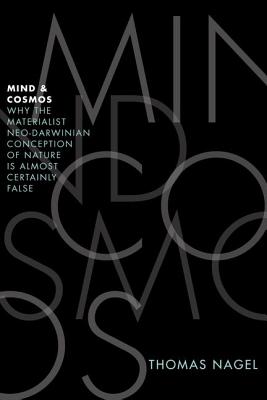
Thomas Nagel's Mind and Cosmos: Why the Materialist Neo-Darwinian Conception of Nature Is Almost Certainly False


Thomas Nagel published a book recently, Mind and Cosmos: Why the Materialist Neo-Darwinian Conception of Nature Is Almost Certainly False, an attack of the perspective of scientific reductionism, "exploring what consciousness might be if it isn’t easily explained as a direct property of physical interactions and if the door to the unknown were, as Richard Feynman passionately advocated, left ajar." Reviews have been - in general - mixed.

Here are a few of the reviews:

From Brain Pickings:

Mind and Cosmos: Philosopher Thomas Nagel’s Brave Critique of Scientific Reductionism

by

How our hunger for definitive answers robs us of the intellectual humility necessary for understanding the universe and our place in it.

“The purpose of science is not to cure us of our sense of mystery and wonder,” Stanford’s Robert Sapolsky famously noted, “but to constantly reinvent and reinvigorate it.” And yet, we live in a media culture that warps seeds of scientific understanding into sensationalist, definitive headlines about the gene for obesity or language or homosexuality and maps where, precisely, love or fear or the appreciation of Jane Austen is located in the brain — even though we know that it isn’t the clinging to answers but the embracing of ignorance that drives science.

In 1974, philosopher Thomas Nagel penned the essay “What It’s Like To Be A Bat?”, which went on to become one of the seminal texts of contemporary philosophy of mind. Nearly four decades later, he returns with Mind and Cosmos: Why the Materialist Neo-Darwinian Conception of Nature Is Almost Certainly False (public library) — a provocative critique of the limits of scientific reductionism, exploring what consciousness might be if it isn’t easily explained as a direct property of physical interactions and if the door to the unknown were, as Richard Feynman passionately advocated, left ajar.
* * * * *
 From the Boston Review:

Remarkable Facts

Ending Science As We Know It
Thomas Nagel, Mind and Cosmos: Why the Materialist Neo-Darwinian Conception of Nature Is Almost Certainly False
Oxford University Press, $24.95 (cloth)


Thomas Nagel, a distinguished philosopher at NYU, is well known for his critique of “materialistic reductionism” as an account of the mind-body relationship. In his new and far-reaching book Mind and Cosmos, Nagel extends his attack on materialistic reductionism—which he describes as the thesis that physics provides a complete explanation of everything—well beyond the mind-body problem. He argues that evolutionary biology is fundamentally flawed and that physics also needs to be rethought—that we need a new way to do science.

Nagel’s new way is teleological—scientific explanations need to invoke goals, not just mechanistic causes. The conventional story of the emergence of modern science maintains that Galileo and Newton forever banished Aristotle’s teleology. So Mind and Cosmos is an audacious book, bucking the tide. Nagel acknowledges that he has no teleological theory of his own to offer. His job, as he sees it, is to point to a need; creative scientists, he hopes, will do the heavy lifting.

Nagel’s rejection of materialistic reductionism does not stem from religious conviction. He says that he doesn’t have a religious bone in his body. The new, teleological science he wants is naturalistic, not supernaturalistic. This point needs to be remembered, given that the book begins with kind words for proponents of intelligent design. Nagel applauds them for identifying problems in evolutionary theory, but he does not endorse their solution.
 * * * * *
From Prospect:


Thomas Nagel is not crazy

by
The philosopher - Thomas Nagel thinks the materialist scientific worldview cannot explain consciousness. Is he right? Image: perpetualplum.

If we’re to believe science, we’re made of organs and cells. These cells are made up of organic matter. Organic matter is made up chemicals. This goes all the way down to strange entities like quarks and Higgs bosons. We’re also conscious, thinking things. You’re reading these words and making sense of them. We have the capacity to reason abstractly and grapple with various desires and values. It is the fact that we’re conscious and rational that led us to believe in things like Higgs bosons in the first place.

But what if science is fundamentally incapable of explaining our own existence as thinking things? What if it proves impossible to fit human beings neatly into the world of subatomic particles and laws of motion that science describes? In Mind and Cosmos (Oxford University Press), the prominent philosopher Thomas Nagel’s latest book, he argues that science alone will never be able to explain a reality that includes human beings. What is needed is a new way of looking at and explaining reality; one which makes mind and value as fundamental as atoms and evolution.

For most philosophers, and many people in general, this is a radical departure from the way we understand things. Nagel, according to his critics, has completely lost it. Linking to one particularly damning review in The Nation, Steven Pinker tweeted, “What has gotten into Thomas Nagel? Two philosophers expose the shoddy reasoning of a once-great thinker.”
* * * * *

From The Nation:

Do You Only Have a Brain? On Thomas Nagel


Thomas Nagel, a professor of philosophy and of law at New York University, has made his reputation over the last fifty years as a leading contributor to moral and political philosophy, with occasional forays into the philosophy of mind. Most famously, and most relevant to his new book, Mind and Cosmos, he wrote an influential paper in the 1970s with the memorable title “What Is It Like to Be a Bat?” Nagel tried to demonstrate the implausibility of the notion that, even if one knew all the relevant physical facts about the brains of bats, one could have any idea what it felt like to be a bat. How could the subjective feeling of this experience be captured by a set of cold, objective biological and chemical facts about neurons? Nagel’s new book revisits some of these ideas and aims to “develop the rival alternative conceptions” to what he calls the “materialism and Darwinism” of our age.
Nagel’s is the latest in what has become a small cottage industry involving a handful of prominent senior philosophers expressing skepticism about aspects of Darwin’s theory of evolution by natural selection. Some, like the overtly Christian philosopher Alvin Plantinga, have made a career of dialectical ingenuity in support of the rationality of religious faith. Others, such as Jerry Fodor, are avowed atheists like Nagel, and have only tried to raise challenges to discrete aspects of evolutionary explanations for biological phenomena. Plantinga’s influence has largely been limited to other religious believers, while Fodor’s challenge was exposed rather quickly by philosophers as trading on confusions (even Nagel disowns it in a footnote). Nagel now enters the fray with a far-reaching broadside against Darwin and materialism worthy of the true-believing Plantinga (whom Nagel cites favorably). We suspect that philosophers—even philosophers sympathetic to some of Nagel’s concerns—will be disappointed by the actual quality of the argument.

Nagel opposes two main components of the “materialist” view inspired by Darwin’s theory of evolution by natural selection. The first is what we will call theoretical reductionism, the view that there is an order of priority among the sciences, with all theories ultimately derivable from physics and all phenomena ultimately explicable in physical terms. We believe, along with most philosophers, that Nagel is right to reject theoretical reductionism, because the sciences have not progressed in a way consistent with it. We have not witnessed the reduction of psychology to biology, biology to chemistry, and chemistry to physics, but rather the proliferation of fields like neuroscience and evolutionary biology that explain psychological and biological phenomena in terms unrecognizable by physics. As the philosopher of biology Philip Kitcher pointed out some thirty years ago, even classical genetics has not been fully reduced to molecular genetics, and that reduction would have been wholly within one field. We simply do not see any serious attempts to reduce all the “higher” sciences to the laws of physics.