Showing posts with label Americana. Show all posts

Sunday, April 21, 2013

Classic Blues - A Video Collection


I've been a fan of the Delta Blues for decades now, since I first discovered Robert Johnson back in college (Eric Clapton had named him the best guitarist ever). I immediately bought the box set of Robert Johnson's Complete Recordings, and not later bought a box set of Lighting Hopkins.

This morning, 3 Quarks posted a Willie Dixon video, which led me to create a playlist of classic blues, featuring Dixon, Robert Johnson, Lightning Hopkins, Muddy Waters, Sonny Boy Williamson, Memphis Slim, Howlin' Wolf, John Lee Hooker, and a bunch of others, including full concerts/collections from Muddy Waters and Stevie Ray Vaughan.

Enjoy - there is 7.5 hours of music here.

Monday, January 14, 2013

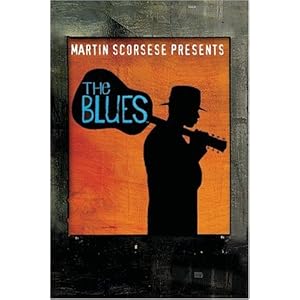
Martin Scorsese Presents The Blues: A Film Tribute to America’s Great Musical Tradition


Via Open Culture, this is an excellent look at America's first indigenous music, the blues, from which flows country, rock, and even hip hop. And Scorsese is a true fan, so to have him create this project is pretty cool. I have included two other segments from the full 7-Part DVD, Martin Scorsese presents The Blues - A Musical Journey (2003), segments by Wim Wenders and Clint Eastwood.

Martin Scorsese Presents The Blues: A Film Tribute to America’s Great Musical Tradition

January 4th, 2013


“I can’t imagine my life, or anyone else’s, without music,” says filmmaker Martin Scorsese. “It’s like a light in the darkness that never goes out.” So begins Feel Like Going Home, Scorsese’s fascinating and at times lyrical documentary on the origin and evolution of the blues.

Feel Like Going Home (shown above in its entirety) is the first of seven installments, by seven directors, in the PBS series The Blues. It follows musician Corey Harris as he traces the roots of the Blues from the Mississippi Delta back to West Africa. The documentary includes interviews and performances from contemporary artists like Taj Mahal and Willie King, as well as archival footage of legends like Son House, Muddy Waters and Lead Belly.

“I’ve always felt an affinity for blues music,” Scorsese told PBS. “The culture of storytelling through music is incredibly fascinating and appealing to me. The blues have great emotional resonance and are the foundation for American popular music.” Scorsese served as executive producer of the series, which includes episodes directed by Clint Eastwood (Piano Blues) and Wim Wenders (The Soul of a Man). The complete seven-part series is available on DVD as Martin Scorsese Presents The Blues–A Musical Journey.

Related Content:

Wim Wenders: The Soul of a Man


Clint Eastwood: Piano Blues

Wednesday, January 02, 2013

Only Known Footage of the Legendary Bluesman Lead Belly (1935 and 1945)


Open Culture offers up this wonderful treat for fans of the original blues music and one of its legendary, larger-than-life figures, Lead Belly.

Essential Recordings from the Rock and Roll Hall of Fame:

Listen "Where Did You Sleep Last Night"
Listen "Goodnight Irene"

Watch the Only Known Footage of the Legendary Bluesman Lead Belly (1935 and 1945)

January 2nd, 2013


Huddie Ledbetter, better known by his nickname “Lead Belly,” was one of the greatest blues musicians of all time. His songs have been covered by hundreds of artists, ranging from Frank Sinatra to Led Zeppelin. Lead Belly is also famous for what his biography at the Rock and Roll Hall of Fame describes as “the mythic outline of his life”:
Born circa 1885 in rural northwest Louisiana, Lead Belly rambled across the Deep South from the age of 16. While working in the fields, he absorbed a vast repertoire of songs and styles. He mastered primordial blues, spirituals, reels, cowboy songs, folk ballads and prison hollers. In 1917, Lead Belly served as Blind Lemon Jefferson’s “lead boy”–i.e., his guide, companion and protégé–on the streets of Dallas. A man possessed with a hot temper and enormous strength, Lead Belly spent his share of time in Southern prisons. Convicted on charges of murder (1917) and attempted murder (1930), Lead Belly literally sang his way to freedom, receiving pardons from the governors of Texas and Louisiana. The second of his releases was largely obtained through the intervention of John and Alan Lomax, who first heard Lead Belly at Angola State Prison while recording indigenous Southern musicians for the library of Congress.
In 1935 the March of Time newsreel company told the story of Lead Belly’s discovery by John Lomax in the short film above. Although the scripted film will strike modern viewers as dubious in some respects (March of Time founder Henry Luce described the series as “fakery in allegiance to the truth”), the newsreel is nevertheless a fascinating document of Lead Belly, who was about 50 years old at the time, along with Lomax and Lead Belly’s wife, Martha Promise. At one point Lead Belly sings his classic song,“Goodnight, Irene.” According to Sharon R. Sherman in Documenting Ourselves: Film, Video, and Culture, the 1935 Lead Belly newsreel is the earliest celluloid document of American folklore. Lead Belly did work for Lomax after his second release from prison, as the newsreel says, following him back to the East Coast and serving as his chauffeur. In New York Lead Belly played in Harlem and also came into contact with leftist folk singers like Woody Guthrie and Pete Seeger. Lead Belly became known as the “King of the Twelve-String Guitar.”


Three Songs by Leadbelly, the only other film known to exist of the great bluesman, was made ten years after the newsreel. It was photographed by Blanding Sloan and assisted by Wah Mong Chang and edited two decades later by Pete Seeger. It begins with scenes of the graveyard in Mooringsport, Louisiana, where Lead Belly was buried after his death in 1949, accompanied by an instrumental version (with humming) of “Where Did You Sleep Last Night?” Lead Belly actually performed six songs for the film, but only three could be salvaged. Seeger is quoted by Charles Wolfe and Kip Lornell in The Life and Legend of Leadbelly as describing Sloan’s film as “pretty amateurish”:
I think that he recorded Leadbelly in a studio the day before, then he played the record back while Leadbelly moved his hands and lips in synch with the record. He’d taken a few seconds from one direction and a few seconds from another direction, which is the only reason I was able to edit it. I spent three weeks with a Moveiola, up in my barn, snipping one frame off here and one frame off there and juggliing things around. I was able to synch up three songs: “Grey Goose,” “Take This Hammer,” and “Pick a Bale of Cotton.”

Related content:

Wednesday, August 08, 2012

Rolling Stone - Tom Waits' Big Reveal: New Clip for 'Hell Broke Luce"


If you are on the Tom Waits mailing list, you have been getting some intriguing images over the last couple of days promising a "big reveal" Tuesday morning - and the reveal was a new and very cool/strange (would you expect any less) video for the song "Hell Broke Luce," from the 2011 Bad As Me album.

Rolling Stone posted the video and some background to go with it.


Singer dropped vague hints about video over the past week


By Rolling Stone

August 7, 2012

What a build-up: Tom Waits has spent the past week dropping hints about an announcement he had planned for today, and the Web was thick with speculation: Could it be a tour? New music? A concert cruise? Nope. Turns out it was the release of a new video for "Hell Broke Luce," a scabrous, blackly comic anti-war song from last year's Bad As Me. The clip was the source of various surreal images posted on Waits' website last week, depicting the singer sporting an eyepatch and a scimitar, underwater flanked by boxy sharks (that turn out to be submarines) and poking an oversized spoon at a roaring fire.

Directed by Matt Mahurin, the video is as gritty as the song, as Waits pulls a small house through an arid, blasted landscape; over the ocean while surrounded by warring flotillas; and under water, trailed by boxy shark submarines.

Waits addressed the speculation over his clues in a statement: "As most of you guessed, it’s a tour . . . a tour de force!" The singer said he and Kathleen Brennan, his wife and songwriting partner, envisioned the song as "an enlightened drill sergeant yelling the hard truths of war to a brand new batch of recruits. The video grew from the gnawing image of a soldier pulling his home, through a battlefield, at the end of a rope. I think you will agree, it's uplifting and fun."

Friday, April 27, 2012

NPR - Howlin' Wolf: A Blues Legend With An Earthy Sound

The other day I posted an article by psychoanalyst Robert Stolorow on the healing power of the blues. In that line of thinking, here is a piece from NPR on the blues of Howlin' Wolf,  one of the greats - a segment occasioned by the release (a few months back) of a new four-disc retrospective set titled Smokestack Lightning: The Complete Chess Masters 1931-1960.
Howlin Wolf
  Frank Driggs Collection

With his growling vocals, Howlin' Wolf fought his way to the top of the cutthroat Chicago blues scene.


April 26, 2012
 
Howlin' Wolf's masters from the Chess label have just been released on a four-disc set titled Smokestack Lightning: The Complete Chess Masters 1931-1960.

When your father has worked a good piece of bottomland into producing crops that support the family and he dies young, if you're the oldest son you have to take over, no matter what. That's one theory of why Chester Arthur Burnett didn't make his first recording until he was 41. Other bits of the story, which are still falling into place, have him learning music from Charley Patton, maybe spending some time in prison and having a bad time in the Army during the war. But by 1951, the farm was in safe hands, and Burnett, performing on the radio as Howlin' Wolf, caught the ear of Sam Phillips, who was running the Memphis Recording Service and talent-scouting for blues labels like Chess and Modern.

These early recordings were earthy, a quality which provided the foundation for Wolf's style and his appeal. Chess had its first hit with Wolf's "How Many More Years" in 1951, and it cracked the national R&B Top 10.

This was Wolf's regular Memphis band: Willie Johnson on guitar, Wolf on harmonica and Willie Steele on drums, with piano possibly by Ike Turner. Chess wanted him to move to Chicago so it could record him itself and use some of its house band, so in 1953, he packed a Cadillac with his stuff and took off north. By March, he was in Chess Studios, letting everyone know he'd arrived in the song "I'm the Wolf."


It's not his most compelling songwriting, but he had the A-team behind him — Otis Spann on piano and Willie Dixon on bass — and he was just getting warmed up. With the band now containing Hubert Sumlin, a very young guitarist Wolf called his "adopted son" and the musician who'd shape his sound and stick with him until Wolf died, he took to the road, barnstorming the South and then returning to Chicago's South Side clubs in triumph. He only recorded four sides in 1955, but started 1956 with one of the most enduring pieces of folk poetry ever written, "Smokestack Lightning."

What is "Smokestack Lightning," anyway? What's going on in this song? Who knows? Who cares? The towering vocal delivery means that Wolf knows, and he passes that knowledge along, utterly bypassing the listener's intellect. It just missed the R&B Top 10 in March, but it was competing with a lot of modern rock 'n' roll. Wolf wouldn't be rock 'n' roll until a few years later, when the Brits discovered him, but he was a law unto himself — and very few Chicago bluesmen except Muddy Waters dared challenge him.

The fact was, blues was fading as the audience for it aged and younger men — and a couple of women — were updating its sound in Chicago. Wolf's records fell off the charts, but he continued to record and tour, and he was one of the few blues artists whose albums Chess put out, confident that it could sell them. One problem he faced, though, was that his songwriting didn't seem to be clicking with record buyers anymore, so in 1960, Chess put him in the studio with a trio of Willie Dixon's tunes: "Back Door Man," "Spoonful" and "Wang Dang Doodle," which was a hit for KoKo Taylor.

Howlin' Wolf still had a big chapter of his life to go, and he'd live until 1976. Great records lay around the corner, as well as a revival of his career as the folkies and the rock crowd discovered him. I hope Universal sees fit to issue a second volume dedicated to more music by the one and only Howlin' Wolf.

Related NPR Stories

Saturday, April 07, 2012

Open Culture - David Lynch’s New ‘Crazy Clown Time’ Video: Intense Psychotic Backyard Craziness (NSFW)


WOW, one has to wonder what David Lynch would be like if he didn't meditate every day. His subjectivity must be a scary place . . . or at least the glimpses of it that he shares with us are eerie and freaky. His album, from which this video comes, is Crazy Clown Time.

David Lynch’s New ‘Crazy Clown Time’ Video: Intense Psychotic Backyard Craziness (NSFW)


April 3rd, 2012


What could be more wholesome and all-American than a backyard barbecue? Unless, of course, the backyard in question belongs to David Lynch.

Lynch has long-since established himself as a sort of anti-Norman Rockwell. This week, with the release of a new video to go with his debut music album, Crazy Clown Time, Lynch stays true to form. As he explained to Entertainment Weekly when the video was still in production, “A ‘Crazy Clown Time’ should have an intense psychotic backyard craziness, fueled by beer.” Yesterday Lynch offered further explanation when he sent a message on Twitter announcing the release: “Be the 1st on your block to see the Advancement of the Race which Conway Twitty spoke so clearly.”

The video lasts seven minutes and might be considered NSFW, depending on your office’s policy on nudity, demonic wailing and depictions of people pouring lighter fluid on their spiked mohawk hairdo and setting it afire.

Related Content:
David Lynch’s Surreal Commercials
David Lynch’s Eraserhead Remade in Clay

Wednesday, January 25, 2012

NPR - First Listen: Leonard Cohen, 'Old Ideas'

 
NPR has made Leonard Cohen's new album, "Old Ideas," available in its entirety for streaming, but only for a limited time - so go listen now.

Leonard Cohen's new album, Old Ideas, comes out Jan. 31.

January 22, 2012

In a recent public conversation with fellow rock bard Jarvis Cocker about the new recording Old Ideas, Leonard Cohen answered the younger man's suggestion that his songs are "penitential hymns" (a phrase Cohen himself employs in his new song "Come Healing") with jocular humility. "I'm not sure what that means, to be honest," Cohen reportedly replied. He continued, "Who's to blame in this catastrophe? I never figured that out."

The catastrophe he mentions is life itself — a description Cohen probably picked up from a fictional character he admires, Zorba the Greek, who embraced the "full catastrophe" of a well-connected, joyfully physical existence. The Buddhist teacher Jon Kabat-Zinn has also borrowed it for a book title, which is relevant, since Cohen's writing is famously philosophical, connecting his Jewish heritage to years of Zen meditation and an enduring existentialist bent.

But this spiritual master is a sensualist, too: His artistry is grounded in the careful examination of how the body and the soul interact. Old Ideas, his 12th studio album, was recorded after a triumphant world tour that had Cohen performing three-hour shows night after night — no mean feat for a man in his late 70s. It throbs with that life, its verses rife with zingers and painful confessions, and its music sounds more richly varied than anything Cohen has done in years.

Its depth comes in the tenderness and refined passion Cohen brings to his thorough descriptions of being human — a state in which pain and failure dance with transcendence and bliss, as he growls in harmony with his angelic backup singers in the beautiful "Come Healing," "The heart beneath is teaching to the broken heart above."


Old Ideas provides plenty of new lines like that, worthy of a Quotable Cohen anthology. (My favorite right now is from the folksy waltz "Crazy to Love You": "Crazy has places to hide in that are deeper than any goodbye.") But what makes this album special is its sound, which steps back from the synthesizer-heavy arrangements dominant on Cohen's other late-period work and explores a range of styles, from countrypolitan twang to gypsy jazz to Dylanesque blues.

Bobby Zimmerman, in fact, is a clear reference point throughout Old Ideas. At times, it seems like a response to Time Out of Mind, the 1997 release that marked the beginning of Dylan's epic lion-in-winter phase. (That he was only 57 when he made it shows how long a pop star's old age can last.) Like that album, Old Ideas contemplates mortality in the bitter light of failed romance; it fearlessly broaches emotional extremes while still dropping the wisdom of an elder who should know better. "The Darkness," with its funky undertow, and "Banjo," an easy talking blues, are especially Dylanesque, with Cohen adding tartness to his own gravelly growl and his band getting into a loose Americana groove.

In the end, of course, Leonard Cohen remains his own man, with a unique sound that brings the temple to the cabaret and a sensibility balancing humor and profundity on the crystal stem of a glass filled with red wine of an ideal vintage. In "Going Home," whose words were recently featured in The New Yorker by poetry editor Paul Muldoon, Cohen's inner spirit pokes fun at his pop-star self: "He's a lazy bastard living in a suit," the enlightened voice says. But you know what? That suit still fits, and the cut is perfection.

First Listen: Leonard Cohen, 'Old Ideas'

Wednesday, October 26, 2011

Tom Waits: A Desperate Voice For Desperate Times

You can hear the new Tom Waits album in its entirety on NPR for the next few days - if you are a Tom Waits fan, this is a can't miss opportunity to hear the new material - his first studio album in seven years (and his 17th overall).

You can listen to the brief review of the album here:

Tom Waits: A Desperate Voice For Desperate Times

All Things Considered

[4 min 7 sec] 
Tom Waits has just released his latest album, Bad As Me.
October 26, 2011
Tom Waits generally sings like a psychotic carnival barker or a drunken lounge crooner. And I really mean that as a compliment.
It's not everyone's cup of tea, that voice. Pushed to extremes like the characters in his songs, his voice is an exaggeration full of truth. He's a singer of blues sentiment like Screamin' Jay Hawkins or Howlin' Wolf orRadiohead's Thom Yorke. His latest album is called Bad As Me, and the songs on it sound truer than ever — partly because Waits' songwriting and arranging are still extremely potent, and partly because his thematic desperation fits this particular moment in history like a ragged glove.
There's a line in one song about bailing out millionaires, and plenty of lyrics about money, jobs and the lack thereof. But Waits' music draws on the sweep of American history, early rock 'n' roll, old Mexican ballads and vaudeville-era pop, and you realize that these themes are depressingly eternal. Waits also sings about the power of love; about Eisenhower, Elvis and Wolfman Jack; about unlucky bodies piled up at the morgue; and, in a chilling song called "Hell Broke Luce," about a damaged soldier furiously trying to comprehend what he's lost, and the reasons why. 
At this point, Waits seems to be like Woody Allen: so respected by his peers that truly legendary artists come out for his projects. Keith Richards of The Rolling Stones is featured in "Hell Broke Luce," along with Marc Ribot, an old Waits crony who might be America's greatest session guitarist at the moment. But Waits is an auteur just like Allen, and all the players ultimately serve his vision. Waits is an old pro singing slightly freakish songs — which, after a couple of listens, reveal themselves as not so freakish at all. Just human. 
Here is the text that goes with the page to hear the new album:

First Listen: Tom Waits, 'Bad As Me'