Showing posts with label APA. Show all posts

Thursday, April 10, 2014

Omnivore - Psychologists Search

From Bookforum's Omnivore blog, this is a new collection of links related to psychology, research, and the state of the field.

In another piece of research not included below, Researchers Identify 15 more Facial Emotions:
The traditional six basic human emotions are happy, sad, fearful, angry, surprised and disgusted. For years, researchers have focused on these six categories, which are often depicted via specific facial muscles, when they assess people's moods. Now, according to a new study headed by associate professor Aleix Martinez from Ohio State University, the researchers have identified 15 more facial expressions, which they called "compound emotions." 
Interesting.

Psychologists search

Apr 8 2014 | 9:00AM

Tuesday, June 18, 2013

Ethan Watters - The Problem With Psychiatry, the ‘DSM,’ and the Way We Study Mental Illness

From Pacific Standard magazine, Ethan Watters takes a look at the DSM and the history of diagnosis in psychiatry. Watters explains how the diagnostic manual determines which mental illnesses are "legitimate," which have legal standing, which get reimbursed by insurance, and how all of this has the subtext of defining our people and our culture.

The Problem With Psychiatry, the ‘DSM,’ and the Way We Study Mental Illness


Psychiatry is under attack for not being scientific enough, but the real problem is its blindness to culture. When it comes to mental illness, we wear the disorders that come off the rack.


June 3, 2013 • By Ethan Watters

In the 1880s, women by the tens of thousands displayed the distinctive signs of hysteria: convulsive fits, facial tics, spinal irritation, sensitivity to touch, leg paralysis. 
(ILLUSTRATION: MICHELLE THOMPSON)

Imagine for a moment that the American Psychiatric Association was about to compile a new edition of its Diagnostic and Statistical Manual of Mental Disorders. But instead of 2013, imagine, just for fun, that the year is 1880.

Transported to the world of the late 19th century, the psychiatric body would have virtually no choice but to include hysteria in the pages of its new volume. Women by the tens of thousands, after all, displayed the distinctive signs: convulsive fits, facial tics, spinal irritation, sensitivity to touch, and leg paralysis. Not a doctor in the Western world at the time would have failed to recognize the presentation. “The illness of our age is hysteria,” a French journalist wrote. “Everywhere one rubs elbows with it.”

Hysteria would have had to be included in our hypothetical 1880 DSM for the exact same reasons that attention deficit hyperactivity disorder is included in the just-released DSM-5. The disorder clearly existed in a population and could be reliably distinguished, by experts and clinicians, from other constellations of symptoms. There were no reliable medical tests to distinguish hysteria from other illnesses then; the same is true of the disorders listed in the DSM-5 today. Practically speaking, the criteria by which something is declared a mental illness are virtually the same now as they were over a hundred years ago.

The DSM determines which mental disorders are worthy of insurance reimbursement, legal standing, and serious discussion in American life. That its diagnoses are not more scientific is, according to several prominent critics, a scandal. In a major blow to the APA’s dominance over mental-health diagnoses, Thomas R. Insel, director of the National Institute of Mental Health, recently declared that his organization would no longer rely on the DSM as a guide to funding research. “The weakness is its lack of validity,” he wrote. “Unlike our definitions of ischemic heart disease, lymphoma, or AIDS, the DSM diagnoses are based on a consensus about clusters of clinical symptoms, not any objective laboratory measure. In the rest of medicine, this would be equivalent to creating diagnostic systems based on the nature of chest pain or the quality of fever.” As an alternative, Insel called for the creation of a new, rival classification system based on genetics, brain imaging, and cognitive science.

This idea—that we might be able to strip away all subjectivity from the diagnosis of mental illness and render psychiatry truly scientific—is intuitively appealing. But there are a couple of problems with it. The first is that the science simply isn’t there yet. A functional neuroscientific understanding of mental suffering is years, perhaps generations, away from our grasp. What are clinicians and patients to do until then? But the second, more telling problem with Insel’s approach lies in its assumption that it is even possible to strip culture from the study of mental illness. Indeed, from where I sit, the trouble with the DSM— both this one and previous editions—is not so much that it is insufficiently grounded in biology, but that it ignores the inescapable relationship between social cues and the shifting manifestations of mental illness.
It is true that the DSM has a great deal of influence in modern America, but it may be more of a scapegoat than a villain.

PSYCHIATRY TENDS NOT TO learn from its past. With each new generation, psychiatric healers dismiss the enthusiasms of their predecessors by pointing out the unscientific biases and cultural trends on which their theories were based. Looking back at hysteria, we can see now that 19th-century doctors were operating amidst fanciful beliefs about female anatomy, an assumption of feminine weakness, and the Victorian-era weirdness surrounding female sexuality. And good riddance to bad old ideas. But the more important point to take away is this: There is little doubt that the symptoms expressed by those thousands of women were real.

The resounding lesson of the history of mental illness is that psychiatric theories and diagnostic categories shape the symptoms of patients. “As doctors’ own ideas about what constitutes ‘real’ dis-ease change from time to time,” writes the medical historian Edward Shorter, “the symptoms that patients present will change as well.”

This is not to say that psychiatry wantonly creates sick people where there are none, as many critics fear the new DSM-5 will do. Allen Frances—a psychiatrist who, as it happens, was in charge of compiling the previous DSM, the DSM-IV—predicts in his new book, Saving Normal, that the DSM-5 will “mislabel normal people, promote diagnostic inflation, and encourage inappropriate medication use.” Big Pharma, he says, is intent on ironing out all psychological diversity to create a “human monoculture,” and the DSM-5 will facilitate that mission. In Frances’ dystopian post-DSM-5 future, there will be a psychoactive pill for every occasion, a diagnosis for every inconvenient feeling: “Disruptive mood dysregulation disorder” will turn temper tantrums into a mental illness and encourage a broadened use of antipsychotic drugs; new language describing attention deficit disorder that expands the diagnostic focus to adults will prompt a dramatic rise in the prescription of stimulants like Adderall and Ritalin; the removal of the bereavement exclusion from the diagnosis of major depressive disorder will stigmatize the human process of grieving. The list goes on.

In 2005, a large study suggested that 46 percent of Americans will receive a mental-health diagnosis at some point in their lifetimes. Critics like Frances suggest that, with the new categories and loosened criteria in the DSM-5, the percentage of Americans thinking of themselves as mentally ill will rise far above that mark.

But recent history doesn’t support these fears. In 1994 the DSM-IV—the edition Frances oversaw—launched several new diagnostic categories that became hugely popular among clinicians and the public (bipolar II, attention deficit hyperactivity disorder, and social phobia, to name a few), but the number of people receiving a mental-health diagnosis did not go up between 1994 and 2005. In fact, as psychologist Gary Greenberg, author of The Book of Woe, recently pointed out to me, the prevalence of mental health diagnoses actually went down slightly. This suggests that the declarations of the APA don’t have the power to create legions of mentally ill people by fiat, but rather that the number of people who struggle with their own minds stays somewhat constant.

What changes, it seems, is that they get categorized differently depending on the cultural landscape of the moment. Those walking worried who would have accepted the ubiquitous label of “anxiety” in the 1970s would accept the label of depression that rose to prominence in the late 1980s and the 1990s, and many in the same group might today think of themselves as having social anxiety disorder or ADHD.

Viewed over history, mental health symptoms begin to look less like immutable biological facts and more like a kind of language. Someone in need of communicating his or her inchoate psychological pain has a limited vocabulary of symptoms to choose from. From a distance, we can see how the flawed certainties of Victorian-era healers created a sense of inevitability around the symptoms of hysteria. There is no reason to believe that the same isn’t happening today. Healers have theories about how the mind functions and then discover the symptoms that conform to those theories. Because patients usually seek help when they are in need of guidance about the workings of their minds, they are uniquely susceptible to being influenced by the psychiatric certainties of the moment. There is really no getting around this dynamic. Even Insel’s supposedly objective laboratory scientists would, no doubt, inadvertently define which symptoms our troubled minds gravitate toward. The human unconscious is adept at speaking the language of distress that will be understood.


WHY DO PSYCHIATRIC DIAGNOSES fade away only to be replaced by something new? The demise of hysteria may hold a clue. In the early part of the 20th century, the distinctive presentation of the disorder began to blur and then disappear. The symptoms began to lose their punch. In France this was called la petite hysterie. One doctor described patients who would “content themselves with a few gesticulatory movements, with a few spasms.” Hysteria had begun to suffer from a kind of diagnostic overload. By 1930s or so, the dramatic and unmistakable symptoms of hysteria were vanishing from the cultural landscape because they were no longer recognized as a clear communication of psychological suffering by a new generation of women and their healers.

It is true that the DSM has a great deal of influence in modern America, but it may be more of a scapegoat than a villain. It is certainly not the only force at play in determining which symptoms become culturally salient. As Frances suggests, the marketing efforts of Big Pharma on TV and elsewhere have a huge influence over which diagnoses become fashionable. Some commentators have noted that shifts in diagnostic trends seem uncannily timed to coincide with the term lengths of the patents that pharmaceutical companies hold on drugs. Is it a coincidence that the diagnosis of anxiety diminished as the patents on tranquilizers ran out? Or that the diagnosis of depression rose as drug companies landed new exclusive rights to sell various antidepressants? Consider for a moment that the diagnosis of depression didn’t become popular in Japan until Glaxo-Smith-Klein got approval to market Paxil in the country.

Journalists play a role as well: We love to broadcast new mental-health epidemics. The dramatic rise of bulimia in the United Kingdom neatly coincided with the media frenzy surrounding the rumors and subsequent revelation that Princess Di suffered from the condition. Similarly, an American form of anorexia hit Hong Kong in the mid-1990s just after a wave of local media coverage brought attention to the disorder.

The trick is not to scrub culture from the study of mental illness but to understand how the unconscious takes cues from its social settings. This knowledge won’t make mental illnesses vanish (Americans, for some reason, find it particularly difficult to grasp that mental illnesses are absolutely real and culturally shaped at the same time). But it might discourage healers from leaping from one trendy diagnosis to the next. As things stand, we have little defense against such enthusiasms. “We are always just one blockbuster movie and some weekend therapist’s workshops away from a new fad,” Frances writes. “Look for another epidemic beginning in a decade or two as a new generation of therapists forgets the lessons of the past.” Given all the players stirring these cultural currents, I’d make a sizable bet that we won’t have to wait nearly that long.

Saturday, December 01, 2012

Psychiatrists Approve the New DSM-5 Revisions


After several years of wrangling, arguing, and ignoring most of the serious criticisms, the APA (American Psychiatric Association) has voted to approve the controversial revisions that have been drafted for the industry standard psychiatric diagnosis manual.

Say goodbye to dyslexia, Asperger's Syndrome, several of the personality disorders, and grief as a natural response to loss - and say hello to bratty children (often the result of poor parenting skills) as mentally ill, only six personality disorders (antisocial, avoidant, borderline, narcissistic, obsessive/compulsive and schizotypal) down from ten, and grief lasting more than two weeks as a major depressive disorder ("having just 2 weeks of sadness and loss of interest along with reduced appetite, sleep, and energy").

You can find out more at the DSM-5 website or Dr. Allen Frances' Psychology Today blog, DSM-5 in Distress (Frances oversaw the DSM-IV revision process but was not even invited to participate in the 5th revision - this points to a possible bias in his criticisms [which I reject] and to the short-sightedness of the APA).


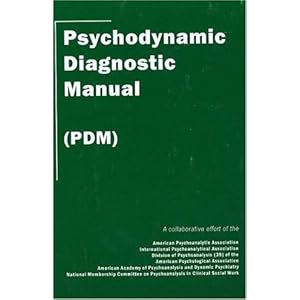
One last thought - the DSM is created by and for psychiatrists, not counselors, social workers, or psychologists (collectively, psychotherapists). We should leave them to their book and work together to create a new manual reflecting what we actually worth when we see clients (most psychiatrists no longer do therapy, they prescribe drugs). Failing that, we should switch (for now) to the Psychodynamic Diagnostic Manual, which is more suited to therapy than the DSM ever was or will be in the future.

DSM-5: Psychiatrists OK Vast Changes To Diagnosis Manual 
By LINDSEY TANNER 12/01/12 
CHICAGO -- For the first time in almost two decades the nation's psychiatrists are changing the guidebook they use to diagnose mental disorders. Among the most controversial proposed changes: Dropping certain familiar terms like Asperger's disorder and dyslexia and calling frequent, severe temper tantrums a mental illness 
The board of trustees for the American Psychiatric Association voted Saturday in suburban Washington, D.C., on scores of revisions that have been in the works for several years. Details will come next May when the group's fifth diagnostic manual is published. 
The trustees made the final decision on what proposals made the cut; recommendations came from experts in several task force groups assigned to evaluate different mental illnesses. 
Board members were tightlipped about the update, but its impact will be huge, affecting millions of children and adults worldwide. 
The manual "defines what constellations of symptoms health care professionals recognize as mental disorders and more importantly ... shapes who will receive what treatment. Even seemingly subtle changes to the criteria can have substantial effects on patterns of care," said Dr. Mark Olfson, a Columbia University psychiatry professor who was not involved in the revision process. 
The manual also is important for the insurance industry in deciding what treatment to pay for, and it helps schools decide how to allot special education. 
The guidebook's official title is the Diagnostic and Statistical Manual of Mental Disorders. The new one is the fifth edition, known as the DSM-5. A 2000 edition made minor changes but the last major edition was published in 1994. 
The manual "seeks to capture the current state of knowledge of psychiatric disorders. Since 2000 ... there have been important advances in our understanding of the nature of psychiatric disorders," Olfson said. 
Expected changes include formally adopting a term for children and adults with autism – "autism spectrum disorder," encompassing those with severe autism, who often don't talk or interact, and those with mild forms including Asperger's. Asperger's patients often have high intelligence and vast knowledge on quirky subjects but lack social skills.

Saturday, October 15, 2011

A Call for Annulment of APA’s PENS Report (on Torture)

Left: Marty Seligman. A Guantanamo detainee sits alone inside a fenced area during his daily outside period, at Guantanamo Bay U.S. Naval Base, Cuba.
Left: Marty Seligman. A Guantanamo detainee sits alone inside a fenced area during his daily outside period,
at Guantanamo Bay U.S. Naval Base, Cuba.

A friend sent this to me the other day - I signed it. If you are involved in the counseling or psychology world in any way, you may want to sign it too.

By way of background, this story ran in Salon in 2010:
“War on terror” psychologist gets giant no-bid contract


The Army has handed a $31 million deal to Dr. Martin Seligman, who once blasted academics for "forgetting 9/11"


BY MARK BENJAMIN


The Army earlier this year steered a $31 million contract to a psychologist whose work formed the psychological underpinnings of the Bush administration’s torture program.


The Army awarded the “sole source” contract in February to the University of Pennsylvania for resilience training, or teaching soldiers to better cope with the psychological strain of multiple combat tours. The university’s Positive Psychology Center, directed by famed psychologist Martin Seligman, is conducting the resilience training.


Army contracting documents show that nobody else was allowed to bid on the resilience-training contract because “there is only one responsible source due to a unique capability provided, and no other supplies or services will satisfy agency requirements.” And yet, Salon was able to identify resilience training experts at other institutions around the country, including the University of Maryland and the Mayo Clinic. In fact, in 2008 the Marine Corps launched a project with UCLA to conduct resilience training for Marines and their families at nine military bases across the United States and in Okinawa, Japan.

Continue Reading
Here is the email and the information on how to add your name to the petition.
Dear Colleagues,


The Coalition for an Ethical Psychology is spearheading a call for annulment of the American Psychological Association’s deeply flawed 2005 Presidential Task Force Report on Psychological Ethics and National Security (PENS).


The key conclusion of the PENS Report – despite clear evidence to the contrary – is that psychologists play a critical role in keeping national security detainee interrogations “safe, legal, ethical and effective.” The PENS Report continues to be used as an authoritative document today, especially in national security contexts. Leading human rights groups and professionals from a range of fields – including psychology, medicine, law, military, and intelligence –have therefore joined together in this important annulment effort.


Below is the brief petition statement, along with the names of organizations and individuals that have been “early signers” to the call. A background statement with detailed documentation is available online at www.ethicalpsychology.org/PENS_Annulment_Background_Statement.pdf.


We are now reaching out to professionals from a variety of disciplines and the general public because we believe this is a critical human rights issue with ramifications that extend far beyond psychology alone. We hope you will join this initiative, and there are two valuable ways that you can contribute:


1. Please add your name to the annulment call at www.ethicalpsychology.org/pens.


2. Please share this email and accompanying information with your professional colleagues through listservs and personal correspondence, so that they too have the opportunity to sign on.


Thank you for your time and consideration.


Sincerely,
Roy Eidelson, on behalf of the Coalition for an Ethical Psychology


A Call for Annulment of APA’s PENS Report


Over the decade since the horrendous attacks of 9/11, the world has been shocked by the specter of abusive interrogations and the torture of national security prisoners by agents of the United States government. Although psychologists in the U.S. have made significant contributions to societal welfare on many fronts during this period, the profession tragically has also witnessed psychologists acting as planners, consultants, researchers, and overseers to these abusive interrogations. Moreover, in the guise of keeping interrogations “safe, legal, ethical and effective," psychologists were used to provide legal protection for otherwise illegal treatment of prisoners.


The American Psychological Association’s (APA) 2005 Report of the Presidential Task Force on Psychological Ethics and National Security (the PENS Report) is the defining document endorsing psychologists’ engagement in detainee interrogations. Despite evidence that psychologists were involved in abusive interrogations, the PENS Task Force concluded that psychologists play a critical role in keeping interrogations “safe, legal, ethical and effective.” With this stance, the APA, the largest association of psychologists worldwide, became the sole major professional healthcare organization to support practices contrary to the international human rights standards that ought to be the benchmark against which professional codes of ethics are judged.


The PENS Report remains highly influential today. Negating efforts by APA members to limit the damages – including passage of an unprecedented member-initiated referendum in 2008 – the Department of Defense continues to disseminate the PENS Report in its instructions to psychologists involved in intelligence operations. The Report also has been adopted, at least informally, as the foundational ethics document for “operational psychology” as an area of specialization involving psychologists in counterintelligence and counterterrorism operations. And the PENS Report is repeatedly cited as a resource for ethical decision-making in the APA Ethics Committee’s new National Security Commentary, a “casebook” for which the APA is currently soliciting feedback.


Equally troubling, the PENS Report was the result of institutional processes that were illegitimate, inconsistent with APA’s own standards, and far outside the norms of transparency, independence, diversity, and deliberation for similar task forces established by professional associations. Deeply problematic aspects include the inherent bias in the Task Force membership (e.g., six of the nine voting members were on the payroll of the U.S. military and/or intelligence agencies, with five having served in chains of command accused of prisoner abuses); significant conflicts of interest (e.g., unacknowledged participants included the spouse of a Guantánamo intelligence psychologist and several high-level lobbyists for Department of Defense and CIA funding for psychologists); irregularities in the report approval process (e.g., the Board’s use of emergency powers that preempted standard review mechanisms); and unwarranted secrecy associated with the Report (e.g., unusual prohibitions on Task Force members’ freedom to discuss the Report). These realities point to the impossibility and inadequacy of merely updating or correcting deficiencies in the PENS Report.


We the undersigned organizations and individuals – health professionals, social scientists, social justice and human rights scholars and activists, and concerned military and intelligence professionals – therefore declare that the PENS Report is illegitimate. We call upon the American Psychological Association to take immediate steps to annul the PENS Report. At the same time, in our own efforts, we aim to make the illegitimacy of the PENS Report more broadly known within our communities.


September 26, 2011
(Visit www.ethicalpsychology.org/pens to add your signature)


Organizational Signers
Coalition for an Ethical Psychology
Bill of Rights Defense Committee
Center for Constitutional Rights
Center for Justice and Accountability
International Human Rights Clinic at Harvard Law School
Massachusetts Campaign Against Torture
Network of Spiritual Progressives
Physicians for Human Rights
Psychologists for Social Responsibility
Veterans for Peace
Veteran Intelligence Professionals for Sanity


Individual Signers (listed affiliations are for identification purposes only)
Roy Eidelson, PhD, Past President, Psychologists for Social Responsibility; Associate Director, Solomon Asch Center for Study of Ethnopolitical Conflict, Bryn Mawr College
Jean Maria Arrigo, PhD, APA PENS Task Force Member, Project on Ethics and Art in Testimony
Michael Wessells, PhD, APA PENS Task Force Member, Professor of Clinical Population and Family Health, Columbia University
Stephen Soldz, PhD, Boston Graduate School of Psychoanalysis; Past President, Psychologists for Social Responsibility
Steven Reisner, PhD, Candidate for APA President; Clinical Assistant Professor, NYU Medical School; Faculty and Supervisor, International Trauma Studies Program, New York City
Brad Olson, PhD, President-Elect, Psychologists for Social Responsibility
Bryant Welch, PhD, Program Director and Professor of Psychology, California Institute of Integral Studies, San Francisco, CA
Trudy Bond, PhD, Independent Psychologist; Steering Committee, Psychologists for Social Responsibility
Philip Zimbardo, President, American Psychological Association (2002); Professor Emeritus, Department of Psychology, Stanford University
Stephen N. Xenakis, MD, Brigadier General (Ret), U.S. Army
Nathaniel A. Raymond, Former Director of the Campaign Against Torture at Physicians for Human Rights
Leonard Rubenstein, Senior Scholar, Center for Public Health and Human Rights, Johns Hopkins School of Public Health
Noam Chomsky, Institute Professor (ret.), Massachusetts Institute of Technology
Robert Jay Lifton, Lecturer in Psychiatry, Harvard Medical School/Cambridge Health Alliance; Distinguished Professor Emeritus of Psychiatry and Psychology, The City University of New York
Manfred Nowak, Professor for International Law and Human Rights, University of Vienna; Director, Ludwig Boltzmann Institute of Human Rights
David Remes, Appeal for Justice; Guantánamo habeas attorney since 2004
Gerald Gray, LCSW, Co-Director, Institute for Redress & Recovery, Santa Clara University School of Law
Morton Deutsch, Past President, APA Divisions 8 (Society for Personality and Social Psychology), 9 (Society for the Psychological Study of Social Issues), and 48 (Peace Psychology); Professor Emeritus, Psychology and Education, Teachers College, Columbia University
Nora Sveaass, UN Committee Against Torture; Associate Professor, Department of Psychology, University of Oslo, Norway
Steven H. Miles, MD, Professor of Medicine and Bioethics, University of Minnesota
George Hunsinger, Professor of Systematic Theology, Princeton Theological Seminary
Vincent Iacopino, MD, PhD, Senior Medical Advisor, Physicians for Human Rights; Adjunct Professor of Medicine, University of Minnesota Medical School; Senior Research Fellow, Human Rights Center, University of California, Berkeley
David DeBatto, former US Army Counterintelligence Special Agent and Iraq war veteran
Buz Eisenberg, Chair, International Justice Network; Attorney for Guantánamo detainees since 2005
Michael Ratner, President Emeritus, Center for Constitutional Rights
Vince Warren, Executive Director, Center for Constitutional Rights
Susan Opotow, Past President, APA Division 9 (Society for the Psychological Study of Social Issues); Professor, City University of New York
Richard Wagner, Past President, APA Division 48 (Peace Psychology); Professor Emeritus, Bates College
Marc Pilisuk, Past President, APA Division 48 (Peace Psychology); Professor Emeritus, University of California; Professor, Saybrook Graduate School and Research Center
Ethel Tobach, PhD, Past President, APA Division 48 (Peace Psychology); American Museum of Natural History, New York
Joseph de Rivera, Past President, APA Division 48 (Peace Psychology); Research Professor, Clark University
James Coyne, PhD, Director, Behavioral Oncology Program, Abramson Cancer Center and Professor of Psychology, Department of Psychiatry, University of Pennsylvania School of Medicine
Luisa Saffiotti, PhD, President, Psychologists for Social Responsibility
Jancis Long, PhD, Past President, Psychologists for Social Responsibility
Frank Summers, PhD, President-Elect (as of January 2012), APA Division 39 (Psychoanalysis); Clinical Professor of Psychiatry and the Behavioral Sciences, Feinberg School of Medicine, Northwestern University
Alice Shaw, PhD, President, Section IX, APA Division 39 (Psychoanalysis for Social Responsibility)
Jules Lobel, President, Center for Constitutional Rights; Bessie McKee Walthour Endowed Chair Professor of Law, University of Pittsburgh Law School
Bernice Lott, Professor Emerita of Psychology and Women’s Studies, University of Rhode Island
Ruth Fallenbaum, WithholdAPADues Steering Committee
Dan Aalbers, WithholdAPADues Steering Committee
Anthony Marsella, Past President, Psychologists for Social Responsibility; Emeritus Professor, Department of Psychology, University of Hawaii
Ghislaine Boulanger, PhD, WithholdAPADues Steering Committee
Jean L. Hill, PhD, President-Elect, APA Division 27 (Society for Community Research and Action); Professor of Psychology, New Mexico Highlands University
Joseph Margulies, Attorney, MacArthur Justice Center, Clinical Professor, Northwestern Law School
Martha Davis, PhD, Visiting Scholar (ret.), John Jay College of Criminal Justice, City University of New York
Kristine Huskey, Director, Anti-Torture Program, Physicians for Human Rights; Guantanamo detainee habeas counsel (2002-2011)
Scott Horton, Columbia University School of Law
William P. Quigley, Professor of Law, Loyola University New Orleans
Rabbi Michael Lerner, Editor, Tikkun Magazine; Executive Director, The Institute for Labor and Mental Health
Scott Allen, MD, Clinical Associate Professor, School of Medicine, University of California, Riverside
M. Brinton Lykes, PhD, Professor of Community-Cultural Psychology, Boston College; Co-Founder, Ignacio Martin-Baro Fund for Mental Health and Human Rights
David Luban, University Professor in Law and Philosophy, Georgetown University
Jeffrey S. Kaye, PhD, Clinician, Survivors International, San Francisco
Sibel Edmonds, Founder & Director, National Security Whistleblowers Coalition (NSWBC)
David Sloan-Rossiter, Boston Institute for Psychotherapy; Massachusetts Institute for Psychoanalysis
Stephen R. Shalom, Department of Political Science, William Paterson University
Andrea Cousins, PhD, PsyD, Massachusetts Campaign Against Torture (MACAT), Northampton, MA
Lynne Layton, PhD, Assistant Professor of Psychology, Department of Psychiatry, Harvard Medical School
Deborah Popowski, Clinical Instructor, International Human Rights Clinic; Lecturer on Law, Harvard Law School


(Names of additional signers are available at www.ethicalpsychology.org/pens/signers.php)


--


Stephen Soldz
Director, Center for Research, Evaluation, and Program Development
Boston Graduate School of Psychoanalysis
1581 Beacon St.
Brookline, MA 02446
ssoldz@bgsp.edu
Past President, Psychologists for Social Responsibility (PsySR)