Showing posts with label travel. Show all posts

Friday, May 30, 2014

In Basho’s Footsteps: Hiking the Narrow Road to the Deep North Three Centuries Later


Beautiful project, worthy of support. This, of course, comes from Open Culture, the curators of cool on the internets.

In Basho’s Footsteps: Hiking the Narrow Road to the Deep North Three Centuries Later

May 28th, 2014 | Open Culture
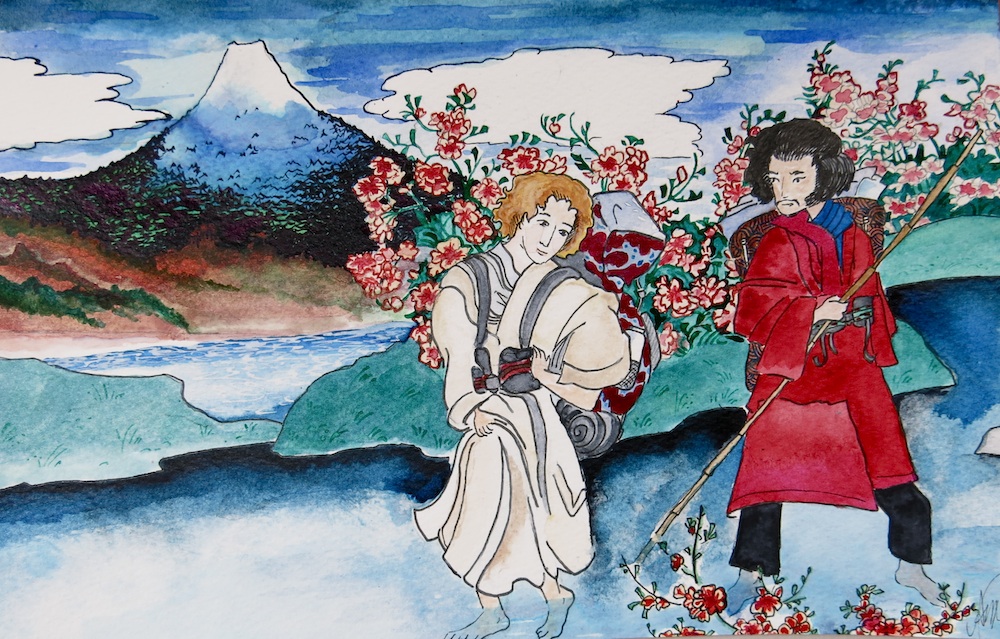

Matsuo Basho (1644–1694) lived his peculiar life on the conviction that art could create an awareness that allowed one to see into and communicate the essence of experience. Throughout his life he searched for the state of being one with the object of his poems, something he believed a poet needed to reach in order to write truthfully. This life-long search brought Basho to wandering. He thought that travelling would lead to a state of karumi (lightness), essential for art. In May 1689, when he was already a renowned poet in Japan, he sold his house and embarked on his greatest trip. Basho travelled light, always on foot and always slowly, looking carefully and deeply. He sought to leave everything behind (even himself) and have a direct experience with the nature around him, and he saw Zen Buddhism and travelling as the way to achieve this. He walked 2000 kilometers around the northern coast of Honshu (Japan’s main island), writing prose and poetry along the way, and compiling it all in a book that changed the course of Japanese literature, The Narrow Road to the Deep North.


We are Pablo Fernández (writer) and Anya Gleizer (painter), the adventurers and artists behind In Basho’s Footsteps. 325 years have passed since Basho began hiking the Narrow Road. This summer, we will retrace his trail, in an effort to come in contact with Basho’s approach to art and travelling. We will hike for three months, camping on the way, travelling as lightly and austerely as possible. We will write and paint along the route, and compile what we produce in an artist’s book. It will be hard, but art avails no compromises. Of course, apart from the physical and mental hardships, there are financial ones (flights and food for three months, and publishing costs). To make the project possible, we have used Kickstarter, a crowdfunding platform. With Kickstarter people are able to fund the projects they like, and receive a reward in exchange (we are giving our backers copies of our book, silk-screen prints and even paintings, depending on the pledge). This is a great way of creating an audience involved in the creation process. We don’t only receive financial support, but also very useful feedback, and we will be able to show our audience how the book is coming together. Because we want our art to reach as many people as possible, we are giving a digital edition of the book to everyone who backs the project with more than $5, before the book is accessible to the general public. Our Kickstarter campaign ends on June 4th. It has been a great success so far: We have already covered the travelling costs and now we are funding the publishing costs. For us, crowd-funding has opened up the traditional obstacles between creators and readers. This summer, with the help of all our supporters, we will retrace Basho’s Footsteps.

Editor’s note: This has been a guest post by Pablo Fernández and Anya Gleizer. Please consider supporting their great project here. Also find translations of Basho’s poetry in our collection, 600 Free eBooks for iPad, Kindle & Other Devices.

Saturday, December 21, 2013

Pamela Weintraub - At Home in the Liminal World (from Nautilus)


This is a wonderful article by Pamela Weintraub at Nautilus on the transformative power of living in liminal space, "betwixt and between." Living in liminal space is most obvious when we are between cultures or languages in a physical sense, but we can also experience this gap within ourselves if we are open to the experience (one of the premises of travel as a transformative experience).

At Home in the Liminal World

Living in transition, between cultures, we are discovering who we are

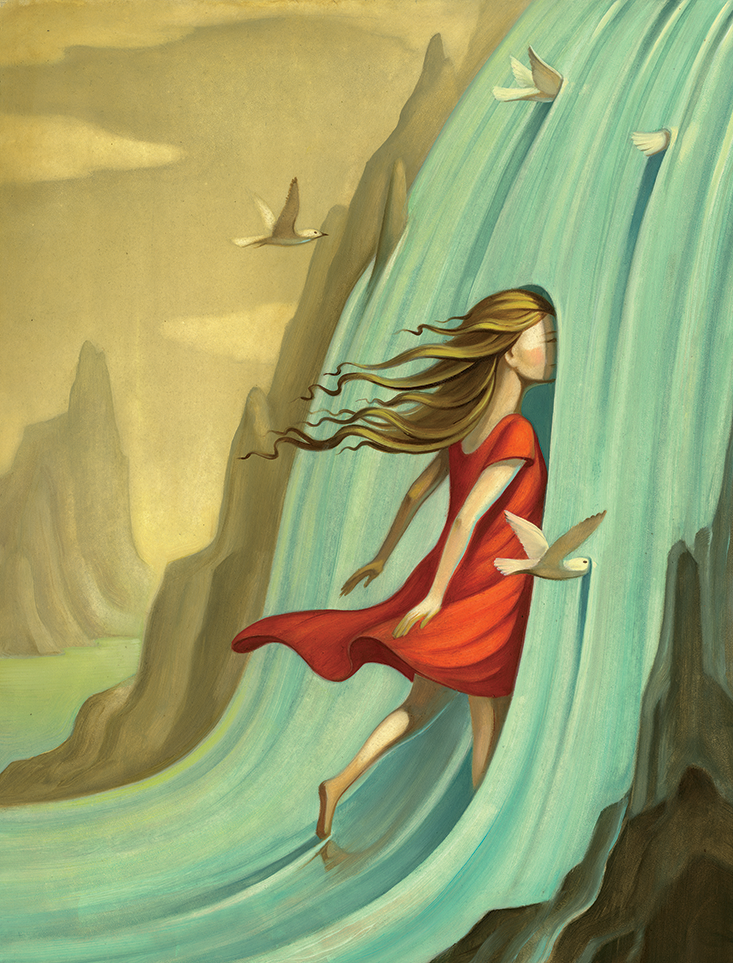
By Pamela Weintraub | Illustration by Chris Buzelli 
December 19, 2013

When Ruth Behar moved from Cuba to Israel and then to a middle-class neighborhood in Queens, New York, in 1962, she was shunted into the “dumb class.” There she met another challenged student, Shotaro, from Japan. Together the two friends, age 6, helped each other learn English while inhabiting what Behar, now a professor of cultural anthropology at the University of Michigan, calls the “liminal space,” that in-between place where what has been is no more and what will be is not yet.

Behar found that to pass from one culture to another, to traverse the chasm of the liminal, language was the bridge. As she mastered English, she was able to help her parents navigate a new country and achieve success herself in school. “I think, dream, and live much of my life in the English language,” Behar wrote in a 2011 article. Due in no small part to her mastery of English, she wrote the beautiful Traveling Heavy: A Memoir In Between Journeys, about her family’s peripatetic movement, over generations, from Poland and Turkey to Israel to Cuba, where her parents were immersed in the island’s Jewish community.

Today Behar, 57, who travels constantly, is a remarkable embodiment of the conclusions in her anthropological work: Home may not be within a family or even a single culture, but between cultures and communities and constantly on the move. Home as we have conceived of it since the agricultural revolution is nearing an end. Now we seem to be returning to the life of the nomad. Some of us wander by literally traveling the world; still more are nomads in place, navigating a string of temporary jobs or immersive online worlds. However we make the journey, we are redefining home. And that home is redefining us.

In recent years, anthropologists have spotlighted a new generation at “home in the diaspora,” in Behar’s words. For them the liminal is not life’s interlude, but life itself. While being uprooted results in lost jobs, broken relationships, and, as cultural anthropologist Anthony D’Andrea says, “displaced minds,” scientists are finding benefits to life in the liminal lane. The more time we spend in alien realms, they say, the more likely we are to perceive the world in ways we could never otherwise imagine, evoking a perfect backdrop for fevered creative work, learning, and personal growth. “When you thrust yourself out of your usual context,” Behar says, “you find out who you are.” 


The notion of a liminal period was introduced in the early 20th century by French anthropologist and folklorist Arnold van Gennep, who wrote about rites-of-passage ceremonies across cultures, from totem clans in Australia to Roman Catholic priests. Traditional rituals like baptisms, Bar or Bat Mitzvahs, and weddings marked transitions between a prior identity, time, or way of living and a future self. Such rituals generally involved separation from the group, a period of transition (the liminal state), and reincorporation. The liminal space—for instance, the rite of passage called Walkabout, in which male Australian Aboriginal teens live in the wilderness for six months or so—leads to the threshold of the new identity or life. In the case of Walkabout, the liminal space leads adolescent boys to the threshold of manhood itself.

The concept of liminality was broadened in the 1960s by British anthropologist Victor Turner, who described a state of limbo replete with ambiguity, where things once held as certain were thrown into doubt. In that wider sense, we all know the liminal well: The questing that comes with puberty, for instance, or the period of chaos that ensues when a government is overthrown. When we enter the liminal zone, our identity is held in suspension. The neophyte in that space has no family, property, or even identity—all the better to be transformed, Turner said.

Now it is time to broaden the definition of the liminal again. Some of our new liminality comes from the rise of the global citizen, whose work and lifestyle takes them from culture to culture in service of multinational corporations, governments, and nonprofits aiding the developing world. With economies slowing in the West and heating up in places like Turkey, China, India, and Brazil, workers can expect to leave their culture of origin for foreign lands. That includes Americans themselves. American Wave, using data from a recent Zogby Poll, found that 0.8 percent of households had planned to relocate abroad in 2009; by 2011, the number had soared to 2.5 percent, or 7.5 million people.

One need not be a global traveler to inhabit the in-between. Our move across borders and into the liminal state has soared, thanks to social forces from economic and workplace upheaval. Even as the economy in the United States recovers, work itself has become increasingly insecure. More than 42 million Americans, about a third of the workforce, are currently freelancers, consultants, independent contractors, or otherwise self-employed. The new workplace is a space between a prior short-term gig and that phantasm known as a fulltime job.

Until recently, the scientific study of personal transition has focused on the interlude: The honeymoon after a wedding, the summer between high school and college, the time between jobs. But as transitional spaces and periods have expanded to include so much more of our lives, the nature of inquiry has changed: Now researchers want to know what happens when liminality lasts months, years, even a lifetime.

One thread of research comes from anthropologists studying so-called “global nomads,” who spend childhood abroad and as adults often live and work across borders themselves. Neither fully part of the old culture nor totally immersed in the new, they achieve something else—what researchers call a “thirdness”—in which the cultures merge. Modern nomads can live between three cultures, four cultures, and more.

No matter what their era and region of the world, nomads have always shared certain traits: The most enduring could be the need to travel light. Archaeologist Steve Rosen of Ben-Gurion University of the Negev in Beer-Sheva, Israel, has studied prehistoric nomadic societies between 4,000 and 1,000 B.C. Unlike settled communities, which collected possessions and generated refuse at a significant pace, the nomads who stayed put for just a couple of months accumulated very little. Without land ownership, the nomads were free to pick up and leave, only limited by the seasonal availability of resources.

The impulse to shed possessions continues today. Fleura Bardhi, professor of marketing at the Cass Business School, City University of London, who studies mobility and globalization, showed that unlike immigrants of old, the new global nomads don’t much care for possessions reminding them of home. To track their culture, she interviewed 35 transnational professionals, mostly global and regional managers who had relocated more than three times in a decade, and traveled at least 60 percent of the time. Such an individual might come from Sweden but live in Vietnam and travel throughout Southeast Asia for much of the year. All study participants chose the lifestyle and 15 were what Bardhi calls completely “deterritorialized”—they did not even have a specific home. “Our participants could not live without mobility,” she says, because they craved experience, not things.

Unlike the immigrant group, possessions did not define who they were. Instead, Bardhi’s subjects quickly detached from one life by embedding themselves in the liminal space, discarding possessions and even friends before moving on. One person in the study had lived in 12 countries over the course of nine years and only moved what could fit in carry-on luggage. The rest was discarded and purchased new in every new place. Another individual threw out good-bye gifts from colleagues. Like real-life versions of the fictional characters in Up in the Air, married participants eschewed possessions in their transient lives; one couple coordinated calendars and met at airports whenever they could. “They found learning new languages and working with different people on different projects in different places a great way to develop,” Bardhi says. The travelers were happily at home in the liminal world.

Cultural anthropologist D’Andrea, today an advertising executive taking the pulse of the global crowd, has likewise discovered modern nomads at home in the state of transition. While pursuing his Ph.D. at The University of Chicago, D’Andrea spent years studying a group of artisans, therapists, and “neo-hippies” who traveled back and forth between the community of Ibiza Island, Spain, and Goa, India. Members of this digital, techno music-loving international crowd embraced the goal of personal transformation, and they were always on the move. By moving “across spaces and within themselves,” D’Andrea says, they “embraced the global as a new reference point and home.”

D’Andrea’s nomads had an Einsteinian perception of relativity—a sense of placement in the displacement of their new, globalized world. “It was a new way to see the relative nature of culture and identity, one that is noticed by means of movement,” he explains. By wandering from place to place, the people he studied were able to see life through new eyes and ultimately question values their culture of origin espoused. The liminal experience of hypermobility was the key existential state around which they formed their identities. They chose freedom and autonomy over possessions. They valued change over stability. Once they started wandering, their lives and relationships changed. Those who came to Ibiza as a couple, for instance, transformed so much they often broke up after living there. The nomadic life has “a disruptive impact on individuals and invites experimentation,” says D’Andrea. “The consequence is that old interests and partners may not look as attractive as before.”

While the traditional immigrant might hope to fit in, D’Andrea’s group of expressive nomads decisively “rejected their own homelands” and the ethnocentric cultures they spawned. Detached from constraints in their liminal space, they sought “any practice that allowed for exploration of their personal capabilities in creative, pleasurable, and transcendent ways.”
D’Andrea’s neo-hippies and Bardhi’s globetrotters represent the rest of us less in numbers than in universal traits: the desire and ability to learn and grow. “Global nomads are a window into the future of trends on the rise that change people,” says D’Andrea. At the same time, they point to the displacement and insecurity that haunt the liminal world.

It’s no surprise, then, with the rise of the liminal have emerged special guides, people deft at telling us how to navigate the ambiguous spaces between the lines. Sheila Ramsey, a consultant who works in global leadership development, has spent years helping businesses navigate across cultures, especially the colossal gap between East and West. The experience, she says, enhances intuition. Ramsey offers the example of Americans traveling to Japan. While Americans are straightforward, focused on getting tasks done, Japanese move forward only by navigating the backstory and attending to the feelings of colleagues and friends. To navigate the chasm, “Americans must step back, slow down, and rely on intuition,” Ramsey says. Without your native compass, sometimes only a sixth sense can be your guide.

Barbara F. Schaetti, a specialist in intercultural communication who works with Ramsey in helping global nomads adapt, offers an example of an engineering class given pipe cleaners to build a toy bridge. Half the class was shown examples of bridges that had worked in the past. The other half was shown nothing. Time after time, the group shown nothing—the group left to wander the liminal unknown—designed the best bridge. “They are wide open to all possibilities and can get out of their own way,” Schaetti says.

That wisdom is not lost on Maggi Savin-Baden of Coventry University in the United Kingdom. “The liminal state has become chronic,” she says.

Director of research at Coventry’s Disruptive Media Learning Lab, Savin-Baden has found we are serial learners. And serial zones of transition—liminal zones set off from the workaday world—are especially effective in helping us think critically. Indeed, she says, we need to immerse in liminal space to master the knowledge most useful to our postmodern world of creative destruction and constant change—so called “troublesome knowledge” that appears, at first, to be alien, counterintuitive, and incoherent, making no logical sense. Learners need to fail first to make breakthroughs, says Savin-Baden, who creates liminal zones in cyberspace, such as the virtual world Second Life, to help her students. “There is a sense of knowing the world differently there, because you are living and working through change,” she says.

In the end, say the scientists, we might as well reap the benefits of our chronically liminal state, because there is no going back. We live in a global society powered by constant change. Long stints of transition are here to stay. They form the breadcrumb path to the future. If we can find some peace in the interstices, we can attain troublesome knowledge, reinvent our lives, and deftly find our way home.

~ Pamela Weintraub is consulting executive editor at Discover and a freelance writer living in Brooklyn. You can find her on Twitter: @pam3001.

Thursday, June 07, 2012

Gone Traveling

IOC will be quiet for the next week and a half while I wonder around central Europe with my friend, Tom. I'll post when I can, but regular blogging will resume around June 18.


Wednesday, August 17, 2011

The Last Journey Of A Genius: Richard Feynman Dreams of Tannu Tuva

I saw this film, or one like it (I remember the title "Tuva or Bust" for some reason), many years ago and have wanted to see it again ever since. I was fascinated by the arc of this story and the final outcome. Very cool find from Open Culture.

The Last Journey Of A Genius: Richard Feynman Dreams of Tannu Tuva


In 1989, PBS’ NOVA aired The Last Journey of a Genius, a television film that documents the final days of the great physicist Richard Feynman and his obsession with traveling to Tannu Tuva, a state outside of outer Mongolia, which then remained under Soviet control. For the better part of a decade, Feynman and his friend Ralph Leighton schemed to make their way to Tannu Tuva, but Cold War politics always frustrated their efforts. The video runs roughly 50 minutes and features an ailing Feynman talking about his wanderlust and their maneuverings. He died two weeks later, having never made the trip, though Ralph Leighton and Feyman’s daughter Michelle later landed in their Shangri-La. Her journey was recorded by the Russian service of the BBC. The film now appears in the Documentary section of our collection of Free Movies Online.

Sunday, March 22, 2009

In Washington D.C.


I'm in the capital city for a week, or more precisely, I'm in Maryland right now (very beautiful!) and spending time in DC this week, then at a conference in DC on Thursday through Sunday.

Anyway, being social, as is not my tendency, precludes much blogging for now - so I'll post when I can.

Cheers!


Tuesday, September 23, 2008

Tim Wu - The Mongolia Obsession

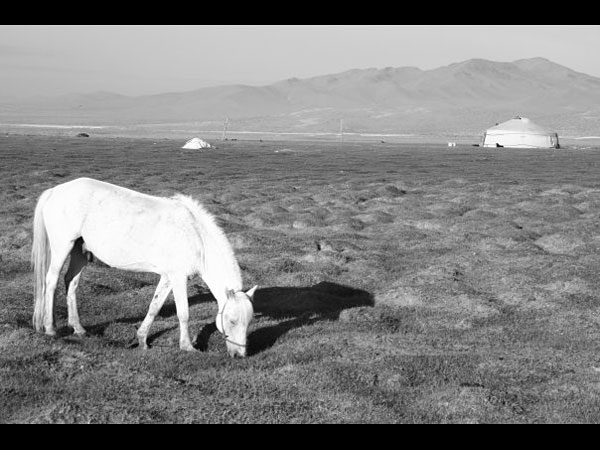
Tim Wu is a great travel writer, and this piece about Mongolia, posted over at Slate, is a wonderful glimpse into a unique culture.

The Mongolia Obsession

From: Tim Wu
The Astonishing Hospitality of Rural Mongolians
Posted Tuesday, Sept. 23, 2008

Click here to launch a slide show on Mongolia.

After some time driving around the Mongolian countryside, I hit upon a great way to make new friends. It was simple: Draw a line in the dirt, paw the earth a bit, and wrestle to the first fall. Call me primitive, but there's something about fighting in the dirt that seems to foster a certain kind of companionship. I don't take this approach too far—at book parties, for instance, I tend to stick with small talk. But in the middle of the Mongolian nowhere, in a country where wrestling is the national sport, there's just no better way to make pals. Brave Miki even took on a few women, pitting what I imagined to be an interpretation of Japanese sumo against the local technique.

As the wrestling story suggests, traveling in Mongolia forced me to re-evaluate my own attitude about one of the greatest of travel dilemmas: that whole "meeting the locals" thing. Call me a snob, but I hate meeting the locals. I'm not really interested in the locals back home, so why should things be any different overseas?

You can't blame the locals. The problem is that most events billed as a chance to "experience indigenous culture" tend to range from the merely uncomfortable to the downright nauseating. If you've ever, say, sat through a hula dance in Hawaii, you know what I mean, but at least you know that's fake. It's worse when a real native gets coerced into being your friend. You get that creepy feeling that you are at a human zoo, particularly if the poor guys are paid to put on feathers and dance around.

But the most terrible things in life are bastardized versions of great things—like bad marriages are to good ones or as fake Parmesan cheese is to the real stuff. So it is with meeting the locals. In Mongolia, the horrors of the forced encounter give way to something much more natural, rewarding, and energizing even for the most jaded traveler.

It all happens at the yurt (or ger, as they call them here). You may just think of it as a big tent, but it's a lifestyle, and one that takes some getting used to if you are accustomed to the idea of "property" or the concept of "trespass." For the odd thing about the Mongolian countryside, besides the lack of roads, fences, and other indicia of civilization, is that anyone's ger is potentially a rest stop, a play station, and, sometimes, a hotel.

Read the rest of the article.

Tuesday, July 29, 2008

Himalayan Pilgrimage

Another cool video.
Asia is home to the Himalayas, the highest mountain range on earth. Covering a distance of 2,700 kilometers, the Himalayas overlook the landscapes of six Countries: India, Nepal, Pakistan, China, Bhutan and Tibet. For thousands of years the people of these regions have considered the Himalayas to be a manifestation of divinity. Towering above all else on earth, the Himalayas reach out to touch the heavens. Himalayan Pilgrimage takes us through the Gandaki Valley - a place frozen in time. The Pilgrimage begins in Kathmandu the capital city of Nepal, then moves on to Pokhara, then Jomsom and finally to the sacred shrine of Muktinatha.


Thursday, May 22, 2008

Satire: American Airlines to charge $15 for fat people, others may follow

Unconfirmed Sources reports more fare increases designed to help offset the rising cost of fuel.

American Airlines to charge $15 for fat people, others may follow

by Walid American Airlines "More belt tightening to come."
American Airlines "More belt tightening to come."


(Ucs News) American Airlines wants to make customers' wallets lighter if they insist on making airplanes heavier. Citing ever-increasing jet fuel prices, the world's largest carrier will begin charging $15 each way for a passengers that are over weight. American, along with other major carriers, already had been charging $25 passengers that are morbidly obese.

United Airlines started the fat fee this spring, and competitors quickly matched. Aviation consultant Bob Mann expects history to repeat itself as airlines struggle to stay aloft while paying historically high fuel prices.

"I think you will see others match," Mann said. "No doubt if this continues you will see airlines charging passengers by weight for air travel."

Houston-based Continental Airlines would not comment Wednesday on whether it would match, saying it could not discuss future pricing. But United said it was seriously studying the possibility of a per pound charge for tickets.

Major U.S. airlines face liquidation if capacity cuts and fare increases fail to cover rising fuel costs, the chief of an industry trade group said.

Oil at $130 a barrel "is simply a number around which we cannot survive," James May, president of the Air Transport Association, told reporters Wednesday in Washington. "It will inevitably lead to failures in the business."


Thursday, March 13, 2008

Greetings from Houston

I'm sitting in the Houston airport waiting for my connection to Washington DC. I'm on my way to the Psychotherapy Networker Conference. I skipped the first day -- today -- and am doing three day long sessions on Friday, Saturday, and Sunday. The last two days are both with Richard Schwartz, creator of Internal Family Systems Therapy. Needless to say, for those who know me and my interest in IFS, I am stoked. (Does anyone say "stoked" anymore?)

I don't really have anything to say -- I'm just bored and I have a free connection.

If you're bored too, you might want to check out the The Very Best of The Hubble Telescope. Enjoy it while you can -- according to an article I just read in Scientific American, in about 100 billion years, the rest of the universe (aside from the now combined Milky Way and Andromeda Galaxies) will be invisible, having expanded beyond the event horizon (the particle horizon of the observable universe). To scientists observing the universe then, it will appear as though the Milky Way is a lone galaxy in endless, static space, just as was thought as the turn of the 19th century and into the 20th.


Sunday, November 25, 2007

Gratitude - Vacation as an Altered State of Consciousness

[Sunset Crater National Park]

Having just returned home from Flagstaff this afternoon, I have the usual post-vacation let-down. It sort of reminds me of how I used to feel when I "came down" from a hallucinogenic experience.

Which got me to thinking that being on vacation is kind of like being in an altered state of consciousness for me. I can totally get outside of my normal life. I feel more myself in some ways, more open, more present. It's easy for me to get caught up in my daily "stuff" and only feel really present when training or meditating.

Certainly, spending time in nature helps. When I hike alone I tend to get a bit feral. The path or trail is only a guideline. And the cool stuff often isn't on the trail. I think more like an animal, taking the shortest path between two points and searching out whatever catches my curiosity.

But it's not just the nature. It really comes down to getting away from my daily distractions. So it's probably not so much an altered state as getting back to my true state.

Whatever it is, I'm grateful for the experience.

What are you grateful for today?


Friday, November 23, 2007

D'Oh! - I've Become a Tucsonan


I went on a great hike today, not too far outside of Flagstaff and near Sunset Crater. The morning was cold and it only was a little warmer in the afternoon (maybe in the 40s), especially in the forest and out of the sun.

It must be close to freezing right now as I write this, with a projected low of 16 degrees tonight according to the Weather Channel (buy the way, I love the Weather Channel). I'm actually a little cold sitting here in my sweats and a long-sleeve knit Henley. I even wore long jeans while hiking today -- those who know me have seldom, if ever, seen me in long pants -- I nearly always wear shorts.

All of this led me to realize that I am now a Tucsonan, a person who thinks 50 degrees is cold. Damn. I once wore shorts for two solid years in Seattle, whether there was rain, ice, or snow. I took pride in being able to wear shorts a couple of years on an ice berg tour in Alaska -- everyone else was bundled up as though they were going skiing.

But now I am weather wuss. I guess that's what happens when one has to put up with intolerable heat 5 months out of the year.

Oh yeah, one other D'Oh! I packed my tripod and my camera bag but forgot my camera. I guess memory is the first thing that goes.


Thursday, November 22, 2007

Gratitude - Thanksgiving 2007

Greetings from Flagstaff, where the temperatures actually feel representative of the time of year -- a brisk 50 degrees, breezy, and clear right now. There might be a little snow this weekend (high on Saturday is predicted for 37 degrees), but it's not supposed to be heavy (which was the prediction earlier this week).


[San Francisco Mountain just outside of Flagstaff]

I'm spending the holiday weekend alone up here in the mountains. Several friends, who know I have no family, invited me to do the Thanksgiving dinner thing with their families, which I very much appreciate, but I wanted to get out of town this weekend and spend some time alone. More importantly, I wanted to be out in nature as much as possible.

Flagstaff is beautiful. At an elevation of just over 7,000 feet, it feels like some of my favorite places in Oregon and Washington -- lots of evergreens, lots of ravens -- and it's a cool, hippie college town kind of like Ashland, Oregon, where I went to school.

I have a lot to be thankful for this year. My amazing friend Susie is the coolest person I know. I have great clients. I am healthy and strong. I can afford to get out of town for a few days without stressing about money (still a new concept for me). I love my job, and I'm soon to embark on a new journey toward becoming a therapist.

I'm also thankful for places like Flagstaff, where the land is beautiful, the people are friendly, and the ravens are always around. I plan to do a lot hiking in the next few days, so I am grateful for the wild places that still exist in the world. And I am grateful for the preservation of some Native American cultural sites, of which there are many up here, that remind me I carry the blood (albeit a small amount) of some ancestors who saw this continent long before any white person every did.

What are you grateful for this Thanksgiving day?


Sunday, November 11, 2007

Sunday, October 07, 2007

Gratitude 10/7/07

Some things I am grateful for today:

1) An amazing and transformative weekend. I am so glad I did this trip, and even more glad I decided to do the Sunday sessions, both of which turned out to be very cool.

2) I'm glad to be home and to be able to sleep in my own bed. I like traveling, but I also like coming home.

3) My first client for tomorrow had to cancel, so I get to sleep in. That will certainly help with the jet lag.

4) I get to workout tomorrow. My plans to work out while in Chicago didn't pan out -- too many late nights. Probably a good thing, though, a chance for my body to rest.

What are you grateful for today?

Thursday, October 04, 2007

Gratitude 10/4/07

My body is still on Tucson time and I need to go to bed soon so I can workout early, but other than that, there is much to be grateful for:

1) That my life allows me to go to cool conferences like this one. I don't take that for granted because I lived a long time without these options.

2) Exit row seating. Love the leg-room.

3) Free Wi-Fi at Tucson International Airport -- makes early flights a little less rough if I can log on for free in the airport.

4) Room service. I could get really spoiled. Fortunately, I only do this once a year.

5) Luck. I got lost coming out of the airport, but managed to find my way to the right freeway without much wasted time. Maybe I'm not as navigationally challenged as I thought.

What are you grateful for today?


Saturday, September 29, 2007

Insanely dangerous Himalayan plank path

The video quality isn't good, but you can get a sense of how freaky this path is.


via videosift.com

There's not enough anything in the world to make me walk that path.


Friday, August 24, 2007

Time Traveller's Guide

Two explorers, Basil and Hoagie, travel through time to learn about ancient civilisations. But time travel is not an exact science and sometimes the location of the arrival is not the desired one...


Time Traveller's Guide - Watch the top videos of the week here


Sunday, July 08, 2007

New "wonders of the world" named after online poll

This is cool.

New "wonders of the world" named after online poll

LISBON (Reuters) - The Great Wall of China, Petra in Jordan and Brazil's statue of Christ the Redeemer are among the modern-day seven wonders of the world chosen in a poll of 100 million online voters, organizers said on Saturday.

The other four are Peru's Machu Picchu, the mountain settlement that symbolizes the Incan empire, Mexico's Mayan ruins at Chichen Itza, the Colosseum in Rome and the Taj Mahal in India.

The seven winners were announced at a glitzy show at Portugal's Benfica stadium following what is likely to be the biggest ever online poll at www.new7wonders.com.

"Never before in history have so many people participated in a global decision," said actress Hilary Swank at the presentation.

The New 7 Wonders of the World organizers say the contest was a chance to level the global cultural playing field and recognize the achievements of societies outside Europe and the Middle East.

The traditional "seven wonders of the world" all existed more than 2,000 years ago and were all in the Mediterranean region. Only one remains standing today -- the Pyramids of Giza.


If you go to the site, you can view a slide show of the seven new wonders.


Wednesday, May 02, 2007

100 Places to See Before You Die


In case you have run out of travel ideas, here are 100 Places to See Before You Die -- a pretty diverse list from essential architecture. I have no intention of seeing all of them (they are really focused on architecture, obviously), but some are definitely on my list.