Showing posts with label self-consciousness. Show all posts

Sunday, September 22, 2013

Liah Greenfeld, Ph.D. - Anatomy of the Mind

Over at her Psychology Today blog, The Modern Mind, Liah Greenfeld, Ph.D. has posted a three-part series on the Anatomy of the Mind. She holds an essentially integral model of the mind (compared to most people working in the field), as expressed in her recent book, Mind, Modernity, Madness: The Impact of Culture on Human Experience (Harvard University Press, 2013).

She argues, "the mind is a process which is supported by the brain but cannot be reduced to it, since it is a process of cultural, symbolic stimuli originating outside the brain in the specifically human, cultural environment." [italics added]

Hers is a culturally and environmentally embedded mind. I like that idea, and I thought you all might find these articles interesting.

The Anatomy of the Mind

Identity as a mental process

Published on September 7, 2013 by Liah Greenfeld, Ph.D. in The Modern Mind

In several earlier posts I have presented a central argument of my recent book that the mind is a process which is supported by the brain but cannot be reduced to it, since it is a process of cultural, symbolic stimuli originating outside the brain in the specifically human, cultural environment. In other words, the mind is culture in the brain. It is also individualized culture, because it results from and assures the adjustment of a particular animal organism to the cultural environment. The necessity of the human to adjust to the cultural environment (which for us is also the intra-species environment, to which other animals are adjusted genetically) and the specific nature of cultural, symbolic, environment in fact call for several interconnected processes, performing different functions in this adjustment, which together constitute the mind, and, since the mind, therefore, is not a homogeneous, but an articulated, process, one can speak of the anatomy of the mind. The central processes of the mind are patterned or systematic and can be seen as structures, by analogy to organs and organisms. The mind itself, though a process, can be likened to an individual organism, which exists in a larger structure/process, analogous to a species – a culture. Within the mind, culture, supported by the imaginative capacities of the animal brain, transformed by the symbolic environment into the specifically human, symbolic imagination, necessarily creates three such “structures.” These structures are compartments of the self or of I and include: 1) identity – the relationally-constituted self; 2) agency, will, or acting self, the acting I; and 3) the thinking self, I of self-consciousness.

Identity in this sense is symbolic self-definition. It is the image of one’s position in the socio-cultural “space” within the image of the relevant socio-cultural terrain. It contains and provides information regarding one’s social status and one’s standing vis-à-vis non-human symbolic presences, such as angels, ancestors, or the nation; one’s relevant others, mortal and immortal, individual and collective, and the types of relations one is supposed to have with them, one’s significant symbolic environment, including one’s immediate and more remote social and cosmic worlds, expectations one may have of one’s environment and vice-versa, conduct proper to one under various, likely to arise circumstances (i.e. foods one should like or dislike, clothes one is supposed to wear, questions one is supposed to ask and issues one is supposed to be interested in, emotions one may legitimately experience and ones of which one should be ashamed, people one may befriend, marry, respect, despise and hate, and so on). In short, one’s identity represents an individualized microcosm of the particular culture in which one is immersed, with the image of one’s particularly significant sector in it (which may include God and His angels, paradise and hell, or one’s immediate neighbors, colleagues, and fellow “Red Sox” fans) magnified and highlighted.

Identity is a logical implication of the nature of human environment. Since the primary environment for humans is cultural and since, above all, individuals have to adapt to the intra-species environment of the human society in which they happen to live, a cognitive map of this cultural social environment must be created in the brain. This cognitive map, which is the representation of the surrounding culture, and the social order (always in relation to the cosmic one), constructed on its basis, in the individual’s mind may be accomplished by something like place cells which are responsible for the spatial representations -- maps of the changing spatial environment -- in the brain of a rat. The individual’s identity is his/her place on this multidimensional symbolic map. Like the indication of the rat’s place on the spatial mental map, it defines the individual’s possibilities of adaptation to the environment -- or to refer to specifically human reality, “powers,” “liberties,” and “rights.” Because the cultural environment is so complex, the human individual, unlike the rat, is presented by the cognitive map with various possibilities of adaptation which cannot be objectively and clearly ranked. They must be ranked subjectively, i.e., the individual must choose or decide which of them to pursue. This subjective ranking of options is, in the first place, a function of one’s identity.

As the cognitive map is configured out of the information derived from the cultural environment, it is subject to change with some, but not all, of the changes in that environment. Only a most dramatic change of the map as a whole as a result of the virtual transformation of the environment is likely to affect one’s own place on it, that is, change one’s identity. This should be so because, at first, cultural stimuli enter the new human’s brain as a jumbled mess: their organizing principles must be figured out. As the child figures out the organizing principles of various symbolic systems and begins to deploy the symbolic imagination, he or she also figures out where precisely he or she belongs in the symbolic environment which is still in the process of being constructed itself. The significance of other objects on the map is then assessed in relation to that place. One’s identity organizes the mess and the cultural environment is observed from its perspective. This means that, rather than being determined by our experiences, the nascent identity ranks these experiences, storing those it selects for memory in accordance with their subjective significance and forgetting most of them altogether.

Because of its essential ranking function, identity must start forming early. However, the process of its formation may be long and is not always successful. Identity-formation is likely to be faster and more successful the simpler is the cultural environment in which it is formed – i.e., the fewer and the more clearly defined are the relations that must be taken into account in the relationally-constituted self. For instance, in an isolated village community, in which all the denizens are practicing the same religion, obey the same authorities, speak the same language, wear habits of the same kind, enjoy the same level of prosperity, it may be expected to form easily and quickly. But in a large cosmopolitan metropolis, in which people of different religions, political persuasions, levels of wealth, styles of life, and linguistic backgrounds mix, it would take more time and for many people would never be complete, especially, if the metropolis is also pluralistic and egalitarian, and therefore the cultural environment does not rank its different populations itself, but leaves all the ranking to the individual.

As a representation of the environment, identity should force itself upon the brain as any external stimulus. It as it were issues commands to the brain. Identity is a symbolic self-definition, a relationally-constituted self, an image a human individual has of oneself as a cultural being and a participant in a particular cultural universe. At the same time, it is clearly an essential element of human mental – cognitive, emotional, and pertaining to social adjustment -- functioning and health. Changes in certain peripheral aspects of identity are possible, but any change in its core (i.e., crises of identity, doubts about one’s identity, multiple identities) translate into mental problems, affecting one’s ability to learn and commit information to memory, the adequacy of one’s emotional reactions, and the degree of one’s social adjustment. Identity mediates between one’s natural or animal capacities to learn, memorize, adapt to the environment – the capacities of one’s animal brain – and one’s functioning as, in fact being, a person, one’s humanity. Obviously, an individual endowed with different natural mental powers from those of somebody else would learn, memorize, and adapt differently, but so most certainly would an individual with equal natural powers but a different identity. Similarly, a damage to one’s natural capacities (as a result of physical trauma or impaired growth) will undoubtedly be reflected in one’s mental performance, but a damage to one’s cultural identity (as a result of a traumatic experience, such as immigration or “loss of face,” or in consequence of impaired formation) will alter mental performance as dramatically.

* * * * *

Anatomy of the Mind, Part 2

The reality of Human Will

Published on September 12, 2013 by Liah Greenfeld, Ph.D. in The Modern Mind

In this post I would like to continue the discussion of the central functions – or faculties – of the mind, moving from the process of identity (or relationally-constituted self), discussed in the previous post, to the process of the will.

Identity, which is the agent of a particular culture, does not issue commands to the brain directly; it does so through the “structure” of human agency, will, or acting self, the creation of culture in general. Human beings are carriers of will and discretion; they are -- each one of them, if normal -- independent actors in the sense of being capable of action and not just reaction, whose actions (except involuntary reflexes) are products of decision and choice. This will is a function of symbols -- to operate with these intentional, thus arbitrary, signs, we internalize the principle of their intentionality; the will, therefore, like identity, is logically implied in the symbolic reality of the mind. When reacting to a cue, whether externally or internally generated (for instance, the election of a new president or a spontaneously firing nerve that triggers a memory-recall of an unpleasant incident at a doctor’s office), we are capable of voluntarily interrupting the ensuing mental process, saying to ourselves, for example: “I don’t want to think about this now,” “I do not want to react to this in such-and-such a way,” and thereby of shaping our response. It is to this intermediate stage between stimulus and reaction/action, in which, for humans, the nature of response is still indeterminate and must be decided that the word “consciousness” is frequently applied.

Moreover, humans are capable of independently, i.e., at will, generating cues and starting mental processes. For instance a person may say to oneself: “I want to remember such and such episode” or “I want to begin thinking about such and such subject,” and thereby start the process of memory recall or manipulation. Humans are not genetically forced to want almost anything -- perhaps to evacuate and to sleep -- every other genetic imposition, including hunger, sexual desire, and pain, can be resisted by the will. How do we acquire binding volitions, i.e. desires which compel us to act?
The mind must include “structures” -- mechanisms capable of blocking the biological information the brain generates, when this information interferes with the processing or creating symbolic information. More generally, it must contain mechanisms which, for every event, select the “operative logic” (or logics) appropriate to the context, while suppressing other “logics.” The will, or agency, or acting self – that part of our mind that makes decisions, is such a structure or set of mechanisms. What does the will do, specifically? It arbitrates in cases of contradictory stimuli. Most often, such arbitrage is unconscious and involves no effort (of will) on our part: we simply receive, and obey, an instruction to follow a particular logic. If a consciousness can be equated with a particular symbolic logic, we all necessarily develop multiple consciousnesses and, depending on the occasion, skillfully select among them the appropriate one.

But will’s arbitrage may involve a conscious effort, and it is for the cases when it does that the language – at least, in the West – reserves the concept of the “will.” For instance, one may be tired and wish to lie down, but have unfinished work, in which case the will will instruct the organism: “You will pay no attention to your fatigue, but will be guided by the logic demanding you to finish the work you have started.” Late in the evening, however, it will issue a different instruction: “You will now lay down your work, though unfinished, and take care of your fatigue, (because otherwise you won’t be able to continue your work tomorrow)”. Or, in the case of a soldier fearing for his life, the will may declare: “The logic you will obey at present is that of a collective military enterprise. Therefore, you will expose your life to danger and disregard the survival instinct which instructs you to run away and hide.” It is in regard to such choices that we talk of the “free will.” By definition, the will is free: it is always up to the human agency, to the (acting) self to decide which symbolic tack to take. Everything else in a person may cry against a certain action, and yet the person’s will, the agency, will impose itself and the person will do its bidding. We refer to that will as a “strong” one, which systematically imposes on the person the ‘logic’ considered to be more difficult to follow. Of course, what is so considered changes with the context.

Symbolic imagination is travel over the links of various “logical” chains. Will, agency or (acting) self is the mechanism for making choices or decisions. We are able to deploy our imaginative capacities correctly, namely, in accordance with the appropriate symbolic “logic” thanks to the arbitrage of the will, while the will’s arbitrage, much as our capacity to learn and memorize, is mediated by identity (the relationally-constituted self). Clearly, it would be much easier for a person unambiguously self-defined as a soldier to risk his life in the face of mortal danger, rather than try to save himself; his identity will, in effect, screen the logic of self-preservation from him, making him, so to speak, “single-minded” in his sharp awareness of the dictates of proper soldierly conduct. A person unsure of whether being a soldier is really “him,” in contrast, will be much more likely to hesitate and run for cover. Problems with identity impair the will, making the person indecisive and unmotivated, while an impaired will interferes with routine functioning of symbolic imagination.

The will/agency/acting self is the function of the autonomy of human consciousness -- i.e., the mind’s independence from the natural environment and from learning and memory related to the natural environment, the mind’s being self-sustained, which makes possible a multitude of desires -- and of identity (or relationally-constituted self), which represents to the individual his/her options. Thus, it is the expression of subjectivity. There is no subjectivity in animals, unless these are pets, even though, given the nature of learning and memory, every rat’s and certainly every monkey’s brain is unique, and there is individuality in monkeys and rats. But because monkeys and rats do not have choices, the uniqueness of every animal’s brain does not give rise to subjectivity, and there is no need in agency, will, and self. However unique, the knowledge and action/reaction of a rat or a monkey are objective (shared by others within the species), making every rat or monkey a representative of all rats or all monkeys.

One can speculate about the system in the brain that supports the will. Perhaps, it is neurons similar to those that make possible in rats the perception of the stimuli which require an adaptive reaction, transmitting to other neurons the command: “do this or that,” neurons whose function it is to sense desires imposed on animals by their genes, but in us culturally constructed and mediated by consciousness and structures of the self (even though not necessarily consciously mediated: a person is not always fully aware of what he or she wants). Whatever that brain system, culture determines the individual’s likes and dislikes, programming the brain to will certain things -- programming the will, like the rat’s “will” -- i.e., rat -- is programmed genetically. Identity presents to the individual the possibilities for the given historical time, helping to establish their subjective ranking: because you are what you are (a Catholic or a Muslim, a wife or a soldier, a member of the aristocracy or a registered Democrat) you must will this and not this. It commands the will what to choose and to decide. In every specific case the will and the identity are determined by culture. The vast majority of the records or representations in memory are also determined by culture -- the contents of memory, thus, the raw material of the imagination, are culture-given. What is done to these records in the brain (i.e., how they are manipulated) depends both on the brain and the organization principles of the particular symbolic system(s). But cultural selection -- i.e., the social success of some imaginings and the failure of others depends exclusively on the historical context, that is, again, on culture. It is important to keep in mind that, unlike natural selection, cultural selection does not weed out imaginings not selected for success at a certain historical moment: they are not killed, but only left latent. In changed historical circumstances or in the presence of a genius there is always the possibility that these temporarily unselected imaginings will have their day.

* * * * *

Anatomy of the Mind, Part 3

The Thinking Self

Published on September 21, 2013 by Liah Greenfeld, Ph.D. in The Modern Mind

In this post, I am continuing the discussion of the anatomy of the mind we can deduce logically from the nature of the cultural (i.e., symbolic) environment to which the human brain must necessarily adjust. In addition to identity, or relationally-constituted self, and the will, or the acting self, discussed in the previous two posts, there is the tremendously important structure, the structure of consciousness turned upon itself, to which Descartes referred in his great statement “I think, therefore I am.” This “I of self-consciousness” is the thinking part of us. In distinction to all other processes and “structures” of the mind, the existence of the “I” of Descartes is not a hypothesis. It is, rather, the only certain knowledge available to us. We are all aware of it. We all know directly by experience that it exists. This knowledge is absolute; it is impossible to doubt it.

It is very good that this is so, because the logical reasons for the existence of this mental structure are less obvious than those that help us to account for identity and will. Given the character of human environment, both these structures are necessary for the adaptation to this environment, and therefore, for the survival of every individual one of us. But one does not need the thinking self to adapt to life within culture. Dogs, for example, seem to adapt to the symbolic environment without necessarily developing the ability to think. And, if they can do it, we, presumably, can do it too. One can argue, of course, that a fully human existence would be impossible without it, but such quantitative judgment is quite likely to lead us eventually to the unacceptable conclusion that only a genius (a very rare, thus abnormal human condition which indeed depends on the thinking self) can be fully human.

The logical necessity for the thinking self is of a different kind. While human beings can well do without it, human existence without it would be impossible. It is a necessary condition for the culture process on the collective level: what makes possible self-consciousness for any one of us is precisely that which makes possible indirect learning and thus the transmission of human ways of life across generations and distances.  

Most of the circumstantial evidence regarding the mind comes from comparative history and comparative zoology -- comparisons between different cultural environments (the simple fact of their variety suggests the structure of identity, for instance) and between humans and wild animals (the self-sufficiency of human consciousness and its largely inexplicit and emotional character, symbolic imagination, and will or agency are deduced from comparisons between our environment and its demands, on the one hand, and the environment of organic life and the animals’ responses to it, on the other). Similarly, it is from comparative zoology we deduce that to transmit human ways of life we need the thinking self.

Based both on the circumstantial and on the empirical (direct, introspective) evidence, there are a few things we can say about the thinking self. Among all the symbolic mental processes, it is the one which is explicitly symbolic; it is not just a process informed and directed by our symbolic environment, but it is as essentially symbolic process as is the development of language, or of a musical tradition, or an elaboration of a theorem – or as is the transmitted culture, in general -- in the sense that it actually operates with formal symbols, the formal media of symbolic expression. This is the reason for the dependence of thought on language, which has been so frequently noted. Thinking is only possible if such formal media are available, as they are in music, mathematics, visual art, and in language, above all. Our thought extends only as far as the possibilities of the formal symbolic medium in which it operates.

This presents an enormous problem for neuroscience: how to account conceptually for the perception, storage in memory, and recall of purely symbolic stimuli which may only acquire sensual components in use, after they are conceived in the mind, and these components are necessarily minimal (e.g. these words I am typing and you are reading acquire a visual component only after I have thought them and you perceive them at once visually and in their meaning which touches only your mind, but none of your bodily senses)? What is a perception of an idea? What is perceived and which organ perceives it? The translation of such stimuli into the organic processes of the brain, which must occur, because everything that happens in the mind happens by means of the brain, is beyond the current ability of neuroscience to imagine. However, we have all the reasons to hope for a development in the science of the mind similar to that which happened in the biological sub-discipline of genetics which, called into being by Darwin’s evolutionary theory, started to reveal the specific mechanisms of evolution through natural selection some forty years after Darwin had postulated it. (See my previous posts here and here),

Similarly to the process of breaking organic processes into its physico-chemical elements that happens in the translation of organic stimuli, including the process of perception itself, into physical and chemical reactions in the brain, a process of breaking (from top down) of symbolic stimuli into its organic elements (reconstructing symbols as signs that are sensorily perceived, for instance) must be responsible for such translation, which would differ from the bio-physical translation only in degree of its complexity, i.e., quantitatively. We are capable of perceiving, storing in memory, and recalling at will various aspects of our environment. It makes sense that we would intuit – but intuition would break into perception – and thus perceive and recall a string of information couched in formal symbols in the formal symbols in which it was couched, that is, perceive and recall a word not sensually, but by its imaginary sound, a geometric shape by its imaginary sight, and a melody by the imaginary sound and/or the sight of the corresponding notation. Do we actually hear the words and melodies in our head? They are there, but the great majority of words in our vocabulary we know from reading only, some of them we have invented, and a composer hears the music before putting it on paper or trying it on an instrument, and can do so, as the astounding example of Beethoven proves, even while being physically deaf. This means that we are actually processing -- and experiencing -- unembodied sounds, sounds that do not have any material and, therefore, sensual reality (though they can acquire both these realities, when outwardly expressed or objectified in the course of the cultural process). The experience is possible because the symbolic (meanings) naturally breaks into the sensory (signs).

Our conscious recall of such non-sensual information would necessarily be an explicit recall. The act of will, under different circumstances implicit and, as a result, unobserved, in cases of recalling explicit symbolic information (human semantic memory) will be self-observed and become a subject of self-consciousness. The opportunities for observing one’s consciousness are numerous: we might recall stored explicit information for comparison with any new learning experience with explicit symbolic systems in the environment, that is, with music, mathematics, visual art, but, above all, anything at all in language, and then we might wish to recall and manipulate and re-manipulate it again and again. Then not only the process of consciousness and symbolic imagination, in general, which is largely unconscious (in the sense of unselfconscious and inexplicit), but the process of thinking -- of talking to oneself in language, mathematics, music, and explicit visual images -- becomes self-sustaining and self-sufficient. I suppose this is what we mean when we talk about “life of the mind.” The thinking self, which does not have to be involved in regular mental processes on the individual level (such as symbolic imagination which is for the most part unselfconscious) in such cases is perfectly integrated with and involved in them. It becomes an integral part of the mind as individualized culture and of the person. But it is important to remember that this is not the essential function of this mental structure, its essential function is to assure the symbolic process on the collective level. It is enough that some humans develop an active thinking self for this process to continue and for culture to be maintained.

~ Liah Greenfeld, Ph.D.
Liah Greenfeld, Ph.D.
Liah Greenfeld, Ph.D., is University Professor and a professor of sociology, political science, and anthropology at Boston University, and Distinguished Adjunct Professor at Lingnan University, Hong Kong. She is the author of Mind, Modernity, Madness: The Impact of Culture on Human Experience (Harvard University Press, 2013) and other books about modern society and culture, including the ground-breaking Nationalism: Five Roads to Modernity (Harvard University Press, 1992) and The Spirit of Capitalism: Nationalism and Economic Growth (Harvard University Press, 2001; Donald Kagan Best Book in European History Prize). Greenfeld has been a recipient of the UAB Ireland Distinguished Visiting Scholar Award, fellowships from the Institute for Advanced Studies in Princeton, the Woodrow Wilson Center for International Scholars in Washington, D.C., the Institute for Advanced Studies in Jerusalem, Israel, and grants from The National Council for Soviet & East European Research, and The German Marshall Fund of the United States. In 2004, she delivered the Gellner Lecture at the London School of Economics on the subject of "Nationalism and the Mind," launching the research connecting her previous work on modern culture to a new perspective on mental illness.

Monday, July 29, 2013

Phenomenology - Internet Encyclopedia of Philosophy


From yet another entry from the Internet Encyclopedia of Philosophy, here is an excellent overview of phenomenology, which is both the name of a movement in 20th century philosophy (formed around Edmund Husserl) and a term used for the "property of some mental states, the property they have if and only if there is something it is like to be in them."

In essence, phenomenology is the study of "the structural features of experience and of things as experienced. It is primarily a descriptive discipline and is undertaken in a way that is largely independent of scientific, including causal, explanations and accounts of the nature of experience." One of the classic texts is Thomas Nagel's "What Is it Like to be a Bat?" (1974). Other classic texts, beyond those by Husserl, include Jean-Paul Satre's Being and Nothingness (1969) and Maurice Merleau-Ponty’s Phenomenology of Perception (1962).

Phenomenology


In its central use “phenomenology” names a movement in twentieth century philosophy. A second use of “phenomenology” common in contemporary philosophy names a property of some mental states, the property they have if and only if there is something it is like to be in them. Thus, it is sometimes said that emotional states have a phenomenology while belief states do not. For example, while there is something it is like to be angry, there is nothing it is like to believe that Paris is in France. Although the two uses of “phenomenology” are related, it is the first which is the current topic. Accordingly, “phenomenological” refers to a way of doing philosophy that is more or less closely related to the corresponding movement. Phenomenology utilizes a distinctive method to study the structural features of experience and of things as experienced. It is primarily a descriptive discipline and is undertaken in a way that is largely independent of scientific, including causal, explanations and accounts of the nature of experience. Topics discussed within the phenomenological tradition include the nature of intentionality, perception, time-consciousness, self-consciousness, awareness of the body and consciousness of others. Phenomenology is to be distinguished from phenomenalism, a position in epistemology which implies that all statements about physical objects are synonymous with statements about persons having certain sensations or sense-data. George Berkeley was a phenomenalist but not a phenomenologist.

Although elements of the twentieth century phenomenological movement can be found in earlier philosophers—such as David Hume, Immanuel Kant and Franz Brentano—phenomenology as a philosophical movement really began with the work of Edmund Husserl. Following Husserl, phenomenology was adapted, broadened and extended by, amongst others, Martin Heidegger, Jean-Paul Sartre, Maurice Merleau-Ponty, Emmanuel Levinas and Jacques Derrida. Phenomenology has, at one time or another, been aligned with Kantian and post-Kantian transcendental philosophy, existentialism and the philosophy of mind and psychology.

This article introduces some of the central aspects of the phenomenological method and also concrete phenomenological analyses of some of the topics that have greatly exercised phenomenologists.

Table of Contents

1. Introduction
2. Phenomenological Method
    a. Phenomena
    b. Phenomenological Reduction
    c. Eidetic Reduction
    d. Heidegger on Method
3. Intentionality
    a. Brentano and Intentional Inexistence
    b. Husserl’s Account in Logical Investigations
    c. Husserl’s Account in Ideas I
    d. Heidegger and Merleau-Ponty on Intentionality
4. Phenomenology of Perception
    a. Naïve Realism, Indirect Realism and Phenomenalism
    b. Husserl’s Account: Intentionality and Hyle
    c. Husserl’s Account: Internal and External Horizons
    d. Husserl and Phenomenalism
    e. Sartre Against Sensation
5. Phenomenology and the Self
    a. Hume and the Unity of Consciousness
    b. Kant and the Transcendental I
    c. Husserl and the Transcendental Ego
    d. Sartre and the Transcendent Ego
6. Phenomenology of Time-Consciousness
    a. The Specious Present
    b. Primal Impression, Retention and Protention
    c. Absolute Consciousness
7. Conclusion
8. References and Further Reading

1. Introduction


The work often considered to constitute the birth of phenomenology is Husserl’s Logical Investigations (Husserl 2001). It contains Husserl’s celebrated attack on psychologism, the view that logic can be reduced to psychology; an account of phenomenology as the descriptive study of the structural features of the varieties of experience; and a number of concrete phenomenological analyses, including those of meaning, part-whole relations and intentionality.

Logical Investigations seemed to pursue its agenda against a backdrop of metaphysical realism. In Ideas I (Husserl 1982), however, Husserl presented phenomenology as a form of transcendental idealism. This apparent move was greeted with hostility from some early admirers of Logical Investigations, such as Adolph Reinach. However, Husserl later claimed that he had always intended to be a transcendental idealist. In Ideas I Husserl offered a more nuanced account of the intentionality of consciousness, of the distinction between fact and essence and of the phenomenological as opposed to the natural attitude.

Heidegger was an assistant to Husserl who took phenomenology in a rather new direction. He married Husserl’s concern for legitimating concepts through phenomenological description with an overriding interest in the question of the meaning of being, referring to his own phenomenological investigations as “fundamental ontology.” His Being and Time (Heidegger 1962) is one of the most influential texts on the development of European philosophy in the Twentieth Century. Relations between Husserl and Heidegger became strained, partly due to the divisive issue of National Socialism, but also due to significant philosophical differences. Thus, unlike his early works, Heidegger’s later philosophy bears little relation to classical Husserlian phenomenology.

Although he published relatively little in his lifetime, Husserl was a prolific writer leaving a large number of manuscripts. Alongside Heidegger’s interpretation of phenomenology, this unpublished work had a decisive influence on the development of French existentialist phenomenology. Taking its lead from Heidegger’s account of authentic existence, Sartre’s Being and Nothingness (Sartre 1969) developed a phenomenological account of consciousness, freedom and concrete human relations that perhaps defines the term “existentialism.” Merleau-Ponty’s Phenomenology of Perception (Merleau-Ponty 1962) is distinctive both in the central role it accords to the body and in the attention paid to the relations between phenomenology and empirical psychology.

Although none of the philosophers mentioned above can be thought of straightforwardly as classical Husserlian phenomenologists, in each case Husserl sets the phenomenological agenda. This remains the case, with a great deal of the contemporary interest in both phenomenological methodology and phenomenological topics drawing inspiration from Husserl’s work. Accordingly, Husserl’s views are the touchstone in the following discussion of the topics, methods and significance of phenomenology.

* * * * *

8. References and Further Reading

  • Ayer, A. J. 1946. Phenomenalism. Proceedings of the Aristotelian Society 47: 163-96
  • Bernet, Rudolf, Iso Kern, and Eduard Marbach. 1993. An Introduction to Husserlian Phenomenology. Evanston, Ill: Northwestern University Press.
  • Brentano, Franz. 1995. Psychology from an Empirical Standpoint. Ed. Oskar Kraus. Trans. Antos C. Rancurello, D. B. Terrell, and Linda L. McAlister. 2nd ed. London: Routledge.
  • Carman, Taylor. 2006. The Principle of Phenomenology. In The Cambridge Companion to Heidegger, ed. Charles, B. Guignon. 2nd ed. Cambridge: Cambridge University Press.
  • Carman, Taylor. 2008. Merleau-Ponty. London: Routledge.
  • Cerbone, David R. 2006. Understanding Phenomenology. Chesham: Acumen.
  • Crane, T. 2006. Brentano’s Concept of Intentional Inexistence. In The Austrian Contribution to Analytic Philosophy, ed. Mark Textor. London: Routledge.
  • Dreyfus, Hubert L. 1991. Being-in-the-World: A Commentary on Heidegger’s Being and Time, Division I. Cambridge, Mass: MIT Press.
  • Embree, L. 2003. Husserl as Trunk of the American Continental Tree. International Journal of Philosophical Studies 11, no. 2: 177-190.
  • Frede, Dorothea. 2006. The Question of Being: Heidegger’s Project. In The Cambridge Companion to Heidegger, trans. Charles, B. Guignon. 2nd ed. Cambridge: Cambridge University Press.
  • Gallagher, Shaun, and Dan Zahavi. 2008. The Phenomenological Mind: An Introduction to Philosophy of Mind and Cognitive Science. London: Routledge.
  • Gennaro, Rocco. 2002. Jean-Paul Sartre and the HOT Theory of Consciousness. Canadian Journal of Philosophy 32, no.3: 293-330.
  • Hammond, Michael, Jane Howarth, and Russell Keat. 1991. Understanding Phenomenology. Oxford: Basil Blackwell.
  • Heidegger, Martin. 1962 [1927]. Being and Time. Trans. John Macquarrie and Edward Robinson. Oxford: Blackwell.
  • Heidegger, Martin. 1982 [1927]. The Basic Problems of Phenomenology. Trans. Albert Hofstadter. Bloomington: Indiana University Press.
  • Hume, David. 1978 [1739-40]. A Treatise of Human Nature. Ed. L. A Selby-Bigge, rev. P. H. Nidditch. 2nd ed. Oxford: Clarendon Press.
  • Husserl, Edmund. 1960 [1931]. Cartesian Meditations: An Introduction to Phenomenology. Trans. Dorion Cairns. The Hague: Nijhoff.
  • Husserl, Edmund. 1973 [1939]. Experience and Judgement: Investigations in a Genealogy of Logic. Evanston: Northwestern University Press.
  • Husserl, Edmund. 1977 [1925]. Phenomenological Psychology: Lectures, Summer Semester, 1925. Trans. John Scanlon. The Hague: Martinus Nijhoff.
  • Husserl, Edmund. 1982 [1913]. Ideas Pertaining to a Pure Phenomenology and to a Phenomenological Philosophy. Trans. F. Kersten. The Hague: Nijhoff.
  • Husserl, Edmund. 1991 [1893-1917]. On the Phenomenology of the Consciousness of Internal Time (1893-1917). Trans. John B Brough. Dordrecht: Kluwer.
  • Husserl, Edmund. 1999 [1907]. The Idea of Phenomenology. Trans. Lee Hardy. Dordrecht: Kluwer.
  • Husserl, Edmund. 2001 [1900/1901]. Logical Investigations. Ed. Dermot Moran. 2nd ed. 2 vols. London: Routledge.
  • Jackson, Frank. 1977. Perception: A Representative Theory. Cambridge: Cambridge University Press.
  • James, William. 1981 [1890]. The Principles of Psychology. Cambridge, Mass: Harvard University Press.
  • Kant, Immanuel. 1929 [1781/1787]. Critique of Pure Reason. Trans. Norman Kemp Smith. London: Macmillan.
  • Merleau-Ponty, Maurice. 1989 [1945]. Phenomenology of Perception. Trans. Colin Smith. London: Routledge.
  • Moran, Dermot. 2000. Introduction to Phenomenology. London: Routledge.
  • Polt, Richard F. H. 1999. Heidegger: An Introduction. London: UCL Press.
  • Sartre, Jean-Paul. 1972 [1936-7]. The Transcendence of the Ego: An Existentialist Theory of Consciousness. New York: Noonday.
  • Sartre, Jean-Paul. 1989 [1943]. Being and Nothingness: An Essay on Phenomenological Ontology. Trans. Hazel E. Barnes. London: Routledge.
  • Sartre, Jean-Paul. 1970 [1939]. Intentionality: A fundamental idea of Husserl’s Phenomenology. Trans. J. P. Fell. Journal of the British Society for Phenomenology 1, no. 2.
  • Smith, David Woodruff. 2007. Husserl. London: Routledge.
  • Smith, David Woodruff, and Amie L Thomasson, eds. 2005. Phenomenology and Philosophy of Mind. Oxford: Clarendon Press.
  • Sokolowski, Robert. 2000. Introduction to Phenomenology. Cambridge: Cambridge University Press.
  • Wider, Kathleen. 1997. The Bodily Nature of Consciousness. Ithaca: Cornell University Press.
  • Zahavi, Dan. 2003. Husserl’s Phenomenology. Stanford: Stanford University Press

Author Information


Joel Smith
Email: joel.smith@manchester.ac.uk
University of Manchester

Last updated: March 27, 2009 | Originally published: March/27/2009

Tuesday, February 05, 2013

The Online Consciousness Conference 2013


It's that time of year again, The Online Consciousness Conference has posted the primary papers from this year's conference. Daniel Dennett is giving the invited talk, "A Phenomenal Confusion About Access and Consciousness."
The program for the Fifth Online Consciousness Conference is (nearly) finalized! The conference will begin on Friday February 15th sometime around noon EST (the names of the papers on this page will turn into links to the sessions once the conference begins). The papers for this year’s conference are available here in order to facilitate discussion at the conference.
Here are the primary papers from this year's conference.

CO5 Papers

The program for CO5 is nearly finalized. The conference will begin on Friday February 15th at which point the sessions will become live (the name of the paper on the program will become a link to the session when the conference begins). Below are the papers (not commentaries) for this year’s participants. So, please read and think about these papers at your leisure and be sure to join us Feb 15-March 1st for the discussion.

Tuesday, February 28, 2012

Four New Books I Want to Read (Someday)


Here are four reviews of new(ish) books that sound interesting and that I hope to one day have some time to read. These reviews are posted at Metapsychology Online Reviews (Vol 16, No 8) - follow the links to read the whole reviews (this is only a taste).
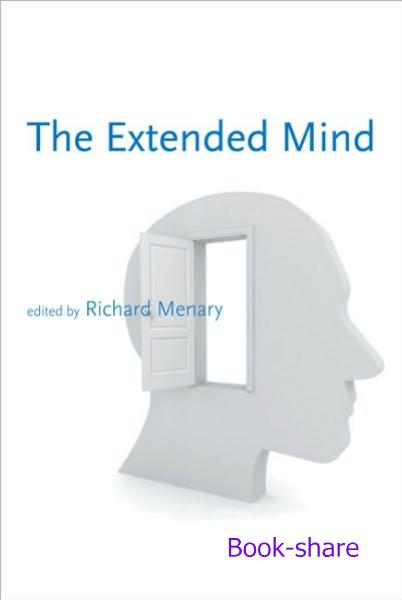
Review - The Extended Mind
by Richard Menary (Editor)
MIT Press, 2010
Review by Joseph Ulatowski
Feb 21st 2012 (Volume 16, Issue 8)

In a television commercial for First Tennessee Bank, a young lady says of the bank's mobile app, "My phone's a part of my body, so it's like having my bank in my pocket. It's with me everywhere I go." The belief that a mobile phone and the apps it contains is an extension of one's own body has been brought about by new technology. Not only does mobile technology permit a person to extend one's body beyond the limits of the epidermis but it allows cognitive function to extend beyond the confines of one's own brain as well. Think here of all the contact information and to-do task lists our phone's are able to store. The prevailing question of extended cognition is: "Where does the mind stop and the rest of the world begin?" Richard Menary's long-awaited anthology brings together some admirable work on the extended mind.

The external mind hypothesis asks whether the mind ought to be confined to the body. Philosophers of mind have assumed that the mind is the fully embodied seat of cognition and consciousness. But, beginning with the pioneering essay, "The Extended Mind," by Andy Clark and David Chalmers, some have argued that it is a kind of prejudice to suggest that cognitive resources be limited to what is contained in the skin. To adopt this view, according to its advocates, one must also accept the "parity principle." Clark and Chalmers write, "If, as we confront some task, a part of the world functions as a process which were it done in the head, we would have no hesitation in recognizing as part of the cognitive process, then that part of the world is (so we claim) part of the cognitive process." (p. 29) Only sheer prejudice would forbid us from externalizing cognition, so we have no reason to restrict cognition to that which is embodied. Suggesting that the mind must be fully contained within the skin is to support what's been called by Chalmers "brain chauvinism" -- the mind is nothing other than the brain.
Read the whole review. This one definitely goes on the wish list (if it isn't there already). I am a huge fan of the extended mind approach, although it does not go far enough for me. I prefer the embedded mind.

* * * * * * *
Review - From Neurons to Self-Consciousness: How the Brain Generates the Mind
by Bernard Korzeniewski
Humanity Books, 2010
Review by Bob Lane, MA
Feb 21st 2012 (Volume 16, Issue 8)


Korzeniewski's book goes a long way in offering a theory of mind that will be of interest to both scientists and humanists. As he writes:
The relation of spirit (consciousness, mind) to matter (the external world, the objective reality) is probably the greatest mystery in the history of philosophy. The view known as materialism maintains that matter is primary with respect to consciousness, that it is a result or "by-product" of the functioning of the human brain. … Idealism, on the contrary, maintains that consciousness is the only truly existing being, while the so-called external world (or broadly understood matter) is only a product of consciousness, an area of the psyche isolated in a particular manner. … the mystery of the relation of spirit to matter has not been solved until now . . . In this book I present this question within the perspective of the biological sciences. (154-155)
In fewer than two hundred pages Korzeniewski develops a theory that encompasses physical, biological, and conceptual explanations for the "mysterious" self-awareness that we experience but have such difficulty explaining without ending up in either solipsism or panpsychism. He differentiates three levels of reality: "the physical, the biological, and the psychic level, while renouncing any claims of their absolutization."
Read the whole review. This is another one that feels like a must read for me, even though I am sure to disagree with parts of it. He does seem to be introducing a new idea into the discussion of brain and mind - those three levels of reality (physical, biological, psychic).

* * * * * * *
Review - Suffer the Children: The Case Against Labeling and Medicating and an Effective Alternative
by Marilyn Wedge
W. W. Norton, 2011
Review by Shannon M. Bernard-Adams and Marcus P. Adams
Feb 14th 2012 (Volume 16, Issue 7)


Marilyn Wedge has provided an excellent resource for clinicians and parents. Her book, Suffer the Children, is a tour de force argument against the current trend in American education and psychiatry which assumes that children with behavioral difficulties will likely require medication. Throughout her argument against this trend, she provides positive support for the alternative treatment that she is recommending--strategic child-focused family therapy. This support comes by way of numerous case studies drawn from her years of clinical practice; perhaps the greatest virtue of the book is the large number of case studies that she provides for the reader.

In this review, we will highlight some of the book's features that recommend it to clinicians and concerned parents. In chapter 1, Wedge describes the current situation in child psychiatry and discusses some of the trends in family systems therapy since the 1970s. She questions the trend in child psychiatry to label emotional or social disorders as "brain diseases." She argues that medicating in many situations might appear to be a "quick fix," but often medicating a child causes unforeseen side-effects or other negative consequences.

* * * * * * *

Review - Psychiatrist on the Road: Encounters in Healing and Healthcare
by Lawrence H. Climo
Bay Tree Publishing, 2009
Review by Cecile Lawrence, Ph.D., J.D.
Jan 24th 2012 (Volume 16, Issue 4)
If you have an interest in North American Cultural Studies, you are probably familiar with Story Corps. One could call this collection of interviews "Story Corps on the inside: video shorts in words" with a very special set of interviewees.

At age 65, the author lost his job as an employee of an urban mental health clinic, where he was senior clinical psychiatrist. Deciding not to retire just then, he contracted with three companies that hire medical personnel to work temporarily in various locations around the U.S. With that the author gets on the road.

The word pictures in the first half of the book are like story shorts while in the second half, we're clearly in video-like territory where we experience more intensely the altered realities of those with broken minds and souls. The word "souls" is appropriate as Climo expresses musings increasingly more expansive as we both make our way. This book is very reminiscent also of the hero's journey, or even Cervantes' longer Novelas Ejemplares because Climo presents a focused and mostly indirect critique and interpretation of the social, political as well as medical problems of the late 20th and early 21st centuries, wending his way between history and creative writing.
Read the whole review.

Wednesday, February 22, 2012

Evolving Self-Consciousness - Peter Carruthers, Logan Fletcher, J. Brendan Ritchie


This is one of the sections from the Online Consciousness Conference (2012) that I have found intriguing and thought-provoking..
Special Session on the Developmental Conditions of Self Consciousness organized by James Dow, Hendrix College
  1. James Dow, Hendrix College On the Developmental Conditions of Self-Consciousness
  2. Peter Carruthers, Logan Fletcher, and J. Brendan Ritchie (all at) University of Maryland Evolving Self-Consciousness
    Commentators: Joel Smith, University of Manchester JeeLoo Liu, California State University, Fullerton
  3. Radu J. Bogdan, Tulane University
    Self-Consciousness: Executive Design, Sociocultural Grounds
    Commentators: Kyle Ferguson Graduate Center, CUNY Robert Lurz, Brooklyn College, CUNY Henry Shevlin Graduate Center, CUNY
Particularly, it was the article by Peter Carruthers, Logan Fletcher, and J. Brendan Ritchie, Evolving Self-Consciousness, that I found interesting (the article from James Dow, On the Developmental Conditions of Self-Consciousness, is also interesting).

The authors offer two differing accounts of how we have become capable of being self-conscious, and conclude that one - a third-person account based in mind-reading - is more likely the the other - a first-person based need for metacognitive control and awareness. Integrally, the answer is that both are true and interdependent, likely with other mechanisms also playing a role.
Evolving Self-Consciousness
Peter Carruthers, Logan Fletcher, and J. Brendan Ritchie
University of Maryland

Humans have the capacity for awareness of many aspects of their own mental lives—their own experiences, feelings, judgments, desires, and decisions. We can often know what it is that we see, hear, feel, judge, want, or decide. This article examines the evolutionary origins of this form of self-consciousness. Two alternatives are contrasted and compared with the available evidence. One is first-person based: self-consciousness is an adaptation designed initially for metacognitive monitoring and control. The other is third-person based: self-consciousness depends on the prior evolution of a mind-reading system which can then be directed toward the self. It is shown that the latter account is currently the best supported of the two.

1. Introduction
There are a number of kinds of self-consciousness. One is awareness of oneself as a bodily agent, as established by the so-called “mirror test” (Gallup, 1970). While interesting, this form of self-consciousness has little to do with awareness of oneself as a cognitive being. Rather, the mirror test measures an ability to notice cross-modal contingencies, becoming aware of the mapping between one’s own bodily movements (as experienced proprioceptively) and what one perceives in the mirror. Another—much more demanding—form of self-consciousness concerns awareness of oneself as an on-going bearer of mental states and dispositions, who has both a past and a future. In effect, this form of self-consciousness seems to require a conception of oneself as a self, together with a capacity for narrative, weaving one’s current thoughts and experiences into a larger story of one’s life.

Situated somewhere between these two—more demanding than agentive self-awareness but less demanding than awareness of oneself as an ongoing self—is the form of self-consciousness that is the focus of this article. This is awareness of one’s own current mental states: one’s judgments, beliefs, desires, values, decisions, intentions, experiences, and emotions. Humans undoubtedly enjoy such self-awareness. We don’t just see, we are aware that we see; we don’t just hear, we are aware that we hear; and so on. And we often know what we think, want, decide, or fear. Our question concerns the evolutionary roots of these capacities for self-knowledge.

This paper will assume that capacities for self-consciousness are rooted in some kind of distinct adaption in addition to general learning abilities. This assumption is not uncontroversial. Some might be tempted to endorse empiricism about concepts and concept acquisition, for example (Prinz, 2002), while claiming that the classifications that we make among our own mental states and the knowledge that we have of their patterns of interaction and contributions to behavior are a product of general learning (whether associative, or involving some sort of inference to the best explanation, or both). This account strikes us as quite implausible. But for present purposes we will simply assume, without argument, that it is false.

One can then envisage two broad accounts of the evolution of a capacity for self-consciousness. One is first-person based. It is that self-consciousness evolved for purposes of metacognitive monitoring and control. On this account, organisms evolve a capacity for self-consciousness in order better to manage and control their own mental lives. By being aware of some of their mental states and processes, organisms can become more efficient and reliable cognizers, and can make better and more adaptive decisions as a result.(1)

The first-person-based view is consistent with a range of accounts of the cognitive capacities or mechanisms underlying self-consciousness. At one extreme are those who believe in mechanisms of so-called “inner sense” (Nichols and Stich, 2003; Goldman, 2006). Just as our regular senses detect, and enable us to have knowledge of, properties of the external world and of our own bodies, so inner sense is supposed to enable us to detect and have knowledge of our own mental lives. At the other extreme one might postulate just a body of core knowledge, similar to the knowledge proposed in the domains of physics and number (Spelke and Kinzler, 2007). This would contain a set of representational primitives like THINKS and WANTS, together with some basic inferential principles that would enable one to predict the impact of some simple self-directed interventions. The executive systems that deploy this knowledge would have access to just the same “globally broadcast” perceptual and imagistic information as do other decision-making systems, and would lack any special channels of access to the subject’s own non-sensory mental states.

The first-person-based view is also consistent with a range of accounts of the relationship between self-consciousness and third-person mind-reading. On one view, it might be claimed that the mechanisms of inner sense are exapted and used when simulating the minds of others, in such a way that capacities for mind-reading depend upon our capacity for self-consciousness (Goldman, 2006). Likewise it might be claimed that the core knowledge that underlies self-consciousness is re-deployed (either by evolution or by individual learning) to provide the basis for third-person mind-reading. Alternatively, it might be claimed that capacities for self-consciousness and for mind-reading are independent of one another (Nichols and Stich, 2003).

Since theories are stronger (less open to attack) that make fewer assumptions, our focus in this article will be on a minimalist “core knowledge” first-person-based account of the adaptive basis of self-consciousness, which makes no claim to explain the basis of mind-reading. Hence the first-person-based account to be considered here holds that self-consciousness and mind-reading are independent capacities. Moreover, the account of self-knowledge in play is consistent with the “interpretive sensory-access” (ISA) theory defended by Carruthers (2011), and is not directly targeted by the critiques of other views that are mounted in that work. Because these assumptions are significantly more minimal than any that are made in the existing literature, if they turn out to be indefensible then by the same token all existing first-person-based views will also be undermined.

The contrasting account of the evolution of self-consciousness is third-person based. It maintains that the adaptation underlying the capacity for knowledge of one’s own mental states is a mind-reading faculty (consisting of a body of core knowledge about the mind, or a domain-specific learning mechanism with representational primitives, or both), which evolved initially for social purposes (Carruthers, 2011). These purposes might be competitive, as “Machiavellian intelligence” accounts of the evolution of mind-reading maintain (Byrne and Whiten, 1988, 1997), or cooperative (Richerson and Boyd, 2005; Hrdy, 2009), or both. The mind-reading faculty would have access to globally broadcast perceptual and imagistic representations as input, and attributions of mental states to oneself would initially utilize this input together with the same core knowledge and principles that are employed for third-person mind-reading. (Some first-person principles might subsequently be learned, of course.) In effect, self-consciousness results from turning our evolved mind-reading capacities on ourselves.(2)
In what follows we will compare the empirical predictions made by these first-person-based and third-person-based accounts, and confront them with the available data. Section 2 will focus on the expected signature effects of the adaptations that these theories postulate, before Section 3 turns to evidence from comparative psychology.(3)