Showing posts with label processed food. Show all posts

Wednesday, January 15, 2014

The Worst Thing You Can Eat Is Sugar

Excess sugar is poison in the body - and of course we love our poisons - alcohol, tobacco, drugs, gluten, and now sugar is finally being added to the list. Recently, a group of leading medical and nutrition experts released a call for a 20-30% reduction in sugar added to packaged and processed foods over the next 3-5 years. That would be a good start.

The worst thing you can eat is sugar

By Lindsay Kobayashi
Posted: January 13, 2014
Removing sugar from the food industry could reverse the obesity epidemic
A couple days ago, a group of leading medical and nutrition experts released a call for a 20-30% reduction in sugar added to packaged and processed foods over the next 3-5 years (1). The expert group, ‘Action on Sugar’, estimates that this change would result in a reduction of roughly 100 calories each person eats per day, and will eventually reverse the obesity epidemic (1). Wow. The media has picked up on this statement in a huge way, with headlines like ‘Sugar is the ‘new tobacco’ (2), and ‘Sugar is now enemy number one in the western diet (3). While these headlines sound sensationalist, they are right.

A sickening amount of sugar is added to many processed foods (1). Some culprits are obvious. There are 9 teaspoons of sugar in a can of regular Coke or Pepsi, but others are surprising. Heinz tomato soup has 4 teaspoons of sugar per serving. Add two slices of white bread to that soup at nearly a teaspoon of sugar, another teaspoon or two in your coffee or tea, and that’s your entire daily sugar allowance. Sugar should comprise no more than 5% of daily energy intake, which is about 6 teaspoons per day for women and 8 teaspoons per day for men (3).

And what is the big deal about sugar? A calorie is a calorie – right? Well, not so much. The calories provided by sugar are void of nutrition. ‘Action on Sugar’ (1) states it best:
Added sugar is a very recent phenomenon (c150 years) and only occurred when sugar, obtained from sugar cane, beet and corn became very cheap to produce. No other mammal eats added sugar and there is no requirement for added sugar in the human diet. This sugar is a totally unnecessary source of calories, gives no feeling of fullness and is acknowledged to be a major factor in causing obesity and diabetes both in the UK and worldwide.
Humans have no dietary requirement for added sugar. Dr Aseem Malhotra, the science director of ‘Action on Sugar’, emphasizes that the body does not require carbohydrates from sugar added to foods (3). Furthermore, high sugar intake may reduce the ability to regulate caloric intake (4), with consumption of sugar leading to eating more sugar, overeating, and ultimately to weight gain (5). Added sugar therefore presents a ‘double jeopardy’ of empty caloric intake that triggers further unnecessary consumption.

Dr Malhotra states that sugar is in fact ‘essential to food industry profits and lining the pockets of its co-opted partners’ (3). The sugar/food industry has tremendous power, sponsoring high-profile sporting events, gaining celebrity endorsements, and employing psychological techniques in their ubiquitous advertising. Maliciously, they target children, who are vulnerable to advertising and to giving in to a sweet tooth (6). The politics of the sugar industry have been covered by this blog in another post. Essential to their tactics is heavy resistance against the scientific links between sugar and obesity. The American Sugar Association website states that ‘sugar is a healthy part of a diet’ (7), and Sugar Nutrition UK states that ‘the balance of available evidence does not implicate sugar in any of the ‘lifestyle diseases’‘ (8). On top of that, the food industry sponsors scientific research that is biased towards showing no link between sugar and adverse health problems. Last month, a large evidence review found that research on sugar-sweetened beverages and obesity is more likely to find no association between the two when funded by the food industry (9).

Clearly, we have a long way to go in fighting against the paradigm of today’s food environment, which is largely dictated by the industry. ‘Action on Sugar’ has some important aims to this end: in addition to reducing sugar in processed foods by 20-30%, they aim to reach a consensus with the food industry that sugar is linked obesity and other negative health effects, to improve nutritional labelling of added sugar content using a traffic light system, and to ensure that scientific evidence is translated into government policy to reduce sugar. Their full list of aims can be found here (10). These aims are likely to be successful, as they are modelled off of sodium reduction efforts that have led to an estimated reduction of sodium in packaged foods ‘between 20 and 40%, with a minimum reduction of 6,000 strokes and heart attack deaths per year, and a healthcare saving cost of £1.5 billion [approx. $2.5 billion USD]’ (1).

So what can we do, as individuals? The first step is educating oneself, so if you’ve read this far then you’re one step ahead. Always read nutritional labelling on packaged foods carefully to determine how much sugar is in what you’re eating. Katharine Jenner, nutritionist and campaign director of ‘Action on Sugar’ states that you can ‘wean yourself off the white stuff’ by cutting down on using it at home, but the main source of sugar in our diets remains that added during the processing of manufactured food (1). The best thing is to heavily cut down on packaged, processed foods in favour of whole, unprocessed foods. Do this, if not only for your individual health, but to stop supporting an industry that comprises the well-being of the world’s population for financial profit. The worst thing you can do is eat sugar.

References

  1. Action on Sugar. Worldwide experts unite to reverse obesity epidemic by forming ‘Action on Sugar’. http://www.actiononsalt.org.uk/actiononsugar/Press%20Release%20/118440.html (accessed 12 January 2014).
  2. Poulter S. Sugar is the ‘new tobacco’: health chiefs tell food giants to slash levels by a third. Daily Mail. 09 January 2014. http://www.dailymail.co.uk/health/article-2536180/Sugar-new-tobacco-Health-chiefs-tell-food-giants-slash-levels-third.html (accessed 12 January 2014).
  3. Malhotra A. Sugar is now enemy number one in the western diet. The Guardian. 11 January 2014. http://www.theguardian.com/commentisfree/2014/jan/11/sugar-is-enemy-number-one-now (accessed 12 January 2014).
  4. Davidson TL, Swithers SE. A Pavlovian approach to the problem of obesity. Int J Obes Relat Metab Disord 2004;28(7):933-5.
  5. Bray GA, Nielsen SJ, Popkin BM. Consumption of high-fructose corn syrup in beverages may play a role in the epidemic of obesity. Am J Clin Nutr 2004;79(4):537-43.
  6. Calvert SL. Children as consumers: advertising and marketing. The Future of Children 2008;18(1):205-34.
  7. The Sugar Association. Balanced Diet. http://www.sugar.org/sugar-your-diet/balanced-diet/ (accessed 12 January 2014).
  8. Sugar Nutrition UK: Researching the Science of Sugar. Sugar & Health. http://www.sugarnutrition.org.uk/Sugar-and-Health.aspx (accessed 12 January 2014).
  9. Bes-Rastrollo M, Schulze MB, Ruiz-Canela M, Martinez-Gonzalez. Financial conflicts of interest and reporting bias regarding the association between sugar-sweetened beverages and weight gain: a systematic review of systematic reviews. PLOS Med 2013; doi: 10.1371/journal.pmed.1001578
  10. Action on Sugar. Aims. http://www.actiononsalt.org.uk/actiononsugar/Aims%20/118439.html (accessed 12 January 2014).

Image source

Friday, October 04, 2013

How Bad Science Created a Misinformed National Diet—And Likely Made Obesity Worse (Pacific Standard)


Pacific Standard has an excellent article how "researchers" have mislead and misinformed the American public about our health and nutrition. Case in point, discussed below, is that red meat causes cancer and heart disease.

Here is a headline from the March 2012, BBC website:
Meat

Red meat increases death, cancer and heart risk, says study - A diet high in red meat can shorten life expectancy, according to researchers at Harvard Medical School.


The problem is that this is not true.

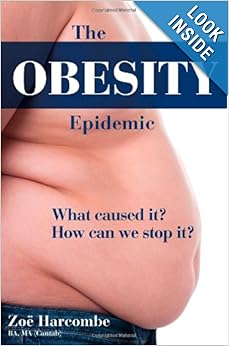
Zoe Harcombe (author of the Obesity Epidemic: What Caused It? How Can We Stop It?, 2010) analyzed the data from World Health Organization and found that "not only is there no statistical correlation between mean cholesterol levels and mortality, but there’s no positive relationship whatsoever":
  • As red & processed meat consumption increases, so exercise falls. Could lack of exercise impact mortality?
  • As red & processed meat consumption increases, so does BMI. Could BMI impact mortality?
  • As red & processed meat consumption increases, so does smoking – the top quintile virtually three times higher than the lowest. Could smoking impact mortality? 
  • As red & processed meat consumption increases, so does diabetes. Could diabetes impact mortality?
  • As red & processed meat consumption increases, so does calorie intake. Could calorie intake impact mortality?
  • As red & processed meat consumption increases, so does alcohol intake. Could alcohol intake impact mortality?
[Emphasis added.]

This is an incredibly informative article and goes a long way toward debunking most of the claims made against saturated fat and red meat consumption. As Harcombe points out on her blog, most "experts" can't even define saturated fat and where it comes from:
So now we know the following:

a) The authorities don’t know what saturated fat is. The majority of the products they call saturated fats are processed carbohydrates.

b) No one can isolate saturated fat from monounsaturated fat and/or polyunsaturated fat in the foods listed. In virtually all foods listed, no one can even isolate fat from carbohydrate and protein.

c) As I explain in this paper, the ONLY experiment that can be done to isolate fat involves swapping one oil for another. See section 7. We can swap olive oil out and sunflower oil in and change the proportions of the three real fats. We, however, also change nutrient intake – vitamins E and K. The control experiment, where we change one thing and one thing alone, cannot be done.
Excellent article - follow up on the links in the article if you want to know more.

We Don’t Know What to Eat

How bad science created a misinformed national diet—and did nothing to slow the growth of obesity.

September 25, 2013 • By Aaron Gordon

(PHOTO: SUZANNA BARZAGHI/SHUTTERSTOCK)

If you go to the National Institute of Health’s website today, you will find a section on a “Healthy Eating Plan.” That plan recommends a diet “low in saturated fats, trans fat, cholesterol, salt, and added sugars, and controls portion sizes.” These recommendations may well have been copied and pasted from 1977.

Nothing has changed over the past 36 years, except for this: everyone is fatter.

The U.S. government began issuing dietary guidelines in 1977, when the Senate Select Committee on Nutrition and Human Needs, led by Senator George McGovern, issued the first dietary recommendations for the American people. Although these recommendations were made some 36 years ago, you probably recognize them immediately: “Increase consumption of complex carbohydrates and ‘naturally occurring sugars;’ and reduce consumption of refined and processed sugars, total fat, saturated fat, cholesterol, and sodium.” And those should sound identical to your doctor’s advice: decreased consumption of refined and processed sugars; foods high in total and animal fat, eggs, butterfat, and other high-cholesterol foods; and foods high in salt.
There’s little to no good science behind our diet.

According to the Centers for Disease Control, obesity has more than doubled among adults since these dietary recommendations were put in place in the 1970s, and as of 2010, more than one-third of Americans were obese. Over the same time, the rate of diabetes has quadrupled, up to eight percent of the population in 2011. Clearly, something hasn’t been going according to plan.

Perhaps you’ve witnessed someone struggle with a diet, or struggled yourself. It’s not just stuff of TV shows; people breaking down, sobbing, wishing they looked differently and trying incredibly hard but it just isn’t working. This happens to real people, millions of them. It seems odd and a bit heartless to assert that this meteoric rise in obesity and associated diseases is a result of people not trying hard enough.

But there’s another explanation, one that’s gaining traction across the scientific community. Maybe the science behind this diet was bad, and the decision to launch the country into the diet was a poor one, and the non-decision to back off in the face of contradictory evidence even worse. At its most charitable, these experts say, it was a bad experiment. At its worst, it was a crime that has cost millions of lives, and the toll keeps rising.

THE SENATE SELECT COMMITTEE on Nutrition and Human Needs based their recommendations largely on the Seven Countries Study, which was first published in 1970 and led by University of Minnesota researcher Ancel Keys, whose findings were affirmed by several subsequent, large-scale studies such as the Nurses’ Health Study, which found that high saturated-fat diets were related to high cholesterol, and higher cholesterol in turn led to higher risks of obesity, heart attack, stroke, heart disease, and mortality. The Seven Countries Study painted a direct link between dietary fat, misery, and death—and that’s been the story ever since.

But there were issues from the start.

“Keys chose seven countries he knew in advance would support his hypothesis,” Gary Taubes wrote in Good Calories, Bad Calories: Fat, Carbs, and the Controversial Science of Diet and Health. “Had Keys chosen at random, or, say, chosen France and Switzerland rather than Japan and Finland, he would likely have seen no effect from saturated fat, and there might be no such thing today as the French paradox—a nation that consumes copious saturated fat but has comparatively little heart disease.”

Zoe Harcombe, author of the Obesity Epidemic: What Caused It? How Can We Stop It?, also found, using World Health Organization data, that not only is there no statistical correlation between mean cholesterol levels and mortality, but there’s no positive relationship whatsoever.

“Cholesterol (and protein and phospholipids and triglyceride—the four substances found in all lipoproteins) is found at the scene of damage to arteries,” Harcombe told me, “but the four vital components of lipoproteins are there to repair that damage. They did not cause the damage any more than police caused the crime when they are found at the scene of that crime.”

According to Harcombe and Taubes, Keys used cherry-picked data to reach a logically-flawed conclusion, but it was the biggest study available, so George McGovern jumped on it because, in his words, “Senators don’t have the luxury that a research scientist does of waiting until every last shred of evidence is in.”

But what about the studies that affirmed the Seven Countries research?

FOUNDED IN 1976—A year before McGovern’s recommendations—the Nurses’ Health Study takes surveys of nurses’ health habits. These types of studies—including the Seven Countries Study—are called “observational studies,” and they can only tell us so much. The first Nurses’ Health Study followed 121,700 nurses between the ages 30 and 55 between 1976 and 1989, a massive sample that is sure to capture a wide variety of individuals. But the conclusions ignore this and instead focus on individual effects, even though the participants were free to live their lives as they wanted during the 13 years of the study. Nothing was controlled; all health-related variables were in play.

Taubes outlined one of the chief issues with such a study in a 2007 New York Times Magazine article, which he quoted in this blog post. It’s known as the “compliance effect.”
Quite simply, people who comply with their doctors’ orders when given a prescription are different and healthier than people who don’t. This difference may be ultimately unquantifiable. The compliance effect is another plausible explanation for many of the beneficial associations that epidemiologists commonly report, which means this alone is a reason to wonder if much of what we hear about what constitutes a healthful diet and lifestyle is misconceived.
This Nurses’ Health Study, then, is only really telling us who leads a healthy lifestyle and who doesn’t.

The worst of it is, we still make these elementary mistakes. In 2012, a study was released that supposedly affirmed red meat’s link to death, cancer, and heart risk. When Harcombe looked at the actual data, she found the same thing as the Nurses’ Health Study: correlations that simply don’t tell us anything. Some excerpts from her analysis:
“As red & processed meat consumption increases, so exercise falls. Could lack of exercise impact mortality?”

“As red & processed meat consumption increases, so does BMI. Could BMI impact mortality?”

“As red & processed meat consumption increases, so does smoking – the top quintile virtually three times higher than the lowest. Could smoking impact mortality?”

“As red & processed meat consumption increases, so does diabetes. Could diabetes impact mortality?”

“As red & processed meat consumption increases, so does calorie intake. Could calorie intake impact mortality?”

“As red & processed meat consumption increases, so does alcohol intake. Could alcohol intake impact mortality?”
So instead of possibly linking exercise, Body Mass Index, diabetes, smoking, caloric intake, or alcohol intake to mortality, the conclusion was that, no, it is red meat that impacts mortality. It’s the compliance effect, again. To isolate red meat as the culprit is to ignore variables the researchers were not controlling for. It is, in short, bad science.

“The Nurses Health Study showed exactly the same correlations—the numbers were slightly different but the trends were the same,” Harcombe wrote in her analysis of the 2012 red meat study. “As red and processed meat consumption increased so exercise and high cholesterol fell; BMI, smoking, diabetes, calorie intake and alcohol intake all increased.”

Furthermore, according to the Nutrition Science Initiative, a foundation co-created by Taubes to yield better science behind epidemiology, the purported results from these landmark studies have never been consistently replicated in controlled environments. There’s little to no good science behind our diet.

So if our recommended diet is faulty, what should we eat? This is where the real harm of the last 35 years of questionable science comes to the forefront: we simply don’t know yet. When you spend the better part of three decades chasing a ghost, all you’re left with is a pretty good idea that there is no ghost. The medical community’s dedication to these established diets had led us burrowing deeper into the same rabbit hole, rarely exploring new pathways.

We have to eat, though, so when asked for dietary advice, experts need to say something. And that brings us right back to theories.

As he wrote in Why We Get Fat: And What To Do About It, Taubes believes a high-fat, moderate protein diet is the best one, because insulin triggers hormones that put fat in our fat tissue, and a bit ironically, fat is the one nutrient that doesn’t trigger insulin secretion. Harcombe told me the root of a good diet is avoiding foods that didn’t exist before the obesity epidemic. Or: “eating real food. Meat, eggs and dairy foods from pasture living animals; fish; vegetables; salads; nuts/seeds; fruits in season—that’s the basis of a good diet.” You’re likely to encounter other diets that purport to have the answers as well. They may or they may not, but at least we can be pretty sure of one diet that doesn’t work. It only took us three decades and an epidemic to prove it.

Tuesday, January 29, 2013

Dr. Robert Lustig: "Fat Chance: Beating The Odds Against Sugar, Processed Food, Obesity, and Disease"


Here are two recent articles/interviews with Dr. Robert Lustig about his new book, Fat Chance: Beating The Odds Against Sugar, Processed Food, Obesity, and Disease, the first is from The Diane Rehm Show and the other is from The Guardian (UK). Dr. Lustig argues that fructose (too much) and fiber (too little) are the cornerstones of the obesity and diabetes epidemics.

Robert H. Lustig, M.D has spent the past sixteen years treating childhood obesity and studying the effects of sugar on the central nervous system and metabolism. He is the Director of the UCSF Weight Assessment for Teen and Child Health Program and also a member of the Obesity Task Force of the Endocrine Society.

Here is some info on the book, via the publisher:
Robert Lustig’s 90-minute YouTube video “Sugar: The Bitter Truth”, has been viewed more than two million times. Now, in this much anticipated book, he documents the science and the politics that has led to the pandemic of chronic disease over the last 30 years. 
In the late 1970s when the government mandated we get the fat out of our food, the food industry responded by pouring more sugar in. The result has been a perfect storm, disastrously altering our biochemistry and driving our eating habits out of our control. 
To help us lose weight and recover our health, Lustig presents personal strategies to readjust the key hormones that regulate hunger, reward, and stress; and societal strategies to improve the health of the next generation. Compelling, controversial, and completely based in science, Fat Chance debunks the widely held notion to prove “a calorie is NOT a calorie”, and takes that science to its logical conclusion to improve health worldwide.
Other reviews/interviews can be found at KQED, Talk of the Nation, Oprah, and The Chicago Tribune, among many others.

Here is the episode from Diane Rehm:

Dr. Robert Lustig: "Fat Chance: Beating The Odds Against Sugar, Processed Food, Obesity, and Disease"

LISTEN
TRANSCRIPT
ORDER A CD

Monday, January 7, 2013

Recently published research suggests that obese people have a lower risk of death compared to people with normal weight. But this is not news to pediatric endocrinologist, Robert Lustig. He says fat doesn’t matter. What does matter, he argues, is metabolic function. For the past 16 years, he’s been treating childhood obesity and studying the effects of sugar on the central nervous system. In a new book he details the science and politics behind the dramatic increase in our consumption of sugar and explains why this shift is so detrimental to our health. Please join us to talk with Dr. Robert Lustig about obesity and disease.

Guests: Dr. Robert Lustig, Director of University of California, San Fransisco Weight Assessment for Teen and Child Health Program.

Related Links
Sugar: The Bitter Truth video (or watch it below)

Related Items
Fat Chance: Beating the Odds Against Sugar, Processed Food, Obesity, and Disease

"Sugar: The Bitter Truth" - Dr. Robert Lustig breaks down what sugar does to the body.

Read An Excerpt

Here is the review from The Guardian:

Fat Chance: The Bitter Truth About Sugar by Robert Lustig – review

Why eating sweet food is bad for you, but might not be your fault


Steven Poole
The Guardian, Friday 25 January 2013

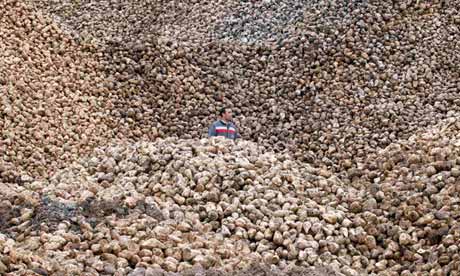
A worker at a Turkish sugar refinery is dwarfed by mountains of beet. Photograph: Umit Bektas/Reuters

Here's a mini-quiz for foodists who pride themselves on their knowledge of obscure consumables: what are diastatic malt, dextran, ethyl maltol, panocha and sorghum syrup? They are all names used on food labels for added sugar. Robert Lustig, an endocrinologist who works on childhood obesity, is angry with the food industry and the capturing of western governments by its lobbyists. Added sugar is all around us, disguised under deliberately unfamiliar names, and its sweet molecule – fructose – is, according to Lustig, the prime cause of our ballooning "obesity pandemic".

Lustig explains the biochemistry of metabolism, and the vicious cycle of obesity, with patient clarity and some alarmingly vivid imagery. (You know the way sugar helps to brown meat while cooking? It's browning your insides the same way.) He is sceptical about one-shot solutions (miracle diet pills, antioxidants), since there is a complex interdependence between the actions of hormones and food intake. For example: there is fructose in fruit, so why isn't eating fruit bad? Because the fibre in fruit counteracts the noxious effects of the sugar, which is why it's better to eat your fruit than to drink it. (A glass of orange juice contains more sugar than the equivalent volume of Coke.) The bitter pill of Lustig's philosophy is sweetened by an agreeably cute humour: "Naturally occurring fructose comes from sugarcane, fruits, some vegetables, and honey. The first three have way more fibre than fructose, and the last is protected by bees."

There is no shortage of fad food books blaming one or other "toxin" for all our fleshly dolours. Yet to dismiss every such tract as populist scaremongering would be just as irrational as to believe them all. (The "experts" – whom it is fashionable in some quarters always to dismiss wholesale as a compromised class – did not, after all, turn out to be wrong about the harmful effects of cigarettes.) Recent reports elsewhere, indeed, indicate that there is a growing consensus behind the idea that the fructose factor helps to explain what otherwise looks like a puzzle: why do different diets – Atkins, the Paleo diet, the traditional Japanese or Mediterranean diets – all have notable health benefits? Because, or so this thinking runs, they are all low-sugar and high-fibre regimes.

Fat Chance is a persuasively indignant public-policy manifesto, but it's also a self-help book; curiously, each strain flatly contradicts the other. The crux is whether people can actually change their behaviour. Of course they can, you might retort, citing friends who have successfully slimmed; but Lustig spends most of the book denying that this is even possible, the better to justify government regulation. (He suggests agricultural subsidies for green vegetables instead of for corn and soy, and taxing foods that have added sugar. This latter would be a regressive tax, he admits, but the benefits would also accrue mostly to those on low incomes.)

Lustig denies personal autonomy for laudably humane reasons – because he wants to deconstruct the prejudice that obese people have merely given in to "gluttony and sloth". But his insistence on the complete irrelevance of "personal responsibility" leads him to rely on some ropey metaphysics and oversimplified science. "Biochemistry and hormones drive our behaviour," he writes reductively, assuring us that we are merely slaves to the antic nanoreactions of our neurobiology. And because obesity changes our hormonal balance, "weight loss is next to impossible".

Apparently, then, we can't choose what to do. "Most of the world views the word behaviour as meaning the actions we choose to do or not through 'free will,'" he writes. "However, the dictionary definition of behaviour is: 'a stereotyped motor response to a physiological stimulus.'" Unfortunately, Lustig does not provide a footnote to indicate which dictionary he was using. I checked the OED, the New Oxford American Dictionary, and Merriam-Webster, and none gave his definition of "behaviour" as primary. Lustig's description is a more specialised one, recalling the tradition of "behaviourism" in psychology. An animal's actions in this sense could be "conditioned", as in BF Skinner's famousSkinner box: a rat in the box learned to push one button for food and avoid the button that generated electric shocks. There's probably a bracing argument to be made that modern humans all live in a giant Skinner box, but Lustig doesn't come out and make it.

On the other hand, if Lustig's anti-free-will view is correct, it is hard to see the point of his urging the reader, in the book's self-help chapters, to alter his or her own buying and eating habits. Even so, he provides a six-page shopping list of low-fructose and high‑fibre foods that one can find in any supermarket; and offers advice on how to behave in a restaurant. (Don't be in a fast-food joint in the first place; don't have bread with the meal; don't order dessert.) So personal change is possible?

This is not to say that Lustig's advice isn't good. In fact, you can tell it is good because it is so close to what everyone already knows, despite his eagerness to sell the novelty of his version and dismiss the familiar mantra of "eat less and exercise more" as a "myth". So what is his answer? Er, eat less sugar, eat more fibre, and exercise more. Or, if you want it further reduced: avoid "processed" rubbish and just "eat real food". I worried for a moment that much of my own diet would, on Lustig's stringent criteria, turn out to have been unreal food: merely colourful hallucinations of elaborate victuals, simulated scoffing. But then I couldn't help myself, could I?

• Steven Poole's You Aren't What You Eat is published by Union Books.