Showing posts with label maps. Show all posts

Monday, March 17, 2014

Exploring Therapeutic Effects of MDMA on Post-Traumatic Stress (LA Times)

It's nice to see a major paper like the Los Angeles Times covering the developments in using MDMA (Ecstasy) for post-traumatic stress and other anxiety disorders. This is NOT new research, despite the way these stories are typically run. There has been research underway since the late 1990s, which was curtailed considerably during the Bush presidency and has been supported much more by the Obama administration.

Here are some resources on the use of MDMA for anxiety disorders like PTSD:
There have not been any serious negative results in the literature. The only real concern seems to be the serotonin depletion in the days following use of MDMA, but that can be ameliorated with 300-600 mgs of alpha lipoic acid an hour or so before taking the MDMA.

I would love to be able to use this with some of my clients.

Exploring therapeutic effects of MDMA on post-traumatic stress


Researchers and some independent therapists are studying whether banned drug MDMA — found in Ecstasy — may help those with PTSD.


By Alan Zarembo
March 15, 2014

MDMA
MDMA, the active ingredient in the illegal party drug Ecstasy, is currently being studied in a series of clinical trials to see if the drug's ability to strip away defensiveness and increase trust can boost the effectiveness of psychotherapy.

It costs about $2,000 to buy an ounce of the illegal drug, the therapist said — enough for roughly 150 doses. She pays her longtime dealer in cash; he gives her a Ziploc bag of white powder.

Back home, she scoops the contents into clear capsules. She calls it "the medicine"; others know it as MDMA, the active ingredient in the party drug Ecstasy.

MDMA has been banned by the federal government since 1985 as a dangerous recreational drug with no medical value. But interest is rising in its potential to help people suffering from psychiatric or emotional problems.

A loose-knit underground community of psychologists, counselors and healers has been administering the drug to patients — an act that could cost them their careers.

"I do what is morally right," said the therapist, who lives in Northern California and did not want to be identified. "If I have the tools to help, it is my responsibility to help."

A series of clinical trials approved by federal drug authorities is now underway to see if the drug's ability to strip away defensiveness and increase trust can boost the effectiveness of psychotherapy.

One of the key studies focuses on MDMA's effect on military veterans suffering from post-traumatic stress disorder.

Farris Tuma, head of traumatic stress research at the National Institute of Mental Health, said he's skeptical because there is no plausible theory so far about how the drug's biochemical effects on the brain could improve therapy.

"They're a long way between where they are now and this becoming a standard clinical practice," he said.

A surge in Ecstasy-related deaths at raves has reinforced the compound's destructive reputation.

But some of those who have given MDMA to patients are optimistic.

The therapist said she became a believer in the late 1980s after it helped her deal with her own trauma. She has since conducted roughly 1,500 sessions with patients, leading them on four-hour explorations of their feelings.

She uses only the purest MDMA — in contrast to street Ecstasy, which is typically contaminated — and none of her patients has ever experienced an adverse event, she said.

The therapist said she knows roughly 60 professionals in her region who use MDMA in their practices — and the number is growing.

"We are responsible therapists doing respectable work," she said.

::

MDMA — or 3,4-methylenedioxy-N-methamphetamine — was first synthesized a century ago by chemists at Merck & Co. Inc., which patented it as a precursor to a blood-clotting medication.

Toxicity experiments secretly conducted for the U.S. Army and later declassified have fueled speculation that the military was interested in MDMA in the 1950s as a chemical weapon or truth serum.

Then in 1976, Alexander Shulgin, a former Dow Chemical Co. researcher who devoted his life to research and self-experimentation with psychedelic drugs, synthesized MDMA and tried it.

"I have never felt so great, or believed this to be possible," he later wrote about the experience. "The cleanliness, clarity, and marvelous feeling of solid inner strength continued through the rest of the day, and evening, and into the next day."

The following year he gave the drug to Oakland psychologist Leo Zeff, who was so impressed that he came out of retirement and began introducing it to therapists across the country.

By some estimates, as many as 4,000 therapists were using MDMA in their practices before federal authorities banned the drug.

"We lost a major tool that was really growing," said Dr. Phil Wolfson, a San Francisco psychiatrist who used the drug in his practice when it was legal.

MDMA's chemical mechanism remains unexplained beyond the broad effect of raising levels of serotonin and oxytocin — brain chemicals related to well-being and social bonding — and triggering the amygdala, a region of the brain involved in processing memory and emotion.

Therapists say MDMA can put patients in an emotional sweet spot that allows them to engage difficult feelings and memories.

Bob Walker, a 69-year-old Vietnam veteran from Chico, tried Ecstasy on his own after hearing it was being used to treat PTSD.

A few weeks after his first Ecstasy trip, he took it again and had his girlfriend drive him to a therapy appointment. His therapist had no experience with the drug but had agreed to the session.

Walker said the experience released him from haunting images of seeing a friend killed in a helicopter crash and watching a young Vietnamese boy die in a truck accident. "I didn't lose any memory of what happened," he said. "I lost the anxiety."

The therapist, who did not want to be identified, said Walker seemed to open up. "This barrier that had been there was suddenly gone," she said.

Despite worries that she was risking her career, she agreed to conduct two more three-hour sessions over the next several months.

"Once his soul was open, it didn't fully close again," she said. "Each time, I feel that he was closer to his truest nature."

Tim Amoroso, a 24-year-old Army veteran, was tormented by memories of looking for body parts after a suicide bomber killed five U.S. soldiers in Afghanistan. He said antidepressants and anti-anxiety pills prescribed by doctors at the VA provided little relief.

Now a student at the University of New Hampshire, Amoroso bought Ecstasy at a music festival last summer and later took the drug with a friend watching over him.

"I feel like I found meaning again," Amoroso said. "My life wasn't as bad as I thought it was."


::

The new research into MDMA's therapeutic potential largely stems from the efforts of Rick Doblin, a former hippie who earned a doctorate in public policy at Harvard University to help his quest for drug legalization.

Doblin's nonprofit Multidisciplinary Assn. for Psychedelic Studies, which runs on donations, has sponsored all research into clinical uses of MDMA. Doblin hopes the drug follows the same path as marijuana, whose approval for medical purposes led to broad public acceptance.

In 2004, South Carolina psychiatrist Michael Mithoefer launched a clinical trial involving 20 patients suffering from PTSD — mostly female victims of sexual violence who had unsuccessfully tried other therapies.

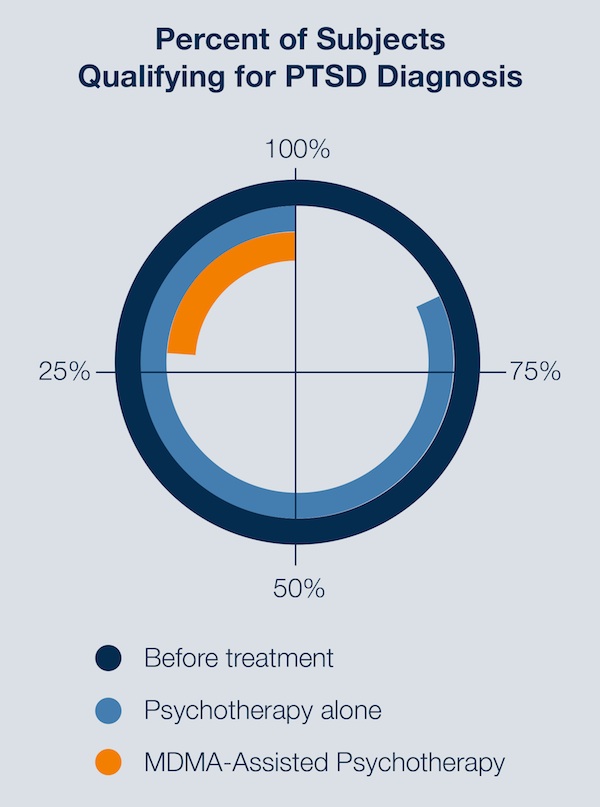
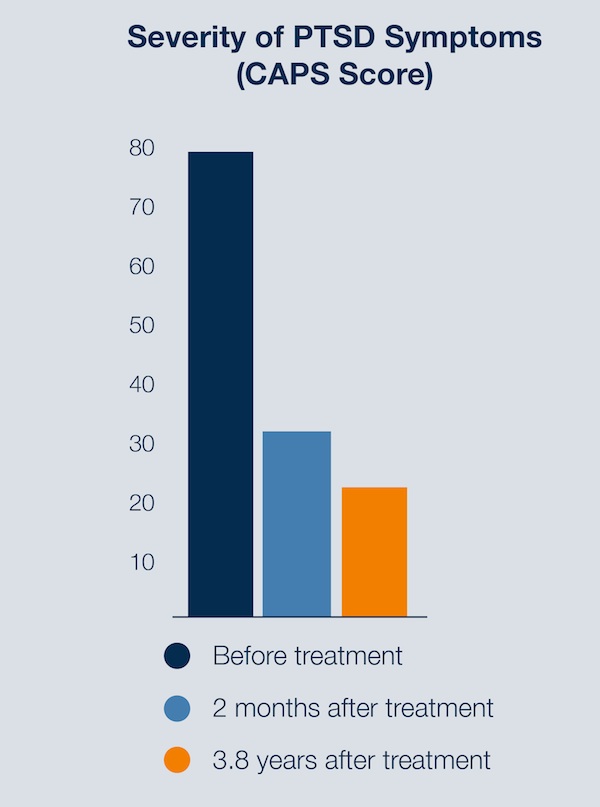
Ten of the 12 who received MDMA during two sessions improved so much that they no longer qualified for a PTSD diagnosis. Patients who received a placebo fared worse. A follow-up study published in 2012 found that, for the most part, the patients who improved continued to do well.

Mithoefer is now conducting a study looking at whether MDMA has a similar effect on veterans, firefighters and police officers afflicted with PTSD.

One participant is a 57-year-old retired Army major who has struggled with memories of a young soldier killed in an ambush in Iraq. The major hadn't been able to talk much about it in earlier sessions without the drug.

"The kid, he'd shown me pictures of his young kids and wife and all that," the soldier said in a videotaped therapy session. "To get to know someone and trust him, and now you know he's dead — it's tough."

In subsequent testing, the severity of the major's PTSD declined, the researchers said. The study's full results on 24 subjects are expected late next year.

Among other studies, a trial set to begin at Harbor-UCLA Medical Center will test MDMA's ability to combat social anxiety in high-functioning autistic adults. Bay Area researchers also are planning to conduct a study of whether MDMA can reduce anxiety in patients facing deadly illnesses.

Experts not involved in trials said they haven't seen enough data to draw conclusions. They noted that in a Swiss study funded by Doblin's group, the drug did not significantly reduce symptoms of PTSD.

With a budget of $2 million a year, Doblin's group doesn't have the money to pay for the wide-scale trials needed for scientific clarity and FDA approval. His hope is that the government will step in with funding.

Doblin has met with officials at the Pentagon and the Department of Veterans Affairs, but so far the government has kept its distance.

"Ecstasy is an illegal drug and [the] VA would not involve veterans in the use of such substances," a spokesman said in an email.

alan.zarembo@latimes.com

Special correspondent L.J. Williamson contributed to this report.

Thursday, March 06, 2014

First LSD Study in 40 Years Finds Therapeutic Potential (Discover)

Wow, imagine that?!! I'm glad to see that research has finally been unfrozen and we will be able to identify the best hallucinogens for various psycho-spiritual issues.

First LSD Study in 40 Years Finds Therapeutic Potential

By Carl Engelking | March 5, 2014


Scientific study often opens new doors of discovery—but sometimes it reopens doors closed long ago. On Tuesday, experimental psychiatrists in Santa Cruz, California published results from the first controlled medical trial of LSD in over 40 years.

The study, published in Journal of Nervous and Mental Disease [pdf], found evidence that LSD, when administered in a medically-based therapeutic environment, lowers the anxiety experienced by individuals facing life-threatening illnesses. Although the sample size—just 12 people—was small, the findings offer compelling rationale for further study of the illegal, often stigmatized drug.

“This study is historic and marks a rebirth of investigation into LSD-assisted psychotherapy,” said Rick Doblin in a news release, executive director of the Multidisciplinary Association for Psychedelic Studies, which sponsored the study. “The positive results and evidence of safety clearly show why additional, larger studies are needed.”

When Research Came to a Halt

That LSD—lysergic acid diethylamide—can be therapeutically beneficial has been known for decades. Studies of the chemical substance began back in 1949 as a way to simulate mental illness. But researchers soon discovered beneficial effects of the drug.

By 1965, over 1,000 studies were published that heralded the therapeutic efficacy of LSD. The substance was used to treat alcoholism, and in several studies from the 60s, the drug was found to reduce anxiety, depression and pain—when used in conjunction with counseling—in cancer patients. Similar benefits were also discovered from other psychedelics such as hallucinogenic mushrooms.

However, despite its promise, LSD research ground to a standstill after the substance was outlawed in the United States in 1966 in response to soaring recreational use.

Revisiting the Past

The new study reaffirms many of the findings from 40 years ago.

Researchers recruited 12 patients who were coping with anxiety associated with life-threatening illnesses. Eight patients were then randomly selected to receive drug-free psychotherapy sessions as well as two LSD-assisted sessions 2 to 3 weeks apart. Four participants were given a placebo during therapy and they served as the control. LSD helped stimulate a deep psychedelic state, allowing the participants to reach what they described as an emotionally intensified dream-like state.

“My LSD experience brought back some lost emotions and ability to trust, lots of psychological insights, and a timeless moment when the universe didn’t seem like a trap, but like a revelation of utter beauty,” said Peter, an Austrian subject who participated in the study.

In a follow-up two months later, researchers noted a statistically significant reduction in state anxiety—heightened emotions that develop in response to a fear or danger—faced by patients who were given LSD therapy. In contrast, state anxiety actually increased for patients in the placebo group. Further, the reductions in anxiety were sustained for a full year in the group given LSD.

A Future for LSD

The study’s authors are clear that this is just a preliminary investigation with a very small sample size. The results are far from conclusive.

Rather, when combined with the findings from other decades-old studies, the study’s authors hope to encourage other researchers to look beyond the stigma associated with LSD and explore other possible medical applications of the drug.

Photo credit: mikeledray/Shutterstock

Tuesday, February 18, 2014

Psychedelic Drugs: Harmful or Therapeutic? (Al Jazeera English)

On Al Jazeera's The Stream, there was a recent conversation on the risks and/or benefits of using psychedelic drugs (entheogens or hallucinogens) as therapeutics for mental health issues. Among the guests was Rick Doblin, Founder and Executive Director of the Multidisciplinary Association for Psychedelic Studies (MAPS).

Also included was Dr. David Nutt, the former chairman of the Advisory Council on the Misuse of Drugs (ACMD) in England (a position from which he was dismissed due to his support of medicinal use of some "recreational" drugs) and current Chair of the Independent Scientific Committee on Drugs.

For most thinking people, especially those who have experienced entheogens, these are drugs that offer much more benefit than harm - but the government has a vested interest in rejecting the freedom to experience alternate states of consciousness, especially when those states can wake people up from the consensus trance.


Psychedelic drugs: harmful or therapeutic?

The Stream looks at the risks and benefits of these drugs on mental health.


Ecstasy pills in hand. (UIG via GETTY)

Have we lost decades of research on mental health disease because of legal controls on psychedelic drugs? Some scientists claim LSD and MDMA hold the key to treating illnesses like schizophrenia and depression, and are calling for an end to the restrictions on working with them. Others though, say they are too risky to experiment with and the long term dangers are not known. We will speak to experts who argue both sides. Join us at 19:30 GMT.

In this episode of The Stream, we speak with:

Bertha Madras @harvardmed
Professor of Psychobiology at Harvard Medical School
hms.harvard.edu

David Nutt @ProfDavidNutt
Chair of the Independent Scientific Committee on Drugs
drugscience.org.uk

Rick Doblin @RickDoblin
Founder and Executive Director of the Multidisciplinary Association for Psychedelic Studies (MAPS)

Rachel Hope
Writer

What do you think? Leave your thoughts in the comments section.
* * * * *

Here is some of the background information provided at the Al Jazeera site.
From LSD to MDMA, a recent editorial published by Scientific American has ignited a heated discussion regarding the research of psychoactive drugs. The article calls on the US government to "end the ban on psychoactive drug research". It goes on to say:
New thinking is desperately needed to aid the estimated 14 million American adults who suffer from severe mental illness. Innovation would likely accelerate if pharmacologists did not have to confront an antiquated legal framework that, in effect, declares off-limits a set of familiar compounds that could potentially serve as the chemical basis for entire new classes of drugs.
The editors believe that by making it easier to do research on drugs like MDMA (a compound found in ecstasy) and LSD, scientists can explore whether these drugs can help with post-traumatic stress disorder (PTSD), cluster headaches, obsessive-compulsive disorder (OCD) and schizophrenia.

Netizens had a mixed response to Scientific American's article:
Jordan Ray Johnston
It's great to see a mainstream scientific journal getting behind this. The research of the 60's should never have been stopped. However.... dope is a term originally used to talk about heroin. Tis sad that it's used so indiscriminately now.
18 days ago

facebook.com
while I earnestly believe the FDA is much too conservative with their rulings, I stand behind them when they ban psychoactive drugs from being medicinal. I used to pride myself on my above average mental constitution and ability to handle psychedelic drugs, but I can tell you from personal experience, and from the experience of witnessing other users, that those drugs are bound to make psychiatric disorders much worse (even if the response is delayed).
5 days ago
Many scientists agree that more research needs to be done on these drugs, but some argue that Scientific American's article is misleading. "While the stigma that comes from Schedule I placement of these substances makes scientific research clearance and fundraising difficult, research itself is not prohibited", writes April Short on AlterNet.org.

In 1970, the US government passed the Controlled Substances Act. The legislation classifies drugs into one of three categories, Schedules I, II, III. Schedule I includes drugs that meet the following criteria:
fda.gov
(A) The drug or other substance has a high potential for abuse. (B) The drug or other substance has no currently accepted medical use in treatment in the United States. (C) There is a lack of accepted safety for use of the drug or other substance under medical supervision.
5 days ago

The Controlled Substances Act does not explicitly prohibit the research of Schedule I drugs, but there are several guidelines for gaining approval to do research. The United Nations also has three treaties, including the The Convention of Psychotropic Substances that similarly classify these types of drugs.

A blog by David Nutt, a psychopharmacologist at the Imperial College London, echos Scientific American's call to end the restrictions on the research of Schedule I drugs:
drugscience.org.uk
Drugs get sucked into the black hole of Schedule 1 all too easily, but no evidence of medical value seems enough to get them out. We need to resist the scary fairy-tale that removing drugs such as cannabis from Schedule 1, or reforming the Regulations, will open a Pandora’s box. There’s much more reason to believe that we’ll unleash a Neuroscientific Enlightenment, making new discoveries about the brain and consciousness, developing new treatments for debilitating disorders like PTSD, depression and chronic pain, and giving a boost to our economy along the way.
5 days ago
Some online agree:
facebook.com
The ban on psychedelic drugs makes research into the therapeutic benefits virtually impossible. This is effectively one of the biggest cases on science ever. Many diseases can be cured and many lives can be saved if we abolish drug prohibition and introduce sendible regulation
4 days ago
A few recent studies have examined the use of these types of drugs. The Multidisciplinary Association for Psychedelic Studies (MAPS), is currently studying the effect of MDMA-assisted psychotherapy on healing psychological and emotional damage from war, violent crimes and other traumas. In the video below, participants and therapists describe the MAPS study:
Healing Trauma in Veterans with MDMA-Assisted Psychotherapy
mapsmdma
3 months ago
Online, some said they would take psychoactive drugs to treat disorders like PTSD and schizophrenia:
PoliticallyQuestiond
@AJStream Cannabis is essential for my and others' PTSD and safe. Risks of this and other needed drugs are introduced by criminalization...
Mohammed A. Elshafie
@AJStream Yes, but with a good understanding of the risks and excellence analysis on how to minimize it.

Jennifer Huizen
@AJStream The extent these type of disorders disrupt the lives of those affected makes chances, maybe even risky ones, worth taking.
Others, however, feel it may be too risky:
El_vii_diego
@AJStream you cant take a psychoactive drug to treat a disorder like because the potential wont outweigh the potential risks but
El_vii_diego

@AJStream it will rather increase the risks of the decease eg like

Thursday, December 05, 2013

Rick Doblin [MAPS] - 10 Best Answers to Questions About Using Psychedelics


Recently, Rick Doblin, founder of the Multidisciplinary Association for Psychedelic Studies (MAPS) answered questions on reddit on MDMA, LSD, and other psychoactive drugs. Here is his introduction to the Q and A:
Hey reddit! I am Rick Doblin, Ph.D., Founder and Executive Director of the Multidisciplinary Association for Psychedelic Studies (MAPS). Founded in 1986, MAPS is a 501(c)(3) non-profit research and educational organization that develops medical, legal, and cultural contexts for people to benefit from the careful uses of psychedelics and marijuana.
The staff of MAPS and I are here to answer your questions about:
  • Scientific research into MDMA, LSD, psilocybin, ayahuasca, ibogaine, and marijuana
  • The role of psychedelics and marijuana in science, medicine, therapy, spirituality, culture, and policy
  • Reducing the risks associated with the non-medical use of various drugs by providing education and harm reduction services
  • How to effectively communicate about psychedelics at your dinner table
  • and anything else!
Our currently most promising research focuses on treating post-traumatic stress disorder (PTSD) with MDMA-assisted psychotherapy.
This is who we have participating today from MAPS:
  • Rick Doblin, Ph.D., Founder and Executive Director
  • Brad Burge, Director of Communications and Marketing
  • Amy Emerson, Director of Clinical Research
  • Virginia Wright, Director of Development
  • Brian Brown, Communications and Marketing Associate
  • Kynthia Brunette, Operations Associate
  • Tess Goodwin, Development Assistant
  • Ilsa Jerome, Ph.D., Research and Information Specialist
  • Bryce Montgomery, Web and Multimedia Associate
  • Linnae Ponté, Zendo Project Harm Reduction Coordinator
  • Berra Yazar-Klosinski, Ph.D., Lead Clinical Research Associate
Alternet collected 10 of the most interesting questions for your entertainment.

10 Best Answers to Questions About Using Psychedelics


December 4, 2013 | By April M. Short


"LSD is like dreaming—it’s not uniform content, it’s a way of processing content," and other fascinating insights came out of this "Ask Me Anything" session.


Photo Credit: Shutterstock.com/Spectral-Design

Rick Doblin—founder and executive director of the Multidisciplinary Association for Psychedelic Studies (MAPS), appeared on Reddit’s AMA feature (Ask Me Anything) to openly answer questions along with a team of 10 from MAPS on December 3.

For those who are unfamiliar, AMA is like the town hall meeting of the digital age, providing a chance for anyone to ask about anything and, if the comment is promoted by other users to the top of the pile, they will receive a response. When President Obama made a surprise AMA appearance as part of his 2012 campaign efforts, he was bombarded with so many questions the flood of traffic momentarily took down the site.

In Doblin’s introduction to the AMA session he described MAPS as a 501(c)(3) non-profit research and educational organization that develops medical, legal, and cultural contexts for people to benefit from the careful uses of psychedelics and marijuana. Then, he noted that the staff could answer any questions about:
• Scientific research into MDMA, LSD, psilocybin, ayahuasca, ibogaine, and marijuana;
• The role of psychedelics and marijuana in science, medicine, therapy, spirituality, culture, and policy;
• Reducing the risks associated with the non-medical use of various drugs by providing education and harm reduction services;
• How to effectively communicate about psychedelics at your dinner table;
• and anything else!
Doblin also noted that currently the most promising research at MAPS focuses on treating post-traumatic stress disorder (PTSD) with MDMA-assisted psychotherapy.

The MAPS team was inundated with more than 2,000 questions and had responded to more than 75 by publishing time (2:30pm, December 4).

According to Brad Burge, director of communications and marketing for MAPS, the team will continue to answer questions through the end of the week as long as there is interest—and they may even decide to continue answering questions indefinitely.

"Educating the public honestly about psychedelics and marijuana is a core part of our mission," he said. "This is one of the most exciting and inspiring parts of what we do: interacting with people who are actively trying to broaden their perspective about the risks and therapeutic benefits of psychedelics and marijuana.“

Here are ten of the most fascinating questions and answers to come out of the AMA:

1. Question from luttnugs: Is it possible for people to have completely different reactions/symptoms from the same psychedelic? Say hypothetically I eat mushrooms and my friend eats the same amount of said mushrooms. Should we experience similar symptoms or is it possible that genetics could lead to completely different reactions?

Answer from Rick Doblin:

Yes. The beauty of psychedelics is that we don’t have psychedelic experiences; we have experiences of ourselves catalyzed by psychedelics. Stan Grof has said that LSD is a “non-specific amplifier of the unconscious,” so that what we experience depends on who we are.

LSD is like dreaming—it’s not uniform content, it’s a way of processing content.

2. Question from SkittleSkitzo: How bad is marijuana for the lungs? Also, is it actually possible to "re-trip" (where you hallucinate years later because its in your spinal fluid) on acid?

Answer from Rick Doblin:


Marijuana does not cause lung cancer, nor does it cause chronic obstructive pulmonary disease (COPD). The cannabinoids in marijuana have anti-tumor properties; however, people who smoke marijuana can sometimes get colds and respiratory infections. I think unbiased risk/benefit analysis by the FDA could result in marijuana in smoked form becoming an approved prescription medicine.

LSD is not stored in the spinal fluid and it is not possible to “re-trip” years later. That is entirely a drug war fabrication.

3. Question from Quasarstoquarks: Do you believe that spiritual drug experiences (such as shamanistic rituals involved with ayahuasca) will ever have a place in modern medicine?

Answer from Rick Doblin:

MAPS recently sponsored a study of ayahuasca in the treatment of addiction in British Columbia. Bill W., the founder of Alcoholics Anonymous, took LSD in the 1950s and felt it could play a major role in the treatment of addiction. The spiritual experiences help people to accept themselves, and give people strength. So spiritual experiences will have a place in modern medicine, such as research into LSD for people with anxiety associated with the end of life. Earlier LSD research in the 1960s for cancer patients showed that spiritual experiences were correlated with therapeutic outcomes. Spiritual experiences can occur in a hospital setting as well as in a shamanistic ritual. I think modern psychiatric medicine will increasingly combine psychotherapeutic and spiritual experiences.

4. Question from MDMA_Throw_Away:  My wife and I tried MDMA for the first and only time (so far...) earlier this year. It was the best experience I've ever had on any drug. We expected to be sexing like rabbits but much to my surprise we had a late night of chatting, laughing, and even airing grievances with each other in a way that we both could just accept and talk through. We cried together over things that we routinely did that were hurtful to the other. We had a whole night of connecting with each other like we never had before.

It was downright therapeutic.

I think this would be such an incredible drug for couples that need refocused on each other. What kind of work is being done to make MDMA legal for responsible adults?

Answer from Berra Yazar-Klosinski, Ph.D., lead clinical research associate:

Couples therapy was actually the most common therapeutic use for MDMA before it was placed on Schedule 1 in 1985. However, at present the most effective way to study the risks and benefits of MDMA is to study it as a treatment for a clinically diagnosable psychiatric disorder. After medical use becomes more accepted, it may become possible for additional uses of the medication to be studied.

Here is a related article from a 2011 issue of Elle magazine that you might find interesting.

Answer from Rick Doblin: 

We were recently contacted by a group of European researchers who want to start a study of couples therapy. They are seeking a government grant to complete the study. If accepted, this will be a remarkable study.

As Berra said, we are focused on turning psychedelics into medicine. Relationships aren't diseases. We definitely hope to see this research expand.

Medicine will increasingly combine psychotherapeutic and spiritual experiences.

5. Question fromOceanMan7: I know from experience that a bad trip on psychedelics can be extremely scary and traumatizing. How do you guarantee that your patients have a positive experience?

Answer from Ben Shechet, cilinical study assistant:

There is no guarantee that a psychedelic experience will be 'positive'--in fact, since most of our research subjects are dealing with significant psychological issues in their lives, their experiences can be quite difficult. We make sure that our subjects feel safe and well cared-for within the therapeutic space, and focus on building a strong working alliance between the therapists and subjects. But we also view difficult experiences as moments that carry great potential for healing and growth, and encourage our subjects to enter into those experiences willingly, as they are often the very things that need to be experienced fully in order for the individual to move forward in their life.

6. Question from dennisb230980: What is your opinion about [T]im [L]eary in terms of psycedelic scientific research[?]

Answer from Rick Doblin:

Tim Leary, when he was at Harvard, did incredibly valuable scientific research. The Good Friday Experiment for which he was a faculty sponsor was the first study of psychedelics in spiritual experiences ever conducted. My undergraduate thesis was a 25-year follow-up study to Leary’s study. It was a key to my understanding of the 1960s. The people I interviewed who participated in the original Good Friday Experiment told me that the mystical experience of oneness had important political implications in their lives in that it inspired them to see our commonality more so than our differences, and motivated them to work for social change. When I look back on the 1960s, the backlash from society was more about psychedelics going right and motivating people to challenge the status quo than it was about psychedelic experiences going wrong, though that happened as well. The Good Friday Experiment has motivated almost all of the current psychedelic researchers.

Leary’s Concord Prison Experiment was exceptionally idealistic in trying to show that psychedelic mystical experiences could produce measurable reductions in recidivism. Where I’m not comfortable with Tim Leary is that once he left Harvard he exaggerated the results of the Concord Prison Experiment and ended up sharing false information.

I believe there’s something holy and spiritual about science, and that the results of research need to be shared with the greatest of integrity. I admire Tim, but also feel that he became what he was objecting to: Propaganda against psychedelics in his mind justified propaganda for psychedelics. MAPS is trying to be a leader in research into both the benefits and the risks of psychedelics, and reporting them honestly.

7. Question from Rack3m: What do you see as the next big hurdle for publicly funded research grants?

Answer from Rick Doblin:

NIMH has not funded psychedelic research since the mid-1960s, but we hope that will change over the next few years. We are currently developing a research grant proposal to send to the NIMH in order to move forward with our PTSD research.

We are also in discussion with the VA and DOD about the concept of treating veterans suffering from PTSD with MDMA-assisted psychotherapy. It may take several more years before we engage in a collaborative study and receive government funding.

Currently, all of our research is funded through donations.

8. Question from musicisbelieving85: With the current MDMA research, once that is finished is the expected result to get FDA to approve MDMA psychotherapy or is the plan to do even more research? What's the current expected timetable for making this available for basically anyone that needs help in this way?

Answer from Amy Emerson, director of clinical research:

We are currently in Phase 2 of our clinical trials, this phase gathers preliminary information on the safety and efficacy of the drug to treat the condition under investigation in populations of 12 to 200 subjects. Phase 3 trials gather conclusive evidence regarding efficacy and safety in larger populations of 250 to 2000 subjects. At least two Phase 3 studies are typically required to prove safety and efficacy before permission for prescription use can be approved.

While we are working to complete the Phase 2 studies, Phase 3 planning will start including work to identify a GMP (good manufacturing process) manufacturer of MDMA as well as large scale training of Phase 3 investigators. We anticipate completing the primary end points in our Phase 2 studies in late 2015. We plan to have our End of Phase 2 meeting with FDA in early 2016 and apply for programs to accelerate development. By the end of phase 2 we will know if we have been accepted to any accelerated development programs and will finalize our Phase 3 strategy with FDA.

We estimate we will need to do 2 Phase 3 studies with 200-250 subjects per study across multiple sites, the studies will be conducted in a staggered fashion from 2016-2020. In parallel with this, MAPS will request FDA permission to conduct Expanded Access (Compassionate Use) studies with cost recovery for people who do not qualify for the Phase 3 program. If a drug proves to be safe and efficacious in two Phase 3 studies, the sponsor of the studies submits a New Drug Application (NDA) to the FDA and/or the European Medicines Agency (EMEA), which review the application for possible approval as a prescription medicine. We anticipate the decision regarding MDMA as a prescription medication would occur in 2021.

9. Question from Pipken:  A very recent study by Taurah et al. indicates that MDMA use results in widespread behavioral deficits when compared to other drug users, and that alarmingly, these deficits did not go away even after a prolonged period of abstinence. When taken together with evidence in animal models that any substantial MDMA usage causes irreparable damage of serotonergic neurons, it appears that MDMA use can result in the selective yet permanent death of these neurons even in humans.

What methods have you utilized to minimize the damage and maximize the benefits of these psychedelics in your research trials?

Answer from Ilsa Jerome, Ph.D., clinical research and information specialist:

We have examined the literature on MDMA toxicity over time; there are sections on the matter in our Investigator's Brochure, which is periodically updated.

The recent study features a large sample but is still retrospective (meaning people are measured after they start taking ecstasy) and compares between groups. This makes it similar to 99% of most studies of ecstasy users, and the problem with this is that the method makes it hard to eliminate the other potential points of causation; it's essentially a fancy correlational study with multiple groups. Drug use is poorly matched in this sample.

MAPS studies involve a couple of administration of known MDMA in a therapeutic setting, and so are different from unsupervised use of "ecstasy" in various settings.

We examined cognitive function in our first study of MDMA-assisted psychotherapy in people with PTSD, and we did not find any indicate that receiving MDMA as compared with inactive placebo reduced performance on these tests.

The animal models have long been in question since they are based on interspecies scaling, and this model is not suitable for compounds with nonlinear pharmacokinetics (meaning, a higher dose has a greater effect than expected), and MDMA has nonlinear pharmacokinetics. Hence most rodent and monkey toxicity studies use inappropriately high doses.

We still inform people of the potential risks of toxicity before they take part in MDMA studies, and we leave three to five weeks between each dose.

10. Question from entropicoWhat is the single most challenging anti-psychedelic argument used and how do you deal with it?

Answer from Brad Burge:

The single most challenging rational argument against psychedelic research is the claim that by investigating the beneficial potential of these drugs and engaging in public education about the results of that research, we are also encouraging the irresponsible use of the drugs by leading people to believe that they are safe.

There are two simple responses to this question that we have found to be useful: (1) We do not claim that psychedelics, or any drugs, are safe, only that in defined situations their benefits can outweigh their risks; and (2) ultimately, we do encourage the responsible use of psychedelics, though we acknowledge that current prohibitionist and anti-harm reduction policies make those responsible uses more difficult to engage in.

The main resistance encountered by psychedelic research, however, is not rational, but deeply emotional. Decades of cultural paranoia surrounding the use of psychedelics, combined with the suppression of scientific research into their benefits until recently, have traumatized our culture and conditioned many people to fear them. As a result, our main challenge as we work to increase public awareness about the risks and benefits of psychedelics is to find a way through these fears. When you talk to others about psychedelic research or what they can do, remember that they might be afraid. When it comes to communicating about psychedelics, compassion is key.

For more information about scientific research into the medical potential of psychedelics and marijuana, please visit maps.org.

Friday, November 22, 2013

MDMA-Assisted Psychotherapy for PTSD: Current Research - Michael Mithoefer & Annie Mithoefer


There is considerable and overwhelmingly convincing evidence for the efficacy of MDMA-assisted psychotherapy for PTSD. Every new study increases the evidence for and, finally, seems to reduce the resistance to further research in human subjects.

MDMA-Assisted Psychotherapy for PTSD: Current Research - Michael Mithoefer & Annie Mithoefer

Published on Nov 3, 2013


MDMA-Assisted Psychotherapy for PTSD: Current Research with Veterans, Firefighters, and Police Officers - Michael Mithoefer, MD and Annie Mithoefer, BSN

We will present a brief description of the chronology and results of the first completed clinical trial of MDMA-assisted psychotherapy for posttraumatic stress disorder (PTSD), followed by the protocol design and preliminary results of our current ongoing study with military veterans, firefighters, and police officers suffering from chronic, treatment-resistant PTSD. The nature of the therapeutic process will be illustrated with clinical vignettes and quotes from study sessions.

Michael Mithoefer, MD, is a psychiatrist who practices in Charleston, S.C., where he divides his time between clinical research and outpatient clinical practice specializing in treating posttraumatic stress disorder with an emphasis on experiential methods of psychotherapy. He is Clinical Assistant Professor of Psychiatry at the Medical University of South Carolina and is a Grof-certified Holotropic Breathwork Facilitator, a Certified Internal Family Systems Therapist, and is trained in EMDR. He and his wife, Annie Mithoefer, completed a MAPS-sponsored Phase 2 clinical trial testing MDMA-assisted psychotherapy for posttraumatic stress disorder (PTSD), and are currently conducting a second trial with military veterans, firefighters, and police officers as well as trainings for therapists in other MAPS-sponsored studies. Dr. Mithoefer is medical monitor for MAPS-sponsored clinical trials in Europe, the Middle East, Canada, and the US. Before going into psychiatry in 1995, he practiced emergency medicine for ten years and is currently board certified in Psychiatry, Emergency Medicine, and Internal Medicine.

Annie Mithoefer, BSN, is a psychiatric nurse, Grof-certified Holotropic Breathwork Practitioner, and is trained in Hakomi Therapy. She and her husband, Dr. Michael Mithoefer, divide their time between Clinical Research with MDMA-assisted psychotherapy for posttraumatic stress disorder (PTSD) and work with individual psychotherapy clients in their private practice. They are co-therapists for MAPS-sponsored clinical trials including a completed Phase 2 study of MDMA-assisted psychotherapy for PTSD and an ongoing study with military veterans, firefighters, and police officers with PTSD unresponsive to previous treatment. They also conduct training programs for other MAPS-sponsored research teams.

At Psychedelic Science 2013, over 100 of the world's leading researchers and more than 1,900 international attendees gathered to share recent findings on the benefits and risks of LSD, psilocybin, MDMA, ayahuasca, ibogaine, 2C-B, ketamine, DMT, marijuana, and more, over three days of conference presentations, and two days of pre- and post-conference workshops.

Monday, May 27, 2013

Ecstasy-Assisted Therapy for Social Anxiety?

MDMA has been shown to improve the symptoms of post-traumatic stress disorder, so why not social anxiety as well?

Ecstasy-Assisted Therapy for Social Anxiety?

By TRACI PEDERSEN Associate News Editor
Reviewed by John M. Grohol, Psy.D. on May 26, 2013


The FDA recently approved a novel study that will examine whether the drug ecstasy could be of benefit to autistic adults suffering from social anxiety.

Ecstasy, known scientifically as N-methyl-3,4-methylenedioxyamphetamine (MDMA) has a reputation as a raver’s drug of choice and, in 1985, was classified as a Schedule I controlled substance — a category reserved for dangerous drugs with no medical value.

The drug, however, has been of interest to researchers who believe it could aid in psychotherapy.

Known for its “empathogenic effects,” MDMA has been shown to reduce the fear of emotional harm while promoting feelings of social connection. MDMA also produces a sense of euphoria and mild hallucinations.

Although “street ecstasy” often contains dangerous contaminants, the researchers believe using pure MDMA in a controlled setting could help certain patients.

“The study could start enrolling subjects in several months,” said Brad Burge, the communications director at Multidisciplinary Association for Psychedelic Studies.

“However, it could be six months or more depending on how long the [Institutional Review Board] review process takes, how long it takes to set up the study site at the Harbor-UCLA Medical Center/Los Angeles Biomedical Research Institute, how long it takes to recruit subjects, and other factors. I estimate it will be four to eight months.”

The study would investigate the safety and therapeutic potential of MDMA-assisted therapy for treating social anxiety in 12 autistic adults.

“This study will be the first time MDMA-assisted therapy has been explored in a clinical trial for social anxiety, and the first time it’s been explored to help adults on the autism spectrum,” Burge said.

“The many case reports collected by study co-investigator Alicia Danforth in her recently submitted doctoral dissertation indicate that it is likely to provide at least some benefit.”

“Existing research also shows that MDMA is safe enough for use in clinical research,” he added. “It’s a promising area of research, and indicates a real shift in how the public sees MDMA and other psychedelics.”

The FDA concluded that the study was “reasonably safe to proceed as currently written,” but also offered some safety recommendations.

A similar study found that MDMA could help those suffering from post-traumatic stress disorder.

One rape survivor reported that the drug helped her cope with trauma by allowing her to “control where I was thinking and going, and look at things differently.”

Source: Multidisciplinary Association for Psychedelic Studies

Wednesday, January 02, 2013

MAPS - Treating PTSD with MDMA-Assisted Psychotherapy


This is an interesting video presentation from the Multidisciplinary Association for Psychedelic Studies on using MDMA (ecstasy) for treating post-traumatic stress disorder (PTSD).

MAPS: Treating PTSD with MDMA-Assisted Psychotherapy

Post-traumatic stress disorder (PTSD) is a devastating illness. Could MDMA-assisted psychotherapy offer hope? Learn more and find out how you can help by watching this motion graphic.


Motion graphics by Daniel Raphael
http://danielraphael.info

Music by Homunculus Rex
http://hrex.in

Narration by Loring Greene
http://loringgreene.com


Ecstasy Ingredient Green-Lighted for Controversial PTSD Study
December 7, 2012
By: Ryan McBride
Fierce Biotech: Fierce Biotech, a biotechnology industry publication, reports on scientific research into the effects of MDMA-assisted psychotherapy as a treatment for PTSD, highlighting the new therapy as a promising alternative to traditional treatments. 
Originally appearing here
Keeping an open mind could advance treatment for post-traumatic stress disorder. A pure form of the club drug Ecstasy has emerged as a key component of a controversial and experimental study now enrolling patients with PTSD, which has afflicted thousands of U.S. soldiers after their harrowing experiences in Iraq and Afghanistan, Reuters reports. 
South Carolina psychiatrist Michael Mithoefer is spearheading the multiyear study, which closely monitors PTSD patients under treatment with the active Ecstasy ingredient called MDMA as well as talk therapy. The FDA and DEA have approved his studies, he told Reuters. As the news service reports, his previous research found that two months after being treated with the drug, 80% of patients’ PTSD symptoms fell below the threshold of a positive diagnosis for the mental condition. And the benefits held up for 74% of the patients three and half years after treatment. 
Mithoefer is among a growing number of investigators who have embraced the potential benefits of ingredients from street drugs for patients suffering from mental conditions with few treatment options. Across the Atlantic, Imperial College London’s Prof. David Nutt has scored funding to test an active “magic” mushroom compound to combat depression. Nutt’s outspoken support for researching alternative therapies—specifically a comment about Ecstasy—cost him his big job as chairman of an advisory council on drugs to the U.K. government. So they’re up against a sticky stigma attached to the research. 
Both PTSD and depression have crippling symptoms, and some sufferers respond poorly to existing therapies. In the case of PTSD, according to the VA website, available treatments include talk therapy and a class of antidepressants called SSRIs. In fact, one VA doc told Reuters that the government medical system for veterans might not touch Ecstasy with a “10-foot pole because of the type of drug it is.” Others seem encouraged by the previous results of Mithoefer’s research. 
“It’s a potentially important, new application of use for a set of compounds that have not been available for clinical research for decades now,” Roland Griffiths, a professor in the psychiatry and neuroscience departments at Johns Hopkins University, told the news service. “PTSD is an awful, awful disease. … I don’t think we should stick our heads in the sand.”

Saturday, August 04, 2012

Sounds True Producer's Pick - Ken Wilber on Integral Mapmaking


For those new to Ken Wilber's version of integral theory, his CD collection from Sounds True is one of the best pre-Wilber-5 introductions to his thinking. I found it very useful back when, even though I had read the books. [Wilber-5 seems to begin (and end), approximately, with the publication of Integral Spirituality: A Startling New Role for Religion in the Modern and Postmodern World.]

This brief clip from Wilber on his mapmaking process is part of the Kosmic Consciousness collection from Sounds True, in which he is interviewed by Tami Simon. This is kind of nostalgic for me - reminds me of a time when I was still excited by this stuff and I listened to the whole set on a road trip to Flagstaff and back.

Ken Wilber: Integral Mapmaking

ken-wilber2.jpg
Philosopher Ken Wilber is renowned for creating his astonishingly comprehensive integral “theory of everything,” a framework that helps us bring new depths of understanding to any facet of human knowledge and experience. But how does he choose what to incorporate into such an ambitious model? Sounds True producer Matt Licata chose this week’s selection from the audio learning program Kosmic Consciousness because: “Ken gives us a rare glimpse into his very personal thoughts and reflections about creating his integral theory. It’s inspiring to hear how he seeks out each piece of the cosmic puzzle from science, philosophy, psychology, and religion. I feel this audio allows us to connect with Ken on a more personal level than usually comes through in his books.”

Play
More from Ken Wilber

Tuesday, January 17, 2012

More Responses to the 2012 Edge Annual Question

The other day I posted a preliminary response to the 2012 Edge Question: WHAT IS YOUR FAVORITE DEEP, ELEGANT, OR BEAUTIFUL EXPLANATION?.

Here are a few more of my favorite responses.

Associate Professor of Psychology, Princeton University

Seeing Oneself in a Positive Light

Is there a single explanation that can account for all of human behavior? Of course not. But, I think there is one that does darn well. Human beings are motivated to see themselves in a positive light. We want, and need, to see ourselves as good, worthwhile, capable people. And fulfilling this motive can come at the expense of our being "rational actors." The motive to see oneself in a positive light is powerful, pervasive, and automatic. It can blind us to truths that would otherwise be obvious. For example, while we can readily recognize who among our friends and neighbors are bad drivers, and who among us is occasionally sexist or racist, most of us are deluded about the quality of our own driving and about our own susceptibility to sexist or racist behavior.

The motive to see oneself in a positive light can have profound effects. The work of Claude Steele and others shows that this motive can lead children who underperform in school to decide that academics are unimportant and not worth the effort, a conclusion that protects self-esteem but at a heavy price for the individual and society. More generally, when people fail to achieve on a certain dimension, they often disidentify from it in order to preserve a positive sense of self. That response can come at the expense of meeting one's rational best interest. It can cause some to drop out of school (after deciding that there are better things to do than "be a nerd"), and it can cause others to ignore morbid obesity (after deciding that other things are more important than "being skinny").

Another serious consequence of this motive involves prejudice and discrimination. A wide array of experiments in social psychology have demonstrated how members of different ethnic groups, different races, and even different bunks at summer camp see their "own kind" as better and more deserving than "outsiders" who belong to other groups—a perception that leads not only to ingroup favoritism but also to blatant discrimination against members of other groups. And, people are especially likely to discriminate when their own self-esteem has been threatened. For example, one study found that college students were especially likely to discriminate against a Jewish job applicant after they themselves had suffered a blow to their self-esteem; notably, their self-esteem recovered fully after the discrimination.

The motive to see oneself in a positive light is so fundamental to human psychology that it is a hallmark of mental health. Shelley Taylor and others have noted that mentally healthy people are "deluded" by positive illusions of themselves (and depressed people are sometimes more "realistic"). But, how many of us truly believe that this motive drives us? It is difficult to spot in ourselves because it operates quickly and automatically, covering its tracks before we detect it.

As soon as we miss a shot in tennis, it is almost instantaneous that we generate a self-serving thought about the sun having been in our eyes. The automatic nature of this motive is perhaps best captured by the fact that we unconsciously prefer things that start with the same letter as our first initial (so people named Paul are likely to prefer pizza more than people named Harry, whereas Harrys are more likely to prefer hamburgers). Herein, though, lies the rub. I know a Lee who hates lettuce, and a Wendy who will not eat wheat. Both of them are better at tennis than they realize, and both take responsibility for a bad serve. Simple and elegant explanations only go so far when it comes to the complex and messy problem of human behavior.

 * * * * * * * 

Neuroscientist; Chairman, Board of Directors Human Science Center
 
Trusting Trust

After many years
A little gift to Edge
From the first culture.

Using the Haiku
Five seven five syllables
To express a thought.

Searching for beauty
To explain the unexplained
Why should I do this?

What is my problem?
I don't need explanations!
I'm happy without!

A new morning comes
I wake up leaving my dreams
And I don't know why.

I don't understand
Why I can trust my body
In day and in night.

Looking at the moon
Always showing the same face
But I don't know why!

Must I explain this?
Some people certainly can.
Beyond my power!

I look at a tree.
But is there in fact a tree?
I trust in my eyes.

But why do I trust?
Not understanding my brain
Being too complex.

Looking for answers
Searching for explanations
But living without.

Trust in my percepts
And trust in my memories
Trust in my feelings.

Where does it come from
This absolute certainty
This trust in the world?

Trusting in the future
Making plans for tomorrow,
Why do I believe?

I have no answer!
Knowledge is not sufficient.
Only questions count.

What is a question?
That is the real challenge!
Finding a new path.

But trust is required
Believing the new answers
Hiding in a shadow.

Deep explanations
Rest in the trust of answers
Which is unexplained.

Is there a way out?
Evading the paradox?
This answer is no!

The greatest challenge:
Accepting the present,
Giving no answers!
 

* * * * * * *

Douglas Rushkoff 

Media Analyst; Documentary Writer; Author, Program or Be Programmed; Life, Inc.


The Precession of the Simulacra

Having discovered much too late in life that the many things I had taken for granted as pre-existing conditions of the universe were, in fact, creations and ideas of people, I found Baudrillard's "precession of the simulacra" to be an immensely valuable way of understanding just how disconnected from anything to do with reality we can become.

The main idea is that there's the real world, there's the maps we use to describe that world, and then all this other activity that occurs on the map—sometimes with little regard for the territory it is supposed to represent. There's the real world, there's the representation of the world, and there's the mistaking of this simulation for reality.

This idea came back into vogue when virtual reality was hitting the scene, and writers called up Baudrillard as if we needed to be warned about escaping into our virtual worlds and leaving the brick and mortar, flesh and blood one behind. But I never saw computer simulations as so very dangerous. If anything, the obvious fakeness of computer simulations—from arcade games to Facebook—not only kept us aware of their simulated nature, but called into question the reality of everything else.

So there's the land—this real stuff we walk around on. Then there's territory— the maps and lines we use to define the land. But then there are wars fought over where those map lines are drawn.

The levels can keep building on one another, bringing people to further abstractions and disconnection from the real world. Land becomes territory; territory then becomes property that is owned. Property itself can be represented by a deed, and the deed can be mortgaged. The mortgage is itself an investment, that can be bet against with a derivative, which can be secured with a credit default swap.

The computer algorithm trading credit default swaps—as well as the programmers trying to follow that algorithms actions in order to devise competing algorithms—this level of interaction is real. And, financially speaking, it has more influence over who gets to live in your house than almost any other factor. A credit default swap crisis can bankrupt a nation as big as the United States—without changing anything about the real land it refers to.

Or take money: there's the thing of value—the labor, the chicken, the shoe. Then there's the thing we use to represent that value—say gold, grain receipts, or gold certificates. But once we get so used to using those receipts and notes as the equivalent of a thing with value, we can go one step further: the federal reserve note, or "fiat" currency, which has no connection to gold, grain, or the labor, chickens and shoes. Three main steps: there's value, the representation of value, and then the disconnection from what has value.

But that last disconnection is the important one—the sad one, in many respects. Because that's the moment that we forget where things came from—when we forget what they represent. The simulation is put forth as reality. The invented landscape is naturalized, and then mistaken for nature.

And it's when we become so particularly vulnerable to illusion, abuse, and fantasy. For once we're living in a world of created symbols and simulations, whoever has control of the map has control of our reality.