Showing posts with label lies. Show all posts

Friday, June 14, 2013

Lauren Kirchner - Brain-Scan Lie Detectors Just Don’t Work

Well, imagine that. Traditional lie detectors are not admissible in court, and brain-scan versions are not accurate - both of which are likely beatable by any sociopath.

This article comes from Pacific Standard.

Brain-Scan Lie Detectors Just Don’t Work

Perpetrators can suppress “crime memories,” study finds.

June 10, 2013 • By Lauren Kirchner
Dr. Zara Bergstrom and Dr. Jon Simons examine the electrical brain activity of another of the paper's authors, Marie Buda. (PHOTO: UNIVERSITY OF CAMBRIDGE'S DEPARTMENT OF PSYCHOLOGY)
It sounds just like something out of a sci-fi police procedural show—and not necessarily a good one.

In a darkened room, a scientist in a white lab coat attaches a web of suction cups, wires, and electrodes to a crime suspect’s head. The suspect doesn’t blink as he tells the detectives interrogating him, “I didn’t do it.”

The grizzled head detective bangs his fist on the table. “We know you did!” he yells.

The scientist checks his machine. “Either he’s telling the truth … or he’s actively suppressing his memories of the crime,” says the scientist.

Some law enforcement agencies really are using brain-scan lie detectors, and it really is possible to beat them, new research shows. 
“Dammit,” says the detective, shaking his head, “this one’s good.” 
But it isn’t fiction. Some law enforcement agencies really are using brain-scan lie detectors, and it really is possible to beat them, new research shows. 
The polygraph, the more familiar lie detection method, works by “simultaneously recording changes in several physiological variables such as blood pressure, pulse rate, respiration, electrodermal activity,” according to a very intriguing group called the International League of Polygraph Examiners. Despite what the League (and television) might have you believe, polygraph results are generally believed to be unreliable, and are only admitted as evidence in U.S. courts in very specific circumstances. 
The brain-scan “guilt detection test” is a newer technology that supposedly measures electrical activity in the brain, which would be triggered by specific memories during an interrogation. “When presented with reminders of their crime, it was previously assumed that their brain would automatically and uncontrollably recognize these details,” explains a new study published last week by psychologists at the University of Cambridge. “Using scans of the brain’s electrical activity, this recognition would be observable, recording a ‘guilty’ response.” 
Law enforcement agencies in Japan and India have started to use this tool to solve crimes, and even to try suspects in court. These types of tests have not caught on with law enforcement in the U.S., though they are commercially available here. That’s probably a good thing; the researchers of this study found that “some people can intentionally and voluntarily suppress unwanted memories.” 
The experiment was pretty straightforward, and the participants were no criminal masterminds. Ordinary people were asked to stage mock crimes, and then were asked to “suppress” their “crime memories,” all while having their brains scanned for electric activity. Most people could do it, the researchers found: “a significant proportion of people managed to reduce their brain’s recognition response and appear innocent.” 
Not everyone could, though. “Interestingly, not everyone was able to suppress their memories of the crime well enough to beat the system,” said Dr. Michael Anderson, of the Medical Research Council Cognition and Brain Sciences Unit in Cambridge. “Clearly, more research is needed to identify why some people were much more effective than others.” 
Separate studies on guilt-detection scans, conducted by cognitive neuroscientists at Stanford University, had similar findings. Anthony Wagner at Stanford’s Memory Lab had study participants take thousands of digital photos of their daily activities for several weeks. Wagner and his colleagues then showed sequences of photos to the participants, and measured their brain activity while the participants saw both familiar and unfamiliar photos. 
The researchers could identify which photos were familiar to the participants and which ones were not, with 91 percent accuracy, Wagner said. However, when the researchers told the participants to try to actively suppress their recognition of the photos that were theirs—to “try to beat the system”—the researchers had much less success. 
Scientists still don’t know how this “suppression” actually works; like so many questions about the inner workings of the human brain, it remains a mystery. But the fact that so many test subjects could, somehow, do it on command, led the authors of both the Cambridge and Stanford studies to come to the same conclusions. 
In short, brain-scan guilt-detection type tests are beatable, their results are unreliable, and they shouldn’t be used as evidence in court. Except on television.

Friday, September 14, 2012

RSA Animate: Dan Airely - The Truth About Dishonesty


A new RSA Animate, this one built on Dan Airely's RSA talk on "the truth about dishonesty."


RSA Animate: Dan Airely - The Truth About Dishonesty

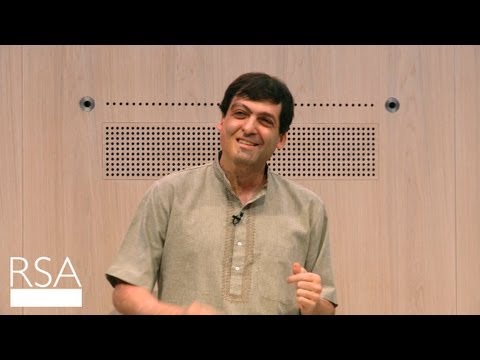
Are you more honest than a banker? Under what circumstances would you lie, or cheat, and what effect does your deception have on society at large? Dan Ariely, one of the world's leading voices on human motivation and behaviour is the latest big thinker to get the RSA Animate treatment.

Taken from a lecture given at the RSA in July 2012 . Watch the longer talk here.

Thursday, August 30, 2012

Paul Ryan's Convention Speech - Liar, Liar, Pants on Fire


I didn't watch or listen to Paul Ryan's speech last night - I generally try to avoid self-inflicted pain. Fortunately, some people get paid to watch these exercises in absurdity, and the consensus on Ryan's speech (including on op-ed from Fox News, the GOP's media outlet) is that he somehow managed to tell more lies per minute of airtime than any other convention speech ever. Now that is impressive.

Many of these lies are so blatantly false - it makes me wonder to what extent Ryan believes these statements. Is there deep self-deception occurring, is he so blinded by ideology that he is unaware of the lies, or his he simply a dishonest and ethically-deficient person?

These are questions we should be asking about all politicians, left, right, or center.

Sally Kohn of Fox News, who in that extreme right-wing world might be considered left-leaning, wrote:
[T]o anyone paying the slightest bit of attention to facts, Ryan’s speech was an apparent attempt to set the world record for the greatest number of blatant lies and misrepresentations slipped into a single political speech. On this measure, while it was Romney who ran the Olympics, Ryan earned the gold.

The good news is that the Romney-Ryan campaign has likely created dozens of new jobs among the legions of additional fact checkers that media outlets are rushing to hire to sift through the mountain of cow dung that flowed from Ryan’s mouth. Said fact checkers have already condemned certain arguments that Ryan still irresponsibly repeated.

Fact: While Ryan tried to pin the downgrade of the United States’ credit rating on spending under President Obama, the credit rating was actually downgraded because Republicans threatened not to raise the debt ceiling.

Fact: While Ryan blamed President Obama for the shut down of a GM plant in Janesville, Wisconsin, the plant was actually closed under President George W. Bush. Ryan actually asked for federal spending to save the plant, while Romney has criticized the auto industry bailout that President Obama ultimately enacted to prevent other plants from closing.

Fact: Though Ryan insisted that President Obama wants to give all the credit for private sector success to government, that isn’t what the president said. Period.

Fact: Though Paul Ryan accused President Obama of taking $716 billion out of Medicare, the fact is that that amount was savings in Medicare reimbursement rates (which, incidentally, save Medicare recipients out-of-pocket costs, too) and Ryan himself embraced these savings in his budget plan.
Sometimes we learn a lot about someone from the things they DON'T talk about - maybe these are lies by omission, or simply positions that are indefensible on a national stage. Again, from Sally Kohn:
And then there’s what Ryan didn’t talk about.

Ryan didn’t mention his extremist stance on banning all abortions with no exception for rape or incest, a stance that is out of touch with 75% of American voters

Ryan didn’t mention his previous plan to hand over Social Security to Wall Street. 

Ryan didn’t mention his numerous votes to raise spending and balloon the deficit when George W. Bush was president

Ryan didn’t mention how his budget would eviscerate programs that help the poor and raise taxes on 95% of Americans in order to cut taxes for millionaires and billionaires even further and increase — yes, increasethe deficit.


Here are some links to other coverage of Ryan's speech, courtesy of The New Civil Rights Movement.


Tuesday, August 14, 2012

Dan Ariely: "The (Honest) Truth About Dishonesty: How We Lie To Everyone - Especially Ourselves"

Interesting interview from NPR's The Diane Rehm Show - Diane visits with Dan Ariely about his new book, The (Honest) Truth About Dishonesty: How We Lie To Everyone - Especially Ourselves.

Dan Ariely: "The (Honest) Truth About Dishonesty: How We Lie To Everyone - Especially Ourselves"

Monday, August 13, 2012 

Bernard L. Madoff, the accused mastermind of a $50 billion Ponzi scheme, leaves Federal Court in New York, Wednesday, Jan. 14, 2009. - (AP Photo/Stuart Ramson)

Bernard L. Madoff, the accused mastermind of a $50 billion Ponzi scheme, leaves Federal Court in New York, Wednesday, Jan. 14, 2009.

Image of The Honest Truth About Dishonesty: How We Lie to Everyone---Especially Ourselves

A best-selling author and expert on irrationality investigates why we cheat and lie, and identifies what keeps us honest.

Most of us think of ourselves as honest, but psychology professor Dan Ariely says in fact, we all lie and cheat. In a new book, he challenges preconceptions about dishonesty, from seemingly small white lies to avoid hurting someone’s feelings to massive financial fraud like Bernie Madoff’s ponzi scheme. He explores how unethical behavior in the personal, professional and political worlds affects all of us. He joins Diane to explain how dishonesty can be a slippery slope, what keeps us honest and how to achieve higher ethics in our everyday lives.

Guests 

Dan Ariely
professor of psychology and behavioral economics at Duke University, founder and director of the Center for Advanced Hindsight and author of "Predictably Irrational" and "The Upside of Irrationality."

Wednesday, August 01, 2012

The Fall of Jonah Lehrer


I had not been following this case too closely until now, when Lehrer resigned Monday from The New Yorker after admitting he made up some Bob Dylan quotes in his new book, Imagine: How Creativity Works (which the publisher is now pulling from shelves and offering a refund).

I liked Jonah Lehrer, despite the reputation he had earned as a "populist" science writer who was not to be taken too seriously. He made serious ideas available to the mainstream, and that is a real skill. The fact that he looked like an innocent kid no doubt helped his reputation.

The prior allegation, that he had recycled some work from previous articles into blog posts was no big issue to me - one should make note of such things, but it's hardly plagiarism when the words are yours in the first place.

Michael C. Moynihan wrote the article for Tablet that brought down Jonah Lehrer, and it all began because he could not identify some quotes Lehrer attributed to Bob Dylan. Apparently, and I did not know this any more than Lehrer seemed to know it, Dylan fans are insanely complete in their knowledge of his every utterance.
When contacted, Lehrer provided an explanation for some of my archival failures: He claimed to have been given access, by Dylan’s manager Jeff Rosen, to an extended—and unreleased—interview shot for Martin Scorsese’s documentary No Direction Home. Two of the quotes confounding me, he explained, could be found in a more complete version of that interview that is not publicly available. As corroboration, he offered details of the context in which the comments were delivered and brought up other topics he claimed Dylan discussed in this unreleased footage.

Over the next three weeks, Lehrer stonewalled, misled, and, eventually, outright lied to me. Yesterday, Lehrer finally confessed that he has never met or corresponded with Jeff Rosen, Dylan’s manager; he has never seen an unexpurgated version of Dylan’s interview for No Direction Home, something he offered up to stymie my search; that a missing quote he claimed could be found in an episode of Dylan’s “Theme Time Radio Hour” cannot, in fact, be found there; and that a 1995 radio interview, supposedly available in a printed collection of Dylan interviews called The Fiddler Now Upspoke, also didn’t exist. When, three weeks after our first contact, I asked Lehrer to explain his deceptions, he responded, for the first time in our communication, forthrightly: “I couldn’t find the original sources,” he said. “I panicked. And I’m deeply sorry for lying.”

By the time that article was published online on Monday, Lehrer had resigned from The New Yorker and his publisher announced the expensive recall/refund measure to get the books out of circulation.

Lehrer issued an apology through his agent:

“The lies are over now,” he said. “I understand the gravity of my position. I want to apologize to everyone I have let down, especially my editors and readers.”

He added, “I will do my best to correct the record and ensure that my misquotations and mistakes are fixed. I have resigned my position as staff writer at The New Yorker.”
 For more in-depth analysis of this issue, NPR ran two separate segments yesterday, one on All Things Considered and one on Talk of the Nation.

Former New Yorker staff writer Jonah Lehrer is the author of Imagine: How Creativity Works.
Nina Subin/Houghton Mifflin Harcourt Former New Yorker staff writer Jonah Lehrer is the author of Imagine: How Creativity Works.
 
July 31, 2012
 
"The lies are over now." That's an attributable quote from writer Jonah Lehrer, who resigned Monday from his job as a staff writer for The New Yorker, one of the most prestigious jobs in journalism. The past few months have been a series of revelations about Lehrer's tendencies to reuse his own material and make up quotes.

Lehrer started to attract unwanted attention earlier this year when his magazine work was found to borrow liberally from his own previously published articles. It seemed lazy and embarrassing, but not punishable.

Around the same time, in March, Lehrer's third book came out. Called Imagine, it examines the nature of creativity and starts with a discussion of a moment when musician Bob Dylan thought about switching to novels. Here's a line from the book:

"But then, just when Dylan was most determined to stop creating music, he was overcome with a strange feeling. 'It's a hard thing to describe,' Dylan would later remember. 'It's just this sense that you got something to say.' "

Lehrer claims the result was the song "Like a Rolling Stone." But when journalist Michael Moynihan picked up Imagine he was already a little suspicious.
"There were moments in it that I thought things were fishy," Moynihan says. "I thought the general premise of the chapter that, you know, Dylan had a creative breakthrough with the writing of 'Like a Rolling Stone' was wrong. I mean, that's a matter of opinion, but i think it was an album before that. And you know, these are things that Dylan nerds like myself care about."

Now, Dylan nerds are notorious completists, so everything the singer's ever said is archived somewhere — fairly easy to find for an inquisitive journalist.

But Moynihan could not find seven Dylan quotes Lehrer used in his first chapter, so he started a three-week long correspondence with the author, who gave increasingly fantastical excuses for lacking sources.

"There was a point when it seemed panicky," he says, "and that's when it started to unravel." Lehrer confessed that he'd made up the quotes, and Moynihan published an article in the online magazine Tablet that led to Lehrer's resignation from The New Yorker, where he'd been a rising star.

Imagine had been a best-seller, another coup for the 31-year-old writer who was frequently asked to discuss science, creativity and the brain, including on NPR and with Stephen Colbert. So Lehrer's predicament, given his preferred topic, makes irony an understatement in this case.

"You know, I do think in some level this is the predictable outcome of expecting a young journalist to be the next Oliver Sacks," says literary agent Scott Mendel. Sacks spent decades as a practicing neurologist and psychologist, Mendel says, but Lehrer benefited too quickly from a system that likes its stars.

"It was easy for people to forget that part of Jonah Lehrer's background and expertise didn't exist," Mendel says. "He's too young to have that kind of experience."

Mendel adds that nonfiction writers throughout history have faked materials, discovered lost texts that weren't truly lost, or made up characters and events. What's new, he says, is how quickly Lehrer was exposed. Fact checking meet crowdsourcing.

"You can't write about something people care deeply about without assuming that hundreds, if not thousands, of people will immediately begin checking your facts," Mendel says.

Moynihan takes no pleasure in having exposed someone whose talent he says he admired. "Why people do it in this day and age, when it's so easy to get caught, is beyond me," he says. "Look, in the course of doing my job, I was ensuring someone else would lose theirs. That's not fun."

Lehrer's publisher has stopped shipping Imagine and pulled the e-book version. And in the tradition of the fabulist James Frey, who wrote A Million Little Pieces, refunds are being offered to readers whose trust was betrayed.
From Talk of the Nation, Who Makes Stuff Up, And Why They Do It, Neal Conan speaks with:
  • Jayson Blair, former reporter for The New York Times and author of Burning Down My Master's House 
  • Meghan O'Rourke, poet, critic and author of The Long Goodbye 
  • Adil Shamoo, editor-in-chief, Accountability In Research 

Saturday, July 07, 2012

The Wright Show - Robert Wright (Bloggingheads.tv) Speaks with Dan Ariely about "The Honest Truth About Dishonesty"


Dan Ariely has a new book, The Honest Truth About Dishonesty: How We Lie to Everyone---Especially Ourselves, and last week Robert Wright spoke with him on his Bloggingheads.tv venue, The Wright Show.

About the book, from Amazon:
The New York Times bestselling author of Predictably Irrational and The Upside of Irrationality returns with thought-provoking work to challenge our preconceptions about dishonesty and urge us to take an honest look at ourselves.
  • Does the chance of getting caught affect how likely we are to cheat?
  • How do companies pave the way for dishonesty?
  • Does collaboration make us more honest or less so?
  • Does religion improve our honesty?
Most of us think of ourselves as honest, but, in fact, we all cheat. From Washington to Wall Street, the classroom to the workplace, unethical behavior is everywhere. None of us is immune, whether it's the white lie to head off trouble or padding our expense reports. In The (Honest) Truth About Dishonesty, award-winning, bestselling author Dan Ariely turns his unique insight and innovative research to the question of dishonesty.

Generally, we assume that cheating, like most other decisions, is based on a rational cost-benefit analysis. But Ariely argues, and then demonstrates, that it's actually the irrational forces that we don't take into account that often determine whether we behave ethically or not. For every Enron or political bribe, there are countless puffed resumes, hidden commissions, and knockoff purses. In The (Honest) Truth About Dishonesty, Ariely shows why some things are easier to lie about; how getting caught matters less than we think; and how business practices pave the way for unethical behavior, both intentionally and unintentionally.

Ariely explores how unethical behavior works in the personal, professional, and political worlds, and how it affects all of us, even as we think of ourselves as having high moral standards.

But all is not lost. Ariely also identifies what keeps us honest, pointing the way for achieving higher ethics in our everyday lives. With compelling personal and academic findings, The (Honest) Truth About Dishonesty will change the way we see ourselves, our actions, and others.


Robert Wright (Bloggingheads.tv, The Evolution of God, Nonzero) and Dan Ariely (Duke University, danariely.com)


Recorded: Jun 18 — Posted: Jun 29  
Download:   wmv   mp4   mp3   fast mp3

Wednesday, January 25, 2012

The Integral Trollz Join the Marc Gafni Defense Team

The Integral Trollz (Kaine DeBoer and Hokyo Joshua Routhier) have adopted the personas of Robin Koki Lawson and Bonnitta Roy to create an animated defense of Marc Gafni's right to boink his students, as if that were ever the real issue. The two original trolls are fans of Gafni, so their efforts to "exonerate a non-predator" make perfect, though misguided, sense. I don't know Lawson, but I had not thought Roy to be so dim as these trollz.

Aside from completely misunderstanding everything I have written on Gafni's abuses, and mocking me as "Sir William," they also miss many of the relevant facts (for example, Gafni was having affairs with one or both of the women while holding up his monogamous marriage as an example to his community). Oops. Then there are all the other lies. Oops.

Since I am the only person who is named in the video (they mention Joe Perez but do not comment on him), I'll offer a very weak defense because, really, who gives a fuck anymore? Gafni is essentially isolated, with Sally Kempton the only big supporter left at his side, and well . . . enough said.

It's funny that they attack me, oh so gently, for supposedly thinking that this whole issue was about a sexually aggressive man and weak women in need of [my] defense. I have no doubt that both women willingly entered into relationship with Gafni, and even seduced him, but that does not negate his lies and manipulations.

One of Gafni's criticisms of those who have called him out has been that we fail to grasp the complexity of an integral, all quadrants perspective, yet his whole defense (and that of his defenders) is to simplify his actions to "adults having consensual sex" and, with that, sometimes people have their feelings hurt.

The trollz also try to compare this to the Denis Merzel affair - they claim Merzel got off easy in comparison. But in the Zen community, Merzel was ostracized and there has been a concerted effort by leaders in the Zen community to prevent him from teaching as a Zen Buddhist.

To their credit, Robb Smith, Diane Hamilton, John Dupuy, and even Elliott Ingersoll (in a Facebook thread) made public statements about Gafni's misconduct. Too bad more integral teachers also did not step up.

You can watch the video for yourself. I realize they were just having fun - but if they did not have an agenda, they would have poked at Perez and Gafni, as well.


Friday, November 18, 2011

Robert Trivers - Why Do We Deceive Ourselves?

Via the RSA.


Robert Trivers addresses the question of why we lie to others, and to our ourselves. Are we doomed to indulge in fantasies, inflate our egos, and show off? Can we correct our own biases? And is it even a good idea to battle self-deception?


Download the video (mp4)


Watch Robert Trivers on our YouTube channel


Watch Robert Trivers on our Vimeo channel

Sunday, October 23, 2011

Robert Trivers - Why Do We Deceive Ourselves?

This is an interesting talk from Robert Trivers speaking at the RSA.

Why Do We Deceive Ourselves?

4th Oct 2011

Listen to the audio (full recording including audience Q&A)

Please right-click link and choose "Save Link As..." to download audio file onto your computer.

RSA Keynote


Widely regarded as one of the world's most influential evolutionary biologists, Robert Trivers has made pioneering contributions to our understanding of the evolutionary roots of social behaviour. His seminal work in sociobiology, Darwinian social science, and behavioural ecology has influenced that of many others, including Richard Dawkins and E.O. Wilson.

At the RSA, Robert Trivers will address the question of why we lie to others, and to our ourselves.

Are we doomed to indulge in fantasies, inflate our egos, and show off? Can we correct our own biases? And is it even a good idea to battle self-deception?

Speaker: Robert L. Trivers, Professor of Anthropology and Biological Sciences at Rutgers University and author of Deceit and Self-Deception: Fooling ourselves to better fool others.

Chair: Dr Jonathan Rowson, the RSA Social Brain project.