Showing posts with label epistemology. Show all posts

Wednesday, September 25, 2013

Alva Noë - Is Science Value-Free?

In his newest article at NPR's 13.7 Cosmos and Culture blog, philosopher Alva Noë looks at the (faulty) assumption that science is value-free. Noë argues that science is not value-free because it is conducted by human beings - and science relies on epistemic values.
Reasonableness, explanatory adequacy, predictive power, simplicity, coherence — these are values one-and-all. And they are the stuff of science. Disagreement between scientists can come down to values. It can come down to whether they feel satisfied that they got the story right.
As is often the case, I am pretty much in agreement with Noë. It's a brief article and worth the time to read it.

Is Science Value-Free?


by Alva Noë
September 24, 2013

iStockphoto.com

According to a venerable way of thinking about science and its place in our lives, science is value-free. Science sets its sights on the facts. It is interested in the way the world is apart from inherently subjective matters of interpretation. Science can learn the facts without needing to take a stand on values. Science needn't concern itself with tedious and undecidable debates about matters of value.

But is this true?

I'm not interested in whether some scientists are biased, or dishonest, or whether the path of research is sometimes influenced unduly by the agencies or industries that fund research. These are important questions, but they take for granted that science is value-free in its workings, at least when it is not subject to corrupting influences from without.

No, my question is this: Is it ever true that science can be a value-free engagement with the facts as they are in themselves?

Here's a reason to be skeptical: as the philosopher Hilary Putnam has argued for years, science relies on epistemic values. A good scientist, like a good detective, uses his or her judgment. Not all possibilities are worth considering, not because they are impossible, or because the evidence at hand rules them out, but because, given what we know about how the world works in general, they seem irrelevant and far-fetched. It's not reasonable to worry about far-fetched possibilities.

Scientists seek to predict and to explain; they build theories that organize a wealth of information and they try to do so in ways that are simple and coherent and believable. How do you decide when you've landed on the truth? The truth is not like gold, with its own immutable features. You recognize the truth of that which it would be unreasonable to doubt in light of the weight of the evidence.

Reasonableness, explanatory adequacy, predictive power, simplicity, coherence — these are values one-and-all. And they are the stuff of science. Disagreement between scientists can come down to values. It can come down to whether they feel satisfied that they got the story right.

And all the more so when skepticism about science from without comes into play. When scientists try to engage with climate-change deniers or with defenders of so-called "intelligent design," what is at stake are not the facts as much as the values. The skeptics simply reject the epistemic values of science. Their positions are unreasonable and unsupported. But this is not a matter of fact. It is a matter of value!

What is the moral? I think it would be a mistake to conclude that a recognition of what Putnam calls the entanglement of fact and value should force us to view science as no better than open-ended moralizing, mere assertions of what "we" think. The upshot, rather, is that we need to elevate our assessment of the nature of conflicts in the domain of value.

The fact that we lack ways of settling these conflicts once and for all does not mean that there is not progress to be made in thinking them through together.

Monday, April 29, 2013

Karen Barad - Agential Realism


I recently stumbled upon Karen Barad's Meeting the Universe Halfway: Quantum Physics and the Entanglement of Matter and Meaning (2007), a book that explicates her theory of agential realism within the wider field of "New Materialism."
Meeting the Universe Halfway is an ambitious book with far-reaching implications for numerous fields in the natural sciences, social sciences, and humanities. In this volume, Karen Barad, theoretical physicist and feminist theorist, elaborates her theory of agential realism. Offering an account of the world as a whole rather than as composed of separate natural and social realms, agential realism is at once a new epistemology, ontology, and ethics. The starting point for Barad’s analysis is the philosophical framework of quantum physicist Niels Bohr. Barad extends and partially revises Bohr’s philosophical views in light of current scholarship in physics, science studies, and the philosophy of science as well as feminist, poststructuralist, and other critical social theories. In the process, she significantly reworks understandings of space, time, matter, causality, agency, subjectivity, and objectivity.

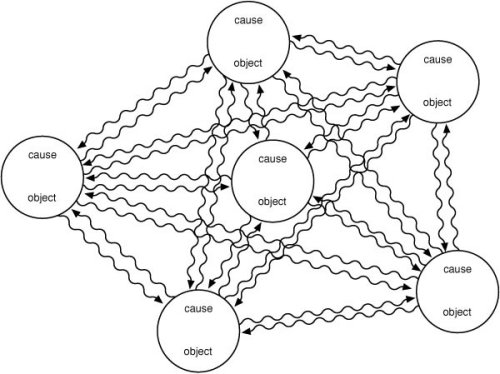
In an agential realist account, the world is made of entanglements of “social” and “natural” agencies, where the distinction between the two emerges out of specific intra-actions. Intra-activity is an inexhaustible dynamism that configures and reconfigures relations of space-time-matter. In explaining intra-activity, Barad reveals questions about how nature and culture interact and change over time to be fundamentally misguided. And she reframes understanding of the nature of scientific and political practices and their “interrelationship.” Thus she pays particular attention to the responsible practice of science, and she emphasizes changes in the understanding of political practices, critically reworking Judith Butler’s influential theory of performativity. Finally, Barad uses agential realism to produce a new interpretation of quantum physics, demonstrating that agential realism is more than a means of reflecting on science; it can be used to actually do science.
I am new to her work and her theory, so of course I went to Wikipedia, where I found a brief explanation of her work, but not as much as I had hoped to find. She is primarily known as a feminist theorist, although her PhD was in theoretical physics (Stony Brook University). "Her dissertation presented computational methods for quantifying properties of fermions and quarks in the framework of lattice gauge theory." Currently, she is Professor of Feminist Studies, Philosophy, and History of Consciousness at UC Santa Cruz.

Here is the definition of her theory of Agential Realism from Wikipedia:
Agential Realism

According to Barad's theory of agential realism, the world is made up of phenomena, which are "the ontological inseparability of intra-acting agencies". Intra-action, a neologism introduced by Barad, signals an important challenge to individualist metaphysics. For Barad, things or objects do not precede their interaction, rather, 'objects' emerge through particular intra-actions. Thus, apparatuses, which produce phenomena are not assemblages of humans and nonhumans (as in actor-network theory), rather they are the condition of possibility of 'humans' and 'non-humans', not merely as ideational concepts, but in their materiality. Apparatuses are 'material-discursive' in that they produce determinate meanings and material beings while simultaneously excluding the production of others. What it means to matter is therefore always material-discursive. Barad takes her inspiration from physicist Niels Bohr, one of the founders of quantum physics. Barad's agential realism is at once an epistemology (theory of knowing), an ontology (theory of being), and an ethics. Barad coins the term onto-epistemology. Because specific practices of mattering have ethical consequences, excluding other kinds of mattering, onto-epistemological practices are always in turn onto-ethico-epistemological.

Much of Barad's scholarly work has revolved around her concept of "agential realism," and her theories hold importance for many academic fields, including science studies, STS (Science, Technology, and Society), feminist technoscience, philosophy of science, feminist theory, and, of course, physics. In addition to Bohr, her work draws a great deal on the works of Michel Foucault and Judith Butler, as demonstrated in her influential article in the feminist journal differences, "Getting Real: Technoscientific Practices and the Materialization of Reality." Barad's training is actually in theoretical physics, and her 2007 book, Meeting the Universe Halfway, includes a chapter that contains an original discovery in theoretical physics, which is largely unheard of in books that are usually categorized as 'gender studies' or 'cultural theory' books. In this book, Barad also argues that 'agential realism,' is useful to the analysis of literature, social inequalities, and many other things. This claim is based on the fact that Barad's agential realism is a way of understanding the politics, ethics, and agencies of any act of observation, and indeed any kind of knowledge practice. According to Barad, the deeply connected way that everything is entangled with everything else means that any act of observation makes a "cut" between what is included and excluded from what is being considered. Nothing is inherently separate from anything else, but separations are temporarily enacted so one can examine something long enough to gain knowledge about it. This view of knowledge provides a framework for thinking about how culture and habits of thought can make some things visible and other things easier to ignore or to never see. For this reason, according to Barad, agential realism is useful for any kind of feminist analysis, even if the connection to science is not apparent.

Barad's framework makes several other arguments, and some of them are part of larger trends in fields such as science studies and feminist technoscience (all can be found in her 2007 book, Meeting the Universe Halfway):
  • She defines agency as a relationship and not as something that one "has."
  • The scientist is always part of the apparatus, and one needs to understand that in order to make scientific work more accurate and more rigorous. This differs from the view that political critiques of science seek to undermine the credibility of science; instead, Barad argues that this kind of critique actually makes for better, more credible science.
  • She argues that politics and ethical issues are always part of scientific work, and only are made to seem separate by specific historical circumstances that encourage people to fail to see those connections. She uses the example of the ethics of developing nuclear weapons to argue this point, by claiming that the ethics and politics are part of how such weapons were developed and understood, and therefore part of science, and not merely of the "philosophy of science" or the "ethics of science." This differs from the usual view that one can strive for a politics-free, bias-less science.
  • Nevertheless, she argues against moral relativism, which, according to Barad, uses science's "human" aspects as an excuse to treat all knowledge, and all ethical frameworks, as equally false. She uses Michael Frayn's play, Copenhagen, as an example of the kind of moral relativism that she finds problematic.
  • She also rejects the idea that science is "only" a language game or set of fictions produced only by human constructions and concepts. Although the scientist is part of the "intra-action" of the experiment, humans (and their cultural constructs) do not have complete control over everything that happens. Barad expresses this point by saying, in Getting Real, that although scientists shape knowledge about the universe, you can't ignore the way the universe "kicks back."
These points on science, agency, ethics, and knowledge reveal that Barad's work is similar to the projects of other science studies scholars such as Bruno Latour, Donna Haraway, Andrew Pickering, and Evelyn Fox Keller.
One of the key points (in my brief readings): "Barad's agential realism is at once an epistemology (theory of knowing), an ontology (theory of being), and an ethics. Barad coins the term onto-epistemology. Because specific practices of mattering have ethical consequences, excluding other kinds of mattering, onto-epistemological practices are always in turn onto-ethico-epistemological."


Additional Online Resources:


Some of Barad's essays are available online, linked from her faculty page at UC Santa Cruz.

Cynthia Bateman's Obstinate Obscurity blog offered a two-part post on agential realism:
In New Materialism: Interviews & Cartographies (freely available at the link), there is a lengthy interview with Karen Barad on her philosophy (pgs. 48-70).

Paul Leonardi's article comparing agential realism and critical realism is freely available from SSRN: Theoretical Foundations for the Study of Sociomateriality (2013).


Peter, at Xenogenesis, reviewed Barad's Meeting the Universe Halfway back in 2011 - Becoming Brittlestar, Becoming Agential.
.
Finally, Marietta Radomska has an essay online called Towards a Posthuman Collective: Ontology, Epistemology and Ethics that discusses Barad's theory a bit.

Monday, April 01, 2013

Causation in Psychoanalysis - Nikolai Axmacher


This recent article from Frontiers in Psychoanalysis and Neuropsychoanalysis attempts to bridge the gap between the hermeneutic perspective of psychoanalysis and the causal relationships that adhere in science. In doing so, he argues against the following three reasons for the epistemological divide:
first, that psychoanalytic attempts to overcome repression aim to go beyond causal relationships; second, that hermeneutic explanations are retrospective and context-dependent and therefore follow a different logic than causal explanations; and third, that only causal hypotheses are falsifiable, while the introspective reasons for one’s own behavior are not. 
This is an interesting article whether you agree with his conclusions or not (I tend to agree with him in principle), so check it out.

Causation in psychoanalysis

Nikolai Axmacher1,2
1. Department of Epileptology, University of Bonn, Bonn, Germany2. German Center for Neurodegenerative Diseases, Bonn, Germany
It has been argued that psychoanalytic and biological theories cannot be integrated because they rely on different epistemological grounds, namely on hermeneutic versus causal explanations, that are inconsistent with each other. Such inconsistency would seriously question the general possibility of neuropsychoanalytic research. Here, I review three important arguments that have been raised in favor of this inconsistency: first, that psychoanalytic attempts to overcome repression aim to go beyond causal relationships; second, that hermeneutic explanations are retrospective and context-dependent and therefore follow a different logic than causal explanations; and third, that only causal hypotheses are falsifiable, while the introspective reasons for one’s own behavior are not. I present arguments against each of these statements and show that actually, causal and hermeneutic explanations are, at least in principle, consistent with each other. The challenge for neuropsychoanalytic research remains to find indeed empirical examples of theories which are causal and hermeneutic at the same time.
Full Citation: 
Axmacher N (2013) Causation in psychoanalysis. Frontiers in Psychology. 4:77. doi: 10.3389/fpsyg.2013.00077

INTRODUCTION

Neuropsychoanalysis – the attempt to integrate psychoanalytic theory and practice with a consideration of the neural basis of human behavior, cognition, and affects – may take several forms. Initially, it referred to the psychoanalytic study and therapy of patients with brain lesions (Kaplan-Solms and Solms, 2000; Solms and Turnbull, 2002). Subsequent studies widened the scope by including experimental investigations of psychoanalytic concepts – from studies on the neural basis of psychodynamic therapy (e.g., Axmacher and Heinemann, 2012; Buchheim et al., 2012) to the operationalization of specific concepts such as the constancy principle (Carhart-Harris and Friston, 2010), dreams (e.g., Dresler et al., 2011; Ruby, 2011), repression (e.g.,Anderson et al., 2004; see Axmacher et al., 2010 for a critique of current operationalizations), psychodynamic conflicts (Loughead et al., 2010), etc. In addition to this empirical research, the epistemological basis of combining psychoanalysis and neuroscience has been widely discussed. Here, my goal is to contribute to this discussion by focusing on one, particularly problematic aspect, namely the relationship of the hermeneutic (or “depth hermeneutic,” as it includes unconscious processes; Lorenzer, 1986) approach taken in the psychoanalytic attempt to understand and reconstruct conscious and unconscious narratives, and the scientific strife for explanations in terms of causal relationships. The following considerations do not intend to provide an exhaustive overview of all arguments raised on this issue. Instead, they aim to provide a limited personal account on a question which remains central for the neuropsychoanalytic endeavor.

THE PROBLEM

During psychoanalytic therapy, analyst, and client aim to understand the analyst’s mental and affective life. Many aspects of this inner life appear initially absurd and paradoxical; the belief that even (and particularly) apparent nonsensical aspects are relevant and may in principle be understood is a cornerstone of psychoanalytic theory (Brenner, 1955). The process of understanding these phenomena has been conceptualized as “hermeneutic” – as a circular process by which an initial and superficial understanding is incrementally improved as analyst and client co-construct meaning through conscious and unconscious affective transference. Scientific researchers also search to understand seemingly random phenomena when they attempt to find regularities in their data. These regularities may then be used to generate predictions for future experiments and to build hypotheses about underlying causal laws. Freud throughout his life maintained the ideal to combine these two levels of investigation – to find scientific explanations for the conscious and unconscious psychic contents and somatic symptoms that he observed in his patients. In this combination of qualitative hermeneutics with quantitative theories, Freudian psychoanalysis had a unique dual epistemological character (Ricoeur, 1970). Many philosophers (e.g., Habermas, 2005) and psychoanalysts (e.g., Spence, 1982; Thomä and Kächele, 2006) criticized the biological ancestry of Freudian psychoanalysis and its attempt to find “metapsychological” laws of psychic life that resemble the explanations in the natural sciences; instead, they suggested to ground psychoanalysis on a purely hermeneutic basis.

However, purely hermeneutic explanations are epistemologically problematic because they typically act in a retroactive manner – they attempt to explain consisting affects, psychic contents, and somatic symptoms, but do not make predictions about future developments. Therefore, purely hermeneutic hypotheses are inherently difficult to falsify, which has been extensively criticized by philosophers such as Popper (1963). This problem would not occur if hermeneutic reconstructions were (at least in principle) consistent with causal explanations – in this case, one could predict that removal of the cause should alter its effect as well. Indeed, some philosophical accounts of psychoanalysis suggest that repressed conflicts generate neurotic symptoms in the same way as physical causes induce observable effects in the external world; in this case,one would predict that removal of repression during the course of psychoanalytic therapy should also alleviate the symptoms(e.g., Grünbaum, 1984).

On the other hand, several arguments suggest that hermeneutic reconstructions are fundamentally inconsistent  with causal explanations. In the remainder of this article, I will discuss three such arguments and try to convince the reader that this apparent inconsistency does, in fact, not exist. The first argument is based on the  introspective notion that we experience ourselves as free, whereas no freedom appears to exist in a causally closed world. Similarly, it has been stated that causal explanations are inconsistent with the therapeutic aim of an enhanced degree of autonomy. Second, psychoanalytic reconstructions attempt to provide conscious or unconscious reasons – for an action, a somatic symptom, or a psychic content such as an affect (for the opposite view that explanations of seemingly irrational behavior are based on causes but not reasons,see Davidson, 1982). However, providing a reason appears to follow a different linguistic logic than finding a cause: typically, reasons are only given retrospectively, for example to justify some action. This occurs in a specific social context. Therefore, depending on the context, very different reasons maybe given to justify the same action. In contrast, a cause should always lead to the same outcome. Third, while hypotheses on causal  connections are falsifiable, introspectively perceived reasons for my own behavior appear not to be–I know best the reasons why I acted in a certain manner.

Monday, June 25, 2012

What I'm Reading, Part Two: Causal Pluralism


Somehow, while I was down the complex adaptive systems rabbit hole, I stumbled across another new term, causal pluralism. A quick and easy definition comes from Peter Godfrey-Smith (Harvard University):
Causal pluralism is the view that causation is not a single kind of relation or connection between things in the world. Instead, the apparently simple and univocal term "cause" is seen as masking an underlying diversity.
Leen De Vreese (Centre for Logic and Philosophy of Science; Ghent University, Belgium) argues that the field is still relatively new (as of early 2007), but the term “causal pluralism” already has accrued a variety of meanings, which he feels leads to confusion. In his paper, Disentangling Causal Pluralism, he tries to sort the threads of pluralistic approaches to causation and to identify the different perspectives held by their adherents.

I wonder if he sees the irony in trying to identify the individual ideas and perspectives that constitute the pluralist origins of causal pluralism?
Full Citation:
De Vreese, L, Weber, E. (2008). Disentangling Causal Pluralism. Robrecht Vanderbeeken, (ed.), Worldviews, Science, and Us: Studies of Analytical Metaphysics. A Selection of Topics From a Methodological Perspective. Singapore: World Scientific Publishing Company.
De Vreese identifies three basic kinds of causal pluralism:
  • conceptual causal pluralism
  • metaphysical causal pluralism
  • epistemological-methodological causal pluralism
Each of these positions has an opposite stance in the monistic causation camp.

However, his primary agenda in the paper is to reduce the (perceived) confusion in the field of causal
pluralism by identifying the perspectives being taken in relation to metaphysical causal pluralism. In essence, are there metaphysical reasons to accept causal pluralism, or is causal pluralism only a conceptual matter

He proposes three "central metaphysical questions" about causation to achieve this goal.
  • Firstly, is causation a realistic notion, or is it a mental construct? 
  • Secondly, does causation only occur as a real relation at the fundamental level of reality, or does it also occur as a real relation between objects at higher levels of reality? 
  • And lastly, does causation consist in a single empirical relation, or does it consist in diverse empirical relations deserving the label “causal”?
In answering these questions, he proposes four types of metaphysical perspectives regarding causation:
  • metaphysical causal constructivism
  • strong metaphysical causal pluralism
  • weak metaphysical causal pluralism 
  • metaphysical causal monism
He concludes his paper by making a clear distinction between conceptual and metaphysical causal pluralism from a third variation on causal pluralism, which he terms "epistemological-methodological causal pluralism." He is referring to "the importance of a pluralistic view on causation for our scientific knowledge in general on the one hand, and for assembling causal knowledge in specific domains of science on the other hand."

While he maintains that an epistemological-methodological approach to causation is still intimately related to conceptual and metaphysical causal pluralism, he feels it's still important to value this line of approach as different from the others, maintaining that "certain questions become utterly important for the sake of our knowledge."

That is one view of causal pluralism, but there are as many variations as there are authors, or at least that is how it seems to a new reader in the field.

In an article more specifically relevant to my work, Julian Reiss (Erasmus University Rotterdam, the Netherlands) published Causation in the Social Sciences: Evidence, Inference, and Purpose in Philosophy of the Social Sciences (2009).
Full Citation:
Reiss, J. (2009, Mar). Causation in the Social Sciences: Evidence, Inference, and Purpose. Philosophy of the Social Sciences, Volume 39(1); 20-40. doi: 10.1177/0048393108328150
Abstract:
All univocal analyses of causation face counterexamples. An attractive response to this situation is to become a pluralist about causal relationships. “Causal pluralism” is itself, however, a pluralistic notion. In this article, I argue in favor of pluralism about concepts of cause in the social sciences. The article will show that evidence for, inference from, and the purpose of causal claims are very closely linked.
This is definitely worth the read.

In an oft-cited paper, Christopher Hitchcock's Of Humean Bondage, he offers a classification scheme for the various forms of causal pluralism. He clarifies up front that he is interested in a pluralism of causation, not a pluralism of causes (which he claims all philosophers already accept). This paper relies more on classical logic arguments in assigning causation, but it is still useful.

Finally, Cognitive Psychology (2010) published Causal–explanatory pluralism: How intentions, functions, and mechanisms influence causal ascriptions by Tania Lombrozo, for which this is the abstract:
Both philosophers and psychologists have argued for the existence of distinct kinds of explanations, including teleological explanations that cite functions or goals, and mechanistic explanations that cite causal mechanisms. Theories of causation, in contrast, have generally been unitary, with dominant theories focusing either on counterfactual dependence or on physical connections. This paper argues that both approaches to causation are psychologically real, with different modes of explanation promoting judgments more or less consistent with each approach. Two sets of experiments isolate the contributions of counterfactual dependence and physical connections in causal ascriptions involving events with people, artifacts, or biological traits, and manipulate whether the events are construed teleologically or mechanistically. The findings suggest that when events are construed teleologically, causal ascriptions are sensitive to counterfactual dependence and relatively insensitive to the presence of physical connections, but when events are construed mechanistically, causal ascriptions are sensitive to both counterfactual dependence and physical connections. The conclusion introduces an account of causation, an ‘‘exportable dependence theory,” that provides a way to understand the contributions of physical connections and teleology in terms of the functions of causal ascriptions.
It's probably indicative of my geekiness that I am looking forward to reading this one.


Here are a few other papers, all of which are freely available online.

Saturday, June 02, 2012

Bookforum's Omnivore - The Epistemology of Postmodern Spirituality

A recent collection of links from Bookforum's Omnivore looks at the epistemology of spirituality in a modern and postmodern reality. Of special interest to readers of this blog is the title article from the collection, "On the epistemology of postmodern spirituality" by Dudley A. Schreiber, the abstract for which, and a couple of excerpts referencing integral theorists, is posted below.


  • Dudley A. Schreiber (South Africa): On the Epistemology of Postmodern Spirituality
  • From Anthropology of this Century, Chris Hann (Max Planck): Personhood, Christianity, Modernity; and facing religion, from anthropology: Michael Lambek on the making of distinctions between the religious and the secular. 
  • From Christianity Today, Jenell Williams Paris responds to Mark Noll: Why it's good that evangelicals have not, and likely will not, develop an "evangelical mind"; Carolyn Arends on defending Scripture — literally: Not everything the Bible has to say should be literally interpreted, but that doesn't make it less powerful; an interview with Eric J. Bargerhuff, author of The Most Misused Verses in the Bible: Surprising Ways God's Word Is Misunderstood; and an interview with Alvin Plantinga, author of Where the Conflict Really Lies: Science, Religion, and Naturalism
  • From New Scientist, a special issue on God and the new science of religion. 
  • A review of Born Believers: The Science of Children’s Religious Belief by Justin Barrett. 
  • Analytical thinking erodes belief in God: Our intuitive thought processes, which underpin supernatural beliefs, can be overcome by thinking analytically.
This is an interesting article:

Dudley A. Schreiber

Abstract

At first glance, the postmodern spiritual ‘scene’ appears ‘sociologically messy, experiential, multifaceted, ecological, provisional and collective’ (Petrolle 2007) and of uncertain epistemic provenance. Here, I ask: can Roland Benedikter’s (2005) conception of postmodern dialectic and spiritual turn, help us understand postmodern spirituality and can it assist in a construction of a postmodern epistemology of spirituality? The current argument constitutes a meta-theoretical exploration of:
  • Deconstruction and neo-essentialism as representing the significant dialectic in philosophical postmodernism. Deconstruction is presented as an apophatic moment in Western thought about ‘knowing’ and ‘being’ whilst postmodern neo-essentialism, though contextualised by antirealism and ambiguity, palpably suggests itself.
  • Postmodern trends which derive from the dialectic.
  • How these epistemic trends influence methodology in the study of spirituality.
  • How a trans-traditional (anthropological) spirituality might incorporate insights about transformation from a complex of epistemologies in which, theories of ‘self’ abound.
In the conclusion an attempt is made to describe how postmodern spirituality expresses itself in society.

Citation:
Schreiber, D.A. (2012). On the epistemology of postmodern spirituality. Verbum et Ecclesia, 33(1), Art. #398, 8 pages. http://dx.doi.org/10.4102/ve.v33i1.398

Full Text: PDF (423 KB) HTML EPUB XML

Here is a excerpt from the article - the author makes reference to Ken Wilber's integralism, as well as Jean Gebser. As a fan of integral theory, in general, it's nice to see it mentioned in an academic article on postmodern spirituality. 

Introduction

Postmodern spiritual turn as the epistemic context for postmodern spirituality
If spirituality is at all times embedded in its time and place in the world and takes its language of meaning ascription from context (Lesniak 2005:7; Corkery 2005:26), how might postmodern insight enrich a contemporary understanding of spirituality across the ‘three worlds’ of knowledge (Mouton 2011:137), namely meta, epistemic and lay? Might postmodern philosophy be said to exhibit rational parallels to dynamics within trans-traditional spirituality? What experience of truth are we to speak of and how are we to speak of it? How might postmodern discourse on knowledge inform us about the experiential inward path of knowing characteristic of mysticism (McGinn 2005:19)? Thinking about spirituality, as do Schneiders (2005:1) and Sheldrake (2005:38), implicates us in contemporary myth, epistemology and general science. Elements of postmodern epistemic landscape suggest a sense of reality that confronts us ‘with the enigma of existence itself’(Benedikter 2007:5) and the many challenges to knowing anything. Yet how might academic spirituality, relatively newly ensconced in the Human Sciences, build theory that is truly contemporary?


Postmodern epistemic trendsAlthough no universal agreement and no monolithic Postmodern Epistemology exist, Benedikter (2005) suggests the primary dialectic lies between deconstructionism (late 1970s to about the late 1990s) and a later constructivist neo-essentialism from 2001 onwards. Deconstruction as a trend, targets both premodern notions of metaphysics and ontology, and modernist realism, in a wide range of narratives. Narratives receiving greatest attention include rationalism, logical positivism, determinism and a gamut of progressively aggressive, externalist and positivist-styled creeds and paradigms (hegemonies) of materialism and domination, which had found their expression through the three worlds of knowledge and across the Western epistemic landscape. The meteoric rise of post-structural critique in the works of the French School of Continental Philosophy up to Foucault constituted a profound attack on former confidence in how history and society work. Furthermore, with the publication of Thomas Kuhn’s (1962) The Structure of Scientific Revolutions (cf. also Bird 2004), Modernism’s pride in Physical Science as its chosen and privileged epistemology came under devastating scrutiny. Lest we over simplify the epistemic picture, Griffiths (2007:1) suggests that not all sciences suffered to the same extent, noting a rise in interest in the philosophy of biology, which seems to have undergone some linguistic turn. The work of Bradie and Harms (2008) suggests that a contemporary epistemology of evolution posits a mitigated realism, freer from deterministic mindset. Perhaps, presumption of this less deterministic stance accounts for the way some lay conversations about spirituality indulge in naive biologism, and strange notions of evolutionary transformation? The quest for biochemical substrates remains fascinating at a popular level readily informed by science media. Perhaps too, a heightened sense of democracy in the world of lay knowledge provides an appeal to ontologise from below rather than from meta-engagement?  

Epistemic parallels? Deconstruction and apophasis Deconstruction as an epistemic trend seems to be a conscious and rational pursuit reminiscent of many traditional spiritual practices that aim to ‘dissolve’ ego-constructs in the history of Christian and Oriental spiritual practice. This in itself suggests at least a superficial parallel in the dynamics of postmodernism and spirituality. It could be argued that despite the numerous obstacles to a glib comparison, both philosophical deconstruction and spiritual dissolution of ego ultimately shadow each other by rendering purely rational knowing somewhat mute, truncated, if not counter-intuitive. Is it an over-generalisation to suggest that the postmodern revolution has brought epistemology close to apophatic crisis? What of the broader context of trans-traditional spirituality in which muteness is enhanced by the influence of Oriental meontic and antirealist thought in the Buddhist strands of Pacific philosophy?  

Constructive ontologising In contra-distinction to deconstruction, Benedikter (2005) claims that post-structural neo-essentialism is evident in a ‘broad church’ of thinkers and writers. These, he claims, suggest an ontological realism arising from a boundary of cognitive resistance to deconstructive finality. In paradoxical continuation of deconstructionism, constructive trend exhibits an epistemological project towards a proto-ontology, proto-realism and a proto-spirituality inspired by both oriental and postmodern antirealism. In contrast to essentialist fixity in premodern metaphysics, post-structural neo-essentialism perceives humanity’s vital consciousness as dynamic, evolving and transforming. Cognitive turn seems to provide a shared locus of interest for traditionally divergent, unengaged epistemologies. Interdisciplinary inspiration in Wilber’s (1995) Integral Theory, for instance, shows a multistrand, multihemisphere epistemology at play in trans-traditional spirituality. 

There are a couple other references to Wilber, which are more current (from a 2006 article at Integral Life). And then this passage where he makes reference to Jean Gebser:
Toward neo-essentialism? So, where does consciousness travel, once it has deconstructed ego-attachment in the things of illusion? Benedikter’s argument for a neo-essentialist movement in mature postmodernism rests on a number of literary and philosophical references. These differ in their levels and anthropological concerns. A detailed discussion of these differences is omitted in Benedikter and here, for reasons of brevity. The strand that seems common in his reading focuses on the dynamic nature of attention. Benedikter paraphrases Gebser’s (1986) answer to the aforementioned question, thus: ‘Quite plainly, we are still aware that the stream of consciousness continues, as act and activity, pure and active attention’ (Gebser 1986; cf. also Benedikter 2005:iii, 2). What is this dynamic nothingness and borderline something-ness, which is prior to normal ego and suggests the primordial basis of consciousness? Here Benedikter cites numerous authors: Bhaskar (2002) refers to it as ‘pure substance of mankind’ [sic]; Derrida (1995) speaks of ‘the absolute secret’; Foucault (1977) called it the ‘productive void’; Heidegger (1927), ‘ontological occurrence’; and Rand(1947), ‘the fountainhead’. It is quite clear that in the writing of thinkers of the mature 20th century, a new essentialism suggests itself. Postmodernism perhaps, reaches its neo-religious peak in Gebser’s (1986) ‘permanent origin in itself’ and Bhaskar’s (2002) ‘meta-conscious basis of postmodern emancipation and everyday life’.

After deconstructing realism and inner ego-objects, we recognise something behind the eyes (Hay 2006), which although it deconstructs, is itself resilient to deconstruction.


The affirmative phenomenology of meta-consciousness, false-self and true-self Consciousness behind the ego suggests an inner realm of two ‘I’s. We are profoundly paradoxical, fragmented and schizoid, according to Benedikter (2005:iii, 4): ‘If you take deconstruction seriously, you will, sooner or later, encounter the other’. Traditional mystical epistemology speaks often of a conscious, transformative embrace of the Other. Embrace of otherness that is conceivably also nothingness, seems a perennially recurrent mystical experience. In postmodern spiritual epistemology primacy is given to a rationally derived cognitive participation in deconstruction. Psychologically, unconscious expression of ‘non-being’symptomatically gives rise to schizophrenia1 and narcissism in pseudo-spiritualities. Is not the unconscious pseudo-spirituality of modernism materialism? The implicit spiritual injunction to authenticity and wholeness, in various traditions would have us hold and dissolve attachment to selfish realisms, staying in the moment of terror after deconstructive process, to encounter being in a metaphorical post-annihilation. These are of course, terms used in many mystical traditions and referred to often in the writings of Merton (Cunningham 1999), Johnston (2000), Krishnamurti (1954) and Nishida Kitarô (cf. Maraldo 2005). 

In his mature work (2003:5–69) published posthumously, Merton refers to the false, collective, alienated exterior and authentic, hidden, real, dark, inner, interior, inmost, awakening selves. Epistemologically speaking it is only in mature postmodernism that we have taken the rational experience of many-selves seriously: grounding real-self by un-grounding false-self. Western true-self and Oriental non-self seem parallel meta-conscious realms arrived at, in deconstructing false-selves.

It's an interesting read (HTML version).

Saturday, January 14, 2012

James Cresswell & Allison Hawn - Drawing on Bakhtin and Goffman: Toward an Epistemology that Makes Lived Experience Visible


This is some seriously geeky philosophy - from FORUM: QUALITATIVE SOCIAL RESEARCH, Volume 13, No. 1, Art. 20; January 2012 - that brings together two very different perspectives. Goffman was a very influential sociologist and Bakhtin was best known as a semiotician and philosopher of language, but together their theories do make a certain amount of sense.
Drawing on Bakhtin and Goffman: Toward an Epistemology that Makes Lived Experience Visible
James Cresswell & Allison Hawn

Abstract: This article seeks to enrich qualitative analysis by way of showing how Erving GOFFMAN's work can be enhanced by interfacing it with Mikhail BAKHTIN. The goal is to inspire an approach to the interpretation of human action that highlights phenomenologically immediate experience, thereby enhancing current work. BAKHTIN's later work focused on the interpretation of such experience but it was left incomplete at the time of his death. Fortunately, this latter work is reminiscent of his early work on the interpretation of poetics. The article addresses BAKHTIN's discussion of content, form, and material in art and how this discussion can enlighten our epistemological praxis with persons. By way of a demonstration, our proposed approach is applied to an online interaction between the second author and an anonymous online gamer.

Table of Contents

1. Introduction
2. Orientation: GOFFMAN and BAKHTIN
2.1 GOFFMAN and frame analysis
2.2 BAKHTIN and epistemology
3. Content
3.1 BAKHTIN's discussion of content
3.2 Implications for extending GOFFMAN
3.2.1 Interpretive Principle 1
3.2.2 Interpretive Principle 2
3.2.3 Interpretive Principle 3
4. Material and Form
4.1 BAKHTIN's discussion of material and form
4.2 Implications for extending GOFFMAN
4.2.1 Interpretive Principle 4
5. Conclusion
Acknowledgments
References
Authors
Citation

This is a passage from the introduction that sets up their thesis for this paper.
Erving GOFFMAN (1959, 1961, 1963a, 1963b, 1969, 1974) inspires qualitative methods that are often set forth as alternative approaches to a natural-scientific "cookbook" approach that attempts to apply a "recipe" to produce objectively verified results (POLKINGHORNE, 1983, p.3). His approach often rejected the standardization inherent in naturalscientific approaches, but, even though he touched on experience, he still bypassed the deeply experiential character of such realities. In particular, it will be discussed how his work, and the analyses inspired by it, tends to treat these realities as resources that can be rhetorically manipulated. That is, GOFFMAN's theories and practices were symptomatic of a potential problem in qualitative research: the treatment of experiential realities as rhetorically controllable when their verisimilar objectivity is such that they cannot be so manipulated. We will discuss how such experiential realities have a compelling quality such that they cannot be changed on such whim and our concern is that treating them as such can result in missing their deeply compelling quality. The experience of the nightclub, for example, is not something that one can just change. Understanding such a participant would require apprehending this experiential depth. It is thereby possible to extend GOFFMAN's work by illustrating this bypass and how it could be rectified. In the broader scheme of qualitative research, this discussion can serve as an illustration of how experiential realities are so compelling that researchers cannot afford to treat them as rhetorical resources, lest researchers bypass these important phenomena. [2]

We turn to Mikhail BAKHTIN because he inspires an approach that both illuminates the potential to enhance GOFFMAN and provides a way to improve on qualitative methods. He has been described by HOLQUIST, an editor and translator of much of BAKHTIN's work, as "epistemic" (2002, p.15-17). It is this largely unexplored epistemic side of BAKHTIN that we explicate in this paper. This epistemic feature of BAKHTIN had roots in his early career where he drew on the phenomenology of Max SCHELER (1970 [1913]; see CRESSWELL & TEUCHER, 2011) to address the techniques that can be used to interpret art (BAKHTIN 1990a [1979])1. Such early work on aesthetics revolved around interpreting socially constituted lived realities as they are expressed in art and so speaks to contemporary movements that draw on aesthetics beyond the realm of art to address the fundamental structure of human-constituted reality (c.f. WELSCH, 1997, pp.4-8, 48, 90-98). BAKHTIN's epistemology in regards to art was about making visible experiential realities (CRESSWELL & BAERVELDT, 2011). His later work drew on similar ideas but focused directly on the interpretation of human action (BAKHTIN, 1986a [1979]). Taking this early and later work together enables a view into his epistemology that makes visible lived realities. We will outline GOFFMAN's claims insofar as they overlap with BAKHTIN and show how points of non-coincidence illustrate the potential to enrich the former's work, shortcomings illustrative of the way that qualitative research in general can be enriched. [3]

After providing a brief orientation to the ideas of GOFFMAN and BAKHTIN, we outline a BAKHTIN-inspired epistemology. By articulating this epistemology through a discussion of BAKHTIN's early work, we can distill four principles that make visible the experienced realities that people take for granted. Each of these principles will be illustrated with an interpretation of the lived experiential reality of an on-line interaction that contrasts the results to those that would emerge from a GOFFMAN-inspired analysis. By discussing these principles in light of Erving GOFFMAN the proposal herein attempts to clarify how taken-for-granted realities that constitute experiences cannot be used rhetorically—mostly because they are deep part of how reality is experienced as-if given. [4]

Friday, January 28, 2011

Susan Haack - Belief in Naturalism: An Epistemologist's Philosophy of Mind

http://upload.wikimedia.org/wikipedia/commons/1/13/Knowledge_venn_diagram.png

Interesting philosophy article on the nature of epistemology from Social Science Research Network - free PDF download at the link below. Haack looks at the theory of mind and introspection within this wide-ranging article.


Susan Haack
University of Miami - School of Law; University of Miami - Department of Philosophy

Logos Episteme, Vol. 1, No. 1, pp. 67-83, 2010

University of Miami Legal Studies Research Paper No. 2010-36


Abstract:
My title, "Belief in Naturalism," signals, not that I adopt naturalism as an article of faith, but that my purpose in this paper is to shed some light on what belief is, on why the concept of belief is needed in epistemology, and how all this related to debates about epistemological naturalism. After clarifying the many varieties of naturalism, philosophical and other (section 1), and then the various forms of epistemological naturalism specifically (section 2), I offer a theory of belief in which three elements - the behavioral, the neurophysiological, and the socio-historical - interlock (section 3), and apply this theory to resolve some contested questions: about whether animals and pre-linguistic infants have beliefs, about the fallibility of introspection, and about self-deception (section 4).
Full reference:
Haack, S. (2010, Dec. 20). Belief in Naturalism: An Epistemologist's Philosophy of Mind. Logos Episteme, Vol. 1, No. 1: pp. 67-83. University of Miami Legal Studies Research Paper No. 2010-36. Available at SSRN: http://ssrn.com/abstract=1728817