Showing posts with label affective neuroscience. Show all posts

Saturday, December 27, 2014

Check Out "The Couch," A New Blog on Mental Health and Addiction

My partner (read: girlfriend) has started a new blog called The Couch. Jami Parrish, LPC, CSAT, CMC, is a therapist and coach whose aim is to help others live fully and authentically. She's also really smart.

She practices in Tucson, AZ.

Here is the beginning of a recent post:

Affective Neurobiology and Sex Addiction

12/26/2014

“I hate feeling this way.”  She said,  “…it is like I am wired to feel like this.”

I have heard variations of this sentiment many, many times. (Each time I am reminded, Yes! Yes you are wired to feel like this.)  We as mammals ARE wired to feel like this, but that doesn’t mean it is never ending, that there is no hope.  I then explain the process that occurs deep in our brain and she expresses a sense of relief. “THAT makes sense!” she exclaims.   Understanding the underlying neurobiology to our processes helps us not just understand but regulate our nervous systems and those of our clients.  Dan Siegel’s Interpersonal Neurobiology uses this principal as the basis for conceptualization and treatment (Badenbock, 2008)

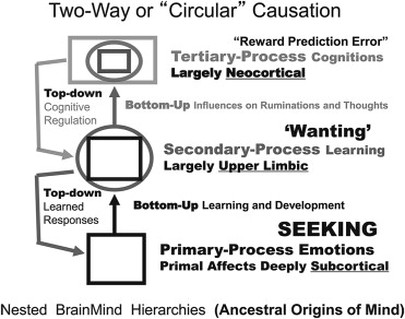
According to Jaak Panksepp, PhD, ALL mammals have seven primary affective (emotional) neurocircuits deep in the brain.  They are adaptive, essential to our survival, and part of our basic brain structure. (Panksepp, 2014)  While it is relatively well known now that the emotional center of the brain is in the limbic system, what Panksepp has found is that emotions are much more primitive, and hence much more powerful.  The emotional pathways extend far beyond the limbic system into the upper and middle brain stem. (Panksepp, personal communication, 2014)  These circuits reside in “ancient parts of the brain;” they are unconscious, hence the term primary. (Panksepp, 2014; Panksepp, 2012; Panksepp, 2010a)    “All aspects of mental life can be influenced by our primary-process feelings and the overall affective spectrum of the lower MindBrain is foundational for higher mental health issues” (Panksepp, 2012, p. xii). Emotions do not originate by a cognitive process. They begin in basic biological experiences deep in our brains and the subtleties (determining if we are feeling shame or guilt, anxiety or excitement) are then determined by our life experiences and our interpretations (secondary and tertiary processes, respectively, which I will explain below). The term MindBrain or BrainMind is Panksepp’s acknowledgment that we can not separate mind from brain and body. His theory is controversial in the field of affective neurobiology, but his decades of research supports his proposals.  This model will make sense to those who feel their emotions take over and to those therapists working with trauma and addiction.  It also helps to explain the power of sex addiction and other process addictions.
Picture

Sunday, December 07, 2014

Best Psychology & Neuroscience Books of 2014 (according to me)

Here are some of the best books I have been exposed to this year. Obviously, I cannot read everything, so this is a partial list at best. They are listed in alphabetical order. Descriptive text is from the publisher's blurb on Amazon.

A few of these books warrant the RECOMMENDED READ classification.


Adult Attachment Patterns in a Treatment Context: Relationship and Narrative
Sarah Daniel
Attachment theory posits that the need for attachment is a life-long phenomenon that becomes especially relevant in times of crisis or trauma. When adults experience illness, accidents, assaults, psychological difficulties or losses, their attachment-behavioural systems are activated, motivating them to seek help and support from family and friends and/or from helping professionals. However, the resulting request for help is affected and shaped by earlier experiences regarding the support and trustworthiness of attachment figures. Can others be trusted? Is it safe to show vulnerability? How should one behave to increase the likelihood of receiving the help needed? 

Adult Attachment Patterns in a Treatment Context provides an integrated introduction to the subject of adult attachment. Research into adult attachment patterns offers professional helpers a theoretically sound insight into the dynamics underlying a range of client behaviours, including some of the more puzzling and frustrating behaviours such as denying obvious pain or continually pushing the professional for more personal involvement. Sarah Daniel shows how applying knowledge of attachment patterns to treatment settings will improve the way in which professionals engage with clients and the organization of treatments. This book will be relevant to a range of helping professionals such as psychotherapists, psychologists and social workers, both in practice and in training.


Affect Regulation Training: A Practitioners' Manual
Matthias Berking and Brian Whitley 
Emotion Regulation is currently one of the most popular topics in clinical psychology. Numerous studies demonstrate that deficits in emotion regulation skills are likely to help maintain various forms of psychological disorders. Thus, enhancing emotion regulation has become a major target in psychotherapeutic treatments. For this purpose, a number of therapeutic strategies have been developed and shown to be effective. However, for practitioners it is often difficult to decide which of these strategies they should use or how they can effectively combine empirically-validated strategies. Thus, the authors developed the Affect Regulation Training as a transdiagnostic intervention which systematically integrates strategies from cognitive behavior therapy, mindfulness-based interventions, emotion-focused therapy, and dialectical behavioral therapy. The effectiveness of ART has been demonstrated in several high-quality studies. 


Attachment and Interaction: From Bowlby to Current Clinical Theory and Practice
Mario Marrone
Attachment and Interaction is an accessible introduction to the history and evolution of attachment theory, which traces the early roots of attachment theory from the work of its creator John Bowlby through to the most recent theoretical developments and their clinical applications. Mario Marrone explores how attachment theory can inform how therapists work with their patients, and what the practical implications are of using such an approach. By mixing personal anecdotes from his own experiences as Bowlby's supervisee with clear explanations of Bowlby's ideas and how they have evolved, Marrone creates a memorable and engaging account of attachment theory. This new, updated edition includes new material on bereavement, sexuality and the application of attachment-based principles to individual, family and group psychotherapy. This clear exposition of attachment theory is relevant and valuable reading for trainee and practising individual and group psychotherapists, family therapists and mental health professionals - as well as anyone with an interest in John Bowlby and the evolution of psychotherapy.


The Body Keeps the Score: Brain, Mind, and Body in the Healing of Trauma
Bessel A. van der Kolk 

RECOMMENDED READ.
A pioneering researcher and one of the world’s foremost experts on traumatic stress offers a bold new paradigm for healing

Trauma is a fact of life. Veterans and their families deal with the painful aftermath of combat; one in five Americans has been molested; one in four grew up with alcoholics; one in three couples have engaged in physical violence. Such experiences inevitably leave traces on minds, emotions, and even on biology. Sadly, trauma sufferers frequently pass on their stress to their partners and children.

Renowned trauma expert Bessel van der Kolk has spent over three decades working with survivors. In The Body Keeps the Score, he transforms our understanding of traumatic stress, revealing how it literally rearranges the brain’s wiring—specifically areas dedicated to pleasure, engagement, control, and trust. He shows how these areas can be reactivated through innovative treatments including neurofeedback, mindfulness techniques, play, yoga, and other therapies. Based on Dr. van der Kolk’s own research and that of other leading specialists, The Body Keeps the Score offers proven alternatives to drugs and talk therapy—and a way to reclaim lives.


Brain, Mind, and Consciousness in the History of Neuroscience
C.U.M. Smith and Harry Whitaker, Editors
This volume of essays examines the problem of mind, looking at how the problem has appeared to neuroscientists (in the widest sense) from classical antiquity through to contemporary times. Beginning with a look at ventricular neuropsychology in antiquity, this book goes on to look at Spinozan ideas on the links between mind and body, Thomas Willis and the foundation of Neurology, Hooke’s mechanical model of the mind and Joseph Priestley’s approach to the mind-body problem.

The volume offers a chapter on the 19th century Ottoman perspective on western thinking. Further chapters trace the work of nineteenth century scholars including George Henry Lewes, Herbert Spencer and Emil du Bois-Reymond. The book covers significant work from the twentieth century, including an examination of Alfred North Whitehead and the history of consciousness, and particular attention is given to the development of quantum consciousness. Chapters on slavery and the self and the development of an understanding of Dualism bring this examination up to date on the latest 21st century work in the field.

At the heart of this book is the matter of how we define the problem of consciousness itself: has there been any progress in our understanding of the working of mind and brain? This work at the interface between science and the humanities will appeal to experts from across many fields who wish to develop their understanding of the problem of consciousness, including scholars of Neuroscience, Behavioural Science and the History of Science.


Cyclical Psychodynamics and the Contextual Self: The Inner World, the Intimate World, and the World of Culture and Society
Paul L. Wachtel
Cyclical Psychodynamics and the Contextual Self articulates in new ways the essential features and most recent extensions of Paul Wachtel's powerfully integrative theory of cyclical psychodynamics. Wachtel is widely regarded as the leading advocate for integrative thinking in personality theory and the theory and practice of psychotherapy. He is a contributor to cutting edge thought in the realm of relational psychoanalysis and to highlighting the ways in which the relational point of view provides especially fertile ground for integrating psychoanalytic insights with the ideas and methods of other theoretical and therapeutic orientations. 

In this book, Wachtel extends his integration of psychoanalytic, cognitive-behavioral, systemic, and experiential viewpoints to examine closely the nature of the inner world of subjectivity, its relation to the transactional world of daily life experiences, and the impact on both the larger social and cultural forces that both shape and are shaped by individual experience. Here, he discusses in a uniquely comprehensive fashioning the subtleties of the clinical interaction, the findings of systematic research, and the role of social, economic, and historical forces in our lives. The chapters in this book help to transcend the tunnel vision that can lead therapists of different orientations to ignore the important discoveries and innovations from competing approaches. 

Explicating the pervasive role of vicious circles and self-fulfilling prophecies in our lives, Cyclical Psychodynamics and the Contextual Self shows how deeply intertwined the subjective, the intersubjective, and the cultural realms are, and points to new pathways to therapeutic and social change. Both a theoretical tour de force and an immensely practical guide to clinical practice, this book will be essential reading for psychoanalysts, psychotherapists and students of human behavior of all backgrounds and theoretical orientations.


The Future of the Brain: Essays by the World's Leading Neuroscientists
Gary Marcus and Jeremy Freeman, Editors
Including a chapter by 2014 Nobel laureates May-Britt Moser and Edvard Moser 

An unprecedented look at the quest to unravel the mysteries of the human brain, The Future of the Brain takes readers to the absolute frontiers of science. Original essays by leading researchers such as Christof Koch, George Church, Olaf Sporns, and May-Britt and Edvard Moser describe the spectacular technological advances that will enable us to map the more than eighty-five billion neurons in the brain, as well as the challenges that lie ahead in understanding the anticipated deluge of data and the prospects for building working simulations of the human brain. A must-read for anyone trying to understand ambitious new research programs such as the Obama administration's BRAIN Initiative and the European Union's Human Brain Project, The Future of the Brain sheds light on the breathtaking implications of brain science for medicine, psychiatry, and even human consciousness itself.

Contributors include: Misha Ahrens, Ned Block, Matteo Carandini, George Church, John Donoghue, Chris Eliasmith, Simon Fisher, Mike Hawrylycz, Sean Hill, Christof Koch, Leah Krubitzer, Michel Maharbiz, Kevin Mitchell, Edvard Moser, May-Britt Moser, David Poeppel, Krishna Shenoy, Olaf Sporns, Anthony Zador.


The Future of the Mind: The Scientific Quest to Understand, Enhance, and Empower the Mind
Michio Kaku 

I included this book because it is representative of the state of the science in (mis)understanding the mind. I disagree with several of the basic (reductionist) premises Kaku takes as givens.
The New York Times best-selling author of PHYSICS OF THE IMPOSSIBLE, PHYSICS OF THE FUTURE and HYPERSPACE tackles the most fascinating and complex object in the known universe: the human brain.
For the first time in history, the secrets of the living brain are being revealed by a battery of high tech brain scans devised by physicists. Now what was once solely the province of science fiction has become a startling reality. Recording memories, telepathy, videotaping our dreams, mind control, avatars, and telekinesis are not only possible; they already exist.
THE FUTURE OF THE MIND gives us an authoritative and compelling look at the astonishing research being done in top laboratories around the world—all based on the latest advancements in neuroscience and physics.  One day we might have a "smart pill" that can enhance our cognition; be able to upload our brain to a computer, neuron for neuron; send thoughts and emotions around the world on a "brain-net"; control computers and robots with our mind; push the very limits of immortality; and perhaps even send our consciousness across the universe.

Dr. Kaku takes us on a grand tour of what the future might hold, giving us not only a solid sense of how the brain functions but also how these technologies will change our daily lives. He even presents a radically new way to think about "consciousness" and applies it to provide fresh insight into mental illness, artificial intelligence and alien consciousness. 

With Dr. Kaku's deep understanding of modern science and keen eye for future developments, THE FUTURE OF THE MIND is a scientific tour de force--an extraordinary, mind-boggling exploration of the frontiers of neuroscience.


Manifesting minds: A Review of Psychedelics in Science, Medicine, Sex, and Spirituality
Rick Doblin, PhD, and Brad Burge, Editors
Featuring essays and interviews with Timothy Leary, Aldous Huxley, Ram Dass, Albert Hofmann, Alexander (Sasha) Shulgin, Daniel Pinchbeck, Tim Robbins, Arne Naess, and electronic musician Simon Posford, as well as groundbreaking research and personal accounts, this one-of-a-kind anthology is a "best of" collection of articles and essays published by the Multidisciplinary Association for Psychedelic Studies (MAPS). Topics include the healing use of marijuana and psychedelics--including MDMA, ibogaine, LSD, and ayahuasca--for PTSD, anxiety, depression, and drug addiction, as well as positive effects of these substances in the realm of the arts, family, spirituality, ecology, and technology.

Among many other thought-provoking and mind-opening pieces are the following:
• "On Leary and Drugs at the End," by Carol Rosen and Vicki Marshall
• "Psychedelic Rites of Passage," by Ram Dass
• "To Be Read at the Funeral," by Albert Hofmann
• "Another Green World: Psychedelics and Ecology," by Daniel Pinchbeck
• "Psychedelics and Species Connectedness," by Stanley Krippner, PhD
• "Huxley on Drugs and Creativity," by Aldous Huxley
• "Psychedelics and the Deep Ecology Movement: A Conversation with Arne Naess," by Mark A. Schroll, PhD, and David Rothenberg
• "Psychedelic Sensibility," by Tom Robbins
• "Electronic Music and Psychedelics: An Interview with Simon Posford of Shpongle," by David Jay Brown
• "How Psychedelics Informed My Sex Life and Sex Work," by Annie Sprinkle
• "Consideration of Ayahuasca for the Treatment of Posttraumatic Stress Disorder," by Jessica Nielson, PhD, and Julie Megler, MSN, NP-BC
• "Psychedelics and Extreme Sports," by James Oroc
• "Youth and Entheogens: A Modern Rite of Passage?," by Andrei Foldes with Amba, Eric Johnson, et al.
• "Diary of an MDMA Subject," by Anonymous
• "Dimethyltryptamine: Possible Endogenous Ligand of the Sigma-1 Receptor?," by Adam L. Halberstadt
• "Lessons from Psychedelic Therapy," by Richard Yensen, PhD
• "Psychosomatic Medicine, Psychoneuroimmunology, and Psychedelics," by Ana Maqueda
• "Talking with Ann and Sasha Shulgin about the Existence of God and the Pleasures of Sex and Drugs," by Jon Hanna and Silvia Thyssen


Memory Development from Early Childhood Through Emerging Adulthood
Wolfgang Schneider
Based on decades of established research findings in cognitive and developmental psychology, this volume explores and integrates the leading scientific advances into infancy and brain-memory linkages as well as autobiographical and strategic memory. In addition, given that the predominantly classic research on memory development has recently been complemented by more cutting-edge applied research (e.g., eyewitness memory, memory development in educational contexts) in recent years, this volume also provides in-depth and up-to-date coverage of these emerging areas of study.


Metacognition: Fundaments, Applications, and Trends - A Profile of the Current State-Of-The-Art
Alejandro Peña-Ayala, Editor
This book is devoted to the Metacognition arena. It highlights works that show relevant analysis, reviews, theoretical, and methodological proposals, as well as studies, approaches, applications, and tools that shape current state, define trends and inspire future research. As a result of the revision process fourteen manuscripts were accepted and organized into five parts as follows:

· Conceptual: contains conceptual works oriented to: (1) review models of strategy instruction and tailor a hybrid strategy; (2) unveil second-order judgments and define a method to assess metacognitive judgments; (3) introduces a conceptual model to describe the metacognitive activity as an autopoietic system.

· Framework: offers three works concerned with: (4) stimulate metacognitive skills and self-regulatory functions; (5) evaluate metacognitive skills and self-regulated learning at problem solving; (6) deal with executive management metacognition and strategic knowledge metacognition.

· Studies: reports research related to: (7) uncover how metacognitive awareness of listening strategies bias listening proficiency; (8) unveil how metacognitive skills and motivation are achieved in science informal learning; (9) tackle stress at learning by means of coping strategies.

· Approaches: focus on the following targets: (10) social metacognition to support collaborative problem solving; (11) metacognitive skills to be stimulated in computer supported collaborative learning; (12) metacognitive knowledge and metacognitive experiences are essential for teaching practices. 

· Tools: promotes the use of intelligent tutoring systems such as: (13) BioWorld allows learners to practice medical diagnostic by providing virtual patient cases; (14) MetaHistoReasoning provides examples to learners and inquiries about the causes of historical events.

This volume will be a source of interest for researchers, practitioners, professors, and postgraduate students aimed at updating their knowledge and finding targets for future work in the metacognition arena.


The Myth of Mirror Neurons: The Real Neuroscience of Communication and Cognition
Gregory Hickok, PhD

RECOMMENDED READ.
An essential reconsideration of one of the most far-reaching theories in modern neuroscience and psychology.

In 1992, a group of neuroscientists from Parma, Italy, reported a new class of brain cells discovered in the motor cortex of the macaque monkey. These cells, later dubbed mirror neurons, responded equally well during the monkey’s own motor actions, such as grabbing an object, and while the monkey watched someone else perform similar motor actions. Researchers speculated that the neurons allowed the monkey to understand others by simulating their actions in its own brain. 
Mirror neurons soon jumped species and took human neuroscience and psychology by storm. In the late 1990s theorists showed how the cells provided an elegantly simple new way to explain the evolution of language, the development of human empathy, and the neural foundation of autism. In the years that followed, a stream of scientific studies implicated mirror neurons in everything from schizophrenia and drug abuse to sexual orientation and contagious yawning.

In The Myth of Mirror Neurons, neuroscientist Gregory Hickok reexamines the mirror neuron story and finds that it is built on a tenuous foundation—a pair of codependent assumptions about mirror neuron activity and human understanding. Drawing on a broad range of observations from work on animal behavior, modern neuroimaging, neurological disorders, and more, Hickok argues that the foundational assumptions fall flat in light of the facts. He then explores alternative explanations of mirror neuron function while illuminating crucial questions about human cognition and brain function: Why do humans imitate so prodigiously? How different are the left and right hemispheres of the brain? Why do we have two visual systems? Do we need to be able to talk to understand speech? What’s going wrong in autism? Can humans read minds?

The Myth of Mirror Neurons not only delivers an instructive tale about the course of scientific progress—from discovery to theory to revision—but also provides deep insights into the organization and function of the human brain and the nature of communication and cognition.


Neuronal Dynamics: From Single Neurons to Networks and Models of Cognition
Wulfram Gerstner, Werner M . Kistler, Richard Naud, Liam Paninski
What happens in our brain when we make a decision? What triggers a neuron to send out a signal? What is the neural code? This textbook for advanced undergraduate and beginning graduate students provides a thorough and up-to-date introduction to the fields of computational and theoretical neuroscience. It covers classical topics, including the Hodgkin-Huxley equations and Hopfield model, as well as modern developments in the field such as Generalized Linear Models and decision theory. Concepts are introduced using clear step-by-step explanations suitable for readers with only a basic knowledge of differential equations and probabilities, and are richly illustrated by figures and worked-out examples. End-of-chapter summaries and classroom-tested exercises make the book ideal for courses or for self-study. The authors also give pointers to the literature and an extensive bibliography, which will prove invaluable to readers interested in further study.


The Feeling Body: Affective Science Meets the Enactive Mind
Giovanna Colombetti

RECOMMENDED READ.
In The Feeling Body, Giovanna Colombetti takes ideas from the enactive approach developed over the last twenty years in cognitive science and philosophy of mind and applies them for the first time to affective science -- the study of emotions, moods, and feelings. She argues that enactivism entails a view of cognition as not just embodied but also intrinsically affective, and she elaborates on the implications of this claim for the study of emotion in psychology and neuroscience. 

In the course of her discussion, Colombetti focuses on long-debated issues in affective science, including the notion of basic emotions, the nature of appraisal and its relationship to bodily arousal, the place of bodily feelings in emotion experience, the neurophysiological study of emotion experience, and the bodily nature of our encounters with others. Drawing on enactivist tools such as dynamical systems theory, the notion of the lived body, neurophenomenology, and phenomenological accounts of empathy, Colombetti advances a novel approach to these traditional issues that does justice to their complexity. Doing so, she also expands the enactive approach into a further domain of inquiry, one that has more generally been neglected by the embodied-embedded approach in the philosophy of cognitive science.


The Origins of Attachment: Infant Research and Adult Treatment
Beatrice Beebe and Frank M. Lachmann

Technically, this book came out at the end of 2013, but I am including it anyway because it is a RECOMMENDED READ, especially for therapists (according to me).
The Origins of Attachment: Infant Research and Adult Treatment addresses the origins of attachment in mother-infant face-to-face communication. New patterns of relational disturbance in infancy are described. These aspects of communication are out of conscious awareness. They provide clinicians with new ways of thinking about infancy, and about nonverbal communication in adult treatment.
Utilizing an extraordinarily detailed microanalysis of videotaped mother-infant interactions at 4 months, Beatrice Beebe, Frank Lachmann, and their research collaborators provide a more fine-grained and precise description of the process of attachment transmission. Second-by-second microanalysis operates like a social microscope and reveals more than can be grasped with the naked eye.

The book explores how, alongside linguistic content, the bodily aspect of communication is an essential component of the capacity to communicate and understand emotion. The moment-to-moment self- and interactive processes of relatedness documented in infant research form the bedrock of adult face-to-face communication and provide the background fabric for the verbal narrative in the foreground.


The Origins of Attachment is illustrated throughout with several case vignettes of adult treatment. Discussions by Carolyn Clement, Malcolm Slavin and E. Joyce Klein, Estelle Shane, Alexandra Harrison and Stephen Seligman show how the research can be used by practicing clinicians. This book details aspects of bodily communication between mothers and infants that will provide useful analogies for therapists of adults. It will be essential reading for psychoanalysts, psychotherapists and graduate students.

Collaborators Joseph Jaffe, Sara Markese, Karen A. Buck, Henian Chen, Patricia Cohen, Lorraine Bahrick, Howard Andrews, Stanley Feldstein

Discussants Carolyn Clement, Malcolm Slavin, E. Joyce Klein, Estelle Shane, Alexandra Harrison, Stephen Seligman


The Therapeutic Use of Ayahuasca
Beatriz Caiuby Labate and Clancy Cavnar, Editors

This book also came out at the end of 2013, but it is an important collection of articles on a topic that has been taboo in academic circles for far too long.
This book presents a series of perspectives on the therapeutic potential of the ritual and clinical use of the Amazonian hallucinogenic brew ayahuasca in the treatment and management of various diseases and ailments, especially its role in psychological well-being and substance dependence. Biomedical and anthropological data on the use of ayahuasca for treating depression, PTSD, and substance dependence in different settings, such as indigenous contexts, neo-shamanic rituals, contemporary therapeutic circles, and in ayahuasca religions, in both South and North America, are presented and critiqued. Though multiple anecdotal reports on the therapeutic use of ayahuasca exist, there has been no systematic and dense reflection on the topic thus far. The book brings the therapeutic use of ayahuasca to a new level of public examination and academic debate. The texts in this volume stimulate discussion on methodological, ethical, and political aspects of research and will enhance the development of this emergent field of studies.

Understanding Psychosis and Schizophrenia: Why People Sometimes Hear Voices, Believe Things that Others Find Strange, or Appear Out of Touch with Reality, and What Can Help
Edited by Anne Cooke
A report by the Division of Clinical Psychology (BPS)


RECOMMENDED READ. This is an important new book in that the authors have taken a client-centered, relational perspective on psychosis, one of the most misunderstood and stigmatized psychological adaptations to trauma. And it's FREE to download.
Understanding Psychosis and Schizophrenia: Why people sometimes hear voices, believe things that others find strange, or appear out of touch with reality, and what can help has been written by a group of eminent clinical psychologists drawn from eight universities and six NHS trusts, together with people who have themselves experienced psychosis. 

It provides an accessible overview of the current state of knowledge, and its conclusions have profound implications both for the way we understand ‘mental illness’ and for the future of mental health services. 

Many people believe that schizophrenia is a frightening brain disease that makes people unpredictable and potentially violent, and can only be controlled by medication.  However research conducted over the last 20 years and brought together in this report reveals that this view is false. Rather:
  • The problems we think of as ‘psychosis’ – hearing voices, believing things that others find strange, or appearing out of touch with reality – can be understood in the same way as other psychological problems such as anxiety or shyness.
  • They are often a reaction to trauma or adversity of some kind which impacts on the way we experience and interpret the world.
  • They rarely lead to violence.
  • No one can tell for sure what has caused a particular person’s problems. The only way is to sit down with them and try and work it out.
  • Services should not insist that people see themselves as ill.  Some prefer to think of their problems as, for example, an aspect of their personality which sometimes gets them into trouble but which they would not want to be without.
  • We need to invest much more in prevention by attending to inequality and child maltreatment.  Concentrating resources only on treating existing problems is like mopping the floor while the tap is still running.
Sunday, September 28, 2014

The Science of Emotions: Jaak Panksepp at TEDxRainier

http://ecx.images-amazon.com/images/I/41TIr4mBuJL._SY344_BO1,204,203,200_.jpg

Awesome - Jaak Panksepp is one of the founders of affective neuroscience, and author of Affective Neuroscience: The Foundations of Human and Animal Emotions (2004) and The Archaeology of Mind: Neuroevolutionary Origins of Human Emotions (2012).

The Science of Emotions: Jaak Panksepp at TEDxRainier

Published on Jan 13, 2014


Given an inherent subjective nature, emotions have long been a nearly impenetrable topic for scientific research. Affective neuroscientist Jaak Panksepp explains a modern approach to emotions, and how taking seriously the emotions of other animals might soon improve the lives of millions.

Jaak Panksepp introduced the concept of Affective Neuroscience in 1990, consisting of an overarching vision of how mammalian brains generate experienced affective states in animals, as effective models for fathoming the primal evolutionary sources of emotional feelings in human beings. This work has implications for further developments in Biological Psychiatry, ranging from an understanding of the underlying brain disorders, to new therapeutic strategies. Panksepp is a Ph.D. Professor and Baily Endowed Chair of Animal Well-Being Science, College of Veterinary Medicine, Washington State University. His scientific contributions include more than 400 papers devoted to the study of basic emotional and motivational processes of the mammalian brain. He has conducted extensive research on brain and bodily mechanisms of feeding and energy-balance regulation, sleep physiology, and most importantly the study of emotional processes, including associated feelings states, in other animals.

This talk was given November 9, 2013 in Seattle at TEDxRainier, a local TEDx event, produced independently of the TED Conferences.
* * * * *

Jaak Panksepp - Animal Emotion Researcher and Neuroscientist


Speaker Bio 

Given an inherent subjective nature, emotions have long been a nearly impenetrable topic for scientific research. Affective neuroscientist Jaak Panksepp explains a modern approach to emotions, and how taking seriously the emotions of other animals might soon improve the lives of millions.

Jaak Panksepp, Ph.D. Professor and Baily Endowed Chair of Animal Well-Being Science, College of Veterinary Medicine, Washington State University. His scientific contributions include more than 400 papers devoted to the study of basic emotional and motivational processes of the mammalian brain. He has conducted extensive research on brain and bodily mechanisms of feeding and energy-balance regulation, sleep physiology, and most importantly the study of emotional processes, including associated feelings states, in other animals. He introduced the concept of Affective Neuroscience in 1990, consisting of an overarching vision of how mammalian brains generate experienced affective states in animals, as effective models for fathoming the primal evolutionary sources of emotional feelings in human beings. This work has implications for further developments in Biological Psychiatry, ranging from an understanding of the underlying brain disorders, to new therapeutic strategies.

His recent work has focused primarily on the subcortical brain mechanisms of sadness (brain PANIC or separation distress circuitry) and joy (brain PLAY and animal laughter circuitry), work that has implications for the treatment of autism, ADHD, and depression. His work is informed by exploring the consequences of basic knowledge about emotional endophenotypes (natural brain states) for better understanding of human mental health. His monograph Affective Neuroscience (Oxford, 1998) outlined ways to understand brain affective processes neuroscientifically; his Textbook of Biological Psychiatry (Wiley, 2004) focused on how elucidation of emotional processes can facilitate psychiatric practice; and Archaeology of Mind (Norton, 2012) summarized how such knowledge can inform psychotherapeutic practice.

This work has led to three novel antidepressant concepts that are currently being evaluated in human. But perhaps equally importantly, this work provides a novel vision for how consciousness emerged in human brains, which can only be clarified through the scientific study of the phenomenal-experiential-emotional capacities of that exist in the brains/minds of other animals.

Thursday, September 11, 2014

Social Pain: A Conversation with Naomi Eisenberger

Here is a new Conversations at Edge with Naomi Eisenberger, a professor in the Social Psychology program at the University of California, Los Angeles. She is director of the Social and Affective Neuroscience laboratory as well as co-director of the Social Cognitive Neuroscience Laboratory.

Dr. Eisenberger was featured in an earlier Conversations at Edge on Why Rejection Hurts [7.6.11].

Social Pain

A Conversation with Naomi Eisenberger [9.10.14]
Topic: Conversations


When I think of the work on social pain, and showing that some of the same neural regions that are involved in physical pain are involved in social pain, that can be very validating for people. For anyone who's felt the pain of losing somebody or who's felt the hurt feelings that come from being ostracized or bullied, there's something very validating in seeing this scientific work that shows it's not just in our head. It is in our head because it's in our brain. It's not just in our head, there is something biological going on that's interpreting the pain of social rejection as something that really is a painful experience. 


NAOMI EISENBERGER is a professor in the Social Psychology program at the University of California, Los Angeles. She is director of the Social and Affective Neuroscience laboratory as well as co-director of the Social Cognitive Neuroscience Laboratory.

Naomi Eisenberger's Edge Bio Page

SOCIAL PAIN

The kinds of questions that I'm interested in have to do with the feelings that come up in our closest social relationships. I've been on both sides of this equation, the negative side and the positive side. I've been very curious about both the painful feelings that we have when we lose our closest social relationships or we feel disconnected from others, as well as the pleasurable feelings that we have when we feel close and connected to those that we love. One of the things that we've been exploring in my Lab at UCLA is where those feelings come from. One way that we've been doing this is by turning to the brain to try to understand those feelings of social closeness or social distance.

We started off on the negative side. I started off with this question of: why do people talk about feeling hurt by social rejection? Why do they talk about the pain that comes up when they feel left out or excluded? It's a very palpable experience. Most people, if you ask them to think back to some very painful event in their life, instead of bringing up something that involves a broken bone they’ll often bring up an experience that involves losing a social relationship or being rejected. We all have these memories of being left out on the school playground or fears of being left out on the school playground. So I was very curious. Where do those fears and where do those feelings come from?


(29:23 minutes)
 

To explore this we essentially created a setting, created a situation that we could expose our subjects to, see what's going on emotionally when people feel rejected, and then what's going on in their brains when they experience this state. In this first study we brought people in to the fMRI scanner and had them play a virtual ball tossing game with two other supposed subjects. They thought they were playing this interactive game together. It turns out they weren't actually playing with two other people, but they didn’t know this yet. What happened during this game is that these two computer players stopped throwing the ball to our subjects so we could look at the brain and see what's going on for these individuals, what's going on in their brains when they're being rejected compared to when they're being included in the game.

What we found here was really interesting, that some of the same regions of the brain that process the painful experience—the distressing component of physical pain—are the same regions that seem to activate when people feel socially excluded. It gives some weight to this idea that rejection really can be painful. The same regions that process the unpleasantness of physical pain process the pain of social exclusion. This got us thinking about the overlap, the possible shared neural circuitry underlying physical and social pain. Maybe the same regions that process physical pain have been borrowed over the course of our evolutionary history to process social pain.

When you think about us as a social species, this actually makes quite a lot of sense. We rely on people, we need to be close to others, especially early on for protection, for care, for nourishment. To the extent that being separated from a caregiver or from a close other is such a threat to our survival, then actually feeling this pain signal when we're separated may be an adaptive way to prevent being socially separated.

We've gone on to explore some of this shared circuitry. We've tested a few ideas that come from it. One idea is that if physical pain and social pain really rely on some of the same neural regions, then one consequence of this is that people who tend to be more sensitive to physical pain should also tend to be more sensitive to social pain, and we've been able to show this in a few studies. We found that subjects who, at baseline, are naturally more sensitive to physical pain are the ones who later on report feeling more rejected by the same virtual ball tossing game where they get excluded.

We've also seen some genetic evidence for this. We find that people who carry the more rare version of the mu-opioid gene, which is linked to a greater sensitivity to physical pain (opioids are potent painkillers), are individuals who have a genetic disposition to be more sensitive to physical pain. These are the same individuals who report feeling more upset by social rejection; they show greater pain related neural activity in response to social exclusion.

A second consequence of this overlap that we've been exploring is whether certain factors that alter one kind of pain can alter the other in a similar manner, and probably one of the most interesting studies we've done is one where we looked at acetaminophen. We typically think of acetaminophen as a physical painkiller. In this particular study, we randomly assigned people to either take it everyday for two weeks or take a placebo everyday for two weeks. Instead of measuring their physical pain, we measured their social pain. We asked them each evening to rate their hurt feelings. We also then brought them in at the end of a separate study to look at their neural sensitivity to social exclusion. What we found is that the people who were taking acetaminophen reported less hurt feelings than people who were taking placebo, and they showed less pain related activity to social exclusion, just as a function of taking acetaminophen. We see this crossover effect in some ways, that this agent, which known to reduce physical pain, also seems to affect social pain.

Those are some of the things that we've been looking at on the more negative side of social experience. I've also become very interested recently in exploring the positive feelings that come from our social connections, and these have probably been the trickiest to really emulate in the scanning environment. It's easy to put somebody into a negative state when they're laying alone in a contained structure. It's harder to really get people to feel connected to their close others when they're all alone in the dark in the fMRI scanner.

In the same way that we've been curious about some of the neural substrates that might have been borrowed to support our experience of social pain, we've also been interested in what neural substrates might have been borrowed to support those pleasurable, warm feelings that we have when we're feeling connected.

One kind of substrate that we've been really interested in are those neural substrates that process temperature. The reason for that is because a lot of times when we talk about our feelings of closeness or connection, we talk about warmth. We talk about somebody making us feel warmhearted, we talk about our warm feelings toward somebody, so we wondered whether some of the same mechanisms that process warmth—that lead us to feel sort of pleasantly warm about a physical object—are the same mechanisms that lead us to feel warm about somebody else.

In one study we brought people into the scanner, and we wanted, again, to look at overlapping neural activity between physical warmth and social warmth. To look at physical warmth, we have them holding onto one of those warm packs that athletes will use where they crack them open and shake them up and it produces warmth in the packet. We scanned people when they were holding warm packs and a neutral temperature pack, and we also scanned them while they were experiencing social warmth. To do this we had the participants’ family members and friends, before the scanning session, write email messages to the participants. These were loving, tender messages that the subjects saw for the first time when they were in the fMRI scanner. We looked at what the brain was doing when subjects were viewing these socially warm images and whether or not it overlapped with what was going on when they were feeling these physically warm packs.

What we found, first just in terms of their self reports, not surprisingly, people felt more warm when they were holding the packs. They also reported feeling more warm when they were reading those nice messages. What was also interesting is that subjects not only reported feeling more connected when they were reading those messages, they also strangely enough reported feeling more connected when they were simply holding those warm packs.

The last thing that we saw was neural activity in reward-related regions during both tasks, and it turned out that there were several regions that showed overlapping neural activity. Some of the same regions that are processing physical warmth and the pleasantness of that sensory experience were the same ones processing the social warmth that people are getting from these loving messages.

Another line of research on the positive side is our research exploring the neural substrates of support-giving. Essentially there's been a lot of work showing that social relationships are critical for health. Most of the time, though, when people ask why social support is critical for health they assume that it's because of all the support that we get from others. Less often have people really looked at the support that people give to others. So when you help out a friend, or you take care of somebody, or you offer to do a favor for a family member, this is not considered support really because it's not helping us. We're doing things for other people. But this actually may be a key ingredient helping to explain some of the relationship between social support and better health.

We've been interested in some of the neural underpinnings of this particular state. So we ran a study where we brought in couples, and the female member of the couple was in the fMRI scanner, and essentially we scanned her brain while she was providing support to her partner. Her partner stood just outside of the fMRI scanner, and on certain trials he received electric shock. The female could support him on some trials by holding his arm as he went through this experience. This was a form of giving support to help somebody going through something negative or something painful.

There were two main findings here. The first is that we saw reward-related activity when people were providing support to somebody else. Some people say this is not terribly surprising. We all know that something about support-giving feels good. Some people might say that seems surprising because we're actually doing work to help somebody else, but we did see reward-related activity. We actually saw more reward-related activity when the females were touching their partners when they were getting pain—when they were support-giving—compared to when they were just touching their partners and their partners weren't getting pain. It seems like maybe there was something more rewarding about being able to provide support than just being able to be in physical contact with your partner when they're not going through anything negative.

The last interesting finding was that the females who showed more reward-related activity when they were support-giving were also the ones who showed less activity in the amygdala. This is a region that's involved in a lot of different things, but one of the things that it's involved in is processing threat. People who showed more reward-related activity that were involved in support-giving seemed to be showing less threat-related activity

If you look into animal work and if you think about the evolutionary aspects of this, it makes some sense. The idea here is that to the extent that we're in a caregiving situation, we need to remain calm. There may be some circuitry in place that turns down our own threat sensitivity so that we can engage in adaptive caregiving towards others. There may be something about caregiving that actually turns down our own internal stress level so that we can engage and provide adaptive help to others.
We've been trying to build on this and to look at some of the health consequences of support-giving. Is there something about support-giving that's actually stress reducing for the person who's giving the support? Not just for the person who's receiving it, which is what's typically been looked at, but for the person who's doing the helping. We have some preliminary data where people write a helpful note to a friend in need. After doing so, they go through a stress task. Those people that wrote the helpful note, as opposed to people who wrote just a control note, actually showed a calmer physiological profile to the stress task. They were showing less of a heart rate increase, less of a blood pressure increase, just as a function of writing this helpful message to a friend.

~ ~
I've always honestly felt a bit like a mutt in terms of the fields that have influenced me. I would call myself now a social neuroscientist, but I was trained as a social psychologist with probably a large influence from health psychology as well. Unlike most social psychologists, I tend to read a lot more animal work, and that's probably from health psychology, which borrows a lot from animal models of disease and how different kinds of social environments can affect health outcomes. I don't think it's a field, but people who have studied social relationships using animal models, as well as human models, have also greatly influenced me.

Individuals who have influenced me include Harry Harlow, John Bowlby, and Jaak Panksepp—people who have focused on what makes up the glue that binds people together. You have Harry Harlow looking at very basic attachment processes...what does the monkey prefer? Does he prefer the food or does he prefer the warmth, or the softness? You have people like John Bowlby who's trying to chart out a mechanistic way for understanding attachment, a child’s attachment to its mother. Then you have people like Panksepp, who use animal models to understand basic motivational systems like love, attachment, rage, caregiving. Probably the central theme is people focused on social relationships, and not just romantic relationships.

There's a whole wing of social psychology that focuses on romantic relationships, and in some ways that's why I never consider myself a relationship researcher. I'm interested in more than just the romance. I'm interested in the friendships, I'm interested in the parent/child relationships, all of that. I've been probably more influenced by the folks who’ve studied social connection from humans to animals.                                       

I think romance is interesting and a lot of people study romance. There's a lot of other meaningful types of relationships out there that people, for some reason, seem to be less interested in. So when I think about the warm feelings that I have for my employees or my close friends or my son, I want to know where those come from.                 

~ ~
How do I know what I'm doing makes a difference? I have two answers. Some of my research makes a difference because it reveals something to people that they probably already knew but maybe were afraid to believe. When I think of the work on social pain, and showing that some of the same neural regions that are involved in physical pain are involved in social pain, that can be very validating for people. For anyone who's felt the pain of losing somebody or who's felt the hurt feelings that come from being ostracized or bullied, there's something very validating in seeing this scientific work that shows it's not just in our head. It is in our head because it's in our brain. It's not just in our head. There is something biological going on that's interpreting the pain of social rejection as something that really is a painful experience.

There is something inherently interesting about figuring out how people work, figuring out where these warm feelings come from, and I'm not sure in the end if it will help anyone. That line of research is almost meant to just understand these things and maybe not meant necessarily to help people in the end.                 

I was the kind of person that always wanted to know what I wanted to do, but I never did, and I happened upon science in a way. I met a mentor who was gracious enough to take me on. We did a project together, and I found something new, and literally it was that excitement of discovering something for the first time that led me to want to be a scientist.

This still drives me to this day, this moment of discovering something new about human experience that we didn’t know before, the "Ah-ha!" moments. That's what reinforces things, and perhaps that's a selfish reason to pursue science, but for me that's certainly part of it, that feeling of discovering something new.

~ ~
I got my Bachelor’s of Science at UCLA. I majored in psychobiology. It was there that I got my first taste of research, so I wound up doing an Honors Thesis with Margaret Kemeny, who's a health psychologist and also a psychoneuroimmunologist. Because of our work together I think I realized I really wanted to do science. I really wanted to be able to ask questions about human nature, about human experience, and then use the data to answer those questions. After finishing my Bachelor’s, I went to UCLA and got a Ph.D. there. I worked with Matt Lieberman (now my husband), with Shelley Taylor and with Shelly Gable. And I think at the time when I was in my second or third year of graduate school I was introduced by Matt Lieberman to this new area of science called social neuroscience.            
                              
Before that I was probably more of a health psychologist. I was very interested in why social ties are so important for health, and there were all of these fabulous demonstrations of people who have more friends live longer and they are less likely to get sick. But I always felt like there was something missing with those models, and to me that was what's going on in the mind that translates the social world into whatever happens downstream in the body.              
            
I became very interested in social neuroscience as a way to connect that outer social world with the inner workings of the body to try to better understand some of the links between social issues and health. I took whatever classes I could, talked with whoever I could to learn all these techniques of social neuroscience. It was during that time that I, with Matt, did the study on social pain, looking at Cyberball, looking at people getting excluded in the scanner. My work built from there, continuing to look at that idea that physical and social pain overlap.           
                               
In some ways I veered off to get training in social neuroscience. During my post-doc I came back to health again. So during my post-doc I worked with Michael Irwin who's a psychoneuroimmunologist, and here I did something pretty different than what I did before. I ran a pretty involved study where we injected people with an agent that triggers an inflammatory response to look at how that inflammatory response affects people emotionally and affects people socially and also what's going on neurally as a function of that.   

~ ~
I have two main thoughts about differences between males and females when it comes to academics. When I was in graduate school I never thought about gender differences in how I was treated versus how anyone else was treated. It wasn’t until I became an assistant professor tha I started to notice things. It was subtle things, like I felt when a male colleague presented on my data they didn’t get as many questions. When I presented on my data there were a lot more questions. I don’t mean questions about clarity, questions to clarify. I mean doubtful questions, like, "I don’t believe what you're saying." Those kinds of questions. I've spoken with other female colleagues who have said the same thing. If she gives the exact same lecture as her husband to a class of students, she finds that she gets a lot more pushback than her husband.

There's also social networking things. Matt talks to other males, I talk to other females. The males that he talks to, because I guess they're males, tend to be in more powerful positions. It's oftentimes males who are department chairs. So it's Matt that's talking about jobs, about people moving, and orchestrating things. He's the one who's networking and pushing for positions in different places.

That's one difference. Another thing that I've noticed, I've seen more of this in my students, is that the way that science is done is more male friendly. This is my opinion, so some people may disagree with this, but I have a lot of female students, and when they go to conferences and give talks and people ask them questions that are challenging, that are maybe mean spirited, it makes them want to disengage. Sometimes, for male students, they see this as an opportunity to engage, to fight back...it's fun to argue. I’ll watch two males fight it out over some scientific question and think, "Oh my God, they're never going to speak to each other again," and meanwhile, they're having a really fun time. So there's something accepted about the way science happens that's a bit more male-oriented than female-oriented, in terms of its confrontational aspects.             

The last thought that comes to mind is that I've often wondered if females are less interested—at least some females—in self-promoting. There is maybe something uncomfortable about this kind of activity, or that they're just less interested, that it's not as important to them to get their message out, to be heard by a lot of people, and that's certainly something that I've dealt with myself. I like to do my science. I like to discover things. I like for other people to know about it, but do I want to go out and have speaking gigs all the time and get in front of audiences? Something about that makes me uncomfortable. I don't know if that's a "me" thing or if that's a female thing. "Me" and female are confounded so I can't really pull those two things apart.                                                                          

Wednesday, August 20, 2014

Situated Affective and Social Neuroscience (Topic Overview)


This editorial from Frontiers in Human Neuroscience is part of (and introduction to) a special topic on Interactions between emotions and social context: Basic, clinical and non-human evidence.

The whole article is presented below, along with the 22 articles in the topic - all of which have their DOIs so that they can be easily accessed.

Situated affective and social neuroscience


Agustin Ibanez [1,2,3,4,5] Sonja A. Kotz [6,7] Louise Barrett [8] Jorge Moll [9] and Maria Ruz [10]
1. Laboratory of Experimental Psychology and Neuroscience, Institute of Cognitive Neurology (INECO), Favaloro University, Buenos Aires, Argentina
2. National Scientific and Technical Research Council (CONICET), Buenos Aires, Argentina
3. UDP-INECO Foundation Core on Neuroscience, Diego Portales University, Santiago, Chile
4. Universidad Autónoma del Caribe, Barranquilla, Colombia
5. Centre of Excellence in Cognition and its Disorders, Australian Research Council (ACR), Sydney, NSW, Australia
6. Cognitive Neuroscience and Experimental Psychology Section, School of Psychological Sciences, University of Manchester, Manchester, UK
7. Department of Neuropsychology, Max Planck Institute of Human Cognitive and Brain Sciences, Leipzig, Germany
8. Department of Psychology, University of Lethbridge, Lethbridge, AB, Canada
9. Cognitive and Behavioral Neuroscience Unit, D'Or Institute for Research and Education, Rio de Janeiro, Brazil
10. Department of Experimental Psychology, Brain, Mind and Behavior Research Center, University of Granada, Granada, Spain

This Research Topic features several papers tapping the situated nature of emotion and social cognition processes. The volume covers a broad scope of methodologies [behavioral assessment, functional magnetic resonance imaging (fMRI), structural neuroimaging, event-related potentials (ERPs), brain connectivity, and peripheral measures], populations (non-human animals, neurotypical participants, developmental studies, and neuropsychiatric and pathological conditions), and article types (original research, review papers, and opinion articles). Through this wide-ranging proposal, we introduce a fresh approach to the study of contextual effects in emotion and social cognition domains.

We report four levels of evidence. First, we present studies examining how cognitive and neural functions are influenced by basic affective processes (interoception, motivation and reward, emotional impulsiveness, and appraisal of violent stimuli). A second set of behavioral and neuroscientific studies addresses how performance is modulated by different emotional variables (categorical and dimensional approaches to emotion, language-as-context for emotion, emotional suppression of the attentional blink, and reappraisal effects on the up-regulation of emotions). The studies in our third selection deal with different influences in social cognition (SC) domains (human and non-human comparative studies, long-term effects of social and physical stress, developmental theory of mind, neural bases of passionate love for others, social decision making in normal and psychopathic participants, and frontal lobe contributions to psychosocial adaptation models). Finally, the fourth set of papers investigates the blending of social and emotion-related processes (valence and social salience in amygdala networks, emotional contributions to identification of genuine and faked social expressions, emotional predispositions and social decision making bias, valence of fairness and social decisions, structural neuroimaging of emotional and social impairments in neurodegenerative diseases, and subjective reactivity to emotional stimuli and their association with moral cognition). A brief summary of all these studies is offered in the following sections.

Basic Affective Modulation

Body signals, especially of the interoceptive cardiac type, have been recently claimed to modulate emotion and decision-making processes. Leone et al. (2012) used chess decisions to analyze heart rate (HR) modulations in specific cognitive events. HR signals predicted the conception of a plan and the likelihood to blunder by fluctuations (e.g., performing random errors or bad moves). Such signals also reflected reactions, such as a blunder made by the opponent or fluctuations after a move. These data suggest that body signals are rich enough to reveal relevant episodes of inner decisions.

In another study, the affective motivational dimension of behavioral inhibition was assessed through the manipulation of reward magnitudes during a classical inhibitory task (Herrera et al., 2014). The effect of reward magnitude and context on behavioral inhibition in humans showed that dynamical behavioral inhibition depends on contextual parameters (reward magnitude modulation and initial reward history).

Torres et al. (2013) tested whether emotional and non-emotional dimensions of impulsiveness were differentially predictive of decision-making and addictive behavior in cocaine-dependent individuals (CDIs), pathological gamblers (PGs), and healthy controls. They used several instruments, including a Go/No-go paradigm assessed with ERPs and a delay-discounting task. Among the dimensions of trait impulsiveness, negative urgency was unique at independently covarying with gambling in PGs. Relative to these subjects, CDIs performed more poorly and showed ERP abnormalities. The effects of impulsiveness in negative emotion processing played a key role in decision-making and addiction.

Using fMRI, Porges and Decety (2013) evaluated the appraisal of violent stimuli and their relation with self-report measures of pleasure/displeasure. Participants watched video-clips depicting Mixed Martial Arts (MMA). Capoeira videos were used as a baseline. Pleasurable ratings of MMA predicted increased functional connectivity (FC) seeded in the nucleus accumbens, anterior cingulate cortex (ACC), and anterior insular cortex (AIC). These structures are related with positive/negative outcomes as well as feelings and somatic representations. Instead, displeasure ratings of MMA were related to increased FC among regions of the prefrontal cortex and superior parietal lobule (areas involved in cognitive control and executive attention). The results suggest that FC indexed the relationship between subjective feelings and anticipation of positive and negative outcomes.

Emotional Appraisal

Matsuda et al. (2013) tested the hypothesis that separate neural loci might intrinsically encode categorical and dimensional facial emotion perception. Participants were scanned with fMRI while they passively viewed emotional faces and performed unrelated tasks. Activity in the right fusiform face area (FFA) was dependent on the categorical ambiguity of facial expressions. The amygdala, insula, and medial prefrontal cortex evidenced dimensional (linear) processing, which correlated with physical changes in expressions. The results suggest that distinct neural loci process the physical and psychological aspects of facial emotion perception in a region-specific and implicit manner.

Herbert et al. (2013) used words as contextual cues for emotion processing in two ERP experiments. They focused on self- vs. sender-related emotional pronoun-noun pairs (e.g., my fear vs. his fear) as cues for emotional face processing. Participants performed automatic (Experiment 1) and intentional (Experiment 2) affect labeling tasks. ERP patterns varied as a function of the label's reference (self vs. sender) and the intentionality of the labeling task (Experiment 1 vs. Experiment 2). Emotion decoding from facial expressions was not fully determined by sensory facial information, but proved sensitive to contextual factors and the perceiver's experience. These findings support a differentiated view of language-as-context for emotion processing.

The study conducted by Kanske et al. (2013) evaluated whether the attentional blink effect in rapid serial visual presentations is modulated by the emotionality of the stimuli (emotional and neutral images depicting social scenes as target). To this end, the authors used ERP recordings and offline self-reports of empathy. The results revealed enhanced performance for emotional stimuli and increased P3 amplitudes, which correlated with individual differences in empathy. These data suggest that empathy is associated with enhanced emotional processing in social contexts, even during unconscious target detection.

Peng et al. (2013) examined description-based reappraisal effects on the up-regulation of positive emotions. They measured ERP fluctuations as Chinese participants viewed erotic and neutral images shown after either a neutral or positive description. Further data was obtained through self-reported ratings. The results demonstrate that description-based reappraisal significantly modulated the emotional experience and ERP responses to erotic as well as neutral images.

Social Cognition

The review by Van Den Bos et al. (2013) considers animal and human studies tapping the influence of social context on decision-making. From a causal and functional perspective, the authors advance methodological considerations to improve the experimental assessment of social factors in decision-making.

In a study with rats, Chaby et al. (2013) investigated how exposure to social and physical stress during adolescence affects adult decision-making, coping response, cognitive bias, and exploratory behavior. Compared to control animals, rats exposed to chronic unpredictable stress (e.g., isolation, crowding, cage tilt) evinced long-term behavioral and cognitive changes, including negative cognitive bias, altered coping response, and accelerated decision-making. The results showed that stress during adolescence has a long-term impact on behavior and cognition. The most salient effects concern ambiguous stimulus interpretation, behavioral response to adverse events, and decision-making strategies.

Calero et al. (2013) propose a novel approach to quantifying the scaling property of theory of mind (ToM). Focusing on children between 6- and 8-years-old, they consider a scaling complexity of skills and their modulation by varied factors, such as gender, number of siblings, and personality traits.

The meta-analysis by Juan et al. (2013) considers a decade worth of fMRI studies to identify differential brain areas and cortical networks involved in (i) passionate love for others and (ii) understanding the intention of others' actions. Thus, this approach goes beyond classical experimental studies regarding individuals as strictly isolated entities. Both overlapping and distinct cortical and subcortical regions were identified for intention and love, respectively. By targeting these brain regions in future research, scientists and clinicians could promote breakthroughs in the neuroscience of pair-bonding.

Radke et al. (2013) investigated fairness considerations in psychopathic and non-psychopathic offenders as well as healthy controls. In a modified Ultimatum Game (UG) involving opposing intentionality constraints (intentional vs. unintentional), unfair offers were paired with different unselected alternatives, thereby establishing the context of a proposal. Psychopathic offenders resembled healthy controls in their rejection pattern—i.e., they took the unselected alternative into account. In contrast, non-psychopathic delinquents failed to adjust their decisions to an offer's alternatives, suggesting stronger impairments in social decision-making. Crucially, the mechanisms and processes underlying rejection decisions might differ in both groups, particularly in terms of cognitive vs. emotional competencies.

In an ERP experiment, Moser et al. (2014) investigated the levels of processing at which positive and negative descriptions of other people bias social decision-making. Participants played a game in which they had to accept or reject economic offers. Other variables manipulated were the fairness of the assets' distribution, the offers' advantageousness, and the game context's uncertainty. Negative description of the interaction partner enhanced medial frontal negativity (MFN) in an additive manner with fairness evaluations. The description of the partner interacted with personal benefit considerations, showing that this positive or negative information biased the evaluation of offers only when they did not favor the participant. P300 amplitudes were enhanced by advantageous offers, suggesting their heightened motivational significance at later stages of processing. In all phases of the study, processing of the offer was increased in the certain, as compared to the uncertain, contexts. These results provide new evidence that decision-making is influenced by interpersonal information and considerations of one's own interests relative to those of others.

Finally, Huepe and Salas (2013) set forth a new conceptualization of the prefrontal cortex for psychosocial adaptation. Their review of the evidence suggests that cognitive functions related to this lobule include fluid intelligence (FI), SC, and perspective changing abilities (PCA). These domains are crucial in adapting to social contexts and solving problems in new situations. Moreover, they appear to depend on contextual keys, thus requiring flexibility—yet another function associated with the frontal lobe. The model proposed integrates these components (FI, SC, and PCA) as indicators of psychosocial adaptation in contexts of social vulnerability or impoverished social/cultural conditions.

Contextual Blending of Social and Emotion-Related Processes

Vrtička et al. (2013) assessed whether the human amygdala preferentially responds to both emotionally and socially significant information, and whether these factors might display interactive encoding properties. Through an fMRI study, they demonstrated that amygdala activation is (1) greater for neutral social vs. non-social information, (2) similar for positive and negative social images, and (3) sensitive to a valence effect (negative vs. positive) for non-social images. The valence × social content interaction was also found in the right fusiform gyrus, right anterior superior temporal gyrus, and medial orbitofrontal cortex. Overall, these findings suggest that valence and social contents possess distinct kinds of relevance that interact within the human amygdala and throughout a more extensive cortical network.

The ability to discriminate between felt and faked expressions is a crucial social skill. Manera et al. (2013) investigated whether individual differences in smile authenticity recognition are explained by distinct predispositions to experience other people's emotions (susceptibility to emotional contagion). Susceptibility to emotional contagion for negative emotions increased smile authenticity detection. Instead, susceptibility to emotional contagion for positive emotions worsened detection performance, because it led to categorize most faked smiles as sincere. It follows that susceptibility to emotional contagion plays a key role in complex social emotions.

The study by Klapwijk (2013) examined the effects of three different emotional responses (anger, disappointment, and happiness) on social decision-making in adolescents. In a version of the Dictator Game, unfair offers by the participants received emotional responses from peers. Relative to angry and happy reactions, expressions of disappointment prompted more generous offers. Older adolescents were better than younger adolescents at differentiating among the three emotions. In addition, individual differences in social value orientation played a role in decisions after happy reactions to unfair offers. Thus, adolescents take into account the emotions of their peers when making social decisions and are affected by social value orientation and age.

Couto et al. (2013) report selective behavioral impairments of face recognition, emotion recognition, and ToM in patients with behavioral variant frontotemporal dementia (bvFTD) and progressive non-fluent aphasia (PNFA). Voxel-based morphometry revealed fronto-temporo-insular atrophy in both patient groups. SC deficits were differentially associated to fronto-insular-temporal atrophy in bvFTD and PNFA, respectively. While SC impairments were similar in both groups, they seem to reflect intrinsic ToM affectation in bvFTD and more basic deficits (face and emotion recognition) in PNFA.

Carmona-Perera et al. (2013) examined subjective reactivity to emotional stimuli and its possible association with moral decision-making. Healthy adult participants responded to a set of moral and non-moral dilemmas. The researchers focused on emotional experience in valence, arousal, and dominance dimensions in response to different types of pictures (neutral, pleasant, unpleasant non-moral, and unpleasant moral). Significant correlations emerged between less unpleasantness to negative stimuli, more pleasantness to positive stimuli, and a higher proportion of utilitarian choices. Also, a positive association was found between higher arousal ratings to negative moral laden pictures and more utilitarian choices. Low dominance was associated with greater perceived difficulty over moral judgment. These results evidenced a contextual role of emotional experience in moral choice.

Conclusions

Despite the diversity of their topics, research questions, and methodologies, most of these studies highlight the contextual situatedness of emotional and social cognition processes (Garrido-Vasquez et al., 2011; Ruz and Tudela, 2011; Ibanez and Manes, 2012; Melloni et al., 2014). Moreover, they provide new evidence for the interaction among low and high-level cognition, emotion, and social domains (Moll and Schulkin, 2009; Pessoa, 2009; Alguacil et al., 2013; Ibanez et al., 2013, 2014; Ruz et al., 2013; Baez et al., 2014b). In the same vein, part of the evidence presented shows that our emotional arousal biases our decisions in the social world (Beauregard, 2007; Heatherton, 2011). More generally, this Research Topic indicates that a brain network approach to social and emotional processes (Moll et al., 2005, 2008; Kennedy and Adolphs, 2012; Baez et al., 2014a) seems more adequate than simple approximations ascribing such complex domains to a single region. This integrated approach to embedded emotional and social processes provides exciting new avenues into the growing field of social neuroscience.

Conflict of Interest Statement

The authors declare that the research was conducted in the absence of any commercial or financial relationships that could be construed as a potential conflict of interest.

Acknowledgments

Agustin Ibanez is supported by CONICET, CONICYT/FONDECYT Regular (1130920 and 1140114), FONCyT-PICT 2012-0412/2012-1309, and INECO Foundation. Maria Ruz is supported by the Spanish Ministry of Science and Innovation, “Ramón y Cajal” fellowship (RYC-2008-03008) and grant PSI2013-45567-P. Jorge Moll is supported by intramural grants, D'Or Institute for Research and Education, and FAPERJ (Rio de Janeiro State Foundation for Research). Sonja A. Kotz is supported by Canadian Institutes of Health Research (CIHR: 62867) and German Science Foundation (KO-2268/6-1).

References available at the Frontiers site.
* * * * *
 There are 22 articles in this series so far.
Original Research Article, Published on 08 Oct 2012
The tell-tale heart: heart rate fluctuations index objective and subjective events during a game of chess
María J. Leone, Agustín Petroni, Diego Fernandez Slezak and Mariano Sigman
doi: 10.3389/fnhum.2012.00273

Original Research Article, Published on 18 Mar 2013
Susceptibility to emotional contagion for negative emotions improves detection of smile authenticity
Valeria Manera, Elisa Grandi and Livia Colle
doi: 10.3389/fnhum.2013.00006

Original Research Article, Published on 10 Jan 2013
Description-based reappraisal regulate the emotion induced by erotic and neutral images in a Chinese population
Jiaxin Peng, Chen Qu, Ruolei Gu and Yue-Jia Luo
doi: 10.3389/fnhum.2012.00355

Original Research Article, Published on 18 Jan 2013
Lateralized interactive social content and valence processing within the human amygdala
Pascal Vrtička, David Sander and Patrik Vuilleumier
doi: 10.3389/fnhum.2012.00358

Original Research Article, Published on 21 Feb 2013
Emotional and non-emotional pathways to impulsive behavior and addiction
Ana Torres, Andrés Catena, Alberto Megías, Antonio Maldonado, Antonio Cándido, Antonio Verdejo-García and José C. Perales
doi: 10.3389/fnhum.2013.00043

Mini Review Article, Published on 27 Mar 2013
Beyond human intentions and emotions
Elsa Juan, Chris Frum, Francesco Bianchi-Demicheli, Yi-Wen Wang, James W. Lewis and Stephanie Cacioppo
doi: 10.3389/fnhum.2013.00099

Original Research Article, Published on 23 Jul 2013
Your emotion or mine: labeling feelings alters emotional face perception—an ERP study on automatic and intentional affect labeling
Cornelia Herbert, Anca Sfaerlea and Terry Blumenthal
doi: 10.3389/fnhum.2013.00378

Original Research Article, Published on 17 Jun 2013
Age and gender dependent development of Theory of Mind in 6- to 8-years old children
Cecilia Ines Calero, Alejo Salles, Mariano Semelman and Mariano Sigman
doi: 10.3389/fnhum.2013.00281

Review Article, Published on 26 Jun 2013
Social modulation of decision-making: a cross-species review
Ruud Van Den Bos, Jolle Jolles and Judith Homberg
doi: 10.3389/fnhum.2013.00301

Original Research Article, Published on 04 Jul 2013
Long-term changes in cognitive bias and coping response as a result of chronic unpredictable stress during adolescence
Lauren Chaby, Sonia Cavigelli, Amanda White, Kayllie Wang and Victoria Braithwaite
doi: 10.3389/fnhum.2013.00328

Original Research Article, Published on 13 Aug 2013
Violence as a source of pleasure or displeasure is associated with specific functional connectivity with the nucleus accumbens
Eric C Porges and Jean Decety
doi: 10.3389/fnhum.2013.00447

Opinion Article, Published on 18 Jun 2013
Fluid intelligence, social cognition, and perspective changing abilities as pointers of psychosocial adaptation
David Huepe and Natalia Salas
doi: 10.3389/fnhum.2013.00287

Original Research Article, Published on 26 Sep 2013
The implicit processing of categorical and dimensional strategies: an fMRI study of facial emotion perception
Yoshi-Taka Matsuda, Tomomi Fujimura, Kentaro Katahira, Masato Okada, Kenichi Ueno, Kang Cheng and Kazuo Okanoya
doi: 10.3389/fnhum.2013.00551

Original Research Article, Published on 26 Sep 2013
Valence of emotions and moral decision-making: increased pleasantness to pleasant images and decreased unpleasantness to unpleasant images are associated with utilitarian choices in healthy adults
Martina Carmona-Perera, Celia Marti, Miguel Pérez-García and Antonio Verdejo-García
doi: 10.3389/fnhum.2013.00626

Original Research Article, Published on 12 Nov 2013
Emotional reactions of peers influence decisions about fairness in adolescence
Eduard T. Klapwijk, Sabine Peters, Robert R. J. M. Vermeiren and Gert-Jan Lelieveld
doi: 10.3389/fnhum.2013.00745

Original Research Article, Published on 26 Jul 2013
Unfair offers, unfair offenders? Fairness considerations in incarcerated individuals with and without psychopathy
Sina Radke, Inti A. Brazil, Inge Scheper, Berend H. Bulten and Ellen R.A. De Bruijn
doi: 10.3389/fnhum.2013.00406

Original Research Article, Published on 16 Aug 2013
Structural neuroimaging of social cognition in progressive non-fluent aphasia and behavioral variant of frontotemporal dementia
Blas Couto, Facundo Manes, Patricia Montañes, Diana Matallana, Pablo Reyes, Marcela Velázquez, Adrián Yoris, Sandra Baez and Agustin Ibanez
doi: 10.3389/fnhum.2013.00467

Original Research Article, Published on 11 Oct 2013
Emotional modulation of the attentional blink and the relation to interpersonal reactivity
Philipp Kanske, Sandra Schönfelder and Michèle Wessa
doi: 10.3389/fnhum.2013.00641

Original Research Article, Published on 12 May 2014
Monetary rewards modulate inhibitory control
Paula Marcela Herrera, Mario Speranza, Adam Hampshire and Tristan A Bekinschtein
doi: 10.3389/fnhum.2014.00257

Original Research Article, Published on 06 Feb 2014
Social information and personal interests modulate neural activity during economic decision-making
Anna Moser, Celia Gaertig and Maria Ruz
doi: 10.3389/fnhum.2014.00031

General Commentary Article, Published on 13 Feb 2014
Erratum: Valence of emotions and moral decision-making: increased pleasantness to pleasant images and decreased unpleasantness to unpleasant images are associated with utilitarian choices in healthy adults
Martina Carmona-Perera, Celia Marti, Miguel Perez-Garcia and Antonio Verdejo-García
doi: 10.3389/fnhum.2014.00050

Editorial Article, Published on 28 Jul 2014
Situated affective and social neuroscience
Agustin Ibanez, Sonja A E Kotz, Louise Barrett, Jorge Moll and Maria Ruz
doi: 10.3389/fnhum.2014.00547