Showing posts with label Santa Fe Institute. Show all posts

Wednesday, October 08, 2014

Papers from the Santa Fe Institute's 2014 Complex Systems Summer School

collaboration network of the 2014 CSSS projects - Created by Alberto Antonioni

The Santa Fe Institute has posted the papers from their 2014 Complex Systems Summer School - and they have made the first batch of them (more to come) available online as a free PDF downloads. Links for contacting the authors are available at the SFI site (here).

Now posted: Papers from SFI's 2014 Complex Systems Summer School

Oct. 8, 2014 


Proceedings from the 2014 Complex Systems Summer School are now posted, complete with a network map of the students’ collaborations. The students welcome comments and feedback.

Included in the proceedings are an exemplary set of more than two dozen papers -- more than half of which are being considered for publication.

Some of the topics: Can simple models reproduce complex transportation networks? What are the non-linear effects of pesticides on food dynamics? What role do fractals and scaling play in finance models?

Pursue these and other compelling questions by visiting the CSSS proceedings on the alumni page of SFI's website.

Proceedings:


Alberto Antonioni, Luis A. Martinez-Vaquero, Nicholas Mathis, Leto Peel, and Massimo Stella - Contact Authors


Brais Alvarez, Matthew Ayres, Alireza Goudarzi, Francesca Lipari, and Vipin P. Veetil - 
Brais Alvarez, Alireza Goudarzi, Leonhard Horstmeyer, Francesca Lipari - Contact Authors-
Brais Alvarez-Pereira, Matthew Ayres, Ana María Gomez Lopez, Shai Gorsky, Sean Hayes, Zhi Qiao, Jessica Santana - Contact Authors
Cecilia S. Andreazzi Alberto Antonioni, Alireza Goudarzi, Sanja Selakovic, and Massimo Stella - Contact Authors
Elizabeth Lusczek, Nhat Nguyen, Sanja Selakovic, Brian Thompson - Non-Linear Effects of Pesticides on Food Web Dynamics -  Contact Authors- Coming soon

Fahad Khalid, Emília Garcia-Casademont, Sarah Laborde, Claire Lagesse, Elizabeth Lusczek - Contact Authors
Flavia M. D. Marquitti, Degang Wu, Luis A. M. Vaquero, Massimo Stella, Alberto Antonioni, Claudius Graebner, and Blaž Krese - Contact Authors-

In Publication Process: Links will appear upon publication 


Alberto Antonioni, Alex Brummer, Morgan Edwards, Bernardo Alves Furtado, James Holdener, Michael Kalyuzhny, Claire Lagesse, Diana LaScala-Gruenewald, Yu Liu, Rohan Mehta - Can simple models reproduce complex transportation networks: Human cities and ant colonies Contact Authors

Blaž Krese, Sarah Marzen, Cornelia Metzig, Zhi Qiao, Vipin P. Veetil - Fractals and Scaling in Finance: a comparison of two models -  Contact Authors

Brais Alvarez-Pereira, Catherine Bale, Bernardo Alves Furtado, James E. Gentile , Claudius Graebner, Heath Henderson, and Francesca Lipari - Social Institutions and Economic Inequality Modeling the onset of the Kuznets Curve -  Contact Authors

Claire Lagesse and Alireza Goudarzi - Structural Robustness in Road Networks Contact Authors

Cole Mathis, Yu Liu, José Aguilar-Rodríguez, Stojan Davidovic, Rohan Mehta, Emília Garcia-Casademont, Zhi Qiao, Ali Kharrazi, Renske Vroomans, Sean M. Gibbons -The tradeoff between division of labor and robustness in complex, adaptive systems is shaped by environmental stability Contact Authors

Cornelia Metzig, Diego R. Barneche, Michael Kalyuzhny - Toward a joint unified framework to understanding biodiversity -  Contact Authors

Ellsworth M. Campbell, Morgan R. Edwards, Jennifer K. Hellmann, Lin Li, Nicolas K. Scholtes - Financial stability through self-quarantine vs. system regulation in the interbank market Contact Authors

Emilia Garcia-Casademont, Shai Gorsky, Claudius Gräbner, Sarah Laborde, Luis Martinez-Vaquero - Three approaches to model one complex social-ecological system: Conceptual and methodological insights from studying the proliferation of fishing techniques in the Logone Floodplain in Cameroon Contact Authors

Fahad Khalid, Diana LaScala-Gruenewald, Ana María Gomez Lopez,  Renske Vroomans, Stojan Davidovic,  Zhi Qiao - Is Evolution a Software Engineer? A Case-based Comparative Analysis of Biological and Software Systems Contact Authors

Hiroshi Ashikaga, Jose Aguilar-Rodriguez, Shai Gorsky, Elizabeth Lusczek, Flavia Maria Darcie Marquitti, Brian Thompson, Degang Wu, Joshua Garland - Information Theory of the Heart - Contact Authors

Jennifer Hellmann, Leonhard Horstmeyer, Lin Li, Anna Olson, and Stefan Pfenninger - Network Analysis of Interdisciplinary Research in the Physical Sciences -  Contact Authors

Jose Aguilar-Rodrıguez, Leto Peel, Massimo Stella - The topology of an empirical genotype-phenotype map: Genotype networks of transcription factor binding sites Contact Authors

Junjian Qi, Stefan Pfenninger, Ali Kharrazi, Cecilia S. Andreazzi - Controlling the Self-organizing Dynamics in Sandpile Models by Failure Tolerance and Applications to Economic and Ecological Systems -  Contact Authors

Bios of the CSSS 2014 Participants can be found here

Friday, October 03, 2014

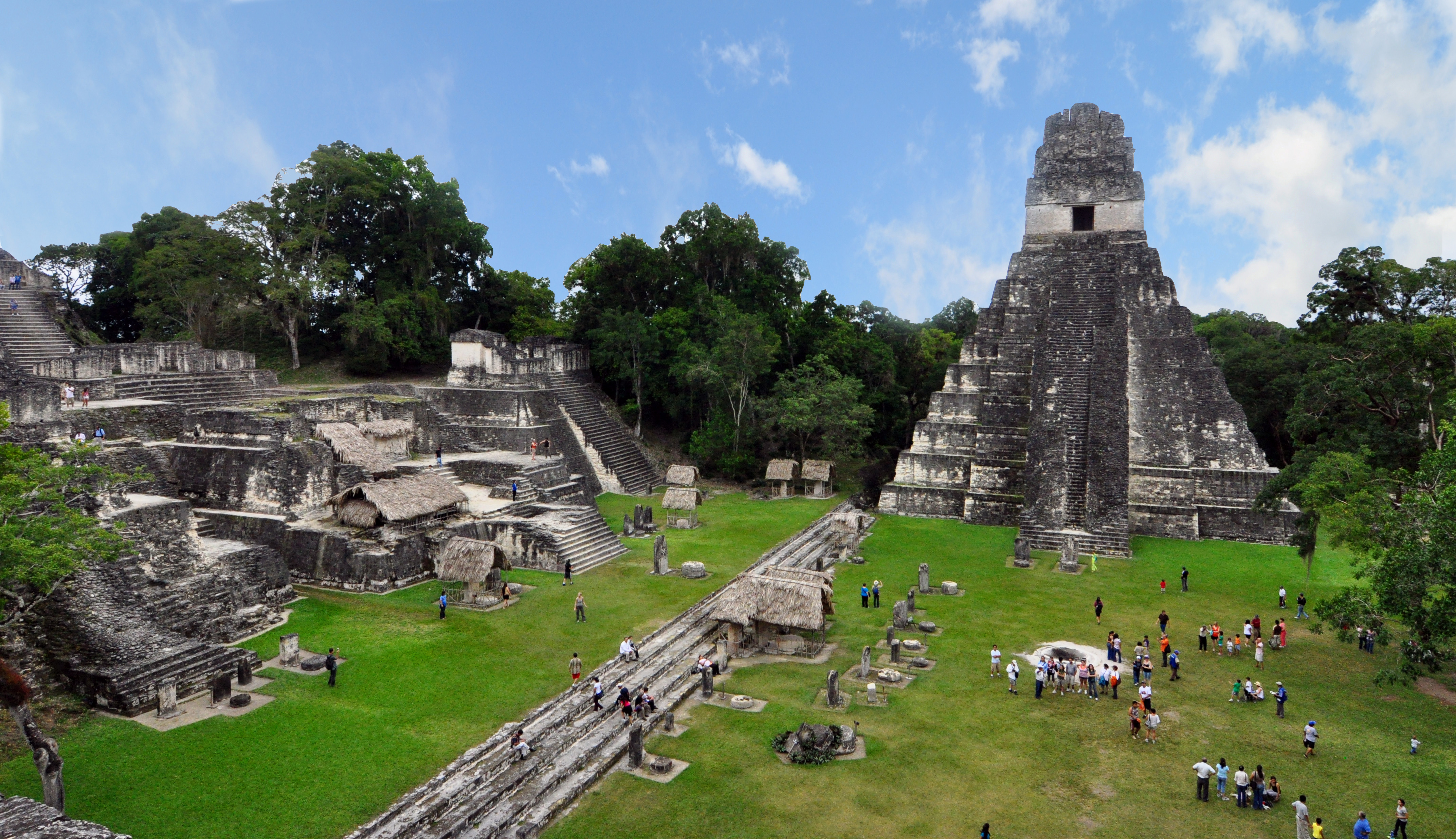
Maya Archaeology and Its Relevance to the Modern World (Santa Fe Institute)

http://upload.wikimedia.org/wikipedia/commons/e/e7/Tikal_mayan_ruins_2009.jpg

Here are two interesting lectures from Santa Fe Institute President Jeremy Sabloff on the topic of archeology and its importance to how we understand our world and how it might help us shape our future.

How Insights from Archaeology Might Help Shape Our Future

Published on Sep 28, 2014


Jeremy Sabloff, President, Santa Fe Institute
September 9, 2014

Stanislaw Ulam Lecture Series: Seeing the Future in Our Past: Why Archaeology Matters

Despite its popularity, archaeology’s public perception is not as accurate as it could be. Archaeologists do not have their collective heads immersed in the past, as is often supposed, but are very much concerned with both the present and future, too. SFI President Jerry Sabloff explores how, even in the face of overwhelming data recovery and interpretive hurdles, archaeologists have developed a host of approaches that can provide new perspectives on modern problems and concerns.

* * * * *

Maya Archaeology and Its Relevance to the Modern World

Published on Sept 28, 2014


Jeremy Sabloff, President, Santa Fe Institute
September 10, 2014

Stanislaw Ulam Lecture Series: Seeing the Future in Our Past: Why Archaeology Matters

While the great architectural, artistic, and intellectual achievements of Pre-Columbian Maya peoples continue to bedazzle us for their richness, an understanding of the arc of ancient Maya civilization has relevance to problems facing the world today. SFI President Jerry Sabloff focuses on lessons about sustainability and societal resilience gleaned from new evidence relating to the decline of many major cities in the southern Maya Lowlands in the ninth century CE. He also explores heritage education and tourism in today’s Maya world, among other topics.

Sunday, September 28, 2014

Rival Cultural Evolution Camps Find Common Ground at Santa Fe Institute

http://www.vce.bioninja.com.au/_Media/picture_17-2_med.png

From the Santa Fe Institute, the post below is a summary of a group session on cultural evolution led by Daniel Dennett, and including Susan BlackmoreRobert BoydNicolas ClaidièrePeter Godfrey-SmithJoseph HenrichOlivier MorinPeter RichersonDan SperberKim Sterelny.

The general impression was that (as he tweeted some time later) "the meeting revealed a lot of unexpected common ground". The International Cognition and Culture Institute is happy to publish, by way of proceedings, each participant's summary (Dennett's summary is included below and links to the others are also included).

Sept. 26, 2014
 
While the movement toward an evolutionary perspective on human culture has been gaining traction over the past decade, the field of cultural evolution is a divided house. The disagreements – mainly between two factions – hinge on a working definition of culture itself and how cultural information is transmitted.

In an effort to bridge those differences, SFI External Professor Daniel Dennett held a working group, “Perspectives on Cultural Evolution,” at SFI in May. The group comprised many of the field’s leading theorists and experimentalists – including SFI Cowan Chair Rob Boyd.

That the two rival camps emerged from the working group more in agreement than in disagreement Dennett and Boyd attribute to the collaborative spirit of SFI in general, to the fact that the gathering focused more on common cause, and to Dennett’s unusual methodology.

After having participants send in what they’d written, Dennett asked them to rank whose work they’d like to introduce. “People usually read someone else’s work with an antagonistic approach,” he explains. “But here, they had to present someone else’s work to that person. It brings out the best in people.”

Boyd’s three-member camp described the work of a group led by Dan Sperber. “We came away with a deeper appreciation of what they are trying to say – and the reverse was true as well,” says Boyd.

Summaries of the meeting written by each participant are posted here.

“Cultural evolution may still be seen as being divided into camps,” said Dennett. “But from this point forward, they’ll also be seen as having much more in common than people had realized.”
* * * * *

Cultural Evolution at the Santa Fe Institute

Last May, Daniel Dennett gathered, at the Santa Fe Institute, a handful of people who have written about cultural evolution. The general impression was that (as he tweeted some time later) "the meeting revealed a lot of unexpected common ground". The International Cognition and Culture Institute is happy to publish, by way of proceedings, each participant's summary. Comments are open!

Daniel Dennett's introduction (with comments).

Participants' summaries (in alphabetical order): Susan BlackmoreRobert BoydNicolas ClaidièrePeter Godfrey-SmithJoseph HenrichOlivier MorinPeter RichersonDan SperberKim Sterelny.

Here is Dennett's statement:

Perspectives on Cultural Evolution, by Daniel C. Dennett


These are Daniel Dennett's introductory remarks on the workshop on cultural evolution he conveyed in Santa Fe in May 2014.


Perspectives on Cultural Evolution 


(Footnotes contain comments by Richerson and Sperber.)

Ever since Darwin’s Descent of Man (1871), the idea of adopting an evolutionary perspective on human culture has seemed to many to be a natural move,  obviously worth trying—and to many others to be a dangerous, “nihilistic,” “reductionistic”, “scientistic,” assault on everything we hold dear.   Work on cultural evolution has been making good progress in recent years, but has been hindered by distortions, some perhaps deliberate, but others are misunderstandings that naturally arise between slightly different traditions.  I formed this working party to try to find common ground and resolve differences among some of the leading theorists and experimentalists.  The ten participants included the trio of Boyd, Henrich and Richerson (BRH), a French trio of Sperber, Claidière and Morin (SCM), the memeticists Blackmore and myself, and two philosophers of biology who have been particularly engaged with issues of cultural evolution, Peter Godfrey Smith and Kim Sterelny.  Several other leading figures were invited but could not participate for various reasons.   

Consensus:


Each participant was invited to send in two or three recent papers or chapters for everyone to read in advance -- the list of these papers is available here --, and then the first three days were devoted to the “X on Y sessions”, in which each participant (X) in turn took on the task of briefly introducing the work of another participant (Y).  I invited all to send me their preferred list of people to introduce, and more or less optimized the pairings to make sure each X-Y pair were  drawn from different traditions and no two introduced each other’s work.  After fifteen or twenty minutes introduction, each Y then had a chance to respond, followed by general discussion. The atmosphere was informal, permitting frequent interruptions for questions and comments.

Before the working group convened there was some skepticism and grumbling about the X on Y obligation from various participants, but everybody graciously acceded to my request and the results, in my opinion, confirmed the value of the practice.  After the workshop all participants submitted a brief summary of the week, citing what was learned, what was agreed upon, and issues still unresolved. Quoting a few comments from participants: Peter Richerson: “I do think that the disagreements among the various ‘schools’ of cultural evolution represented at the meeting are relatively modest.” Peter Godfrey Smith: “I think that a lot of progress was made on clarifying disagreements, even where the remaining disagreements remain genuine. . . . It’s progress when an initially cloudy situation gives way to a sharper and more definite set of empiricial uncertainties.” Dan Sperber: “It has been a wonderful workshop of serious, demanding, insightful, informal, friendly discussion of a kind and quality rarely experienced.”  Nicholas Claidière noted that part of the distortion is generated by the way we tend to talk about our work to people outside the field, giving the (wrong) impression that there are schools of thought at war with each other: “Given the amount of agreement that we have seen during this meeting, I think it would be more productive to present ourselves as having a common goal with diverging interests rather than competing views of the same phenomena.”

Terminological headaches.

Three frustrating terminological problems were exposed, but we didn’t resolve how to correct them: “cultural group selection,” “meme,” and “Darwinian” are all good terms, historically justifiable  and useful in context, but by now all are so burdened with legacies of ideological conflict that any use of them invites misbegotten “refutation” or dismissal.  Should we abandon the terms in favor of emotionally inert replacements, or should we persist with them, always accompanying their use with a wreath of explanation? These are questions of diplomacy or pedagogical policy, not serious theoretical issues, but still, alas,  unignorable.

As Boyd explained, the adoption by BRH of the term “cultural group selection”  had its roots in the relatively uncontroversial theoretical terrain of  Sewall Wright’s population genetics (and shifting balance theory), not in later, more dubious and controversial variants.  But this is hard to explain to people who have already taken sides for or against “group selection” as an important phenomenon in evolution.  In any event, the working group, enlightened about what BRH mean—and don’t mean—by cultural group selection, while still harboring somewhat different hunches about its importance, acknowledged that Steve Pinker’s recent “extreme and dismissive” (Henrich) position on Edge.org did not find a target in the work of BRH.

The popular hijacking of Dawkins’ term “meme” for any cultural item that “goes viral” on the Internet, regardless of whether it was intelligently designed or evolved by imitation and natural selection, has been seen by some to subvert the theoretical utility of the term altogether.  There is also the unreasoned antipathy the term evokes in many quarters (reminiscent of the antipathy towards the term “sociobiology” that led to its abandonment).  Alternatively, if one is “Darwinian about Darwinism” we should expect the existence of cultural items that are merely “memish” to one degree or another, and we might as well go on using the term “meme” to refer to any relatively well-individuated culturally transmitted item that can serve as a building block or trackable element of culture however it arrives on the scene.  Other terms, such as Boyd and Richerson’s “cultural variant”, have been proposed, but the term “meme” has become so familiar in popular culture that whatever alternative is used will be immediately compared to, identified with, assimilated to meme(a Sperberian attractor, apparently), so perhaps the least arduous course is to adopt the term, leaving open its theoretical definition, in much the way the term “gene” has lost its strict definition as protein-recipe in many quarters.    Since the long-term fate of such an item will be settled by differential reproduction (or something similar to differential reproduction) however much insight or “improvisational intelligence” went into its birth, it has a kind of Darwinian fitness.

But should we go on talking about whether or not a phenomenon is “Darwinian”? Some think the term gets in the way, since we are seldom if ever alluding to what Darwin himself thought, but rather to the neo-Darwinian, post-DNA synthesis, itself an evolving landmark. On the other hand, there is general agreement within the group that some important elements of human culture evolve by processes strongly analogous to genetic natural selection, and the variations in these processes can be usefully diagrammed using Peter Godfrey Smith’s “Darwinian spaces”  (See figure 1 for an instance), in which the similarities and differences can be arrayed in three dimensions.  Since, moreover, there is agreement that these cultural regularities can set selection pressures (e.g., a “cultural niche”) for co-evolutionary processes, generating genetic responses (such as adult lactose tolerance), a unified evolutionary perspective, in which the trade-offs between cultural and genetic evolution can be plotted, is a valuable organizer of phenomena, some “more Darwinian” than others. No other term suggests itself for the set of features that mark paradigmatic (neo-)Darwinian phenomena, so perhaps the misunderstandings the term tends to generate can be deflected.

Figure 1:

PGS Cube
The working group agreed on a number of points, some methodological and some substantial, that are still considered controversial by others, or in some cases just not yet considered:

1. We should be Darwinian about Darwinism; there are few if any bright lines between phenomena of cultural change for which cultural natural selection is clearly at work and phenomena of cultural change that are not at all Darwinian. The intermediate and mixed cases need not be marginal or degenerate, a fact nicely portrayed in Godfrey-Smith’s Darwinian Spaces.

2. Models must always “over-“simplify, and the existence of complications and even “counterexamples” relative to any model does not automatically show that the model isn’t valid when used with discretion. For instance, the absence of explicit treatment of SCM’s “hetero-impacts” in BRH’s models “does not amount to a denial of its importance”(Godfrey-Smith). Grain level of modeling and explaining can vary appropriately depending on the questions being addressed.

3. The traditional idea that human culture advances primarily by “improvisational intelligence,” the contributions of insightful, intentional, comprehending individual minds, is largely mistaken.  Just as plants and animals can be the beneficiaries of brilliant design enhancements that they cannot, and need not, understand, so we human beings enjoy culturally evolved competences that far outstrip our individual comprehension. Not only do we not need to “re-invent the wheel,” we do not need to appreciate or understand the design of many human institutions, technologies, and customs that nevertheless contribute to our welfare in various ways. Moreover (a point of agreement between Sperber and Boyd, for instance), the opacity of some cultural memes (their inscrutability to human comprehension) is often an enhancement to their fitness: “This opacity—which is a matter of degree, of course—is what makes social transmission so important. It plays, I believe, a crucial role in the acceptability of cultural traits: it is, in important ways easier to trust what you don’t fully understand and hence cannot properly evaluate on its own merits.” (Sperber) 

4. The persistence of cultural features that are not fitness-enhancing, and may even be fitness-reducing, is to be expected in cultural evolution, and can have a variety of explanations.
New questions:


1. Rob Boyd, in his post-working group summary, proposed a way in which the Evolutionary Causal Matrix idea developed by Sperber and Claidière can be re-expressed in the population genetics formalism used by BRH, raising questions about how—if at all—the homo-impact/hetero-impact distinction introduced by SCM appears in the population genetics formalism. Do SCM have a reply?[1]


2. SCM propose that cultural attraction, not differential replication, accounts for much of the dynamics of cultural evolution [2](in the neutral sense: change over time), but several expressed concern that only a (quasi-)Darwinian process can initiate and refine adaptations (lifting in Design Space).  One line of thought suggests that attraction and replication can sometimes work together:  attractors act rather like norms to somewhat digitize otherwise continuous variations, making exemplars stable and distinct enough to be eligible for iterated replication and selection. Another line of thought is that the distinction between attraction and differential replication is maybe just a question of “zoom”: if you zoom in on apparent replicators, you may find that they are not, strictly speaking, replicating at all, but if you zoom out, the results are as if there was replication going on.[3]  Which of these suggestions will survive further research?  For instance, are there experiments (Claidière’s question) that can distinguish the roles of transformative and selective processes, shedding light on the conditions under which each plays the dominant role?


3. “If individuals are smart enough in their choices, the BRH meso-level picture fades. When people are smart and make good choices, the recurrence of good options and accumulation of design can occur without imitation-and-selection.” (Godfrey-Smith)  But Sperber points out that this need not pose a dichotomous choice between evolutionary and rational-choice explanations: “adding attraction to the cultural evolution story allows us to integrate evolved mechanisms that tend to produce rational choices, not as an alternative kind of explanation, but as a factor of attraction among many.”  Under what conditions can this proposed unification do serious explanatory work?  Since attractors can be both enhancers and decelerators of adaptive change, are they too versatile to be explanatory (at least in this context)? [4]


4. Is cultural evolution “de-Darwinizing” (Godfrey-Smith’s term for phenomena that evolve into less Darwinian phenomena)?   Dennett says yes: in the earliest days of human cultural evolution, individuals were largely uncomprehending beneficiaries of their new tools and customs, only gradually becoming reflective, critical, foresighted users of those tools. Today they aspire to be intelligent (re-)designers of every aspect of their environments, and some of the major changes in culture today are the products of quite concentrated, not distributed, R&D.[5] Blackmore says no: on the contrary, technology has raised the proportion of high-fidelity copying and transmission, and is beginning to usurp the role of the supposedly intelligent designer thanks to automated search and evaluation systems.  Will all roles for human “improvisational intelligence” become obsolete, and “inventors” as rare are telephone operators, coopers, and scythe-sharpeners in the future? Or will the heretofore unreachable ideal of the intelligent designer be approximated by individual human beings, thanks to their reliance on technology (including especially instruction and the cascade of scientific knowledge that creates new platforms from which to begin one’s exploration)?   Human civilization today appears to be a volatile mix of these opposing trends; are there investigations that can clarify the resultant direction in which we are heading?

5. Richerson raises an issue (among many others) that we did not have time to discuss: “Natural selection on genes admits of a number of modes. . . . .  .Throw in density and frequency-dependent selection. . . . . Mate choice and artificial selection introduce agent-based rather than natural selection, demi-god designers if you want. With cultural evolution agent-based social selection runs wild.”  Does this point to a good way to organize the intermediate space between paradigmatic “Darwinian” natural selection and intelligent design?  One thing that is changing in this progression might be called the focus of the selection pressure. At the Darwinian pole (simple natural selection) the selection pressure is “just” a statistical net effect of a kazillion independent events that determine which candidates get replicated; in  the middle-ground, mate choice (as Geoffrey Miller has argued) is focused through the perceptual/cognitive/emotional dispositions of individual (usually female) “minds,” with varying degrees of comprehension and reflection; it is like Darwin’s “unconscious” selection which bridges the gap between agentless natural selection and reflective, intentional “methodical” selection. As agents (conceived as mere concentrations of selective efficacy, selective “hot spots” in the environment)[6]become more discerning, the importance of high-fidelity replication does not lapse, but the breadth of “search” contracts and R&D can become more efficient (it can also hasten the ruin of ill-informed R&D).  As reflectivity about this very process increases, R&D becomes faster and more efficient—but gradually, allowing for opaque attractors to play a large role relative to genuinely insightful or comprehending quality judgments.  Does this proposal withstand scrutiny?


[1] Richerson commented on the draft of this document and Sperber replied:

Richerson: I thought that the attraction concept had become sufficiently generalized as to obviate this distinction. Perhaps complete resolution of this issue need to await SCM’s development of their models. With a fully functional model in hand, we can see if the structure of them differs in some fundamental way from the population genetics based models I’m more familiar with.

Sperber: My first reaction to Rob’s comments was, to begin with, sheer joy at having him discuss ECM seriously. Given Rob’s experience and competence, this cannot but be good for the science. Were Rob to find that there is a basic flow in the ECM approach, then we would be spared going in the wrong direction, and again, good for science. Rob might also find ways to correct and improve the ECM format at least for some use, and this would be nice, of course.

Now, regarding, the fact that “the ECM formalism can be equivalent ways of representing exactly the same underlying processes,” I like Rob’s illustration, and Nicolas and I had found other examples in our work in the past. I don’t see this as an objection, especially since we didn’t propose the ECM format as it stands as an alternative way to model population phenomena of interest, let alone as a better way. We offered it as to begin with a Dennettian ‘intuition pump’, leaving open the question whether it could, at least in some cases, be developed into a perspicuous way of modeling. The intuition pump effectiveness was, for me, demonstrated at our workshop and in several other exchanges I have had: people who didn’t quite ‘get’ the attraction idea, found it much easier and even congenial when so presented.

On the further more technical points raised by Rob, I would like to coordinate at least with Nicolas and Thom before providing a careful reaction.
[2] Sperber: What we propose is that hetero-attraction is likely to be more or much more than a marginal factor in cultural evolution, making a generalized notion of attraction that includes both homo and hetero-attraction – I agree with Pete with his comment on this point – potentially quite useful. This by itself does not determine which is the best way to model cultural evolution, or precludes the possibility that different models may be better for different types of cases

[3] Sperber: Here I agree with a remark Rob made in his comments: yes we, the attraction people tend to zoom towards greater details, but this doesn’t necessarily preclude the possibility that on some issues at least, a more standard population genetics provides for a better zoom.

[4] Sperber: Here you want to talk about specific factors of attraction and the way they may contribute to adaptiveness, or to the resilience of non-adaptive features. The relevant point here is that the evolved ability to recognize and, under certain conditions, even design well-adapted things is a powerful factor of attraction that contribute to explaining the cultural success of well-adapted things. You get your evolutionary explanation, as usual by looking at micro-processes at a population scale. The fact that, in this case, rational choice modeling can also make the right prediction does not in any way undermine a more standard evolutionary approach (that moreover does better at least in terms of generality and of psychological plausibility)

[5] Richerson: Nuts Dan! Highly innovative places like Silicon Valley are Darwinian pressure cookers. First, the finest engineering training available in the world dumps the max amount of accumulated wisdom into the heads of the best and brightest. Then the B&B are set to work finding marginal improvements in existing designs to patent. Entrepreneurial teams funded by venture capitalists recombine old designs and add the latest new patented ideas to create products that are selected in ruthlessly competitive markets.

Dennett responds: But this Darwinian “pressure cooker” is distant from the Darwinian paradigm in several  important dimensions: it is what Darwin himself called “methodical selection” (in his wonderful introductory passage that segues from the (intelligent) selective actions of plant and animal breeders, through the “unconscious selection” of the inadvertent, or largely purposeless biases of human beings in the early days of agriculture, to “natural selection” (in which no mind, intelligent or clueless, is required).  The search space is pinched by many preconceptions, good and bad, and, as in sexual selection, the winners have been aggressively tested by nervous systems tuned to detect quality.

[6] Sperber: Yes, let’s not overdo ‘agents’. ‘“Hot spots” in the environment’ is a nice metaphor. Another, more detailed way to go is to see cognition both as massively modular and heavily situated/distributed. At this point, the individual organism is still in play, but most cultural phenomena are both infra- and trans-individual (or to use Dennettian terms, sub-personal and collective) The agents that rational choice theorist theorize about not only don’t exist – that is not too bad –, they are not, I believe, a very  good idealization for modeling cultural evolution (this might be a point of difference between the attraction approach and the agents-choose-variant approach).

Saturday, June 07, 2014

Large-Scale Structure in Networks (Santa Fe Institute)


An interesting talk from the Santa Fe Institute on how understanding large-scale networks (the speaker, Mark Newman, works primarily with social networks) can help us understand complex systems.

What the large scale structure of networks can tell us about many kinds of complex systems

June 5, 2014 | Santa Fe Institute


Networks are useful as compact mathematical representations of all sorts of systems. SFI External Professor Mark Newman asks what the large-scale mathematical structures of networks can tell us.

Mathematical measures of network properties such as degree (a measure of average connectivity) and transitivity (a measure of second-order connectivity) are simple, often-used ways of understanding network structure at a local level.

Newman is interested in larger-scale structures of networks with thousands or millions of nodes. He reviews statistical techniques that offer such large-scale insights, as well as potential predictive capabilities.

His presentation took place during SFI's 2014 Science Board Symposium in Santa Fe.

Wednesday, May 21, 2014

Daniel Dennett - Is Free Will an Illusion? What Can Cognitive Science Tell Us?


Daniel Dennett recently spoke on free and cognitive science at the Santa Fe Institute. He has argued against Sam Harris's rejection of free will, but he does not reject determinism, making him a compatibilist. 
Compatibilism is the belief that free will and determinism are compatible ideas, and that it is possible to believe both without being logically inconsistent.[1] Compatibilists believe freedom can be present or absent in situations for reasons that have nothing to do with metaphysics.
Here is a summary of his position from his Wikipedia page:

Free will

While he is a confirmed compatibilist on free will, in "On Giving Libertarians What They Say They Want"—Chapter 15 of his 1978 book Brainstorms,[17] Dennett articulated the case for a two-stage model of decision making in contrast to libertarian views.
The model of decision making I am proposing has the following feature: when we are faced with an important decision, a consideration-generator whose output is to some degree undetermined produces a series of considerations, some of which may of course be immediately rejected as irrelevant by the agent (consciously or unconsciously). Those considerations that are selected by the agent as having a more than negligible bearing on the decision then figure in a reasoning process, and if the agent is in the main reasonable, those considerations ultimately serve as predictors and explicators of the agent's final decision.[18]
While other philosophers have developed two-stage models, including William James, Henri Poincaré, Arthur Holly Compton, and Henry Margenau, Dennett defends this model for the following reasons:
  1. First ... The intelligent selection, rejection, and weighing of the considerations that do occur to the subject is a matter of intelligence making the difference.
  2. Second, I think it installs indeterminism in the right place for the libertarian, if there is a right place at all.
  3. Third ... from the point of view of biological engineering, it is just more efficient and in the end more rational that decision making should occur in this way.
  4. A fourth observation in favor of the model is that it permits moral education to make a difference, without making all of the difference.
  5. Fifth—and I think this is perhaps the most important thing to be said in favor of this model—it provides some account of our important intuition that we are the authors of our moral decisions.
  6. Finally, the model I propose points to the multiplicity of decisions that encircle our moral decisions and suggests that in many cases our ultimate decision as to which way to act is less important phenomenologically as a contributor to our sense of free will than the prior decisions affecting our deliberation process itself: the decision, for instance, not to consider any further, to terminate deliberation; or the decision to ignore certain lines of inquiry.
These prior and subsidiary decisions contribute, I think, to our sense of ourselves as responsible free agents, roughly in the following way: I am faced with an important decision to make, and after a certain amount of deliberation, I say to myself: "That's enough. I've considered this matter enough and now I'm going to act," in the full knowledge that I could have considered further, in the full knowledge that the eventualities may prove that I decided in error, but with the acceptance of responsibility in any case.[19]
Leading libertarian philosophers such as Robert Kane have rejected Dennett's model, specifically that random chance is directly involved in a decision, on the basis that they believe this eliminates the agent's motives and reasons, character and values, and feelings and desires. They claim that, if chance is the primary cause of decisions, then agents cannot be liable for resultant actions. Kane says:
[As Dennett admits,] a causal indeterminist view of this deliberative kind does not give us everything libertarians have wanted from free will. For [the agent] does not have complete control over what chance images and other thoughts enter his mind or influence his deliberation. They simply come as they please. [The agent] does have some control after the chance considerations have occurred.
But then there is no more chance involved. What happens from then on, how he reacts, is determined by desires and beliefs he already has. So it appears that he does not have control in the libertarian sense of what happens after the chance considerations occur as well. Libertarians require more than this for full responsibility and free will.[20]
I do not buy the determinist argument and I tend to support conditional free will (perhaps limited is a better word).

Daniel C. Dennett is the Austin B. Fletcher Professor of Philosophy, and Co-Director of the Center for Cognitive Studies at Tufts University. He is the author of Intuition Pumps And Other Tools for Thinking (2013), Breaking the Spell (2006), Freedom Evolves (2003), Darwin’s Dangerous Idea (1995), Consciousness Explained (1992), and many other books. He has received two Guggenheim Fellowships, a Fulbright Fellowship, and a Fellowship at the Center for Advanced Studies in Behavioral Science. He was elected to the American Academy of Arts and Sciences in 1987. His latest book, written with Linda LaScola, Caught in the Pulpit: Leaving Belief Behind (2013).

Is Free Will an Illusion? What Can Cognitive Science Tell Us?

Published on May 17, 2014


Daniel Dennett
May 14, 2014

Serious thinkers contend that free will cannot exist in a deterministic universe -- one in which events are the singular outcomes of the conditions in which they occur. The alternative view, that free will is prerequisite for personal responsibility and morality, is the basis of our legal and religious institutions. Philosopher Daniel Dennett unravels this conundrum and asks whether we must jettison one of these notions, or whether they can co-exist. He then asks: if free will is an illusion, as many scientists say, should we conclude that we don't need real free will to be responsible for our actions?

Thursday, February 06, 2014

Science in a Complex World: Declassification of Data Important to Future Science

The Santa Fe Institute publishes a series of articles from time to time in the Santa Fe New Mexican on complexity science and complex systems that are critical to human society — economies, ecosystems, conflict, disease, human social institutions and the global condition.

Science in a Complex World: Declassification of data important to future science


Posted: Sunday, February 2, 2014
Eric Rupley

Did you know top-secret intelligence by the U.S. government has played a key role in helping scientists understand how human societies and ecosystems have evolved over the last 10,000 years.


The catch, of course, is that this has happened only after the declassification of the intelligence.

I am an archaeologist and anthropologist at the Santa Fe Institute. With my colleagues, I study the long-term evolution of human societies, seeking the shared underlying principles that are responsible for the emergence of complex social, political and economic organization. To do this, we need two things: ideas about how things happened and data to evaluate those ideas. The evaluation of ideas with data leads to new ideas; this is the process that leads to scientific discovery.
Here is a story about a discovery in which which declassified top-secret data was critical. We know from archaeology that the first large-scale societies with a differentiated labor force, record-keeping bureaucracies and political systems that united communities beyond kinship emerged on the planet at least 6,000 years ago. This happened first in Mesopotamia — not just the land between the Tigris and Euphrates rivers, but all the lands drained by them in what is now southern Turkey, western Iran, Syria and Iraq.

The evolution of these first economies, we now know, occurred across the entire region. We didn’t always know this. Twenty years ago, we used to think the evolution of the earliest economies occurred only in a restricted area of southern Mesopotamia, mostly south of Baghdad. The area, called the “heartland of cities” by the eminent archaeologist (and former Santa Fe Institute trustee) Robert McCormick Adams, requires irrigation for agriculture.

New ways of thinking and new evidence have changed our view. Initially, we envisioned a core area of initial social innovation, while regions outside the core were “under-developed” and only passively participated in the creation of the first complex societies.

The mechanisms for the creation of a centralized bureaucracy were thought to have stemmed from the environmental characteristics of the core: In the earlier part of this century, some archaeologists believed it arose from the need to manage irrigation. But when it became clear that complex irrigation systems do not require centralized control, the irrigation hypothesis was replaced by other ideas about how communities in the region evolved. One idea was that a lack of material resources forced centralized trade and, thus, centralized bureaucracy.

Over the last 15 years, however, new information has been recovered that is leading us to an understanding that the origins of complex economies were not as restricted in location or as external in cause; almost all of Mesopotamia was locally involved in the evolution of a more complex regional economy. This new view leads us to new models of how the change occurred, and these new models emphasize internal forces over external conditions. In turn, this new understanding allows us to more effectively compare the evolution of civilization across the planet, identifying key evolutionary phenomena shared among human societies globally.

And here’s the crux of this story: In part, this discovery was made possible by one of the most closely held intelligence secrets of the Cold War. The Corona, Argon and Lanyard programs, initiated by the U.S. government in the 1950s, launched the first spy satellites. By the late 1960s, the systems were able to collect imagery with a ground resolution of less than six feet — good enough to identify small trees and large vehicles.

The remarkable half-century-old images contain detail almost as good as state-of-the-art digital images now available from commercial satellites. In addition to the Cold War mission for which they were designed (as dramatized in the 1968 movie Ice Station Zebra), the space photographs incidentally recorded traces of past human settlements that have survived for 10,000 years — crucial evidence about how we came to live in the world we now inhabit. In the last few decades, we have lost much of this landscape to industrial agriculture and mechanized land-leveling.

In 1995, a remarkable thing happened when this closely held secret of the government was partially declassified. The story of how this declassification occurred is only partly known. (See, for example, the work of authors Dwayne Day or Robert McDonald.) One undocumented story involves conversations between the archaeologist mentioned at the start of this piece, Adams, who was then secretary of the Smithsonian, and James Woolsey, then the U.S. director of central intelligence and a regent of the Smithsonian. Whatever the background of the declassification, the last Corona camera was given to the Smithsonian, a presidential order was signed on Feb. 22, 1995, and the imagery from the the missions was transferred to the National Archives. The United States Geological Survey took responsibility for releasing the data publicly.

The declassified images were of immediate use to archaeologists working in the Near East because they preserved information about a lost landscape. For the first time, we were able to see the land surface before the destruction of the sites we sought to investigate. (See, for example, the Corona Atlas of the Near East, a project by colleague Jesse Casana of the University of Arkansas, Fayetteville.)

Archaeologists were, in some instances, able to visit the remains of the damaged sites and systematically recover traces of the past cultures that inhabited the region thousands of years ago. What we’ve pieced together from excavation and from archaeological survey aided by the declassified images has helped revise our understanding of how our first complex societies and differentiated economies came to be. The declassified data from Corona have helped not just archaeologists; glaciologists, geologists and ecologists all have used the imagery to monitor how our world has changed.

Unfortunately, for reasons that remain unclear, the initial declassification tapered off, despite its broad scientific success. Yet, in these days of post-Edward Snowden debate over sweeping government information collection, we should keep in mind the importance of declassification to scientists. This is not a proposal to declassify everyone’s metadata. But we are now well beyond space photography and into an era of Big Data (as discussed in past articles in this newspaper by the Santa Fe Institute’s Chris Wood and Simon DeDeo).

While we can, and probably should, limit contemporary collection, part of the debate as we reassess our national surveillance policies should be a consideration of the future scientific utility of archival collections: Should we, in the future, release previously collected “legacy” data in a manner that both protects privacy and helps scientists understand the collective patterns of human interaction that govern our daily lives? If so, what should be the design of a curation policy that would balance privacy concerns and make full utility of what we have already gathered?

This is a challenging problem that pits citizen privacy and limits on government against an almost infinite space of future security concerns and what will surely be vastly improved analytical methods leading to greater utility of legacy data. While its purpose remains unclear, we might surmise from the construction of the so-called Utah Data Center (a government facility possibly designed to curate the digital collections of our intelligence community) that the community understands the future utility of currently collected data. But given the benefits of declassification and our concerns for privacy, the questions of if, when and how to release this data are important to us all. Asking these questions is in keeping with the Open Government Initiative signed by President Barack Obama on the first day of his administration.

We don’t yet know what shape an overall declassification policy should take, but we do know this: The data we collect now, on ourselves, will provide the digital archaeologists and historians of the future a window into how we operate as a society. Toward that gift — the understanding of the drivers of change in human society — we can make a direct contribution by taking into account the importance of future public research on legacy intelligence collections.


~ Eric Rupley is an anthropological archaeologist at the Santa Fe Institute and a doctoral candidate at the University of Michigan’s Museum of Anthropology. His research analyzes cross-cultural, region-scale data on past human activities and settlement systems to explore how new forms of social organization emerge. His primary field work has been in Syria and Turkey. He can be reached through email at erupley@santafe.edu.

About the series

The Santa Fe Institute is a private, nonprofit, independent research and education center founded in 1984, where top researchers from around the world gather to study and understand the theoretical foundations and patterns underlying the complex systems that are most critical to human society — economies, ecosystems, conflict, disease, human social institutions and the global condition. This column is part of a series written by researchers at the Santa Fe Institute and published in The New Mexican.

Friday, January 31, 2014

The History and Promise of Complexity Science - BBC4

Complexity at BBC4 In Our Time
Complexity was little understood a generation ago, but research into complex systems now has important applications in many fields, from biology to political science. Several scientists discuss the history and promise of complexity science, noting Santa Fe Institute's contributions to the emerging field.

The MP3 is available for download.

Complexity
Duration: 43 minutes
First broadcast: Thursday 19 December 2013

Melvyn Bragg and his guests discuss complexity and how it can help us understand the world around us. When living beings come together and act in a group, they do so in complicated and unpredictable ways: societies often behave very differently from the individuals within them. Complexity was a phenomenon little understood a generation ago, but research into complex systems now has important applications in many different fields, from biology to political science. Today it is being used to explain how birds flock, to predict traffic flow in cities and to study the spread of diseases.

With:
  • Ian Stewart, Emeritus Professor of Mathematics at the University of Warwick
  • Jeff Johnson, Professor of Complexity Science and Design at the Open University
  • Professor Eve Mitleton-Kelly, Director of the Complexity Research Group at the London School of Economics.
Listen to the program on BBC Radio (43 minutes, December 19, 2014) 

    LINKS AND FURTHER READING

    READING LIST:

    • Albert-Laszlo Barabasi, Linked: The New Science of Networks (Perseus Books, 2003)
    • Mark Buchanan, Nexus: Small Worlds and the Groundbreaking Science of Networks (W. W. Norton & Company, 2003)
    • Mark Earls, Herd: How to Change Mass Behaviour by Harnessing Our True Nature (John Wiley & Sons, 2009)
    • Roger Lewin, Complexity: Life at the Edge of Chaos (University of Chicago Press, 1992)
    • Melanie Mitchell, Complexity: A Guided Tour (Oxford University Press, 2011)
    • Herbert Simon, The Sciences of the Artificial (MIT Press, 1996)
    • Steven Strogatz, Sync: The Emerging Science of Spontaneous Order (Hyperion, 2003)
    • Duncan Watts, Small Worlds: The Dynamics of Networks between Order and Randomness (Princeton University Press, 2003)

    Credits

    Presenter: Melvyn Bragg
    Interviewed Guests: Ian Stewart, Jeff Johnson, Eve Mitleton-Kelly
    Producer: Thomas Morris

    Sunday, December 01, 2013

    Emergence Is Happening All Around Us, and Not Just in Nature


    From the Santa Fe Institute, this is an excellent podcast on the science of emergence – "when simple stuff develops complex forms and complex behavior" – and all which occurs as an innovation with no prior model. There are a lot of people (myself included) who believe emergence is the best explanation for the rise of consciousness from what seems to be an inert lump of fatty tissue.


    Via Wikipedia:
    In philosophy, systems theory, science, and art, emergence is the way complex systems and patterns arise out of a multiplicity of relatively simple interactions. Emergence is central to the theories of integrative levels and of complex systems.

    Biology can be viewed as an emergent property of the laws of chemistry which, in turn, can be viewed as an emergent property of particle physics. Similarly, psychology could be understood as an emergent property of neurobiological dynamics, and free-market theories understand economy as an emergent feature of psychology. 
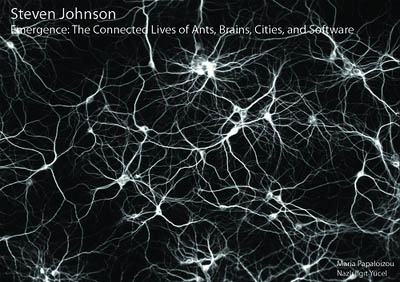
    A couple of books on the subject include Steven Johnson's Emergence: The Connected Lives of Ants, Brains, Cities, and Software (2002), John Holland's Emergence: From Chaos To Order (Helix Books) (1999), and Harold Morowitz's The Emergence of Everything: How the World Became Complex (2004).

    Audio: Emergence Is Happening All Around Us, and Not Just in Nature


    Oct. 17, 2013

    On Big Picture Science, a podcast/radio program that airs on public radio stations nationwide, in a program on emergence and self organization, SFI Research Fellow Simon DeDeo explains how emergence abounds not only in nature, but also in human social systems.

    "Emergence is ... something so common that we almost don't even notice it happening around us," DeDeo says. In social systems, for example, "we can look at the emergence of political parties. But what is a political party? In some sense, an individual, a supporter, plays somewhat the same role as a neuron does in the human brain."

    Individuals within the party don't have a lot of power to shift its platforms, he says, "but the collective behavior of all of us in that party and the way we interact within that party somehow lead to a set of emergent rules that we call political science. That kind of separation -- the separation between, for example, what we would call in physics the microphysics of system and the macroscale behavior, the way in which those two things split apart, that's the basic story of emergence."

    He goes on to explain why emergence in both kinds of systems is likely a process driven by evolutionary advantage.

    Other program guests included new Nobel laureate and molecular and cell biologist Randy Schekman (UC Berkeley), neurobiologist Steve Potter (Georgia Institute of Technology), biological anthropologist Terence Deacon (UC Berkeley), and computer scientist Leslie Valiant (Harvard).

    Listen to or download the podcast below.
    * * * * *

    Emergence

    Monday 14 October 2013
    Big Picture Science

    Listen right now:
    Download file  
     EmergencemedYour brain is made up of cells. Each one does its own, cell thing. But remarkable behavior emerges when lots of them join up in the grey matter club. You are a conscious being – a single neuron isn’t.
    Find out about the counter-intuitive process known as emergence – when simple stuff develops complex forms and complex behavior – and all without a blueprint.
    Plus self-organization in the natural world, and how Darwinian evolution can be speeded up.

    Guests:

    Friday, September 06, 2013

    On Moral Progress: Is the Human Conscience Led by the Head or the Heart?


    From the Santa Fe Institute (August 14, 2013), Steven Pinker and Rebecca Newberger Goldstein held a public conversation on the topic: On Moral Progress: Is the Human Conscience Led by the Head or the Heart?

    Clearly, Pinker believes in moral progress, it was the topic of his recent book, The Better Angels of Our Nature: Why Violence Has Declined (2012). As America's best-known evolutionary psychologist, he is also author of Language, Cognition, and Human Nature: Selected Articles (2013), Learnability and Cognition: The Acquisition of Argument Structure (Learning, Development, and Conceptual Change) (2013), and popular titles such as How the Mind Works (1997) and The Blank Slate: The Modern Denial of Human Nature (2002).

    Goldstein, while having published many works of fiction (including 36 Arguments for the Existence of God: A Work of Fiction, 2011), is also a professor of philosophy. She has published some nonfiction as well, including Betraying Spinoza: The Renegade Jew Who Gave Us Modernity (Jewish Encounters) (2006) and Incompleteness: The Proof and Paradox of Kurt Gödel (2004).


    Oh, did I mention these two are husband and wife?

    Enjoy the conversation! And thanks to the SFI for bringing it to us for free via their YouTube channel.


    On Moral Progress: Is the Human Conscience Led by the Head or the Heart?

    Published on Sep 5, 2013

    Steven Pinker and Rebecca Newberger Goldstein
    August 14, 2013

    Is the human conscience led by the head or the heart? Is the moral progress we have enjoyed – religious freedom, the abolition of slavery, anti-war movements, civil, women’s, and gay rights – a gift of empathy and emotion, or of reason and logic? Psychologist and author Steven Pinker and philosopher and novelist Rebecca Newberger Goldstein survey the history of moral progress in human society, a history, they say, suggesting that reason and logic have had a surprisingly powerful role in shaping the human condition.

    Steven Pinker is a Harvard College Professor and Johnstone Family Professor in the Department of Psychology at Harvard University. He conducts research on language and cognition and is the author of seven books, including The Stuff of Thought: Language as a Window into Human Nature.

    Rebecca Newberger Goldstein is an American novelist and professor of philosophy. She has written five novels, a number of short stories and essays, and biographical studies of mathematician Kurt Gödel and philosopher Baruch Spinoza. Goldstein was a 2011 Santa Fe Institute Miller Scholar.