Wednesday, April 19, 2006

Gratitude


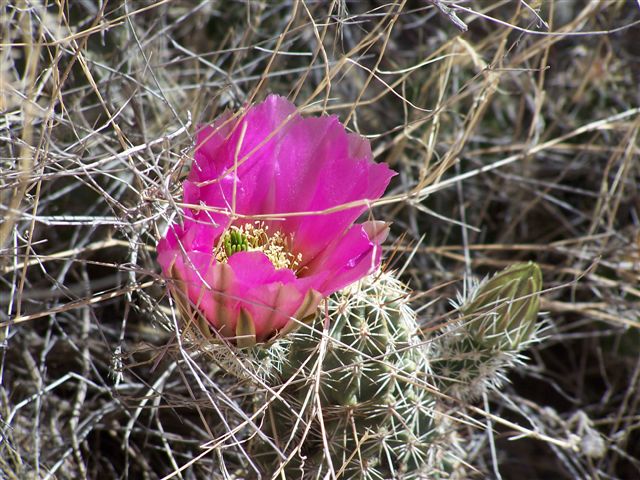
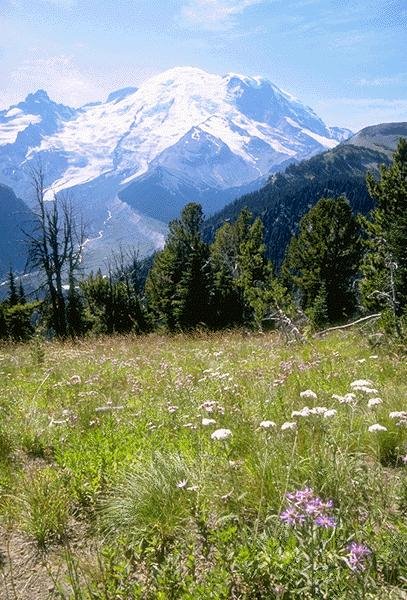
Today I am grateful for spring. We don't get real spring in the desert, but if you are alert when you walk, you can find little treasures.

The weather has been nice the last few days. Soon it will be hell on earth -- but for now, I am grateful for a cool 87 degree day.

What are you grateful for?

Poem: Ch'i Chi (864-937)


[image source]


Little Pines

Poking up from the ground barely above my knees,
already there's holiness in their coiled roots.
Though harsh frost has whitened the hundred grasses,
deep in the courtyard, one grove of green!
In the late night long-legged spiders stir;
crickets are calling from the empty stairs.
A thousand years from now who will stroll among these trees,
fashioning poems on their ancient dragon shapes?

Morning Thought

Our practice should be based on the idea of selflessness. Selflessness is very difficult to understand. If you try to be selfless, that is already a selfish idea. Selflessness will be there when you do not try anything.
~Shunryu Suzuki


For a mind like mine, that thinks it can think its way to anything and everything, this is a challenging practice. Doing nothing, what a strange concept.

My ego wants the big AHA! and my mind works with it saying, "We can do that, we just have to read enough or think enough and we'll get it." And I end up caught deeper in craving.

So I keep returning to the breath, to baby steps. One breath at a time. Breathe in, breathe out.

Breath by breath, I learn the traps my mind sets for me.

Tuesday, April 18, 2006

Gratitude (& More on Integral Relationship)

Confession: Kira and I are working through a tough patch in our relationship. While it's easy to see it as a conflict of opposing values systems, which makes things seem dauntingly large and difficult to work through, the reality is that we are experiencing growing pains.

During the last year, each of us has made concerted efforts to grow beyond limitations. We both have experienced a fair amount of success in our efforts. The result of this -- and growth is certainly one of the values we share -- is that we have unbalanced our relationship. The dynamic has been shifted in ways that we are struggling to align with.

It seems to me that this is one of the challenges of a conscious, integral relationship. It's a good thing -- as much as I feel that my head will explode some days. The problem seems to be that there is not a good model for the territory we are traveling through right now.

Each of us has identified (both in ourselves and in the other) subpersonalities that are not working well within the current relationship. These subs are products of childhood wounds or previous relationship experiences that are no longer serving us, especially in a relationship that demands full presence and accountability.

The past week or two has been rough. But today Kira said something that she has said in the past more than once, something that never quite clicked for me until today.

She said that we need to have an observer self for our relationship. We each have access to the observer in our own psyches, but what she is suggesting is a step beyond seeing our relationship as a unique entity. It requires us to imbue that unique entity we call our relationship with the higher mind of the witness. I never quite got it before, but today it clicked.

I don't know how to do this yet, but I know that she is right. This awareness does not negate any of the other work we need to do both on ourselves and in our relationship, but creating this integral level element can only aid us in working through the current struggle.

So, today I am grateful for Kira, that she has hung in during a tough time, and that she is wise enough to offer us a way to elevate our relationship, conflicts and all, to an integral level.

What are you grateful for?

the depths of surrender

This is an old poem that was published in Dream International Quarterly once upon a time. I'm posting it here mostly to test out this new blogging interface that promises to allow me to indent text without the tedious space by space html edit required in Blogger. We'll see.


the depths of surrender

Almost of my own volition, I slip
     into rough waves,
watch the small sailboat drift away
     into the salty distance,
and I tread water in the midst
     of this liquid desert,
not afraid, but aware that I will soon
     drown, or at least

die of dehydration if my strength
     does not give out first.
I orient myself to the moon, swim
     toward what I believe
is the direction of land, my clothes
     heavy and slowing me,
so I shed them, then naked in a vast
     expanse of ocean,

a kind of enlightenment. Waves
     wash over me and I
swallow water, feel the burn in my lungs,
     the weight in my belly,
the dark night becoming darker as I lose
     oxygen in my effort,
depths of being opening before me, a poem
     of my life read in slow lines

as the exhaustion pulls me under
     surface, without struggle,
and I fall quietly, calmly, into a strange
     form of sleep,
a dream so vivid death ceases
     to exist, where breath
is easy, more than natural, and I am,
     finally, fully awake.

Poem: Han Yu (768-824)


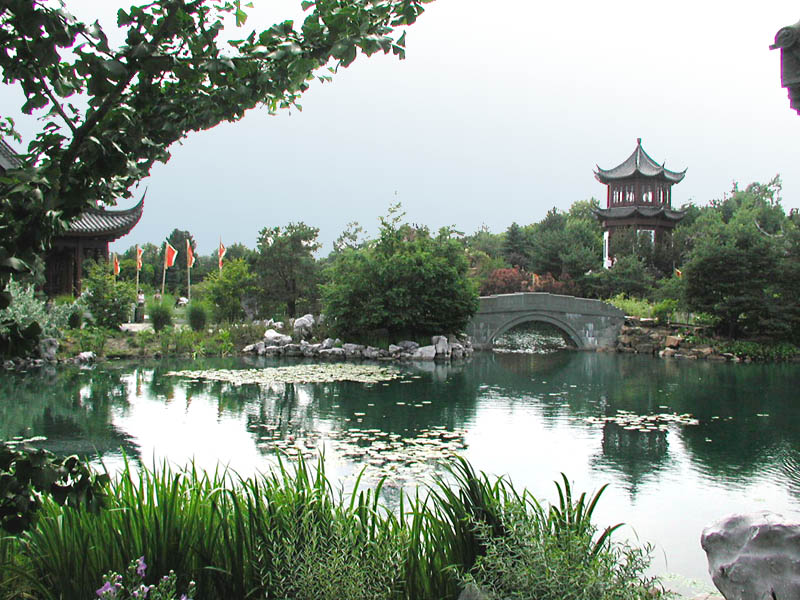
The Pond in a Bowl, Five Poems

[1]

In old age
I'm back
to childhood pleasures.

A bowl in the ground
Just add water --
it's a pool!

Throughout the night
frogs croaked
till it dawned,

as they did
when I fished
as a child at Feng-k'ou.

[2]

Who says
you can't make a pond
out of a bowl?

The lotus sprig
I planted not long ago
has already grown to full size.

Don't forget,
if it rains
stop for a visit.

Together we'll
listen to raindrops splash
on the green leaves.

[3]

Come morning,
the water brightens
as if by magic.

One moment alive
with thousands of bugs
too small to have names,

Next moment
they're gone,
leaving no trace,

Only the small fish
this way and that
swim in formations.

[4]

Does the bowl
in the garden
mock nature

when night after night
green frogs gather
to prove it's a pool?

If you choose to come
and keep me company
need you fill

the dark with noise
and endless squabble
like husband and wife?

[5]

Say the bright pond
mirrors the sky
both blue.

If I pour
water, the pond
brims.

Let night
deepen
the moon go

how many stars
shine back
from the water!

(translated by Kenneth O. Hanson, Sunflower Spendor)
[image source]

Monday, April 17, 2006

Gratitude

Sometimes things happen in life that I just don't expect. When I can face the reality without flinching, without fearing that I can't handle it, I know I have grown in the past several years. So today I am grateful that I continue to grow and become more centered in who I am.

I am also grateful for Jeopardy. I love that show.


What are you grateful for?

Knots

This is an old Seattle poem that I think was published somewhere, though I don't remember where. I always liked the energy of this one, even if the imagery is a little, shall we say, dark.


["heart of darkness"]


Knots

Who am I to conjure midnight at noon,
implore rise and watch the dead
crawl decayed from their graves?

Dark magic of words. Capturing the crow’s
shadow so that I may see through
his tricky eyes, use his powerful beak

to peck at knots just below surface.
A kind of theft, this conjuring,
like the bright young god who stole

prophecy from a young woman’s lips
with the simple gesture of a kiss.
Always something sexual at the source

of all actions, thinly disguised hunger
behind all creation and destruction.
And at the root, twin snakes knotted

in sleep. Above them an oak tree
dropping acorns. Despite the fog
and rain outside my window, on this page

it is spring. Perhaps I delude myself
in the power of words;
the dead, after all, do not rise

from the earth at my command,
and the crow, no matter what I say,
has no need of a shadow.

The knotted cord unties. Because
the world refuses, I conjure midnight
at noon, and it is good.

Start Where You Are [updated]

Start Where You Are
(Again and Again)


Start where you are. This is very important. Tonglen practice (and all meditation practice) is not about later, when you get it all together and you're this person you really respect. You may be the most violent person in the world -- that's a fine place to start. That's a very rich place to start -- juicy, smelly. You might be the most depressed person in the world, the most addicted person in the world, the most jealous person in the world. You might think there are no others on the planet who hate themselves as much as you do. All of that is a good place to start. Just where you are -- that's the place to start.

What you do for yourself, any gesture of kindness, any gesture of gentleness, any gesture of honesty and clear seeing toward yourself, will affect how you experience your world. In fact, it will transform how you experience the world. What you do for yourself, you're doing for others, and what you do for others, you're doing for yourself. When you exchange yourself for others in the practice of tonglen, it becomes increasingly uncertain what is out there and what is in here.
~Pema Chodron, Comfortable with Uncertainty

For an introduction to the practice of tonglen, take a look at this lecture by Pema Chodron and then follow that with some of the links under Teachings (tonglen is at the bottom).

Tonglen is a tough practice. For me, I can sometimes do it when I am sitting in silence, untouched by the world outside the walls of my apartment. But when it counts, when I am in conflict with my partner, or struggling to motivate a client, or whenever, I have a hard time staying centered enough to breath in their suffering and breath out peace.

Granted, I am trying to use tonglen in ways that maybe it was not designed for, but I'm always looking for new ways to use the tools I have. I can do the general tonglen practice that is rather impersonal, but I want to try to find a way to make it a conflict resolution tool, as well.

Maybe I shouldn't try. Maybe that's too much to ask of myself at this stage in my path. My brain hasn't yet been rewired for compassion in the face of conflict. It's easier when I am trying to help a client who is struggling with motivation or structure, but even then my frustration sometimes keeps me from really being as compassionate as I would want. I am understanding and reassuring, and to anyone looking on I appear to be very supportive, but in my head the voice of impatience is still there.

So, as Chodron suggests, I will keep starting where I am, again and again and again. I sometimes expect perfection of myself, and then am hyper-critical when it doesn't happen right away. But that's another post.

Sunday, April 16, 2006

Gratitude

Today, I'm simply grateful for a lazy Sunday. I need about three of these a week.


What are you grateful for?

Haiku -- In Process

I posted this haiku a little over a week ago. Kai correctly pointed out that it wasn't quite working, that it lacked tension and dynamism. So here is the original and a new version.


Original:

red-tail hawk
circles overhead --
soft prayer


New:

red-tail hawk
warm swirling wind --
desert sky


As I am typing this, I am no longer satisfied with the revision. How about this?


red-tail hawk
sharp tumbleweeds --
desert breeze


I'm not sure that this version works either, but it feels better as a haiku.

Anyway, here is one other poem from today's efforts. I have two versions of the same haiku. I wrote the first version, but it didn't feel right, so I did the second one, which feels better, but still not quite there.


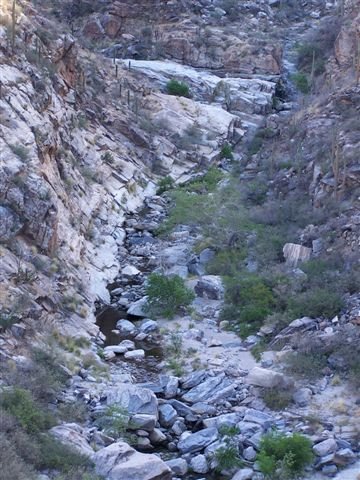
deep canyon
bare rock trickle --
quiet falls


naked rocks
warm morning sun --
quiet falls


This photo was taken just before the sun reached the canyon floor -- you can see it on the far upper left of the photo. Just imagine the sun has already risen.

I might have to come back to this one, as well. Haiku is much easier when they come as an AHA! and they're fully formed on the first take.

The hard part of haiku for me is working with the internal tension of the images. I like the freedom to explore that comes with longer forms, which is why I decided to begin working with haiku. But the process sometimes feels like pulling teeth.

I'm sure I'll be back with this continuing adventure in self-torment. Please share any comments or insights you might have.

[Hawk image]

Sunday Poet: Robert Frost

The Road Not Taken

Two roads diverged in a yellow wood,

And sorry I could not travel both
And be one traveler, long I stood
And looked down one as far as I could

To where it bent in the undergrowth;
Then took the other, just as fair,
And having perhaps the better claim
Because it was grassy and wanted wear,

Though as for that the passing there
Had worn them really about the same,
And both that morning equally lay
In leaves no step had trodden black.

Oh, I marked the first for another day!
Yet knowing how way leads on to way
I doubted if I should ever come back.
I shall be telling this with a sigh

Somewhere ages and ages hence:
Two roads diverged in a wood, and I,
I took the one less traveled by,
And that has made all the difference.

[Audio file of this poem]

You knew it was coming. Sooner or later I had to do Robert Frost, especially during National Poetry Month. Frost is, without question, the most popular and celebrated US poet (Rod McKuen doesn't count as an actual poet). Having won four Pulitzer Prizes and been the most widely read poet of his lifetime, Frost is an American icon.

It might surprise you, then, to know that Frost is considered by many to be a regional poet of moderate stature. He is seldom ranked in the same class as William Carlos Williams, Ezra Pound, T.S. Eliot, e.e. cummings, Robinson Jeffers, Langston Hughes, and other major poets of that era. While he did tend to work with themes relevant to all people, he did so in what many have dismissed as an archaic metrical verse form. And he did so with regional imagery and scenes that often require some familiarity to understand their purpose.

This is not a universal sentiment, however. The Modern American Poetry page on Frost has critiques of many of his best-known poems by renowned critics such as Frank Lentricchia, Jay Parini (co-founder of The New England Review), Katherine Kearns, the poet Randall Jarrell, Joseph Brodsky, and Nobel Prize-winning poet Derek Walcott.

Here is the biography posted at the Academy of American Poets page:
Robert Frost was born in San Francisco in 1874. He moved to New England at the age of eleven and became interested in reading and writing poetry during his high school years in Lawrence, Massachusetts. He was enrolled at Dartmouth College in 1892, and later at Harvard, but never earned a formal degree. Frost drifted through a string of occupations after leaving school, working as a teacher, cobbler, and editor of the Lawrence Sentinel. His first professional poem, "My Butterfly," was published on November 8, 1894, in the New York newspaper The Independent.

In 1895, Frost married Elinor Miriam White, who became a major inspiration in his poetry until her death in 1938. The couple moved to England in 1912, after their New Hampshire farm failed, and it was abroad that Frost met and was influenced by such contemporary British poets as Edward Thomas, Rupert Brooke, and Robert
Graves
. While in England, Frost also established a friendship with the poet Ezra Pound, who helped to promote and publish his work. By the time Frost returned to the United States in 1915, he had published two full-length collections, A Boy's Will and North of Boston, and his reputation was established. By the nineteen-twenties, he was the most celebrated poet in America, and with each new book—including New Hampshire (1923), A Further Range (1936), Steeple Bush (1947), and In the Clearing (1962)—his fame and honors (including four Pulitzer Prizes) increased.

Though his work is principally associated with the life and landscape of New England, and though he was a poet of traditional verse forms and metrics who remained steadfastly aloof from the poetic movements and fashions of his time, Frost is anything but a merely regional or minor poet. The author of searching and often dark meditations on universal themes, he is a quintessentially modern poet in his adherence to language as it is actually spoken, in the psychological complexity of his portraits, and in the degree to which his work is infused with layers of ambiguity and irony. Robert Frost lived and taught for many years in Massachusetts and Vermont, and died on January 29, 1963, in Boston.

I have never been a Frost fan in general, though I do see the appeal of some of his poems. To me, he is at his best when he does not force the rhyme and the metrics of his verse. I have always been a fan of free verse -- and even more so of experimental verse that pushes the ability of language to carry meaning -- so Frost's provincialism in this area has not been appealing to me.

Anyway, a couple more poems seems to be in order.

Stopping by Woods on a Snowy Evening

Whose woods these are I think I know.

His house is in the village, though;
He will not see me stopping here
To watch his woods fill up with snow.

My little horse must think it queer
To stop without a farmhouse near
Between the woods and frozen lake
The darkest evening of the year.

He gives his harness bells a shake
To ask if there is some mistake.
The only other sound's the sweep
Of easy wind and downy flake.

The woods are lovely, dark, and deep,
But I have promises to keep,
And miles to go before I sleep,
And miles to go before I sleep.


Neither Out Far Nor In Deep

The people along the sand

All turn and look one way.
They turn their back on the land.
They look at the sea all day.

As long as it takes to pass
A ship keeps raising its hull;
The wetter ground like glass
Reflects a standing gull.

The land may vary more;
But wherever the truth may be--
The water comes ashore,
And the people look at the sea.

They cannot look out far.
They cannot look in deep.
But when was that ever a bar
To any watch they keep?

Rather than post any more poems here, I will recommend that anyone who is interested seek out the longer poems. These are more complex and more rewarding works than the ones we all know.

Modern American Poetry: main page, a few poems (these are good).
Academy of American Poets: some good links.
PoemHunter: more than 100 poems (also see Frost, Robert Lee for nealry 150 poems, manof which are duplicates, but many are not.)

Happy Easter

I long ago stopped being Catholic, and even when I was, I didn't really believe in the literal resurrection. I could buy a spiritual resurrection, or that Jesus never really died [because God would never let his only Son suffer such a horrible fate as death on a crucifixion pole], but not the Church's version of the story. Jesus is quoted, as He takes His last breath, as saying, "It is finished" (John 19:30). For me, that was the end of the story.

Much of what comes later in the gospels appears to be additions to the story in order to bolster the Church's claim that Jesus had risen body and soul from the dead. Whatever.

What follows is the sense I make of Easter from where I am now in my life. This is based, mostly, on the versions of the story contained in the Bible. I'll conclude with my own take on the Church's story.

Despite my misgivings, what a powerful story this is. Not the whole death and rising from the tomb thing, but before that. The amazing part of the story for me, now more than ever, is Jesus' complete surrender into His knowledge that He was aligned with God's plan (or what I might think of as the Eros of the Kosmos). That kind of surrender is foreign to me, struggling as I am with my rational need for control.

But the cross represents complete surrender to me. It has always been a powerful symbol, even before Jesus was nailed to one. In the earliest cave paintings, shamans are often depicted with their arms outstretched and their legs together in the form of a cross.
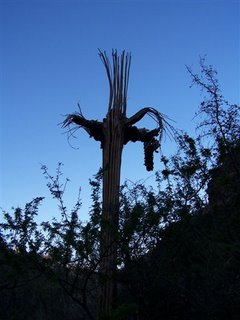
In many cultures around the world, the cross has been a symbol of the human body. It seems almost appropriate, given the history of the symbol (a history of which the early Christians must have had some vague intuition), that Jesus would shed His body upon the cross so that His Spirit could be freed.

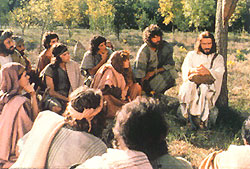
To me, it seems, Jesus was limited in His expression of divinity by being bound in a mortal body. He suffered the same doubts and temptations all of us suffer, but He was strong enough to resist. As he faced death, He still shared his teachings with those dying alongside Him and with His followers on the ground the below.

Even in that final surrender that to me is the most amazing part of the story, Jesus for a moment feared that He had been forsaken on the cross by His God, that He was suffering not for the sins of humanity, but because of them.

And both things are probably true -- they are inseparable.

But my point is that Jesus, being a Jewish Rabbi living in Iron Age Israel, was limited by His humanity. He was deeply human in every possible way, and with that, no matter how many miracles were performed through Him, He was limited in His expression of His divinity. Spirit is so much more vast than anything that can be expressed through our small, fragile, human bodies.

Jesus needed to die on the cross to be freed from limitations. He loved humanity enough to surrender His life for what He believed. But in death, He became Spirit (or God), and from that vastness, He could fully love each and every one of us.

That's my take on the official story of Easter.

Personally, I believe that Jesus had experienced some form of enlightenment consciousness that He then tried to integrate into His teachings as a Rabbi. There are many versions of where Jesus was during the "missing years," and some people believe he actually journeyed to India. Maybe, but the evidence does not support such claims.

More likely, He became associated with one or more of the gnostic cults that existed, who later took Jesus as their leader. To the pharisees, such teachings were heresy. Jesus threatened to undermine their control and their livelihood through His teachings of love and compassion.

Most importantly, Jesus undermined them through His teachings that the Kingdom of God is within each of us, to be found through introspection and self-knowledge (certainly gnostic in this regard). And further, that we grow closer to the Kingdom of God through compassion and generosity, and through not clinging to egoic desires for wealth and comfort.

For this, both the Jewish establishment and the Roman rulers feared Him. He threatened the status quo and, in their eyes, He needed to be eliminated. He died because He was teaching a worldcentric message in a land struggling with the transition from egocentric culture into ethnocentric culture. He threatened to disrupt the fragile balance of power that existed.

Even as a non-Catholic, I can hold Easter as a day on which we celebrate the life and death of a man who was far ahead of His time. He was not the first enlightened teacher to be killed for His teachings, and He certainly was not the last. But few others have so greatly impacted -- for better and worse -- the course of human history.