Showing posts with label homelessness. Show all posts

Friday, August 08, 2014

Medium Exposes Big Pharma's Corruption and Unethical Behavior

Two recent articles in the online magazine Medium expose the unethical behavior and internal corruption of Big Pharma - which is not new information, but in these cases (testing drugs on the homeless and disgraced, addict doctors running drug trials), the story is kind of frightening.

It's no wonder that so many of the Next Big Things in pharmacology end up, a few years later, being implicated in causing disease and even death.

The Best-Selling, Billion-Dollar Pills Tested on Homeless People

How the destitute and the mentally ill are being used as human lab rat

By Carl Elliott
Photographs by Jeffrey Stockbridge
Illustrations by Matt Rota

Two years ago, on a gray January afternoon, I visited the Ridge Avenue homeless shelter in Philadelphia. I was looking for poor people who had been paid to test experimental drugs. The streets outside the shelter were lined with ruined buildings and razor wire, and a pit bull barked behind a chain-link fence. A young guy was slumped on the curb, glassy-eyed and shaky. My guide, a local mental health activist named Connie Schuster, asked the guy if he was okay, but he didn’t answer. “My guess is heroin,” she said.

We arrived at the shelter, where a security guard was patting down residents for weapons. It didn’t take long for the shelter employees to confirm that some of the people living there were taking part in research studies. They said that the studies are advertised in local newspapers, and that recruiters visit the shelter. “They’ll give you a sheet this big filled with pills,” a resident in the shelter’s day room told me the next day, holding up a large notebook. He had volunteered for two studies. He pointed out a stack of business cards on a desk next to us; they had been left by a local study recruiter. As we spoke, I noticed that an ad for a study of a new ADHD drug was running on a television across the room.

If you’re looking for poor people who have been paid to test experimental drugs, Philadelphia is a good place to start. The city is home to five medical schools, and pharmaceutical and drug-testing companies line a corridor that stretches northeast into New Jersey. It also has one of the most visible homeless populations in the country. In Philly, homeless people seem to be everywhere: sleeping in Love Park, slumped on benches in Suburban Station, or gathered along the Benjamin Franklin Parkway, waiting for the free meals that a local church gives out on Saturdays.
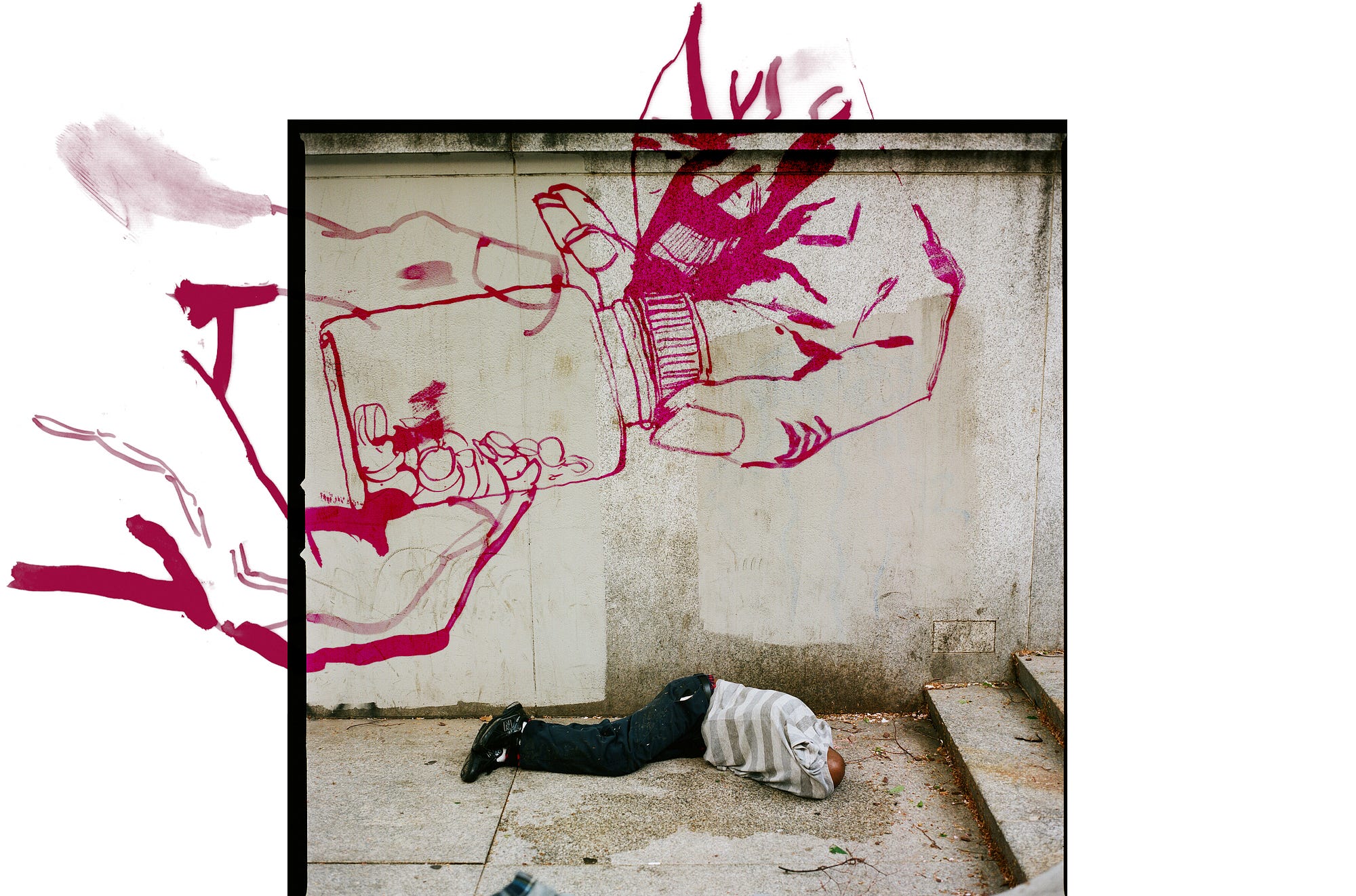
* * * * *

Why Are Dope-Addicted, Disgraced Doctors Running Our Drug Trials?

By Peter Aldhous
Photographs by Grant Cornett


At around 7 p.m. on February 28, 2003, a 66-year-old woman showed up at the Pioneers Memorial Hospital in Brawley, a small Californian town not far from the Mexican border. She was seen by one of the doctors on duty in the emergency room that night, a man named Michael Berger. He learned that the woman, identified as “B.P.” in a later investigation, was in pain. A cramping sensation in her right thigh was radiating down her calf. Records show that she had a weak pulse in the same leg, and was short of breath. Her right foot felt numb.

Berger had options. He might have reviewed B.P.’s medical records, or tried to reach her primary care doctor to learn more about her history. He might have ordered an ultrasound or an x-ray. Either scan could have revealed the blockage in the artery in B.P.’s right leg. But Berger didn’t do those things. After consulting with a colleague, he sent B.P. home, with instructions to rest, drink plenty of fluids and take painkillers and blood-thinning meds. When she returned to the ER two days later, her leg was pale and cold—too far gone to save. She was flown to a larger hospital in San Diego, where surgeons removed the limb above the knee.

Berger’s career did not improve much afterwards. One day in 2004, he turned up for work impaired, a situation he blamed on taking sleeping pills. Other problems were noted when his employers asked a team of doctors to review his performance: failing to properly monitor patients after prescribing them dangerous drugs; prescribing excessive amounts of painkillers to his wife; a series of incidents while driving, which may have been related to his own drug use.


In 2008, the Medical Board of California put Berger on a seven-year probation. It was an unusually lengthy sanction, and it included limits on his ability to prescribe narcotics, and a requirement that he take regular blood tests to check for drug abuse. By then his career as an ER physician was effectively over: The California Emergency Physicians Medical Group, which employs ER doctors at Pioneers and dozens of other hospitals across the state, had handed him an indefinite suspension. Already his mid-60s, you might imagine that Berger would have taken these sanctions as a cue to slip into retirement.

But that’s not what happened.

Read the whole article.

Wednesday, January 22, 2014

Utah Provides Free Apartments for the Homeless - Can End Homelessness by 2015

Brilliant and compassionate. Homeless people get a free home and a social worker to help them become self-sufficient. Even if they fail to become self-sufficient, they keep the apartment. Utah. Who would have thought.

Utah Is Ending Homelessness by Giving People Homes


Earlier this month, Hawaii State representative Tom Bower (D) began walking the streets of his Waikiki district with a sledgehammer, and smashing shopping carts used by homeless people. “Disgusted” by the city’s chronic homelessness problem, Bower decided to take matters into his own hands — literally. He also took to rousing homeless people if he saw them sleeping at bus stops during the day.


Bower’s tactics were over the top, and so unpopular that he quickly declared “Mission accomplished,” and retired his sledgehammer. But Bower’s frustration with his city’s homelessness problem is just an extreme example of the frustration that has led cities to pass measures that effective deal with the homeless by criminalizing homelessness.
  • City council members in Columbia, South Carolina, concerned that the city was becoming a “magnet for homeless people,” passed an ordinance giving the homeless the option to either relocate or get arrested. The council later rescinded the ordinance, after backlash from police officers, city workers, and advocates.
  • Last year, Tampa, Florida — which had the most homeless people for a mid-sized city — passed an ordinance allowing police officers to arrest anyone they saw sleeping in public, or “storing personal property in public.” The city followed up with a ban on panhandling downtown, and other locations around the city.
  • Philadelphia took a somewhat different approach, with a law banning the feeding of homeless people on city parkland. Religious groups objected to the ban, and announced that they would not obey it.
  • Raleigh, North Carolina took the step of asking religious groups to stop their longstanding practice of feeding the homeless in a downtown park on weekends. Religious leaders announced that they would risk arrest rather than stop.
This trend makes Utah’s accomplishment even more noteworthy. In eight years, Utah has quietly reduced homelessness by 78 percent, and is on track to end homelessness by 2015.

How did Utah accomplish this? Simple. Utah solved homelessness by giving people homes. In 2005, Utah figured out that the annual cost of E.R. visits and jail says for homeless people was about $16,670 per person, compared to $11,000 to provide each homeless person with an apartment and a social worker. So, the state began giving away apartments, with no strings attached. Each participant in Utah’s Housing First program also gets a caseworker to help them become self-sufficient, but the keep the apartment even if they fail. The program has been so successful that other states are hoping to achieve similar results with programs modeled on Utah’s.

It sounds like Utah borrowed a page from Homes Not Handcuffs, the 2009 report by The National Law Center on Homelessness & Poverty and The National Coalition for the Homeless. Using a 2004 survey and anecdotal evidence from activists, the report concluded that permanent housing for the homeless is cheaper than criminalization. Housing is not only more human, it’s economical.

This happened in a Republican state! Republicans in Congress would probably have required the homeless to take a drug test before getting an apartment, denied apartments to homeless people with criminal records, and evicted those who failed to become self-sufficient after five years or so. But Utah’s results show that even conservative states can solve problems like homelessness with decidedly progressive solutions.

Wednesday, February 15, 2012

BBC Panorama - Poor America (Documentary, 2012)

It's interesting to see how others view us sometimes. In this documentary, the BBC looks at the degree of poverty in America during this election year.

Poor America

Poor AmericaIt’s an election year in the richest country in the world, but tent cities for the homeless are springing up around the nation. Panorama finds out what it means to be poor in America.

With one and a half million American children now homeless, reporter Hilary Andersson meets the school pupils who go hungry in the richest country on Earth.

From those living in the storm drains under Las Vegas to the tent cities now springing up around the United States, Panorama finds out how the poor are surviving in America and asks whatever happened to Barack Obama’s vision for the country.

Watch the full documentary now

Tuesday, January 31, 2012

Salon - So what if America is the most religious nation?

In this article, Salon author Bernard Starr argues that while America may be the most religious nation in the developed world, that is hardly represented in how we treat our citizens. In all fairness, this is more an indictment of our government than our churches - at the local level the churches do a lot to help the weak and the poor, but the Federal Government does very little anymore in this realm, mostly as a result of Republican politics.

The real challenge is to balance being like Jesus in our caring for the weak and the poor with the fact the government is not always the best way to do this, especially when the federal budget is bloated and debt-ridden.

So what if America is the most religious nation?

if you compare creed and deed, the claim is hollow

 
America the religious
Polls consistently tell us that America is the most religious nation in the industrialized world. More that 90 percent of our population say they believe in God, and that they pray regularly. The figure may even be higher when adding the majority of Americans who claim to be atheists but pray, one-third of them often, according to a Baylor University survey.

A Rice University study of 275 scientists at 21 “elite” research universities in the United States found that while 61 percent declared themselves atheists or agnostics, 17 percent have attended church services. Whether genuine devotees, just hedging their bets or doing it for the children (as some say), there’s little doubt that America is a religious nation.

But does professing religious beliefs translate into acting in accord with religious principles? Isn’t behavior the true test? In his New Testament epistle, James expressed the Christian view that “faith without works is dead.” Similarly, Judaism calls for “mitzvahs” — good deeds. And Islam requires acts of charity. Poet Ralph Waldo Emerson offered this challenging formula for sincerity: “Go put your creed into your deed.”

How do creed and deed match up? The 2011 report card for religious America.

More people are slipping into poverty in the United States. The Associated Press recently reported that the U.S. poverty rate rose to a new record of 49.9 million — 16 percent of the U.S. population — based on a more comprehensive Census Bureau measure of poverty. That’s a leap over the 46.2 million previously reported, which was called the highest number in the 52 years the bureau has been publishing figures on poverty.

The number of working poor continues to increase. Today, nearly 1 out of every 3 families in the United States is considered to be “low income” According to the just released 2010-2011 policy brief of the ”Working Poor Families Project” the number of working poor in the United States is higher than ever before seen and “continues to increase at a staggering pace.”

Statistics from the Coalition for the Homeless reveal that 3.5 million Americans are homeless each year with 730,000 homeless on any given night. Of that number, 100,000 are homeless veterans. And children make up 23 percent of the homeless on any given night. Also, 770,000 homeless children are registered in public education systems.
Keep reading - the statistics are staggeringly bad.